Dez Andrés, Detroit’s underground legend and genre-blurring maestro is back with another batch of reworked old skool bangers.
Since the late '90s, Dez has built a respectable catalog that blurs the boundaries between genres. One of motor city’s most prolific artists, his music can be summed up in one word: quality. Now he returns to DFM with a two-sided heater.
Dez flips Odyssey’s classic Native New Yorker into a gritty dembow style club weapon. With iconic vocal lines and signature piano riff, Dez injects his signature bounce and percussive punch, turning this disco anthem into a raw dancefloor destroyer.
Diving deeper, Dez revives Dr. Buzzard's Original Savannah Band’s classic Sun Showers, transforming it into a rhythmic, power groove tailor-made for sweaty basements, rooftop sets and smoke filled dance floors on red-lit nights that refuse to end.
You wake up abruptly on cold floorboards, your body aching as if from a great fall. White light floods your vision. Where are you? Last thing you can remember you were hurtling through the Genesis Domain at breakneck speed, but this is definitely somewhere different. As your eyes come into focus you see the hall is grand, intimidatingly opulent. A full house of seated onlookers peers at you expectantly. You’re on a stage, you realize. Flames creep up the walls, engulfing the room and lighting the faces in the audience; the heat is oppressive, but nobody seems to notice. A voice booms out.
“And now, ladies and gentlemen, the moment you’ve all been waiting for! Presenting: a performer of great renown all across the land, yours for one night only… introducing—”
Tiny bells jangle around your head as you shift your weight, obscuring whatever name the announcer just called out. You try to sit up. The jester’s hat tumbles off with a clatter. Not this again, you groan. Your head spins with vertigo. You grimace, trying to remember something. You had just gleaned an urgent and existential truth in the Genesis Domain, but it’s slipping away now… what was it?
Off to your left, a whip cracks. The impresario glares at you from the wings, fist clenched around a diamond-encrusted whip, mouthing at you to get up.
You try to run, but the weight of an incorporeal authority bears down upon you. The impresario cracks his whip again, an impish smirk forming on his lips.
With resignation, you begin to work the room. What else can you do? Tendrils of giggling and gossip creep through your periphery. The heat is suffocating and the smoke stings your eyes, but the show goes on. Remembering your bag of tricks as if from a dream, you raise your hands in the air, invoking the universal call to audience participation. The crowd goes wild. You feel the rush of a familiar thrill. Being the Fool comes naturally to you, you realize, as the palace burns around you.
Indie shops only. Limited red vinyl rerelease. 500 for the World (just 80 copies for the UK) After falling out with Sir Coxsone, the legendary head of the Kingston label Studio One, Lee Perry first founded his own band and then, in 1973, set up his own studio in his backyard. What was born out of necessity developed into a unique success story. With both the Upsetters and the Black Ark, Perry made music history - most notably with the 1976 release of the album Super Ape, on which he made the genre of dub bubble and boil from the mixing desk in previously unheard ways. For Perry, the studio is like a living organism. Whether he truly experiences it that way or simply lets too much ganja go up in smoke, for Perry the equipment is organic, empathetic, and intelligent. The catch is that the results sound exactly like that as well. Long before sampling was invented, he layered tracks of deep basslines, echoes, and reverb with various self-recorded sound sequences – often played in reverse - on top of, into, and beneath each other. In other words, Perry was the first producer who made the music instead of the band. Among other things, this earned him the title ‘Salvador Dali of Dub.’
Wax Digits keep rolling out the groovy jams with an eight instalment, and this time it is back to the Various Artists format. Fingerman is the label owner and he goes first here with 'Phunkee Party', a seductive sound with twanging bass riffs and chunky drums under soaring vocals. The talented I Gemin then drops 'Sambalike', a more nuance and subtle groove that worms its way under your skin and then the love gets dialled up on the flip side thanks to Chuggin Edits and 'Anita's Mystery', a blissed-out roller bathed in sun. Smokecloud Records boss Osmose shuts down with some bright, retro disco soul in the form of an edgy rework of 'Ur Luv.'
Compiled onto one vinyl album for the first time, Landlocked (Numbers, 2026) presents Hallucinator’s 1999 debut album originally released under Mark Ernestus and Moritz von Oswald’s label Chain Reaction. Writing much surrounding the culture of what would be later considered ‘Dub Techno’ and its’ primary distribution center, Hard Wax, leads one down roads of shifting primary sources and decades old overheard smoke break recollections. Maybe brevity primes the listener to the paralinguistic to approach the sound on its terms; focusing on how things are uttered and not what.
This theory will remain unconfirmed. Hallucinator original press release left us with three or so gestures to consider over the years since:
“A new act on CHAIN REACTION”s distinct productional thesis. HALLUCINATOR are 3 people from he UK/London and this their first release ever- that’s all what the artists want to let us know…. This record is dedidacted to the memory of Stephen Lawrence!”
The first gesture is one of personnel. Since ’99, we’ve gotten to learn a bit more about the artists behind the Hallucinator project. All London-based, all writers, composers, and sound-designers— Anna Piva, Edward George, Trevor Mathison. These three seem to flow between parameters as aesthetic tactic and tacit structure to the work itself. For example, other collaborative shapes have come from this lineup including Flow Motion (Piva, George and Mathison) as well as the now defunct Black Audio Film Collective of which George and Mathison are founding members.
The second gesture is in the second line of the previous press release, “distinct productional thesis.” Much of Landlocked’s affect and sequencing seems to suggest an emotional study of entropy at the level of sediment. Rhythms play with space and capacity through polyvalence. The production chose subtractive vertigo, often switching and bringing back in elements that vanished from the track 6 minutes ago. Dubbing out so much of a track, one begins to associate sound akin to memories held in the experience of running your hand across a concrete block as a child. Felt (re)memberance in lieu of narrative tale. Using textures that flicker between colour and percussion, Hallucinator’s 12-tracker of loudspeaker perception music might be a mediation on the psychic wake of the Cold War. Intermittent strata of ambience and groove convects an active margin rifting event underneath a scorched geology of power in Western Europe. Again, this is all grapevine hearsay.
But it’s silence that voices the third gesture. The album’s sparse application of the written word touches on the ennui paradox of being landlocked on an island. Stuck. Trapped in the psychosis of occidental hypercentricism. A looping silence of Black British tragedy: “to the memory of Stephen Lawrence”. 18 year-old Lawrence was stabbed to death at a bus stop in southeast London by six white men in 1993. The rift of grief and implicit reiteration of modern subordination left by this hate act went legally silent for almost two decades until Lawrence’s killers were ultimately sentenced to virtually life in jail in 2012. Only six years removed at the time of Hallucinator’s initial invocation of rememory, the mind-numbing accretion of what Black Studies Professor Denise Ferreira da Silva might call “unpayable debt”, finds demonic ground across Landlocked, forming an aural sense of what continues to be refused.
The album ventures through spaces of overactive non-happenings: ‘Red Angel’’s factory floor dub flashes between smokestack and jungle visions, or the halfway mark’s stilted breath of ‘Dusk’ lending its mood to the sort of sedated dreams built from daily life under colony rule for instance. That linked rhythm links us back to our linked fates across Black and Brown folk is real, thus the syncopated signals through this work behave on the level of transnational radiotelegraphy, sounding out its windswept tension of a body negotiating a meat-grinder schema of linear production and wage for others to know that unspeakable thing can be broadcast in every drum tongue.
As the silence continues to reverb, we return to the sort of meaning-making that cannot be told but felt. Soothing to some, disturbing to others. Landlocked, a Rorschach test for a crumbled empire.
Tenuous Links welcomes Torino’s very own VIOLA to the label with his new ‘Wrinkles’ EP. As the label owner of Reflue Records, VIOLA first caught my attention with his debut full-length release, a body of work that showcased a deep, rugged sound and a clear technical prowess shaped by his surroundings rugged coastlines and industrial landscapes of Torino in northern Italy. After speaking with Cristiano for over a year, it felt like a natural progression to bring his music to Tenuous Links. “The music I write almost always functions as a visceral soundtrack to whatever environment surrounds and infects me while I'm creating. Deeply rooted in the architectural contrasts of the places I’ve inhabited.”
‘Wrinkles’ is VIOLA’s second full-length body of work, yet the years of graft and dedication behind it are immediately apparent. Across three original tracks and a remix from London’s Jay Duncan, the EP delivers pure grit and crunch, inhabiting large, cavernous atmospheres grounded by pummelling bass, dynamic drums and intricate rhythmic detail.
The title track ‘Wrinkles’ is an ode to club spaces and the scene that revolves around them. Its broken rhythm channels the dancefloors of Cristiano’s formative years, spent partying in abandoned bunkers and warehouses in and around Torino. VIOLA explains: “Crafting such a raw, gritty bassline felt like an absolute necessity during the writing process, retracing memories of long nights spent dancing in silence.” The track’s cavernous atmosphere mirrors those pitch-black, unlit spaces, drawing us deeper and deeper into the abyss, with only brief glimmers of light offering reprieve from its relentless, all-enveloping bassline.
‘Mon Tom’ draws heavily from VIOLA’s hometown and his complicated relationship with Torino ,a city where tranquillity and beauty sit alongside heavy industry. The calm of the coastline is violently interrupted by vast steelworks and plumes of black smoke, leaving an imposing industrial mark on both the landscape and its people. The track reflects these contrasts. Metallic yet fluid, it moves at a faster pace, built around a driving 4/4 rhythm designed to suspend the listener while skittering percussion creates an increasingly uneasy sense of movement. It’s a meeting point between the beauty and brutality of the environment that inspired it.
‘P Maggiore’ was written between 2019 and 2020 while VIOLA was living in Rome’s chaotic Porta Maggiore district. Surrounded day and night by the grinding noise of trains, screeching tram brakes and beaten metal, he translated those raw auditory memories directly into high-pressure sound design. Yet, in contrast to the intensity of his surroundings, VIOLA deliberately pulls back the tempo.
Rounding off the EP is a skeletal remix of ‘Wrinkles’ from London’s Jay Duncan. She strips the original back into a techy, rolling cut, retaining its atmosphere and darkness while introducing a lighter touch of minimal-esque sound design. The result is a subtly transformed take on the title track that provides a fitting conclusion to the EP.
‘Wrinkles’ EP is a record shaped by place, by architecture, industry, memory and the physical spaces that leave their mark on us. From Torino’s industrial coastline to the chaos of Rome and the darkness of abandoned club spaces, VIOLA turns his surroundings into sound. Coming to vinyl and digital October 16th of October.
For the label's latest, Oath is proud to present 'Honey Tangerine', the newest mini-album from producer extortionaire Olsvangèr, who serves up his signature blend of hyper-kinetic, ever-shifting dance music.
Olsvangèr's sound and musical journey are forever rooted in the liminal spaces that make up the broad-reaching and ever-shifting electronic music landscape, with his records consistently channeling that in-betweenness that imprints lasting impressions. A classically trained musician with a profound passion for house and techno, Olsvangèr's sonic palette is one of both broad and delicate brush strokes, applying an array of compelling motifs within amorphous arrangements that blend and blur perspectives. His records seek out the faraway fringes as much as focusing on the intensity found in the detail, creating cavernous soundscapes that are impeccably tuned and effortlessly free-flowing. Seemingly genreless, his records are anchored in all that is known and loved, yet due to the music's perspective situated at the intersectionality of electronica, a beautiful anticipation resides within every stanza of his tracks at what may come next. His musical language has found him releasing on the likes of Kalahari Oyster Cult, Hooj Choons and Craigie Knowes, and follows through within his imprint Tofistock, which has been pushing some of the most forward-thinking dance music of recent times.
'Honey Tangerine' touches upon the classic motifs of Olsvangèr's sound, and as always, the room for growth within the record's parameters remains truly endless. Over six tracks, Olsvangèr lays bare the directions of travel, with paths unravelling that feel well trodden yet with some that branch out towards new horizons. 'Source of Thought' opens up proceedings with a captivating ambience, where twinkling hues and lively tones paint the parameters of sound. The chuggy breaks that land deep within the mix drop in and out of view, allowing a deft balance between pure ambiance and rhythm to exchange dialogue between one another. 'In a Nutshell' shifts gears in atmosphere and energy, with all eyes placed upon the club. The shifting rhythm section lifts the acidic melodic features up above, with driving bass notes and a euphoric vocal like lead linking the depths to the heavens. 'Tulpa Nine' swings into heads-down territory, where the drums swing slow and the throbbing bass hits heavy. The auto-tune vocal line up above creates an atmosphere of hazy, smoke-filled rooms, where the party yearns for downtime in anticipation of the next shift in energy.
'Sunrise on the Lips' gives over further chill out room vibrations, where the lights remain low, and smiles reside all around. The enriching drums provide the basis for sitars and glossy keys to glide across the top ends, with the mind invited to dip deep within this enthralling ensemble. 'Zoom It Out' provides the release into the room, with the ante upped. A breaky house leaning number, this cut grooves through its chiming melodic section and groove-laden bass line, with the polyrhythmic drumming pattern doing much to keep the energy residing very high indeed. The record is wrapped up with 'Some Air', which gives over one final jaunt through the airy, slowed-down slipstreams. A wondrous beat is complemented by melodic elements that chime, absorb and quiver, glowing through the night with such charm and feel. An engrossing composition that demonstrates what Olsvangèr is all about - a crafter of sound, where adventure is sought and found, never wavering but curating new connections, feelings, and tones, with an eye on what might come next.
Whether softly undulating or boundlessly expressive, Olsvangèr's music remains a beautiful enigma that serves up both the glorious knowns and the captivating unknowns - 'Honey Tangerine' is yet another chapter in his glorious discography.
Fans and headz worldwide have been clamoring for a follow- up, but all Emapea wanted to do was just 'zone out.' And that's what happened, with the release of Emapea's twenty song album Zoning Out, Volume 1. Emapea's cuts are meant for the listener to get lost in - but they're not only for chilling, or when deep in thought, but also for getting in that crucial head-nod zone, like when the DJ drops the dopest beat. Expertly crafted and sequenced, the album presents a boom-bap journey that's dreamy and spacey while remaining tough and jazzy. "Check It Out" exemplifies the mood with its smooth drums, chiming keys, subtle sax riffs, and hip hop shout-outs. The vibe expands on "Motion", adding an exotic, worldly flavor to the seductively loping rhythm. And "Classy" features a smokey saloon piano melody that cruises smugly out of jeep-beat speakers.
Following up 2007s well received X-dub was the Phalaenopsis 12inch that came out later that year. A track selection that came from the same hyped mysterious MySpace track folder, but now transmitted through Frustrated Funks subsidiary, the now defunct Frantic Flowers imprint that was emerging through the early Clone channels. Signing there, without the staffs knowledge of the producers identity, further muddied the waters. Exploring a more housy dub-techno vibe and diving deeper into experimental dub territory. And with it deploying an even bigger smokescreen around Ovatows real identity. Both Phalaenopsis versions re-appear now, for the first time after almost 20 years, fully retouched and remastered, together with an unknown unreleased track (edit) called So It Goes. This is the second in a series of Ovatow work, revived for the heads that appreciate the foggy deep of the Undacurrnt.
Both Kix Brooks and Ronnie Dunn had already started promising solo careers in the 1980s, but something special happened when Tim DuBois suggested they record together. Brooks & Dunn was not just a temporary collaboration, but the beginning of one of the most impressive and successful stories in country music.
The men were unstoppable. Their debut album delivered four number one hits on the Billboard Hot Country Songs chart, going seven times platinum in the US (seven million copies sold) and three times platinum in Canada. "Boot Scootin' Boogie" was the album's biggest hit and single-handedly revived line dancing in the 1990s. This undeniably shows the album's cultural significance. Finally, this classic gets the LP treatment it deserves.
Brand New Man is available as a 35th anniversary edition on smokey marbled vinyl and includes an insert with lyrics.
A landmark in Detroit deep house, Forevernevermore is Moodymann’s second full-length album on Peacefrog Records. This 2000 release sees Kenny Dixon Jr. at his most soulful and experimental, blending dusty samples, live instrumentation, and hypnotic grooves into a deeply personal sonic collage. Drawing from his earlier KDJ releases, the album reimagines rare cuts into a cohesive, emotionally rich journey through love, loss, and the spirit of the Motor City. Essential for fans of deep, narrative-driven house music.
Smokey 2LP with limited edition Obi Stip to celebrate the 35-year anniversary
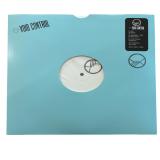
For Void Control EP3 - We introduce Alex Smoke under his Zar alias, this is an alias Alex has used to release more percussive,rhythm focused music,Void Control asked him to resurrect the project and work on material together Giving an interpretation of each others musical styles.
Alex has previously released on R&S,Soma and his own Hum&Haw imprint.
Bonus track from Void Control,a previously unreleased dub plate track.
150 translucent fluro yellow coloured vinyl, hand stamped and stickered with inlay.
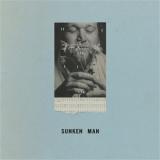
Michael Rawls, Frontmann von Sunken Man, wuchs zwischen Suffolk und Norfolk in Virginia auf. Auf der einen Seite die Stille einer Kleinstadt, auf der anderen der Lärm der Großstadt. Rawls baute sich ein erfülltes Leben abseits der Musik auf: Finanzberater, Unternehmer, Familie _ und trotzdem tauchten die Songs immer wieder auf. Dann ging eine Ehe in die Brüche, und in der Stille eines Hauses, in dem ein Kind schlief, fing er an, ernsthaft zu schreiben. Songs über Liebeskummer und Neuanfänge. Darüber, jemanden neu zu lieben, während man das, was vorher war, immer noch mit sich trägt. Rawls brachte die Songs zu Matthew E. White ins Spacebomb Studio in Richmond. White produzierte das Album; Alan Parker, der unter anderem schon mit Bon Iver, Lucy Dacus und Dijon zusammengearbeitet hat, spielte alle Instrumente selbst. Das Album wurde vom dreifachen Grammy-Gewinner Alex De Jong abgemischt und von TW Walsh gemastert. Das Ergebnis sind neun Songs, die irgendwo zwischen Springsteens emotionaler Direktheit und Wilcos melodischer Intelligenz angesiedelt sind. Liebeskummer, ja - aber auch Hoffnung. Die Art von Hoffnung, die man sich erst verdienen muss.
Take a trip back to the golden age of popular music with Golden Oldies, a 2LP collection bringing together 40 timeless favourites from the 1950s and early ’60s. Featuring legendary artists including Elvis Presley, Buddy Holly, Sam Cooke, The Everly Brothers, Roy Orbison, Chuck Berry, Etta James and Bobby Darin, this hit-packed set captures an unforgettable era of rock ’n’ roll, pop, soul and rhythm & blues. Highlights include Johnny B. Goode, Heartbreak Hotel, The Wanderer, Mack The Knife, Crying and Smoke Gets In Your Eyes – classic recordings that still sound as good today as they ever did.
Title track ‘Haunted City’ is five-and-a-half minutes of bumping techno cut through with plaintive pads. Metronomic drum patterns propel the EP from the get-go, fist-pumping forwards like marching music for our inevitable mech overlords.
‘Knopfmond’ is a brooding chugger. With its muted synth stabs and prominent kick, you can practically smell the smoke machine in the break.
‘Pinch Hitter’ ups the tempo further. Despite its propulsive intent, it shifts into something deeper and more introspective than typical peak-time territory; a tool for selectors willing and able to surf intensity and create intimate moments.
Closing track ‘Trix’ is an energetic cut from the off, utilizing a pendulous bassline that coaxes feet to the floor when unleashed at the right time.
Not much is known about the background of this cache of firepower, other than it originates in Canada. Use all weapons wisely to avoid any future arms embargoes.
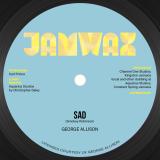
After his Studio One days with The Mad Lads and a long break for his engineering career, George Allison went back into the studio for Carl Prince's Gibbous label. The sessions ran across Channel One, Aquarius, Tuff Gong and Music Mountain, and they produced two albums in 1984, So Unusual and Exclusive. Both were released in the UK and the US. This single puts one song from each album together.
Sad - George's version of "Who's Sad" by Smokey Robinson & The Miracles. Smokey was one of his first vocal models, and his school friends called him "George Smokey."
Every Hoe - "I composed Every Hoe from the Jamaican proverb 'Every hoe have him stick a bush', which means there's somebody out there for everyone. The gist of the song is that there are always problems too, because it's a curse on the human race."
Following a decade spent releasing music digitally, Brandon De Carlo's Downside Up label made its vinyl debut late last year - though initially only in the US. Thanks to a new global distribution deal, we can now savour the label's second wax outing - a mini-album of club cuts and loop-powered DJ tools from British techno veteran Jamie Bissmire (an artist whose first EP dropped way back in 1997). There's naturally plenty of floor-focused heat throughout, from the 'Livity Sound-in-space' polyrhythmic techno of 'Primal Pathways (Roll Right Mix)' and the minor key madness of 'Smoke & Oakum', to the ambient style soundscapes of 'Parallel Stream' and 'Tangible Roots', and the slamming creepiness of the deliciously relentless 'Blackwood Tread'.
Phillip George Allison was born and raised in Denham Town, West Kingston, the last of six children and the only boy. As a boy he sang hymns at his mother's side. Before long he was singing radio hits at school concerts, where he did Curtis Mayfield, Smokey Robinson and Eddie Kendricks in a falsetto so close to theirs that friends called him "George Smokey."
With Delroy Williams and Shirley Forbes he formed The Mad Lads. Leroy Sibbles auditioned them at Studio One and called Coxsone Dodd over to listen, and they recorded the same day, with Sylvan Morris as engineer and the Sound Dimensions backing them. Ten To One, Losing You and You Never Know were big with the sound systems. George then left music to study electrical engineering at CAST. Years later producer Carl Prince of Gibbous Records asked him to re-record Ten To One, and that brought him back into the studio for the 1984 album So Unusual, where both of these sides first appeared.
Gypsy Woman was one of the first songs he ever sang in class. "Gypsy Woman was originally done by Curtis Mayfield and the Impressions, one of my favourite groups. I chose to do it a little differently, in my falsetto style, like Ten To One that I recorded while singing lead with the Mad Lads."
War Is Ugly "I wrote War Is Ugly during the politically motivated tensions and killings between rival gangs and gunmen all over the island in that period. My message was to the gunmen: turn in their arms and come. War is ugly, love is lovely."
Andreas Tilliander returns to Kontra-Musik in a grand style with his second TM404 album. Titled 'Acidub', this highly anticipated release is much more of an evolution than a repetition of the first superbly self-restricted album, where Tilliander even decided to use only one of the two Roland TB-303 waveforms. Acidub is a more playful and open listening experience, no doubt inspired by his extensive live touring with the TM404 concept. In fact, you can almost hear Tilliander's flock of acid machines breaking free from the restrained modus operandi. Every sound is like a migratory bird with a heart yearning for high altitude and favourable winds. The opening track Alinge paints a lucid picture of these acid birds leaving a cold industrial landscape behind, the flickering black shadows from their wings against the white smoke rising from a forest of chimneys below. The very last seconds of Alinge even echo of the place the silver birds are longing for, but that will remain a secret between Kontra-Musik and the avid listener. Sufficient to say, we can follow these birds of passage as they're heading south towards a warmer climate, fleeing the cold discipline of the North. Mutron Mantra, for instance, brings us to a rainforest full of serpentine lianas, giant leaves dripping with moist and green pools of water bubbling with organic life. Don't Defend Mascot guides us through a steaming savannah at dusk with hundreds of yellow eyes following our every step while Pade vividly describes the perils of the flight and the pace and courage needed to press on. In all, Acidub is a surprisingly exuberant follow-up to the more introspective TM404 album. But while the musical journey of this second album is quite different, the experience of sheer aural eminence remains the same. Andreas Tilliander has done it again, and Kontra-Musik couldn't be prouder.
With Shades of post-punk, trip-hop and film score dynamics, The Lucid Dreams LP is an immersive multi-genre listening experience that travels through murky underworlds and dream-like hazes.
God of War is Douglas Dulgarian (They Are Gutting A Body Of Water), Scott Turner (hooky) and Sam Silbert (hooky, circle of fire).
It's 2007. You’re watching your older cousin play SSX tricky. How is he such a monster at this game. Dude for real what the fuck. Such style, such finesse. I know he smokes weed. Should I tell Aunt Vicky? No no no- that would ruin this moment. He is racking up points that were formerly unheard of, and with such grace. There’s no expression on his face. And considering that he just sat open mouthed at the dinner table staring into nothing for forty minutes, this revelation is more than remarkable. It seems as if he has always existed in this moment. As if his very essence was plucked from the ether. And perhaps he has. He was made for this moment.
God of War is Douglas Dulgarian (They Are Gutting A Body Of Water), Scott Turner (hooky) and Sam Silbert (hooky, circle of fire).
It's 2007. You’re watching your older cousin play SSX tricky. How is he such a monster at this game. Dude for real what the fuck. Such style, such finesse. I know he smokes weed. Should I tell Aunt Vicky? No no no- that would ruin this moment. He is racking up points that were formerly unheard of, and with such grace. There’s no expression on his face. And considering that he just sat open mouthed at the dinner table staring into nothing for forty minutes, this revelation is more than remarkable. It seems as if he has always existed in this moment. As if his very essence was plucked from the ether. And perhaps he has. He was made for this moment.
London duo Kassian trade darkness for daylight on Gradients, their third EP for !K7 Records
The EP arrives as a bridge between last year's debut album and a new live show and sophomore LP, due in 2027
As Kassian, Warren Cummings and Joe Danvers continue to sit apart from any one scene. Their fruitful relationship with !K7 has spanned eclectic and global club cuts, including the spatial breaks and bass of 2024's best-selling Supercontinent EP. 2025's debut album, Channels, emerged from lockdown so leaned slow, downtempo and introspective, but this new EP points toward a clubbier, more physical direction that will carry through into album two.
Crucially, the record was written and played live on an array of studio gear rather than assembled piece by piece in the box. It's a way of building towards their first fully live show in 2027 - a hands-on, jam-first approach that leads to "happy accidents" and the unpredictable textures that hardware throws up and no amount of in-the-box planning can replicate.
Gradients is built for the floor without playing to trends and marks some of the duo's most melodic work to date. Rather than sitting purely in heads-down territory, the EP folds in hooks and vocal fragments that lift you out of the smoke and the shadows of the club. The low ends are still rooted in techno with potent drums and bass, but deft vocal hooks and subtle melodies bring a brightness that deliberately steers away from the darker, meaner aesthetic dominating much of dance music right now.
Vocal touches throughout nod to what's going on in the wider underground without tethering to tried and tested tropes. Opener 'Blush' rides warm, soft yet bold melodic riffs, looping in arcs over a hunched, speedy tech house groove. 'Ritmo' is a muscular bouncer with spring-loaded bass, 'Inner Dance' has lurching drums and a cavernous rhythm with vocals that make a playful nod to sound system culture. Last but not least, 'Sweat' is the brightest and most bubbly cut on the EP, with a tight techno low end infused with a velvety whispered vocal.
The Gradients EP is a bright, hardware-built prelude to Kassian's next chapter and a typically well-crafted four-tracker that pairs physical weight with classy emotional release.
Synth driven perpetual punk rock, darkened by atmospheric touches in its production and songwriting, yet uplifted by its intention to distill that darkness into light. Pop music from France on either side of the punk explosion has never shy’d away from electronic elements and on Nuits Blanche’s Helás LP there is plenty to remind us of that legacy. The sounds we are given rub against neither pop or dance, but instead absorbs the impact of quite tough sounding street punk. Four on the floor drums, like Disco’s ghost stamped across the face by the weight of the electric guitar run with songs not out of place if “A Country Fit For Heroes” got shoved inside the sleeve of “Wanna Buy A Bridge” and the two became one. Helás has the heft and the violence of boots treading across concrete en masse but within that is the lightness and the style of a dark smokey room filled with people wearing dark glasses and considering the inevitability of the pointlessness of existence…off the dance floor anyway. (Jonah Falco)
Gia Margaret’s acclaimed debut album, There’s Always Glimmer, is finally back in print on vinyl in Europe. Informed by the likes of Juliana Barwick, Stina Nordenstam and Linda Perhacs, this understated, self-produced record threads rich elements of folk, shoegaze and ambient electronics whilst retaining the exposed charm of her early bedroom recordings. This limited eco-mix pressing was first made available from her merch desk on her recent European tour and is now available from select record stores.
Dublin deep house fixture Glenn Davis returns with four tracks steeped in the smoked-out warmth of classic Chicago and New York house music, though there's enough personality here to stop things drifting into pure revivalism. 'The Journey' opens through supple drum movement and glowing Rhodes figures that unfurl lazily across the groove, as little chord flourishes flicker at the edges like light catching dust through half-drawn curtains. 'Love Is' softens the mood further through hazy vocal vapour and richly upholstered keys that melt gently into the rhythm. On the flip, 'Free Your Mind' introduces firmer rhythmic pressure without disturbing the record's low-lit sensuality. 'Da Jazz' closes things beautifully through brushed percussion and featherlight piano motifs with a rolling swing that feels most elegant in its looseness. Very classy deep house, this.
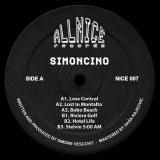
Six raw, vocal-led cuts from Italian house veteran Simoncino. Deep Chicago machinery: drum machines pushed into the red, chords hanging in the smoke, voices you never quite catch. Hardware, first takes, mixed hot.
DJ Paul & Lord Infamous’ cult classic Come With Me to Hell: Part 1 returns in its most definitive form ever — a fully remixed and remastered double‑LP, pressed for the first time on vinyl since its original 1994 cassette‑only release. Born in the early Memphis underground and sold strictly through car stereo shops, mom‑and‑pop stores, and “out the trunk” hustle, the album became one of the most sought‑after pieces in Three 6 Mafifia history, circulating for decades only through bootlegs and low‑quality rips.
This special edition finally brings the project to collectors in a premium format worthy of its legacy. The first LP is pressed on ULTRA CLEAR GLITTER vinyl, showcasing the eerie, atmospheric production that defifined DJ Paul and Lord Infamous’ early sound. The second LP arrives on RED SMOKE vinyl, a striking visual match for the dark, sinister tone that made the duo pioneers of the Memphis horrorcore movement.
Painstakingly remixed and remastered by DJ Paul, this release honors Lord Infamous’ memory and preserves one of the foundational chapters of Three 6 Mafifia’s origin story. After decades of demand, fans can fifinally experience Come With Me to Hell: Part 1 in a high‑quality, collectible vinyl edition that celebrates its raw beginnings and enduring influence.
An acclaimed international cast of forward-looking artists – Jan Jelinek, KMRU, Lia Kohl, J. Albert, Laurie Torres, Jefre Cantu-Ledesma, Giuseppe Lelasi, Jung DJ and Smoke Point – remixes/remodels tracks from Arp’s transfixing late 2025 album Drifts for Barcelona-imprint Modern Obscure Music (Actress/ Sakamoto, Merzbow). Reflecting Arp’s stylistically-omnivorous approach, each remixer on Echo–Variations represents a unique corner of the music landscape, from the jazzy ambient glitch of storied German producer Jan Jelinek to the overdrivendrone landscapes of Kenyan ambient auteur KMRU to Smoke Point’s no frills club-tool to the haunted ambience of cellist Lia Kohl’s gorgeous electro-acoustic work. One can hear elements of hauntology, post-rock, minimal techno, glitch, spiritual jazz at play. Arp adds a few alternate mixes and two new tracks for good measure, ambient techno floater “Chlorophyll (1998 Mix)” and perhaps the most surprising of all, the dub techno heater “MMXXVI (Dub Mix).” Heart all together, its classic sounding heart RIYL Touch, Millie Plateaux: Creative,meditative, brain cleansing, thought provoking hauntological futurism.
Forty years of cassette releases, pressed for the first time on vinyl
First of two instalments exploring the previously unreleased sonic archives of one of Poland’s most enigmatic
living artists - with its first volume focused on his deep listening practice and spiritual reverie (recorded 1990–2013)
The last time Andrzej Dudek-Dürer took a banknote bearing the face of the Polish anarchist Jarosław Dąbrowski from his pocket to trade it for a pair of shoes was in 1969. He bought them for 120zł - the equivalent of 100€ today - and never replaced them since then. Only rebuilt them, year after year, drawing a needle and thread through the leather each time it split, closing one wound before the next one opened. It became a ritual of precision, stitching a record of another year into their soles.
That same year, in Wrocław, he arrived at a conclusion that would recalibrate everything that followed. Convinced he was the reincarnation of Albrecht Dürer, he adopted the surname Dudek-Dürer, stopped cutting his hair and began wearing the same garments every day. It was the first ritual of many, though he wouldn't have called it that yet. Look closely enough, over the decades, and it is always the same gesture, returning in different material: hair growing in a single unbroken strand, a needle drawing thread through leather, sitar strings pulled taut across a neck he built with his own hands and magnetic tape spooling forward inside the cassette boxes stacked against his walls.
None of this began in a vacuum. Dudek-Dürer emerged from the Wrocław neo-avant-garde, in a Polish art world where an exhibition could be cancelled overnight by the stroke of a censor's pen. In 1973, his exhibition Auto-crucifixion was shut down by the state, and for a time he found himself blocked from exhibiting his own art at all - the one force in his life that ever came close to cutting the thread.
He seemed to experience it differently. In 1974, after long, patient research into sitar craftsmanship, he built his first prototype with his brother, a knowledgeable luthier. In 1978, in a smoked-out jazz club, he took his first steps into sound recording with the unreleased album Jazz From Underground with his first band. By 1979, recognition started to travel further than he could.
Turning toward Far-Eastern philosophy, meditation and the idea of reincarnation was another language of freedom for him. It was a way of claiming an inner territory the state could not reach, a border it could not close. Mail Art served a parallel function, reaching further out: in a country that restricted travel and expression, sending and receiving art through the postal system became an act of quiet rebellion.
The body, in his understanding, is only an envelope readied for constant transformation. From this came Metaphysical Telepathy: during the years he could not leave Poland, he treated that confinement as a rehearsal room, sending his mind out ahead on the same thread his body would later follow. Living Sculpture grew from the same root with performances of stillness beside static art objects, until the boundary between the object and the man beside it simply dissolved. Camera Meditation extended the same instinct into photography: a shutter click flattening three dimensions into two so that a single instant could be held forever. Inspired by the pioneers of self-portrait photography like Robert Cornelius, he used it to document time itself, and kept explaining to me: "You know. This is not about vanity. This is about observing time passing.”
The isolation did not end suddenly. It ended the way his own philosophy had already predicted it would, from the inside first. Mail Art quietly solved the problem politics couldn't. Correspondence built during years of confinement slowly worked its way through doors the state itself had kept locked. Contacts made through folded paper and stamps became invitations. Ultimately, invitations became passports.
In 1983 he made his first trip outside Poland, to Germany, in search of the audio technology he couldn’t get his hands on before. In 1985, he was invited by the Indian embassy in Poland to give a sitar concert on an instrument he had spent a decade patiently stringing together - half sitar, half tanpura, built from patience and determination. After the collapse of the People's Republic of Poland, the travels kept unspooling: South Korea, then Mexico, then Australia, Canada, New Zealand, Singapore, Japan and the United States - each stop leaving behind its own small knot of tape, tied off and carried home.
In the decades since, recognition arrived at the same unhurried pace: he conducted workshops at UC Berkeley, served as vice-president for artistic affairs of the Union of Polish Art Photographers and the Union of Polish Visual Artists between 2010 and 2014 and received the Bronze Medal for Merit to Culture - Gloria Artis. His visual work gradually entered collections including the National Museums of Warsaw, the Stedelijk Museum, Tate Modern, MoMA and the Venice Biennale. His musical practice, by contrast, never found that kind of room - left to circulate quietly, sharing his cassette tapes directly, waiting for someone willing to follow it further.
It took months before I could find a way to reach Andrzej Dudek-Dürer - his presence online is very close to nonexistent. Surprisingly, LinkedIn turned out to be the only door still open, a faintly absurd irony given everything else about him. I packed the strict minimum for a three-day trip and an empty notebook and made my way to Wrocław. His headquarters sits in the neighbourhood of Grabyszyn: a two-storey pre-war house that has belonged to his family for generations. The man who opened the door was long-haired, long-bearded, in his trademark leather shoes and patched jeans. We sat in his living room, in front of a computer where decades of recordings sat organised in cryptically named files, surrounded by books and objects that had arrived one layer at a time, leaving room for only two chairs in the middle. His shoes sat by the door, rebuilt so many times they had become their own quiet sculpture. Cassette tapes filled boxes against the walls, almost unlabelled, each one a spool of thread holding decades of sound that had never once been asked for, until now.
I listened for hours: meditating in front of strangers on the porch of a Seoul temple until the tourists stopped taking photos and simply waited with him; a stand-off with border guards at the US–Mexico crossing over an instrument they couldn't identify and didn't trust; a session with the Stockhausen family that he still, decades later, describes like it happened last week. All of it interrupted, occasionally, by the smell of soup boiling and fresh bread warming on the ceramic stove. After two days, it felt like being handed the end of a very long thread and asked, gently, to keep following it. I left with a USB drive holding his full discography, signed with his unmistakable signature.
Astral Meditations From A Living Statue is a length of that thread, drawn out from the boxes stacked against his walls - recordings gathered from different rooms, different countries, different decades. This first record breathes slowly: incense-thick, meditative, built for stillness. A cutting-edge séance in outer space where machines learn how to dream.
It begins with the neo-classical improvisations of Andrzej, space-delayed, recorded at Klub Muzyki i Literatury in Wrocław in 2002. 'When..So' opens the curtains with a deep-rooted meditation accompanied by slow-decaying piano figures illuminated by a candle-lit spirit gathering.
Los Angeles, 1990: a dormant villa, a grand piano, the voice of Bonnie Barnett. 'Exception' is captured in a single room, in a single afternoon - voice and keys circling each other, neither one leading, until the silence between the notes starts to feel like the instrument.
'The Meta...' and 'Tired Of...', recorded at Studio Morandi in Ponte Nossa, Italy, in 1992, settle into a sitar drone built entirely from patience - overtones stacking and beating against each other, strung by a man who never once set foot in India. 'Mastery Of...' follows, recorded the same year at Studio Suski in Łomianki, pushing that same hum further still, until pitch dissolves into a spectral reverie. 'Transcendental Sound', from 2000, closes the first record in a slow bath of celestial frequency - better heard beside the shores of the Odra river.
More than fifty years after deciding that a life could become an artwork, Andrzej Dudek-Dürer continues to inhabit that decision. His shoes keep wearing thin against the earth's crust. His hair keeps growing, one strand at a time. His cassette tapes keep spooling in the dark of their boxes.
Now the thread finds its last shape: a single unbroken groove, spiralling inward from the outer edge to the label at the centre. Never cut - the way nothing else in his life ever was. Drop the needle and it will find that groove and follow it, the same way a needle once followed leather, once followed a border it couldn't cross, once followed string into an instrument that didn't exist until he built it. This record is the other end of a thread that has been travelling for fifty years. For the length of both sides, it rests here, in your hands. This is a timeless proof that the Lord of the New Age was never lost."
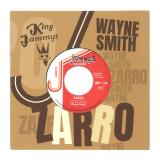
„Zarro“ war die erste Studioaufnahme des verstorbenen jamaikanischen Sängers Wayne Smith, der 1985 mit „Under Mi Sleng Teng“ zur Stimme der digitalen Revolution des Dancehall werden sollte. Diese Aufnahme aus dem Jahr 1980 für den Produzenten Prince Jammy, der auch „Sleng Teng“ produzierte, verwendet denselben Begleittrack wie Lacksley Castells „What A Great Day“, das ebenfalls auf 7-Zoll-Single (VPGS7107) erhältlich ist. Smiths Version wurde vor dieser 7-Zoll-45er-Single noch nie veröffentlicht und war nur gelegentlich auf Jammys Soundsystem in Jamaika zu hören. Der „Zarro“, auf den er sich bezieht, ist der TV-Selbstjustizler Zorro, ein maskierter Popkultur-Held aus den Disney-Western der 1950er und 60er Jahre, den Smith aus den „Spätabendfilmen“ zitiert. Neben dieser ersten Aufnahme und dem bekannteren „Under Mi Sleng Teng“ nahm Smith auch herausragende, aber wenig bekannte LPs für Jammy auf, darunter „Youthman Skanking“ aus dem Jahr 1982 (VPGSRL7098) und „Smoker Super“ aus dem Jahr 1985 (VP4269).
New Time is an ode to musical innovation, a captivating fusion of nu jazz, nu funk, and soul that captures the essence of the contemporary era. Mr. Thruout's skillful production combines with Sandro Lilliu's masterful guitar work, creating a unique sonic experience.
New Time is a work that redefines the concept of contemporaneity in the music scene, offering a unique and engaging experience for enthusiasts of nu jazz, nu funk, and soul. With the signature of Mr. Thruout and the collaboration of Sandro Lilliu, this vinyl is destined to become a modern classic.
UK Garage has ridden a new wave of hype and exposure over the last few years. Artists like Sammy Virji and Interplanetary Criminal have crossed over to the mainstream, while dancefloors across the world have shaken to a switched-up version of the sound that defined the UK underground either side of the millenium.
Hidden beneath a pink balaclava, the mysterious DJ Jackum has lurked this rejuvenated scene while dropping some of the most defining bangers of the period. Often surfacing in the form of moody edits released on Soundcloud, Jackum productions inevitably demolish dancefloors whenever dropped, as they frequently are in the sets of Virji and the other big guns.
Landing on Hotflush, a storied label of UK underground music, ‘Context’ is his most substantial work to date. Six tracks covering the full spectrum of the Jackum sound, from 4/4 heaters to dubstep-adjacent eyes-down bass pressure.
And in the form of opening track ‘Floo’, Jackum spreads his wings into a place that transcends the narrow confines of genre definition. From the UKG building blocks of bass, drive, cut-up vocals, and melody, the track emerges as something both familiar and wholly unexpected - the mark of a producer at the peak of their powers.
‘Clip Empty’ is another highlight of this standout EP. Showing a flair for the cinematic, a breakdown of militaristic snares gives way to a trademark rolling bassline and earworm vocals.
Away from the 4/4 bangers, ‘Take Your Body Higher’ is a guaranteed half-step rewind, while ‘Step Up’ recalls memories of smokey Plastic People sessions of the mid-2000s.
With Shadows is the darkwave alter ego of Jordan Lieb, the acclaimed North American electronic producer also known as Black Light Smoke. Recognised for his house and techno releases on Scissor & Thread, The Hacker’s Zone and Tiga’s Turbo Recordings, Lieb explores a darker, more introspective sound under his With Shadows alias. Drawn from two digital releases on his own Ancient Spells imprint, this collection of electronic darkwave traces a journey in reverse: opening with dark Italo and EBM-inflected technopop, it gradually slows down, sinking into a shoegaze universe steeped in atmospheric melancholy. Cold synthesizers, basslines that pulse like a heartbeat and haunting vocals give way to blurred textures and dreamlike spaces, carrying the listener from the dancefloor into a more intimate inner world. On “There’s a Hole”, his instinct for rhythm meets a deeply personal voice, revealing the emotional weight beneath the electronics. With Shadows gives Lieb room to reach beyond club structures and express himself through songs, bringing his songwriting, vocals and multi-instrumental talents to the forefront and revealing a facet of his musical identity distinct from his work as Black Light Smoke.
Jensen Interceptor debuts on Mesh with Primal Transmissions, an EP of five new genre mutations out Friday 25th September.
Moving through a spectrum of tempos - from smoked out slow burn to tightly wound club pressure - Jensen has a tweak for every BPM. Returning to a more raw, instinctive sound, but never losing sight of his flair for dense rhythmic compositions, the EP explores a moment of reconnection, and a shedding of inherited expectations.
‘False Oracles’ opens with a euphoric downtempo drift, setting the tone with microscopic rhythmic detailing and chugging percussion. ‘Fail to Call’ leads with a grimey bassline and frantic hammerdrill drums that gradually desync into chopped up fragments. ‘What Would Susan Do’ is a double dose of chaos, landing somewhere between dancehall, psytrance, and DnB, but firmly rooted on a planet of its own. ‘Tone Impress’ leans heavier into the industrial, chopping vocals over rolling hits at 160BPM. Rounding things off, ‘Emerald Web’ breaks the rhythms down to their rawest forms for one final workout.
Through a process of rupture and renewal, Primal Transmissions arrives as a sharp dispatch of club mechanics from one of the scene’s most inventive operators.
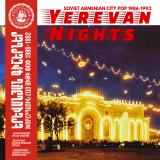
Fully licensed from Public Radio of Armenia, with additional clearance from all composers or their living descendants / estates: Yerevan Nights (Soviet Armenian City Pop 1986-1992) features 16 tracks remastered from the original reel-to-reel tapes by award–winning Osiris Studio, accompanied by liner notes containing historical analysis and a digital download card.
Yerevan Nights honors the simple pleasures that saturate the senses to make such a relatively small city feel so big in perception, and illustrates Soviet Armenian life outside of daily service to the greater good – moments caught in the twilight hours that follow the calming sunset behind the mountains, crescendo up and down Yerevan’s bustling city streets, and peak at the glorious dawn that paints the sky with pink and lavender brushstrokes. This compilation captures the pace of Yerevan throughout all times of the day and is tailored for the occasions dedicated to friends and family that constitute an individual’s shrjapat (“social circle”). The rhythms and melodies of these songs go perfectly with a cocktail of sidewalk strolls alongside honking car horns, toasting glasses raised over boisterous laughter, and meeting familiar faces in the most unexpected places, all wrapped up in a tranquil haze of cigarette smoke that lingers until the morning light breaks and garnished with a sprinkle of sentimental heartache.
[a] A1 - Tatevik Hovhannisyan / Oor E Ayn Lapteruh? ("Where Is The Lamp?") [1988]
[b] A2 - Georgi Minasyan / Karnaval ("Carnaval") [1988]
[c] A3 - Gayané Tunyan / Bari Luys, Yerevan ("Good Morning, Yerevan") [1988]
[d] A4 - Mikayel Zakaryan / Zartonk ("Awakening") [1988]
[e] B1 - Nadezhda Sargsyan / Moshahav ("Blackbird") [1988]
[f] B2 - Ashot Ghazaryan, Margarita Avanesyan / Yerevanyan Meghedi ("Yerevan Melody") [1989]
[g] B3 - Zara Tonikyan / Yes Chem Karogh Ayspes ("I Can't Go On Like This") [1989]
[h] B4 - Elvina Makaryan / Kez Hamar ("For You") [1986]
[i] C1 - Nariné Harutyunyan / Garnan Khostoum ("Promise Of Spring") [1988]
[j] C2 - Samvel Danielyan / Yerazank ("Dream") [1991]
[k] C3 - Garry Ayvazyan / Mysteria ("Mystery") [1989]
[l] C4 - Anzhelika Topalyan / Ashough Em Ko Sev Acherid ("I'm A Bard For Your Black Eyes") [1989]
[m] D1 - Raisa Mkrtchyan / Anound Vakhov Em Talis ("I Utter Your Name With Awe") [1989]
[n] D2 - Artashes Avetyan / Voske Ashoun ("Golden Autumn") [1988]
[o] D3 - Anzhelika Topalyan / Lusabatsn Aydpes Kga ("And So The Dawn Will Come") [1988]
[p] D4 - Aspram Khizandyan / Chem Hishi ("I Won't Remember') [1992]