Chris Imler likes to play drums standing up. He‘s the dandy with the killer offbeat, or, as one major German newspaper once put it, the "Grand Seigneur of the Berlin Underground". He has been making his mark on countless Berlin musical affairs since long before the fall of the Wall, with The Golden Showers, Peaches, Oum Shatt, Driver &Driver, Die Türen, Jens Friebe, to name but a few. He has also been perfoming across Europe as a solo artist for the past decade.
In "Operation Schönheit" (German for "Operation Beauty"), he has recorded his most, well, beautiful album to date. But Benedikt Frey's warm production subverts its own beauty with a multitude of clanking and ingling synth sounds, making the work very much about the cosmetic surgery it performs on itself. It's all in the tradition of the more experimental and electronic side of post-punk in which Imler and his unique groove are rooted. It doesn't take insider knowledge of Berlin's post-punk underground to realise that that Imler groove consists of rhythm that sings, vocals that dance and a look that fits, as illustrated by "Disappoint Me", his latest video: https://youtu.be/YeVJ75ljjB8
Elsewhere - such as in "Movies" - the rhythm sings, less electronically reduced, into the acoustics of an old, high-ceilinged Berlin apartment; metal clatters, a zither trembles and Imler plays with the metronome. Sometimes he moves ahead of time, sometimes trails behind it. He always manages to be in his very own groove, which carries everything along. And this is precisely the essence of the Imler rhythm, which lends itself to being applied to the very rhythm of life: Stretch and compress your time and loop it according to your own groove! Optimise nothing but feel everything! And dance to it! Even when contemplating everyday information overload, as Imler's high-speed mumbling suggests in the hectic yet smooth opening track "Temperature".
But being the ultimate night owl he is, Imler manages to make even the odd bout of paranoia seem like a good thing: like some kind of krauty, groovy B-horror-soundtrack-inflected high-pressure environment, "Whip Me" is a cross between Conrad Schnitzler and Bauhaus. In the title track, whose lyrics were written together with Jens Friebe, he intones: "You want to be something greater / You break your leg / When it heals again / You break it again" and sounds like the most gleeful fatalist you can imagine. Because in his city, one can still lose oneself better than anywhere else - a night easily becomes a whole universe that can be traversed, marvelled at and played with, and one might find one's old self again only when hearing "church bells" and "small birds singing". At least that's how Imler illustrates it in "Emptiness full of stars", and it seems likely that those "stars" are the human companions of the Berlin night in question.
And so once again Imler becomes Berlin's most important cultural ambassador: that scene of the eternally, and somehow successfully, failing creatures of the night, once the envy of the international postmodern bohème, has, despite many claims to the contrary, not been completely "optimised away", and its attitude to life is perfectly summed up in Imler's groove. And, of course, his look. "Schau Hin" (German for "Look!"), he sings in the track of the same name, masterfully dubbed out with the help of Melbourne's Leo James.
Quite right! Look - and listen.
Yours, Johannes von Weizsäcker (The Chap)
Поиск:ultimate man
Все
- A1: Whistlin' Pines
- A2: Bluebird Blues
- A3: She'll Be Comin' Round The Mountain
- A4: Elevate Me Baby
- A5: Mama Don't Allow Me To Fool Around All Night Long
- A6: Kings Highway Blues
- A7: Somebody's Been Foolin' #1
- B1: Tb Blues
- B2: King Biscuit Stomp
- B3: Delta Blues
- B4: Somebody's Been Foolin' #3
- B5: Rootin' Ground Hog
- B6: Don't Leave Me Here
- B7: Baby, Please Don't Go (Bonus Track)
Big Joe Williams is seen by many as the ultimate incarnation of the Delta Country Blues player, and several of his songs have become standards in the Blues canon. Known for being rough on his guitars, it's one of the reasons for the ongoing tinkering that led to the construction of his first nine string instrument. This fine studio album was released in 1962 on the Folkways Label after being recorded the year before. It contains King Highway Blues, a slow and at times almost spoken track. Where as Somebody's Been Foolin' is fairly driven along by Ransom Knowling's Bass. In 1968 Downbeat Magazine, simply stated that "Big Joe Williams' Blues is a beautiful experience". Listen to this album and you'll agree.
Gondwana Records sign LA bassist and composer Seth Ford-Young's Phi-Psonics project and announce a remastered deluxe-edition of The Cradle featuring bonus material
Phi-Psonics is a meditative, immersive instrumental group from Los Angeles, led by bassist Seth Ford-Young and featuring Sylvain Carton on woodwinds, Mitchell Yoshida on electric piano, and Josh Collazo on drums. Their deeply soulfulmusic draws on jazz and classical influences together with Ford-Young's own musical experiences, relationships, and his introduction to spirituality, yoga and philosophy at a young age, to create something uniquely its own. Phi-Psonics' name and ultimate aim is to find 'Phi' – the golden mean – in art, nature and self. Ford-Young explains:
"It's a bit of a cliché, but music saved my life many times and instilled in me a belief in the great power of healing through art. It is my hope and intention that this music provides healing to someone somewhere."
Originally from Washington DC area, Ford-Young moved to California in the early 90s and fell in love with the deep sounds of the upright bass and the music of Charles Mingus, John and Alice Coltrane, and Duke Ellington along with Bach, Chopin, Pärt, and Satie. He immersed himself deeply in music and keen to learn combinedintense personal study with collaborations, tours, and recordings with artists such as Tom Waits, Beats Antique, and John Vanderslice. In 2010 he moved from the San-Francisco Bay area to the Los Angeles hills and continued his explorations. But great music is rarely just about music and Ford-Young's meditative, soulful music draws on more than just the twin wellsprings of jazz and classical music:
"My mother was a yoga teacher from the early 70's until recently and taught me yoga and meditation at an early age, my stepfather is an Aikido instructor and student of the teachings of Gurdjieff. Those were all early areas of study that I came back to many times throughout my life. Phi-Psonics has been a project that unapologetically synthesizes some of these ideas into our music".
It's this mixture of influences, musical and extramusical, that gives the music of Phi-Psonics it's immersive quality and quiet power. Revealingly the music that would becomeThe Cradle, wasn't written specifically for an album, originally Ford-Young was just writing down what was coming through. As time went by and the album began to take shape, the world situation seemed to be getting darker and his compositions aim to offer hope as a response to the negative influences that abound today. Remarkably for such a beautiful sounding record, it was recorded at the composer's home, rather than in a studio, but the relaxed nature of this process gives the music an airy lightness that propels the music to some magical spaces.
Originally self-released on vinyl in a limited run just as the world went into lockdown, The Cradle reached Matthew Halsall (founder of Gondwana Records) when he aws looking for music for his Worldwide FM show and he was blown away, hearing a kindred spirit at work. Halsall explains:
"Phi-Psonics make beautiful, humble and honest music, it's not showy, but it has a deep vibe that will elevate your mind and soul if you let it. When we heard The Cradle we reached out and are really super delighted to welcome Seth and his band to our label". Whereas for Ford Young: "Connecting with Matthew and the Gondwana records family has been a light in the darkness of the last years - to have my music make connections even as we are more isolated."
Ford-Young is currently putting the finishing touches to the second Phi-Psonics record, but aware that only a select few had heard The Cradle, let alone had the chance to buy a copy, and entranced by its deceptive simplicity and elevating energy, Halsall suggested that Gondwana present the album as a remastered 'deluxe edition' with an extended running time featuring extra tracks and new artwork from Daniel Halsall.
The Cradle starts with First Step, perfectly setting the tone for the whole album, it is a beautiful, soulful slice of musical calm gently propelled by Ford-Young's resonant bass and elevated by sublime flute and Wurlitzer electric piano solos. The seductive title track The Cradle was written way back in 2011 during a time of great personal change that led the composer to a feeling of newness and nurture. The magical, winsome Desert Ride is inspired by many rides through the grandly cinematic Mojave Desert. You can experience how incredibly full of life it's harsh landscape is if you slow down to its tempo. The gentle, sublime Mama is a tribute to mothers of all kinds, beautiful and heroic. Drum Talk was largely improvised, Ford-Young and the band agreed on a topic and recorded their conversation. Choosing their notes based on how Josh's drums were tuned. Like Glass is named for the special properties of Glass. Like some music, glass is delicate, yet has structure. The first of the two bonus tracks Still Dancing was written during the early days of 2020 in response to the challenges we all were facing then. It's a reminder that the figurative dance continues and that real dancing is essential. And the second, The Searcher, also written as a response to 2020, is a gently hypnotic song about the introspection and growth that can spring from a difficult situation.
This then is The Cradle, a quiet self-contained masterpiece, life-affirming and elevating in equal measure and the first offering from a wonderful new voice in spiritual jazz and the latest members of the global Gondwana Records family.
- A1: Suzanne Ciani - Rain
- A2: Harold Budd - La Casa Bruja
- A3: Bryce Dessner - Lullaby (Song For Octave)
- A4: David Lang - Spartan Arcs
- A5: Brian Eno, Roger Eno - Celeste
- B1: Julia Wolfe - Earring
- B2: Nico Muhly - Etude N 3 Running
- B3: Caroline Shaw - Gustave Le Gray
- C1: Melaine Dalibert - 6+6*
- C2: Moondog - Prelude N 1 In A Minor
- C3: Timo Andres - Wise Words
- C4: Peter Garland - Nostalgia
- C5: Philip Glass - Etude N 6
- D1: Sylvain Chauveau – Mineral*
- D2: Philip Glass - Etude N 16
- D3: Ezio Bosso - Before 6
- D4: Ryuichi Sakamoto – Solitude*
- D5: Melaine Dalibert – Epilogue
France pianist Vanessa Wagner continues her exploration of the minimalist repertoire by introducing her audience to pieces, many rare or unpublished, by acclaimed composers, young pianists, and genre-bending personalities from the ambient and electronic scenes. In France or even Europe, Vanessa Wagner is practically the only "classical" pianist to tackle this contemporary and timeless repertoire. Study of The Invisible features interpretations of pieces by a spectrum of composers that includes Suzanne Ciani, Harold Budd, David Lang, Bryce Dessner and Phillip Glass.
Described by Le Monde as ‘the most delightfully singular pianist of her generation’, and by Libération as ‘one of the most curious and captivating pianists on the French scene, Vanessa Wagner is able to balance parallel careers. As well as performing a classic solo, chamber and concert repertoire on stages all over the world, through her output on InFiné she is continuously exploring paths that are equally personal, but perhaps more intimate. Study Of The Invisible sees her breaking new ground in a musical tradition, in a way that no other ‘classical’ pianist in France and Europe currently does. Often described as ‘minimalist’, it’s a musical tradition that covers a multitude of singular styles and musical personalities and that spans generations.
Study Of The Invisible seeks out the mysterious world that lives behind the score, the imperceptible links that unite these silences and harmonies, but also the inner resources that this music can bring to light. With this record and this journey, whose apparent melancholy ultimately proves to be powerfully comforting, Vanessa Wagner continues to give a new scale to a music which proves to be above all radiant and luminous.
*are Vinyl exclusive tracks
- A1: Be-Bop-A-Lula
- A2: Race With The Devil
- A3: Cat Man
- A4: Lotta Lovin
- A5: Ain't She Sweet
- A6: Pink Thunderbird
- A7: I Flipped
- A8: Jump Back, Honey, Jump Back
- B1: Bluejean Bop
- B2: Crazy Legs
- B3: Jezebel
- B4: Gonna Back Up Baby
- B5: Woman Love
- B6: Jumps, Giggles And Shouts
- B7: Wedding Bells (Are Breaking Up That Old Gang Of Mine)
- B8: Dance To The Bop
Born in Norfolk, Virginia on 11 February 1935. At the age of 12 Vincent
was given his first guitar by a schoolfriend. There was no generosity
involved in the gift because it wasn’t his friend’s guitar. It belonged to his sister, who was learning how to play. He couldn’t stand the racket she was making so he gave her guitar away. But unwittingly, this cruel act was a crucial moment in Gene’s life as he soon began to entertain with the blues, gospel and country from his porch. ‘Be-Bop-A-Lula’ was to be the first single by Gene Vincent & the Blue Caps. Selling 3 million copies, it opened the door to national fame and untold riches. Followed by the release of the album ‘Bluejean Bop‘ on Capitol Records. He was the ultimate greaser, the genuine article and the authentic voice of his generation.
'All That's Been Lost' is the debut album from Glasgow based singersongwriter Steve Grozier.The album's title, chosen before the pandemic, has turned out to be strangely prophetic
Recorded at 'The Ranch', home studio of friend, producer and bandmate, Roscoe Wilson.Grozier was all set to record before being abruptly halted by lockdown.
When it was safe to continue, the dynamic of the recording process had changed dramatically. Given the size of the studio, the musicians playing on the record all had to record their parts separately or remotely.
Despite the constraints, 'All That's Been Lost' is a fully realised piece of work. The themes of loss, darkness and emotional pain find parallels in the work of Phosphorescent or Richmond Fontaine.
'Sam, I Know You Tried' is a dark, layered rocker, featuring excellent guitar work from producer and multi- instrumentalist Roscoe Wilson. It was written in response to losing a close friend. 'Blue and Gold' and 'When the Darkness Comes' are Grozier at his best,his effortless vocal sitting in contrast to the heart-breaking lyrics. The beautiful 'I Miss My Friend' is dedicated to Neal Casal and is a touching tribute to one of Grozier's heroes.
The two singles taken from the album, 'Memories' and 'Power in the Light', showcase Grozier's range as a songwriter. On 'Memories' we find Grozier coming to terms with ageing and the pain and beauty in doing that with someone you love, but at the same time aware of all that has been lost along the way. It features some intricate dobro work from Nathan Golub (Mandolin Orange, Mountain Goats). On the second single 'Power in the Light', Grozier is at his most hopeful. He sings,"I'm strong in the fight, there's grief and anger, but there's power in the light". Grozier says that light is "whatever you need it to be or wherever you find the strength to go on. To keep trying"
.Ultimately, this is the underlying theme of 'All That's Been Lost'. Hope.
Abrakadabra The success and acclaim of You Can’t Kill My Rock N’ Roll inspired the band significantly and writing for the next record enthusiastically started whilst out on tour. Connecting with so many fans, old and new has helped to influence the shape and sound of the new record, with Adde commenting that the new album “feels like the record we should have released after the Black album”. Abracadabra will be released worldwide on March 25 - 2022, containing 10 hard hitting songs exploding with riffs, attitude, intensity and that magical feeling you get when work is over and the weekend is here. This is an album for the fans and best shared with great friends, cold beers and very loud speakers!! Recorded in 2020 and early 2021 at both Österlyckan and Bombastik in Musikens Hus - Gothenburg, the decision was made early on to once again work with Johan Reiven, who was responsible for production duties on the bands ‘Black Album’. Adde states “Working with Johan was like stepping back in time, there’s a shared intensity and commitment to excel that collectively drives us and ultimately brings out the best in us all… I am 100% happy with the result”. This shared intensity can be heard on every one of the tracks from the defiantly rebellious “Dream in Red” through to the bar soaked philosophy of “One For All” and the thundering powerhouse that is “Catch Me If You Can”. Abracadabra is uncomplicated, Rock N’ Roll escapism and entertainment at its best… sprinkled with a little bit of magick for good measure --
- 01-01: Desiderii Marginis - The Wind From Nowhere
- 01-02: Troum - Outside (Archaic Landscape)
- 01-03: Troum - In-Side (Archaic Mind-Scape)
- 02-01: Martin Bladh _ Karolina Urbaniak - The Poisoned Well
- 02-02: Anemone Tube - Road Of Suffering I-Iii (I. Hunger For Sense Pleasures, Ii. Hunger For Existence, Iii. Hunger For Non-Existence)
- 02-03: Anemone Tube - Primordeal Recollection
- 02-04: Anemone Tube - Sea Of Trees - Taking Death As Path
Desiderii Marginis, Troum, Martin Bladh & Karolina Urbaniak and Anemone Tube, who have gathered to pay homage to the first four novels of British writer J.G. Ballard: »The Wind from Nowhere«, »The Drowned World«, »The Drought and The Crystal World«, which are often seen as disaster novels. Each of the four projects presents a very unique take on the chosen work, using the respective text as a starting point to offer sonic representations of and (further) perspectives on these books, using drones, field recordings, words and much more to create evocative and richly layered soundscapes.
Adorned by a painting of German artist Alex Tennigkeit depicting a sphinx-like hybrid creature, a phoenix rising from the ashes of our civilization, the double album also includes an in-depth essay by Michael Göttert (African Paper) on Ballard's works in which he argues that the novels can best be understood as texts of transformation, as well as texts by the sound artists.
The double album starts with Desiderii Marginis' track “The Wind From Nowhere”, on which field recordings and intense drones suck the listener into a stormy vortex. Troum interpret The Drowned World, and their two dynamic tracks illustrate both the changes happening to the (outer) landscape and the (inner) world of the protagonists. Martin Bladh & Karolina Urbaniak make use of sound and words on “The Poisoned Well”, their interpretation of The Drought, referring to Shakespeare, the Bible and scorched earth policy amongst other points of reference. The album closes with Anemone Tube's take on The Crystal World, using field recordings made in Japan’s Mount Fuji forest. “Sea Of Trees” aims to show a devolutionary process, in which man gains access to his actual spiritual home – a primordial wisdom, which lets him discover an internal non-dual space, allowing to ultimately becoming one with the earth as body-being consciousness – the ‘perfect dream’ landscape.
- A1: Gucci Ninja Assassins 2: In The Metal Garden Of Fire (Feat Gucci Mane & Garden Of Fire)
- A2: Gucci Ninja Assassins 2: In The Metal Garden Of Fire (Instrumental)
- A3: Gucci Ninja Assassins 2: In The Metal Garden Of Fire (Drums)
- B1: Bansai Growth Seminar
- B2: Staggering Tipsey
- B3: Hungover Morning Shootout
- B4: Victorious Celebration
- B5: Off Into The Sunset
Part of the “Ultimate Supreme Ninja Champion” series which is loosely based around 1980s bootleg ninja movies. The a-side is a rap / heavy metal song produced by Mr. Green featuring Gucci Mane and the new band Garden of Fire. The song is entitled “Gucci Ninja Assassins 2: In The Metal Garden of Fire” and the songs instrumental and drums stems are also included. The b-side is music from the ? music library, which is music for tv/film that is also popular for producer to use as samples.
- 1: Fate Of Man
- 2: 8 Days (Till The End Of Time)
- 3: Prescient
- 4: Back From The Past
- 5: Revel In Time
- 6: The Year Of '41
- 7: Bridge Of Life
- 8: Today Is Yesterday
- 9: A Hand On The Clock
- 10: Beyond The Edge Of It All
- 11: Lost Children Of The Universe
- 12: Fate Of Man (Alternate Version)
- 13: 28 Days (Till The End Of Time) (Alternate Version)
- 14: Prescient (Alternate Version)
- 15: Back From The Past (Alternate Version)
- 16: Revel In Time (Alternate Version)
- 17: The Year Of '41 (Alternate Version)
- 18: Bridge Of Life (Alternate Version)
- 19: Today Is Yesterday (Alternate Version)
- 20: A Hand On The Clock (Alternate Version)
- 21: Beyond The Edge Of It All (Alternate Version)
- 22: Lost Children Of The Universe (Alternate Version)
“Revel in Time”, the third album from ARJEN ANTHONY LUCASSEN'S STAR ONE, is as much of a reaction as it is a contrast to Arjen Lucassen’s previous album, “Transitus” from Ayreon. While “Transitus” is a cinematic experience that you may almost call a musical, “Revel in Time” is a heavy album that is very riff driven and there is more focus on virtuoso musicianship. Similar to its predecessors, “Revel In Time” works as a concept album. All tracks are inspired by different movies that deal with some kind of manipulation of time. There is one thing this time around that is quite different compared to the earlier STAR ONE albums: The first two had the same cast of four singers: Floor Jansen, Russell Allen, Damian Wilson and Dan Swano. However, this time Arjen decided to generally have mainly one singer per track, and a different for almost each track. This shows especially on CD 2, the “Same Songs, Different Singers”-CD as Arjen likes to call it. The guide vocals that were recorded (for the other singers) were way too good to just be guide vocals. Thus, Arjen decided to release a second version of the songs with the guide vocals on them as CD2. At some point he started spontaneously inviting other singers to sing some of these tracks, because he was curious how the songs would sound with their voices. Ultimately CD2 ended up with no less than 9 different singers, all equally as good as the ones on CD1. A total of about 30 different musicians contributed to the new album, not all of them being singers though. The core of STAR ONE remains Ed Warby’s powerful drums as well as Arjen’s guitar and bass work that hold it all together and give it that typical STAR ONE sound. The icing on the cake is the front cover art that was created by Arjen’s trusted favorite artist Jef Bertels.
- A1: Projekt Gestalten - The Beast Within
- A2: The Princess Of Death - Trance
- B1: Projekt Gestalten - Trial And Execution Of The Black Wolf
- B2: The Princess Of Death - When The Saints Go Marching
- C1: Projekt Gestalten - Prey To Be Undone
- C2: The Princess Of Death - The Shrine Revelation
- D1: Projekt Gestalten - The Curse Of Engelhart
- D2: The Princess Of Death - Curse, Shattered
- D3: Projekt Gestalten & The Princess Of Death - Requiem For The Swan King
"The Beast Within" is the new album by Brazilian artist, Diego Garcia; exploring gender identities within contemporary electronic music. The artist uses two of their distinguished artistic identities: The Princess of Death, her feminine identity - where there is an exploration of a more introspective and corrosive textures commonly associated with patriarchal values; and Projekt Gestalten, his masculine identity - where melodic and hypnotic sounds, often associated with matriarchy, are emphasized.
In this project, Diego's aim is to dichotomize their gender identities inspired by a point-and-click adventure game from the 90's called "Gabriel Knight 2 - The Beast Within". The story was written by American game designer, Jane Jensen with original music composed by her husband, Robert Holmes. The protagonist is on the trail of a strange wolf, murderer of a little girl. Gabriel was asked to take care of this evil and suspects that this case is paranormal in nature. Together with his assistant, Grace Nakimura, he discovers the dark truth behind the history of Bavaria. The gameplay alternates between Gabriel and Grace and its storyline is only explored indirectly by Diego - as it is deeply connected with their childhood and formative years and still remains as one of their all-time favorite games.
Just like in the gameplay, Diego alternates between both of their feminine and masculine identities in order to create original pieces of music. As Projekt Gestalten, an array of dance tracks are functionally presented; ranging from melodic and trippy to club-ready driving techno; dissecting a more rational aspect of the game's storyline. In contrast, The Princess of Death goes into an ambient and experimental approach; exploring liturgical themes that includes a dark and dystopian cover of the traditional gospel song "When The Saints Go Marching In", a song that is featured throughout the whole franchise of the game in many different versions. In the end, the gender polarizing concept is extrapolated and both aliases are finally merged into one another; leading to the Gestalt principle, alluded to in Diego's main alias, being fully applied as a whole.
The project's ultimate goal is to challenge preconceived notions of how a specific gender should sound/behave and to explore light/dark, sacred/secular, good/evil, male/female using, as the blueprint, a gender-neutral game where the player is forced to assume a feminine and a masculine role in order to navigate through the story. All of these ideas are perfectly aligned with Diego's own trajectory as an artist and their distinct artistic identities featuring distorted gender values - which comes full circle in this project.
Kapingbdi came together in Liberia, West Africa, during the late 1970’s and had their own unique style. This six to seven-piece band played original compositions in a vibrant mix of African Rhythms, Soul, Spiritual Jazz, Funk and Rock. Led by Kojo Samuels on sax, flute and vocals “Born in The Night” presents the essential tracks from their rare studio LPs produced between 1978-1981. The work has been carefully edited and remastered in 2019 for vinyl LP and a 6-Page Digipack CD, which includes two additional recordings. Kapingbdi toured through Europe and the U.S. and were the only Afro funk band to ever come out of Liberia.
Kapingbdi hail from Liberia, West Africa and have their own imitable style. They effortlessly combine traditional African music in a modern mix of Jazz, Funk, Soul and Rock. The band is a fusion of the old and the new.
The word "Kapingbdi" is taken from the Sierra Leone language Mende and means "born in the night". Kojo Samuels was given the name by his Latin teacher whilst attending high school in Freetown, They often meet and debate at night in the city and soon after Kojo is called Kapingbdi. The name serves as a description of his origin. Born In Lagos, Nigeria in 1943. The son of slave children. His mother from Nigeria and father from Sierra Leone who moved the family to Liberia, during the 1950’s.
Kojo has played music for as long as he can remember. He starts with the harmonica and later becomes a drummer and percussionist in his first band at school. During his art studies 1965-1972, he tours Germany and works as an art teacher in the USA. His band Kapingbdi is reorganized five times and consists of up to seven musicians. In a VW-Bulli he drives the group from concert to concert and if the drummer fails, he jumps in himself. Between 1978 and 1981 three Kapingbdi LPs are produced for the independent label Trikont, recorded in Hamburg and Munich. During this creative period, the band plays at festivals in Africa and Europe. In 1984, the band tours the United States and shortly after, they came to an end.
At their best, Kapingbdi would rouse the audience with original compositions like "Human Rights", justice for all, especially for South Africans, and "You Go Go You Go Come". The officials and employees in the government departments have no time for the common man, for any questions such as job search, scholarship or similar, he receives the answer "go, come back tomorrow" and the same thing the following day. Or "Now Is The Time For Cry For Love." Now it is time to scream for love and finally, time for humanity and justice. Despite immense difficulties, the musicians consciously live and work in Africa and are at home in Liberia.
On April 12, 1980, ordinary soldiers and non-commissioned officers organize a coup against the government. This is an attempt to put an end to a policy of exploitation of the Liberian people. Whilst efforts to eradicate poverty, lawlessness and illiteracy are obvious throughout the country, Liberia is still Americanized to a high degree. This is evident, as the radio programs of that time almost exclusively played American disco music. Under these conditions, the people seek a reconnection to their folk music, and Kapingbdi were aware of this. Kojo tried many times to come together with traditional Liberian musicians. This passion takes him north of the country. Meeting and playing with the old hornblowers and playing music on traditional instruments, such as the elephant tusk.
Kapingbdi make high quality tape copies of their own vinyl LPs and patiently try to displace all unauthorized tapes from the domestic "market". Nevertheless, it is hard to make a living through music in Liberia. Kapingbdi, is now celebrated. The radio plays are in abundance, but royalties are not forthcoming. Their musical link is the feeling of Afrobeat and Highlife, which is found in each of the many Kapingbdi pieces. They embody Jazz, which is understood to be the most refined example of black music outside of Africa. In Liberia, Jazz is virtually impossible to hear. Bright shining names such as John Coltrane, Charlie Parker or Miles Davis were widely unknown. Thus, the Black Jazz, including its Back-To-Africa movement of the 60’s and 70‘s, passes by without leaving a trace in Africa itself.
Kojo's claim at the time, was to make African music with the depth, sensitivity and the freedom of the technical level of Jazz. This makes Kapingbdi the torchbeares. The underpaid prophets in small Liberia. It is the passion with which the founder of the band continues to work on their music for years. Tirelessly, stimulating and encouraging his fellow musicians. This is ultimately responsible for the success of Kapingbdi in Liberia itself. The local audience seems to listen to the band in fascinated astonishment. One wonders about the ability to develop as demonstrated by Kapingbdi on the basis of their music. It is African and unusually jazzy, danceable and better than the American disco music heard on the radio.
Rather than chase the money and the job opportunities in Europe, Kapingbdi are firmly rooted in Africa. The musicians live in Monrovia, the capital of Liberia, at the Kabingbdi workshop, located in the Congotown area on the eastern edge of the sprawling city. Kojo works here as a sculptor, painter, batik artist and musician. The sales revenue that his activities generate, gives him the opportunity to support the development of African Jazz music. The highest percentage of funds are from Germany and Kojo’s work ethic is “to work on your own thing“. The stance taken aims to support the welfare of Liberians and Africans. The other musicians of the group live in a second house that is nearby.
For the sake of consistency, Kapingbdi is a full-time band. However, the revenue, from all of the sources, could not keep them afloat. Equally, as important to the group are Kojos's knowledge of traditional African music and his sculpting skills. His knowledge is shared with others at the afternoon workshops. It is here that they discuss new lyrics, engage in political debate and the self-imposed task of improving conditions in Africa. At times the debate became heated, especially during rehearsals. This was regarded as good and integrative, sowing the seeds of innitiative to keep the band together.
From 1980 to 1985 Kojo also opened and ran the club "Panjebota", located on the grounds of the U.S. Consulate in Monrovia. Almost every evening Kapingbdi perform the song "Wrong Curfew Walk", whose lyrics lament the killing of citizens during the curfew imposed by the Liberian government. When the head of state Samuel Doe hears the song, he behaves agressively and forces Kojo to close the "Panjebota". Kojo had already moved on. Soonafter he meets Fela Kuti at the Africa-Festival and plays concerts in Germany with Cecil Taylor's workshop band.
Kapingbdi is for thinking, dreaming, dancing. What they sing about is what they have experienced. Kojo Samuels is 76 years old today and still follows his vocation as a critical musician, artist and activist.
Ekkehart Fleischhammer / Sonorama 2019 (with the help of original press sheets and the memories of Kojo Samuels)
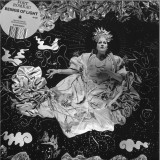
- Followup to 2015's Insides. - RIYL: Jacques Greene, Leon Vynehall, DJ Seinfeld, Project Pablo - Features cover art by Salvador Dalí protégé Steven Arnold. - Silver halide (gray + black marble) vinyl limited to 1,500 copies worldwide - Vinyl is housed in a black dust sleeve inserted in to a matte varnish jacket with metallic silver spot color // After a run of critically-acclaimed singles and EPs, British producer Michael Greene, aka Fort Romeau, returns to the full-length format with Beings of Light, the long-awaited follow-up to 2015's Insides and his second LP on Ghostly International. While a prolific DJ who orients many of his productions for the dancefloor, Greene still sees the album as the ultimate statement of intent, "a space to stretch out, to speak in full paragraphs rather than stunted sentences." He has explored several stylistic fragments in recent years (including the summer 2018 anthem "Pablo," hailed a Best New Track by Pitchfork), but when faced with the extended pause to the dance community in 2020, Greene felt compelled to focus on a larger body of work. Embracing a back-to-basics mentality, he amassed over a dozen hours of sounds, asking himself throughout the sessions: "Does the music move you? Is it honest?" He came out the other end with Beings of Light, an expressive collection traversing rainy day ambient, moonlit disco, and dream-like techno in pursuit of the power found within our subconscious. Album opener "Untitled IV" ushers in a sprinting tempo in its exploration of the human voice, a recurring device in the Fort Romeau project. Greene uses it as a compositional layer, disembodied with its context often opaque or reduced to a single phrase. Here the voice is scattered in percussive twitches, colliding with a kick drum to induce a near state of hypnosis as horns sound off in the distance. Propulsive standout "Spotlights'' is Greene's ode to the romanticised New York City that lives in our hearts, nocturnal and carefree. A vocal snippet repeats the title with a breezy poise, reminiscent of classic house cuts. "Ramona'' honors the beloved Robert Johnson club in Offenbach, Germany. Hazy, spacious, and sustained, Greene designed the beat with their system in mind, "also with a strong nod to the more modern lineage of exceptional minimal house music from Frankfurt," he says. Two ambient pieces surround the track, "(In The) Rain" sets the scene and "Porta Coeli" (a Latin phrase which loosely translates to "heaven's gate") soundtracks the comedown. The album's closer, the title track, is an arc constructed with atmospheric textures, euphoric swings of percussion, and a well-placed piano refrain, "Beings of Light" is adaptive; one could imagine it reverberating from a club, scoring the emotional apex of a film, or radiating through the realm of dreams.
- A1: Elle Cato - I Feel Love
- A2: Ultra Nate - I Can Dream
- A3: Michelle Perera - Never Give Up
- B1: Mr V - Dj Rae - Scott Paynter - The Feels
- B2: Blondewearingblack - What Can I Do
- B3: Blakkat - Second Chance
- C1: Joe Roberts – Easy
- C2: Dj Rae - Come Undone
- C3: Blakkat - Can’t Get Enough
- D1: Michelle Perera - Life Is A Song (Philly Mix)
- D2: Lea Lorien - Never Looking Back
- D3: Michelle Perera – Addicted
There is nothing quite like an evening under the rhythmic spell of the legendary David Morales. Stepping on the dancefloor while he's behind the decks requires full trust and surrender. You agree to hand the reins of your mind, body, and spirit to his intuition and ability to guide you to where you need to be at all times. It will occasionally be cathartic and intense. It will often make the hairs on your body stand on end, and make you sweat more than you ever have before. The endorphin release will be powerful. You will feel like you can touch joy and euphoria it in the air around you. As he gently brings you back down to reality, you will feel renewed and ready for anything life brings your way. This is more than a night of dancing. This is an experience at the hands of a magical maestro of music. How is this possible from a night on the dancefloor? Well, it begins with the brilliant mind of an artist at the peak of his creative power, imbued with the empathy necessary to connect with what has become a global legion of fans. "If there is any secret, it's really simple: I love what I do with all of my heart," Morales says. "I'm a DJ first. I thrive on human interaction. I am always adjusting my sets based on what the people in the room need. Each night, we form an emotional connection that inspires the music as it comes."
For Morales, "working in the studio is important, but it exists as a way of supporting the DJing experience. It's all to inform how it will work on the dancefloor."
To that end, you're reading these words as you dive into a new collection of Morales classics. Ever the collaborator, he has enlisted the input of a wide range of voices and talent. There is the diva power of fellow legend Ultra Nate, who brings her signature sass to "I Can Dream," while Michele Perera's explosive chemistry with David is all over the inspiring "Life is a Song" and "Never Give Up", as well as the impassioned "Addicted."
Morales reminds the listener of his ever-evolving musical scope in collaborations with blondewearingblack ("What Can I Do"), Lea Lorien ("Never Looking Back"), and Blakkat ("Can't Get Enough"). There's the clubland supergroup of David with Mr. V, Scotty P. and DJ Rae on "The Feels." Rounding out the set is a reunion with longtime muses Elle Cato ("I Feel Love") and British soul icon Joe Roberts ("Easy"). Just be sure to listen closely, because there's bound to be a surprise tucked between these grooves to tickle your ears and move your body.
The beauty of this sparkling new foray into electronic music is the heightened intimacy between Morales and the music. What you are hearing here is almost exclusively from the man's own fingertips. "The technology has evolved in the most extraordinary and liberating ways," he says, adding that he is now able to be far more directly hands-on during the building of each track. "Back in the '90s, I had to have more people involved, With the changes and growth in technology, I can now do it, myself. I don't even have to be in the studio anymore. It's smart, financially, but it's also way more fun and creative."
David adds, "I don't have to wait to manifest an idea anymore. I can just build my ideas as they come to me." In fact, he reveals that many of these new tracks were born in unique places, like planes, cars, his bedroom, and a host of other settings. "Music is always spinning around my mind. I no longer worry about losing an idea."
Surviving the highs and lows of an ever-changing world has also brought Morales back to the basic essentials of life and music. "The pandemic has brought things full circle for me," he says. "I love what I do and I still have the passion of a kid who is just getting started"
Yet, we know that Morales has been in the game for longer than a minute. He's a Grammy award-winning producer, remixer, and songwriter. He has lent his skill to countless of records by icons that include Mariah Carey, Madonna, Whitney Houston, Michael Jackson, Aretha Franklin, Donna Summer, Seal, and Jamiroquai. As a turntable artist originally from New York City, he earned his bones of credibility back in the '80s and '90s in clubs like the Paradise Garage, Red Zone, Tunnel, and Club USA. He initiated the concept of DJs touring beyond their hometowns with countless, wildly successful treks that have taken him the farthest-reaching corners of the world. As electronic music thrives on pop radium, David tops the list of every young artist and DJ as a primary influence.
Even with such a staggering legacy, Morales never looks over his shoulder.
"That is how you stumble and fall," he says. "If you get all caught up in the past, you're going to lose sight of what is right in front of you. You lose the excitement of discovery. That is what gets me off; taking what I know and combining it with what I don't know as I learn it. There is nothing better than experiencing how it all comes together. It's different every time."
And that is the ultimate secret to that extraordinary spell that David Morales casts over us all every single time.
Eric Gales' 2017 album 'Middle Of The Road' repressed on green/blue
vinyl
Eric Gales just may be the ultimate under- the- radar superstar in rock history. Throughout his 25 years as a professional musician, he's been termed a child prodigy, "the most underrated guitarist in history," and even the successor to Jimi Hendrix. He's released almost 20 studio albums under his name to date, played with fellow greats ranging from Eric Johnson to Carlos Santana, and contributed
to a variety of projects showcasing his ability to command virtually any musical
genre with ease.
This vinyl re-issue will coincide with the release of Eric Gales' new album Crown
Feel-good funk and hip-hop duo, The Allergies, offer up one last ray of audio sunshine from their smash hit album, Promised Land.
Featuring the unmistakable voice of Bay Area luminary, Lyrics Born, 'Going to The Party' is the ultimate celebration of good times, good friends, and good music. Throwback raps weave wickedly with infectious grooves and a sing-a-long chorus, making this the perfect soundtrack for all your get-togethers and funky affairs. And now, the limited edition vinyl release offers up an extended version, with extra house-party warming verses from L.B!
And, that's not all. As, taking B-Side Banger status on the 45 is 'Utility Man', featuring the dynamite mic prowess of L.A rap hero, Andy Cooper. Riding a super slick double bass groove and neck snapping drums, the L.A. hip-hop legend flips fearsome rap styles, pitching his case as the ultimate go-to gun-for-hire M.C.
And who are we to argue? It's two serious sides of funky rap goodness. Or, as Andy puts it, "The beats bang and the music's timeless". Indeed.
a a1: Going to the Party (Extended Mix) feat. Lyrics Born
"""Riding SCORCHING hot on the heels of their recent self-titled debut, fans could be forgiven for expecting more of the same from Champyun Clouds’ second long player of
2021. A hodgepodge of cutting-room-floor-fodder and experiments that would’ve been b-sides or Japan-exclusive CD bonus tracks in those halcyon days of physical formats’ golden ages is not what we’re getting. Let’s save those for a deluxe anniversary reissue
one day. Nah - sheer, unabashed creativity fuels this album; and weirdly enough, they’ve managed to branch out in interesting ways while also creating an album that is more immediate and banger-centric. Although Nail’s eclectic psych-lounge tendencies and
Asa’s irreverent poetry and broad Nottingham lilt remain the key touchstones of CC’s sound, opener “Check For Silt”s rough drum’n’bass beats offer an immediate and clear sonic progression for the Nottingham duo. The LP ultimately plays a bit like a haunted
jukebox in outer space - with elements of dub, britpop, early house, trippy, blissed-out sunshine pop (reminiscent of mid-90s His Name Is Alive at their most Beach Boys-aping), William Orbit-esque 90s psych-pop electronica, distorted glam rock shuffles and
garage-y funk. There’s a particularly great moment of sequencing at the end of the first half where I got lulled into a state of near-euphoria with the Air-like “The Flowered Crown” before getting slapped ‘round the face by “I’m Not Right For You”, which sounds
like Nile Rogers producing a demo for Sheila & B. Devotion, except he recorded it at the bottom of a well. Sophomore slump? Never heard of him, mate."""
What is techno if not a powerful conduit for energy? The movement of a sequence, the surge of an effects rush, the respondent reaction in every individual dancer and the moving mass of the crowd as a whole. Whether the frequencies transmit directly into the brain through the intimacy of a headphone reverie, reverberate through the architecture of a space or fill the formless void of the open air, techno’s potency to initiate and stimulate energetic events is profound. This is something Pfirter understands intimately, having spent more than 15 years exploring ways of manipulating the energy on a dancefloor.
Of course, energy is not just about volume and aggression. Tonality, spatial processing and composition can have just as profound an effect as the thump of the kick drum. On his new album Altered States, Pfirter proves that point by zeroing in on the cerebral, psychedelic elements of his craft across 10 incisive tracks. The Argentine producer consciously approached his second album (following 2019’s The Empty Space) with a minimal mindset, using a very focused set of drum machines and synths to achieve a consistency across the record. Captured over a short burst of creativity, it’s the sound of an artist pushing a limited array of tools as far as possible. Despite this concise palette, it’s not an album that repeats itself, but rather an extended trip that flows from one detailed, textured immersion to the next.
The dense, febrile waves of hard-oscillating ripples in ‘A Future In Chaos’ and the sparkling, off-key chimes adorning ‘Yearn’ all speak to Pfirter’s gift for extravagant, surrealist expression within his tracks. ‘Altered States’, by way of contrast, succeeds in its absolute immediacy – a piledriving statement of bleep-driven intent. ‘Boiler’ and ‘Convergence’ land somewhere in between, coiling around kinked rhythmic incantations which still push forwards with precision while offering a different angle from which to approach the dancefloor. Cementing the idea of the whole album as a listening experience, Altered States is bookended by ‘Venus’ and ‘Dissolution’, two minimal exercises in drone-oriented mood setting.
Pfirter understands the role of his music, and his own instincts as a performing artist. It’s crafted to be captivating for DJs as much as the attentive listener. Spanning linear rhythms and broken beats, moments of calm and writhing intensity, Altered States offers a multitude of energetic possibilities in the mix or as a standalone piece of music. Ultimately, it’s a masterful return from a leading light of the contemporary techno scene.
This is MindTrip!
‘Hex’ is the eighth studio album of Spanish post-rock outfit TOUNDRA. Like many bands all across the globe, 2020 forced a new and unexpected reality upon the Madrid natives, who found their touring plans cut short due to the pandemic and would begin shifting their focus towards recording new material under unusual circumstances. Frequently traveling between Madrid and the Cantabrian Coast in 2020, the band would grow to embrace these uncomfortable conditions, and ultimately use them as inspiration to make a record unlike anything previously found in their catalog. Their newest effort, ‘Hex’, is decidedly an album that is divided into two sides. Side A will consist of a single, 22-minute-long track, titled “El Odio” (Hatred), and Side B is made up of four new tracks. Available as extra heavy 180g vinyl housed in a gatefold sleeve (incl. album on CD as bonus), eco-friendly limited edition CD format in mini-gatefold packaging & digital album