Cerca:uncle acid

Generi
Tutto
UNCLE ACID & THE DEADBEATS - SLAUGHTER ON FIRST AVENUE
  • I See Through You
  • Waiting For Blood
  • Deaths Door
  • Shockwave City
  • 13: Candles
  • Dead Eyes Of London
  • Pusher Man
  • Ritual Knife
  • Slow Death
  • Crystal Spiders
  • Blood Runner
  • Desert Ceremony
  • I'll Cut You Down
  • No Return

14 songs deep and proudly devoid of gimmicks or distractions, Slaughter On First Avenue is a riveting and raw account of Uncle Acid in full flight. From early classics like I'll Cut You Down and Death's Door (both from Blood Lust), to more recent works of lysergic aggro like Shockwave City (from Wasteland) and sinister epic Slow Death (from The Night Creeper), this amalgamation of two fiery and unforgettable live shows has a mesmerising momentum all of its own. A throwback to the days when live albums were magical things, rather than cynical stopgaps, Slaughter On First Avenue is a jolting dose of dark electricity and psychedelic terror. Swollen with the greatest of riffs and performed with grit, power and haughty disdain, it loudly confirms that Uncle Acid & The Deadbeats have the raw, fuzzed-out power to drag everybody into their bewildering, bewitched vortex of doom. A dazzling, devilish squall to mark the beginning of a new chapter, Slaughter On First Avenue also clears the decks for this band's next malevolent move. Don't say we didn't warn you. "Yes, There will be another record which will hopefully appear at some point without warning or explanation," Kevin Starrs avows. "It will be completely different to anything else we've done. You can think of it as a late-night detour. Its appeal will be extremely limited but that's OK... 'When you're slapped, you'll take it and like it!'".

pre-ordina ora13.12.2024

dovrebbe essere pubblicato su 13.12.2024

39,29
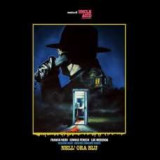
Uncle Acid & The Deadbeats - Nell' Ora Blu LP 2x12"
disponibile anche

Turquoise Vinyl[36,09 €]


Sechstes Studioalbum und zweifellos das bislang radikalste der britischen Psychedelic und Doom-Band. 'Nell' Ora Blu' sticht aus der sterilen Rock'n'Roll-Wüste des Jahres 2024 hervor wie ein blutdurchtränktes Leuchtfeuer. Eine epische Hommage an das italienische Kriminalkino der späten 60er/frühen 70er Jahre. Inkl. exklusiver Gastauftritte von Topstars der italienischen Giallo- und Poliziotteschi-Filmgenres, darunter Franco Nero und Edwige Fenech. Was uns dieser schillernde Abstecher über die Zukunft von Uncle Acid & The Deadbeats verrät, bleibt ein Rätsel, aber Nell' Ora Blu ist eine exzentrische Glanzleistung der Band. Eine aurale Fortsetzung italienischer Kult-Soundtracks, Musik für Träume und nicht zuletzt…Albträume.
Live-Auftritte des Albums in voller Länge an ausgewählten europäischen Veranstaltungsorten werden bald bekannt gegeben. Neben der CD gibt es schwarzes Doppel-Vinyl und eine limitierte Version in Türkis.

pre-ordina ora14.06.2024

dovrebbe essere pubblicato su 14.06.2024

34,87
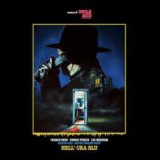
Uncle Acid & The Deadbeats - Nell' Ora Blu LP 2x12"

Sechstes Studioalbum und zweifellos das bislang radikalste der britischen Psychedelic und Doom-Band. 'Nell' Ora Blu' sticht aus der sterilen Rock'n'Roll-Wüste des Jahres 2024 hervor wie ein blutdurchtränktes Leuchtfeuer. Eine epische Hommage an das italienische Kriminalkino der späten 60er/frühen 70er Jahre. Inkl. exklusiver Gastauftritte von Topstars der italienischen Giallo- und Poliziotteschi-Filmgenres, darunter Franco Nero und Edwige Fenech. Was uns dieser schillernde Abstecher über die Zukunft von Uncle Acid & The Deadbeats verrät, bleibt ein Rätsel, aber Nell' Ora Blu ist eine exzentrische Glanzleistung der Band. Eine aurale Fortsetzung italienischer Kult-Soundtracks, Musik für Träume und nicht zuletzt…Albträume.
Live-Auftritte des Albums in voller Länge an ausgewählten europäischen Veranstaltungsorten werden bald bekannt gegeben. Neben der CD gibt es schwarzes Doppel-Vinyl und eine limitierte Version in Türkis.

non in magazzino

Ordina ora e ordineremo l'articolo per te presso il nostro fornitore.

36,09

Last In: 22 months ago
Uncle Acid & The Deadbeats - Nell' Ora Blu LP 2x12"
disponibile anche

Black Vinyl[43,66 €]


Plainly the most radical album of their career to date, Nell’ Ora Blu stands out from the sterile desert of rock ’n’ roll in 2024 like a gore-drenched beacon. What this scintillating detour tells us about the future of Uncle Acid & The Deadbeats remains a mystery, but after enjoying such rich and fruitful artistic indulgence, Starrs’ notoriety as one of heavy music’s most distinctive voices can only increase. An eccentric tour-de-force, Nell’ Ora Blu is the band’s magnum opus. You will have nightmares. Trust no one. Watch your back. Let the blood flow…

Sixth studio album from this globally recognised cult institution. Nell’ ora blu is an epic tribute to Italian crime cinema from the late 60s/early 70s. It features exclusive guest appearances from top stars of the Giallo & Poliziotteschi genres, including Franco Nero and Edwige Fenech.

pre-ordina ora31.05.2024

dovrebbe essere pubblicato su 31.05.2024

43,66
Uncle Acid & The Deadbeats - Nell' Ora Blu LP 2x12"
disponibile anche

Turquoise Vinyl[43,66 €]


Plainly the most radical album of their career to date, Nell’ Ora Blu stands out from the sterile desert of rock ’n’ roll in 2024 like a gore-drenched beacon. What this scintillating detour tells us about the future of Uncle Acid & The Deadbeats remains a mystery, but after enjoying such rich and fruitful artistic indulgence, Starrs’ notoriety as one of heavy music’s most distinctive voices can only increase. An eccentric tour-de-force, Nell’ Ora Blu is the band’s magnum opus. You will have nightmares. Trust no one. Watch your back. Let the blood flow…

Sixth studio album from this globally recognised cult institution. Nell’ ora blu is an epic tribute to Italian crime cinema from the late 60s/early 70s. It features exclusive guest appearances from top stars of the Giallo & Poliziotteschi genres, including Franco Nero and Edwige Fenech.

pre-ordina ora31.05.2024

dovrebbe essere pubblicato su 31.05.2024

43,66
Uncle Acid & The Deadbeats - Vol.1  LP

LP-Reissue des letzten Studioalbums, ursprünglich 2018 veröffentlicht!
Die Gruppe spielt eine Mischung aus Doom Metal und Psychedelic Rock der 1970er-Jahre, wobei die Gitarrenriffs an Black Sabbath erinnern. Des Weiteren wurde die Band von Neil Young, The Beatles, Electric Wizard oder The Kinks beeinflusst.
Limitiertes, dunkelgrünes Vinyl!

pre-ordina ora18.08.2023

dovrebbe essere pubblicato su 18.08.2023

32,73
Uncle Acid & The Deadbeats - Wasteland LP

LP-Reissue des ersten Albums, ursprünglich 2010 veröffentlicht!
Die Gruppe spielt eine Mischung aus Doom Metal und Psychedelic Rock der 1970er-Jahre, wobei die Gitarrenriffs an Black Sabbath erinnern. Des Weiteren wurde die Band von Neil Young, The Beatles, Electric Wizard oder The Kinks beeinflusst.
Limitiertes, dunkelgrünes Vinyl!

pre-ordina ora18.08.2023

dovrebbe essere pubblicato su 18.08.2023

32,73
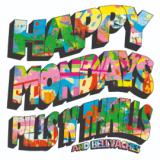
Happy Mondays - Pills 'n' Thrills and Bellyaches LP

Originally released in 1990 by Happy Mondays, Pills ‘n’ Thrills and Bellyaches captured the chaotic, euphoric spirit of the Madchester movement, blending indie rock, acid house rhythms and funk grooves into a sound that helped reshape British alternative music. Featuring era-defining tracks such as “Step On” and “Kinky Afro,” the record became both a commercial breakthrough and a cultural snapshot of a generation fuelled by dance culture and Northern nightlife.

More than three decades later, its grooves, attitude and genre-blurring production still resonate strongly with contemporary audiences, influencing modern indie and electronic artists alike.

1LP Red Edition. All original audio remastered from Factory Records master tapes. Includes original album and brand new liner notes by James Brown.

pre-ordina ora21.08.2026

dovrebbe essere pubblicato su 21.08.2026

24,50
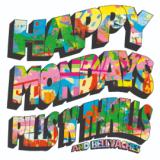
Happy Mondays - Pills 'n' Thrills and Bellyaches (LP 5x12")
  • A1: Kinky Afro
  • A2: God's Cop
  • A3: Donovan
  • A4: Grandbag's Funeral
  • A5: Loose Fit
  • B1: Dennis And Lois
  • B2: Bob's Yer Uncle
  • B3: Step On
  • B4: Holiday
  • B5: Harmony
  • C1: Hallelujah
  • C2: Holy Ghost
  • C3: Clap Your Hands
  • C4: Rave On
  • D1: Hallelujah (Maccoll Mix)
  • D2: Hallelujah (Club Mix)
  • D3: Rave On (Club Mix)
  • D4: W.f.l. (Think About The Future Mix)
  • E1: Hallelujah (Live At Elland Road, 1991)
  • E2: Donovan (Live At Elland Road, 1991)
  • E3: Kinky Afro (Live At Elland Road, 1991)
  • F1: Clap Your Hands (Live At Elland Road, 1991)
  • F2: Loose Fit (Live At Elland Road, 1991)
  • F3: Holiday (Live At Elland Road, 1991)
  • F5: Rave On (Live At Elland Road, 1991)
  • G1: E (Live At Elland Road, 1991)
  • G2: Tokoloshe Man (Live At Elland Road, 1991)
  • G3: Dennis And Lois (Live At Elland Road, 1991)
  • H1: God's Cop (Live At Elland Road, 1991)
  • H2: Step On (Live At Elland Road, 1991)
  • H3: Bobs Yer Uncle (Live At Elland Road, 1991)
  • I1: Step On (Stuff It In Mix)
  • I2: Kinky Groovy Afro Remix (12")
  • I3: Loose Fit (Perfecto 12" Mix)
  • I4: Tokoloshe Man
  • J1: Hallelujah (Daniel Avery Edit)
  • J2: Loose Fit (Shadow Child Edit)
  • J3: Gods Cop (Anna Prior Edit)
  • J4: Step On (Paul Oakenfold Edit)
  • J5: Hallelujah (Ewan Pearson Remix)
disponibile anche

Black Vinyl[23,32 €]

Red Vinyl[24,50 €]


5 x LP
60-page hardback book
Black vinyl
Printed labels
Printed inners
Slipcase
A2 poster
Slipmat

Originally released in 1990 by Happy Mondays, Pills ‘n’ Thrills and Bellyaches captured the chaotic, euphoric spirit of the Madchester movement, blending indie rock, acid house rhythms and funk grooves into a sound that helped reshape British alternative music. Featuring era-defining tracks such as “Step On” and “Kinky Afro,” the record became both a commercial breakthrough and a cultural snapshot of a generation fuelled by dance culture and Northern nightlife.

More than three decades later, its grooves, attitude and genre-blurring production still resonate strongly with contemporary audiences, influencing modern indie and electronic artists alike.

5LP Edition. All original audio remastered from Factory Records master tapes. Includes original album, Hallelujah + Madchester Rave On, Baby Big Head Bootleg Album (Live at Elland Road, 1991), classic and new remixes, 60-page hardback book with brand new essays from James Brown and Central Station designers, fold-out A2 tour poster and Madchester slipmat.

pre-ordina ora21.08.2026

dovrebbe essere pubblicato su 21.08.2026

150,38
YUKINO INAMINE + AKIO NAGASE - Yugafu ai Kaji

Veteran Japanese electronic music producer, AKIO NAGASE, a leading player in the Kansai underground music scene since the late 1990s teams up with Yukino Inamine, a gifted and young female singer from Okinawa who magically mixes traditional Ryukyu (Okinawa) folk songs with her sanshin (Okinawan Shamisen) playing into the modern age, to create this wonderful collaborative album, Yugafu ai KAJI. This album is set to be released on GLOCAL RECORDS, a record store/ record label run by Genta Minowa, an ex-staff at the record store, Disc Shop Zero in Shimokitazawa, Tokyo and who still continues to introduce a great selection of dubby, club music from his HQ in Harajuku.

AKIO NAGASE regularly organised parties at his own venue, as well as ran a record store of the same name while actively being part of the Kansai scene at legendary clubs such as Tsuru no Ma, Sound Channel, etc., the best of what was offered in the Kansai underground dance scene in the 2000s.

As an artist, he released his own productions out of labels such as Sound Channel and RUDIMENTS run by Minowa. His album, Make Dub was released in 2003 out of the label, Sound Channel featured an innovative, techno meets dancehall track, Dance Hall King which connected techno, acid house with reggae and dub. This album is an undiscovered gem whose sound still emulates freshness and originality today (my wish is for it to be reissued on vinyl!) After a brief hiatus of releasing music, he released the EP, Delusion out of Chillmountain Records, a label run by his friend, Ground in 2018 and at his own leisurely pace, he has been slowly but surely releasing material that oozes originality, expressed through a robust acid sound and a variety of elements such as afro and Ryukyu folk music that is then incorporated into the medium of dub. Recently, he has also started to gain international attention by releasing original material and remixes out of labels such as the UK label, Emotional Especial, etc.

For this album, NAGASE teams up with Yukino Inamine who brings her own distinctive singing and sanshin playing magic into this collaboration and they fuse electronic music sounds with Ryukyu folk songs to create this wonderfully imaginative album that has no precedence or equal. Apart from the song, Ishikawa Koiuta, all other songs are covers of Ryukyu folk standards that were handpicked by NAGASE from the repertoire of songs that Inamine regularly performs live. They met up when NAGASE was commissioned to remix one of her original compositions, Miyagi Kaigan that was released in 2023 and that evolved into a collaboration with a concept that mixed Inamine singing Ryukyu folk standards with a backing tracks produced by NAGASE. Whenever she went to the the Kansai area, she would work on the basic track material created by NAGASE at the dub master of Osaka, Soulfire’s studio, HAV who would then additionally edit her takes to create the finishing tracks.

This album, Yugafu ai KAJI opens with Shirahamabushi, a track that slowly builds with an interesting mix of slow acid techno and sanshin and then moves onto the easy-going electro dub of Tinsagu nu hana (it is actually a cover of the track of the same title that first appeared in the label sampler, Comuni ó n Especial that was released on Emotional Especial. NAGASE initially wanted to feature Inamine on vocals for this track but due to scheduling issues, it did not happen but with good fortune, the new version of this track is now included in this album). A side closes with the optimistic Balearic sounds of Tsuki nu Kaisha that converges immaculately with slow-mo steppers. It is also worth noting that the person who introduced NAGASE to Inamine was the Okinawa dub master, HARIKUYAMAKU. They met at a concert held by both him & Yukino Inamine hosted by BUN BUN THE MC at the venue, RAGGA CHANNEL. From this encounter, this album came into fruition and they also asked HARIKUYAMAKU to produce an earthy, traditional rootsy, dub version of Tsuki nu Kaisha that is included as the 3rd track on the B Side.

Ashimizubushi, the track that magically blends old school Chicago house ala TRAX with Ryukyu folk music starts off the B side and it carries on to an uplifting track with a Skaouse (ska + house) feel, Hounen Ondo. Inserted after HARIKUYAMAKU’s dub of Tsuki nu Kaisha, this album closes out with the song, ‘Ishikawa Koi Uta’, the only song written by Inamine who said that she wrote it after falling in love with chill-out music. It is an ambient dub track with a collage like flavour, reminiscent of early The Orb (remixed by Mad Professor) and the latter half of the track finishes off with a message presented by Masao Itokazu (her uncle) who received tutelage from the prior owner of her sanshin that Inamine plays, Moritomo Inamine (her grandfather).

Incidentally, the album title, YUGAFU ai Kaji is derived from an auspicious word from Okinawa, Yugafu which means fruitful year, happiness, prosperity and ai (indigo) is a word that Yukino found inspiration few years ago (she wears a Okinawan indigo clothing called kinonuno in the front cover of this album).

The unique indigo colouring produced by nature overlaps with the unique charm of the human personality, and she wanted to present that current along with the music so the name was integrated to ‘indigo wind’, and the two were connected to form the album title, ‘YUGAFU ai Kaji’.

The photo of the front cover was taken by a young, Uchinaanunishie—- (meaning a boy from Okinawa) 17 year old photographer named Ratio and the designer of this album is Anmonaito who is a childhood friend of Inamine who also did the artwork for her album, Miyagi Kaigan. And the mastering and cutting of this album was done by Rei Taguchi.

The cosmology existing in Yukino Inamine’s singing is fully amplified by AKIO NAGASE’s spacey, abundant with many ideas, dance machine beat~ambient music and all of these elements are organically linked by the adhesive effect of dub.

In Stock

Disponibile in Stock e pronto per la spedizione

35,72
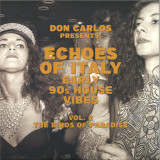
Various - ECHOES OF ITALY – THE BIRDS OF PARADISE – EARLY 90S HOUSE VIBES VOL.2 (2x12")

Googling “paradise house”, the first results to pop up are an endless list of European b&b’s with whitewashed lime façades, all of them promising “…an unmatched travel experience a few steps from the sea”. Next, a little further down, are the institutional websites of a few select semi-luxury retirement homes (no photos shown, but lots of stock images of smiling nurses with reassuring looks). To find the “paradise house” we’re after, we have to scroll even further down. Much further down.

It feels like yesterday, and at the same time it seems like a million years ago. The Eighties had just ended, and it was still unclear what to expect from the Nineties. Mobile phones that were not the size of a briefcase and did not cost as much as a car? A frightening economic crisis? The guitar-rock revival?! Certainly, the best place to observe that moment of transition was the dancefloor. Truly epochal transformations were happening there. From America, within a short distance one from the other, two revolutionary new musical styles had arrived: the first one sounded a bit like an “on a budget” version of the best Seventies disco-music – Philly sound made with a set of piano-bar keyboards! – the other was even more sparse, futuristic and extraterrestrial. It was a music with a quite distinct “physical” component, which at the same time, to be fully grasped, seemed to call for the knotty theories of certain French post-modern philosophers: Gilles Deleuze, Félix Guattari, Paul Virilio... Both those genres – we would learn shortly after – were born in the black communities of Chicago and Detroit, although listening to those vinyl 12” (often wrapped in generic white covers, and with little indication in the label) you could not easily guess whether behind them there was a black boy from somewhere in the Usa, or a girl from Berlin, or a pale kid from a Cornish coastal town.

Quickly, similar sounds began to show up from all corners of Europe. A thousand variations of the same intuition: leaner, less lean, happier, slightly less intoxicated, more broken, slower, faster, much faster... Boom! From the dancefloors – the London ones at least, whose chronicles we eagerly read every month in the pages of The Face and i-D – came tales of a new generation of clubbers who had completely stopped “dressing up” to go dancing; of hot tempered hooligans bursting into tears and hugging everyone under the strobe lights as the notes of Strings of Life rose up through the fumes of dry ice (certain “smiling” pills were also involved, sure). At this point, however, we must move on to Switzerland.

In Switzerland, in the quiet and diligent town of Lugano, between the 1980s and 1990s there was a club called “Morandi”. Its hot night was on Wednesdays, when the audience also came from Milan, Como, Varese and Zurich. Legend goes that, one night, none less than Prince and Sheila E were spotted hiding among the sofas, on a day-off of the Italian dates of the Nude Tour… The Wednesday resident and superstar was an Italian dj with an exotic name: Don Carlos. The soundtrack he devised was a mixture of Chicago, Detroit, the most progressive R&B and certain forgotten classics of old disco music: practically, what the Paradise Garage in New York might have sounded like had it not closed in 1987. In between, Don Carlos also managed to squeeze in some tracks he had worked on in his studio on Lago Maggiore. One in particular: a track that was rather slow compared to the BPM in fashion at the time, but which was a perfect bridge between house and R&B. The title was Alone: Don Carlos would explain years later that it had to be intended both in the English meaning of “by itself” and like the Italian word meaning “halo”. That wasn’t the only double entendre about the song, anyway. Its own very deep nature was, indeed, double. On the one hand, Alone was built around an angelic keyboard pattern and a romantic piano riff that took you straight to heaven; on the other, it showcased enough electronic squelches (plus a sax part that sounded like it had been dissolved by acid rain) to pigeonhole the tune into the “junk modernity” section, aka the hallmark of all the most innovative sounds of the time: music that sounded like it was hand-crafted from the scraps of glittering overground pop.

No one knows who was the first to call it “paradise house”, nor when it happened. Alternative definitions on the same topic one happened to hear included “ambient house”, “dream house”, “Mediterranean progressive”… but of course none were as good (and alluring) as “paradise house”. What is certain is that such inclination for sounds that were in equal measure angelic and neurotic, romantic and unaffective, quickly became the trademark of the second generation of Italian house. Music that seemed shyly equidistant from all the rhythmic and electronic revolutions that had happened up to that moment (“Music perfectly adept at going nowhere slowly” as noted by English journalist Craig McLean in a legendary field report for Blah Blah Blah magazine). Music that to a inattentive ear might have sounded as anonymous as a snapshot of a random group of passers-by at 10AM in the centre of any major city, but perfectly described the (slow) awakening in the real world after the universal love binge of the so-called Second Summer of Love.

For a brief but unforgettable season, in Italy “paradise house” was the official soundtrack of interminable weekends spent inside the car, darting from one club to another, cutting the peninsula from North to centre, from East to West coast in pursuit of the latest after-hours disco, trading kilometres per hour with beats per minute: practically, a new New Year’s Eve every Friday and Saturday night. This too was no small transformation, as well as a shock for an adult Italy that was encountering for the first time – thanks to its sons and daughters – the wild side of industrial modernity. The clubbers of the so-called “fuoriorario” scene were the balls gone mad in the pinball machine most feared by newspapers, magazines and TV pundits. What they did each and every weekend, apart from going crazy to the sound of the current white labels, was linking distant geographical points and non-places (thank you Marc Augé!) – old dance halls, farmhouses and business centres – transformed for one night into house music heaven. As Marco D’Eramo wrote in his 1995 essay on Chicago, Il maiale e il grattacielo: “Four-wheeled capitalism distorts our age-old image of the city, it allows the suburbs to be connected to each other, whereas before they were connected only by the centre (…) It makes possible a metropolitan area without a metropolis, without a city centre, without downtown. The periphery is no longer a periphery of any centre, but is self-centred”.

“Paradise house” perfectly understood all of this and turned it into a sort of cyber-blues that didn’t even need words, and unexpectedly brought back a drop of melancholic (post?)-humanity within a world that by then – as we would wholly realise in the decades to come – was fully inhuman and heartless. A world where we were all alone, and surrounded by a sinister yellowish halo, like a neon at the end of its life cycle. But, for one night at least, happy."

In Stock

Disponibile in Stock e pronto per la spedizione

28,99
MONDO GROOVE - the new italian funky scene LP 2x12"

Black Music has always been the main source of inspiration for contemporary music and for the IRMA records label, which turns 37
this year, it is a fundamental part of its musical vision.
In the 80s with the birth of the term Acid Jazz this international scene began to emerge that fished out the Soul Jazz Funk sounds of the
70s and which to this day is a scene alive and well that continuously generates new artists. IRMA records is recognized as one of the
labels that has published several of these artists since the 90s starting with Jestofunk, Bossa Nostra, Gazzara, Man Sueto and many
others.
With this compilation entitled ‘Mondo Groove’ it wanted to highlight the very varied Italian scene today that inevitably undergoes the influences of Dancefloor but also those of Afrobeat, Fusion and World Music.
On the cover one of the artists included in the selection: Alixia Mistral.

In Stock

Disponibile in Stock e pronto per la spedizione

26,68
Dove Quite + Sapo - Alien Dancer EP

This is a limited print with each copy featuring a different handmade artwork on the center.

Following the "Hey Oh Let’s Go!" 7-inch debut and the second release “so Iride ep”, label owner Dove Quiete is back on Muovo Musica Records withhis uncles Sapo and Cristian Croce foritsthird release: a 4-tracker mixtureof Acid, Bass, Electro, Punk, Techno, and a whole lot else. Written andproduced by Guglielmo Prati aka Dove Quiete in the infamousSerendeepity basement studio.Mastered at Prisma Sonoro Studio. Milan.

In Stock

Disponibile in Stock e pronto per la spedizione

16,39
Various - MENTAL GROOVE CLASSICS VOL. 3 LP 2x12"

The Mental Groove Classic series returns with a treasure trove of rare and hard to find tracks plucked from the personal collection of label founder Olivier Ducret, a pivotal figure in Switzerland's acid house and rave-era party scene.

On Volumes Two and Three of the series - the first installment hit stores in 2017 - the Mental Groove and Musique Pour La Danse label founder takes us back to the turn of the '90s, a time he spent promoting parties in fields, squats, forests, warehouses and former factories in and around Geneva and behind the counter of a record shop of the same name. While others in Switzerland's emerging dance music scene gravitated towards US house and garage, Olivier and his crew opted for a bass, breaks and techno-focused sound inspired by regular trips to clubs, raves and record shops in the UK.

Drawing directly from his own record box and a memory bank full of snapshots of euphoric dancefloor moments, Mental Groove Classics volumes Two and Three sees Olivier reaching for cuts of near-mythical rarity, genuinely overlooked gems, and undeniably brilliant tracks that have left a long-lasting impression on the local raving landscape. It's an autobiographical audio document, historical archive and personal musical statement all rolled into one, inspired by a moment in time where musical boundaries were being redrawn in a wave of carefree optimism and freedom inspired new rave scenes across Europe and far beyond.


Matt Anniss

Original artwork by Soho's Brain Club co-owner and artist of early British club culture Mark Wigan.

File under house, breakbeat, techno and warehouse rave music

In Stock

Disponibile in Stock e pronto per la spedizione

23,74
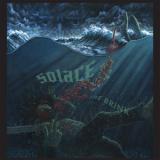
SOLACE - THE BRINK LP 2x12"

SOLACE

THE BRINK LP 2x12"

2x12inchBFRLPX10
BLUES FUNERAL
08.05.2026
 
3

Neue 2026er-Auflage in neuer Farbe! Das neue Album der doom-meets-stoner-meets-metal Legenden! Solace entstand aus den Columbia-Künstlern Godspeed und ist eine der tragenden Säulen des Stoner Metal! Konstante musikalische Integrität und Live-Auftritte über mehr als zwei Jahrzehnte hinweg sorgen für eine treue Anhängerschaft und relvanten Szene-Status. South Jersey's SOLACE halfen mit ihrem zeitlosen Debüt "Further", die erste Welle des US Stoner Metal zu gründen, indem sie alle paar Jahre musikalisch 50 Tonnen-schwere Alben mit Next-Level-Riffage raushauten, bis hin zu ihrem gefeierten "A.D."-Album im Jahr 2010. Eine epische Rückkehr, "The Brink" ist ein glorreiches Doppelalbum - NWOBHM-zweifach-Gitarrenattacken, gewichtige Doom-Power und rifftrunkene Sea Shanties. Luxuriöses farbiges Vinyl plus wunderschönes Gatefold-Sleeve für Fans von Monolord, Haunt, War Cloud, The Obsessed, The Necromancers, The Atomic Bitchwax, Uncle Acid. Das letztes Album 'A.D.' wurde von iTunes (neben High on Fire, Monster Magnet, Unearthly Trance) zu einem der besten Metal-Alben des Jahres 2010 gekürt, "The Brink" auf Blues Funeral wird vielleicht eines der besten des Jahrzehnts.

pre-ordina ora08.05.2026

dovrebbe essere pubblicato su 08.05.2026

24,79
SHITS - Diet Of Worms LP

SHITS

Diet Of Worms LP

12inchLAUNCH426
Rocket Recordings
03.04.2026

What's the point of the howl of string to speaker, the hammering of stick-on skin? Is it transcendence, elevating the human spirit by catharsis in sound? Or is it summoning chaos, a purgatory in which to bask in all that’s unclean, the better to feel alive?
Why not both? Because that’s what’s on offer on Diet Of Worms, the second Rocket release by The Shits, Leeds via Newcastle’s titans of disgust and deliverance. This is a feast for the senses in the worst way possible - primal rock boiled down to its essence and flung full in your face. Using repetition, tortured vocal invective and heads-down intensity as blunt instruments, these eight tracks are an unprecedented torrent of acidic salvation. Whilst lurking somewhere on the decadence-destruction axis between the nihilism of prime Stooges and the bloody blackout of Braimbombs, Diet Of Worms is possessed of a legitimately uncompromising hostility that both elevates and debases it to co-ordinates unknown.
There are revelations here in the riffage and the rancour, even if they are the kind that occur in the bleary miasma of the lock-in, or witnessing the streetlight blur of the subsequent stagger home. Even more single-minded and remorseless than the band’s Rocket debut ‘You’re A Mess’, this is a record that demands full immersion. Whether it’s ‘Then You’re Dead’ hammering on a pulverising garage-stinking riff until it begs for mercy, or ‘Change My Ways’, whose Creedence-In-Hell swagger and lurch is that of abjection transmuted into joy, this is psychedelia forcibly removed from its comfort zone of pastiche, and thrust into a bad-trip realm of the vivid and nightmarish.
But rarely has the process of making beauty and horror indivisible seemed like so much fun. If Werner Herzog was right, and the only harmony in the universe is that of overwhelming and collective murder, then The Shits are the true music of the spheres.

pre-ordina ora03.04.2026

dovrebbe essere pubblicato su 03.04.2026

23,49
Rob Zombie - The Great Satan LP

Rob Zombie

The Great Satan LP

12inch4065629753139
Nuclear Blast
27.02.2026
  • A2: F.t.w. 84
  • A3: Tarantula
  • A4: (I'm A) Rock N Roller
  • A5: Heathen Days
  • A6: Who Am I?
  • A7: Black Rat Coffin
  • A8: Sir Lord Acid Wolfman
  • A9: Welcome To The Electric Age
  • A11: Punks And Demons
  • A12: The Devilman
  • A13: Out Of Sight
  • A14: Revolution Motherf***Ers
  • A15: The Black Scorpion
  • A16: Unclean Animals
pre-ordina ora27.02.2026

dovrebbe essere pubblicato su 27.02.2026

32,14
Orchestroll - Corrosiv LP 2x12"

Corrosiv, the sophomore album from Orchestroll, reveals the duo at their most mature and vulnerable. Originally conceived as a reflection on hybridity and bastardization, the album deploys New Age and ambient compositional tropes as a launchpad, exposing their trite sanctity to the realities of corrosion. Having come of age in the 1970s and 1980s, the New Age movement perdures today as a domain of contradictions; its promise of transcendence riddled with the very commercialized dogma from which its adherents claim to flee. Healing modalities such as reiki, crystal therapy, and sound baths are simultaneously pathways to solace and sites of exploitation; their sonic counterparts—ethereal synth pads, shimmering textures, celestial drones—claim to facilitate meditation and enlightenment while devolving into empty signifiers of vitality. With Corrosiv, Orchestroll displays neither reverence nor disdain toward New Age: they exhume it instead, revealing the saccharine effervescence and commodified murk undergirding its aesthetics. The result is intoxicating—disquieting.

Born from a two-week residency at EMS Studios and expanded through a performance at MUTEK Montreal’s 25th anniversary, Corrosiv has since outgrown its original conceptual nucleus, taking on a broader scope. Its inquiry into New Age ideology’s voided rhetoric and aesthetic mysticism now informs a broader interrogation of cultural mediocrity, anti-authoritarianism, gatekeeping, music industry toxicity, and the crumbling edifice of late capitalism and techno-feudalism—all the mechanisms by which meaning is stripped from ceremony, and once-potent forms of knowledge are subsumed into the machinery of economic extraction, severed from their original essence, and transformed into hollow simulacra. Corrosiv distills these themes through a loose narrative: a soul, fixated on wellness as dictated by cosmetic economism, becomes ensnared in an endless afterlife, unable to transcend and shed its dilapidated consciousness.

Framed as an act of audio dissolution, the album thus engages in an alchemical process, whereby complex waveshaping, morphing synthesis, and distortion enact a ritual of fragmentation. There is also friction: between the rigid, mechanical imposition of systematized order and the untamed, chaotic force of organic metamorphosis. Here corrosion and confinement are not solely conceptual motifs; they are enacted in real time, sculpting the album’s terrain. Scraping, tarnishing, degradation—the languid wear of form and substance—become instruments in their own right: buffing as abrasion, entrapment as transformation, corrosion as a means of reconfiguration. The ‘protagonist,’ if there must be one, is the listener, caught within the throes of structural determinism and the potential for emancipation, unable to pass into something greater as the specters of collapsed futures accumulate in the margins.

Corrosiv extends its reach through collaborations with familiar voices: Heith (PAN), VISIO (Haunter), Femminielli (Drowned by Locals), Habib Bardi (Interzone), and Jiyoung Wi (Enmossed, Psychic Liberation, Doyenne) each leave their imprint on its sprawling landscape. At 1h16m, it is a procession, dense with earworms that burrow into the listener’s unconscious.

Misshapen, broken-down metals leach copper into blood, acid reflux burning through the core. Psyche disaggregates into cosmic turmoil, drifting between planes—tongue on rustline, gullet laced with solvent hymns, molars unlatching, bitcrushed to marrowspill. A spasm of brine, ferrous scripture, venomtext blooming in leaden rivulets, cartilage smoldering in phosphor decomposition, synapses drowning in a quicksilver choir. Crest of bile, churning ore, breath clotting into arsenic mist, vein-thread cinched, a corrosive gospel, limb by limb, oxidized to silence.

Ultimately, as the music exhales its final breath, its residue refuses to dissipate—and stillness alone remains. There are no conclusions here—no resolution, no collapse—only the slow drift outward of a vessel unmoored, lost in the sea of symbolic souring. Corrosiv sings the song of a world barren of prophecy, littered with aesthetic detritus. Whether this magic has been transfigured or simply worn away is unclear: the last breath dissipates, but the oxidation does not stop. The silence, too, will decay.

Conceptualized, composed, performed, recorded, mixed, engineered and produced by Jesse Osborne-Lanthier, and Asaël Richard-Robitaille in 2023 and 2024 at Elektron Musik Studion (EMS) - Stockholm, Sweden and Landsc8pe Studio - Montréal, QC, Canada.
Artwork by Jesse Osborne-Lanthier.
Mastered by Stephan Mathieu @ Schwebung Mastering.

pre-ordina ora02.06.2025

dovrebbe essere pubblicato su 02.06.2025

30,21
Various - ECHOES OF ITALY - ARTISTS IN WONDERLAND – EARLY 90S HOUSE VIBES VOL.1 LP 2x12"

Volume 1 of this expertly curated project of 90s Italian House - put together by Don Carlos.

If Paradise was half as nice… by Fabio De Luca.

Googling “paradise house”, the first results to pop up are an endless list of European b&b’s with whitewashed lime façades, all of them promising “…an unmatched travel experience a few steps from the sea”. Next, a little further down, are the institutional websites of a few select semi-luxury retirement homes (no photos shown, but lots of stock images of smiling nurses with reassuring looks). To find the “paradise house” we’re after, we have to scroll even further down. Much further down.

It feels like yesterday, and at the same time it seems like a million years ago. The Eighties had just ended, and it was still unclear what to expect from the Nineties. Mobile phones that were not the size of a briefcase and did not cost as much as a car? A frightening economic crisis? The guitar-rock revival?! Certainly, the best place to observe that moment of transition was the dancefloor. Truly epochal transformations were happening there. From America, within a short distance one from the other, two revolutionary new musical styles had arrived: the first one sounded a bit like an “on a budget” version of the best Seventies disco-music – Philly sound made with a set of piano-bar keyboards! – the other was even more sparse, futuristic and extraterrestrial. It was a music with a quite distinct “physical” component, which at the same time, to be fully grasped, seemed to call for the knotty theories of certain French post-modern philosophers: Gilles Deleuze, Félix Guattari, Paul Virilio... Both those genres – we would learn shortly after – were born in the black communities of Chicago and Detroit, although listening to those vinyl 12” (often wrapped in generic white covers, and with little indication in the label) you could not easily guess whether behind them there was a black boy from somewhere in the Usa, or a girl from Berlin, or a pale kid from a Cornish coastal town.

Quickly, similar sounds began to show up from all corners of Europe. A thousand variations of the same intuition: leaner, less lean, happier, slightly less intoxicated, more broken, slower, faster, much faster... Boom! From the dancefloors – the London ones at least, whose chronicles we eagerly read every month in the pages of The Face and i-D – came tales of a new generation of clubbers who had completely stopped “dressing up” to go dancing; of hot tempered hooligans bursting into tears and hugging everyone under the strobe lights as the notes of Strings of Life rose up through the fumes of dry ice (certain “smiling” pills were also involved, sure). At this point, however, we must move on to Switzerland.

In Switzerland, in the quiet and diligent town of Lugano, between the 1980s and 1990s there was a club called “Morandi”. Its hot night was on Wednesdays, when the audience also came from Milan, Como, Varese and Zurich. Legend goes that, one night, none less than Prince and Sheila E were spotted hiding among the sofas, on a day-off of the Italian dates of the Nude Tour… The Wednesday resident and superstar was an Italian dj with an exotic name: Don Carlos. The soundtrack he devised was a mixture of Chicago, Detroit, the most progressive R&B and certain forgotten classics of old disco music: practically, what the Paradise Garage in New York might have sounded like had it not closed in 1987. In between, Don Carlos also managed to squeeze in some tracks he had worked on in his studio on Lago Maggiore. One in particular: a track that was rather slow compared to the BPM in fashion at the time, but which was a perfect bridge between house and R&B. The title was Alone: Don Carlos would explain years later that it had to be intended both in the English meaning of “by itself” and like the Italian word meaning “halo”. That wasn’t the only double entendre about the song, anyway. Its own very deep nature was, indeed, double. On the one hand, Alone was built around an angelic keyboard pattern and a romantic piano riff that took you straight to heaven; on the other, it showcased enough electronic squelches (plus a sax part that sounded like it had been dissolved by acid rain) to pigeonhole the tune into the “junk modernity” section, aka the hallmark of all the most innovative sounds of the time: music that sounded like it was hand-crafted from the scraps of glittering overground pop.

No one knows who was the first to call it “paradise house”, nor when it happened. Alternative definitions on the same topic one happened to hear included “ambient house”, “dream house”, “Mediterranean progressive”… but of course none were as good (and alluring) as “paradise house”. What is certain is that such inclination for sounds that were in equal measure angelic and neurotic, romantic and unaffective, quickly became the trademark of the second generation of Italian house. Music that seemed shyly equidistant from all the rhythmic and electronic revolutions that had happened up to that moment (“Music perfectly adept at going nowhere slowly” as noted by English journalist Craig McLean in a legendary field report for Blah Blah Blah magazine). Music that to a inattentive ear might have sounded as anonymous as a snapshot of a random group of passers-by at 10AM in the centre of any major city, but perfectly described the (slow) awakening in the real world after the universal love binge of the so-called Second Summer of Love.

For a brief but unforgettable season, in Italy “paradise house” was the official soundtrack of interminable weekends spent inside the car, darting from one club to another, cutting the peninsula from North to centre, from East to West coast in pursuit of the latest after-hours disco, trading kilometres per hour with beats per minute: practically, a new New Year’s Eve every Friday and Saturday night. This too was no small transformation, as well as a shock for an adult Italy that was encountering for the first time – thanks to its sons and daughters – the wild side of industrial modernity. The clubbers of the so-called “fuoriorario” scene were the balls gone mad in the pinball machine most feared by newspapers, magazines and TV pundits. What they did each and every weekend, apart from going crazy to the sound of the current white labels, was linking distant geographical points and non-places (thank you Marc Augé!) – old dance halls, farmhouses and business centres – transformed for one night into house music heaven. As Marco D’Eramo wrote in his 1995 essay on Chicago, Il maiale e il grattacielo: “Four-wheeled capitalism distorts our age-old image of the city, it allows the suburbs to be connected to each other, whereas before they were connected only by the centre (…) It makes possible a metropolitan area without a metropolis, without a city centre, without downtown. The periphery is no longer a periphery of any centre, but is self-centred”.

“Paradise house” perfectly understood all of this and turned it into a sort of cyber-blues that didn’t even need words, and unexpectedly brought back a drop of melancholic (post?)-humanity within a world that by then – as we would wholly realise in the decades to come – was fully inhuman and heartless. A world where we were all alone, and surrounded by a sinister yellowish halo, like a neon at the end of its life cycle. But, for one night at least, happy.

non in magazzino

Ordina ora e ordineremo l'articolo per te presso il nostro fornitore.

28,99

Last In: 5 days ago
Articoli per pagina:
N/ABPM
Vinyl