Search:und

Styles
All
PARIAH - Blaze of Obscurity Re-Issue
  • 1: Missionary Of Mercy
  • 2: Puppet Regime
  • 3: Canary
  • 4: Blaze Of Obscurity
  • 5: Retaliate!
  • 6: Hypochondriac
  • 7: Enemy Within
  • 8: The Brotherhood

Pariah’s cult album re-issued! “Blaze of Obscurity” brings you pure Thrash Metal fury! Satan changed their name to Pariah in 1988-1989. There’s Heavy Metal, Power Metal, Thrash Metal, Death Metal, the list seems almost endless. Sub-genres are important in metal and bands are quickly classified and labeled. Pariah (the last re-incarnation of Satan) is one of few bands that are difficult if not impossible to classify. Is it Heavy metal? NWOBHM? Thrash Metal? Pariah did not make it easy to describe their sound. It might be too sophisticated to simply label it Heavy Metal, which in its infancy was a rather simple affair.

They don’t sound like any Metal band out there, perhaps discounting some of the more aggressive and technical ones, and then the signature NWOBHM sound is added. The guitar playing by Russ Tippins and Steve Ramsey is undeniably what defines Pariah as well as Satan in the past. Undeniably, Satan has gone a long way; from humble NWOBHM beginnings, to Experimental/Melodic Mettal (in Blind Fury) and something that could be described as a NWOBHM/Thrash Metal hybrid (“The Kindred”). It’s as if they’ve been experimenting trying to find their identity, and theyfinally found it. Stylistically, “Blaze of Obscurity” could be seen a step back to “Suspended Sentence”, but this time around they got everything right, down to the last note. Those who have heard Satan know what to expect: great guitar playing.

And sure enough, “Blaze of Obscurity” is a demonstration of guitar mastery and is overall a very guitar-driven album, with plenty of mind-boggling riffs and solos are all over the place, but more importantly, it’s a demonstration of some amazing songwriting as well. This is easily Pariah/Satan’s creative peak and one of the most consistent albums I’ve ever heard, featuring eight great and conceptually perfect songs with lyrics that come across as sophisticated and thought-provoking. It is not fair to put the entire spotlight on Tippins and Ramsey though since the drumming and bass work from Sean Taylor and Graham English really shines. The rhythm is fast and tight, keeping it focused, aggressive and intense till the end. Vocalist Michael Jackson (yes, that’s his name) has to be commended too as this is easily his careers best performance.

The verdict: “Blaze of Obscurity”: the level of musical genius expressed here, along with near flawless songwriting, is more than enough to skyrocket it to heights reserved only for classics. Probably not your choice for some light listening those quiet Sunday evenings, but those who take a more serious, intellectual approach when selecting their music will find very much to appreciate here.
Tracklisting

pre-order now27.03.2026

expected to be published on 27.03.2026

28,99
Astrud Gilberto - The Shadow Of Your Smile

Astrud Gilberto

The Shadow Of Your Smile

12inch8816334
Verve Reissues
27.03.2026

Bossa-Nova-Königin Astrud Gilberto in neuem Glanz. Nachdem ihr Gastauftritt auf dem legendären Album „Getz/Gilberto“ sie berühmt gemacht hatte, war dies ihr zweites Album unter eigenem Namen, es
machte sie endgültig zum Star der Bossa-Nova-Welle, die in den 1960er Jahren die ganze Welt eroberte.
Ihre unverwechselbare Stimme wird hier von sanft swingenden Arrangements von Don Sebesky und Claus
Ogerman umrahmt, die die Songs aus Bossa, Jazz und Pop perfekt veredeln.

pre-order now27.03.2026

expected to be published on 27.03.2026

33,82
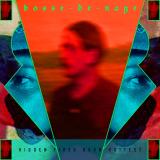
Bosse-De-Nage - Hidden Fires Burn Hottest (2x12")
  • 1: Where To Now?
  • 2: Mementos
  • 3: In The Name Of The Moth
  • 4: With A Shrug
  • 5: No Such Place
  • 6: Triangular Dream
  • 7: Underwater
  • 8: Frenzy
  • 9: Immortality Project
  • 10: Leviathan
also available

Black Vinyl[34,03 €]

CASSETTE[18,07 €]


There's a tendency in metal to mistake aggression for honesty, volume for depth. To confuse the performance of darkness with its actual weight. Hidden Fires Burn Hottest, the new album from San Francisco-based post-black metal band Bosse-de-Nage, sidesteps this entirely. It’s the group’s most fully realized work yet, precisely because it refuses to be pinned down.

Bosse-de-Nage have been working with The Flenser for over fifteen years. They were one of the first bands the label ever partnered with and have the longest active relationship in the label's history. But unlike most bands who build momentum through constant touring and visibility, Bosse-de-Nage has largely existed apart from the music world's usual machinery. They've evolved on their own terms, in relative isolation, allowing the work to develop without outside pressure or influence. What began rooted in black metal anonymity has mutated into something that actively defies categorization. The aggression is still there, but it's no longer the point. Hidden Fires Burn Hottest finds the band treating emotions like physical objects, feelings with spatial properties. “No Such Place"" describes a space that can't exist but does anyway, somewhere between thought and location. ""Immortality Project"" examines infinite possibility not as promise but as problem, endless options collapsing under their own weight. These songs don't use metaphor to describe emotion. They make emotion into something you could theoretically touch.
Tracked by Jack Shirley (Deafheaven, Oathbreaker) at Atomic Garden East and mixed and mastered by Richard Chowenhill of Agriculture, Hidden Fires Burn Hottest was years in development, with some tracks beginning in 2018.

The long writing process offered time that most records don't get. Time to live with ideas, revise endlessly, to let structures settle. For the first time, lyricist Bryan Manning wrote everything in advance, creating a surplus to pull from rather than working under deadline pressure. The difference shows.
Coming off Further Still, an album built on constraint and economy, Bosse-de-Nage sought the opposite: sprawl, strangeness, fewer rules. Space for ideas to develop without rushing them. Dynamics that move through quiet as much as noise. Presence earned through atmosphere instead of volume. The record even includes ""Mementos,"" which might be considered the first love song the band has ever written.

Nothing here coheres into a theme. These are pieces pulled from low moments and private feelings made public through sound. The band has never been interested in positivity, in music that resolves cleanly or offers comfort. But bleakness doesn't mean humorlessness. There's something darkly funny running through much of it, even when it shouldn't be.
Hidden Fires Burn Hottest doesn't explain itself. It just insists: what you feel is as real as what you can see."

pre-order now27.03.2026

expected to be published on 27.03.2026

35,50
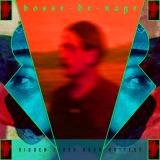
Bosse-De-Nage - Hidden Fires Burn Hottest (TAPE)

There's a tendency in metal to mistake aggression for honesty, volume for depth. To confuse the performance of darkness with its actual weight. Hidden Fires Burn Hottest, the new album from San Francisco-based post-black metal band Bosse-de-Nage, sidesteps this entirely. It’s the group’s most fully realized work yet, precisely because it refuses to be pinned down.

Bosse-de-Nage have been working with The Flenser for over fifteen years. They were one of the first bands the label ever partnered with and have the longest active relationship in the label's history. But unlike most bands who build momentum through constant touring and visibility, Bosse-de-Nage has largely existed apart from the music world's usual machinery. They've evolved on their own terms, in relative isolation, allowing the work to develop without outside pressure or influence. What began rooted in black metal anonymity has mutated into something that actively defies categorization. The aggression is still there, but it's no longer the point. Hidden Fires Burn Hottest finds the band treating emotions like physical objects, feelings with spatial properties. “No Such Place"" describes a space that can't exist but does anyway, somewhere between thought and location. ""Immortality Project"" examines infinite possibility not as promise but as problem, endless options collapsing under their own weight. These songs don't use metaphor to describe emotion. They make emotion into something you could theoretically touch.
Tracked by Jack Shirley (Deafheaven, Oathbreaker) at Atomic Garden East and mixed and mastered by Richard Chowenhill of Agriculture, Hidden Fires Burn Hottest was years in development, with some tracks beginning in 2018.

The long writing process offered time that most records don't get. Time to live with ideas, revise endlessly, to let structures settle. For the first time, lyricist Bryan Manning wrote everything in advance, creating a surplus to pull from rather than working under deadline pressure. The difference shows.
Coming off Further Still, an album built on constraint and economy, Bosse-de-Nage sought the opposite: sprawl, strangeness, fewer rules. Space for ideas to develop without rushing them. Dynamics that move through quiet as much as noise. Presence earned through atmosphere instead of volume. The record even includes ""Mementos,"" which might be considered the first love song the band has ever written.

Nothing here coheres into a theme. These are pieces pulled from low moments and private feelings made public through sound. The band has never been interested in positivity, in music that resolves cleanly or offers comfort. But bleakness doesn't mean humorlessness. There's something darkly funny running through much of it, even when it shouldn't be.
Hidden Fires Burn Hottest doesn't explain itself. It just insists: what you feel is as real as what you can see."

pre-order now27.03.2026

expected to be published on 27.03.2026

18,07
Cruel Force - Haneda LP

While many have tried to emulate the ancient German (black)thrash sound, CRUEL FORCE brimmed with an authenticity that could not be denied, as well as songwriting that added to that noble tradition rather than lazily picking at its corpse. Their two successive albums, 2010's The Rise of Satanic Might and 2011's Under the Sign of the Moon, made CRUEL FORCE a certifiably CULT name in the international metal underground. Sadly, the band fell into a hiatus following that second album, but returned reinvigorated with the comeback 7" EP Across the Styx in 2022 and, a year later, the glorious full- length Dawn of the Axe at the hands of new label home SHADOW KINGDOM. Continuing to make up for lost time, CRUEL FORCE storm back with swords gleaming high on their fourth full- length, Haneda.

Where a line could be drawn between the band's "first era" of The Rise of Satanic Might / Under the Sign of the Moon, so continues this Second Era that began with Dawn of the Axe - one that harkens to the "Jurassic period" of heavy metal, when everything was rawer, less polished, and more energetic and powerful. As displayed by that pivotal predecessor, Haneda further proves that CRUEL FORCE are more so an old-style speed metal band, largely bereft of that blackened edge during their First Era. The tradeoff is that there's a prominent mysticism coursing through that speed, and the blue-collared aspect of Dawn of the Axe is now spit-shined to a lethal slickness that makes Haneda hit that much harder.

However, it must be stressed that, while it follows logically from Dawn of the Axe, Haneda is very much its own headspace, its own continuation of a still-vital aesthetic. At times more epic, exuding both more and different atmospheres, CRUEL FORCE here take the listener on a journey from old temples to desert planes, from deep jungles to mountain tops, and other mysterious locales beyond; indeed, the whole record is like a journey through mystical realms. Although no concept album, Haneda is very conceptual in its aesthetics, even down to its production: BIG and naturaltoned, from the guitars to especially the drums, everything here is as '80s and authentic as possible, underlining

pre-order now27.03.2026

expected to be published on 27.03.2026

22,06
Kreator - Under The Guillotine – Box Set

6 LPS, DVD, 40 PAGE BOOK, CASSETTE
AND FIGURINE USB DRIVE

Endless Pain
(Swirl vinyl with original artwork & inner sleeve)
Pleasure To Kill
(Splatter vinyl with original artwork & inner sleeve)
Terrible Certainty
(Splatter vinyl with original artwork & inner lyric sleeve)
Extreme Aggression
(Half/half vinyl with original artwork & inner lyric sleeve)
Coma Of Souls
(Splatter vinyl with original artwork & inner lyric sleeve)
Renewal
(Swirl vinyl with original artwork & inner lyric sleeve)
Some Pain Will Last DVD
Containing ‘From The Vault’ mini documentary, plus two previously unreleased audio live concerts and an Andy Sneap remix of Live In East Berlin 1990.

Formed in Essen, Germany in 1984, Kreator are arguably the most influential and successful European thrash metal band ever, like many of their European speed metal brethren, Kreator fused Metallica's thrash innovations with Venom's proto-black metal imagery. Often credited with helping pioneer death metal and black metal by containing several elements of what was to become those genres. The band has achieved worldwide sales of over two million units for combined sales of all their albums, making them one of the best-selling German thrash metal bands of all time. The band’s style has changed several times over the years, from a Venom-inspired speed metal sound, later moving in to thrash metal, and including a period of transitioning from thrash to industrial metal and gothic metal throughout the 1990s. In the early 2000s, Kreator returned to their classic thrash sound, which has continued to the present. Their last studio album ‘Gods Of Violence’ charted top twenty in ten countries, including a number one slot in their home country of Germany.

pre-order now27.03.2026

expected to be published on 27.03.2026

168,87
Eels - Daisies Of The Galaxy (LP 2x12")
  • A1: Grace Kelly Blues
  • A2: Packing Blankets
  • A3: The Sound Of Fear
  • A4: I Like Birds
  • A5: Daisies Of The Galaxy
  • A6: Flyswatter
  • A7: It's A Motherfucker
  • B1: Estate Sale
  • B2: Tiger In My Tank
  • B3: A Daisy Through Concrete
  • B4: Jeannie's Diary
  • B5: Wooden Nickles
  • B6: Something Is Sacred
  • B7: Selective Memory
  • B8: Mr. E's Beautiful Blues

Ursprünglich veröffentlicht im Februar 2000, handelt es sich bei 'Daisies Of The Galaxy' um das dritte Studioalbum der amerikanischen Rockband Eels um Mastermind Mark Oliver Everett.
War der Vorgänger - aufgrund schwerer persönlicher Schicksalsschläge des Sängers - noch düster und verzweifelt, so ist das neue Album das komplette Gegenteil - größtenteils fröhlich-freundliche Songs, die sich alle im drei-Minuten-Format bewegen.

pre-order now27.03.2026

expected to be published on 27.03.2026

34,03
SEIICHI NAKAMURA - WOLF'S THEME LP
  • A1: Wolf's Theme
  • A2: Harappā
  • A3: Body And Soul
  • B1: Doxie
  • B2: Chattanooga Choo-Choo
  • B3: I Can't Get Started
  • B4: Viva Giappone

During his time with the Yosuke Yamashita Trio, Nakamura poured his entire being into every note, weaving flashes of inspiration and raw impulses into powerful blows in the early 1970s. With this work, he undergoes yet another transformation. As Nakamura himself described: “Sharing space with everyone, feeling as if we’re flying freely like birds that’s the ideal.” Here, layers of sound and moments of silence expand the sonic space, and within it, Nakamura’s saxophone runs vibrantly and unrestrained.

Highlights include the exhilarating “Wolf’s Theme”, inspired by Kazumasa Hirai’s Wolf Guy series; the nostalgic melodies and relaxed groove of “Harappa”; elegant, richly textured interpretations of standards like “Body & Soul” and “I Can’t Get Started”; and the dynamic, liberating energy of “Viva Giappone”. In every track, Nakamura’s ideal is vividly realized. Featuring contributions from Toshiyuki Daitoku, Aki Takase, and Ryojiro Furusawa.

pre-order now27.03.2026

expected to be published on 27.03.2026

47,69
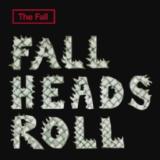
THE FALL - FALL HEADS ROLL (2x12")

THE FALL

FALL HEADS ROLL (2x12")

2x12inchBRED2LP935
CHERRY RED
27.03.2026
  • A1: Ride Away
  • A2: Pacifying Joint
  • A3: What About Us?
  • B1: Midnight Aspen
  • B2: Assume
  • B3: Aspen Reprise
  • C1: Blindness
  • C2: I Can Hear The Grass Grow
  • C3: Bo Demmick
  • D1: Youwanner
  • D2: Clasp Hands
  • D3: Early Days Of Channel Führer
  • D4: Breaking The Rules
  • D5: Trust In Me

The Fall were an English post-punk band, formed in Manchester in 1976. The band existed in some form ever since, and was essentially built around its founder and only constant member Mark E. Smith. Initially associated with the punk movement of the late 1970s, the group's music went through several stylistic changes over the years, but is often characterised by an abrasive guitar-driven sound and frequent use of repetition, and was always underpinned by Smith's distinctive vocals and often cryptic lyrics. The band was noted for its prolific output: and released over 25 studio albums, and more than triple that counting live albums and other releases. They have never achieved widespread public success beyond a handful of minor hit singles in the late 1980s, but maintained a strong cult following. The band were long-associated with BBC disc jockey John Peel, who championed them from early on in their career and cited The Fall as his favourite band, famously explaining, "They are always different; they are always the same.

pre-order now27.03.2026

expected to be published on 27.03.2026

35,50
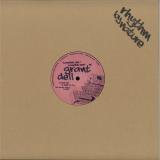
Grant Dell - Somefink Old / Somefink New

2026 Repress

Rhythm by Nature is back with Somefink Old, Somefink New, a three-tracker from seasoned producer Grant Dell that bridges past and present: sketches first laid down in the mid-2000s rediscovered and reworked alongside a brand-new cut, forming a dialogue between memory and renewal.

The EP opens with Feel Me?, a deep tech construction driven by a heavy low-end, its groove unfolding patiently while flashes of disco glimmer through the framework. On Light of Day, Dell shifts into full deep house territory — spacey pads and floating strings suspended across open structures until acidic stabs break through, twisting the track into brighter, playful directions. Closing with Death Disco in Dub, Dell channels the hallmarks of his Tribalation project: dub-infused atmospherics, light percussion and echo-drenched fragments circling around a hypnotic core, equally suited to open or dissolve a night.

With Somefink Old, Somefink New, Rhythm by Nature traces the arc of an artist deeply embedded in the underground, reuniting past forms with present gestures in a release that reaffirms the label’s consistency in quality and commitment to timeless club music.

out of Stock

Order now and we will order the item for you at our supplier.

13,40

Last In: 9 days ago
Serpente - Visita do Fogo LP
  • A1: Ghidrah
  • A2: Partes Nada
  • A3: Nos Deixei
  • B1: Choros (Edit)
  • B2: Choros (Club)
  • B3: Sigilo (Megamix)

Bruno Silva, operating here under his restless Serpente alias, returns with Visita do Fogo — a sharp, stripped-back and incendiary counterpoint to the drifting, dream-jazz abstractions of Dias da Aranha. If that record floated like smoke, this one crackles and snaps like dry wood.

Visita do Fogo finds Silva stepping back into the heat of his beat-driven origins, embracing a raw, forward-leaning approach that feels closer to his live detonation than a studio construction. The record is built on stark materials — drum fragments, percussive jolts, scorched-earth loops — all manipulated with his unmistakable “screw” instincts: micro-cuts, sudden pivots, rhythmic false floors and the sense that the track might turn itself inside-out at any moment.
Rather than smoothing edges or leaning into atmospherics, Serpente doubles down on urgency. Each piece moves through the record with a chop-and-go physicality, a kind of ritual propulsion that never settles into comfort. Silva’s rhythmic language remains entirely his own: crooked but precise, feral yet meticulous, rooted in dance structures but constantly mutating away from them.

Visita do Fogo is less a sequel to Dias da Aranha than a flare shot into the same night sky — brighter, hotter, and designed to leave afterimages. It captures an artist burning forward, shedding everything unnecessary, trusting the flame.

pre-order now27.03.2026

expected to be published on 27.03.2026

19,54
Iivana Mišukka & Arja Kastinen - Iivana Mišukka (Tape)
  • 01: Maanitus &Amp; Tšiižik
  • 02: Markka
  • 03: Melkutus
  • 04: Letška
  • 05: Kuuen Parin Hoirola
  • 06: Brišatka
  • 07: Tšiižik
  • 08: Kirkonkellot
  • 09: Kirkonkellot Korkea
  • 10: Hoirola, 3 Parin
  • 11: Lippa
  • 12: Kyngäkiža
  • 13: Ristakondra
  • 14: Vanha Polkka
  • 15: Viistoista
  • 16: Vanha Valssi
  • 17: Kiberä
  • 18: Maanitus Kuokan Kanteleella
  • 19: Tuuti Lasta Nukkumahe
also available

Vinyl[22,65 €]


Death Is Not The End present a further volume of Arja Kastinen's eerie amalgamations of 110 year old wax cylinders with her own meticulously transcribed takes, this time focussing in on Armas Otto Väisänen's field recordings of kantele player Iivana Mišukka (b. 1861 d.1919).

"Ivana Mišukka (1861–1919) was one of the Karelian kantele players recorded by the folk music researcher Armas Otto Väisänen on wax cylinders in 1916 and 1917. In the early 20th century, the remote areas of Border Karelia were undergoing the final phase of a transformation in musical culture, with the ancient runo song tradition giving way to newer forms of music. This transition is reflected in Mišukka's repertoire and choice of instrument. The ancient small kantele, hollowed out of a single piece of wood, was already rare at the turn of the century. Mišukka's kantele was a new type of instrument with 26 strings, constructed of several parts, but he played it using the traditional plucking technique. Like other Border Karelian kantele players, his repertoire consisted of music rooted in runosong culture, as well as newer dances and songs from the east and west. Most of the recorded material falls into the latter category.

Ivan Bogdanov Mišukka was born out of wedlock in Suursara village, Suistamo, on 1 May 1861. He began playing the kantele at the age of five or six, quickly mastering the instrument. In adulthood, he was considered one of the area's best master players. Mišukka was landless for most of his life and lived in different parts of the Suistamo parish. His first wife, Tekla Markintytär, died in 1897 at the age of 40, and his second wife, Jevdokia Filipintytär Jeminen, died in 1907 at the age of 50. Seven children were born from the first marriage, two of whom died young. The third wife, Maria Ignatintytär Gurnan (Kuurnanen), was a well-known master of lamentations. Together with Maria, Iivana Mišukka worked as a tenant farmer in the village of Suursara. Mišukka suffered from rheumatism, which prevented him from participating in physical work like Maria. This was apparently partly the reason why Iivana Mišukka went to earn extra money by playing the kantele on gig trips. He often had other traditional artists from Suistamo as his travelling companions, such as the runosingers Konstantin Kuokka and Iivana Onoila. Iivana Mišukka died in Leppäsyrjä village, Suistamo, on 18 May 1919 at the age of 58, and his kantele was donated to Teppana Jänis.

Mišukka only used 14 of the 26 strings on his kantele, playing the same tunes either a fourth higher or lower. He tuned his kantele to the major scale using fifths, except for a low seventh scale degree on the upper strings, but not below the fundamental. Since he did not use the seventh note of the scale on the upper strings at all, he could use the major scale both lower and a fourth higher with this tuning. According to Mišukka, the sound of higher, or 'finer', strings is 'more beautiful', while that of lower ones is 'greater'. Among runosingers, the size of the thirds varied, ranging from major to minor to neutral. A similar phenomenon can be observed in kantele tunings, where the third, sixth and seventh scale degrees vary in a comparable way.

During a meeting, Väisänen suggested that Mišukka play the smaller kantele belonging to Konstantin Kuokka. The idea was to bring it closer to the horn to improve the recording quality. However, the kantele was completely out of tune, and now Mišukka tuned it to the Lydian scale (track 18).

Using the old plucking technique, Mišukka placed his right middle finger on the fundamental tone, his right index finger on the second scale degree, his left middle finger on the third scale degree and his left index finger on the fourth scale degree, and his right thumb on the fifth. The thumb also played the notes above the fifth note of the scale. As Mišukka remarked to Väisänen: 'Peigaloll' tuloo enemb ruadoa' (the thumb has to do more work). However, he did not use the seventh note of the scale on the upper strings at all. Below the fundamental note, he played the seventh and sixth notes of the scale with his right middle finger of and the fifth note of the scale with his right ring finger. This fifth scale degree below the fundamental is almost always used as a drone. Sometimes, when the melody required it, Mišukka, like other players, also varied the fingering. He would also occasionally strike the same string with the side of his fingernail after plucking it.

The wax cylinder recordings of Karelian kantele players are kept in the archives of the Finnish Literature Society in Helsinki, Finland. Copies were made of them onto reel-to-reel tapes in both the 1960s and 1980s. The 1960s copies are mono and the 1980s copies are stereo. However, not all kantele recordings from these decades have survived.

The sound of the kantele is difficult to hear in wax cylinder recordings due to its low volume, and it occasionally becomes completely obscured by noise. During the copying process, the cylinder sometimes rotates unevenly, resulting in breaks or jumps in the music. Additionally, the rotation speed of the cylinder in the copies does not correspond to the performance speed of the original music, which alters the pitch. However, since Väisänen's precise notes are available in the archive, it is possible to deduce the melodies, their speed, and the tuning level of the kantele in the recordings. Of the copies of the original recordings from the 1960s and 1980s, I have selected the one that best met the requirements of this publication and adjusted the speed of the recording to align with Väisänen's notes. To enhance the listening experience, I have replayed the songs, which now partly overlap the old recordings on this release."

— Arja Kastinen

pre-order now27.03.2026

expected to be published on 27.03.2026

16,39
Iivana Mišukka & Arja Kastinen - Iivana Mišukka LP

Death Is Not The End present a further volume of Arja Kastinen's eerie amalgamations of 110 year old wax cylinders with her own meticulously transcribed takes, this time focussing in on Armas Otto Väisänen's field recordings of kantele player Iivana Mišukka (b. 1861 d.1919).

"Ivana Mišukka (1861–1919) was one of the Karelian kantele players recorded by the folk music researcher Armas Otto Väisänen on wax cylinders in 1916 and 1917. In the early 20th century, the remote areas of Border Karelia were undergoing the final phase of a transformation in musical culture, with the ancient runo song tradition giving way to newer forms of music. This transition is reflected in Mišukka's repertoire and choice of instrument. The ancient small kantele, hollowed out of a single piece of wood, was already rare at the turn of the century. Mišukka's kantele was a new type of instrument with 26 strings, constructed of several parts, but he played it using the traditional plucking technique. Like other Border Karelian kantele players, his repertoire consisted of music rooted in runosong culture, as well as newer dances and songs from the east and west. Most of the recorded material falls into the latter category.

Ivan Bogdanov Mišukka was born out of wedlock in Suursara village, Suistamo, on 1 May 1861. He began playing the kantele at the age of five or six, quickly mastering the instrument. In adulthood, he was considered one of the area's best master players. Mišukka was landless for most of his life and lived in different parts of the Suistamo parish. His first wife, Tekla Markintytär, died in 1897 at the age of 40, and his second wife, Jevdokia Filipintytär Jeminen, died in 1907 at the age of 50. Seven children were born from the first marriage, two of whom died young. The third wife, Maria Ignatintytär Gurnan (Kuurnanen), was a well-known master of lamentations. Together with Maria, Iivana Mišukka worked as a tenant farmer in the village of Suursara. Mišukka suffered from rheumatism, which prevented him from participating in physical work like Maria. This was apparently partly the reason why Iivana Mišukka went to earn extra money by playing the kantele on gig trips. He often had other traditional artists from Suistamo as his travelling companions, such as the runosingers Konstantin Kuokka and Iivana Onoila. Iivana Mišukka died in Leppäsyrjä village, Suistamo, on 18 May 1919 at the age of 58, and his kantele was donated to Teppana Jänis.

Mišukka only used 14 of the 26 strings on his kantele, playing the same tunes either a fourth higher or lower. He tuned his kantele to the major scale using fifths, except for a low seventh scale degree on the upper strings, but not below the fundamental. Since he did not use the seventh note of the scale on the upper strings at all, he could use the major scale both lower and a fourth higher with this tuning. According to Mišukka, the sound of higher, or 'finer', strings is 'more beautiful', while that of lower ones is 'greater'. Among runosingers, the size of the thirds varied, ranging from major to minor to neutral. A similar phenomenon can be observed in kantele tunings, where the third, sixth and seventh scale degrees vary in a comparable way.

During a meeting, Väisänen suggested that Mišukka play the smaller kantele belonging to Konstantin Kuokka. The idea was to bring it closer to the horn to improve the recording quality. However, the kantele was completely out of tune, and now Mišukka tuned it to the Lydian scale (track 18).

Using the old plucking technique, Mišukka placed his right middle finger on the fundamental tone, his right index finger on the second scale degree, his left middle finger on the third scale degree and his left index finger on the fourth scale degree, and his right thumb on the fifth. The thumb also played the notes above the fifth note of the scale. As Mišukka remarked to Väisänen: 'Peigaloll' tuloo enemb ruadoa' (the thumb has to do more work). However, he did not use the seventh note of the scale on the upper strings at all. Below the fundamental note, he played the seventh and sixth notes of the scale with his right middle finger of and the fifth note of the scale with his right ring finger. This fifth scale degree below the fundamental is almost always used as a drone. Sometimes, when the melody required it, Mišukka, like other players, also varied the fingering. He would also occasionally strike the same string with the side of his fingernail after plucking it.

The wax cylinder recordings of Karelian kantele players are kept in the archives of the Finnish Literature Society in Helsinki, Finland. Copies were made of them onto reel-to-reel tapes in both the 1960s and 1980s. The 1960s copies are mono and the 1980s copies are stereo. However, not all kantele recordings from these decades have survived.

The sound of the kantele is difficult to hear in wax cylinder recordings due to its low volume, and it occasionally becomes completely obscured by noise. During the copying process, the cylinder sometimes rotates unevenly, resulting in breaks or jumps in the music. Additionally, the rotation speed of the cylinder in the copies does not correspond to the performance speed of the original music, which alters the pitch. However, since Väisänen's precise notes are available in the archive, it is possible to deduce the melodies, their speed, and the tuning level of the kantele in the recordings. Of the copies of the original recordings from the 1960s and 1980s, I have selected the one that best met the requirements of this publication and adjusted the speed of the recording to align with Väisänen's notes. To enhance the listening experience, I have replayed the songs, which now partly overlap the old recordings on this release."

— Arja Kastinen

pre-order now27.03.2026

expected to be published on 27.03.2026

22,65
THE ME IN YOU - IDA FISCHER IS NIEMAND

From dreamy indie pop to melancholic ambient fragments to crazy distortion pedals, The Me In You has never sounded more adventurous without losing sight of cohesion.

Press:
Humo: “The Me in You simply offers more colour and dimension than most other Belgian pop groups”
OOR: ‘A wonderfully addictive album for connoisseurs.’
Het Nieuwsblad: ‘Duyster music that gets under your skin.’
Le Soir: ‘Every song, every melody manages to surprise us.’
Stu Bru: Catch of The Day – De Afrekening list
Radio 1: Top 10 Vox list – A Rotation

pre-order now27.03.2026

expected to be published on 27.03.2026

23,95
RANGE RATS - RANGE RATS

RANGE RATS

RANGE RATS

12inchMRLP63
MISSISSIPPI RECORDS
27.03.2026

Aufgenommen 1986, ist das die großartige, verschollene Country-LP von Fred & Toody Cole (Weeds, Lollipop Shoppe, Zipper, Torpedoes, Rats, Western Front, Desperate Edge, Dead Moon, Pierced Arrows usw.)! Alle Songs sind Eigenkompositionen - ein paar traurige, beschwingte Balladen und ein paar richtig punkige Nummern. Bei zwei Songs spielen Fred & Toddy mit ,Rollie", einer klapprigen Roland-Drum-Machine, die den Takt nicht so gut halten konnte. Die restlichen Songs wurden mit einer kleinen, knallharten Band aufgenommen.

pre-order now27.03.2026

expected to be published on 27.03.2026

19,96
TOMMY PELTIER - ECHO PARK (THE 70'S SESSIONS)

TOMMY PELTIER

ECHO PARK (THE 70'S SESSIONS)

12inchDC977
DRAG CITY
27.03.2026
  • 1: Oneness
  • 2: Judee Girl
  • 3: National Stardom
  • 4: Flight Of The Dancer
  • 5: Time After Time
  • 6: Blue Rose
  • 710: 000 Greyhounds
  • 8: A Heartbeat Away
  • 9: Yellow Beach Umbrella
  • 10: Here Today
  • 11: Smile All The While
 
2

Just east of Hollywood, Tommy Peltier"s made sweet music in the Echo Park hills for over sixty years. A jazzman first, he recast himself in 1970 as an LA troubadour, crafting a set of glitter-light pop tunes that somehow missed release "til now. Recorded "70-"76 all over town & mixed and mastered by Jim O"Rourke, Echo Park is an encompassing trip through a whole other time and place. Echo Park captures the smooth sounds, glamour "n free spirits to be found just down the street from Tinseltown in its golden day. Tommy has continued to play music, releasing new stuff with Plastic Theatre Art Band in 1996, and a number of releases under his own name, most recently in 2011. And at the ripe young age of 90(!), he"s still playing today!

pre-order now27.03.2026

expected to be published on 27.03.2026

29,83
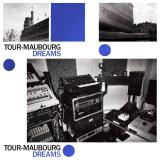
Tour Maubourg - Dreams

Tour Maubourg

Dreams

12inchNB024
Noire & Blanche
27.03.2026out soon
  • 1: Dreams
  • 2: Falling
  • 3: Johanna’s Blues
  • 4: Feel Inside
  • 5: Only Love Is Real
  • 6: Things

Tour-Maubourg returns with a new 6-track EP, Dreams, further cementing his place as a key figure in today’s electronic music scene. Known for blending soulful house with rich jazz influences, the French-Belgian producer showcases both his DJ sensibility and refined production skills on this long-awaited release for French deep house label Noire & Blanche.


Nearly four years after Floating on Silence - his acclaimed EP for the label that quickly became a staple in DJs’ sets and underground all-night club sessions - Dreams follows the same inspired path while raising the bar even higher. Joined by a carefully selected group of collaborators, including American producer Kareem Ali (praised by Rolling Stone, Pitchfork, and Boiler Room), pop/R&B soul singer Nic Hanson, and Lithuanian producer and musician Cyan Lu, Tour-Maubourg blurs the lines between jazz and house. The result is a deeply musical, immersive EP that reinforces a sound signature now unmistakably his own, designed for both intimate listening and late-night dancefloors.
crédits

pre-order now

This item has not yet been released. You can pre-order the product now.

19,96
Dream Theater - A Dramatic Turn of Events (2x12")
  • 1: On The Backs Of Angels
  • 2: Build Me Up, Break Me Down
  • 3: Lost Not Forgotten
  • 4: This Is The Life
  • 5: Bridges In The Sky
  • 6: Outcry
  • 7: Far From Heaven
  • 8: Breaking All Illusions
  • 9: Beneath The Surface

For A Dramatic Turn of Events, Dream Theater underwent a self-proclaimed musical change, reevaluating and restructuring themselves. The album has drawn stylistic comparisons to two of the band’s past albums, Images and Words and Metropolis Pt. 2: Scenes from a Memory. Limited edition 2LP release on clear vinyl

pre-order now27.03.2026

expected to be published on 27.03.2026

49,37
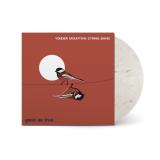
Yonder Mountain String Band - Good As True
  • 1: Brand New Heartache
  • 2: Long Ride
  • 3: The Lie
  • 4: Barroom Feather (Radio Edit)
  • 5: Blind
  • 6: Nothing New
  • 7: One To One Another
  • 8: Always Almost
  • 9: Barroom Feather

Good As True (2026), the 12th studio album from Yonder Mountain String Band, leans into a warm, expressive sound — bluegrass shaped with an indie edge, rock undertones, and a hint of country. Recorded live in the studio, its eight original tracks trace romantic, personal, and societal relationships and the work it takes to stay connected. The lead single “Brand New Heartache” pairs rock-driven verses with a bluegrass-lifted chorus as it follows the fallout of a breakup and the uneasy hope of starting again, while “Blind” opens with a striking instrumental riff that lingers long after the song ends, while its lyrics confront regret, mental health struggles, and the pull to become something better. “Long Ride” delivers a sharp, sarcastic look at life in a touring band; “Nothing New” and “The Lie” confront political rigidity and division; “One to One Another” and “Always Almost” pull toward quieter emotional corners; and “Barroom Feather” drifts into indie-folk terrain with one of the album’s most atmospheric jams. Across Good As True, Yonder moves between high-tempo runs, layered harmonies, and moments that breathe — a reminder that nearly three decades in, they’re still charting new ground.

pre-order now27.03.2026

expected to be published on 27.03.2026

22,65
Items per Page:
N/ABPM
Vinyl