Buscar:under 19

Estilos
Todo
Royal House - Can You Party?

Royal House

Can You Party?

12inchWAR2706Y
Idlers
09.04.2025

Classic 1988 'early' house LP reissued on yellow vinyl for the first time for RSD 2025. Made by Royal House aka Todd Terry, the legendary producer & DJ from New York who was a staple for house music and produced under many different aliases throughout his time such as Black Riot, CLS, D'Effect, Dred Stock, Frontline, Frozen Inc., Gypsymen, Hardhouse, House Of Gypsies, Limelife, and amongst many others, Masters At Work (Before he gifted the name to Louie Vega & Kenny Dope). Everybody who was into house and it’s culture in 1988 owned this record, now you have the chance to own this on yellow vinyl for the first time. 'Can you Party' is still played on national radio stations and one of the staples in rave and it’s scenes. Remastered for 2025 in the original 'PAID' designed sleeve but now in transparent yellow vinyl for RSD. Limited edition.

Disponible

En el almacen y preparando para el envío

24,79
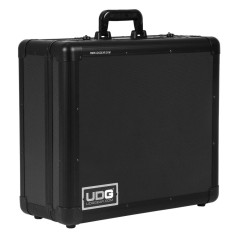
UDG Ultimate PickFoam FlightCase Multi Format - Turntable Black

We, at UDG have further fined-tuned already a great design concept of our flight case into one specially for the most discerning DJ/producer. Constructed from aluminum thus providing an extremely stable structure with lighter weight compared to traditional flight cases. The inner sides are protected with pick & pluck foam that consists of two separate layers, each allowing user to create individualized adapted compartments. The pick & pluck foam allow you to pluck out any desired shape you require for various-sized DJ-controllers and providing the additional option of creating another slot underneath the controller for laptop or cable storage. This pick & pluck foam creating an easy, do-it-yourself customized system of case interiors.

The UDG Ultimate Pick Foam Flight Cases are designed to keep your gear protected from accidental damage when you transport it to and from gigs. They’re compact and lightweight yet tough enough to keep your gear safe.


EAN 8718969212694
Color Black
Weight 4,55 kg / 10.01 lbs
Outer Dimensions (W x H x D) 49 x 42.3 x 21 cm | 19.3 x 16.6 x 8.3 inch
Inner Dimensions (W x H x D) 48 x 41.3 x 20 cm | 18.9 x 16.2 x 7.9 inch
Material Aluminum
Protection Corrosion resistant aluminium profiles with strong rounded corners
Fully-lined with high density foam protective padding & foam on lid
Two side strong butterfly lock & solid metal hinges
Rubber feet at the bottom for support in standing
Extra's Lighter weight than traditional flight cases
Black Diamond finishing surface
Ergonomic & sturdy carry handle
Pick & pluck foam with two separate layers
Replacement pick & pluck foam is available to purchase
Rear cable access hole with cover
Fits Technics SL-1200MK7, SL-1200MK6, SL-1200 MK5, SL-1200 MK4, SL-1200 MK3, SL-1200 MK2, SL-1200GR, SL-1200GAE,
Denon VL12 Prime,
Pioneer PLX-1000, PLX-500
Reloop RP-8000 MK2, RP-8000 Straight, RP-8000, Reloop RP-1000M, RP-1000 MK2, RP-2000 MK2, RP-2000 USB MK2, RP-4000 MK2, RP-7000, RP-7000 MK2, RP-7000 MK2 GLD, RP-7000 MK2 Silver,
Audio Technica LP120-USB, LP120XUSB, LP1240-USBXP, LP1240-USB, LP140XP, LP3, LP5, LP7, LPW40WN,
Stanton STR8-150 M2, ST-150 M2, T.52, T.55 USB, T.62 M2, T.92 M2 USB,
Mixars STA, LTA,
Vestax PDX-3000, PDX-3000Mix, PDX-3000MKII,
or similar size turntable

Disponible

En el almacen y preparando para el envío

105,00
X-Plode - First Of Many / Watch This Go

At the start of the 1980’s X-Plode’s dad had a second-hand colour TV business in Bolton, Lancashire where he would buy, sell, repair and trade TVs. He would come back home with all kinds of things he had traded for a TV but the most memorable, to a 10 year old kid at that time, were the keyboards. He use to watch his dad play songs from the 1960’s on these keyboards and when his dad had gone out, Lee X-Plode would sneak on them and start messing about, experimenting with the drum programs and fiddling with the buttons, trying out ideas. He had to move fast though because these keyboards didn’t stay in the house for long as his dad would trade them again for something else; one time that was an old analogue echo chamber, which Lee also messed about with when his dad was out. That echo chamber was a revelation to Lee and opened up the possibilities of what was possible with sound. So by the time Lee was 16, he decided he wanted his own keyboard and started saving. When his 17th birthday came around he had saved up £200 and visited his local Argos where he bought himself a Yamaha PSS 680, an FM synthesizer with memory banks and a basic drum machine incorporated. ‘It was shit quality like, but I didn’t mind. I just wanted it for the programmable drum machine, the synth and the memory banks that came with it” Lee recalls. The year was 1987 and by this time in Lee’s life he was into reggae and hip hop, the latter he first embraced in 1983 by the way of breakdancing and listening to electro, so all he wanted to do when he got his gear was make reggae and electro sounding beats. Recalling his youth and the fun he had with the echo chamber, the next edition to his home set up was to acquire one of those, which he did via a mate of his. But by the time he got his minimal set up sorted in 1988, his musical tastes had changed. House music had landed here in UK and this was Lee’s new passion, so from that point on wards he started experimenting, trying to nail a decent house groove. ‘I wanted 808 sounds, but I didn’t know what one was!’ Lee explains.

Around late 1990 or early 1991, Lee started to improve upon his set up, purchasing an Atari STE, a Cheetah MS6 , a 6 voice polyphonic/multi-timbre analogue rack mounted synth that linked up to his Yamaha – “It wasn’t a great bit of kit, I kept getting electric shocks from it. Eventually it just blew up!” Lee had acquired a cracked copy of Cubase on floppy disk from his local computer game shop but struggled with it. “It was so complicated to understand and took me ages to get used to it. I was stoned a lot back then and I just couldn’t concentrate on anything for long” Lee laughs, continuing “I also picked up a 4 channel sampler/sequencer which plugged into the side of the Atari and that’s when I first started sampling, I think this would have been late 1991. I had the Simon Harris ‘Breaks, Beats and Scratches’ vinyl that he put out on Music for Life which were a godsend back then. I was also sampling a lot from cassette tapes, especially reggae. I would also record the Stu Allan show on Key 103FM, one of the main stations broadcasting out of Manchester. He would do a 3 hour show with hip hop and house, and then hardcore house came along. Eventually he dropped the hip hop altogether and it was just house and hardcore. I recorded the shows onto cassette most weeks and started to learn more about how house and hardcore was put together by listening to those shows.”

Disponible

En el almacen y preparando para el envío

16,18
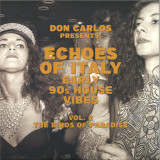
Various - ECHOES OF ITALY – THE BIRDS OF PARADISE – EARLY 90S HOUSE VIBES VOL.2 (2x12")

Googling “paradise house”, the first results to pop up are an endless list of European b&b’s with whitewashed lime façades, all of them promising “…an unmatched travel experience a few steps from the sea”. Next, a little further down, are the institutional websites of a few select semi-luxury retirement homes (no photos shown, but lots of stock images of smiling nurses with reassuring looks). To find the “paradise house” we’re after, we have to scroll even further down. Much further down.

It feels like yesterday, and at the same time it seems like a million years ago. The Eighties had just ended, and it was still unclear what to expect from the Nineties. Mobile phones that were not the size of a briefcase and did not cost as much as a car? A frightening economic crisis? The guitar-rock revival?! Certainly, the best place to observe that moment of transition was the dancefloor. Truly epochal transformations were happening there. From America, within a short distance one from the other, two revolutionary new musical styles had arrived: the first one sounded a bit like an “on a budget” version of the best Seventies disco-music – Philly sound made with a set of piano-bar keyboards! – the other was even more sparse, futuristic and extraterrestrial. It was a music with a quite distinct “physical” component, which at the same time, to be fully grasped, seemed to call for the knotty theories of certain French post-modern philosophers: Gilles Deleuze, Félix Guattari, Paul Virilio... Both those genres – we would learn shortly after – were born in the black communities of Chicago and Detroit, although listening to those vinyl 12” (often wrapped in generic white covers, and with little indication in the label) you could not easily guess whether behind them there was a black boy from somewhere in the Usa, or a girl from Berlin, or a pale kid from a Cornish coastal town.

Quickly, similar sounds began to show up from all corners of Europe. A thousand variations of the same intuition: leaner, less lean, happier, slightly less intoxicated, more broken, slower, faster, much faster... Boom! From the dancefloors – the London ones at least, whose chronicles we eagerly read every month in the pages of The Face and i-D – came tales of a new generation of clubbers who had completely stopped “dressing up” to go dancing; of hot tempered hooligans bursting into tears and hugging everyone under the strobe lights as the notes of Strings of Life rose up through the fumes of dry ice (certain “smiling” pills were also involved, sure). At this point, however, we must move on to Switzerland.

In Switzerland, in the quiet and diligent town of Lugano, between the 1980s and 1990s there was a club called “Morandi”. Its hot night was on Wednesdays, when the audience also came from Milan, Como, Varese and Zurich. Legend goes that, one night, none less than Prince and Sheila E were spotted hiding among the sofas, on a day-off of the Italian dates of the Nude Tour… The Wednesday resident and superstar was an Italian dj with an exotic name: Don Carlos. The soundtrack he devised was a mixture of Chicago, Detroit, the most progressive R&B and certain forgotten classics of old disco music: practically, what the Paradise Garage in New York might have sounded like had it not closed in 1987. In between, Don Carlos also managed to squeeze in some tracks he had worked on in his studio on Lago Maggiore. One in particular: a track that was rather slow compared to the BPM in fashion at the time, but which was a perfect bridge between house and R&B. The title was Alone: Don Carlos would explain years later that it had to be intended both in the English meaning of “by itself” and like the Italian word meaning “halo”. That wasn’t the only double entendre about the song, anyway. Its own very deep nature was, indeed, double. On the one hand, Alone was built around an angelic keyboard pattern and a romantic piano riff that took you straight to heaven; on the other, it showcased enough electronic squelches (plus a sax part that sounded like it had been dissolved by acid rain) to pigeonhole the tune into the “junk modernity” section, aka the hallmark of all the most innovative sounds of the time: music that sounded like it was hand-crafted from the scraps of glittering overground pop.

No one knows who was the first to call it “paradise house”, nor when it happened. Alternative definitions on the same topic one happened to hear included “ambient house”, “dream house”, “Mediterranean progressive”… but of course none were as good (and alluring) as “paradise house”. What is certain is that such inclination for sounds that were in equal measure angelic and neurotic, romantic and unaffective, quickly became the trademark of the second generation of Italian house. Music that seemed shyly equidistant from all the rhythmic and electronic revolutions that had happened up to that moment (“Music perfectly adept at going nowhere slowly” as noted by English journalist Craig McLean in a legendary field report for Blah Blah Blah magazine). Music that to a inattentive ear might have sounded as anonymous as a snapshot of a random group of passers-by at 10AM in the centre of any major city, but perfectly described the (slow) awakening in the real world after the universal love binge of the so-called Second Summer of Love.

For a brief but unforgettable season, in Italy “paradise house” was the official soundtrack of interminable weekends spent inside the car, darting from one club to another, cutting the peninsula from North to centre, from East to West coast in pursuit of the latest after-hours disco, trading kilometres per hour with beats per minute: practically, a new New Year’s Eve every Friday and Saturday night. This too was no small transformation, as well as a shock for an adult Italy that was encountering for the first time – thanks to its sons and daughters – the wild side of industrial modernity. The clubbers of the so-called “fuoriorario” scene were the balls gone mad in the pinball machine most feared by newspapers, magazines and TV pundits. What they did each and every weekend, apart from going crazy to the sound of the current white labels, was linking distant geographical points and non-places (thank you Marc Augé!) – old dance halls, farmhouses and business centres – transformed for one night into house music heaven. As Marco D’Eramo wrote in his 1995 essay on Chicago, Il maiale e il grattacielo: “Four-wheeled capitalism distorts our age-old image of the city, it allows the suburbs to be connected to each other, whereas before they were connected only by the centre (…) It makes possible a metropolitan area without a metropolis, without a city centre, without downtown. The periphery is no longer a periphery of any centre, but is self-centred”.

“Paradise house” perfectly understood all of this and turned it into a sort of cyber-blues that didn’t even need words, and unexpectedly brought back a drop of melancholic (post?)-humanity within a world that by then – as we would wholly realise in the decades to come – was fully inhuman and heartless. A world where we were all alone, and surrounded by a sinister yellowish halo, like a neon at the end of its life cycle. But, for one night at least, happy."

Disponible

En el almacen y preparando para el envío

28,99
DJ PYTHON - I WAS PUT ON THIS EARTH

** club fire from DJ Python

“i was put on this earth”, his first solo music since 2022, and debut on XL
Recordings.

On “i was put on this earth”, DJ Python - aka Brian Piñeyro - gently forays into uncharted territory as a singer, producer,
and collaborator; an evolution all the more impressive in light of his groundbreaking musical projects to date like Mas
Amble, Angel, and Club Sentimientos Vol 2. While splitting his time between New York and London, Python has teamed
up with a diverse set of collaborators including South London rapper Jawnino, Honduran-born powerhouse Isabella
Lovestory, unclassifiable songwriter Organ Tapes, and NYC mainstay Physical Therapy. Across the five-track EP,
Python shares bold solo songs alongside these intriguing collaborations. The project retains the captivating melodies,
atmospheric textures, and rhythmic innovation that defined Python's earlier recordings while building on and shaping these
signature elements into ambitious and addictive new songs.
The first look at the EP comes in the form of “Besos Robados”. Isabella Lovestory lends an insouciant yet insistent vocal
to this sublime downtempo lovers' reggaeton track that's been a fan-favourite since appearing on Python's epic BBC
Radio 1’s Essential Mix.

On ‘i was put on this earth’, DJ Python says “to whom it may concern…
its too beautiful to embrace change and to challenge urself to find something meaningful in it... i love my friends and
love is deep :') i want them to know that always... but sometimes i get busy and overwhelmed n im not the best at
saying how i feel always... just want to sit around and talk and feel understood together w someone who you like or u
find interesting.. thats the best :) and if the day is nice or if the day is not nice but ur inside and its cozy.. thats too
wicked. and ur making a soup and eating it together... just with the stuff in the kitchen.. dont even go out to get
ingredients.. no need to follow a recipe.. cause ur grandma taught u to cook w the "sazon" (cooking by tasting w as u
go on adding diff ingredients and spices.. no recipes. .. u can only really cook if u can freestyle in the kitchen she said)..
and then u think about how ur grandma taught u that.. and your w someone in the kitchen making something together..
and then u taste it and it warms u up and ur like damn this is fire.. thats what this and i think maybe what "its all"
about... thank u for taking time to read this and i hope you enjoy the album…
kiss u…
Brian”

Disponible

En el almacen y preparando para el envío

13,03
Basic Black - Don’t Make Me Fall In Love – Timmy Regisford Mixes

“… it was dance music, it had lyrics, it had songs, it wasn’t all instrumental, it was basically uptempo soul music, to be exact.”*

This quote from Timmy Regisford already sums up everything you need to know about his remix of Basic Black’s “Don’t Make Me Fall In Love.” Signed to Motown during Regisford’s reign as vice president and A&R, their self-titled debut album from 1990 is a testament to the massive popularity of new jack swing at the time. In his remix, the co-founder, resident DJ, and key figure of Club Shelter reconfigures the song’s structure with the signature sounds of New York’s prime dance floor scene, while preserving the heartfelt storytelling of the lyrics and the group’s voices on top of an irresistible groove and a bassline to die for.
At the time, it was only available in the record crates of the Big Apple’s DJ elite and later on as a white label in specialist shops. This soulful, yet driving piece, however, never saw an official single release—until now. Lifted from a DAT tape in Tony Humphries’ archive and carefully and faithfully restored, it now even features a condensed, never-before-released instrumental version of the remix, as well as a bass-and-beats-only edit for mixing purposes by yours truly. New jack swing transformed into New York club music by a king. This remix is a testament to Timmy Regisford’s prowess in the studio, but also honors the roots of the music he loves and grew up on—serving as a perpetual piece of the city’s vast history in underground dance music.
Gerd Janson

Disponible

En el almacen y preparando para el envío

11,72
various - Searchlight Moonbeam LP  2x12"

2025 Repress

Searchlight Moonbeam is the new narrative compilation from Time Is Away (Jack Rollo and Elaine Tierney) whose eponymous monthly NTS Radio shows, tinctured fusions of fugitive sounds and reverie-inducing archival speech, have won them an ardent following. It follows from the London-based duo’s Ballads, a remarkable driftwerk released on A Colourful Storm in 2022.


Searchlight Moonbeam is an autumnal dreamscape, intimate and vespertine, pensive and irresolute. An imagined community where differences drop off and resonances emerge – between Maher Shalal Hash Baz affiliates Kasumi Trio, Taiwanese score composer Chen Ming Chang whose ‘Rainwater’ (written for Hou Hsiao-Hsien’s 1986 film Dust In The Wind) is exquisitely heartbroken, and the plangent improvisations of self-taught French pianist Delphine Dora.


Revelations are frequent: the bedsit isolationism of Bo Harwood and John Cassavetes’ ‘No One Around to Hear It’ (from The Killing of a Chinese Bookie); the narked minimalism of Klang (an early 2000s band formed by ex-Elastica guitarist and featuring prize-winning experimental novelist Isabel Waidner on bass); the etude-grooves and echoic wobble of below-the-radar French avant-gardists Omertà ; the beautiful, plaintively dubby ‘Is It You?’ by Slapp Happy; a psych-tinged reimagining of PiL’s ‘Poptones’ by Simon Fisher Turner (one half of Deux Filles, and here, recording for él as The King of Luxembourg) that's as perverse as the cover of Throbbing Gristle’s 20 Jazz Funk Greats.


Searchlight Moonbeam is the musical analog of an Italo Calvino novel or a medieval fable. Associative, intuitive, borderless. Emotional and mysterious. Endowed with the tactility of Braille. A private language that is both unknowable and understood. It is a record of the seasons, for the seasons.

2023 marks the tenth anniversary of Time Is Away’s first broadcast. Featuring an evocative essay by writer Jeremy Atherton Lin and disarming cover art by Penny Davenport, Searchlight Moonbeam showcases Rollo and Tierney’s still-unrivalled talent for gloaming melodies, disques du crépuscule, ensorcelled storytelling.

Disponible

En el almacen y preparando para el envío

24,79
Rinder & Lewis - Seven Deadly Sins (LP)

Laurin Rinder & W. Michael Lewis's Seven Deadly Sins is a hugely influential, synth-powered, atmospheric space-disco masterpiece. It's arguably the best American Disco LP ever made. It's certainly one of the most important albums in the history of dance music. And, like its innovative producers, it's absolute genius.

During the mid to late seventies the production team of Laurin Rinder and W. Michael Lewis helped to define the Disco sound that was coming out of Los Angeles with studio projects such as El Coco, Saint Tropez, Le Pamplemousse (with vocals from The Jones Girls), In Search Of Orchestra and many others.

Like all of their work, Seven Deadly Sins comprises beautifully arranged and incredibly well produced deep disco that is revered by aficionados. A seven track, largely instrumental concept album covering each of the sins, it was recorded for AVI in 1977. It's a brilliantly conceived, groove-fuelled album that layers moogy keys and druggy synths over club-ready rhythms. The idea that this record is celebrating rather than condemning the sins is said to be another factor that made the record a big one in the underground clubs.

Opening sin “Lust” is an intense, swelling, seven minute blockbuster synth journey. An ethereal Loft/Garage classic, it's a sprawling, brooding slice of epic dancefloor dynamite that remains a firm favourite of discerning disco heads like Harvey. So ahead of its time, it still sounds ridiculously fresh today, drifting through a multitude of melodies over a smooth, lightly percussive mid-tempo beat. A slow-mo sexy killer.

Up next, the sprightly-manic “Sloth” is nothing like its title. A driving, swaggering instrumental incorporating the same Euro-disco elements as our Daft Parisian friends did a few decades on, it's certainly not for the faint-hearted.

A clear highlight, the cosmic, throbbing proto-techno of “Gluttony” gets things firmly back on track. Pure industrial vibes with dark synth bass punctuated by uplifting melodic sequences that brilliantly utilise guitar and horns, is this the sound of Wax! Trax being born? You won't be able to get enough of this.

Opening up the B-Side, “Pride” is a breezy slice of classic late seventies jazz/funk with deft Hammond and clavinet grooves and expansive horn sections. It's absolutely fantastic. The wicked leftfield vocal cut “Envy” provides more disco pump with squelchy acid synth flourishes, funky guitar and neck-snapping percussive breaks.

The dark proto-techno/house cut “Anger” is a fully on top tour de force of drums. With heavy African percussion throughout and a short Afrobeat section towards the end, it was sampled by Carl Craig and Laurent Garnier for their Tres Demented project and was also a massive Ron Hardy / Music Box favourite. The album is rounded out by the hard-grooving “Covetousness”, another driving jazz-funk workout par excellence with liberal use of the syndrum.

As Laurin Rinder recalled in an interview with Dream Chimney, the duo essentially lived in the studio: “we really had cots, beds and the whole thing, we were just pumpin’ them out. 7 days a week, 3 different projects at the same time. I played drums on everything but had to play a little differently. I had to ask the engineer ‘What’s the name of this group?‘”.

Evidently, their prolific output was the result of a crazy cocaine-fuelled production schedule: “The amount of coke we did, to do all this, you can’t even imagine. $300 a day. I had to have plastic inserts in my nose so I could do more.” Looking at the frankly terrifying cover, you'd have never known!

Be With is beyond delighted to present the first ever legit vinyl reissue of Seven Deadly Sins, carefully remastered by Be With's engineer Simon Francisco to ensure it sounds better than ever. Cicely Balston's expert skills have made sure nothing is lost in the cut whilst the records have been pressed to the highest possible standard at Record Industry in Holland. The unforgettable cover artwork has been reproduced here at Be With - dare you stare back at it for too long?

Disponible

En el almacen y preparando para el envío

26,85
Dan Tyler & Nick The Record - Mr Bongo Edits Volume 3

Good friends and Record Mission co-captains, Dan Tyler (one half of the Idjut Boys) and Nick The Record, take the reins for the third volume of the Mr Bongo Edits 12" series. With previous editions coming courtesy of Danny Krivit and Luke Una, Dan and Nick set their sights on a hand-picked selection of iconic ‘70s Cuban recordings for this three-track cosmic whirlwind. Across the A side, Dan picks out two Juan Pablo Torres tracks, with Nick taking on Grupo Los Yoyi on the B. Tweaking, extending and reworking the recordings with a dose of extra magic they remould the tracks to fit the sounds and structure of today’s dancefloors.

Having formed the Idjut Boys in the early ‘90s, Dan and Conrad McDonnell have crafted a dubbed-out, disco-tinged style that permeates their countless productions, remixes and DJ sets. Speaking of the two tracks Dan has chosen to rework for this EP he mentions, “Having been caught under an avalanche of good music from Mr Bongo, I took it upon myself to extend and add effects to a couple of the fantastic tracks from the Juan Pablo Torres LPs they recently re-issued. Just for disco jockey and barn dance use.”

First, Dan looks to Cuban maestro Juan Pablo Torres’ 1978 album 'Algo Nuevo', taking one of the standout tracks ‘Cacao’ and giving it more space to breathe. Teasing out the scatting vocal line and percussive climax that nods to George Kranz's ’83 electronic disco anthem 'Din Daa Daa', whilst adding more cosmic tripped-out synths and space echoed dubs, Dan builds the tension to fine effect. This track sounds immense on a big club system and the swirling synths felt like they were lifting the ceiling off when we played it at the amazing La Paloma ballroom in Barcelona.

Dan then turns his attention to Torres’ 1977 'Super Son' album, giving the psych-Latin-funk track 'Pastel En Descarga' a dub makeover. Rich in delay and drama, whilst maintaining and extending the breakers funk intro, he juices it up into a punchy, no-nonsense, cosmic-funk delight.

On the B side, Tangent co-founder, long-standing Life Force resident and seasoned rework master, Nick The Record, revisits an edit that he originally constructed in 2009. Clocking in at over double the length of the original cut, Nick’s edit of Grupo Los Yoyi’s 1977 cut 'Paco La Calle', is made with dancers firmly in mind. This secret weapon builds and simmers, with the drums and percussion pushing and pulling before the psychedelic synth lines return in a sweltering fashion. In this new 2025 version, Dan is drafted in to work some brilliant new synth lines into the mix.

Disponible

En el almacen y preparando para el envío

19,54
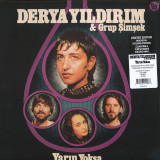
Derya Yıldırım & Grup Şimşek - Yarın Yoksa

Produced by Grammy Nominated producer Leon Michels (El Michels Affair, Clairo). Big Crown Records is proud to present Derya Yıldırım & Grup Şimşek’s latest album Yarın Yoksa. The show stopping intensity of Derya backed by the psychedelic soul of Grup Şimşek with production by Leon Michels has yielded a stand out record that challenges genre with a broad appeal and a powerful message. They refer to themselves as “outernational” over international as they say it suggests a sound that’s more inclusive or “beyond borders.” Derya, who sings and plays the bağlama, is German born to Turkish parents. Drummer Helen Wells is Berlin-based by way of South Africa while keyboard player Graham Mushnik and guitar/bass player Antonin Voyant are both French. The collective influences they bring to Anatolian music make for a completely unique and fresh sound that both pushes the genre forward and champions its rich heritage. Yarın Yoksa which translates to If There Is No Tomorrow delves into deeply personal pain and collective resistance with a central thread of loss, longing, and hope for change running throughout. The lyrics are poetic and rely heavily on symbolic language, metaphors, and storytelling while the music shifts track to track making each tune stand out on its own but work together perfectly as an album. “Cool Hand”, the first single released on Big Crown in September of 2024, is a beautiful juxtaposition of intensity and light-heartedness over a thoroughly infectious groove. The message is poetic and complicated, repeatedly declaring “I love you, I’m crazy about you” but ultimately finding a sense of peace through accepting a broken heart. “Direne Direne” is a protest song that embodies the struggle and tireless pursuit of justice encouraging people to resist oppression. Derya’s lyrics soar over the psych-soul musical backdrop as her story of personal struggle transforms to a universal call for resilience and strength. The slow and weighty vibe of “Yakamoz” lets onto the meaning of the lyrics even to those who don’t understand Turkish. It is a deeply moving song that captures the profound emotions connected to displacement and loss without knowing if you will ever return. The steady groove of the band, along with the anguished vocals paint a vivid picture of the devastation experienced by the protagonist who ultimately realizes that her roots are within her and anywhere she goes is her home. Nine of the tunes on the album are original compositions but they also take on three Anatollian folk songs with their own inimitable approach. The acapella introduction of “Misket”, a folk song from Ankara/Türkiye, will stop you in your tracks. The tune deals with death and how the living cope and continue a relationship with those who have passed away. Another traditional tune from Sivas that they put their signature sound to is “Hop Bico”, a tune about a playful character named Bico who is a symbol of vitality and spirit. The synth intro grabs your ear from the first note and the earworm chorus encouraging Bico to lead the group in celebration and embrace life through dance has the same effect on everyone who hears it. The band has taken a big step forward that you can hear on this record. Derya’s passion and authenticity is front and centre and the music is too moving to deny. Yarın Yoksa is sure to captivate the hearts and minds of all those who hear it, and just wait till you hear them play it live… Upcoming Tour Dates (+More To Be Added): 18th March The Deaf Institute, Manchester / 19th The Jam Jar, Bristol / 20th Scala, London / 21st Norwich Arts Centre.

Disponible

En el almacen y preparando para el envío

27,52
HIROSHI YOSHIMURA - FLORA LP 2x12"

- Also available on black vinyl - First ever official reissue - Produced in full cooperation with Hiroshi Yoshimura's estate - Liner notes by contemporary music writer and professor Junichi Konuma - Remastered from original sources by John Baldwin - First time on vinyl, cassette, and streaming - 2xLP vinyl housed in gatefold jacket - Discs cut at 45 rpm for optimal sound quality // Following their 2024 reissue of Hiroshi Yoshimura's classic album, Surround, Temporal Drift proudly presents the first-ever reissue of FLORA, Yoshimura's underappreciated ambient classic. FLORA was originally recorded and completed in 1987, and remained unreleased until 2006, nearly three years after Yoshimura's passing in 2003. The album is chronologically and stylistically a follow-up to his acclaimed 1986 works GREEN and SURROUND, wherein Yoshimura continues to play with the ambience of sound and the sound of ambience, underscoring his mastery in the field of environmental music. Yoshimura's other recorded works include Music For Nine Post Cards (1982), originally produced to be played back inside a museum space, and Pier & Loft (1983), commissioned as accompaniment to a contemporary fashion show.

Disponible

En el almacen y preparando para el envío

43,49
KAT-TET - WOMEN

KAT-TET

WOMEN

12inchDS4
SYMBOLE RECORDS
21.03.2025

Reissue of the 3rd album of Patrick Jean-Marie recorded in 1985, Produced by Mambo Chick for Symbole Records.

Introducing “Women” by Kat-Tet, a unique musical gem straight from Guadeloupe, 1985. This rare album, the only studio-recorded masterpiece by the brilliant pianist Patrick Jean-Marie, transports us to a soundscape where every note is a journey.

It was a true opportunity for Patrick Jean-Marie and his band to showcase their talents, recorded under professional conditions, resulting in a sound of exceptional quality. The meticulous attention to orchestration is evident throughout, revealing a solidly crafted masterpiece.

Following the bold experiments with Atika and a solo album in 1983, “Women” marks a new chapter in Patrick Jean-Marie’s career. The album showcases a more structured approach that allows Kat-Tet to create a magical space for organized solos and climax. The dialogue between Patrick Jean-Marie’s piano and Luther François’s alto saxophone is constantly surprising and some powerful bridges by Patrick Jean-Marie are unforgettable.

A true classic in its genre, “Women” by Kat-Tet LP was an “hard-to-find” treasure in the vinyl world.
Today, Symbole is thrilled to bring this exceptional album back into the spotlight, sharing the beautiful and timeless music from Guadeloupe, 1985, with a high taste of Jazz !

Disponible

En el almacen y preparando para el envío

26,68
Sonic Youth - Hold That Tiger LP 2x12"

In October 1987, four months after the release of their critically acclaimed Sister LP, Sonic Youth showcased their latest work in a blistering set at Cabaret Metro, Chicago. The concert was introduced by Big Black's Steve Albini (who at the time was banned from the venue) and subsequently released as a semi-official bootleg under the title Hold That Tiger on writer/provocateur Byron Coley's impishly Geffen-baiting label Goofin' (years later the band would use this nom de guerre for their own imprint).

Hold That Tiger's sterling reputation among the Sonic Youth faithful is well deserved. In fact, it isn't a stretch to suggest that the album is to the first handful of SY releases what It's Alive is to the first three Ramones LPs – a feral and liberatory public snapshot of a band's blossoming imperial phase. Indeed, HTT is the sound of a group at the peak of their powers, presenting new songs alongside a handful of older ones with the kind of wild, cathartic enthusiasm common to rock 'n' roll's most revered live albums.

Taking nothing away from Sister – inarguably one of indie rock's first true masterpieces – it is reasonable that many fans prefer the live versions heard on Hold That Tiger to their studio counterparts. On HTT, Sonic Youth is a spiky, pummeling and confident force, alternately mammoth and meditative. Sister and its predecessor EVOL notably added an airy, dreamlike reverie to the band's turbulent doom-lurch, a stylistic evolution that seems to crystallize on HTT. Throughout, Kim Gordon's sinewy, sumptuous bass and Steve Shelley's propulsive, tom-heavy percussion provide the bedrock groove for Thurston Moore and Lee Ranaldo's ferocious barrages of noise-guitar crunch.

By 1987, the band was confidently articulating their dual lexicon of punk-noir dissonance and supernal, psychedelic sonic calligraphy – bending their jagged, streetwise gnarl into balloon animals of dazzling and beautiful songs. This collision of splendor and chaos would become a hallmark of the group's singular alchemy as well as provide a blueprint for the post-SST American underground they would help invent and ultimately nurture.

Hold That Tiger's encore – four songs by the band's beloved Ramones, which Thurston would later astutely compare to "the perfect pudding after a hearty meal" – serves as a reminder that, like any true punks, Sonic Youth never could resist a good, rousing anthem to send the kids home with their ears ringing, their hearts hot-wired.

This first-time reissue with speed-corrected master comes in a gatefold tip-on jacket. Mastered by Bob Weston from the original tapes. Recorded by Aadam Jacobs. Audio repair/editing by Aaron Mullan.

Disponible

En el almacen y preparando para el envío

26,01
Rosa Maria - Deixa Não Deixa/Avenida Atlantica

Back in stock due to popular demand, the 41st release in our signature Brazil 45’s series. Turning the spotlight to two monster funk/bossa nova cuts from Rosa Maria, we reissued a double header of firm favourites here at Mr Bongo HQ. Originally released on 7” in 1972 via Tapecar, copies of the OG are extremely difficult to get your hands on.

The A side houses ‘Deixa Nao Deixa’, with its distinct afro-Latin feel courtesy of the guitar, horns and percussion. Add in the catchy lead vocal, strong harmonies, funk/bossa drum grooves, shuffling percussion and the continuous build to the end, and you have one of the greatest Brazilian funk records ever pressed.

‘Avenida Atlantica’ takes the B side. Funk and bossa drum grooves alternate underneath the layers of vocals, horns, piano and percussion for a fiery, energetic dancefloor heater.

Disponible

En el almacen y preparando para el envío

13,40
John Lee Hooker - Boogie Chillen' (Lim. 75th Anniversary 45 Edition)

This year marks the 75th anniversary of the release of John Lee Hooker's 'Boogie Chillen'. Recorded in Detroit in September 1948 by Bernard Besman - who had his own Sensation label - it was licensed to Modern Records in Los Angeles and released on 3rd November. The flip side was 'Sally May'.

To say that the single caught fire is an understatement. It is believed that 'Boogie Chillen'' shifted in the region of a million copies in 1949 placing Hooker on the map as a blues guitarist and singer of the first rank - where he stayed until his death in 2001.

The original was, of course, released as a 78rpm single. In 2020 we issued 'Boogie Chillen' with 'Boogie Chillen' #2 on the flip as a limited edition of 500 copies that played at 78rpm.

We now present 'Boogie Chillen'' and 'Boogie Chillen' #2' as a limited edition 7" single that plays at 45rpm. Despite being 75 years old, this classic recording still sounds so fresh and rhythmically propulsive it is hard to believe that you are listening to one man and his guitar playing live and stomping his feet in a room. Besman caught lightening as it flashed, just like Sam Philips did some years later with Elvis Presley in Sun Studios.

There are classics. There are stone cold classics. And there is 'Boogie Chillen''.

Disponible

En el almacen y preparando para el envío

19,29
CLIPPING. - DEAD CHANNEL SKY LP 2x12"

Clipping.

DEAD CHANNEL SKY LP 2x12"

2x12inchSP1575LPX
Sub Pop
14.03.2025

Because of their mix of hellified gangster shit and progressive compositions, I once jokingly called Clipping "Deathrow Tull." Well, it's not a joke anymore. While Clipping's last few projects have been record-long concepts like classic prog rock, their cyberpunk-infused new album Dead Channel Sky is mixtape-like, a carefully curated collection in which every track is a love letter to a possible present. It sounds crisp and classic at the same time. When something strikes us as retrospective and futuristic at the same time, it's a reminder of how slipshod our present moment truly is. Juxtaposing high-tech, corporate command-and-control systems (the "cyber") with the lo-fi, D.I.Y. underground (the "punk"), cyberpunk proper starts in 1982 and ends in 1999, from Blade Runner to The Matrix. Concurrently, hip-hop matured, went through its Golden Era, then melted into further forms: it went from from Fab 5 Freddy to Public Enemy to Missy Elliott. While other genres flirted with it, hip-hop was fickle and fey. Rap and rock birthed mutant offspring maligned by most, and hip-hop's relations with electronica rarely fared any better. What if someone explicitly merged hip-hop and cyberpunk - those twin suns of the '80s and '90s - into one set and sound? After all, both movements are the result of hacking the haunted leftovers of a war-torn culture that's long since moved on. On Dead Channel Sky, Clipping texture-map the twin histories of hip-hop and cyberpunk onto an alternate present where Rammellzee and Bambaataa are the superheroes of old; where Cybotron and Mantronix are the reigning legends; where Egyptian Lover and Freestyle are debated endlessly, and Ultramag and Public Enemy are the undeniable forefathers; where the lost movements of 1980s and the 1990s are still happening: rave, trip-hop, hip-house, acid house, drum & bass, big beat-the detritus of a different timeline, the survivors of armed audio warfare. Clipping are no strangers to sci-fi: two of their records were nominated for Hugo Awards (one of science fiction's top literary prizes), and a novella spun-off from their music was nominated for a third. On Dead Channel Sky, Clipping's co-conspirators include everyone from the guitarist Nels Cline, to their labelmates Cartel Madras, rapper/actor Tia Nomore, and wordsmith Aesop Rock. Diggs is known for intricate lyrics and rapid-fire rapping, and the tracks that Snipes and Hutson build in the background are no less complex. All of the above serves to give us a glimpse of an adjacent possible present, where hip-hop and cyberpunk are one culture. Binary stars are often perceived as one object when viewed with the naked eye. Like those twin sun systems, it'll take some special equipment and some discerning attention to pull the stars apart on this record. As Diggs barks on the fire-starting "Change the Channel": Everything is very important!

Disponible

En el almacen y preparando para el envío

28,53
Marshall Allen - New Dawn 7"
 
2
También disponible

LP[24,83 €]


Two days after his 100th birthday, Marshall Allen started recording New Dawn, his debut solo album. A member of Sun Ra’s Arkestra since 1958, Allen assumed leadership of the band in 1995. Throughout his nearly seventy-year career, Allen has never released a solo album under his own name, and yet, instead of capping such a legendary output, New Dawn seems to herald a new beginning. A love letter to spacetime, it channels a century of musical intelligence into seven tracks, showing Allen at his most protean—freely moving from relaxed, transdimensional palettes to bluesy big band and beyond.

The title track “New Dawn” is the centerpiece of this impressive album and the arranger Knoel Scott wrote the lyrics himself. We are thrilled to have the incomparable Neneh Cherry, stepdaughter of legendary jazz musician Don Cherry, lend her unmistakable voice to this song.

“It’s gorgeous! Neneh is a jazz singer now! Sounds like something Nina Simone might have done.” – David Byrne

The 7” single is limited to 300 copies, numbered, and comes in a chic screen-printed cover …

Disponible

En el almacen y preparando para el envío

15,92
Bodega Pop - Love Raid: Arabic Leftfield, Novelty, and Protest 45s 1960-1974

Love Raid is first in a series of cassette-only mixtapes with the cult WFMU show and blog Bodega Pop collecting assorted digs from across New York's bodegas and cell-phone stores. This first edition is focused on leftfield, novelty, and protest 45s from across the Arabic world recorded between 1960 & 1974.

"A series of random discoveries in the mid-1990s led me to abandon American and British pop and focus on non-English-language music, predominantly Arabic, for the next two decades.

Feeding my ears required biking down to Bay Ridge, Brooklyn, or hopping on the subway to Steinway Street in Queens, where I would pop into a handful of the local bodegas and immigrant-run cell-phone stores, some of which offered music from North Africa and the Middle East on cassettes and compact discs.

When CDs spiralled into obsolescence in the mid-2010s, I reluctantly made the switch to vinyl, concentrating on 45s and intentionally filling holes not well represented in the digital era – more artists than not hadn't made the transition from analog in the 1980s. This meant focusing on singles by a lot of artists I'd not heard of, and it quickly became evident just how much of the era – from approximately 1960 to 1974, when 7" records were all but abandoned in Egypt and Lebanon – had been forgotten.

What also became evident was the breadth of popular music issued by even hegemonic titan Sono Cairo. The consensus is that state radio and music publishing ignored traditional folk, shaabi, and other lowbrow pop in favor of the exalted art song we associate with Oum Kalthoum, Abdel Halim Hafez, and Farid al-Atrash.

While this active neglect of the broadest Arabic pop spectrum is mostly true, I accumulated a not inconsequential number of what I can only describe as "novelty" records by mostly one- and two-hit wonders. From catchy gimmicks like the "doktor, ya habibi" of Maha's "Doktor" and the "boom boom boom" of twins Thunai Badr's "Love Raid," to the Monty Python-level silliness of Sayed Mandoline's fake Italian crooning and maniacal laughter in "I Present to You the Mandolin," these were sounds I was genuinely surprised to hear.

Even more remarkable were the songs recorded in English: Karim Shukry's celebratory "Ramadan" and Motyaba & Nada's civil-rights plea "No Black No White" are two of my favorites, and thus included in the present collection.

The tracks compiled here are often as beautiful as they are beguiling, but while the intention was to absolutely put together a solid listen, it was also my hope to slightly expand our understanding of Arabic music of this period beyond not just the usual suspects, but also subjects – and treatment of same."

--Gary Sullivan.

Disponible

En el almacen y preparando para el envío

16,60
Babyface Ray - The Kid That Did LP 2x12"

The Kid That Did is the fourth studio album from acclaimed rapper and Detroit staple, Babyface Ray. Known for his effortless, conversational flow and sharp wordplay, Ray has been building momentum over the past few years, and his latest project promises to be another milestone in his career.

Following the success of 2022’s FACE, which reached #3 on Apple Music’s all-genre chart and earned praise from outlets like Billboard and Complex, and MOB, which featured collaborations with heavyweights like Lil Durk and Blxst, Ray’s new work showcases an artist at the peak of his game. His recent singles “Green Carpet,” “Money On My Mind,” and “Understand” each pulled in over 1.5 million streams in their first week, setting the stage for The Kid That Did to be his biggest release yet.

Fresh off a label deal with EMPIRE and riding the success of his first RIAA-certified gold record, Babyface Ray’s influence continues to grow. After a sold-out tour and major appearances, including a performance on Jimmy Fallon and being named to XXL’s 2022 Freshman Class, Ray is ready to take things to the next level with The Kid That Did.

With his signature Detroit sound and an impressive lineup of collaborators including Bossman Dlow, Peezy, Fabolous, G Herbo, DJ ESCO & more, The Kid That Did is set up to be a defining moment for Ray as he solidifies his place in modern hip-hop.

Disponible

En el almacen y preparando para el envío

27,31
Artículos por página
N/ABPM
Vinyl