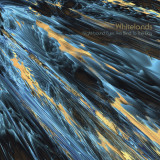
The eagerly awaited debut album from the London-based four-piece * At the forefront of the new generation of Black British guitar music with Big Joanie and Bob Vylan * Supporting Slowdive on their UK tour in February * Singles playlisted by BBC Radio 6 Music, Spotify and others Whitelands are Etienne, Jagun, Vanessa and Michael and they are ostensibly a shoegaze band ever since Etienne stumbled across Slowdive's KEXP session in his recommended videos on YouTube a few years ago. However, they come at the resurgent, Gen Z-soundtracking genre from a refreshingly different angle thanks to their mishmash of musical backgrounds. There's also the fact that their line-up is fully PoC in what is traditionally seen as a predominantly white genre. "There's an underlying narrative that it's OK for white men to be romantic, sensitive, emotional and make dreamy music and, by contrast, young Black men should be making angry music," says Vanessa. "We've all grown up with these stereotypes and therefore I think people are mystified when they see Whitelands." "I consume a lot of media," says Etienne of his wide range of influences. "Videogames, music, news, paintings, manga, animations and film are my go-to, especially anime. There is this drive to want to understand and feel the whole weight of an expression. So, the songs are based on other songs, pictures, aesthetics, 'vibes', an emotion someone else felt. Fundamentally, you are what you eat." As a result of this diet, the lyrics are stunning, dealing with everything from unbalanced relationships and vulnerability to depression, being diagnosed with ADHD and, on the new single 'Tell Me About It' (featuring vocals by Dottie from the band's Sonic Cathedral labelmates deary), trying to navigate love following that diagnosis. The album is bookended by two poetically political songs - 'Setting Sun' and 'Now Here's The Weather' - that deal with imperialism, racism and performative ignorance. "We've experienced tokenism, micro-behaviours, envy and resentment," concludes Vanessa. "So we feel we have to continually prove ourselves. We know we're making a positive impact, but I want Whitelands to really break some barriers."
THEOPHONOS (ex-Serpent Column) and Profound Lore Records present “Ashes in the Huron River” to be released on LP/CD/Digital Feb 09, 2024. The new LP is named in honor of the local woods and riverlands that continue to inspire the studio project. This record is an account of a life spent in the rotten heartlands of neoliberal capitalism and a tribute to the vibrant underground music cultures that thrived before the second half of the last decade.
Expanding on the directness of “Nightmare Visions”, “Ashes” is grander in scope, and is internally regarded as a more focused analogue to 2019’s “Mirror in Darkness”. Hafsteinn Viðar Ársælsson’s dark and intricate illustrations once again accompany the music with striking depictions of abandoned landscapes, arranged to evoke a sense of catastrophe and unwilling transformation.
Primary musical influences include Death Grips’ “Jenny Death” (which the record homages in its gradient-like structure, its centerpiece “Still You Haunt Me” even acting as a reimagined “On GP”), the downtuned hyperaggressions of Morbid Angel’s “Gateways to Annihilation”, and the cinematic, raw intimacies of Pelican’s “The Fire in Our Throats Will Beckon the Thaw.”
THEOPHONOS (ex-Serpent Column) and Profound Lore Records present “Ashes in the Huron River” to be released on LP/CD/Digital Feb 09, 2024. The new LP is named in honor of the local woods and riverlands that continue to inspire the studio project. This record is an account of a life spent in the rotten heartlands of neoliberal capitalism and a tribute to the vibrant underground music cultures that thrived before the second half of the last decade.
Expanding on the directness of “Nightmare Visions”, “Ashes” is grander in scope, and is internally regarded as a more focused analogue to 2019’s “Mirror in Darkness”. Hafsteinn Viðar Ársælsson’s dark and intricate illustrations once again accompany the music with striking depictions of abandoned landscapes, arranged to evoke a sense of catastrophe and unwilling transformation.
Primary musical influences include Death Grips’ “Jenny Death” (which the record homages in its gradient-like structure, its centerpiece “Still You Haunt Me” even acting as a reimagined “On GP”), the downtuned hyperaggressions of Morbid Angel’s “Gateways to Annihilation”, and the cinematic, raw intimacies of Pelican’s “The Fire in Our Throats Will Beckon the Thaw.”
Reggae and Jamaican music have long embraced a symbiotic relationship with the movies. Rooting back to the island's golden era, countless arrangements have either been direct covers, or inspired by, the musicality and mood found in both cinema and television. These reinterpretations would become part of the backbone of the instrumental sound that accompanied the Jamaican record industry's acceleration from the mid-60s and beyond. Talented young musicians, rising from Alpha Boys School and the early studios of Coxsone, Duke Reid and others, found a showcase for their unique playing style on hundreds of different recordings, while appealing to the country's own love affair with Westerns, James Bond canon, and other rebellious themes and motifs that were projected from Hollywood during this time.
In this same tradition, in a new interval, arrives the debut release of Anant Pradhan and Larry McDonald, the latter a master percussionist with direct participation in some of Jamaica's earliest recordings. McDonald, although often uncredited, was a legitimate influence in helping to bridge the Afro-Caribbean sound from calypso into ska and later reggae with his iconic style on hand drums and percussion. A kindred spirit of McDonald, despite 50 years separating them, Anant Pradhan is a bonafide member of the next generation. Although this is his first "solo" record, the talented saxophonist has already played on dozens of incredible sessions for the likes of Victor Axelrod, The Inversions, Andy Bassford, Channel Tubes, Ralph Weeks and Combo Lulo. As an official member of the current touring group of the legendary Skatalites, Pradhan has honed his musicianship under some of the greats of reggae music. His particular soulful, instrumental arrangements are an homage to that influential era of Jamaican music. Pradhan and his band's performance retain the skill and innovation of the old vanguard, and like the generations before, capture a magic that may only be possible when cinema goes reggae.
A cult favorite from A Nightmare Before Christmas, Danny Elfman's "Sally's Song" was immortalized in Tim Burton's 1993 classic stop-motion film. It's immediately recognizable in all its haunting charm, and now, Pradhan and McDonald have managed to transform it into an irrefutable reggae classic, reinvented with its melancholic lead sax and bombastic percussion. The prolific Henry Mancini is already entrenched in the Jamaican canon, yet nobody has knowingly attempted to recreate one of his most magical numbers, "Meglio Stasera" aka "It Had Better Be Tonight," that of the riveting one-take scene in 1963's The Pink Panther. The galloping percussion of the original is transposed through a cloud of smoke, slow and low in a roots style at the hands of McDonald. Pradhan's sax leads the way over the locked-in rhythm section, both deep and cheeky all at once. These first two productions of Anant Pradhan and Larry McDonald are a deserving entry into the canon of reggae covers, and are equally adept to be heard on the screen and or at the dance alike.
out of Stock
Last delivered 2 years ago available to reorder, subject to availability
Spectre is the third album by the late West Coast composer, healer, and medium Pauline Anna Strom. First released in 1984, the album finds Strom exploring the darker corridors of human mythology under the influence of vampiric lore, evoking a hushed gothic solitude and showcasing
her breathtaking dexterity of sound design. Despite its shadowy hues, Spectre offers generous glimpses of a vivid light that could only have come from a heart wide open to the cosmos. Restored and mixed from the original reels by Marta Salogni, and newly remastered, this is the album’s first ever official reissue, and the definitive edition of a visionary statement.
out of Stock
Last delivered 2 years ago available to reorder, subject to availability
- The Black Angels' classic sophomore album - Special color edition pressed on Metallic Silver Wax. - Triple LP housed in a Stoughton tri-fold gatefold jacket // "The Black Angels bring the aura of mid-1966 the drilling guitars of early Velvet Underground shows, the raga inflections of late-show Fillmore jams, the acid-prayer stomp of Austin avatars the 13th Floor Elevators everywhere they go, including the levitations on their second album, Directions to See a Ghost. Mid-Eighties echoes of Spacemen 3 and the Jesus and Mary Chain also roll through the scoured-guitar sustain and Alex Maas' rocker-monk incantations. But he knows what time it is. 'You say the Beatles stopped the war," Maas sings in `Never/Ever.' `They might've helped to find a cure/But it's still not over.' Even so, this medicine works wonders." - David Fricke, Rolling Stone Last time we met The Black Angels, they were staring into the desert sun somewhere outside of Austin, Texas. Two years later, night has fallen and the spirits have come out. It's time for The Black Angels to provide Directions On How To See A Ghost. If you're familiar with Passover, the band's 2006 debut, you'll know that The Black Angels's music alone is enough to invoke spirits. There's a name for the band's sound; they call it `hypno-drone 'n roll'. It's the sound of long nights on peyote, of dreams of a new world order, and of half-invented memories of the seamy side of '60s psychedelia. While the Iraq war is still a major influence on the band's lyrics, there are new forces at work here, including Eugene Zamyatin's dystopian novel We and in Christian Bland's words "psychic information from the past and future." See, The Black Angels really are in contact with ghosts. "Civil War battlefields are prime spots for seeing ghosts," says Bland. "One time at Kennesaw mountain in Georgia, I was climbing the mountain in the middle of June and it must have been close to 100 degrees, but in this one particular spot it was very cold. The hairs on my neck stood up and I knew something strange was happening. Then the wind whispered something like `retreat,' and I did. I later learned that the spot where I was on the battlefield was known as `the dead angle', the place where the fiercest fighting took place. The confederates ended up retreating from the mountain towards Peachtree Creek." The Black Angels formed in Austin, Texas, in 2004, comprising from six people (now five) from very different backgrounds. Singer/vocalist Christian Bland is the son of a Presbyterian Pastor and was raised in a devoutly religious household. Bassist / guitarist Nate Ryan was born on a cult compound and drummer Stephanie Bailey claims she's a descendent of Davy Crocket. She and Alex Maas (vocals/guitar) believe a little girl in a red linen dress haunts the group's home. The band released Passover in 2006 to critical acclaim for both the album and the song "The First Vietnamese War". Most of all, Passover established The Black Angels as a band with brains, balls and a strong message. And this time around, the message is there to read in a 16-page booklet that comes with the album. "Our central theme is that people need to open up their minds and let everything come through, and to learn from past mistakes," says Christian. "Only then will we understand the reality of this world and progress beyond where we are now as humans. We've built upon that theme with Directions to See a Ghost. We want people to study the booklet we are providing with the album in hopes that they will be able to relate each song to something in their life." _"War is Peace. Freedom is Slavery. Ignorance is Strength. Keep Music Evil."_
Since 2015, Berlin’s Cuntroaches have defiled countless venues across Europe and the UK, playing festivals and touring relentlessly. The trio’s influences range widely from metal to punk to hardcore to experimental noise. They aim to create a hybrid sonic experience within a dense wall of sound (often combined with some form of performative mischief - if they’re in the mood). Audiences have been subjected to spewing beer bra harnesses, diaper outfits, empty pet food containers or witnessed band members performing from inside of a trash bag. They’ve thrown a lot of trash on a lot of people. "Cuntroaches - a name inexplicably unused throughout the history of bands, orchestras... any grouping of people really...
As it is, the mantle’s (finally) been taken up by two women and a bloke making ferociously warped hardcore-flecked no wave. Mutating waves of feedback intoxicate and induce hangovers all at once, while David Hantelius gets a frankly obscene sound out of his bass - and the vocals - reverbed to an absurd degree - approach black metal levels of demonic witchery. As with New York’s no wave OGs, what it is definitely not is inept pissing around, ‘noise for noise’s sake’ - no matter how blown-out and violent Cuntroaches get, their interplay is lithe, their arrangements measured." - The Quietus “I want to make something clear: at this very moment, I think that Germany’s CUNTROACHES are the most important and life-affirming band on the planet. Period. The first demo blew me away, but this one... FUCK ME. Somehow they have become more in control and more chaotic at the same time, and the intensity borders on bleak / black metal darknes. I simply do not understand how this music exists, and how it can be so good... eternal hails.” - Maximum Rocknroll
Disastroid's latest outing, Garden Creatures, is a record about the darkness in the hidden corners of suburban landscapes - sinister overgrown gardens, secret collections kept in basements, the crime just beneath the surface, the pervasive loneliness under a veneer of normalcy. Accordingly, it's a dark and atmospheric record, trading the stripped-down approach of 2020's Mortal Fools for a thicker, heavier, and more layered sound. Legendary producer Billy Anderson (Sleep, Melvins, Neurosis) builds mixes that range from dark and dreamy to a thick, sludgy crunch, slowly puling the listener through a range of sounds and textures, making sure things stay interesting. Singer/guitarist Enver Koneya's vocals are soulful and sometimes haunting, drifting above Disastroid's characteristically off-kilter, grunge-influenced riffs.
Disastroid's latest outing, Garden Creatures, is a record about the darkness in the hidden corners of suburban landscapes - sinister overgrown gardens, secret collections kept in basements, the crime just beneath the surface, the pervasive loneliness under a veneer of normalcy. Accordingly, it's a dark and atmospheric record, trading the stripped-down approach of 2020's Mortal Fools for a thicker, heavier, and more layered sound. Legendary producer Billy Anderson (Sleep, Melvins, Neurosis) builds mixes that range from dark and dreamy to a thick, sludgy crunch, slowly puling the listener through a range of sounds and textures, making sure things stay interesting. Singer/guitarist Enver Koneya's vocals are soulful and sometimes haunting, drifting above Disastroid's characteristically off-kilter, grunge-influenced riffs.
Returned to us from early 90s Japan are the holy holy sounds of Ghost. Their collective, clearly inspired by various forms of transcendental music throughout history, created a new syncretic psychedelia with these albums, mixing the texture and vibe of multinational forms of traditional music, with strummed antique stringed instruments and the haunting wail of a recorder on top of their heavy beats and guitars. The considerable depth of this approach was explored through 2014 over another five Ghost LPs, as well as the further explorations to the present day of leader Masaki Batoh, as a solo artist and with The Silence, Damon & Naomi, Helena Espvall and most recently, nehan. These first three Ghost titles were originally released by P.S.F. on CD in 1990, 1992 and 1994, respectively, radiating enigma and energy in palpable waves with their original sound. After the acclaim that greeted Drag City"s 1996 US release of Lama Rabi Rabi, we quickly reissued all three on vinyl - and they quickly went out of print! At which point, Ghost had Snuffbox Immanence and Free Tibet ready to go. And then, Hypnotic Underworld. And then, and then . . . . Now, it"s been 25 years since they were last offered on vinyl. In the twenty-year sweep of Ghost history, these first three releases qualify as primitive early Ghost - sort of like a German Os Mutantes (or perhaps a Brazilian Amon Düül). The subterranean presence of a diversity of progressive/avant classic rock influences (Pink Floyd, Incredible String Band, Captain Beefheart, Scott Walker, Led Zeppelin, Popol Vuh, Third Ear Band, to name but a few) provokes further synthesis, making for an entirely new meditation on the traditional order of psychedelic music. The first two studio albums, each one an iteration of Ghost"s unique lysergic folk music, were followed by the monolithic "live in various places" happening of Temple Stone, which raised the trippiness levels considerably. But this was only the end of the beginning . . .
Returned to us from early 90s Japan are the holy holy sounds of Ghost. Their collective, clearly inspired by various forms of transcendental music throughout history, created a new syncretic psychedelia with these albums, mixing the texture and vibe of multinational forms of traditional music, with strummed antique stringed instruments and the haunting wail of a recorder on top of their heavy beats and guitars. The considerable depth of this approach was explored through 2014 over another five Ghost LPs, as well as the further explorations to the present day of leader Masaki Batoh, as a solo artist and with The Silence, Damon & Naomi, Helena Espvall and most recently, nehan. These first three Ghost titles were originally released by P.S.F. on CD in 1990, 1992 and 1994, respectively, radiating enigma and energy in palpable waves with their original sound. After the acclaim that greeted Drag City"s 1996 US release of Lama Rabi Rabi, we quickly reissued all three on vinyl - and they quickly went out of print! At which point, Ghost had Snuffbox Immanence and Free Tibet ready to go. And then, Hypnotic Underworld. And then, and then . . . . Now, it"s been 25 years since they were last offered on vinyl. In the twenty-year sweep of Ghost history, these first three releases qualify as primitive early Ghost - sort of like a German Os Mutantes (or perhaps a Brazilian Amon Düül). The subterranean presence of a diversity of progressive/avant classic rock influences (Pink Floyd, Incredible String Band, Captain Beefheart, Scott Walker, Led Zeppelin, Popol Vuh, Third Ear Band, to name but a few) provokes further synthesis, making for an entirely new meditation on the traditional order of psychedelic music. The first two studio albums, each one an iteration of Ghost"s unique lysergic folk music, were followed by the monolithic "live in various places" happening of Temple Stone, which raised the trippiness levels considerably. But this was only the end of the beginning . . .
Returned to us from early 90s Japan are the holy holy sounds of Ghost. Their collective, clearly inspired by various forms of transcendental music throughout history, created a new syncretic psychedelia with these albums, mixing the texture and vibe of multinational forms of traditional music, with strummed antique stringed instruments and the haunting wail of a recorder on top of their heavy beats and guitars. The considerable depth of this approach was explored through 2014 over another five Ghost LPs, as well as the further explorations to the present day of leader Masaki Batoh, as a solo artist and with The Silence, Damon & Naomi, Helena Espvall and most recently, nehan. These first three Ghost titles were originally released by P.S.F. on CD in 1990, 1992 and 1994, respectively, radiating enigma and energy in palpable waves with their original sound. After the acclaim that greeted Drag City"s 1996 US release of Lama Rabi Rabi, we quickly reissued all three on vinyl - and they quickly went out of print! At which point, Ghost had Snuffbox Immanence and Free Tibet ready to go. And then, Hypnotic Underworld. And then, and then . . . . Now, it"s been 25 years since they were last offered on vinyl. In the twenty-year sweep of Ghost history, these first three releases qualify as primitive early Ghost - sort of like a German Os Mutantes (or perhaps a Brazilian Amon Düül). The subterranean presence of a diversity of progressive/avant classic rock influences (Pink Floyd, Incredible String Band, Captain Beefheart, Scott Walker, Led Zeppelin, Popol Vuh, Third Ear Band, to name but a few) provokes further synthesis, making for an entirely new meditation on the traditional order of psychedelic music. The first two studio albums, each one an iteration of Ghost"s unique lysergic folk music, were followed by the monolithic "live in various places" happening of Temple Stone, which raised the trippiness levels considerably. But this was only the end of the beginning . . .
World Of Echo are proud to announce the long-awaited reissue, on 17th February, of the self-titled debut album by Bristol’s Movietone. Originally released in 1995 by Planet Records and reissued on CD in 2003 by The Pastels’ Geographic Music imprint, this is the first time Movietone has been reissued on vinyl. An expanded double-LP edition, it includes the extra tracks from the 2003 CD (their first two singles, and an unreleased demo of “Chance Is Her Opera”), and adds three more unearthed gems: demos of “Alkaline Eye” and “She Smiled Mandarine Like”, and an early take of “Late July”, recorded in a garden by Dave Pearce (Flying Saucer Attack) in 1993. Taken together, this is the definitive collection of music from the first phase of one of Bristol’s most remarkable groups.
Movietone was the cumulation of a series of events, explorations, and discoveries, starting at secondary school – the group’s core membership of Kate Wright, Rachel Brook, Matt Elliott and Matt Jones met at Cotham School in Bristol. As for many other groups, their early years were all about experimenting, and finding ways to ‘make do’, a DIY sensibility that would inform Movietone through their decade-long lifespan. From formative rehearsals in a shed in the garden of Brook’s family home, to recording early material to four-track in Redland Library, and on into the Whitehouse and Mr Grin’s studio sessions for their debut album, Movietone’s music fell together in a creatively unpredictable, yet conceptually rigorous manner.
By the time they released Movietone, they’d found a home with Bristol’s Planet, run by author Richard King and James Webster, who had both released their first two singles, “She Smiled Mandarine Like” and “Mono Valley”. There was other music happening around them in Bristol, too, from the Jones brothers’ avant-rock outfit Crescent (who were Movietone’s closest conspirators), through Elliott’s jungle/electronica project Third Eye Foundation, and Brook and Elliott’s membership of Flying Saucer Attack. A closely knit community, Movietone are the centre of this nestling architecture of groups.
The vision in the music, mostly, belongs to Wright, but Movietone ran in democratic creative consort. Listening back to Movietone, you can hear this democracy in action through the wildness of the music, which is balanced by the poetics of Wright’s lyrics and melodies. Full of half-captured memories and entangled abstractions, there’s an elliptical, ruminative quality to much of the writing here that shows the deep influence of the Beat Generation writers, along with a twilight environment captured in the songs that’s pure third-album Velvets, Galaxie 500, early Tindersticks, Codeine. Unpredictable interventions – the crashing glass in “Mono Valley”, the sudden explosions of “Orange Zero” – point towards the noise blowouts of My Bloody Valentine, the unpredictability of Sonic Youth; Wright’s understated vocal cadence suggest a deep, embodied understanding of John Cage’s Indeterminacy.
Movietone would go on to make three fantastic albums for Domino – Night & Day (1997), The Blossom Filled Streets (2000) and The Sand & The Stars (2003) – and their Peel Sessions were released early in 2022 by Textile. Still held in high regard by artists like Steven R. Smith, and The Pastels, whose Stephen McRobbie once described them as “one of the great unknown English groups,” it’s an absolute thrill to listen to Movietone anew – still inspired, still seductive, still magic, still mysterious.
Dean McPhee’s fifth full length album 'Astral Gold' sees the Yorkshire-based electric guitarist's music continue to evolve beyond the spacious folk-inspired fingerpicking that typified his earlier releases into a heavier sound combining deep bass, textured reverbs and waves of saturated delay. 'Astral Gold' brings together several now out-of-print tracks that were originally released on the Reverb Worship and Folklore Tapes labels, along with two brand new pieces – all recorded live in single takes. There is a cosmic theme throughout, including a track based on the local lore of The Ilkley Alien (The Second Message), a trance-inducing drone piece inspired by the orbit of the 'doomed moon' Triton (Neptune) and a meditation on lunar volcanism combining baroque melodies, EBow bass and found recordings of a crackling fire played through guitar pickups (Lunar Fire). Throughout this intricately layered and beautifully crafted album McPhee draws on a wide range of influences from Kosmische Muzik and Dub to Stoner/Doom Rock, British Folk and underground electronic music, and the result is both intoxicatingly atmospheric and sonically inventive. ‘Astral Gold’ was mastered and cut by Anne Taegert at Dubplates & Mastering in Berlin and is pressed on 180g heavyweight vinyl. ‘Astral Gold’ follows Dean McPhee’s recent appearances this year on several well received compilation albums ‘I Thought I Told You: A Yorkshire Tribute to Michael Chapman’ on the Tompkins Square label, ‘Ballads of Seduction, Fertility & Ritual Slaughter’ released by Wasistdas, and Folklore Tapes’ limited edition cassette ‘A Web of Braided Willow (The Folklore of the Wickerman)’. "His take on the late folk guitarist’s ‘Caddo Lake’ could have you believing the pinch of callous on string was birdsong – a meditative gem" (Noel Gardner, The Quietus) "Magpahi's synth-drizzled Maypole, Dean McPhee's Sunset and Meg Baird's Willow's Song are particularly gorgeous" (Jude Rogers. The Guardian) "An excellent new single from UK guitarist Dean McPhee...the A-side is an echo-laden slice of smoldering instrumental guitar, pulling at the mind like taffy and living up to its cosmic title" (Raven Sings the Blues) "Absolutely lovely stuff; shimmering, gorgeous, delicate electric guitar playing of the very highest quality
The UK avant-garde’s rising star, Bristol-based multi-instrumentalist Bingo Fury is announcing his debut album ‘Bats Feet For A Widow’ due out 16 February via tastemaking label state51. Filled with noir elegance, ‘Bats Feet For A Widow’ is an album that revels in extremity. The album was recorded in a local church in Bristol, taking inspiration from the musician’s complex relationship with his strong religious upbringing. The influence of the church building resonates throughout the album.
‘Bats Feet For A Widow’ is full of strange experiments, obscure references, offbeat one-liners, heart-breaking sentimentality and surging creativity. At the heart of it all is Bingo Fury’s crooning bass vocal, lending a vivid and slyly humorous voice to universal themes of love and pain.
Alongside the album announcement, Bingo Fury is releasing new single ‘Leather Sky’, a tender piano ballad charged with real emotion and a heartbreaking cornet refrain played by band member Harry Furniss. In this cinematic track full of paralysing despair, the musician sings: “You know I’m trying to give you everything / It all gets in the way.”
Bingo Fury on the single: “Leather Sky is a difficult song to describe succinctly. It’s about being separated from someone against both of your will. Somebody close to me became very unwell and communication became restricted, almost non-existent. The song took shape during that period. A few of the surreal lines ended up becoming reality.”
Although very much a solo songwriter, Bingo Fury’s compositional process relies on contributions from his entire band - bassist Megan Jenkins and drummer Henry Terrett have been playing together since their teens. In one of their various incarnations, they recruited local avant-jazz legend, cornet player Harry ‘Iceman’ Furniss, with guitarist and percussionist Rafi Cohen later completing the line-up.
The album announcement follows the release of the cacophonous single ‘Power Drill’, which garnered praise from The Line Of Best Fit and DIY. This comes after Bingo Fury’s debut EP, ‘Mercy’s Cut’, that came out last year to an abundance of critical acclaim from the likes of BBC 6 Music, The Quietus, Loud & Quiet, Clash, as well as earning himself a spot on the NME Top 100. Filled with rich, cinematic allure, the EP is both beautiful and unsettling and underlines Bingo Fury’s complete abundance of compositional ideas.
The UK avant-garde’s rising star, Bristol-based multi-instrumentalist Bingo Fury is announcing his debut album ‘Bats Feet For A Widow’ due out 16 February via tastemaking label state51. Filled with noir elegance, ‘Bats Feet For A Widow’ is an album that revels in extremity. The album was recorded in a local church in Bristol, taking inspiration from the musician’s complex relationship with his strong religious upbringing. The influence of the church building resonates throughout the album.
‘Bats Feet For A Widow’ is full of strange experiments, obscure references, offbeat one-liners, heart-breaking sentimentality and surging creativity. At the heart of it all is Bingo Fury’s crooning bass vocal, lending a vivid and slyly humorous voice to universal themes of love and pain.
Alongside the album announcement, Bingo Fury is releasing new single ‘Leather Sky’, a tender piano ballad charged with real emotion and a heartbreaking cornet refrain played by band member Harry Furniss. In this cinematic track full of paralysing despair, the musician sings: “You know I’m trying to give you everything / It all gets in the way.”
Bingo Fury on the single: “Leather Sky is a difficult song to describe succinctly. It’s about being separated from someone against both of your will. Somebody close to me became very unwell and communication became restricted, almost non-existent. The song took shape during that period. A few of the surreal lines ended up becoming reality.”
Although very much a solo songwriter, Bingo Fury’s compositional process relies on contributions from his entire band - bassist Megan Jenkins and drummer Henry Terrett have been playing together since their teens. In one of their various incarnations, they recruited local avant-jazz legend, cornet player Harry ‘Iceman’ Furniss, with guitarist and percussionist Rafi Cohen later completing the line-up.
The album announcement follows the release of the cacophonous single ‘Power Drill’, which garnered praise from The Line Of Best Fit and DIY. This comes after Bingo Fury’s debut EP, ‘Mercy’s Cut’, that came out last year to an abundance of critical acclaim from the likes of BBC 6 Music, The Quietus, Loud & Quiet, Clash, as well as earning himself a spot on the NME Top 100. Filled with rich, cinematic allure, the EP is both beautiful and unsettling and underlines Bingo Fury’s complete abundance of compositional ideas.
In 1994, UK ambient pioneers O Yuki Conjugate recorded their landmark Equator album. To mark the 30th anniversary of this musical milestone, many of the same personnel – Roger Horberry (co-founder of O Yuki Conjugate), Dan Mudford (ex-Sons of Silence and co-creator of the Shaun of the Dead soundtrack), Joe Lamb (ex-Sons of Silence) and Malcolm McGeorge – came together to make New Meridian, reflecting the range of influences they’ve picked up over the intervening years.
Generously described as “almost like normal music”, the eight tracks of New Meridian feature instrumentation ranging from classic analogue to actual wooden logs. The result takes you on a rain-drenched, open-top ride from Electronica Avenue to the drone caverns of Uranus, with various Fourth World ambi-dub diversions along the way. File under: duress.
out of Stock
Last delivered 2 years ago available to reorder, subject to availability
Mutagenicos (in English, "Mutagens...agents of change) were formed at the end of 2008, their base of operations being the wine region of Spain, Logroño in La Rioja. Influenced by traditional garage, surf and rockn´roll, but with their feet firmly planted in the present. Their brilliant, long-delayed, new album is finally out! They started as a quintet playing mainly instrumental songs, but little by little, both the formation and the compositions, have been undergoing mutations, making way for other musical genres with a greater number of sung songs, although always there remains room for instrumentals. For more than 3 years the band had stabilized as a trio: Santi Pequeno (bass) Pablo Magariños (drums and vocals) Alfredo Roto (guitar and vocals). But as they are irresistible to change, Miguel Aguas has joined, contributing percussion, synths, choruses, and much-needed height! But what has never, and will never, change is the is the fundamental driver of the band: fun above all. Which is what rock´n´roll is supposed to be, right?
Damona ist eine 18 jährige bayrische von Grunge und Classic Rock beeinflusste Sängerin. Kraftvollen Pop Punk gefällig? Damona macht was sie am besten kann. Frech und laut sein, gefolgt von ganz viel Melodie und Talent. Das Ausnahmetalent steht für moderne, unverbrauchte weibliche Gitarren-Pop- Musik. Mit über 2 Millionen Follower/innen allein auf TikTok, die ihren Song-Interpretationen und Demos folgen und über 117.000 Follower/innen auf Instagram, fu?r die sie weit mehr ist als eine "Influencerin", sie ist Vorbild. Nun also endlich der erste physische Tonträger. "Ich finde es so crazy, das ich endlich meine eigene Musik auf meinem Plattenspieler hören kann. Die Platte verewigt die letzen beiden Jahre meines Lebens und ist für mich wie ein ein Fotoalbum, nur in schöner;)". Enthält auch die bisherigen Digitalsingles "Skeleton" und " Girl In A Car".
HI-LO returns to Adam Beyer’s label for a sharp new outing ‘WANNA GO BANG’. The new track comes almost a year on from his energetic Drumcode debut ‘Hypnos’, which was followed by his remix of Adam Beyer & DJ Rush’s ‘Restore My Soul’. Oliver Heldens’ techno alias HI-LO has been building steam over the last 12 months, remixing Nina Kraviz’s ‘Skyscrapers’, sharing line-ups with everyone from Erol Alkan to PanPot and Enrico Sangiuliano on the world’s biggest stages, while also collaborating with Reinier Zonneveld, Eli Brown, and Space 92. All the while he’s kept in contact with Beyer, a sophomore offering on Drumcode always on the cards. ‘WANNA GO BANG’ is a high-powered Chicago-influenced weapon, that takes its vocal from the DJ Deeon classic ‘2 B Free’. HI-LO’s cut sees the vocal combine with a volley of drums throughout the mid-section, which adds a clever dynamic energy to the track. Already teased in HI-LO’s sets, and widely supported by the underground’s finest including Beyer, Amelie Lens, Enrico Sangiuliano, ANNA, and many more, ‘Wanna Go Bang’ is set to dominate clubs worldwide. Included in the pack, ‘LOKOMOTIF’ is five minutes of pure machine funk as HI-LO crafts a fantastic little groover driven by 90s house synths stabs. The track which has been in the works for the past two years has been teased in HI-LO’s sets over the summer, also garnering support from Carl Cox. On both tracks, Oliver Heldens says “‘WANNA GO BANG’ is my take on Chicago legend DJ Deeon’s classic vocoder vocal sample (from his 1992 song “2 B Free”, but it’s pitched down 5 semitones now which gives it such a dark vibe). I’ve always wanted to make my own DJ weapon version of it since I heard Bjarki’s trippy version in 2015, and I’m really happy with how it turned out, it’s such a monster! “LOKOMOTIF” is a high-energy groover, driven by 90s House synth stabs, funky percussion and banging drums, and it sits very nicely in between Techno and House. Both are really ‘dance floor’ focused, so I’m very pleased that many noteworthy DJs have been banging out these tracks in their sets already pre-release. And I couldn’t be happier than to see them released on one of my all-time favorite labels, Drumcode!”
out of Stock
Last delivered 4 months ago available to reorder, subject to availability
• The first up to date, post-pandemic, no-borders era book to cover Berlin’s role as an electronic music and cultural capital. Coming To Berlin breaks the tradition of Berlin’s perception as techno ground zero and shows the true diversity and richness that make up the city.
• Connects musical and cultural dots over a 120 year timeline, including the Weimar era, krautrock, the 80s art scene that involved Einsturzende Neubauten and Nick Cave, the East Berlin punk movement, through to Berlin’s role as a techno capital with the Love Parade, Tresor and Berghain, and into the post-techno, post-genre, post-gender future that takes in the refugee crisis, gentrification, ambience and lockdown.
• Written by a former Londoner who made Berlin his home, the book captures nuances and details of living in Berlin that will be immediately relateble to fellow Berliners yet at the same time captures the city’s creative, free-living essence to anyone with a curiosity for Berlin and a love of electronic music.
Coming To Berlin reflects, through the lives and music of migrants, settlers and newcomers, how a constantly in flux city with a tumultuous history has evolved into the de facto cultural capital of Europe. And how at the heart of this, electronic music and club culture play a unique role. A plea for multiculturalism and a love letter to the borderless potential of music, the book breaks the tradition of Berlin’s perception as techno ground zero and shows the true diversity and richness that make up this city.
Told through Paul Hanford’s novelistic narration, Coming To Berlin mixes imagination and interview, psychogeography and narrative, humour and horror. Each chapter follows encounters with people who have made the city their own. Club legends Mark Reeder, Danelle DePicciotto and Monika Kruse. The journey of a young Syrian refugee who has immersed himself in DJing and UK Drill. Ferruccio Busoni, an Italian Weimar era composer whose influence has echoed subliminally for over a century.
We catch glimpses of the 1980s punk and art movement, the Genialle Dillentanten, and how it led towards the birth of modern club culture in the city. We follow the Turkish hip-hop scene on the streets of Kreuzberg. And under threat from gentrification, into the post-pandemic world where clubs, a thirty-year long pulse stopped, we hang out with artists reshaping electronic music into new genres and even new genders.
When Paul Murphy released his critically acclaimed debut solo album, Claremont 56, in 2006, many thought it would be the first of many. In a way, it was, as in the years since he’s released a string of collaborative sets alongside Benjamin J Smith (as Smith & Mudd), and as part of underground ‘supergroups’ Paqua, Bison and Hillside. But that second solo album? Well, it just had to wait. In early 2023, Murphy finally decided to scratch that itch, roping in some of his most trusted collaborators (keyboardist and bassist Michele Chiavarini, percussionist Patrick Dawes, guitarist Dave Noble and HF International’s Kashif included) to lay down a sumptuous set of tracks that not only showcases his now familiar (bit hard to pigeonhole) neo-Balearic sound, but also proves how much he has matured as a writer and producer since 2006.
In The Garden of Mindfulness is richly musically detailed, expertly arranged and full to bursting with fluid instrumental solos, with Murphy and his collaborators serving up tracks that brilliantly blur the boundaries between languid jazz-funk, downtempo, vintage synth-laden krautrock, dubby grooves and sun-splashed soundscapes. It simply sparkles from the moment that opener ‘Eighty Three’ slowly rises like the morning sun, with gentle, undulating synth sounds ushering in a slow-motion jazz-funk excursion rich in twinkling electronics, spacey pads and warming bass. Recent single ‘Katanaboy’, a lusciously layered dub disco-infused dancefloor excursion in Murphy’s familiar style, raises the temperature a touch, before ‘Bonne Anse’ and the sublime ‘Unka Paw’ (whose combination of evocative fretless bass, extended electric piano solos, Clavinet licks and acoustic guitars is genuinely spellbinding) invite a combination of wavy shuffling and flat-on-the-back, eyes-closed appreciation.
And so it continues, with gorgeous title track ‘In The Garden of Mindfulness’ making way for the boogie-influenced, Japanese-British brilliance of ‘Hangsang’ (check the jaunty pianos, yearning breakdown and exotic melodies). Murphy’s long held love of warm, weighty bass, hypnotic disco grooves, colourful analogue synth sounds and jazzy guitars once again comes to the fore on ‘Way Of The Hollow’ before the album reaches a fittingly triumphant conclusion with ‘Late In March’.
A neat sonic summary of all that makes the set such a rewarding and entertaining experience, repeat listens reveals a wealth of musical details, from off-kilter triple-time drums and surprise bass guitar solos, to impeccable piano solos (provided by the immensely talented Chiavarini), fizzing jazz-funk synth doodles and stirring synth-strings. It’s a breathlessly brilliant way to end an album that was genuinely worth waiting for.
out of Stock
Last delivered 11 months ago available to reorder, subject to availability
It is no secret that Montreal had a bubbly disco scene, but there are still some under-the-radar gems. Sophie Stanké is one of them. The charismatic Quebec-Lithuanian actress, radio host and singer hung around with some of the hippest disco people of the 80s, and worked on the sexy boogie song "L'amour d'une diva" with no other than Geraldine Hunt. Scandalous at the time, it became a local disco hit. Famous french singer Daniel Guichard noticed her and signed the song – slightly rearranged – in France on his label Kuklos. Here is the rarest original Canadian arrangement that Stima reissued, in all its glory: long and instrumental versions.
The other side includes the more obscure and even more erotic "J'adore". It was issued in 1987 under her first name, Sophie, with synth-pop and new wave influence. An instrumental was missing, thus Baerlz delivers a new dub cover and now each song has also its “version”, in the purest 80s 12 inches tradition.
After ten years spent in France, where she worked with another star singer Nicolas Peyrac, Sophie is now still active in Québec's cultural life. Stima is proud to have her permission to reissue these 2 fresh 80s tracks to hit the modern dancefloors.
out of Stock
Last delivered 9 months ago available to reorder, subject to availability
Dutch synth-wizard Nadia Struiwigh brings her eclectic live approach to Blueprint Records.á On the "Voxis Ohlun EP", Struiwigh reflects her profound command over synthesis and sequencing, crafting upfront techno with a vigorous, nostalgic feel.
Nadia Struiwigh, the Dutch artist rooted in Rotterdam and currently based in Berlin, has carved a unique niche in the electronic music scene.á Her genre-defying compositions, blending ambient, techno and electro, exhibit her signature ethereal and melodious production style, with a discography gracing acclaimed labels like Central Processing Unit, Nous'klaer, Dekmantel, Clone and InFinÒ.á Inspired by the Warp school of electronica, her live performances (ranging from immersive ambient to kinetic techno) are a testament to her technical prowess and emotional connection with her audience.á A versatile DJ and live act, she graces both concert halls and strobe-lit club sessions, curating sets that span from driving techno to deeper, emotive realms, earning her residencies at venues like Tresor.á Her versatile expertise extends beyond music; she collaborates with pioneering music brands such as Roland, Korg, Teenage Engineering, Arturia and others, embodying her reputation as a leading tech enthusiast within the industry.á Her contributions to esteemed platforms like Resident Advisor, Phantasy, Bleep, Slam Radio and Red Light Radio underscore her adaptability and prowess across a wide spectrum of electronic music, further solidifying her multifaceted presence in the field.
"Voxis Ohlun" invites you into a mesmerizing journey through the enchanting landscapes of the '90s, blending diverse musical influences seamlessly.á The focus here is on 4x4 dancefloor music, adorned with a tantalizing hint of breaks and pulsating rhythms, and a sprinkle of fairyland allure.á Crafted using only hardware, predominantly the beloved Korg Electribe MX, the sounds resonate with the essence of that era.á Each track unfolds like a chapter in a wondrous tale, interweaving nostalgia with a contemporary energy, ensuring an immersive experience.
out of Stock
Last delivered 10 months ago available to reorder, subject to availability
All & Nothing has become one of the icons of Spanish underground rock of the 70s and their records are among the most sought-after pieces by collectors. With a short discography consisting of just two singles - one of them was even released in Argentina with an alternative cover- the band All & Nothing has become one of the icons of Spanish underground rock of the 70s and their records are among the most sought-after pieces by collectors. The group was really nothing more than a studio project, put together by journalist and record producer José Luis Alvarez, who never performed in public. Their goal was to record songs in the same style that the emerging Andalusian rock scene was already doing in the south of Spain under the influence of the latest international rock trends -imported through the US military bases- and the local musical idiosyncrasy. Although most of the recorded songs - some of whom remained unreleased for years- succeeded in reflecting the original goal, for this first single of All & Nothing their producer instructed the band to record something similar to Iron Butterfly's classic 'In-a-gadda-da-vida', and 'Underground Vibrations nº 2' seems to be a very accomplished effort. The record has become a very sought-after item for those collecting the lesser-known side of 70s Spanish underground rock. The stunning rhythm section on both sides of the single plus the overwhelming organ solos and firing wah-wah and fuzz guitars explain the high interest on this elusive 45, a must in the top DJs record boxes. We are happy to reissue this amazing All & Nothing debut 7" for the first time, remastered from the original tapes and featuring the 1970 sleeve artwork.
After releasing numerous and now collectable standalone singles, plus some now famous collaborations with Dimitri from Paris, 2019 saw Parisian based 8 piece, Cotonete release their first long player in 15 years! Under the guidance of Melik Bencheikh from Paris’ rare record emporium, Heart Beat Vinyl. The dark moody mover "Super-Vilains" came out to great success on Heavenly Sweetness.
After playing some packed live shows around France and the UK, including the acclaimed Sunday at Dingwalls in Camden, hosted by Gilles Peterson and Patrick Forge. Somewhere along this part of the journey, they came across the Brazilian music legend and vocal powerhouse, Di Melo. He softened their souls, and from this love affair came the album "Atemporal". Released on Favourite Recordings, this 8 track album would end up being sampled by Canadian superstar Drake, for his 2023 album ‘For All the Dogs Scary Hours
Edition’.
So now into 2024, and we have Cotonete full length number two. They’ve enlisted the producer Guts to guide them towards sunshine, groove, warmth and all the colours in his rainbow. With their tongues firmly in their cheeks, the album is titled ‘Victoire de la Musique’ - a dig at the annual French music award ceremony. Taking the band deep, producer Guts showed them new and exciting rhythms from all corners of the world. The record’s first example of this is ‘Venezuela’, a track directly inspired by the jazz funk from the great Caribbean nation.
Other key musical exploration on the record can be attributed to the late composer Francis Lai. On ‘Cinq Pour L'aventure’ - an almost 15 minute epic monster showcasing the band’s love for 70's French movies soundtracks. “L’aventure c’est l’aventure”, was a movie by one of the most famous French directors Claude Lelouch The single from the soundtrack was sung by French music superstar Johnny Halliday.
Guests are scattered very tastefully across the album, on the only cover version of the record, the Brazilian master Jorge Ben’s ‘Bebete Vãobora’, Sabrina Malheiros was invited to lend her lungs. The daughter of Azymuth’s Alex Malheiros helps join perfectly the dots from a band that are without a doubt Cotonete’s biggest influence. Brazilian jazz funk, now with an added French touch.
On ‘Day in Day Out’ a powerful performance is given from Leron Thomas on vocals and trumpet. Perhaps also known for his role as the musical director for Iggy Pop and touring member of his band. This track is an already tried and tested dance floor filler, emphasizing just how tight the band really can play - the track even found its way into BBC Music’s Craig Charles’ ‘Track Of The Year’ selection.
No record so soulful would be complete without a trip to the UK. Omar, London’s Godfather of New Soul pops in. Having recorded with artists like; Courtney Pine, Level 42 & Erykah Badu, in his distinctive smooth style, he blesses the track ‘What Did Run You For?’ The final vocal visitor is Gystere Peskine, a Parisian based musical hero, who shows off his retro future funk feels on ‘O Ceu es Preto’ - which literally translates as ‘the sky is black’ - although given the hugely uplifting and almost Gospel Soul of this Russian/Brazilian singer, he
has us seeing things far brighter.
Cotonete have endeavored to build a worldwide rainbow warrior team of merry boys and girls. Fighting the brave fight to shine light towards the fact that music will always win…. "Victoire de la Musique" - a symphony of spring, songs of the new world, a "Victory Of Music”
out of Stock
Last delivered 13 months ago available to reorder, subject to availability
Skylax Welcome Back Nicolas Aftalion With Another Powerful Ep "Spirit of House Ii" After His Sensational Debut on the Label, Acclaimed by the Queen of the Genre Cinthie. Deeply Inspired by the New Jersey House Sound Popularized by Tony Humphries, and the Vibrant Energy of the New York Scene. This Release Embodies the Essence of Original House Music, Delivering an Exhilarating and Impactful Experience. Following the Success of "Spirit of House I", This Sequel Is a Natural Progression in Aftalion's Musical Journey. Prepare to Be Transported by the Enchanting Tracks Within. "Cruise in Paradise" Blends Jazz and Spanish Influences, Reminiscent of the Iconic Moments on the Album "Forever Changes" by the American Band Love (As Crazy as It Sounds), Fusing Original House With Free Jazz in an Improbable Yet Captivating Manner. "A Message to Mad Mike" Pays Homage to the Visionary Dj and Producer of Underground Resistance, Expressing Profound Admiration and Love. This Is a Monumental Record That Encompasses Everything Contemporary Electronic Music Has Forgotten. "Paris Is Burning" Serves as an Ode to the Voguing Culture of the '90s, a Celebration of Queer Expression and Vitality. "Soulful in Paris" Takes Us Back to the Soulful and Rhythmic Sounds of Strictly Rhythm and the Timeless Energy of Ultra Naté. as a Digital Bonus, Indulge in the Excellence of "Baby Driver" and "Blaster." "Spirit of House Ii" Is a Masterpiece That Captures the Essence of House Music's Roots While Embracing Innovation and Artistry. Prepare Yourself for an Extraordinary Musical Journey That Showcases Nicolas Aftalion's Profound Understanding of the Genre and His Ability to Create Timeless and Groundbreaking Compositions....
out of Stock
Last delivered 2 years ago available to reorder, subject to availability
If the genesis of The Big Idea was written both in the corridors of their high school and the surroundings of La Rochelle, the first chapter truly takes place in a big house in outskirts of Paris, where the six boys settled once they got their baccalaureate in 2015. Throughout these five years, The Big Idea hosted every European band playing in Paris with no landing place. The house of Champigny-sur-Marne, almost invisible in the monstrous metropolis, became a central location of the capital’s underground scene.
That creative cyclone within which the band is placed quickly shows results and the band hit it hard with their debut LP “La Passion du crime 3” (2017). This quadruple album, written as the movie score of a police investigation story, affirms something fundamental: The Big Idea is determined not to do things like everybody else. The influences of the great psychedelic rock’n’roll tribes naturally appear, the band release several record, start touring all around Europe allowing them to develop a furious alchemy on stage. But then covid brought everything to a halt. However, the band returned to La Rochelle and plotted a new, mad project.
The Big Idea becomes the first band to record an album on a sailing boat while crossing the Atlantic. Once again, the idea is fabulous, and “The Fabulous Expedition of Le Grand Vésigue” represents both the thirst of adventure of the sextet from La Rochelle, and their yearning for calm, psychedelic horizons. After the release of the documentary film and the big tour that followed this extraordinary adventure, the band decides to reaffirm the most essential part of its identity and announces for February 2024 the releasing of a new record more electric and radical, in the image of their live performance with more and more intensity. “Tales of Crematie” is a story built on a fantasy medieval backdrop, but could have however taken place in our modern era. If the elegant, psychedelics parts have not disappeared, the record’s tone is clearly more rock than what the band has ever created before, and as The Big Idea always likes to go overboard, the album will be released as a double LP in which you’ll hear trumpets as well as pianos, violins, tropical influences, post-punk, and above all, loads, loads of fuzz. Just like a toy chest whose key would’ve been thrown away on purpose, hidden arrangement treasures abound inside of “Tales of Crematie” , along with a violent revolt against the modern archetypes of “too normal music.”
First album in seven years from Maple Death Records founder James Jonathan Clancy (Italy/Canada), and the first under his birth name following previous ensembles His Clancyness (Fat Cat, Maple Death) and Brutal Birthday (Total Punk, Improved Sequence). In the interim between those projects and this latest, ‘Sprecato’, Clancy has refined and honed his vision —steadily and carefully drawing from a host of disparate influences to create a new kind of singer-songwriter album that bridges the divide between cosmic loner-folk, proto-ambient music, and the epic, intricately arranged world of vintage Italian soundtrack music. For ‘Sprecato’, Clancy has assembled a transnational cast of renowned guest collaborators; including Stefano Pilia (co-producer/guitar/modular/synths/bass), Andrea Belfi (drums), Enrico Gabrielli (flutes, PJ Harvey/Calibro 35), Francesca Bono (piano, Bono/Burattini) —while the core of the band features Dominique Vaccaro (guitars, J.H. Guraj), Andrea De Franco (synths, Fera) and Kyle Knapp (sax, Cindy Lee/Deliluh).
Written and recorded between London & Bologna, the initial spark for the album was to be found in the book length work ‘Gli Sprecati’ (Canicola Edizioni), by visionary Italian comic’s artist Michelangelo Setola, who ultimately provided Clancy with the graphics
that grace the album’s cover and overall visual sensibility. Something of Setola’s near apocalyptic pastoralism runs through the record, even as Clancy’s themes grow beyond the seed they’d originally planted. Drum machines that sound as if they’ve been excavated from the earth meet detuned pianos and guitars; bucolic traces of synths stretched beyond all reckoning. While the band is both loping and epic —with shades of Pentangle’s Terry Cox in the live drumming in particular —there’s a new emotional depth and
A lot of water has flown under the bridge since Błoto released their last album. Sadly, in Polish rivers it wasn't just water flowing, but also all sorts of sewage of unknown origin, which destroyed the condition of these once vibrant bodies of water; it eventually led to a real catastrophe on the Odra River, which, after all, surrounds the entire city of Wroclaw, the band's birthplace. It is time for a decisive response. Błoto is making a comeback with a seven-inch vinyl and their first singles in over two years - "Szlam" and "Ścieki".
Climate change had already led to a permanent hydrological drought, which was echoed on Erozje LP. Today, as many as 91.5 percent of Poland's rivers are in very poor condition. It is not only drought that threatens rivers, but also excessive salinity. This is precisely the kind of disaster that happened on the Odra river. It resulted in 360 tonnes of dead fish and death of the river along a stretch of almost 500 km, and the reason for that was short-sighted human activity that could have been avoided. Still, the decision was made to turn the river into a cesspool.
Two years of hiatus is far too long. During this time, reality has not let up for a moment, providing new inspiration. Szlam (eng. sludge) is the sediment that forms on the river bed and sometimes the river banks. The Polish word derives from German (Schlamm), which means swamp - or mud. Szlam is therefore a sticky and unsettling remorse that rests somewhere at the bottom of the human consciousness.
In "Szlam" and "Ścieki" tracks, you will not only hear references to Erozje, but also to Kwasy i Zasady LP. For it is also a metaphor for everything that pours out of the media, smartphones, and then flows into one's head. The constant bickering, conflicts and dirty play in political campaigns, scandals to which we are already numb. On top of this, hate speech, low-quality stupefying influencer content, resulting in an ever-decreasing cultural capital of a society that breeds conformists, individualistically-minded egoists and mindless consumers. This state of affairs spawns a society of egoists, incapable of critical reflection, questioning and rebelling against reality.
The sound and genres explored by the band are, as usual, difficult to pigeonhole. These two musical miniatures contain a lot of anxious and neurotic sounds, as well as synth glitches evoking emotions such as fear, anger, sadness and guilt. The quartet consisting of Wuja HZG, OlafSaxx, Cancer G and Latarnik managed to distill this mental state by encapsulating it in shades of breakbeat ("Szlam"), and broadly defined house music ("Ścieki").
The 7" vinyl will be released on January 08th 2024 by Astigmatic Records.
out of Stock
Last delivered 2 years ago available to reorder, subject to availability
Steeped deep in the waters of memory, Privacy dreams up visions of electro music's past, present and future on his inaugural EP for TRUST. The revered Australian producer (of Klakson and Klasse Wrecks fame, half of Negroni Nails with Steffi) channels the energy of his genre-busting DJ sets into four tracks that straddle a set of influences as diverse as discoid techno, West Coast electro, and far fiction dubstep in deliriously asynchronous fashion.
out of Stock
Last delivered 2 years ago available to reorder, subject to availability
FOLLOWING THEIR RECENT REUNION, THE DELGADOS REISSUE THEIR FOURTH STUDIO ALBUM HATE ON COLOURED VINYL AND CD TO MARK ITS 21st ANNIVERSARY
Ushering in a new era of emotionally vulnerable and cinematic songwriting for celebrated Glasgow group The Delgados, 2002’s Hate is the group’s most ambitious recorded statement to date. Recorded amidst a backdrop of personal change and international crisis, Hate’s internal alchemy transmogrifies darkness into light. It’s an enclosed universe full of tragedy and magic, a swirling galaxy of lush orchestration, misanthropy dealt with kindness and black humour. Above all it showed a band coming to terms with their fragility with a new power and grace.
In Hate, the band’s ambition saw them striving to reflect the breadth of human experience, both the joy and tragedy of living in tumultuous times. Initially commissioned by The Barbican in London to compose music for a film about artist Joe Coleman, the instrumental music that instigated Hate was laden with darkness from the outset. The Delgados’ worldview has always been informed by nuance, an oblique but incisive lyrical perspective but on Hate a new rawness is woven throughout the songs. Coleman’s original subject matter - portraits of troubled historical figures like Ed Gein, Mary Bell and Jayne Mansfield - influenced the tonality of the music but the songs were written against a backdrop of international tumult and personal life changes for the band members. Beginning writing sessions following a family bereavement in drummer Paul Savage’s family, Hate was then recorded while both Alun Woodward and co-singer/guitarist Emma Pollock were expecting new additions to their young families, the latter with drummer Paul Savage. In the background to the recording process were the attacks on the World Trade Center of September 2001 and their aftermath. In this context, it’s remarkable that an album was made at all, let alone one so grand and compassionate. It’s a masterclass in restraint and imagination.
Hate sounds like the world in all its ugly glory. Recorded in Glasgow and New York with Tony Doogan, Dave Fridmann and the band as producers and using over 20 additional musicians, Hate grabs the baton from the group’s breakthrough critical and commercial success The Great Eastern. Bolder, broader and more all-encompassing than anything the band had previously attempted, the album’s palette is furnished by a string section, brass and reed instrumentation, a choir and electronic elements augmenting the core group of Emma Pollock, Alun Woodward, Paul Savage and Stewart Henderson. Far from being over the top, the group’s skill is in attention to detail, in honing and refining each arrangement, allowing each element its space.
It’s a fine balancing act that pays massive dividends. Woodward’s new lyrical vulnerability is spotlighted on tracks like The Drowning Years, which throws elegiac string arrangements against the narrative of characters living in darkness, punctuated by couplets that bring a real-life documentary feel to the narrative. All Rise brings a black comedy to the idea of a confessional before a transcendent, choir-led refrain brings ecstatic resolution to Woodward’s vocal in its highest register. On the single All You Need Is Hate, Woodward’s trick of subverting the Beatles standard showcases the dark humour at the centre of Hate. Here The Delgados’ perversity is in full flow, nurturing a glowing light from darkness, the resolving melody and Fridmann production recalling contemporaries The Flaming Lips (whose Michael Ivins assisted in mixing) or Mercury Rev. The perversity is the surging serotonin induced by the group while singing the lines “Hate is everywhere, inside your mother’s heart and you will find it there. You ask me what you need? Hate is all you need.”
It’s a dark magic that pervades Hate, indeed it’s almost the driving force throughout the album. Flipping minor to major and back again, Favours is fuelled by fear and violence before blasting into the heavens with the gauche line “and you’re feeling fine,” operating in stark contrast to the verses’ tone. Album opener The Light Before We Land finds Emma Pollock in the aftermath of recent family trauma. Her vocal is effortless; a study in steady restraint against the massive, Fridmann-patented drum sound powering Savage’s playing and Henderson’s instantly recognisable melodic basslines. Coming In from the Cold is Pollock in full flight, lifted to the heavens by wide-screen, instrumental texture. Her presence on Hate highlights her knack for lyrical impressionism, the timbre of her voice lending itself to drama while always retaining a mystique. Never Look At The Sun, inspired by the Coleman painting The Big Bang Theory (itself an explosives-themed study), revels in paranoia, her performance ringing out in the eye of the storm conjured by the swirling arrangements. It reaches the peak of a redemptive arc while seemingly parodying the very idea of redemption.
Hate was the sound of The Delgados completely fulfilling their potential, a fully realised vision buoyed by the weight of coming through a darkness into light. For its 21st anniversary, the album is being reissued on the band’s own Chemikal Underground on coloured vinyl and CD. Hate is all you need
This is a welcome return to the label for Amazingblaze who released his Can't Stop EP in January this year and his Venture EP in 2022. Since then he has continued to innovate with his heavy-hitting trance, techno and hardstyle influenced sounds. His ever evolving studio skills see him mix up old school influences with new school sound design that is perfect for engaging dance floors. His signature imprint is all over these four new cuts with their mix of big synths, bigger drums and all consuming grooves.
“Believe EP says it itself. All I wanted to say is that you have to believe in yourself”, Amazingblaze says. “This brand new EP contains 4 full-power tracks that definitely goes through your heart. Massive trance synths combined with vocals make it sound really mysterious and groovy. Hope you enjoy it, and believe in yourself.”
Charlotte de Witte adds: “It’s no secret that to me, Amazingblaze is one of the purest talents out there. This guy really understands what music is about and manages to create dancefloor bombs time after time. I’m super proud to have him on board for another EP on KNTXT and to watch him grow and become one of the top level artists out there.”
'Believe' kicks off with intense drum patterns and smart vocal samples that are lit up with bright and electric synths full of euphoric energy. 'Strange Candy' is a bulky and physical mix of clipped techno funk and throwback rave sounds with strobe-like lasers shooting across the face of the track. There is more peak time brilliance in the hard drums and hands-in-the air synth magic of 'It Happened Again' while 'Boyz Makin Noiz' shuts down with twitchy stabs and twisted acid lines and dark vocals appear from the shadows.
Amazingblaze delivers yet another exceptional EP, seamlessly blending forward-thinking techno and trance elements.
out of Stock
Last delivered 4 months ago available to reorder, subject to availability
The concept of naught (Ø) has challenged Salvatore Mercatante throughout his musical career, specifically, trying to understand how the idea of ‘nothing’ fits into the realm of sound, and at the same time, exist in a world of influence at every turn. In the absence of everything, are we able to create something truly free?
As a lifelong New York-based musician, Mercatante’s influences and productions run a wide spectrum. Just as happy producing 80s-inspired horror soundtracks as he is refining acute drum patterns over and over again, Salvatore is the first to ask himself, where next? When a musician’s output can be influenced today by so much, and there is no self-defined or perceived artistic goal in mind, how do you start from a place of nothingness, again and again?
This approach has born many minimal and experimental albums of note in the past, but with Ø, Salvatore ended up with an almost controlled maximalist approach. Beginning with open spaces and allowing sonic textures to live and evolve past where you may expect, Ø allows the space between notes to become equally as important as the notes themselves. Walls of noise, soaring soundtracks, dense techno, glittering IDM, and minimal glitch, sit side-by-side to present an all-encompassing palette of sonic possibility.
Often, even without any intent, what can be born from nothing will somehow transpire back into something more recognizable. It’s human nature after all. A subtle fingerprint, as a sequence, melody, pattern, or drum kick. Whether Salvatore intended for this record to represent his defining sound or not, only time will tell.
Mastered by Giuseppe Tillieci @Enisslab, Rome, Italy.
Artwork by Brandon Locher
Written and produced by Salvatore Mercatante
out of Stock
Last delivered 6 months ago available to reorder, subject to availability
MONO’s beloved debut album finally available again on vinyl, note the new price. Remastered for vinyl by Bob Weston at Chicago Mastering Service. Features all-new cover art // One of the most distinctive bands of the 21st century.” – Pitchfork // “Essential, really” – Exclaim! // “MONO have now well and truly sealed their place in the pantheon of rock history.” – Rock Sound // Under The Pipal Tree is the debut album by now-legendary Japanese experimental rock band, MONO. Released in 2001 on avant-garde icon John Zorn's Tzadik label, Under The Pipal Tree showcased a young Japanese quartet whose wide range of influences - most notably Sonic Youth, Mogwai, The Velvet Underground, and Neil Young's Crazy Horse - were on ferocious and ambitious display. Though MONO would eventually become known for their expert marriage of metal and classical genres, Under The Pipal Tree highlights the band's psychedelic roots. Long stretches of hypnotic, melodic washes give way to scorching guitar freakouts that evaporate into haunting silence. It's remarkable not just for its earnest exploration, but for its startling execution. Fifteen years and eight albums later, Under The Pipal Tree stands as one of the great debut albums by a seminal underground band. Finally released on vinyl for the first time ever, Under The Pipal Tree has been remastered for vinyl by longt ime friend and tour mate, Bob Weston at Chicago Mastering Service. The double album is packaged in all new artwork, and is pressed onto audiophile-quality 100% virgin vinyl. This stunning album has never looked, sounded, or felt better
LA-based composer/arranger E. Lundquist (aka Eric Borders) returns with ‘Art Between Minds’. Having cut his teeth in the LA hip-hop and beats scene and explored realms of cosmic-funk under previous monikers, E. Lundquist’s music displays a rich tapestry of influences including the cinematic & experimental jazz-infused library music that influenced his previous LP ‘Multiple Images’. Now he is back with another ample helping of his hallucinogenic sonics, utilizing a bevy of vintage gear to replicate that warm glow of ’70s jazz-funk. From the Fender Rhodes MKI to the ARP Odyssey, to the Mellotron, the keys and synths he employs on these tracks display a genuine appreciation for the groove-driven music of The ‘Me” Decade.
The album plays like the score to a cult classic B-movie. The sun-drenched haze of “Soliloquy” could easily be what you hear during the calm before the storm in a Blaxploitation flick and the laidback crawl of “Euphoria” seems ripped right out of a fuzzy ‘70s blue movie. But there is a certain sophistication here, like the way the horn section, slinky guitar, and trippy synths combine on “Escape” to sound like liquid one moment and like a summer breeze the next.
While E. Lundquist’s artistry will eventually take him to new plateaus of sound, where he is right now is undoubtedly a high watermark in his career. He has become a torchbearer for jazz-funk in a new jazz revolution, updating the sub-genre with his delicate balance of digital and analog elements that will easily appeal to fans of Kamaal Williams, Surprise Chef, BADBADNOTGOOD, Khurangbin, Robohands and similar.
Delasi, the Koforidua-based producer, singer and rapper has released his new single ‘Amplifier’ featuring Nii Noi Nortey.
Prophetic, spiritual and frenetic, ‘Amplifier’ is Delasi’s testimony in musical form. A manifestation of Delasi emerging triumphant after many years in limbo as he searched for a long-awaited breakthrough in the music industry.
Produced by Delasi himself alongside Morgan Greenstreet, ‘Amplifier’ is underpinned by the texture of coastal rhythms indigenous to Accra and tightly ornamented with bustling drum breaks, electronic synth lines and jazz sensibilities.
Veteran Ghanaian multi-instrumentalist and sound designer Nii Noi Nortey appears on the track to deliver an explosive and rhythmically intense saxophone performance throughout as it tastefully builds to an emphatic crescendo.
Self-described as a prayer, the track’s maximalist and percussive instrumentation is cleverly juxtaposed with minimal lyrics where Delasi’s faint vocal repeats a series of repeated phrases like evoking the mood and semblance of a meditative chant and religious experience. Harkening to the work of afrofuturistic jazz musicians like Sun Ra and Pharaoh Sanders.
Speaking on the track’s meaning, Delasi said: “‘Amplifier’ is my prayer and like with other songs of mine it can scare me because I write things and then it’ll manifest in exact detail. The song is basically outlining how hard I’ve worked and how I need an amplifier to have my desires fulfilled. It's like a mantra and that’s why it's not so lyrical”.
‘Amplifier’ marks Delasi’s first release as a lead artist since his 2015 self-released project ‘#thoughtjourney’ which garnered support and praise from Rolling Stone, BBC6 Music, Worldwide FM, KCRW, Afropop Worldwide, Deutschlandfunk Kultur, NRK and legendary French DJ/Producer Laurent Garnier. Additionally parlaying into touring and festival gigs across Nairobi, Berlin, Morocco, Denmark and Sweden.
Delasi is an artist that has been quietly prolific for over a decade. Honing his musicianship exploring sonic possibilities with Ableton and Teenage Engineering. Eventually entrenching himself in the Ghanaian rap scene via collaborations with Hammer of The Last Two, Reggie Rockstone and Yaw P with whom he would release a joint project ‘Imperfections: The Break Up Vol 1’ in 2013.
He was musically raised on a diet heavily influenced by his father who exposed him to the sounds of Marvin Gaye, Bob Marley & The Wailers, Bobby McFerrin, Jim Reeves and Billy Ocean alongside the soundtracks for movies like Doctor Zhivago, The Sound of Music and La Bamba. Delasi’s own tastes would be heavily informed by linchpins of US Hip-Hop like Wu-Tang Clan, Nas, Onyx and M.O.P in addition to alternative R&B artists Frank Ocean and James Blake.
After many years of operating as a proudly independent and self-contained artist, Delasi has now partnered with Gilles Peterson’s Brownswood Recordings. One of the world’s leading indie labels, famed for their instrumental role in breaking the likes of KOKOROKO, Yussef Dayes, Swindle, Joe-Armon Jones, Shabaka And The Ancestors, Zara McFarlane and Ghostpoet.
With Delasi now being granted resources to give his music the grand and worthy footing, he is now on the cusp of the artistic breakthrough that was long out of reach. Speaking further on how the deal with Brownswood inspired the new single, Delasi said:
“The music I’ve created this go round is so strong that I can’t handle it all by myself. Though I had a lot of fun doing it all by myself with ‘#thoughtjourney’, this time around I needed it to be with a home who could properly amplify it.”
Soliton maximizes the compact format by further illuminating lesser-traveled paths. Contemplation and exploration weave harmoniously through five mysterious tracks. Influenced by a wide range of styles and sounds, such as Japanese ambient, the muted dissonance of Pharoah Sanders, and the chilly dub of the Scape catalog, Soliton evokes visions of lonely night drives punctuated by bright moments of bliss. The Calque EP from January 2023 saw them pursuing the minimal electronic side of their work even further. The opening track, "Kottbusser Tor,” showcases a conspicuous absence of the processed guitars that characterize most of their work, and instead explores sequenced filters, tape delays and analog synth patterns for eight minutes. On "Ammosel", they dive directly into dubby soundscapes, with crackling electronics and deep basslines, while "Kiyosumi" and "Fade Into Air" pay a visit to more familiar ambient territory. A darker undercurrent pervades on this EP, but one that goes particularly well with the coldest of seasons and its frosty air. The duo, consisting of Jason Kolb (Michigan, US) and Jonas Munk (Denmark) started working together in 2006, sending each other tracks across the Atlantic, eventually resulting in a full-length release on Felte in 2012. What started out as a side project to their respective main projects (Auburn Lull and Manual) have slowly become the main activity for both artists, now with a total of four full-lengths under their belt. Their music has also evolved and matured over the years, reaching a level of perfection that’s only granted producers who've been in the game for decades. Billow Observatory have by now established themselves as purveyors of highly refined ambient music and the Soliton EP sees them elegantly blend new and old, electronic and organic, into a gently drifting, enveloping whole. “.. mind drenching sunrises, glittering constellations, and sailing clouds, richly furnishing the familiar sense of hovering over vast natural orders that you're also inside. – Pitchfork // “So the world it inhabits is essentially that one between states, simulating a quietly vibrant ecology of sub-aquatic bass rumbles, washed out expanses of mid-range swirl and keening top end whose elusive colours seem to fade and coruscate in the low light. Lovely
With their profound take on electronic music, Animistic Beliefs have steadily solidified their spot in the global underground. Influenced by cultural concepts such as ancestry, animism and mythology, as well as the languages of political techno, punk, bubbling and IDM, Linh Luu and Marvin Lalihatu consistently translate their visions into sensitive productions as well as high-octane live performances. On MERDEKA, the artists explore and embrace their cultural heritage in all of its pride, pain and complexity. It symbolizes Animistic Beliefs' breaking free, coming to terms with their changing selves and letting go of external expectations. The record rethinks childhood memories, confronts the generational trauma left by (post-)colonialism, and re-connects Linh and Marvin â?? respectively of Vietnamese-Chinese and Dutch-Moluccan descent â?? with their formative cultures. MERDEKA marks their first step in an overall departure from western club music. For its layered sound, Animistic Beliefs once again draw from the past, present and future of global club music, creating a sonic space where fast techno, warped breakbeats and ambient soundscapes make way for the augmented influence of (Southeast Asian) tribal music. The record incorporates Indonesian scales and recordings of the Tahuri (a wind instrument made out of a conch shell), Totobuang (Gamelan-like gongs) and Tifa drums, known as â??the Moluccan heartbeatâ??. In true Animistic Beliefs fashion, MERDEKA will set fire to sweltering clubs and (sleepless) dreams. Yet, for the artists, it is essential to amplify the stories that spark that flame and keep it burning. The release of MERDEKA follows CACHE/SPIRIT, their ongoing collaboration with visual artist Jeisson Drenth, which extensively explores the artistsâ?? intersectional identities. As such, the latest album is the next step within a bigger, introspective investigation. More unapologetic than ever, MERDEKA embodies a turning point on Animistic Beliefsâ?? ongoing journey towards self-acceptance â?? fuelled by the sound of urgency.
out of Stock
Last delivered 2 years ago available to reorder, subject to availability
An autumnal treasure, East Village’s Drop Out has spent the past thirty years finding new ears to bewitch and new hearts to melt. The only album from this British four-piece, recorded and released in the early nineties, it’s long been considered one of the hidden jewels of its time, and is talked of with hushed reverence by people who know. Bob Stanley of Saint Etienne once called it “an elegy for a particular brand of eighties guitar music, sweet minor chords and Dylanesque lyrics”, which captures what makes it so special; in summarising its era, though, it also effortlessly transcends it.
Like all great guitar gangs, East Village fell together as a four-piece; having relocated from High Wycombe to London in mid ‘80s, brothers Martin and Paul Kelly on bass and guitar, set on forming a group together, were joined by John Wood (guitar) and Spencer Smith (drums). Wood and the Kellys shared writing and vocal duties; it was an ideal combination, and one of the many charms of East Village is their various song writing voices, a tip of the hat, seemingly, to the 60s folk-rock groups who influenced them.
Originally influenced by garage-rock and freakbeat, the band eventually came through via the same scene as groups like Felt, The Go-Betweens, The Weather Prophets, and Primal Scream. They’d formed as Episode Four, releasing an EP, Strike Up Matches, in 1986, which has gone on to become one of most sought after releases of the C86 era. Their first two singles as East Village, ‘Cubans In The Bluefields’ (1987) and ‘Back Between Places’ (1988), were released on Jeff Barrett’s Sub Aqua label.
When it came time to record Drop Out, East Village found a supporter in Bob Stanley, who bankrolled the album sessions until Barrett re-signed the band to his new imprint Heavenly Recordings in 1990. The album that took shape is dusky, heartfelt, lamplit, full of chiming minor chords, close harmonies, rattling organs, all buoyed by a rhythm section that moves as one, steady and elegant. There’s melancholy here, certainly, on songs like ‘What Kind Of Friend Is This’, but also pleasure and freedom, on ‘When I Wake Tomorrow’ and ‘Silver Train’. The group were obsessed with Dylan’s Eat The Document at the time, and the album’s rich with references to the film; Drop Out’s character is also somehow close to the thin wild mercury sound of Blonde On Blonde, and the lambent light of the Byrds’ Notorious Byrd Brothers.
In one of life’s gentler surprises, ‘Silver Train’ became an unexpected radio hit in Australia when released there as a single in 1993. The story of East Village seems marked by such unexpected turns and surprising events. None was more surprising for their fans at the time, though, than their onstage split in 1991, leaving an unreleased album in the can. Encouraged by Jeff Barrett the band revisited the tapes two years on and while mixing the album for its posthumous release in 1993 invited Debsey Wykes (Dolly Mixture, Coming Up Roses, Saint Etienne, Birdie) to sing the quietly devastating album closer, “Everybody Knows”, a perfect, sad-eyed sign-off.
Listening now to Drop Out, its timelessness is clear. It could have been recorded by young folk-pop hopefuls in the late sixties, taking their shot at the big time; but it could just as easily have been recorded yesterday, by a group that’s both reverent to music’s past, but forward looking in spirit and temperament. It’s that kind of album. Drop Out’s pop poetry is fully formed, with a singular charm that takes in wistfulness, romance, and good times, and a clutch of deeply moving songs that are overflowing with melody and gracefulness. It’s pretty much everything you’d want from a guitar pop record.
It's also an album that’s slowly accrued its own legend. From its stunning cover art, photographed by Juergen Teller originally for a Katherine Hammett campaign, to the ten perfectly formed songs within, Drop Out’s significance in the scheme of things is such that, a decade ago, it was given a rare 10/10 rating in Uncut magazine, who called the album “the lost classic of its era”. Drop Out comes round every decade or so, each edition introducing new fans to its understated beauty, and this latest reissue is its most elegant and deluxe yet.
The 30th anniversary edition of Drop Out lands in two formats: an LP with tip-on style jacket and four-page insert, designed to partner with the 2019 vinyl reissue of their singles and rarities compilation, Hot Rod Hotel; and a double CD, featuring an extra disc compiling the group’s early singles and alternative versions. This CD edition previously has only been available in Japan, though it now features a new, superior mix of their second single, ‘Back Between Places’. Both feature new, typically eloquent liner notes from writer Jon Savage.
The members of East Village have all gone on to do inspired things: Martin Kelly joined Jeff Barrett at Heavenly and has managed label mainstays Saint Etienne since 1993; Paul Kelly formed Birdie with Debsey Wykes, and is now a renowned film director and graphic designer; both Paul and Spencer Smith played in Saint Etienne’s live band; John Wood moved to China to teach, and released a lovely, understated folk album, Quiet Storm, in Japan in 2006. But with the hazy perfection of Drop Out, they’ve all already etched their names in the firmament.