AE Productions in association with In Effect Recordings are proud to present the next installment from Philadelphia legend Phill Most Chill, this time with beats provided by Nova Scotia based DJ/Producer Jorun Bombay, under the guise of Jorun PMC - with a tip of the hat to Hip Hop legends Run DMC. If you've heard either of Jorun's incredible Rock The Discotek mixes you may have heard one or two tracks from this 12' in their early form as parts of those mixes. Here at AE Productions we thought it was a shame that they weren't available as songs in their own right on vinyl so here they are with an extra track for good measure and with more of Phill Most Chill's trademark artwork making the sleeve look incredible!
The EP opens with Can't Stop Won't Stop and gets straight down to business. Phill Most Chill starts on the first beat of the first bar almost as if he can't wait to rock the spot. This is pure party Hip Hop fueled by uptempo Disco Breaks, but don't be fooled by that statement - this is no crossover rap music, we mean the type of party that could be found in parks in New York in the early days of Hip Hop. Listen for a whirlwind of extended turntable action from Jorun who slices like a food processor throughout.
Magic Disco Machine stays with the classic Disco Break sound with various nods to Block Party Classics which create a great club friendly track. Again with some serious turntable skills from Jorun to complement Phill's hype rhymes, this is the brand new exclusive track for this release and has all the credentials of a summer party classic.
The final track here The Champ stays with the classic block party theme but this time utilising a raw Funk groove that will be a surefire hit with B-Boys and B-Girls worldwide and shouldn't fail to get any Hip Hop party moving. This could be considered the most underground sounding of the three tracks assembled here.
The 2nd Release On 823, A Creative Project Founded By Ta-ku, Is Featuring The Label Debut Of Portland Wunderkind Quickly, Quickly.
823 Is Also The Numerical Representation Of The Phrase 'thinking Of You'. It Represents The Appreciation For The People/ideas/places That Inspire Us And Push Us Forward. As A Label We Are Proud To Present A Series Of Musical Releases That Showcase The Artists Musical & Visual Endeavors. The Artwork Is Shot By The Artist Themselves & Each Release Has An Accompanying Photo Zine That Acts As A Visual Story That Compliments The Music They Wrote At That Time.
There's A Maturity To The Sound Of Portland, Oregon-based Producer Quickly, Quickly That Makes It Difficult To Believe He's Just 17 Years Old. Using Elements Of Jazz, Hip Hop, And R&b, Quickly, Quickly Weaves A Tapestry Of Wispy Productions That Feel Equally Inspired By The Dusty Drums Of Early '90s Boom Bap As They Do By The Whimsical Electronics Of Head-turning Contemporaries Like Tennyson. Taking Over On Vocals, Bass, Drums, And Piano, He Offers Insight Into A Greater Understanding Of Musicality, There's Time Devoted To Each Audible Layer And It Shows.
Ta-ku:
graham First Caught My Eye With His Film Photography - It Was Only Co-incidental That He Also Made World Class Sounds & Made Me Ever So Jealous With His Musical Talent At Such A Young Age. Graham Is One Of Those Wunderkinds That Have Managed To Create Such A Strong Musical Identity For Himself And Makes It Look So Effortless. Graham Is The Reason Why I Started 823. He Is The Epitome Of Someone Who Embodies That Free Flowing Creative Energy That Needs To Be Showcased To The World!
Music Has Always Been A Part Of Quickly, Quickly's Life, As He Started Playing Piano When He Was Two Years Old. This Love Of Music Shaped His Young Life And Created A Solid Musical Foundation For Future Efforts. In 5th Grade Quickly, Quickly Found Hip-hop, Citing Common Market, J Dilla, Blue Scholars, And The Pharcyde As Early Influences. With His Love Of Hip-hop And Early Musical Background, It Seemed Only Right That Quickly Would Begin To Produce His Own Music.
Having Now Made Beats For Around Six Years, Quickly, Quickly Is Producing At The Top Of His Game. The Production On His Debut Ep over Skies' Is As Easy-going As It Is Complex, And The Fact That There Are No Samples On The Ep Makes It All The More Impressive. Inspired Heavily By The Sky And The Many Forms It Takes, This Ep Blends Genres And Crosses Musical Borders With Ease.
French by way of Berlin DJ/producer La Fraicheur finally delivers with a first 9-track album, 'Self-Fulfilling Prophecy', her first release on the InFiné label. This remarkably dense, dancefloor-oriented album oscillates
between techno, ambient and electronic music, a mesmeric yet pounding effort that gets the body and the mind moving.
For over a decade now, first in Paris, then Montreal and now in Berlin, La Fraicheur has been brewing her own blend of Deep House & Techno beats, making a name for herself with her signature sound of emotionally charged
Techno sets. Marathon DJ, she is a resident in Berlin's renowned Wilde Renate and part of the Female:Pressure network. She can go on for countless hours, running the gamut from classics to new songs released only two hours earlier.
Expanding her craft by producing her own music ranging from ravy epic Tech-House to dark pumping Electro, spacious open air Deep House to melancholic Electronica, she spent the summer of 2017 doing an artist residency with the Berlin-Detroit Connection (organisation founded by Mike Banks (UR) and Dimitri Hegemann (Tresor) at the Underground Resistance HQ in Detroit, working on her first solo album. 'I want to use moments of dancing to stimulate a bit of political awakening' she says, and, speaking of her album in particular, (on which are scattered various samples of politically explicit content (for example, excerpts from aninterview with Angela Davis). While 'Self Fulfilling Prophecy' clearly aspires to raise awareness, it does so subtly, without ever relegating music to the second class. This is neither 'ready-to-think' or 'ready-to-dance', but an assembly of sophisticated rhythms, sounds and words that it are up to each listener to interpret in their own way. La Fraicheur does not seek to deliver a message, or impose a discourse, but to distil an idea and suggest a relationship to the world - a report to the world based on the affirmation of self and acceptance of others in all their differences.
Peter Kadergard has been active in the Helsingborg (Sweden) electronic music scene since the early 1990's. He was involved in various collaborations during the 90's and appeared on a few cassette releases under the names Grodans Fodelsedag, Marchentraum and Mannix System. Peter released his first Rittowski record on the Borft sub label Djuring Phonogram in 2004. Apart from this electro project Peter is a member of the bands Goz Mongo Alliance and Inyurmania, who has made a few releases on the Ufo Mongo, Pripuzzi and Skiboy record labels. This is new Electro!
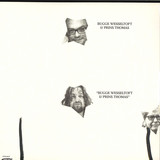
A long time ago, in a Norway far far away in time, keyboardist Bugge Wesseltoft introduced his New Conception of Jazz to the world. We're talking about the late 90s, when Bugge's cosmopolitan blend of jazz, hiphop and techno beats was pretty much the coolest music coming out of Norway at that moment. That was a golden time for Norwegian music, in fact, when the rest of the world began to sit up and take notice that something was stirring up north, and realised the music was more than just glacial tones hurtled from icy mountaintops and frozen lakes. This was the sound of urban Scandinavia.
A few years later came the electronic dance genre 'space disco'. Along with Todd Terje, Bjørn Torske and Lindstrøm, Prins Thomas was at the epicentre of this next big wave to surge out of Norway. Now, the two generations have come together in this exclusive collaboration between Bugge and Prins Thomas on the Smalltown Supersound label. Jazz and electronics combine for that energising vitamin D shot of Nordic sunshine.
The Rainbow Studio in Oslo is a familiar name to anyone who follows the ECM label - many of its classic 1970s jazz albums were recorded there under the eye of resident producer Jan Erik Kongshaug. Bugge and Thomas booked a couple of sessions at the legendary space with Kongshaug at the controls, and improvised some tunes in the style and spirit of some of their favourite ECM moments, like the fresh, open sounds of Codona, Egberto Gismonti, Oregon and Kenny Wheeler. Bugge had previously done a remix of Thomas's 'Bobletekno' in 2015 but this is the first time they have worked together as active musicians. The results - also partly taped at Thomas's home studio - fuse programmed rhythms, live synths and percussion, all captured in a sumptuously spacious acoustic.
For an even more authentic touch they called up one of their all time local heroes and one of Norway's most famous jazz drummers, Jon Christensen, who's been the go-to guy for Jan Garbarek, Terje Rypdal, Keith Jarrett and many more. At 75 years he's still pretty spry behind the kit, as you'll hear on several tracks here.
Make no mistake, though, this is not retro pastiche but contemporary music, coasting on gently insistent programmed grooves and bubbling basslines. The whole thing feels not so much like a consciously hip fusion of DJ and jazz musician, more like two great musicians totally enjoying themselves. Which is exactly what it is.
Key facts:
Bugge Wesseltoft is one of Norway's leading jazz figures. He set up Jazzland Recordings in 1996. His solo Christmas LP It's Snowing On My Piano remains Norway's best selling jazz album!
Prins Thomas's real name is Thomas Hermansen. His label, Full Pupp, means 'full breast'. He's released several albums under his own name, as well as collaborations with Bjørn Torske and Lindström. Check out his amazing Paradise Goulash mixtapes.
The Caribbean House Is A New Billy Bogus Project. It's The Perfect Meld Of Creepy Atmospheres, Sunset Grooves, Analog Sensibilities And Incessant Rhythms. Bogus Leads This Collective Formed By Federico Bologna (ohmega Tribe, Technogod) And Cristiano Santini (disciplinatha, Dish-is-nein,). This Triumvirate Of 90's Underground Italian Masterminds Come From The World Of Electronica, Noise Rock And Psychedelia. Here They All Combine To Rise Again Rise And Unite To Create Something Entirely New.
And So To The Music. Their Debut Lp Opens Up With The Dark And Haunting "night Drive". Recent Single "gong Bong" Is Next. It Is One Part Slo-mo Disco, One Part Psychedelic Moondance And One Part Sci-fi Horror Movie. If The First Two Thirds Of The Track Is A Caterpillar Then The Last Third Is A Butterfly As Uplifting Riffs And Swirls Of Layered Keys Bring Things To A Crescendo. "lonely Man" Is A Quirky Detuned Monster Tour-de-force Which Leads Nicely Into "love By Proxy". Layered Keys And Intertwined Arpeggios Mingle To Create The Closest Thing To A Love Song Possible From This Trio.
Flip The Vinyl Over For A Hippy Drive With "jesus Freaks" And Its Groovy Guitar Licks And White Noise Synth Blasts. "nature Nature" Is All About The Pulsing Bass Guitar And Sample Like Guitar Stabs Before Heading Completely Off-piste For A Synth-bass Ending. "africa Addio" Presents Us With Meandering Synth Lines Before Layering On A Waft Of Sound Effects And Spooky Keys. Movie Territory. We Close Off The Lp With The "streets Like Noodles". New Wave Nyc Chic Meets Underground Italy Psych.
n5MD is proud to bring you All That Was Lost, The 3rd album from cinematic ambient composer Stray Theories. A treat for for fans of Hammock, Eluvium & the more soothing works of Sigur Ros...
Australian born and current New Zealand resident Micah Templeton-Wolfe is the sole force behind Stray Theories, and this album finds him following-up 2014s We Never Left EP with his first new long-form Stray Theories material, not to mention, his first album to be pressed to vinyl.
Templeton-Wolfe's time away has not been for naught. Composing for films, collaborations with like-minded artists and a plethora of remix projects, all while creating a sample pack for the Noiiz sample app under new project Ocean Lost. So it's been a busy time for Templeton-Wolfe.
While he has seemingly been focusing his efforts else- where, Templeton-Wolfe has been quietly composing for All That Was Lost, an album which is imbued in spades with Stray Theories' signature mood-altering sound- scapes.
Muted electronics have always played a part in the Stray Theories pallet, and some of Templeton-Wolfe's extracurricular work might have something to do with those textures now being brought a bit more to the fore. In Templeton-Wolfe's hand, these fit in perfectly within the personally subjective nature his music has always suggested. All That Was Lost is a cinematic ambient gem brought into the world at a time when we need it most.
Salvador Font studied violin, clarinet, composition and harmony at the Conservatori Municipal de Barcelona, but very soon started to gain notoriety as a saxophonist in the rich jazz scene of 1940s Barcelona. Font would soon be playing tenor sax and clarinet in the Orquesta Gran Casino. He was in his early twenties and his hot swing technique was already praised through the citiy's scene, he would grow to be considered the best saxophonist in Spain by playing in many orchestras and combos, among them: José Puertas', Antonio Vilá's Virgina, Bonet de San Pedro's band, Pierre Michel, El Lirio Campestre, Los Marios, Luis Rovira y su orquesta, Orquesta brasileña Fon-Fon, Jaime Camino, Los Embajadores, Italo Leone's... With these and others, Font toured constantly, visiting many countries and even staying on some for long seasons: Mexico, Morocco, Switzerland, Egypt... Hungarian violinst of Turkish ancestry Kurt Dogan gave him the "Mantequilla" surname - he felt "Mantequilla" (which means "butter") fit Font's mellow yet swinging improvisation style.
Mantequilla y su conjunto
In the early sixties, "Mantequilla" had the chance to lead his own combo, Mantequilla y su conjunto, with which he was to record the three splendid EPs that are compiled on the present album. All these 7" have become elusive collector pieces in the record market, with sellers demanding from 200 to as much as 950 euros per copy.
In 1961 "Mantequilla" was at his best moment, his gigs at the Jamboree Jazz Cava had brought him back to the first line of Barcelona's jazzmen after he had been working abroad for a long time, and was approached by the Belter label to record an EP. On the sessions he was accompanied by Manolo Mercedes on trumpet, Pedro Ferré on piano, Rafael Lizandra on double bass and Rafael Verdura on Drums. The material chosen for the disc were four original compositions by Salvador Font which had a high West Coast flavour all over: "La Tuna Club", "Whisky Jazz" and "Jamboree" named after famous jazz clubs and "Azul Trompeta", dedicated to Manolo Mercedes.
In late 1962, after spending some time in Madrid working as members of the Italo Leone combo, "Mantequilla" and pianist Manuel Gas came back to Barcelona for the recording of the second "Mantequilla" EP, also on Belter. We find again Manolo Mercedes on trumpet, Pedro Ferré on piano and Rafael Lizandra on double bass, the drummer this time was José Farreras. Another news is that Manuel Gas also sat on piano and vibraphone. The songs chosen for the occasion were two tunes from the Art Blakey Jazz Messengers repertoire: Bobby Timmons' classic "Moanin'" and the Jacques Marray track "No Problem" from the soundtrack of the Les liaisons dangereuses film (mispelled "Not Problem" on the sleeve and label), plus the Salvador Font penned "Blue Note" and "Full de ases" - on "Full de ases" "Mantequilla" trades his sax for the violin, which he also mastered under high influence from Stephane Grapelli. The record was released on Belter in early 1963 and showed "Mantequilla" adding a certain aggressivity to his sound, in a soloist style which has been compared to that of tenor saxophonists Barney Wilen or Benny Golson.
1965 was the year of release of Mantequilla y su conjunto's third EP, now on the Discophon label. Mercedes and Farreras are again present in the recording sessions, joined by Ricardo Miralles on piano and Enrique Ponsa on double bass. Four original Font compositions make up the fantastic EP: "Blues 3/4", "Atmósfera", "Vat 69" and "Balada".
There would be a further EP on Belter, released in 1971 as Mantequilla Group it was a cash-in operation to take some redits of the ye-yé discothèque phenomenon, it gets quite afar in style from the jazz works of Mantequilla y su conjunto, so we just left it aside for the present edition.
"Mantequilla"'s career would continue, in 1968 he would settle in Majorca and form a swing band with Bonet de San Pedro and Manuel Bolao. He played in local orquestras and also with first class world acts like Gerry Mulligan, Tete Montoliu, Errol Gardner, a.o. He was even approached by Henry Mancini to play sax on The Pink Panther Theme in a gig Mancini did with his orchestra in Palma de Mallorca in 1975, He also joined his son Salvador Font (a demanded drummer himself who has played with Máquina!, Orquestra Mirasol, Música Urbana, Gary Burton Quartet, Georgie Fame, and many others) and his peers Carles Benavent, Emili Baleriola, Josep Mas 'Kitflus' and Jordi Bonell with whom he recorded his acclaimed "Mantequilla" album in 1987.
Now, for the first time ever, the legendary three ultra rare and imposible to find EPs by Mantequilla y su conjunto are compiled in a lavish vinyl LP with remastered sound, featuring liner notes and photos and a fantastic period inspired, three backflaped, front laminated sleeve. It is a stricly limited edition of only 500 copies and they are expected to sell out very soon, do not miss your chance of getting yours - it may be the last chance of chasing the Mantequilla sound on vinyl at a reasonable price!
A Site-specific Recording Sporting A Straightforward Approach That I've Grown To Love In The Works Of Gonçalo Cardoso. An Album Of Modern Day Exotica, A Genre I Usually Pretty Much Dislike, Yet Cardoso Steers His Vehicle Easily Aside The Trapdoors And Potholes.
Combining Found Sounds, Sparse Playing And Field Recordings He Creates A World That Both Invokes Treasure Island, And An Essay On Exoticism. Indeed Questions Are Raised. But Especially Beautiful Emotions Are Shared. Cardoso Acts Both Like The Journalist And The Aesthetic. Sometimes He Just Registers, As Being The Observer At The Sideline, Sometimes He Alters And Collages The Material Into New Worlds.
The Isle Of Unguja Is The Great Scene Of This Album. We Hear The Sound Of Water, Suddenly Interrupted By Beautiful Chorals Or The Strumming Of String Instruments, A Drum Beat. We Hear The Local Fisherman Talk While The Shortwave Radio Becomes The Symbol Of The White Man Seeking Truth And Direction In The Tropics. Its Dial As A Tool To Reflect. This Album Invokes A Certain Nostalgia For Age-old Enthnographies, Like A Romantic Letter From The Tropics. A Hymn Of Solitude, In Awe Of The Nonhuman And Human Elements. Like Photography, Through Various Compositions - Stills From A Moment - To Shed Light Upon The Unique - Universal Process Of A Place.
"all The Recordings Were Made During Our Month Long Stay In A Beach Hut In The Main Island Of The Zanzibar Archipelago, Unguja Aka Zanzibar Island. Unlike Other Beach/island Locations The Scenery There Was Very Dynamic And Ever Changing. The Colours Would Change With Every Tide Creating A New Washed Out Landscape Everyday.
There Are A Lot Of Recordings Of Tides (they Have 3km Tides Everyday!), Of Walking Around In Low Tide, Of The Tidal Waves Banging Against Our Hut At Night, Of Sailing In Wooden Dhows, Fishermen Talking And Sand Washing Their Dhows, Of Walking At Night In The Village As Well As Some Fm/am Radio Improvs. A Lot Of What You Hear Was Done On The Spot With Some Minor Adjustments Done Later. (g F Cardoso)"
Gonçalo Cardoso Is The Man Behind The Prolific Discrepant Recordlabel And Composes Under His Own Name And The Moniker Gonzo. He Recently Traveled In Middle And Southern America.
At a time when on every street corner, adolescent wannabe gangstas believed they had to tell everyone and their dog about their greatness and the inferiority of all others, there was a cadre of Munich-based Hip-Hop artists producing incredibly fresh and imaginative music, inspired, of course, by the golden era of the 90s. They played gigs in small clubs in front of some dozens of people, spread mixtapes and Eps and were celebrated by their friends and the rest of the scene. The world took no notice - until now ! Tramp Records, specializing in unearthing forgotten pearls of musical art, documents with "Golden Hits", an era of Munich underground Hip Hop which flew completely under the radar, spanning ten years from 2005 to 2015. The musical bandwidth and quality of the tracks is astonishing, but so much more could have been possible. Much of this music remained fragmented or unreleased for a host of reasons, families, stressful jobs, musical reorientation, and even lost hard disks... but one story has a happy ending! When Masta Ace had a live show at the legendary Atomic Cafe, Primatune's Fid Rizz was able to hand over a CD with demo beats. Unfortunately the CD was blank by mistake! But the curiosity of Masta Ace had been piqued, and he got back to him, the rest is history. Features of other stateside rap heroes like Wordsworth or Declaime followed.
The very best of this era, including tracks never before heard and ideas remaining fragmented, has now been compiled by Tramp Records to take you for a fascinating listening journey.
Hip Hop, as it was since it's inception in the Bronx, fresh and real, and made with passion by neighborhood kids spitting truth about life and the struggle!
Key selling points:
- including many unreleased songs
- the vinyl LP comes with a full album download code
As naturally as X-Altera came to be, the music itself is a unique refraction of styles and bold, contradictory approaches. But it all blends together uncannily well—maybe because of the decades of production experience that went into it, or the holistic mindset Mullinix took from the beginning. The name itself reflects as much. "X-Altera references two things. It comes from Latin—ex altera—which means 'from or of the other side.' Which could be a metaphysical thing, or you could say it's jungle ethics brought into the techno world. And I spelled it this way as a reference to X-101 and X-102, the Underground Resistance project of Je- Mills, Mike Banks, and Robert Hood." Detroit meets London, deep techno meets drum & bass, old meets new—X-Altera unites these threads in order to take them in unknown directions.A fresh debut from one of the most vital electronic producers of the last 20 years, Tadd Mullinix (Dabrye, JTC, Charles Manier), who looks to the past of techno and jungle to find a new ways forward.
Transcendentally Beautiful, The Space Lady's Music Is Returning To Earth. Transmitting Messages Of Peace And Harmony, The Space Lady Began Her Odyssey On The Streets Of Boston In The Late 70s, Then San Francisco Ten Years Later, Playing Versions Of Contemporary Pop Music With An Accordion And Dressed Flamboyantly. Following The Theft And Destruction Of Her Accordion , The Space Lady Invested In A Then-new Casio Keyboard, Complete With A Phase Shifter And Headset Mic, Birthing An Otherworldly New Dimension To Popular Song That Has Captured The Imaginations Of The Underground And Its Leading Exponents Ever Since Having Toured Successfully All Around The World With Her Greatest 90s Hits Record, She Felt It Was Time To Record New Songs... And So She Did!
One of the world's most iconic drum & bass acts, Pendulum have announced their return for 2018 with a brand new album and brand new live shows. 'The Reworks' is a project unlike any
other released by the band before, and marks the end of their seven year hiatus, officially launching on 16th March.
To mark their return, the band have announced their first headline show since 2011 at London's unique new space, Printworks . The show sold out in under an hour and will be both an auditory and visual spectacle for fans.
Also announced is Pendulum's return to one of the UK's biggest events - Reading and Leeds Festival . Headlining the BBC Radio 1 stage - the same slot they graced the last time they played in 2010, the shows mark a welcome return for the band in the UK.
The news will undoubtedly be well received by Pendulum 's legions of fans, with the band having hinted at a comeback by returning to the live stage last year, headlining the UK's South
West Four and Nass Festival , and confirming for this years Snowbombing festival in Austria.
For 'The Reworks' , the internationally-renowned band have tapped some of the most innovative talents from over the past few years to deliver dynamic and refreshing interpretations of their
biggest hits and some of their personal favourites. Friends and collaborators Skrillex , Icarus ,Knife Party and Matrix & Futurebound take their turn on this who's who of electronic music
royalty, whilst Noisia 's explosive cut of the now-iconic track 'Hold Your Colour' will be available with the album preorder from the 16th March.
'The Reworks' album will be available in both CD and vinyl formats from the 29th June.
This exciting announcement marks the beginning of a new era for Pendulum , who have long been considered one of electronic music's most important and pioneering acts, famed for their
no-holds-barred live shows. With more huge festival dates TBA across the summer and new originals on the horizon, 2018 marks the an exciting chapter in Pendulum's already lengthy career.
Noisia' s remix of ' Hold your Colour' , the first single to be taken from Pendulum 's 'The Reworks' album, is set for release on 16th March alongside the preorder, with the full album set to drop on 29th June.
WHITE RING mark a triumphant return with a brand new full-length Gate Of Grief, due out on Rocket Girl on 22 June 2018. Their debut album arrives a full eight years since their benchmark EP, Black Earth That Made Me, which sold out almost instantly, making their records some of the most highly sought after on the underground scene and earning them a cult following across the globe. Swerving from aggressively abrasive to beautifully ethereal, musically they draw from varied and challenging palette, whilst tackling themes of loss and acceptance due to struggles with drug addiction and existential dread on a broader scope.
WHITE RING were originally formed by Bryan Kurkimilis and Kendra Malia, before they were joined by Adina Viarengo, with Bryan and Adina currently touring as a duo. One of the most acclaimed proponents of the "Witch House" movement, WHITE RING blend heavy, distorted electronics with eerie, unsettling vocals. However, their new material, created over the course of seven years, pushes the boundaries further, subverting genre ideas and mashing them all together, with industrial, metal, rave, chopped and screwed, rap, grunge, neo folk, post punk and new wave all in the mix. As Bryan Kurkimilis explains; 'We treat our influences like tools to create a certain feeling. We are interested in covering more ground than sticking to a certain formula.'
Bryan and Kendra originally met on Myspace in 2006. At the time Bryan lived in New Orleans and Kendra was in New York, and they didn't even meet face-to-face until 2008 after they had already released a few singles. In 2010 they released the EP Black Earth That Made Me, which was a collection of songs that they mostly recorded before they met in person. The record confounded expectations by selling out immediately on pre-order, making it very rare and highly sought after, with copies going on Ebay for large sums. It was reissued by Rocket Girl in 2011 and still continues to sell in voluminous amounts.
They started playing live in 2009 and rapidly grew a reputation for their captivating performances, usually bringing their own lighting equipment and putting on a spectacular laser show. They have played for large crowds in their hometown of NYC and toured the UK in 2010 in support of their sold out split 7" with oOoOO, playing InTheCity and SWN festivals - which were their first shows outside of New York. They have since shared the stage with the likes of Cold Cave, araabMUZIK, Liturgy, Blank Dogs, Gatekeeper, Blondes, oOoOO, Clams Casino, and others.
They started recording Gate Of Grief in 2010, with the hope of exploring new musical territory, however they took a while to find their path. Bryan and Kendra had some tough personal battles to fight, a sense that pervades the whole album. Thematically it delves in to some pretty dark places whilst exploring the concept of time and what it does to people, relationships and society. As Bryan explains; 'There is a lot of tragedy in this album but there is also hope at the end of it.'
By 2016 pressure was building to finish recording, however due to Kendra's ill health, they needed to bring in someone new to assist with vocals. Fortunately they found Adina Viarengo, who had played in various bands and gave them the impetus needed to complete the album. Shortly after meeting in Brooklyn, Bryan and Adina moved to Joshua Tree, California to finish recording the album, before settling in Massachusetts. Her vocal style fitted in seamlessly with what Kendra had been doing, and although she sang on half the songs, it's almost impossible to tell who is singing on which track, thus making her the perfect addition to the band.
Gate of Grief can be considered the second part of Black Earth That Made Me, or rather, they are the first two chapters in an overarching trilogy about evolution. As Bryan explains; 'First you are born but then you realize what you are and what is against you and it's a flood of emotion that you can only hope to hold on for and let it pass.'
The album title, Gate of Grief, refers to the real gate between Africa and Saudi Arabia that is believed to be the spot where the first humans migrated out of Africa and went on to populate the rest of the world. The album art ties in with this concept, with an image depicting a group of settlers in the USA in early 1900 during a parade. They were actually from a cult in the early 1900s in Bryan's hometown of Fort Myers, Florida.
'Turquoise', that is Turkuvaz, is a French-origin word inspired by the color of the Mediterranean, located within the borders of Turkey. Meaning; blue is the color that plays the green. At the same time it is relative. Because both colors are in it, if you love blue you will see blue, if you love green you will see it green. It means heaven and earth. The eternity is turquoise... The eternity is infinite. At the same time; the boundary between the earth and the sky. Some will find love in it , some will find serenity, some will remember the loneliness and find sadness, embracing some with zeal and reminiscent of the return to the nest, the power of holding hands tightly with two hands.And according to my opinion, the concept of life, the mortal world, is how we see these lands curtained until the last breath of life that we have been living on for centuries.There are billions of beings in our sky and on Earth that do not attract our attention, We can not see, can not hear, can only feel, there are enough lights to count and never disappear in the stage. This EP that you hold in your hand is a reflection of it.
Music was the easiest way to reach you. In doing so, the motto was 'never disappearing at the stage'. I know, because if nobody hears me, God, the real dominion of light the true owner of all the darkness will hear me.
Each sound I created, I filled it with a light and I added a little more sand to the clock. Sounds I created is to show you your own technique of finding your way to light, to make you understand that you are not alone, and that there is someplace really there for you. Without much effort, resting and reviving.
I believe that every one of us who lives on earth has a specific, holy purpose. The important thing is to find and catch it. Our inner journey is to be able to complete our enlightenment as spiritually as possible. And I still believe that we always need music to do that. Because the sounds; they will never disappear.
Turquoise, which is the work of this enlightenment period, which I have lived and found to be my self, will be a source of light for you and help you find God who lives in you.
The hotly tipped UK artist makes his debut for Drumcode's vinyl only off-shoot. Focused on showcasing cutting-edge underground techno, Adam Beyer's always got an eye on the future when curating Drumcode Ltd. Taking inspiration from the likes of Marcel Dettmann, Truncate and Planetary Assault Systems, Turner's four-track debut 'Don't Talk To Me About Style' was birthed in his home studio throughout 2017. The industrious Brit delivers a powerful peak-time EP of nocturnal techno that moves between different moods. The title track pops with a thick grinding bassline and trippy synth effects, before 'Escape' envelopes you into a subterranean world. 'Diodes' follows, a fantastic slice of electrifying techno that bucks like a rodeo bull. The EP concludes with the blazing 'Tunnel', that makes its mark with deft drum arrangements and a piercing call-to-arms siren.
Helsinki's We Jazz Records presents "Y-OTIS", the debut LP from Berlin-based Swedish saxophonist/composer Otis Sandsjö, joining forces with keyboardist Elias Stemeseder, bassist Petter Eldh and drummer Tilo Weber. The album is a forward-reaching, multilayered collection of eight originals penned by Sandsjö and produced by Sandsjö and Eldh. What you get is a form of "liquid jazz", born in an era where the understanding of jazz as a musical language has evolved way beyond the concept of the previous "modern". Informed by hiphop and electronic music, "Y-OTIS" is pure jazz in that the quartet stays true to its constant mission of creating a new form of musical communication. Sandjö's circular sax riffs, the album's rich production touch, and the chopped-up jazz form creates a musical concept which stays melodic and beat-laden while being "free" right to the edge of avantgarde. It's as if the music is sampling itself, constantly keeping ahead of the curve in the musical lineage of jazz.
Otis Sandsjö (b. 1987) hails from Gothenburg, Sweden. He is known previously for example for his inspired work on singer Lucia Cadotsch's globe-trotting trio formation "Speak Low", also featuring "Y-OTIS" co-producer and bassist Petter Eldh. Elias Stemeseder was dubbed one of the top 15 young European musicians to watch by All About Jazz in 2017. Tilo Weber ranks among the most creative young drummers in the scene. Stemeseder is currently based in New York, while the remaining three musicians here live in Berlin. Live on stage, the band performing the material on the new release is called Y-OTIS.
Favorite Recordings proudly presents Combattant, first EP by Pat Kalla produced by Bruno Patchworks' Hovart (aka VOILAAA).
PAT KALLA is a musician, singer and storyteller. Patrice of his birth name, in tribute to the great Lumumba! Lover of words, French language, and music of course. Born in Lyon, from a Cameroonian father, musician and political activist, and a French and literary mother, he explores from his childhood the Soul, the Slam, the Funk ... and the art of telling stories, life being a great one...
After years of touring alongside many bands (Conte & Soul, Legend of Eboa King, Mento Cloub, Voilaaa Sound System), and several acclaimed titles on the two albums by Voilaaa, he comes back with this project to put a bit of primordial lightness in a rainy world: A tribute to the African culture in honor of a father with "Sawa" origins, the tribe from the people of Makossa.
Jojo Ngallé, Moni Bilé, Pain, Manu Dibango, Franco, Rochereau, Kabaselé, Fela, François Nkotti & The Black Style, all these legends' vinyls have turned on the family turntable and the collection has whetted the child's appetite. Through this new trip, he revisits styles that are sometimes little known to Western audiences, such as High-Life, Makossa, Angolan Music, Afrobeat, Afro-Disco and others. We could talk about Franc CFA', we could talk about Jacques Foccart, but we will rather dance, because "the dancer seems naive, but his feet must be connected with earth to understand history..."
Backed by the "Super Mojo Disco", a hyperactive band from Lyon with deep groove and positive energy, Pat Kalla offers us an anti-crisis project, where swaying and feel-good humor is mandatory! An album soon in the crates, beware « c'est médicament » (it's medicine)!!
to Me, Sounds Have Always Been More Interesting Than Words,' Says Agnes Obel. i Love It When The Voice Becomes An Instrument And You Almost Forget It's A Human Voice.' Never Is This More Apt Than On This Beautifully Programmed And Bewitching Selection Of Music.
Agnes' 2010 Debut Album Philharmonics Went Platinum In France And Belgium And, Unsurprisingly, Quintuple Platinum In Her Native Denmark, Where She Also Won Five Danish Music Awards (equivalent To The Brits) In 2011. The Follow-up Aventine, Released In Late 2013, Was Imbued With The Same Measured Calmness As Her Debut. It Went Platinum In Belgium And Gold In Denmark And France.
For The Mix You Have In Your Hands It Feels Almost As If Agnes Has Scoured The World Looking For Kindred Spirits - Or Kindred Songs. There's A Quietude About It All, The Antithesis Of A Rush Hour, Like A Frozen Lake On A Sunday Morning. This Is Aided By A Veritable Cornucopia Of New Obel Material, Including A Haunting Reading Of Danish Song 'glemmer Du', Inger Christensen's 'poem About Death' Set To Original Music, And An Agnes Original, 'bee Dance'.
Among Them, There's The Enigmatic Jamaican Singer Nora Dean Who Weighs In With The Hypnotic And Slinky Duke Reid Production, 'ay Ay Ay Ay (angie-lala)' And The Sparse, Sardonic 'party Girl' By Michelle Gurevich, So Good It Inspired The Eponymous French Movie. There Are The Plangent Voices, The Bulgarian Folklore Choir, Nina Simone, Ray Davies And Agnes Herself, Ringing True. Somehow, Ms Obel Makes Even Makes The Electronic Tracks Bow To Her Needs As With Yello Whose 'great Mission' Is More Martin Denny Than Underworld And Cult Greek Composer Lena Platonos' 'bloody Shadows From A Distance' Pulses Gently Rather Than Throbs And Can's Recently Rediscovered 'obscura Primavera', Unusually Hushed.
"i Was Surprised At How Much Time I Ended Up Spending On This. I Collected All The Songs Together With My Partner Alex And We Just Spent Time Listening To Records, Trying To See What Would Fit Together. Some Of The Music I've Included Here Is On Mixtapes We Made When We Were Just Friends As Teenagers. Each One Of The Tracks Produces Stories In My Head." - Agnes Obel, February 2018
out of Stock
Last delivered 2 years ago available to reorder, subject to availability
Following 2017's 'Path of Ruin', DJ Richard returns to Dial with his much-anticipated sophomore LP, 'Dies Iræ Xerox'. Undoubtedly one of the most distinctive and fully-formed electronic producers in recent memory, DJ Richard imprinted the sound of a bubbling US underground with his label, White Material, founded in 2012 alongside Young Male. His first solo LP for Dial, 2015's 'Grind', found DJ Richard delicately establishing a discipline between his East Coast noise heritage and a physical, emotive tradition of house music, mastered during an extended stay in Berlin. Now firmly settled once more in his hometown of Providence, 'Dies Iræ Xerox' is a personal and uncompromising journey that finds the Rhode Island native in reflective form, journeying without compromise into both his creative influences and personal psyche. In part adapting its title from the Latin hymn 'Dies irae', otherwise known as 'Day of Wrath', 'Dies Iræ Xerox' melds the physical and psychological aspects of DJ Richard's production ethos in sharper, more widescreen vision than before; the oceanic swells of ambience yet more powerful, and the rigid basslines sharper still. With the chaos of the Berlin club scene an increasingly distant memory, the album is enriched with a contemplative, even brittle tone, as informed by film soundtracks and literature as the pulse of city living. Still, this is new material from DJ Richard, a touring DJ as distinctive as any other to be found behind the decks at some of the world's finest clubs and festivals. On 'Dies Iræ Xerox', the artist finds the space to write 'the records I really want to play', and each suggests a template for genuine dancefloor transcendence, beginning with the electrifying 'Vanguard' . The sludgy yet sophisticated crawl of 'Tunnel Stalker' sets the tone for the menacing yet somehow melancholy EBM of 'In Broad Daylight', while the record draws to a breathless close with the affecting, drum machine lethargy of 'Gate of Roses'. Drawing little distinction between his more physically rousing material and searching soundscapes, 'Dies Iræ Xerox' instead finds a passage of catharsis throughout both. 'Dissolving World', the album's breathtaking centerpiece, is a choral feature hypnotically overwhelmed by walls of electronic feedback, forging a dramatic link between old ways and new. On the bold and near-beatless 'Ancestral Helm' and 'Final Mercy', DJ Richard seems to grant both music and raw emotion the ability to simply float in the air, brilliantly, poignantly unresolved. If 'Grind,' inspired by the weathered coastlines of Rhode Island, was a record concerning "the border between civilization and the ocean," then 'Dies Iræ Xerox' is an unapologetic follow-up concerning that between macabre obsessions and fear of death. Produced during a murky, transitional period, DJ Richard found himself particularly drawn to Medieval European art and mysticism, fascinated by depictions and philosophies of the antichrist and end-times. Greatly influencing the uncompromising, apocalyptic tone of the album, these investigations have created an engaging and personal vision of the 'Day of Wrath.'
Shunter, the new album by the Berlin-based duo Driftmachine, is their most ambitious work to date. Although instantly recognizable, featuring their trademark Kosmische and Avant-garde sounds, it also presents a new journey into abstract and hallucinatory worlds. Filled with eerie textures, their electronic visions are darker and more vaporous than ever.
Driftmachine's fourth album (also the fourth one for Umor Rex) offers a new perspective on their ample sound spectrum and systemic narratives. Shunter overlaps and mutates their post-industrial-dub motives. It was conceived and produced in search of a very different kind of imagery, with sections of noise and field recordings intersecting with analogue sounds, a mixture of contrasted fragments, where the usual creative process of modular-synthesis leads Gerth and Zimmer to the discovery of a dark, hazy and diffused experience. There is a protean quality to the rhythmic elements, with tempos constantly contracting and expanding, a departure from the mono-beat-rhythms of "Nocturnes" and "Colliding Contours". The first half of Shunter is made of four pieces named "Shift", although individually separated, they are conceptually linked and can be understood as a sort of score. Imagine a late stage of the industrial revolution, with the interaction between heavy machinery and human beings. The second half of the album is not completely separated, but it has three other substantial melodic moments. Somewhere between the hauntological and the realms of archive-music, a huge range of subterranean beats and distinct patterns dotting the landscape of early electronic and post dub music.
All songs written & produced by Driftmachine (Andreas Gerth & Florian Zimmer), Berlin.
Mastered by Rafael Anton Irisarri. Design by Daniel Castrejón.
Music and Poetry of the Kesh is the documentation of an invented Pacific Coast peoples from a far distant time, and the soundtrack of famed science fiction author, Ursula K. Le Guin's Always Coming Home In the novel, the story of Stone Telling, a young woman of the Kesh, is woven within a larger anthropological folklore and fantasy. The ways of the Kesh were originally presented in 1985 as a five hundred plus page book accompanied with illustrations of instruments and tools, maps, a glossary of terms, recipes, poems, an alphabet (Le Guin's conlang, so she could write non-English lyrics), and with early editions, a cassette of field recordings' and indigenous song. Le Guin wanted to hear the people she'd imagined, she embarked on an elaborate process with her friend Todd Barton to invoke their spirit and tradition.
For Music and Poetry of the Kesh, the words and lyrics are attributed to Le Guin as composed by Barton, an Oregon-based musician, composer and Buchla synthesist (the two worked together previously on public radio projects). But the cassette notes credit the sounds and voices to the world of the Kesh, making origins ambiguous. For instance, The River Song' description reads, The prominent rhythm instrument is the doubure binga, a set of nine brass bowls struck with cloth-covered wooden mallets, here played by Ready.' According to writer and long-time friend of LeGuin, Moe Bowstern (who pens the liners for the Freedom To Spend edition of Kesh), Barton built and then taught himself to play several instruments of Le Guin's design, among them the seven-foot horn known to the Kesh as the Houmbúta and the Wéosai Medoud Teyahi bone flute.' Barton's crafting of original instruments lends an other-worldly texture to the recordings of the Kesh, not unlike fellow builders Bobby Brown and Lonnie Holley. Bowstern notes, Other musician / makers have crafted their own Kesh instruments after encountering the earlier cassette recordings that accompanied some editions of the book.' Both Barton and Le Guin are sensitive to the sovereignty of indigenous Californians and were careful not to trample the traditions of the Tolowa people who lived in the valley long before the Kesh. You research deeply, and then you bring your own voice to the table,' said Barton. Within the Kesh culture, the numbers four and five shape the lives, society and rituals. Barton composed loosely around these numbers, patiently listening to the land of Napa Valley for signs and audio signals from the natural elements. Todd incorporated ambient sounds of the creek by Le Guin's house and a campfire they built together. The songs of Kesh are joyful, soothing and meditative, while the instrumental works drift far past the imaginary lands. Heron Dance' is an uplifting first track, featuring a Wéosai Medoud Teyahi (made from a deer or lamb thigh bone with a cattail reed) and the great Houmbúta (used for theatre and ceremony). A Music of the Eighth House' sends gossamer waves of the faintest sounds to float on the wind.' Like the languages invented in the vocal work of Anna Homler, Meredith Monk, and Elizabeth Fraser, the Kesh songs and poems play with the shape of voice.
The Music and Poetry of the Kesh cassette was meant to accompany and enhance the experience of reading Always Coming Home. Presented in this edition as a long-playing album, where only traces of the book linger (the jacket offers some of Le Guin's illustration, and a letterpressed bookmark featuring the the narrative modes of western civilization and the Kesh valley is included), the music alone breaking the silence of what might be. It can transport—offering a landscape for imagining a future homecoming. One in which we are balanced, peaceful, and tend to the earth and its creatures. A line from the Sun Dance poem reminds us, We are nothing much without one another.' Freedom To Spend gives new life to the recordings of the Kesh people in the first ever vinyl edition of Music and Poetry of the Kesh, out on LP, and digital formats on March 23, 2018. The LP will include a deluxe spot printed jacket with illustrations from Always Coming Home, a facsimile of the original lyric sheet, liner notes by Moe Bowstern, multi-format digital download code and a limited edition bookmark letter pressed by Stumptown Printers in Portland, OR.
This past Monday, January 22, Ursula passed from this realm to another leaving a life spent building and exploring other worlds while challenging social concepts of the real word she inhabited.
Freedom To Spend had been working under Ursula's enthusiastic endorsement and with Todd Barton, her musical collaborator on Kesh, to give the music that accompanied her 1985 epoch a new life. With the Le Guin family's encouragement to move forward with our planned release, we are humbled to play this small role in sharing Ursula's work.
As Pete Swanson, one third of Freedom To Spend, stated, Ursula's legacy is her work which transformed the world, and this is another piece of the universe that her imagination birthed becoming real.' Listen to A Teaching Poem / Heron Dance' below.
Enigmatic producer Waxwood has a genuinely global outlook. Born in Russia, resident in Brooklyn and a regular visitor to Los Angeles, he can often be found jetting off to far-fung parts of the World in order to make feld recordings and immerse himself in different musical cultures.
You can hear these disparate global infuences and inspirations in
Waxwood's frst single for Claremont 56, which comes on the back of a near legendary 2015 cassette for NYC's Styles
Upon Styles, Sahasraha, which magically fused tropical hand
percussion and densely layered feld recordings with lilting ambient chords, hypnotic electronic rhythms and all manner of intoxicating
aural fourishes. 'Kama' is a slightly different beast from its' predecessor, with a sunny disposition and laidback breeziness throughout. Although underpinned
by a sturdy kick-drum pattern, its chiming melodies and metallic
percussion fourishes - reminiscent of indigenous music from far-
fung nations such as Malaysia and Indonesia - combine with gentle acoustic guitar motifs and waves of acid-esque electronics to create a beguiling and life-affrming mood. It offers more proof that Waxwood is a producer with a unique musical vision. The track's inherent gentle breeziness is explored in greater detail on the accompanying remix, which has been provided by Phantom Island regulars Fuga Ronto (AKA Swiss musicians/producers Ron Shiller and Tobi Schweizer). Riffng on Waxwood's original, they've added superb new vocals and instrumentation - think dreamy harmonies, tumbling synthesizer melodies and mesmerizing guitar parts - to create a sunset-friendly Balearic revision that's both stunningly beautiful and dazzlingly sun-kissed.
Fresh on Francis Harris' Kingdoms imprint comes Rasmus Juncker's 'Ophold' - six tracks of sublime atmospheres and textures. The Danish musician, sound composer and DJ fits perfectly with the label's aesthetic, joining the dots between ambient, leftfield electronica and modern classical.
Juncker has a background in studying jazz drumming and has been playing improvised music within the jazz domain for many years. He also started to DJ at the age of 14 and was introduced to the world of electronic music production at the same time.
When Rasmus started to think about his debut album he spent several months trying to find his own way to combine his favourite musical influences, improvisation, electronics and classical music. 'Almost a year later', Juncker says, "I went to a sensory deprivation floating tank in Copenhagen while researching for another performance and while I was lying there, floating in the water, deprived from most of my senses, I got the idea to do something drastic in my musical process. Philosophers like Immanuel Kant describe this deprived state as a mental 'Cesura', which became some sort of guideline for the album."
So Juncker decided to start working on the album by leaving the process as well as the final result completely open. 'I wanted to create sounds and music that I had no idea what they would sound like, but would feel like a mental 'Cesura', an 'Ophold' (in Danish)' he states.
He invited musicians, one after the other, to his studio. "I had an electronic musician to improvise patterns and new interesting sounds based on my experience in the deprivation tank. I chose some of the takes and some weeks later I invited a jazz guitarist to listen and improvise on top of what he heard. Then a classical string quartet and a double bass player came to my studio months later, and finally I recorded myself on percussion and drums.
Throughout the recording process I've been experimenting with special microphones in various setups, used noises from the recordings and the room became absolutely essential for the pieces." Juncker states.
"The material I used was all first take improvision which I arranged, layered and edited into compositions. The final pieces were mixed by Andreas Pallisgaard with the same improvised and experimental approach of the recording and the production. None of the musician met each other, but their sounds developed into something completely fantastic I think. The presence of the acoustic instruments and the depth and complexity of the synthesized layers gave some kind of an indescribable sounding music from another galaxy.
Track by track:
'Norddrum' starts proceedings - ethereal, grainy sounds merge and disassociate, as a distant rhythm gradually finds its way to the fore.
The second track, 'Sora' , clocking in at under 2 minutes, is an interlude full of strings, pads, and percussive hits, rich in feeling. This strong sense of sound design and seemingly disparate sounds woven together into a whole carries through into 'Eksotisk Tirsdag' - the strings, plucked instruments and electronics harking back to 4th world adventurers like Jon Hassel and Brian Eno.
'Cyklus' dives into drone textures, pulsing and modulating to create an unearthly soundtrack.
'Havekunst' is another 2 minutes interlude, this time bringing a fully charged rhythmic barrage to the front.
'Cesura', the final track is in essence the EP's centerpiece - a sprawling 8 minute journey that traverses tense, fibrous sections and on into pulsing modular passages, before opening up into glorious moments of wonder and brightness. It's a hugely bold yet fragile endeavour, in line with the whole release.
Dubbed by Igloo Magazine as the 'Romanian Detroit electro/techno pioneer' and by the late Aaron Carl as 'the Romanian Underground Resistance himself', Andrew Red Hand from Romania's spiritual capital of lasi stands up as an unwavering militant of the underground, a true Detroit spirit possessed as Romanian humanoid!
From his early gigs throwing parties as one of the first generation DJs in lasi since 1997, ARH continues to break boundaries as part of the Romanian resistance scene and numerous time portals as they open around Europe. His blistering, mind-bending sets such as at Berlin's Tresor and Griessmuehle see the DJ with the red hand fuse pure Detroit electro and techno with the sounds of techno-bass, raw Chicago acid house, classics and futuristic beats. His mixes for Radio UR (Underground Resistance) and The Grid (Detroit Techno Militia) remain some of the best frequency transmissions to surface to air.
Armed with a Soviet Union reel to reel Majak 203, his scorching raw analogue and searing acid productions have been picked up by foundational Detroit labels such as Twilight 76, Matrix, Detroit Underground, Databass, Detroit Techno Militia, Cratesavers Intl, Visillusion as well as around the world from Holland's iconic M>O>S Recordings to 1Ø Pills Mate (Lobster Theremin), Bass Agenda and Land Of Dance. On his remix list includes work for Scan 7, Santonio Echois, Thomas Barnett, Sean Deason, Niko Marks, Six Foe, T.Linder and more while support from Anthony Shake Shakir, DJ Bone, Dave Clarke, DJ Godfather has been garnered for our sonic warrior... Beware of the Red Hand!
Twenty-eight Years Ago, Pissed-off Twelve-year-olds Around The Universe Discovered A New Planet, A Black Planet. Public Enemy's Aggressive, Benihana Beats And Incendiary Lyrics Instilled Fear Among Parents And Teachers Everywhere, Even In The Border Town Of Laredo, Texas, Home Of The Future Founders Of The Latin-funk-soul-breaks Super Group, Brownout. The Band's Sixth Full-length Album (out May 25th) Fear Of A Brown Planet Is A Musical Manifesto Inspired By Public Enemy's Music And Revolutionary Spirit.
Chuck D., The Bomb Squad, Flava Flav And The Rest Of The P.e. Posse Couldn't Possibly Have Expected That Their Golden-era Hip Hop Albums Would Sow The Seeds For Countless Public Enemy Sleeper Cells, One That Would Emerge Nearly Three Decades Later In Austin, Texas. Greg Gonzalez (bass) Remembers A Kid Back In Junior High Hipped Him To The Fact That Public Enemy's bring The Noise' Is Built On James Brown Samples, While A Teenaged Beto Martinez (guitar) Alternated Between Metal And Hip-hop In His Walk-man, And Adrian Quesada (guitar/keys) Remembers Falling In Love With Public Enemy's Sound At An Early Age. when I Got Into Hip Hop, I Was Looking For This Aggressive Outlet . . . And I Didn't Even Understand What They Were Pissed Off About, Because I Was Twelve And Lived In Laredo . . . But I Loved It And I Felt Angry Along With Them.'
Joseph Abajian (fat Beats' Owner) Must Have Sensed The Deep Hip-hop Well Lying Beneath The Versatile Band's Latin-funk Veneer. i Thought Their Sound Would Work Covering Public Enemy Songs,' Abajian Says, And, it Was Good To Know They Were P.e. Fans . . . We Came Up With A Track Listing And They Went To Work.' Despite The Band's Eagerness To Work On New Original Material (an Album Of Original Songs Is Slated For Next Year), They Couldn't Pass Up The Opportunity To Pay Homage To This Iconic And Influential Posse.
Translating Sample-based Music To A Live Band Turned Out To Be More Of A Challenge Than They Anticipated. Adrian Tried To Get Inside The Bomb Squad's (public Enemy's Producers/beat-making Team) Head In Order To Find The Inspiration To Reinterpret P.e.'s Songs: imagine The Bomb Squad Going Back In Time And Getting The J.b.s (james Brown's Funky Backing Band) In The Studio And Setting Up A Couple Analog Synths And Then Playing Those Songs.' While Some Songs Closely Follow The Original Musical Blueprint, Others Use The Source Breakbeats As Jumping-off Points Later Sweetened By Trombonist Mark speedy' Gonzales' Horn Arrangements, Synth Wizardry Courtesy Of Friend-of-the-band Peter Stopschinski, And Dj Trackstar's Turntable Scratches. But Don't Listen Expecting To Hear Paint-by-numbers Recreations Of Classic Public Enemy Jams. our Approach Is Never In The Tribute Sense,' Adrian Explains. we've Always Taken It And Made It Our Own, Whether It's The Brown Sabbath Thing Or This Public Enemy Thing.' Coming Off Numerous Tours As Brown Sabbath And Even A Stint Backing The Late Legend Prince, Brownout Is Arguably The Tightest And Funkiest Band On The Road Today And They're Psyched To Bring This Revolutionary Music To The People. For A Band Without An Overt Political Agenda, They Collectively Couldn't Resist The Opportunity To Play This Music Live, Especially Now. if There's Any Way That We Can Use The Already Political And Protest Nature (of P.e.'s Music), We Would Like To Try,' Beto Says. the Album's Title, Fear Of Brown Planet Is Definitely A Relevant Idea Today And We're Not Afraid To Put It Out There, Because We Want To Speak Out.' By Reinterpreting These Hip Hop Classics In Their Unique Style And Channeling The Spirit Of Public Enemy That First Echoed Around The World And Captured Their Imaginations All Those Years Ago, Brownout Is Doing Exactly That.
Only those who read all the credits on record liner notes will know the full details: Areski is of course Brigitte Fontaine's partner in life, but also her creative alter ego, and the composer of the music of most of her songs. Even though it was his wife Brigitte and not him who wrote the lyrics, Areski is a poet in his own right. Furthermore, he is polyvalent: composing, arranging, singing, improvising, playing every possible instrument and even acting! Areski, to sum up, is the perfect mix of the tradition of Munir Bashir with the European sophistication' of someone like Jean-Claude Vannier, one foot permanently in Versailles (where he was born) and the maghreb. Areski, is left bank French songs without the stylistic effects, revised and updated through contact with arab-andalusian music. He is a Living Theatre style happening with a dose of cosmic free jazz, surrealist poetry viewed through the prism of Kabyle culture... All that and a lot more!
Areski honed his talent observing the stars of traditional chaâbi, testing it out in bars and dives before meeting, during military service, the singer Jacques Higelin with whom he would record his first cult album, and who would present him to his wife-to-be, Brigitte Fontaine. Between 1969 and 1980, with her, Areski would contribute an essential chapter to French underground music including classics such as Comme à la radio (with the Art Ensemble of Chicago), Je ne connais pas cet homme, L'Incendie, Le Bonheur and Vous et nous. For all that, Areski has never really tried to have a career under his own name, in spite of the wonderful Un Beau matin first published in 1970, and which it is high time to de (re)discover (better late than never). Those already in the know will not be surprised to see, especially, Jean-Charles Capon, author of the inspired L'Univers-solitude, Brigitte Fontaine of course, or Daniel Vallancien, author of a no-less inspired duo with saxophonist Philippe Maté. All contributing to an acerbic poetic universe, concerned but never militant, and open to worldwide influences long before they became a fashion.
Inspired, poetic, in a word essential: Un Beau Matin is one of the best albums of the French underground produced by Pierre Barouh on his label Saravah, alongside those by Maurice Lemaître, Catharsis, Claude Yvans, Mahjun, Barney Wilen, Cohelmec Ensemble et Michel Roques.
GROUND-BREAKING, CLASSIC BOOGIE & DISCO LP FROM 1979 NIGERIA, FEATURING 'AGBOJU LOGUN'
First official reissue of the extremely rare full-length album by Lagos-based bandleader Shina Williams. Clean copies of the original currently sell for up to £500.
The record was born in 1979 when Shina put Biddy Wright, Fred Fisher, Saliu Alabi, Prince Bola, Tutu Shoronmu, Tunde willimas and several other decorated Nigerian musicians - who played with the likes of Fela Kuti, SJOB Movement, Sonny Okoson, King Bucknor amongst others - together to record. The result is 'African Dances', a timeless fusion of afrobeat, electronics, boogie and disco.
Includes his most well-known song, 'Agboju Logun' that Williams knew was ground breaking - I want to show the whole wide world that Africa is alive with modern musicians to reckon with anywhere,'. This album version is a different mix to the two-track 12' that came out under on Earthworks, Rough Trade in 1984.
Official Mr Bongo reissue. Replica original artwork. Licensed direct from Shina Williams.
Enfant Terrible was one of the first labels to give recognition and attention to the pioneers of minimal electronics / proto-elektro / avant-garde pop / experimental pop music from the late 1970's and early 1980's. Next to that it is one of the few labels in this field of music that truly invests in the development of new talents in this music tradition. In short: Enfant Terrible has been mapping the field of this counter culture and contributing to its development since the very start of its activities.
But in this world of followers and copycats we have an agenda of our own. We go furthur and dare to move into new territories. Both when it comes to content and ways of organizing the business part we are at the forefront of independent music culture. We keep it real, stay ourselves and a hundred percent independent.
While Enfant Terrible for an important part has built the current niche of minimal electronics we also have always looked beyond rigid style definitions and established artists. All our compilation releases have been highly acclaimed for this.
The time is now... we go for the logical next step... supporting and contributing to the local music scene.
'Kamp Holland' is an overview of the current independent electronic music scene from Holland. Some of the artists on this compilation have been inspired by the music tradition we have been building. Others are inspiring Enfant Terrible in its current development. Always furthur we go...
Following two previous excursions into degraded tape loops, fuzzed-out ambience and bittersweet moments of tenderness, O$VMV$M return to Idle Hands to complete a trilogy of LPs with 12 vignettes from the underbelly of the Bristol scene.
Bound to Young Echo's ever-swelling cult of wayward sonics, individually Amos 'Jabu' Childs and Sam 'Neek' Barrett have plenty of irons in the fire. Childs deals in forlorn, vocal-led introspection alongside Alex Rendall and Jasmine Butt as Jabu, while Barrett can be found laying down punishing modern grime variations alongside Kahn, or delving into more traditional soundsystem sonics in Gorgon Sound. Meanwhile the pair were clearly heard laying down some of the tones that seep out of the uncredited Young Echo collective LP from earlier this year. Their production work behind Rider Shafique's killerLion7" on Lavalava was unmissable, and their blunted beats behind Manonmars' debut LP are awaited with anticipation.
As O$VMV$M, the pair enter a particular sound world that mixes cosy nostalgia with creeping dread. Even at its most mellow, a sense of unease hovers beneath the surface, and that's what makes their approach so compelling. The sound palette is broad, from pitch-shifted RnB vocal licks to foggy trumpets crawling at half speed, but over it all a dense blanket of dust gives the sensation of peering back through time.
Putting paid to the idea that immersive music needs to be long and drawn out, the dose response on these condensed mood capsules is quick and strong. In a little over 20 minutes O$VMV$M take you far and wide. The trip over the past three LPs has been an adventure for both label and artists - Sam and Amos have shaped out a style that now feels like a fully formed entity independent of their other ventures. We look forward to seeing where O$VMV$M heads from here.
Rumored to be one of the most intriguing collaborations of 2018, Rocketgirl presents Pieter Nooten's 4th solo album 'STEM' as Nooten teams up with legendary producer/ mixer/sound-artist Stephen W Tayler (Kate Bush, Underworld) at Peter Gabriel's Real World Studios. 'STEM' is probably Nooten's finest work since collaborating with Michael Brook 30 years ago, producing the timeless cult classic 'Sleeps With The Fishes'.Setting the tone in his 2012 double cd 'HAVEN', Nooten further explores the boundaries between the neoclassical and ambient genre, delivering an album of heartwrenching, profound melodic compositions that invites you to listen to 'STEM' over and over again.
Stem is 60 minutes long (The CD includes a bonus track)
The vinyl has been specially edited by Stephen and Pieter and comes with a postcard and a download code of the full version.
Press:'Moments in life so often slip by with only the rusted acquaintance of memory to recall them but with a masterpiece like Haven in your collection you won't ever walk alone. No matter the slips and pitfalls you encounter or the loves you recriminate yourself for squandering, Pieter Nooten's newest will allow you to dwell with your thoughts in private with dignity...''Haven is the kind of record that gives modern composition a good name. It will also give countless budding musicians the belief that they can create a valid piece of work with nothing but a laptop. This may not be a bad thing, but it will be a while before anything in the genre matches the maturity, warmth and technical ability displayed by Nooten...'
Nooten's musical career began in the late 1970s. Starting out as the drummer in a local symphonic rock band,2 he quickly changed to bass guitar and later keyboards, playing in different bands. At the height of house squatting culture and new wave, Nooten met Anka Wolbert and Ronny Moorings who had just formed Clan of Xymox together. During the mid-eighties Clan of Xymox recorded two highly acclaimed albums on 4AD.
Written during the homecoming journey from Amsterdam to Detroit, 'The World is Detroit' marks the second full release from Anonym under his DLS moniker, a gloomy yet driving opus of more than 12 minutes. Remixes on the flip from Klakson co-boss and electro icon Dexter and US-to-Berlin associate Kenneth Scott.
Here We Are Releasing The Second Album Of Cologne Born Producer Thyladomid Who Is Familiar To Many Through His Work On Hamburg Label Diynamic Which Has Lead Him To Perform Around The World, Together With Artists Such As: Adriatique, Solomun, Kollektiv Turmstraße, Hosh, David August, Stimming, And Many More. More Then 30 Minutes Playing Time, 6 Tracks And Artwork By Florian Kramer Offer A Lot To Discover. Thyladomid Is Famous For His Forward Thinking Deep Melodic Dance Music Which Earned Him Respect And Support From Many People Of The Scene And Evolved Also In Cooperations With Adriatique And The Singer Mahfoud. You Can Find Two Tracks Featuring Mahfoud On The Album. With His First Album "interstellar Destiny" In 2015 Thyladomid Has Already Changed Towards More Introspective Music And You Will Hear He Has Taken That A Step Further Here. In Comparison To His First Album, "places" Refers To Different Places Which Inspired Him To Write The Album And Offers A Higher Level Of Complexity In The Making Of Music Which Has Helped Thyladomid To Enhance The Moody Quality In A Dazzling Way Sometimes Even Spine Tingling When You Let Yourself Go To Explore The Abundance Of The Trax. As He Said In His Own Words: - the Albums Intention Was That Of An Organic Produced Album With Different Moods. Instruments Such As Piano And And Violin As Well As Field Recording Bring Alive A Special Quality. The Bouncing Of Stones On A Frozen Pond Recorded With Multiple Microphones Suggest For Example An Authentic Spacious Quality. The Self Recorded Percussion, Sometimes Quite Exotic Were Included In All Of The Tracks. The Combination Of Synthetic Sounds With Traditionally Instruments Was One Of The Big Challenges For Me. The Piano And Prophet 6 Und The Moog Sub37 Were The Main Instruments Used For The Album'. Thyladomid Started Working On The Album 2 1/2 Years Ago. His Classical Training On The Piano Helped To Quickly Come Up With A Musical Theme Which Is Based On Different Tonalities Which Were Then Linked To Each Other And Which Actually Helped To Structure The Whole Release. The Good Weather In Summer Was A Good Inspiration And Finally Led To The Idea To Dedicate Tracks To A Certain Place, A Place Which Means A Lot For Him. From That Idea The Title Of The Whole Album Derived: "places ". "a Little Church In Amsterdam" As He Says "is Such A Track Encouraged By The City Of Amsterdam I Love And Respects So Much And Actually Have Spend So Much Time In. It Is A Track I Played Outside In My Garden To Friends And Which Works Perfectly For Me.' "a Little Church In Amsterdam" Is A Track Where Melodies Bloom And Flourish. It Feels Like Zooming In On Nature Grasping A Time Lapse Symphony. "blossoming Limburg Ft Mahfoud" Was Born In The Capital Of Limburg Which Is Located In The South Of The Netherlands And Reflects The Summer Of 2017 And Was Recorded In A Warehouse. It Reflects The Intimacy And Synergetic Level Between Mahfoud And Thyladomid. The Fantastic Deep Vocal Track Is Spiced Up With Lots Of Acoustic Details Which All Happen In The Background But Effectively Surface To Pull The Listener Into His World. "night Owl" Is A Lyrical Dreamy Piano Piece With A Melancholic Note And An Ear For Details. Acoustic Finesse Presented On An Episodic Scale. We Guess The Track Was Influenced By The Works Of Four Tet Or Pantha Du Prince. "kollwitzplatz" Is A Small Park In Berlin's Prenzlauer Berg Which Was Thyladomid's Home For 2 Years . - the Cafes And Restaurants Laced By The Alleys Of The Kollwitz District Resemble A Piece Of Home For Me And Represents The Time Of My Stay In Berlin'. Musically "kollwitzplatz" Is Full Of Life. You Can Hear Children Talking While The Piano Attracts Sounds Like Moths Are Attracted To Light. The Track Offers This Richness Of Percussive Elements And Sound Sources Creating A Stunning Complexity Which Does Not Limiting Itself But Rather Creates This Free Flow Of Acoustic Signals. You Instantly Will Feel: There Is A Lot To Discover At "kollwitzplatz". "underwater Rhapsody", The Title Says It All: It Has That Episodic, Free-flowing Structure, Featuring A Range Of Highly Contrasted Moods, Color And Tonality. What It Actually Means To The Listener Is That Grande Chords Meet Dissonances Of Sound That Fly In Like Drones Cross The Big Time Melodies That Gain A Centrifugal Force At Times... And All This Leaves You Dizzy And Creates Another Big Listening Experience As The Whole Album Is Directed To Entertain You In A Smart And Distinguished Way.
It's A Funny Old World, And Yet Again, The Black Dog Have Provided The Soundtrack. Our Fast-approaching Dystopia Has Been Envisioned And Documented By The Band For Decades. Now, The Black Dog's Two New Albums, Post -truth And Black Daisy Wheel, Translate Their Growing Horror Into Some Of Their Most Accessible And Impactful Music, Translating Our Manufactured Reality Into High Energy Dancefloor Constructions On Post -truth, And Reflective Ambient Excursions On Black Daisy Wheel. Long Familiar With The Tropes And Pitfalls Of Esoteric Undergrounds, In Both The Pre- And Post Internet Eras, The Black Dog Have Ventured Deep Into Contemporary Conspiratorial Cultures With A Trenchantly Critical Eye. In The 80s, Conspiracy Theories Were A Tonic For A Sceptical Mind, A Stimulant To Agile Thinking. Today, They Have Become The Stock In Trade Of Mainstream Political Influence. The Scene Has Morphed Into A Rabbit Hole Where Nothing Is 'really' Real, Everything Is A Hoax, And Everyone Is Out To Get You. The Mindset Is Beyond Paranoid, The Discourse So Far Post-fact That Only Opinion And Assumed Identity Matter. Arguing Against Proven Science Is A Part Of The Entry Criteria, And Wilful Pedantry Its Standard Currency. The Impact On Mental Health Is Corrosive: Fear, Uncertainty And Doubt Multiply And Replicate Until The Most Ridiculous Theories Are Invented To Explain The Most Basic Things: Tarmac, Banana Skins, Duvets. Auto-suggestion Is Rife, Where Willing Victims Drink Bleach (mms) At The Behest Of Youtube Videos, Flat-earthers Are Taken Seriously, And The Manufactured Fearful Believe They Are Being Gang-stalked For Finding Monsters On Pixelated Screens. The Distinction Between The Real World And The World Of An Auto-hoaxer Is So Blurred That Reality Melts Away; You're Only Ever One Personal Detail Away From Being Doxxed, At Which Point Reality Bites Back, Hard. You Couldn't Make It Up, Even Though That Is Exactly What The Conspiratorial Fringe (now One Sharp Corner From The Mainstream) Always Do. The Fact That There Are Real People Involved In This Scene Creates A Real Sense Of Pathos And Anger Which Is Deeply Embedded In The Music On These Two Albums. As Soon As You Start Engaging With People In The So-called 'truth Movement', One Minute It's Painful, But The Next Can Be Genuinely Funny; These Are People Who Are Both On Edge And Upon The Edge Of A Larger Social And Political Reality That, For Worse And For (even) Worse, Defines Our Times. Hence These Two Very Different Albums. Black Daisy Wheel Is Reflective, Often Intense, Frequently Compassionate; While Post -truth Was Written While The Black Dog Was Fully Engaged With People Whose Paranoia Was In Full Swing. Welcome To Our Disinformation.
It's A Funny Old World, And Yet Again, The Black Dog Have Provided The Soundtrack. Our Fast-approaching Dystopia Has Been Envisioned And Documented By The Band For Decades. Now, The Black Dog's Two New Albums, Post -truth And Black Daisy Wheel, Translate Their Growing Horror Into Some Of Their Most Accessible And Impactful Music, Translating Our Manufactured Reality Into High Energy Dancefloor Constructions On Post -truth, And Reflective Ambient Excursions On Black Daisy Wheel.
Long Familiar With The Tropes And Pitfalls Of Esoteric Undergrounds, In Both The Pre- And Post Internet Eras, The Black Dog Have Ventured Deep Into Contemporary Conspiratorial Cultures With A Trenchantly Critical Eye. In The 80s, Conspiracy Theories Were A Tonic For A Sceptical Mind, A Stimulant To Agile Thinking. Today, They Have Become The Stock In Trade Of Mainstream Political Influence. The Scene Has Morphed Into A Rabbit Hole Where Nothing Is 'really' Real, Everything Is A Hoax, And Everyone Is Out To Get You. The Mindset Is Beyond Paranoid, The Discourse So Far Post-fact That Only Opinion And Assumed Identity Matter. Arguing Against Proven Science Is A Part Of The Entry Criteria, And Wilful Pedantry Its Standard Currency. The Impact On Mental Health Is Corrosive: Fear, Uncertainty And Doubt Multiply And Replicate Until The Most Ridiculous Theories Are Invented To Explain The Most Basic Things: Tarmac, Banana Skins, Duvets. Auto-suggestion Is Rife, Where Willing Victims Drink Bleach (mms) At The Behest Of Youtube Videos, Flat-earthers Are Taken Seriously, And The Manufactured Fearful Believe They Are Being Gang-stalked For Finding Monsters On Pixelated Screens. The Distinction Between The Real World And The World Of An Auto-hoaxer Is So Blurred That Reality Melts Away; You're Only Ever One Personal Detail Away From Being Doxxed, At Which Point Reality Bites Back, Hard.
You Couldn't Make It Up, Even Though That Is Exactly What The Conspiratorial Fringe (now One Sharp Corner From The Mainstream) Always Do. The Fact That There Are Real People Involved In This Scene Creates A Real Sense Of Pathos And Anger Which Is Deeply Embedded In The Music On These Two Albums. As Soon As You Start Engaging With People In The So-called 'truth Movement', One Minute It's Painful, But The Next Can Be Genuinely Funny; These Are People Who Are Both On Edge And Upon The Edge Of A Larger Social And Political Reality That, For Worse And For (even) Worse, Defines Our Times. Hence These Two Very Different Albums. Black Daisy Wheel Is Reflective, Often Intense, Frequently Compassionate; While Post -truth Was Written While The Black Dog Was Fully Engaged With People Whose Paranoia Was In Full Swing.
'It is now clear that humans are no longer the most important things in the universe, that their knowledge, creativity and intelligence are ultimately limited.'
The Posthuman realises that the ultimate questions about existence and being do not require answers and accepts that humans have a finite capacity to understand and control nature. Even just to know the ultimate nature of the universe would require knowing everything about the universe, everything that has happened and everything that will happen. If one thing were not known it would imply that all knowledge of the universe is partial, potentially incomplete and, therefore, not ultimate.
Humans privilege to order over disorder on the assumption that the essential laws of nature are gradually being discovered. This is a fundamental error; nature is neither essentially ordered or disordered. What we perceive as regular, patterned information we classify as order; what we perceive as irregular, unpatterned information we classify as disorder. The appearance of order and disorder implies more about the way in which we process information than the intrinsic presence of order or disorder in nature.
The humanist era was characterized by certainty about the operation of the universe and the place of humans within it. The Posthuman era is characterized by uncertainty about the operation of the universe and about what it is to be human.
What is a human Is there such a thing
No finite division can be drawn between the environment, the body and the brain. The human is identifiable, but not definable.
Consciousness, (the interaction body-brain) and the environment (reality) cannot be separated; they are continuous that defines the being.
All technological progress of human society is geared towards the transformation of the human species as we currently know it; the posthumans regard their own being as embodied in an extended technological world. In such 'synthetik' reality power no longer needs to impose physical regulations, as it is able to manipulate and shape up the minds directly, becoming part of it.
There won't be any resistance from the individual, as he will have embodied the needs of the system in his own being, and their ambition will serve the economy.
Currently the output of machines is predictable; the Posthuman era fully starts when the output of machines becomes unpredictable, so that complex machines, apparatus whose workings we do not fully understand or control, become an emerging form of life.
In the Posthuman era, the future never arrives.
..from ´The Posthuman Manifesto´, Robert Pepperel, 1995
Memories — places, vacancies, allusions — are fundamental characters in Mary Lattimore's evocative craft. Inside her music, wordless narratives, indenite travelogues, and braided events skew into something enchantingly new. The Los Angeles-based harpist recorded her breakout 2016 album, At The Dam, during stops along a road trip across America, letting the serene landscapes of Joshua Tree and Marfa, Texas color her compositions. In 2017, she presented Collected Pieces, a tape compiling sounds from her past life in Philadelphia: odes to the east coast, burning motels, and beach town convenience stores. In 2018, from a restorative station — a redwood barn, nestled in the hills above San Francisco's Golden Gate Bridge — emanates Hundreds of Days, her second full-length LP with Ghostly International. The record sojourns between silences and speech, between microcosmic daily scenes and macrocosmic universal understandings, between being alien in promising new places and feeling torn from old native havens. It's an expansive new chapter in Lattimore's story, and an expression of mystied gratitude. A study in how ordinary components helix together to create an extraordinary world.
Awarded a residency at the Headlands Center for the Arts, Lattimore spent two summer months living with 15 fellow artists — writers, playwrights, musicians, poets, painters, activists, curators — in a cluster of old Victorian military buildings on the Northern Pacic Coast. Days offered solitude, Lattimore set up in a spacious barn, able to arrange her instruments at will. Nights welcomed new perspectives. "Hanging out with a lot of accomplished artists with poetic ways of looking at the world was really inspiring. My heart was in a bit of a tangle after leaving Philadelphia. I was holding onto things instead of moving forward. My time there was a nostalgia detox, a way to press reset in a healthy way. Also breathing in the freshest air in America, straight off of the ocean, felt good."
Throughout the shifting locales there is one consistent companion Lattimore engages: a 47-string Lyon and Healy harp. The instrument wires directly into her psyche. Pitchfork's Marc Masters posits, "she can practically talk through it at this point, she's created a language." The space and stillness of the Headlands afforded Lattimore freedom to her expand her vocabulary, to stretch out and experiment with layers of keyboard, guitar, theremin, and grand piano. Lattimore's voice sweeps beneath the plucks and washes of opener It Feels Like Floating,' enraptured by the winding current, and reappearing in the second minute of the immense "Never Saw Him Again." The track elevates towards a shimmering apex of static and percussion before organ drone yields to signature halcyon utters. As with much of Lattimore's work, the track titles are telling, "Baltic Birch" is a somber windswept march that sways gracefully out of step, a remembrance of a recent trip to Latvia where she was struck by the abandoned resort towns along the Baltic Sea. Hello From The Edge of The Earth' is an earnest reection of Lattimore's love of the natural world, recognizing the thresholds of varying terrains.
The album's fth track borrows its name from Lattimore's favorite line in Denis Johnson's short story Emergency' from Jesus' Son. A character, lost in a blizzard, reassesses a disjointed universe, a clash between curtains of snow and angels descending out of a brilliant blue summer: it isn't an apocalypse, it is a drive-in movie, with stars hovering above the lot, off the screen, in the throes of the Midwestern storm. This mix-up is disorienting and existentially tragic, Lattimore's darkly strummed piece is a melancholic parallel, mimicking Johnson's elegant suture attaching two remarkably discontinuous spaces.
Micro-revelations, not quite as bright as torn skies but nonetheless enlightening, were everyday occurrences during Lattimore's residency. Living small days with small tasks — feeling little dramas within the arcadian universe of a national park — rendered her the sense that disjointed spaces can be interconnected no matter the enormity that divides them. It's in this elastic scale of perception that something as simultaneously simple and intricate as Hundreds of Days can ourish.
- Second solo album for Ghostly, past releases on Thrill Jockey
- Recently toured w/ Sharon Van Etten, Jarvis Cocker, Kurt Vile, Steve Gunn, Julia Holter, Iceage
- Mary Lattimore has been featured on Pitchfork, NPR, The Wire Magazine, and more
Taking it's influence from downtempo Alt-Pop and Hip Hop, but with nods to blissed out Dub and World Music - the Indian producer arrives on the Berlin based label with Creators of The Rain. Danny Wolfers takes control on the flip - turning in a gorgeous, transcendental remix under his Legowelt alias.
Live instrumentation provides the backbone of the work - dusty drums drive the music forward, complemented by shifting dub-guitar leads, off kilter bassline licks and delayed drum machine breaks. Singer Gio's vocals sit com-fortably at the back of the mix, soft but inviting - present but realised with a distinctly otherworldly energy. There's a fine, organic feel to the recording - ambient surface noise shifts and warps between elements, and live FX pop and duck in and amongst instrument strikes giving the work a rolling, hypnotic feel. It's a deep and fully realised piece of music - wonderfully three dimensional in it's execution, and a striking homage to the artist's wide frame of refer-ence.
On his remix, legendary synthesiser enthusiast Legowelt draws for a characteristically Sci-Fi finish, in keeping with the best of celebrated output for Clone, L.I.E.S., Creme Organisation and more. Maintaining the tempo of the origi-nal piece, but augmenting the work with a growling Reece bassline and hazy lead synths, the Dutch producer care-fully shifts Keshvara's recording up a gear. Where Creators of The Rain began life as a grooving, Hip Hop indebted piece of World Music - immediate but markedly laid-back in it's execution - Danny Wolfers injects a more anthemic, uplifting sentiment, highlighting the dub elements with a delayed drum machine line and pushing the vocals back with a touch of reverb to give his glorious synth-work space to breathe. It's a wonderful take on an already accom-plished piece of music; respectful but inspired - and no doubt some of the Hardware Occultist's finest work.
Anklepants Introduces His Brand New Album For Detroit Undergroud, A Collection Of Ten Cuts, Made With His Very Own Arsenal Of Digital And Hardware Toys, Most Of Them Self Made And Customised For His Purposes. This Multi Faceted Artist Creates A Blend Of Twisted Ryhthms, Synthetic Melodies And Weird Textures And Noises, Yet Danceable Stuff But With Heavy Focus In Experimentation And Risk.
Pollen Opens The Release With A Weird Arabic Style Riff And Arpeggiated Clean Synths Over A Simple Beat, Until More Melodic Layers Complete The Equation.
Chowsey In Upstyled Onesy Minor Follows With Sampled And Morphed Traditional Instruments, Laying Over Destructed Beats And Rythms.
The Perfect Adult Man Relies On Atmospheric Stabs, Four Four Kick And Analogue Bubble Bassline, Dark, Grey And Melancholic.
'lé Cavé_isnt It Funny To Think Once Apon A Time People Thought The World Was Blue White Flat And Squaré' Is Made Of Twisted Samples, Asymetrical Grooves, Organic Instruments Decimated And Multiple Sound Layers.
808 Frapé Is An Homage To The Classic Drum Machine, Electro Shaped Drum Patterns, Floating Sounds And Crispy Metalic Glitches Dance With Random Sequences And Bleeps In A Robotic Exercise.
Reecard Farche The Torture Of Credo Mutwa And The Theft Of The Necklace Of Mysteries_noel Goes Again To Weird Random Bleepy Fields, Alien Grooves, Heavy Sound Processing And Glitched Details.
Industrial Kingpins Und Drachoen Is Dark, Obscure Number, Clear Rythms, Strings And Resonant Bassline Collide, The Groove Transforms To Broken Beats After The Break Bringing New Life To The Overall Feel.
Sharkblood, Sure The Sharks, Repeats This Phrase In Different Pitches Over A Solid Kick Pattern While More Vocal Layers Are Added Progressively In A Voice Madness.
Golife_refracto Relationé Again Plays With Samples In A Mad Style, Altering Every Parameter, Creating Granular Efects, Destroying The Audio Files Creating An Asymetric Tune.
Attila's Own Photos From The Shoot It's The Epilogue, In A Relaxed Mood, Sound Textures, Various String Samples Melting In Different Pitches And Crunchy Atmospheres.
out of Stock
Last delivered 2 years ago available to reorder, subject to availability
Since the early 1990s, keyboard player Jessica Lauren has been a familiar part of London's alternative music scene. Jessica's keyboard skills have augmented the live performances and studio recordings of world renowned artists such as Jean Carne, Tom Browne, Dexter Wansel and James Mason, Japan's United Future Organisation, and UK soul diva Juliet Roberts.
Her previous Freestyle album 'Jessica Lauren Four' (2012) highlighted Jessica's minimalist approach, something rare and refreshing in the jazz world: she instills her compositions and playing with a refined sense of space which makes her music as much about what she doesn't play as what she does.
The albums' opener - Kofi Nomad is a deeply percussive afrocentric epic, featuring the beautiful baritone saxaphone of Tamar 'Collocutor' Osborn, one of the most in demand woodwind players working today, underpinned by a powerful foundation of percussion courtesy of Richard látúndé Baker, Phillip Harper and drummer Cosimo Keita Cadore.
Jessicas' amazing skill for writing simple, understated yet superbly memorable and catchy hooks remains undiminished. Highlights in this new collection are almost too numerous to mention, but Amalfi is a breezy bossa, which conjures up images of easy living days and sun dappled Mediterranean coastlines, whilst the angular and brooding Simba Jike has something of an Eddie Harris style deep, dark groove over which Jessica riffs and solos beautifully on grand piano - and Tamar once again blows freely, whilst 'level' Neville Malcolms' upright bass figure roots the entire thing in a solid, almost primeval sound.
The albums closing statement Argentina is a masterpiece of pathos and perfectly demonstrates Jessicas' approach which is almost akin to a minimalist architecture style of composing and playing, such is the strength of its atmosphere and subtlety.