ICYKOF ANNOUNCES LIMITED-EDITION VINYL RELEASE OF DEBUT EP ‘ZERO SUGAR’
“For ICYKOF, fashion is out, music is in.” - Hypebeast UK
“Euphoric, free, and firmly planted on the gritty warehouse dancefloor, the project is a far cry from Kofi’s high-flying fashion world – ego-death never sounded so funky.” - Dazed
Electronic music fans and vinyl collectors, take note: ICYKOF’s debut EP, ‘ZERO SUGAR,’ is coming as a limited-edition vinyl on April 3 via RAVE NUIT. The pressing captures ICYKOF’s gritty blend of Detroit techno and Chicago house, with influences from pioneers like Underground Resistance and Robert Hood.
The vinyl features standout tracks such as the acid-infused ‘PAYDAY,’ the hypnotic ‘SHE KNOWS’ (remixed by MoMa Ready), and ‘BRING IT BACK’ (+ Bambounou remix), praised by heavyweights like Josh Wink, DJ Bone, and HAAi.
Having transitioned from creator of The Unknown Vlogs to one of London’s most exciting new DJs and producers, ICYKOF brings a fresh perspective to underground music. This exclusive vinyl is a must-have for fans of raw, warehouse-ready techno.
Cerca:underground house music
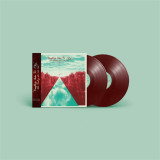
This re-issue of the Cocteau Twins' 1993 album has been remastered by Robin Guthrie and is pressed onto high quality 140g vinyl . Cocteau Twins vocalist Elizabeth Fraser, guitarist Robin Guthrie, and bassist Simon Raymonde formed in Grangemouth, Scotland in the late 70s. The brainchild of Guthrie and original bassist Will Heggie, by 1981 they had added Fraser and the following year signed to 4AD, one of the most illustrious of the indie labels. With Raymonde replacing Heggie in 1983, the trio went on to create some of the most unique and otherworldly music of the 80s, built around Guthrie's chiming guitar and Fraser's unmistakable soprano. By the early 90s, the group had just released their most successful album, the commercial Heaven or Las Vegas, but the relationship with 4AD was coming to an end. Mercury imprint Fontana was going through something of a purple patch, signing former underground bands, and by 1992, Cocteau Twins had joined The Fall and the House Of Love. The group's debut album for Fontana, Four-Calendar Cafe, was released in October 1993. Its gossamer melodies and largely upbeat pop bely the turmoil the group were going through. Barney Hoskyns, writing in Mojo, said that Four-Calendar Caf was "the most poignant, heartrending Cocteaus record of all, an album of naked confession and raw beauty . . . Sadness never sounded so luscious." Simon Raymonde agreed: "I think in time people will realise what a great album Four-Calendar Caf is. Because I think it's beautiful." Led by the single Evangeline, the reached No 13 in the UK album chart and is much-loved by fans.
Hailing from Rimini, Italy, Matteo Gatti is fast becoming one of the country and Europe’s most respected underground names.
Inspired by several of the industry’s leading names, including Sven Vath, Marco Carola, Luciano, Danny Tenaglia, Ricardo Villalobos and many others, Matteo’s refined sonic blueprint of Deep, Tech and Minimal House has led to ever-growing appeal as a DJ and Producer globally.
His unwavering studio ethic has seen Matteo go on to release music on some of the scene’s most-loved imprints, including Neverdogs’ Bamboleo Records, Dennis Cruz & Eddy M’s MUSE, and Riva Starr’s Snatch! Records, Artslaves’ Moan, Stefano Noferini’s Deeperfect and countless others.
the debut release of uk artist tee mango on mule musiq.
he has released from own label “millionhands”,aus music, local talk and name a few.
his classic track “into the wild” is our all time favourite.
a1 “never leave” is atmospheric minimal deep house with lovely voice sample. it will be instant underground hit.
b1”long time listener” is a psychedelic tropical house,“b2”first time listener” is a dark alternative deep house.
- A1: Where Is My Man (Vocal) / Eartha Kitt
- A2: I Need You (Extended 12” Mix) / Sylvester
- A3: Was That All It Was (12” Version) / Jean Carne
- A4: After The Rainbow (12” Version) / Joanne Daniëls
- B1: Searchin’ (I Gotta Find A Man) (12” Version) / Hazell Dean
- B2: Native Love (Step By Step) (12” Version) / Divine
- B3: He’s A Saint, He’s A Sinner (Extended Version) / Miquel Brown
- B4: Danger For Love (Full Length Version) / Deborah
- C1: Voyage Voyage (Pwl Britmix) / Desireless
- C2: Self Control (Extended Version) / Laura Branigan
- C3: Get Lost Tonight (12” Version) / Fancy
- C4: Brother Louie (Special Long Version) / Modern Talking
- D1: Stop… Bajon (Club Mix) / Tullio De Piscopo
- D2: Dolce Vita (Extended Version) / Ryan Paris
- D3: I’m So Hot For You (Dance Mix) / Bobby “O”
- D4: This Girl’s Back In Town (Extended Vocal Remix) / Raquel Welch
- E1: Paninaro (Italian Remix) / Pet Shop Boys
- E2: Sub-Culture (Remix) / New Order
- E3: Homosapien (Elongated Dancepartydubmix) / Pete Shelley
- F1: The Anvil (Dance Mix) / Visage
- F2: Fantasy (“Short” Album Version) / Hotline
- F3: The Dominatrix Sleeps Tonight (Dominant Mix) / Dominatrix
- F4: Duel (Bitter-Sweet) / Propaganda
- G1: Love On Top Of Love (Killer Kiss) (The Funky Dred Club Mix) / Grace Jones
- H3: Can’t Stop The Music (12” Version) / Village People
- G2: Pink Cadillac (Club Vocal) / Natalie Cole
- G3: Heat It Up (Acid House Remix) / Wee Papa Girl Rappers
- H1: Deep In Vogue (Banjie Realness) / Malcolm Mclaren And The Bootzilla Orchestra
- H2: Pistol In My Pocket (12” Version) / Lana Pellay
Box 1[96,01 €]
4LP set containing 29 original / extended / full-length / 12” versions of Queer club classics – 1980-1989
‘More Sin’ features Pet Shop Boys, Sylvester, Divine, New Order, Eartha Kitt, Grace Jones, Hazell Dean, Desireless and many more.
Highlights include the hard-to-find 12” version of ‘Can’t Stop The Music’ by Village People and the rarely compiled underground club anthems ‘Pistol In My Pocket’ by Lana Pellay and ‘After The Rainbow’ by Joanne Daniëls.
All tracks fully annotated and with a foreword by Ian Wade – author ‘1984: The Year Pop Went Queer’. Following the success of the first ‘Box Of Sin’ in 2023, Demon / Edsel and Disco Discharge are proud to announce the sequel – ‘More Sin: Box of Sin 2’ will be released on 31st January 2025.
Over 4 LPs, ‘More Sin’ presents 29 choice selections from the music you might have heard on Queer dancefloors between 1980 and 1989 – a decade of dance in all its devilish delights. Meticulously researched from the published gay club charts at the time, the LP set encompasses full-length versions of Diva, High Energy, Alternative, Pop, Europop and House classics. Not only were the ‘80s Queer clubs where you were most likely to hear the latest groundbreaking developments in dance music, there was a lot of diversity on offer – on a given night you might hear a legendary soul singer’s new opus right next to some post-punks from Manchester and the latest European pop chart topper.
‘More Sin’ aims to reflect this. On ‘More Sin’, the space-age soulful club sound of Jean Carne rubs up against the widescreen Europop beauty of Desireless and cutting-edge house music from London courtesy of Wee Papa Girl Rappers… and along the way come some of the most important and era-defining artists of the decade – from Sylvester to Siouxsie & The Banshees, from Pet Shop Boys to Divine, from Hazell Dean to Grace Jones. Producing and mixing these classics is like a roll-call of the era’s studio giants – Trevor Horn, Larry Levan, Clivillés & Cole, Ian Levine, John Luongo, Bobby “O”, Martin Rushent and Stock, Aitken & Waterman to name a few. It’s time to give in to sin again.
- A1: John Martyn - Small Hours
- A2: Stephen Whynott – A Better Way
- A3: April Fulladosa - Sunlit Horizon
- B1: Sylvain Kassap - Plancoët
- B2: Manu Dibango - Night In Zeralda
- B3: Henri Texier - Hocoka Time
- B4: Nivaldo Orneleas - O Que Ha
- B5: 808 State – Pacific State (Massey’s Conga Mix)
- C1: Magma - Eliphas Levi
- C2: Homelife - Stranger
- C3: Michael Gregory Jackson - Unspoken Magic
- D1: Dora Morelenboum - Avermelhar
- D2: Simone - Tudo Que Você Podia Ser
- D3: Experience Unlimited – People
- D4: Otis G. Johnson - I Got It
- D5: Mel & Tim - Keep The Faith
Black Vinyl[39,08 €]
Exploring late-night, after-hours meditations on sound; ‘Everything Above The Sky (Astral Travelling with Luke Una)’ is a new compilation by the titular DJ, promoter and enigmatic cultural curator. Off the back of the E Soul Cultura phenomena, this compilation comes at a timely point in Luke’s rich career as he soars the heights of playing all over the world. Avoiding any chance of his sound being pigeonholed, Luke has put together a tracklist of songs and music that have a transcendental feel, after coming off the grid, going back to source, outside the city walls .
Music has long been believed to aid out of body experiences and many of us have searched long and hard for a combination of those elusive ingredients that might alleviate some of the monotony of everyday life, our daily routines and obligations, and those things that seem to block us from the spirit of the universe. In this collection, Luke selects music with all the right ingredients in just the right quantities, allowing the listener to engage in an esoteric journey of enlightenment through sound. Being a prolific collector of music, Luke initially delivered enough tracks to compile several compilations, making the licensing process the biggest effort to date for the label. The music moves softly and slowly, never becoming too intrusive, exemplifying the wonderful elevating properties of simple songs played from the heart.
Luke’s Everything Above The Sky manifesto reads, “Astral Travelling in the meadowlands with acid folk, spiritual jazz, around midnight hocus pocus, cosmic psychedelic soul, magical spellbound whirling swirling love songs, Brazilian ballads of light into machine soul gospel utopia dreaming, Balearic bossa, Outer Space ancient African drum, the breath of trees, escaping the big bad modern world, gathering round winter fires, walking amongst the bracken in Padley Gorge in late summer twilight, overlooking the Hope Valley, escaping ego, detaching and finally letting go amongst the stars with the slowly floating people. It’s beautiful beyond. Everything above the Sky”.
Beginning his career as an original Sheffield house young blood in the mid 1980s, Luke’s move to Manchester and partnership with Justin Crawford saw the birth of Electric Chair, a cornerstone cult night in the UK underground club scene. Then came Electric Elephant, a Croatian festival paying homage to their wild eclecticism from Balearic to Brazilian to É Soul, house, disco and techno. Luke’s much loved, long-running Homoelectric night and more recently Homobloc sell out festival for 10,000 souls has been at the forefront of Manchester’s LGBTQ+ cultural landscape. Luke’s Friday evening show on Worldwide FM captured imaginations and became a cult four-hour must-listen monthly journey for fans all over the world. Today, Luke remains, as ever, at the forefront of a changing milieu, pairing the momentous legacy of Manchester’s 80s and 90s scene with the delivery of what today’s club communities need to get down.
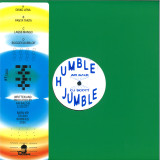
It's been a long (and fun) time but finally Ari Bald & CJ Scott are getting the international recognition they deserve, after years of meticulously crafting their own brand of pure, guilt-free, locally sourced house music, through regular releases on a
string of illustrious underground labels and, more recently, two striking EPs on their hometown label Studio Barnhus outta Stockholm, Sweden.
On the dynamic duo's new Studio Barnhus release Humble Jumble, cheekiness levels and BPM counts are pushed to their limits, with ingenious sample choices and floor-friendly arrangements spread across two slabs of DJ-optimised vinyl, arriving on February 7 2025. Comes in yellow, red and green sleeves. Stamped and numbered by the artists themselves. Limited edition of 300 copies.
- A1: The Blow Monkeys - Save Me (Neville Watson's Dub)
- A2: Cisco Cisco - If You Want Me (Jay Shepheard Remix)
- A3: Bongo Entp. - Drømmen (Sirs Remix)
- B1: Darlyn Vlys - Wuzu (Tyu Tribe Remix)
- B2: Kimo - Whirl
- B3: Discoscuro - Discoscuro
- C1: Popular Tyre - Feel Like A Lazer Beam
- C2: Class B Band - Repli-Can (Edit)
- C3: Bal5000 - Bleu Infini
- D1: Phil Kieran - Find Love (Andrew Weatherall Remix)
- D2: Das Komplex - 89
- D3: Brioski - Calling 626 (Edit)
Black Vinyl[28,78 €]
Seit der Gründung 2010 durch Andrew Weatherall und Sean Johnston entwickelte sich die Clubreihe "A Love From Outer Space" (ALFOS) zu einer britischen Institution, expandierte und erreichte ein internationales Publikum. Als Reaktion des Undergrounds auf den schnelllebigen Mainstream verfolgte ALFOS einen langsameren, nachhaltigeren Ansatz bei einem Tempo von maximal 122 bpm. ALFOS wurde für seinen eklektischen und hypnotischen Sound bekannt, der alles von Cosmic und House bis zu Dub und Post-Punk vermischte. Dieser Jubiläumssampler spiegelt die Musik wider, die ALFOS in den letzten 15 Jahren geprägt hat. Das von Johnston zusammengestellte und gemischte 19-Track-Album ist eine Hommage an die reiche Geschichte des Clubabends und sein Engagement, musikalische Grenzen zu erweitern. Es enthält zahlreiche exklusive Titel, darunter The Blow Monkeys' begehrten Neville Watson-Remix und Brioskis "Call 626", sowie eine breite Palette von Sounds, die sowohl die Vergangenheit ehren als auch die Zukunft begrüssen.
- 1: Prepad
- 2: Svetski Osmeh
- 3: Daj Mi Sansu
- 4: Progresio Sam
- 5: Djuskaj
- 6: Kupatilo Je Shvatilo
- 7: Meterology
- 8: Otisli Smo
Original[30,88 €]
ŽUR (‘Zhure’, party) is absolute cult and one of the most rare Yugoslavian disco funk albums, originally recorded in 1981, reissued on Everland Music for the first time since the original vinyl came out more than 40 years ago. The album was carefully and brilliantly remastered by grammy nominated sound engineer Jessica Thomson.
Boban Petrović is a legend of Belgrade's sophisticated disco funk scene from the late 70s and early 80s.
Back in the second half of the 70s Boban started one of the first disco clubs in Belgrade and he was one of the biggest organizers of private house parties.
The finest balance between Boban Petrović's big-hearted party-maker-turned-philanthropist personality and his hustler one was achieved on Žur.
On Žur, he is at home, in his safe place, since the parties, the music and the people are the first out of many things he had completely figured out in his life. He is at the top of his game, occasionally bothered by a casual heartbreak, but always feeling himself, coming out playful and fundamentally peaceful, satisfied and ready to transcend himself in order to put the rest of the world in the limelight. In fact, Žur isn’t about the party, music, lyrics or its, hands down, beautifully balanced sonics. It’s about Boban and the funk he lived thoroughly. The funk before, but the funk he lived after this album even more so. All the ups and downs that he faced since the moment the first needle dropped on a Žur record to this very day are on this album as the unwritten destiny of that lighthearted character he played.
In short, ŽUR represents the essence of underground club life in Belgrade from the late 70s, when the album was recorded.
The quality of this trust is confirmed by the fact that Boban Petrovic's music is still actively listened to today, not just anywhere, but at the finest club events.
High end production and extremely authentic arrangements outside the mold of classic disco music, and lyrics that literally convey the vibe of his already jet-set lifestyle in Belgrade at the time.
Shortly after his musical career, Boban Petrovic became a businessman of the conscious class. He was living in Spain on his own luxury yacht for years, he had a private airplane, a car park. But all this time living on highest class level he never lost his identity. In all his offices, yacht, airplane and everywhere was playing loud funk music and he was dressed like a musician who just finished or need to start a gig.
Along the way Boban also wrote two books: Rokanje 1 & 2 describing the time when the album ŽUR was created.
The ŽUR album is one of the the holy grails of disco funk music releases on a global level.
ŽUR (‘Zhure’, party) is absolute cult and one of the most rare Yugoslavian disco funk albums, originally recorded in 1981, reissued on Everland Music for the first time since the original vinyl came out more than 40 years ago. The album was carefully and brilliantly remastered by grammy nominated sound engineer Jessica Thomson.
Boban Petrović is a legend of Belgrade's sophisticated disco funk scene from the late 70s and early 80s.
Back in the second half of the 70s Boban started one of the first disco clubs in Belgrade and he was one of the biggest organizers of private house parties.
The finest balance between Boban Petrović's big-hearted party-maker-turned-philanthropist personality and his hustler one was achieved on Žur.
On Žur, he is at home, in his safe place, since the parties, the music and the people are the first out of many things he had completely figured out in his life. He is at the top of his game, occasionally bothered by a casual heartbreak, but always feeling himself, coming out playful and fundamentally peaceful, satisfied and ready to transcend himself in order to put the rest of the world in the limelight. In fact, Žur isn’t about the party, music, lyrics or its, hands down, beautifully balanced sonics. It’s about Boban and the funk he lived thoroughly. The funk before, but the funk he lived after this album even more so. All the ups and downs that he faced since the moment the first needle dropped on a Žur record to this very day are on this album as the unwritten destiny of that lighthearted character he played.
In short, ŽUR represents the essence of underground club life in Belgrade from the late 70s, when the album was recorded.
The quality of this trust is confirmed by the fact that Boban Petrovic's music is still actively listened to today, not just anywhere, but at the finest club events.
High end production and extremely authentic arrangements outside the mold of classic disco music, and lyrics that literally convey the vibe of his already jet-set lifestyle in Belgrade at the time.
Shortly after his musical career, Boban Petrovic became a businessman of the conscious class. He was living in Spain on his own luxury yacht for years, he had a private airplane, a car park. But all this time living on highest class level he never lost his identity. In all his offices, yacht, airplane and everywhere was playing loud funk music and he was dressed like a musician who just finished or need to start a gig.
Along the way Boban also wrote two books: Rokanje 1 & 2 describing the time when the album ŽUR was created.
The ŽUR album is one of the the holy grails of disco funk music releases on a global level.
The 2003 debut album and a collection of early rarities from the genuine treasure of the UK underground. Remastered and available on vinyl for the first time in over two decades. “Legendary angular rock…Edgar Allen Poe meets The Fall” (The Guardian 2003) “Jarvis Cocker fronting Fugazi” (Melody Maker 1994) Joeyfat, from Tunbridge Wells in Kent, are the daddy of all the Sprechgesang bands out there. We searched on Wikipedia; they're not even mentioned. Maybe not such a bad thing. There are young scamps climbing up festival line-ups all over the world with more than a passing sonic and aesthetic resemblance. Influence can be picked up in diluted ways, maybe the true source of the river has been forgotten. Foals heard the source, they were there. So were Everything Everything. Ask them. Black Midi heard it third hand. Life Without Buildings heard it. So did Yard Act. You can see the pattern. From the early '90s Joeyfat, led by Matt Cole and Jason Dormon, have been perfecting and re-perfecting the sound. They toured with Green Day in 1994. They released music on the Fierce Panda label. They recorded BBC Sessions for John Peel and Marc Riley and released four albums and countless singles. They flirted with being known and they didn't like what they saw so they kept it local, building a community by setting up the Tunbridge Wells Forum, one of the great UK small venues. Debut album The House Of The Fat is a masterpiece, the musical precision recalls The Sound or B52s. The spot-on attack of the vocal and lyrics makes us think of Fugazi or Zounds. The Unwilling Astronaut compiles early singles and compilation tracks. Going all the way back to 1993 it shows how close to a DC-inspired hardcore band they were, it's a thrilling listen. Joeyfat shouldn’t need a re-introduction but they’re going to get one. The source of the river. The top of the family tree. This is where the resemblance comes from
Soul Quest are proud to present the latest release from Berlin based DJ and producer Jean-Jez, who continues on with a musical journey with flourishing roots and a bright, bright future.
Jean-Jez has made waves in Berlin’s underground for a good while now, with his Kedi Bounce parties (whom he co-founded) quickly becoming a celebratory cornerstone of community and culture. His DJing style and production approach act as a core expressional loop, with Jean-Jez embracing a multitude of styles and sounds with both. Bridging the gap between house, Jazz, Hip-Hop, Afro-Latin and beyond, Jean-Jez is all about nurturing the collective joy found within music - either through his own tunes or deep in the mix at a Kat Nip party.
‘Soul Notion’ wears its heart on its sleeve, and embodies the core musical principles to which Jean-Jez holds so very dear. ‘Did you want to dance!’ kicks things off with a deep melodic embrace, before spreading outwards with brassy frills, evocative simmering drumming patterns and vocal samples which kick the inner consciousness into another gear.
‘Take me to the moon’ contains an up and front piano lead, with uptempo drums providing a twist and flair to proceedings. Some inspired vocals add further to the atmosphere, one of airiness and emotional escapism.
‘What is it tell me’ stirs into life with a wide scope through the low ends, but Jean-Jez cooks up a storm with some wondrous jazz guitar that weaves one final spell to get lost deep within.
To wrap things up, Jean-Jez enlists his own collective: Kedi Bounce to put an Acid twist on ‘Did You Want To Dance’ to close the ep in style. This mix is exclusive to the vinyl mix and won’t be released digitally.
Jean-Jez looks to celebrate and resonate through his music, and this EP is a full demonstration of his abilities to bring things together. Seamlessly blending some of his favourite styles, this record contains all the feels to be wished for, and an experience that leaves plenty of room for return visits, this EP has you covered.
The influence of the UK’s Steel City on electronic music is well documented and undisputed and continues to push the envelope with key figures such as Winston Hazel (Forgemasters, The Step), DJ Parrot/Crooked Man, Richard Benson (RAC, SWAG, Altern 8), Chris Duckenfield (RAC, Popular Peoples Front, SWAG, All Ears Distribution), a thriving underground club scene and the likes of Synaptic Voyager reinforcing the city’s rich musical legacy.
Matt White and Paul Baines have been making off-kilter, emotive, late night electronic jams since meeting in the early 90’s and while life took them on different paths for a while, they have recently blown the thick layer of dust from their synths and drum machines and got busy in the studio to create some amazing new music which draws influence from that classic UK techno sound which played such an important part in the development of dance music culture around the world. With recent releases on Frame Of Mind, Acquit and Telomere Plastic the duo are clearly on a roll, wearing the heritage of their city on their sleeve and delivering what can only be described as heartfelt, authentic machine music made with love and soul.
From the opening beats of lead track Dawn Till Dusk we are drawn in to another place which feels comfortably familiar yet organic, fluid and loose in a way that tugs on the heartstrings. A million miles from cookie-cutter tech house, this is two guys in a bedroom studio, digging deep on hardware machines to create a sound to get completely lost in. Lonely Promontory takes things deeper still with immersive pads, taught electro beats and blissed-out melodic lines which give just hint of optimism and recall those beloved sounds of B12, Redcell and Likemind.
Flipping over we have Stellar Engine which goes a littler heavier on the beats and bass whilst still retaining a floating quality, once again highlighting the hardware jam workflow that Synaptic Voyager utilise in their studio. Once Exposed takes us back to those heady days of the early 90’s when techno, house and ambient electronics combined to create a heady blend of deep atmospherics and driving beats which could work on both dance floors and car stereos alike. Rounding off the EP we have Cognitive Network which goes for a straighter four on the floor techno groove and a killer bassline to lose yourself in. These recordings were delivered to the label in unedited long form (some tracks totalling 15 minutes or more in length!) which Jimpster lovingly edited into the versions which you hear on this release.
- A1: Progetto Tribale - The Sweep
- A2: Onirico - Echo Giomini
- A3: Open Spaces - Artist In Wonderland
- B1: Alex Neri – The Wizard (Hot Funky Version)
- B2: M C.j. Feat. Sima - To Yourself Be Free - Instrumental Mix Energy Prod
- B3: Mato Grosso - Titanic Expande
- C1: Dreamatic - I Can Feel It (Part 1)
- C2: Carol Bailey - Understand Me Free Your Mind (Dream Piano Remix)
- C3: The True Underground Sound Of Rome - Secret Doctrine
- D1: Don Carlos - Boy
- D2: Lazy Bird – Jazzy Doll (Odyssey Dub)
Vol 2[28,99 €]
Volume 1 of this expertly curated project of 90s Italian House - put together by Don Carlos.
If Paradise was half as nice… by Fabio De Luca.
Googling “paradise house”, the first results to pop up are an endless list of European b&b’s with whitewashed lime façades, all of them promising “…an unmatched travel experience a few steps from the sea”. Next, a little further down, are the institutional websites of a few select semi-luxury retirement homes (no photos shown, but lots of stock images of smiling nurses with reassuring looks). To find the “paradise house” we’re after, we have to scroll even further down. Much further down.
It feels like yesterday, and at the same time it seems like a million years ago. The Eighties had just ended, and it was still unclear what to expect from the Nineties. Mobile phones that were not the size of a briefcase and did not cost as much as a car? A frightening economic crisis? The guitar-rock revival?! Certainly, the best place to observe that moment of transition was the dancefloor. Truly epochal transformations were happening there. From America, within a short distance one from the other, two revolutionary new musical styles had arrived: the first one sounded a bit like an “on a budget” version of the best Seventies disco-music – Philly sound made with a set of piano-bar keyboards! – the other was even more sparse, futuristic and extraterrestrial. It was a music with a quite distinct “physical” component, which at the same time, to be fully grasped, seemed to call for the knotty theories of certain French post-modern philosophers: Gilles Deleuze, Félix Guattari, Paul Virilio... Both those genres – we would learn shortly after – were born in the black communities of Chicago and Detroit, although listening to those vinyl 12” (often wrapped in generic white covers, and with little indication in the label) you could not easily guess whether behind them there was a black boy from somewhere in the Usa, or a girl from Berlin, or a pale kid from a Cornish coastal town.
Quickly, similar sounds began to show up from all corners of Europe. A thousand variations of the same intuition: leaner, less lean, happier, slightly less intoxicated, more broken, slower, faster, much faster... Boom! From the dancefloors – the London ones at least, whose chronicles we eagerly read every month in the pages of The Face and i-D – came tales of a new generation of clubbers who had completely stopped “dressing up” to go dancing; of hot tempered hooligans bursting into tears and hugging everyone under the strobe lights as the notes of Strings of Life rose up through the fumes of dry ice (certain “smiling” pills were also involved, sure). At this point, however, we must move on to Switzerland.
In Switzerland, in the quiet and diligent town of Lugano, between the 1980s and 1990s there was a club called “Morandi”. Its hot night was on Wednesdays, when the audience also came from Milan, Como, Varese and Zurich. Legend goes that, one night, none less than Prince and Sheila E were spotted hiding among the sofas, on a day-off of the Italian dates of the Nude Tour… The Wednesday resident and superstar was an Italian dj with an exotic name: Don Carlos. The soundtrack he devised was a mixture of Chicago, Detroit, the most progressive R&B and certain forgotten classics of old disco music: practically, what the Paradise Garage in New York might have sounded like had it not closed in 1987. In between, Don Carlos also managed to squeeze in some tracks he had worked on in his studio on Lago Maggiore. One in particular: a track that was rather slow compared to the BPM in fashion at the time, but which was a perfect bridge between house and R&B. The title was Alone: Don Carlos would explain years later that it had to be intended both in the English meaning of “by itself” and like the Italian word meaning “halo”. That wasn’t the only double entendre about the song, anyway. Its own very deep nature was, indeed, double. On the one hand, Alone was built around an angelic keyboard pattern and a romantic piano riff that took you straight to heaven; on the other, it showcased enough electronic squelches (plus a sax part that sounded like it had been dissolved by acid rain) to pigeonhole the tune into the “junk modernity” section, aka the hallmark of all the most innovative sounds of the time: music that sounded like it was hand-crafted from the scraps of glittering overground pop.
No one knows who was the first to call it “paradise house”, nor when it happened. Alternative definitions on the same topic one happened to hear included “ambient house”, “dream house”, “Mediterranean progressive”… but of course none were as good (and alluring) as “paradise house”. What is certain is that such inclination for sounds that were in equal measure angelic and neurotic, romantic and unaffective, quickly became the trademark of the second generation of Italian house. Music that seemed shyly equidistant from all the rhythmic and electronic revolutions that had happened up to that moment (“Music perfectly adept at going nowhere slowly” as noted by English journalist Craig McLean in a legendary field report for Blah Blah Blah magazine). Music that to a inattentive ear might have sounded as anonymous as a snapshot of a random group of passers-by at 10AM in the centre of any major city, but perfectly described the (slow) awakening in the real world after the universal love binge of the so-called Second Summer of Love.
For a brief but unforgettable season, in Italy “paradise house” was the official soundtrack of interminable weekends spent inside the car, darting from one club to another, cutting the peninsula from North to centre, from East to West coast in pursuit of the latest after-hours disco, trading kilometres per hour with beats per minute: practically, a new New Year’s Eve every Friday and Saturday night. This too was no small transformation, as well as a shock for an adult Italy that was encountering for the first time – thanks to its sons and daughters – the wild side of industrial modernity. The clubbers of the so-called “fuoriorario” scene were the balls gone mad in the pinball machine most feared by newspapers, magazines and TV pundits. What they did each and every weekend, apart from going crazy to the sound of the current white labels, was linking distant geographical points and non-places (thank you Marc Augé!) – old dance halls, farmhouses and business centres – transformed for one night into house music heaven. As Marco D’Eramo wrote in his 1995 essay on Chicago, Il maiale e il grattacielo: “Four-wheeled capitalism distorts our age-old image of the city, it allows the suburbs to be connected to each other, whereas before they were connected only by the centre (…) It makes possible a metropolitan area without a metropolis, without a city centre, without downtown. The periphery is no longer a periphery of any centre, but is self-centred”.
“Paradise house” perfectly understood all of this and turned it into a sort of cyber-blues that didn’t even need words, and unexpectedly brought back a drop of melancholic (post?)-humanity within a world that by then – as we would wholly realise in the decades to come – was fully inhuman and heartless. A world where we were all alone, and surrounded by a sinister yellowish halo, like a neon at the end of its life cycle. But, for one night at least, happy.
Especial welcomes new artist DJ 1985 to the label. As so often, the idea of pushing new music has been the raison d'etre of the past decade. An EP of a love for Acid, from the breaks anthem of the title We Trippin’ to exploring the ethereal and even mind-melting Ambient House and Balearic of how the Roland TB-303 has become a fundamental element in the history of electronic music.
Soviet born; Belgrade exile Stanislav Grishchuk is DJ 1985. A man of many monikers, came to House later, originally progressing from Breaks, Hardcore and onto Drum and Bass as DJ Saint Man, a Mixmaster in the truest sense, switching it up to include Ghetto House and Booty, DJing led to producing, finally seeing DJ 1985 emerged to encompass Acid, Bleep, Breakbeat, Chicago and beyond.
A DJ supreme from the old school – check his Boiler Room mix for live vinyl dexterity – his productions nod to Aphex Twin and the Rephlex / UK lineage, the Techno. Electro of masters Underground Resistance and Drexciya and on to Italo, Italian House and early 90s New Jersey and New York’s golden period and of course the masters Kraftwerk, all influence the sounds of this debut EP.
Starting as 808 and 909 Electro and Techno jams, all the tracks are recorded live, MPC, synth and drum machines, no computers involved. We Trippin’ is built around the “Think” break, with trippy 303 line, some 808, synths and off we go “we trippin”.
Dolphin and Sirens was inspired by the Boka Bay dolphins of Montenegro, near where the recording was made. A flotation bath of warm dreamy acid beats and aquatic found sound, fast, shifting breaks, the Adriatic Sea of Croatia and beyond beckoning.
Catland’s title is a nod to Stanislav’s love of all the feline, but the breaks’n’303 cut is an endlessly uplifting spark, celestial, a cosmic evolutionary odyssey.
DJ 1985 completes his debut EP with the aptly titled The Last One. Spherular, mysterious, this rise of spatial breaks is a reawakening of symbolic music that is touched by both East and West. Stanislav’s music intersects, trans-national, almost spiritual and psychedelic. Live jamming, more hearted, the snap electro percussion, dream-laden pads are twinned with an ethereal otherness via the endless possibilities of the TB-303.
X-Coast unveils 9-track 2xLP The Riviera Collection on his label Riviera Records.
Hot on the heels from remixing instant dance hits such as Shygirl's '4eva' and DJ Gigola's 'La Batteria' and spotted in the studio with adored vocalists Eartheater and Miss Bashful, Serbian-born, NYC-based DJ/producer X-Coast returns with a collection of signature tracks that feel like the lost treasure chest of his dance island.
X-Coast is your favorite DJ's favorite producer, whose tracks you’ve undoubtedly danced to, whether on a massive festival stage or at an intimate, underground rave. Over the past decade, he has quietly but consistently shaped the pulse of dancefloors worldwide, with a distinctive style that traverses genres like house, techno, electro, drum and bass, and trance. This rare versatility has led X-Coast to release on the likes of Mall Grab’s Steel City Dance Discs, Diplo’s Higher Ground, Anetha’s Mama Told Ya and DJ Haus’s Unknown To The Unknown, to name a few.
What sets X-Coast apart is not just his ability to move fluidly between styles but the unique character embedded in every track. His productions have an undeniable warmth and authenticity, often evoking the raw, euphoric spirit of the 90s and 00s rave era. This nostalgic yet forward-thinking approach makes his music feel timeless, effortlessly blending old-school rave energy with modern production techniques. It's a quality that has made him a go-to for DJs across the board, whether they’re playing peak-time techno sets or deep, groovy house sessions.
On The Riviera Collection, released on his own label, Riviera Records, X-Coast opens the vault to reveal a diverse range of tracks that showcase his deep connection to multiple eras of electronic music. This collection reflects the breadth of his eclectic DJ sets, where various sounds and styles converge into a cohesive journey. Each track feels like a contemporary reimagining of a classic moment in dance music history.
From the early 2000s tribal influences layered with X-Coast’s signature chord work on ‘Neapolis,’ to the soaring, synthetic trance energy of ‘Desert Storm,’ and the infectious, camp vibe of the diva house ‘Hold Me Baby,’ the collection takes us on a nostalgic trip back to the origins of rave culture. It echoes a time when DJs crafted a journey through genres, playing everything from house to trance to techno in one seamless night.
The collection’s first hidden gems and long-awaited singles are “Da Boing Boing Trak” and "Put Your Hands Together". Both staples in his sets at iconic venues and festivals like Pitch Music & Arts, fabric, Circoloco, AVA Festival, Melt!, and Intercell, this track has been in high demand among fans, finally seeing its release. With The Riviera Collection, X-Coast continues to cement his status as a versatile producer capable of bridging the gap between past and present, while delivering music that moves crowds everywhere.
2024 Repress alert
Space Ghost is excited to announce the release of Dream Tool, a four track 12” EP produced by Space Ghost himself. Dream Tool offers up four spacious house tunes exploring Space Ghost’s signature style of dance music. Each track is equipped with groovin’ drums, atmospheric pads, catchy piano melodies, and bouncy basslines. Dream Tool is the debut release of Space Ghost’s new label, Peace World Records.
With the launch of Peace World Records, Space Ghost aims to harness his passion for music to create a unique platform for like-minded artists in the Bay Area and beyond. Since moving to Oakland in 2009, Space Ghost has been a consistent fixture in the Bay Area music scene, DJing regularly and refining his production skills. For Space Ghost, honing his craft and creating enduring, high-quality art is essential, making the establishment of his new label a natural progression in his artistic journey.
Space Ghost has garnered an international following over the years by steadily dropping a diverse array of LPs and EPs. He has collaborated with Danish label Tartelet Records for multiple projects and has also put out music with acclaimed labels such as Apron Records, Pacific Rhythm, and PPU. Across his releases, Space Ghost’s production style weaves between ambient and dance music, drawing inspiration from the underground scenes of the '80s and '90s while adding a contemporary touch.
The launch of Peace World Records and its debut release, Dream Tool, marks Space Ghost’s inaugural step towards his goal at a full-time music career. Embodying his journey, this debut release truly is his Dream Tool.
Repress!
Defected’s vinyl series continues to commit the label’s biggest digital releases to wax, delivering the best house music previously unavailable on vinyl, and this nineteenth edition collates four unmissable releases from 2023’s incredible summer season. Opening the compilation, British house favourite Jansons delivers old skool vibes with ‘Hypnotic’, championed by 90s hip-hop and RnB inspired vocal vocals courtesy of Dope Earth Alien. Next up, LP Giobbi’s long-awaited Defected debut came in the form of ‘Giodisco’, a joyful, vibrant club cut that showcased the live musician and producer’s disco-adjacent sound. On the B-Side, the First Lady of Defected Sam Divine presents her long-awaited dancefloor release ‘Take My Hand’ featuring Josh Barry on vocals. After teasing the track for nearly a year in her live sets, the heavenly house release did not disappoint. Closing out this esteemed collection is the addictive collaboration between Parisian underground favourites and London singer-songwriter Camden Cox, ‘Lady Love’, which dominated the summer season with its undeniable energy and earworm vocal.
Cassette[15,08 €]
On their spellbinding sophomore album, "Whispers in the Speech Machine," the young Ohio siblings from The Laughing Chimes fully embrace their Southern Gothic influences, cannily balancing the light of their infectious pop with the shadow of their rust belt environs. While attending an afterschool music program at their local opera house, Evan and his brother Quinn began recording The Laughing Chimes' debut album "In This Town," released in 2020. A string of well-received digital singles and a cassette EP for Slumberland followed, dazzling savvy pop fans with their Paisley Underground-inflected jangle that owes as much to the Flying Nun sound as it does to 80s Athens, GA.
The eight assured songs of "Whispers in the Speech Machine" prove The Laughing Chimes deserve the attention and accolades, while their approaches to songwriting and sonic aesthetics continue to evolve. "Southeast Ohio is the foothills of Appalachia, so it has this indescribable mood and atmosphere to it," guitarist/vocalist Evan Seurkamp told The Big Takeover. "Sometimes there's a haunting weight of decay you want to escape, but at the same time there is some sort of strange romanticism surrounding ghost towns. We've tried to channel those moods to add more regional flavor into our sound."