Поиск:underground movement

Стили
Все
Christina Kubisch - TUNING

Christina Kubisch

TUNING

12inchFAIT-41LP
Faitiche
17.04.2026

Faitiche welcomes a new artist: Christina Kubisch belongs to the first generation of sound artists. Her practice ranges from performances, concerts, to works with video and visual art, but she is best known for her sound installations and electro-acoustic compositions.

TUNING brings together three pieces by Christina Kubisch from different periods of her oeuvre. What they have in common is the way they transform sound phenomena originally considered “non-music” into compositions.

Jan Jelinek: Gaming in Silence (2024) is the most recent work on this compilation. It’s a collage of electromagnetic waves, voice, and abstract sound textures. How did this combination come about?

Christina Kubisch: Gaming was commissioned as a fixed-media composition for the Sound Dome at ZKM Karlsruhe. Since Resonances: The Electromagnetic Bodies Project (2005), I’ve been making recordings in the old and new server rooms at the ZKM and in their permanent collection of historical computer games. Computer games like Asteroids (Atari, 1979) and Poly-Play (VEB Polytechnik, 1986) have specially generated analogue electromagnetic waves that interest me in particular on account of their density, rhythms and textures. I originally studied painting and to me the work of composition often feels like painting an abstract picture. I alter my source material as little as possible, layering and overlapping until a distinctive sound space emerges. In recent pieces, I sometimes combine magnetic waves with field recordings or live instruments. In Gaming it’s my recording of a Chinese song about silence.

JJ: Two persons walking through a street in Madrid (2004) is a recording from your Electrical Walks series. Here we should give a brief explanation of one of your best known works: participants in an Electrical Walk move through public spaces wearing prepared headphones that allow them to receive electromagnetic waves from their surroundings – for example from security gates, ATMs or neon signs. They discover a situation that normally is inaudible to the human ear and they can actively shape it by choreographing their movements. I really admire this piece, not least because there’s no clear dividing line between participants and artist. What exactly do we hear in Two persons walking through a street in Madrid (2004)?

CK: With this early work, I wanted to understand what is heard by people participating in an Electrical Walk in the same place but moving in different ways. The Spanish composer Miguel Alvarez-Fernàndez and I set off from opposite ends of a major shopping street in Madrid, met briefly in the middle, and then continued to the end. We both recorded our walks and I then layered them over one another. You might call it a work of electromagnetic conceptualism.

JJ: Diapason (2009 version) is an installation that plays a composition based on sounds from fifteen tuning forks. This setting is audible in the recording: there’s no dramatic arc, no beginning or end – instead, it recalls a piece of aleatoric music focussing on the decay phase. How did you come to make this work and could you tell us something about your compositional method?

CK: Diapason is part of a series of three pieces that deal with “non-instruments” or instruments that no longer exist: electrical mine bells used to send signals to the workers underground; a historical glass harmonica originally used for medicinal purposes; and tuning forks that were used by doctors to test people’s hearing. All of these methods are no longer in use. The sound of the tuning forks, audible only if held close to the ear, was recorded at the electronic studio at Berlin’s Technical University in such a way that even their decay remained audible. The frequencies range between 64 and 2048 Hertz and they can be adjusted at micro-intervals using small movable weights. The sequence and the duration of the pauses are dictated by chance and were not defined in advance. The 2009 version was created for an installation in the historic Holy Cross Church (Korskirken) in Bergen. Visitors could enter and leave the space at any time, deciding for themselves where and for how long they wished to listen to the sounds played back over an array of small loudspeakers placed on the floor of the apse.

Credits:

Gaming in Silence: commission of the ZKM/Hertzlab, Karlsruhe 2023
elektronic sound processing: Tom Thiel
sound engineering and mixing: Eckehard Güther

Diapason: produced at Elektronisches Studio of TU Berlin
rearrangement: Eckehard Güther

Christina Kubisch, published by Edition Christina Kubisch / Random Musick Publishing

image front: Transitionen 2021 by C. Kubisch, sonagrams of electronic waves (courtesy: Galerie Mazzoli Berlin)
image back: Diapason Tuning Fork, property of Folkmar Hein, Photo: Archiv Christina Kubisch

design by Tim Tetzner
mastered by Giuseppe Ielasi
Thanks to Miguel Álvarez-Fernández, Folkmar Hein, Dominik Kautz and Mario Mazzoli

Сделать предзаказ17.04.2026

он должен быть опубликован на 17.04.2026

27,31
Guilty Razors - Complete Recordings 1977 - 1978

UILTY RAZORS, BONA FIDE PUNKS.


Writings on the topic that go off in all directions, mind-numbing lectures given by academics, and testimonies, most of them heavily doctored, from those who “lived through that era”: so many people today fantasize about the early days of punk in our country… This blessed moment when no one had yet thought of flaunting a ridiculous green mohawk, taking Sid Vicious as a hero, or – even worse – making the so-called alternative scene both festive and boorish. There was no such thing in 1976 or 1977, when it wasn’t easy to get hold of the first 45s by the Pistols or the Clash. Few people were aware of what was happening on the fringes of the fringes at the time. Malcolm McLaren was virtually unknown, and having short hair made you seem strange. Who knew then that rock music, which had taken a very bad turn since the early 1970s, would once again become an essential element of liberation? That, thanks to short and fast songs, it would once again rediscover that primitive, social side that was so hated by older generations? Who knew that, besides a few loners who read the music press (it was even better if they read it in English) and frequented the right record stores? Many of these formed bands, because it was impossible to do otherwise. We quickly went from listening to the Velvet Underground to trying to play the Stooges’ intros. It’s a somewhat collective story, even though there weren’t many people to start it.
The Guilty Razors were among those who took part in this initial upheaval in Paris. They were far from being the worst. They had something special and even released a single that was well above the national average. They also had enough songs to fill an album, the one you’re holding. In everyone’s opinion, they were definitely not among the punk impostors that followed in their wake. They were, at least, genuine and credible.

Guilty Razors, Parisian punk band (1975-1978). To understand something about their somewhat linear but very energetic sound, we might need to talk about the context in which it was born and, more broadly, recall the boredom (a theme that would become capital in punk songs) coupled with the desire to blow everything off, which were the basis for the formation of bands playing a rejuvenated rock music ; about the passion for a few records by the Kinks or the early Who, by the Stooges, by the Velvet mostly, which set you apart from the crowd.
And of course, we should remember this new wave, which was promoted by a few articles in the specialized press and some cutting-edge record stores, coming from New York or London, whose small but powerful influence could be felt in Paris and in a handful of isolated places in the provinces, lulled to sleep by so many appalling things, from Tangerine Dream to President Giscard d’Estaing...
In 1975-76, French music was, as almost always, in a sorry state ; it was still dominated by Johnny Hallyday and Sylvie Vartan. Local rock music was also rather bleak, apart from Bijou and Little Bob who tried to revive this small scene with poorly sound-engineered gigs played to almost no one.
In the working class suburbs at the time, it was mainly hard rock music played to 11 that helped people forget about their gruelling shifts at the factory. Here and there, on the outskirts of major cities, you still could find a few rockers with sideburns wearing black armbands since the death of Gene Vincent, but it wasn’t a proper mass movement, just a source of real danger to anyone they came across who wasn't like them. In August 1976, a festival unlike any other took place in Mont-de-Marsan – the First European Punk Festival as the poster said – with almost as many people on stage as in the audience. Yet, on that day, a quasi historical event happened, when, under the blazing afternoon sun, a band of unknowns called The Damned made an unprecedented noise in the arena, reminiscent of the chaotic Stooges in their early adolescence. They were the first genuine punk band to perform in our country: from then on, anything was possible, almost anything seemed permissible.

It makes sense that the four+1 members of Guilty Razors, who initially amplified acoustic guitars with crappy tape recorder microphones, would adopt punk music (pronounced paink in French) naturally and instinctively, since it combines liberating noise with speed of execution and – crucially – a very healthy sense of rebellion (the protesters of May 1968 proclaimed, and it was even a slogan, that they weren’t against old people, but against what had made them grow old. In the mid-1970s, it seemed normal and obvious that old people should now ALSO be targeted!!!).
At the time, the desire to fight back, and break down authority and apathy, was either red or black, often taking the form of leafleting, tumultuous general assemblies in the schoolyard, and massive or shabby demonstrations, most of the time overflowing with an exciting vitality that sometimes turned into fights with the riot police. Indeed, soon after the end of the Vietnam War and following Pinochet’s coup in Chile, all over France, Trotskyist and anarcho-libertarian fervour was firmly entrenched among parts of the educated youth population, who were equally rebellious and troublemakers whenever they had the chance. It should also be noted that when the single "Anarchy in the UK" was first heard, even though not many of us had access to it, both the title and its explosive sound immediately resonated with some of those troublemakers crying out for ANARCHY!!! Meanwhile, the left-wing majority still equated punks with reckless young neo-Nazis. Of course, the widely circulated photos in the mainstream press of Siouxsie Sioux with her swastikas didn’t necessarily help to win over the theorists of the Great Revolution. It took Joe Strummer to introduce The Clash as an anti-racist, anti-fascist and anti-ignorance band for the rejection of old-school revolutionaries to fade a little.

The Lycée Jean-Baptiste Say at Porte d’Auteuil, despite being located in the very posh and very exclusive 16th arrondissement of Paris, didn’t escape these "committed" upheavals, which doubled as the perfect outlet for the less timid members of this generation.
“Back then, politics were fun,” says Tristam Nada, who studied there and went on to become Guilty Razors’ frontman. “Jean-Baptiste was the leftist high-school in the neighbourhood. When the far right guys from the GUD came down there, the Communist League guys from elsewhere helped us fight them off.”
Anything that could challenge authority was fair game and of course, strikes for just about any reason would lead to increasingly frequent truancy (with a definitive farewell to education that would soon follow). Tristam Nada spent his 10th and 11th unfinished grades with José Perez, who had come from Spain, where his father, a janitor, had been sentenced to death by Franco. “José steered my tastes towards solid acts such as The Who. Like most teenagers, I had previously absorbed just about everything that came my way, from Yes to Led Zeppelin to Genesis. I was exploring… And then one day, he told me that he and his brother Carlos wanted to start a rock band.” The Perez brothers already played guitar. “Of course, they were Spanish!”, jokes their singer. “Then, somewhat reluctantly, José took up the bass and we were soon joined by Jano – who called himself Jano Homicid – who took up the rhythm guitar.” Several drummers would later join this core of not easily intimidated young guys who didn’t let adversity get the better of them.

The first rehearsals of the newly named Guilty Razors took place in the bedroom of a Perez aunt. There, the three rookies tried to cover a few standards, songs that often were an integral part of their lives. During a first, short gig, in front of a bewildered audience of tough old-school rockers, they launched into a clunky version of the Velvet Underground's “Heroin”. Challenge or recklessness? A bit of both, probably… And then, step by step, their limited repertoire expanded as they decided to write their own songs, sung in a not always very accurate or academic English, but who cared about proper grammar or the right vocabulary, since what truly mattered was to make the words sound as good as possible while playing very, very fast music? And spitting out those words in a language that left no doubt as to what it conveyed mattered as well.
Trying their hand a the kind of rock music disliked by most of the neighbourhood, making noise, being fiercely provocative: they still belonged to a tiny clique who, at this very moment, had chosen to impose this difference. And there were very few places in France or elsewhere, where one could witness the first stirrings of something that wasn’t a trend yet, let alone a movement.

In the provinces, in late 1976 or early 1977, there couldn’t be more than thirty record stores that were a bit more discerning than average, where you could hear this new kind of short-haired rock music called “punk”. The old clientele, who previously had no problem coming in to buy the latest McCartney or Aerosmith LP, now felt a little less comfortable there…
In Paris, these enlightened places were quite rare and often located nex to what would become the Forum des Halles, a big shopping mall. Between three aging sex workers, a couple of second-hand clothes shops, sellers of hippie paraphernalia and small fashion designers, the good word was loudly spread in two pioneering places – propagators of what was still only a new underground movement. Historically, the first one was the Open Market, a kind of poorly, but tastefully stocked cave. Speakers blasted out the sound of sixties garage bands from the Nuggets compilation (a crucial reference for José Perez) or the badly dressed English kids of Eddie and the Hot Rods. This black-painted den was opened a few years earlier by Marc Zermati, a character who wasn’t always in a sunny disposition, but always quite radical in his (good) choices and his opinions. He founded the independent label Skydog and was one of the promoters of the Mont-de-Marsan punk festivals. Not far from there was Harry Cover, another store more in tune with the new New York scene, which was amply covered in the house fanzine, Rock News (even though it was in it that the photos of the Sex Pistols were first published in France).
It was a favorite hang-out of the Perez brothers and Tristam Nada, as the latter explained. “It’s at Harry Cover’s that we first heard the Pistols and Clash’s 45s, and after that, we decided to start writing our first songs. If they could do it, so could we!”
The sonic shocks that were “Anarchy in the UK”, “White Riot” or the Buzzcocks’s EP, “Spiral Scratch” – which Guilty Razors' sound is reminiscent of – were soon to be amplified by an unparalleled visual shock. In April 1977, right after the release of their first LP, The Clash performed at the Palais des Glaces in Paris, during a punk night organised by Marc Zermati. For many who were there, it was the gig of a lifetime…
Of course, Guilty Razors and Tristam were in the audience: “That concert was fabulous… We Parisian punks were almost all dressed in black and white, with white shirts, skinny leather ties, bikers jackets or light jackets, etc. The Clash, on the other hand, wore colourful clothes. Well, the next day, at the Gibus, you’d spot everyone who had been at this concert, but they weren’t wearing anything black, they were all wearing colours.”

It makes sense to mention the Gibus club, as Guilty Razors often played there (sometimes in front of a hostile audience). It was also the only place in Paris that regularly scheduled new Parisian or Anglo-Saxon acts, such as Generation X, Siouxsie and the Banshees, the Slits, and Johnny Thunders who would become a kind of messed-up mascot for the venue. A little later, in 1978, the Rose Bonbon – formerly the Nashville – also attracted nightly owls in search of electric thrills… In 1977, the iconic but not necessarily excellent Asphalt Jungle often played at the Gibus, sometimes sharing the bill with Metal Urbain, the only band whose aura would later transcend the French borders (“I saw them as the French Sex Pistols,” said Geoff Travis, head of their British label Rough Trade). Already established in this small scene, Metal Urbain helped the young and restless Guilty Razors who had just arrived. Guitarist for Metal Urbain Hermann Schwartz remembers it: “They were younger than us, we were a bit like their mentors even if it’s too strong a word… At least they were credible. We thought they were good, and they had good songs which reminded of the Buzzcocks that I liked a lot. But at some point, they started hanging out with the Hells Angels. That’s when we stopped following them.”

The break-up was mutual, since, Guilty Razors, for their part, were shocked when they saw a fringe element of the audience at Metal Urbain concerts who repeatedly shouted “Sieg Heil” and gave Nazi salutes. These provocations, even still minor (the bulk of the skinhead crowd would later make their presence felt during concerts), weren’t really to the liking of the Perez brothers, whose anti-fascist convictions were firmly rooted. Some things are non-negotiable.
A few months earlier (in July 1978), Guilty Razors had nevertheless opened very successfully for Metal Urbain at the Bus Palladium, a more traditonally old-school rock night-club. But, as was sometimes the case back then, the night turned into a mass brawl when suburban rockers came to “beat up punks”.

Back then, Parisian nights weren’t always sweet and serene.

So, after opening as best as they could for The Jam (their sound having been ruined by the PA system), our local heroes were – once again – met outside by a horde of greasers out to get them. “Thankfully,” says Tristam, “we were with our roadies, motorless bikers who acted as a protective barrier. We were chased in the neighbouring streets and the whole thing ended in front of a bar, with the owner coming out with a rifle…”
Although Tristam and the Perez brothers narrowly escaped various, potentially bloody, incidents, they weren’t completely innocent of wrongdoing either. They still find amusing their mugging of two strangers in the street for example (“We were broke and we simply wanted to buy tickets for the Heartbreakers concert that night,” says Tristam). It so happened that their victims were two key figures in the rock business at the time: radio presenter Alain Manneval and music publisher Philippe Constantin. They filed a complaint and sought monetary compensation, but somehow the band’s manager, the skilful but very controversial Alexis, managed to get the complaint withdrawn and Guilty Razors ended up signing with Constantin with a substantial advance.

They also signed with Polydor and the label released in 1978 their only three-track 45, featuring “I Don't Wanna be A Rich”, “Hurts and Noises” and “Provocate” (songs that exuded perpetual rebellion and an unquenchable desire for “class” confrontation). It was a very good record, but due to a lack of promotion (radio stations didn’t play French artists singing in English), it didn’t sell very well. Only 800 copies were allegedly sold and the rest of the stock was pulped… Initially, the three tracks were to be included on a LP that never came to be, since they were dropped by Polydor (“Let’s say we sometimes caused a ruckus in their offices!” laughs Tristam.) In order to perfect the long-awaited LP, the band recorded demos of other tracks. There was a cover of Pink Floyd's “Lucifer Sam” from the Syd Barrett era – proof of an enduring love for the sixties’ greats –, “Wake Up” a hangover tale and “Bad Heart” about the Baader-Meinhof gang, whose actions had a profound impact on the era and on a generation seeking extreme dissent... On the album you’re now discovering, you can also hear five previously unreleased tracks recorded a bit later during an extended and freezing stay in Madrid, in a makeshift studio with the invaluable help of a drummer also acting as sound engineer. He was both an enthusiastic old hippie and a proper whizz at sound engineering. Here too, certain influences from the fifties and sixties (Link Wray, the Troggs) are more than obvious in the band’s music.

Shortly after a final stormy and rather barbaric (on the audience’s side) “Punk night” at the Olympia in June 1978, Tristam left the band ; his bandmates continued without him for a short while.

But like most pioneering punk bands of the era, Guilty Razors eventually split up for good after three years (besides once in Spain, they’d only played in Paris). The reason for ceasing business activities were more or less the same for everyone: there were no venues outside one’s small circuit to play this kind of rock music, which was still frightening, unknown, or of little interest to most people. The chances of recording an LP were virtually null, since major labels were only signing unoriginal but reassuring sub-Téléphone clones, and the smaller ones were only interested in progressive rock or French chanson for youth clubs. And what about self-production? No one in our small safety-pinned world had thought about it yet. There wasn’t enough money to embark on that sort of venture anyway.

So yes, the early days of punk in France were truly No Future!
нет на складе

Закажите сейчас, и мы закажем товар для вас у нашего поставщика.

21,43

Последний логин: 66 дн. назад
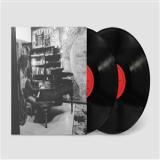
CHARLES JOSEPH SMITH - EXPERIMENTAL WORKS AND WAR OF THE MARTIAN GHOSTS LP 2x12"
  • Sounds Of The Beach
  • Le Leader Negatif
  • Beats For Katie S. Rap Song
  • Selection From First Techno Mix
  • Love Theme
  • Rubber Band Improvisation
  • My Days Are Not Over For Me
  • Experimental Jazz Piano B Latin (Improvisation)
  • A Mixture Of Musical Styles
  • The Five Louises (Experimental Opera)
  • Dreams Of Being Viola
  • Acid Rain
  • Distribution
  • Instrumental Extension Of Marching To War (Act 1)
  • War Of The Martian Ghosts
  • Dance In Homage To The Stars Shining At Night
  • Foggy, Cloudy And A Little Windy
  • Second Movement Of "Jazz Sonata
  • Underscore Music Before Dissolution Of Being (Act 2) Instrumental
  • Dissolution Of Being - Orchestral Version
  • Recapitulation
  • Butterfly Study In F# Minor
  • Final Descent
  • An Unusual Welcoming Parade
  • Council Of Elders
  • March To War
  • War Of The Martian Ghosts
  • The Aftermath
  • Restoration
  • Flourishing Cities Of Undead
  • Recapitulation
  • Dissonance Of Being

"Collected Works and War of the Martian Ghosts" ist die ultimative Sammlung von Aufnahmen der lebenden Chicagoer DIY-Legende Dr. Charles Joseph Smith. Es ist auch die erste Archivveröffentlichung von Sooper Records aus Chicago. Die Musik hier ist zum ersten Mal überhaupt für alle zugänglich. Diese 90-minütige Sammlung umfasst 30 Jahre von Charles' selbstveröffentlichter Musik, darunter Konzertklavier, elektroakustische Experimente, elektronische Beats, freie Improvisation und zwei Instrumentalversionen seiner sich weiterentwickelnden Science-Fiction-Oper "War of the Martian Ghosts" (eine elektronische Version von 2023 und eine Klavierversion von 2018). Diese Doppel-Vinyl-/Dreifach-CD-Sammleredition enthält ein umfangreiches Booklet mit 9000 Wörtern über das Leben und Werk des Künstlers sowie Gedichten, Interviews, Zitaten und 30 Archivfotos. Dies ist ein Stück Musikgeschichte Chicagos. Die bemerkenswerte Geschichte von Dr. Charles Joseph Smith beginnt mit der musikalischen Begabung eines stummen Kindes und der zielstrebigen Art und Weise, wie er dieses Talent förderte, um es zu seiner Lebensaufgabe und Daseinsberechtigung zu machen. Charles erzählt von dieser künstlerischen Reise in seiner Autobiografie ,The 88 Keys that Opened Doors", einem selbst veröffentlichten Buch, das ein Leben beschreibt, in dem Musik der wichtigste Schlüssel war (und immer noch ist), um die großen Herausforderungen durch Autismus-Spektrum-Störungen (ASD) zu meistern. Seine Karriere als Musiker startet in der Kirche, führt ihn in die internationale Konzertszene und endet schließlich in Chicagos experimenteller Underground-Szene, wo sie seltsame Früchte trägt. Auf diesem Weg hat Charles Joseph Smiths kompositorische Stimme populäre Musik von Pop bis Jazz, den Gospel der Kirche, den Kanon des klassischen Konservatoriums, moderne Tanzmusik und den regelbrechenden Experimentalismus der DIY-Subkultur seiner Stadt, in der er seit über 30 Jahren eine tragende Rolle spielt, aufgenommen und verarbeitet. Seit Mitte der 1990er Jahre tritt Charles auf, tanzt und verkauft seine selbst veröffentlichten Musik- und Schriftwerke persönlich, oft bei lokalen Shows, die er regelmäßig besucht. In Chicago ist er als lebendes Symbol für die Kraft der Musik und den beliebten Gemeinschaftsgeist im Herzen der DIY-Szene bekannt. Dies ist die definitive Sammlung seiner Originalaufnahmen - auch wenn es unmöglich wäre, die ganze Bandbreite der Musik, Poesie und Prosa des produktiven Dr. Charles Joseph Smith zu erfassen.

Сделать предзаказ03.04.2026

он должен быть опубликован на 03.04.2026

37,40
Hyden - To Whom It May Concern

2026 Repress

French talent Hyden makes label debut on Mutual Rytm with conceptual new techno EP, 'To Whom It May Concern'. Hyden is a potent force in the French underground, creating powerful techno with dense percussion, immersive grooves and subtle nods to classic influences - all through his own unique lens. Having delivered standout releases in recent years, here he offers up sounds "anchored in psychoanalysis, time, and emotional residue" as he makes his mark on SHDW's Mutual Rytm imprint, delivering influences of dream logic and surrealism as the palette moves between brutality and introspection. "It's hypnotic music for moments of rupture where something breaks or breaks through". Opener 'Manifest Content' is inspired by Freudian theory and explores the surface illusions of thought and dream. It's about the dissonance between what we perceive and the deeper meaning that slips away beneath and is a deep and dubby techno track with flashes of unsettling melody. 'Bruises' is emotional trauma made sonic. This piece delves into invisible scars and traumas, residues of past conflict or intimacy - it's slow-burning, heavy and raw. 'Jikan' is a meditation built on time and its erosion. Inspired by the Japanese concept of impermanence, it reflects fleeting moments, decay and the tension between stillness and motion with jacked up but warm drums and turbulent bass. Next, 'Free Will' is born from inner conflict and plays with deterministic rhythms and evolving layers, questioning whether we are truly in control or just passengers in a prewritten sequence. The vocal mentions, "creatures, you're out of time" to bring darkness to the intense but sleek rhythms. The streamlined physicality of 'Swarm' channels the primal force of collective movement and is a nod to the loss of individuality in group behaviour. In addition, the package is loaded with digital bonus cuts. 'Yumehara' is a dive into surreal dream-states and evokes subconscious landscapes where logic dissolves and emotion reigns, while 'Lu Bu' is brutal and warlike and named after the legendary Chinese general that captures impulsive violence, betrayal and reckless glory with relentless energy and rhythm. Lastly, 'Neon Pale' is a synthetic dreamscape about fading beauty under artificial light - a melancholy ode to cities at night and the loss of warmth in modern life.

На складе от17.06.2026

11,56

Последний логин: 5 дн. назад
Various Artists - Synths,Sax+Situationists/French Underground 73-78 (LP)
  • 01: Nyl - Nyl
  • 02: Etron Fou Leloublan - Face A L&Apos;Extravagante Montée Des Ascenseurs, Nous Resterons Fideles A Notre Calme Détermination
  • 03: Lard Free - Acide Framboise
  • 04: Heldon - Perspective Iv (Excerpt)
  • 05: Jacques Berrocal / Dominique Coster / Roger Ferlet - Pièce À Lanam
  • 06: Delired Chameleon Family - Raganesh

France's near-revolution of May '68 was the zenith of that generation's struggle for a new kind of life. It kicked the country's small, but vibrant, counter-culture into overdrive, and birthed a local underground music scene. The bands it spawned made music with much less rock purity than groups from the UK and US. Their musical and cultural influences foregrounded improvisation, disjunction, and genre-blending: Soft Machine, Pink Floyd, Frank Zappa, free jazz, and radical politics. The introduction of the synthesiser in the early 1970s added fuel to the fire.

This collection of French underground music inaugurates a series to accompany "Synths, Sax & Situationists", the first English-language book to investigate this movement. It focuses on the music of the second wave of bands that emerged in 1972/3, which saw radicalised psychedelic and jazz influences merge with the future-music possibilities offered by new technology. The next volume will investigate the politically-charged bands that erupted in immediate aftermath of May '68.

Сделать предзаказ20.03.2026

он должен быть опубликован на 20.03.2026

30,46
DANIEL ROMANO - Preservers Of The Pearl LP

"The Outfit release career defining new album, Preservers of the Pearl, asserting themselves as messengers of the new wave of underground rock and roll, pushing the movement forward alongside fellow trailblazers Mystery Lights, Sheer Mag, Shadow Show, Uni Boys + more.

Everything has been leading here. Daniel Romano shifts from his position as sole writer, opening the floor to Outfit stalwarts Ian Romano and Carson McHone, and welcoming into the fold longtime friend and legendary Canadian rock-n-roller, Tommy Major. The band is functioning as a true collective — multiple voices and perspectives — all serving one creative pulse. The result is both a new beginning and a homecoming, a complete and fearless statement.

Tracked to tape at their own Camera Varda studio, the album captures the band live in the room — breathing, musing, and believing. It’s the sound of human hands and hearts at work, in a shared moment of co-creation, preserved in real time in stunning hi-fi.

Here is music as communion — rock n roll as experience. Preservers of the Pearl rejects the flattening forces in modern times — what the band calls “the mono-agriculture of the mind.” In a “target culture”, condemned to homogeny and banality, The Outfit refuse polish and uniformity, embracing imperfection as truth, and promoting curiosity through creativity. At the center of it all is a deep spiritual current — what The Outfit calls Rock & Roll Magick: the belief that music is a sacred act, a force that can reconnect the individual to what is larger.

The Outfit are making music that is purposeful and profoundly urgent. Preservers of the Pearl is an invocation - it’s fearless in a time of great compromise, and resolute in an age of peripheral bullshit. Here is a band serving something greater than themselves."

Сделать предзаказ13.03.2026

он должен быть опубликован на 13.03.2026

22,27
DANIEL ROMANO - Preservers Of The Pearl LP

"The Outfit release career defining new album, Preservers of the Pearl, asserting themselves as messengers of the new wave of underground rock and roll, pushing the movement forward alongside fellow trailblazers Mystery Lights, Sheer Mag, Shadow Show, Uni Boys + more.

Everything has been leading here. Daniel Romano shifts from his position as sole writer, opening the floor to Outfit stalwarts Ian Romano and Carson McHone, and welcoming into the fold longtime friend and legendary Canadian rock-n-roller, Tommy Major. The band is functioning as a true collective — multiple voices and perspectives — all serving one creative pulse. The result is both a new beginning and a homecoming, a complete and fearless statement.

Tracked to tape at their own Camera Varda studio, the album captures the band live in the room — breathing, musing, and believing. It’s the sound of human hands and hearts at work, in a shared moment of co-creation, preserved in real time in stunning hi-fi.

Here is music as communion — rock n roll as experience. Preservers of the Pearl rejects the flattening forces in modern times — what the band calls “the mono-agriculture of the mind.” In a “target culture”, condemned to homogeny and banality, The Outfit refuse polish and uniformity, embracing imperfection as truth, and promoting curiosity through creativity. At the center of it all is a deep spiritual current — what The Outfit calls Rock & Roll Magick: the belief that music is a sacred act, a force that can reconnect the individual to what is larger.

The Outfit are making music that is purposeful and profoundly urgent. Preservers of the Pearl is an invocation - it’s fearless in a time of great compromise, and resolute in an age of peripheral bullshit. Here is a band serving something greater than themselves."

Сделать предзаказ13.03.2026

он должен быть опубликован на 13.03.2026

22,27
Yoichi Kamimura & Olli Aarni - Kori no ryoko / Jäämatkailu

Water can retain or wash away memory; flowing or freezing. It gives life and shapes earth, while frozen imprints of an ancient past are waiting to melt – back into sound or fluid motion, or simply to dissipate and disappear. For their split release, Yoichi Kamimura and Olli Aarni offer two distinct reinterpretations of a performance recorded live at the Temppeliaukio Kirkko – a church in Helsinki built directly into solid rock and bathed in natural light – meditating on glacial landscapes and water cycles, using shared field recordings that bifurcate into two sonic visions of “ice journey”.

Yoichi Kamimura’s extensive recordings formed the bedrock of the original performance, notably from time spent on Suomenlinna Island just outside Helsinki in 2021, aiming to capture the remnants of the glacial movements that formed the area’s geology. Elsewhere, the voices of ringed seals, underground waterways of Kyoto, and icy rivers in Lapland from Kamimura’s library float in as well. “The small, charming, and gentle islands floating in the Baltic Sea—some with little cottages and restaurants—reminded me of the drifting ice in the Sea of Okhotsk between Japan and Russia,” describes Kamimura. Fragments of a Christmas choir creep in too, recorded at the church on Suomenlinna Island. Titled Kōri no ryokō , Kaimimura’s reinterpretation of the performance emphasises a shared future across all icy sea regions of the world: thawing ancient memories and the threat of disappearing entirely.

On Jäämatkailu, Olli Aarni presents his own expansive reworking of the same source material, heavily processed alongside his own field recordings from Vantaanjoki river and Suontee lake in Finland. “I was thinking about the processes of erosion, water carving rock, the prehistoric glaciers over the landscape in my own environment,” explains Aarni. The soundscape hums with both intimate details and macrocosmic flow, and a submersible bass rumble hinting at an iceberg far below the tip, morphing at time scales beyond human comprehension.

Side A is composed by Yoichi Kamimura using field recordings of drift ice (Shiretoko, Hokkaido, 2019–2022), the Lake Biwa Canal (Kyoto, 2020), the Therme Vals baths (Vals, 2017), spring water (a fountain next to Saint Benedict Chapel, 2017), a Christmas choir (Suomenlinna Church, Helsinki, 2021), ice in the Juutuanjoki River (Inari, 2021), and recordings from Yoichi’s and Olli’s concert (Temppeliaukion kirkko, Helsinki, 2021), KORG iPolysix, and KORG minilogue xd.

Side B is composed by Olli Aarni using the aforementioned sounds + field recordings of the river Vantaanjoki and the lake Suontee, sampled sounds, and a computer.

нет на складе

Закажите сейчас, и мы закажем товар для вас у нашего поставщика.

23,95

Последний логин: 3 мес. назад
HECTOR MOSKO - Punk Rock Mexican Flyers by Hector Mosko (BOOK)

"Punk Rock Mexican Flyer 1990 – 2000 is a collection of “La Banda Rock” concert & music event flyers collected in Mexico City by Hector Mosko.
“La Banda Rock“ refers to the underground rock movement that emerged in the late 1970s in Mexico City in response to political repression & censorship.
Driven by rebellious youth, this raw, DIY culture represented the voice of the working-class in CDMX, reflecting their social struggles.

Format : 17×17,5cm
100 pages

Сделать предзаказ04.02.2026

он должен быть опубликован на 04.02.2026

26,68
QUARTETO EM CY - QUARTETO EM CY

QUARTETO EM CY

QUARTETO EM CY

12inchVAMPI335
Vampisoul
15.01.2026

Vinyl reissue of the most acclaimed album by Brazil's legendary female vocal quartet, this LP captures the group at their creative peak, featuring sophisticated arrangements by Edu Lobo and Luiz Eça (Tamba Trio), A post-bossa gem filled with stunning vocal harmonies. Originally released in 1972 on the Odeon label, Quarteto Em Cy stands as a high-water mark in the group's prolific discography-and a hidden gem for collectors of Brazilian vinyl. Known for their intricate vocal harmonies and deep roots in the bossa nova movement, the quartet ventures into post-bossa territory here, where sophistication meets groove in all the right ways. Arrangements by Edu Lobo and Luiz Eça (of Tamba Trio) lend the album a richly layered sound-elegant, jazzy, and emotionally resonant-while the group's harmonies remain as mesmerizing as ever. It's a masterclass in vocal interplay and tasteful orchestration, with an unmistakable Brazilian soul running through every track. Highlights include their stunning interpretation of Milton Nascimento's 'Tudo Que Você Podia Ser,' along with deep cuts like 'Quando o Carnaval Chegar,' 'Canto de Obá,' and 'Cantoria.' These recordings capture a moment when the group, already respected collaborators of Vinícius de Moraes, Jobim, and Chico Buarque, hit a new creative stride. A MPB landmark and long out of print, often cited as QEC finest work, this self-titled LP has become a sought-after piece among collectors of MPB, bossa, and 70s harmony pop. For those drawn to groups like The Free Design or The Mamas & The Papas-but with a distinctly Brazilian elegance-this album offers a rare and rewarding listen. Reissue on 180g vinyl.

нет на складе

Закажите сейчас, и мы закажем товар для вас у нашего поставщика.

28,53

Последний логин: 5 мес. назад
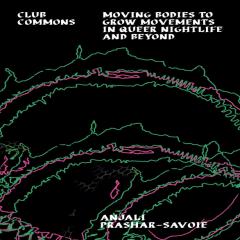
Anjali Prashar-Savoie - Club Commons: Moving Bodies to Grow Movements‬ ‭in Queer Nightlife & Beyond‬

Queer communities have long transformed parties into something powerful: spaces where care flourishes, injustice gets challenged, and new worlds are danced into being. But today, DJs command huge fees while behind-the-scenes workers earn below minimum wage. Corporations profit from our culture while communities that created these spaces are displaced. As venues shut and workers burn out, it’s clear that something has gone deeply wrong.

Club‬‭ Commons: Moving Bodies to Grow Movements‬ ‭in Queer Nightlife & Beyond‬‬‭ by Anjali Prashar-Savoie takes you inside hidden stories of resistance and reinvention. We meet the people reshaping nightlife from below: abolitionist security teams creating safety without police, sober raves doubling as mental health support, radical childcare at parties, venues becoming worker cooperatives, and free party crews reclaiming public space. Through their work, we see how party-throwing skills build movements, how refusing to play changes everything, and why protecting queer nightlife means transforming who owns it.

Quotes

“When‬‭ Anjali‬‭ shines‬‭ her‬‭ perceptive‬‭ light‬‭ on‬‭ dancefloor‬‭ culture,‬‭ everything‬‭ is‬ ‭ better illuminated. I can’t wait to read this book. It’s one we need.” ‭ Emma Warren (author of Dance Your Way Home/Up the Youth Club)

“Anjali’s‬‭ one‬‭ of‬‭ the‬‭ most‬‭ exciting‬‭ and‬‭ insightful‬‭ voices‬‭ writing‬‭ about‬‭ dance‬ ‭ music‬‭ today,‬‭ bringing‬‭ fresh‬‭ perspectives,‬‭ intellectual‬‭ rigour‬‭ and‬‭ emotive‬‭ power‬ ‭to‬‭ a‬‭ conversation‬‭ that’s‬‭ too‬‭ often‬‭ homogenous,‬‭ superficial‬‭ or‬‭ cynically‬ ‭commercial.‬‭ Club‬‭ Commons‬‭ promises‬‭ to‬‭ be‬‭ an‬‭ essential‬‭ and‬‭ overdue‬‭ book:‬‭ a‬ ‭ chance‬‭ to‬‭ reexamine‬‭ the‬‭ queer‬‭ history‬‭ of‬‭ club‬‭ culture,‬‭ celebrate‬‭ and‬‭ critique‬ ‭its‬‭ present,‬‭ and‬‭ map‬‭ out‬‭ radical‬‭ possibilities‬‭ for‬‭ its‬‭ future.‬” Ed Gillett (author of Party Lines)

“Beautifully written and unique, Anjali Prashar-Savoie’s behind-the-scenes journey through queer nightlife is as thorough as it is fascinating. Documenting a world that commercial interests are rapidly destroying, Club Commons is proof that queer culture holds the key to a better future for the dancefloor and beyond.” Professor Sam Parsley (author of Minor Keys, coach, DJ and founder of In the Key, a directory and platform championing the careers of women, trans and non-binary electronic music producers)

“Club Commons: Moving Bodies to Grow Movements in Queer Nightlife & Beyond is a vital reminder of how important the dance floor is to connect, unfurl and envision new futures. The text highlights the historic and existing care work entangled with the club space, particularly in providing temporary sites of refuge and embodied joy for Black and LGBTQIA+ communities. This is juxtaposed with research on the corporate and carceral commodification of nightlife in recent years, which exposes the false premise that club spaces are always radical. This book affirms my belief that the non-commercial nightlife ecosystem is an essential part of our social change infrastructure, rather than a luxury. Club Commons is a call to action to reclaim this space on our own terms and revive the underground.” Camille Sapara Barton, (author of Tending Grief: An Embodied Guide to Being with Grief Individually and in Community)

Сделать предзаказ12.01.2026

он должен быть опубликован на 12.01.2026

17,44
YALLA MIKU - 2

YALLA MIKU

2

12inchBJRLP118
LES DISQUES BONGO JOE
09.01.2026
  • A1: Al Sayf
  • A2: Alemuye
  • A3: Maximum Self-Care
  • A4: Le Palais De Bachar
  • A5: Embeyto
  • B1: Il Fait Trop Cuit
  • B2: Scarlett Chien
  • B3: Post-Aventures
  • B4: Al 3Mal
  • B5: La Tour Eiffel

After a critically praised debut in 2023 and numerous tours across Europe, Yalla Miku returns with "2", a new record that further asserts their unique identity. Still based in Geneva, the band moves forward with a reimagined lineup - not as a departure, but as the natural continuation of a project envisioned from the start as a space for encounters, movement, and musical reinvention. Blending post-kraut grooves, mutant folklore and electronic trance, Yalla Miku continues to spark dialogue between traditions from the Horn of Africa and the most unrestrained experiments of Geneva"s underground.

нет на складе

Закажите сейчас, и мы закажем товар для вас у нашего поставщика.

22,27

Последний логин: 5 мес. назад
Various - From The Basement With Love (2x12")

Straight from the heart of the Motor City, Detroit Techno Records presents From The Basement With Love, a double-vinyl transmission from the legendary Detroit Basement, where the pulse of real techno still beats in raw electricity and sweat. This isn’t nostalgia. This is living history, a direct line from the city that invented techno to the artists who continue to keep its soul alive. Across two slabs of black wax, the pioneers and torchbearers of Detroit gather in one place: Suburban Knight, Body Mechanic, Erotek, Ray 7, The BS Project, Detroit Electronic Authority, Spade The Specialist, and more. Each cut drips with the signature elements that defined a movement, machine funk, militant rhythm, deep emotional circuitry, and that unmistakable underground grit. Curated straight out of the Detroit Basement, this compilation captures the true spirit of a city that never stopped creating, never stopped fighting, never stopped dancing. Every groove is a love letter to the origin, pressed by the hands that built the sound — not a recreation, but a continuation.

нет на складе

Закажите сейчас, и мы закажем товар для вас у нашего поставщика.

18,07

Последний логин: 56 дн. назад
Julian Anthony - Missing Pieces EP

DJ Support: Raresh, Marco Corola, Jamie Jones, Joseph Capriati, Chris Stussy, DJ Seinfeld, D'Julz, Djebali, Voigtmann, Arapu

For Amsterdam’s Julian Anthony, club culture has always been about movement - between sounds, between scenes, and increasingly, across continents. Rooted in the Dutch underground, his path has taken him from intimate local spaces to international stages, with appearances at institutions such as Berlin’s Hoppetosse, Ibiza’s DC10, and London’s fabric. Along the way, he’s formed close ties with crews such as Slapfunk, VBX, Half Baked, and S.A.S.H, while recent tours across South America and Australia have further widened his reach. His connection with Enzo Siragusa and the FUSE family is longstanding, having previously dropped his track ‘It’s Showtime’ on sister label LOCUS while making appearances at both FUSE and LOCUS events across Europe, including this year at FUSE Malta, during ADE, and November’s fabric takeover. Now, his ‘Missing Pieces’ EP extends that relationship further, marking his fi rst release on FUSE and off ering a natural progression while showcasing his versatility as a producer.

In his productions and his sets, Julian threads together house, techno, and electro infl uences with a playful touch, resulting in a style that feels fl uid yet sharply defi ned. Title track, ‘Missing Pieces’, sets the tone with a heavyweight bassline at its core, coupled with a hypnotic groove and percussive drive, while ‘Endless Echoes’ stretches into more atmospheric territory, weaving rolling rhythms with cosmic textures. On the fl ip, ‘No Sleep’ ups the intensity with zipping synths and sharp drum programming built for peak-time play, before ‘TTS’ closes the record on a captivating note, fusing deeper house nuances and playful rhythms into a late-night trip.

With a growing catalogue across respected imprints such as Dungeon Meat, X-Kalay, and Bee You, and a touring schedule that continues to expand globally, Julian’s first outing for the London favourites highlights his talent for crafting tracks that are simultaneously precise, playful, and built for the club.

нет на складе

Закажите сейчас, и мы закажем товар для вас у нашего поставщика.

13,40

Последний логин: 35 дн. назад
Star_Dub, Gradient, Tm Shuffle - Split Dubs Vol 2 LP

The Finnish imprint Vuo Records continues its exploration of deep dub techno textures with Split Dubs Vol. 2, an essential follow-up to the series that bridges timeless atmospheres and dancefloor-focused grooves. This time, Gradient, Star Dub, and label-head Tm Shuffle join forces for four heavyweight cuts that perfectly capture the label’s raw, analog spirit.
Gradient opens the record with “Stone Jungle”, a masterclass in restraint and tension, the kind of dub techno that feels alive in its own pulse, crafted from only the bare essentials yet rich in texture and movement. Tm Shuffle’s Housedubreshapes the original with reverb-soaked accents and elastic low-end energy, turning it into a deep, head-nodding trip tailor-made for late-night systems.
On the flip, Star Dub delivers “Rubber Dub”, a funk-infused roller driven by breaky percussion, floating echoes, and a deep-rooted bassline that vibrates straight through the chest. Once again, Tm Shuffle takes the controls for the remix, pushing the dub dimension even further: thick layers of delay, washed-out atmospheres, and sub-heavy pressure built for those endless outdoor jams and sweaty basement sessions.
Split Dubs Vol. 2 embodies everything Vuo Records stands for, authentic, handcrafted dub techno from Finland’s underground. Warm, analog, and irresistibly groovy, this record continues the label’s commitment to pushing deep frequencies into new, soulful territory.

нет на складе

Закажите сейчас, и мы закажем товар для вас у нашего поставщика.

11,72

Последний логин: 56 дн. назад
Scuba - GetUppp

Scuba

GetUppp

12inchCRM341
Crosstown Rebels
21.11.2025

Scuba channels timeless, euphoric energy on his Crosstown Rebels debut, ‘GetUppp’. The Hotflush boss delivers two tracks crafted for the later hours, set for release on 21st November 2025.

Damian Lazarus’ Crosstown Rebels welcomes electronic pioneer Scuba for his first appearance on the label with ‘GetUppp’, a two-track release that fuses the UK artist’s trademark low-end pressure with the euphoric pulse of house. The title track glides on slinking percussion, interwoven with subtle soulful vocal nuances, building an irresistible groove that climbs steadily toward full dance-floor release. On the flip, ‘406 Dub’ dives deeper, a stripped, head-down workout that channels the tension and space of dub techno into something hypnotic, trippy, and captivating.
A producer who has continually defied convention, Paul Rose, aka Scuba, has shaped the direction of underground music for over two decades. From his formative role in the UK’s dubstep movement to his era-defining SUB:STANCE residency at Berghain, he’s evolved through techno, house, and beyond while steering his influential Hotflush Recordings imprint - the launchpad for artists like Mount Kimbie and Joy Orbison. He has also delivered critically acclaimed mixes for DJ Kicks, Fabric, and Ostgut Ton, cementing his reputation as one of electronic music’s most astute tastemakers.
Following his acclaimed Digital Underground live tour across 2024, and his latest headline run across Asia with shows in Kyoto, Nagoya, Tokyo, Koh Phangan, Singapore, Danang, Shenzhen, Shanghai, and Beijing, Scuba returns with fresh energy on ‘GetUppp’ - a record that captures the forward-thinking sound that has made him one of underground electronic music’s most influential figures.

нет на складе

Закажите сейчас, и мы закажем товар для вас у нашего поставщика.

13,24

Последний логин: 33 дн. назад
Evan Parker & Bill Nace - Branches

Evan Parker & Bill Nace

Branches

12inchROKU043
OTOroku
21.11.2025

For his last solo record ‘Through a Room’, Bill Nace shifted his usual saturated guitar sound and added tapes, hurdy gurdy, doughnut pipe, bird calls and the mysterious Japanese taishōgoto. Setting up for the final night of his three day residency at OTO with only the taishōgoto soundchecked, Nace hoped that Parker would arrive with his small soprano as its opposite. “I’ve been interested in state change, you know, playing until there’s a shift in time.” Known for his development of multiphonics to produce a constantly shifting pattern, Evan Parker has evolved an instantly recognizable sound - his work the soprano most distinct. Happily, it was the soprano Evan brought with him and as soon as the two start to play they entwine - taking off in a double helix of keys and reed primed for endless reconfiguration. Space warps under the velocity of playing, the pitch rising unrelentingly. It felt like unending lift off in the room, sheer energy until the last note makes remember your feet have been on the floor the whole time. Total time bending shredding.


"They had never played together before. They had never even met each other before this springtime 2024 concert at London’s Café Oto.

Evan Parker, circular breathing maestro of the saxophone, a legend in the universe that is Free Improvisation since the late 1960s and Bill Nace, one of the most intriguing experimental “noise” guitarists of the 1990s/2000s underground scene.

For those of us who have been enamored by the live and documented work of both these gents, this Café Oto duo was a must-hear event. It could have gone anywhere musically and that would have been totally fine. Particularly with Evan having a history of being thrown into a variety of challenging collaborations throughout his career, employing the learned elegance of trust in his own sensitivity to listening, responding, leading, following, sparring, intertwining, dialoguing, creating in the instant and, essentially, dignifying the non-hierarchical grace of chance.

The aesthetics of socialist consideration in Evan Parker’s playing, in his community of expanded and personal technique, for a younger player such as Bill Nace, strikes an exemplary model. This notion of respect would be entirely the reason Nace, when offered a residency at the most critical “new music” room in England, would request to play in duo with Parker.

Bill Nace came to prominence mostly during the apex of experimental music activity in and around Western Massachusetts in the early days of the aughts, with a focus on visual art and free improvisation guitar action. He could be found in the daytime hours, his head hanging down over a notepad, penning fine-tuned illustrations and abstract line drawings, while in the evenings he’d be attending any number of basement noise gigs, many of which he’d be participating in. His guitar style came across as being informed as much as by the physicality of his writing utensils in friction to the page as it was to his hearing and redefining of radical recordings ranging anywhere from the Black Unity Group to Black Flag.

Utilizing various metal files and other small cylindrical objects Bill would allow his guitar and amplifier to be in tandem with the improvisatory movements of his body as the instrument balanced, intentionally and, at times, precariously, upon his lap. The performances came across thrilling and daring and they would be mostly in the context of venues nothing more than a low-ceilinged damp and dank New England basement, a clutch of people hanging onto rusty pipes or sitting up on dilapidated washer/dryer machines, the shards of Bill’s “file guitar” sounds ringing out like the most alive music on Earth.

By the time Bill reached Café Oto in early 2024 he had relocated to Philadelphia all the while releasing a succession of collaborative LPs on his Open Mouth label to present his developing progression of solo and collaborative work. He also would find himself considerably engaged with playing the electric taishōgoto, a keyboard-activated string instrument from Japan which can exist as a one, two, four, five, or six string oblong sound object. Bill’s approach to the taishōgoto would not be too unlike his approach to the traditional electric guitar, though no outboard implements such as files, sticks, and rocks are utilized. The similarity would lie wholly with Bill’s full immersion of high velocity action-playing where, with the taishōgoto, an electric drone beauty occurs. The flurry of sonics and resultant harmonics emanating from the amplifier (which Bill opts to dial into with borderline loud-as fuck volume settings) furthers the meta-mantra properties of the instrument in an astounding display of drone dynamism.

This sound world of Bill’s two-stringed taishōgoto on this Café Oto night worked beautifully with Evan Parker’s improvisatory saxophone conceptions. The duology achieved instant lift off at ground zero only to find it’s eventual finale as if it were organically ordained. Time seemingly morphed from its ancient human construct of control, rendered inconsequential to the torrential transcendence of the room wildly activated by the magic resonance of the multi-directional pan-spatial sonance of the music as if it were some beatific blessing. It was one of those nights where art as a liberating force of spirit gifted the listeners with an offering of exaltation and joy. It was entirely mystical and mind blowing. A night of Total Music."

Thurston Moore, London, 2025

Сделать предзаказ21.11.2025

он должен быть опубликован на 21.11.2025

26,85
Black Corsairs - Black Corsairs

Originally released in 1997, Black Corsair stands as a true milestone in late-’90s house music — a record that captured the raw energy, soulful depth, and forward- thinking sound of an era. Now this legendary EP returns in a fully remastered reissue, bringing its timeless grooves and hypnotic rhythms back to life with pristine clarity. Celebrated for its deep basslines, lush textures, and irresistible dancefloor spirit, Black Corsair remains a defining statement of the underground house movement —an essential rediscovery for collectors and new listeners alike.

нет на складе

Закажите сейчас, и мы закажем товар для вас у нашего поставщика.

13,03

Последний логин: 24 дн. назад
Phèdre - Liquid Constancy (2x12")

In the two years since Parallel Minds’ Juno-Award-winning 5th release Homesick by label co-founder Ciel, we have taken our time reassessing our next moves as the larger dance music scene experienced a paradigm shift. What does it mean to release music made by underground artists from lesser-known scenes like Toronto at a time when bookers and A&Rs are taking fewer risks than ever before? How do we truly celebrate the musical diversity of electronic music when the bottom line threatens to reduce any and all forms of risk-taking?

You just do it, of course.

In truth, few artists have come to represent the music scene in the Big Smoke more than Phèdre, and having seen the duo’s progression from indie weirdo-pop to live hardware act to breakbeat wunderkind in the last decade has been nothing short of amazing. It’s really artists like these that inspired us to start the label in 2018, and we are super elated to usher in PM006 with their long-awaited album, Liquid Constancy.

On its face, Liquid Constancy is a breakbeat record. There are housier joints, to more bassy Baltimore club bangers, to breakneck footwork and jungle steeped in sunshine. All of them share a distinctly syncopated, dubwise rhythm that grounds the album’s tracks. With some having been developed as early as seven years ago, these tracks had their genesis in Phèdre’s mostly improvised live hardware sets from some of Toronto’s most notorious warehouse raves. Primarily powered by two Korg Electribe ESX-1s and the semi-modular Moog Mother-32, the jams found new life in the studio when the duo began recording them as tracks, which demanded a mindfulness of their permanence that Daniel Lee and apè Aliermo at first found intimidating.

Over time, the pair developed a synergistic workflow that pulls from Daniel’s background in drums and apè’s keen ear for texture and movement. They sourced samples featuring voices of BIPOC and feminist icons, drew from their shared love of sci-fi and kung fu movies, and from their Filipino, Chinese, German, and Surinamese backgrounds. Samples were manipulated via techniques like lowering bit rates and adjusting speed to maximize usage due to the Electribe’s limited sample time, which was a subtle way of injecting their interests into their music without being too on the nose. Growing up in the melting pot of the GTA, going to raves as teens, bumping post-punk, industrial, electro, hip-hop and 90s R&B — these experiences all had an undeniable influence on Liquid Constancy. As kids of immigrant parents, equally informed by both their adopted and native cultures, Phèdre makes music informed by sampling and defined by cultural hybridity. In times like these, what is more feel-good than believing in music as a universal language that brings our different backgrounds together?

нет на складе

Закажите сейчас, и мы закажем товар для вас у нашего поставщика.

21,64

Последний логин: 7 мес. назад
Terry Francis - El Tel Collection

Terry Francis makes his debut on Pariter with a rare and essential reissue from one of the UK Tech House's original pioneers. A cornerstone of the London scene, long time Fabric resident and a driving force behind the early Housey Doingz and Wiggle movements, Terry's influence runs deep in the foundations of underground house music as we know it today.

This release marks the first installment in a short-series with a carefully selected tracks from Terry's archive. Engineered by Wubble-U at the legendary Strange Weather studios and originally released on Eukahouse 25 years ago, these tracks capture the raw energy and spirit of the late 90's London Tech House at its finest. A timeless, sought-after release specially reissued and remastered with an unreleased retake, a vital document from a pivotal era.

нет на складе

Закажите сейчас, и мы закажем товар для вас у нашего поставщика.

12,19

Последний логин: 19 дн. назад
Продуктов на странице:
N/ABPM
Vinyl