The next WOLF Music EP is here, and once again it comes courtesy of a new addition to the label roster. New York-based DJ and producer DJ Alone Again is a natural fit for what we do at WOLF, delivering a sound that hits that sweet spot where deep meets soulful, with the raw, understated energy of the authentic New York underground running through every track.
With a growing catalogue of original productions and edits, DJ Alone Again has released music through labels including YORE Records, House Salad Music, Dobro, Fantin Zoo Records, and Dealt With Records. His musical roots extend beyond house, too. Earlier work with the band Vain Pursuit, alongside a wealth of SoundCloud mixes and underground edits, reveals an artist with a deep appreciation for melody, songwriting and the emotional side of dance music.
Opening the EP is ‘Freedom of House’, a sublime take on the classic NYC-meets-Chicago deep house sound. Warm, soulful and hypnotic chords sit at the heart of the track, surrounded by intricate, skippy percussion and a deep, driving bassline. Carefully placed female vocal snippets drift in and out of the groove, while a spoken-word ode to the freedom and self-expression that house music offers provides the track with its emotional centre. It’s a celebration of movement, individuality and that unspoken connection forged on the dancefloor.
On the A2, ‘State of Flux’ keeps those warm, evocative chords front and centre, building an infectious groove around an instantly memorable melody courtesy of the vibes. Subtle synth strings add depth and atmosphere, bringing a touch of late-night melancholy to the arrangement, while the rhythm rolls steadily underneath. Everything is expertly layered without ever feeling crowded, giving the chords, melody and percussion room to breathe whilst pulling the listener deeper into the track.
‘Horizontal Patterns’ takes the winning formula of ‘State of Flux’, adding a beautifully understated vocal hook that sums this track up perfectly: deep in the groove.
Closing out the EP is ‘In Your Orbit’, a serene, dream house number with a deeply hypnotic edge. Ethereal flute lines drift through the arrangement, weaving around vocal phrases that seem to lift the consciousness somewhere beyond the dancefloor. There’s a sense of weightlessness and escape in the arrangement, but the dance floor pulse courtesy of the warm chord stabs never lets you float too far away. Dreamy yet deeply rooted, it’s a meeting point between introspection and movement; music to lose yourself in.
If this EP had landed on Guidance 30 years ago, it would probably be changing hands for a small fortune on Discogs by now.
raum…musik welcomes Jaffa Surfa back for its 121st release with ‘Tribal Diesel EP’, a four-tracker moving through progressive techno, industrial-tinged minimal, house and broken beat. Rather than treating these as fixed genres, Surfa reshapes them into something uncanny and unmistakably tribal, while keeping the groove firmly at the centre.
That approach is clearest on the A-side. “Diggers Diesel” has a ritual pull and, as the EP’s title suggests, finds Jaffa Surfa at his most tribal. Processed drums and splintered voices gradually lock into a hook while murky synths shift beneath them. “Lidl Sin” takes a leaner, slightly industrial but definitely understated route. Its reduced arrangement leaves enough room for each detail to register, with drums, synth stabs and sequenced lines appearing to exist in a state of constant mutation. On the b-side, “NGLZ” is the EP’s most direct house cut, driven by heavy low end, syncopated rhythms and flashes of phased samples. Breakbeat accents and old-school vocal fragments nod towards US house, though the track’s restless movement keeps it from settling into anything conventional. “Upstarz Galeri” closes on a wider screen, carrying traces of krautrock and decades-old sci-fi and cyberpunk soundtracks without ever feeling nostalgic. Airy and expansive, it pairs breakbeats and growling basslines with densely layered samples, giving its machine funk an unexpectedly emotional charge.
'Tribal Diesel EP' never overstates the contrast between its parts. Jaffa Surfa holds everything together through texture, rhythm and an almost cybernetic atmosphere. It is clearly built for the club, but carries enough personality and ambiguity to reward closer listening.
Acid Pauli returns to the curious world of Gwar Is Not The Answer (originally released 2006 on Smaul) with a carefully remastered re-release that includes two new remixes from Jonathan Kaspar and Acid Pauli. The title track unfolds at an unhurried pace, weaving loose acid traces through warm percussion and off-centre melodic fragments that seem to appear and dissolve before settling into place. It drifts forward with a quiet sense of momentum, balancing eccentric textures with a groove that remains firmly grounded throughout. With his new remix Jonathan Kaspar takes the original into leaner territory, sharpening its contours and drawing out its tension while preserving the peculiar character at its core. His remix stretches the track into a more focused club framework where rolling low-end pressure meets finely tuned rhythmic movement, allowing small details to carry unexpected weight. On the flip Acid Pauli revisits the track from a different angle. The remix opens up the source material into a spacious and fluid arrangement where shimmering tones circle around a deep pulse and subtle harmonic shifts gradually reveal themselves over time. Together the three versions explore different dimensions of the same musical language, moving between psychedelic house, understated dancefloor functionality and the kind of idiosyncratic storytelling that has long defined Acid Pauli's work.
For its 24th release, Daydream welcomes rising talent Soha to the label. Across four refined cuts, the Belgian artist explores a deep and understated sound built on lush textures, ethereal pads and dense, rolling grooves. The EP unfolds with patience, balancing dreamy atmospheres and restrained club energy. A timeless collection crafted for both intimate listening and late-night dancefloors.
SHORT INFOS
Because Music celebrates the 50th Anniversary of Cerrone's debut album "Love In C Minor (Cerrone I)" .
A record which is one of the mots important of its time. It brought French Disco to the World and established Cerrone as the French King of Disco.
- Pressed in exclusive 2026 Apple Green Crystal Clear vinyl
- Original 1976 artwork - Digitally remastered from original tapes.
BIOG
Cerrone I
Love in C Minor (1976)
The story behind Cerrone's first album could be summarised in the libertarian atmosphere and the creative energy of the 70s, inherited from the 60s revolutions, spiritual, aesthetic or sexual. Looking back now, this record is one of the most important of its time. It helped creating the sound of an era and brought French disco to the world. It is also, and this is fundamental to understand its success, the result of a man's vision: Marc Cerrone, a free spirit inhabited by music, who ended up with a major work of art. With this album, Cerrone accumulated the main elements that make a record timeless, even bigger than its creator: the pure originality, the madness of a vision without compromise, a sense of the market and a great dose of luck too. To some extent, this is the perfect record to start a career, even though Cerrone's one already existed in an implicit way. He actually began in a rather popular band, Kongas, signed by Barclay. Between 1972 and 1974, the band was famous and made it abroad, particularly in Japan, where people loved its sound. Despite this success, probably fed up with the music and not ready to follow the orders of a label that wanted the band to sound more pop, Cerrone disbanded Kongas. He had the sound of his instrument in mind and mostly its central element: the bass drum. The idea of this first solo album came to him after a detour via selling records. Wishing to forget about the studios, he took the head of a small chain of stores, selling records imported from the States. That's when he discovered a daring new sound coming from New York: disco music. This energy inspired him to record again. He then remembered the crazy reaction of the audience when, during the Kongas' concerts, he used to hit his bass drum hard. Cerrone felt like going back into the studio but to make something different. He decided to record a sixteen minutes long track, driven by its beat, that would fit on its own on one side of a LP (during these vinyl days, musicians used to think in terms of sides…), with girls' voices simulating sex. This concept of musical and physical orgasm was recorded at Trident Studios in London (where pop stars used to record at the time… ) with Don Ray, of Kongas, man in the shadows and brilliant arranger who'd follow Cerrone during his whole career. Obviously, like always in pop music (it happened to the Beatles), record companies started by turning this weird track down, convinced that radios would never play sixteen minutes of beats and moaning. Cerrone, a born fighter, decided to trust his instinct (a mix of ego and business sense) and chose to believe that if the radios wouldn't play the track, people would dance to it in the clubs. He released the record himself, with a sexy cover a bit provocative where he wore a black bathrobe, a young short-haired girl leaning on him. Being played here and there, thanks to Cerrone's own network, the record started to work a bit in France. But luckily, things really happened in the States. Due to a mistake, a box of "Love In C Minor" albums were sent to the States via Cerrone's record shop instead of some unsold American LPs. Once in New York, the box was opened and the record with its intriguing cover was instantly loved and passed through the hands of radio and club DJs. All of a sudden, and unknown to its creator, the track that was turned down by every French label, became a hit on the New York disco scene. Casablanca, the US disco label, released a cover recorded by an ad hoc band because nobody knew Cerrone of how to find him. Once he discovered what was happening in the States, Cerrone flew to New York. He realised he had a hit, one of the biggest then, that opened the doors to every record company and especially Atlantic. He was welcome by Ahmet Ertegun, one of the main visionaries of the American music who, among other artists, signed Aretha Franklin and John Coltrane. It's believed that Ertegun understood that the French young musician, like some Atlantic artists, was about to define the sound of his time and that his work would live long after its birth date. "Love In C Minor" was the first step, adamant and successful.
"Potency continues apace with 'Jackin Shit', a gleefully self-explanatory EP from label founder Cromby. Following widely-played recent releases from Malik Kassim aka Retromigration, Trax Unit and Rhythms of Prescott, the prolific DJ and producer reaffirms his imprint's fundamentals with four upfront, high-energy tracks, each reflecting a different facet of the Belfast-via-Berlin producer's decades-deep understanding of house and techno history. Title track 'Jackin' Shit' gets things moving with a rich blend of rolling basslines, liquid keys and diva'ed up vocal snippets. Lucid and groovy in the style of seminal East Coast vocal pleasures, Cromby's vision of house is nonetheless driven by a dusty kick drum that references Head High/WK7, or Paul Woolford in a warehouse somewhere... In contrast, 'Sense Control' places percussion front and centre, locking in a tight rhythm in order to ride out a liquid collage of acid lines, ecstatic piano and other blissfully wavy elements. 'Con Gas' establishes a tougher direction on the flip, finding Cromby's busier instincts reduced the simplest of ingredients - sub, bass and stabs - taking dancers deep into the bowels of house, replete with classic vocal call-outs, and yes, even a well-earned inbuilt spinback. Having exhibited such restraint, we're unceremoniously booted out of the cubicle and back toward the strobes for 'Cheeky Bump', a rubbery, driving dancefloor tool guaranteed to delay any impending cab home. Colourful, charismatic and exclusively engineered for true party people, 'Jackin' Shit' finds Cromby returning to home turf on definitive form."
Cécille Summer 2026 Compilation
Summer and Cécille have always gone hand in hand.
For 2026, we’re back with another carefully selected collection of records that perfectly capture where house music feels today. Eleven tracks from artists we’ve admired for years, longtime friends of the label, exciting
newcomers, and fresh faces joining the Cécille family for the very first time.
Piem opens the journey with his long-awaited Cécille debut. A respected name in the scene for many years, his unmistakable groove has been on our radar for a long time, and we’re proud to finally welcome him to the label with Give Me The Rhythm.
Leon returns to where it all began. Since his very first Cécille release back in 2009, he’s been an important part of the label’s story. Let Bass Kick is classic Leon—timeless, understated and effortlessly effective.
UK duo Late Replies continue their incredible rise with Moment 4 U. Their fresh take on house music has been impossible to ignore, and we’re thrilled to have them on this year’s compilation.
Dutch mainstay Jesse Maas delivers Voices In My Head, another classy slice of groove from one of the most consistent names in the Netherlands’ house scene.
Buenos Aires’ Manu Desrets impressed us so much that one track simply wasn’t enough. His two contributions, Get GG and Voy No Kako, showcase two different shades of his sound and perfectly reflect why he’s become
one of the most exciting producers coming out of Argentina.
Andrew Azara has become a true part of the Cécille family over the years. This time he teams up with Traumer, who makes his label debut with a beautifully understated deep house record. Need You is one of those tracks
that quietly sticks with you.
We’re also excited to welcome Jay de Lys to the family. Together with Simon Kidzoo and Monölitio, the trio delivers Into The Light—a warm, feel-good house record that instantly became one of our favourites. Three
artists from Argentina, the Netherlands and Barcelona coming together exactly the way house music should.
After turning heads on last year’s Costa compilation, Brazil’s Classmatic returns alongside fellow Florianópolis producer Marian. Brazilian Madness is exactly what you’d expect: infectious groove, irresistible swing and that
unmistakable Brazilian sense of rhythm.
One of the hottest young names coming out of the Netherlands right now, Stefan Meser delivers Don’t Hesitate—one of those records that gets stuck in your head after the very first listen.
Closing the compilation is someone who’s been part of the Cécille story since the very beginning. Christian Burkhardt has been a longtime friend of the label and one of Frankfurt’s finest. Specialo lived in our vault for almost two years while we waited for the right moment to release it. This felt like the perfect place for it, and the perfect way to close another Cécille summer.
Eleven tunes. Eleven different stories. One soundtrack for Summer 2026. Welcome to the next chapter of Cécille.
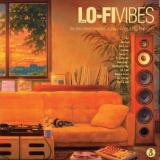
Diese Doppel-Vinyl-Compilation lädt ein in die warme, entspannte Welt des Lo-Fi-Sounds - eine Musik, die entschleunigt, Atmosphäre schafft und Nähe erzeugt. Versammelt sind prägende Künstler des Genres, die Lo-Fi, Downtempo, Jazz-Einflüsse und elektronische Gelassenheit miteinander verbinden. Mit Beiträgen von FKJ, Darius, Kid Loco, St Germain, The Mighty Bop, DJ Cam, DJ Spinna und weiteren wichtigen Namen entsteht ein vielschichtiges Panorama zwischen organischen Grooves, sanften Beats und subtilen Melodien. Die Auswahl richtet sich gleichermaßen an langjährige Liebhaber wie an neue Hörer, die Lo-Fi als eigenständige, zeitlose Form elektronischer Musik entdecken möchten. Ein stimmiger, sorgfältig kuratierter Sampler für entspannte Hörsituationen, stilbewusste Sets und alle, die elektronische Musik lieber fühlen als konsumieren. ENGThis double-vinyl compilation invites listeners into the warm, comforting world of lo-fi music - a sound defined by relaxed rhythms, organic textures and understated emotion. Featuring leading artists of the genre, the collection blends downtempo beats, jazz influences and laid-back electronic production. With tracks by FKJ, Darius, Kid Loco, St Germain, The Mighty Bop, DJ Cam, DJ Spinna and others, the album offers a broad yet coherent overview of lo-fi aesthetics. It appeals both to seasoned listeners and newcomers seeking a timeless, atmosphere-driven listening experience. A carefully curated selection designed for calm moments, focused listening and stylish musical environments
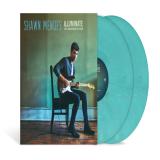
Celebrate 10 years of Shawn Mendes’ Illuminate with this special 10th Anniversary Edition 2LP.
Pressed on translucent aqua vinyl, this anniversary release features the original album housed in updated Illuminate packaging, plus a booklet featuring photography and lyrics from the album .
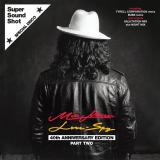
The first chapter of our 40th Anniversary celebration brought “Love Spy” back to vinyl and invited a new generation of producers to look at Mike Mareen’s 1986 classic from their own perspective.
Part 2 continues the story, but there is no reason to tell the same tale twice.
This time we reach once again into the original 1986 package and bring back the “Salutation Mix”, pairing it with two completely new remixes created by two remarkably colourful personalities from today’s European electronic underground.
And colourful is definitely the right word.
The first comes from Tyrell Corporation.
Behind that name stands Martijn Hoogendijk, better known to most electronic music heads as Alden Tyrell.
For almost three decades, Tyrell has been one of the most distinctive characters of the Dutch electronic scene. His musical world has moved freely between Italo Disco, electro, techno, acid, house and EBM, always with an obvious fascination for machines, analogue synthesis and the raw energy of early electronic dance music.
His relationship with Italo is certainly not a recent fashion. One of his earliest Alden Tyrell releases, “Love Explosion”, appeared on I-F’s Viewlexx label back in 1999, at a time when only a relatively small group of Dutch fanatics were already rediscovering and reinterpreting the forgotten European electronic sounds of the previous decade.
Since the early 2000s he has also been deeply connected with Rotterdam’s legendary Clone Records, not only as a producer and collaborator, but as one of its most important mastering engineers. His fingerprints can be found on an enormous number of Clone releases, including the label’s celebrated work restoring and reissuing the Drexciya catalogue. His studio tells much the same story. Synthesizers, drum machines and hardware collected over decades surround a producer whose fascination with electronic instruments started when he bought his first synthesizer in the 1980s.
For “Love Spy” he appears as Tyrell Corporation and delivers exactly what one might hope for from someone with that history: a remix that understands the original language of Italo and Hi-NRG, but speaks it with the experience of nearly three decades spent inside Dutch electro, techno and machine music.
The second new interpretation comes from France. Bubs, real name Maxime Bunel, followed a very different route.
His earlier productions grew from house, disco and French-touch influences, but over the last few years his attention has increasingly shifted toward Italo Disco, Hi-NRG and the rapidly expanding contemporary italowave scene.
In 2025 he made that commitment official by launching Filter Phaser, his own label dedicated specifically to the new generation of Italo Disco and Hi-NRG. And his “Love Spy” remix shows exactly why his name has been appearing more and more often in this scene. This one is pure dancefloor ammunition.
Bubs keeps the elements that make “Love Spy” instantly recognisable, but raises the temperature considerably. The energy is harder, the dynamics are bigger and the production has been pushed towards the sound of contemporary italowave without sacrificing the melody, drama and personality of Mike Mareen’s original. Old DNA, new blood.
The result is not an attempt to drag “Love Spy” away from 1986. Quite the opposite.
Both remixers clearly understand why the record still works forty years later. They simply approach that DNA from two different generations and two different corners of European electronic music, but with the same respect and adoration to Mike Mareen’s legacy.
The 40th Anniversary Edition Part 2 comes pressed on classic black vinyl and a special ruby-red vinyl edition.
It is also the final Vintage Pleasure Boutique release of 2026.
And somehow it feels like the right record to close the year.
Presenting ‘Nothing Is Lost’, A.Morgan continues his journey through high pressure, pummeling techno, this time on SIDE B. Proving the degree of his effect as well as his stylistic versatility, Morgan pulls different influences from afar to craft a record that pushes forward with a nod to the past through three powerful cuts and a remix by Yant. The EP starts with ‘Sucker Love’, appropriately named for its commanding rhythmic section while bleeding almost into house music with a hypnotic vocal loop. The track oscillates between stabs of cold dissonance and an extraverted flare, creating a natural intrigue throughout its progression. The follow up is Yant’s remix, a hyper-focused take on ‘Sucker Love’ with significant weight in the low end. Thundering percussion widens the dimension of the track, flicking through a brutal synth sequence over slithering hi-hats and claps. Yant reaffirms his understanding of uncompromising club music with this remix, creating a tunneling track fit for a concentrated peak-time set. Highlighting the B-side, A.Morgan takes back control of the record with the ‘Cloudfall’. Undulating the bass of the track, Morgan sneaks in a lurking melody that detunes throughout his arrangement, creating increasingly destabilized moments to pack intrigue in the cut. White noise whips around the production to create a storm of ambiance over a violently binary lead, underlining the undeniable effect of minimalism in techno. The EP concludes with the title track ‘Nothing Is Lost’, combining instructive percussion, biting chords, and cold vocals - as is Morgan’s custom. Here, the British artist brings a harmonic quality with the synth work that comes and satisfyingly completes the project. The embrace of the chord selection immerses the listener over a highly tuned rhythm, pushing ‘Nothing is Lost’ into a state of euphoria for the conclusion. Words by Noah Hocker
SILVI005 welcomes Brizman back with Fall Down On Me – a vibrant, groove-driven EP that perfectly captures his signature sound. Built around rolling rhythms, warm textures, and hypnotic movement, the title track delivers the kind of infectious dancefloor groove Brizman has become known for.
The release also features a stunning second original production with Shigar, where beautiful piano arrangements blend effortlessly with Brizman's refined grooves, adding emotional depth while staying true to the EP's understated club aesthetic.
On remix duties, the package brings together two distinct interpretations. Minimal house legend Jay Tripwire delivers his unmistakable touch with a deep, sophisticated rework, while rising talent Danny David brings a fresh perspective to the release with a forward-thinking interpretation.
From the original productions to the carefully selected remixes, SILVI005 is a special release that celebrates timeless grooves, musicality, and the unique sound Brizman continues to shape on the dancefloor
Bringing mutant verve and a deadly swing to the bassweight discipline, Lyeform lands on Sneaker Social Club in resonantly rude form. Strong doses of UKG, wormhole techno and dubstep course through the veins of this muscular four-deep drop, but the London-based producer's metabolism strips the strands down to an atomic level and rebuilds the dance in his own design.
There's a dense and dank mood hovering over 'Drift Into Dread,' shaped out by rugged, noisy percussion steering towards mind-melting immersion. Rather than resting in technoid repetition, the landscape keeps shifting as dislocated rhythmic phrases slide in and out of earshot, led by the disembodied toasting of a mysterious MC.
'Vintage Gilly' has a much starker sound palette, all crackling drums sparking static interference into negative space with subs so low you might mistake them for heart murmurs. All the better to savour the subtleties as they tease into the mix, not least the understated lead lines loping lazily on the threshold.
The 2-step swagger is unmistakable on 'Godkiller' as it comes bowling into earshot, but there's not a whiff of garage revivalism in earshot as we channel hop between metallic feedback interference and needlepoint noise snaking around the minimalist framework of the beat.
'Glass Eater' closes the record out on another skippy stepper, but here Lyeform makes room for cavernous dub techno chords, overdriven bass harmonics and teeth-grinding noise. It's a final maverick swerve from an artist carving out a formidable impression via micro-level textural exploration within the context of dark and deadly soundsystem tackle.
Donkey Trax kicks things off for the new 482 Studio Jack imprint with the Understand House EP. Four tracks that know exactly what they’re doing: loopy, tooly, soulful, funky and made for long nights and those tunes that won’t leave your head. No extra fluff, just straight-up groove that keeps rolling. The vibe’s clearly rooted in Chicago, no forcing it. No big room stuff, no drama, just house for people who actually feel it. A bit rough around the edges, but still warm where it counts. Best played when the floor’s already locked in and nobody’s thinking about going home.
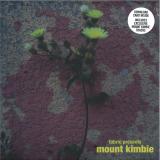
Mount Kimbie’s forthcoming contribution to the acclaimed fabric presents series marks one of the duo’s most dancefloor-focused bodies of work in years. More than simply a release on fabric Records, the project sits within the revered fabric presents mix series, placing Mount Kimbie alongside artists such as Daniel Avery, Midland, Helena Hauff and Overmono, artists who have each delivered defining entries for the series.
Leading the project is first single “Monroe”, a warm yet uplifting club track that unfolds gradually through loose percussion, driving synth work and subtle vocal fragments drifting in and out of the mix, adding flashes of emotion without interrupting the track’s momentum. An ode to their 2017 hit ‘Marilyn’ featuring Micachu, the track carries elements of the original throughout, with flourishes over reverb washed vocals that float around you amongst driving drums and bass. There’s a summery energy running throughout the track, making it equally suited to late-night club systems and open-air festival stages.
Long celebrated as pioneers of the post-dubstep and future garage movements, Mount Kimbie continue to evolve beyond genre boundaries while maintaining the unmistakable sonic identity that has made them one of the defining acts in UK electronic music. Their contribution to the fabric presents series captures the duo at their most refined and exploratory, without losing the emotional atmosphere and understated intensity that has always defined their work.
Released as part of the prestigious fabric presents series via fabric Records, the project signals a bold new chapter for Mount Kimbie.
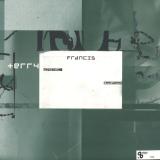
Following the acclaimed release of the Digitec LP, this companion EP digs even deeper into the archives of one of UK tech house’s most influential figures.
As a pivotal force in shaping the late '90s and early 2000s underground, the longtime Fabric resident and close friend of Sushitech finally opened his vaults to reveal a treasure trove of rare classics, forgotten sessions and unreleased material.
This follow-up offers collectors a further glimpse into that archive, featuring meticulously remastered editions of the elusive Funky Future and Bonjour Charles two stripped-back, dubwise London tech house cuts that became permanent fixtures of Terry’s legendary Fabric sets! Timeless, understated and unmistakably Terry Francis.
The undisputed Godfather of Boogie, Leroy Burgess’s Logg project is his grand masterpiece.
The self-titled LP, originally released on Salsoul in August 1981, is one of the greatest albums of the post-disco era. It’s one of Be With’s favourite ever LPs and so it’s a complete honour to be giving it our reissue treatment. With all the touchstones of Burgess’s finest work - breezy grooves, undulating synths, funk-drenched bass and life-affirming lyrics - delivered with gospel-derived vocals and harmonies - it’s a record to uplift both body and spirit.
Already a cult soul figure as lead singer of seminal vocal group Black Ivory, Leroy Burgess cut his teeth as arranger, vocalist and songwriter with legendary producer Patrick Adams on essential late-70s projects like Phreek and Dazzle. He went on to define the essence of “boogie”: the vibrant underground dance sound that stood in contrast to commercial disco. With its reduced speed - mid-90 to under 110 BPM - the cool boogie of Burgess has the disco bounce, just more laidback.
All six tracks here could have been stand alone 12" hits. Indeed, some of them were. But together they are also an incredibly cohesive album, where all the compositions are deeply relevant to each other. In short, it’s essential; a thrilling showcase for Burgess’s finest arranging and production work - with his vocals at their euphoric peak alongside the inventive rhythm section of Aaron (Sonny) T. Davenport on drums and James Calloway on bass.
Opener “(You’ve Got) That Something” is a balmy sunshine groover with an insistent chorus whilst the timeless vocal of “Dancing Into The Stars” - married to percolating synth and airtight drums - showcases the chemistry between Burgess and the rhythm section.
The fusion of funk and gospel-influenced harmonies which propels “Something Else” is remarkable - deep, joyous and bouncy. Infamously mixed by Larry Levan, “I Know You Will” is an easy glide, all rollicking electric piano underpinned by a precise and relentlessly upbeat groove. “Lay It On The Line” radiates smooth, understated brilliance, elevated by interstellar keys and finally album-closer “Sweet To Me” is a chilled-out gem of profound soulful elegance.
Logg has long been a hit with the likes of Kenny Dope and Dam-Funk whilst, in the last decade, MCDE and Harvey Sutherland have routinely cited it as a huge influence. Accordingly, finding original copies on vinyl at affordable prices has been a thankless task. This fresh Be With reissue ensures this legendary record now sounds, looks and feels as sensational as it deserves to.
Mastered brilliantly by Simon Francis, cut by Pete Norman and with lovingly reproduced artwork, we think this is a reissue that does justice to this classic LP.
Get ready to dive into the vibrant sounds of the summer with Neighborhood Music’s second vinyl sampler!
Building on the success of their inaugural release, this new collection features a stellar lineup of artists that embody the essence of house music, ideal for sun-soaked days and dance-filled nights.
1. Lazaro Casanova (Miami, USA) - Return (Original Mix)
Born and raised in the heart of Miami, Lazaro brings his unique flair and infectious energy to the sampler, ensuring grooves that will resonate on dance floors around the world.
2. Ordonez (Cuenca, Ecuador) - Trukmpaholic (Original Mix)
A rising star from Ecuador, Ordonez infuses his tracks with a deep understanding of house rhythms, delivering a sound that is both captivating and invigorating.
3. De La Maso (Zurich, Switzerland) - Stand Up
Known as the Swiss lucky charmer, De La Maso combines hypnotic percussion and melodic hooks to create a Balearic atmosphere perfect for sunset sessions by the beach.
4. Hotswing (Florence, Italy) - Samba
The young gun from Italy, Hotswing brings a fresh perspective to house music, seamlessly blending modern elements with classic grooves that keep the hips swinging.
This vinyl sampler is all about*percussion, groove, and swing, It embodies the spirit of Balearic style, where sun, beach, and fun intersect, making it the perfect soundtrack for your summer escapades. Each track is designed to uplift and energize, whether you're lounging on the beach, hosting a backyard BBQ, or hitting the club.
Massive support by Harry Romero, Paco Osuna, Joeski, The Deepshakerz, Tom&Collins, Alaia&Gallo, Animal Trainer, Tube&Berger and many more.
Luca “DJ Rocca” Roccatagliati isn’t just a producer, he’s a shapeshifter of sound. Emerging from the late ’90s under the Maffia Soundsystem alias, he’s spent decades bending genres, dissolving boundaries, and reconfiguring the DNA of club music.
From cosmic disco to leftfield house, Rocca’s catalogue reads like a map of underground excellence. He’s collaborated with a roll call of innovators—Howie B, Dimitri From Paris, Daniele Baldelli, François K, Jazzanova, Zed Bias and many more. Crafting releases for some of the most respected imprints in the game: like Rekids, Toy Tonics, International Feel, Defected, Rush Hour, Hell Yeah, Rotters Golf Club among others.
His output is prolific, restless, constantly evolving.
Partnership is central to Rocca’s universe. With Dimitri From Paris, he co-created Erodiscotique, a sleek electro-disco project that fuses vintage sensuality with future-facing production. Alongside Daniele Baldelli, he’s explored deeper, more psychedelic terrain, delivering albums like Podalirius and Quagga—records that blur the line between Balearic mysticism and dancefloor propulsion.
His aliases Ajello, Supersonic Lovers, Crimea X are parallel auditory dimensions. Each one pushes a different facet of his sound, from Italo-tinged grooves to raw, analog-driven club cuts. As a remixer, Rocca has reworked everyone from Andrew Weatherall to Soul Clap, always imprinting his unmistakable signature.
To say we are excited about this new EP is kind of a massive understatement……
Having been huge fans for over two decades, when he reached out to us it was a bit of an eye rubbing and arm pinching moment.
We have been graced with a 3 track EP titled “Tonight is the Night”
A1. Sun Deck – A link-up with Athens mainstay Lex, drifting somewhere between yacht funk and late-night boogie. Sun-washed grooves, crisp synth leads, and just enough 80s energy to keep it moving without trying too hard.
B1. Italo Boogie Stomp – Does exactly what it says. Rolling Linn drums, sharp synth lines, and a nostalgic flute motif that nods to NYC’s street soul era without getting stuck in it.
B2. Ferroso – Picks up the pace slightly. Deep house drums meet a driving electro bassline, with arpeggiated synths and warm pads rounding it out—focused, functional, and built for the floor.
Yore Records presents: Craig Alexander - Phenomenal Woman / Across My Mind (12" Maxi Reissue)
Following his recent appearance on the label, Craig Alexander returns to Yore Records with a carefully curated reissue of two standout House Workouts: Phenomenal Woman and Across My Mind.
Originally released on earlier records, these tracks are now brought together on one 12" - each presented in two distinct mixes - capturing the raw, emotional depth of Chicago House in its purest form.
At the heart of this release lies Phenomenal Woman, a track that draws inspiration from Maya Angelou's iconic poem of the same name. Rooted in the African-American cultural context, the piece carries a subtle but powerful message of identity, strength and self-definition - translated here into deep, jazz-infused House music.
Across My Mind complements this with a more introspective tone, driven by warm chords, understated grooves and a timeless sense of space.
Together, these recordings embody what House music has always been at its core:
music with a message, shaped by lived experience, culture and emotion.
Stripped down, honest and deeply rooted, this is Chicago House in its most original and authentic form - a sound that continues to resonate far beyond the dancefloor.
An enigmatic producer steps up with four lean, highly disciplined edits that map out the dark space between raw physical rhythm and subtle melodic warmth.
Designed for discerning selectors, each track offers its own character while staying true to the understated identity of the series.
From the driving pulse of Soviet Electro to the hypnotic groove of Ending West, the introspective feel of Self Express, and the late-night atmosphere of Shame, every cut is crafted with the dancefloor in mind.
By 2005, Drugsex Recordings had firmly established its own identity within the Tech House scene, providing a platform for deeper, sounds for the heads and also could further push the peak-time cuts for the era. For the label's fourth release, founder Rob Pearson teamed up with Chris Pascoe. Pascoe’s distinctive style had already earned him recognition through a string of acclaimed underground releases and Rob & Chris kept meeting through the underground party scene so friendship and collaboration were a natural step.
The collaboration resulted in One More Time, a beautifully balanced meeting of two production styles. Combining Pearson's trademark rolling grooves with Pascoe's musicality and deep, understated funk, the track perfectly captures the stripped-back sound that defined the best of mid-2000s UK Tech House.
On the flip, Rob Pearson takes centre stage with the solo production Shadow Maker. Deep, hypnotic and effortlessly understated, the track showcases the signature South London sound that became synonymous with both Evasive and Drugsex Recordings—tight percussion, warm analogue textures and an irresistible groove built for long nights on discerning dancefloors.
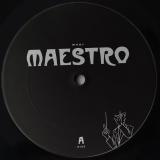
Professor Roth's debut EP, self-released on his newly formed label Maestro, is music that feels half remembered. Familiar enough to settle into, strange enough to keep shifting beneath your feet, it lives in that sweet spot where groove and abstraction lean into one another. Dusty textures, hazy melodies and understated rhythms never demand attention, yet quietly refuse to let go. Every track feels like another realm of the same dream: warm, weightless and just slightly out of focus.
‘Daydreaming’ is an inviting first step into the haze, opening the door without ever fully revealing what's on the other side. Gentle movement carries drifting melodies that seem to appear and disappear with every listen. An ethereal vocal breakdown creates the feeling of being quietly carried away from its hypnotic groove before pulling you back under its spell. Patient and understated, ‘The Way It Is’ lets the groove do the talking while subtle details gradually come into focus. Dubby percussive chaos is softened by warm, lifelike pads, encouraging your body to move while your mind wanders elsewhere.
As the name suggests, ‘Swells’ arrives in waves. Layers fold over one another, building and dissolving without urgency. There's a beautiful tension between motion and stillness, leaving the track suspended somewhere between the dancefloor and a reverie. ‘Shades’ is a fitting close that blurs the edges even further. Soft, hypnotic and quietly psychedelic, it feels less like an ending and more like waking up slowly. Content to linger in that in-between a little longer, glitchy samples drift through swirling soundscapes, keeping the dancefloor gently spun until the very end.
Molecular Recordings Presents "Structure Series 2" — Continuing a Legacy of Techno Innovation
Following the success of the first volume, Molecular Recordings returns with Structure Series 2, the next chapter in its celebrated vinyl series that honors the label’s enduring influence on underground techno.
This 12" release deepens the label’s exploration of forward-thinking sound, pairing iconic names from the Molecular archive with groundbreaking contributions from the new vanguard of producers. Each track reflects the uncompromising spirit and sonic evolution that have defined the label for over three decades.
Structure Series 2 is both a continuation and a progression — a curated fusion of past and future that underscores Molecular’s role as a pioneer and incubator of techno culture. It stands not only as a collector’s item but as a bold artistic statement.
With Structure Series 2, Molecular Recordings reaffirms its commitment to pushing boundaries while remaining rooted in the authenticity that has shaped its legacy since day one.
How enduring is the signature song from Harry Chapin’s Verities & Balderdash? So timeless that it became the subject of a 2025 documentary in which artists from multiple generations weigh in on its impact on their lives and craft. “Cat’s in the Cradle” doubtlessly remains the main event on the singer-songwriter’s 1974 album. The legendary opening track also serves as a guidepost for the bold personal and social material that follows — as well as the gorgeous folk-rock arrangements that underpin the New York native’s most commercially successful work.
Sourced from the original master tapes, pressed at Fidelity Record Pressing, housed in a Stoughton jacket complete with a four-page insert, and strictly limited to 3,000 numbered copies, Mobile Fidelity’s 180g 33RPM LP of Verities & Balderdash presents Chapin’s fourth full-length in audiophile quality for the first time on vinyl. Captured during a golden era for sonics and production, the Top 5 effort features remarkable tonal balance, instrumental separation, and organic naturalism. Those valued aspects come into supreme focus on this reissue, which plays with dead-quiet surfaces and a low noise floor.
The newfound clarity, openness, and imaging underscore the lasting appeal of Chapin’s tender deliveries, soulful timbre, and careful phrasing. Every word comes across with incredible realism, while his underrated guitar playing occupies its own distinctive space. Also notable: The extension of the tasteful string accents; airiness of the backing vocals; depth and shape of the spare bass lines; and width and depth of the soundstaging. When on “Six String Orchestra” Chapin calls out names of instruments, they appear like magic, the band performing feet from you. Chapin has never sounded so lifelike on record.
Certified double platinum, Verities & Balderdash resonated with the times and public. “Cat’s in the Cradle” reached No. 1 on the chart on its way to being inducted into the Grammy Hall of Fame. The romantic ballad “I Wanna Learn a Love Song” flirted with the Top 40 and wrapped listeners in the equivalent of a cozy blanket. The record’s other single, the mini-epic “What Made America Famous?,” helped establish Chapin as one of the country’s most incisive and insightful commentators.
Verities & Balderdash teems with situational devices and topical matters. Chapin observes everything from the polarization of the nation to changes in moral standards and cultural priorities. He investigates pressing themes without ever turning preachy or elevating himself above the matters at hand. On “Halfway to Heaven,” whose coda races to the finish and ranks as the most urgent moment on the record, Chapin inhabits the mind of his frustrated protagonist akin to an eagle-eyed novelist.
Conveying emotions that range from melancholic to carefree, Chapin is as much of a singer as a storyteller. He assumes the voice of multiple characters within a single narrative. During the quirky “30,000 Pounds of Bananas,” a tale based on a delivery-truck accident in 1965, Chapin alters his delivery, pronunciation, and diction to become an old man reflecting on the mishap and mess. The tempo, too, adjusts to match the speed of the vehicle Chapin describes.
Adorned with timely laugh tracks to reinforce the bittersweet humor, the stripped-down “Six String Orchestra” takes everything up another notch, with Chapin intentionally missing guitar notes or playing a broken passage to illustrate the failures of the hopeful protagonist who doesn’t have what’s required to make it as an artist.
Chapin, of course, did not have any such problem. The lynchpin of a career cut short by a tragic traffic incident, Verities & Balderdash is Exhibit A of the savvy craft, feeling, and perspective he lent to American music.
The moment the instantly recognizable intertwined guitar passage on the title track to the Eagles' Hotel California begins, the record's genius becomes obvious all over again. Ranked the 118th Greatest Album of All Time by Rolling Stone, certified by RIAA as the third best-selling LP in history, and considered the foundation on which the Golden State's mid-‘70s music scene was built, the 1976 landmark is a music staple immune to shifts in trends, eras, and styles. Fearlessly addressing the chaos and consequences of American life, its songs remain strikingly prescient and gain creedence with each passing day.
Mastered from the original analogue master tapes, pressed on MoFi SuperVinyl, and limited to 17,500 numbered copies, Mobile Fidelity's UltraDisc One-Step 180g 45RPM 2LP vinyl box set ensures you will want to permanently check into and never leave this particular Hotel California. Up to the herculean task of standing head and shoulders above all prior reissues, this collectible edition plays with extreme clarity, organic richness, tube-like warmth, massive dynamics, and microscopic levels of detail. You'll be able to practically smell the colitas and feel the breeze in your hair. Songs come across with an epic sweep and feature immersive, front-to-back soundstages that allow the music unprecedented air, roominess, and separation. As for the noise floor? It's basically as invisible as the spirits that waft in the corridors of the unforgettable title song.
Aesthetically, the premium packaging and presentation of the UD1S Hotel California pressing befit its esteemed status. Housed in a deluxe box, it features gorgeous foil-stamped jackets and faithful-to-the-original graphics that illuminate the splendour of the recording. From every angle, this UD1S reissue exists as a curatorial artefact meant to be preserved, touched, and examined. It is made for discerning listeners that prize sound quality and production, and who desire to fully immerse themselves in the art – and everything involved with the album, from the renowned cover art to the meticulous finishes.
Indeed, the opportunity to zero in on all the particulars of the 26-million-selling Eagles record dubbed "a legitimate rock masterpiece" by vaunted Los Angeles Times scribe Robert Hilburn has never been better. A global phenomenon that marked the band debut of guitarist-singer Joe Walsh, Hotel California continues to resonate and connect with listeners of all generations taken by its narrative depth, stark directness, picturesque melodies, daring majesty, and ardent emotionalism. Adorned with a breathtaking exterior photograph of the Beverly Hills Hotel that serves as the simultaneously haunting and alluring cover art, and rounded out by a rear-cover shot of the Lido Hotel lobby that reinforces a notion that teeters between permanence and transience, Hotel California is brilliantly tied to a specific place that functions as a universally understood metaphor for the American Dream.
Confronting the darker undercurrents and oft-ignored constructs attached to that romantic notion, the record's songs revolve around a host of shared themes: excess, mobility, stability, illusion, fame, destruction, and idealism included. Notably, Hotel California appeared at a crucial junction in American history: During the country's bicentennial and amid escalating controversies related to the Vietnam War, energy crisis, and governmental corruption. That the Eagles manage to channel such cultural, social, and economical matters into a cohesive, stately, big-picture statement is alone a stupendous feat. That the album's reach, boldness, vitality, accessibility, and understated intensity have never waned make it a marvel.
Reflecting on Hotel California 40 years after its original release, and indirectly explaining its enduring appeal and increasing relevance, singer-songwriter Don Henley confirmed the record pertains to the "loss of innocence, the cost of naiveté...the difficulties of balancing loving relationships and work, trying to square the conflicting relationship between business and art; the corruption in politics, the fading away of the Sixties dream of ‘peace, love and understanding.'"
It can be argued that Henley and company squarely hit on and drove home those ideas in the surreal title track, chart-topping "Life in the Fast Lane," and grand "The Last Resort" alone. But that would miss the forest for the trees. Experienced as an unbroken whole, complete with the pristinely shot imagery and physical grooves, Hotel California unfolds like a geography-conscious saga by James Michener and plays like colour-saturated movie shot on 70mm film by Martin Scorsese. It's about our collective and individual decisions – and the shape of our past, present, and future. And, just like that conjured by our imaginations, Hotel California continues to take on a life of its own.
More About Mobile Fidelity UltraDisc One-Step and Why It Is Superior
Mobile Fidelity Sound Lab's UltraDisc One-Step (UD1S) technique bypasses generational losses inherent to the traditional three-step plating process by removing two steps: the production of father and mother plates, which are created to yield numerous stampers from each lacquer that is cut. For UD1S plating, stampers (also called "converts") are made directly from the lacquers. Since each lacquer yields only one stamper, multiple lacquers need to be cut. Mobile Fidelity's UD1S process produces a final LP with the lowest-possible noise floor. The removal of two steps of the plating process also reveals musical details and dynamics that would otherwise be lost due to the standard multi-step process. With UD1S, every aspect of vinyl production is optimized to produce the best-sounding vinyl album available today.
MoFi SuperVinyl
Developed by NEOTECH and RTI, MoFi SuperVinyl is the most exacting-to-specification vinyl compound ever devised. Analogue lovers have never seen (or heard) anything like it. Extraordinarily expensive and extremely painstaking to produce, the special proprietary compound addresses two specific areas of improvement: noise floor reduction and enhanced groove definition. The vinyl composition features a new carbonless dye (hold the disc up to the light and see) and produces the world's quietest surfaces. This high-definition formula also allows for the creation of cleaner grooves that are indistinguishable from the original lacquer. MoFi SuperVinyl provides the closest approximation of what the label's engineers hear in the mastering lab.
Looking back on her career in the early 90s, Stevie Nicks described the first track of Rock a Little as “the most exciting song that I had ever heard.” This coming from a superstar who was already closely affiliated with several bajillion-selling Fleetwood Mac albums — to say nothing of her own benchmark solo debut. Her remarks attest to the enthusiasm and effort she invested in her third record, a 1985 work that quickly furthered Nicks’ profile and cemented itself as a piece of 80s pop lore.
Mastered at MoFi’s California studio, pressed at Fidelity Record Pressing in California, strictly limited to 4,000 numbered copies, and housed in a Stoughton gatefold jacket, Mobile Fidelity’s 180g 45RPM 2LP set presents Rock a Little in audiophile sound for its 40th anniversary. Helmed by a cadre of producers and engineers, and recorded for a reported one million dollars, the platinum-certified album teems with a head-spinning array of colors, tones, dreamscapes, and accents. This reference-grade reissue marks the first time they are all brought to light and conveyed with proper balance, dimensionality, and positioning.
Though Rock a Little doubtlessly has period characteristics of a mid-80s LP, Nicks and company spare no expense when it comes to distinguishing the music with expansive sonics distinguished with lush melodies, high-tech percussion, echoing vocals, sampled keyboards, and layers of sophisticated accents. The degrees of spaciousness, headroom, and dynamics are nothing less than inspiring, while the newly enhanced detail, texture, and clarity make the songs sing like never before. As for Nicks’ voice? Wait ’til you experience the transparency and depth.
Those advantages extend, of course, to the aforementioned “I Can’t Wait,” a statement-making opener shot through with modulating synthesizers, splashy drums, metallic guitars, and serious drama. Holed up in a massive studio, Nicks required just one take to nail her part, which she called “magic and simply not able to beat.” The singer-songwriter also distilled the reverberating emotional essence of the Top 20 tune, stating “when I hear it on the radio, this incredible feeling comes over me, like something really incredible is about to happen.”
The same can be said for nearly all of Rock a Little. Crafted by the likes of Songwriters Hall of Fame multi-instrumentalist/producer Rick Nowels, Heartbreakers organist Benmont Tench, bassist Bob Glaub, jack-of-all-trades Greg Phillinganes, and session-pro guitarists Waddy Watchel, Les Dudek, and Danny Kortchmar — along with another two dozen or so participants — the record spills with diverse ideas, shapes, and moods. Everything is in the right place, as evidenced by the swirling glide and sensual undertow of the slightly funky title track to the snapping rhythmic pace and big hooks of “Imperial Hotel,” one of Nicks’ standout moments.
“What was it she wanted?” Nicks queries on “No Spoken Word,” continuing a theme of contemplation that runs through the narratives. Nicks never lands on a definite answer, but hearing her explore loneliness, love, and the secrets we keep to ourselves proves continuously rewarding. Take her passionate performance on a cover of Chas Sanford’s “Talk to Me,” a Top 5 smash furthered by tasteful saxophone lines and understated folk elements. Immersive yourself in the grand sonic corridors of “If I Were You,” laden with Nicks’ signature mysticism.
Moreover, surrender to the gravitas of the closing “Has Anyone Ever Written Anything for You,” a piano ballad composed about the death of Joe Walsh’s three-year-old daughter. As Nicks asserts earlier on the album, she sings for things money can’t buy.
So, rock a little, yes, but dare to feel even more.
Curió Curió came to flight by chance. Two artists, Rio-born, Austria-based singer and actress Luiza Monteiro and German producer Dustin Braun, had separately reached a fork in their journeys. An opportune encounter soon blossomed into an uplifting, heartfelt Brazilian MPB-groove project shaped by psychedelic disco and studio experimentation. In their own words Curió Curió’s sonic vision “is not straight disco, not straight samba, not strictly old-school but inspired by all of them, creating something contemporary but still nostalgic”.
A modern fusion influenced as much by Gal Costa and Jorge Ben Jor as Say She She and Bala Desejo, their sound deftly plots a course all of its own. A celebration of freedom, movement, love and life, intertwined with introspective moments of reflection. Treating tradition as something alive, migratory and unresolved, the album is not simply bound by a shared love of Brazilian music, but by a deeper question that runs through every track; where does one belong when home becomes plural? As a Brazilian living in Europe, Luiza's lyrics explore themes of identity, culture, and existence. The tracks move between cities and emotional registers without settling, tracing a sense of identity that shifts rather than resolves. Songs like ‘Amor Doente’ and ‘Mar sem Dar Pé’ circle around relationships that resist clarity, while ‘Menina Passarinho’ captures the fear and necessity of committing to music as a path. For Luiza, deepening her commitment to music alongside years in theatre was both inevitable and difficult. Braun’s production follows a similar logic. Initial ideas were often built without obvious reference points, only later incorporating rhythmic and vocal elements that hint at Brazil without reproducing it. Analogue techniques, tape, ribbon microphones and live ensemble recording bring a tactile quality that reflects the duo’s interest in process as much as outcome. Highlights include ‘Bem Querer’, built on an authentic samba street vibe with a super-catchy sing-along chorus, and ‘Vem pra Casa’ with its cosmic-tinged Brazilian boogie flavour. The album closes with ‘A Cor do Meu Sonho’, a quiet act of insistence. A refusal to shrink in unfamiliar environments, and a belief in the strength of difference. It is less a conclusion than a continuation, leaving the central question open. “I started to understand that I can belong to many places at once”, Luiza reflects. “And that can be something to embrace”. Lyrics from the song ‘Raiz’ translate in English to “I value a burning sun and the cold in the air. Constant change is my companion”. With Curió Curió, that idea is lived through sound, story and collaboration. A debut that feels both searching and assured, grounded in heritage yet shaped by distance.
There was nothing in contemporary music like Chris Isaak’s Heart Shaped World when it hit shelves in June 1989. More than three decades later, the singer-songwriter’s third album still sounds unique — and claims a backstory nearly as fascinating as the retro-leaning material and standout performances that propelled it to sales of more than 2.5 million copies. Home to the Top 10 smash “Wicked Game,” the set remains a masterful mood piece that invites you to pour a late-night drink, sit in a dimmed room, and relish Isaak’s elegant albeit raw ruminations on love, relationships, and questionable decisions.
Sourced from the original master tapes, pressed at Fidelity Record Pressing, strictly limited to 3,000 numbered copies, and featuring the bonus track “Diddley Daddy,” Mobile Fidelity's UltraDisc One-Step 180g 45RPM 2LP box set of Heart Shaped World unearths the staggering inner details, saturated tones, and brilliant atmospherics of the crisp production. It brings you up close and personal with Isaak’s spectacular singing — impeccably controlled, tense, brooding, steamy, smoldering, haunted — situated amidst stripped-down backdrops that allow every note to fully bloom and decay.
While Isaak’s ever-steady baritone remains the anchor, the contributions of his trusty backing band, the aptly named Silvertone, come across with just as much cool, command, and realism. The indispensable playing of guitarist James Calvin Wilsey particularly emerges with superb clarity and dimensionality. The character of his 1965 Fender Stratocaster, shivering twang of his spring-coiled fills, and his signature use of reverb, delay, and vibrato seamlessly match Isaak's patient deliveries and the band’s unhurried rhythms. Experienced on UD1S with ultra-black backgrounds and a nearly invisible noise floor, Heart Shaped World is in every regard a demonstration disc.
The premium packaging of this UD1S pressing befits its elevated status. Housed in a deluxe slipcase, it features foil-stamped jackets and faithful-to-the-original graphics. Aurally and visually, this reissue is for discerning listeners who desire to immerse themselves in everything involved with the album, not the least of which is the cover art depicting a lost-in-thought Isaak staring ahead and sitting in what appears to be an efficiency apartment. The image epitomizes the record’s lonesome temperaments and pensive themes.
Of course, if not for director David Lynch hand-picking two cuts from Heart Shaped World for his 1990 film Wild at Heart, the record would’ve probably suffered the same fate as Isaak’s prior efforts and gone unnoticed by the mainstream. Despite receiving raves from outlets such as NME, Chicago Tribune, and Rolling Stone upon its original release, the album stalled in the lower quadrants of the Billboard charts and, after a few weeks, dropped off.
Cue the ear of Lee Chesnut. Then the music director for a large Atlanta radio station, Chesnut heard the instrumental version of “Wicked Game” on Lynch’s soundtrack and started airing the album rendition at all hours of the day. Aided by a sensual video featuring Isaak and supermodel Helena Christensen, the song found its way into the public consciousness by early ‘91 and helped make Isaak a most unlikely mainstream star in an era where his techniques had little to nothing in common with popular tastes.
Despite its vintage vibes and shared DNA with legends such as Roy Orbison, Chet Baker, and Glen Campbell, Heart Shaped World transcends nostalgia, rockabilly, and throwback tropes. For all the melodrama and sadness at hand, Isaak’s gorgeously transparent singing dives deep underneath emotional surfaces. He mines subtleties that indicate his feelings go beyond heartbreak and anguish, and occasionally suggest frustration, menace, and anger. You can hear it in his quivering falsetto, and the slow and methodical ways he allows delicate whispers to break into shadowy phrasing that crosses over to the darker sides of romance and desire.
That approach bolsters the title track, which suggests calm yet moves on ominous currents — its simmering pace and snare-drum snappiness foreshadowing Isaak raising the volume and urgency during the coda. The southwestern-tinged “Wrong to Love You” plays with similar concepts of hesitation, unease, and discord, Isaak careful never to fully erupt and give anything away. His poised deliveries offer a master class in the art of insinuation and hurt on “Nothing’s Changed,” sent up with a wordless backing chorus and crackling guitar lines straight out of a Memphis blues joint.
Heart Shaped World further boosts its merit via its abundant stylistic variations, from the upbeat country-and-western trot of “I’m Not Waiting” and Spanish acoustic shimmer of the jazz-based ballad “Blue Spanish Sky” to the swinging horn-accompanied grooves of “Don’t Make Me Love You” and desert smokiness of the understated “Kings of the Highway.” On the latter, Isaak comes across as resigned and absolute. His singing and pain worm their way into your soul, and echo akin to the way the music prepares to strike when you least expect.
“Trouble going 'round,” Isaak croons right as the album begins. “Trouble going down.” Damn straight.
As the moonrover explores distant worlds, it expands not only our understanding of the cosmos but also our perception of time and space. Its journey reminds us of humanity's endless pursuit of truths and the meaning of existence. At each stop, we witness not only scientific discoveries but also philosophical insights into the world and ourselves.
Following years of quietly refining her craft, Dilemma now returns with her debut album A River Without Banks, landing this August on Spearhead Records.
Known for her effortlessly deep and soulful approach to drum & bass, Dilemma has become a respected name among listeners who favour atmosphere, musicality and understated emotion over quick trends. A River Without Banks feels like the culmination of that journey, a rich and carefully crafted body of work that moves between warm liquid rollers, deeper late-night textures and moments of genuine introspection.
The album showcases Dilemma’s versatility without ever losing the unmistakable character that has made her music so recognisable. Tracks like “You Do It To Me” capture her signature laid-back soul, while collaborations including “Watch” with BCee and “Days To Come” featuring In:Most & Lauren Archer bring a cinematic and emotional depth to the project. Elsewhere, cuts like “Usurper” and “Vibe Check” reveal a heavier, more stripped-back edge while still remaining rooted firmly in groove and feeling.
Rather than chasing peak-time moments, A River Without Banks unfolds patiently and naturally, rewarding repeat listens and drawing inspiration from across the spectrum of soulful drum & bass culture. There’s a timeless quality to the album, music designed to stay with you long after the final track fades, whether heard in solitary moments or shared across packed rooms and late-night systems.
Released via BCee’s Spearhead Records, A River Without Banks continues the label’s long-standing tradition of championing thoughtful, emotionally rich drum & bass while further cementing Dilemma’s place as one of the scene’s most quietly consistent producers.
Mexico's Rubinskee mixes up slapping house and techno on some of Europe's finest labels and has done so since 2011. His latest is an understated outing that veers into deep, melodic realms where warm textures meet precise machine-driven grooves, and it is inspired by solitary weekends in Sao Paulo. Opener 'Half Meal' rolls effortlessly, while 'Sigueme' brings a playful Brazilian swing and 'Too Many Days' adds a touch of melancholy. Don Alex Albert's hypnotic remix deepens the drive for the club while 'So Tight' is soulful low-end pressure, and the live version of 'Us Less' closes things with an intimate, organic feel.
Lizard & Snake, the new collaborative project from Elia Nafzger and Axel Pineau, lands on Respect The Craft Enterprises with a classy collection of deep, rolling hypnotic house cuts. Tight grooves, crisp percussion and understated funk make for timeless dancefloor tools with plenty of character. A strong debut from the duo and another quality addition to the Respect The Craft Enterprises catalogue.
Chris Scott, the latest addition to the Endell Street family, returns to his back catalogue with another highly sought after treasure this time under The Dominican, alongside Lee Melrose.
Originally released in 1999, this deep and hypnotic house cut has a deep, shuffling groove and an understated charm. It captures a style of house that would only become popular in the years that followed.
Now, Endell Street bring this cult secret weapon back with a fully remastered reissue, breathing new life into a timeless production. Nearly 28 years on, the production still sounds as fresh and captivating as ever, a deep house cut that feels right at home today. A timeless deep house classic and an essential reissue.
Hypnotic Mindscapes returns with its sixth release, introducing Lisbon-based artist Jorge—by way of NYC—through a tightly constructed, high-fidelity four-track EP. Progressive-tinged tech-house meets crisp vocoders and understated oscillations in an acoustic inspired techno format, designed for peak-hour precision. Electro-breakbeat accents cut through deep, rounding out a sharp and focused trip.
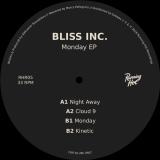
Running Hot welcomes Bliss Inc. for RHR05 with the Monday EP, four cuts of warm, groove-led house music built for intimate spaces and long nights.
The EP arrives during a busy year for Bliss Inc., following a recent release on Punctuality and the start of a new residency at Tokonoma in Frankfurt, where he’s been regularly playing the Holo and Sakuru floors. Those smaller rooms have had a clear influence on the EP, with subtle shifts, detailed percussion and hypnotic grooves given room to unfold.
Across the four tracks, rolling low-end sits alongside understated melodies and intricate percussion. The EP draws from the deeper end of house and minimal without ever sounding overly referential, and feels just as at home in a low-lit warm-up as it does deep into the night.
A flash of light hits your eyes. Your ears hear muffled bass. As bright white fades to amber, you find yourself in a familiar place. A place you have been to many times. Though the edges of your memory are no longer sharp, the shape of it all is in your DNA.
The smell of rusted metal, dirt-covered floors that once hosted workers, machines and industry mixed with spilled beer and the sweat of a thousand bodies moving to syncopated music. As your vision comes into focus, you’re back there.
A warehouse in the former industrial part of town. You’re surrounded by hundreds of strange but familiar faces, each of you dancing into a frenzy countless times under the moonlight — moving, jumping, laughing and connecting.
Sunlight pours through warehouse windows or appears over a distant horizon.
The DJ plays a song that completes the journey you all just shared. You are desperate to hold on to the feeling of the last song that lands you safely from the night and into a new day. The feeling is deep. Pure.
Especially when communal ecstasy is juxtaposed against the edges of the warehouse floors, the intimacy of city lofts, the spiritual nature of open fields or forests.
The Custodian
I spent just shy of two decades in spaces like that — as a raver in early 1990s Los Angeles, then a DJ, producer, label owner and head of Moulton Studios in San Francisco.
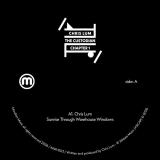
The Custodian Project is a memoir of a life lived deep inside the culture and business of house music from 1990 to when I stepped away from music as a full-time life in 2015 — told through music, stories and DJ events.
Each release of new music draws inspiration from feelings, emotions and memories of that life — different rooms, different eras. It is an exploration to understand and capture what those feelings were, and in some cases still are.
The Music
This EP is the beginning. 1990. When I first found the rave and re-ordered my DNA based on the sounds, songs and feelings of that era that can be summed up in the title track — Sunrise Through Warehouse Windows.
All three tracks here are an attempt to reach back and touch those mornings again. To put the listener back in the warehouses or open spaces where we would dance as the sun rose over the horizon.
To capture what I felt back in 1990 when the night transitioned into daybreak. Bodies moving in unison. People, places and music all connect. An era before algorithms.
(tracklisting)
A1 — Sunrise Through Warehouse Windows — 7:51
B1 — *Truly Amazing — 8:16
B2 — Sunrise Through Warehouse Windows (Floating Beatless Mix) — 4:20
Written and produced by Chris Lum for Abitare Music (ASCAP)
* Written and produced by Chris Lum - Abitare Music (ASCAP) & Jay-J Hernandez Stopped in Time (ASCAP). Originally released on Leaf Recordings 2000