Accepting the darkness can be a liberating experience. Realising, and struggling with just who we are and what world we live in requires it. By further complicating the fractured sense of beauty found on his droning 2022 release, ‘I dreamt we found a way’, Bristol-based composer, Rob Winstone creates a language that encapsulates the lifelong reach for our own personal heavens, along with the darkness and fear on which those foundations are built.
Winstone’s instrumental palette continues to reach out far from behind his keyboards, however the sound of ‘sifting through heaven’ is stripped back and pared down, putting melody front and centre. 'postcards and loose tea', a love song written for Winstone’s partner during a period coming to terms with health difficulties had previously self-released with heavy spectral and granular manipulation from the artist. Here Winstone re-presents the original: “the stripped back recording I made in my old damp and cold studio that was in a building that has since been demolished”. It reflects the composer’s own journey, doing away with veils and histrionics, and embracing emotional bliss wherever it can be found, warts and all. Even the rumbling dark ambience of ’hospital corridor’ - where distant chimings, groans, and droplets synthesized from field recordings made nervously in a hospital waiting for test results coalesce - harbours a sacred-seeming beauty and aseptic warmth within its very bleak sense of dread.
There’s no better way to describe Winstone’s method than ‘sifting through heaven’. The hymnal organ chords, sketched out acoustic guitar phrases, scattering drum thuds, and meditative field recordings may flit between tenebrous to incandescent, but his focus is always on the embrace of love; “a view of life that embraces positive growth, yet doesn't deny immense suffering,” as he puts it. The album is bookended by two of Winstone’s most outright peaceful moments, summarising his core message: 'in spite of it all...' '...love finds a way'.
Periferico is back with a very special 5 tracker EP.
All the tracks were produced between 1998 and 2009 and the Label was able to recover them from old DATs.
While the A side is written and produced entirely by Livio, the B side was co-produced with Luigi Mussi showcasing the first 2 drum&bass tracks ever released on Undersound Recordings.
The glimmer in our eyes gallops as a wild stallion toward infinity, in a screaming silence, wears the cape of innocent understanding. Our love is a grave danger, which doesn't shy away from its fate. There is nothing to be afraid of tonight. Love is the bastard child of the Heavens and the pits of hell, it encompasses the entirety of human suffering.
What if we isolate it to a singular moment? Quick and wonderful moment, without trying to hold on to it and wanting it to stay forever?
Between the concrete to the woods to the sea We will be quiet until we understand That this, this is momentary and unfathomable We will take this in, with a deep breath
Until we plunge in and scatter For out of particles wast thou taken and unto particles shalt thou return Walking the line drawn exactly between chaos and symbiotic harmony.
DJ Support: BEN UFO, Solomun, Marco Carola, Damian Lazarus, Jamie Jones, Joseph Capriati, Ilaria Alicante, Michael Bibi, Paco Osuna, D'Julz, Groove Armada, Dennis Cruz, Chloe Caillet, Kettama and many more
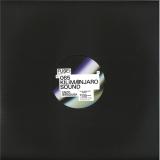
Enzo Siragusa opens 2026 with his ‘Kilimanjaro Sound’ EP, a release that expands on last year’s standalone single. Marking both Enzo and FUSE’s first drop of the year, the EP delivers the latest instalment in his longstanding Kilimanjaro concept while reaffirming the label’s position at the heart of underground club culture.
Following the digital release of ‘Kilimanjaro Sound’ back in October, the full EP frames the title track within a broader narrative of rhythm, atmosphere, and movement. A long-time fixture in Enzo’s sets throughout 2025, the title track established itself as a fan favourite through its rolling percussion, weighty low-end, and expansive spatial design, and now it takes on renewed presence on vinyl. New cut ‘Liquify’ pushes deeper into Enzo’s rhythmic sensibilities, pairing fluid groove structures with subtle tension and release. Designed for late-night floors, the track unfolds patiently, allowing swing, texture, and space to do the heavy lifting. It’s a natural continuation of the Kilimanjaro language, less about immediacy, more about immersion, showcasing his refined understanding of how momentum is built and sustained in true club environments.
Completing the EP is a remix from Giammarco Orsini, whose Garage Dub Mix of ‘Kilimanjaro Sound’ offers a fresh perspective while remaining true to the original. Born in Italy and now based in Berlin, Orsini has quietly evolved into one of the scene’s most respected selectors and producers, with releases on Cragie Knowes, Mood Waves, and Shonky’s Stoned Pilot. His interpretation strips the track back to its essentials, reintroducing it through a garage-leaning lens that prioritises groove, swing, and subtle pressure.
As the first release following FUSE’s latest DJ Mag Best of British Award, marking their second Best Club Event win, the EP reflects the values that have long defined the brand: community, longevity, and music built for real dancefloors. Pressed to wax, the release extends one of Siragusa’s most recognisable concepts and sets the tone for the year ahead - measured, confident, and rooted in the underground.
The new album by the collective that for
over 25 years has been among the most
representative names of the Italian dance
and electronic scene worldwide.
“BLOOOM”, this is the title of the new release,
will be available in all traditional stores and
on digital platforms starting January 16.
Set against the soundscapes that have become
the Planet Funk trademark, the lyrics by Dan
Black attempt to give voice to a fragile and
contradictory condition of our time: an
intensified sensitivity that, instead of
turning into openness and connection, often
becomes emotional overload. A generation
constantly overwhelmed by excessive stimuli,
relentless information, anxieties, and fears,
called upon to find its way in a world thaoffers neither pauses nor silence. In this paradox, sensitivity is no longer just a natural gift, but
a daily effort: staying open and receptive without being overwhelmed, trying to preserve a human and
vulnerable gaze in order, despite everything, to fully appreciate life and the present moment.
The single’s artwork—like that of the album—curated by Nationhood, visually conveys this tension: the
distant sirens of a city that amplifies feelings of disorientation and loneliness even when we are
surrounded by thousands of people.
“BLOOOM”, preceded by the single “FEEL EVERYTHING”, arrives at the end of an intense, creative year
full of music, which saw Alex Neri (DJ, keyboards, synthesizers), Marco Baroni (keyboards, piano,
programming), Dan Black (vocals and guitar), and Alex Uhlmann (vocals and guitar) engaged between
studio work, collaborations, and live performances in Italy and abroad. A journey that today
transforms into new energy, into an even more open vision oriented toward the future.
Exactly one year ago, PLANET FUNK released “Nights in White Satin”, a single that reached the top
positions of the radio charts and launched a season rich in concerts and DJ sets in Italy and around
the world. The subsequent “I Get a Rush”, the collaboration with Alfa and Manu Chao on the remix of
their hit “A me mi piace”, and the track “È Naturale” together with Francesca Michielin, confirmed
Planet Funk’s ability to renew themselves and engage with different musical worlds while always
remaining true to their own identity.
Throughout this journey, music has inevitably intertwined with life. The memory of Sergio Della Monica
and Domenico “Gigi” Canu, pillars and founding souls of the PLANET FUNK project, is a living part of
this new chapter. Their vision, creative spirit, and way of understanding music continue to be a
constant guide, a deep root from which new ideas and new directions can grow.
“BLOOOM” is also this: a personal and artistic blossoming that, starting from the legacy left by
Sergio and Gigi, transforms into a living process of growth, metamorphosis, and discovery. An album
that does not look back with nostalgia, but forward with awareness, momentum, and a desire for
renewal.
Founded in 1999, for over 25 years PLANET FUNK have represented one of the most important, solid, and
influential realities in the international electronic music scene. Born from the meeting of Souled
Out! (Domenico “GG” Canu and Sergio Della Monica) and Kamasutra (Marco Baroni and Alex Neri), and
following their debut with “Non Zero Sumness” in 2002 (a gold record and a turning point for the
band), PLANET FUNK have managed to reinvent themselves over time while maintaining a unique sonic
identity. This has led them to collaborate with internationally renowned artists, deliver iconic
performances around the world, create soundtracks and international advertising campaigns, and
continue to demonstrate constant creative vitality
Under a sky of short days and long nights, Notta Records from Finland unveils Dog Sleep, a deeply immersive EP by Cyclic/Random. Known for crafting slow-burning, atmospheric excursions at the intersection of dub techno and deep, dubbed-out house, Cyclic/Random extends the labels mission of a warm, hypnotic winter soundtrack.
Across the EP, soft-focus chords drift like snow over steady, smoked-out grooves, basslines pulse with understated weight, and echoes curl around the edges of the stereo field. These are tracks built for long, nocturnal sessions, the moments when the outside world is frozen and the dancefloor feels like a shelter. Dog Sleep is intimate yet expansive, perfectly tailored for winter: crackling dub house, deep dub techno and distant ambient textures that invite you to slow down, sink in and dream with your eyes open.
Prolific beat pharmacist par excellence Brendon Moeller continues his hot streak with a return to Samurai to serve up the exquisite craftsmanship of Shadow Language. Across 15 fresh productions the seasoned house and techno producer demonstrates yet more variations on his rejuvenated sound since pivoting towards 160 tempo zones. Heavyweight dub techno pulses collide with D&B pressure and dubstep snarl, delivered with devastating restraint and mediative warmth.
Moeller's dub-informed, high-grade production hit a hot streak as he started to experiment with faster tempos and more broken rhythms, reaching into thrilling new sound fields where fast-slow rhythmic intrigue meets with spatial subtlety and constantly evolving synth voices. The past year has seen him release a swathe of albums, from Further on Samurai to outings on Constellation Tatsu, ESP Institute and Quiet Details that all burst with inspiration, each distinct from the last and offering an original perspective on this rich seam of crossover electronics.
Shadow Language shows Moeller burrowing even deeper into this new era of his work, continuing the hypnotic approach set out on Further while edging more forthright ingredients into the mix. From the outset 'Division By Zero' hits with immediacy even as it dips into a dubwise breakdown, with snatches of vocal and even the iconic loom bird making the slightest of appearances. 'Feral Hymn' finds a curious kind of uplift in the synth chord that twists in and out of the mental techno murmurations of the rhythm section. 'Impermanence' has some snarling bass that belongs in the gnarliest tech-step, while the nagging hats ticking through 'Junkyard Syntax' hint at a shockout without resorting to brute force. The majestic dub techno chords of 'Driftform' create a through-line across Moeller's extensive catalogue, but here they dominate the mix above a spongy bed of sub bass throb and framed by the tiniest slithers of percussion.
Throughout the album, it's the implications Moeller suggests with the tools at his disposal that create a powerful energy. Restraint governs the delivery, guiding the listener in deeper until they find a maximal experience from each elegantly understated roller. The weight and presence is abundant across every track, fuelled by the invigorating power of each tone and frequency while avoiding the clutter of overloaded arrangements.
Finding the notes in between and half-hidden rhythms, Moeller himself perfectly summed up his latest opus as he continues to develop his own compelling Shadow Language.
Damian Lazarus reveals the eighth chapter of Crosstown Rebels acclaimed annual ‘SPIRITS’ VA compilation series.
The latest instalment sees the label founder once again curating a carefully balanced lineup of emerging voices and established names, with the eight-track collection set for release on 30th January 2026.
Since its inception in 2017, Damian Lazarus’ SPIRITS series has become a trusted barometer for the year ahead, spotlighting forward-thinking artists and cutting-edge club music from across the global electronic landscape. With ‘SPIRITS VIII’, Crosstown Rebels continues this tradition, delivering a refi ned yet adventurous selection that moves seamlessly between hypnotic house, melodic depth, and late-night energy - building on the momentum of previous volumes and capturing the label’s unmistakable essence.
Opening the release, Raz Alon sets the tone with ‘Hey It’s Me’, a warm and immersive opener that draws listeners in with emotive touches and fluid groove work. Lost Desert follows with ‘Ultima’, leaning into trippy, melodic-tinged sensibilities as tumbling rhythms meet expansive atmospheres and subtly evolving motifs. On the flip, TIMANTI ventures into a captivating voyage with ‘Warrior Spirit’, pairing swirling synths with hazy melodies, before STEB delivers ‘House Of STEB’, a groove-led cut packed with personality, swing, and club-ready flair.
The journey continues with Yuvèe’s ‘Set The Fire’, featuring FADO, a hypnotic and vocal-led track that balances emotional weight with understated rhythmic pressure. Ekoboy then ups the intensity on ‘Lose Control’, combining crisp percussion with infectious momentum designed for peak-time moments. On the final stretch, MADI brings a reflective buy playful touch with ‘Around Me’, weaving lush textures and subtle dynamics into a deeply absorbing listen, before JUAAN closes the compilation with ‘Bass Cliente’, a punchy and bass-forward finale that rounds things out with raw club energy.
With its continued ability to champion new talent while welcoming respected artists into its orbit, Crosstown Rebels remains a vital force within electronic music. SPIRITS VIII stands as another clear statement of the label’s vision, reaffirming its role in shaping the sound of contemporary house and techno.
An incising snare marks the return of Luxus Varta to Shipwrec. Since his last appearance, Aquamarine Puzzle in 2017, the Frenchman has been honing his craft with releases on a spread of stellar imprints. Noise Figure is the culmination of that refining process, his sound and style being forged and framed within the parameters of electro. And these parameters are immediately tested. From the warbling bass and tight percussion of The Resetter, crystalline chords cascade before a shimmering string of wintery warmth. Terse beats introduce Building Peaks, wraith-like rinses offering space for playful forms to take hold. Fudgey basslines are unsettled by sci-fi synths, a touch of the otherworldly balancing this unique cut. The warm current of Lizardous penetrates the frostier funk of the EP, delicate and fragile notes thawing the cold rhythms and glacial undertones. Silver Girl contrasts autumnal shades with brittle harmonies, angles and lines curved by sheer musical craftsmanship. Shifting into electronica, the close is a complex composition that demonstrates Luxus Varta's breadth of ability. Gentle melodic ebbs are countered by echoes of the factory floor, the human touch coming to the surface with understated radiance.
Celebrate the epic conclusion of Netflix’s Stranger Things with the official Season 5 soundtrack, a nostalgic journey back to 1987. Featuring iconic tracks that underscore the final battle in Hawkins.
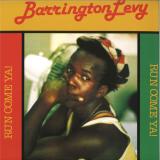
Long requested reissue of this 1981 Barrington album, featuring some tracks not available elsewhere, like "Full Understanding" as played by the great Jah Shaka. The whole LP is heavy stuff from the Radics + Scientist combination of the day, like all Barrington's classic early albums. This album has only been available very briefly a couple of times since its original release, and it's back here pressed from new stampers from the original mothers, which means you're getting a record identical to the original press. An essential album if you love the heavy sound of the early 80s.
Don Cherry, armed with a voracious musical appetite and boundless imagination, first made a name for himself - though not always fully understood - alongside Ornette Coleman, playing trumpet or cornet. In Los Angeles and then New York, he stood at the heart of a revolutionary approach to improvisation based on melody rather than harmony, later baptized "Free Jazz," the final structural development of American jazz. Over time, he became a champion of improbable fusions - gradually integrating into his style a whole array of "exotic" instruments, and more importantly, the cultures from which they originated. Among them: India, Brazil, Africa, Indonesia, and even China. The time had come for the emergence of "world music": in hindsight, a patchwork rich in imagination and seduction, but once the novelty wore off, often lacking in substance.
In Don Cherry's case, however, the commitment ran deep - tied to his personal engagement with a global vision of art and the human condition. Ustad Ahmed Latif Khan, from the Delhi gharana (a musical lineage), was part of a new generation of accompanists - percussionists, sarangi players, flutists, etc. - who had extended both the technical and conceptual possibilities of their predecessors to gain recognition as soloists and soon to venture onto the international scene. Among them, Latif stood out for his taste for irregular, highly syncopated rhythmic patterns - rich in variety and originality. Don and Latif had never met before the recording session, but the two quickly recognised one another as kindred spirits - calm, focused... and full of laughter. Don clearly knew what he wanted to create, and nothing seemed to pose a challenge for Latif, who grasped the American's intentions immediately, warmed up his fingers at astonishing speed, and with his perfect pitch, naturally took on the role of tuning Don's diverse instrument collection to match whatever was found in the studio - from concert piano and Hammond B3 organ to chromatic orchestral timpani.
A gateway to the scene’s halcyon days, “Assembled Vol. 1” is a curated compendium of never-before-released private rarities, edits, and reworks by modern masters of the craft. Of unknown origins, unlisted, and in true underground spirit, “Assembled Vol. 1” embodies the creative and unbridled ethos of a scene built on reinvention, revamping cornerstone classics under a different kind of light, ushering them into an exciting new realm.
The third release on Midnight Fashion Chill gracefully continues the label’s elegant, soul-soothing direction, this time through the warm voice of Jaidene Veda. The original Across The World stands as a true gem: a silky, gently flowing composition where soft, understated drums and delicate piano lines create an intimate, contemplative atmosphere. The From P60 rework tightens things up a little, adding a touch more groove while preserving the track’s airiness and emotional subtlety.
The next on is Kai Alcé’s remix. The Atlanta based producer injects the track with his signature classic-house energy: deeper basslines, dancefloor-ready rhythms, and an overall sophistication that makes the remix both driving and refined. This is the version guaranteed to move the crowd — vibrant, stylish, and tailormade for late-night club moments. The three faces of Across The World show just how far a well-crafted vocal track can be stretched. Midnight Fashion Chill’s latest release manages to be both relaxing and dance-inducing — exactly the kind of balance that makes this series worth following.
The Éthiopiques series returns! Essential archive recordings from an extremely fruitful period in Ethiopian music.
Before “Swinging Addis” took over the world, there was Moussié Nerses Nalbandian — the Armenian-born composer who shaped modern Ethiopian music. Mentor, arranger, and pioneer, he laid the foundations of Ethio-jazz.
This Éthiopiques volume revives his forgotten legacy, recorded live by Either/ Orchestra First issue ever with new exclusive photos and in depth liner 8-page insert.
“Ethiopian jazzmen are the best musicians that we have seen so far in Africa.
They really are promising handlers of jazz instruments.”
Wilbur De Paris
(1959, after a concert in Addis Ababa)
አዲስ፡ዘመን። *Addis zèmèn* **A new era.**
The time is the mid-1950s and early 1960s, just before "Swinging Addis" bloomed – or rather boomed – onto the scene. Brass instruments are still dominant, but the advent of the electric guitar, and the very first electronic organs, are just around the corner. Rock’n'Roll, R’n’B, Soul and the Twist have not yet barged their way in. Addis Ababa is steeped in the big band atmosphere of the post-war era, with Glenn Miller's *In the* *Mood* as its world-wide theme song, neck and neck with the Latin craze that was in vogue at the same period. Life has become enjoyable once again, with the return of peace after the terrible Italian Fascist invasion of Ethiopia (1935-1941). The redeployment of modern music is part and parcel of the postwar reconstruction. *Addis zèmèn* – a new era – is the watchword of the postwar period, just as it was all across war-torn Europe.
The generation who were the young parents of baby boomers** were the first to enjoy this musical renaissance, before the baby boomers themselves took over and forever super-charged the soundtrack of the final days of imperial reign. Music is Ethiopia's most popular art form, and very often serves as the best barometer for the upsurge of energy that is critical for reconstruction. Whether it be jazz in Saint-Germain-des-Prés or the *zazous* who revolutionised both jazz and French *chanson* after the *Libération*, be it Madrid's post-Franco Movida, or Dada, the Surrealists and *les années folles* that followed World War I, the periods just after mourning and hardship always give rise to brighter and more tuneful tomorrows. Addis Ababa, as the country's capital, and the epicentre of change, was no exception to this vital rule.
**Two generations of Nalbandian musicians**
Nersès Nalbandian belonged to a family of Armenian exiles, who had moved to Ethiopia in the mid-1920s. The uncle Kevork arrived along with the fabled "*Arba Lidjotch*", the** "*40 Kids*", young Armenian orphans and musicians that the Ras Tafari had recruited when he visited Jerusalem in 1924, intending to turn their brass band into the official imperial band. If Kevork Nalbandian was the one who first opened the way of modernism, pushing innovation so far as to invent musical theatre, it was his nephew Nersès who would go on to become, from the 1940s and until his death in 1977, a pivotal figure of modern Ethiopian music and of the heights it. Going all the way back to the 1950s. Nothing less. And it is Nersès who is largely to thank for the brassy colours that so greatly contributed to the international renown of Ethiopian groove. While the younger generations today venture timidly into the genealogy of their country's modern music, often losing their way amidst a distinctly xenophobic historiographical complacency, many survivors of the imperial period are still around to bear witness and pay tribute to the essential role that "Moussié Nersès" played in the rise of Abyssinia's musical modernity.
Given the year of his birth (15 March 1915), no one knows for sure if Nersès Nalbandian was born in Aintab, today Gaziantep (Turkiye/former Ottoman Empire) or on the other side of the border in Alep, Syria... What is certain is that his family, like the entire Armenian community, was amongst the victims of the genocide perpetrated by the Turks. Alep, the place of safety – today in ruins.
Before Nersès then, there was uncle Kevork (1887-1963). For a quarter of a century, he was a whirlwind of activity in music teaching and theatrical innovation. *Guèbrè Mariam le Gondaré* (የጎንደሬ ገብረ ማርያም አጥቶ ማግኘት, 1926 EC=1934) is his most famous creation. This play included "ten Ethiopian songs" — a totally innovative approach. According to his autobiographical notes, preserved by the Nalbandian family, Kevork indicates that he composed some 50 such pieces over the course of his career. This shows just how much he understood, very early on, the critical importance of song as Ethiopia's crowning artistic form. Indeed, for Ethiopian listeners, the most important thing is the lyrics, with all their multifarious mischief, far more than a strong melody, sophisticated arrangements or even an exceptional voice. (This is also why Ethiopians by and large, and beginning with the artists and producers themselves, believed for a long time — and wrongly — that their music could not possibly be exported, and could never win over audiences abroad, who did not speak the country's languages).
Last but not least, one of Kevork's major contributions remains composing Ethiopia's first national anthem – with lyrics by Yoftahé Negussié.
Nersès Nalbandian moved to Ethiopia at the end of the 1930s, at the behest of his ground-breaking uncle. Proficient in many instruments (pretty much everything but the drums), conductor, choir director, composer, arranger, adapter, creator, piano tuner, purveyor of rented pianos,... he was above all an energetic and influential teacher. From 1946 onwards, thanks to Kevork's connexion, Nersès was appointed musical director of the Addis Ababa Municipality Band. In just a few years, Nersès transformed it into the first truly modern ensemble, thanks to the quality of his teaching, his choice of repertoire, and the sophistication of his arrangements. It was this group that would go on to become the orchestra of the Haile Selassie Theatre shortly after its inauguration in 1955, which was a major celebration of the Emperor's jubilee, marking the 25th anniversary of his on-again-off-again reign.
At some point or other in his long career, Nersès Nalbandian had a hand in the creation of just about every institutional band (Municipality Band, Police Orchestra, Imperial Bodyguard Band, Army Band, Yared Music School…), but it was with the Haile Selassie Theatre – today the National Theatre – that his abilities were most on display, up until his death in 1977. To this must be added the development of choral singing in Ethiopia, hitherto unknown, and a sort of secret garden dedicated to the memory of Armenian sacred music, and brought together in two thick, unpublished volumes. Shortly before his death (November 13, 1977), he was appointed to lead the impressive Ethiopian delegation at Festac in Lagos, Nigeria (January-February 1977).
His status as a stateless foreigner regularly excluded him from the most senior positions, in spite of the respect he commanded (and commands to this day) from the musicians of his era. Naturally gifted and largely self-taught, Nerses was tirelessly curious about new musical developments, drawing inspiration from the very first imported records, and especially from listening intensely to the musical programmes broadcast over short-wave radio – BBC *First*. A prolific composer and arranger, he was constantly mindful of formalising and integrating Ethiopian parameters (specific “musical modes”, pentatonic scale, and the dominance of ternary rhythms) into his “modernisation” of the musical culture, rather than trying to over-westernise it. It even seems very probable that *Moussié* Nerses made a decisive contribution to the development of tighter music-teaching methods, in order to revitalise musical education during this period of prodigious cultural ferment. Flying in the face of all the historiographical and musicological evidence, it is taken as sacrosanct dogma that the four musical modes or chords officially recognised today, the *qǝñǝt* or *qiñit* (ቅኝት), are every bit as millennial as Ethiopia itself. It would appear however that some streamlining of these chords actually took place in around 1960. It was only from this time onward that music teaching was structured around these four fundamental musical modes and chords: *Ambassel*, *Bati*, *Tezeta* and *Antchi Hoyé*. A historical and musical “details” that is, apparently, difficult to swallow, especially if that should honour a *foreigner*. Modern Ethiopian music has Nersès to thank for many of its standards and, to this day, it is not unusual for the National Radio to broadcast thunderous oldies that bear unmistakable traces of his outrageously groovy touch.
Self-sabotage can be a devious and deadly mechanism of the mind that creates obstacles on the path to one's goals. To tackle the problem, one needs to have a clear understanding and awareness of the causes, costs and the negative consequences it can bring; overcoming this process leads us to evolve towards new limits and boundaries.
Even before the launch of the Concorde MkII, we have always studied the feedback of our customers and how they utilize our products.
Skilled DJs demand specialized tools that can help them push their creativity to the edge – consistently testing the boundaries in the realm of performance.
Understanding this and reflecting our extensive experience in industrial design and technological know-how, we present the Ortofon VNL cartridge – a model tailored uniquely to the unrelenting demands of modern turntablists and portablists.
The VNL features and improvements
? Extra resistance to hardcore scratching and back spinning
? High tracking performance for both DVS usage and real vinyl
? Optimal balance of output and of sound quality
Technological improvements have been applied for the benefits of all users:
- Ultrasonic welding of the components ensures high rigidity and freedom from resonances.
- Robotic assembly of stylus assembly offers high precision and uniformity of industrial production.
VNL Premounted
Expertly paired and premounted on our popular black SH-4 Headshell, the VNL Single cartridge is compatible with any standard DJ turntable and tonearm.
The quality of the SH-4 headshell is sturdy and rigid, with high quality tonearm terminal connections. One of the standout features of the VNL Premounted cartridge is its versatility. The universal mount fitting allows it to be used with a wide range of S-shaped tonearms, making it a great option for DJs who use multiple setups. The ergonomic design of the headshell includes a long finger lift that is easy to pick up and use, making it ideal for busy DJ sessions. And with its plug and play design, the VNL Premounted cartridge is ready to go right out of the box!
Features:
?Premounted on Ortofon SH-4 Black headshell
?Universal mount fitting a wide range of S-shaped tonearms
?Correct Baerwald alignment with the major part of tonearms with universal mount
The VNL Premounted is supplied with the stylus VNL II premounted on the VNL cartridge body.
3 different feels to fine-tune your performance
To match the multiple applications of modern DJs, the VNL is interchangeable with 3 different styli with suspension types of varying feel and rigidity:
- Stylus VNL I compliance, dynamic lateral 16 μm/m N - Flexible
- Stylus VNL II compliance, dynamic lateral 15 μm/m N - Rigid
- Stylus VNL III compliance, dynamic lateral 14 μm/m N - Firm
DJs can easily identify which stylus type best suits their individual DJ style and enables their absolute best performance capability.
All three VNL styli variants are available separately.
The VNL SINGLE PACK is supplied with the stylus VNL II premounted on the VNL cartridge body.
Output voltage at 1000Hz, 5cm/sec. - 6 mV
Channel separation at 1kHz - 20 dB
Frequency response 20 Hz - 20 kHz -2/+4 dB
Tracking ability at 315 Hz at recommended tracking force:
VNL I 100 μm
VNL II 90 μm
VNL III 90 μm
Compliance, dynamic lateral:
VNL I 16 μm/m N
VNL II 15 μm/m N
VNL III 14 μm/m N
Tracking force range - 3 - 5 g
Tracking force recommended - 4 g
Internal impedance, DC resistance - 750 Ohm
Internal inductance - 450 mH
Recommended load resistance - 47 kOhm
Recommended load capacitance - 200-600 pF
Cartridge weight - 6,5 g
Replacement stylus units: VNL I, VNL II, VNL III
Antiskating: for best backcueing performance use “0”
After following Luke Blair's work for approaching two decades from his 2007 debut as Lukid on Actress' Werk Discs, we're humbled to present a new album on Death Is Not The End. Following relatively hot on the heels of 2023's Tilt (his first in 11 years, not counting his work with Jackson Bailey under the Rezzett guise) Underloop brings Blair's innate knack for building loops and sound structures further to the surface, while allowing his ear for emotional expression to be dialled up a notch. Those fortunate enough to be familiar with Lukid's work as a DJ will be aware of how distinct his ability is to seamlessly disappear into loop-based abstraction and back again seemingly without blinking, and often Underloop feels much like a collection of the sludgey interludes and foggy sketches that underpin his sets. Blending apparently ramshackle melodies and textures and pulling them together into an undeniable whole, Blair's tendency for pairing the simple and the indescribable with an understated vigour is fully on show here.
Written and produced by Luke Blair. Mastered by Giuseppe Ielasi.
Astropolis Records, the label born from the legendary Brest festival, marks a decade of electronic devotion with a sprawling, heartfelt anniversary compilation — slightly belated, but executed with undeniable flair.
It also comes in two EPs, showcasing the many facets of the Astropolis universe: in-house artists, long-time festival collaborators, and fresh talent from France’s ever-bubbling scene. Eighteen artists guide us through a sonic journey where rave heritage, electronic dreamscapes, and collective fervor intertwine — true to the spirit of a festival that has never recognized borders
The first EP bathes in warm tones across electronica, house, g-tech, old-school rave, and melodic techno.
It opens with grace and magic via Rone, whose electronic touch conjures the intimate and the infinite. Between electronica and downtempo, The Dolphin Ambassador delivers luminous melancholy, offering a gentle calm before the storm.
The unlikely pairing of Mézigue and Swooh catapults house into a g-tech vortex with the unrestrained Broken Roll To Venice, a compact fusion of groove, hybrid sounds, and playful inventiveness.
Belaria & Madben continue this alchemical thread on Into The Void, an incendiary anthem where 90s rave, EBM, and modern intensity collide in hypnotic trance.
For old-school dancefloor loyalists, KiNK finally resurrects a cult live set staple: Give Me, a bona fide banger merging breakbeat and vintage house, engineered for late-night sweat sessions.
Oniris & Benjamin Rippert revisit the melodic techno roots of the label on Sonate, demonstrating a masterful command of harmony.
This anniversary compilation underscores the label’s openness to new generations and recent sonic hybrids, while paying homage to the techno scene that shaped its early days. Much like the festival itself, it embodies the same sincerity and collective energy: a small manifesto connecting generations, aesthetics, and territories — celebrating roots without nostalgia, and the future without bowing to trends.
Hot Creations Autumn 2025 Vinyl Sampler featuring four of the Hottest recent release on Hot Creations.
When Jamie Jones and Nicole Moudaber first collaborated on Hot Creations in 2020 with ‘Pepper Shake’, five years on, the pair return with ‘Where All My People’, a powerful anthem that merges Jamie’s signature groove-led style with Nicole’s unmistakable drive and energy. The record is further elevated by the infectious vocals of London-based duo House Of Molly, ‘Where All My People’ is a celebration of rhythm, anchored by a rolling bassline and crisp percussion that form a tight, understated groove. House of Molly’s commanding vocal hook runs through the track like a thread of energy, adding a human touch that feels both intimate and anthemic. Marking his second outing on Hot Creations, OMRI. is back with ‘Release The Pressure’, a pulsating, groove-driven heater made for full-throttle moments featuring Benny Ola on vocals. Crisp percussion, hooky vocals, sharp synths, and low-end pressure come together in a track that simmers with controlled intensity.
On the flip Joshwa makes a much-anticipated return to Hot Creations with ‘Lost In Music’ which reimagines a timeless disco classic through a contemporary house lens, delivering textured percussion, sparkling funk-laced synths, and an infectious groove that captures the euphoria of sweat-drenched dancefloors.As Hot Creations celebrates its 15th anniversary in 2025, label co-founder Lee Foss makes a long-awaited return to the imprint for the first time in half a decade with a powerful new collaboration alongside Colorado based talent GS5. ‘In The Ghetto’ hits with low-slung swagger and vibrant vocal energy, channelling a bass-heavy strut and hypnotic vocal loops that nod to early Hot Creations flavours while pushing into contemporary terrain.
From the soulful underground of Argentina comes a new chapter on Abuelo Negro Limited, the Taylor Fass EP. A beautifully crafted release that bridges emotion, groove, and timeless aesthetics. Each track unfolds with subtle depth: warm pads, dusty percussion, hypnotic basslines, and that unmistakable deep-house pulse that feels both classic and fresh. It’s music for intimate dancefloors and late-night reflection, the kind of sound that connects body and soul without ever forcing attention. Taylor Fass EP embodies the label’s spirit, raw yet refined, deeply human and full of feeling. The stunning artwork completes the vision, reflecting the warmth, nostalgia, and understated elegance of the music itself. A heartfelt release from Buenos Aires to the world, for those who still believe that house music is more than rhythm, it’s emotion.
BQD050–Arno: "We Perfectly Understand Each Other Until We Start To Talk – The Remixes"
To mark the 50th release on Brouqade, we reach back into the catalog and release as a set of remixes Arno's album “We Perfectly Understand Each Other Until We Start To Talk” a work that touches on the finer problems inherent to human communication.For this unique Album, released in 2019, three distinctive reworkings offer new breath to the original tracks: Baby Ford conducts a lean and hypnotic revision played in minimal fashion, Kuyateh widens out textures with deep organic rhythms and Dana Ruh puts her distinctive groove-orientated stamp on the material.
The bonus on the release is from Arno — a meditative composition that acts as middle ground in terms of his musical language.
In operation midway between introspection and movement, BQD050 depicts the very spirit of Brouqade: depth, warmth, a timeless dancefloor poetry.
Bread&Butter Records celebrates its 10th EP with a powerful statement from Romanian duo NTFO, a name synonymous with precision minimalism and timeless groove. The release unfolds across four masterfully produced tracks, each one engineered for those moments when the dancefloor turns into something deeper, heavier, and unforgettable.
Calibre sets the tone in classic NTFO fashion. Its stripped-bacb bassline rolls with hypnotic intent, carrying just enough weight to lock the floor in. By the three-minute mark, subtle shifts into a trance-like state, gently elevating the room into waves of euphoric release. It’s understated yet devastatingly effective, the type of cut that DJs treasure for its power to transform the atmosphere without ever shouting too loud.
Electr pares things back even further, pushing into pure minimal territory. Built on a sleek harmonic groove, it’s a masterclass in restraint, every sound feels perfectly placed, every movement precise. This is a track that thrives in the early hours, where tension, patience and subtle shifts in rhythm rule the floor.
Forap flips the script, injecting an upbeat energy that hits with instant impact. Around the three-to-four minute mark, a vocal element cuts through, commanding attention before the groove locks back in with unstoppable momentum. Hypnotic yet uplifting, it’s the perfect peak-time tool a track that lifts the room into a collective high, as though flying on pure feeling.
Nanomos closes the EP with finesse. A deeper, darker exploration, it glides through murky textures and intricate percussive details, carrying an otherworldly atmosphere that keeps the listener suspended in motion. It’s a slow-burner that lingers long after the last note fades, a testament to NTFO’s ability to balance groove and emotion in equal measure.
With this release, Bread&Butter not only cements its reputation as one of London’s most exciting underground imprints but also showcases NTFO at their most refined. Four cuts, four moods, all bound by that unmistakable Romanian touch that continues to set standards worldwide.
From the depths of Greyscale’s acclaimed Mood Series, a new chapter rises to the surface: Deemkeyne – Ending Dynasty.
Across four immersive cuts, Deemkeyne sculpts a sound world rooted in the foundations of dub techno yet unafraid to push into fresh territories. Each track is built with raw textures and spatial awareness, weaving hypnotic patterns that echo through space like sonic architecture. Sub-bass pulses anchor the body while hazy chords and shifting atmospheres guide the mind into a deeper state.
This is dub techno and house at its most essential- music for true heads who understand the beauty in restraint, the subtle power of repetition, and the art of detail. Whether in the intimacy of a late-night set or the solitude of a headphone journey, Ending Dynasty unfolds with timeless weight and precision.
Pressed with care and presented on vinyl for the first time, this release is not just another record, it’s an invitation to step inside Deemkeyne’s world of shadows, echoes, and infinite space. A must-have addition to the shelves of anyone dedicated to the underground continuum.
This is the story of how a tiny label from New Jersey changed the course of music history not once but twice.
Cheri Records was established in 1974 in New Jersey and run by one Boo Frazier. Cheri's output was limited, producing a catalogue of just eleven releases between the years 1974 and 1982. On the face of it, this appears to be insubstantial output. However, if you dig a little deeper, the quality released on Cheri Records reveals an exceptional legacy of groundbreaking music.
A dark horse in the world of record labels, a true unsung legend that would go on to alter the course of musical history and intersect with a remarkable array of talented artists, bands and DJs. From Rare Pleasure; Sandy Barber; Julius Brockington; Boo Frazier; Patrick Adams; Tom Moulton; Larry Levan and MF Doom: Cheri Records has directly impacted their artistry in significant ways. Cheri's influence even extends into the present, with DJ icons like David Morales, Dave Lee, Danny Krivit, and Colin Curtis continuing to champion its contributions.
This compilation brings together the most compelling tracks from the Cheri Records catalogue, shedding light on the label's extraordinary story and underscoring the idea that music, no matter how unassuming its origins, can transcend boundaries and reshape, influence and inform music to come for future generations.
This collection also represents the start of a new series here on Miles Away, a series that will delve into the labels and studios that were responsible for leaving a lasting imprint on the musical world. We've named this seriesEchoes From,and this compilation will be the first of many.
The vinyl package comes in a gatefold sleeve with in-depth liner notes and features interviews with Colin Curtis and David Morales. Also available on CD and digitally.
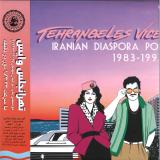
Discotchari is delighted to release a first-of-its-kind various artists compilation: Tehrangeles Vice (Iranian
Diaspora Pop 1983–1993), fully licensed from Taraneh Enterprises. The album is a groundbreaking exposé of
the vibrant subcultural hub of Tehrangeles (portmanteau of Tehran + Los Angeles), and the action–packed, true
story of the Iranian diaspora music industry. Featuring 12 tracks remastered by award–winning Osiris Studio,
lyrics and translations to all featured songs, original cassette covers, a 20+ page album note booklet by Dr.
Farzaneh Hemmasi and more! Sprawling from Westwood to Glendale across the San Fernando Valley, the
Tehrangeles scene was cultivated by the same producers and artists who industrialized the “golden age” of
entertainment in pre–revolution Iran and fled from the 1979 Islamic Revolution along with millions of Iranian
citizens. Through music and visual media, Iranian producers and artists working out of Tehrangeles have
engaged in what the Iranian government calls a “cultural attack” against the Islamic Republic for over 40 years.
The album title Tehrangeles Vice underscores the illicit nature and daring circumstances from which
Tehrangeles pop music was born and compares its legacy within Persian media to one of the most significant
crime–drama TV shows of all time. In the same manner that Miami Vice and its aesthetics had a dynamic
impact on sonic, visual and cultural trends in the United States and around the world, Tehrangeles media was a
shock to the systems of Islamic Republic ideology and Iranian expatriate communities. Listening to these songs
in hindsight, the contribution of Tehrangeles can be better understood as a triumphant effort to preserve Iranian
identity by realizing it in conjunction with prevailing music genres of the ‘80s and ‘90s, and to rebel against the
oppressive regime of the Islamic Republic of Iran through the most seductive of means: dance music.
Updated remixes of two big Balearic classics on Best Record! "Describing Linda Di Franco is no easy task: a reserved, sometimes elusive artist with a career that is difficult to define. From an early age she was interested in various artistic fields. Working as a DJ in clubs, then on the radio, she took the opportunity to record her first musical demo, Stage, obtaining international recognition which quickly took her to England and to the States, where she recorded her first compositions, My Boss and T.V. Scene. The songs are of great value and achieve unexpected success, also included in The Rise Of The Heart, a milestone in the nascent revolution of club culture, a Balearic classic supported by DJs in love with the indefinable sound of Ibiza. But Linda is extraordinarily ahead of her time and despite the enormous fame has gained with her songs she is already oriented towards a career as a music video director. For this reason the Turin singer-songwriter turns out to be one of the least fruitful artists of her time, while her CV in Hollywood is impressive in various roles which she holds, in addition to that of actress and director, that of impeccable sound technique. Intelligent artist, full of good and positive feelings and certainly also ambitious, but extremely scrupulous by subjecting sounds in cinema to careful review. Yes! The "sound" is an investigative tool for her, a way of understanding art. Linda Di Franco is - willy-nilly - still the undisputed queen of the Balearic sound today. So, she decided to produce Redux, a limited edition album published by Best Record, in which her most intrepid and famous songs are re-proposed in the jazz versions edited by her friends from Turin and Los Angeles. Then she had to give in to the boundless passion of Danilo Braca, the Italian DJ based in New York, who deserves credit for the successful combination of refined and ethereal songs with the disco genre. TV. Scene - Epic Remix, TV. Scene - Costa del Sol Mix and My Boss - Remix are Danilo's pearls, created with the help of excellent international musicians who with more defined and current sounds have added their art to that of Linda."
“…I still don’t understand what is the meaning of these Poppers records, please unsubscribe me from this newsletter.”
• Hans Zimmer
If you’ve ever been in the countryside and happened to lift a larger rock that might have been laying about for a while only to find an entourage of many different insects scrambling about in awe of the existence of sunlight and wondered what music they might have been listening to in that moment, the A-side tries to explore ways of responding to such curiosities. While the B-side, to end things on a good note, offers a convenient edit of live Japanese cover version of Paul McCartney’s “Silly Love Song” along with the quintessential prelude (or interlude) to a Horse Meat Disco party with the opening monologue of Sidney Lumet’s Equus. All in all, a Swiss Army knife packed with an assortment of most likely useless tools, courtesy of DJ Dipshit.
The third and final volume of Classic’s 30th Anniversary vinyl series brings the party full circle - blending deep catalogue cuts, future-forward house, and tracks from the label’s tight-knit family of collaborators.
Like the volumes before it, this 2x12” release arrives in a raw reverse board outer sleeve, a nod to the aesthetic of Classic’s earliest releases. Inside, bold yellow and red GMUND card stock inner sleeves with embossed detailing reflect the label’s long-standing commitment to design, artistry, and collectability.
Record One kicks off with a certified Classic family affair. Home & Garden’s ‘Sexuality...He's 2 Young’ features the unmistakable voice of DJ Colette, a staple of Classic’s early era. Included here is JT Donaldson’s Porno Beat Down Remix—a stripped, low-slung rework with an irresistibly funky bass line and pure dance floor chemistry.
Brett Johnson’s ‘Jiffy Pop’, from his legendary Bounce! EP, follows up with a jittery, swaggering groove that epitomises Brett’s playful, funk-laced production style. Infectious, weird, and entirely unforgettable.
On the flip, Tiefschwarz’s ‘Acid Soul’ delivers a moody, muscular roller. Originally released during their prolific run on Classic in the early 2000s, it fuses baritone sax stabs, a Berlin-borne bass line, and a sultry vocal into a deeply spiritual house cut.
Roy Davis Jr. closes Side B with the propulsive ‘About Love’ (Solid Groove Remix)—a tough and driving interpretation by Dave Taylor that’s long been a DJ favourite in the Classic vaults.
Record Two showcases Classic’s more recent sonic evolutions. JT Donaldson’s return to the label in 2019 came with ‘Stay Inside’, a rich and breezy groove featuring the soulful voice of Liv.e. It’s an elegant and understated slice of modern house with timeless appeal.
Then comes Dam Swindle’s funk-charged ‘Hey Mister’. A punchy, bass-driven jam built around a 70s reggae-disco vocal sample. Raw and infectious, it’s been lighting up dance floors worldwide since its release.
Luke Solomon’s catalogue on Classic is vast, but ‘Come on Over’, his collaboration with Amp Fiddler, earns its place here. Seeing vinyl release for the first time, this cut overflows with musicality. Amp’s passionate vocal, free-time breakdowns, and deep funk grooves deliver pure emotional punch.
And to close, a modern masterpiece: Honey Dijon’s ‘Work’ (Extended Mix), taken from her ‘Black Girl Magic’ LP. Featuring Dave Giles II, Cor.Ece, and Mike Dunn, this powerhouse track brings together fierce vocal performances, live instrumentation, and top-tier production. It embodies everything Classic stands for: collaboration and innovation on the dance floor.
Unearthed from the Crammed Discs vaults after nearly four decades (Originally recorded in 1987), a hidden gem finally sees the light. Maurice Poto Doudongo’s The Lost Album arrives on vinyl for the first time—limited to 500 copies, with printed inner sleeve featuring release notes and photographs.
Back in the hazy margins of late-’80s Brussels, where boundary-blurring sounds were seeping through the cracks of pop music, a young autodidact named Maurice Poto Doudongo was crafting music that didn’t quite belong to any scene. Born in Kinshasa and growing up in Belgium, Maurice was a sonic nomad—raised on Franco, Miriam Makeba, and Tabu Ley Rochereau, transfixed by James Brown and Prince, and shaped by the fertile collision between African music and experimental electronics occurring all around him.
Leaving school at 16 to concentrate on music full-time, he began recording on borrowed 4-tracks, using cardboard boxes for percussion, and absorbing whatever sounds the airwaves served him: “Music has no frontier,” he says. “You take what you like. Prince, Fela, Papa Wemba—there is no contradiction. It’s all part of the sound.”
The result? A record that’s equal parts analog drum machine funk, homegrown Afro-pop futurism, and new wave R&B-informed synth poetry. Marc Hollander, founder of Crammed Discs, met Maurice through his friend and associate, musician/producer Vincent Kenis and quickly recognized the spark. The two began working in earnest, preparing tracks intended for a full-length release that, for reasons lost to time and memory, never materialized—until now.
Marc remembers: “The album was never completely finished. “Bolingo” was the only track that came out on a Crammed compilation at that time… and the rest sat on the shelf for decades until we started opening the Crammed vaults.”
Maurice recalls the session as being, “like an unstoppable current”. Listening now, the Lost Album feels both of its time and well beyond it. While tracks like “Momo” sound not a million miles away from the slinky and sophisticated Balearic pop ambience of Wally Badarou’s Echoes album, "Passport Train" shakes itself loose of any genre boundaries, veering into free-form Afro-electronica and tough electronic rhythm. Others pulse with a sweet and soulful groove that suggests dance floors dreamed of but never reached.
In decades hence, Maurice never left music, and the music never left him. Now working mainly as an arranger, he describes his job as being like that of a musical psychologist: “Someone comes to me with their sound, and before anything I have to understand their mind and heart,” he explains. That same intuitive fluency can be heard across this entire album—music that listens before it speaks, that absorbs before it asserts.
This reissue is more than a remastering. It’s a second breath. Sourced from cassette roughs and 24-track demos, carefully restored with Maurice’s blessing, and released as a complete album on vinyl for the very first time, The Lost Album isn’t lost anymore.
It just took nearly 40 years to find its way to you. - Editions de Lux
LA based theroomintheback returns with another vinyl-only release, featuring the legendary Jay Tripwire, youknowwhat resident Max Colleto, label curator JJ Selects, and the understated Luis Lozano.
KR3.018 KR3 proudly welcomes Jin Synth & Marco Maldarella to its roster. To mark the conclusion of the label's fifth anniversary cycle, launched in September 2024, KR3 together with these two talented artists, presents "The Neural Abyss" a split EP that embodies both an ending and a new beginning through the theme of "Death/Rebirth".
This 4-track project, showcases the distinct yet complementary visions of Jin & Marco, each taking one side of the 12" vinyl. Together, their work invites listeners on a profound exploration of hypnotic, deep brainwave states. Let's celebrate the final chapter with this exciting collaboration! KR3 | 5YRS Down-Road
The begena is a large ten-stringed lyre which is part of the traditional Amharic heritage of Ethiopia. The Amharas, who have long formed the politically and culturally dominant people of Ethiopia, mainly inhabit the central and northern part of the country. In the majority, they follow the monophysite Orthodox Tewahido Church established in the early fourth century AD.
Music plays a very important part in the life of the church. Most of the liturgy is sung and, contrary to secular music, it is accompanied by percussion instruments only. The begena occupies a special place because it is the one melodic instrument exclusively dedicated to the spiritual repertory. Because of its mythical origin, it is highly respected. Tradition holds that the begena was given to king David by God, and brought to Ethiopia by Menelik I, together with the Ark of the Covenant. It has always been the instrument of kings and nobles. Played by pious men and women of letters, it never became widespread. But it never disappeared either, not even under the Derg regime (1974-1991) which had banned the instrument.
Among Amhara string instruments, the begena is the most carefully crafted, especially with regard to the ornately sculpted crossbar. Its ten gut strings are cleaned and twisted several times. The characteristic buzzing timbre equalled by no other Amhara instrument is due to the enzirotch, that is, small bits of leather placed between each string and the bridge. This plays an important part in the sound production by creating a brief contact between the string and the upper rim of the bridge, thus modifying the vibrating properties of the string. In this manner, the spectrum of the sound is considerably enhanced (up to over 10 kHz).
The begena is a very powerful instrument, it keeps the devil thirty steps away, and its presence in the home wards off malicious spirits. Priests and preachers recommend its presence, especially during Lent (Fassika Tsom) when the Orthodox Amharas ponder their sins and repent. Because of its spiritual import, the begena generates intense emotion. According to some musicians, playing the begena brings them into direct contact with God or the Virgin Mary. The religious role of the begena is underscored by the shape of the instrument, each part symbolises an important element of the faith. The crossbar for instance, which reaches across the entire width of the instrument, represents God who is above all things. The belly which "gives birth" to the sound represents the Virgin Mary, and the ten strings recall the Ten Commandments.
Recorded by Stéphanie Weisser in Addis Ababa, Ethiopia, March 2002-December 2005.
WEorUS has long been synonymous with forward-thinking electronic music, and their upcoming vinyl release further cements their reputation for sonic innovation. Featuring four distinct tracks from Anushka, Dragosh, Fabrizio Siano and Kaitaro, this record presents a nuanced exploration of groove, minimalism, and jazz-infused experimentation.
The release opens with Anushka’s “LVOE” a track that radiates warmth and rhythmic fluidity. Built upon a foundation of deep grooves and hypnotic layers, it embraces organic textures that evolve subtly throughout the arrangement. Expect an inviting bassline, shimmering synth work, and a rhythmic interplay that beckons dance floors into motion.
Dragosh delivers “Lampone” a groovy minimal cut that balances intricate percussive elements with a refined sense of space. There’s an air of elegance in the way this track unfolds—tight drum programming meets delicate sound design, resulting in an immersive experience that feels both intimate and expansive. A staple for selectors who appreciate understated yet compelling compositions.
Fabrizio Siano’s “What is Jazz” a contemporary minimal jazz experiment that defies conventional genre boundaries. Jazz-inflected chords weave through delicate electronic structures, resulting in a fusion that feels both nostalgic and futurist. A celebration of improvisation and groove, this track adds a sophisticated touch to the vinyl.
Dark, introspective, yet strangely hypnotic, Kaitaro’s “Nightmare” introduces a deep minimal aesthetic that veers toward atmospheric intensity. Layers build with eerie precision, each element strategically placed to create an evolving soundscape that feels cinematic yet firmly rooted in club dynamics. This is minimal at its finest—moody, unpredictable, and meticulously crafted.
The begena is a large ten-stringed lyre which is part of the traditional Amharic heritage of Ethiopia. The Amharas, who have long formed the politically and culturally dominant people of Ethiopia, mainly inhabit the central and northern part of the country. In the majority, they follow the monophysite Orthodox Tewahido Church established in the early fourth century AD.
Music plays a very important part in the life of the church. Most of the liturgy is sung and, contrary to secular music, it is accompanied by percussion instruments only. The begena occupies a special place because it is the one melodic instrument exclusively dedicated to the spiritual repertory. Because of its mythical origin, it is highly respected. Tradition holds that the begena was given to king David by God, and brought to Ethiopia by Menelik I, together with the Ark of the Covenant. It has always been the instrument of kings and nobles. Played by pious men and women of letters, it never became widespread. But it never disappeared either, not even under the Derg regime (1974-1991) which had banned the instrument.
Among Amhara string instruments, the begena is the most carefully crafted, especially with regard to the ornately sculpted crossbar. Its ten gut strings are cleaned and twisted several times. The characteristic buzzing timbre equalled by no other Amhara instrument is due to the enzirotch, that is, small bits of leather placed between each string and the bridge. This plays an important part in the sound production by creating a brief contact between the string and the upper rim of the bridge, thus modifying the vibrating properties of the string. In this manner, the spectrum of the sound is considerably enhanced (up to over 10 kHz).
The begena is a very powerful instrument, it keeps the devil thirty steps away, and its presence in the home wards off malicious spirits. Priests and preachers recommend its presence, especially during Lent (Fassika Tsom) when the Orthodox Amharas ponder their sins and repent. Because of its spiritual import, the begena generates intense emotion. According to some musicians, playing the begena brings them into direct contact with God or the Virgin Mary. The religious role of the begena is underscored by the shape of the instrument, each part symbolises an important element of the faith. The crossbar for instance, which reaches across the entire width of the instrument, represents God who is above all things. The belly which "gives birth" to the sound represents the Virgin Mary, and the ten strings recall the Ten Commandments.
Recorded by Stéphanie Weisser in Addis Ababa, Ethiopia, March 2002-December 2005.
Meet Dr. Brown, a world-renowned astrophysicist who arrives with a ten-pound bag of gummy bears and a DVD box set of a reality show about competitive dog grooming. Before she loses herself in the flamboyant world of puffed poodles and outrageous hairdos, she organizes the gummies by color...
Judge White, on the other hand, unboxes a newly released LEGO set. But he isn't building a replica of the Supreme Court; he is constructing a bright pink, glitter-covered unicorn palace.
Opera singer Miss Black... growls along at the top of her lungs to Chesney Hawkes' "The One and Only", standing on a chair in a red-and-white striped bikini, using nunchucks as a microphone.
And finally, Mister Red, the MIT professor, known for his ironclad logic and severe demeanor, brings a collection of classic comic books. He isn't interested in modern, gritty superhero stories. His joy comes from the simplistic, colorful tales of superheroes with outlandish names like bqdp and ridiculous powers like the ability to selectively negate gravity for objects weighing exactly 13.37 kilograms (but only when standing in moonlight).
They are all members of a club where the rules are simple: no judgment, no professionalism, and no apologies. They understand that the most infamous guilty pleasures aren't those that are truly bad, but those that remind us that we are all, at our core, just human - finding joy in the simplest, most wonderful things, no matter how silly they may seem.
pdqb and DMX Krew gift you with six minutes of pure, unadulterated pleasure. You'll feel like you're locked inside an 80s mall with your best friend, free to do whatever you want. And you'll never want to leave.
On his sixth studio release Roulette, the prolific producer, songwriter, pianist and MC Alfa Mist has created his own sci-fi universe - a vast dystopia where themes of revenge, forgiveness and redemption loom large.
Alfa Mist’s albums have always tackled big themes. This time, however, he explores an imagined near-future in which reincarnation is discovered to be a potent tool linking dreams and past lives. But with this discovery comes consequences: ethical, moral and philosophical. “If reincarnation is real, how does that shape society?” he explains. “If reincarnation means accumulation of knowledge, would you share it and enable everyone to understand more about the world? Or do you struggle for power? And do some people want to stop others from remembering who they were?”
Over 15 tracks, Alfa explores these ideas with heady potency. Each song is a spin of the wheel – a different song and character. The musician’s signature is still there – lambent keys, intuitive groove, free-flowing jazz improvisation – but Roulette is imbued with a smoky psychedelia. An immersive listen, this album is designed “to feel” on every level, says Alfa. It also contains some of his most impressive arrangements yet - see the eight-minute title track that effortlessly flips through time signatures – “because life’s like that,” says Mist; it’s not always linear.
Roulette underlines Alfa Mist as one of the most forward-thinking composers in UK music, with poignant, plaintive melodies that lodge deep in your psyche. “I’m exploring different parts of myself,” he says. “But obviously, as I grow, all of those parts change. Music is a constant; it’s my state of mind that I constantly chisel and work on and make sure that’s always growing and staying interested in new things. As long as I do that, it’ll come out in the music.”
Focus, integrity and substance, all allied to a relentless work ethic and that essential (if indefinable) sprinkling of magic dust, have kept Nick Warren at the top of the electronic music tree for not far short of forty years.
In that timespan, Nick has been tour DJ for Massive Attack, held a residency at Cream, been a Glastonbury regular, and become the UK’s most successful export to Argentina (in no small part due to his touring brand The Soundgarden). As half of Way Out West, he has helped write (and re-write) the rule book for club-based electronic acts, achieving true longevity without compromise. He has curated over a dozen essential compilations – a mainstay of the Global Underground series whose heavyweight influence is still felt to this day, an in-demand decknician for pivotal brands such as Renaissance and Balance, and the very first DJ entrusted with creating a blueprint for the now iconic Back to Mine series.
It's quite the CV, a career many can only dream of. But Nick has long had one further itch in need of scratching. Inspired at a young age by his dad’s Jean-Michel Jarre and Tangerine Dream albums, coming of age with experimental labels like 4AD and Factory, roots deep in the dub-wise scene of his native Bristol, a long time collector of exotica and obscure film soundtracks…all that knowledge and passion has long been crying out to be channelled into a Warren solo album.
All of which brings us to the career-defining Turbulence. The world is certainly a turbulent place as Nick gets set to unleash his masterwork, but the musical turbulence at work here arguably takes its lead from other interpretations of the word – turbulence as a feeling of heightened intensity, turbulence marked by a sense of unpredictability.
Turbulence is a window into Nick’s musical soul, and the myriad styles and influences that reside there, drip-fed into a melodic melting pot to create a unique sonic stew. Tempos and styles switch and interlock effortlessly, the mood ebbs and flows like the best DJ sets, and the running order, from the ethereal opener Loveland all the way through to the achingly beautiful closing cut Sadly (in tandem with Tripswitch, one of several noteworthy collaborations) showcases an artist at the top of his game, and with a deep understanding of the concept of the long player.
Emotional Response is delighted to present the debut EP of Aaron Coyes (Peaking Lights / Leisure Connection) new project, as Exotic Gardens. An additional music universe as his love of dub expands to include new wave, goth and acid psychedelics across 5 catchy, bass heavy songs.
While the continuing journey of his duo band, Peaking Lights, with his wife Indra, earns plaudits and fans alike, his early years as a one-man lysergic music polymath that saw his youth in punk and hardcore bands, expanded during a mid-90s burst of “living in San Francisco” creative expansion, devouring music, genres, and influences for life.
Started as a sub-project to Peaking Lights and his personal dub excursions, Exotic Gardens pollinates a rich tapestry. Recording through the pandemic in their then home in Amsterdam, before being archived, assembled, and completed following the move back ‘home’ to the West Coast, California.
Re-embracing that love of his inner goth, the analogue warmth is all there, now featuring Coyes’ dub-languidity of stripped drum machines, widescreen bass, haunting guitar lines and an almost idle voice to peddle true, raw songs.
Combined, the pop layer of hooks and tight grooves instantly catch you. Opener and EP title, Drugs & TV is the perfect anthem for the Exotic Gardens sound, before the “dubwave” of Last Of The Light and Tonite shimmer that yearning melancholy of youth.
In the almost 10 minute dub house opus Organize Your Movement an appreciation and understanding of the psychoactive properties of the Roland 303 and 909, they also hark to a love of Industrial / Noise bands, a lineage from the death pulse of his cult project Rahdunes through to Sound Design and Sound System culture to the pop-dub psychedelics with Indra, now melded here to include a dark assault, whispering invocations and pulsing pads.
To close, Turn It On is a roaming multi-genre evocation, an exotic end from this constant troubadour, cassette junkie, record dealer, sound system builder, always looking to get back on the road, to live to roam.