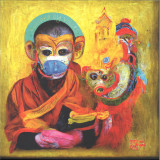
A long-in-the-works project of ours, here comes A Tribe Called Kotori's first foray into full-length territories, as the immensely talented Rampue takes us on a melancholy-riddled ride across his phantasmatic mindscapes. A true sound explorer, deftly steering his ship down the junction of electronica, abstract and balearic-infused prog house, the Berlin-based vibist has us transfixed and elevated throughout the twelve cuts that form the backbone to this lushly textured promenade in sound - at times understatedly euphoric, at others rivetingly exotic.
Of the creative process that lead to 'Bubblebath Trance', Rampue explains "It all started and ended in the same moment: my cherished feline companion, my laptop awash with an unintended bath, and alas, a dearth of backups. The resultant calamity, an echo of chaotic tranquility." Under the generous layer of irony lies some unaltered truth about Rampue's debut long-player for A Tribe Called Kotori: this sense of serenity that goes with stepping into this warm and bubbling primitive chaos of sorts infuses the listening experience far and wide. Distantly emulating the "euphonious strains" of iconic PS1 video games soundtracks from his youth days, the album has us surfing a constant paradox of emotions, wistful but not abandoning itself to sorrow, dynamic yet suspended in some sort of mind-expanding stasis. As if you were looking at the world beneath you in exploded view, conscious of all thing, slowly moving up the many layers of our atmosphere towards uncharted skies.
A paragon of Rampue's most poignant take on classic electronica tropes, 'Harmonie' blazes with a poetic fire that engulfs about everything in its wake. Just figure yourself riding a chocobo across the sand-covered expanse of North Corel (toasting to the FFVII nerds here) as this blasts out in the distance. From this trancey bubblebath emerge lots of musical shades and nuances, from the nicely dubbed-out, brass-heavy coastal jazz of 'Schattenschranz' to the choppy, trip-hop-adjacent future electronics of 'Inside', via the exuberantly joyous mess of faux-organic number 'Tripomatic' and cinematic charisma of 'Ich hasse Sonne' high-flying orchestrations.
Connecting the dots between that trance-indebted ebullience and further downtempo-friendly attraction, 'Verfahren' perhaps encompasses best what 'Bubblebath Trance' is about: gracefully walking the tightrope in-limbo nostalgia-soaked inner movements and a powerful outward thrust, burning to let the feelings ooze out from the shell that holds them.Clad in purely 90s-compatible breaksy motion, 'Salz' is another attempt to reconcile emotional and physical dissonance, like kneading all states - solid, liquid and vaporous - into an impossible mega-vibe of its own; malleable, strong and enveloping in equal measure. Borrowing from two-step and UK garage, 'Take Away' is a definite high in Rampue's master unfolding of musical twists and turns, summoning a Boarder Community-esque atmosphere and clashing it alongside floor-ready footwork motifs to fascinating effect.
An ode to his studio companion, 'Buchla Trip' finds Rampue's exploring his machinic friend's quirky yet soulful array of electronic potentialities - making it sound like a conversation you'd have with R2-D2 in the heart of a Sandcrawler, whereas 'Kajal' beams us up to a fragmented headspace, halfway altered PC-Pop and arps-loaded electronica on amphetamines. Effusive and transporting, the title-track 'Bubblebath Trance' could well figure as the album's no.1 medley in essence: a bountiful lucid dream of dancing forms, colours and sentiments to wrap your head around, confidently drifting from a liminal state of consciousness down the rapids of one's troubled inner workings.
Rounding off the package, the languid ambient finale of 'Die Leiden des hungrigen Fruehstuecks' rubber-stamps the feeling that 'Bubblebath Trance' belongs to that rare category of albums. The ones that mint their own alphabet aside from typical norms and expectations, teaching you the ropes of their new language as it unreels between your ears - real and unreal, elusive to any other meaning than the one your guts and brains will be inclined to give it to, in real time. A crystal-pure object if you will, that shall not reveal its secrets, even after a thousand listens and just as many wowing moments.
Buscar:understate
Here comes Emotional Rescue and Konduko's last in their series of Noel Williams/King Sporty reissues, this time looking at later electro productions and the hip-hop/boogie influenced 'Sun Country'. Vocals and co-production come from Williams' long-time partner Betty Wright and as well as a vocal and instrumental mix there's a longform remix by Bay Area disco dub stalwarts, 40 Thieves.
By this point in his career, the godfather of Miami Bass had travelled a long way from his Jamaican roots in reggae and soul, paying homage to the warm climbs of the Sunshine State and laying down a much copied template using the TR-808 drum machine create the electronic emulations of the breakbeat, claps accenting the backbeat and trademark low frequencies shaking the floorboards. The instrumental stretches the arrangement, emphasising the interplay between electronics, bass, vocal samples, scratching and fx, the voice transformed into a percussive element in its own right. The flip sees 40 Thieves flexing their understated understanding of electro funk, making for a rounded, generation-jumping package.
Made when mono was still king, Bob Dylan's self-titled 1962 debut is as understated of an entrance as any significant musician as ever made. Already well-versed in American roots music, Dylan simultaneously pays homage to tradition and extends it by putting his own stamp on classic material that metaphorically functions as the soil of our contemporary songs and styles. Free of ego, and performed with masterful conviction, Bob Dylan ranks with the debut efforts of similar artistic giants Elvis Presley and the Rolling Stones.
Mastered from the original master tapes, pressed at RTI, and limited to 3,000 copies, Mobile Fidelity's restored 180g mono 45RPM 2LP version brings the contents of this seminal release as closest as they've ever come to master tape-quality in the original mono configuration. Transparent to the source, the simple sounds of Dylan's voice, acoustic guitar, and harmonica take on lifelike perspective and directness – the "husk and bark" to which Robert Shelton referred in his now-legendary New York Times review of a Dylan appearance at Gerde's Folk City. MoFi has made possible an inexpensive time-traveling trip back to the Greenwich Village coffeehouses and folk clubs in which Dylan cut his teeth, albeit in much better fidelity and without any annoying background chatter. Wider grooves mean more information reaches your ears.
As the preferred mix at the time of the recording, the mono version presents Dylan as he and his producers originally intended. Since the separation of the stereo versions isn't as sharp, the mono edition places Dylan's vocals in the heart of the musical action and as one with the accompaniment. It paints listeners an incredibly accurate portrait of the attention-getting, concrete mass of sound that features no artificial panning and straight-ahead immersion into the music. This is how almost everyone first heard this timeless album – making the mono mix all the more historically valuable and truthful.
Much has been made of the commercial indifference that greeted the album upon its low-key release. Yet focusing on sales figures and the reaction of a public not yet hip to Dylan's name or music is to miss the forest for the trees. Distinguished from the era's other folk efforts by way of the determination, brazenness, and lived-through-this worldliness Dylan approaches the material and sings the songs, Dylan lays the groundwork for the path he'd soon trailblaze and everyone else would follow.
By nodding to Woody Guthrie at the same time he completely re-imagines a sobering tune such as Blind Lemon Jefferson's "See That My Grave Is Kept Clean," Dylan straddles the past and future. He also displays, with challenging authority and savant-like expertise, the ability to handle weighty topics such as death, sorrow, and lamentation with the vaudeville flair, bluesy mannerisms, and poignant command of an artist three times his age.
As Dylan scholar and pop-culture critic Greil Marcus observed in 2010, "Everybody knew Joan Baez and the Kingston Trio; if you knew Bob Dylan, you knew something other people didn't, something that soon enough everybody had to know. Within a year, an album could put an adjective in front of the singer's name as if it were already common coin." It all starts here.
Track List
Phil Upchurch is the kind of guitarist who makes a strong point by what he chooses not to play. There are speedier chopsmeisters, players who undertake more daring intervallic leaps, those who navigate trickier lines, but it would be hard to imagine a more soulful guitarist than Upchurch. From his laidback phrasing on Nat Adderley's bluesy boogaloo "Jive Samba" to his buttery-smooth vocal inflections on Steely Dan's "Jack of Speed" and on the bluesy title track, Upchurch's understated approach on Tell the Truth! is more about pure feeling than technique. And yet he's holding in that department too, as he so capably demonstrates on Roland Vasquez's "Long Gone Bird" and on his own stunning arrangement of Paul Desmonds' "Take Five," done up in a similar fashion to his arrangement for that tune on George Benson's crossover smash hit from 1976, Breezin'. His unaccompanied rendition of "St. Louis Blues" is another guitaristic highlight, showcasing what Upchurch calls his stride guitar technique: incorporating bass, chords and melody lines simultaneously, a la Joe Pass. The prolific studio guitarist covers a lot of basses and blows his own horn in fine style on his Evidence debut.
Rupture are proud to present the debut album from Double O entitled 'Firm Meditation'.
Co-founder of Rupture alongside Mantra, Double O has long been an understated pillar of the crew. After a prolific run of singles, EPs, remixes and Lost Tape releases, the time has come for his first LP.
The album has formed organically; built with honesty and passion - not for money, validation or from any time pressure, but as an illustration of who he is and what he does. Double O approaches creativity straight from the heart and the studio is more than just a daily retreat for him; its been a routine, a necessity and a firm meditation since the early 90s.
Deeply rooted in his history and culture, influences in dub, techno and hardcore are felt throughout. Double O is revered highly amongst the Rupture crew, but he remains humble, true and has returned this respect straight back into his music, to create a body of work that’s spiritual and straight from the soul
Julian Cannonball Adderley's only Blue Note album, Somethin' Else, would likely forever be famous in music lore if just for the presence of Miles Davis. The iconic composer/trumpeter steps into the role of sideman on the 1958 set, one of just a handful of times he'd make such a move after the calendar passed the mid-1950s. Yet evaluating Somethin' Else strictly on Davis' involvement misses the big picture. Plain and simple, Adderley's jubilant work remains a jazz landmark due to the chemistry of its Hall of Fame personnel, enthusiasm of its participants, and sophistication of its arrangements – not to mention the reference-grade production and inclusion of the definitive renditions of two all-time jazz standards.
Limited to 6,000 numbered copies, pressed on dead-quiet MoFi SuperVinyl at RTI, and mastered from the original master tapes, Mobile Fidelity's ultra-hi-fi UltraDisc One-Step 180g 45RPM 2LP collector's edition pays tribute to the record's merit and includes the bonus track "Allison's Uncle." Offering reference-calibre sonics, this spectacular collector's version provides a clear, transparent, ultra-dynamic, and up-close view of a cornerstone effort that witnesses Adderley and Davis sharing horn duty alone for the only time in their fabled careers – an arrangement that occurred as a result of Adderley having joined Davis' majestic sextet a year prior.
The premium packaging and beautiful presentation of the UD1S Somethin' Else pressing befit its extremely select status. Housed in a deluxe slipcase, it features special foil-stamped jackets and faithful-to-the-original graphics that illuminate the splendour of the recording. No expense has been spared. Aurally and visually, this UD1S reissue exists as a curatorial artefact meant to be preserved, touched, and examined. It is made for discerning listeners that prize sound quality and production, and who desire to fully immerse themselves in the art – and everything involved with the album, from the iconic photos to the gorgeous finishes.
The vibrant potency reveals itself openly on an analogue set that provides full-range reproduction of an ensemble that also includes pianist Hank Jones, bassist Sam Jones, and drummer Art Blakey. Each and every snare hit, downbeat, and cymbal splash registered by the latter take on realistic proportions, blooming and decaying as they would right in front of you on a stage. Jones' foundational bass lines register with uncommon depth and palpability, the litheness of the strings and fullness of the instrument epitomizing the definition of rhythm. Stellar, too, are the surefooted 88s. Sublime in scale, tonality, and attack, with the delineation such you can practically separate the white and black keys in your mind. As for that liquid interplay between Adderley and Davis? Breathtakingly lifelike in timbre, naturalism, purity, and presence. This collector's version takes you there – there being Rudy Van Gelder's legendary New Jersey studio in March 1958 to witness it all unfold, again and again.
For reasons that extend far beyond the outstanding playing and flawless repertoire, Somethin' Else is without question a record you'll always want to watch and hear come together. As veteran critic Bob Blumenthal observed writing about the album four decades after its release, "The instant rapport achieved by the quintet is thus the product of much shared and common history, though the tensile strength that they create throughout created a totally unique feeling that can be attributed to the sensitive musicianship of all concerned, including the supposedly hard bopping leader and drummer." Such inimitable feeling, or emotion, courses throughout every passage, and no where more obviously than on "Autumn Leaves" and "Love for Sale."
Without question, the discreet interpretations of the Johnny Mercer and Cole Porter songs, respectively, found on Somethin' Else have long been considered part of jazz's alluring mystique. Adderley and Davis bring contrasting approaches to the table yet sound of a singular mind on "Autumn Leaves," with the latter's muted trumpet and the headliner's lush alto saxophone dovetailing into a performance that endures as a blueprint for expression, counterpoint, sophistication, fluidity, and linearity. Blues, melody, and romance pour from their horns. Their bandmates, picking up on the intimate vibe and calm mood here – as well as on the spry, head-over-heels spirit of "Love for Sale" – join in on the conversation with sharp economy and float-on-air roundedness.
Not to undersell the other three numbers, all deserving five-star status. Twelve measures in length, the title track offers a slow burn in swing. Written by Adderley's brother, Nat, the 12-bar "One for Daddy-O" transmits funk flavors. The closing "Dancing in the Dark" pops with lushness and temptation, its stream of bold colours and understated textures calling for a moonlight twirl, or at least fantasies suggestive of a memorable night. Somethin' else, indeed.
The first witnesses to Samuels' new beginnings fittingly became part of
the sound of the album - During her darkest moments, while writing in
isolation, her old friends in the band Bonny Light Horseman offered to
take her out on tour in early 2020
"They re-contextualized music for me all over again," she says. Observing a truly
kind and compassionate music community brought Samuels out of herself even
more. Inspired by conversations with producer Josh Kaufman (The Hold Steady,
Bob Weir, Cassandra Jenkins) on the road, Samuels took him up on his offer to
produce her new songs and retreated to Isokon Studios in Woodstock, NY in the
summer of 2021. They made the album as a duo, with Matt Barick (The Walkmen,
Fleet Foxes) contributing drums on the entirety of the record. The result is a sonic
template that ranges from the soaring and orchestral to the understated and
confessional; at turns free- wheeling and filled with swagger then sincere and
precise, with each subtle movement serving to highlight Samuels' lyrical journeys.
La Tragédie D’Oreste Et Électre is the high-water mark of Cranes’ work in a specifically high-art realm. Recorded before the release of 1993’s Loved, its release was held up until 1996 due to copyright clearance issues from the estate of French existentialist Jean-Paul Sartre, whose work is used as the album’s lyrics.
Highlights from the release include “Danse D’Electre,” a gentle piece that turns into a haunting wash of ambient sound, and the understated chills of “Au Temple,” one of Shaw’s best vocal turns on the album.
La Tragédie D’Oreste Et Électre is available on vinyl for the first time as a limited edition of 1000 individually numbered copies on crystal clear vinyl. The package includes a 16-page booklet containing all the story notes for the adaptation in both English and French.
The Waterboys’ ninth studio album is made available on vinyl for the first time, in limited edition ‘sunrise’ yellow. Originally released in 2007, ‘Book Of Lightning’ was mostly recorded at the former Island Studios in West London. Alongside Mike Scott and Steve Wickham, the album features contributions from pianist Richard Naiff, keyboard mystic Thighpaulsaandra, guitar ace Leo Abrahams and two killer drummers, Jeremy Stacey and Brady Blade. Selections include the understated country rock epic She Tried To Hold Me, the beautiful Sustain, recorded with members of Canadian band Great Aunt Ida, and two songs written for but not recorded during the classic Fisherman's Blues album sessions: Everybody Takes A Tumble and The Man With The Wind At His Heels. Reviewing the album in The Guardian, Dave Simpson said that Scott's songs, “feel like they have been handed to him from a crack in the clouds”. The vinyl format is 180g Sunrise yellow coloured vinyl. The CD format is packaged in a jewelcase with 16 page booklet.
“Session Victim debut on Rhythm Section Intl with an EP of understated but highly effective jazzy house rollers“
Having cemented themselves as firm favourites on the Rhythm Section dance-floor over the years, the German duo step forward to present their debut EP on the South London label: “ Basic Instinct”.
Known for their unparalleled energy when performing live or DJing, Hauke and Matthias fly the flag for sample based, soulful house music and a commitment to the art of vinyl DJing. With the never- ending search for the perfect beat at the core of what they do, it was no surprise they found a deep affinity with Rhythm Section INTL over years of playing for each other, jamming in the studio and crossing paths at festivals and airports around the world. In short, this record was an inevitable culmination of two passionate, like minded groups, a match made in Heaven and a long time coming!
Despite hailing from the techno meccas of Berlin and Hamburg, Session Victim are direct descendants of the German Jazzy House masters, tracing inspiration from the likes of Jazzanova, Soulphiction & Compost Records - the likes of which have gone on to inspire a renaissance of this more soulful sound in German clubs, spearheaded by labels like Tartelet and Toy Tonics - the latter of which the duo recently released an EP with.
This latest effort on Rhythm Section INTL is a masterclass in restraint, demonstrating a deep understanding of dancefloor dynamics, putting the maxim ‘less is more’ to great effect. The
opening track, ‘Trying To Make it Home’ is the most immediately engaging cut: a double bass riff drives along a Kerri Chandler-esque filtered piano pattern which gives way to a soaring Gospel
Vocal , allowing the groove to take control as flutes, strings and occasional guitar licks meander in and out of the mix to create a real ‘heads down, arms up’ moment for the dancefloor.
A growling echo came from deep within the tunnel. There was movement, he was sure of it, but was it living? The wind brushed the darkness, stroking his ears as it passed through the entrance where he stood. Whispers of air danced along the concrete walls and he felt the presence of another. Something stirred down there, but whether it was friend or foe, he could not be sure...
As the name suggests, this EP guides the listener with voices, vocal samples, and choral pads, glueing dub techno soundscapes together. The work brings a dark and brooding, yet warm sonic structure. Distortion provides textured atmospheres, while analogue rhythms build on sturdy 4/4 foundations in meditative cycles.
Guided By Voices: The title track beats with heartthrob kicks, gently arpeggiated melodies, and flecked, illusive vocal samples. Messier808 builds curiosity in the listener, as we try to catch hold of the voices. Each time they remain out of reach. Understated and subtle, the release marks a new outlet - bringing psychedelic, dub, and meditative techno under one roof.
Road to Frederikshavn: Driving, robust and punchy. This track comes with a clarity and forward motion that energises the meditative feel of the previous song. Falling choral pads juxtapose sturdy drums to combine meditation with movement.
Redshift: Bleepy stutters chime like electronic birdsong, looping in with the cyclical soundscapes of the EP, inducing another trance-like state.
This engaging and thoughtful release from the Dutch producer, Messier808, marks the first imprint on The Messier Objects. The tone has been set with breathtaking artwork and intricate soundscapes for what is to become an absolutely intriguing record label and a talented emerging artist.
Italian DJ and producer DIMMISH is one of the most appreciated artists of the high energy, yet minimal panorama thanks to his innovative sound and style. He began studying Sound Engineering and Music Technologies at Scuola di Alto Perfezionamento Musicale, and then embarked on the path of music production.
Later his passion for analog synths and modular systems prompted him to experiment more until he found his own sound and musical imagery. This four-track EP is nothing short of his high-energy, up-beat, groovy flavour. ‘Orbit’ kicks things off with dubby effects and a deep bass power, ready for any peak dancefloor moment.
Continuing to ‘Lemon Life’, which squeezes soft synths over an understated house groove. ‘Singularity’ has a slightly tougher feel, with the chugging bassline and rolling synths for a darker club side. Finally concluding with ‘Dissolve’, a delightfully deep and breezy minimal dub house roller with pensive chords draped over hypnotic lyrics.
Marco Vella and Anth Wendt step up to International Feel with a five-track EP of Balearic-tinged bliss for their first collaborative release as Other Mother.
There’s definitely something in the air round the Adelaide Hills. Longtime friends Marco (aka Body Corp) and Anth (aka Oisima) finally got together in Anth’s studio after the pandemic and the result is Numero Uno an EP of laidback synth guitar and drum machine workouts mixing 303 riffs and sunsets for a supremely low-slung vibe.
After cruising around the Hills in the day the pair worked on tracks by night and their carefree days soaking up the sun shines through. Opening track About Time sets a steady pace with its lush delayed guitars slow-rising acid melody and hefty sub perfect for Sunday pub garden appreciation. A side closer Zwang! drops the tempo but brings the percussion into focus for another masterclass in tension and release with interwoven 303s and dub feedback.
Side B keeps the beach-side atmos flowing with guitar licks working around sumptuous synth chords for Anyway Music - a song that’s the ultimate soundtrack understated parts fitting together seamlessly in service to the feeling and belying the technique required. Lost In The Forest makes use of expansive ambient pads synth riffs and shakers to evoke a sense of wonder sunlight coming through the trees.
The EP concludes with Where’s The Fifty a dreamy piece of drum synth phrases and 303 interplay that perfectly characterizes Marco and Anth’s collaboration - two musicians and producers playing to serve the song. They write elements that combine for a harmonious whole greater than the sum of its parts. This is the underlying feel of Other Mother and Numero Uno - we’re all in this together - and by working collaboratively a brighter future might just be around the corner.
Z Lovecraft AKA Rhythm Section International's Mali Baden-Powell, offers up four originals on the Utopia Club Tracks label that showcase the disco/house end of his varied output. 'Exotic Passage' coasts along serenely with gently slapped bongos and warm electric piano, definitely a weapon to have in one's warm up arsenal. 'Release (The Tension)' ups the heat a little with a busier bassline, filters and disco licks, before B-side opener 'Lust In Denial' comes with more jazz-slanted piano riffs and 'People Get Too Deep' closes proceedings with the most spacious and dubby arrangement of the quartet. Musically refreshing and understated but lively enough to move feet onto dancefloors, this is the business.
For fans of Khruangbin, El Michels Affair, Tame Impala and Bonobo. “I spent a while thinking about the title for this album; it was quite hard to pin down the feeling I felt it represented. At a certain point I realised it was nostalgia, for everything; our life passed by, childhood, moments of happiness and sadness, where we grew up”. – Skinshape // Will Dorey aka Skinshape has proven himself time and again as a connoisseur for the cosmopolitan, across a prolific career expertly exploring understated sounds and theatrical textures. Taking his place alongside the likes of Khruangbin, Tame Impala, Bonobo and Madlib, Skinshape’s global kaleidoscopes are loaded with warmth and wisdom created on vintage analogue equipment applying a perfectionist’s touch. As a former member of indie band Palace, he has played everywhere from Glastonbury and BBC Maida Vale to headlining Shepherd’s Bush Empire. Conversely as a solo artist Skinshape has never played live preferring to record, releasing an album a year (two in 2020’s lockdown) and keeping away from the trappings of stardom.
- A1: Short Term Agreement
- A2: Slump (Feat Freddie Dredd)
- A3: Grub (Feat Jeshi)
- A4: No Witness (Feat Apoc Krysis)
- A5: 9873465923846637282385
- A6: Theroom
- A7: External Memories
- A8: Saint-Laurent (Feat 8Ruki)
- A9: Focus Point
- A10: Syntheticcigarette Interlude
- B1: Find The Bag (Feat Baby.com & Lord Pusswhip)
- B2: Hollowhunt
- B3: Panic!
- B4: Everyday Further From You Is A Better Day (Feat Arthrn)
- B5: Mosh O’clock (Feat Chlobocop)
- B6: Tell Me (Feat Pollari)
- B7: Alone (Feat Bitsu)
- B8: Head! Shot!
- B9: Short Terme Agreement Pt 2
The name NxxxxxS (pronounced "N-Five X-S”) sounds like it could be an equation, or a mystery. But to begin to unravel the identity of the French producer who just signed to Because Music and Mad Decent (the label founded by Diplo), you first have to look for clues on YouTube and Soundcloud, where so many underground artists have found a place to hone their craft. In the ten years preceding the release of his second album Short Term Agreement in 2023, NxxxxxS built up a solid reputation for himself in the international vaporwave, vaportrap & phonk scenes. This is no small feat considering he didn’t have any real knowledge of production or composition before deciding to take on these classic genres of “Internet music”.
The Paris native first gained exposure when he started making beats on YouTube, taking his inspiration from American rappers of the blog era - when artists, especially in hip hop, used digital technology to break away from traditional distribution models - like Mac Miller or Odd Future. Building on this initial success, NxxxxxS turned to Soundcloud, an essential platform for music enthusiasts, tastemakers or anyone on the lookout for the sounds of tomorrow.
Following in the footsteps of The Alchemist and other producers of the same ilk, NxxxxxS soon became one of the pioneers of vaporwave and vaportrap music. Featured prominently in modern productions, these styles originated on social media platforms such as Reddit or Tumbler in the 2010’s and are recognisable by their frequent use of commercial samples ranging from the 70’s to the 2000’s (taken from jingles, lounge, jazz or elevator music). Altered, chopped up and slowed down to around 60 to 70 BPM to match hip-hop standards, the music offered a critique or satire of capitalism, consumer society and any culture that grew out of it, most notably yuppies from the 80’s.
NxxxxxS put his own spin on the recipe by creating a new world filled with soaring melodies and countless references to movies and horror scenes, and eventually released his debut album Fujita Scale (a scale used to measure the damage inflicted by tornadoes) in 2014. The album reached a worldwide audience because of its composer’s story and of the secrecy around his French nationality, and even won over unexpected fanbases such as the highly closed off Chinese market. Fujita Scale landed on one of China's streaming platforms, making NxxxxxS an identifiable artist in Asia who went on to tour his album three times across the continent.
NxxxxxS kept the ball rolling, collaborating on a new series of more accessible projects, which aimed to be less niche in terms of the references or sub-genres they tapped into, so he could find a new audience. This led to his first hits, “Synthetic Corporation” - which would also become the name of his label - “Remember Last Summer” and “Formatted Excess”, as well as his most popular track to date, “Playa Shit”, with over 11M streams on Spotify. The upcoming album’s title, Short Term Agreement, is a playful reference to his unyielding desire for independence and productivity, and his eagerness to preserve the personal freedom he turned into strength.
Yet NxxxxxS is never one to refuse support, and he has now joined forces with Because Music & Mad Decent to further establish himself as a producer at the international level - alongside Diplo especially, who is a case in point - so that this understated and ever prolific artist can meet his ambitions of widening his audience and have his name known by all.
And so the tracks on Short Term Agreement serve as the foundation for NxxxxxS' new identity, featuring a rich and diverse array of sounds thanks to the numerous guests involved: London rapper Jeshi - a new British rap phenomenon also freshly signed to Because Music, French rappers 8ruki & Bitsu, Canadian Freddie Dredd and American underground talents Pollari . Avoiding the pitfalls of a compilation-like producer album, NxxxxxS has once again carved out his own style from the modern hip hop rule book.
In other words, NxxxxxS’ constant evolution has brought us this much closer to solving the mystery that is his name.
Past Inside the Present's 'Pulse' series is an investigation into ambient tech and beat-driven ambient sounds. Who better for the job on this second edition than master craftsmen ASC and Joachim Spieth? ASC opens up with 'Tidal Disruption Event', an understated, underwater rhythm with jittery percussive patterns and bright shards of melodic light piercing through the mix as more coarse soundwaves break over the top. Spieth's 'Subtle' is just as artful and delicate a mix of persuasive rhythm and melodic beauty. A classy Nitechord remix closes out this fascinating EP.
Their masterpiece? With breaks for dayyyyyys and an almost ambient, heavy jazz atmosphere throughout, *this* is the apex of British jazz-rock fusion. We'll Talk About It Later was first released on Vertigo in 1971 and original copies are now very tricky to score. Like all the Nucleus records, it’s aged ridiculously well and this Be With re-issue, re-mastered from the original analogue tapes, shows off just why this deserves to be back in press.
Genius trumpeter and visionary composer Ian Carr was one of the most respected British musicians of his era. He was a true pioneer and saw the potential in fusing the worlds of jazz with rock, just as Miles Davis and The Tony Williams Lifetime did in the US. In late 1969, following the demise of the Rendell-Carr quintet, and tiring of British jazz, Carr assembled the legendary Nucleus. Regarding music as a continuous process, Nucleus refused to “recognise rigid boundaries” and worked on delivering what they saw as a “total musical experience”. We can get behind that.
Under bandleader Carr, Nucleus existed as a fluid line-up of inventive, skilled musicians. This constant evolution and revolution was all part of the continuous musical exploration and discovery that took jazz to new levels. And the music has kept relevant. To steal a line from a review of our re-issue of Roots, when it comes to anything Nucleus “it’s basically already hip-hop”.
We'll Talk About It Later is arguably Nucleus's best album. Not only that, it's in the top 5 of all fusion albums. By the time Nucleus entered Trident Studios in September 1970 to record Elastic Rock's successor, they had already won a best group award at the Montreux Jazz Festival. Once again presented in a Roger Dean designed die-cut gatefold sleeve it continued to demonstrate the chemistry and interplay that worked so brilliantly on Elastic Rock; Carr's sumptuous trumpet and flügelhorn lines, Karl Jenkins's funk-filled electric keyboards, Chris Spedding's wah-wah guitar, Brian Smith's sax and the rhythmic foundation of drummer John Marshall and bassist Jeff Clyne.
The group work and insane musicianship Nucleus were famed for is in evidence from the off. The intensely funky "Song for the Bearded Lady" is absolute FIRE, blasting out the speakers to leave listeners floored. Counterpoint riffing segues into a spacious groove and a Carr trumpet solo demonstrating the influence of electric Miles from the period. The stop-start funk of "Sun Child" would appeal to Soft Machine devotees whilst the genuinely touching "Lullaby for a Lonely Child" is a lovely downtempo ballad. Featuring an understated, reflective horn line from Carr and Smith and atmospheric, shimmering bouzouki from Spedding, there's an exotic flavour which contributes to the bliss. The ominous, sleazy title track retains a swaggering menace and is not the only track to lend a sort of heavy stoner rock atmosphere. The guitars and bass are deep and low throughout, conjuring heavy psych moments to go with the actual jazz and even funk. To say this album was in conversation with Bitches Brew would not be overstating the sheer brain-frying brilliance.
The Weather Report-adjacent "Oasis" opens Side B, a colossal track featuring nearly 10 minutes of steadily building melodic horns, keys and choppy guitar riffs. So ace, it could easily go on for another 10. Mesmeric. Spedding adds unique vocals to the undeniable groove of "Ballad of Joe Pimp" whilst saxophonist Smith's duet with drummer Marshall at the conclusion of "Easter 1916" - inspired by the Yeats poem about the Irish nationalist uprising in Dublin - adopts the wildness of the most incendiary free jazz.
This Be With edition of We'll Talk About It Later has been re-mastered from the original Vertigo master tapes, Simon Francis’ mastering working together with Cicely Balston's cut at AIR Studios to weave their usual magic with these wonderful recordings. The stunning die-cut sleeve has been restored with the original gatefold window pane depicting the Irish uprising in 1916. Incredible, timeless, guaranteed spine-chills.
Kundan Lal is a highly understated artist. Little is known about his background, though some refer to him as Kunsaf Halil, his personal life remains largely a mystery.
Gathering a cult following amongst people like Den Sorte Skole or DJ Marcelle with his previous releases, he is now set to sail new shores. There is a sense of wanderlust as he opens his box of field recordings, collected on his many travels. From the buzzing streets of Alexandria, early sunday markets in Tafraoute or a crackling bonfire down by the banks of the river Ganges. Each track takes you places.
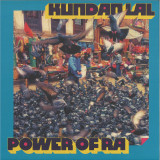
Kundan's second album is a captivating blend of dubby beats, collages, and exotic instrumentation. Drawing from classic tools like the Roland 808, SC7 and the famous Space Echo, Kundan has created a unique and minimalistic sound that is sure to captivate listeners. At once nostalgic and experimental, "Power of Ra" is a must-listen for both electronic music purists and fans of adventurous soundscapes.
Compelled to work from home on his computer during lockdown, Kundan dusted his pawnshop e-piano, downloaded some orchestral soundkits and started to digitize almost forgotten field recordings. The "Power of Ra“ came to him.
“Illgrimage” is a good example of his approach. Combining atmospheric soundscapes with swirling strings, trombones and pianos. Echoes of birds and children playing in the streets. A small town filled with life and a theremin leading the way while you hear the faint yet powerful words of Greta Thunberg saying: "Imagine...“
“Raqaqa,” a powerful orchestral journey with a hip-hop edge. Tinkling chimes add a groovy vibe, while lush layers of wind instruments weave a masterful soundscape. It’s the slow-burning intensity of this track that pulls you in.
"Nasi Chip" is a signature song that exemplifies Kundan Lal’s musical prowess. An engaging beat coupled with chopped up vocals, 8-bit synth melodies and an arpeggiated piano provide an energetic atmosphere that is both cunning and unique.
”Cen" lures you into the egyptian realm. A Harmonium slithers serpent like around a pounding beat.Horns gently swaying to the rhythm of the desert.
It is hard to put your finger on his style or genre. You can feel Kundan Lal‘s DIY spirit in his production, carving his own ethnic genre. For enthusiasts of Roberto Musci or Muslimgauze, this avant-garde album is one for your collection. Keep your senses open and let the Power of Ra pass you to another world.
With this release TAL delves deep into the very beginnings of Düsseldorf's post punk scene of the early 1980s. STUMM was the duo of Detlef Funder and Bernd Sevens who both would become pivotal figures in the tape underground movement of West-Germany, when they launched the SDV label in 1986. Individually they went on to produce boundary defying works as Konrad Kraft and Seventh Day respectively.
The material on this album was recorded by Funder and Sevens quite casually in 1980 in a rehearsal studio in the centre of Düsseldorf. Right from the beginning the two young musicians incorporated the atmosphere of the space in order to document the process of their sound experiments on a 4-track tape machine. For those recording sessions, which are now released for the first time ever on vinyl and download, Funder and Sevens managed to get their hands on a very rudimentary set of equipment consisting of merely a Korg MS 20 synth, a Roland CR 78 drum machine, a few electronic effects and a drum kit. The urgent and rough sound of the recordings imbues their production with a characteristic and era-specific edge that's hard to imitate today. Spontaneity and understatement were key elements in the brief creative period of STUMM. The recordings still have a uniquely dizzying quality and are somewhat of a basic blueprint for a lot of industrial/techno and post punk which was about to loom in all corners of the world. These tracks are also a testament to the vivid spark of a period in time that would soon be radically changed through the rise of digital technology.
Bernd Sevens: “Around 1980 there was a great musical awakening. Punk, New Wave, Industrial and of course Dub Reggae -- the electronic music blew us away. Everything we heard influenced us. Back then, cassette tapes were cheap and easily available. We could record our ideas on the spot and then copy and distribute the tapes. That's how it started. Giving it a go, experimenting, trial and error. The music you hear on the record was spontaneous and had no concept. Our collaboration was also not intended to be a permanent project. You could say we were dilettantes setting out on our journey, making it up as we went along. It felt like a beginning.”