Roberto Musci, born in Milan in 1956, studied guitar, music and electronic instruments. From 1974 to 1985 he traveled the world studying African, Indian, Arabic and Oriental music, recording ethnic music “in the field,” studying and collecting ethnic musical instruments from all over the world. His self-produced debut album, “The Loa of Music,” is a seminal work of staggering originality and extraordinary beauty in which field recordings, musique concrète, electronics, synthesis and instrumentation are interwoven, drawing on the countless musics from around the world that he has recorded. The subsequent “Water messages on desert sand,” composed with Giovanni Venosta, was nominated for a Grammy in the UK in 1987. In the 1980s and 1990s he broadcast ethnic and electronic-experimental music from Rai and Radio Popolare radio stations. He has also composed and played music for videos, commercials, dance, poetry, theater, composed soundtracks and accompanied silent films live. From 1980 to the present, he has played with many Italian and European musicians: Giovanni Venosta, Claudio Gabbiani, Walter Prati, Giorgio Magnanensi, Massimo Cavallaro, Massimo Mariani, Moni Ovadia, Roberto Zorzi, Chris Cutler, Jon Rose David Moss, Steve Piccolo, Elliott Sharp, Keith Tippett and the Third Ear Band.
The theme of travel, ethnicities and mysticism are a pivotal point in this new album of his as well, demonstrating once again how music needs absolutely no sharp lines of demarcation. The music is one.
It goes from the search for deep meanings in a time spent in a Hindu monastery (Ashram) listening to mantras and studying Buddhist philosophy (The Principle Of Things) to space explorations and human settlements on the Moon or Mars wondering how man will live and what he will bring to the new worlds imagining that Sufism, an Islamic mystical religion, will accompany him in the discovery of new worlds (Derviches On Mars). In Goodbye Monsters, harmony and peace are sought. Memories Of A Piano Player is a tribute to Keith Tippett, a great pianist (King Crimson , Centipede, Mujician) with whom he played in several concerts and with whom I spent evenings talking about music, food and Italian wine. Quantum State focuses on how quantum mechanics is creating a revolution in the way of thinking and dividing reality into infinite Parallel Worlds. Panthalassa is the vast ocean that surrounded Pangea and blends South American marimba music and traditional Chinese music. Burn The Shadows is a tribute to the fascinating Indonesian shadow theater, from the stories told and the atmosphere created during the long plays told in the sacred Indian texts of Ramayana or Mahabharata. Shadows are also more or less pleasant memories to which one is attached, and to burn them is still to move on with one's life.
Torajan Funeral Chant: The Toraja are a people living in Sulawesi (Indonesia) who have a special worship of the dead. Funerals are festivals that last several days, the corpses are protected by Tau-Tau (small dolls that watch over cemeteries), and over the years, they exhume the corpses of their relatives and keep them in their homes with them for a time to remember them.
The experimentation goes all the way to modern Artificial Intelligence that 'interrogated' to create something new by inserting conflicting inputs joins them together but nonsensically creating interesting insights; hence A.I. In Confusion. Pangea, named after the continent that contained all the land that emerged between 540 and 200 million years ago, in the Paleozoic and Mesozoic periods, imagined as inhabited by man without divisions created by borders, wars, religions or ethnic groups, is also a tribute to Steve Reich, one of the fathers and a great musician of minimal music. Prophecies, a reading of sacred texts and religious songs from evangelical sects in the United States filtered into granular synthesis with percussion music from South India, closes.
Search:united in dance
We're promised Mellow Magic and that's precisely what we get, across four tracks emerging from disparate corners of the globe but united in a common mission to provide beats that work on the more relaxed end of the dancefloor. Belgian duo Charlotte & Reinhard of Rheinzand fame kick things off with a slow motion Balearic version of a well known 80s MOR classic. Ollie Loudon's 'L.M.T.' finally makes it to vinyl after long being a secret weapon in Gratts' DJ sets, where handclaps and languid strumming meet a gentle but infectious groove. Flip it over for the more tracky affairs, as Japan's Lily Ko makes an impressive debut with 'Pure Rubber', an original mix of disco foundations and always snazzy but never showy 80s synth play. Melbourne's Biancolato finishes things off with understated deep house shuffling that adds just a touch jazzy keys and dreamy, wispy pads.
Jean-Phi Dary's much-anticipated *MIND* project gets its first release with the *For Peace Remixes EP*. The record is set for release on September 20, 2024, via Comet Records. Featuring the extraordinary talents of French producer *I:Cube*, who brings his extensive expertise in the electronic scene to reinterpret Dary's original MIND compositions in his own unique way.
The record opens with a masterful blend of rhythmic precision and electronic depth, infused with Dary's signature style with a mindful, meditative quality. This 3-tracker delivers a dynamic and immersive experience with *I:Cube* signature rhythmic excellence and sharp focus on dance floor ready grooves.
Jean-Phi Dary, a producer and keyboardist with deep roots in Paris, London, West Africa, the Caribbean, and the United States, has crafted his debut project MIND to serve as a culmination of his musical journey. With sounds inspired by legends such as Herbie Hancock, Wally Badarou, and Brian Eno - Dary's work is bedded deeply in the modern modular synth culture and enriched by his collaborations with renowned artists like Tony Allen, Papa Wemba, and Jeff Mills - who Jean-Phi is currently collaborating with on "Tomorrow Comes The Harvest" with their album Evolution out last year, soon to be followed by a worldwide tour in 2024!
His innovative use of technology and analog instruments, combined with the unique contributions of I:Cube make the *For Peace Remixes* a notable release.
*Artist Quote* "I had the opportunity to use magnificent samples of the voices of singers from the Maroni River in French Guiana on certain tracks, these voices of the Bushinengé people reconnect me to my Guyanese and neg-maroon origins, my mother was born on the river and my father grew up in the Amazon region..”
ARR049 Brizman - Tomorrow Is A New Day Craving for that perfect serving of benchmark minimal house with a flavor of psy-chill and euromantic? The Kyiv based vinyl label Artreform Records is ready to treat you to a tasty new EP by the long-established chef Roy Brizman. His new release, Tomorrow Is A New Day, looks well-prepped for repeating the success of Midnight Tales, the previous Artreform offering by Brizman from 2021. Brizman is a star of the Israeli electronic scene. Roy is also known as Gel Abril in Tel Aviv and far beyond. He has been in great creative form lately, releasing many new tracks and remixes his latest twist on Depeche Modes Policy of Truth" is just one example. Roy offers three new tracks in one sitting this time-a triad united by an overarching mood and atmosphere. It's the perfect soundtrack for diving deep into your feelings and thoughts right on the dance floor. The producers signature micro-house groove is so clear and transparent that you can hear the distant echoes of past electronic music-from New Age to Balearic. The release concludes with the lead track remixed by the ro-minimal star Floog. This gifted producer is alternatively known as George G-a member of the Premiesku project, which also includes Livio and Roby.
Since its founding back in 2014, Blume has carved a unique place in cultural landscape, issuing free-standing works, spanning the historical and contemporary, that represent singular gestures of creativity within the field of experimental sound. Joining their broad efforts in building networks of context and understanding that already includes the works by Werner Durand, Sarah Hennies, Bruce Nauman, John Butcher, Jocy de Oliveira, Mary Jane Leach, Valentina Magaletti, Alvin Curran, Julius Eastman, Alvin Lucier, and shortly after returning with the first ever vinyl release to attend to James Tenney’s legendary “Postal Pieces”, the label is now offering a brand new, ambitious work by the American composer Ben Vida, entitled “Vocal Trio”, conceived, performed, and recorded in Bremen, Germany, during the Spring of 2022. A truly stunning work of compositional conceptualism, combining the ideas of systems based synthesis with real-time vocal collaboration - issued in a highly limited vinyl edition of 200 copies mastered by Stephan Mathieu, featuring specially commissioned liner notes by Bradford Bailey and a leporello insert offering the piece visual score - it’s a landmark in contemporary experimental practice and arguably the most forward-thinking and exciting piece by one of the most exciting American artists working today.
Ben Vida first emerged during the mid 1990s within a loose constellation of experimental musicians, centred around a performance series of improvised workshops at the Myopic Bookstore in Chicago, alongside Jim O'Rourke, Kevin Drumm, Chad Taylor, and the other future members of Town and Country - Jim Dorling, Joshua Abrams, and Liz Payne - the band within which he would gain widespread recognition over the following years. Like many other members of that scene, Vida remains a restless product of a fleeting context - Chicago during the 1990s and early 2000s - continuously undermining concrete notions of idiom and signifier within a practice that witnessed him rendering bristling abstractions within Pillow, glacial melodies with Town and Country, the art-rock mayhem of Bird Show Band, and the angular, driving indie rock of Joan of Arc, before becoming immersed in a practice of systems based synthesis, beginning in the 2010s, that guided much of his first decade of output as a solo performer and composer.
As early as 2013, he began to incorporate acoustic sound sources - specifically the human voice - into his work. It was this shift, evolving and refining itself over the last decade, that underscores radically the leap in his practice represented by “Vocal Trio”, a work that encounters Vida composing for the human voice with the ideas that allow for synthesis - transferring the underlying concepts and structures of both subtractive and additive synthesis to the acoustic realm - without using a synthesiser.
During the Spring of 2022 Vida was in Bremen, Germany, collaborating on a dance piece with the choreographer Fay Driscoll, when the production fell into delays. Finding himself with time on his hands, a space at his disposal, and the company of two dancers - Amy Gernux and Lotte Rudhart - who were also singers, the idea for the piece - to utilising the larynx as audio paths (multi-harmonic or harmonically pure) while conceptualising each person’s mouth as a filter to sculpt the timbre and resonance of a given tone - began to take shape in his mind. Considering how typographical scores might be developed into a non-linguistic social framework, Vida drafted a single page of text - what became the score for “Vocal Trio” - accompanied by a set of harmonic suggestion and loose parameters, seeking a core meaning from each word's phonic make-up by each of the three singers (Vida, Gernux and Rudhart) singing as slowly as possible.
At the core of the pulsing vocal drones - intoxicating, harmonically rich long-tones - that make up the duration abstraction of “Vocal Trio”, is Vida’s regard for music as a social space. It is an experiment that seeks liberation through the act of collective music making, by challenging the terms through which the act of composing is perceived and then relinquishing control. The piece’s rehearsals were simply the three performers hanging out, allowing their knowing each other and natural dynamics to contribute to its form as the score, before recording during a single afternoon at the end of a number of days sharing company and space.
Creatively visionary and groundbreaking on numerous terms, as well as being intoxicatingly beautiful and remarkably listenable, Ben Vida’s “Vocal Trio” represents a striking step forward for one of the most ambitious and outstanding sonic artists working in the United States today. Issued by Blume in a highly limited vinyl edition of 200 copies mastered by Stephan Mathieu, featuring specially commissioned liner notes by Bradford Bailey and a leporello insert offering the piece visual score, this is hands down one of the most important contemporary records we’re likely to encounter in 2024.
First aired by Ratpack on Centreforce , this first collaboration by Col Trixta &Dubble Dunk has already become a classic in-the-making
Much like the hugely popular 'Dubble Dunk Vol 1', both tracks bridge genreshouse, breaks and old skool - with slammin' old skool pianos, stabs and familiarvocals.
Colin and Duncan have been plying their trade on the UK rave DJ circuit since theearly 90's and both held residencies at Slammin' Vinyl, United Dance, Freedom@Bagley's and now Strawberry Sundae together.
Daniela La Luz announces her highly anticipated 3rd album, 'System Reset'. For the first time, Daniela has compiled all the music and artworks featured in the album, showcasing her genre-blending style in this 11-track collection rooted in electronic dance music.
Recognized and celebrated for her exceptional live sets and productions, Daniela has garnered support from some of the industry's most esteemed DJs, including Solomun, Adam Port, and Sven Väth. Her track 'Did You Ever', featured on Moodymann's 'DJ Kicks' mix, has amassed nearly 3 million plays on Spotify, proof of her growing influence and popularity.
'System Reset' is a testament to Daniela's ability to reflect on personal crises and global issues through her music. The album features dancefloor-oriented tracks with influences from a diverse range of genres including house, techno, dub, electro, wave, jazz, and breakbeat. The linguistic diversity of the songs, in English, Polish, and Arabic, further adds to the album's global nuance. The AI-generated artworks are a unique visual representation of the music. The tracks were mixed by Tobi Neumann and J Manuel at Apollo Studio Berlin and mastered by Manmade in Berlin.
Daniela's music serves as a powerful call to action against climate catastrophe, underlining her belief in the unifying and inspiring power of music for a sustainable future. The album will be released on double vinyl on June 14th and digitally on June 21st via her label, Dimension Of Being Human.
"Deep Dancefloor Jams of African Disco, Funk, Boogie, Reggae & Proto Electro Music 1977-1986reggWhen a passionate DJ and crate digger intuitively selects music for a DJ compilation, without artistic compromise and without the burden of trends, AfroMagic vol.1 emerges from the depths of his soul. Herewith we present the new favorite phonomancer’s tool for all the DJs who experience the dance floor as a sanctuary and a source of freedom and love.
The most fundamental thing that defines African music is that it was created for dancing. In African dance, there is often no clear distinction between ritual celebration and social recreational entertainment – one can seemlessly merge with the other. Because dance and rhythm have more power than gesture and more richness than words, and because they express the deepest experiences of human beings, dance is in itself a complete and self-sufficient language. It is truly an expression of life with all of its emotions – joy, love, sadness and hope – without which there is no African music and dance. For the African people, dance and music are integral parts of the body and soul, thus depicting the expression of life, current emotional states, visions or dreams. Through hypnotic repetitive music and dance, people communicate with each other and with the souls of the dead, the animals, the plants, the stars, the Gods… They free the body and the spirit through ecstatic states, reaching a healing sense of freedom, happiness, and satisfaction.
Throughout history, this transcendental perception of rhythm and dance originating from Africa, influenced popular music worldwide, thus creating new living and breathing forms of musical genres – freeing them from their industrial mold. Funk, disco, soul, boogie, reggae, dancefloor jazz etc., developed in parallel all over the world. It is foolish to perpetually discuss where they originated from and who were the creators of all these fiery dance floor genres – being obvious that they directly or indirectly originate from the African continent and its people who were as well, over the centuries, influenced by disturbing socio-cultural factors of colonialism. However, no one can enslave the soul. The seeds of free and uninhibited dance and rhythm, true to their original form, initially first sprouted onto the USA’s fertile fields of clubbing and popular music while later evolving in other parts of the world.
The disco funk club culture manifested itself as a phenomenal explosion of artists and grooves in the second half of the 70s in the USA. Shortly it spread around the world continually reigning over charts in its various forms – to this day. Clubs emerged where the DJ is an almighty shaman and the dancers are a tribe united under one roof. This urban ritual had and still has a single goal: togetherness, freedom, and love. Clubs have evolved into temples where we free ourselves from the burden of a consumerist lifestyle and suppressed emotions – a place where we receive love and give love – to be who we really are.
Disco funk clubbing was such an influential global phenomenon that its influence can be observed in various other genres from the disco funk era i.e. progressive rock, which mutated by layering complex rock arrangements with a disco funk groove resulting in hybrids, highly sought by today’s diggers, producers and collectors. The profit-hungry music industry of the 80s very quickly commercialized the original disco funk sound by amputating of its original Afro groove to be able to easily ‘sell’ it globally. So, the original disco funk groove became underground again, and it has remained so until this day. Today, for a DJ to unearth that ravishing groove that will lead the dancers to the stars, he must dig passionately like a true musical archaeologist in search of that groove that picks you up after just a few initial beats. That groove which forces the atoms in your body to vibrate, that groove which unites the body and releases the burden.
The AfroMagic compilation series is created as a tool for real DJs who stick to the aesthetics and essence of clubbing.
This continuation of the Afromagic compilation by DJ Borovich was created in a private jam session which served as an escape route from intense and complex love problems.
Unconsciously driven by intuition and emotion and following a live mix tape framework where many tunes are arranged instantaneously, Borovich narrates his story with a strong rhythm that cuts loose even the most blocked off energy nodes and restores happiness to the spirit and the body.
The musical experience of the groove is completed by the lyrics of the songs, which symbolically give DJ Borovich universal answers to his questions arising from questioning the boundaries, nuances and other forms of love.
When considering that Borovich’s selection was created to facilitate an escape from the burdens of reality through rhythm and dance, we can be sure that Afromagic Vol. 2 will have a 100% uplifting, energized and spaced-out effect on the listeners.
The intro to A1, “Feeling Happy” by the Apostles, introduces us to an experienced and slow, cool and irregularly tight groove containing a confidently sung chorus that instantly gives a sense of freedom and hints at the remainder of Afromagic Vol. 2: “I’m gonna feel happy, ´cause I know I’m gonna be myself.” After the anthemic song mantra of the Apostles, Aigbe Lebarty uncompromisingly continues with a dirty disco rhythm. Acidified by accented synths that elevate it to shamanic levels and held together by a female tribal choir, we embark on an uncompromising ritual disco journey. Without a moment to take a breather the prog funk band Mighty Flames and their Road Man launch a highly vicious and raw, thick funk groove spiced with acid synths and dirty RnR breaks, raising the bar for the A side. Jimi Hendrix himself would surely praise it given the ultimate freedom and virtuosity in the solo sections. With the last tune on A side DJ Borovich decides to burn the floor with Geraldo Pino’s psychedelic, acid furious groove and lyrics which describe this HEAVY part of love problems: “The way she walk, the way she talk, the way she does a funky dances, she is really really heavy – that woman”.
While the A side represents a compact intoxicating afro groove machine that separates us from reality and lifts us up to the stars in over 23 minutes, the B side is a treasure trove of proto sub-genres gems. This selection represents the mission of the Afromagic: to find singular events in African recorded discography of popular music from the 70s and 80s that give evidence to the birth of new modern genres on the Dark Continent even before they emerged in the U.S.A. or Europe. The beginnings of electronic music influenced genres are represented back to back with 80s synth jazzy pop, all painted in African colours.
The B side opens big with Jake Sollo and a huge reggae blues number singing about the humiliation of a man – goosebumps guaranteed! “You think I’m nobody that’s why, you don’t know the way for me, I’m somebody I know, I found myself at last”. Adolf Ahanotu then enters the scene with a hard sliding tackle at B2 and an exotic rare disco funk dancefloor napalm. A ‘Sensation’ that would ignite even the coldest of introverts. While we approach the end of the compilation the narrative revolves again and takes a different turn. No less and no more than to the proto-electro that Baad John Cross serves us in “Give Me Some Lovin´”. The fat and repetitive broken electro synth groove, championing many early 90s electro tracks, is presented here without hesitation and with constant tension accompanied by a mantric chorus “Gimme some, gimme some, gimme some looooovin’, EVERBODY!!!”. Finally, we’re guided to the end of Afromagic Vol. 2 by Eji Oyevole’s 80s synth pop style presented in an authentic afro manner, giving us a glimpse at yet another released Afromagic edition, as well as giving an answer to DJ Borovich’s love problems. A smoothly broken electronic rhythm resembling electrified highlife sounds, carried on the wings of a virtuoso dreamy saxophone on top of which Eji presents the most intimate parts of himself. Finalizing the track with a symbolic chorus, on the surface referring to the dancefloor and simply having fun, but in actuality referring to the skill and happiness of living: “I´m a dancer, I can dance”. So, get up and dance among the stars with DJ Borovich and Afromagic.
repress !
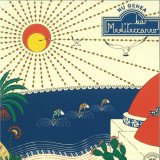
Four years after Nuova Napoli, Nu Genea are back with Bar Mediterraneo, a new album and journey, which projects the sounds of the Neapolitan duo formed by Massimo Di Lena and Lucio Aquilina even further.
Nu Genea's Bar Mediterraneo is an idea of a shared place where people meet and fuse together; a space that leaves its doors open to travellers and their lives, always exposed to the whims of fate. Some of this can be experienced through the multitude of sounds that come together in the tracks, layers of different acoustic instruments, voices and synthesizers merging in a unique musical blend.
Opening up to the voices of many different people, separated by languages but united by the sea and the music, Nu Genea's hometown, Napoli, becomes a true place of encounter.
You can hear this all along. In "Gelbi", a gorgeously deep and propulsive Ney flute plunges into murky waters of the melancholic Tunisian dialect sung by Marzouk Mejri. In "Marechia'", unbridled happiness and sun ooze from the delicate vocals of Célia Kameni and create an acrobatic bridge between French and Neapolitan language. In "Straniero", your soul is arrested from the moment the slow spell-binding mandolin ignites the hypnotic patterns recorded by the legendary Afrobeat drummer Tony Allen. In "Bar Mediterraneo", the title track, bittersweet guitar’s riffs, analog waves and choirs are overwhelming the song giving you what you would like to hear on a boat trip along the Amalfi Coast.
Nu Genea couldn't afford to overlook their firmly anchored roots into the Neapolitan culture and its dialect with "Tienaté", where the power of neapolitan language (interpreted by Fabiana Martone) supports those quarter-tone strings and the uncessant folk-disco groove that spreads to the entire song. In "Praja Magia", repetitive mandolin riffs lead the song, giving space to a choral yet tight vocal line that speaks of Varcaturo, a village close to Napoli. In "Rire", a volley of poetic, deceptively laidback, lyrical fury interpreted by Sicilian Marco Castello intimately combines with a highly musical, multi-textured instrumental backbone and the swoon of a chanson in its heart. In "La Crisi'', the lyrics of a Raffaele Viviani’s poem from 1930 have been adapted to a laidback jazz-funk groove in full NG style. In "Vesuvio", revaluing the evocative verses and powerful mantra of Vesuvio, Nu Genea re-adapted to the dancefloor a folk song by the working-class band E’ Zezi from Pomigliano D'Arco, combining the voices of a school choir with Jupiter-6 arpeggios and bold percussions.
Bar Mediterraneo is the place where people constantly return to transform curiosity into participation, tradition into sharing, unfamiliar into familiar. When travellers come through its “doors”, carrying their treasures of words and emotions, they aren’t strangers any more. They take part in a shared experience, enriching themselves and others by leading to unexpected musical journeys.
Tom Hooker is one of the world's leading artists of the Italo Disco
genre that marked the 1980s.
A talented singer and songwriter, he has performed on television
programs and music festivals around the world, and his many productions have topped the charts in the United States and England.
FullTime Production is honored to present the remastered 1986 debut
album "Only One" and in addition to the original tracks "Talk With Your Body", "Come Back Home", "Love Attack", "Only One", "Indian Girl" and it will also contain remixe of "Falling Into Love" by artist Jago already featured other releases on FullTime Production.
Track "Talk With Your Body" is among the most special and important
productions of 1982.
The title is the best explanation of the track.
Talking with your body, listening to the vibrations of every muscle that
can feel these slow and romantic but with a disco rhythm sounds that we can imagine in a hot summer of 1982 among those lights, colors and fashions.
The song still continues to communicate with the body to all generations today and to make us dance.
- A1: Here Lies Love Feat. Florence Welch (Florence & The Machine)
- A2: Every Drop Of Rain Feat. Candie Payne & St. Vincent
- A3: You'll Be Taken Care Of Feat. Tori Amos
- A4: The Rose Of Tacloban Eat. Martha Wainwright
- A5: A Perfect Hand Feat. Steve Earle
- B1: Eleven Days Feat Cyndi Lauper
- B2: When She Passed By Feat. Allison Moorer
- B3: Walk Like A Woman Feat. Charmaine Clamor
- B4: Don't You Agree? Feat. Róisín Murphy
- B5: Pretty Face Feat. Camille
- B6: Ladies In Blue Feat. Theresa Andersson
- C1: Dancing Together Feat Sharon Jones
- C2: How Are You? Feat. Nellie Mckay
- C3: Men Will Do Anything Feat. Alice Russell
- C4: The Whole Man Feat. Kate Pierson
- C5: Never So Big Feat. Sia
- C6: Please Don't Feat. Santi White
- D1: American Troglodyte
- D2: Solano Avenue Feat. Nicole Atkins
- D3: Order 1081 Feat. Natalie Merchant
- D4: Seven Years Feat. Shara Worden (My Brightest Diamond)
- D5: Why Don't You Love Me? Feat. Tori Amos & Cyndi Lauper
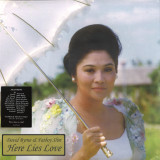
David Byrne & Fatboy Slim’s acclaimed 2010 album Here Lies Love receives its first-ever vinyl release to coincide with a new production opening on Broadway this summer. Here Lies Love is a double-disc song cycle – improbably poignant, decidedly surreal, surprisingly thought provoking – about the rise and fall of the Philippines' notorious Imelda Marcos. It was conceived by David Byrne; composed by Byrne and DJ/recording artist Fatboy Slim, AKA Norman Cook; and performed by a dream cast drawn from the worlds of indie rock, alt country, R&B and pop. Byrne's taste in collaborators is as imaginative as it is impeccable, including Cyndi Lauper (who recounts, to lighthearted disco beats, Imelda's courtship with Ferdinand Marcos), Steve Earle (as the power-hungry Ferdinand), Dap-Kings vocalist Sharon Jones (recalling Imelda's introduction into New York society) and Natalie Merchant (as spurned Imelda confidante Estrella, anticipating the onset of martial law). Along with vocals turns from such stars as Tori Amos and the B-52's Kate Pierson, Byrne works with rising indie rockers St. Vincent and My Brightest Diamond; New York chanteuses Nellie McKay and Martha Wainwright; and dance-music divas Róisín Murphy and Santigold. Byrne himself appears as the voice of imperialistic America on ‘American Troglodyte’, a send-up that wouldn't have seemed out of places in Talking Heads' True Stories.
Byrne originally envisioned this as a musical theatre piece, to be mounted in disco and nightclub settings, reflecting the globe-trotting Marcos' taste for such velvet-roped spots as Studio 54 and Regine's. In 2006, he performed work-in-progress versions to enthusiastic audiences at New York City's Carnegie Hall and the Adelaide Festival in Australia. While plans for a US theatrical production continued to evolve, he delivered this unique recording. The award-winning theatrical production eventually premiered at The Public Theater in New York in 2013, travelled to London’s National Theater for a sold-out run (2014–15), and was remounted at the Seattle Repertory Theater (2017).
Here Lies Love has an effervescent disco feel, redolent of Fatboy Slim's own dance-floor anthems, with warm undercurrents of the Latin rhythms that have percolated through Byrne's recent solo work. The sunny arrangements act in counterpoint to the reality of the Marcos' increasingly repressive regime, reflecting the imagined inner life of the glamour-obsessed Imelda. Explains Byrne, "For me, the darker side of the excesses are, for the most part, a matter of record. A lot of the audience is going to come with that knowledge already. What's more of a challenge is to get inside the head of the person who was behind all of that, and understand what made them tick." Byrne offers no judgment and avoids the obvious – there is no mention of Imelda's infamous shoe collection.
Many of Byrne's lyrics are, astonishingly enough, constructed from actual Imelda quotes, including the project's title, the words that Imelda, now returned to the Philippines from US-assisted exile in Hawaii, would like to have inscribed on her gravestone. In addition to his new liner note, Byrne illustrates the story with archival photos. In a detailed preface, he reveals what drew him to this subject and the bumpy route he took to launch the project and, ultimately, record this album. The booklet is indeed a page-turner, just as Here Lies Love is a wonderfully old-school album that rewards start-to-finish listening. Once again, Byrne – beloved as musician, thinker and bicyclist-about-town – reveals the breadth and singularity of his vision.
The new production of Here Lies Love will premiere at the Broadway Theatre in New York City. Performances begin June 17, ahead of an official opening night on July 20. Tony Award winner Alex Timbers (direction) and Olivier Award nominee Annie-B Parson (choreography) reunite with Byrne (concept, music, and lyrics) and Fatboy Slim (music) to bring Here Lies Love to Broadway, continuing a ten-plus year collaboration on the project. Tom Gandey and J Pardo contribute additional music. Here Lies Love is produced on Broadway by Hal Luftig, Patrick Catullo, Diana DiMenna for Plate Spinner Productions, Clint Ramos, and Jose Antonio Vargas. The staging at the Broadway Theatre will transform the venue’s traditional proscenium floor space into a dance club environment, where audiences will stand and move with the actors. A wide variety of standing and seating options will be available throughout the theatre’s reconstructed space. The producers of Here Lies Love said, “As a team of binational American producers – Filipinos among us – we are thrilled to bring Here Lies Love to Broadway! We welcome everyone to experience this singularly exuberant piece of theatre. The history of the Philippines is inseparable from the history of the United States, and as both evolve, we cannot think of a more appropriate time to stage this show. See you on the dance floor!”
David Byrne’s recent works include the launch of Reasons to be Cheerful, an online magazine focused on solutions-oriented stories about problems being solved all over the world (2019); Joan of Arc: Into the Fire, a theatrical exploration of the historical heroine that premiered at the Public Theater in New York (2017); The Institute Presents: NEUROSOCIETY, a series of interactive environments created in conjunction with PACE Arts + Technology that question human perception and bias (2016); Contemporary Color, an event inspired by the American folk tradition of color guard and performed at Brooklyn’s Barclays Center and Toronto’s Air Canada Centre (2015); Here Lies Love; Love This Giant, a studio album and worldwide tour created with St. Vincent (2012); and How Music Works, a book about the history, experience, and social aspects of music (2012).
Byrne curated Southbank Centre’s annual Meltdown festival in London in 2015. A co-founder of the group Talking Heads (1976–88), he has released eight studio albums as a solo artist and worked on multiple other projects, including collaborations with Brian Eno, Twyla Tharp, Robert Wilson, and Jonathan Demme, among others. He also founded the highly respected record label Luaka Bop. Recognition of Byrne’s various works include Obies, Drama Desk, Lortel, and Evening Standard awards for Here Lies Love; an Oscar, Grammy, and Golden Globe for the soundtrack to Bernardo Bertolucci’s The Last Emperor; and induction into the Rock and Roll Hall of Fame with Talking Heads. Byrne’s work as a visual artist has been published and exhibited since his college days, including photography, filmmaking, and writing. He lives in New York City. In addition to 2019’s cast album for American Utopia on Broadway, Nonesuch has released eight other David Byrne records since 2003, including 2018’s American Utopia studio album and two versions of his musical Here Lies Love.
q C6. Please Don't feat. Santi White Santigold
Kharkiv born artists Komponente & Kurilo have been an integral part of the local scene in the past years both as DJs, Live-Act and Producers.
Now further apart since the beginning of the war they are still united in music and we are happy to finally share this EP with which was originally conceived when both artists were still Kharkiv based during the pandemic.
Kurilo has since made the journey to the New York via Berlin in recent months. While Komponente took refuge in Kyiv for some time after having sat out most of the fighting in and around Kharkiv while lending a helping hand to families and elders who couldn't manage or didn't have the means to leave the city when russia attacked.
At this point we are just happy and thankful to have both of them still with us and to be able to finally get this EP out which by now seems to have travelled from a past life to us in the here and now.
Pandemics or War this is Electronic Music charged with pure emotions produced during one crisis, released during the next and we will still dance to it during whatever comes next!
- A1: Daryl Hall & John Oates - Out Of Touch (Club Version)
- A2: Robbie Nevil - C'est La Vie (Extended Version)
- A3: Living In A Box - Living In A Box (Dance Mix)
- B1: Fleetwood Mac - Big Love (Extended Remix)
- B2: Artists United Against Apartheid - Sun City (Last Remix)
- B3: The Cars - Hello Again (Hello Again)
- C1: Fine Young Cannibals - Ever Fallen In Love? (Club Senseless)
- C2: The Colourfield - Running Away (Long Version)
- C3: Deborah Harry - Sweet & Low (Swing Low Mix)
- D1: Daryl Hall - Dreamtime (Extended Remix Version)
- D2: Carly Simon - My New Boyfriend (Remix)
- D3: Bob Dylan - When The Night Comes Falling From The Sky (Full Length Version)
- E1: Neneh Cherry - Buffalo Stance
- E2: Wally Jump Jr & The Criminal Element - Turn Me Loose
- E3: Arthur Baker & The Backbeat Disciples - The Message Is Love (Feat Al Green - Cupid Mix)
- F1: Roberta Flack - Uh-Uh Ooh-Ooh Look Out (Here It Comes) (Here It Comes)
- F2: Will Downing - A Love Supreme (Jazz In The House Remix)
- F3: Al Jarreau - I Must Have Been A Fool (Remix)
- G1: Jeffrey Osborne - Soweto (Remixed Version)
- G2: Jermaine Stewart - Jody (Dance Version)
- G3: Atlantic Starr - One Lover At A Time (Extended Version)
- H1: Junie Morrison - Tease Me (Long Version)
- H2: Jennifer Holliday - No Frills Love (Extended Dance Remix)
- H3: Cindy Mizelle - This Could Be The Night
- J2: Glory - Can You Guess What Groove This Is (Short Version)
- J3: Ritz - I Wanna Get With You
- K1: Afrika Bambaataa & The Soul Sonic Force - Planet Rock
- K2: Tina B - Honey To A Bee (Vocal/Extended Version)
- K3: Arthur Baker - Breaker's Revenge (Extended Vocal Version)
- L1: Rockers Revenge - Walking On Sunshine (Feat Donnie Calvin - 12" Version)
- L2: Freeez - Iou (Mega-Mix)
- I1: Touchdown - Ease Your Mind
- I2: Second Image - Star (Us Remix)
- I3: Central Line - Surprise, Surprise
- J1: Afrika Bambaataa & The Jazzy 5 With The Kryptic Krew - Jazzy Sensation
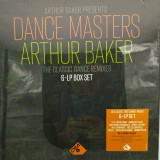
This latest instalment of ARTHUR BAKER Presents DANCE MASTERS finds the production/ song-writing/ remixing maestro taking the spotlight for a long overdue snapshot of his own classic 12” mixes during a crucial evolution of dance music, club
and pop culture.
“I’ve always felt like I was on a mission to make music from the time I heard Motown, Philly and Sly and the Family Stone. My mission started as a hobby and still feels like one now. You’ve got to keep on pushing and hustling. It can be a drag sometimes but
if you really love what you’re doing, it’s worth the work. I still really love what I do.”
Arthur Baker helped codify the remixer as artist. His genre-fluid approach to projects
has resulted in a joyous myriad of classics that spans many decades. This ’80’s focused DANCE MASTERS collection offers a welcome glimpse at Baker’s illustrious career and many long out-of-print 12” versions and previously unavailable mixes.
This 35-track, six LP expanded edition includes a wide array of selections from the likes of Robbie Nevil’s “C’est La Vie,” Fleetwood Mac’s “Big Love,” Neneh Cherry’s “Buffalo Stance”, Jeffrey Osborne “Soweto”, Freeez “I.O.U”, Rockers Revenge “Walking On Sunshine” and of course the juggernaut “Planet Rock” with Afrika Bambaataa & Soulsonic Force.
Complete with in-depth liner notes by Bill Coleman, track by track notes written by Arthur Baker himself, previously unseen session photos from Arthur’s personal archives and a signed insert.
All tracks remastered by Nick Robbins at Sound Mastering
- A1: Roman Holiday
- A2: Come On A Cone
- A3: I Am Your Leader (Feat Cam'ron & Rick Ross)
- A4: Beez In The Trap (Feat 2 Chainz)
- A5: Hov Lane
- B1: Roman Reloaded (Feat Lil Wayne)
- B2: Champion (Feat Nas, Drake & Young Yeezy)
- B3: Right By My Side (Feat Chris Brown)
- B4: Sex In The Lounge (Feat Lil Wayne & Bobby V)
- B5: Starships
- C1: Pound The Alarm
- C2: Whip It
- C3: Automatic
- C4: Beautiful Sinner
- C5: Marilyn Monroe
- D1: Young Forever
- D2: Fire Burns
- D3: Gun Shot (Feat Beenie Man)
- D4: Stupid Hoe
Pink Friday: Roman Reloaded, also known as Roman Reloaded, is the second studio album by Nicki Minaj. Looking to transition from her debut studio album, Pink Friday (2010), Minaj wanted to make a follow-up record about “just having fun”. Stylistically, the album is divided by a first half of hip hop tracks and a second half of dance-pop songs.
Internationally, the album peaked at number one in Canada and the United Kingdom, and reached the top five in Australia, Ireland, and New Zealand.
The album was promoted with six singles. Its lead single “Starships” peaked at number five on the US Billboard Hot 100. Follow-up singles “Right by My Side” and “Beez in the Trap” experienced moderate success on the Hot R&B/Hip-Hop Songs component chart. “Pound the Alarm” and “Va Va Voom” peaked at numbers fifteen and twenty-two on the Billboard Hot 100, respectively. “Automatic” was released as single only in French. The album was additionally promoted through the Pink Friday Tour and the Pink Friday: Reloaded Tour, which visited North America, Asia, Europe, and Oceania throughout May and December 2012.
Our second installment is going to be a classic 4-track various artist release. Carefully curated and selected pieces of music, produced by close friends, this release fulfills the label's mission of providing a platform for our loved ones. This issue features some incredible artists and friends united on wax.
The Berlin and Munich-based duo Medus & Niko S. offer a hybrid track with nostalgic elements of techno, breaks, and progressive house, capable of busting any dancefloor. Longtime Munich resident DJ and producer Dancing Lessons contributes a hypnotic tech-house infused tune with elements of breakbeat and electro, taking the listener on a personal journey through time and space. Munich's young and upcoming producer Johnmon and label owner of Powerloader Records chips in a proper 90s bomb with driving drums, dark, and quirky synths. An all-round tool suited for any dance floor situation. Finally, Vienna-based Doesntmatter polishes off the VA with an expertly crafted electro track. He is the veteran out of the bunch with various releases under his belt on labels such as Traumschallplatten, Reboot Prague, Vienna Underground Track, and Zone Focus.
Hi! This time "REPORT" and musician Fillimonov have prepared something really unique for you.
The music presented on this vinyl record is made from live samples, original vocal inserts, and the arrangement is made using synthesizers and drumm-machines. You will definitely hear the junction of two eras and completely different musical cultures that are united in this EP.
Minimalistic, danceable, musical - in the best traditions of the "REPORT" label.
Dear listener,
On behalf of re:discovery records, it is with great excitement that we announce the release of Stryke – The Introspection Trilogy (1994-2022). rd011 features a track that is very close to my heart. My senior year in high school. I was heavily into chill-out music at the time. Labels like FAX, Instinct Ambient, Reflective, Astralwerks, em:t, Silent, Moonshine, Rising High, Warp, Exist Dance, Visible, Eye Q and others were giving me such a wide array of beautiful sounds of more subdued techno and rhythmic ambient music. I was buying every compilation I could at the time that looked remotely different based on the artwork, the unusual artist names or the tracks. I was soaking in everything I could under the chill-out style. That year 1994 I picked up the 2nd edition of Moonshine's 'United State of Ambience 2'.
It has so many good tracks on it. One track that always held a special place in my heart was Stryke's 'Introspection pt.1'. The simple but catchy melody layering. The easy atmosphere made me feel like I was floating in the ocean. The deep 808 bass notes (I hope one day you and I will hear this on an amazing sound system). The amazing strings reach a crescendo nearing the end. This track has so many simple but beautiful sounds on it. It's a great example of what I call sequencer-styled electronic music. At a time when producers layered tracks in more of a sequence then building or placing sounds. In 2021 I was able to get a hold of Greg Chin to see if he was interested in putting the track on my label and letting it breathe freely on its own side alone as the highlight of an EP. Greg was enthusiastic about the opportunity and told me that he always wanted to complete the trilogy he had in mind of a part 2 and 3. The ominous and eerie part 2 adds a terrific tension to the finale of part 3. The last being almost an updated part 1 really concluded the trilogy for me. Both parts melded together on side B pushing near 17 minutes. I want to thank Greg for letting us be a home to complete his journey.
- Tim Humphrey aka TIM aka errorsinspace
The next Planet X invasion is underway! Four mutated and banging hybrids have joined forces for the ultimate techno takeover.
First up is Q-Cumb, a former vegetable farmer from the southern parts of Iceland known for excellent cucumbers. Since he fled his homeland he has gained a notorious reputation in the world of electronic music all over the world. He is known as Odinn, cucumb45, Bbbbbb, kid mistik, slurp gurken, icelandic lamb, orange juice man, gurk, q-cumb, holidayboy slurp and last but not least, Bjarki. His track, Dreamers, is considered the track of the year by those who have experienced it on the dancefloors of the united consciousness. Lafontaine was spawned on the Icelandic highlands and channels Icelands musical energy through his earthy connections. His tune, Ailenated, describes his existence where he fights on a daily basis to combine his music with his daily life. The result is a musical outbreak consisting of terrestrial techno with an experimental feel. ThizOne cooks up the electro-mixture Bolt which is a political anthem that describes his anger towards Icelandic politics. Recently the Icelandic government has been brainwashing the population using corrupted electronic waves. ThizOne's track is an attempt to counteract these terrible acts of treason to our people. Matrixxman, one of the team members of Planet X, throws forward an Acid banger called 'Flexxin On Hoes' that will most definitely tear up the dancefloors of the galaxy.
On the next Planet X release Matrixxman will twist and turn a remix from Lafontaine and mutate that bitch into a nuclear nugget for the future. In other news the Planet X master himself is conjouring his own ep, his first in a while that will see the light of dawn later this year. Don't miss out on this release Space Cowboys!
- A1: Les Masques - Il Faut Tenir (1969)
- A2: Isabelle Aubret - Casa Forte (1971)
- A3: Christianne Legrand - Hlm Et Ciné Roman (1972)
- A4: Jean Constantin - Pas Tant D'chichi Ponpon (1972)
- A5: Billy Nencioli & Baden Powell - Si Rien Ne Va (1969)
- B1-: Marpessa Dawn - Le Petit Cuica (1963)
- B2: Jean-Pierre Sabar - Vai Vai (1974)
- B3: Sophia Loren - De Jour En Jour (1963)
- B4: Isabelle - Jusqu’à La Tombée Du Jour (1969)
- B5: Sylvia Fels - Corto Maltesse (1974)
- C1: Frank Gérard - Comme Une Samba (1972)
- C2: Ann Sorel - La Poupée Des Favellas (1971)
- C3: Charles Level - Un Enfant Café Au Lait (1971)
- C4: Andrea Parisy - Les Mains Qui Font Du Bien (1970)
- C5: Audrey Arno - Quand Jean-Paul Rentrera (1969)
- C6: Aldo Frank - T’as Vu Ce Printemps (1970)
- D1: Christianne Legrand - Cent Mille Poissons Dans Ton Filet (1972)
- D2: Clarinha - Lemenja (1970)
- D3: Hit Parade Des Enfants - Aquarela (1976)
- D4: Jean-Pierre Lang - Tendresse (1965)
- D5: Magalie Noël - Une Énorme Samba (1970)
- D6: Françoise Legrand - La Lune
Ever since the late 1950s bossa-nova revolution, Brazil’s influence on French music has been undeniable. Pierre Barouh, Georges Moustaki and a vast array of lesser known artists, all made the Musica Popular Brasileira (MPB) an axis of promotion at the service of a cool and metaphysical, modern and mixed Brazilian lifestyle. Some were seduced by the poetic languors of the bossa, some were looking for fun, and others just loved the American hybridization of jazz-bossa, jazz-samba.
What is bossa nova? One of its creators, Joao Gilberto said: "Its style, cadence, everything is samba. At the very start, we didn't call it bossa nova, we sang a little samba made up of a single note - Samba de uma nota so .... The discussion around the origins of bossa nova is therefore useless”. It is nevertheless useful to remember that these magnificent Brazilian songs, which the guitarist describes as samba, were shifted and balanced around improbable chords. "I like things that lean, the in-betweens that limp with grace," said Pierre Barrouh, quoting Jean Cocteau.
With emotion, arrangements for violin and supple guitar licks, bossa nova rapidly changed. A transformation that can be heard in the Tchic, tchic, French Bossa Nova 1963-1974 compilation, the result of a cultural reappropriation, which traveled through the United States and supplemented itself in France.
A musical revolution that has remained significant, bossa nova was born in Rio. From 1956 to 1961, Brazil lived through its golden years. In five years, the country had invented its modernist style. Elected president in 1956, Juscelino Kubitschek de Oliveira, an elegant man with a broad forehead, brandished a promising slogan: "Fifty years of progress in five years". He quickly got to work. Not worried about increasing debt, he launched the project for a new federal capital, Brasilia, designed by the communist architect Oscar Niemeyer. Volkswagen opened state-of-the-art factories and created the “fusquinha”, the Beetle. In Rio, the Vespa made its first appearance. The Arpoador Surf Club crew run into the “girl” from Ipanema, Helô Pinheiro - the tanned garota ("chick"), between a flower and mermaid, who at 17 walked by the Veloso bar, where the fiery author and composer, Tom Jobim and Vinicius de Moraes, were getting drunk on whiskey. From then on, bossa symbolized cool.
In 1958, Joao Gilberto recorded Chega de Saudade, which the directors of Philips denied, calling it "music for fagots". The marketing director, who believed in it, secretly pressed 3000 78-inch vinyls and distributed them at schools around Rio, creating a tidal wave.
American jazzmen then took over. In particular, trumpeter Dizzy Gillespie and guitarist Charlie Byrd. In November 1962, the Brazilian Ministry of Foreign Affairs funded a "Bossa-Nova" concert at Carnegie Hall in New York, inviting the genre’s pioneers. Unprepared, the show soon turned to disaster. But the troupe was invited to the White House by Jackie Kennedy. The first lady loved "the new beat" and in particular Maria Ninguem, a song by Carlos Lyra, later covered by Brigitte Bardot.
In Brazil, the 1964 military coup quickly ended this euphoria. The destructive atmosphere that ensued pushed many Brazilian musicians to leave, if not to exile. Thus, Tom Jobim, Sergio Mendes and Joao Gilberto arrived to the United States. In New York, Joao Gilberto met saxophonist Stan Getz. At the time, he was married to the Bahianese Astrud Weinert Gilberto, who had a German father. She had never sung before, but she knew how to speak English. Getz therefore asked her to replace her husband on The Girl From Ipanema. The Getz/Gilberto record with Tom Jobim on piano, was released in March 1964. Phil Ramone, the "pope of pop" was in charge of sound.
Bossa nova arrived in Paris through the classic “guitar-voice” channel (Pierre Barouh, Baden Powell, Moustaki…) But France loved jazz and Paris had already welcomed its American contributors. All these good people were to pass through Saint-Germain-des-Prés. The cabaret l'Escale became the Mecca of Latin American sound where one could find Pierre Barrouh and his friends, such as the Camara Trio, samba-jazz aces, whose only record was published by the Saravah label. With a band strangely called Les Masques (a band that included Nicole Croisille and Pierre Vassiliu, among others), the Camara Trio recorded an interesting Brazilian Sound, including the track Il faut tenir which is present on this tasty compilation of rarities.
Other enlightened musicians can also be found on the compilation, such as Jean-Pierre Sabar (songwriter for Hardy, Auffray, Leforestier ...) and the French pop rock organist Balthazar. In 1975, Sabar recorded Aurinkoinen Musiikkimatka on a Finnish label, which featured the crazy Vai, Vai, included on this record. We are now following the footsteps of Brazilian electronic musicians such as Sergio Mendes, Eumir Deodato or Marcos Valle who created funk and disco sounds on their keyboards and synthesizers. A style that influenced Véronique Sanson when she wrote Jusqu’à la Tombée de la nuit in 1969 for Isabelle de Funès, the niece of Louis and a great friend of Michel Berger - Sanson did end up singing this track on her 1992 Sans Regret record.
The pinnacle of exoticism and travel, Sylvia Fels’ Corto Maltese includes bongos, sea mist and ocean sounds. The title was taken from Jacky Chalard’s concept album written in 1974, Je suis vivant, mais j’ai peur (I am alive, but I am scared), based on Gilbert Deflez’s science fiction novel.
However, bossa nova extended the scope of popularity. "In the 1970s, I was a fan of Sergio Mendes, Getz / Gilberto. I fell in love with this music that I knew because I had been an orchestral singer, " explained Isabelle Aubret, who in 1971 delivered a composite record of covers by the very funky Jorge Ben, Orfeu Negro, Tom Jobim, Vinicius de Morais and Jean Ferrat. "I recorded this album for Meys Records in Paris, far from Brazil, with wonderful musicians, François Raubert, Roland Vincent, Alain Goraguer...". The latter wrote the arrangements for Casa Forte, a very percussive title borrowed from Edu Lobo, one of the initiators of the bossa who spent time in California. "Jazz and bossa came together and produced very rhythmic music. I love singing, it allows me to dream, to have fun, to feel a high on stage, and these songs brought me joy, made me swing, my singing felt like a dance.”
The world tours of French singers and their desire for the tropics, often brought them to Rio with its hills, forests, caipirinhas and tanned bodies. There are surprises though, like this Iemenja (Iemenja is the goddess of the sea in the Afro-Brazilian candomblé religion). Not unlike the composer and musician Jean-Pierre Lang, based in Sao Paulo, Claire Chevalier taught Brazil to Brazil. In 1970, the singer and painter published a 45-inch vinyl, Mon mari et mes amants (My husband and my lovers), under the improbable pseudonym of Clarinha (little Claire). She was then living in Rio, with her husband, Joël Leibovitz, who founded a band called Azimuth, and who owned a record label specialized in "sambas enredos" songs for samba school parades.
For its B side, she asked Pierre Perret to come up with lyrics for a song composed by Carlos Imperial: "Oh goddess of the sea, o goddess Iemenja, I bring a white rose to adorn your long hair ..." . "Perret came to see us, and we had fun, remembers Joël Leibovitz. We wrote Lemenja for fun, we recorded it at the Havaí studio, behind the Central do Brasil the central station. Erlon Chaves, the arranger who worked with Elis Regina, joined us" adding his share of Afro-Brazilian percussions and funky brass to the mix.
There is a common misunderstanding in Franco-Brazilian history: that bossa, admittedly hedonistic, is perceived as funny, even though the poets who wrote the texts are often philosophizing on the human condition. Its French interpreters pull it towards a carnival inspired universe, far removed from its fundamental essence. Thus, Jean Constantin covered the famous Samba da minha terra, an ode to the art of samba written by the classic Bahian composer Dorival Caymmi, renaming it with the enticing title of Pas tant de tchi tchi pompon: "On your pier there is no tchi tchi / when you arch your back, you know everything is alright ”(lyrics by Gérard Calvi). This expedited bossa aims for the absurd, but retains a certain elegance.
Indeed, Jean Constantin was not an idiot, the rather large man had a huge mustache and liked fantasy, (Les pantoufles à papa, Le pacha, inspired by cha-cha-cha-cha, salsa and jazz) but he was also the lyricist of Mon manège à moi interpreted by Edith Piaf, the composer of Mon Truc en plume by Zizi Jeanmaire and the soundtrack of François Truffaut’s 400 Blows. Le Poulpe, published in 1970, from which this bossa is extract, was arranged by Jean-Claude Vannier, an accomplice of Serge Gainsbourg’s Melody Nelson. In short: "There is enough of samba / By looking at the parasol / Because my poor cabeza / Is going to die in the sun".
Even the American actress Marpessa Down, who was at the heart of the bossa nova revolution with her role as Euridyce in Marcel Camus’ film Orfeu Negro, winner of the 1959 Cannes Palme d'or, fed the clichée with Je voudrais parler au petit cuica - "Tell me how you manage to always make people want to dance / It's true, I must admit that I cannot resist your magic" - in consequence, once can hear the cuica, a little drum inherited from the Bantu.
But bossa nova had many angles. Societal, of course, pushing actresses who were symbols of women's liberation like Brigitte Bardot, Jeanne Moreau, or Sophia Loren to engage in the exercise of accelerated bossa. In February of 1963, Sophia Loren made a record in French in Rome, Je ne t'aime plus, featuring the song De jour en jour, a bossa written by two Italians, Armando Trovajoli and Tino Fornai, which was released a little later by Barclay. Bossa accompanied the 1960s, a decade of moral liberation. Ann Sorel, who interpreted La Poupée des favellas, caused a sensation with L’amour à plusieurs, a provocative song written by Frédéric Bottom and Jean-Claude Vannier. As for the actress Andrea Parisy, she displayed her bourgeois cheekiness in Marcel Carné's Les Tricheurs before interpreting Les mains qui font du bien. And Magalie Noël, the friend of Boris Vian, who sung Johnny fais-moi mal, was hired to sing Une énorme Samba, composed by Alain Goraguer (arranger to Gainsbourg, Bobby Lapointe and Jean Ferrat) with lyrics by Frédéric Botton.
But in the end, of what wood is bossa nova made of? The answer is given by Christianne Legrand, daughter of Raymond the conductor, and sister to Michel the composer: "With me, with jà" - jà means "immediately" in Portuguese. In 1972, the singer, an expert in vocal jazz and a member of the Double Six, published Le Brésil de Christianne Legrand. Two songs included on the Tchic Tchic compilation that demonstrate how bossa, jazz, funk, rock, etc. work like a swiss army knife: the music is used to denounce broken systems, or miracles, HLM et ciné roman, Cent mille poissons dans ton filet, two songs from the O Cafona soundtrack, a successful telenovela broadcast, at the time in black and white, on TV Globo. The first was adapted in French by the fighter and friend of the Legrand tribe, Agnès Varda. The second is content with a play on words, jostling them into a summer fun.
Véronique Mortaigne
- A1: The Bird
- A2: Heart Don't Stand A Chance
- A3: The Waters (Feat. Bj The Chicago Kid)
- A4: The Season / Carry Me
- B1: Put Me Thru
- B2: Am I Wrong (Feat. Schoolboy Q)
- B3: Without You (Feat. Rapsody)
- B4: Parking Lot
- C1: Lite Weight (Feat. The Free Nationals United Fellowship Choir)
- C2: Room In Here (Feat. The Game & Sonyae Elise)
- C3: Water Fall (Interlude)
- C4: Your Prime
- D1: Come Down
- D2: Silicon Valley
- D3: Celebrate
- D4: The Dreamer (Feat. Talib Kweli & Timan Family Choir)
Ten years ago, Anderson .Paak didn't just release an album; he staged a full-scale takeover of the soul and hip-hop landscape. Released on January 15, 2016, Malibu served as the definitive arrival of an artist who had spent years grinding in the underground before a star-making turn on Dr. Dre’s Compton. While his previous work hinted at his potential, Malibu was the moment the world met the "Cheeky Andy" persona in full—a virtuosic drummer, a raspy-voiced crooner, and a sharp-witted rapper all rolled into one. The album is a sprawling, sun-drenched journey through the Southern California coast, blending 1970s funk, church-reared gospel, and gritty boom-bap into something that feels both nostalgic and entirely futuristic. With a heavyweight production lineup including 9th Wonder, Madlib, Kaytranada, and Hi-Tek, the record maintains a warm, analog texture that was a breath of fresh air in an increasingly digital era. It’s an album that breathes, full of intentional imperfections and the kind of "in-the-pocket" groove that can only come from a seasoned live performer. Beyond the infectious, dance-floor-ready energy of tracks like "Am I Wrong" and "Come Down," the album is a deeply autobiographical masterwork. .Paak uses the 65-minute runtime to unpack his life story with startling clarity, touching on his mother’s gambling addiction, his father’s incarceration, and his own brushes with homelessness with a sense of resilience that never feels heavy-handed. He weaves these heavy themes through a lens of triumph, grounded by vintage surfing documentary samples that give the project its cinematic, coastal atmosphere. It’s a celebratory record born out of struggle, anchored by his impeccable technicality on the drums and a guest list—featuring ScHoolboy Q, Rapsody, and The Game—that feels hand-picked to complement his specific brand of West Coast swagger. A decade later, Malibu stands as a modern classic and the blueprint for the soulful revivalism that would eventually lead .Paak to global superstardom and Grammy-winning heights. It remains a testament to the idea that the most profound music often comes from the most personal places, proving ten years on that the best way to move forward is to stay rooted in the groove.