Mesmeric, confessional alt-folk with hints of americana - weaving beautiful stories with deep and poignant lyricism and relatable storytelling, creating a sense of familiarity even in the ambiguous, leaving no choice but to feel everything with her. Mann’s debut album,
- Clara Mann’s evocative debut album Rift navigates the fractured environment of the in-between—those liminal spaces exposed between light and dark, growth and remorse, loss and reclamation. It is a record that makes a strong case for hope, those luminescent silver linings in the dark. With Rift, Clara Mann acknowledges the cracks through which both despair and hope can seep. It is a deeply personal record, yet it is universally resonant, holding the mirror up to herself and to the world around her. It is a record that reflects on embracing our fault lines, navigating the ruptures that can erupt from them and moving forwards, in motion, with a renewed sense of self and aliveness. Mann’s debut album, Rift is all of her—her past, her present, her emotions, her experiences—and now, it is for you.
- Influenced by artists like Jacques Brel, Edith Piaf, Judee Sill, and Tom Waits, Mann has a deep love and care for songwriting
- The album was primarily recorded at the 4AD Studios in London, produced and mixed by Fabian Prynn (Martha Skye Murphy, Ex:Re, Fabiana Palladino) who carefully facilitated an imaginative space for Mann to express the playful, strange and real parts of herself
- She has previously toured and collaborated with the likes of Daniel Rossen (Grizzly Bear), Billie Marten, Skullcrusher, Bill Ryder-Jones, Youth Lagoon and Willie J Healey
Aunes is a rare solo album from peripatetic Australian cellist-composer-performer Judith Hamann, presenting six pieces recorded across several years and countries. Developing the collage techniques and expanded sound palettes heard on their previous releases, Aunes makes use of synthesizers, organ, voice and location recordings alongside the dazzlingly pure, enveloping tones of Hamann's cello. The record takes its name from an old French unit of measurement for fabric, varying around the country and from material to material. Unlike the platinum metre bar deposited in the National Archives after the Revolution as an immovable standard, an aune of silk differed from an aune of linen: the measure could not be separated from the material. In much the same way, in these six pieces_which Hamann thinks of as `songs'_formal aspects such as tuning, pacing, melodic shape and timbre are not abstractions applied universally to musical material but are inextricable from the instruments and sounds used, even from the places and communities in which the music was made. Audible location sound embeds the music in its place of making, as in the delicate duet for church organ and wordless singing `schloss, night', where shuffles and cluttering in the reverberant church space form a phantom accompaniment, gradually displaced by a uneasy shimmer of wavering tones from half-opened organ stops. `Casa Di Riposo, Gesu' Redentore' documents a walk up a hill to an outdoor mass in Chiusure, layering voices near and far with footsteps, insects and other incidental sounds. Like in the work of Moniek Darge or Luc Ferrari, location recordings are folded on themselves in space and time, their documentary function dislocated to dreamlike effect. On other pieces, it is the emphatic presence of the performing body that grounds the music, whether in the intimate fragility of Hamann's softly sung and hummed vocal tones or the clothing that rustles across a microphone on the opening `by the line'. The idea of a music inextricable from its material conditions is perhaps most strikingly communicated on the album's briefest piece `bruststärke (lung song)', composed from layered whistling recorded while Hamann suffered through an asthma flare up, the results halfway between field recordings of an imaginary aviary and the audiopoems of Henri Chopin. More than any of Hamann's previous solo works, a strong melodic sensibility runs through Aunes, even when, like on `seventeen fabrics of measure', the music hangs together by the merest thread. At other points, Hamann's love of pop music is more obvious: the rich synth harmonies of `by the line' could almost be a melting fragment of a backing track from Hounds of Love. The expansive closing piece `neither from nor toward' exemplifies the highly personal musical language that Hamann has developed in recent years through constant solo performance (and a rigorous discipline of instrumental practice), pairing two overdubbed voices with the boundless depth and harmonic richness of just-intoned cello notes, calling up Ockegham or Linda Caitlin Smith in its elegiac slow motion arcs. Hamann's most personal work yet, Aunes arrives in a striking sleeve reproducing a section of a painting made from sewn pieces of dyed wool by Wilder Alison, a friend and fellow resident at Akademie Schloss Solitude, one of the temporary homes where much of this music was recorded.
NOW Music proudly presents NOW That’s What I Call Gold – The Ultimate Hits – this essential 3-LP set brings together 46 tracks by legendary artists with timeless anthems, celebrating some of the greatest hits of all time, including chart-topping classics and enduring favourites.
LP1 sets the stage with Queen’s electrifying ‘A Kind Of Magic’, followed by Philip Bailey & Phil Collins’ #1 ‘Easy Lover’. The Police feature with their #1 smash ‘Message In A Bottle’, while The Killers follow with their record-breaking anthem ‘Mr. Brightside’. The massive ‘Stick Season’ from Noah Kahan is up next before the first side finishes with Lana Del Rey’s stunning ‘Video Games’. Flip the LP over for contemporary classics from Coldplay and Duran Duran. Sinéad O’Connor’s ‘Nothing Compares 2 U’ still sounds raw and breath-taking and is followed by classics from the Pretenders, Shirley Bassey, Dusty Springfield, and Soft Cell’s ‘Tainted Love’, one of the best-selling UK singles of the ‘80s, whilst another of those closes out the first LP: Ultravox with their masterpiece, ‘Vienna’.
LP2 delivers a legendary lineup, including Billy Joel with his Grammy-winning ‘Just The Way You Are’ and Céline Dion’s powerful version of ‘All By Myself’. John Denver’s ‘Take Me Home, Country Roads’ and Paul Simon’s groundbreaking ‘Graceland’ are featured along with the pop genius of Electric Light Orchestra with ‘Last Train To London’. While on the other side timeless ballads from Elton John with ‘Tiny Dancer’ and Lewis Capaldi’s ‘Someone You Loved’ come ahead of Wings, Simply Red and ‘60s gems from Stevie Wonder, The Supremes and the peerless ‘Walk On By’ from Dionne Warwick.
LP3 opens with Neil Diamond’s universally beloved singalong anthem, ‘Sweet Caroline’ and Cliff Richard’s mid-70s classic, ‘Devil Woman’. Disco legends Donna Summer (‘MacArthur Park’) and Gloria Gaynor (‘I Will Survive’), lead into Sophie Ellis Bextor’s ‘Murder On The Dancefloor’ which became a smash for the second time recently. Ed Sheeran and Pharrell Williams had enduringly popular hits with ‘Galway Girl’ and ‘Happy’, and the side closes with the harmonic vocals of All-4-One and their beautiful signature song ‘I Swear’. The final side is packed with anthemic and uplifting classics kicking off with Spandau Ballet’s ‘Gold’, Survivor’s ‘Eye Of The Tiger’, and Take That’s soaring ‘Rule The World’. The remainder of the collection celebrates and showcases some of the ‘70s greatest tracks including Bonnie Tyler’s ‘Lost In France’, Marianne Faithfull’s poignant ‘The Ballad Of Lucy Jordan’ and Blondie’s era-defining and genre-defying #1 ‘Heart Of Glass’.
NOW That’s What I Call Gold is a must-have for all music lovers —packed with legendary artists, timeless hits, and unforgettable moments in pop. Don’t miss out on this golden treasure trove of musical brilliance!
out of Stock
Last delivered 19 months ago available to reorder, subject to availability
2025 marks the triumphant return of Sitaro, the iconic track that once lit up dancefloors worldwide. Originally released in 2007 and championed by the likes of Carl Cox—earning its place on Carl Cox Ultimate (Universal Music)—Sitaro is back with a fresh 2K25 Edition on Move Recordings, the newly minted sublabel of Diki Records.
The Belgian techno duo End-Jy & Dimitri Andreas, known for their heavyweight releases on Lupp, Intec, Terminal M, Music Man, and Systematic, deliver an updated version of this melodic anthem. The remastered original brims with Sitaro's signature sound: hypnotic sitar riffs, emotive atmospheres, and a groove that’s as irresistible as ever—a true dancefloor odyssey packed with intensity and raw emotion.
And for the remix? Who better than Dimitri Andreas himself. With an illustrious career spanning decades and releases on Systematic, Music Man, Kling Klong, and Token, Andreas takes Sitaro to new heights. His remix is a masterclass in contemporary melodic techno, drawing comparisons to the work of Guy J, Sébastien Léger, and Roy Rosenfeld. Expect driving Latin-inspired percussion, lush synths, and dreamy soundscapes that seamlessly blend piano-laden breakdowns with deep, pulsating grooves.
The result is a stunning reinterpretation—eclectic yet cohesive, powerful yet delicate. Dimitri Andreas once again proves why he remains a pivotal figure in the global techno landscape.
Press play, and let the journey begin.
Early support from Adriatique (Afterlife), Nick Varon (Sudbeat), Raw Main (Lost Miracle), Dclviii Ofc (Cod3qr), Alex Neri (Wildflower)…
Français
End-Jy - Sitaro (2K25 Edition) featuring Dimitri Andreas Remix
2025 marque le retour triomphal de Sitaro, le morceau emblématique qui a illuminé les pistes de danse du monde entier. Initialement sorti en 2007 et soutenu par des DJ comme Carl Cox—qui l’a même inclus dans Carl Cox Ultimate (Universal Music)—Sitaro fait son grand retour avec une toute nouvelle édition 2K25 sur Move Recordings, la nouvelle subdivision de Diki Records.
Le duo techno belge End-Jy & Dimitri Andreas, connu pour leurs sorties majeures sur Lupp, Intec, Terminal M, Music Man et Systematic, propose une version actualisée de cet hymne mélodique. L’original remasterisé regorge de la sonorité signature de Sitaro : des riffs hypnotiques de sitar, des atmosphères émotionnelles, et un groove aussi irrésistible que jamais—une véritable odyssée sur la piste de danse, remplie d’intensité et d’émotion brute.
Et pour le remix ? Qui de mieux que Dimitri Andreas lui-même ? Avec une carrière illustre qui s’étend sur plusieurs décennies et des productions sur Systematic, Music Man, Kling Klong et Token, Andreas emmène Sitaro vers de nouveaux sommets. Son remix est une véritable masterclass de techno mélodique contemporaine, qui rappelle le travail de Guy J, Sébastien Léger et Roy Rosenfeld. Attendez-vous à des percussions latines entraînantes, des synthés luxuriants et des paysages sonores oniriques qui fusionnent parfaitement des breakdowns pianistiques avec des grooves profonds et pulsants.
Le résultat est une réinterprétation impressionnante—éclectique mais cohérente, puissante mais délicate. Dimitri Andreas prouve une fois de plus pourquoi il reste une figure incontournable du paysage techno mondial.
Appuyez sur play et laissez le voyage commencer.
Support de Adriatique (Afterlife), Nick Varon (Sudbeat), Raw Main (Lost Miracle), Dclviii Ofc (Cod3qr), Alex Neri (Wildflower)…
out of Stock
Last delivered 39 days ago available to reorder, subject to availability
Eurorack tweaker, 8-bit master, king of carnival madness, Dutch producer Solo Moderna is back with his female alter ego singer Krage, for a perfect fusion of Afro-Latin and Caribbean rhythms with modern synth pop. Highly entertaining, Clever and unique blend of organic sounds, samples and vintage synths tweaking, "Daïsm" is a fun and enjoyable journey to the frontiers between electro, mento, dub, rocksteady, contemporary African rhythms and cumbia with a twist.
Certainly not your average tropical music. This new album is definitely a step up for the eccentric artist, as he's now reached the next level of mastering the fusion of genres and the art of blending organic sounds with electronic elements. Solo Moderna is one of the few “electro” artists you can immediately recognise when you hear one of his songs. In the creative process of “Daïsm”, Solo Moderna met his soulmate singer, Krage, who sings in a delightful mixture of English, French, Spanish and Jamaican Patois. Together, they found their very own way of expressing their love for nature and diversity through universal language.
out of Stock
Last delivered 19 months ago available to reorder, subject to availability
Auf Blood On the Silver Screen verbindet die Universalgelehrte ihre am Konservatorium für klassische Musik erworbenen Fähigkeiten als Musikerin, Produzentin und Komponistin mit ihrer unerschrockenen und bombastischen Bühnenpersönlichkeit, um ihre bisher realistischste Musik zu schaffen: das absolute SASAMI-Pop-Album.
Nachdem sich SASAMI mit der ausbalancierten Melancholie ihres selbstbetitelten Debütalbums von 2019 etabliert hatte, setzte sie auf Squeeze (2022) auf Lautstärke und Kontrolle - und tourte mit einer Metal-Band -, doch ihr Ziel für Blood On the Silver Screen war es, ihre Wahrheit mit Überzeugung durch Gesang auszudrücken. In Zusammenarbeit mit den Co-Produzenten Jenn Decilveo und Rostam und mit SASAMI als alleiniger Songwriterin, fängt jeder Track von Blood On the Silver Screen ein anderes Thema von Liebe, Sex, Macht und Verkörperung ein. "Popmusik ist wie Treibstoff", sagt Sasami. "Sie ist einfach belebend." Sasami wendet sich vom aktuellen Pop-Zeitgeist ab und dem Pop der späten Achtziger und der 2010er Jahre zu, wie Britney Spears' Femme Fatale und Lady Gagas Born This Way, aber auch Kelly Clarkson, Katy Perry und Sia. Beeinflusst wurde sie vom modernen Country-Storytelling, das Verletzlichkeit mit Humor mischt, aber auch Prince, japanischer City-Pop und die stadiongroße, in Jeans gekleidete Ikonographie von Bruce Springsteen standen auf dem Moodboard
Limitiertes 140G rotes Vinyl im Gatefold Sleeve mit bedruckter Innenhülle, Poster (12x24) und Downloadkarte
Auf Blood On the Silver Screen verbindet die Universalgelehrte ihre am Konservatorium für klassische Musik erworbenen Fähigkeiten als Musikerin, Produzentin und Komponistin mit ihrer unerschrockenen und bombastischen Bühnenpersönlichkeit, um ihre bisher realistischste Musik zu schaffen: das absolute SASAMI-Pop-Album.
Nachdem sich SASAMI mit der ausbalancierten Melancholie ihres selbstbetitelten Debütalbums von 2019 etabliert hatte, setzte sie auf Squeeze (2022) auf Lautstärke und Kontrolle - und tourte mit einer Metal-Band -, doch ihr Ziel für Blood On the Silver Screen war es, ihre Wahrheit mit Überzeugung durch Gesang auszudrücken. In Zusammenarbeit mit den Co-Produzenten Jenn Decilveo und Rostam und mit SASAMI als alleiniger Songwriterin, fängt jeder Track von Blood On the Silver Screen ein anderes Thema von Liebe, Sex, Macht und Verkörperung ein. "Popmusik ist wie Treibstoff", sagt Sasami. "Sie ist einfach belebend." Sasami wendet sich vom aktuellen Pop-Zeitgeist ab und dem Pop der späten Achtziger und der 2010er Jahre zu, wie Britney Spears' Femme Fatale und Lady Gagas Born This Way, aber auch Kelly Clarkson, Katy Perry und Sia. Beeinflusst wurde sie vom modernen Country-Storytelling, das Verletzlichkeit mit Humor mischt, aber auch Prince, japanischer City-Pop und die stadiongroße, in Jeans gekleidete Ikonographie von Bruce Springsteen standen auf dem Moodboard
Preparing your debut full length record is no small undertaking for any artist. The format itself deserves a certain frame of mind and approach – it’s different, and with Sarah Wild’s debut LP she embraces the idea. Expanding her artistic vision to offer something different, making use of the format and bringing new ideas and musical pathways to her established sound. Releasing on her imprint Midnight Operators in early 2025 – My Body Flows In Gravity constitutes a sophisticated homage to the early 2000s trance movement, integrating nostalgic motifs with her ultra-on point production that sits perfect in todays scene.
From the dreamy proto-house vibes of the opener, establishing a foundation with its understated beats, to the Orbital-esk serenity of the title track My Body Flows In Gravity the album works at evoking the emotive resonance of a golden era of music reborn. This trip is backed up by the Early-Balearic styled tracks such as “Fly With Me To The Moon” and “Visit To Mars” which pull you into hazy smoked filled dancefloor territory, hypnotic melodic progressions effectively capture the essence of Trance’s peak cultural moment.
At the mid point “I Don’t Wanna Go” introduces a different dimension, exploring a more Euro sound that is at the peak of the contemporary scene, but infused with Sarah’s unique edge, hyper pumping beats work alongside spoken word to really up the tempo. Following this the journey returns to a more progressive feel, “Floating Around” and ” On My Way Home” take things into deeper territory, bringing the focus’s of the record back the groove after the blurry eyed highs. Bringing the record in for a perfect landing. There is an emotional duality to this record, a movement through a juxtaposition of yearning and almost frantic emotions alongside more uplifting harmonics through to more introspective moments. The final track “Landing” gracefully closes this arc.
Sarah Wild delivers a sonic journey as much concerned with the process as with the destination itself. My Body Flows In Gravity shows Wild’s capacity to synthesize the deeply personal with the universally resonant, a set of tracks that equally speak to the introspective solitude as they do to the collective euphoria of the dancefloor.
out of Stock
Last delivered 14 months ago available to reorder, subject to availability
Green vinyl repress, standard single sleeve printed inner. 'The Time Has Come' is an absolute master class on words and guitar twisting into one another - the poetry goes beyond simple observation into deeply personal and profound lore. A timeless document of sweet and haunting melodies. My favorite record of all time.' Ryley Walker. // "I've never written songs, regularly, because I never considered myself a songwriter. I've only ever really considered myself a ballad singer, which is what is most important to me. The stories... the ancient nature of the situations and the human condition. And obviously, it's changed so much over the centuries that those songs have been sung, but it always retains that essence of something that's universal... to humanity, and I've always wanted to touch that. I think I wanted to understand people; I think I wanted to understand myself. It's a way of finding the truth. I felt I belonged to that music." Anne Briggs // Offering some of her first original compositions, 'The Time Has Come' was a break from tradition in more ways than one for Anne Briggs. Where previous recordings displayed the unaccompanied melodies of her voice, this album - originally released by CBS in 1971 - brings additional instrumentation in the form of guitar and bouzouki. The result is that her vocals are not submerged, but heightened - the plucked strings providing the perfect foil for her crystalline inflection. 'The Time Has Come' is a mix of Anne's own songs alongside some notable covers (Lal Waterson, Steve Ashley, Stan Ellison, Henry McCulloch). All are graced with the quietly self-assured elegance of Anne's playing, with sounds ranging from the breezy 'Clea Caught A Rabbit' to the terrible beauty of 'Wishing Well' - each song typifying the bouzouki or guitar style. To say that Anne was an accomplished picker is to do her something of an disservice - the intricacy of her finger-work rivals - and more often than not eclipses - any number of her contemporaries.
Los Angeles based producer Truncate and Chicago legend DJ Hyperactive team up for their first ever collaborative EP consisting of 4 deep, heady, funky club tracks.
out of Stock
Last delivered 6 months ago available to reorder, subject to availability
"Every night we've been listening to RATTLE. They have a stark yet deep trance percussion vibe that is both holistic and rocking." Thurston Moore
“Quietly dramatic and loudly intimate.” The Quietus
“Two drum sets. Two voices. One great idea.” MOJO
Rattle are Katharine Eira Brown and Theresa Wrigley, they formed in 2011 after meeting on the live circuit whilst both playing in other bands. Katharine was a guitarist who had recently started playing drums in the band Kogumaza, whilst Theresa was the drummer in Nottingham band Fists. They’ve since released two long-players, 2016’s self-titled debut album Rattle (Upset The Rhythm / I Own You) and 2018’s Sequence (Upset The Rhythm) to much critical acclaim in the music press, and with James Acaster discussing the debut on his BBC Sounds podcast Perfect Sounds!
Rattle have honed the four songs that make up ‘Encircle’ by playing them live over the last few years, adapting and stretching them into endlessly inventive new shapes, playing with the concept of time and expectation. ‘Encircle’ was recorded at Foel Studios, Wales, produced and mixed by Mark Jasper, and mastered at Liminal Audio by Shaun Crook. The stunningly colourful artwork was created by Martha Glazzard, who was also responsible for Rattle’s other mesmeric covers.
‘All Burning’ opens the album, a live favourite of cyclical tumbling and evolving wordplay. ‘All Burning’ was built up gradually layer by layer with Theresa’s cumulative snare work and Katherine’s urgent calls for action: “hold your doctor, hold your daughter, hold your horses”. If ‘All Burning’ represents fire, then it’s accompanying 12-minute long track on Side 1, ‘Argot’, is informed by the air. ‘Argot’ is a song about uncertainty, with Katherine singing wordlessly across the majority of the track. “I prefer to sing wordlessly often because it feels a bit more expressive and universal” asserts Katherine. The track feels truly epic with a satisfying release that comes with the eventual introduction of the bass drum and snappy hi-hat section.
Side 2 also pairs a shorter song with a long-form composition. ‘Ritual’ is worked up from a simple snare drum pattern which becomes more and more overlapped into an elliptical form of waltz. Katherine considers ‘Ritual’ as “very earthy song - lots of low lying mist on the ground swirling around and the drums coming together to summon something”! ‘Ritual’ was inspired by a visit to the ruins of Boleskine House so multi-dimensional themes and occult practice loom large. ‘Your Move’ is a step-up gear change with the band wanting it to feel like the tape had suddenly started to spin faster, urging movement, venturing action. Clocking in at over 15 minutes, ‘Your Move’, is mesmeric and boundless, hypnotic in its minimalism of doubled-drums and almost tribal vocal cycles.
With ‘Encircle’ Rattle have grown again, these songs are alive with elemental power. They build-up and disintegrate, existing in two places at once, embracing the nuance, tracing the circle’s edge. These are modes of song as pure gesture and eternal imagination, refined in mirrors after midnight.
Rattle has performed at The Barbican, London and toured the UK with Animal Collective and Thurston Moore Group and Europe with The Julie Ruin and Protomartyr, and performed with Hot Snakes, Bill Orcutt Quartetand Codeine.
"Every night we've been listening to RATTLE. They have a stark yet deep trance percussion vibe that is both holistic and rocking." Thurston Moore
“Quietly dramatic and loudly intimate.” The Quietus
“Two drum sets. Two voices. One great idea.” MOJO
Rattle are Katharine Eira Brown and Theresa Wrigley, they formed in 2011 after meeting on the live circuit whilst both playing in other bands. Katharine was a guitarist who had recently started playing drums in the band Kogumaza, whilst Theresa was the drummer in Nottingham band Fists. They’ve since released two long-players, 2016’s self-titled debut album Rattle (Upset The Rhythm / I Own You) and 2018’s Sequence (Upset The Rhythm) to much critical acclaim in the music press, and with James Acaster discussing the debut on his BBC Sounds podcast Perfect Sounds!
Rattle have honed the four songs that make up ‘Encircle’ by playing them live over the last few years, adapting and stretching them into endlessly inventive new shapes, playing with the concept of time and expectation. ‘Encircle’ was recorded at Foel Studios, Wales, produced and mixed by Mark Jasper, and mastered at Liminal Audio by Shaun Crook. The stunningly colourful artwork was created by Martha Glazzard, who was also responsible for Rattle’s other mesmeric covers.
‘All Burning’ opens the album, a live favourite of cyclical tumbling and evolving wordplay. ‘All Burning’ was built up gradually layer by layer with Theresa’s cumulative snare work and Katherine’s urgent calls for action: “hold your doctor, hold your daughter, hold your horses”. If ‘All Burning’ represents fire, then it’s accompanying 12-minute long track on Side 1, ‘Argot’, is informed by the air. ‘Argot’ is a song about uncertainty, with Katherine singing wordlessly across the majority of the track. “I prefer to sing wordlessly often because it feels a bit more expressive and universal” asserts Katherine. The track feels truly epic with a satisfying release that comes with the eventual introduction of the bass drum and snappy hi-hat section.
Side 2 also pairs a shorter song with a long-form composition. ‘Ritual’ is worked up from a simple snare drum pattern which becomes more and more overlapped into an elliptical form of waltz. Katherine considers ‘Ritual’ as “very earthy song - lots of low lying mist on the ground swirling around and the drums coming together to summon something”! ‘Ritual’ was inspired by a visit to the ruins of Boleskine House so multi-dimensional themes and occult practice loom large. ‘Your Move’ is a step-up gear change with the band wanting it to feel like the tape had suddenly started to spin faster, urging movement, venturing action. Clocking in at over 15 minutes, ‘Your Move’, is mesmeric and boundless, hypnotic in its minimalism of doubled-drums and almost tribal vocal cycles.
With ‘Encircle’ Rattle have grown again, these songs are alive with elemental power. They build-up and disintegrate, existing in two places at once, embracing the nuance, tracing the circle’s edge. These are modes of song as pure gesture and eternal imagination, refined in mirrors after midnight.
Rattle has performed at The Barbican, London and toured the UK with Animal Collective and Thurston Moore Group and Europe with The Julie Ruin and Protomartyr, and performed with Hot Snakes, Bill Orcutt Quartetand Codeine.
To mark Black History Month and celebrate the 60th anniversary of Martin Luther King’s Nobel Peace Prize, a special edition picture-disc vinyl will be released. This unique, limited-edition record pays tribute to the historic March for Civil Rights with meticulously restored recordings, including the iconic “I Have a Dream” speech and inspiring music. More than just a musical piece, this vinyl serves as a time capsule—a bridge between generations to carry forward the universal message of justice and equality.
Portland-based ambient architect and far afield sound technician Graintable, aka James Cooke returns with his debut outing on Music To Watch Seeds Grow By and his fourth in the R$N stable; 'Blue Flax'. Following his acclaimed and sold out cassette releases 'Herons', 'Universal Ash' and ‘The Rain In The Trees’ on Ransom Note Records, this new collection sees Cooke delving deeper into the intersection of natural processes and liminal organic electronics.
'Blue Flax', the resilient flowering plant celebrated for its delicate blue blooms and medicinal applications, is native to the Pacific Northwest - the region Cooke calls home. This plant has long grown on the ancestral lands of the Wasco, Klickitat, Warm Springs, Cayuse, and Umatilla tribes. Its connection to this landscape underscores the album’s themes, weaving together ten intricate ambient pieces that reflect the plant's dual nature of part healer, part object of wonder. Recorded during the transitional hours of dawn and dusk in his Portland studio, Cooke’s soundscapes capture both the meditative aspects of watching plants grow and the gradual transformation of organic matter into usable forms. The centrepiece of the album Cerulian FIelds, reminds of the early morning light, those inspiring hours before the rest of the world wakes and the first shoots break through the soil into the new dawn. It’s a beautiful crystallisation of what is Cooke’s most comprehensive collection of meditative compositions to date.
For fans of: Steve Roach, Alessandro Cortini, Suzanne Ciani, Davis Galvin
Early support including: Courtesy, Laurent Garnier, Massimiliano Pagliara, DJ Harvey, Domenic Capello
out of Stock
Last delivered 19 months ago available to reorder, subject to availability
On October 15th & 16th 2020, drummed Daniel Villarreal was joined by guitarist Jeff Parker and bassist Anna Butterss for two afternoons of recording in the backyard of Chicali Outpost in Los Angeles. For all three musicians, it was the first ensemble recording session they"d done in-person since the pandemic locked the world down just seven months prior. Some choice moments from the sessions made it onto Villarreal"s critically-acclaimed 2022 album Panamá 77, bust most of the music remained unreleased. Lados B is a deep dive into the high-level spontaneous music made by Villarreal, Parker and Butterss across those two days in 2020. Villarreal is heard leading the group through various rhythmic modes and structures for improvisation - flow as informed by the Latin soul of Fania Records as it is by the otherworldly trance of Brain Records - while Parker and Butterss draw on their extensive experience playing free together (as heard on Parker"s recently-released Mondays at the Enfield Tennis Academy, and the LA side of Makaya McCraven"s 2018 LP Universal Beings) to build harmonic buoys for their spontaneous melodicism. The result is a beautifully vivid illustration of context, creativity, and collective composition from a particularly rich moment in history.
out of Stock
Last delivered 19 months ago available to reorder, subject to availability
In 2016, Universal Music and The Walt Disney Company France presented ‘Jazz Loves Disney’, followed in 2017 by ‘Jazz Loves Disney 2 – A Kind of Magic’, as part of the We Love Disney series.
Produced by Jay Newland, arranged and directed by Rob Mousey, the project brought together talented and renowned artists to pay tribute to the most beautiful and symbolic tunes of Walt Disney’s magic world and render exclusive jazz versions.
The remarkable cast includes Gregory Porter, Melody Gardot, Stacey Kent, George Benson, Madeleine Peyroux, Laura Mvula, Jacob Collier, Bebel Gilberto, Jamie Callum and Eric Cantona.
out of Stock
Last delivered 19 months ago available to reorder, subject to availability
Ukrainian jazz singer Mona returns with a fiery outernational funk 45. Following up on last year's' "Moya Vode" (Sweet Water) - a song that quickly became a favourite among the breaking community from Kyiv to California - "Vogon" (Fire) continues to spread a message of hope and healing through the universal power of funk. Linking ancient folk rituals and modern day cypher culture in a poetic way, "Vogon" is a call for unity and togetherness. Driving jazzy breakbeats, epic horns and relentless clavinet and guitar ostinati build a perfect platform for Mona's voice to shine while loose piano and sax adding a jam flavour. The vinyl version contains an exclusive instrumental version with a Moog taking over the lead.
out of Stock
Last delivered 19 months ago available to reorder, subject to availability
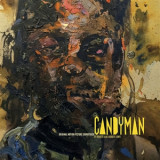
The Complete Film Music Composed by Robert Aiki Aubrey Lowe - 2xLP 180 Gram Colored Vinyl - Old-Style Tip-On Gatefold Jackets with Satin Coating and a Built-In Booklet Page - Composer Liner Notes - 12 Page Art Gallery Exhibit Catalogue // In partnership with Universal Pictures, Metro Goldwyn Mayer (MGM) and Monkeypaw Productions, Waxwork Records is thrilled to present CANDYMAN Original Motion Picture Soundtrack by Robert Aiki Aubrey Lowe. Directed by Nia DaCosta (next year's The Marvels) from a screenplay by Oscarr winner Jordan Peele, Win Rosenfeld and DaCosta, Candyman, currently in theaters nationwide, is a fresh take on the blood-chilling urban legend and a contemporary incarnation of the 1992 cult horror classic. About Robert Aiki Aubrey Lowe: Robert Aiki Aubrey Lowe (b.1975) is an artist, curator and composer who works primarily with, but not limited to, voice and modular synthesizer for sound in the realm of spontaneous music. Along with analog video synthesis works, he has brought forth an A/V proposal that has been a focus of live performance and installation / exhibition. The marriage of synthesis and the voice has allowed for a heightened physicality in the way of ecstatic music, both in a live setting and recorded. The sensitivity of analogue modular synthesis echoes the organic nature of vocal expression, which in this case is meant to put forth a trancelike state. Lowe's works on paper tend towards human relations to the natural/magical world and the repetition of motifs. The deluxe 2xLP vinyl release features 180-gram colored vinyl, old-style tip-on gatefold jackets with satin coating and a built-in booklet page, liner notes by composer Robert Aiki Aubrey Lowe, a 12-page art gallery exhibition catalogue, artwork by Sherwin Ovid and Julian Williams and puppetry art by Manual Cinema.
Superior Viaduct and our new artist label, W.25TH, are proud to continue to be the home for Cindy Lee with the physical release of the celebrated album Diamond Jubilee. Universally praised, shortlisted for the 2024 Polaris Music Prize, and already hailed by Pitchfork as the 3rd best album of the 2020s, anticipation and conversation around the record has been high.
Cindy Lee is the performance and songwriting vehicle of Patrick Flegel (who previously fronted influential indie group Women). Over several albums, Flegel has combined delicate melodies and sheer beauty with moments of experimentation. With Diamond Jubilee, Flegel’s undeniable songcraft comes to the foreground, embracing a more instant connection and accessibility. Timeless tales of love and longing, surrounded by sticky hooks, take the listener on an unforgettable journey. Diamond Jubilee was written and recorded over several years by Patrick Flegel in Toronto, Durham, Calgary and Montreal at Realis- tik Studios. The album was mixed by Steven Lind, who also contrib- utes to several tracks and co-wrote “Baby Blue,” and was mastered by Joshua Stevenson.
Triple LP on black vinyl comes with 24” x 36” poster.
out of Stock
Last delivered 4 months ago available to reorder, subject to availability
2023 was a whirlwind year for Oracle Sisters. The trio—Julia Johansen, Chris Willatt, and Lewis Lazar—followed the release of their debut album Hydranism with a globe-spanning tour that captivated fans and critics alike. From the highways between Knoxville and Nashville to sold-out clubs in rain-soaked Seattle, and festival stages across the UK, they logged countless hours on the road. Their journey was a tapestry of exhaustion and exhilaration, falling apart, brawls and disputes, love and acceptance. By the year’s end, just two days before Christmas, they found themselves in Tokyo, reflecting on the fleeting nature of time and the fragments of inspiration gathered along the way. It was there the seeds for their next album, Divinations, began to sprout. Composing as a true trio for the first time, Oracle Sisters pieced together sketches formed during stolen moments on tour. These fragments coalesced into Divinations, an album shaped by the band’s nomadic existence. The recording sessions spanned cozy Parisian studios, a barn in northern France, and the storied Valentine Studios in Los Angeles. Their creative process embraced experimentation—swapping primary instruments, playing with toy drum machines, and crafting melodies on quirky tools like the OP-1 and a baby Casio keyboard. This spirit of discovery lent the album a sense of spontaneity and wonder. At its core, Divinations channels mysticism and timeless storytelling. The band’s songwriting draws on diverse influences, from the surrealist poetry of Baudelaire and Rimbaud to the introspective philosophies of Carl Jung. Musically, echoes of Talking Heads, Air, and Leonard Cohen resonate throughout the album and tracks like “Riverside” delve into existential questions— “How far are you going? Is it more than money can buy?” Elsewhere on the album “Marseille,” born in the city that gave the song its name, kicks off as a trance with lyrics that play between the sincere and desperate self-help affirmations, we give ourselves while trying to find a bridge between our individual lives and a universal feeling. Lead-single “Alouette” is Oracle Sisters at their most direct; propelled by a driving bassline and exuberant strings, the track summons the sound of 80’s, 90’s, and early 2000’s rock n roll as they sing about “getting out of dodge, finding a pirate ship and sailing home.” Inspired by the book Caliban and the Witch, “Blue Left Hand” is a lyrical tapestry weaving together history, philosophy, and cultural critique. The lyrics, “It’s in the harbor of every page / It’s in the corner of the playwright’s stage / And every player and every fake / And every witch that we burned at the stake,” reflect on the forces that shaped the capitalist society we know today. Across Divinations’ 11 tracks it’s not only geographic boundaries that were crossed but also the boundaries of time and circumstance. While their work may not consciously reflect specific worldly events, they seek to embrace the universal and offer a space for healing. “Good music would make sense to a farmer in 17th century France as it would to a pastry chef in Slovenia in the 21st century,” shares Lazar. “It’s not written for any temporal powers that be. It’s about expressing our common humanity and taking it from there.” This intuitive approach fuels Oracle Sisters creative process - whether composing in a frozen French farmhouse or performing live with an ever-expanding lineup of collaborators, the band remains committed to exploring the unknown. Through Divinations, they hope to leave listeners feeling transcendent, levitating on waves of intuition and discovery.
Universally hailed as the King of the Blues, the legendary B.B. King was without a doubt the single most important electric guitarist of the second half of the 20th century. His bent notes and staccato picking style influenced legions of contemporary bluesmen, while his gritty and confident voice -capable of wringing every nuance from any lyric- provided a worthy match for his passionate playing. In The Many Faces of B.B. King we will review many of his most celebrated collaborations including Stevie Ray Vaughan, Etta James, Chaka Khan and Pat Metheny, enjoy plenty of his hits that spanned a six-decade career and finally, enjoy a list of who’s who in The Blues Hall of Fame with names such as Howlin’ Wolf, Elmore James, Slim Harpo y Muddy Waters. The Many Faces Of B.B. King is a fantastic album that showcases the work of one of the most celebrated musicians from our time.
Also, remember that it is not available on any streaming platforms.
Volume 1 of this expertly curated project of 90s Italian House - put together by Don Carlos.
If Paradise was half as nice… by Fabio De Luca.
Googling “paradise house”, the first results to pop up are an endless list of European b&b’s with whitewashed lime façades, all of them promising “…an unmatched travel experience a few steps from the sea”. Next, a little further down, are the institutional websites of a few select semi-luxury retirement homes (no photos shown, but lots of stock images of smiling nurses with reassuring looks). To find the “paradise house” we’re after, we have to scroll even further down. Much further down.
It feels like yesterday, and at the same time it seems like a million years ago. The Eighties had just ended, and it was still unclear what to expect from the Nineties. Mobile phones that were not the size of a briefcase and did not cost as much as a car? A frightening economic crisis? The guitar-rock revival?! Certainly, the best place to observe that moment of transition was the dancefloor. Truly epochal transformations were happening there. From America, within a short distance one from the other, two revolutionary new musical styles had arrived: the first one sounded a bit like an “on a budget” version of the best Seventies disco-music – Philly sound made with a set of piano-bar keyboards! – the other was even more sparse, futuristic and extraterrestrial. It was a music with a quite distinct “physical” component, which at the same time, to be fully grasped, seemed to call for the knotty theories of certain French post-modern philosophers: Gilles Deleuze, Félix Guattari, Paul Virilio... Both those genres – we would learn shortly after – were born in the black communities of Chicago and Detroit, although listening to those vinyl 12” (often wrapped in generic white covers, and with little indication in the label) you could not easily guess whether behind them there was a black boy from somewhere in the Usa, or a girl from Berlin, or a pale kid from a Cornish coastal town.
Quickly, similar sounds began to show up from all corners of Europe. A thousand variations of the same intuition: leaner, less lean, happier, slightly less intoxicated, more broken, slower, faster, much faster... Boom! From the dancefloors – the London ones at least, whose chronicles we eagerly read every month in the pages of The Face and i-D – came tales of a new generation of clubbers who had completely stopped “dressing up” to go dancing; of hot tempered hooligans bursting into tears and hugging everyone under the strobe lights as the notes of Strings of Life rose up through the fumes of dry ice (certain “smiling” pills were also involved, sure). At this point, however, we must move on to Switzerland.
In Switzerland, in the quiet and diligent town of Lugano, between the 1980s and 1990s there was a club called “Morandi”. Its hot night was on Wednesdays, when the audience also came from Milan, Como, Varese and Zurich. Legend goes that, one night, none less than Prince and Sheila E were spotted hiding among the sofas, on a day-off of the Italian dates of the Nude Tour… The Wednesday resident and superstar was an Italian dj with an exotic name: Don Carlos. The soundtrack he devised was a mixture of Chicago, Detroit, the most progressive R&B and certain forgotten classics of old disco music: practically, what the Paradise Garage in New York might have sounded like had it not closed in 1987. In between, Don Carlos also managed to squeeze in some tracks he had worked on in his studio on Lago Maggiore. One in particular: a track that was rather slow compared to the BPM in fashion at the time, but which was a perfect bridge between house and R&B. The title was Alone: Don Carlos would explain years later that it had to be intended both in the English meaning of “by itself” and like the Italian word meaning “halo”. That wasn’t the only double entendre about the song, anyway. Its own very deep nature was, indeed, double. On the one hand, Alone was built around an angelic keyboard pattern and a romantic piano riff that took you straight to heaven; on the other, it showcased enough electronic squelches (plus a sax part that sounded like it had been dissolved by acid rain) to pigeonhole the tune into the “junk modernity” section, aka the hallmark of all the most innovative sounds of the time: music that sounded like it was hand-crafted from the scraps of glittering overground pop.
No one knows who was the first to call it “paradise house”, nor when it happened. Alternative definitions on the same topic one happened to hear included “ambient house”, “dream house”, “Mediterranean progressive”… but of course none were as good (and alluring) as “paradise house”. What is certain is that such inclination for sounds that were in equal measure angelic and neurotic, romantic and unaffective, quickly became the trademark of the second generation of Italian house. Music that seemed shyly equidistant from all the rhythmic and electronic revolutions that had happened up to that moment (“Music perfectly adept at going nowhere slowly” as noted by English journalist Craig McLean in a legendary field report for Blah Blah Blah magazine). Music that to a inattentive ear might have sounded as anonymous as a snapshot of a random group of passers-by at 10AM in the centre of any major city, but perfectly described the (slow) awakening in the real world after the universal love binge of the so-called Second Summer of Love.
For a brief but unforgettable season, in Italy “paradise house” was the official soundtrack of interminable weekends spent inside the car, darting from one club to another, cutting the peninsula from North to centre, from East to West coast in pursuit of the latest after-hours disco, trading kilometres per hour with beats per minute: practically, a new New Year’s Eve every Friday and Saturday night. This too was no small transformation, as well as a shock for an adult Italy that was encountering for the first time – thanks to its sons and daughters – the wild side of industrial modernity. The clubbers of the so-called “fuoriorario” scene were the balls gone mad in the pinball machine most feared by newspapers, magazines and TV pundits. What they did each and every weekend, apart from going crazy to the sound of the current white labels, was linking distant geographical points and non-places (thank you Marc Augé!) – old dance halls, farmhouses and business centres – transformed for one night into house music heaven. As Marco D’Eramo wrote in his 1995 essay on Chicago, Il maiale e il grattacielo: “Four-wheeled capitalism distorts our age-old image of the city, it allows the suburbs to be connected to each other, whereas before they were connected only by the centre (…) It makes possible a metropolitan area without a metropolis, without a city centre, without downtown. The periphery is no longer a periphery of any centre, but is self-centred”.
“Paradise house” perfectly understood all of this and turned it into a sort of cyber-blues that didn’t even need words, and unexpectedly brought back a drop of melancholic (post?)-humanity within a world that by then – as we would wholly realise in the decades to come – was fully inhuman and heartless. A world where we were all alone, and surrounded by a sinister yellowish halo, like a neon at the end of its life cycle. But, for one night at least, happy.
out of Stock
Last delivered 86 days ago available to reorder, subject to availability
Drink Ring Jesus, the second album from Nashville based singer-songwriter Simmons was originally released in 2006 during a period of vast political and social change in America. Post 9/11 the age-old battle between good and evil, God versus Satan if you want to get personal, once again eased into view agitating hearts and minds. Like all songwriters with just their art to carve themselves a foothold in a world becoming less identifiable, Simmons produced an album that is both intimate and deeply inquisitive yet, like all the great folk records, its universal themes of hope, redemption, pain and despair will resonate with all who hear it.
Nearly twenty years on from its initial release Drink Ring Jesus feels as relevant now as it did then. From the opening lines of the title track Simmons is clearly caught in a time of intense personal reflection. It’s not an unusual pathway to tread for songwriters and artists alike, indeed many have fell by its wayside over the years, yet here our narrator is both looking for a way through and calling on something deeper than just instinct for guidance. We are right on the frontline, characters battling on the very precipice of sanctuary or sacrifice on the likes Time To Pay and Devil’s Work Is Never Done, before literally scavenging a ticket to Hope Station on the evocative Next Stop Redemption. There isn’t a moment where you feel Simmons is taking the easy way out or shying from titanic confrontation. Anything but. It’s in the no-mans land where these songs impact the most, at the very alchemy where despair turns to optimism or defeat.
"Porœs" ist das erste gemeinsame Album des Elektronikmusikers und No-Input-Mixing-Universalgelehrten Simon Grab und des Schlagzeugers und Komponisten David Meier, Mitglied der renommierten Avantgarde-Minimal-Rockband Schnellertollermeier. Der Sound von Grab & Meier ist roh und unbeständig und wechselt zwischen messerscharfen, rollenden, bröckelnden, unberechenbaren und wilden Zuständen. Er balanciert zwischen Meiers organischem Schlagzeugspiel und Grabs pulsierenden Pieptönen und Geräuschen, knurrenden Basslines und Dubbed-Feedbacks, die er aus seinem individuell angeschlossenen No-Input-Mixing-Setup extrahiert. Keines der Instrumente übernimmt die Führung, die beiden Musiker treten in einen ständigen Dialog. Als leidenschaftliche Improvisatoren haben sie dieses Album mit sieben Tracks in mehreren Studiosessions aufgenommen, was zu einem Ergebnis führte, das selbstbewusst und präzise ist, aber die Dringlichkeit einer Live-Improvisation beibehält.
- "Unser gemeinsamer Spielplatz ist das Grooven auf dem Risiko des Auseinanderfallens, wie das Surfen auf einem Unterwasser-Seil durch Wellen von Frequenzen, auf gebrochenen Rhythmen." – Simon Grab & David Meier
In addition to running the long-standing label Lo Recordings, Tye has recorded under various names and been involved in numerous projects over the past three decades. Keen fans of the label may also notice that this isn't Tye's first collaboration with MFM; his work during the 1990's as part of UK ambient group MLO captured our attention years ago, leading to the release of their retrospective album 'Oumuamua' in 2021.
Releasing archival work alongside new material from an artist has been a fundamental aspect of Music From Memory's identity since we began the label, and is something that continues to bring us immense joy. With Jon continuing to produce work under a wide range of names to this day, the short step to releasing this new work was organic and natural. Working under the name Ocean Moon Jon carries echoes of his work with MLO into the modern day, weaving an ambient electronic music that radiates gentle positivity.
The title 'Ways To The Deep Meadow' is inspired by the poem 'Universal Solar Calendar' written by poet, mystic, shaman, and visionary Angus Maclise. Maclise began as the percussionist in an early iteration of La Monte Young's Theatre Of Eternal Music and later played with the Velvet Underground before moving to Nepal, where he wrote and published an impressive collection of poetry and music.
Side one of the album was created at a time when Tye had been exploring ideas around artificial intelligence, delving into books such as 'The Physics Of Immortality' by Frank J. Tippler, 'Novacene' by James Lovelock, and '12 Bytes' by Jeanette Winterson, seeking an alternative to the prevalent, negative views of AI. He was also inspired by the Buddhist perspective of AI as an integral part of consciousness evolution, as evidenced by the creation of a Buddhist robot that preaches in the Kodaiji Temple in Kyoto.
Side two consists of two long-form pieces, one composed for Janine Rook's 'Made In Dreams' exhibition and the other for Vix Hill Ryder's 'Wild Edges' film. For 'Made In Dreams', text from the exhibition catalogue was processed via the Holly Herndon Holly + app to create an environment that is simultaneously otherworldly and warm.
As with much of Jon's work, this music seeks to nurture an optimistic outlook in the listener, something he achieves here with subtlety and a truly delicate touch. The immersive ambient music of 'Ways To The Deep Meadow' reaches out to the listener like gentle trails of light, offering it's spells,invocations and enchantments to all who choose to listen.
'Ways To The Deep Meadow' will be released on 31st January 2025 on LP as well as digitally. Sleeve art and design by Michael Willis.
out of Stock
Last delivered 15 months ago available to reorder, subject to availability
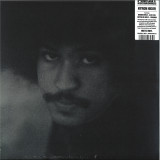
At the forefront of a rising wave of Brazilian artists captivating international audiences, Nyron Higor brings a quiet yet potent sense of wonder to his new self-titled album. Born in Maceió, Higor’s latest work is rooted in the traditions of Northeastern Brazilian music and golden-era MPB. Within the peaceful surroundings of his home, Higor weaves these roots together with global influences and contemporary production techniques, for a uniquely dreamlike vision of hope.
Following the success of his self-released debut Fio de Lâmina—an instrumental record of delicately balanced rhythmic and harmonic patterns, which earned support from tastemakers like Mr. Scruff, Gilles Peterson, and John Gomez—Higor’s new album is a move towards a more expansive, lyrical exploration of transcendence and triumph. As Higor explains, “This album is a test of resistance and a big event in my life as a young Black man from the Northeast and coming from a humble background, financially speaking, its context is political.”
Taking his demos and unfinished tracks to São Paulo, Higor worked alongside friends and collaborators from Brazil’s vibrant contemporary music scene—including fellow Maceioense artists Bruno Berle, Batata Boy, and New York-based Brazilian vocalist Alici Sol—assembling a rich musical landscape and a cutting edge development on the musical world from which he emerges.
For Higor, the process of recording and producing in close collaboration with Berle and Batata Boy allowed him to fully cultivate the emotive power of his compositions. Album opener "Ciranda" sets the tone with a slow frevo rhythm, as wistful trombone melodies and melancholic acoustic guitar harmonies create an atmosphere both intimate and grand. Lead single "São Só Palavras," featuring Alici Sol and Bruno Berle, captures both the lightness and depth of young love in an all too fleeting minute-and-a-half moment of soaring brilliance.
Building upon the instrumental sound of his debut, “Louro Cantador” with its playful organ, birdlike whistles and elegant acoustic guitar, emanates a kind of rare natural beauty, as each sound dances amidst the gentle pulse of Higor's bass—his main instrument.
Through ten carefully crafted tracks, Higor’s acuity for sound and silence draws listeners into a place that feels both deeply personal and universally resonant. “Above all, I value making music that brings me genuine satisfaction. I’m always looking for depth in the things I create.”
This album is a testament to the timeless themes that define Higor’s artistry, as well as his creative drive to overcome the obstacles he faces. Conveying his feelings of jubilance for his work, Higor notes, “This work is liberating, contemplative and victorious!” Each track invites the listener to experience the raw intimacy, the joy and longing, and the otherworldly ingenuity of Brazilian music, which seems to endlessly keep us coming back for more.
CREDITS
Ciranda (Nyron Higor)
Tico Lima: Trombone, Nyron Higor: Drums, Bass, Synthesizers, Electric Piano, Guitar, Molho de Jatobá, Ganzá, Caxixi, and Indigenous Whistle
Louro Cantador (Nyron Higor)
Nyron Higor: Drums, Bass, Keyboards, Guitar, Percussion, and Direct Sound
Demo Love (Nyron Higor)
Nyron Higor: Drums, Bass Synth, Keyboards, and Synthesizers
São Só Palavras feat. Alici, Bruno Berle (Nyron Higor, Batata Boy, Alici Sol, and Bruno Berle)
Alici Sol: Vocals, Bruno Berle: Vocals and Bass, Nyron Higor: Drums, Guitar, Keyboards, Synthesizers, and Whistles
Estou Pensando Em Você feat. Johanna (João Menezes, Rubens Adati)
Nyron Higor: Vocals, Johanna: Vocals. Bruno Berle: Vocals, Rubens Adati: Piano, Guitar, Programming, Stefan Costilhes: Bass, Batata Boy: Programming
Som 24 (Nyron Higor)
Nyron Higor: Sampler, Keyboard, Bass Synth, Vocoder, and Steel Guitar
Pizzicato (Nyron Higor)
Nyron Higor: Double Bass and Keyboards
Eu Te Amo (João Menezes)
Nyron Higor: Vocals and Bass, João Menezes: Guitar, Batata Boy: Rhodes Piano, Bruno Berle: Xylophone
Me Vestir De Você feat. Johanna (Paulo Novaes and João Menezes)
Nyron Higor: Vocals, Johanna: Vocals, Bianca Godoi: Drums, Bruno Berle: Bass, Guitar, Percussion, and Rhodes Piano, Batata Boy: Rhodes Piano and Guitar
===================
Tracks 1, 2, 3, 4, 6, 7, and 8 were recorded by Nyron Higor in Maceió
Track 4: Bass and Synthesizers recorded by Ico dos Anjos. Vocals recorded by Batata Boy at Estúdio Rural
Track 5: Guitars, Bass, Programming, and Pianos recorded at Inhame Estúdio. Coproduced by Rubens Adati
Tracks 9 and 10 Recorded and Co produced by Ico dos Anjos
Mixed by Batata Boy, Ico dos Anjos, Bruno Berle, and Nyron Higor
Mastered by Batata Boy
Produced by Batata Boy, Bruno Berle, and Nyron Higor
Lacquer Cut by Caspar Sutton Jones @ Gearbox Records
Cover photo by Claudio Virginio
Vinyl centre label artwork by Tadáskía
Sleeve design by Alessandro Renaldin
out of Stock
Last delivered 7 months ago available to reorder, subject to availability
Fragility, modesty, delicacy... Frànçois’ voice evokes illustrious contemporaries, from Devendra Banhart to Vincent Gallo, whose vocal inflections sometimes echo behind the uniquely French timbre.
Artists like Malik Djoudi with his captivating pop, in-demand jazzman Thomas de Pourquery, and British folk artist Rozi Plain all lend their talents to Âge Fleuve. These three delightful collaborations blend seamlessly into the album’s 10 tracks. But the album’s fluidity is also felt in the flavor of certain compositions, like the upbeat “Où mène la nuit,” a kind of mystical inquiry into the whirlwinds of youth. Then there’s “Aïeul inconnu”, whose apparent melancholy pairs perfectly with its elegant groove. “Adorer”, the duet with Thomas de Pourquery, is an uplifting track that jumps wholeheartedly into the joy of living in the “present moment”.
Âge Fleuve—or rather, a “liquid inspiration”— is built on a heritage of memory. And when one delves into the mystery of this heritage, the answer becomes clear: “We’re here, under this part of the river, further downstream. Everything communicates, everything is in motion.” In other words, an album flowing through the river of our sensory, intimate, and universal heritage.
With Bhelize Don't Cry, Uzi Freyja unveils her childhood alter ego, Bhelize—a name known only to her family, now released as a daring new identity. This album, crafted as a letter to her “inner child,” is an honest dialogue between the adult she has become and the little girl she once was.
Over 12 tracks, Uzi Freyja takes us on a visceral journey, navigating between vulnerability and strength. She recounts her trials and triumphs, affirming an unbreakable resilience and a unique, uncompromising identity. Each track captures a key moment, an intense emotion, a facet of her striking universe.
An intimate, uncompromising story: Uzi Freyja delivers more than just an album; this is a blazing confession that transcends the personal to strike a universal chord, resonating deeply with listeners.
Stage energy translated to the studio: With over 100 performances since 2021, Uzi Freyja brings her on-stage intensity to this album. Bhelize Don't Cry is designed to be both felt and danced to, inviting everyone to let go and “shake that Bunda” with no reservations!
A raw balance between gentleness and power: Moving between delicate confessions and pulsating beats, Uzi Freyja crafts a world where each track oscillates between pure emotion and raw energy, captivating the listener from start to finish.
Over the past few years, Giulio Erasmus has been carving out his very own musical idiom, referencing the fragmentative cause-and-effect possibilities of soundsystem culture. Accompanied for the occasion by The End Of The Worm, the recording of this concert highlights the futurist intentions of early 80s underground music in the UK and beyond. Although the expression is clear, there's continuous room for exploration and innovation. With heavy delay effects often cut short, metallic percussion, murky vocals, deconstructed electronics, and miniaturist melodies with snippets of the grandiose and the absurdly urban, all tracks here are patient, explorative, and freeform. Through curves of darkness and curves of light, this is a choreography of ideas, a passing infatuation that runs deep.
Giulio Erasmus was a member of D.U.D.S, Handle, and released his first solo outing, Re-Adjustment, in 2021. His second album, called Second Attempt, was released to acclaim in 2024 and hailed as an extremely modern take on the possibilities of underground pop through the extended ripples of soundsystem culture. Being the son of musical royalty, his father is legendary Factory Records co-founder Alan Erasmus, is almost too easy a reference. Giulio taps into 80s counterculture sonic experiment as a universal musical language that allows for futurism and fragmentation, reversing narrative logic and the transmission of musical ideas.
This recording of the amazing live performance by Giulio Erasmus & The End Of The Worm beautifully captures the investigative and unforgiving nature of all the instrumentalists that were on stage on that warm night last August in Eupen, Belgium. Through spirals of ideas, fragments, and experiment, they built a vapourous yet focused suggestion of openness and endless possibilities.
This live incident involved:
Fiona Brunet, Paul Cossé, Romain Simon, Lola Lextrait, Guyilo Erasmus
Picking up where "Máquina de Vénus" (Blacksea Não Maya) left off, this is now 100% DJ Kolt at the controls. Slow, grinding power tools working their way across the complex web of ideas the producer lays down. Truly a next level thing, taking elements from recognized styles such as tarraxo, EDM, even trap, bending their accepted signifiers to suit his own creative mind instead of the crowd pleasing monster that constantly haunts Dance Music. Here we find a wonderful, twisted approach to the dancefloor, one heavy on brain activity, fantastically moody, showcasing music that we long ago quit trying to define.
"Despertar" (again) changes the game, adding secret doors and pathways previously unheard and unthought of. This right here is the mark of a unique producer. You'll have a hard time trying to compare Kolt with any other artist on Príncipe, much less on the outside world. A keen sense of groove filters through all tracks, the dance is never forgotten but you know there are certain demands - you can't just expect a straight line to "a good night out", there's an effort required, you'll have to reach out as well so you can let loose and connect with the universal Master Plan.
The album is all made up of liquid transitions as much as rock-hard foundations, perfectly capable of being explicit when honouring the roots but so committed to a new stance that one may feel thrown off balance by the sheer genius of
Larkin Poe"s new album "Bloom" sees the dynamic sister duo venturing further along on their evolving musical journey with a collection of songs that resonate with introspection, authenticity, and a profound connection to their roots in American music. Produced and largely co-written by Megan, Rebecca, and Tyler Bryant, the album marks a significant evolution for Larkin Poe, reflecting a synergy that extends beyond mere musical partnership. Already hailed for the sincerity of their songcraft, the Lovell sisters now place an even greater spotlight on their gift for storytelling, delving deep into personal narratives with universal themes of self-acceptance and individuality against a backdrop of contemporary blues and rock influences. With their distinctive blend of masterful instrumentation and soulful harmonies, each track unfolds like a chapter, with lyrics that wind deeper and deeper towards the heart of Larkin Poe.
Larkin Poe"s new album "Bloom" sees the dynamic sister duo venturing further along on their evolving musical journey with a collection of songs that resonate with introspection, authenticity, and a profound connection to their roots in American music. Produced and largely co-written by Megan, Rebecca, and Tyler Bryant, the album marks a significant evolution for Larkin Poe, reflecting a synergy that extends beyond mere musical partnership. Already hailed for the sincerity of their songcraft, the Lovell sisters now place an even greater spotlight on their gift for storytelling, delving deep into personal narratives with universal themes of self-acceptance and individuality against a backdrop of contemporary blues and rock influences. With their distinctive blend of masterful instrumentation and soulful harmonies, each track unfolds like a chapter, with lyrics that wind deeper and deeper towards the heart of Larkin Poe.
David Allred is a prolific composer and producer based in Portland, Oregon. His new album The Beautiful World captures an enriched, realised understanding of why he composes in the first place. Dedicated to the expression of existential themes such as death, grief, longing and loss, the album’s core theme centres around the suicide of a young girl Lauren, who was a family friend to Allred. For as long as he could remember, Allred always created music out of a kind of dissociative state which he finds alluringly easy to lapse into. A repetition of a motif is usually where he begins composing. But unlike his previous works, The Beautiful World firmly has one foot in reality and is deeply intertwined with Allred’s relationships, past and present. Through his correspondence with Erased Tapes label head and the album’s producer, Robert Raths, over the past year, he came to realise that everyone has a Lauren in a way – someone they’d lost. Through writing to Raths, Allred was able to draw out this thread from the work and position it more clearly as the central concept to this work. The music doesn’t reflect the chaos of trauma, instead it has a therapeutic quality. It was through this dialogue that Allred was able to create what may be his most cohesive body of work to date. The 11 track album unfolds around Oh Lauren, providing the core of the album’s sentiment – how grief returns to us throughout life over and over. Embedded more than halfway through the album, Allred allows listeners to cohabit a meditative space through ambient textures, drones and ballads echoing the vocal sincerity of Arthur Russell, Daniel Johnston and the hypnotic storytelling of Robert Ashley. To truly reckon with The Beautiful World’s emotional position, listeners must understand the importance of the figure of Lauren, and the significance she has had throughout Allred’s life. Lauren’s suicide as a child provided the catalyst for Allred’s lifelong grief. But it was death anxiety and grief itself which provided Allred a link to a universal relationship that people have with each other and the world they live in. Impermanence and loss are the driving force behind all of our connections. The trance-like nature of the album perhaps comes from David Allred’s time sense – particularly when it comes to memory and trauma. Time becomes non-linear rather than a straight line – where one can repeat or return to the same themes but older and in a different frame of mind. Grief continues to manifest itself in life and despite personal growth, there will always be moments where the same feeling will manifest itself again. The album encourages listeners to sit with the concept of grief, and Allred is hopeful they can find comfort and learn to process it in a healing way. The Beautiful World is therefore heavily influenced by Allred’s work in therapy, particularly his relationship to writing music. In the past, Allred would be composing music as a means to dissociate from his life, but the album sees him engaging and connecting more authentically than ever with others and himself. Despite his prolific previous works being made in the company of others, Allred needed to step back from the scenes that he’s worked in to discover what he really wanted to create. Allred concludes: “In the power of love, curiosity, humour, and reconciliation, we give you The Beautiful World.”
Back in December 2016, Jeshi fell asleep whilst driving home from a party at 5am, and he crashed into a park car, only to be woken up by the airbag exploding in his face. This is the inspiration for album two. The new album is a statement of waking up and levelling up from the last period of his life. This is a new era, and full of energy.
SHORT BIOG
Jeshi doesn't run away from fire; he runs with it. The East London artist is on a quest to feel alive in every sense. To him, feeling alive means being present in each experience, no matter how challenging. For Jeshi - who has spent the last few years establishing himself as one of the most exciting voices of his generation - this is what life and art are all about. Chaos, then, is not something to shy away from, but where great ideas are born.
Jeshi's electrifying second album, AIRBAG WOKE ME UP is a collection of moment-capturing songs built to ignite reactions and start conversations. His scene-stealing jaunts to stages worldwide clearly influence its live-wire sound, as Jeshi and his cohorts smash through moods and tempos like kids let loose on funfair dodgems. "I want to make things that have intent and feel like statements," Jeshi declares. His versatile voice is the conductive thread that pulls everything together. "On Universal Credit, my voice was used in one way, whereas on this it's used in ten ways," he notes.
AIRBAG WOKE ME UP is an exploration into what happens when you emerge from tough times, and how they encourage you to view the world a little differently. It's bolder in ambition and built from renewed energy. Chaotic, but in the very best way. "In my head, this is the real arrival chapter," states Jeshi. "The 'I am here, I've arrived' moment."
Dienne creates hazy pieces of music full of the melancholy of remembrance and loss combining analogue instruments with reverb-drenched vocals and shimmers of processed electronic sources. Her new album "Conducturis" emerges as a sensory exploration of the human spirit and the boundless horizons of artificial intelligence.
"Abundant in beauty and rich in disturbances" serves as the guiding principle for Belgian composer, Dienne, as she builds songs and soundscapes that portray the images and stories that play behind her eyes.
Combining analogue instruments like the oboe, the piano, and the flute with reverb-drenched vocals and shimmers of processed electronic sources, she creates hazy pieces of music full of the melancholy of remembrance and loss.
Her debut album Addio (2022) was released on Nicolás Jaar's Other People imprint. Addio is a 32-minute study on loss and mourning. Following the death of her grandmother due to Covid-19, and unable to say a proper goodbye due to travel restrictions, Dienne set out to give her "Addio" through musical form. The result is a deeply intimate work that channels classical instrumentation through foggy electronic experimentation.
Memories, biographies, and family histories merge in this simultaneously somber and optimistic work which plays out like a universal and comforting ode to lost loved ones. Her second album, Conducturis, accompanies an immersive film installation delving into speculative fiction, conceptualized by Mira Sanders and Cédric Noël. Conducturis will be released on Cortizona at the end of January 2025.
Conducturis is an immersive film installation project that delves into the realms of speculative fiction, employing the cinematic language of the road movie to envision the ramifications of constructing an artificial brain within the Swiss landscape.
Following their encounters with key figures in the Human Brain Project during an art research expedition in Geneva from 2019 to 2020, conceptualized by Cédric Noël & Mira Sanders, they stumbled upon a remarkable discovery: a hidden fiber-optic cable linking Geneva to Lugano.
Anchored at both ends by the Human Brain Project in Geneva and the CSCS (Centre Suisse de Calcul Scientifique) in Lugano, this conduit facilitated the transmission of intricate brain simulations from the imposing computational hub in Lugano to Geneva via a 'superconductor' cable.
While the nuances of this fiber network eluded the naked eye, Sanders & Noël meticulously pored over maps, gathered endless data, and traversed the terrain. In crafting "Conducturis", they chose to portray an immersive journey along this IT infrastructure connecting Geneva and Lugano, exploring the curious allure of dreaming about artificial landscapes.
The accompanying originalscore by Dienne invites audiences to delve into the intersection of human creativity and machine intelligence. Guided by the principle of being "abundant in beauty and rich in disturbances", Dienne embarks on a sonic exploration of the Swiss landscape, translating its ethereal beauty and technological wonders into evocative musical compositions.
"How can a human sound like a machine?"
This intriguing question lies at the heart of Dienne's artistic endeavor. For her, the soundtrack of "Conducturis'' transcends mere musical notes; it embodies a profound philosophical exploration into the essence of human creativity amidst the rise of artificial intelligence.
Similarly, "How can a human being compose like a machine?" serves as a pivotal inquiry guiding Dienne's creative journey. As she navigates the delicate boundary between human expression and machine cognition, she skillfully intertwines the pulsating rhythms of data transmission with the haunting melodies inspired by artificial landscapes.
Drawing inspiration from the cinematic aesthetics of the road movie genre, as envisioned by Sanders & Noël in their speculation on the construction of an artificial brain, Dienne weaves a sonic tapestry that transports listeners on a contemplative journey through mountains, lakes, and cities.
Each track for "Conducturis" becomes a testament to the fusion of brain and landscape, inviting audiences to ponder the limitless potential of human imagination.
As audiences immerse themselves in the evocative world of "Conducturis", Dienne's soundtrack serves as a guiding force and perfect companion, leading them through a transcendental experience where reality and imagination merge, and the symphony of human and machine harmonizes seamlessly.
"Conducturis" emerges as a sensory exploration of the human spirit and the boundless horizons of artificial intelligence. With Dienne's soundtrack as its heartbeat, this project invites audiences to embark on a voyage of discovery, where the echoes of human creativity reverberate across the digital frontier.
A long-lost vinyl album is back in stock: for the last 20 years, Kosmischer Pitch by Jan Jelinek, originally released in 2005 on ~scape, existed only as a digital download. Right on time for the 20th anniversary the remastered album is available again on vinyl. The digital version includes two previously unreleased pieces from that period.
What the press said about Kosmischer Pitch back in 2005:
“For Kosmischer Pitch, Jelinek draws from the obsessed-over rock produced by his German countrymen in the 1970s. (…) Trance-inducing repetition is constantly modulated by variations that hover on the threshold of audibility. (…) one of the more remarkable bodies of work in electronic music.” - Pitchfork
„Like the cosmic compositions it delicately references, Kosmischer Pitch is proof that the higher and lower pleasures can triumphantly combine.” - The Wire Magazine
“ The old Jelinek approach can also be heard on the new album - not least the “Pitch” in the title, which, as Martin Büsser explains in the info sheet, refers specifically to Wild Pitch House, generally to manipulation/exploitation of the sense of time - but there are striking differences: clear vintage synth, guitar and drum sounds, very subtle club references.” - Groove
“t's impossible to know how many layers of sound Jelinek has stacked up on any of these eight tracks, but each one seems to take on a shadowy, ghost-like life of its own as it morphs across time and space. Minimalist, yes, in a way, but thick as a wool rug.” - AllAboutJazz
out of Stock
Last delivered 6 months ago available to reorder, subject to availability
MAMMOTH is a grabber right out of the gate, every step they take is unleashed with deadly economical precision. They may flash on Lynyrd Skynyrd and other vintage southern rock traditions but the brilliant way the vocals are recorded and the to-the-point interlocking guitar moves will fire up anybody into any sort of hard rock. They can rip it up with hot leads, probably jammed out on these songs at live shows but lucky us, they laid them down for all times here with the sort of thought out unified force and construction that screams hit radio. Loads of personality, accessible, produced and mixed with the clarity of classic rock that never loses it's perfectly deployed impact. The uncluttered arrangements leave plenty of space, crafted with the kind of balanced mojo in the mix where every detail adds to the whole. Down and dirty but also achieving a universal pop-friendly appeal! The Mammoth LP was recorded in 1981 at Relayer Studios in DeLand, Florida with the two guitars, bass and drums quartet line-up sounding like it could have been a decade earlier. Buzz Fetters on lead guitar, Bill Abell on rhythm guitar, Joey Costa on bass and Ron Herman on drums… with everybody contributing to the vocals. Rather than having a strong up front emotive singer the lead vocals here are multi-tracked and integrated into the songs with plenty of attitude but also a genre-transcending presence… you can imagine the vocal ambience working in punk, glam, even psychedelic contexts. Mammoth have a sound informed by roots music but it is really in the rear-view mirror the way they roll. The songwriting here is terrific, they have a way of saying things that comes off as sincere but not too serious. You get plenty of in-your-face hard rock action but also several melodic tracks that have a more reflective charm to round out the trip. AND… when you hear their brilliant ode to southern rock titled "Southern Sounds" I challenge you to find any song about the subject more delightful. These guys keep it real, whether they're being bad ass or vulnerable they express themselves with 100% genuine feeling as contagious and life affirming as it gets!
Coincidental five year anniversary vinyl edition of Helado Negro's landmark 2019 album This Is How You Smile featuring new artwork and a high count of smile-inducing vibes. Helado Negro's This Is How You Smile, freely flickers between clarity and obscurity, past and present geographies, bright and unhurried seasons. A landmark release, This Is How You Smile embraces a personal and universal exploration of aura - seen, felt, and emitted - and showcases Roberto Carlos Lange's breezy, beautiful songwriting at its absolute best.
out of Stock
Last delivered 21 months ago available to reorder, subject to availability
Lungu Boy is the third studio album from global superstar and Nigerian singer/songwriter, Asake. The album promises to captivate fans with its vibrant rhythms, soulful melodies, and poignant lyrics that reflect Asake's unique artistry and cultural roots. Lungo Boy showcases Asake's signature blend of Afrobeats, Amapiano, hip-hop, and highlife, creating a rich tapestry of sound that is both innovative and deeply rooted in African musical traditions. Each track on the album tells a story, weaving personal experiences with universal themes of love, struggle, and triumph. The album features collaborations with some of the biggest names in the music industry, like Travis Scott, WizKid, Central Cee, Stormzy, and LUDMILLA – adding exciting dynamics to Asake's already impressive sound.
Produced by a team of top-notch producers, Lungo Boy is a testament to Asake's commitment to quality and his relentless pursuit of musical excellence. The album also narrates the transition of Asake growing up on the streets of Lagos to becoming a global icon and living life in urban cities around the world. It identifies with the sights and sounds of Lagos (Eko, Lagos Island, Idumota Street), London (Hackney, Shoreditch, Brixton, Peckham), and New York (Brooklyn, Harlem).
0.3 x 0.7 mil elliptical bonded stylus tip
Highly rigid, lightweight polyphenylene sulfide (PPS)/glass fiber body
5.5 mV high-level output
Tracking force of 2.0 to 4.0 grams (3.0 grams standard)
Durable carbon fiber-reinforced ABS cantilever and nylon wire suspension ensure precise tracking
Design offers maximum visibility of the stylus tip
Great tracking and channel separation for high-fidelity sound
Universal ½"-mount headshell for 4-pin turntable cartridges
Sprecifications
Cartridge & Stylus
Frequency Response 20-18,000 Hz
Channel Separation 20 (dB at 1 kHz)
Vertical Tracking Angle 20°
Vertical Tracking Force 2.0-4.0 g (3.0 g standard)
Stylus Construction Bonded round shank