Поиск:unknow

Стили
Все
Trick Dice - Trick Dice ‘10th Anniversary Expanded Edition’ (2x12")
  • 1: Oedipus Rex
  • 2: Da Reaper
  • 3: Protein
  • 4: Moonlight
  • 5: Lucid Slowed
  • 6: Paragraph Of My Life
  • 7: Gold Figaro
  • 8: Emu (Neck Mix)
  • 9: D.s.l.s
  • 10: Clusterfuck
  • 11: Cloud 9,999 (Phone Mix)
  • 12: Bathory Motives
  • 13: Da Reaper Alt
  • 14: Protein Alt
  • 15: Lucid Unslowed
  • 16: Floss Thru Ya Town
  • 17: Gilbert’s Grape
  • 18: Intangibles
  • 19: Unknown Trick Dice Track
  • 20: Nickf2 Beat.mp3

Unreleased tracks not available until release date.

Trick Dice is the 2015 collaborative album from Richmond, Virginia rapper Nickelus F and producer Shawn Kemp AKA Lil Ugly Mane, widely regarded as one of the most enduring and understated releases of its era. The album captured a specific moment in underground hip-hop—unpolished, regional, and uncompromising—earning long-term respect from listeners, artists, and tastemakers alike. Over the last decade, Trick Dice has continued to circulate through word of mouth, remaining a reference point for fans of stripped-down, writer-focused rap.

This 10-year anniversary reissue presents Trick Dice in its most complete form to date. The standard edition is expanded into a double LP vinyl release and includes eight previously unreleased tracks recorded during the original sessions. The project has been newly prepared for vinyl to ensure fidelity and balance across the expanded track list.

- Nickelus F is a respected underground hip-hop artist with a decade-plus catalog and long-term credibility among tastemakers and peers

- Trick Dice is a collaborative album with producer Shawn Kemp AKA Lil Ugly Mane, marking a milestone project. It is a cult-favorite release with sustained organic demand.

- Expanded 2×LP vinyl edition including 8 previously unreleased tracks from the original recording era

- Bonus tracks curated and finalized specifically for this reissue

- Strong appeal to collectors and underground hip-hop audiences

Сделать предзаказ27.04.2026

он должен быть опубликован на 27.04.2026

43,49
DE AUGUSTINE, ANGELO - ANGEL IN PLAINCLOTHES
  • 1: Empty Shell
  • 2: Pet Cemetery
  • 3: Spirit Of The Unknown
  • 4: The Cure
  • 5: Mirror Mirror
  • 6: Cosmic Ride
  • 7: The Universe Was Our Mother
  • 8: With A Love So Kind
  • 9: Pictures On My Wall
  • 10: Goodbye Baby Blue

Angelo De Augustine kehrt mit ,Angel in Plainclothes" zurück, seinem fünften Album und bisher inspiriertesten Werk - eine tief empfundene Darstellung seiner mehrjährigen Reise der Heilung und Erneuerung. Das Album präsentiert De Augustines kraftvolle Melodien und ergreifende Texte in Titeln wie der eindringlichen Elegie ,Empty Shell", dem hoffnungsvollen ,Spirit of the Unknown" und dem herausragenden psychedelischen Country-Stück ,Mirror Mirror". Die Themen befassen sich mit der Zerbrechlichkeit des Lebens, zweiten Chancen und dem Wiederaufbauen seines Lebens, nachdem eine nicht diagnostizierte Krankheit ihn zwang, grundlegende Fähigkeiten neu zu erlernen: ,Ich versuche herauszufinden, wer ich jetzt bin", sagt De Augustine. ,Ich habe das Gefühl, dass mir eine zweite Chance im Leben gegeben wurde, und ich möchte sie leben." Das Album wurde vom Künstler in seinem Aufnahmestudio ,A Secret Place" in Südkalifornien geschrieben, aufgenommen, arrangiert, produziert und gemischt. Es ist das erste Mal seit Jahren, dass er wieder mit anderen Künstlern zusammengearbeitet hat, darunter der Streicharrangeur Oliver Hill (Kevin Morby, Helado Negro), den Harfenisten Leng Bian, die Backgroundsängerin/Percussionistin Wendy Fraser, den Produzenten Thomas Bartlett (der De Augustines ,Tomb" sowie St. Vincent und Bebel Gilberto produziert hat) und den Co-Produzenten Jonathan Wilson (Angel Oisen, Father John Misty) bei ,The Cure". Das Ergebnis ist ein kraftvolles Statement der Hoffnung: ,Eine der größten Hilfen, die mich am Leben gehalten haben, waren die Menschen in meinem Leben, die mir gesagt haben, dass letztendlich alles gut werden würde. Ich hoffe, dass diese Songs die gleiche Wirkung auf die Menschen da draußen haben und ihnen helfen zu erkennen, dass Wunder möglich sind."

Сделать предзаказ24.04.2026

он должен быть опубликован на 24.04.2026

22,27
TV STAR - MUSIC FOR HEADS
  • 1: The Package
  • 2: Reality Cheque
  • 3: Two Revolutions
  • 4: Texas Relation
  • 5: Greener Pastures
  • 6: For Heads
  • 7: Lodestar
  • 8: Koresh Me Down
  • 9: Out Of My Bag
  • 10: Strawberry Hero

Manchmal hörst du eine Band, die sich gleichzeitig neu und vertraut anfühlt, und das lässt dich innehalten. TV Star ist so eine Band. In den letzten Jahren hat die fünfköpfige Band aus Seattle-Tacoma, Washington, still und leise an ihrer Stärke gearbeitet - EP für EP, Show für Show -, bis ihr lang erwartetes Debütalbum ,Music For Heads" rauskam und klar machte: Sie haben sich zu etwas Besonderem entwickelt. Eine Mischung aus jangly-psych, Garage-Grit und Soft-Focus-Tiefe; diese Songs leuchten von innen heraus mit einer beeindruckenden Originalität. In einer Zeit, in der so viel Musik in algorithmischer Gleichförmigkeit verschwindet, klingt TV Star trotzig menschlich. Auf den zehn Tracks der LP schärft die Band ihre Instinkte, die sie über die Jahre verfeinert hat - sie kombiniert zeitlose Pop-Sensibilität, psychedelisch angehauchten Jangle in der Tradition von The Brian Jonestown Massacre, punkige Rhythmussektionen und Vocals, die mit der Wärme von Mojave 3 dahinschweben, um etwas ganz Eigenes zu schaffen. Mit Music For Heads greifen sie nicht nur auf die Musik der Vergangenheit zurück, sondern treiben eine neue Welle voran. Die Band wurde 2020 aus der gemeinsamen Bewunderung für den Psych-Rock der 90er Jahre, klassischen Shoegaze und Alt-Country-Underdogs gegründet. Der Startschuss fiel, als jemand die Kassette ,Electriclarryland" der Butthole Surfers aus dem Jahr 1996 von der Wand nahm und auf den Track ,TV Star" zeigte. Was folgte, war weniger die Gründung einer Band als vielmehr die Entstehung eines kleinen Ökosystems. Ashlyn Nagel (Gesang, Keyboard), Bryan Coats (Gitarre), Che Hise-Gattone (Gitarre), Mark Palm (Bass) und Tucker Devault (Schlagzeug) brachten ihre eigenen Instinkte, Eigenheiten und musikalischen Hintergründe mit ein, bis die Songs schließlich nach allen gleichzeitig klangen. Aufgenommen in einer Reihe gemütlicher Studios im Nordwesten - The Unknown in Anacortes und ein paar Verstecken in Seattle - ist ihr Debütalbum ,Music For Heads" eine Mischung aus klirrender Gitarrenmusik, psychedelischem Pop und authentischem Indie-Rock, ohne sich ganz auf einen Stil festzulegen.

Сделать предзаказ24.04.2026

он должен быть опубликован на 24.04.2026

22,27
Anenon - Dream Temperature (LP)

Saxophonist, producer and composer Brian Allen Simon explores darker hues, transposing waking and altered states under his studio veil Anenon. On the deeply evocative new album 'Dream Temperature', he shifts electronic processing to the foreground, introducing digitized wind instruments and unworldly atmospherics, not heard since his innovating mid-late 2010s output.

A longtime Los Angeles resident, born and raised, Brian Allen Simon has expressively operated under the moniker Anenon, releasing the highly revered 'Petrol' (2016), 'Tongue' (2018) and the viscerally beautiful 'Moons Melt Milk Light' (2023), in a line of unwavering musical dialogues. While the penultimate album was a deliberate, reductive, entirely acoustic detour that was born out of a want to unplug, 'Dream Temperature' sees Brian primed with a newly discovered wind synthesizer as his central compositional tool, alongside acoustic piano and tenor saxophone. The entirety of the album's electronics are triggered by Brian's lungs, generating otherworldly synths modulated by expressive breath control, channelled through the laptop as the core processing chamber for added textural components and field recordings.

A free floating and heavy emotional resonance marks 'Dream Temperature' from beginning to end, invoking the feeling of waking up, still heavy from a night of half-remembered dreams, and continuing one's day in this state. Simon maps out the album's spatial voice early on the statement title track, a deep, yet compact cut, generated from digital saxophone rasps that whistle by in close proximity, along with haze filled textures and sub bass. There is a sonic oscillation of urban grit and pastoral drift throughout as tracks pass by like introspective thoughts, fueling both a tense and ethereal quality that underpins the album. Interluding solo and part-solo piano improvisations 'Last Sun 1' and '2' are positioned adjacent to the buffering digital soundscapes. Their softer, still processed timbres pierce the melancholic exterior, offering a contrasting tenderness that could echo the grace of Ry?ichi Sakamoto, the spiritualist rigor of ECM's Keith Jarrett and a touch akin to Aphex Twin's piano miniatures. 'Nulle Part 1+2' signals the first appearance of an acoustic wind instrument, as tenor saxophone flourishes are juxtaposed against noisy drones, all shouting at the void, with notes resurfacing like lost digital data.

The album was recorded at home during either sunset or nocturnal hours between September of 2024 and October of 2025, a period in which Brian found himself craving more lengthy and intimate studio time as he searched for more pronounced textural qualities amidst his new sonic ambitions. 'When The Light Appears, Boy' shows further evidence of this deeper universe, revealing a grittier edge as the album's essential blueprint is sonically inked. A sprawling expanse of wind synths rhythmically encircle the listener before a dreamy, ghostly ambience blankets 'Toyama'. The sound is evocative of the productions of post dubstep era luminaries such as Burial or the productions of HTRK's Nigel Yang. More isolating and enveloping than the previous all acoustic record, this is music both disorienting and yet warmly inviting all at once. A sonic diarist at heart, personal field recordings were also taken from Sardinia, Japan, Big Sur and LA which intersect at unexpected moments throughout the album's 31-minute play time.

'Dream Temperature' is a vital coalescence of both Simon's electronic and acoustic practices with repositioned electronics akin to earlier works, both haunting and elegant, yet still profoundly personal. Simon continuously resonates as an experimental outlier treading an enthralling, non-linear musical path. This music resolutely glows with an unknowing aura, like an untapped energy source waiting to be discharged.

Сделать предзаказ24.04.2026

он должен быть опубликован на 24.04.2026

22,48
Late Bush - Hoarses

Late Bush

Hoarses

12inchVLEK44
VLEK RECORDS
24.04.2026
  • Blow Mix
  • Fluxstrata
  • Phract Lament
  • Hark Mix
  • First Reflex
  • Mu
  • Drift Lens
  • Tangent Bile
  • Allegria
  • Dull Echo
  • Crabwalk

Late Bush presents “Hoarses” on the label Vlek Records, an original repertoire in which he blends electronic music - power ambient, IDM, avant-pop - and early music, which share the same affective intensity, a taste for ornamentation and a form of sonic excess.

At the heart of this material, AI-cloned voices, both human and spectral, extend the idea that any baroque interpretation is a reconstruction of the unknown. They contrast with organic strings recorded with Echo Collective, in a temporal and radical hybridization, creating a fluid and unstable material, between memory and simulation.

One of the conceptual starting points is essential: we have no sonic trace of baroque music as it was played. Only scores remain, and sometimes contradictory indications, a sensitive archaeology, even an imaginary projection.

Everything that is played today is therefore, in fact, a reconstruction, an interpretation of a vanished material. According to this logic and to pursue this reflection, the cloned voices, transformed by AI, are not a rupture but propose a natural continuation of this chain of reinvention, of this relationship to the invisible, to the indefinite. They do not aim to replace a human voice, but rather to embody the fact that any baroque restitution is already a fiction.

The project does not seek to imitate the real, but to play with the thresholds of the plausible, of the spectral. The music then becomes a fluid material, manipulable, alterable, and the performers, musicians or machines, are its vehicles.

The strings, carried by the sensitive and expressive interpretation of Echo Collective, breathe into the project a vibrant authenticity. Their presence brings an organic and tactile dimension that contrasts with the fluid and intangible aspect of the voices and the electronics.

Сделать предзаказ24.04.2026

он должен быть опубликован на 24.04.2026

25,42
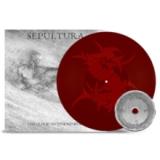
Sepultura - The Cloud of Unknowing  LP 2x12"
  • A1: All Souls Rising
  • A2: Beyond The Dream
  • B1: Sacred Books
  • B2: The Place
  • C 1: All Souls Rising
  • C 2: Beyond The Dream
  • D1: Sacred Books
  • D2: The Place
Сделать предзаказ24.04.2026

он должен быть опубликован на 24.04.2026

31,72
Niklas Paschburg - L'Ècho De Bretagne LP
  • 01: Paimpol
  • 02: Marché
  • 03: Le Port
  • 04: À La Maison
  • 05: La Vie Lente
  • 06: Bandes
  • 07: Adieu

A century-old grand piano, a secluded house surrounded by the greenery of Brittany, no internet connection, and a reel-to-reel recorder.L'Écho de Bretagne, the new EP by Niklas Paschburg, set for release from fall 2025 via Nettwerk Music Group, is a solo piano record as essential as it is intense. An album made of silences, space, slowness. A music that doesn't chase impact, but truth.

the album release is march 26th - 2026.

If his previous work, Mexican Alps (2025), marked the first time the German composer and producer created an ambient-electronic album without his instrument of choice, the piano, L'Écho de Bretagne emerges as a direct response to that absence. "It was exactly the lack of piano that brought about the need for this new record, which instead puts that instrument, so vital to me, at the very center, stripping everything else away," Niklas explains.

Born in 1994, Paschburg has shaped over the years a musical path deeply connected to travel, nature, and introspection. From his debutTuur Mang Welten(2016) toOceanic(2018),Svalbard(2020),Panta Rhei(2023), and the aforementionedMexican Alps— alongside soundtracks, remixes, and collaborations with artists like RY X, Hania Rani, Ásgeir, and Bryan Senti — his sound bridges neoclassical, electronic, ambient, and pop-driven composition.

WithL'Écho de Bretagne, the Hamburg-born, Berlin-based musician continues his exploration by seeking solitude in nature, much like he did onSvalbard, but this time with an even more radical choice: disconnecting completely from the internet, and switching off both computer and smartphone for a while, in order to fully immerse himself in his new music. "I rented an old cottage in Paimpol, Brittany, where I knew there was a grand piano," he recounts. "When I got there, I discovered that not only was the piano more than a hundred years old, but it was also of an unknown brand, never restored, and quite difficult to play. But that gave it a unique character, and I didn't give up. Sure, it was an instrument left to its own fate, I couldn't play anything too fast. But how fascinating was that? I'm convinced that setting limits, instead of giving yourself total freedom when composing, can become an extraordinary source of inspiration."

As for the decision to temporarily detach from a life that demands we stay constantly connected, Niklas describes it as both a creative and human experiment. "I had my laptop and phone with me, just in case, but I kept them turned off. That choice made me wantL'Écho de Bretagneto be a fully analog work, even in how it was recorded." A way of clearing the mind. "I don't think I've ever been as calm as I was during those days in Paimpol. Even though I was working on a very specific project and didn't have much time, that period was more relaxing than any vacation."

Not that it was free of hiccups. "I'd borrowed a reel-to-reel recorder small enough to travel with me, but after recording a session on the piano, I realized it wasn't working properly, the sound was distorted, full of crackles. I got worried, because I wasn't near any big city where I could find a technician. Luckily, I figured out the problem was the old tape reels I had brought along. That was the only time I had to go online, to order new ones. But it was just for a moment. I shut everything off again right after." At that point, Niklas was waiting for the new tapes to arrive. He found out, completely by chance, from a local UPS courier that they had been delivered to a nearby village. "Since my phone was off, I couldn't track the shipment. So one day I asked this delivery guy, who didn't know anything about it. But from that point on, we'd see each other daily and talk… That's what being disconnected also means: reconnecting with people around you, even strangers. It was thanks to that courier that I found out where the tapes had ended up. And he even helped me get them back, writing directions for me on a scrap of paper."

But there's another element that makes this new EP unique.L'Écho de Bretagnewas recorded entirely live; its tracks are all improvised, complete with their imperfections. This approach leads to a sound that is pure, profoundly organic, and deeply authentic, intentionally preserved to give the listener the feeling of a live performance happening in their own living room. The touch of fingers on the keys, the breath of the wood, the tension of the vibrating string, all become part of the music. There is no construction, only expression. "Even now, when I listen back to it, I feel that moment I gave myself to step away from everything: from reality, from words, from noise." The result is a collection of suspended melodies and atmospheres, reflecting a state of the soul. A refuge from the rush of time. A pause from the world.

Сделать предзаказ24.04.2026

он должен быть опубликован на 24.04.2026

25,00
Liliane Donskoy - Intégrale Acousmatique
также имеющийся в продаже

Box Set[110,71 €]


Metaphon is pleased to present this première edition, which brings together a near-complete collection of the acousmatic works of Liliane Donskoy, recorded in the 1970s and 1980s.

Liliane Donskoy (*1933) is a French, classically trained pianist, music teacher, and composer of both instrumental and acousmatic music. She began her musical training at an early age, undertaking private piano studies with Yves Nat at the age of thirteen, shortly after the Second World War. During the 1960s and 1970s, she pursued advanced studies with prominent figures of twentieth-century music, including Darius Milhaud, Olivier Messiaen, Pierre Schaeffer, and Guy Reibel, and participated in courses led by Karlheinz Stockhausen, Luciano Berio, György Ligeti, and Iannis Xenakis.

Despite this extensive and diverse training, Donskoy encountered limited institutional and professional opportunities to fully realize her artistic vision. A decisive turning point occurred in 1977, when she gained access to the facilities of the Institute of Psychoacoustics and Electronic Music (IPEM) in Ghent. There, she realized and completed the majority of her acousmatic compositions.

Donskoy’s oeuvre is characterized by a high degree of structural complexity, precision, and expressive intensity. Her work reflects a pronounced and distinctive artistic temperament, manifested through a rigorous exploration of sound material and form. Notwithstanding its artistic significance, her music has remained largely unknown, as her compositions were neither widely circulated nor formally released, leading to their relative obscurity until the present publication.

Сделать предзаказ17.04.2026

он должен быть опубликован на 17.04.2026

63,24
Liliane Donskoy - Intégrale Acousmatique (Boxset)
также имеющийся в продаже

slipcase edition[63,24 €]


Metaphon is pleased to present this première edition, which brings together a near-complete collection of the acousmatic works of Liliane Donskoy, recorded in the 1970s and 1980s.

Liliane Donskoy (*1933) is a French, classically trained pianist, music teacher, and composer of both instrumental and acousmatic music. She began her musical training at an early age, undertaking private piano studies with Yves Nat at the age of thirteen, shortly after the Second World War. During the 1960s and 1970s, she pursued advanced studies with prominent figures of twentieth-century music, including Darius Milhaud, Olivier Messiaen, Pierre Schaeffer, and Guy Reibel, and participated in courses led by Karlheinz Stockhausen, Luciano Berio, György Ligeti, and Iannis Xenakis.

Despite this extensive and diverse training, Donskoy encountered limited institutional and professional opportunities to fully realize her artistic vision. A decisive turning point occurred in 1977, when she gained access to the facilities of the Institute of Psychoacoustics and Electronic Music (IPEM) in Ghent. There, she realized and completed the majority of her acousmatic compositions.

Donskoy’s oeuvre is characterized by a high degree of structural complexity, precision, and expressive intensity. Her work reflects a pronounced and distinctive artistic temperament, manifested through a rigorous exploration of sound material and form. Notwithstanding its artistic significance, her music has remained largely unknown, as her compositions were neither widely circulated nor formally released, leading to their relative obscurity until the present publication.

Сделать предзаказ17.04.2026

он должен быть опубликован на 17.04.2026

110,71
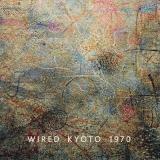
Wired - Kyoto 1970

Wired

Kyoto 1970

12inchMETAPHON028
Metaphon
17.04.2026

Wired was an ephemeral improvisational music project formed by Michael Ranta, Karl-Heinz Böttner, and Mike Lewis. On 28 April 1970, the trio recorded an extended studio session of approximately 140 minutes, in collaboration with Conny Plank, who engineered and mixed the recording in real time, incorporating elements of live electronics. This session was subsequently edited to album length and released in 1974 as part of the Free Improvisation 3LP box set issued by Deutsche Grammophon, alongside recordings by Iskra and New Phonic Art.

Owing to its exploratory electric sound world and Plank’s distinctive spatial production techniques, the Wired recording acquired a degree of underground cult status, particularly among listeners associated with krautrock and psychedelic improvisation.

Shortly after the studio session, Ranta and Böttner travelled to Japan, where they spent approximately six months performing with Karlheinz Stockhausen at Expo ’70 in Osaka. In addition to these activities, they engaged in various independent musical projects and performances.

The present release, sourced from the personal archive of Michael Ranta, documents a live duo performance by Ranta and Böttner, recorded on 27 July 1970 in an outdoor setting in Kyoto (the exact location remains unknown), before an audience of approximately 200 music teachers. The recording exhibits sonic and aesthetic characteristics closely aligned with the previously recorded studio material, retaining the distinctive “Wired” sound while situating it within a live, site-specific context.

Michael Ranta: percussion, voice, home-made instruments, tapes, tape delay, effects Karl-Heinz Böttner: guitar, organ, ocarina, voice, effects

Сделать предзаказ17.04.2026

он должен быть опубликован на 17.04.2026

26,68
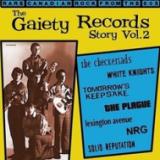
Various - The Gaiety Records Story Volume 2 LP
  • Checkerlads - The Dreamer
  • Checkerlads - Behind Ev'ry Man
  • White Knights - There She Goes
  • White Knights - Run Run Baby
  • Tomorrow's Keepsake - Eat Your Hot Dog Boy
  • Plague - Love And Obey
  • Plague - We Were Meant To Be
  • Lexington Avenue - Wendy Taylor
  • Lexington Avenue - Flowing Kind Of Feeling
  • Lexington Avenue - Good To Me
  • Nrg - It All Comes Back To Me
  • Solid Reputation - Things

Highlights include more terrific songs from the Plague and Lexington Avenue, bands whose members would be better known when they created the Jarvis Street Revue. Twelve tough tracks by the Checkerlads, White Knights, Tomorrow's Keepsake, NRG, and Solid Reputation . The Gaiety roster was rich in talent (the 49th Parallel, Jarvis Street Review, and Souls of Inspyration, not to mention the Checkerlads, White Knights, Dewline, Tomorrow's Keepsake, NRG, Merriday Park, and Portland Street South) -- but it was not rich in resources, which is why these singles are as relatively unknown as they are even today

Сделать предзаказ17.04.2026

он должен быть опубликован на 17.04.2026

33,82
Mauritzio / Luber - Love For Love Vol.1

Love For Love Vol.1 is a sumptuous two-tracker that takes you into both the unknown and the familiar.

On Side A, Mauritzio’s mesmerising, swirling ‘Sympathy’ (Gamma Reshape Boot) acts like a sonic shower that hits your body wherever it aches. The track kicks off with a subtle beat and acid-tinged backbone, spreading out into a deep, bass-laden symphony of sounds, detached vocals and warm synth chords. One for the late-night crowd searching for the darker corners of the dance floor for inspiration.

Flip over to Side B and Luber's ‘Somebody’ is waiting in the alley for you. At 124 bpm, ‘Somebody’ chugs along from the off with a curiously swingy beat, complete with perfectly trimmed hi-hats and a heavy double bassline. The familiar vocal acts as the track’s calling card – melancholic yet soaringly beautiful. ‘Somebody’ hits your nostalgia nodes with the flick of an ethereal finger, delivering low-end shuffle and hypnotic rhythms to lose yourself in.

Love For Love Vol.1 feels like the start of something special – and it would be wise to have these first steps in your record bag.

нет на складе

Закажите сейчас, и мы закажем товар для вас у нашего поставщика.

13,24

Последний логин: 14 дн. назад
Guilty Razors - Complete Recordings 1977 - 1978

UILTY RAZORS, BONA FIDE PUNKS.


Writings on the topic that go off in all directions, mind-numbing lectures given by academics, and testimonies, most of them heavily doctored, from those who “lived through that era”: so many people today fantasize about the early days of punk in our country… This blessed moment when no one had yet thought of flaunting a ridiculous green mohawk, taking Sid Vicious as a hero, or – even worse – making the so-called alternative scene both festive and boorish. There was no such thing in 1976 or 1977, when it wasn’t easy to get hold of the first 45s by the Pistols or the Clash. Few people were aware of what was happening on the fringes of the fringes at the time. Malcolm McLaren was virtually unknown, and having short hair made you seem strange. Who knew then that rock music, which had taken a very bad turn since the early 1970s, would once again become an essential element of liberation? That, thanks to short and fast songs, it would once again rediscover that primitive, social side that was so hated by older generations? Who knew that, besides a few loners who read the music press (it was even better if they read it in English) and frequented the right record stores? Many of these formed bands, because it was impossible to do otherwise. We quickly went from listening to the Velvet Underground to trying to play the Stooges’ intros. It’s a somewhat collective story, even though there weren’t many people to start it.
The Guilty Razors were among those who took part in this initial upheaval in Paris. They were far from being the worst. They had something special and even released a single that was well above the national average. They also had enough songs to fill an album, the one you’re holding. In everyone’s opinion, they were definitely not among the punk impostors that followed in their wake. They were, at least, genuine and credible.

Guilty Razors, Parisian punk band (1975-1978). To understand something about their somewhat linear but very energetic sound, we might need to talk about the context in which it was born and, more broadly, recall the boredom (a theme that would become capital in punk songs) coupled with the desire to blow everything off, which were the basis for the formation of bands playing a rejuvenated rock music ; about the passion for a few records by the Kinks or the early Who, by the Stooges, by the Velvet mostly, which set you apart from the crowd.
And of course, we should remember this new wave, which was promoted by a few articles in the specialized press and some cutting-edge record stores, coming from New York or London, whose small but powerful influence could be felt in Paris and in a handful of isolated places in the provinces, lulled to sleep by so many appalling things, from Tangerine Dream to President Giscard d’Estaing...
In 1975-76, French music was, as almost always, in a sorry state ; it was still dominated by Johnny Hallyday and Sylvie Vartan. Local rock music was also rather bleak, apart from Bijou and Little Bob who tried to revive this small scene with poorly sound-engineered gigs played to almost no one.
In the working class suburbs at the time, it was mainly hard rock music played to 11 that helped people forget about their gruelling shifts at the factory. Here and there, on the outskirts of major cities, you still could find a few rockers with sideburns wearing black armbands since the death of Gene Vincent, but it wasn’t a proper mass movement, just a source of real danger to anyone they came across who wasn't like them. In August 1976, a festival unlike any other took place in Mont-de-Marsan – the First European Punk Festival as the poster said – with almost as many people on stage as in the audience. Yet, on that day, a quasi historical event happened, when, under the blazing afternoon sun, a band of unknowns called The Damned made an unprecedented noise in the arena, reminiscent of the chaotic Stooges in their early adolescence. They were the first genuine punk band to perform in our country: from then on, anything was possible, almost anything seemed permissible.

It makes sense that the four+1 members of Guilty Razors, who initially amplified acoustic guitars with crappy tape recorder microphones, would adopt punk music (pronounced paink in French) naturally and instinctively, since it combines liberating noise with speed of execution and – crucially – a very healthy sense of rebellion (the protesters of May 1968 proclaimed, and it was even a slogan, that they weren’t against old people, but against what had made them grow old. In the mid-1970s, it seemed normal and obvious that old people should now ALSO be targeted!!!).
At the time, the desire to fight back, and break down authority and apathy, was either red or black, often taking the form of leafleting, tumultuous general assemblies in the schoolyard, and massive or shabby demonstrations, most of the time overflowing with an exciting vitality that sometimes turned into fights with the riot police. Indeed, soon after the end of the Vietnam War and following Pinochet’s coup in Chile, all over France, Trotskyist and anarcho-libertarian fervour was firmly entrenched among parts of the educated youth population, who were equally rebellious and troublemakers whenever they had the chance. It should also be noted that when the single "Anarchy in the UK" was first heard, even though not many of us had access to it, both the title and its explosive sound immediately resonated with some of those troublemakers crying out for ANARCHY!!! Meanwhile, the left-wing majority still equated punks with reckless young neo-Nazis. Of course, the widely circulated photos in the mainstream press of Siouxsie Sioux with her swastikas didn’t necessarily help to win over the theorists of the Great Revolution. It took Joe Strummer to introduce The Clash as an anti-racist, anti-fascist and anti-ignorance band for the rejection of old-school revolutionaries to fade a little.

The Lycée Jean-Baptiste Say at Porte d’Auteuil, despite being located in the very posh and very exclusive 16th arrondissement of Paris, didn’t escape these "committed" upheavals, which doubled as the perfect outlet for the less timid members of this generation.
“Back then, politics were fun,” says Tristam Nada, who studied there and went on to become Guilty Razors’ frontman. “Jean-Baptiste was the leftist high-school in the neighbourhood. When the far right guys from the GUD came down there, the Communist League guys from elsewhere helped us fight them off.”
Anything that could challenge authority was fair game and of course, strikes for just about any reason would lead to increasingly frequent truancy (with a definitive farewell to education that would soon follow). Tristam Nada spent his 10th and 11th unfinished grades with José Perez, who had come from Spain, where his father, a janitor, had been sentenced to death by Franco. “José steered my tastes towards solid acts such as The Who. Like most teenagers, I had previously absorbed just about everything that came my way, from Yes to Led Zeppelin to Genesis. I was exploring… And then one day, he told me that he and his brother Carlos wanted to start a rock band.” The Perez brothers already played guitar. “Of course, they were Spanish!”, jokes their singer. “Then, somewhat reluctantly, José took up the bass and we were soon joined by Jano – who called himself Jano Homicid – who took up the rhythm guitar.” Several drummers would later join this core of not easily intimidated young guys who didn’t let adversity get the better of them.

The first rehearsals of the newly named Guilty Razors took place in the bedroom of a Perez aunt. There, the three rookies tried to cover a few standards, songs that often were an integral part of their lives. During a first, short gig, in front of a bewildered audience of tough old-school rockers, they launched into a clunky version of the Velvet Underground's “Heroin”. Challenge or recklessness? A bit of both, probably… And then, step by step, their limited repertoire expanded as they decided to write their own songs, sung in a not always very accurate or academic English, but who cared about proper grammar or the right vocabulary, since what truly mattered was to make the words sound as good as possible while playing very, very fast music? And spitting out those words in a language that left no doubt as to what it conveyed mattered as well.
Trying their hand a the kind of rock music disliked by most of the neighbourhood, making noise, being fiercely provocative: they still belonged to a tiny clique who, at this very moment, had chosen to impose this difference. And there were very few places in France or elsewhere, where one could witness the first stirrings of something that wasn’t a trend yet, let alone a movement.

In the provinces, in late 1976 or early 1977, there couldn’t be more than thirty record stores that were a bit more discerning than average, where you could hear this new kind of short-haired rock music called “punk”. The old clientele, who previously had no problem coming in to buy the latest McCartney or Aerosmith LP, now felt a little less comfortable there…
In Paris, these enlightened places were quite rare and often located nex to what would become the Forum des Halles, a big shopping mall. Between three aging sex workers, a couple of second-hand clothes shops, sellers of hippie paraphernalia and small fashion designers, the good word was loudly spread in two pioneering places – propagators of what was still only a new underground movement. Historically, the first one was the Open Market, a kind of poorly, but tastefully stocked cave. Speakers blasted out the sound of sixties garage bands from the Nuggets compilation (a crucial reference for José Perez) or the badly dressed English kids of Eddie and the Hot Rods. This black-painted den was opened a few years earlier by Marc Zermati, a character who wasn’t always in a sunny disposition, but always quite radical in his (good) choices and his opinions. He founded the independent label Skydog and was one of the promoters of the Mont-de-Marsan punk festivals. Not far from there was Harry Cover, another store more in tune with the new New York scene, which was amply covered in the house fanzine, Rock News (even though it was in it that the photos of the Sex Pistols were first published in France).
It was a favorite hang-out of the Perez brothers and Tristam Nada, as the latter explained. “It’s at Harry Cover’s that we first heard the Pistols and Clash’s 45s, and after that, we decided to start writing our first songs. If they could do it, so could we!”
The sonic shocks that were “Anarchy in the UK”, “White Riot” or the Buzzcocks’s EP, “Spiral Scratch” – which Guilty Razors' sound is reminiscent of – were soon to be amplified by an unparalleled visual shock. In April 1977, right after the release of their first LP, The Clash performed at the Palais des Glaces in Paris, during a punk night organised by Marc Zermati. For many who were there, it was the gig of a lifetime…
Of course, Guilty Razors and Tristam were in the audience: “That concert was fabulous… We Parisian punks were almost all dressed in black and white, with white shirts, skinny leather ties, bikers jackets or light jackets, etc. The Clash, on the other hand, wore colourful clothes. Well, the next day, at the Gibus, you’d spot everyone who had been at this concert, but they weren’t wearing anything black, they were all wearing colours.”

It makes sense to mention the Gibus club, as Guilty Razors often played there (sometimes in front of a hostile audience). It was also the only place in Paris that regularly scheduled new Parisian or Anglo-Saxon acts, such as Generation X, Siouxsie and the Banshees, the Slits, and Johnny Thunders who would become a kind of messed-up mascot for the venue. A little later, in 1978, the Rose Bonbon – formerly the Nashville – also attracted nightly owls in search of electric thrills… In 1977, the iconic but not necessarily excellent Asphalt Jungle often played at the Gibus, sometimes sharing the bill with Metal Urbain, the only band whose aura would later transcend the French borders (“I saw them as the French Sex Pistols,” said Geoff Travis, head of their British label Rough Trade). Already established in this small scene, Metal Urbain helped the young and restless Guilty Razors who had just arrived. Guitarist for Metal Urbain Hermann Schwartz remembers it: “They were younger than us, we were a bit like their mentors even if it’s too strong a word… At least they were credible. We thought they were good, and they had good songs which reminded of the Buzzcocks that I liked a lot. But at some point, they started hanging out with the Hells Angels. That’s when we stopped following them.”

The break-up was mutual, since, Guilty Razors, for their part, were shocked when they saw a fringe element of the audience at Metal Urbain concerts who repeatedly shouted “Sieg Heil” and gave Nazi salutes. These provocations, even still minor (the bulk of the skinhead crowd would later make their presence felt during concerts), weren’t really to the liking of the Perez brothers, whose anti-fascist convictions were firmly rooted. Some things are non-negotiable.
A few months earlier (in July 1978), Guilty Razors had nevertheless opened very successfully for Metal Urbain at the Bus Palladium, a more traditonally old-school rock night-club. But, as was sometimes the case back then, the night turned into a mass brawl when suburban rockers came to “beat up punks”.

Back then, Parisian nights weren’t always sweet and serene.

So, after opening as best as they could for The Jam (their sound having been ruined by the PA system), our local heroes were – once again – met outside by a horde of greasers out to get them. “Thankfully,” says Tristam, “we were with our roadies, motorless bikers who acted as a protective barrier. We were chased in the neighbouring streets and the whole thing ended in front of a bar, with the owner coming out with a rifle…”
Although Tristam and the Perez brothers narrowly escaped various, potentially bloody, incidents, they weren’t completely innocent of wrongdoing either. They still find amusing their mugging of two strangers in the street for example (“We were broke and we simply wanted to buy tickets for the Heartbreakers concert that night,” says Tristam). It so happened that their victims were two key figures in the rock business at the time: radio presenter Alain Manneval and music publisher Philippe Constantin. They filed a complaint and sought monetary compensation, but somehow the band’s manager, the skilful but very controversial Alexis, managed to get the complaint withdrawn and Guilty Razors ended up signing with Constantin with a substantial advance.

They also signed with Polydor and the label released in 1978 their only three-track 45, featuring “I Don't Wanna be A Rich”, “Hurts and Noises” and “Provocate” (songs that exuded perpetual rebellion and an unquenchable desire for “class” confrontation). It was a very good record, but due to a lack of promotion (radio stations didn’t play French artists singing in English), it didn’t sell very well. Only 800 copies were allegedly sold and the rest of the stock was pulped… Initially, the three tracks were to be included on a LP that never came to be, since they were dropped by Polydor (“Let’s say we sometimes caused a ruckus in their offices!” laughs Tristam.) In order to perfect the long-awaited LP, the band recorded demos of other tracks. There was a cover of Pink Floyd's “Lucifer Sam” from the Syd Barrett era – proof of an enduring love for the sixties’ greats –, “Wake Up” a hangover tale and “Bad Heart” about the Baader-Meinhof gang, whose actions had a profound impact on the era and on a generation seeking extreme dissent... On the album you’re now discovering, you can also hear five previously unreleased tracks recorded a bit later during an extended and freezing stay in Madrid, in a makeshift studio with the invaluable help of a drummer also acting as sound engineer. He was both an enthusiastic old hippie and a proper whizz at sound engineering. Here too, certain influences from the fifties and sixties (Link Wray, the Troggs) are more than obvious in the band’s music.

Shortly after a final stormy and rather barbaric (on the audience’s side) “Punk night” at the Olympia in June 1978, Tristam left the band ; his bandmates continued without him for a short while.

But like most pioneering punk bands of the era, Guilty Razors eventually split up for good after three years (besides once in Spain, they’d only played in Paris). The reason for ceasing business activities were more or less the same for everyone: there were no venues outside one’s small circuit to play this kind of rock music, which was still frightening, unknown, or of little interest to most people. The chances of recording an LP were virtually null, since major labels were only signing unoriginal but reassuring sub-Téléphone clones, and the smaller ones were only interested in progressive rock or French chanson for youth clubs. And what about self-production? No one in our small safety-pinned world had thought about it yet. There wasn’t enough money to embark on that sort of venture anyway.

So yes, the early days of punk in France were truly No Future!

нет на складе

Закажите сейчас, и мы закажем товар для вас у нашего поставщика.

21,43

Последний логин: 31 дн. назад
Sammy Virji - Same Day Cleaning LP
  • A1: One For The Books (With Giggs)
  • A2: Doctor (With Mj Cole)
  • A3: Cops & Robbers (With Skepta)
  • A4: Up & Down (With Tuff Jam)
  • A5: 925 (With Chris Lake)
  • A6: Dis Badman (With Champion And Irah)
  • A7: Survive (With Salute)
  • A8: Burn The River
  • B1: Tremor Take-Two (Interlude)
  • B2: Match My Mood (With Spice And Flowdan)
  • B3: Roads Roulette (With Unknown T)
  • B4: Nostalgia (With Issey Cross)
  • B5: Dub It In (With 33 Below)
  • B6: So Over You
  • B7: I Guess We’re Not The Same
  • B8: Leroy St

Re issue of the album on LP as previous versions had all sold out and were deleted.
Global Dance phenomenon Sammy Virji’s sophomore album ‘Same Day Cleaning’ sees the renowned party starter deliver UK Garage to the world like no one before. The new album is rooted in Sammy’s unmissable club ready production style and features a slew of legendary rappers & producers. The project lands after an insane year of global festival and headline touring for Sammy. ‘Same Day Cleaning’ follows Sammy’s hugely successful ‘If U Need It’ and his follow up singles including club mainstay ‘Damager’, with Interplanetary Criminal. The album also features Sammy’s massive link up with British icon Skepta, ‘Cops & Robbers’. ‘Same Day Cleaning’ is bigger, bolder and promises to propel Sammy Virji even further onto the global dance-music stage

Сделать предзаказ10.04.2026

он должен быть опубликован на 10.04.2026

28,78
Johannes Klingebiel - Dolce

Berlin Based DJ & Producer Johannes Klingebiel returns to Claptrap with “Dolce” a four-track EP served sweet, rich, and ready for peak-time indulgence.

Three original cuts and a heavyweight remix combine for a release that’s equal parts playful and potent. Consider this your sugar rush warning.

The title track, “Dolce,” is a warm and irresistible disco-house groover. Creamy acoustic drums lay the foundation while spicy xylophones and syrupy flute lines weave through the mix, striking a perfect balance between sophistication and pure dancefloor pleasure. It’s smooth, infectious, and built to move bodies.

Next up, “Follow The Line” blends shuffled house rhythms with 303 basslines and grainy vocal stabs. On paper, it’s an unlikely combination, on the floor, it locks tight. The result is hypnotic, driving, and effortlessly smooth.

On the flip, “Pink Forest” ventures into more mysterious territory. Built around an elusive, shifting time signature (one that even jazz-trained drummer Johannes struggles to explain), the track somehow feels both unpredictable and deeply groovy. It bends perception without losing momentum, a heady but danceable excursion into the unknown.

Closing the EP, Sun Damage delivers a remix of “Follow The Line” that both sharpens and distorts the original’s trajectory. Chunkier, weightier, and slightly off-kilter, this rework injects a tougher edge while maintaining the track’s hypnotic core, primed for late-night floors and heavy systems.

“Dolce” is indulgent yet refined, a release that balances musicality with movement, sweetness with punch.
Consume responsibly.

На складе от15.05.2026

14,08

Последний логин: 17 дн. назад
SHITS - Diet Of Worms LP

SHITS

Diet Of Worms LP

12inchLAUNCH426
Rocket Recordings
03.04.2026

What's the point of the howl of string to speaker, the hammering of stick-on skin? Is it transcendence, elevating the human spirit by catharsis in sound? Or is it summoning chaos, a purgatory in which to bask in all that’s unclean, the better to feel alive?
Why not both? Because that’s what’s on offer on Diet Of Worms, the second Rocket release by The Shits, Leeds via Newcastle’s titans of disgust and deliverance. This is a feast for the senses in the worst way possible - primal rock boiled down to its essence and flung full in your face. Using repetition, tortured vocal invective and heads-down intensity as blunt instruments, these eight tracks are an unprecedented torrent of acidic salvation. Whilst lurking somewhere on the decadence-destruction axis between the nihilism of prime Stooges and the bloody blackout of Braimbombs, Diet Of Worms is possessed of a legitimately uncompromising hostility that both elevates and debases it to co-ordinates unknown.
There are revelations here in the riffage and the rancour, even if they are the kind that occur in the bleary miasma of the lock-in, or witnessing the streetlight blur of the subsequent stagger home. Even more single-minded and remorseless than the band’s Rocket debut ‘You’re A Mess’, this is a record that demands full immersion. Whether it’s ‘Then You’re Dead’ hammering on a pulverising garage-stinking riff until it begs for mercy, or ‘Change My Ways’, whose Creedence-In-Hell swagger and lurch is that of abjection transmuted into joy, this is psychedelia forcibly removed from its comfort zone of pastiche, and thrust into a bad-trip realm of the vivid and nightmarish.
But rarely has the process of making beauty and horror indivisible seemed like so much fun. If Werner Herzog was right, and the only harmony in the universe is that of overwhelming and collective murder, then The Shits are the true music of the spheres.

Сделать предзаказ03.04.2026

он должен быть опубликован на 03.04.2026

23,49
CONNIE CONVERSE - HOW SAD, HOW LOVELY
  • A1: Talkin' Like You (Two Tall Mountains)
  • A2: Johnny's Brother
  • A3: Roving Woman
  • A4: Down This Road
  • A5: The Clover Saloon
  • A6: John Brady
  • A7: We Lived Alone
  • A8: Playboy Of The Western World
  • A9: Unknown (A Little Louder, Love)
  • B1: One By One
  • B2: Father Neptune
  • B3: Man In The Sky
  • B4: Empty Pocket Waltz
  • B5: Honeybee
  • B6: There Is A Vine
  • B7: How Sad, How Lovely
  • B8: Trouble
  • B9: I Have Considered The Lillies
  • A1: House
  • B1: Playboy Of The Western World (The Online Parades Mix)
также имеющийся в продаже

Cassette[10,04 €]

LP+7" Silver Vinyl[23,49 €]


Die Wiederveröffentlichung von Connie Converses How Sad, How Lovely auf Third Man Records erscheint fast 51 Jahre nach dem Verschwinden der Singer-Songwriterin und ist damit die erste Neuauflage dieses Albums seit beinahe zehn Jahren - und das in jedwedem Format. Die Veröffentlichung umfasst 20 Tracks (darunter eine Bonus-7"-Single mit dem bislang unveröffentlichten Stück ,House" sowie einem neuen Remix von ,Playboy of the Western World", beigesteuert von Dirick Cummins), die nichts von ihrer Eindringlichkeit und Kraft verloren haben. Sie präsentieren eine Künstlerin, die ihrer Zeit um Lichtjahre voraus war.

нет на складе

Закажите сейчас, и мы закажем товар для вас у нашего поставщика.

22,27

Последний логин: 40 дн. назад
Продуктов на странице:
N/ABPM
Vinyl