IMPORTANT: These are often unplayed, sealed or barely played copies, but have been stored in a humid environment. Some copies might have slight storage damage like deformed sleeves or some mold. Even though a quick cleaning session of the item (if needed) will probably make it as good as new, these are still sold as is! Beroshima Moonraker remixed by AKIKO KIYAMA from Japan, ELECTRIC INDIGO the founder of female pressure and long term hardwax member and MUTRON from tokyo .
Buscar:unplayed
- 1
IMPORTANT: These are often unplayed, sealed or barely played copies, but have been stored in a humid environment. Some copies might have slight storage damage like deformed sleeves or some mold. Even though a quick cleaning session of the item (if needed) will probably make it as good as new, these are still sold as is! HORIZON HAS BEEN ONE OF HIS BIGGEST HITS AND ONE OF COCOONS & SOMAS BEST SELLING VINYL. A MASSIVE HIT ON MOST FESTIVALS. ULRICH SCHNAUSS COMES WITH A GORGEOUS TECHHOUSE MIX. YOU ALL MUST HAVE HEARD OF TIGERSKIN AND HIS WELL CRAFTED MUSIC. THIS OUTSTANDING PRODUCERS COMES WITH A CLASSIC FLOORSTOMPER AMERICAN STYLE. THE FUNKDVOID MIX IS STILL ONE OF OUR ALL TIME FAVOURITES NEXT TO BEROSHIMAS SKYFLYER
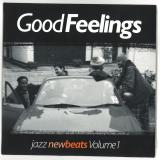
- A1: Dj First Klas – Goodfeelin' 5 35
- A2: Delaney's Rhythm Section – Rebel (Club Mix) 8 02
- B1: A Forest Mighty Black – High Hopes (Instrumental) 4 58
- B2: Outside – Moodswing (Aquasky Remix) 7 40
- C1: Nobukazu Takemura Featuring Dee C Lee – Searching (Roni Size Remix) 7 07
- C2: Smoke City – Underwater Love (Studio Mix) 6 46
- D1: Up, Bustle & Out – The Revolutionary Woman Of The Windmill 9 17
- D2: Red Snapper – Son Of Mook 5 55
- E1: Dj Food – Mella (Drive Faster Mix) 4 49
- E2: Dig! Alliance – Rotorvibe 4 20
- E3: Count Basic – Strange Life (Kruder & Dorfmeister Remix) 4 35
- F1: Aeroplanitaliani – Zitti Zitti (Jazz Instrumental) 4 53
- F2: Reminiscence Quartet – Psychodelico 6 35
The Lost Record is the underground rock 'n’ roll exploitation sci-fi film of this time. Starring Pauline Jorry andf eaturing appearances and contributions from Henry Rollins, Emmett Kelly, Michelle Mae, Paul Zone, Howie Pyro, Kid Congo, Crush, Automatic Band and scores of other underground notables, The Lost Record—directed and produced by Ian F. Svenonius and Alexandra Cabral—is a film set in a murky indeterminate future / past world where one record, The #1 Record, holds sway over society. In this world The #1 Record is unavoidable and ubiquitous; pumped out nonstop on the airwaves, intercom, and television with its irresistible and infectious message of totalitarian consumer control. The status quo is challenged when a protagonist—played by Pauline Jorry—a worker on an art assembly line, stumbles on another record at a junk-shop which is neglected, lost, and unplayed. Called The Lost Record, it suggests another way to live; another set of values. Enchanted, she begins to play it for others, much to the consternation of the authorities. Can / will it challenge the #1 Record? And what will happen if it succeeds? Based conceptually on the Escape-ism song of the same name, the soundtrack features a beautiful original score by Alex Minoff (of Golden, Extra Golden and Weird War fame) plus music by Emmett Kelly, Escape-ism, The Make Up, plus sound blurbs from this singularly poignant, funny, and affecting film which has won citationsand & notices at Belgrade's Kinoskop festival, Indie Lisboa, and the Chicago Underground Film Festival among others.
-one of the absolute German Metal top rarities for the first time as a re-release
-audio transfer by Patrick Engel, remaster by Neudi
-LP with printed Inlay (incl. exclusive interview)
-first official re-release after several illegal CD-pressings in bad quality
In recent years many labels have tried to get the cult album „To The Top“ by the Augsburg band OVERDOSE from 1985 for a re-release - without success. Also at Golden Core the research took over a year (!) until they finally got in contact with the original member „Coco“ who agreed to a re-release.
The group was only active for about three years and neither before nor after the LP there were no further recordings.
Instead of a demo, they invested in a self-pressing. The rest is history and sheer horror for collectors who want an original of this rarity. The varied Heavy Metal, from the fast opener and title song „To The Top“ to the closing gutter hit „Rockfever“ is just not only rare, but also rousing and simply good.
The re-release on Golden Core has to do without bonus tracks this time, but the inlay offers an interview with the original member „Coco“, which finally brings light into the darkness. The audio transfer was done by Patrick Engel from an unplayed (!!) LP, the remastering was done by Neudi afterwards. Of course, a separate master was made for vinyl.
„To The Top“ is a journey back in time to the first half of the eighties and offers a metal aesthetic that no retro band can manage today.
Toshi Ichiyanagi, Michael Ranta and Takehisa Kosugi originally got together in the summer of 1975 for an open-air concert in Sapporo. The concert felt like a great success but was unfortunately not recorded. As the desire arose to record together, they managed to arrange a studio session in the NHK Studio in Tokyo, with presence of sound engineers. What was supposed to be a soundcheck for this session became the session itself: a haunting 50-minute séance of intense avantgarde improvisation using a large instrumentation and live processing (tape echo, ring modulation, phasing). A trident travelogue of the momentum masterfully controlled by the ensemble spirit, transcending the boundaries of psychedelic underground.
Official reissue of this underground classic from 1975, originally released in a tiny edition on the small Japanese Iskra label. As the original master tapes of these recordings seem to be lost, the master had to be taken from an unplayed original LP copy. It was carefully restored and mastered by Jos Smolders with amazing result.
The Bees are a textbook case of the chew and spit cycle that was the late 80’s South African music industry. Although their unknown story is likely unique, it is just as likely that it is no different to that of many other young artists who dreamed of getting their music heard at the time.
By 1988, the independent record label was no longer as uncommon as it had been at the beginning of the decade. As the 80s went on, more seasoned A&R reps and Producers that had gained experience and connections from their work under major labels would be trying to cash in on a market they helped create. Without the need of big rooms or expensive recording equipment, the digital advancements allowed many Producers to open or work in smaller studios and promote unknown artists under their own imprints. They would then have their catalogs marketed and distributed by the same major labels they had been working for just years prior. This would open up the possibility of a new era of stars as potential talent no longer had to be pitched to major labels in hopes of them taking a chance on a new signee over their already established artists. With the market growing and a struggle to keep up with the demand for new sounds this agreement would allow the major labels to put new emerging artists or groups on their catalog with little investment and high reward if it happened to be a hit.
ON Records was just one of the independent players at the time. Ronnie Robot had just signed the unlikely trio The Bees in hopes of adding a hit group to his label roster that consisted of solo acts. Despite the debut’s fresh house inspired sound, it failed to catch on was outsold by the bubblegum disco the label was known for. Over the years unsold back stock and promos would build up with the distributor. Luckily this allowed sealed copies from the label’s catalog to survive into the 90s when the distributor’s stock was unloaded and picked up by legendary Johannesburg jazz shop Kohinoor. Here sealed copies of the Bees first attempt sat under appreciated for over 20 years before becoming a hot title after they started circulating online and became club staples. This is how the first album of an unknown group with no success was able to become a collectors item and earn a reissue over 25 years later.
With their first record behind them The Bees were ready move forward and get back into the studio. A suggestion from producers had the trio change camps and go work with the newly formed Creative Sound Recordings, the label that promised “Music for the Future” and ended up being an essential studio in the early years of Kwaito. They would work with producer Chris Ghelakis and guitarist George Vardas, while a young Marvin Moses sat behind the desk. Musically the sophomore album was as good as a follow up as you could get. Building on the first album, Mashonisa delivers catchy melodies backed by heavy drum programming that would score points with any Pantsula. The Black Box inspired “ Never Give Up” was one of two tracks chosen to be pressed as the promo for the album, hoping to trick listeners with their catchy version of the hit( A year later the label would release their first volume of Black Box covers sang by neo soul diva BB, it would be a great seller). The label printed up an unknown amount of these in a last attempt to push the release in Shabeens and on Radio. The cheaper route of flooding the market with promo copies would only pay off 25 years later when unplayed copies started being rediscovered and had survived the years in a quantity that original run of the full album could not. Once again it was clear that with no mainstream appeal, the quality of the music on its own was not enough to garner any success at the time. The album flopped worse than their first and failed to make it past it’s initial run, making it one of the harder titles to get from the CSR catalog.
Mashonisa would be the last attempt from the Bees. They would disappear from the scene as quickly as they appeared. Of the three members it is only known that lead Singer Solomon Phiri continued in music fronting a wave dance group before he mysteriously vanished in 1993, never to be heard from again. Through a combination of luck and circumstance the group, which is unknown in South Africa to even the most plugged in musicians, producers and radio hosts of the time, managed to finally get some of the recognition they deserved 30 years later. Unfortunately this small blip of fame would happen with none of the band members present to give their side of the story, or even aware of how their two albums became popular enough to be printed on different continents in a new millennia. The Bees suffered the same fate as countless other artists of the time, who thanks to emerging independent labels and willing producers were given an opportunity to have a short career, only to be replaced by the meat grinder of the music industry when they failed to produce a hit.
- 1