2025 Repress
Yes! Tommy Guerrero’s much-loved 4th LP – the smooth West Coast classic From The Soil To The Soul - gets its first ever vinyl release. As the follow up to his revered Soul Food Taqueria, this album was originally released by Quannum Records 2006 but only on CD. Working with Tommy directly, the LP has been fully remastered, cut on to heavyweight wax, and comes with artwork freshly reworked by the man himself.
From The Soil To The Soul represents a continuation of Tommy’s blissful guitar-soul whilst demonstrating increasingly complex chops and a slightly darker side to his distinctive sound. His spare, effortless funk is blended here with elements of Americana, heavy psych, lo-fi fuzz and intoxicating Latin rhythms. Combined with his typically breezy, laid-back San Franciscan style, it’s a vibe from start to finish.
Recorded primarily in his home studio, Tommy wrote, arranged and played nearly all the instruments, including bass, guitar, keyboards, percussion and kalimba. Renowned street artist Barry McGee, aka Twist, designed the cover art which Tommy has now recast in a deep, deep red for the vinyl version.
As ever with Tommy, the highlights are many and memorable. From twinkling, sun-drenched opener “Hello Again” to the penultimate, punk-rocking track “Let Me In Let Me Out” (featuring the melodic yet fearsome rapping of Lyrics Born), the variety across the LP is relentless, but satisfying, and without once losing focus.
We’re treated to the gorgeous hip-hop blues of “The Under Dog”, Meters-style Hammond B-3 jams like “War No More” and “No Guns More Glory” and Balearic bangers like Bing Ji Ling’s star-turn on the sleazy “Don’t Fake It.”
Curumin’s soulful guest vocal elevates the already-great Brazilian lounge feels of “Salve” to hitherto unscaled heights and the heavy, driving basslines - funky and warm on “Badder Than Bullets”, sombre and intense in “Tomorrow’s Goodbye” and “Molotov Telegram” – never fail to move both body and soul.
But our favourite track is the beautiful breezy pop of “Just Ain’t Me”. A bittersweet, skipping ballad which boasts an incredibly rare instance of Tommy singing. “What you want from me, I can never give” he repeats throughout, lending the already-melancholic atmosphere greater poignancy. It would’ve been number 1 across the planet in a parallel universe.
out of Stock
Last delivered 15 months ago available to reorder, subject to availability
From his early-’60s days as hip shaker Twistin’ Harvey to his late-’70s nights on the light up dance floor in search of a “Disco Lady,” Harvey Scales survived scrapes with the pop charts, bankrupt record companies, walk outs, sit ins, strikes, price hikes, lay offs, and under table payoffs over a 40 year career. Compiled here for the first time are Scales’ Cuca and Magic Touch recordings, 27 slabs of cracker jack R&B, stomping northern soul, divorce-ridden deep soul, feverish funk, and hustling disco spread across 2 LPs and housed in a deluxe gatefold jacket.. Bill Dahl’s in depth notes document the entire sordid affair, with dozens of period photos and ephemeral bits illustrating the accompanying 20 page book. So necessary.
From his early-’60s days as hip shaker Twistin’ Harvey to his late-’70s nights on the light up dance floor in search of a “Disco Lady,” Harvey Scales survived scrapes with the pop charts, bankrupt record companies, walk outs, sit ins, strikes, price hikes, lay offs, and under table payoffs over a 40 year career. Compiled here for the first time are Scales’ Cuca and Magic Touch recordings, 27 slabs of cracker jack R&B, stomping northern soul, divorce-ridden deep soul, feverish funk, and hustling disco spread across 2 LPs and housed in a deluxe gatefold jacket.. Bill Dahl’s in depth notes document the entire sordid affair, with dozens of period photos and ephemeral bits illustrating the accompanying 20 page book. So necessary.
Playing with a Different Sex was the debut album by seminal post-punk band Au Pairs, released in 1981.
Described retrospectively by AllMusic as ‘one of the great post-punk records’, a review by Record Mirror on its release said the band’s ‘critique of all forms of possession and sexual stereotyping assumes a devastating power’. Themes include sexual politics and the torture of women imprisoned in Northern Ireland during The Troubles of the 1970s, as well as a stunning cover of David Bowie’s ‘Repetition’ about domestic violence. It peaked at No. 33 in the UK, and features the single ‘It's Obvious’, which reached No. 37 on the US Club Play Singles chart. Playing with a Different Sex is available as a numbered limited edition of 750 copies on turquoise coloured vinyl and contains an insert.
Jethro Tull kündigt die Neuauflage des Compilation-Albums „Living in the Past“ im neuen 5CD/BR-Format an. Das ursprünglich 1972 veröffentlichte Album ist eine Sammlung von Singles, Albumtiteln und Outtakes, die weltweit in den Charts waren. Die neu erweiterte Ausgabe „Still Living in the Past“ enthält Remixe von Steven Wilson, Edits, Demos, „Live at Carnegie Hall 1970“ (Steve Wilson Remix) und vier Promo-Filme. Außerdem ist eine 2LP-Edition des Doppelalbums mit Remixe von Steven Wilson erhältlich.CD1: Original mixes, remixes, edits & demos 1968-1971CD2: Living in the Past (Part 1) - Steven Wilson stereo remixesCD3: Living in the Past (Part 2) - Steven Wilson stereo remixesCD4: Live at Carnegie Hall 1970 (Part 1) - 2025 Steven Wilson Stereo RemixCD5: Live at Carnegie Hall 1970 (Part 2) - 2025 Steven Wilson Stereo RemixBR: Steven Wilson remixes in 24/96 PCM stereo and DTS 5.1 surround, flat transfer of the original album and bonus unreleased original mixes, Live at Carnegie Hall 2025 remix in 24/96 PCM and DTS 5.1 surround plus four promo films
j Teacher (Us Album Version) [2025 Remix]
[n] By Kind Permission Of (Live) [2025 Remix]
[o] Dharma For One (Live) [2025 Remix]
[j] Teacher (Us Album Version) [2025 Remix]
[n] By Kind Permission Of (Live) [2025 Remix]
[o] Dharma For One (Live) [2025 Remix]
Utopia, Saunders’ fourth solo album, is an extraordinary exploration of all her past lives.
If the singer regards her first three solo records — 2014’s Y Dydd Olaf, 2018’s Le Kov and 2022’s Tresor as “childhood records”, rooted in her upbringing, her parents, her formative identity, then Utopia captures a time of self-determination and experimentation.
These are songs of discovery, of the years between being someone’s daughter and becoming someone’s wife and someone’s mother. They range from floor-fillers to piano ballads, via contributions from Cate Le Bon and H. Hawkline, and encompass William Blake, a favourite Edrica Huws poem, and the Number 73 bus. It is her finest work to date.
Despite the outright denial in its title, death is present in every one of the songs on Never Die, the collaborative album from MIDWIFE’s Madeline Johnston and Matt Jencik (of Implodes, Don Caballero, and Slint’s live band). Jencik held the tenderest thought imaginable when he came up with that phrase—Never Die—the fact that the people he loves eventually would, a certainty that feels impossible and remote, until the day it absolutely doesn’t. Never Die represents Jencik’s desperate bid to hold onto everyone he loves, to keep them on Earth so fiercely that they might enter the grave with claw marks on their skin.
Johnston, who recognizes the grace of mortality (and who, as MIDWIFE once sang: “I don’t wanna live forever,” over and over) serves as the spiritual guide for the album, transmuting the fear of death into an incentive to live more keenly and dearly. Following a number of ambient drone instrumental albums, Jencik felt the need to set himself a new creative challenge: to write vocal-heavy songs. He worked on them alone in his basement, recording directly to a four-track cassette. He sent those demos to a different collaborator to tinker with before that partnership eventually dissolved. Then, he thought of Madeline: the way her voice tended to glower in her songs, as well as her commitment to minimalism, which fell squarely within the project’s aesthetic and spiritual impulses.
“I was immediately drawn to what she was doing,” Jencik says. In both of their work, Jencik and Johnston understand minimalism as a vehicle for enormous, desperate and universal emotions. Entire worlds come in and out of existence between each of their sparse notes; a great breadth of feeling is bedded into the simple structure of their songs. Never Die offers a calm confrontation with the dour inevitability that bookends our lives. When the fact of death looms over life, it tends to denature every experience we have and every relationship we know we’ll eventually have to forfeit back to the Earth. No one, no matter how hard we love, makes it out of this alive thing. But we feel anyway. And we love anyway. And we sing anyway. Here, Jencik and Johnston have sung ‘die’ over and over, snowglobing life in the process.
Washed Up Color Vinyl is Clear w/ White Splatter! A white ship sailing in a sea of blackness, Codeine's swan song arrived in 1994 amid grunge's ascension to alt radio's godhead status. John Engle's guitar alternates between crystalline and sludge, and Stephen Immerwhar's distorted bass floats on top of punishing drums from newcomer Doug Scharin (Rex, June of 44), resulting in nine perfect meditations on the loneliness and uncertainty of early adulthood. "Codeine's unyielding numbness creates its own kind of warmth _ the feeling of cold water running for so long that it suddenly feels hot." _ Spin
Lifelong friends Richard Lowe and Rob Bendelow formed their first band “Lammergier” during the mid 1970’s together with bassist Barry Yates. Following their first love performance in 1977 the band gigged extensively across the British midlands. The standard of these performances combined with their unique brand of symphonic rock saw “Lammergier” amass a large and loyal following. Then a new decade arrived changes were made, the music remained the same, but they called themselves “Saracen”.
After several months on the road Saracen decided it was time to record an album, and in October 1981 they released “Heroes, Saints and Fools” to critical acclaim. Saracen tracks received regular airplay on Tommy Vance’s Friday night rock show and the single “We have arrived” was recorded. In 1983 line-up changes occurred and the band eventually stopped touring in 1985.
Two decades later and the band re-appear with a vengeance and the release of “Red Sky” in March 2003 put the band firmly back on the map, and it was a rework of some of the old classics with new tracks added. The band regained its popularity, and a further three albums have emerged to critical acclaim, namely “Vox in Excelso”, “Marilyn” and “Redemption”.
With renewed interest in the vinyl format of recorded music “Vox In Excelso” has been re-released in 2025 as a numbered limited edition with new artwork and now “Red Sky” is to follow, again with new artwork. These are beautiful works of art and the recordings sound fresh and vibrant, its classic progressive rock brought into the present day and it doesn’t get better than this..
"World of Pooh immensely brightened the dark corners of San Francisco, California during the years 1983-1990, with their most recognized guise being the MMF trio that existed & thrived during the years 1986-1990. This is the lineup you’ll hear documented on this exceptional collection of 45s, compilation tracks and assorted ephemera. The band has ranged from being a footnote for some (“is that the band Barbara Manning was once in?”) to a fondly-regarded memory for others (“the Land of Thirst album is a forgotten classic”) to a turnstile, door-opening band for still others — like me. They arrived in my life as they were slowly exiting theirs, and I eagerly attended a half-dozen shows of theirs circa 1989-90 around San Francisco moments after I moved there. They were instantly my favorite local band, one I was instantly duty-bound to see whenever & wherever they played. Their jagged and discombobulated take on underground pop music was exceptionally fertile, feral and fetching, and it served as a personal gateway drug that flowered my own appreciation for many different kinds of subtle musical tension.
I also spent at least five glorious years watching Jay Paget, who drummed for World of Pooh and later the Thinking Fellers Union Local 282, ply his rhythmic trade with much aplomb. He was always a steady hand behind the musical wheel of innovative bands who often threatened to careen off course. And I’ll admit to an untoward admiration of (and fascination with) World of Pooh founder, guitarist and singer Brandan Kearney from the moment I met the guy. Not only was he exceptionally friendly and welcoming to a carpetbagging interloper quickly trying to horn in on his scene (me), he was at once one of the most quick-witted, self-deprecating, highly intelligent & musically conversant people I’d ever met. Everything he and his band were doing, along with the mind-boggling DIY gunk he was pushing through his record label, Nuf Sed, and via his multiple other bands (among them: Caroliner & Archipelago Brewing Company, with several more to follow), made me extremely curious and not a tiny bit jealous about these wiser, weirder and musically more daring freaks who were making art, love & war in the relatively grittier & non-gentrified San Francisco of the day.
What I’ve learned in the 35 years since the band broke up is just how highly regarded they were (and remain) by not only those who saw them, but by a now-considerably larger group of humans who’ve subsequently heard & loved their records. I know that their place in the late 1980s was a small but special one, and I’ve seen plenty of online clamoring for more, more, more about this ephemeral and poorly-documented band. And rightly, here it is, lovingly assembled: their two hard-to-come-by 45s, a handful of comp tracks, and a quartet of phenomenal songs just coming to light for the first time, including that Half Japanese cover that dimly existed in my memory as a live song they naturally pulled off with sangfroid, from a time and space when we were all a little younger. - Jay Hinman"
When you think of Scandinavia, Slamming/brutality isn't the first thing to come to mind. That's until the slam crew of DEVINE DEFILEMENT spewed onto the Icelandic scene in late 2016.
Devine Defilement draw inspiration from a variety of death metal sub-genres they have concocted a brutal cocktail of groove, slams, blasts and ferocity that has made them a force to be reckoned with!
With several releases under their belt Devine Defilement has kept busy playing shows in their home country of Iceland, as well as heading on numerous European tours.
The band has played all the major metal festivals of Iceland like Eistnaflug, Satan, Reykjavik Deathfest & Noroanpaunk to name a few, and has also appeared on notable European death metal fests such as Deathfeast Open Air & Nice to Eat You and already have a more festival appearances lined up for 2025.
Devine Defilement's live show is highly energetic, heavy and brutal as hell and it's on stage that these maniacs are in their true element!
In 2025 the band is set to release their new full-length album "Ruthless" through Time To Kill Records, and it is their most savage offering yet!
Way back when, Upgrade & Afterlife was the umpteenth release from the individual and collective forces of David Grubbs (known then for Bastro, The Red Krayola, Codeine, Squirrel Bait) and Jim O"Rourke (known for O"Rourke), whose further history has since numbered at least another umpteen or so essential listens. What is it though, wrapped up in delectable sonic amber here, that defines this Upgrade? To be sure, we hear these young men dashing through the joys of youth-their actual young youth-as well as a version captured in memory and relived with a performative touch. Time remembered as tones, with gravity gained via perceptions. The stuff of memory and sentiment as selective and potentially deceptive in their nature. Who needed "em? As part of its time-traveling function, Upgrade & Afterlife is a return to roots, but not always necessarily Gastr"s. They were more than happy to stand on branches up above other folks in order to see any next thing worth leaping for. In addition to the elder-statesman Conrad, Gastr del Sol drew upon a memorable spectrum of players for the sounds of Upgrade & Afterlife, including Anthony Burr, Steve Braack, Gene Coleman, Mats Gustafsson, Terri Kapsalis, John McEntire, Günter Müller, Jerry Ruthrauff, Ralf Wehowsky and Sue Wolf. When issued, this combination of players, parts and play - packaged in an impressively broad tip-on Stoughton gatefold sleeve emblazoned with Roman Signer"s instantly iconic "Wasserstiefel" image - became the fastest-moving Gastr del Sol record to date. A delightful result, to our way of thinking, of the band"s ability to push at the far boundaries of their music while consolidating upon pleasure points within sounds and songs. Gastr used these polarities to compulsively draw the listener intimately close with sudden injections of g-force and an uncanny interpolation of space.
out of Stock
Last delivered 15 months ago available to reorder, subject to availability
Bangladeshi Born Producer Lady Tazz, debuts ‘Sleaze’ with a killer remix from Radio Slave this June. At the heart of Lady Tazz’s mission is Mind Medizin, her label and event series that champions the sound of kindred spirits, now inviting Radio Slave to the mix this June.
Lady Tazz has overcome many cultural obstacles to achieve her rightful place as one of Toronto’s foremost electronic dance exports. A renegade of sorts, as a teenager, she would regularly visit the UK and Germany without her parents’ knowledge to attend London’s Sound Academy and to party in Berlin, whilst continuing to pursue her aspirations of becoming a DJ.
The Bangladeshi producer and DJ is proud of her heritage but is realistic about the social expectations of throwing raves in her hometown. She moved to Toronto in her teenage years, where she grew up, educating herself on music and a place that has perfected a sound that remains organic and raw. Her record label and party series, Mind Medizin, taps into an erotic lifestyle that embraces the unconventional and free-spirited, which inspires and motivates Lady Tazz on numerous artistic levels.
For Mind Medzin’s latest release, Lady Tazz will drop ‘Sleaze’ on the 27th June, to include a special remix from Rekids founder and UK godfather, Radio Slave, making his debut on her label.
Foreboding and dripping with lascivious intent, ‘Sleaze’ brazenly stalks into existence by way of warping synth fills and glitching hi-hats. The lyrical component consists of a series of smouldering vocal hooks which salaciously enrapture one’s senses, tightly wrapping around the creeping melody before succumbing to the beat’s stomping dominance.
On the flipside, Radio Slave’s remix revs and fires with shots of ringing overtones atop a deep thud, husky vocal and swooshing cymbals. Whilst upping the ante of the original, its stripped-back charm remains, culminating in a moody, chugging rework bubbling with tension and fraught with Radio Slave’s brand of dark, fractured house.
out of Stock
Last delivered 8 months ago available to reorder, subject to availability
3XL’s first new release in 2025 by Italian trio Cortex of Light is a synapse-tickling dose of classic FSOL-era world-building that takes in gloopy trance cooked down with sub-heavy, vaporous dub, mutant acid, breakbeat rave, Artificial Intelligence and a Mark Fell-style algorithmic brainmelt.
You'll know if you've spent any time following Piezo's output that the Milan-based producer and Ansia boss has a knack for lysergically enhancing any club template he sets his sights on. With releases on Idle Hands, Wisdom Teeth, Loefah's 81 and most recently Dekmantel, Luca Mucci has blottered up dubstep, hard drum, 2-step and minimal techno, here re-convening with fellow Milanese journeymen Aitch and primordial OOze/xàr num as Cortex of Light to blur those edges even further
'ILLUMINOTECNICA' isn't the trio's first release, but it's their most substantial and easily most developed. If 2024's 'Aeon Is A Child At Play With Colored Balls' showed off their aptitude for threading their luminous soundscapes into a horizontal soundtrack, then this album is a proper chance for Cortex of Light to show off their versatility in a different setting, matching dancefloor hallucinations with expertly sculpted sound design.
Psilocybin-tainted soundscapes scrape into breathy flute sounds and chest-thumping bass drops on the opener, haunted by a vision of electronic music that's been contrived in back rooms, squats and outdoor raves for decades at this point. Like so much of the rest of the 3XL catalog, there's a drive and coherence here that comes from classic dub techno and chill-out room fodder (think The Black Dog or Pentatonik), but always infused with something that dates it to the present era, be it a tactile sliver of Visible Cloaks-style neo-new age ambience, or a sort of mescaline-dipped take on Photek's bass-heavy, meticulously hazed 'Solaris' period downtempo gear, chopped 'n screwed into the uncanny.
out of Stock
Last delivered 14 months ago available to reorder, subject to availability
In the mid-1970s, a force of nature swept across the continental United States, cutting across all strata of race and class, rooting in our minds, our homes, our culture. It wasn’t The Exorcist, Goodbye Yellow Brick Road, or even bell-bottoms, but instead a book called The Secret Life of Plants. The work of occultist/former OSS agent Peter Tompkins and former CIA agent/dowsing enthusiast Christopher Bird, the books shot up the bestseller charts and spread like kudzu across the landscape, becoming a phenomenon. Seemingly overnight, the indoor plant business was in full bloom and photosynthetic eukaryotes of every genus were hanging off walls, lording over bookshelves, and basking on sunny window ledges. The science behind Secret Life was specious: plants can hear our prayers, they’re lie detectors, they’re telepathic, able to predict natural disasters and receive signals from distant galaxies. But that didn’t stop millions from buying and nurturing their new plants.
Perhaps the craziest claim of the book was that plants also dug music. And whether you purchased a snake plant, asparagus fern, peace lily, or what have you from Mother Earth on Melrose Avenue in Los Angeles (or bought a Simmons mattress from Sears), you also took home Plantasia, an album recorded especially for them. Subtitled “warm earth music for plants…and the people that love them,” it was full of bucolic, charming, stoner-friendly, decidedly unscientific tunes enacted on the new-fangled device called the Moog. Plants date back from the dawn of time, but apparently they loved the Moog, never mind that the synthesizer had been on the market for just a few years. Most of all, the plants loved the ditties made by composer Mort Garson.
Few characters in early electronic music can be both fearless pioneers and cheesy trend-chasers, but Garson embraced both extremes, and has been unheralded as a result. When one writer rhetorically asked: “How was Garson’s music so ubiquitous while the man remained so under the radar?” the answer was simple. Well before Brian Eno did it, Garson was making discreet music, both the man and his music as inconspicuous as a Chlorophytumcomosum. Julliard-educated and active as a session player in the post-war era, Garson wrote lounge hits, scored plush arrangements for Doris Day, and garlanded weeping countrypolitan strings around Glen Campbell’s “By the Time I Get to Phoenix.” He could render the Beatles and Simon & Garfunkel alike into easy listening and also dreamed up his own ditties. “An idear” as Garson himself would drawl it out. “I live with it, I walk it, I sing it.”
But as his daughter Day Darmet recalls: “When my dad found the synthesizer, he realized he didn’t want to do pop music anymore.” Garson encountered Robert Moog and his new device at the Audio Engineering Society’s West Coast convention in 1967 and immediately began tinkering with the device. With the Moog, those idears could be transformed. “He constantly had a song he was humming,” Darmet says. “At the table he was constantly tapping.” Which is to say that Mort pulled his melodies out of thin air, just like any household plant would.
The Plantae kingdom grew to its height by 1976, from DC Comics’ mossy superhero Swamp Thing to Stevie Wonder’s own herbal meditation, Journey Through the Secret Life of Plants. Nefarious manifestations of human-plant interaction also abounded, be it the grotesque pods in Invasion of the Body Snatchers or the pothead paranoia of the US Government spraying Mexican marijuana fields with the herbicide paraquat (which led to the rise in homegrown pot by the 1980s). And then there’s the warm, leafy embrace of Plantasia itself.
“My mom had a lot of plants,” Darmet says. “She didn’t believe in organized religion, she believed the earth was the best thing in the whole world. Whatever created us was incredible.” And she also knew when her husband had a good song, shouting from another room when she heard him humming a good idear. Novel as it might seem, Plantasia is simply full of good tunes.
Garson may have given the album away to new plant and bed owners, but a decade later a new generation could hear his music in another surreptitious way. Millions of kids bought The Legend of Zelda for their Nintendo Entertainment System back in 1986 and one distinct 8-bit tune bears more than a passing resemblance to album highlight “Concerto for Philodendron and Pothos.” Garson was never properly credited for it, but he nevertheless subliminally slipped into a new generations’ head, helping kids and plants alike grow.
Hearing Plantasia in the 21st century, it seems less an ode to our photosynthesizing friends by Garson and more an homage to his wife, the one with the green thumb that made everything flower around him. “My dad would be totally pleased to know that people are really interested in this music that had no popularity at the time,” Darmet says of Plantasia’snew renaissance. “He would be fascinated by the fact that people are finally understanding and appreciating this part of his musical career that he got no admiration for back then.” Garson seems to be everywhere again, even if he’s not really noticed, just like a houseplant.
out of Stock
Last delivered 10 months ago available to reorder, subject to availability
Black Truffle is pleased to announce a new edition of Kassel Jaeger’s Fernweh, returning François J. Bonnet’s electroacoustic project to the label five years after the acclaimed Meith (BT069). Originally released on Giuseppe Ielasi and Jennifer Veillerobe’s impeccably curated Senufo Editions in 2012, Fernweh stands near the beginning of the gradual expansion of Bonnet’s approach after the austere acoustic textures of Aerae and Algae (both released on Senufo), leading to the lush, layered environments of recent solo works on Shelter Press and the epic electronic expeditions undertaken in duo projects with Stephen O’Malley and Jim O’Rourke.
A major work in the Kassel Jaeger oeuvre, stretching over two LP sides, Fernweh draws together synthesized and musique concrète materials into a drifting assemblage. Its title’s meaning is close to the concept of ‘Wanderlust’, fitting for this music that moves freely and unexpectedly between what Bonnet calls ‘climates’. Beginning with fizzing electronics whose rhythm of gradual approach suggests breaking waves, the clinical atmosphere is soon haunted by intangible traces of lived reality. Textures call up wind, water, insects, the crunch of feet on sand or the clinking of glasses, yet they can never be identified with any certainty. At times these concrete elements possess a vivid ‘closeness’; at others, the sounds shade into a formless distance. Though the listener forms no clear picture from the concrete sounds, these elements aerate the music, lending it their space.
Drawing from the rigorous formal language and conceptual apparatus of the French musique concrète tradition—with which Bonnet, as director of the GRM and researcher into its deepest archival recesses, is intimately familiar—the music of Kassel Jaeger is equally informed by how underground experimental music has rethought electroacoustic techniques, with Fernweh at times calling up the grit and grime of para-industrial eccentrics like Maurizio Bianchi or the Toniutti brothers, and at other moments suggesting the slow-moving grandeur of early Olivia Block. Subtle features of dynamics and rhythm act as connective tissue between the numerous ‘scenes’, with wave-like envelopes, rapid pulsations, and short, tape-loop patterns all recurring throughout the piece, shared ambiguously between electronic and concrete sounds. Amid these shifting, often inharmonic textures, the electronic elements sometimes cohere into melodic shapes and chordal patterns, cutting through the fog in distorted arcs or underpinning the layered surface with slow-moving harmonies. Like his friend and collaborator Jim O’Rourke, Bonnet displays a radical openness at odds with academic tradition, allowing unabashed emotion to coexist with rigorous experimentation. As Fernweh dies away with mysterious shudders, listeners are left at once moved and unsure of exactly what they just heard.
out of Stock
Last delivered 14 months ago available to reorder, subject to availability
80s synth magic for the the four-track mind. DIY outsider Rick Cuevas was a post-punk refugee on a vision quest for a hit. Tracked at home in 1984, "The Birds" is that 40-year-delayed viral smash, one of eight retro-futurist anthems that make up Cuevas' debut album. Remastered from the analog masters, this 40th anniversary edition replicates the 200copy original for max teleportation value.
Allen Toussaint’s debut as a solo artist, “The Wild Sound Of New Orleans” was released in 1958 under the name of Tousan. In the 60s, he established himself as a songwriter, producer and arranger for a number of labels and generated hits like ‘Working In The Coal Mine’ for Lee Dorsey that got to #8 in the Billboard Hot 100 in 1966. Other classic tracks that Toussaint either wrote, produced or arranged included ‘Fortune Teller’, Lipstick Traces’ and ‘Ooh Poo Pah Do’
It was only in 1970 that he found time to record another solo album, aptly entitled “Toussaint”. As well as serving up his own version Of ‘Working In The Coal Mine’, Toussaint recorded other originals like ‘From A Whisper To A Scream’ and ‘Everything I Do Is Gonna Be Funky’. There were also four instrumental tracks – ‘Pickles’, ‘Louie’, ‘Either’ and a sublime version of ‘Cast Your Fate To The Wind’ listed as ‘Allen Toussaint at the piano’.
The original version of Toussaint was released in 1970 on Scepter records and is now hailed as a soulful classic. Ace were delighted to first reissue it in 1985 as “From A Whisper To A Scream” with the addition of a bonus track and with a slightly different running order.
On “Toussaint” we present the original album as Allen Toussaint intended it to be heard. Remastered to perfection this is an essential purchase
Chocolat is the 2000 British-American romantic comedy-drama film directed by Lasse Hallström (The Cider House Rules) starring Juliette Binoche, Judi Dench and Johnny Depp. The film’s enchanting atmosphere is brought to life by the original score from Academy Award-winning composer Rachel Portman. The soundtrack features “Minor Swing” by Django Reinhardt and Stéphane Grappelli, and “Caravan”, the 1936 jazz standard by Duke Ellington and Juan Tizol. The soundtrack was nominated for an Academy Award, next to the four other Oscar nominations.
Chocolat is available as a 25th anniversary edition of 750 numbered copies on mint chocolate marbled vinyl and includes an insert.
Bittersweet - Das neue Album von Formosa ist wie ein Neubeginn für die Band. Nach der Coronapause geben die Jungs Vollgas und liefern zehn starke Nummern! Bei den Songs und dem Sound der Platte erfindet sich die Band neu ohne dabei sich selbst zu verlieren. "Es fühlt sich an wie ein Neustart, eine neue Ära" sagt Sänger Nik Bird. Die Musik von Formosa hat sich weiterentwickelt, teilweise wurden die Songs härter und schneller, insgesamt ist dennoch jeder einzelne melodiös und eingängig. Die Produktion wie auch das Songwriting sind auf einem Höchstniveau so, dass Formosa ihr beste Scheibe präsentieren. "Mit dem neuen Album sind wir sehr zufrieden, wir haben extrem viel Schweißblut die letzten Monate zwischen den ganzen Touren hineingesteckt und das Ergebnis kann sich sowas von sehen bzw. hören lassen" Nik Beer, Gitarrist. "Wir haben es geschafft uns treuzubleiben und trotzdem nicht auf der Stelle zu treten. Wir sind mächtig stolz auf die Scheibe und jetzt sind wir gespannt was der Rest der Welt denkt" Paris Jay, Drummer.
When Alanis Morissette took direct aim at an ex who wronged her on the eviscerating “You Oughta Know” in 1995, everything about the Top 10 song communicated it wasn’t the usual narrative about love gone south. Or the typical wounded singer wallowing in self pity. Morissette, and both the lead single from and her entire American major-label debut — the profoundly personal Jagged Little Pill — represented a sea change. They kickstarted a movement, one whose impact continues to echo throughout the mainstream nearly three decades later.
Ranked the 69th Greatest Album of All Time by Rolling Stone, included on the Rock and Roll Hall of Fame’s list of 200 Definitive Albums, and featured in several books about essential albums, Jagged Little Pill remains more than a blockbuster that has sold more than 17 million copies in the U.S. and 33 million units worldwide. It’s a statement, an attitude, a soundtrack for anyone seeking inspiration, an outlet, or permission to be themselves.
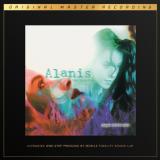
Sourced from the original master tapes, pressed at Fidelity Record Pressing on MoFi SuperVinyl, and strictly limited to 4,000 numbered copies, Mobile Fidelity’s UltraDisc One-Step 180g 45RPM 2LP box set of Jagged Little Pill presents the landmark effort in audiophile-grade sound for the first time. A key part of the record’s appeal and accessibility — Glen Ballard’s smooth production, touches that help Morissette’s exposed-nerve fare seem more accessible and melodic — comes through on this special 30th anniversary edition with an openness, presence, and dynamic explosiveness that make the vocalist’s songs that much more real and visceral.
The singer’s distinctive mezzo-soprano deliveries — the octave-rippling highs, dark-hued lows, dramatic crescendos, belted choruses, wispy reflections, occasional yodels — resonate with full-range ardor and depth. As crucial as anything on the record, Morissette’s confessional words take center stage like never before. Ditto the instrumentation and atmospherics that form the magnetic backgrounds of the songs. Key in on the contributions from Red Hot Chili Peppers Dave Navarro and Flea on “You Oughta Know” to Tom Petty & the Heartbreakers' co-founder Benmont Tench’s organ playing on six tracks.
The deluxe packaging of Mobile Fidelity’s Jagged Little Pill UD1S set underscores the work’s distinguished status. Housed in a slipcase, the LPs come in special foil-stamped jackets with faithful-to-the-original graphics that illuminate the splendor of the recording. Benefitting from an ultra-low noise floor, superior groove definition, and dead-quiet surfaces, this UD1S reissue is for listeners who prize sound quality and desire to engage themselves in everything involved with the album, including the now-iconic cover art that juxtaposes two portraits of the then-21-year-old singer-songwriter and features typewriter font.
That script — which suggests a raw, blood-on-the-floor document created without modern aids like spell check or language correction — hints at the heightened level of unvarnished intimacy, honesty, and catharsis Morissette offers throughout Jagged Little Pill. Named after a phrase uttered on the astute “You Learn,” the album explores the frank emotions, inherent contradictions, and wishful desires people feel everyday but are often too afraid to express. Morissette displays no such fear or shyness.
Akin to a woman reading from a diary, Morissette leaves nothing to the imagination as she skewers hypocrisy during the poignant “Forgiven,” seeks recompense on the vengeful “You Oughta Know,” and spills her guts on the soul-purging “All I Really Want.” For all the anger and bile ascribed to the singer and record, Jagged Little Pill is incredibly healthy and upbeat. Morissette uses the catchy pop-rock frameworks and moody ambience to suss out situations, to learn, to give hope. There’s the clever yearning of “Hand in My Pocket”; wry contrarianism of “Ironic”; kind-heartedness of “Hand over Feet”; the live-and-let-live spirit of “You Learn” – all positive and amiable.
Throughout Jagged Little Pill, the ever-approachable Morissette connects with listeners who recognize themselves in her — and has an intelligent conversation with anyone who wants to participate. It seemed almost everyone did. In addition to the mammoth sales that make the effort the 17th-best-selling album in American history, Jagged Little Pill collected four Grammy Awards, two American Music Awards, three Billboard Music Awards, and eight Juno Awards. In 2018, the record became the basis for a musical that netted 15 Tony nominations on Broadway.
Ironic? Anything but. Jagged Little Pill transcends generations, gender, and trends. As Morissette sings on the opening “All I Really Want,”, the album represents “deliverance” — “a place to find common ground.”
Kai Alce's NDATL Muzik is one of our favourites for deep house so imagine our delight to learn that it now branches out with a new sub-label, Nutria Sounds. Its debut release is a gem from Shaka with Eve's soulful vocals capturing the essence of Paris through organic textures and sultry melodies. The main vocal mix has jazzy chords and a carefree vibe, while 'Unbleached' is a more driving deep house cut with dancing keys and low end heft. The ever-on form Chicagoan Vick Lavender also steps up with a signature jazz-infused remix that is refined yet ready to work the 'floor. This is a fine debut for Nutria Sounds, which seems like it is going to be another vital outlet for heartfelt and classy house.
out of Stock
Last delivered 4 months ago available to reorder, subject to availability
Steve Harley's iconic album The Best Years Of Our Lives celebrates its 50th anniversary in 2025 and to mark the event, Chrysalis Records is proud to present an expanded 3-Disc edition featuring a 2025 Stereo Mix by Alan Parsons.
Following the split of the original Cockney Rebel line up, Harley endeavored to form a new line up while renaming the group as Steve Harley & Cockney Rebel. The result of this newfound group was electric, with the band producing their biggest hit; the number one, million-selling anthem 'Make Me Smile (Come Up And See Me)'.
The lead track has gone on to have a life of its own, produced by Alan Parsons, just two years after he engineered Pink Floyd's Dark Side Of The Moon, this album stands tall as an assured collection of top tier prog-glam-pop.
Disc One features a new 2025 Alan Parsons Stereo Mix, Disc two has never-before-heard outtakes and rarities, offering fans a unique insight into the creative process. The DVD features the Between The Lines documentary and Star Rider live video, unaired since the time, giving a wonderful glimpse into Steve performing at his victory lap show at Hammersmith Odeon alongside some fantastic fan interviews, Make Me Smile promo video and TOTP performance and the full audio recording of the Hammersmith Odeon concert. At the centre of this DVD style hardback book, are liner notes by renowned author Peter Doggett with interviews from band members Jim Cregan, Stewart Elliott, Duncan Mackay and producer Alan Parsons plus previously unseen photographs from Mick Rock and Michael Putland
Santana Bridges the Divide Between Live and Studio Material on Moonflower: 1977 Double Album Features Extraordinary Performances, Soulful Vibes, and Dynamic Mix of Latin, Rock, Funk, and Blues
Sourced from the Original Master Tapes and Strictly Limited to 3,000 Numbered Copies: Mobile Fidelity’s 180g 33RPM 2LP Set Plays with Audiophile-Quality Detail, Balance, and Imaging
1/4” / 15 IPS original analogue non-Dolby master to DSD 256 to analogue console to lathe
Though it may seem strange now, Moonflower stood for nearly 15 years as Santana’s first and only live record released in the United States. This despite the fact that roughly half of the double album consists of new studio songs, including a zesty cover of the Zombies classic “She’s Not There” that reached the Top 30 of the singles charts.
However unconventional, the “split” strategy went over like gangbusters. Moonflower reached the Top 10 of the Billboard Top 200 and achieved double-platinum status — feats the group would not again replicate for 22 years. These, and the beautiful quality of the program itself, are among the reasons why the 1977 effort remains viewed by critics and fans alike as must-have Santana.
Sourced from the original master tapes, pressed at Fidelity Record Pressing in California, housed in a Stoughton jacket, and strictly limited to 3,000 numbered copies, Mobile Fidelity’s 180g 33RPM 2LP set of Moonflower presents the record in audiophile sound for the first time on a domestic reissue. Part of the MoFi’s Santana catalog restoration series, this collectible version features quiet surfaces and black backgrounds that expose the critical details, liquid tones, and dynamic interplay central to Santana’s music.
The enhanced sonics extend not only to Carlos Santana’s six-string wizardry, but to the rhythmic, melodic, and vocal elements that course throughout both the studio and live cuts on Moonflower. The grip and depth of the bass lines; the wash of the organ; the scope and carry of the vocals; the extension and weight of the low-end frequencies; the rich textures of the guitars, percussive devices, and keyboards: all appear amid wide, balanced soundstages and image with right-sized dimensionality.
Significantly rooted in the styles and approaches that inform the group’s first three records, Moonflower captures the final appearances of iconic percussionist Jose “Chepito” Areas and go-to keyboardist Tom Coster on a Santana album. As he did during the preceding five-year stretch, Coster inhabits a large role here, sharing songwriting credits on a majority of the new cuts and helping steer the arrangements toward spiritually minded albeit concise directions that encompass vibrant Latin, rock, and blues themes that began to escape the ensemble shortly after his departure.
Close your eyes and feel the warmth of the sun on the R&B-kissed “I’ll Be Waiting,” anchored by Carlos Santana’s gliding fretwork and Greg Walker’s creamy vocals. Enter the cosmic universe of “Zulu,” on which Coster’s nimble phrasing opens the gate to polyrhythmic beats, knotty grooves, and interlocking funk. Grab the album cover and drift off to paradise amid the equally evocative “Flor d’Luna (Moonflower),” a romantic slow dance that Carlos Santana ensures tiptoes en route to its blissful destination. Channeling a different spirit animal, the guitarist later lets loose on the hard-hitting “El Morocco,” on which he seemingly engages in a shootout with himself and wades into the rippling psychedelia that elevated the band’s early material.
Speaking of the past, Moonflower triumphs on that level as well. In more ways than one, the live selections — and the caliber of the performances — chosen for inclusion represent an abbreviated greatest-hits survey of the band up to that point. And, at the very least, a convincing argument about why Santana had progressed into one of the most formidable bands you could hope to see on a stage in the mid ‘70s.
Simultaneously representative and illustrative of the group’s breadth, tracks stem from the collective’s eponymous debut, Abraxas, and Santana III as well as the then-more recent Amigos and Festival. Whether you fall for the sidewinding spell of a spicy rendition of “Black Magic Woman/Gypsy Queen,” lose your head to the positively epic momentum of “Soul Sacrifice/Head, Hands & Feet,” or keep dropping the needle on the savory grace of the brilliant reading of “Europa (Earth’s Cry Heaven’s Smile),” this pressing of Moonflower puts you — and Santana’s first-chapter legacy — in good hands.
Biz is one of a number of Australian artists who are having a big impact on the sound of contemporary techno, and he has been playing a key role in the scene since the late 1980s. His sound mixes deep basslines with uplifting melodies and he has collaborated with a number of legends as well as releasing music on labels like Transmat and COD3QR. Now on Acquit, he explores the outer edges of our galaxy with celestial synth lines, sci-fi melodies and deep, Detroit-inspired techno grooves that are brilliantly cinematic and evocative. 'Soul Within' is our favourite with its widescreen synths and floating pads.
out of Stock
Last delivered 10 months ago available to reorder, subject to availability
If there is one quality that best sums up the personality and music of Michel Petrucciani, it is generosity.
It was on stage, in the moment, in close proximity to the audience, in the warm intimacy of a club setting, that he most truthfully expressed his passion for sharing.
Many musicians, he confessed, play too selfishly. They play only for themselves and a few happy few. I play to please and to communicate. I’d like to think I’m a very happy person.
That’s why it’s essential for me to transmit and give others the generosity that is vital in art, music, and life.”
This is proven by these magnificent moments captured live in 1997 in Tokyo.
Accompanied by Anthony Jackson and Steve Gadd - two close friends with whom he shared an almost telepathic musical relationship - Michel Petrucciani delivers an intense hour of pianoforte, performing both standards and original compositions to unleash his boundless generosity and sensual lyrical expression live on stage.
Once again, one is struck by the solar clarity of his phrasing, the vigour and percussive precision of his touch (this master of tempo played ‘deep in the note’), and the breadth of his long lines where each note remains distinct and articulate. Michel infused everything he played with great emphasis and nuance - but above all, with sincerity. His heart sang immediately through the piano. This record is the most brilliant demonstration of that.
· Until now, this album had never been released on vinyl. Now available as a 180g double vinyl edition, mastered specifically for vinyl, housed in a 350g leather-textured sleeve with Struktura finish, offering an elegant texture and refined feel.
Unreleased electronic / jazz / madness from two titans of jazz and experimentation: JOHN SURMAN and KARIN KROG.
I could now write a load of blown up puffery about how amazing this is, but everyone does that, and a lot of the time it’s all a load of bollocks. But basically this was sent to me by Karin / John when I asked if they had anything hanging about that had not been released. This came through and blew my tiny mind. Like something from prime Annette Peacock “Pony” period. Here is what John Surman said…
John Surman writes:
Back in 2012/13 there had been some talk about a big futuristic open air urban dance/theatre production for about 80/100 actors/dancers with lasers and all kinds of lighting effects on different stages. I was invited to get involved and, together with Ben and Karin, we eventually decided to get to work on some ideas. I think that the original plan was that in performance there would be a mixture of live music and electronica.
Not altogether surprisingly, bearing in mind the complexity of the project, it never moved forward and developed into anything more than an interesting idea. It was probably over ambitious & I guess the funding never came through.
The only information I that I can find relating to the production refers to two silent movies made in 1927/1928 by the filmmaker Eugene Deslaw, entitled `La Marche Des Machines´ and `Les Nuits Électriques.These were clearly intended to act as inspiration for the project.
After months turned into years it became obvious that the project was going nowhere, and so the recorded music laid around gathering dust until Johnny Trunk asked Karin if she had any interesting music that he might be interested in releasing. One thing led to another and so, finally, Electric Element found a home!
For anyone interested in the equipment used this will have to be an approximation since the memory might be playing tricks. Karin was probably using a Yamaha Rex50 f/x unit, a Roland VT-3 Voice Transformer and an Oberheim Ring Modulator. I was playing Bass Clarinet and Contrabass Clarinet through various f/x units together with a Yamaha WX5 wind synth. All the instruments and voice were also processed through Ben´s equipment. After writing this I asked Ben for his recollections and he came up with the following:
John, Karin and I created this music in 2 or 3 days in the winter of 2013 at their studio in Oslo, Norway. I followed up with another 2 or 3 days of mixing, editing and post-processing . We kept a collaborative, improvisational and free-form approach to the sessions. I grew up immersed in music such as Cloudline Blue, the 1979 duo album of Krog/Surman, and this felt like a similar approach. I have mixed sound for many of their live duo concerts and I would use effects and electronics as an
accompaniment and counterpoint to the performed music. The relation of organic and artificial sound sources in music has always fascinated. In this case, I used some contemporary digital signal processing to introduce my own aesthetic into the conversation, in particular using granular synthesis to recombine small 'clouds' of sound into alternate forms. Some of the software tools I used included Ableton Live, Max/MSP and Reaktor.
out of Stock
Last delivered 14 months ago available to reorder, subject to availability
"Super Killer Aptocalyptic Noise and ultra Desperate Drowning Garage Punk from Toulouse France , members of the Fatals, Blow up! Amphetamine penis etc.." Die Jungs aus Toulouse sind zurück auf der Bühne der Anti-Pop Szene und sprengen mit ihrem super killer apokalyptischen Noise und ultraver Desperate, Drowning Garagenpunk das Hirn weg. Mitglieder von The Fatals, Blow up! oder Amphetamine Penis, und so weiter... die französischen Gitarrenwand-Könige sind zurück und haben diese 11 Songs im legendären Swampland Studio aufgenommen (The Monsters, Bad Mojos, The Spits, Sloks, Oh Telephone, Nestter Donuts...) um ihr bereits viertes Album!! bei Voodoo Rhythm Records zu veröffentlichen (You Can't Save Me - 2015 Death of an Angel - 2017 Nervous Breakdown 2020). Wie üblich spielen sie mit dröhnenden Gitarrenwänden (Hawkwind, Jesus und Mary Jane) und flirten mit ihren Musikfreunden The Limiñanas (französische, verzweifelte, herzzerreißende, traurige Liebes Lieder) und ihrem ganz eigenen Garage-Punk aus Toulouse zu zelebrieren... das ist deine Chance, dieses Album zu erwerben, das nur auf Vinyl erschienen ist ... keine CD, kein Tape ... nur Vinyl!! Genre/Stil: Hard Rock/Psych-Rock/Garagerock - Klassisch schwarzes Vinyl mit Booklet & DLC
Compiled by Philip King
“And then came the rise of synth pop : blokes with dodgy haircuts hunched over keyboard-operated
machines stuffed with wires and do-it-yourself tone oscillators making sounds like a brood of geese
passing gas in a wind tunnel. Whoopee! This is the way the ‘70s ended : not with a blood-curdling bang
bang but with a cheap, synthesized, emasculating whimper.”
NICK KENT, NME.
All The Young Droids: Junkshop Synth Pop 1978-1985 is a new compilation that charts the
underbelly of the epoch-defining sound of the synthesiser in 80s popular music. Compiled by Philip
King (previously seen compiling All The Young Droogs, Glitterbest and Boobs - The Junkshop
Glam Discotheque), the music here connects the dots between DIY synth enthusiasts grappling with
new, cheap synthesisers at the tail-end of punk and wannabe, jobbing songwriters enthral to the new
music pioneered by Gary Numan, Depeche Mode and Daniel Miller’s Mute Records. Featuring rare
tracks of auto-didactic progressive pop music, proto-techno punk, shoot-for-the-stars-land-in-the-gutter
chart flops and heralded, underground synth classics, School Daze paints a picture of beautiful failure.
Complete with extensive sleeve notes written by King and never before seen imagery, all 24 tracks
were remastered by RPM in-house engineer Simon Murphy, many from vinyl copies due to lost master
tapes. The story told on All The Young Droids is one of the dawning opportunity presented by both the
emergence to the market of cheaper analog synthesisers and the distribution networks plus indie labels
that exploded with the advent of punk music in 1976. While the music that sprouted out all over the
globe in the wake of these factors was decried as fake, plastic, a refutation of punk’s guitar-led
revolution, it’s telling that much of the music on All The Young Droids.. was created in bedrooms,
ramshackle studios and home-made set ups with often borrowed equipment. In the era of record labels
jumping to capitalise on the success of The Sex Pistols, The Clash (both on major labels, of course)
these artists struggled to stand out from a new gold-rush with next to no budget or PR team. With radio
and labels desperate for the new Yazoo, what resulted was a testament to necessity being the mother
of invention.
At the time, the synthesiser was the music of the future, a shiny new machine that could paint like an
orchestra with a single finger and a 4-track. In the hands of Manchester avant-pranksters Gerry & The
Holograms it’s a pulsing, sardonic weapon.. the only instrument on the Messthetics classic lampooning
of New Wave fashion. In Hamburg, a 16 year old Andreas Dorau used it to write and record (with his
female classmates on vocals) a global smash in Fred Vom Jupiter (later licensed to Mute Records).
The hard-to-find English version (Fred From Jupiter, natch) is included here. Many artists with alreadystoried careers caught the bug and recorded synthesiser-fuelled peons to space, computers, the future
and, of course, love-interests. Harry Kakoulli, late of Squeeze, recorded a solo album in 1979 that
included the incredible power-synth-pop smash-that-never-smashed I’m On A Rocket. Similarly, Ian
North of Neo and American Power Pop stalwarts Milk ’n’ Cookies bought a Korg MS20 and used a
tape machine to record We’re Not Lonely, an absolute lost-classic of minimal synth pop. We’re Not
Lonely also features on the Junkshop Synth Pop sampler 7” twinned with John Howard unreleased
track You Will See, released April 12th 2025.
There are plenty of compilation debuts in evidence. Sole Sister were a mysterious trio who were
featured on the Scaling Triangles compilation of female-fronted, queer-adjacent post-punk /
underground music that also featured The Petticoats. Selwin Image were from San Francisco and
featured members of the recently defunct power pop/punk group The Pushups. Their stupidly catchy
The Unknown fizzes with New Wave energy - think XTC to Sparks but remains unreleased until now.
Dream Unit’s A Drop In The Ocean is an early synth wave cut, positively teaming with Joy Division
instrumentation, previously only released on a long-forgotten and super rare, self-released EP.
Incandescent Luminaire’s Famous Names belies an archetypal struggle of a small-town trying to
make it in a cruel industry but is a thrilling New Romantic-Synth Wave cross over with a OMD
gloominess that’s a joy to hear. Feminist Minimal Wave track I Am A Time Bomb by performance artist
Peta Lilly and Michael Chance is a revelation destined for new found cult status. It was released on 7”
and lost until now.
The flipside to the subterranean, never-made-it synth pop mentioned above are the ambitious, even
fruity attempts at success that have a perennial elegance to their confidence. New Jersey-ite Billy
London (real name Ed Barth) tried to cash in on the synth boom with Woman, released by a major
label, a lurching new wave track built on the Louie Louie rhythm and a wonderfully camp Lou Reedstyle sleazy vocal before exploding in the synthesised chorus. The song bombed but with a chorus like
this, you have to wonder why? Ex-Glitter Band member John Springate’s My Life is truly epic, with
doomed chord progressions and massive sounding drums turning into at least 3 different songs in the
course of the track. Before you wonder what’s going on the song resolves with a glorious return to the
main refrain.
The dry-ice-dressed dance floor is well catered for too. Design’s Premonition and Vision’s Lucifer’s
Friend are stone-cold minimal synth bangers, well loved but given a new lease of life here. The
Warlord’s The Ultimate Warlord was released in 1978, a homespun proto Hi NRG banger that was
later re-recorded by The Immortals in Canada who had a club hit with it. One-man- band Disco
Volante’s No Motion was re-issued by Synth wave label Medical in 2012 but makes its first vinyl
compilation appearance here. Close your eyes and you can imagine what Lawrence of Felt would have
sounded like with some cheap Korgs a little earlier in his career. Gibraltar-based trio The Microbes
imagined a computer programming people to dance - how prescient - and ended up with a propulsive,
robo-funk track with splendid rubbery bass playing over a tectonic drum machine. Previously picked up
by Belgian label Stroom TV, Dee Jay Bert & Eagle’s heavily Euro-accented I Am Your Master
demands the listener to “come to paradise!” In a frankly terrifying manner.
All The Young Droids is the first compilation to peel away from the narrative that dour, Minimal Synth
and Cold Wave were the only musical children of the first rush of synth pop. Philip King and School
Daze Records describe a much more complicated world: along with the austere, Brutalist children of
Daniel Miller (who produced Alan Burnham’s Bowie-Low-influenced Science Fiction here) was a
plethora of desperate cash-ins, accidental mainstream hits, ambitious pop dramas and major label
punts that went nowhere. Crucially, the compilation blurs the line between junk and treasure. What if the
two things are interchangeable. What if it’s all science fiction?
out of Stock
Last delivered 10 months ago available to reorder, subject to availability
"Different Talking", das sechste und bisher beste Album der vierköpfigen New Yorker Indie-Rock-Band Frankie Cosmos, scheint über Zeit und Raum hinweg zu existieren, so wie wir alle es irgendwie tun. Es ist eine Sammlung von Fragmenten und Erinnerungen, erinnerten Orten und neu interpretierten Gefühlen, die sich zu einem leuchtenden, summenden Ganzen zusammenfügen: eine robuste, weltgewandte Indie-Rock-Platte über das Altern und den Lauf der Zeit, die es dennoch schafft, sich hochaktuell zu fühlen. Die Sängerin, Gitarristin und Songschreiberin von Frankie Cosmos, Greta Kline, gilt seit langem als eine der gewandtesten und notwendigsten Autorinnen zeitgenössischer Indie-Musik, doch auf "Different Talking" werden ihre Texte etwas weicher, und der schräge Zynismus, der die letzten Alben prägte, weicht nun einer Anerkennung der großartigen und notwendigen Fehlbarkeit des menschlichen Gehirns und Herzens. "Different Talking" als Rückkehr zur alten Form oder zumindest zur üppigen Direktheit früherer Frankie Cosmos-Platten zu bezeichnen, wäre unhöflich, aber auch völlig falsch: Wie "Different Talking" deutlich macht, kann man nie mehr zu der Bequemlichkeit und dem Mut seiner frühen Zwanziger zurückkehren, aber diese Person lebt irgendwie immer in einem, egal wie sehr man sich verändert. Bei Different Talking geht es darum, diese Person zu finden, sie zu ehren und von ihr zu lernen. "Ein großer Teil des Albums handelt davon, erwachsen zu werden und herauszufinden, wie man sich selbst erkennt - wie zum Beispiel: 'Was ist ein Weitermachen?'", sagt Kline. "Wie kommen wir weiter, wenn wir süchtig nach einem Kreislauf sind, der uns in unserer Vergangenheit verfolgt? Das Schreiben von Songs ist nur ein Weg, um das zu überwinden". Kline ist seit ihren späten Teenagerjahren ein fester Bestandteil des amerikanischen Indie-Undergrounds. Ihre zahlreichen Bandcamp-Veröffentlichungen und ihr Debüt bei dem Indie-Label Zentropy aus dem Jahr 2014 führten dazu, dass sie als "Poet laureate of New York City DIY" bezeichnet wurde. Ein solches Etikett ist eine Menge für junge Schultern, aber es ist schwer zu leugnen, dass sie einen einzigartigen Einfluss auf die zeitgenössische Popmusik hatte. Wenn die Vorstellung, dass eine junge Frau in ihrem Schlafzimmer einen Synthesizer in die Hand nimmt, ein paar Songs ins Internet stellt und schnell zum Superstar wird, heute gang und gäbe ist, dann liegt das daran, dass Kline und ihre Kolleginnen das (weibliche) DIY-Genie normalisiert und verherrlicht haben, lange bevor sie in den Marketingbüros der Major-Labels an die Pinnwände geheftet wurden. Seitdem hat sich viel verändert: Nachdem Frankie Cosmos in den letzten zehn Jahren eine Handvoll verschiedener Permutationen durchlaufen hat, besteht die Band heute aus vier Mitgliedern: Greta Kline, Alex Bailey, Katie Von Schleicher und Hugo Stanley. Kline ist die einzige Konstante, aber Stanley, Bailey und Von Schleicher sind wichtige Mitstreiter, und es wäre falsch, die Namen "Greta Kline" und "Frankie Cosmos" synonym zu verwenden. Kline ist nach wie vor die primäre Songschreiberin, und die Musik auf "Different Talking" wurde von der Band als Ganzes arrangiert, aber dies ist das erste Album, das von der Band selbst aufgenommen und selbst produziert wurde. Nicht zufällig fühlt es sich wie eine reinere, destilliertere Aufnahme an. "Es fühlt sich an wie die beste Version von dem, was ich machen wollte, seit ich ein Teenager war", sagt Kline. "Obwohl dies in einem Wohnzimmer aufgenommen wurde, ist es so originalgetreu wie alles, was wir im Studio gemacht haben."
"Different Talking", das sechste und bisher beste Album der vierköpfigen New Yorker Indie-Rock-Band Frankie Cosmos, scheint über Zeit und Raum hinweg zu existieren, so wie wir alle es irgendwie tun. Es ist eine Sammlung von Fragmenten und Erinnerungen, erinnerten Orten und neu interpretierten Gefühlen, die sich zu einem leuchtenden, summenden Ganzen zusammenfügen: eine robuste, weltgewandte Indie-Rock-Platte über das Altern und den Lauf der Zeit, die es dennoch schafft, sich hochaktuell zu fühlen. Die Sängerin, Gitarristin und Songschreiberin von Frankie Cosmos, Greta Kline, gilt seit langem als eine der gewandtesten und notwendigsten Autorinnen zeitgenössischer Indie-Musik, doch auf "Different Talking" werden ihre Texte etwas weicher, und der schräge Zynismus, der die letzten Alben prägte, weicht nun einer Anerkennung der großartigen und notwendigen Fehlbarkeit des menschlichen Gehirns und Herzens. "Different Talking" als Rückkehr zur alten Form oder zumindest zur üppigen Direktheit früherer Frankie Cosmos-Platten zu bezeichnen, wäre unhöflich, aber auch völlig falsch: Wie "Different Talking" deutlich macht, kann man nie mehr zu der Bequemlichkeit und dem Mut seiner frühen Zwanziger zurückkehren, aber diese Person lebt irgendwie immer in einem, egal wie sehr man sich verändert. Bei Different Talking geht es darum, diese Person zu finden, sie zu ehren und von ihr zu lernen. "Ein großer Teil des Albums handelt davon, erwachsen zu werden und herauszufinden, wie man sich selbst erkennt - wie zum Beispiel: 'Was ist ein Weitermachen?'", sagt Kline. "Wie kommen wir weiter, wenn wir süchtig nach einem Kreislauf sind, der uns in unserer Vergangenheit verfolgt? Das Schreiben von Songs ist nur ein Weg, um das zu überwinden". Kline ist seit ihren späten Teenagerjahren ein fester Bestandteil des amerikanischen Indie-Undergrounds. Ihre zahlreichen Bandcamp-Veröffentlichungen und ihr Debüt bei dem Indie-Label Zentropy aus dem Jahr 2014 führten dazu, dass sie als "Poet laureate of New York City DIY" bezeichnet wurde. Ein solches Etikett ist eine Menge für junge Schultern, aber es ist schwer zu leugnen, dass sie einen einzigartigen Einfluss auf die zeitgenössische Popmusik hatte. Wenn die Vorstellung, dass eine junge Frau in ihrem Schlafzimmer einen Synthesizer in die Hand nimmt, ein paar Songs ins Internet stellt und schnell zum Superstar wird, heute gang und gäbe ist, dann liegt das daran, dass Kline und ihre Kolleginnen das (weibliche) DIY-Genie normalisiert und verherrlicht haben, lange bevor sie in den Marketingbüros der Major-Labels an die Pinnwände geheftet wurden. Seitdem hat sich viel verändert: Nachdem Frankie Cosmos in den letzten zehn Jahren eine Handvoll verschiedener Permutationen durchlaufen hat, besteht die Band heute aus vier Mitgliedern: Greta Kline, Alex Bailey, Katie Von Schleicher und Hugo Stanley. Kline ist die einzige Konstante, aber Stanley, Bailey und Von Schleicher sind wichtige Mitstreiter, und es wäre falsch, die Namen "Greta Kline" und "Frankie Cosmos" synonym zu verwenden. Kline ist nach wie vor die primäre Songschreiberin, und die Musik auf "Different Talking" wurde von der Band als Ganzes arrangiert, aber dies ist das erste Album, das von der Band selbst aufgenommen und selbst produziert wurde. Nicht zufällig fühlt es sich wie eine reinere, destilliertere Aufnahme an. "Es fühlt sich an wie die beste Version von dem, was ich machen wollte, seit ich ein Teenager war", sagt Kline. "Obwohl dies in einem Wohnzimmer aufgenommen wurde, ist es so originalgetreu wie alles, was wir im Studio gemacht haben."
“The Rough And The Smooth” was the highly anticipated 2nd album from Outside. Written, produced, mixed and engineered by a 22 year old Matt Cooper, who journeyed through dub, jungle, hip hop and latin rhythms and vibrant, modal jazz. Playing much of the instrumentation including keys and drums, Matt was joined by some of the scene’s finest players from Jhelisa, Imaani, Greg Osby, Cleveland Watkiss, Byron Wallen, Tony Remy and Gary Crosby.
Upon release, ‘The Rough And The Smooth‘ received huge acclaim and was hailed as a masterpiece by the music press from GQ, MOJO, The Face and Mixmag and fans alike, taking Outside to another level.
From the complex funk of ‘Journeyman‘ parts 1 and 2, to the Nu Yorican hit of ‘The 29/8 Steps‘, to the powerfully emotive violin led jungle of ‘To Forgive But Not Forget‘ and the epic jazz and beats fusion that is ‘Moodswing‘, the album was impossible to pigeonhole and influenced a generation of music heads and artists.
VERY LIMITED 2025 REPRESS ON BEAM OF LIGHT VINYL .
Everything changed for The Beths when they released their debut album, Future Me Hates Me, in 2018. The indie rock band had long been nurtured within Auckland, New Zealand’s tight-knit music scene, working full-time during the day and playing music with friends after hours. Full of uptempo pop rock songs with bright, indelible hooks, the LP garnered them critical acclaim from outlets like Pitchfork and Rolling Stone, and they set out for their first string of shows overseas. They quit their jobs, said goodbye to their home town, and devoted themselves entirely to performing across North America and Europe. They found themselves playing to crowds of devoted fans and opening for acts like Pixies and Death Cab for Cutie. Almost instantly, The Beths turned from a passion project into a full-time career in music.
Songwriter and lead vocalist Elizabeth Stokes worked on what would become The Beths’ second LP, Jump Rope Gazers, in between these intense periods of touring. Like the group’s earlier music, the album tackles themes of anxiety and self-doubt with effervescent power pop choruses and rousing backup vocals, zeroing in on the communality and catharsis that can come from sharing stressful situations with some of your best friends. Stokes’s writing on Jump Rope Gazers grapples with the uneasy proposition of leaving everything and everyone you know behind on another continent, chasing your dreams while struggling to stay close with loved ones back home.
"If you're at a certain age, all your friends scatter to the four winds,” Stokes says. “We did the same thing. When you're home, you miss everybody, and when you're away, you miss everybody. We were just missing people all the time.”
With songs like the rambunctious “Dying To Believe” and the tender, shoegazey “Out of Sight,” The Beths reckon with the distance that life necessarily drives between people over time. People who love each other inevitably fail each other. “I’m sorry for the way that I can’t hold conversations/They’re such a fragile thing to try to support the weight of,” Stokes sings on “Dying to Believe.” The best way to repair that failure, in The Beths’ view, is with abundant and unconditional love, no matter how far it has to travel. On “Out of Sight,” she pledges devotion to a dearly missed friend: “If your world collapses/I’ll be down in the rubble/I’d build you another,” she sings.
“It was a rough year in general, and I found myself saying the words, 'wish you were here, wish I was there,’ over and over again,” she says of the time period in which the album was written. Touring far from home, The Beths committed themselves to taking care of each other as they were trying at the same time to take care of friends living thousands of miles away. They encouraged each other to communicate whenever things got hard, and to pay forward acts of kindness whenever they could. That care and attention shines through on Jump Rope Gazers, where the quartet sounds more locked in than ever. Their most emotive and heartfelt work to date, Jump Rope Gazers stares down all the hard parts of living in communion with other people, even at a distance, while celebrating the ferocious joy that makes it all worth it -- a sentiment we need now more than ever.
Named after a (US) West Coast grocery store chain, The Whitefronts started out in 1982 as a quartet of art and theater students attending UCSB. The band quickly mutated into a sextet. In 1984, they moved north to establish themselves as part of the SF DIY culture. Live shows usually consisted of open jams drawing from what the band was obsessing about at the time—free jazz, The Velvet Underground, Caribbean music, improv noise—as well as their own unheralded genres that popped in and out of existence like subatomic particles. Shows with local bands like Slovenly, Camper Van Beethoven, Caroliner Rainbow, Vomit Launch, Barnacle Choir and Barbara Manning provide some context as to their eccentric position within the indie scene of the era.
In 1985, the band released their sole LP, Roast Belief, on their own Bogden label. This was an ambitious attempt to document the various ideas that were happening live. Though practically unknown today, it’s an extraordinary record—a mid-80s classic serving up eclectic derangement on a par with contemporaries like the Butthole Surfers, Meat Puppets, Sun City Girls, Tuxedomoon and Eugene Chadbourne.
The Mamo Waves LP was compiled from recordings made between 1982-1987. As with Roast Belief LP, it’s a mind-melting jumble of the genres explored by Whitefronts throughout their existence. It was originally supposed to be released by Camper Van’s Pitch-A-Tent imprint, as a couple of WF members were touring with CBV in 1987, but the release fell through the cracks when CBV was airlifted to Virgin Records in 1988. Today, it’s clear that Mamo Waves belongs to the same 1980s Californian sub-underground aesthetic that nurtured mythical 80s bands like Departmentstore Santas and Prominent Disturbance. It’s a real WTF m.o. that still sounds like the future.
Prism Shores are Montreal janglers with one foot planted in ramshackle C86-indebted indie pop and the other in the shimmer of early English shoegaze. While their sound is reminiscent of perennial genre reference points (Sarah, Creation, Flying Nun), the band leaves their own idiosyncratic stamp. Out From Underneath, their new record due out January 17, 2025, on Meritorio Records, tackles young adult ennui and the adjustment of settling in an unfamiliar city, its lyrics dealing with the growing pains experienced during a time of upheaval. It is contemplative and chock-full of emotional depth; a nighttime album that channels self-reflexive melancholy into some form of catharsis.
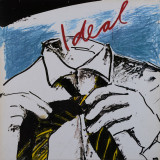
Am 27. Juni erscheint das selbstbetitelte Ideal-Debütalbum von 1980 in einer neu abgemischten Version. Für den „2025 Mix“ wurden die originalen Mehrspurbänder digitalisiert und von Moritz Enders (u.a. Kraftklub, Casper) und Annette Humpe neu abgemischt. Das Ergebnis klingt verblüffend direkt, greifbar und gegenwärtig – als wäre die Berliner Band gerade erst ins Studio gestiegen.
Der Clou: Für den neuen Mix kam ausschließlich Technik zum Einsatz, die bereits 1980 zur Verfügung stand. Der Sound ist also nicht einfach nur neu – sondern neu gedacht im Geist der alten Zeit. „Ideal (2025 Mix)“ ist nicht bloß ein nostalgischer Rückblick, sondern ein eindrucksvolles Update: Songs wie „Berlin“, „Blaue Augen“ oder „Hundsgemein“ wirken heute so kompromisslos, radikal und relevant wie eh und je.
One of the biggest tunes of 2011 gets a reload on Hotflush with a brand new remix from house legend Mr. G.
Hotflush label boss Scuba was a dubstep exile in Berlin running parties at Berghain in 2011, following the release of his landmark album Triangulation the previous year. The SCB project had been launched as a platform for his productions outside of the 140 realm, anticipating a stylistic move that would make a serious impact on the dance scene at large.
‘Loss’ was released on Aus Music that March, proceeded to destroy dancefloors across the globe, and ended the year at number 7 in RA’s ‘Top Tracks of 2011’. In 2025, it retains the unique combination of minimal elegance and trance power that gave it such impact all those years ago.
UK house mastermind Mr. G steps up with a trademark remix - uncompromising in groove and structure, guaranteed to do the business on the floor.
And to round off the package, a previously unreleased version of the original b-side, FutureUnknown is included. The ‘Voxattack’ made many appearances in the Scuba DJ set at the time and qualifies for ‘sought-after lost dub’ status.
out of Stock
Last delivered 8 months ago available to reorder, subject to availability
Playboi Cartis 2018 veröffentlichtes Studioalbum ”Die Lit” erscheint nun erstmalig auf Vinyl. Endlich können Tracks wie ”Shoota”, ”RIP” und ”Long Time” in bester Klangqualität auf einer schwarzen 2LP gehört werden. Ein Must Have für alle Playboi Carti Fans!
out of Stock
Last delivered 15 months ago available to reorder, subject to availability