Innerhalb der letzten Jahre hat ein ganzer Pit an schlagkräftigen Bands, wie exemplarisch Whitechapel,
die Flamme des progressiven, modernen metal neu entfacht: die Leerstelle aus roher Brutalität und einem
gewissen Maß an urbaner Attitude blieb jedoch bisher unbesetzt. Die britische Kombo VEXED aus Hertfordshire sind eine der wohl spannendsten Neuentdeckungen und präsentieren auf ihrem lang erwarteten
Debüt Culling Culture eine Mischung aus aggressivem Groove und brodelnder Atmosphäre.
VEXED Front-Dame Megan Targett verbindet stechend-scharfe, tiefe Growls, cleane Vocals und rapnuancierte Texte (siehe ”Fake” und ”Weaponize”) mit schlagfertiger Leichtigkeit und wird von den technisch versierten Bandmitgliedern Willem Mason-Geraghty (Schlagzeug), Jay Bacon (Gitarre) und Al Harper
(Bass) unterstützt.
Starke Riffs à la Genre-Größen wie Meshuggah, Periphery und Vildhjarta, kombiniert mit stratosphärischen
Soli und Leads beweisen, dass VEXED die größten Open-Air-Bühnen ebenso souverän beherrschen, wie
klassische Hardcore-Shows.
Mit sehr persönlichen Erfahrungen gespickt, ist Culling Culture eine Hommage an Hass, Verrat und Wut,
während es gleichzeitig die postmoderne Gesellschaft mit auffallend ehrlichem Songwriting und schwerem
Groove reflektiert. Hass kann entweder zerstören oder echte Stärke verleihen, und auf diesem 11-Tracks
starken Album beweisen VEXED das Letztere.
Hailing from Medellin, Colombia, Killabeatmaker is a Global Bass DJ / Producer, audio engineer, singer and songwriter; a multi-faceted artist you'll be hearing a lot about in the near future. Drawing his inspiration from his Afro-Colombian and Indigenous roots, Killabeatmaker efficiently mixes traditional sounds and rhythms with urban beats and raw club music. His EP "Matiela Suto" is an homage to the diversity of Colombia's people and cultures, packed with progressive house buildups, Nigerian club music influences and enchanting female voices.
out of Stock
Last delivered 4 years ago available to reorder, subject to availability
Hailing from Medellin, Colombia, Killabeatmaker is a Global Bass DJ / Producer, audio engineer, singer and songwriter; a multi-faceted artist you'll be hearing a lot about in the near future. Drawing his inspiration from his Afro-Colombian and Indigenous roots, Killabeatmaker efficiently mixes traditional sounds and rhythms with urban beats and raw club music. His EP "Matiela Suto" is an homage to the diversity of Colombia's people and cultures, packed with progressive house buildups, Nigerian club music influences and enchanting female voices.
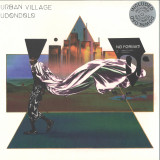
Signed to Parisian label N F rmat! (home to Oumou Sangar , Blick Bassy & M lissa Laveaux), Soweto-based 4 piece band Urban Village present their debut album, ‘Udondolo’.
Marrying the day-to-day experiences of black South Africans with ebullient elements from traditional Zulu music, Urban Village is the alias of four experimental musicians all born & raised in the township of Soweto at the tail end of apartheid.
Urban Village release music under a name which specifically references the blend of cultures, music & rites which were assimilated into the now 1 million strong population of Soweto, when black South Africans from multiple provinces were brought to the area during the establishment of apartheid, under strict segregation from Johannesburg’s white suburbs.
Born for the most part in the last years of apartheid, whilst growing up the band plunged happily into house and dance music that turned the page of a heavy past. Guitarist Lerato came across older Zulu musicians and their style of maskandi playing. Lerato has since mixed styles from homelands and rural areas, sharpened in club jam sessions (where he went on to meet Tubatsi and form Urban Village) during which spoken word, hip-hop and jazz rub shoulders freely.
‘Udondolo’ - partially recorded at legendary Downtown Studios in the heart of Johannesburg and at Figure of 8 studios in the leafy suburbs of Randburg, - is a journey through all the colours of Soweto. This is where it draws its consistency, strength & identity. That of Soweto itself - a dormitory town designed to
monitor those who were sent there, it has become a laboratory of music where the hopes of an entire people resonate, even today.
out of Stock
Last delivered 5 years ago available to reorder, subject to availability
The latest signing to Parisian label No Format! (home to Oumou Sangaré, Blick Bassy and Mélissa Laveaux), Soweto-based 4 piece band Urban Village will release their debut album "Udondolo". Marrying the day-to-day experiences of black South Africans with ebullient elements from traditional Zulu music, Urban Village is the alias of four experimental musicians all born & raised in the township of Soweto at the tail end of apartheid; Urban Village release music under a name which specifically references the blend of cultures, music & rites which were assimilated into the now 1 million strong population of Soweto, when black South Africans from multiple provinces were brought to the area during the establishment of apartheid, under strict segregation from Johannesburg's white suburbs. Born for the most part in the last years of apartheid, whilst growing up the band plunged happily into house and dance music that turned the page of a heavy past. Guitarist Lerato came across older Zulu musicians and their style of maskandi playing. Lerato has since mixed styles from homelands and rural areas, sharpened in club jam sessions (where he went on to meet Tubatsi and form Urban Village) during which spoken word, hip-hop and jazz rub shoulders freely. "Udondolo" - partially recorded at legendary Downtown Studios in the heart of Johannesburg and at Figure of 8 studios in the leafy suburbs of Randburg - is a journey through all the colours of Soweto. This is where it draws its consistency, strength & identity. That of Soweto itself - a dormitory town designed to monitor those who were sent there, it has become a laboratory of music where the hopes of an entire people resonate, even today.
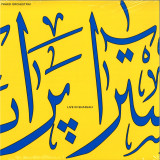
3 x LP - Live in Sharjah Box Set + Booklet. designed by Lorenzo Mason Studio.
If you’ve ever travelled to Egypt and wandered through its crowded streets, you probably ended up buying a cassette or a CDR of popular synth based music heard in most cabs, cabarets, or alleys around town: the almighty Shaabi.Raed Yassin and Paed Conca based their project PRAED on research between Shaabi and Mouled (traditional trance music from Egypt) and the hypnotic structures of both these genres. Repetitive beats, loud Mizmar and loads of energy, with a strong influence from psychedelic rock, free jazz and electronica.
During the years in which the duo produced 4 albums and performed on an endless number of stages around the globe, PRAED started working on anambitious expansive project: an orchestra that could transpose this study of rural and popular culture into an immense, iconic work. In autumn 2018, supported by the Sharjah Art Foundation, PRAED Orchestra! premiered “Live in Sharjah”, interpreting new material merged with some of the band’s iconic pieces. The composition process started with the choice of musicians: the line-up consisted of some of the most innovative artists coming from a wide spectrum of musical practices. Each musician was chosen for a defined role, and the common denominator was their capacity to interpret written material, and their ability to improvise effortlessly. Each role was clearly set to work in unison with the rest of the group, while simultaneously sustaining a centrality in the choir. Solo parts masterfully drawn over the structure as a fil rouge connecting every piece of the entire concert; massive and powerful orchestral sections leading to a breathtaking trance-like state of mind; all of this material ultimately coalescing into an Egyptian Operette that narrates the sorrow, love, and deeply rooted culture of this urban music called Shaabi.
Paed Conca: Clarinet, Electric Bass, Electronics
Raed Yassin: Synthesizers, Vocals, Electronics
Alan Bishop: Alto Saxophone, Vocals
Nadah El Shazly: Vocals, keyboard, Electronics
Christine Kazarian: Electric Harp
Hans Koch: Bass Clarinet, Soprano Sax
Martin Kuchen: Tenor Saxophone, Baritone Sax
Maurice Louca: Keyboard, Organ
Radwan Ghazi Moumneh: Buzuk, Vocals, Modular Synthesizer
Sam Shalabi: Electric Guitar, Oud
Ute Wassermann: Vocals, Mouth Harp, Whistles
Khaled Yassine: Drums, Percussion, Darbuka
Michael Zerang: Drums, Percussion
Recorded live at Calligraphy Square on November 3rd, 2018 in Sharjah, UAE by: Sudish Suman & Shuaib Ahmad Poonthala
Edited by: Rabih Beaini at Morphine Studio, Berlin, Germany
Mixed by: Radwan Ghazi Moumneh at Hotel2Tango Studio, Montreal, Canada. Mastered by: Harris Newman at Grey Market Studio, Montreal, Canada.
Artwork by Lorenzo Mason Studio.
Project manager : Simsara Music
out of Stock
Last delivered 5 years ago available to reorder, subject to availability
“Don´t go out there, you might get shot” was the warning from Donna Maya relatives when she visited Detroit two years ago. That makes her even more curious to explore the city. Disturbed by, as well as fascinated from the dystopian state of Detroit she recorded many places that made (industrial) history, including the Ford factory, the world’s tallest, now abandoned central station and the once magnificent Michigan Theater, that was brutally converted into a parking garage. Donna Maya transformed the sound recordings into artificial sound sculptures combined with electronic beats. Every track is dedicated to one of those places and makes it musically alive. With her theremin Donna Maya guides the listener deeply inside. The result of Donna Mayas 6 weeksstay in Detroit is her album “Lost Spaces -> Detroit". “Lost Spaces ? Detroit” is about how to handle crises, how individuals get along with it and the relationship of society to its culture. Donna Maya understands Detroit as a perfect example for what capitalism does when people give up cultural values. With “Lost Spaces ? Detroit” Donna Maya draws a musical picture of how she experienced Detroit that shows that not only a city got lost, but a living space for everyone: Pure urban experimental electronics with theremin.
out of Stock
Last delivered 6 years ago available to reorder, subject to availability
'Prole Art Threat' is producer Anthoney Hart's second LP for Planet Mu under his East Man alias, after 2018's well received debut 'Red White & Zero'. It brings together a set of MCs from all over London, Darkos and Eklipse from East London and Lyrical Strally from near Feltham who were on the first album, Ny Ny and Mic Ty also from East London, Streema and 'Vision Crew' member Whack Eye from Lewisham plus Fernando Kep, an MC from the burgeoning Brazil grime scene. They work across a cohesive set of tight riddims forged from thoughtful amalgams of grime, dancehall and drum & bass. The album takes its name from a Fall song/mission statement of the same title, the band being self-consciously working class and led by a brilliant autodidact in Mark E Smith. East Man relates that the title is to be taken as “a reflection of working-class creativity and how the establishment marginalise us and (perhaps on a subconscious level) see us as a threat.” Les Back, author of 'The Art of Listening' and 'Out of Whiteness: Color, Politics and Culture (with Vron Ware)' contributes liner notes to the record: East Man understands the force and the democracy of the mic. Listening to Prole Art Threat is like being at a dance. As the mic is passed between each of the MCs, a different tale is ‘elevated... off the map’ as Ny Ny puts it. We hear instalmentsfrom Forest Gate, Lee, Lewisham and Manor Park as these ‘lyrical gaffers’ and ’top boys and girls’ tell tough stories of life under the scrutiny of the ‘Feds’ in a brutal and divided city. The bars and rhymes document what it means to live here; from the double standards applied to the sexuality of young girls and boys to the corrosive violence of everyday life. All this is dissected without compromise. This is not just aLondon story though, the inclusion of Fernando Kep from the burgeoning Grime scene in Brazil is evidence of the outernational reach of the music. The tracks on East Man’s album explode the wilful ignorance of those who see ‘the working class’ in contemporary London as code for whiteness. This is the sound of a proletarian urban multiculture, made from Caribbean and African influences, sound system culture, pirate radio and the inexorable rhythms of Grime, Drum & Bass, Techno and Dancehall. It is the stirring of the "white" & "black" working classes who are living together and coming together on their own terms in sound. ‘Making music because you love it... what the fuck else could you do?’ as East Man says. The tracks and voices you are holding in your hands are, as a result urgent, vital, as hard nails and twice as sharp.
out of Stock
Last delivered 6 years ago available to reorder, subject to availability
‘Reality Tunnels’ is a concept that was originally introduced by Robert Anton Wilson in his 1983 book ‘Prometheus Rising’. In essence, the concept of a reality tunnel relates to an idea on how we create our own perspective – the subjective filter that we each apply to the world around us; the things we perceive and what our consciousness deems worthy of attention, IE what we see and hear is entirely relative to what we do not.
At points angular and uncompromising with levels in the red, frequencies pushed out and EQ curves stretched into strange new shapes, Pinch mixes both low and hi fi on this boldly distinct sonic statement. It sees him flexing years of production skills – but unconventionally so – knowing well that safe predictability and rounded polish don’t get the most interesting results.
Dark trip hop Bristolia segues into blistering jungle on album opener ‘Entangled Particles’, before planet-hopping onto the spiky insidious grimestep of ‘All Man Got’, featuring the rugged rasp of OG warhorse Trim.
Beginning a triptych of future techno, ‘Accelerated Culture’ offers the album’s most relatively straightforward moment, albeit one of scorching, anthemic dancefloor heat. Delving deeper into the vortex is the synapse sparking wobbler ‘Returnity’, before ‘Finding Space’ reaches to the cosmos’ far-flung, glowing outlands.
Back to an urban reality is ‘Party’, where a subtly menacing sense of dread is ignited by Killa P’s incremental flow, which ramps-up and pairs-back the intensity in unexpected ways. Still moving freely between different realities, ‘Back To Beyond’ is beautiful gloaming ambience, executed with equal fine-tuned grace as the genre’s masters.
Jamaican vocalist Inezi lends sweet tones to the slow burning, roots-meets-modern-bass spiritual ‘Change Is A Must’, and on ‘Non-Terrestrial Forms’ an atmospheric, misty steppers intro segues stealthily into fiercely dystopian, amen-fuelled jungle tekno; marking one of several surprise attacks on the album, where a subtle-slight-of hand shoots the intensity level dynamically up.Closing as it begins, the album is bookended by a piece that recalls the dark, intricate soundscapes of Massive Attack’s ‘Mezzanine’ and Tricky’s ‘Maxinquaye’ – found here in ‘The Last One’s scorched, smoky rocker.
Hit the vinyl double pack for an exclusive and quite unique sounding 120bpm glitchy techno roller featuring man like Trim once again and live cello recordings.
out of Stock
Last delivered 4 years ago available to reorder, subject to availability
With a hybrid jazz based on African grooves, Ethio-oriental melodies and psychedelic dub this Belgian five-piece creates an atmosphere where ancient and modern sounds fuse into a powerful, hypnotic and groovy sensation.
Receiving critical acclaim for their second album 'Artifacts' (2017), the Belgian quintet are pleased to announce the release of their much-anticipated third album entitled 'Future Flora', released 12th April via Sdban Ultra on vinyl / cd / digital.
Piloted by saxophonist/flutist/composer Nathan Daems (Ragini Trio, Dijf Sanders, Echoes of Zoo), the input of notorious musicians, drummer Simon Segers (MDC III, De Beren Gieren, Stadt), cornet player Jon Birdsong (dEUS, Beck, Calexico), keyboardist Wouter Haest (Voodoo Boogie) and bassist Filip Vandebril (Lady Linn, The Valerie Solanas) leads to the specific universe that only Black Flower is able to create.
Where debut album 'Abyssinia Afterlife' (2014) and 'Artifacts' (2017) bathed in an atmosphere of psychedelics, mythical figures, ancient sounds and modern cultures, new album 'Future Flora' refers to the power of plants and their importance for the future.
"'Future Flora' is a metaphor for the importance of feeding and watering powerful and revolutionary ideas and initiatives that can save our world. You can compare it with plants that fight between the paving stones of the city for their future. These "urban warriors" need water to survive and grow. Their future and ours depends entirely on how we look at the plant world", says Daems.
Black Flower's musical cross-pollination of sounds and rhythms remain on 'Future Flora', but there is still room for a more Western touch with Romanian and Maloya (Réunion) influences. Daems developed his own arrangements where Western, Oriental and Ethiopian scales and chords are fused together to create a real mix of traditional instrumentation and modern electrical vibrations.
The strong underlying groove is omnipresent, but the room for psychedelics, folklore and experimentation grows. Songs like new single 'Hora de Aksum' combine modern western rhythms with doses of Balkan eccentricities while 'Future Flora' takes you on a psyche-delicious 21th century Ethio-dub-jazz trip with echoes of Mulatu Astatke and Fela Kuti.
"The general feeling that dominates is that of strength and perseverance. The feeling that we have to fight for our future and that we have to do it now! The whole album is interspersed with this atmosphere and sounds swirling, haunting and ecstatic. For those who once saw Black Flower live at work, this energy will be extremely recognizable", he adds.
out of Stock
Last delivered 6 years ago available to reorder, subject to availability
“Lugar Alto presents their very first release: the incredibly rare and absolutely stunning “Homenagem”, by Leonardo V. Boccia. This is a forgotten gem from the eighties that examines traditional Brazilian themes such as choro, northeastern folk, and capoeira with touches of eighties electronics and new age.
Leonardo Boccia is a musician, multi-instrumentalist, composer, researcher and university professor of Culture and Society at the Federal University of Bahia, whose interests include sound studies, manipulation of sound media, audiosphere and aesthetics, musical theatre, audio culture and neuromusic.
Born in Italy, this respected academic studied music in Berlin, moved to Rio de Janeiro and established himself in Salvador where he was invited to research the northeastern music of Bahia. There he created the experimental group Macchina Naturale, an eclectic combo that performed regularly during his stay. In November 1980, Boccia participated in the first Instrumental Music Festival of Bahia as a soloist where he performed works of his own.
But it was in 1983 that Professor Boccia composed, directed and produced the LP Homenagem. With photos by renowned photographer and artist Mario Cravo Neto for the front and back cover of the booklet, the album presents new and original compositions for instrumental ensembles, such as: Choro Fantasia – for guitar and berimbau -, Canção para Iracema, Homenagem and Lenda do Sertão. The LP was originally released on January 3rd, 1984, with a live performance in the main hall of the Castro Alves Theatre under the title Tribute to Brazilian Music, with the participation of vocalist Sueli Sodré, who contributes to the album, instrumentalists Zeno Millet and Onias Camardelli, accompanied by choreography and visuals.
Much of Homenagem examines the genre of Brazilian music known as Choro, or Chorinho, a genre which appeared in Rio de Janeiro in the 19th century. Choro is regarded as the first typically Brazilian urban music and, over the years, it has come to be considered one of the most prestigious genres of national popular music. Stylistically, it originates from Lundu, a percussion-based rhythm of African inspiration but also influenced by European genres. The instrumental composition of choro was based on the trinca flute, guitar and cavaquinho. Over time, other wind and string instruments were incorporated.
Here, in Homenagem, Professor Boccia deliberately mixes the old and the new, the traditional and the innovative; the album is the environment of Chorinho reconsidered and recontextualized, and its melodies and harmonies still capable of surprises. Just listen to “Terra e Povo” – it has an almost proto-acid-house quality to it, while the synth washes on “Mãe Natureza” with the ethereal vocal stylings of Sueli Sodré ushering in the progressive quality of the album.
Too long out of print, new label Lugar Alto now offers you the chance to reappraise this fascinating reissue of yet another forgotten chapter in Brazilian music.”
out of Stock
Last delivered 6 years ago available to reorder, subject to availability
"Kiska" is the lead single off Kedr's sophomore release, Your Need. The album is a celebration of life and rebirth. It's about a fighter's spirit, and if you will, a little audacity and courage. DJ'ing and early forms of dance music inspired a furious burst of creative energy after months of melancholy, sadness and reflection to record the album in only a matter of weeks. After her breakout album, Ariadna, which put her on the forefront of Russia's burgeoning electronic scene, Kedr felt lost with her identity and was searching for the direction of her next chapter. For a while she felt trapped by her own image and needed quite some time to resolve this internal dissonance - to grow, to evolve. DJ'ing was the main catalyst to pull her out of this rut. The art form shifted her inspiration to mainly old school styles of dance music: ghetto, house, breakbeat and UK garage. For the prior year and a half she was listening to ambient, kraut-rock and more experimental genres - one can hear the brighter, more energetic influence of early electronic music in the songs on Your Need. One day she was talking with her friend Flaty (Zhenya), a very talented artist from St. Petersburg who's signed to the GOST ZVUK label, and they decided to do a single together. He came to visit her in Moscow, but they ended up spending 10 whole days writing music together, from dawn to dusk. They vibed off each other's musical ideas perfectly and understood each other even without speaking. Zhenyais a beatmaster and pays attention to even the smallest details of a track. He brought incredible richness to the composition and Kedr considers him her teacher in this area. Kedr was in charge of the melodies and vibe of the tracks, and the vocal elements. Your Need is like a chapter of life. It's a story that illustrates different scenarios and moods that our mythical hero experiences, living in an urban jungle. From lost love to a bad trip on the dance floor, from euphoria to deep introspection. Our hero sometimes feels bold, lost or devastated, but also tender and full, like all of us at some point in life. The ending is joyful and bright. The last song gives hope and faith that a new day will come and wash away the old. You can feel like new every day. Your Need reflects an array of genres and a mix of cultures - a harmonious combination of differences. Everything Kedr loves about ghetto music, in the traditions of house, dub, breakbeat, 90s electronic music and modern sounds - she's embraced and expressed it all throughout. Your Need is Kedr's ode to music from different eras and changing periods.
out of Stock
Last delivered 6 years ago available to reorder, subject to availability
Tekvision Volume 1 was a stone cold classic, with Rolling Stone charting it at #3 in their top 20 EDM records of 2017. Two years on, Cornelius ‘Traxman’ Ferguson returns with the second instalment, featuring 7 exceptional new Footwork productions. Traxman is a bonafide OG, with a discography dating back to the halcyon era of Ghetto House in the late 80’s and early 90’s. 30 years on, Traxman is a revered figure in Chicago’s urban music scene, having presided over the evolution from Ghetto House to Juke and from Juke to Footwork culture. Originally released in 1989, Work Dat Mutha Fucker by Steven Poindexter is considered to be one of the most influential tracks from the early days of Ghetto House. Traxman remixes it brilliantly on this release, reworking the stripped back, minimalist drum beat of the original into an upfront Footwork pattern. This sense of continuity is equally evident on Let Me See You Naked feat. DJ Juicy, and Traxman’s remix of To Da Hoooz by DJ Deeon. These productions successfully capture the sexual energy and exuberance of Ghetto House, turbo charged at 160 BPM. Elsewhere on the record, Traxman explores different moods whilst always keeping the dance floor firmly in mind. The opening track It’s Lasting Bass lays an infectious vocal harmony over complex drum patterns and a fearsome bassline. Osaka opens with mellow, sultry keys before introducing a wobbling synth and diced up Orchestal samples. 4 Da Lyfe is a soulful and slightly more meditative track, with a vocal loop expressing solidarity and self-affirmation. Wildcard feat. Jana Rush, stands alone as the only track without a vocal element, instead utilising a piercing and insistent synth to create a powerful sonic intensity. Overall this is triumphant record, and a worthy successor to the original Tekvision release, proving once again that Traxman is an unrivalled exponent of MPC-driven footwork energy.
out of Stock
Last delivered 5 years ago available to reorder, subject to availability
"kiska" Is The Lead Single Off Kedr's Sophomore Release, Your Need. The Album Is A Celebration Of Life And Rebirth. It's About A Fighter's Spirit, And If You Will, A Little Audacity And Courage. Dj'ing And Early Forms Of Dance Music Inspired A Furious Burst Of Creative Energy After Months Of Melancholy, Sadness And Reflection To Record The Album In Only A Matter Of Weeks. After Her Breakout Album, Ariadna, Which Put Her On The Forefront Of Russia's Burgeoning Electronic Scene, Kedr Felt Lost With Her Identity And Was Searching For The Direction Of Her Next Chapter. For A While She Felt Trapped By Her Own Image And Needed Quite Some Time To Resolve This Internal Dissonance - To Grow, To Evolve. Dj'ing Was The Main Catalyst To Pull Her Out Of This Rut. The Art Form Shifted Her Inspiration To Mainly Old School Styles Of Dance Music: Ghetto, House, Breakbeat And Uk Garage. For The Prior Year And A Half She Was Listening To Ambient, Kraut-rock And More Experimental Genres - One Can Hear The Brighter, More Energetic Influence Of Early Electronic Music In The Songs On Your Need. One Day She Was Talking With Her Friend Flaty (zhenya), A Very Talented Artist From St. Petersburg Who's Signed To The Gost Zvuk Label, And They Decided To Do A Single Together. He Came To Visit Her In Moscow, But They Ended Up Spending 10 Whole Days Writing Music Together, From Dawn To Dusk. They Vibed Off Each Other's Musical Ideas Perfectly And Understood Each Other Even Without Speaking. Zhenyais A Beatmaster And Pays Attention To Even The Smallest Details Of A Track. He Brought Incredible Richness To The Composition And Kedr Considers Him Her Teacher In This Area. Kedr Was In Charge Of The Melodies And Vibe Of The Tracks, And The Vocal Elements. Your Need Is Like A Chapter Of Life. It's A Story That Illustrates Different Scenarios And Moods That Our Mythical Hero Experiences, Living In An Urban Jungle. From Lost Love To A Bad Trip On The Dance Floor, From Euphoria To Deep Introspection. Our Hero Sometimes Feels Bold, Lost Or Devastated, But Also Tender And Full, Like All Of Us At Some Point In Life. The Ending Is Joyful And Bright. The Last Song Gives Hope And Faith That A New Day Will Come And Wash Away The Old. You Can Feel Like New Every Day. Your Need Reflects An Array Of Genres And A Mix Of Cultures - A Harmonious Combination Of Differences. Everything Kedr Loves About Ghetto Music, In The Traditions Of House, Dub, Breakbeat, 90s Electronic Music And Modern Sounds - She's Embraced And Expressed It All Throughout. Your Need Is Kedr's Ode To Music From Different Eras And Changing Periods.
out of Stock
Last delivered 4 years ago available to reorder, subject to availability
Salour is a German artist who runs his own esteemed events in Hamburg and has played all over Europe from Watergate in Berlin to Culture Box in Copenhagen. His dub infused style is utterly distinctive and these new cuts prove that once more.
North Scapes opens up with a molten, acid tinged bassline. As it grows more wild there are icy hi hat loops layered in with some big piano chords to finish it in style and mean the floor will really go wild. Liquid Lava is more direct, with hard hitting techno kicks and deft synth sounds colouring in the grooves. Then comes the excellent Urban Signals, a dramatic, dubbier cut with cavernous bottom ends and subtle, supple synths layering in warmth and atmosphere. Last of all, Peter Schumann's LSD25 Restyle of North Scapes pairs it back to a warm, bubbly warm up house tune that will get you moving with its sonar blips and nice, deep cut and churning drums.
All four of these tracks are fresh and classy efforts sure to make their mark.
out of Stock
Last delivered 7 years ago available to reorder, subject to availability
Belgian musician Dijf Sanders pens and produces soundtracks for distant, far-flung places that brood with exotica, psychedelia, jazz and electronica. His new album 'JAVA', is a psychedelic and modern search for the sounds of the homonymous Indonesian island. Armed with a set of field recorders, Dijf traveled to every urban and rural corner of Indonesia in the spring of this year. As a contemporary incarnation of ethnomusicologist Alan Lomax, he collected an impressive repertory of recordings, commissioned by the Europalia Arts Festival and KAAP Creative Compass. 'Kacapi', 'Kendang', 'Angklung', 'Calung' or 'Gamelan' are not the names of indigenous tropical diseases by the way, but those of local instruments that Dijf encountered on his adventurous musical quest. For two weeks the American expert ethnographer Palmer Keen stood by Dijf through his total immersion into the island's colourful culture and rich, ceremonial traditions. On his return to Belgium, Dijf headed straight back into the studio with the gathered material and invited some of his musical soulmates to put the icing on the cake. It is no coincidence that the three guests - Nathan Daems, Filip Vandebril and Simon Segers - are all part of Black Flower, a band that famously flirts with Oriental sounds. From hours and hours of field recordings, Dijf distilled ten psychedelic pieces which ride on waves of ecstasy and trance, and bridge the gap between two worlds. Tribal rhythms and warm melodies are fused to a seamless and beautiful musical work in utopia. The Brugge-born, Gentbrugge-based musician is one of those great Flemish talents. In the past, he earned his stripes with Teddiedrum and The Violent Husbands and has produced bands like Kenji Minogue and Blackie & The Oohoos. He has also released music under his own name including the critically acclaimed album 'Moonlit Planetarium'. Welcome to Dijf Sanders' wonderful journey into future exotica.
My Favorite Robot welcome the collaborative outfit of Rodion & Local Suicide for their next EP, which comes boosted by
remixes from Los Mekanikos, Moscoman and Fairmont, as well as artwork that is made up 3D prints of the act.
Rodion is an Italian classical piano player and acclaimed producer whose albums and EPs for the likes of Gomma, Nein
& Nang have helped to reshape modern disco. Also one half of Alien Alien and boss of the Roccodisco label, he is a real
studio visionary who for ten years has mixed up classical, trance and psychedelic sounds. He makes everything from
chamber music to computer game soundtracks, has remixed Giorgio Moroder and counts the likes of Tim Sweeney, Erol
Alkan and DJ Hell as fans. Berlin-based duo/couple Brax Moody and Vamparela aka Local Suicide have been
collaborating together since 2007, either as a DJ duo, in bands, or as remixers and producers. They have played all over
the world and are in favour with the likes of XLR8R, Thump and Mixmag for their fusions of slow techno, post disco and
acid.
These original analog tracks were recorded between 2014 and 2016 in Rodion s vintage studio in Berlin. They came about
when they all met following one of his gigs just after he moved there, and after being in touch online for a while. During
one of the nights, Rodion brought friend, producer and singer Ali Bey (part of the Belgrade DJ collective Beyond House
and a famous record digger) to contribute.
Impressive opener Abu Dhabi includes samples from field recordings from all over the world. The most prominent is the
recording from an airport in Bangkok where Brax Moody and Vamparela were waiting to catch their plane to Saigon
and it ended up being the main vocal hook. The alluring track is a wonky feeling number with gurgling synth lines and
gentle releases of white noise lulling you into the groove. A searching synth line and distant siren add urgency and the
whole thing feels urban and futuristic.
Comprised of Mexico City producers Max Jones and Eddie Mercury, Los Mekanikos combine raw hypno-rhythm tracks
with pumping grooves that pay homage to Chicago, Detroit and Berlin. Their special remix is another late night and
unhinged number that encourages you to freak out amongst the panning and paranoid synth patterns and robotic grooves.
Then comes the brilliant True Love Floats with Ali Beys singing and Vamparela s vocoded vocals. The interplay between
the two is tense and alien and makes for a perfectly inhuman groove with popping bell sounds, undulating pads and spooky
deep space ambiance.
Remixing this one is Berlin via Tel Aviv artist of the moment and Disco Halal label head Moscoman, whose raw machine
grooves have impressed on labels like ESP Institute, Correspondant and I'm a Cliche. His slow and purposeful version is
deep and psychedelic with disorientating vocals and blistered synths wallowing in a menacing urban landscape. Buy it
digitally and you will also get a fine remix from label regular and Canadian Fairmont. He runs the Beachcoma label, has
worked with cult outlet Border Community over the years and mixes up dark disco and goth into his own fresh sounds. His
remix here is more direct and driven, with powerful drums and well sculpted synths making it another great rework.
This is a unique sounding package featuring plenty of heavyweight names and marks another cultured outing from the
always considered My Favourite Robot label.
Gomorra is a passionate DJ and producer from Basel, Switzerland. As an 8 year old boy playing the drums he realized that music might play a bigger role in his future life. After a while, he got his hands on the first pair of turntables and started to experiment with mixing HipHop music. Experiencing a broad variety of music and nightlife culture during those formative years he developed a deeper interest for driving rhythms and repetitive patterns. Soon he got pulled into the pulsating scene that emerged nearly 30 years ago in an industrial and rough urban area at the shore of lake Michigan well known as Detroit, the Motor City. As he already made his first steps in music production while digging HipHop, the obvious development then was to exchange the MPC with Synths and Drum Machines and explore the aesthetics of Techno on a much more profound level.
OMNIBUS IDEM
Omnibus Idem - we are one. The Saga begins. We inhabit each moment to be our own good morning. Everybody else is the same in a different ghetto. What happens when all awareness overlaps to create an Ambient. After dawn in the subway. Submission. A new impression: St. Clair. Where the mechanic meets the organic. To end up alone in suffocation. Buena Noche. Omnibus Idem is process and creation.
This is France in the Mitterrand years: fashions fleet as fast as governments. In the early eighties, the happy-go-lucky gather the nectar of each and every new release.
Believing in a bright future for videotex, and loosened up by the sexy talks broadcasted on the budding pirate radios, the new generation dreams of dance floors and holiday clubs. French Boogie, which preserves the spirit of these years of boodle and bunkum, is the ideal soundtrack to their dreams.
What the web now refers to as French Boogie is some synthetic funk reflecting the spirit of those days when nothing was impossible, or so it seemed. Its syncopated flow heralded the dawning of French rap. Often considered as some kind of post-disco, inspired as much by black music as by new wave, this carefree pop music with bawdy lyrics indulged in simple pleasures: holidays, swank and sun were recurrent themes. Totally in tune with its time, it incidentally glorified luxury, success, and a certain consumerism embodied, for instance, in Bernard Tapie.
In popular clubs such as La Main Bleue in Montreuil, or L'Echappatoire in Clichy-sous-Bois - where Micky Milan could be seen behind the decks - an enthusiastic audience discovered this new sonic wave, influenced as much by French pop as by Sugar Hill Gang or Kurtis Blow. The artists who first launched the movement engaged in it wholeheartedly, but as often the case with new music trends in France, humour and casualness quickly became a decoy to impose a new style. This explosive mixture, in which startling and typically Frenchy French lyrics go along New-York-style tunes, is sometimes reminiscent of the kinky comedies directed by Max Pécas or Claude Zidi. On this prolific scene, partly originating from the Jewish community, everybody was looking for success, trying to hit the jackpot with what was to hand. Famous media personalities, one-hit wonders or John Does in quest of fame, all had a go at French Boogie - more or less successfully. Apart from « Vacances j'oublie tout » by Elégance, « Un fait divers et rien de plus » by Le Club, or « Chacun fait ce qui lui plaît » by Chagrin d'amour (produced by Patrick Bruel), very few songs became hits: the story of funk in France is that of a half-baked robbery.
In this myriad of new musicians, the very young François Feldman and Phil Barney pioneered a fresh and hybrid style. Other well-known artists like Gérard Blanc from Martin Circus (Attaché Case), Richard de Bordeaux (Ich), or Jean-Pierre Massiera (Anisette, Pirate Scratch Band, Mandrake, Scratch Man...) added an eccentric touch to this sound-wave, making it often entertaining, and sometimes showy.
Capture d'écran 2015-10-26 à 12.55.43Singers like Agathe (the author of 'La Fourmi' and of the hit song 'Je ne veux pas rentrer chez moi seule') were far more than just window dressing. They even tried to give an ironic and subversive twist to this rather harmless genre. The very vindictive rebel Gérard Vincent shared in this spirit, but as a whole, French Boogie became associated with nonchalance and sauciness. Thus, Stéphane Collaro, Gérard Jugnot, Alain Gillot Pétré and other TV clowns would clumsily contribute to this French variation on funky sounds. In a few but intense years, French Boogie gave all the tips to party with style.
If some hits made it possible for the happy few to get a real house under truly exotic palm trees, the wave actually ebbed away very quickly, leaving quite a few musicians stranded on the shore. Whether they were sincerely motivated, or simply opportunistic, they had failed. In 1984, French Boogie was already breathless, and got merged with other genres: on the one hand, rap and breakdance adapted its flow to a more urban world, especially with Sydney's show, H.I.P.H.O.P, and Dee Nasty's broadcasts on Radio Nova; on the other, italo, new beat and house began to rule over dance floors, even more strongly asserting the will to develop music for clubs.
Squeezed in between the age of disco and that of modern electronic music, French Boogie was a transitional phase, but it remains an amazingly refreshing testimony to the intermingling of pop and underground cultures. The genre was hastily categorized as anecdotal in spite of its pioneering synthetic groove and matchless bass lines. An attentive ear will discover the poetry of the ephemeral beyond the eccentricities of the genre, as well as a certain unexpected avant-gardism. At the origin of major music trends, always cheerful and catchy, French Boogie is what you need to party.