
Suche:us 3

- 1: Premonition
- 2: Brutalist With Filigree
- 3: Loose Canon
- 4: Pulse
- 5: Index Of Memories
- 6: It Ignites
- 7: Union Pool Melody
BASIC - das Trio aus Chris Forsyth (Gitarre), Mikel Patrick Avery (Percussion, Drumcomputer, Elektronik) und Douglas McCombs (Fender Bass VI) - hat sein neues Album mit sieben Titeln innerhalb von zwei Tagen in den Electrical Audio Studios in Chicago aufgenommen und die Overdubs sowie den Mix zusammen mit Je Zeigler in Philadelphia fertiggestellt. Die Aufnahmen sind groovig, aber leicht und locker, wobei die Songs viel größer klingen, als man es von einem Trio erwarten würde. Für reichlich Detail sorgen die ineinandergreifenden Gitarren und Averys einzigartige Kombination aus elektronischen Beats und akustischer Percussion, die er live mit verschiedenen selbstgebauten elektronischen Prozessoren bearbeitet und manipuliert. Kurz nach der Veröffentlichung ihres Debüts (This Is BASIC, 2024) stieß Bassist McCombs (Tortoise, Brokeback) zu der Gruppe, und zusammen mit den in Philly ansässigen Kernmitgliedern Forsyth (Solar Motel Band) und Avery (Natural Information Society) tourte die Band mit dem Album die Westküste rauf und runter sowie durch den Nordosten und Mittleren Westen der USA und machte Halt bei einflussreichen Festivals wie Sound & Gravity und Big Ears. Die Chemie zwischen den dreien führte fast sofort zur Entwicklung von neuem Material, und die ,Dream City"-EP erschien im Frühjahr 2025.

8
Maria is the debut album from renowned Brazilian electric bassist and composer Moyses Dos Santos. A homecoming for the London-based artist, Moyses’ debut reconnects him with his North-Eastern roots while assembling an international cast of collaborators including legendary Brazilian arranger Arthur Verocai, US trumpet sensation Theo Croker and London-based vocal star Lynda Dawn.
After relocating from Brazil to London in the early 2000s, Moyses dos Santos quickly became one of the capitals’ most in-demand players, sharing stages, studios, and writing credits with best-selling artists including Nile Rodgers, Janelle Monáe, Emile Sandé, Gregory Porter and Omar.
In 2022, Moyses toured with Brazilian jazz-funk legends Azymuth, completing the rhythm section alongside Brazilian drumming master Ivan "Mamão" Conti. "It felt like he was my wise Brazilian grandfather figure." Moyses recalls. "When you spend so many years working internationally, you unconsciously start to leave certain parts of yourself behind. Mamão encouraged me to reconnect with Brazilian music, and that's where this record really began."
Brazil’s North-east, where African, indigenous and European traditions collided and fused most intensely, produced a musical heritage unlike anything else on earth, Moyses dos Santos is a product of this syncretism. On Maria, named after his mother, Moyses brings the musical vocabularies of his youth to the fore. From the soul of the church band where he began to learn his trade as a musician, to the rolling batucadas – maractus, baiaos, sambas and frevos – which he played throughout his teenage years.
Drawing on the lineage of North American electric bass giants like George Duke, Jaco Pastorius, and Stanley Clarke, Moyses runs Brazilian musical traditions through jazz, funk, soul and disco: his sound charged with the cosmopolitan energy of London's contemporary jazz scene.
Lead single and album opener “Boa Viagem’ is joyous, carnivalesque dancefloor jazz: a timeless groove for the nightclub and street party alike. Calling directly to a higher power “Brazilian Spirit” is an astral-jazz phenomenon, featuring the transcendent trumpet playing of Grammy nominated Theo Croker. On “Saudade” Moyses calls upon iconic Brazilian maestro Arthur Verocai, whose signature string arrangements cascade around the divine vocals of ascendant London artist Lynda Dawn.
With impeccable style, charisma, warmth and virtuosity, Moyses steps forward with his stunning debut Maria: out on vinyl, LP, CD and digitally on the 12th June 2026.

13
As the so-called “Latin boom” becomes a new anchor for hard-swung club sounds, it is crucial to recognize that the region’s musical culture extends far beyond dembow edits and the pop-trap hybrids that have edged into the mainstream. Monterrey-born, New York City-based producer and DJ Delia Beatriz, aka Debit, returns to NAAFI with Potpourri, a generous and kinetic collection of dancefloor-oriented tracks filled with percussive flourishes, squelching 303 basslines, and rhythmic mutations that actively challenge the status quo. Rather than rebuilding “Latin sounds” as a fixed category, the album rethinks their internal logic, tracing the evolution of techno and house in cities like Detroit, Chicago, and New York alongside parallel innovations emerging in Mexico, Colombia, and across the wider Latin world. Positioned on the bridge between Mexico and the US, Potpourri does not seek synthesis as a gesture of smooth fusion, but as a site of disruption.
The album can be heard as a loose follow-up to System (2018), Debit’s NAAFI-released EP that expanded the sonic potential of tribal guarachero through triplet-driven rhythms, industrial pressure, and noisy reconstruction. Potpourri retains guaracha as a structural backbone while drawing further influence from veteran DJ and producer Javier Estrada—who also appeared on System—and particularly from his fast-paced, nonlinear style of mixing. That approach becomes a formal principle here: canonical structures are dismantled, repetition is avoided, and tracks evolve without sacrificing propulsion. Coming after the introspective temporal inquiry of Desaceleradas and the speculative historical acoustics of The Long Count, Potpourri arrives as a deliberate surge of energy. As Beatriz explains: “It’s a manifesto for rethinking form and sound in dance music. By stepping outside traditional structures and embracing the potpourri approach, I’m creating new meaning with familiar rhythms. I’ve also been applying this to my DJ sets, using it as a tool to break free from established norms and explore new narrative possibilities.”
Years in the making, Potpourri imagines an alternate timeline in which the psychedelic squelch of acid—echoing pioneers such as DJ Pierre and Mr. Fingers—and the dub-inflected atmospheres of Basic Channel entered into direct and sustained contact with Latin American club mutations. Those references are legible, but never merely quoted. Instead, they are folded into syncopated hi-hats, overdriven kicks, and unstable arrangements that absorb both the intensity of the parties Beatriz remembers from Monterrey and the abrasive edge she sharpened at DIY noise shows in New England. The result is unmistakably a dancefloor record—heard in tracks as forceful as “Pero like” and the peak-time pressure of “tuvesuerte”—but one saturated with grotesque, psychedelic atmospheres, where sounds dissolve into hoarse croaks, acidic smears, and anxiety-inducing growls. Here, the rave becomes not simply a site of release, but a platform for navigating identity, hybridity, and artistic formation across borders. Moving through peaks and ruptures, Potpourri reveals a party narrative that is not linear but multidimensional.
By folding together the fluidity of DJ culture, the experimental charge of acid, and the rhythmic vitality of guaracha, Potpourri proposes a space of formal and political innovation within Latin America’s rapidly expanding electronic music landscape. It is a record that refuses containment, pushing against the templates through which Latin electronic music is often consumed, and insisting instead on friction, instability, and transformation as generative conditions for the dancefloor.
4
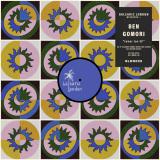
Balearic London's very own Ben Gomori presents his first extended play since his 2024 debut album 'Collapsing Time', collecting an array of sensual sounds across four tracks. 'It's Always Sunny Above The Clouds' is a punchy collaboration with German powerhouse Lauer, powered by bright piano and synths paired with '80s acid house drums and a thick melodic bassline. 'Mucho Gusto!' goes full Italo, bouncy energy matched to an anthemic horn sample. 'Fun As Fk' makes great use of rising star Caio Cenci's infectious guitar licks over a phat-bottomed groove and camp '80/90s sample synths, and 'Inner Luv' slows the tempo for a chuggy flamenco-flecked bliss-out.
11
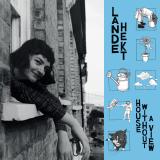
In Lande’s words: “It’s a daydreaming song about wanting a life of excitement and adventure rather than a dull and ordinary life - one where people underestimate you and belittle you. And where you’re forced to buy into capitalism and become a pathetic, losing player in a game that you hate. I’d rather escape and live in a queer space fantasy and be brave.”
Available on limited turquoise vinyl and digipack CD
It is with both pride and excitement that we announce the reissue of ‘House Without A View’, the out-of-print second album by singer-songwriter Lande Hekt – the first of a three-part reissue series on Circuitry, with ‘Going To Hell’ and ‘Gigantic Disappointment’ (first time physically) to follow in the coming months.
With a new album ‘Lucky Now’ released on Tapete in January, supported by an extensive spring UK tour (dates below), Lande’s contemporary twist on the classic C86 indie sound - with a queer feminist punk identity lyrically explicit throughout – is drawing in an ever-growing audience of devotees, such is the consistent quality of her songwriting, and the personality within.
The opening track of the album is ‘Half With You’ which “is about growing into yourself as a queer person, and enjoying who you are after not enjoying it for so long,” says Lande. ‘Cut My Hair’ is about how her relationship with her gender has changed over the last few years, becoming more comfortable in herself and understanding more about what makes her happy. “It’s also about how easy it is to not talk to people when you’re struggling, which is something I did for a long time,” admits Lande.
The title track of ‘House Without a View’ deals with childhood trauma and how events of our formative years “affect us so much into our adult lives and are intrinsic to our personalities and the way we cope (or don’t) with life and relationships,” says Lande. Although there’s darkness and sadness within the record, there’s also some shining beacons of positivity and a light-hearted side, albeit with a side of frustration. ‘Lola’ was written about Lande’s cat shortly after she came to live with her and her girlfriend. “She’s the first pet I’ve ever had and I wasn’t quite ready for how hard it would be to not be able to verbally communicate with her. I worried constantly that she was depressed because all she did was sleep, but my girlfriend assured me that that was regular cat behaviour.”
APRIL 2026 DATES: 4th Cardiff/5th Trowbridge/6th Penryn/7th Portsmouth/9th Ramsgate/10th Cambridge/11th Norwich/12th Nottingham/13th York/19th London/20th Brighton/21st Bristol/22nd Exeter/23rd Manchester/24th Sheffield/25th Oxford

auch erhältlich
Tape / Cassette[11,47 €]
You can't put Bebe Rexha in a box. From her Grammy-winning songwriting roots on Eminem's "The Monster" to global chart-toppers with David Guetta and Florida Georgia Line, Rexha has established herself as a premier musical chameleon. With her latest project, Dirty Blonde, she officially enters a new era as an independent powerhouse. Now signed to EMPIRE, the Brooklyn-born star has crafted a 13-song "genre kaleidoscope" that serves as her first-ever visual album, representing a total creative rebirth and a departure from the major-label system she's known since she was a teenager.
Recorded across London, Tokyo, and Europe, Dirty Blonde captures the energy of Rexha's global travels. The project seamlessly blends heavy-hitting dance floor anthems with deep, personal storytelling. With the lead single "New Religion" she takes us straight to the club by reimagining the iconic dance record "Insomnia" by Faithless. On "Tokyo," she explores a drum & bass pulse inspired by a late-night rendezvous in Japan, while "Cike Cike" (produced by long-time collaborator DJ Snake) sees Rexha embracing her Albanian heritage by mixing traditional linguistic roots with modern 808 basslines.
At the emotional core of the album is the lead single, "I Like You Better Than Me." The track strips away the pop-star veneer to tackle themes of insecurity and self-scrutiny, blending raw lyrics with a pop-rock edge. From the Jersey-bounce-meets-country vibes of "Drink and a Little Love" to her vulnerable reflections on fame, Dirty Blonde is a celebration of an artist who is finally playing by her own rules. As Rexha firmly asserts, "The old Bebe is dead," leaving behind a focused, stronger creator who is making the music she truly loves.

auch erhältlich
Vinyl[20,80 €]
You can't put Bebe Rexha in a box. From her Grammy-winning songwriting roots on Eminem's "The Monster" to global chart-toppers with David Guetta and Florida Georgia Line, Rexha has established herself as a premier musical chameleon. With her latest project, Dirty Blonde, she officially enters a new era as an independent powerhouse. Now signed to EMPIRE, the Brooklyn-born star has crafted a 13-song "genre kaleidoscope" that serves as her first-ever visual album, representing a total creative rebirth and a departure from the major-label system she's known since she was a teenager.
Recorded across London, Tokyo, and Europe, Dirty Blonde captures the energy of Rexha's global travels. The project seamlessly blends heavy-hitting dance floor anthems with deep, personal storytelling. With the lead single "New Religion" she takes us straight to the club by reimagining the iconic dance record "Insomnia" by Faithless. On "Tokyo," she explores a drum & bass pulse inspired by a late-night rendezvous in Japan, while "Cike Cike" (produced by long-time collaborator DJ Snake) sees Rexha embracing her Albanian heritage by mixing traditional linguistic roots with modern 808 basslines.
At the emotional core of the album is the lead single, "I Like You Better Than Me." The track strips away the pop-star veneer to tackle themes of insecurity and self-scrutiny, blending raw lyrics with a pop-rock edge. From the Jersey-bounce-meets-country vibes of "Drink and a Little Love" to her vulnerable reflections on fame, Dirty Blonde is a celebration of an artist who is finally playing by her own rules. As Rexha firmly asserts, "The old Bebe is dead," leaving behind a focused, stronger creator who is making the music she truly loves.
- A1: Al Lark
- A2: Premier Contact
- A3: Verba Aliena
- A4: Breach
- A5: La Baleine Et Le Musicien
- A6: Speaker
- A7: Caudale
- A8: Cap Lahoussaye
- B1: Insomnia
- B2: Zodiac
- B3: Lingua
- B4: Breathe In Feat. Yael Naim
- B5: Megaptera Novaeangliae
- B6: Panimal
- B7: Try Again
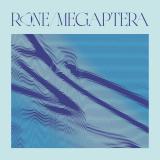
MEGAPTERA, the scientific name of the humpback whale, is also the title of the new album by French producer and composer Rone.
Born from an ambitious film project, the record was largely composed at sea, off the coasts of Brittany and Réunion Island, using a modular synthesizer and melodic sketches developed for an almost unreal proposition: attempting to resonate with whales through music.
Following Room With a View—a soundtrack to a performance created with the alternative dance company La Horde, exploring collapse and rebirth—Rone continues his investigation into new imaginaries. If that earlier work emerged from reflections on ecological, social, and technological tipping points, MEGAPTERA marks a shift: away from the city, toward the sea.
Gradually, he moved away from performance toward a more craft-based approach, extending his practice beyond the studio into a wider space of listening, exchange, and fieldwork. Early footage of sailors broadcasting his work into open water—seemingly answered by whale presence—circulated online, generating fascination, but also a growing unease for the artist regarding what these projections might imply.
This tension became the starting point for a longer period of field experimentation, developed in dialogue with scientists, environmentalists, sailors, and bioacousticians. The resulting 15-track album reflects this open-ended inquiry — not only into whether human-made sound can reach whales, but also into how this process can shape a new form of electronic music, and open it towards new deep-sea soundscapes.
Rather than seeking imitation, Rone works with reduction. Drawing on research into cetacean vocalisation, he pares back his language—focusing on frequency bands, repetition, and suspended structures. Minimalism appears less as reference than as natural convergence.
8
Damian Dalla Torre returns with People Pleaser, a record shaped by movement, collaboration and an ever-deepening relationship with sound as environment.
The Leipzig-based multi-instrumentalist, composer and producer first found wide attention with his 2022 debut Happy Floating, and his subsequent album I Can Feel My Dreams was named the #1 Contemporary Album of 2024 by The Guardian, an accolade that broadened his audience and deepened confidence in his evolving voice. That second album, written between Europe and South America, opened unexpected doors and took Dalla Torre to stages across New York, Japan and Italy. “When you release music, it’s very intimate,” he reflects. “You show your emotions pretty raw. I was kind of scared. But getting so much positive feedback gave me a lot of self-confidence to try out more.”
People Pleaser begins in that quiet shift of confidence.
The title stayed with him for months before he committed to it. “It was a working title for a long time,” he says. “I didn’t actually think I would use it. But this term also felt somehow relevant in connection with the phase of self-negotiation during the development process. Some aspects are related to pressure, others are positive.” The ambiguity felt right. Rather than presenting it as a statement, Dalla Torre leaves it open, an invitation rather than a confession.
At the centre of People Pleaser is collaboration. Guitarist Bertram Burkert, whose playing stretches from classical delicacy to electric abstraction, joined Dalla Torre in the studio for an intensive three-day session, recording a wide palette of textures that would become the backbone of the album. Vocalist Laura Zöschg, a key live collaborator, harpist Babett Niclas, organist Felix Römer, tape experimentalist Markus Rom, marimba and vibraphonist Volker Heuken and Japanese artist Manami Kakudo also contribute, creating a sound that feels intimate yet expansive.
8
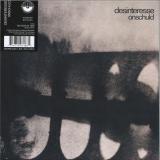
Desinteresse releases their second album Onschuld through Fabrika Records on September 9, 2025.
Desinteresse is a Dutch Coldwave act consisting of Bart Vranken (bass), Joppe de Swart (drums), and Sem van den Munckhof (vocals/synth/guitar). Formed in late 2022 as a duo, Bart and Sem released their debut album Voor Altijd in April 2023 and the EP Ik Wil Dood Als Ik Het Vergeet in November 2023, both on cassette through their own label DECADENCE. With the addition of Joppe in early 2024, they released their first work as trio in August 2024, the 7” single Grijze Dromen.
Desinteresse produces their music using original vintage equipment as a deliberate form of artistic expression and identity. Their live performances are a melancholic, but mesmerizing affair, where music and vocals amplify the weight of their message, emphasizing the non-existential and abandoned emotions that define their sound. An absolute delicacy for fans of Fad Gadget, The Normal, Joy Division and early work from The Cure.
The titles and lyrics are in their native Dutch. Onschuld (also the title of the opening track) translates to ‘innocence’. With other titles such as Niets Te Zeggen (nothing to say), Brekend Glas (breaking glass) and Grizje Dromen (grey dreams), this pensive album could be a good-bye to innocence, but it’s certainly the ideal companion for ruminations on gloom.
8
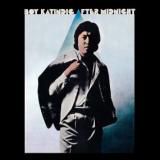
Jazz-fusion, disco-funk, Latin jazz and batucada rhythms get the Filipino treatment onAfter Midnight, the sublime second album from keyboardist Boy Katindig. Originally released in 1980, After Midnight draws heavy influence from soul and funk contemporaries in the US as well as Latin America, in particular the famed Brazilian percussionist Paulinho da Costa.
It’s a testament to his musical prowess that Katindig weaves effortlessly between styles and tempos. His reverence for Paulinho da Costa extends far, with covers of several songs from the latter’s 1979 Happy People album. This includes slow-burner ‘Déjà Vu’ written by Isaac Hayes originally for Dionne Warwick; on the Filipino instrumental version, local legends Jun Regalado and Roger Herrera (from Regalado’s ‘Pinoy Funk’ single) are reunited on drums and bass respectively.
But Katindig’s original compositions hold just as much weight and unique personality: title track ‘After Midnight’ opens with a sultry funk serenade reminiscent of The Isley Brothers, and quickly transforms into a catchy, blistering, saxophone chorus that brims with swagger. Hidden B-side gem ‘Got The Need’ is an uptempo tribute to batucada that would not be out of place in a jazzy house set, and boasts increasingly elaborate and psychedelic solos from Katindig on keys and Ben Concepcion on soprano sax.
Meanwhile, ‘Love Till the End of Time’ is a masterclass in instrumental disco funk, penned by the prolific Greg Phillanganes who at that same time was writing for many of the greats including Chaka Khan, George Benson, Stevie Wonder, The Jacksons and Cheryl Lynn.
This album is lovingly reissued by Sama Sama Records, a boutique label from DJ and collector Norsicaa, who ran the esteemed Soundway Records for 8 years and released the compilation Ayo Ke Disco in late 2024.

- A1: Independent Woman (Part 1)
- B1: Independent Woman (Part 2)
Back on Celestial Echo Records with a true modern soul classic — Jan Jones “Independent Woman”, finally given the treatment it deserves.
A record that’s been circulating in DJ sets and collector circles for years, often via bootlegged pressings as the originals are incredibly rare, this is the first fully licensed reissue, presented properly and with both sides intact - something the bootleggers didn’t do.
A-side Part 1 delivers the track in its purest form — tight, uplifting, and driven by that unmistakable modern soul groove. On the flip, Part 2 stretches things out into a longer, more open version, letting the arrangement breathe and giving the dancefloor the 6 minutes it deserves.
Musically, it sits right in that sweet spot for us — rich vocals, warm keys, and a rhythm section that just grooves. It’s one of the ultimate modern soul tracks.
Licensed officially, as always. Celestial Echo is here to put proper soul records back into circulation — respectfully cut, properly pressed, and ready to play.

12
Irlam's dastardly duo are back with another bonza bucket of bass, breaks and badness as they fire up Studio Krust for another high octane session.
Sure to top the Fairground charts and further enrage the Hell's Angels, 'Synthetic Stupidity' sees the pair unleash their full force unabashed, as they hit a purple patch full of new found and frankly quite surprising productivity (rumours of a European-wide sputnik shortage are the likely catalyst).
Fractionally distilling their many collective years of dance music experience into 12 refined pieces of advanced club kinetics that skirt between the syncopated intricacies of breakbeat science and maxed-out 4/4 propulsion.
More hyped-up vox & frantic sampling, more tension, tons of one-finger keyboard melodies, and - as usual - moments of sonic tomfoolery to flummox the assumers.
With their drug debts paid off and a forced clarity of mind, 'Synthetic Stupidity' is a more expansive, deeper and unhurried project; allowing Bosco and Metrodome the space and time to truly deliver the zenith of their sound.
This, is DJ ABSOLUTELY SHIT!!!

- A1: Echi Tribali 2 01
- A2: Danza Della Pioggia 2 31
- A3: Totem 2 51
- A4: Danza Della Morte 3 14
- A5: Rito Della Fecondazione 2 45
- A6: Danza Di Guerra 2 29
- B1: Rito Nuziale 1 55
- B2: Iniziazione 2 09
- B3: Rito Del Sole 1 14
- B4: Invocazione 1 07
- B5: Rito Della Fertilità 1 23
- B6: Danza Dello Stregone 2 28
- B7: Rito Di Propiziazione 2 35
- B8: Adorazione 1 58
14
“Alle Sorgenti Delle Civiltà Vol. 3 - Africa, Australia, Nuova Zelanda” (1971) is the third and final chapter of a triptych of folk-based sound recordings released by Folkmusic. The album contains a total of fourteen tracks by Braen and Raskovich, i.e. the a formidable multi-instrumentalists Alessandro Alessandroni and Giuliano Sorgini, each grappling with seven different compositions characterised by a tribal mood. Among the grooves of this record, repressed on vinyl for the first time by Musica Per Immagini, it is possible to discern an in-depth study of one of those forms of popular culture referring to a specific geographic area, comprising the types of traditions often handed down orally and concerning knowledge, beliefs, fairy tales, legends, myths, narratives linked to the dimension of the fantastic, customs and traditions, namely music. Festivals and propitiatory rites, fights and dances, magical and sacred representations were all expressions of life whose sound and rhythm contributed to an appropriate description of the environment. Alessandro Alessandroni and Giuliano Sorgini have chosen some of the most significant musical characters that even belong to specific ethnic realities scattered across two distant continents, where the use of some of the typical instruments has favoured the realisation of sonorities of considerable interest.
5
auch erhältlich
Vol.1[18,70 €]
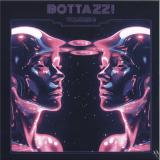
The Bottazz! logbook continues.
With this second chapter, the journey leads us through long-lasting psychedelic suites, towards unexplored territories, between funk, cinematic hallucinations, and synth lashes.
The recipe remains the same:
Live recording, involvement, and interplay between the parts in a dialogue that is never predictable and courageously open to forbidden, and therefore even more ambitious, lengths.
A cathartic album in which to pleasantly lose yourself, only to find yourself different, changed, and at peace.
Enjoy the listening experience and happy browsing.

4
NYC's Afro-Latin house player Doug Gomez, who was also half of the defunct Drrtyhaz, leans into club weight and musical detail on Signals 3, a confident new drop built on persuasive rhythms. 'The Space Between Us' introduces his vocal production with Fe Malefiz, who has a sultry, stylised tone that drifts between deep house and Afro-soul with great control. 'The Red Room' shifts gears into peak-time territory with a groove shaped by late-night exchanges with DJ Loka. Closing cut 'To Do Good Na Em Dem Pay' widens the palette further, pulling from Afrobeat's restless rhythmic energy and layering in some bold and brassy horns.

- 1: Play My Guitar
- 2: No Sleep
- 3: Believe
- 4: Guesthouse
- 5: Spider
- 6: Recoil
- 7: Something Has To Change
- 8: Dead Forever
- 9: We Don't Exist
- 10: Sick / Relapse
- 11: Famous Girl
- 12: Halloween
- 13: Sister
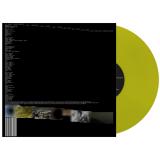
Neues Farbformat von "ghostholding", dem Debütalbum des gitarrenbasierten Alternative-Bandprojekts venturing der US-Künstlerin Jane Remover, das von der Fachpresse abgefeiert wurde. "Das neue Album der Künstlerin aka Jane Remover ist voller ausufernder, furchteinflössender Schönheit, sowohl kompositorisch straffer als auch strukturell rauer als ihre früheren Ausflüge in den Rock." - Pitchfork. Limitierte Auflage auf orchideenfarbigem Doppelvinyl.

12
Great Day is one of the very best albums on the Music De Wolfe label and certainly one of the most sought after library records, full stop. It's been sampled by such heavyweights as Madlib, LTJ Bukem, El-P and The Alchemist (among many others). You likely already know all this. If you don't, get to know. One listen through and the £350 asking price for a VG copy starts to all make sense...
Originally released in 1972, it's credited to Music De Wolfe legends Simon Haseley (real name Simon Park) and "Peter Reno" (a collaborative alias used by composers Clifford "Cliff" Twemlow and Peter Taylor) Confused? No matter. It's one of the most consistent libraries you'll ever hear, packed with heavy blaxploitation-esque drama-funk break themes.
It opens with the feel-good, breezy piano beat number "Little Big John" before switching up to modern sweeping orchestral with heavy drums on the warm, deeply emotive "Summer Friend". Total highlight "Hammerhead" is as heavy as you'd want, from a track so-titled. It's a driving, imposing, orchestral funk-rock monster, famously used by The High & Mighty for their classic "Dirty Decibels" and, also, it was used as the backing for Beyonce's ace "Woman Like Me".
Up next, "Crimson" is melodic, plaintive and moodily introspective; a soft, oboe-enhanced instrumental of delicate beauty. Again, ace beats and breaks abound. The expansive title track, "Great Day" is melodic and bold; a horn-fuelled, mid-tempo rhythmic workout which builds to rather big end. Rounding out this first side, "Hard Crust" ups the ante with thrilling wah-wah funk-rock, a dramatic, pounding and aggressive thriller. Killer!
Side B opens with the steady, stealthy crime-funk of "Highball" before segueing brilliantly into the Hammond-laced relentless flute-funk of the driving "Bora". The powerful wah-wah wonderful "Hold Back" is haunting orchestral funk-rock, sampled by Madlib, El-P, Rakim, Sean Price and The Alchemist. It's easy to see why. Swaggering and staggering.
The cop show funk of "Silver Thrust" is fast, purposeful and persistent. Is it a cover version of the godlike "Stepping Stones" from Johnny Harris's Movements album? Either way, with up-tempo drums, bongos and flute you're going to be thrusting all night. The dynamic "Convoy" is a brassy, organ-fuelled sports-soundtrack b-boy breaks monster. Super Bowl Soul! Essential. To close out this quite extraordinary set, the insistent "Barracuda" presents dramatic rock feels over a persistent funky flute beat. It was sampled by LTJ Bukem for his classic "Sunrain" from 2000.
The audio for Great Day has been meticulously remastered by Be With regular Simon Francis, ensuring this release sounds better than ever. Cicely Balston's expert skills have made sure nothing is lost in the cut whilst the records have been pressed to the highest possible standard at Record Industry in Holland. The original, iconic sleeve has been restored here at Be With HQ as the finishing touch to this long overdue re-issue.
11
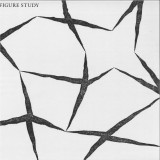
Figure Study is the Manhattan-based duo of Nathan Antolik and April Chalpara. They formed in 2009, after meeting through the Wierd Records weekly party, where they would play their first concert soon after. While their debut 7" contained two songs recorded in 2009, this full length contains all new material recorded throughout the past year.
For their debut self-titled album, Figure Study utilizes a carefully tailored set up of vintage analog synthesizers and drum machines. Figure Study creates a lush sound where haunting vocals echo over dark melodies that reflect an isolated and disintegrating world. Songs flux between dissonant dance numbers and more sparse, somber compositions, each carrying a sense of urgency and modernism. Figure Study's sound includes influences from such early underground artists as Kirlian Camera, Nine Circles, and The Actor.
The album was recorded in their small Chinatown studio using a sparse set-up of analog synthesizers, drum machines and sequencers. It was mixed at The Wave Lab in Brooklyn by AJ Tissian and mastered for vinyl at Fantasy Studios in Berkeley by George Horn. Each LP is packaged in a specially designed jacket and includes an insert with lyrics. Figure Study draw their own model using shapes and forms from the synthetic landscape.
