"First Move" is the debut album from Luna Soul, founded by the German-Spanish duo Lisa Michèle Lietz and Jordi Arnau Rubio.
Lisa Michèle Lietz comes from Schwerin, learned the guitar from Ernst Ulrich Deuker, the bassist of German NDW heroes Ideal, and is a studied musicologist. Jordi Arnau Rubio was born in Barcelona. He left Spain as a teenager to work as a professional dancer throughout Europe. As a composer, Rubio draws inspiration from blues, jazz, soul and funk. They both started Luna Soul in 2019 and have since toured extensively through Germany, Spain and France. The ten songs from "First Move" carry the energy of countless live performances and were composed with sensitivity by Lietz and Rubio. Joel Sarakula, Daniel Fell and Paul Milne co-worked as songwriters on some of the songs. Sarakula also took over the production and gave the album its finishing touches.
The opener "Grow" is a heartfelt ode to resilience and self-discovery, before "No Way Home" paves the way to the dance floor with subtly interwoven funk and celebrates freedom and carefree joie de vivre. The first single "1979" gives the album a Mediterranean touch. The Spanish guitar provides an authentic and refreshing sound. With "Lights Out" and "City Lights," "First Move" delves deeper into the 1970s with a mood of nostalgia, optimism and urban promise: "The nighttime city skyline is a great metaphor for navigating through emotions when composing," Lietz and Rubio explain. "In our loneliness, we don't walk alone" it says in "City Lights": "We firmly believe that in moments of pain and coping with loss there are silent, invisible connections that carry us along, especially in challenging life situations, and provide a grounding. They provide support and hope in our increasingly digitalized world."
"Take yourself higher, you know you gotta do it" – that's the powerful message in "Hold On", the appropriate opener on the second side of the vinyl LP. With "Winterdance" and "Obvious" the album effortlessly glides through the sound aesthetics of the late Seventies and early Eighties.
"Just For Us Tonight" and "One More Night" finally sum up Lietz and Rubio's central credo: "It's about surrendering to the fascination of the moment," explain Luna Soul, "finding comfort in the midst of chaos and to celebrate those fleeting sparks of interpersonal connection that drive us and make us alive."
Buscar:v light
Liner Notes by Martyn Pepperell
A collection of ten hypnotic guitar renditions that dive deeply into the traditional compositional musicality that underpins Harakami’s hallucinatory beatscapes before reconsidering them under a fresh, innovative and engaging new light. River: The Timbre of Guitar #2 Rei Harakami signals a new level of awareness and understanding of both Rei Harakami’s significance and Ayane Shino’s undeniable talent.
VITAL SALES POINTS:
In 1996 Tokyo-based label Sublime Records received a cassette demo from Rei Harakami, a 26-year-old Japanese experimental filmmaker, and musician. Within one year Harakami’s debut LP ‘Unrest’ was released. As the 21st century dawned, Harakami was becoming a critically acclaimed figure, and there was a feeling in Japan that Harakami would be an inevitable successor to such luminaries as Haruomi Hosono and Ryuichi Sakamoto. Sadly Harakami passed away at age 40 in 2011, leaving behind a musical legacy that seemed to deserve more recognition. A fitting tribute now comes from the incredibly gifted classical guitarist Ayane Shino. Continuing her album series ‘The Timbre of Guitar’ (the inaugural release of which was ‘Sakura’ - a cover album of Susumu Yokota's seminal album, released through the Swiss label, Mental Groove Records in 2021), she now presents ‘River ???? : The Timbre of Guitar #2 Rei Harakami’. Ayane has reworked some of Harakami’s standout tracks into an album of tranquil yet complex compositions helping to build a new level of awareness and understanding of Rei Harakami’s significance. A collection of ten hypnotic guitar renditions that dive deeply into the traditional compositional musicality that underpins Harakami’s hallucinatory beatscapes before reconsidering them under a fresh, innovative and engaging new light.
In the years that followed Harakami’s untimely passing, Sublime Records continued to sign and support new artists emerging from Japan’s rich and fertile electronic music scene. This eventually led to a meeting with gifted classical guitarist Ayane Shino in 2020. Although a new name within electronica, Shino’s classical resume is impeccable. She has performed with a range of prestigious orchestras in concert halls and at music festivals across Japan, Europe, and South America while playing classical guitar for numerous animations, movies and television commercials and holding various educational roles. These days, she also hosts the Tokyo Harmonics radio show, which is syndicated through Hyogo prefecture’s Ashiya Radio and TJS Radio in Los Angeles.
During her time completing a masters at Tokyo’s University of the Arts, Shino became fascinated by Brian Eno, Aphex Twin, Oneohtrix Point Never, Steve Reich, and, closer to home, Harakami and Susumu Yokota. ”I found myself in an environment where I was surrounded by fellow students who produced computer music, live electronics, and installations,” she explains. Following her meeting with Sublime, Hideoki Amano, the producer and owner of Musicmine, the parent company of the label, asked Shino if she would be open to transcribing and recording an album of covers of the late, great composer, producer and DJ Susumu Yokota’s music in incorporate into then-upcoming events commemorating the 5th anniversary of his death and reissues of his past works. “Yokota made music with the Roland TB-303 bass synthesizer and samplers, not in a way like a conventional instrumentalist, so I was aware it might be more of a challenge for her,” Amano explains. Fittingly, Shino was up for his suggestion, leading to ‘Sakura: The Timbre Of Guitars #1 Susumu Yokota’. Song by song, Sakura highlighted Shino’s free-flowing playing and prowess at translating electronic music into classical guitar shapes.
After considering Harakami’s background as an instrumentalist, Amano felt revisiting his catalogue should be the next step for Shino. Well-versed in how often classical versions of electronic music tend to fall flat, he asked her to examine Harakami’s songs closely, select the musical phrases suitable for guitar and create arrangements that would sound interesting to music listeners with a deep engagement with ambient, techno and electronica. In Harakami’s discography, Shino discovered “a sense of simplicity, warmth, moisture and a floating sensation.” “I was gripped by his songs, which had an array of sounds that gave me a sense of mystery but also coexisted with a sense of familiarity,” she explained. Moving beyond his official releases, Shino began digging through YouTube to find live recordings, radio appearances and obscure outtakes. Within her mind’s eye, imagining playing his songs on guitar was effortless. On her approach to the album, Ayane explains: “For this album, I succeeded in spinning some exquisite, silk thread like delicate tones, interwoven with human warmth, gentleness and simplicity. And I was also able to rework Rei Harakami's distinctive sound with a floating feel to it and transform it into a very classical guitar sound. I hope many people will be able to receive this group of sounds that I created in this album that I played with all my heart.” A record of limitless innate beauty, ‘River ???? : The Timbre of Guitar #2 Rei Harakami’ is a delicate and thoughtful body of work. A true masterclass in deconstruction and subsequent rebuilding, and an eternal lesson in how the art that we leave behind can outlive us all.
The Situation collective headed up by Mr Mulatto and Frank Situation return with their much-anticipated new album ‘Audio Proxemics’. Across nine sumptuous tracks it explores a warm array of sounds from jazz-flecked deep house to soulful nu-disco with guests like Javonntte, Faze Action's Robin Lee and more. Situation is a collective of DJs, producers, editors, and musicians who hail from the five valleys of Stroud in the UK. Between them they have deep roots in electronic music and have been entrenched in the scene on many levels from hosting their own events, organising free parties, releasing everything from deep house to tech under several aliases and, since 2014, have established Situationism Records with cultured sounds from the likes of Ashley Beedle, Greg Wilson, Dr. Packer, and more.
This accomplished new album has been two years in the making and began with three tracks recorded by South African vocalist Venessa Jackson while she was on tour in the UK. As well as Venessa’s sweet tones, vocalists from across the globe contribute alongside some core Situation members: James Payne, Phil aka Dr Keys and Jon Gray aka BitterSuite who take care of bass, arrangement, production, and guitar.
It’s a timeless record that spans everything from jazz to funk with real musicality and standout instrumental skills lighting up each track. Underground favourite Javonntte adds deep and smoky tones to the flute laced and sunny house sounds of 'Bullit' while 'Never Taken A Weekend Off' is a lush broken beat sound with radiant synth leads and vocal hooks that echo classic Brit funk. 'Mrs Donovan' is a more club-ready sound with dazzling keys dancing over dusty house drums and 'Fairy Godmother' is a gorgeous slice of disco house with vibrant strings from Faze Action's Robin Lee and an effortlessly cool acid jazz vocal. Add in 'Over & Over', a lovely jumble of chords, organic percussion and life-affirming horns, and the hip-swinging drums and expressive interplay of sax and synth on the uplifting 'Rodborough Groove' and you have an album perfectly suited to bright days and hot summer nights.
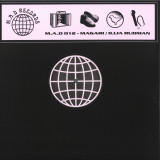
MAD012 has arrived! or as we’ve been referring to it the ‘M.A.D Garage’ EP. (as in Paradise Garage)
After receiving Magari and Ilija Rudman’s tracks within a short time of each other it felt like a perfect fit to pair them together. Both productions give a nod to the 80s House sound whilst expertly bringing the aesthetic up to date.
Magari has provided us with an eyes closed dub’d out groover and Rudman supplies a winding and weaving synthesised journey, giving a sonic glimpse in to his fully stocked studio.
It’s always been top of our list to work with the inimitable Mark Seven. His music is a staple of our sets and as many of you know, is somewhat of guiding light of our scene. Any fan of Parkway Records knows it’s always an exciting day when they announce something new, needless to say we are proud to present a Parkway Powermix on M.A.D.
Finally, our good friend, the extremely versatile Producer/DJ Manuel Darquart finishes off the record with a sublime rolling take on ‘Danceteria’. If somehow you didn’t know him already consider yourself informed.
In this post Sounds world, the boundaries of Post Punk have not only broadened but splintered. And over the course of (now) four releases, Index For Working Musik have seen to using the sprawling boundaries to great effect, flexing a polyglot of styles to convey the language of the moment. On Which Direction Goes The Beam, the murky, distant ambience that was 2023's Indexé has been fleshed out, incorporating everything from the Brian Aldiss laced, ground lightning shudder of Dome, to the chamber-like arrangements of This Kind Of Punishment. There's even a candle flickering in the window for Think Fellers Union Local 282 that warmed these ears. And if you're a fan of the great Dutch band, Trespassers W (who isn't?), the collective consciousness IFWM enunciates on here is a similar testament of a band growing more sure footed in the pursuit of not only knowing all the ways in, but carving a few of their own on the way out. And it's discerning releases like Which Direction Goes The Beam that keep us in the hunt. Long may they forge. - Tom Lax. RIYL: Brian Jonestown Massacre, Velvet Underground, TOY, John Cale, Wire, Dome
Running Back is delighted to introduce RB Studio Sessions, a new sub-imprint of music envisioned, recorded and fully realised at Running Back’s in-house studio.
Built on the promise of unfettered creative freedom and aided by agreeable local autobahn connections in the Hesse region, the RB Studio Sessions project is christened with the work of Running Back’s founder, chief dreamer, and Geschäftsführer, Gerd Janson.
For this debut edition, he is joined for a momentous jam by the new-school hero of the house, good friend and kindred spirit, Narciss.
Just as Running Back’s earliest releases dropped a stylus to preserve timeless ideals of club culture, the four tracks on ‘No Maze Like Heaven’ further this continuum by turning back the sonic clock just a decade or so. Picture, if you will, a nascent Narciss, youthfully club
hopping and deeply inspired by the selections of Gerd himself, alongside a selection of DJs coaxing the Panorama Bar blinds open with exquisite, mid-tempo precision.
As such, new light immediately floods in for ‘Chicco’s Chips’, which captures many of those irresistible elements—Italo-tinted synths, hooky vocals, and perfect percussion— regenerated with the wide-eyed, high energy of Narciss’s own solo productions. ‘Elka,
meanwhile, is a richer, deeper dish, masterfully interlocking multiple heavenly melodies under layers of optimistic analogue fuzz.
Narciss and Gerd then look to the Netherlands for further collaboration with one of electronic music’s best-loved vocalists and another fine producer, Coloray, who fills ‘Look For You’ with a yearning performance in the vulnerable, synth-pop tradition. Finally, ‘No
Maze Like Heaven’ builds on this mood and melody for a finale that hits the sweet spot between machine power and oh-so-human emotion.
Featuring labyrinthian artwork from the mighty Gasius., via a sleeve that appears to blend M.C. Escher with MC Hammer, ‘No Maze Like Heaven’ proves to be a divine foundation of RB Studio Sessions. For Narciss, “a memory they will cherish forever.”
For Gerd, a taxdeductible working lunch. For DJs and dancers? Four ebullient hits-in-waiting, sounding great and meaning more.
5-track vinyl-only release by Basse-cour label boss Decoq, delivering a raw, unapologetic slice of hard techno. Drawing light inspiration from the early '90s rave scene, this EP channels the gritty energy of industrial warehouses and the euphoria of underground dance floors. Thunderous kicks, gritty textures, hypnotic rhythms, haunting synths, and relentless grooves collide in a collection that pays homage to the roots of rave while keeping its sights firmly set on the future: this is a must-have for selectors who thrive on pure, unadulterated energy.
A visceral journey into the heart of techno’s rebellious roots and a pure dance floor ammunition for true heads.
Vinyl- Only Ep in 5 tracce firmato da Decoq, boss e anima dell’etichetta Basse-cour, che offre una cruda e inarrestabile dose di hard techno. Vagamente ispirato alla scena rave dei primi anni '90, questo EP incanala l’energia ruvida dei magazzini industriali e l’euforia delle piste da ballo underground. Casse martellanti, texture grezze, ritmi ipnotici, sintetizzatori inquietanti e groove implacabili si fondono in una raccolta che rende omaggio alle radici del rave, guardando al contempo verso il futuro.
Un must-have per i selector che vivono di energia pura e incontaminata: un viaggio viscerale nel cuore ribelle del techno e una vera arma da dance floor per gli intenditori.
Christian Kleine continues to unearth long-lost transmissions with Electronic Music From The Lost World: Vol.2 - another batch of pristine artifacts from his personal DAT archive. Much like its predecessor, this release serves as both a time capsule and a reminder of Kleine’s effortless blend of melodic warmth, intricate rhythm programming, punk influences, and a deep-rooted love for the fringes of electronica.
Where Vol.1 felt like an invitation back to the late ‘90s, a time when IDM was still an evolving conversation, this second volume extends the dialogue, revealing more of the sonic experiments and fully-formed pieces that never saw the light of day. Tracks recall specific moments from Kleine’s time living in Berlin, an era of minimal comforts but maximal creativity, where all that really mattered was that the PowerPC, sampler, and synths kept running. This period of introspection, coupled with the musical freedom afforded by cheap rent and late-night school classes, shaped the deeply personal and solitary sound of these recordings.
Visually, Vol 2 shares its origins with the first volume, as Midori Hirano’s stark Berlin photography forms the foundation, and Noah M / Keep Adding pushes the imagery into a brighter, more reflective final space. Final touches remain in familiar hands, with LOOP-O on mastering and lacquer duties, bringing new life to Christian’s OG DAT recordings.
And much like the classic City Centre Offices era that shaped this sound and Kleine’s early career, this release nods to that legacy. A special limited 7” EP with two bonus tracks, designed in tribute to CCO’s iconic DIY aesthetic, will be available on release day direct from the label’s Bandcamp.
Blank Code is a Detroit, USA techno outfit that have released music by artists like Bas Mooy, Mike Parker, Brian Sanhaji, DJ Hyperactive, Drumcell, and many more.
The newest Blank Code release is Decoder with his 'Distant Beings' EP, a fellow American from Dallas who has gained many devoted supporters from having releases on Jeff Mills' Axis Records, Amotik Records, TWR72's Float, Edit Select Records, Molecular Recordings, and Science Cult, amongst others.
Beginning with "Missing Sector," a dystopian and airy soundscape of captivating rattlesnake hisses and muted tones of melody and suspense amidst a stuttering kick pattern.
"Strange Interaction" follows with an abstract approach overall, but using a solid, rhythmic beat as a pulsing constant. Static crackles create mesmerising textures and light tom drums are met with wandering waves of analogue whispers and skipping hats.
"Farther" introduces deep and looping modular frequencies that dance around in a sci-fi aesthetic. This sublimely hypnotic track has an ethereal quality of patience and draws influence from dubby and atmospheric styling.
Finishing with "Elevation," it instantly has an experimental vibe that seems mysterious and menacing. Cyclical mid tones create a sonic suction before phasing pulses add even more tension to this esoteric adventure.
- A1: Chlär - Cipe Ortni
- A2: Hemka - Rich Sex
- B1: Rødhäd - Wormhole Situation
- B2: Jpsrv35 - Soulsearch
- C1: Ignez - A Love Dream
- C2: Lobster - Whispers Of The Muse
- D1: Quelza - Automated Assistance Program
- D2: Beste Hira - Babe2
- E1: Alarico - Rugiada
- E2: Setaoc Mass - Blink
- F1: Cleric - Kluis
- F2: Grace Dahl - The Green Room
- G1: Oscar Mulero - Into The Light
- G2: Phil Berg - Skid Row
- H1: Blanka - After Making Love
- H2: Yanamaste - Cello
- I1: Stef Mendesidis - License To Fly
- I2: Lars Huismann - Nebula
- J1: Annē - Dusk
- J2: Chontane - Tisash
- A1: Astras Theme
- A2: Clearly Packing
- A3: Inspire (Draft)
- A4: Celebrate Some Time
- B1: Just One Bump
- B2: Inspire (Afterthought)
- B3: Whos The Kid ?
- B4: Radicalise
- B5: Living In The Future
- C1: Shine Your Light
- C2: Cyberfunk
- C3: Inspire (Deluxe)
- C4: Lifestyles Of The Hip And The Crazy
- C5: Radicalise (Urself)
- D1: Wavy
- D2: Baby Its U
- D3: Sylvester
- D4: Midas Touch
At the heart of this double album, and amid the intense internal struggle between creative instinct an artistic reasoning, Ziggy has identified two key themes: Inspire and Radicalise. It is within this duality that the 15 tracks of this new work, recorded between Berlin and London throughout January 2024, take shape. Throughout its creation, the crew enlisted a familiar pallet of materials, seeking those obscure and vintage music-making machines, meeting a myriad of percussion and drums with the new addition of electric guitar as the band ventures into disco / highlife inspired territories. bring this ambitious project to life, Ziggy enlisted a team of forward thinking musicians across Europe and the UK alongside old friends and collaborators from the grassroots in Melbourne, Australia: Lewis Moody (Energy Exchange Records), Szabolcs Bognar (Abase), Eric Owusu (Jemba Groove), and Tom Varrall (Jamie Cullum) form the core rhythm section alongside a hefty list of guest appearances (from the likes of Oscar Jerome & Tom Driessler) making this truly the most ambitious and diverse incarnation of ZFEX to date.
Emily Jeanne presents quỳnh, her new label founded on psychedelic club music expressions. Call Of The Sea is the debut, 4 tracks unfurling experimental dancefloor movements of half step hypnosis and deep percussive explorations.
Loosely nicknamed “queen of the night” in Vietnamese, quỳnh thrives as a nocturnal flower. It serves as a light-hearted metaphor for Emily Jeanne and her authentic approach to late-night electronic music. Previous releases for PM+ explored devious peak time sounds, but her new label quỳnh launches with a fresh look. Its inaugural release Call Of The Sea showcases an adventurous new side to Emily, away from convention into something more ambitious and excitingly new.
Opener Wet Skin rumbles deep and quick with hypnotic fervour, plummeting kicks into its stark rotating abyss. Rolling taut, Count Me Out steps further with minimal guise as it moves sprightly on its reduced DnB dynamics. Đồ Sơn At Night unfurls differently, a change of pace where percussion and gurgling synths drift loosely down the track’s hallucinatory stream. Gone Water flexes stranger, its martillo polyrhythm transfixed heavily on the psychedelic chamber it inhabits. A fascinating first entry into the quỳnh canon from an artist in her finest form.
Red Pig Flower brings you her sensational debut album Practice Love, available on Sound Of Vast from 10th April. Her unique sound sits upon the apex of a three-sided pyramid. With Berlin, Tokyo and Seoul as the base, Red is a third culture kid, greater than the sum of her parts. The centre is filled with her incredible appreciation and knowledge of house and electronic music from every pin drop through history.
So taken with Red Pig Flower’s sound, Honey Dijon invited Red to her Southbank Centre show to play alongside her. Moxie loves her that much, that she invited Red to record a mix and to guest on her NTS show. Alan Fitzpatrick, and Just Her are amongst Red’s growing posse of followers.
Practice Love is a culmination of all of Red Pig Flower’s life experiences, brimming with her positive energy and an outlook on life of pure love. Red has collaborated with like-minded artists at every level: the music, the cover art and video all produced with talented friends, who get Red as the wonderful person she is and understand her vision. Her label partner and good friend, Knock in particular helped make Practice Love the incredible album it is. So intuitive is their musical symbiosis, they made 20 tracks and carefully curated and ordered nine of these, making an album of tracks that stand out on their own, yet flow perfectly as an album. Practice Love will make you feel joyous when you play it. By the end, you will feel like you know Red like a friend.
Practice Love kicks off with I don’t care, it makes you feel good: a dreamy, tribal mantra of a track that does exactly what it says on the tin. Next up is I Love To Dance. Red’s beautiful soft vocal is sweet yet poignant, leaving you in no doubt of her sincerity. Thirdly comes Feel Good Music. Are you getting a feel from the track names yet that this is an album of warmth and positivity? You can imagine this one at a Café Del Mar sunset, where those who get the spirituality of Ibiza come together, in the moment to appreciate the beauty of a sunset and understand that no matter how many you see, each is magical and unique.
The three tracks so far have taken you to twilight. The titular Practice Love takes you by the hand onto the dancefloor. There is a double meaning to ‘Practice Love’- The first is to make love your practice. The second is that you need to practice love to be able to become a practitioner of love. The video, shot by her friend Jelly, features Red Pig Flower in Brick Lane, London, wearing a little piggy mask and offering free hugs. The first passersby ignore her sign, but Red isn’t disheartened, spreading the right message, dancing with joy. Her optimism is rewarded, making peoples day better on a cold English afternoon.
Fifth track Sax and Drugs takes things a little sleazier, the beat is filthy and the synths are sexy. Your body starts to move to this one before your brain even realises. The incredible Declan McDermott joins on saxophone, the funkiest synths and Red’s sultry vocal washing your soul with Laurent Garnier inspired sunlight. On Thisiz House Music, again featuring Declan, Red takes you even further back. About Frankie Knuckles O’Clock, with a portal straight to 2025.
By now, you will agree with me that Practice Love flows so, so well. I Wanna Meet Somebody follows incredibly, continuing the feeling that if you close your eyes, you’re dancing with David Mancuso at the Loft. No Money completes this EP-within-an-album. Perfect vocal samples, valve synth riff and 808 drum patterns showing that producers as good as Red Pig Flower make it sound effortless. The best albums finish memorably and No Genre is one of those perfect finishers. Think Andrew Wetherall’s production on Screamadelica. The lights are up in the club, nobody wants to go home, arms in the air wanting more.
Red Pig Flower explains: Practice Love resonates deeply with me because house music has always been a sanctuary—a place for unity, joy, and self-expression. As a nomad and outsider, club culture and house music became my shelter. The cities I’ve lived in—Seoul, Tokyo, Berlin, and London and more—nurtured me and shaped who I am today. That’s why the cover, by the incredible Carlos Sulpizio features their skylines, and the album is multilingual, representing the diverse influences in my life.
Practice Love is like a meal that has been prepared lovingly. They always taste better. And there’s plenty more to come from Red Pig Flower. How was your appetizer?
Swedish artist Martinou crafts deeply immersive electronic music, seamlessly balancing weight and delicacy. His productions oscillate between hypnotic intensity and introspective warmth, always evoking a visceral response on the dancefloor.
After releasing on acclaimed labels like Nous’klaer, Turbo Recordings, and Mule Musiq, the Malmö-based producer now makes his long-awaited debut on Stockholm’s Studio Barnhus. His Linked EP showcases six meticulously layered compositions, where intricate rhythms intertwine with luminous melodies – ethereal synths drifting in and out of the grooves, shaping an atmosphere that’s both expansive and deeply personal.
With Linked, Martinou further refines his signature approach, crafting music that feels at once free-flowing and deliberate. It’s a record that invites deep listening yet remains primed for the floor – a testament to the Malmö maestro's knack for blurring the lines between club functionality and sonic storytelling.
LKDNV 10 EP - Various Artists
More than a year after its last compilation, Amsterdam’s Locked-in returns with a glistening selection of club-ready tracks further anchoring the label’s progressive groove while opening avenues to different sounds and scenes.
Blending minimal techno and ambient aesthetics, Hamburg’s Rupert Marnie opens up the A-side with “Half-Baked Spel”, a mysterious yet dancefloor-ready cut elegantly setting the tone. Norwegian house and techno DJ and producer A:G (Asgeir Giskegjerde) follows up with an escape into trance influenced sounds, delivering a playful, ambitious and infectious bopper. On the flip-side, Barcelona-based Aniano takes things one notch deeper offering a dimmed light minimal groover. With its moody atmosphere and catchy samples, the track gracefully hints at Perlon's catalogue. To close the journey, Frog Dog Records crew member Slacks from Philadelphia takes the listener apart with a very subtle emotional break composition, crafting an intricate and moving piece of music reminiscing of good times.
With four tracks stemming from different parts of the world, Locked-In once again showcases the quality of its curation and the consistency of its sound and vision. This release is dimmed to resonate on both dark and sun-drenched dancefloors.
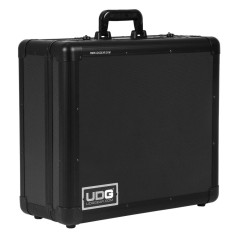
We, at UDG have further fined-tuned already a great design concept of our flight case into one specially for the most discerning DJ/producer. Constructed from aluminum thus providing an extremely stable structure with lighter weight compared to traditional flight cases. The inner sides are protected with pick & pluck foam that consists of two separate layers, each allowing user to create individualized adapted compartments. The pick & pluck foam allow you to pluck out any desired shape you require for various-sized DJ-controllers and providing the additional option of creating another slot underneath the controller for laptop or cable storage. This pick & pluck foam creating an easy, do-it-yourself customized system of case interiors.
The UDG Ultimate Pick Foam Flight Cases are designed to keep your gear protected from accidental damage when you transport it to and from gigs. They’re compact and lightweight yet tough enough to keep your gear safe.
EAN 8718969212694
Color Black
Weight 4,55 kg / 10.01 lbs
Outer Dimensions (W x H x D) 49 x 42.3 x 21 cm | 19.3 x 16.6 x 8.3 inch
Inner Dimensions (W x H x D) 48 x 41.3 x 20 cm | 18.9 x 16.2 x 7.9 inch
Material Aluminum
Protection Corrosion resistant aluminium profiles with strong rounded corners
Fully-lined with high density foam protective padding & foam on lid
Two side strong butterfly lock & solid metal hinges
Rubber feet at the bottom for support in standing
Extra's Lighter weight than traditional flight cases
Black Diamond finishing surface
Ergonomic & sturdy carry handle
Pick & pluck foam with two separate layers
Replacement pick & pluck foam is available to purchase
Rear cable access hole with cover
Fits Technics SL-1200MK7, SL-1200MK6, SL-1200 MK5, SL-1200 MK4, SL-1200 MK3, SL-1200 MK2, SL-1200GR, SL-1200GAE,
Denon VL12 Prime,
Pioneer PLX-1000, PLX-500
Reloop RP-8000 MK2, RP-8000 Straight, RP-8000, Reloop RP-1000M, RP-1000 MK2, RP-2000 MK2, RP-2000 USB MK2, RP-4000 MK2, RP-7000, RP-7000 MK2, RP-7000 MK2 GLD, RP-7000 MK2 Silver,
Audio Technica LP120-USB, LP120XUSB, LP1240-USBXP, LP1240-USB, LP140XP, LP3, LP5, LP7, LPW40WN,
Stanton STR8-150 M2, ST-150 M2, T.52, T.55 USB, T.62 M2, T.92 M2 USB,
Mixars STA, LTA,
Vestax PDX-3000, PDX-3000Mix, PDX-3000MKII,
or similar size turntable
- A1: Montego Bay - Everything (Paradise Mix) 04 59
- A2: Atelier - Got To Live Together (Club Mix) 06 06
- A3: Golem - Music Sensations 04 56
- B1: The True Underground Sound Of Rome Feat. Stefano Di Carlo - Gladiators 05 26
- B2: Eagle Parade - I Believe 04 26
- C1: Dj Le Roi - Bocachica (Detroit Version) 05 28
- C2: Green Baize - Synthetic Rhythm 01 41
- C3: M.c.j. Feat. Sima - Sexitivity (Deep Mix) 05 30
- D1: Kwanzaa Posse Feat. Funk Master Sweat - Wicked Funk (Afro Ambient Mix) 06 31
- D2: Progetto Tribale - The Bird Of Paradise 06 29
- D3: Mbg - The Quite 06 59
Vol 1[28,99 €]
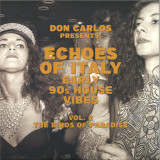
Googling “paradise house”, the first results to pop up are an endless list of European b&b’s with whitewashed lime façades, all of them promising “…an unmatched travel experience a few steps from the sea”. Next, a little further down, are the institutional websites of a few select semi-luxury retirement homes (no photos shown, but lots of stock images of smiling nurses with reassuring looks). To find the “paradise house” we’re after, we have to scroll even further down. Much further down.
It feels like yesterday, and at the same time it seems like a million years ago. The Eighties had just ended, and it was still unclear what to expect from the Nineties. Mobile phones that were not the size of a briefcase and did not cost as much as a car? A frightening economic crisis? The guitar-rock revival?! Certainly, the best place to observe that moment of transition was the dancefloor. Truly epochal transformations were happening there. From America, within a short distance one from the other, two revolutionary new musical styles had arrived: the first one sounded a bit like an “on a budget” version of the best Seventies disco-music – Philly sound made with a set of piano-bar keyboards! – the other was even more sparse, futuristic and extraterrestrial. It was a music with a quite distinct “physical” component, which at the same time, to be fully grasped, seemed to call for the knotty theories of certain French post-modern philosophers: Gilles Deleuze, Félix Guattari, Paul Virilio... Both those genres – we would learn shortly after – were born in the black communities of Chicago and Detroit, although listening to those vinyl 12” (often wrapped in generic white covers, and with little indication in the label) you could not easily guess whether behind them there was a black boy from somewhere in the Usa, or a girl from Berlin, or a pale kid from a Cornish coastal town.
Quickly, similar sounds began to show up from all corners of Europe. A thousand variations of the same intuition: leaner, less lean, happier, slightly less intoxicated, more broken, slower, faster, much faster... Boom! From the dancefloors – the London ones at least, whose chronicles we eagerly read every month in the pages of The Face and i-D – came tales of a new generation of clubbers who had completely stopped “dressing up” to go dancing; of hot tempered hooligans bursting into tears and hugging everyone under the strobe lights as the notes of Strings of Life rose up through the fumes of dry ice (certain “smiling” pills were also involved, sure). At this point, however, we must move on to Switzerland.
In Switzerland, in the quiet and diligent town of Lugano, between the 1980s and 1990s there was a club called “Morandi”. Its hot night was on Wednesdays, when the audience also came from Milan, Como, Varese and Zurich. Legend goes that, one night, none less than Prince and Sheila E were spotted hiding among the sofas, on a day-off of the Italian dates of the Nude Tour… The Wednesday resident and superstar was an Italian dj with an exotic name: Don Carlos. The soundtrack he devised was a mixture of Chicago, Detroit, the most progressive R&B and certain forgotten classics of old disco music: practically, what the Paradise Garage in New York might have sounded like had it not closed in 1987. In between, Don Carlos also managed to squeeze in some tracks he had worked on in his studio on Lago Maggiore. One in particular: a track that was rather slow compared to the BPM in fashion at the time, but which was a perfect bridge between house and R&B. The title was Alone: Don Carlos would explain years later that it had to be intended both in the English meaning of “by itself” and like the Italian word meaning “halo”. That wasn’t the only double entendre about the song, anyway. Its own very deep nature was, indeed, double. On the one hand, Alone was built around an angelic keyboard pattern and a romantic piano riff that took you straight to heaven; on the other, it showcased enough electronic squelches (plus a sax part that sounded like it had been dissolved by acid rain) to pigeonhole the tune into the “junk modernity” section, aka the hallmark of all the most innovative sounds of the time: music that sounded like it was hand-crafted from the scraps of glittering overground pop.
No one knows who was the first to call it “paradise house”, nor when it happened. Alternative definitions on the same topic one happened to hear included “ambient house”, “dream house”, “Mediterranean progressive”… but of course none were as good (and alluring) as “paradise house”. What is certain is that such inclination for sounds that were in equal measure angelic and neurotic, romantic and unaffective, quickly became the trademark of the second generation of Italian house. Music that seemed shyly equidistant from all the rhythmic and electronic revolutions that had happened up to that moment (“Music perfectly adept at going nowhere slowly” as noted by English journalist Craig McLean in a legendary field report for Blah Blah Blah magazine). Music that to a inattentive ear might have sounded as anonymous as a snapshot of a random group of passers-by at 10AM in the centre of any major city, but perfectly described the (slow) awakening in the real world after the universal love binge of the so-called Second Summer of Love.
For a brief but unforgettable season, in Italy “paradise house” was the official soundtrack of interminable weekends spent inside the car, darting from one club to another, cutting the peninsula from North to centre, from East to West coast in pursuit of the latest after-hours disco, trading kilometres per hour with beats per minute: practically, a new New Year’s Eve every Friday and Saturday night. This too was no small transformation, as well as a shock for an adult Italy that was encountering for the first time – thanks to its sons and daughters – the wild side of industrial modernity. The clubbers of the so-called “fuoriorario” scene were the balls gone mad in the pinball machine most feared by newspapers, magazines and TV pundits. What they did each and every weekend, apart from going crazy to the sound of the current white labels, was linking distant geographical points and non-places (thank you Marc Augé!) – old dance halls, farmhouses and business centres – transformed for one night into house music heaven. As Marco D’Eramo wrote in his 1995 essay on Chicago, Il maiale e il grattacielo: “Four-wheeled capitalism distorts our age-old image of the city, it allows the suburbs to be connected to each other, whereas before they were connected only by the centre (…) It makes possible a metropolitan area without a metropolis, without a city centre, without downtown. The periphery is no longer a periphery of any centre, but is self-centred”.
“Paradise house” perfectly understood all of this and turned it into a sort of cyber-blues that didn’t even need words, and unexpectedly brought back a drop of melancholic (post?)-humanity within a world that by then – as we would wholly realise in the decades to come – was fully inhuman and heartless. A world where we were all alone, and surrounded by a sinister yellowish halo, like a neon at the end of its life cycle. But, for one night at least, happy."
** club fire from DJ Python
“i was put on this earth”, his first solo music since 2022, and debut on XL
Recordings.
On “i was put on this earth”, DJ Python - aka Brian Piñeyro - gently forays into uncharted territory as a singer, producer,
and collaborator; an evolution all the more impressive in light of his groundbreaking musical projects to date like Mas
Amble, Angel, and Club Sentimientos Vol 2. While splitting his time between New York and London, Python has teamed
up with a diverse set of collaborators including South London rapper Jawnino, Honduran-born powerhouse Isabella
Lovestory, unclassifiable songwriter Organ Tapes, and NYC mainstay Physical Therapy. Across the five-track EP,
Python shares bold solo songs alongside these intriguing collaborations. The project retains the captivating melodies,
atmospheric textures, and rhythmic innovation that defined Python's earlier recordings while building on and shaping these
signature elements into ambitious and addictive new songs.
The first look at the EP comes in the form of “Besos Robados”. Isabella Lovestory lends an insouciant yet insistent vocal
to this sublime downtempo lovers' reggaeton track that's been a fan-favourite since appearing on Python's epic BBC
Radio 1’s Essential Mix.
On ‘i was put on this earth’, DJ Python says “to whom it may concern…
its too beautiful to embrace change and to challenge urself to find something meaningful in it... i love my friends and
love is deep :') i want them to know that always... but sometimes i get busy and overwhelmed n im not the best at
saying how i feel always... just want to sit around and talk and feel understood together w someone who you like or u
find interesting.. thats the best :) and if the day is nice or if the day is not nice but ur inside and its cozy.. thats too
wicked. and ur making a soup and eating it together... just with the stuff in the kitchen.. dont even go out to get
ingredients.. no need to follow a recipe.. cause ur grandma taught u to cook w the "sazon" (cooking by tasting w as u
go on adding diff ingredients and spices.. no recipes. .. u can only really cook if u can freestyle in the kitchen she said)..
and then u think about how ur grandma taught u that.. and your w someone in the kitchen making something together..
and then u taste it and it warms u up and ur like damn this is fire.. thats what this and i think maybe what "its all"
about... thank u for taking time to read this and i hope you enjoy the album…
kiss u…
Brian”