Zweite Auflage 2026 -Ein PUNK-ROCK-MEISTERWERK neu aufgelegt - mit, aus aktuellem Anlass, aktualisiertem 2026 Cover-Artwork, Vinylfarbe Starlight Yellow! Das erste Studioalbum von NOFX auf Fat! Die Band behandelte ernste Themen (Punk-Kultur und Politik) mit ihrem typischen Witz und Sarkasmus und zielte auf George W. Bush. Nun ist ein neuer Clown am Start! Damals (2003) schaffte es das Album sowohl in Großbritannien als auch in den USA in die Top 50 und war auch auf dem europäischen Festland erfolgreich, wo es in der Schweiz und in Deutschland die Top 30 erreichte, in Österreich die Top 50 und in Frankreich die Top 100. "Musically, NOFX fuses its political cynicism with criticism of punk rock itself and suggests that the best thing for all the kids and the bands might be to close ranks and start their own little hardcore community. 'Irrationality of Rationality' and 'Franco Un-American'_two of the album's most melodic, catchy songs_are also two of War on Errorism's most biting commentaries. The first personalizes the trickle-down effect of corporate decision-making over a lockstep hardcore rhythm; the second gets all-new wavy as Fat Mike reasons out his own world view, and somehow rhymes "apathy" with "Noam Chomsky.'" - NOFX hat sich zwar aufgelöst, aber das Vermächtnis lebt weiter. Die Band ist derzeit Gegenstand ihrer ersten umfassenden Ausstellung im Punk Rock Museum in Las Vegas. Die Dokumentation "40 Years of Fuckin Upmakes" feiert beim SXSW 2026 Premiere und ist ab April umfassend zu sehen (Score & Original Soundtrack mit neuer Musik von NOFX folgen in Kürze). Der zweite Teil der A-Z-Raritäten-Trilogie "I to Q" soll Ende 2026 erscheinen. Und behaltet Fat Mike im Auge, denn Gerüchten zufolge hat er eine eigene Meinung zur aktuellen Weltlage. Warning: owning this record might piss off (more than ever) your army recruiter, grizzled grampa, or those wacky flag-wavin' nationalist buddies of yours.
ARE YOU HOUSE Records presents: Are You House Sampler 2
Following the success of the first edition, ARE YOU HOUSE Records returns with the second instalment of the Are You House Sample series — bringing together three distinctive cuts rooted in groove, rhythm and the spirit of house music.
Opening the release, June Jazzin delivers “Iksasa”, a 9-minute broken-beat journey that takes you deep into its rhythm and groove. With its extended arrangement and hypnotic flow, the track gives you the time and space to settle into the groove and let the music take you on a journey.
Track 2, June Jazzin returns with “Driver Step On It”, a driving house cut built to push the energy forward, lock into the groove and keep the dancefloor moving.
Closing the release, SculpturedMusic delivers “Sing My Blues Dub”, a 6-minute deep, rolling and groovy house journey layered with hypnotic rhythms and soulful energy.
Three tracks. Two artists. Different grooves, different moods, one unmistakable house spirit.
Arno E. Mathieu returns with a new EP on Musiq Voyage
A Mediterranean horizon in motion.
Arno E. Mathieu returns with a new Balearic journey where electronic disco grooves meet funky guitar, atmospheric synthesizers, mystic chants and driving percussion.
Rooted in the warmth of the Mediterranean but built for movement, the EP unfolds like an endless landscape — from the coastline to the distant horizon. Organic guitar lines, hypnotic bass and percussive rhythms lock into spacious electronic textures, creating a sound that feels simultaneously earthy, cosmic and deeply danceable.
Balearic in spirit, disco at heart, house and psychedelic in atmosphere and driven by a strong sense of place.
After releases and remixes connected with labels and artists including Compost, Real Tone, Earthrumental, Joe Claussell, I:Cube, Mark E, Beanfield and Max Essa, Arno E. Mathieu continues to build a body of work where dance music becomes a form of landscape painting.
Sun on the water. Bass beneath the feet. Guitar in the distance. The horizon keeps moving.
Modeight returns with four new cuts from label head Silat Beksi, moving across broken grooves, stripped minimal house and hazy after-hours moods. A1 "Belpaese 3000" opens on a loose summer feel, built around off-centre drums, elastic funk phrasing and a surreal vocal line that feels half-sung, half-invented. Sampled folk details and a crunchy acid twist in the breakdown give the track its own oddball tension. A2 "Alpha Style" keeps things tighter and more direct, locking into a pumping minimal house flow with clipped modular stabs, warm female vocal phrases and light atmospheric drift. It is playful, controlled and built with the floor in mind. On the flip, "For The Heads" goes deeper into late-night territory - reduced, driving and sharply focused, with a rolling pulse and enough pressure to carry a room without overstatement. "Soft Collapse" closes the record on a softer axis, layering blurred vocal tones, textured percussion and a gentle after-hours motion that stretches naturally from the first warm-up hours into the early morning.
Based in Cornwall, Blind Yeo emerged from the isolation of lockdown. Built as an open collective, the project brings together musicians, visual artists and performers, developing a practice rooted in improvisation, live energy and shared creation. The Lemoine Point, their debut album, was recorded on a disused airfield near St Agnes. The title refers to a hidden geometric centre where lines converge, a metaphor that runs through the record as past, present and future meet within a single moment. Much of the album was captured live by a core ensemble including Sam Pert, Phil Self, Henry Greenham, Philippa Blum, Jake Sheridan, Will Greenham and Anouska Helm. These recordings are balanced by more intimate sessions, shaping a sound that moves between reworked folk traditions, electronic textures and raw, organic energy. Across the album, fragments of stories and emotions intertwine, exploring themes of love, duality and disorientation in time. Rooted in the Cornish landscape yet open in form, The Lemoine Point unfolds as a space where place, people and memory converge into a fluid and immersive whole.
The A-side delivers two sublime cuts drenched in that unmistakable Italo-Balearic magic. Warm chords, sun-kissed melodies and effortless grooves transport you straight back to the golden days of mid-'90s Italian house music. Eyes closed, you're cruising along the Riviera with the top down, lost in pure bliss.
Flip it over and the mood shifts firmly toward the dancefloor.
The B-side explores deeper territory, moving through a range of shades while keeping things locked into a tough, clubfocused framework. There's a distinct New York stomp running through these tracks—driving, hypnotic and full of attitude— yet they never lose the emotional depth and musicality that have become a Westcoast Goddess trademark.
Just when you think the journey is complete, the EP saves its ace for last. Closing things out is a hypnotic funk groove built around silky Rhodes, a tight rhythm section and an iconic bassline—a fitting finale that leaves a lasting impression. A seriously strong package from start to finish, and another essential chapter in the ever-expanding world of D3 Elements.
Ed Nine hails from the birthplace of house and brings plenty of Windy City magic to this EP on Spanish label MATE. It's deliciously emotive tackle drenched in meaningful pads and, in the case of opener 'Feel It In Your Soul', an aching vocal sample that really sets it alight as the organic drums jack down low. 'Free Acid' is a stomping workout with prickly 303 lines defining the peak time vibe, then 'Out Of Line' cuts back into a more sunny sound with synths rising up through the mix and bringing joy. Closer 'The Drum Tool 3' is just that - a raw jam to help you get the floor locked in while moving through the gears.
JUNO & Jamek Ortega link up for ‘Deep Breath’ on Crosstown Rebels.
Following an impressive label debut earlier this year alongside Alex Wann on ‘Allo’, crowned Pete Tong’s Essential New Tune, Germany’s JUNO returns to Crosstown Rebels with ‘Deep Breath’ in collaboration with longtime production partner Jamek Ortega. Immediately drawing listeners into a hypnotic, percussive world, snaking rhythms and rattling cowbells build steadily beneath an atmospheric backdrop, before a commanding vocal emerges to anchor the groove. The release continues a relationship that has seen the pair produce across labels including Arodes’ Unreleased Records, Wired World, and more, as well as regular back-to-back performances. On the flip, ‘Sloppy Disk’ sees JUNO step up solo, locking into a driving four-to-the-floor groove where a rolling bassline provides the foundation for pensive chords to drift alongside subtle melodic flourishes, steadily expanding the track’s atmosphere before tumbling into a sweeping, cinematic finale.
JUNO has accelerated onto the scene with hits like ‘Last Dance’ on Magnifik Music and a Hot Mix for Pete Tong on BBC Radio 1, firmly earmarking him as one to watch. Meanwhile, DJ/producer Jamek Ortega continues to connect with audiences worldwide with outings on Three Six Zero, MoBlack, Abracadabra, Madorasindahouse, and more, picking up heavy rotation from the likes of Keinemusik, Solomun, Tiësto, and Black Coffee. Here, the pair show no signs of slowing down as they join forces once again, stepping onto Damian Lazarus’s imprint and marking a major milestone in their respective trajectories.
Italian-Iranian DJ/producer Sciahri lays down a deeply hypnotic seven- track EP on return to Mutual Rytm. Heading up the agenda-setting Sublunar label, which is one of Mutual Rytm boss SHDW's personal favourites, Sciahri has been deep in the scene for more than a decade ever since he turned heads with a debut on Ilian Tape in 2014. Well respected for his carefully balanced love of the classic sound with new school influences, always delivering cuts with a refined and personal touch, highlighted and showcased via his widely-loved ‘Pareidolia’ release series. Returning on the label following his appearance on the ‘Federation of Rytm IV’ compilation, he lands with a freshly evolved EP that kicks off with the much hyped ID, ‘Moonwake’. That cut is built on robust, rumbling drums and layered up with flashy synths that bring stark futurism to the dance floor. ‘Liminal’ follows a similar linear path with musical drums and synths that twist and twitch, firing your synapses while your body is locked to the rhythm, before ‘Night Sentinel’ transports you to a more eerie world of anxiousness and tension - the synths are spooky, and the sonar pulses keep you on edge as immersive drums race nonstop. ‘Unmoved’ lands heavy, the bulky kick drums coming on like a storm with howling synth winds adding to the all-consuming atmosphere. ‘Too Much Time’ closes out with a wall-rattling groove and subtle synth motifs that creep in the shadows. As always with the label, digital cuts ‘Silent Frontier’ - which gets dancers on their toes with a backlit synth glow - and ‘Louisiana’ - which brings a more psychedelic energy and hard, hammering groove, rounding out a stylish, meticulously produced offering.
It’s as sure as night follows day, one of the last truly reliable things in these uncertain times, a rock in the storm of information overload, and still one of the best things you can make from PVC: The new TOTAL compilation is here!
The cheerful opener “Xtasy” comes from the up-and-coming Cologne-based DJ H0TLINE. If it says ‘Ecstasy’ on the label, that’s exactly what’s inside. The term ‘legend’ is all too often bandied about lightly. In the case of ORLANDO VOORN, it’s almost an understatement. His ‘So Deep Remix’ is a goosebumps-inducing masterpiece in its purest form. Simply wow. FRANKEY & SANDRINO haven’t visited us for a while, but their key still fits the lock. Watch out – “Disruption” might expand your consciousness! Ah, nobody grapples so beautifully with life’s big questions as TEE MANGO, but what would the world be without melancholy? A Disneyland of triviality! TEAM 85E, newly formed around JÖRG BURGER, takes on a classic from the German songbook by Ton, Steine, Scherben and opens hearts with the same ease as others open tins of beer. Speaking of hearts, MICHAEL MAYER pays tribute to the successful Artemis 2 lunar mission, as a small thank-you for reminding us that it should really always be about love. SOG, aka WOLFGANG VOIGT, agrees wholeheartedly. Sometimes all it takes is a bass drum, eight notes and a bit of love for total satisfaction. ROBAG WRUHME does what he does best: luring us down the proverbial rabbit hole like the White Rabbit, just not quite so frantically. JÜRGEN PAAPE, together with FENJA LUDWIG, doesn’t pull a rabbit out of the hat, but rather a modern dub-techno hit. We watch in amazement as a new genre takes shape. Finally, it’s time to sit back and relax with REINHARD VOIGT and just let things be. Cocktail or beer? The main thing is: it’s cold.
Rapidly gaining momentum, Drumcode’s new DC4 series returns to serve up a collaborative feast for its fourth edition.
Since debuting in summer 2025, DC4 has done exactly what it says on the tin: serving up four elite tracks that deserve the spot to shine.
You know you’re going to get A+ quality when you cue up a Victor Ruiz & Alex Stein collaboration. The Brazilians have a long history of studio jaunts and they deliver the goods via ‘Core’, a brilliant brain-scrambling outing with a strong dramatic arc.
Charles D & Weska follow up last year’s ‘The Answer’ on 1001 Recordings with ‘Can’t Get Enough’ feat. Bexxie. With a foot in prog and techno alike, this is driven by low-slung grooves and Bexxie’s sexy vox, packing an exhilarating energy throughout.
Enter two Drumcode debutants – SCRIPT & OKAYVAL. The former is a fast-rising American artist who is coming off collaborating with Brazilian superstar ALOK, while the latter is a Colombian born, US-based artist whose earned gigs at EDC Vegas and Tomorrowland this year. ‘LIKE THAT’ is a high-energy jam marked by tight rolling percussion and a sharp vocal loop designed for peak-time impact.
Another pair of fresh faces land on the comp as Martin Costas & Gabriel Gil drop ‘It’s All Around’. Lock in for a pulsating slice of prog driven by hypnotic rhythms and lush melodic textures. A versatile cut fit for a variety of party situations.
»Memorial« grew out of Nate Wooley’s work alongside Annea Lockwood recording the Columbia River, and in particular from a visit to Kettle Falls in northern Washington, once one of the river’s great salmon fishing and meeting grounds and a place of enormous importance to the Sinixt and other Indigenous peoples of the Upper Columbia. The falls disappeared from view following the construction of the Grand Coulee Dam in 1940, submerged beneath what is now Lake Roosevelt, yet beneath the still surface of the reservoir, a fast current continues to move across the buried cliffs. That tension between what remains and what can only be recovered through memory runs throughout »Memorial«.
In the essay accompanying the record, Wooley returns repeatedly to the idea of translation: the attempt to carry an experience from one form into another, from river to recording, memory to sound, landscape to music. He moves between Lockwood’s sound maps, John Ashbery’s rain falling on canal machinery, Ravel’s attempts to make water move through a piano, Christian Wolff’s »Stones«, and the Sinixt First Salmon Ceremony, where rocks struck together recall the sound of salmon once moving through the river in their thousands. These translations cannot restore what has been lost; however, they allow us to revisit what remains beneath in another form.
»Memorial« exists as an uncertainty, concerned with the distance between a place and its recording, between an event and what survives of it, and with the way listening itself becomes entangled with memory. Kettle Falls remains submerged, the river constrained and radically altered, but the water continues to move over the old rock beneath the reservoir. »Memorial« tries to listen for that persisting memory.
A landmark of 1970s Turkish psychedelic funk, Zafer Dilek’s Oyun Havaları returns to vinyl 50 years after its original 1976 release on the legendary Yonca Müzik label.
One of the defining figures of the 1970s Turkish studio scene, Zafer Dilek transformed Anatolian melodies through his distinctive microtonal electric guitar and groove-driven arrangements. Across twelve instrumental reinterpretations of regional Turkish melodies, psychedelic guitar, bağlama, heavy bass and tightly locked percussion meet in a sound deeply connected to the golden age of Yeşilçam cinema and embedded in Turkish collective memory.
The album’s influence reaches directly into today’s global Anatolian psychedelic movement: Altın Gün later reinterpreted two tracks from the record, while Khruangbin championed the cult dance-floor cut “Yekte.”
Long sought after by collectors in its scarce original pressing, Oyun Havaları is finally available again as an official archival reissue, restored from the original master tapes, mastered and lacquer cut by Frank Merritt at The Carvery, London, and pressed on 180g black vinyl at Record Industry, the Netherlands.
From deep in the hard funk pocket, the Winston Brothers return to Colemine after four years with a second helping of sounds rooted in horn-heavy, 70s-style soul cinema, taking cues from the soundtrack work of Issac Hayes, Willie Hutch, Roy Ayers, and JJ Johnson. Helmed by multi-instrumentalist/producer Sebastian Nagel and longtime collaborator Lucas Kochbeck on drums, Sweets serves as a timely reminder of how Hamburg, Germany’s music scene helps shape and influence today’s soul sound.
Ultimately, bringing musicians like Kimo Eiserbeck (sax and flute) and Hans Stephan (trumpet), alongside some additional drum contributions by Max Whitefield (née Weissenfeldt), demonstrates the close-knit nature of these musicians. From influential bands like Bacao Rhythm & Steel Band to Angels of Libra and the Mighty Mocambos, Hamburg’s deep groove scene has sired its share of worthy soul and funk acolytes.
These musicians have shared stages and studios over the years, with various
configurations finding their way in the aforementioned bands. “We started as a school project… we were just kids,” Sebastian recalls. “It’s a family thing, and we really know each other well.” Sweets is more than just another addition to this scene’s collective musical canon; it is a vibrant dispatch from funk’s leading edge.
From deep in the hard funk pocket, the Winston Brothers return to Colemine after four years with a second helping of sounds rooted in horn-heavy, 70s-style soul cinema, taking cues from the soundtrack work of Issac Hayes, Willie Hutch, Roy Ayers, and JJ Johnson. Helmed by multi-instrumentalist/producer Sebastian Nagel and longtime collaborator Lucas Kochbeck on drums, Sweets serves as a timely reminder of how Hamburg, Germany’s music scene helps shape and influence today’s soul sound.
Ultimately, bringing musicians like Kimo Eiserbeck (sax and flute) and Hans Stephan (trumpet), alongside some additional drum contributions by Max Whitefield (née Weissenfeldt), demonstrates the close-knit nature of these musicians. From influential bands like Bacao Rhythm & Steel Band to Angels of Libra and the Mighty Mocambos, Hamburg’s deep groove scene has sired its share of worthy soul and funk acolytes.
These musicians have shared stages and studios over the years, with various
configurations finding their way in the aforementioned bands. “We started as a school project… we were just kids,” Sebastian recalls. “It’s a family thing, and we really know each other well.” Sweets is more than just another addition to this scene’s collective musical canon; it is a vibrant dispatch from funk’s leading edge.
****COVER WITH AUGMENTED REALITY**** Argentinian producer Translate synthesises states of consciousness and perceptions into his semantics of sound, creating a distinct language of mental techno through hypnotic repetition, precision and deeply immersive atmospheres. His presence in this realm extends through his label Relativity, whose latest EP brings together tracks by Mike Parker and Oscar Mulero, while his own productions have appeared on Svreca’s Semantica Records. For his DIG release, Translate shifts into a broader spectrum, revealing a side of his production that has remained unexplored until now. DIG Curated captures this moment of a new sonic expansion between his signature hypnotic journeys and a stripped-down techno sound. Expansive opens the record with Translate’s distinct mental techno, pushed into an added psychedelic dimension. With a vast and trippy sound, the track steadily fills the space, inviting the dancers to go inward and simultaneously reach out into a collective morphic field. With Discursive, the coordinates shift, introducing a very stripped-down techno side of Translate’s production and a palette rarely heard from him before. Reduced to its essential elements, the track cuts directly through the floor with a functional groove, whilst retaining the tension embedded in his sonic DNA. On the B side, Fuse accelerates with fast-moving pads, mechanical drums and swerving loops that gradually lock the body into trance. Quirky textures spiral throughout, with robotic glitches sounding like organic beings. Coefficients closes the record by pulling the listener into rich bass and expanding loops over a cold melody that guides the final journey into a cosmic unfold. Hypnotic sci-fi vocals emerge from an interplanetary future, traversing space in search of earthly traces. The record ends suspended somewhere between the transmission and unknown, like a sonic threshold. Words by Lora Mateeva Animation/Artwork - Marcin Pospiech Master - Nihad Tule Graphist - Ferdinand Prat
Do not adjust your tuning! Cowper emerges disc in hand from the liminal static, exposing us all to his peculiar brand of outsider club chaos. Boldly, slowly, Goa-ing into the fray, these three tracks chew your ear off in the sonic language of acid, trance and progressive house, churning and gurning their way deep into the darkness. In the time since the first dispatch of edit excellence, Cowper’s Between Stations has firmly established itself as an essential underground outpost, adding tape releases by Tolouse Low Trax, Zato and Miles J Paralysis to a growing catalogue of genre-fluid mayhem, consistently captured by his essential Noods Radio shows. Introducing itself with a gut punching kick and gurgling prog throb, the first track here is simultaneously upbeat and downcast, a glorious gloom-core ode to narcotic indulgence.
Extra-terrestrial pads and choral synth hark back to childhood days of Perfect Dark before a trance lead interrupts all remaining neural connections. When that snare lands in the second half we’re in fully fledged techno-pagan mode, red-faced and rushing right till the end. Assuming that even xenomorphs dance sometimes, this end of the world apocalypso is absolutely their jam. Track 2 tunnels further into the planetary core, 16bit woodblocks and bells sitting atop synthetic swells and hoover-ish vamps, before a hooning bassline drops like a sledgehammer on your unsuspecting ear drums. An unexpected, but very welcome left turn into mid track breakbeat provides a moment of airy reprise before we lock back into the cavern-shaking groove until the run out abates. For the encore, Cowper didgeri-doesus with the oscillating bass and molasses-apache break of a techno-tribal, prog-frog delicacy. Complete with the type of mantra vocal usually found on pound-bin trance or superspenny Dream House rarities, and a little acid-gwamph resonance abuse Josh Wink would be proud of, this chug-athon sounds a bit like Psychic TV tuning into Psy-trance, which is a very good thing indeed. Dark, dense and musky stuff that will drive a proper dance floor wild.
Machetes & Micheladas pairs Coyote’s sharp, street-rooted lyricism with Statik Selektah’s signature boom-bap polish, delivering a cohesive West Coast–meets–East Coast statement packed with heavyweight features. The album moves effortlessly between gritty anthems like “Can I Get A Hell Yeah” with Conway The Machine and the raw energy of “Fuck Everybody” with Daylyt, while keeping a strong Cali identity on cuts like “Cali Dreaming.”
Standout collaborations include Xzibit on the explosive intro, B-Real & Sick Jacken on the smoky “Whippin’ Cream,” and Curren$y on the reflective “Nothing Changes If Nothing Changes.” Tracks like “Letter To My Son” and “Whats Peace” add depth and introspection, balancing the harder-edged moments with personal storytelling.
With tight sequencing, cinematic interludes, and Statik’s soulful, hard-hitting production throughout, Machetes & Micheladas is a modern hip-hop record that bridges coasts, generations, and styles without losing its edge.
Forty years of cassette releases, pressed for the first time on vinyl
First of two instalments exploring the previously unreleased sonic archives of one of Poland’s most enigmatic
living artists - with its first volume focused on his deep listening practice and spiritual reverie (recorded 1990–2013)
The last time Andrzej Dudek-Dürer took a banknote bearing the face of the Polish anarchist Jarosław Dąbrowski from his pocket to trade it for a pair of shoes was in 1969. He bought them for 120zł - the equivalent of 100€ today - and never replaced them since then. Only rebuilt them, year after year, drawing a needle and thread through the leather each time it split, closing one wound before the next one opened. It became a ritual of precision, stitching a record of another year into their soles.
That same year, in Wrocław, he arrived at a conclusion that would recalibrate everything that followed. Convinced he was the reincarnation of Albrecht Dürer, he adopted the surname Dudek-Dürer, stopped cutting his hair and began wearing the same garments every day. It was the first ritual of many, though he wouldn't have called it that yet. Look closely enough, over the decades, and it is always the same gesture, returning in different material: hair growing in a single unbroken strand, a needle drawing thread through leather, sitar strings pulled taut across a neck he built with his own hands and magnetic tape spooling forward inside the cassette boxes stacked against his walls.
None of this began in a vacuum. Dudek-Dürer emerged from the Wrocław neo-avant-garde, in a Polish art world where an exhibition could be cancelled overnight by the stroke of a censor's pen. In 1973, his exhibition Auto-crucifixion was shut down by the state, and for a time he found himself blocked from exhibiting his own art at all - the one force in his life that ever came close to cutting the thread.
He seemed to experience it differently. In 1974, after long, patient research into sitar craftsmanship, he built his first prototype with his brother, a knowledgeable luthier. In 1978, in a smoked-out jazz club, he took his first steps into sound recording with the unreleased album Jazz From Underground with his first band. By 1979, recognition started to travel further than he could.
Turning toward Far-Eastern philosophy, meditation and the idea of reincarnation was another language of freedom for him. It was a way of claiming an inner territory the state could not reach, a border it could not close. Mail Art served a parallel function, reaching further out: in a country that restricted travel and expression, sending and receiving art through the postal system became an act of quiet rebellion.
The body, in his understanding, is only an envelope readied for constant transformation. From this came Metaphysical Telepathy: during the years he could not leave Poland, he treated that confinement as a rehearsal room, sending his mind out ahead on the same thread his body would later follow. Living Sculpture grew from the same root with performances of stillness beside static art objects, until the boundary between the object and the man beside it simply dissolved. Camera Meditation extended the same instinct into photography: a shutter click flattening three dimensions into two so that a single instant could be held forever. Inspired by the pioneers of self-portrait photography like Robert Cornelius, he used it to document time itself, and kept explaining to me: "You know. This is not about vanity. This is about observing time passing.”
The isolation did not end suddenly. It ended the way his own philosophy had already predicted it would, from the inside first. Mail Art quietly solved the problem politics couldn't. Correspondence built during years of confinement slowly worked its way through doors the state itself had kept locked. Contacts made through folded paper and stamps became invitations. Ultimately, invitations became passports.
In 1983 he made his first trip outside Poland, to Germany, in search of the audio technology he couldn’t get his hands on before. In 1985, he was invited by the Indian embassy in Poland to give a sitar concert on an instrument he had spent a decade patiently stringing together - half sitar, half tanpura, built from patience and determination. After the collapse of the People's Republic of Poland, the travels kept unspooling: South Korea, then Mexico, then Australia, Canada, New Zealand, Singapore, Japan and the United States - each stop leaving behind its own small knot of tape, tied off and carried home.
In the decades since, recognition arrived at the same unhurried pace: he conducted workshops at UC Berkeley, served as vice-president for artistic affairs of the Union of Polish Art Photographers and the Union of Polish Visual Artists between 2010 and 2014 and received the Bronze Medal for Merit to Culture - Gloria Artis. His visual work gradually entered collections including the National Museums of Warsaw, the Stedelijk Museum, Tate Modern, MoMA and the Venice Biennale. His musical practice, by contrast, never found that kind of room - left to circulate quietly, sharing his cassette tapes directly, waiting for someone willing to follow it further.
It took months before I could find a way to reach Andrzej Dudek-Dürer - his presence online is very close to nonexistent. Surprisingly, LinkedIn turned out to be the only door still open, a faintly absurd irony given everything else about him. I packed the strict minimum for a three-day trip and an empty notebook and made my way to Wrocław. His headquarters sits in the neighbourhood of Grabyszyn: a two-storey pre-war house that has belonged to his family for generations. The man who opened the door was long-haired, long-bearded, in his trademark leather shoes and patched jeans. We sat in his living room, in front of a computer where decades of recordings sat organised in cryptically named files, surrounded by books and objects that had arrived one layer at a time, leaving room for only two chairs in the middle. His shoes sat by the door, rebuilt so many times they had become their own quiet sculpture. Cassette tapes filled boxes against the walls, almost unlabelled, each one a spool of thread holding decades of sound that had never once been asked for, until now.
I listened for hours: meditating in front of strangers on the porch of a Seoul temple until the tourists stopped taking photos and simply waited with him; a stand-off with border guards at the US–Mexico crossing over an instrument they couldn't identify and didn't trust; a session with the Stockhausen family that he still, decades later, describes like it happened last week. All of it interrupted, occasionally, by the smell of soup boiling and fresh bread warming on the ceramic stove. After two days, it felt like being handed the end of a very long thread and asked, gently, to keep following it. I left with a USB drive holding his full discography, signed with his unmistakable signature.
Astral Meditations From A Living Statue is a length of that thread, drawn out from the boxes stacked against his walls - recordings gathered from different rooms, different countries, different decades. This first record breathes slowly: incense-thick, meditative, built for stillness. A cutting-edge séance in outer space where machines learn how to dream.
It begins with the neo-classical improvisations of Andrzej, space-delayed, recorded at Klub Muzyki i Literatury in Wrocław in 2002. 'When..So' opens the curtains with a deep-rooted meditation accompanied by slow-decaying piano figures illuminated by a candle-lit spirit gathering.
Los Angeles, 1990: a dormant villa, a grand piano, the voice of Bonnie Barnett. 'Exception' is captured in a single room, in a single afternoon - voice and keys circling each other, neither one leading, until the silence between the notes starts to feel like the instrument.
'The Meta...' and 'Tired Of...', recorded at Studio Morandi in Ponte Nossa, Italy, in 1992, settle into a sitar drone built entirely from patience - overtones stacking and beating against each other, strung by a man who never once set foot in India. 'Mastery Of...' follows, recorded the same year at Studio Suski in Łomianki, pushing that same hum further still, until pitch dissolves into a spectral reverie. 'Transcendental Sound', from 2000, closes the first record in a slow bath of celestial frequency - better heard beside the shores of the Odra river.
More than fifty years after deciding that a life could become an artwork, Andrzej Dudek-Dürer continues to inhabit that decision. His shoes keep wearing thin against the earth's crust. His hair keeps growing, one strand at a time. His cassette tapes keep spooling in the dark of their boxes.
Now the thread finds its last shape: a single unbroken groove, spiralling inward from the outer edge to the label at the centre. Never cut - the way nothing else in his life ever was. Drop the needle and it will find that groove and follow it, the same way a needle once followed leather, once followed a border it couldn't cross, once followed string into an instrument that didn't exist until he built it. This record is the other end of a thread that has been travelling for fifty years. For the length of both sides, it rests here, in your hands. This is a timeless proof that the Lord of the New Age was never lost."
Minutiae is the first full-length release form Stockholm’s Ināra Quartet, made up of brothers Kasper (guitar, banjo, mandolin) and Mauritz Agnas (bass, cello), Johan Graden (piano, harmonium, synths) and Mischa Grind (percussion). Drawing on wide performance and composition experience in free improvisation, jazz, and composed new music, the quartet have carved out a unique niche where radical approaches to rhythmic organisation and group interaction are wedded to immediately accessible, folkish melodic and harmonic material. Unfolding briskly across eight pop-song length tracks, Minutiae places these folk fragments under a microscope, expanding them into intricate patterns of group interplay by turns austere and lushly psychedelic.
The quartet’s layering of independent rhythms, pulses, and tempi suggests a range of precedents, from Ligeti’s ticking clock textures to the pulse music of John McGuire, the repeating asynchronous cycles of The Necks, and the intricate irregular crosshatching of Banda music. Rhythm, harmony and melody shade into one another within each of the instrumental layers that overlap to form the music’s rippling surface. At points guitar, bass, percussion, and keyboards can seem each to occupy their own world, each player moving independently according to their own internal tactus, but attention to the details of group interplay reveals carefully planned collective movement. On ‘Klapparen’, strummed acoustic guitar chords and clinking percussion accelerate and decelerate in unison, washed over by floating synth lines. At other points, the quartet as a whole suddenly shift direction like a This Heat tape edit. Check the opener ‘Box Pieces’, where a brief percussion tag cues an unexpected cut from frenetic layering of percussive attacks undergirded by slow moving synth and bass foundations to a rumbling, locked-in dirge.
The eight pieces span a range of tones, from plaintive abstraction to surging minimalism. Touches of whimsy relieve any threat of over-seriousness: witness the wacky electric guitar glissandi that open ‘Tilting’ or the lovely, almost Pascal Comelade-esque fairground wobbles that begin the wayward journey of ‘Cadence: not even,’ before it stumbles into a totally different zone of spacious Paul Bley balladry sprinkled with banjo plucks. Recorded across two days at Stockholm’s Atlantis studios, Minutiae’s minutiae truly sparkle thanks to the careful mixing work of Ghosted drummer extraordinaire Andreas Werliin. A wonderfully approachable document of the richness of the next generation of contemporary creative musicians from Sweden, Ināra Quartet’s debut also looks back to 70s touchstones like Archimedes Badkar in its joyful embrace of musical collectivity.
Simply great release! Ackermann delivers four deep, effectively produced house tracks, closed out by a driving Jon Dasilva & Skyskrapa remix. Across the record the production stays deep, controlled and effective, made for the hours when a floor wants to move without being pushed. Support by Ryan Elliot, Radio Slave, Groove Armada or Richard Dorfmeister
Tiger Stripes continues the ‘A Tiger Never Loses Its Stripes’ EP series on Rekids, with part two arriving 30th October 2026. The EP follows part one, released earlier this month, and previews his upcoming sophomore album, his first in two decades, due out later this year.
First up, Tiger Stripes’ 'Strike' is a raw, heavy, swinging warehouse cut with stark lasers and a moody vocal refrain that will lock the floor into a steady march. 'ID' flips the script with funkier bass riffs and dub effects hanging above a lighter, funkier groove, but still locked into irresistible loops. There is a playful touch to 'Nothing To Do', too, where dusty drums, darker synths and prying bass motifs all shuffle and swing with confidence. The soulful 'Free As A Bird' closes with a delightfully dubby skip, lush chords, and expert sound design that brings immeasurable character alongside a well-worked vocal.
Founder of the Strange Idols label, Tiger Stripes has spent over two decades forging his own path with standout releases on Hot Creations, Kaoz Theory, Kwench Records, and more. After stepping back to focus on his indie-rock project Little Lies, he made a full return in 2024 and quickly recaptured the form that’s made him an international favourite.
Radio Slave’s Rekids was founded in 2006 and has since spawned successful offshoots with the Techno-focused Rekids Special Projects in 2017 and its newest sublabel, REK’D, in 2024. With Matt Edwards as the sole A&R, Rekids has been crucial in developing early artist careers and has become a haven for established acts in House and adjacent genres, recently featuring Harry Romero, Tal Fussman, DJ Minx, The Hacker, and many more.
The eighth helping of these Perro Bueno Edits is as delicious as Kinder Buenos (we have kids, don't judge us). Once again it is an anonymous affair from the in-house team, whoever that may be, and this one opens with 'SDBO', which is a new flip of, we're told, a "rare African cover version of a much-loved disco classic". It has a perfect mix of disco glam and Afro earthiness with soaring melodies and funk drums that can't fail to get you locked in. 'LEHA' on the B-side is another Afro-funk gem that is rebuilt with layers of chunky percussion and drums, interplay between male and female vocals and fat bass that anchors the whole thing perfectly.
Manoeuvres drags you in with stunning percussion that runs throughout the track, but takes you on a Spacey journey with its synthy chords and solos that land you on a far away planet. Now you have landed on Planet ‘Nonna’ the tribe welcome you with a tracky Deep House track that lifts.
Up in the second half with the addition of some shakers and high hats, keeping you locked in. Patience – Feat Margomool. This track is nothing but stunning! An amalgamation of Nonna Fabs Deep musical vibes, production, and Margomools haunting vocal that laces everything up together. Perfect combination in force. If things couldn’t get any deeper, Nonna Fab’s ‘Found The Keys’ sounds like something that’s come straight out of Detroit, you can definitely see Theo Parish getting down to this!
The return of Batty Bass is well and truly underway with a brand-new four-track EP from Hannah Holland. Bringing together Holland with long-time collaborators Kurtis Lincoln and Joy Joseph, the EP delivers four killer dancefloor workouts.
'Action Satisfaction' comes in heavy, driven by a seriously mean, ceaseless bassline and Kurtis Lincoln’s unmistakable vocal, with Joy Joseph’s percussion adding another layer of physicality to the track. Lincoln is an artist, writer and performer whose work moves between fine art, rave culture and performance, bringing a distinctive theatrical edge to his vocal work.
Joy Joseph is a drummer, DJ and live percussionist with a long history spanning East London’s New Wave scene through to collaborations with artists including Mr Hudson, Amy Winehouse and Jessie Ware.
'Mitzubishi' takes things somewhere darker. A sinister, heads-down number built for late-night pressure and packed dancefloors.
The remixes bring two fresh perspectives to the EP’s originals. DJ Spilt, known for his raw take on classic Chicago house, brings down the tempo with a sleazy, low-slung groove that swaps peak-time pressure for after-hours swagger. Meanwhile, Wigs turns Mitzubishi into an even more techno-tinged, heads-down affair designed to lock the crowd in and keep them there.
Since emerging from Italy's underground over a decade ago, Ninos Du Brasil (Nicolò Fortuni and contemporary artist Nico Vascellari) have developed a potent sound that blends live batucada percussion, electronics, punk energy, and visceral vocals sung in an imagined language. Along the way, they've built a reputation for incredibly intense and unpredictable live performances.
This fifth full-length follows Antro Pop, released on Codalunga / Hospital Productions in 2021 in the middle of covid lockdowns with a canceled world tour leaving the world in wait. Out of that imposed hiatus Orden Micelial began to take shape.
The trademark Ninos elements remain intact: frenetic drumming, ritualistic chants, and relentless percussive intensity, while exploring new sonic territory. Most notably on "Innaya Som," the duo embrace a full-blown guitar-driven rock assault, revealing the hardcore roots that have always underwritten their music.
Recorded and produced by longtime collaborator Rocco Rampino, the album achieves a veritable wall of sound—dense and overwhelming, yet retaining remarkable clarity and separation throughout.
Part carnival rave, part punk freak-out, Orden Micelial finds Ninos Du Brasil expanding their mythology without losing any of the wild energy that has made them one of contemporary underground music's most distinctive acts.
LIP020: Ferdinger – Easy Warmth & Quiet Menace Life In Patterns marks its 20th release, and its last of 2026, with an EP from label head Ferdinger himself. "Easy Warmth & Quiet Menace" sees him move into darker, more textured territory without losing his signature relentless drive. From the sombre melodies of "Tears Will Dry" and the distorted, haunting synths of "Back At It" to the analogue modular textures of "Front Toward Enemy" and the gritty dub stabs of "Ruminations", the EP covers a lot of ground across its moods. Closing track "Fresh Impetus" ends things on a different note, with a driving old-school electro groove. "Easy Warmth & Quiet Menace" is out on 13 November 2026 on vinyl and digital.
Critics have claimed that the internet is flattening and homogenizing subculture, but whichever internet they're referring to does not include Locked Club. Watch a video of one of their sets and you'll quickly realize that something very different-and extremely unhinged-is going on in the post-Soviet rave scene before the FOMO punches you in the face, ceaselessly blistering industrial electro and techno punk from the irreverent, exhilaratingly wild underground of the other internet.
Tectonic Recordings presents Tectonic Sound: Vol. 2, the second instalment of the various artists series curated by label founder Pinch. Following the first Tectonic Sound collection, released in 2025 to mark the twentieth anniversary of the label, the series continues Tectonic’s forward-facing approach; bringing together artists from their wider family and connecting dots across the underground.
Longstanding figures of the UK Bass scene such as J:Kenzo and Roska sit alongside a new gen of artists including Ehua, Manami, Cimm, Denham Audio, Henry Greenleaf and SHXCXCHCXSH. Beatrice M. also returns following the release of their acclaimed debut album Sinking earlier this year, while Jay Carder and Sir Hiss make their first outings as solo artists on the label, after both appearing as collaborators on Sinking.
Pinch says: ““As Tectonic enters its third decade, the spirit and passion behind the music hold true to its roots. I love every single track on this compilation and how it shows off the various corners of the label's sound. Each artist has delivered something truly special!”
Each artist arrives with a distinct sound and history of their own, but across these twelve original tracks there’s a shared understanding of what Tectonic represents. Different strains of the UK bass continuum come together, creating a space where sounds collide, and new forms take shape.
Pinch leads the charge with ‘Hold On!’, an upfront, high-definition 4x4 propulsion tool that pairs rolling momentum with seismic bass pulses. Manami enters with ‘Turning Point’, further solidifying her newer direction, leaning into deep, dubbed-out territory with a sound that feels both vast and exploratory, while remaining heads-down and locked in. Henry Greenleaf steps in with ‘Whist’, an ominous and otherworldly offering, reminiscent of early dubstep productions that fell somewhere between the lines of dark garage, 2-step and grime.
Elsewhere, SHXCXCHCXSH’s ‘NexxxD’ and Sir Hiss’s ‘2TUFF’ form a middle climatic point of pure chaos, with Sir Hiss serving up a raw slab of gnarled grime waveforms and cascading claps. Beatrice M. & Cimm bring things back down with ‘Pad City’, a cool, meandering cut of shuffling house, while Lorem closes the compilation with ‘Console Corners’, exploring the outer rims of sound manipulation and deconstruction before tying it all together.
Since its formation in 2005, Tectonic has been a trailblazing force in electronic music, helping to define and continually redraw the boundaries of dubstep and its surrounding sounds. The compilation arrives in the middle of a serious run for the label. Earlier this year, Tectonic released Beatrice M.’s debut album Sinking, a major moment for the label that was embraced across the electronic music community. Pinch has also continued his long-running creative relationship with legendary grime MC Trim this year, following their joint 2025 EP No Caller ID, with recent single Striker.
Across Tectonic Sound Vol. 2, those different strands of Tectonic’s history and present day meet head-on. The music moves between familiar forms and stranger territory, with rhythms and frequencies refracting across the collection. It’s a record that feels cohesive without being uniform, reflecting a label whose sound has always been defined by forward movement.
Dutch artist Maurits Verwoerd, aka Nachtbraker, makes his first outing on Up The Stuss with ‘Bodu Imchi’, a four-track collection that highlights the breadth and curiosity that have long defined his work. Drawing from a world that stretches from ambient and cinematic music to dub, jazz-inflected electronics and house, the Amsterdam native has developed a sound that can feel both deeply considered and completely instinctive. Releases across Aus Music, Peach Discs, Heist Recordings, Dirt Crew and his own Nachtbraker and Quartet Series labels have established him as one of the more distinctive voices within the Dutch house landscape, with support from artists including Jamie xx, DJ Seinfeld, Raresh, Shanti Celeste and Axel Boman.
Across ‘Bodu Imchi’, those influences come together in a record that feels fluid, slightly strange and constantly alive. Warmth sits alongside subtle unease, hypnotic grooves give way to more playful rhythmic ideas, and intricate melodies drift through low-slung foundations without ever becoming overly polished. There’s a sense of late-night discovery throughout, the kind of music that rewards close attention but still carries enough physicality to move a room and keep packed dancefloors moving with a locked-in approach. Four tracks, one evolving atmosphere, and a meeting of musical worlds that feels right at home on Up The Stuss. It’s a release that finds character in the fine details: unexpectedtextures, subtle rhythm shifts and elements that seem to appear out of nowhere before then disappearing again. It’s an EP that moves between heads-down focus and hazier hours, capturing the curious, nocturnal spirit that runs through his work.
Sean Thompson hat mehr als ein Jahrzehnt damit verbracht, sich zu einem der vielseitigsten Gitarristen in Nashville zu entwickeln. Derzeit ist er als Gitarrist für Margo Price auf Tour, und sein flinkes, lyrisches Spiel hat Bands unter der Leitung von Erin Rae sowie einer ganzen Reihe von Größen der ,Music City" geprägt. Außerdem ist er neben Rich Ruth und Spencer Cullum ein Drittel des kosmischen Trios Shrunken Elvis, dessen gefeiertes, selbstbetiteltes Debütalbum 2025 bei Western Vinyl erschien. Mit ,Inner Principles", seinem ersten rein instrumentalen Album, bündelt Thompson all diese Instinkte zu etwas, das sich wie ein echtes neues Kapitel anfühlt. Es ist ein Jazz-Fusion-Album im reichhaltigsten Sinne des Wortes: virtuos, aber schnörkellos, experimentierfreudig und stilistisch von einem Titel zum nächsten unruhig. Die acht Stücke bewegen sich mühelos zwischen ECM-artiger Weite im Geiste von John Abercrombie, rauchigem Akustik-Picking, lockeren Late-Night-Boogies und eleganten Post-Rock-Abenteuern, mit Synthesizern, die hin und wieder in Richtung Jan-Hammer-Territorium blitzen. Man könnte meinen, ein Großteil dieser Musik stamme aus dem Jahr 1978 oder 1983, und genau diese Zeitlosigkeit ist der springende Punkt. Thompson spielt ein rasantes Spiel namens ,Finde den Einfluss" und zieht dann weiter, ohne sich jemals lange genug an einem Ort niederzulassen, um wie eine Hommage zu klingen. Im Kern ist das Album ein Trio aus Thompson, Eric Slick am Schlagzeug und Alec Newman am Bass, ergänzt durch eine Handvoll bewährter Mitstreiter: Jake Davis, der produzierte, als Tontechniker fungierte, abmischte und Synthesizer beisteuerte; sein ,Shrunken Elvis"-Bandkollege Rich Ruth an der Gitarre; sowie Jo Schornikow am Keyboard. Dieses Zusammenspiel des Ensembles ist das Herzstück der Platte, und trotz aller technischen Meisterschaft ruht sich ,Inner Principles" nie auf seinem Können aus. Jeder Track strahlt echtes Gefühl aus, vom weitläufigen, treibenden ,Underwater Way" bis zum zarten ,Waltz For Mama". Thompson hat ,Inner Principles" digital in Eigenregie veröffentlicht und das Material live beim BigEars-Festival vorgestellt. Western Vinyl presst es nun zum ersten Mal auf Vinyl und verschafft damit einem der stillen, aber unverzichtbaren Musiker Nashvilles sein bisher umfassendstes Statement.
Ursprünglich am 9. Dezember 2024 als reine Digital-Single veröffentlicht und als Nachfolger seiner viralen Hit-Single ,Chicano Poetry" - diesmal mit dem beliebten Soul-Klassiker ,There's Nothing I Can Do About It" von Mike and The Censatios als Grundlage der Produktion. ,Nothing I Can Do" verbindet Obeds gefühlvolle, genreübergreifende Sensibilität mit John Givez' gesprächigem Hip-Hop-Stil und schafft so einen warmen, entspannten Liebes-Song, der von Nostalgie, Hingabe und lockeren West-Coast-Grooves durchdrungen ist. In seinen eigenen Worten: Es ist die gleiche Geschichte wie bei ,Chicano Poetry" - ich habe das Original gehört und konnte einfach nicht davon loskommen. Ich habe es zerhackt, meine eigene Produktion drumherum gebaut und den Refrain sowie meinen Vers ziemlich schnell geschrieben. Dann habe ich es meinem Kumpel John Givez geschickt und er kam mit einem Vers zurück, der das Ganze zusammenhielt. Wir haben es schnell auf die Beine gestellt, was für mich meistens ein Zeichen dafür ist, dass ein Song einfach da sein muss. Es ist ein Geheimtipp - die Art von Song, den die Leute erst spät entdecken und sich fragen, wie sie ihn übersehen konnten." Der mexikanisch-amerikanische Songwriter, Rapper, Produzent und Gitarrist, der in Oceanside, Kalifornien, zu Hause ist, verbindet Küstenmelodien, introspektive Texte und Einflüsse aus dem Latin-Alternative-Genre und lässt sich dabei von J. Cole, Kid Cudi, den Beach Boys und Stevie Ray Vaughan inspirieren. Als BMI Latin Spotlight-Künstler mit über 63 Millionen Aufrufen seiner TikTok-Beiträge verwischt Padillas neueste EP ,RODEO CLOWN - ACT I" weiterhin die Grenzen zwischen Glauben, Nostalgie und modernem West-Coast-Storytelling.
Peach Discs sends their last record of 2026 to the pressing plant in the form of G-Zip's wigg(l)ed-out, tech'd-up, but very much tuned-in "The Mystic Dog" EP.
A new house-focused alias from Stephen Howe – who you may remember from his excellent "Mimesis" EP for Joe Delon's Welt Discos, or his abso-fucking-lutely everywhere remix of Oklou – the G-Zip sound sits in the centre of the Venn diagram between London's tech-house pump and the blissed/blessed relief of deep house.
Hats from early grime instrumentals, interviews in club smoking areas, compilation skit tracks, video essays and jazz interludes – "The Mystic Dog" EP is built from a library of samples that extend far beyond house, tracing a deeply personal line through Stephen's influences and inspirations both past and present. Meticulously sequenced synth lines sit atop tightly woven Digitakt grooves, all mangled together through FX boxes and the Mackie desk that sits at the heart of his Berlin studio.
The EP sets out its stall with "Juiced (Monomania Mix)." Written after Stephen's first visit to Open Ground and inspired by a standout set from Fumiya Tanaka, it pairs stomping, techy drums and phat bass with a restless collage of mono synth patches that donk, squiggle and gurgle throughout.
"Missing Track" leans into contrast as a staccato bassline rubs up against the tighter than tight percussion, before skyscraping synths enter the picture to respond to the rhythm section's call. Flipping the record puts us back into banger territory with "Talking About Drums", as the tuned percussion and heavier-than-heavy subs nail the track to the dancefloor. Until the halfway point that is, when post-dubstep-indebted synths briefly arc across the stereo field – a glistening glow-up amidst the locked-in groove.
Closer "Mystic Dog" showcases Stephen's knack for idiosyncratic melody, as a wonky modular sequence twists and turns across the track while smack-in-the-face drums offer a bashy counterpoint. A classic B2 track if ever there was one, and wicked way to round off the EP.
(Oh, and there's a cheeky alternative mix of "Juiced" as a digi bonus for the hip-house heads).
Metabolising 20-plus years gorging on the hardcore continuum, Luke J Murray returns to Sneaker Social Club with the first album under his Liquid DnB-Like Ambient Grime 2 alias. As the first self-titled EP in 2024 demonstrated, with this project Murray applies a hauntological supplement to his life-long diet of rave's codes and signals. These 11 tracks could be embraced as dank bangers in their own right, but the ghostly shroud that lingers is no accident. It's an evocative expression of the hinterland places that frame the pursuit of the dance as much as the energy spikes in front of the bass bins — a diaristic reflection on trudging puddle-peppered streets to find little black doors or staggering home, ears ringing, as dawn comes to chase down the street lights.
Haunted House, Garage & Grime walks the line between atmospheric scene building and straight-up beatdowns with a relaxed swagger. 'The Ginnel In SK4' paints a vivid picture of urban malaise with its bleak synth warps and punk-dub splashes, not a drum sequence in earshot. It's flanked by the Caustic Window-meets-Mark One 'The Flats On Belmont Way' on one side, and low-slung electro-creeper 'Hollywood Park' on the other. As the titles hint, this is music tangibly attached to very specific places locked in Murray's memory — unmistakably UK locations that reflect back the half-hollowed out echoes of late night soundtracks, glancing off red brick and pebble dash concrete at odd angles.
There is space on the album for full-chested amen tear-outs like 'Pete's Gone Mad With The Axe' , but for the most part the mood remains downcast and pensive. The sparse approach affords you space to tangibly hear the (not-so-silent) name-checked rain pattering in the background of 'The Crown Under The Viaduct, While Rainfalls Silently Into The River Mersey' , or imagine the crunch of litter and dead leaves underfoot that snakes its way through minimalist stepper 'Bowerfield Lane, After Dark'.
Murray's vision is sharply realised, and his stated inspirations slot logically into his shelves of ordered ideas drawn from disorderly memories. From Mark Leckey's O' Magic Power Of Bleakness to the Ghost Box records alumni, Hatcha's seminal Dubstep Allstars Vol. 1 and Laura Grace Ford's Savage Messiah book, Haunted House, Garage & Grime is the logical product of a deep thinker making tracks with decades of rave in his bones and the sense that it all means something, even if it's not always clear what.
Following the critically acclaimed Fantômes… Futurs, praised by FIP, France Inter, Radio Nova, ARTE and International jazz press, double bassist and composer Kham Meslien returns with Vévés électriques, a deeply immersive second album where memory, landscape and improvisation merge into a singular sonic journey. Joined by Laurent Bardainne, Roger Raspail, Naïssam Jalal and David Neerman, Meslien expands the intimate language of his double bass with subtle loops and organic textures, weaving together echoes of Iceland, the Caribbean and imagined territories. Blending spiritual jazz, contemporary classical influences and ambient soundscapes, Vévés électriques is an invitation to drift beyond geography and into a profoundly personal exploration of emotion, identity and freedom.
Set upon an oil-smooth sea, an immense range of directions opens up before Kham Meslien for “Vévés Électriques”, his second album after “Fantômes… Futurs.”
With only his double bass and bow as vessel and sextant, a distant journey nevertheless begins to take shape. Vibrations and the striking of strings against wood quickly trace lines and winding paths across the surface of the water—so many routes to follow before leaving them behind, allowing the outward journey to become an inward voyage as well.
After an improvisation intended to shed light on the course ahead, isolated lands came into view: the shores of Iceland, the lands of the far north, places cut off from the rest of the world by vast expanses of water. Islands battered by a harsh climate that can only be endured by drawing warmth from deep within oneself.
Then the Caribbean arc appeared. The archipelago, a setting for joyful and unsettling experiences, takes Kham back to a childhood from which the passing years have carried him away. Rather than following the conventional channel of the music of these places, the West Indies emerge through memories whose colors are still vivid.
Through the morning mist, Roger Raspail’s percussion locks into the same frequencies of the groove. Double bass and struck skins then become companions on a road that intersects with Laurent Bardainne’s saxophone. Carrying a dreamlike message, David Neerman’s vibraphone also joins the narrative to write a few chapters of its own, while others are enchanted by the flute and voice of Naïssam Jalal, or struck by the metaphorical rhymes of rapper Rocé.
On the surface, through the themes along which the pieces navigate, landscapes slowly reveal themselves and change shape as the shore draws nearer or recedes. Straying from the marked course and allowing oneself to drift, breaking free from pure acoustic sound by adding loops first played live and then sampled, allows Kham to explore the depths. The depths of the ocean, as well as those of his soul. To enter a world of improvisation that reveals itself even as he explores it. Examined up close, feelings become shells to pick up and hold to one’s ear, so that they can be felt intensely until they take material form.
This sea, which had appeared peaceful, became the stage for a succession of stories and images, which then accumulated to give birth to a larger narrative.
When Index moves, it’s in lockstep, as a single, indivisible unit. Alan Creedon and Alex Lichtenauer (both ex-Control Top) started the project in the summer of 2025, and it quickly became clear that its sound would be an outgrowth of their close friendship. Eschewing the densely orchestrated compositions of their previous band, Index would instead focus on sweaty, visceral physicality, with Creedon’s guitar intuitively latched to Lichtenauer’s drum kit, navigating corridors of tricky rhythm as one. Creedon and Lichtenauer recorded Vis Inertiae in NYC with acclaimed producer Arthur Rizk (Power Trip, Show Me The Body). Despite a litany of freak injuries that befell Lichtenauer before and during the band’s studio time, they say it was the best experience they ever had in a recording session, and Creedon concurs. Rizk was brought into the process early on, when the band played him some bare-bones demos that impressed him, and he was critical in helping ferry the songs to their final forms.
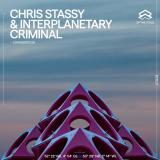
There are collaborations that make sense on paper, and then there are the ones that feel like they were always going to happen. CHRIS STASSY and Interplanetary Criminal now bring their first recorded meeting to Up The Stuss with ‘Dangerous’, a four-track EP that sees two artists with unmistakable identities find common ground somewhere between house, garage, breaks and pure dancefloor energy. With the sounds of this collaboration having quietly made their way into the world long before the full picture was revealed, its arrival feels like the moment the pieces finally fall into place.
Across the EP, the chemistry is immediate. STASSY’s knack for infectious grooves and vivid synth work meets IPC’s breakbeat-driven energy and distinctly UK-rooted sensibility, with neither side disappearing into the other. ‘I Just Can’t Get’ sets things in motion with skippy rhythms, breakbeat drums and those unmistakable STASSY synths, before ‘Movin’’ accelerates the pace with punchy percussion and a more restless, breaks-heavy charge. ‘From The South Coast Mate’ pushes the meeting point further, bringing weighty low-ends and unmistakable UK touches while keeping both artists’ distinct approaches clearly in view. Title track, ‘Dangerous’, brings the journey to its natural conclusion. Bright and dark elements pull against one another as the two approaches lock into a shared rhythm, delivering a track that feels simultaneously euphoric, gritty and slightly unpredictable. It’s the clearest expression yet of what makes the collaboration work: two established sounds remaining entirely themselves while discovering what happens when those worlds meet.
For CHRIS STASSY, ‘Dangerous’ marks the first EP to arrive on Up The Stuss under his new name, following the release of the euphoric ‘U know me’ on CCS, adding to this new chapter with a collaboration of serious weight. For Interplanetary Criminal, it adds another dimension to the Manchester artist’s ever-expanding take on UK garage, which has seen him become one of the defining forces of its current resurgence. It’s the sound of two worlds meeting at exactly the right point - and one that many have been waiting for.
Precious Bloom producer Dea returns on the Rush Hour Store Jams imprint with a fresh four tracker... tip!
The idea for Fairlight began shortly after Aradea Barandana purchased a Yamaha DX1 synthesizer. While exploring its presets, one sound in particular—called Fairlight sparked the initial concept for the EP. From there came the desire to create an Italo wave inspired track that would feel fresh to contemporary ears while still referencing the character of early electronic music.
Rather than following the traditional structure of dance music where drum machines and synthesizers lock into repetitive synchronized patterns the EP approaches composition more like a narrative. The music gradually unfolds, allowing melodies and harmonies to evolve so the listener is encouraged to stay with the piece from beginning to end.
Some of the harmonic ideas draw inspiration from Baroque music, particularly chromatic ascending progressions and voice-leading techniques. In contrast, other moments introduce playful bubblegum-inspired synth lines, adding lightness and color to the overall sound.
The result is a small collection of tracks that sit between nostalgia and experimentation where vintage synthesizers meet a compositional approach that values movement, surprise, and a sense of musical journey.
With Parallel Worlds, RFLX opens a new chapter for Eight of Cups Records, delivering a raw and focused statement built around tension and transformation.
“I wanted to avoid any form of release. With Parallel Worlds, tension becomes the language itself. I was drawn to this constant escalation, something that dissolves linear time and locks me into a different state of perception… where the drop never comes. And that’s exactly the point.”
“By removing resolution, I wanted to keep everything open: a space where perception expands and multiple realities can coexist. Parallel Worlds is not about choosing a direction, but about becoming aware that more than one is always there.”
A four-track immersive EP refusing the conventional payoff, Parallel Worlds unfolds as a continuous escalation, creating a suspended space where perception shifts and different realities begin to overlap.
The release features two original cuts alongside exclusive remixes by JOEY BELTRAM and AT-XYA.
Techno pioneer Joey Beltram strips the title track down to its raw essence, transforming it into a relentless dancefloor weapon driven by physical energy, hypnotic grooves and his unmistakable signature sound.
AT-XYA takes the opposite route, deconstructing and reshaping the original into an ethereal, cinematic journey for those fragile moments when night dissolves into morning and everything suddenly makes sense ;)
Completing the EP is Danxome, a deeper tribal-inspired cut reconnecting with the origin of the concept. In the Fon language, Danxomɛ means “in the belly of Dan”, the cosmic serpent and the origin of the world. Before parallel worlds, there was one.
Parallel Worlds started from a simple thought:
Every day, all versions of you exist. You just don’t see them all. You can stay the same, or you can shift.
Tehran-born Sohrab brings a unique mix of influences to the new outing on Iran-based label Shahr Farang. Vocals in Persian and melodies associated with Middle Eastern styles all colour his take on deep techno. 'Santouri (Sange Sabour)' kicks off with a throbbing rhythm and exotic strings that intertwine up top with wirey electronics. It's an intoxicating collision of cultures that also comes as a more direct instrumental. On the flip, 'Rise' is a jacked analogue workout with punchy kick and spangled bass locked in a wrestle as swung percussion and rattling chords all beef things up further.
















![Ferdinger - Easy Warmth & Quiet Menace [Incl. DL Codes]](https://www.deejay.de/images/l/0/4/1268804.jpg)