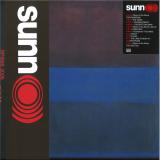
For nearly 30 years, SUNN O))) – Stephen O’Malley and Greg Anderson – have pushed the boundaries of heavy music, straddling the worlds of the avant-garde and rock to forge a style instantly recognisable as their own. Now, SUNN O))) return with their first album of new material since 2019’s acclaimed Pyroclasts. Their tenth album – their debut for Sub Pop – demonstrates the duo’s mastery of time and space, light and dark, and their willingness to evolve their unmistakable sound into bold new forms.
The eponymously titled SUNN O))) was tracked at Bear Creek Studios, Woodinville, Washington with Brad Wood (HuM, Tar, Sunny Day Real Estate, Liz Phair). This location proved crucial to the recording process. “The vast tracking room had big windows looking out on trees,” says O’Malley. “We could go hiking and be out in the woods, spend time outdoors. That became a big part of it.”
SUNN O))) have long welcomed collaborators into their self-contained world: past work has featured, Attila Csihar (Mayhem), composer Hildur Guðnadóttir, multi-instrumentalist Steve Moore, polymath Mark Deutrom, Silkworm’s Tim Midyett and legendary singer-songwriter Scott Walker. But on this album O’Malley and Anderson found fresh possibilities in the primal territory of the duo format, performing all the instrumentation themselves. “What’s been happening with our performances over the last couple years with the two of us and no other collaborators has been really fresh and exciting,” says Anderson.
The compositions on SUNN O))) are expansive and panoramic yet finely detailed, reflecting the arboreal setting in which they were recorded. Amidst howling feedback and glacial crunch, one finds surprisingly delicate moments: a field recording of water trickles beneath, piano interludes lend a hushed, solemn feel. All while the duo attains fresh heights of telepathic intensity as they shape music that breathes the bracing, earthy air of the Pacific Northwest.
Framing the album visually are two paintings by the late American artist Mark Rothko. Liner notes are by award-winning British writer Robert Macfarlane, famed for his works concerning landscape and the relationship between humanity and nature. Through the work of the band, Macfarlane, and Rothko, sound, word and visual combine into a fully immersive experience that is undeniably, completely SUNN O))).
Bringing mutant verve and a deadly swing to the bassweight discipline, Lyeform lands on Sneaker Social Club in resonantly rude form. Strong doses of UKG, wormhole techno and dubstep course through the veins of this muscular four-deep drop, but the London-based producer's metabolism strips the strands down to an atomic level and rebuilds the dance in his own design.
There's a dense and dank mood hovering over 'Drift Into Dread,' shaped out by rugged, noisy percussion steering towards mind-melting immersion. Rather than resting in technoid repetition, the landscape keeps shifting as dislocated rhythmic phrases slide in and out of earshot, led by the disembodied toasting of a mysterious MC.
'Vintage Gilly' has a much starker sound palette, all crackling drums sparking static interference into negative space with subs so low you might mistake them for heart murmurs. All the better to savour the subtleties as they tease into the mix, not least the understated lead lines loping lazily on the threshold.
The 2-step swagger is unmistakable on 'Godkiller' as it comes bowling into earshot, but there's not a whiff of garage revivalism in earshot as we channel hop between metallic feedback interference and needlepoint noise snaking around the minimalist framework of the beat.
'Glass Eater' closes the record out on another skippy stepper, but here Lyeform makes room for cavernous dub techno chords, overdriven bass harmonics and teeth-grinding noise. It's a final maverick swerve from an artist carving out a formidable impression via micro-level textural exploration within the context of dark and deadly soundsystem tackle.
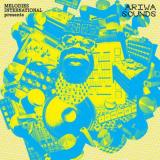
In 1979, Neil Fraser (artistically known as Mad Professor) founded Ariwa Sounds, the longest-serving and one of the most influential independently owned Reggae studios and record labels in the UK. From humble beginnings set up in the front room of Neil's home in South London recording on 4-track and homemade equipment, Ariwa would go on to record and release over 300 albums including works from some of the most impactful and storied artists of their time in the genres of Reggae, Dub, and Lovers Rock
Whilst our previous release in collaboration with Ariwa captured the label's early sound, a shared performance with Neil in Osaka and regular visits to his South London studio inspired us to assemble this 15-track compilation, showcasing the label's output across 45 years. Our release emphasizes some of the label's greatest vocalists: Johnny Clarke, Sandra Cross, Kofi, U Roy, Sister Nancy, Queen Omega, Aisha, Garnett Cross, Abel Miller, Horace Andy and more — presenting the Motown and Stax influences in the Lovers Rock, but also provides a glimpse into the dubbier and more experimental side of the label, showcasing Ariwa's commitment to quality but also their personality, philosophy and their humour. Love songs, break-up songs, socially engaged songs, dub experimentations — this compilation is not a "best of" Ariwa but a diverse and honest celebration of the label through the lens of Melodies International.
The compilation will be out in July in vinyl 2xLP, CD, digital formats, mastered from the original tapes by Frank Merritt (the Carvery), pressed at Optimal, artwork created by Jason Evans with design and assembly contributions from Nevil Bernard and Will Sweeney, animated teaser by Nevil Bernard and Melozine designed by Mafalda Meireles.
Donkey Trax kicks things off for the new 482 Studio Jack imprint with the Understand House EP. Four tracks that know exactly what they’re doing: loopy, tooly, soulful, funky and made for long nights and those tunes that won’t leave your head. No extra fluff, just straight-up groove that keeps rolling. The vibe’s clearly rooted in Chicago, no forcing it. No big room stuff, no drama, just house for people who actually feel it. A bit rough around the edges, but still warm where it counts. Best played when the floor’s already locked in and nobody’s thinking about going home.
Another long-awaited vinyl shaped through time, pressure, and careful listening. On this record, Spinnski, Ian Oskadev, and CLGR each bring the maximum of their craft, pushing their sound until it holds up under the toughest real-world testing. Airy textures, rolling low-end, sharp rhythmic structure, and hypnotic elements come together into a sound that feels both controlled and alive. Every detail has been checked, adjusted, and refined with precision — not just for the studio, but for real systems. This is a record that translates everywhere, from small rooms to large dancefloors. VAM14 stands as another carefully built piece in the catalogue — balanced, warm, and fully functional. A release shaped with attention, experience, and respect for the sound.
Kashatskikh Studio Mastering
Design & Illustration by Kirill Kashatskikh
Ruf Kutz reaches release twenty-two with something close to heart...
Mike Kee is a face from the early days - red-lit rooms of the Bodega mushroom squat parties in Sydney. This is a second release for Mike Kee on Ruf Kutz since 'Seeing Crystals' on RK2 in 2010.
Recorded in the rainforests of Bundjalung Country (northern NSW, Australia). Making good use of a Fender Rhodes and a JX-8P synthesiser.
WHITE CLOUD PLACE is a destination that doesn't exist. Glimpsed once on a street sign, filed away in the imagination and allowed to bloom into an imagined geography of warmth and weightlessness.
The music is lush dream house that elicits euphoria out of the speakers and into the body. Mike Kee has been chasing this feeling across his music and here it lands cleanly.
Flip the record and the temperature ratchets up. BANANA MOON is one for the dancers - shuffling congas push the pace while Rhodes chords and those big analog synth strings hold the whole thing aloft.
Where the A-side invites you to float, Banana Moon keeps it pitched up and jazzy.
Italy's Raffaele Attanasio rises on South Signature Records' third outing. Hard-edged techno with a southern soul, built for dark rooms and no excuses. 140g black wax, four cuts, done.
The original release of Saurus was on the italian label Muzak in 1994 to these days the track resurfaced online and is sought after by collectors, this new release contain two new contemporary mixes of the original song.
The Jack Ruby releases have been some of the most sought after dnb/jungle tracks on Discogs, mastered from the original DAT by Beau and pressed on 180g vinyl, sounding incredible!
made at the Green Room in 1994
BTW - in the rush to get these made in time for The Run Out i messed up the label - I write these out by hand (using an Ipad so its cheating really) and i put the cat number as KR007 and KR008, overlaid a layer or something like that. anyway - my mistake, hold my hands up...
Can’t go over it. Can’t go under it. Gotta go through it. And somewhere out there in the Pitch black beyond all darkness lies Peace & Purpose. The horizon you never quite crest until the inevitable end. Breathe deep — this fearful moment is the most alive you’re ever gonna feel. For the last decade, Crack Cloud’s vision has grown ever more expansive, more cinematic. Last go around, they dropped from The Heavens and then performed with their bare backs to an endless darkening desert. Now they’ve crammed all that life into some metallic and strange object called Peace & Purpose. All the terror of living. All the helplessness. All the raw human will. All glued and screwed and locked into this impossible tactile shape of dungeon dub; sour milk vox; Avant-protest music. Music arm wrestling itself to the ground. Far afield of beauty. The discordant symphony of factory farming and grim timber of the meat processing plant. The grinding din of the cogs. And yet, never giving up in spite of all good sense. Even in death, we are a coterie of survivors. Look now: There’s Terry Fox on his one-legged Marathon of Hope across The Great White North while cancer spreads through his lungs. A self-annihilating drive to feel alive. Rage against the dying of the light, they say. Well, how ‘bout it then!??! Peace & Purpose is not in any way some art project meditation on Punk Rock. It is Punk Rock. Terrifying, inspiring, vital, invigorating and most importantly, utterly unexpected. Every goddamn stupid day is a sublime slice of fresh hell. That’s the point. Gotta go through it. Wishing you Peace & Purpose — if only in that last big breath.
The moment the instantly recognizable intertwined guitar passage on the title track to the Eagles' Hotel California begins, the record's genius becomes obvious all over again. Ranked the 118th Greatest Album of All Time by Rolling Stone, certified by RIAA as the third best-selling LP in history, and considered the foundation on which the Golden State's mid-‘70s music scene was built, the 1976 landmark is a music staple immune to shifts in trends, eras, and styles. Fearlessly addressing the chaos and consequences of American life, its songs remain strikingly prescient and gain creedence with each passing day.
Mastered from the original analogue master tapes, pressed on MoFi SuperVinyl, and limited to 17,500 numbered copies, Mobile Fidelity's UltraDisc One-Step 180g 45RPM 2LP vinyl box set ensures you will want to permanently check into and never leave this particular Hotel California. Up to the herculean task of standing head and shoulders above all prior reissues, this collectible edition plays with extreme clarity, organic richness, tube-like warmth, massive dynamics, and microscopic levels of detail. You'll be able to practically smell the colitas and feel the breeze in your hair. Songs come across with an epic sweep and feature immersive, front-to-back soundstages that allow the music unprecedented air, roominess, and separation. As for the noise floor? It's basically as invisible as the spirits that waft in the corridors of the unforgettable title song.
Aesthetically, the premium packaging and presentation of the UD1S Hotel California pressing befit its esteemed status. Housed in a deluxe box, it features gorgeous foil-stamped jackets and faithful-to-the-original graphics that illuminate the splendour of the recording. From every angle, this UD1S reissue exists as a curatorial artefact meant to be preserved, touched, and examined. It is made for discerning listeners that prize sound quality and production, and who desire to fully immerse themselves in the art – and everything involved with the album, from the renowned cover art to the meticulous finishes.
Indeed, the opportunity to zero in on all the particulars of the 26-million-selling Eagles record dubbed "a legitimate rock masterpiece" by vaunted Los Angeles Times scribe Robert Hilburn has never been better. A global phenomenon that marked the band debut of guitarist-singer Joe Walsh, Hotel California continues to resonate and connect with listeners of all generations taken by its narrative depth, stark directness, picturesque melodies, daring majesty, and ardent emotionalism. Adorned with a breathtaking exterior photograph of the Beverly Hills Hotel that serves as the simultaneously haunting and alluring cover art, and rounded out by a rear-cover shot of the Lido Hotel lobby that reinforces a notion that teeters between permanence and transience, Hotel California is brilliantly tied to a specific place that functions as a universally understood metaphor for the American Dream.
Confronting the darker undercurrents and oft-ignored constructs attached to that romantic notion, the record's songs revolve around a host of shared themes: excess, mobility, stability, illusion, fame, destruction, and idealism included. Notably, Hotel California appeared at a crucial junction in American history: During the country's bicentennial and amid escalating controversies related to the Vietnam War, energy crisis, and governmental corruption. That the Eagles manage to channel such cultural, social, and economical matters into a cohesive, stately, big-picture statement is alone a stupendous feat. That the album's reach, boldness, vitality, accessibility, and understated intensity have never waned make it a marvel.
Reflecting on Hotel California 40 years after its original release, and indirectly explaining its enduring appeal and increasing relevance, singer-songwriter Don Henley confirmed the record pertains to the "loss of innocence, the cost of naiveté...the difficulties of balancing loving relationships and work, trying to square the conflicting relationship between business and art; the corruption in politics, the fading away of the Sixties dream of ‘peace, love and understanding.'"
It can be argued that Henley and company squarely hit on and drove home those ideas in the surreal title track, chart-topping "Life in the Fast Lane," and grand "The Last Resort" alone. But that would miss the forest for the trees. Experienced as an unbroken whole, complete with the pristinely shot imagery and physical grooves, Hotel California unfolds like a geography-conscious saga by James Michener and plays like colour-saturated movie shot on 70mm film by Martin Scorsese. It's about our collective and individual decisions – and the shape of our past, present, and future. And, just like that conjured by our imaginations, Hotel California continues to take on a life of its own.
More About Mobile Fidelity UltraDisc One-Step and Why It Is Superior
Mobile Fidelity Sound Lab's UltraDisc One-Step (UD1S) technique bypasses generational losses inherent to the traditional three-step plating process by removing two steps: the production of father and mother plates, which are created to yield numerous stampers from each lacquer that is cut. For UD1S plating, stampers (also called "converts") are made directly from the lacquers. Since each lacquer yields only one stamper, multiple lacquers need to be cut. Mobile Fidelity's UD1S process produces a final LP with the lowest-possible noise floor. The removal of two steps of the plating process also reveals musical details and dynamics that would otherwise be lost due to the standard multi-step process. With UD1S, every aspect of vinyl production is optimized to produce the best-sounding vinyl album available today.
MoFi SuperVinyl
Developed by NEOTECH and RTI, MoFi SuperVinyl is the most exacting-to-specification vinyl compound ever devised. Analogue lovers have never seen (or heard) anything like it. Extraordinarily expensive and extremely painstaking to produce, the special proprietary compound addresses two specific areas of improvement: noise floor reduction and enhanced groove definition. The vinyl composition features a new carbonless dye (hold the disc up to the light and see) and produces the world's quietest surfaces. This high-definition formula also allows for the creation of cleaner grooves that are indistinguishable from the original lacquer. MoFi SuperVinyl provides the closest approximation of what the label's engineers hear in the mastering lab.
There was nothing in contemporary music like Chris Isaak’s Heart Shaped World when it hit shelves in June 1989. More than three decades later, the singer-songwriter’s third album still sounds unique — and claims a backstory nearly as fascinating as the retro-leaning material and standout performances that propelled it to sales of more than 2.5 million copies. Home to the Top 10 smash “Wicked Game,” the set remains a masterful mood piece that invites you to pour a late-night drink, sit in a dimmed room, and relish Isaak’s elegant albeit raw ruminations on love, relationships, and questionable decisions.
Sourced from the original master tapes, pressed at Fidelity Record Pressing, strictly limited to 3,000 numbered copies, and featuring the bonus track “Diddley Daddy,” Mobile Fidelity's UltraDisc One-Step 180g 45RPM 2LP box set of Heart Shaped World unearths the staggering inner details, saturated tones, and brilliant atmospherics of the crisp production. It brings you up close and personal with Isaak’s spectacular singing — impeccably controlled, tense, brooding, steamy, smoldering, haunted — situated amidst stripped-down backdrops that allow every note to fully bloom and decay.
While Isaak’s ever-steady baritone remains the anchor, the contributions of his trusty backing band, the aptly named Silvertone, come across with just as much cool, command, and realism. The indispensable playing of guitarist James Calvin Wilsey particularly emerges with superb clarity and dimensionality. The character of his 1965 Fender Stratocaster, shivering twang of his spring-coiled fills, and his signature use of reverb, delay, and vibrato seamlessly match Isaak's patient deliveries and the band’s unhurried rhythms. Experienced on UD1S with ultra-black backgrounds and a nearly invisible noise floor, Heart Shaped World is in every regard a demonstration disc.
The premium packaging of this UD1S pressing befits its elevated status. Housed in a deluxe slipcase, it features foil-stamped jackets and faithful-to-the-original graphics. Aurally and visually, this reissue is for discerning listeners who desire to immerse themselves in everything involved with the album, not the least of which is the cover art depicting a lost-in-thought Isaak staring ahead and sitting in what appears to be an efficiency apartment. The image epitomizes the record’s lonesome temperaments and pensive themes.
Of course, if not for director David Lynch hand-picking two cuts from Heart Shaped World for his 1990 film Wild at Heart, the record would’ve probably suffered the same fate as Isaak’s prior efforts and gone unnoticed by the mainstream. Despite receiving raves from outlets such as NME, Chicago Tribune, and Rolling Stone upon its original release, the album stalled in the lower quadrants of the Billboard charts and, after a few weeks, dropped off.
Cue the ear of Lee Chesnut. Then the music director for a large Atlanta radio station, Chesnut heard the instrumental version of “Wicked Game” on Lynch’s soundtrack and started airing the album rendition at all hours of the day. Aided by a sensual video featuring Isaak and supermodel Helena Christensen, the song found its way into the public consciousness by early ‘91 and helped make Isaak a most unlikely mainstream star in an era where his techniques had little to nothing in common with popular tastes.
Despite its vintage vibes and shared DNA with legends such as Roy Orbison, Chet Baker, and Glen Campbell, Heart Shaped World transcends nostalgia, rockabilly, and throwback tropes. For all the melodrama and sadness at hand, Isaak’s gorgeously transparent singing dives deep underneath emotional surfaces. He mines subtleties that indicate his feelings go beyond heartbreak and anguish, and occasionally suggest frustration, menace, and anger. You can hear it in his quivering falsetto, and the slow and methodical ways he allows delicate whispers to break into shadowy phrasing that crosses over to the darker sides of romance and desire.
That approach bolsters the title track, which suggests calm yet moves on ominous currents — its simmering pace and snare-drum snappiness foreshadowing Isaak raising the volume and urgency during the coda. The southwestern-tinged “Wrong to Love You” plays with similar concepts of hesitation, unease, and discord, Isaak careful never to fully erupt and give anything away. His poised deliveries offer a master class in the art of insinuation and hurt on “Nothing’s Changed,” sent up with a wordless backing chorus and crackling guitar lines straight out of a Memphis blues joint.
Heart Shaped World further boosts its merit via its abundant stylistic variations, from the upbeat country-and-western trot of “I’m Not Waiting” and Spanish acoustic shimmer of the jazz-based ballad “Blue Spanish Sky” to the swinging horn-accompanied grooves of “Don’t Make Me Love You” and desert smokiness of the understated “Kings of the Highway.” On the latter, Isaak comes across as resigned and absolute. His singing and pain worm their way into your soul, and echo akin to the way the music prepares to strike when you least expect.
“Trouble going 'round,” Isaak croons right as the album begins. “Trouble going down.” Damn straight.
US outfit Garth only left behind a small trail of records, but this obscure 1980 7" still carries the peculiar charm of disco's stranger back rooms. Recorded between New York and Los Angeles across the late 70s, 'Special Part Of My Life' opens in warm, soulful territory through Henrietta Pam Garth's soft vocal glide, before J. Albert Garth gradually enters the frame and pushes the track somewhere more feverish and floor-facing. There's a lovely looseness to it all: the groove is slightly frayed at the edges in that very particular pre-digital way. On the flip, 'The Groove' heads somewhere far murkier, featuring wiggling synth effects and huge hovering atmospherics drifting over the top of the beat that gives the whole thing this faintly eerie quality which, honestly, makes it all the better.
Dub techno runs on ghosts and twins. The ghost is the echo that outlives the hit – the reverb tail, the delay feeding back into empty space. The twin is the dub itself: every sound shadowed by its own double, the original and its darker reflection locked into the same groove. Ghosts & Twins gathers four cuts that work that space.
This is BLACKINSTOCK's Black Gold Dub Techno with both feet on the floor – measured but muscular, weighted, no filler and no drift. The groove stays locked, the low end does the talking, and every echo earns its keep. Music for a dark room and a loud system, not a candle and a beanbag.
Curated by Kirill Matveev, who called in friends and long-time collaborators from across the MixCult circle, the record plays as four takes on one idea. Spectral Model opens with "Distancial" – a new name here, making a first outing on the MixCult family, and a fitting one to raise the ghosts. Djalo follows with "Model Dub," dubbing minimal and techno the way he has across MixCult, Souplex and Apnea: economical, hypnotic, built for the low end. On the flip, Schime – Hungarian producer Sanyi Egyed, working dub techno, deep and minimal since 2013 across Phonoda, Welter and the MixCult ranks – turns in "Phased." Closing the record, The Don Of Dubhouse is the new alias of TM Shuffle, Finnish producer and head of Vuo Records, no stranger to MixCult.
Continually presents Norwegian Rave EP (CON007), curated by Tonchius and Rub800.
A rave is never only a location. It is a temporary world built through rhythm, movement and shared energy.
Norwegian Rave captures different moments within that world. A collection of four interpretations connected by a common pulse, moving between peak-time intensity, hypnotic travel, open-ended exploration and the euphoria of the final hours.
A:G opens the record with Vibrations, a high-energy transmission built for the moment when the room reaches its highest point. Lord of ITB follows with Duties, taking the journey deeper through hypnotic patterns and a sense of movement beyond the immediate.
On the B-side, Finn Balansen presents Ketu, opening the space with a more progressive and expansive approach. Ruton closes the release with Rave-O-Lution, a playful and energetic celebration of rave culture—the moment when the night continues into the morning and the memories begin to form.
Norwegian Rave is a collection of moments rather than a definition—a shared frequency moving between individuals, rooms and memories.
After years in the digital space, ECOUL SND finally steps onto vinyl. Next Link System EP is ECOUL SND’s first 12” and the first solo record by founder Nicolas Barnes — a long-awaited step for the label and a focused statement of its sound.
Four tracks of minimal deep and deep tech, built around low frequencies, restrained grooves and spacious delays. The music moves patiently, leaving room for each element to settle and connect. The artwork follows the same sense of space and distance: cliff, water, and a narrow passage between them.
"Next Link System" sets the tone, "Not A Bad Place" opens things up, "Get My Soul" moves deeper into the dark, and "It Was" leaves a lingering trace after the final track.
LP,180g, 2027 REISSUE - REMASTERED FROM ORIGINAL TAPES, CAREFULLY REPRODUCED ORIGINAL ART
When Alan Parker recorded the killer library soul-funk LP The Voice of Soul with session vocalist Madeline Bell in 1976, some bright spark at Themes decided to also release all of the backing tracks as a separate, and equally innocuously title LP called The Sound of Soul. Thank goodness for bright sparks.
Released as a collection of unobtrusive musical backings in various rhythmic styles', the LP's original description dryly explains these tracks have been issued without melody and are therefore particularly suitable for use behind commentary. Female vocal versions of these tracks are issued on TIM 1021 The Voice Of Soul and it is possible to edit from vocal version to instrumental version or vica versa where commentary or scene changes occur'.Madeline Bell was backed by The Rhythm Section, who were for all intents and purposes the Themes International Music house band. So what we end up with here is entire album of instrumental work-outs by a band comprised of the formidable talents of Alan Hawkshaw on keyboards, Alan Parker on guitars, Barry Morgan on drums, Les Hurdle on bass guitar and Frank Ricotti on percussion.
Without Bell's vocals these backing tracks are given all the room they need to breathe. Each one more than stands up on its own.
The Sound of Soul is a real diggers' delight and, unsurprisingly, a must-have counterpart to The Voice of Soul.
As with all ten re-issues, the audio for The Sound of Soul comes from the original analogue tapes and has been remastered for vinyl by Be With regular Simon Francis. We've taken the same care with the sleeves, handing the reproduction duties over to Richard Robinson, the current custodian of KPM's brand identity.
Unusual Traxx welcomes Young Adults, the Dutch duo who have been making their mark in the underground scene with standout releases on Mood Waves, Private Parts, Seven Hills, and more.
Their four-track EP is a powerful showcase of groove and sound design, built around solid basslines, otherworldly synths, and some of the strangest vocals you are likely to hear. Each track is designed for a different moment of the night, taking you deeper into dark, sweaty rooms where anything can happen.
Pressed on limited edition vinyl, with only 200 copies available. Once they’re gone, they’re gone.
Running Hot welcomes Bliss Inc. for RHR05 with the Monday EP, four cuts of warm, groove-led house music built for intimate spaces and long nights.
The EP arrives during a busy year for Bliss Inc., following a recent release on Punctuality and the start of a new residency at Tokonoma in Frankfurt, where he’s been regularly playing the Holo and Sakuru floors. Those smaller rooms have had a clear influence on the EP, with subtle shifts, detailed percussion and hypnotic grooves given room to unfold.
Across the four tracks, rolling low-end sits alongside understated melodies and intricate percussion. The EP draws from the deeper end of house and minimal without ever sounding overly referential, and feels just as at home in a low-lit warm-up as it does deep into the night.
A flash of light hits your eyes. Your ears hear muffled bass. As bright white fades to amber, you find yourself in a familiar place. A place you have been to many times. Though the edges of your memory are no longer sharp, the shape of it all is in your DNA.
The smell of rusted metal, dirt-covered floors that once hosted workers, machines and industry mixed with spilled beer and the sweat of a thousand bodies moving to syncopated music. As your vision comes into focus, you’re back there.
A warehouse in the former industrial part of town. You’re surrounded by hundreds of strange but familiar faces, each of you dancing into a frenzy countless times under the moonlight — moving, jumping, laughing and connecting.
Sunlight pours through warehouse windows or appears over a distant horizon.
The DJ plays a song that completes the journey you all just shared. You are desperate to hold on to the feeling of the last song that lands you safely from the night and into a new day. The feeling is deep. Pure.
Especially when communal ecstasy is juxtaposed against the edges of the warehouse floors, the intimacy of city lofts, the spiritual nature of open fields or forests.
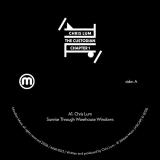
The Custodian
I spent just shy of two decades in spaces like that — as a raver in early 1990s Los Angeles, then a DJ, producer, label owner and head of Moulton Studios in San Francisco.
The Custodian Project is a memoir of a life lived deep inside the culture and business of house music from 1990 to when I stepped away from music as a full-time life in 2015 — told through music, stories and DJ events.
Each release of new music draws inspiration from feelings, emotions and memories of that life — different rooms, different eras. It is an exploration to understand and capture what those feelings were, and in some cases still are.
The Music
This EP is the beginning. 1990. When I first found the rave and re-ordered my DNA based on the sounds, songs and feelings of that era that can be summed up in the title track — Sunrise Through Warehouse Windows.
All three tracks here are an attempt to reach back and touch those mornings again. To put the listener back in the warehouses or open spaces where we would dance as the sun rose over the horizon.
To capture what I felt back in 1990 when the night transitioned into daybreak. Bodies moving in unison. People, places and music all connect. An era before algorithms.
(tracklisting)
A1 — Sunrise Through Warehouse Windows — 7:51
B1 — *Truly Amazing — 8:16
B2 — Sunrise Through Warehouse Windows (Floating Beatless Mix) — 4:20
Written and produced by Chris Lum for Abitare Music (ASCAP)
* Written and produced by Chris Lum - Abitare Music (ASCAP) & Jay-J Hernandez Stopped in Time (ASCAP). Originally released on Leaf Recordings 2000
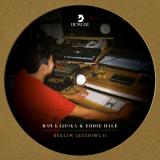
Berlin Sessions II continues the dialogue between Ray Kajioka and Eddie Hale, two producers working across techno, electro and experimental ground. Explorer opens with a rolling low end and clipped hats, built for the peak. Seven, Kajioka alone, strips back to a stark Detroit pulse, drum machine logic laid bare. Home returns the pair to shared ground, warmer pads over a steady kick, built for the room rather than the mainroom. Eleven closes with Hale solo, electro accents and a looser, more experimental swing. Across four tracks the record moves between drive and detour, functional enough for a set, strange enough to stand apart from it.
Mutual Rytm spawns new sub-label ‘Versus’ with debut EP from longtime techno associates Regent and Chontane. Continuing to expand its creative world, SHDW’s Mutual Rytm imprint now introduces ‘Versus’ - a new sub- label crafted for creative symbiosis between two artists across one shared release. Opening the series with authority, Regent and Chontane man the debut offering - two close friends and native Berliners who have been shaping techno for more than 15 years. Both long-standing members of the Mutual Rytm family, having released multiple times here before, the pair have always created music informed by life immersed in their local scene. Having both mutually influenced one another over the years, here they present their shared interpretation of techno with individual artistic DNA, forming a unified sound that represents the best of both worlds. Regent goes first, leaning towards functional, anthemic, dance-floor-focused techno. ‘Ephemera’ is tight, minimal but forceful; ‘Slow Burn’ has synth tension rising through the dark, next to glitchy percussion; and ‘Afterglow’ lets in more light, bringing otherworldly synths that hang above the groove and consume your focus. Chontane then explores a more musical and unconventional approach. ‘Plaxaric’ is supple, warm, and deep techno that tunnels into an abyss. ‘Grounding Factor’ is just as economical in design, but with introverted funk and evolving layers of sound. ‘Mental Lab’ spins out into complex rhythms inspired equally by IDM, jungle, and techno. It’s a mental workout as well as a physical one. Both artists add a pair of digital bonus tracks. Regent’s ‘Control Room’ and ‘Rarely Enough’ deliver elevated, hypnotic tools, before Chontane’s ‘Escore’ and ‘Outside In’ bring extroverted drum patterns along with contrasting melodic unease
Body2Body's first release is from its three founders: Elia, Nikizi and Axel. Three friends who've spent the last 6 years making music together. The label is new. The friendship isn't. Four tracks, each one its own room. Nikizi opens with a fearless, percussive-driven groove. Axel follows with classic, raw bassline-driven depth. Elia brings a hypnotic groove with subtle vocal infusions. Oclock closes with a jazzy hip-hop turn with tantalising vocals. A debut for the long bag. Made for the kind of nights that don't end early.
MARK DE CLIVE-LOWE, acclaimed jazz visionary, and AMMA WHATT unite for a soulful, jazz-infused house journey of lush musicianship and timeless vocals. With stunning remixes from OSUNLADE and CARLOS MENA. Crafted for both the dancefloor & deep listening. With gorgeous full pic jacket!
Ja:ck is an artist who moves beyond fast-paced trends, focusing instead on a clear, driving vision. His releases on the renowned label Cocoon Recordings represent an uncompromising sound that balances hypnotic techno and energetic club dynamics. With a keen sense of tension and atmosphere, he has developed a signature style over the years that works as effectively on large floors as it does in intimate sets.
His new track, Dinamo, perfectly encapsulates this energy: pulsating, powerful, and precisely crafted. The track builds with subtle intensity before erupting into a forceful, captivating movement designed for the peak time.
Notably, Ja:ck has been supported for years by techno icon Sven Väth, who consistently integrates Ja:ck's sound into his sets. This ongoing backing underscores not only the quality of his productions but also his relevance within the international scene. With Dinamo, Ja:ck delivers another clear statement: raw, direct, and absolute club material.
The Oliver Keim remix of Ja:ck’s Dinamo translates the original track into a clean, stripped-back club aesthetic with a steadfast focus on groove and energy. From the start, a driving flow emerges: precise, dry drums meet a deep, rolling bassline that constantly pushes forward. The arrangement remains intentionally minimalist, yet leaves enough room for subtle details to unfold and build tension. Finely placed breaks provide dynamics without losing momentum, leading back into powerful, controlled drops.
The remix eschews clutter, relying instead on clarity, punch, and timing. This makes it versatile enough for both intimate club settings and larger floors, fitting seamlessly into Tech House, Melodic Techno, or driving House sets. It is a modern, functional remix—minimalist in sound, powerful in impact, and strictly geared toward the dancefloor.
Ja:ck ist ein Künstler, der sich jenseits schneller Trends bewegt und stattdessen auf eine klare, treibende Vision setzt. Seine Releases auf dem renommierten Label Cocoon Recordings stehen für kompromisslosen Sound zwischen hypnotischem Techno und energetischer Club-Dynamik. Mit einem feinen Gespür für Spannung und Atmosphäre hat er sich über die Jahre eine eigene Handschrift erarbeitet, die sowohl auf großen Floors als auch in intimen Sets funktioniert.
Sein neuer Track Dinamo bringt genau diese Energie auf den Punkt: pulsierend, druckvoll und gleichzeitig präzise ausgearbeitet. Der Track baut sich mit subtiler Intensität auf, bevor er sich in eine kraftvolle, mitreißende Bewegung entlädt, gemacht für die Peak-Time.
Besonders bemerkenswert: Ja:ck wird bereits seit Jahren von Techno Ikone Sven Väth unterstützt, der seinen Sound immer wieder in seine Sets integriert. Diese kontinuierliche Rückendeckung unterstreicht nicht nur die Qualität seiner Produktionen, sondern auch seine Relevanz in der internationalen Szene.
Mit Dinamo setzt Ja:ck ein weiteres klares Statement : roh, direkt und absolut clubtauglich.
German Text:
Der Oliver Keim Remix von „Dinamo“ von Ja:ck übersetzt den Original-Track in eine klare, reduzierte Club-Ästhetik mit konsequentem Fokus auf Groove und Energie.
Von Beginn an entsteht ein treibender Flow: präzise, trockene Drums treffen auf eine tiefe, rollende Bassline, die sich konstant nach vorne bewegt. Der Aufbau bleibt bewusst minimalistisch, lässt aber genug Raum für subtile Details, die sich im Verlauf entfalten und Spannung erzeugen. Fein eingesetzte Breaks sorgen für Dynamik, ohne den Drive zu verlieren, und führen kontrolliert zurück in kraftvolle Drops.
Der Remix verzichtet auf Überladung und setzt stattdessen auf Klarheit, Druck und Timing. Dadurch funktioniert er sowohl in intimen Clubsettings als auch auf größeren Floors und lässt sich vielseitig zwischen Tech House, Melodic Techno und treibenden House-Sets einsetzen.
Ein moderner, funktionaler Remix, reduziert im Sound, stark in der Wirkung und konsequent auf den Dancefloor ausgerichtet.
The “Late Loop” LP by Andy Stott is released on Modern Love and marks the producer’s return after a five-year break from the studio. The album brings Alison Skidmore, Stott’s long-time vocal partner, and for the first time Elaine Howley to the forefront; their voices are used partly as full vocal performances and partly as fragmented, pitch-shifted loops, forming the emotional center of the record. Stott largely avoided established production tricks: no basslines, no reverb, just a delay as the sole effect, giving the arrangements an unusual clarity and fragility.
“Late Loop” sits somewhere between downbeat, electronica, and leftfield, and emerged from an experimental process that ranged from drone passages and brass-like concrète moments to song-oriented structures. Rhythm often emerges indirectly here: a drum machine was played back into the room, re-recorded, and pitched down; a pump organ was recorded with a microphone placed on the floor; valves and an aging mixing console audibly contribute to the atmosphere. Lyrically, themes of separation predominate; the voices were layered multiple times, then pared back until only the essentials remained. Mastering was handled by Rashad Becker, and the cover photo is by Myriam Boulos. With “Late Loop,” Modern Love presents an austere, meticulously crafted album whose details gradually reveal themselves with repeated listening.
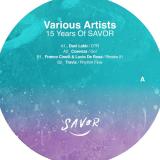
Savor Music celebrates a landmark 15 years in the scene with a three-part compilation series. This second installment continues the momentum, bringing together a powerhouse selection of artists that define the label's sophisticated, groove-oriented sound.
Side A opens with a major track on A1, as Dani Labb unveils a hypnotic Detroit meets Aphex Twin spiritual bomb. This track serves as a masterclass in production, delivering a fluid, dark room ready flow. Following this, A2 showcases the refined artistry of Cosenza, who brings a groovy funky stylish number to the record. His contribution is characterized by an infectious energy that keeps the groove effortlessly sophisticated.
Side B shifts into deeper territory, starting on B1 with Franco Cinelli teaming up with Lucio de Rosa for a classy subtle morning piano house track. True to their reputation, they deliver a detailed number that showcases the technical precision and steady momentum for which they are renowned. Finally, B2 rounds out the EP with a deeper hypnotic track by Shine On You boss, Travis. Combining unique creative perspectives, Travis weaves together profound atmosphere and mysterious depth while keeping a steady groove to close out this chapter.
Inner City Sound Archives reaches its third transmission.
Six extended cuts built around the language of late-night New York disco — loose percussion, rolling basslines, open arrangements, raw repetition and the kind of long-form movement made for a room rather than a radio.
Volume Three moves deeper into the series.
Midnight Passage opens the doors slowly: nocturnal, hypnotic and suspended in motion. Afterglow stretches the groove into warmer territory, while Mercury Rising pushes toward a rougher, more physical pulse.
On the reverse, West Side Motion locks into an extended downtown groove, Golden Hours drifts between soul and after-hours disco, and Crosby Street closes the record with the stripped-back intimacy of a late-night loft cut.
Six cuts. Two sides. No filler.
Gabu Records returns with its fourth vinyl release, a four-track EP drawn from the label's catalogue.
Side A opens with Foehn & Jerome's "Emser." The Berlin-based Austrian duo have been active in the city's underground since 2011 and host the Perfumed Freedom nights at Club der Visionäre. "Emser" layers 80s funk-inflected grooves with shimmering piano, melodic drums and floating vocals. Baloo & Carlosthings follow with "Vera," a Berlin production built on warmth and understated funk.
Side B turns inward. Omar Fayyad, the Egyptian producer based in Dubai and known for a spacious, dubby take on minimal house, contributes the title track of his EP Rhythm & Chord. It is patient, harmonic music with room to breathe. Zone+ closes with "Madvillain," a deep, hypnotic piece from a producer whose sets have taken him from Cercle in Bali to Sunwaves.
Together the four tracks make a record for the long stretch of the night, from the first warm-up groove to the last quiet hour.
1Night Only takes off with the first physical release of his co-owned label Pachanga Records.
The EP features three dancefloor weapons, blending his warm, distinctive sound with a tech-house approach. Built for the dancefloor and tested across all kinds of rooms, the tracks take unexpected turns along the way, with ‘Bring Da Funk’ giving the release its name and rounding things off.
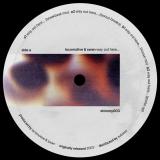
Paul Guido and Laron McNally, AKA Locomotive & Swan, conjured up ‘Way Out Here…’ in the living room of a tiny apartment in San Francisco in 2003. The duo were part of a bustling West Coast scene inspired by the pioneers that came before them, pushing the music into a more experimental direction. Their sound was a hybrid of looping tech-house with a freshly dubbed-out soul, soft-edged pumpers made with long sessions on the dance floor in mind.
The four versions of ‘Way Out Here…’ contain the same tripped-out samples and driving percussion, but with their own distinct attitude. The ‘Breakbeat Mix’ provides the most bone-rattling bassline of all time, balanced by the more restrained and stripped back ‘Bonus Breaks’. The ‘House Mix’ subtly plays with pressure and release, while ‘Posse Up’ goes full throttle lift-off.
With this four tracker all bases are covered - each track is suited to different moments across a night’s arc from warm up, to peak time, to after hours. This EP is a testament to the grooves and groovers of the time, reflecting an era of music that informed much of what we cherish today. The shimmy is strong with this one, and we are happy to give it another lap.
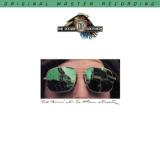
The Doobie Brothers faced a serious predicament as they prepared to record Takin’ It to the Streets. That the group navigated a potentially serious personnel problem that would’ve tanked lesser bands and scored its fourth straight Top 10 album — while again expanding its range — speaks to the collective’s chemistry, broad-mindedness, and songwriting abilities. Known as the effort on which vocalist-keyboardist Michael McDonald makes his debut, the 1976 set stands as an all-encompassing representation of the various styles the Doobie Brothers explored during their heyday.
Sourced from the original analog master tapes, mastered by engineer Krieg Wunderlich, pressed at Fidelity Record Pressing in California, and housed in a Stoughton gatefold jacket, Mobile Fidelity’s numbered-edition 180g 45RPM 2LP presents Takin’ It to the Streets in definitive sound. Given the luxurious room of a 45RPM version for the first time and benefiting from the wider grooves, the music unfolds amid large soundstages replete with ultra-quiet backgrounds, big dynamics, and accurate imaging. By then a key component of the Doobie Brothers' success, Ted Templeman’s production is brought to light with stellar clarity and definition.
As is the case on Mobile Fidelity's four other acclaimed Doobie Brothers 45RPM reissues, myriad facets that help make Takin’ It to the Streets timeless, natural, and organic — minimal overdubs, voices that realistically rise and fall, notes that properly carry and decay, warm tones, bass lines that pop with color, well-placed percussive accents, defined separation between the players — emerge with incredible presence, openness, and fullness. Nothing is overdone or out of place. No small feat given Templeman and company didn't know how everything would unfold when they first met up in Southern California.
Confronted with a change in plans by co-founder Tom Johnston, whose contributions to the band up to that point in its career identified him as an indispensable member, the Doobie Brothers were thrown for a loop when he curtailed pre-planning work and retreated home to deal with ongoing health problems. Thankfully, Jeff "Skunk" Baxter, the group's newest full-time recruit, had a possible solution in his former fellow Steely Dan colleague McDonald. The singer-keyboardist had already sat in with the Doobie Brothers on their recent tour. So, why not give it a shot?
McDonald's prodigious talents notwithstanding, he couldn't technically replace Johnston. For starters: McDonald's soulful timbre bore little resemblance to Johnston's grittier voice. And McDonald played keyboards, not guitar. No wonder Templeman initially expressed reservations. He also knew the Doobie Brothers needed additional material before they could consider wrapping the record. Yet the skepticism began to dissipate on the first day of the sessions. Still waiting for second drummer Keith Knudsen, the band gathered in the studio with former roadie Bobby LaKind on congas and Little Feat drummer Richie Hayward for a live run through "Wheels of Fortune." The instrumental parts of that take landed on the record. Johnston would even return to share the lead vocal duties with Patrick Simmons.
Those magical results, and the experience of hearing McDonald woodshed the title track at the piano, turned Templeman into a believer and cheerleader. Spurred by their veteran producer's encouragement and McDonald's ideas for songs, the Doobie Brothers embraced new directions just as they did after their debut LP and on subsequent efforts with orchestral and horn treatments. The latter return on Takin’ It to the Streets courtesy of the five-piece Memphis Horns. Yet outside of viola accompaniment on "Losin' End," string elements step aside in favor of McDonald's pianos, synthesizers, and clavinet. And, on five cuts, lead singing.
As the new face of the band, McDonald ended up crafting all or portions of four tunes. His fingerprints are all over two of the singles, including the jazzy, blue-eyed-soul delight “It Keeps You Runnin’” and irresistibly melodic title track, which cracked the Top 15 and became one of the Doobie Brothers’ signature numbers. He and Baxter’s penchant for smoothness, and a precursor to the band’s coming transition into rhythmically oriented yacht rock, informs the brassy sway of “Carry Me Away.”
Further enriched by Tiran Porter’s gorgeous, time-signature-shifting ballad “For Someone Special,” Simmons’ peppy, spring-loaded “8th Avenue Shuffle,” and Johnston’s “Turn It Loose” — the move-your-feet boogie serving as kind of apt farewell to the band’s prior rock ‘n’ roll sound — Takin’ It to the Streets spun uncertainty into gold. Altered yet unbowed, the Doobie Brothers once again offered countless listeners “the best kind of remedy” with feel-good music that holds up amid any era.
Nippon Psychedelic Soul 1970-1979 is Time Capsule’s continuation of the deep dive into Japan’s rich history of folk and psychedelic soul music.
Vinyl LP with 4 page insert, original artwork and photos
The kaleidoscopic psychedelia of 1970s Japan captured a fragile and fertile moment as the country sought its future in funk grooves, heavy reverb and lyrical hallucinations.
The follow-up compilation to Time Capsule’s Nippon Acid Folk, Nippon Psychedelic Soul takes myriad pathways into the tripped-out undergrowth of 1970s Japan. Finding their feet at home and looking for inspiration abroad, the musicians featured here were engaged in the communal soul-searching that followed the breakdown of the 1960s protest movements. Some made it big, others drifted into oblivion. The music they left behind shimmers with intensity.
At the core was Happy End, the first project of YMO’s Haroumi Hosono, whose distortion-heavy guitar and crisp back-beat laid the foundations for Japanese lyrics that flipped the paradigm of Japanese rock music on its head. With it came a new found sonic ambition, such as in the bold Philly-soul style arrangements of producer Yuji Ohno, whose work with occult wandered Yoshiko Sai shares some of the bittersweet grandeur of Rotary Connection or David Axelrod.
Then there was Jun Fukamachi, a pioneer of Japanese synthesis, whose debut album was a carnival of orchestral funk, euphoric horn lines and rich production, complete with soaring guitar solos, psychedelic organ and a truly cinematic finale. The first and only time Fukamachi would sing on record, ‘Omae’ rips like the ultimate end-of-nighter.
Influenced by giants of the US soul scene, maverick composer Hiroshi “Monsieur” Kamayatsu (otherwise known as ‘the Brian Wilson of Japan’) went one step further, enlisting Tower of Power to play on ‘Have You Smoked Gauloises?’ The B-side to Monsieur’s biggest-selling single, it coasts with sophisticated cool - a liquid bassline and suave keys comping under a roaring trademark ToP sax solo. No surprise it found favour once more on the Acid Jazz dance floors of ‘90s London.
Such was the spirit of experimentation that big studio productions and private press releases sat side-by-side, with the likes of Momotaro Pink and Kazushi Inamura, taking their hopes of success into their own hands with the resources available to them. More reflective but no less robust, theirs was a heavy, fat-backed drum sound, soaked in dramatic, soulful psychedelia.
If some were dreamers and others space cadets, none were further out than sci-fi writer, musician, activist and self-made scientist Tadashi Goino, who transformed his own fantasy novel Messenger from the Seventh Dimension into an operatic prog odyssey with few discernible musical reference points – a majestic and completely bonkers outlier even among company as strange and brilliant as that which is collected here.
Less a compilation of a scene, as a compilation of a sentiment, Nippon Psychedelic Soul is a wild ride from start to finish, shattering the narratives of the Japanese folk and rock tradition into a million tiny pieces.
Proto Exotica notches its third release with The Infinite Hum EP , the debut project from Melbourne producer Mateo Torres Rodriguez under his new alias: Cerro.
Cerro is a personal and transportive collection of recordings owed to four months in Colombia, where Mateo returned to the neighbourhood he grew up in. On a table in his childhood home, he set up a modest travelling studio with a small collection of analogue hardware. At times, he'd pack individual pieces of
gear to travels within his travels, working without a fixed room or routine.
And so from a drum machine, a monophonic synth, a polyphonic synth, a laptop, and a pair of headphones (but no speakers) came five tracks of dub-inflected house and cosy Balearica.
The EP opens with 'The Bright Side' , dub bass, warm analogue pads, housey tempo. 'Unending Journey' slows things down, its deep low-end holding space beneath a synth that drifts in and
out.
'Power Of The Small' brings a dreamy house melody alongside a dubbed-out analogue lead, the filter opening and closing as the track breathes. On the B-side, Andras remixes 'The Bright Side' , keeping the bounce and weaving a jazzy lo-fi Rhodes solo through it. The EP closes with 'Indubitably' , dubbed-out vocal samples and floating pads settling into a downtempo Balearic lilt.
This has been a very personal project and a mammoth undertaking for us folks here PACE HQ: 12 tracks unearthed from the cult Scottish figure’s completely overlooked back catalogue. Collected archive material from the past 25 years, originally composed as an OST for the feature length film The Flesher (1992) which was also written, shot and directed by Rae. No copies remain. Deep cuts that span G-funk, hip-hop, house, synth-pop, electro, dub, downtempo, funk/soul, R’n’B with appearances from Rae’s heavyweight list of frequent collaborators… Bernie Worrell, Adrian Sherwood and Jimmy Douglass.
"In 1991, the Scottish Rugby Union & the Royal Bank of Scotland, commissioned me tae make the world's first Scotland World Cup music video... they didn’t pay me so I fought back. It took 18 years tae win, and I nearly lost everything. I turned to audio visual art: under the pseudonym Jock Pleasure - I wrote and directed a feature length film called The Flesher as well as creating 100s of full length DVDs and tracks” (Jesse Rae).
One man took on the banks and won, but it took its toll and in this totemic corpus of work Jesse Rae counts the cost. The Flesher is art as pure defiance: “this stuff is very dark and deep, it is such a vast body o’ work, but when I won my battle against the bank, I secretly returned tae Hodge Close (in the Scottish borders) and dropped the entire work sealed in stone intae the deep deep murky depths of that water, where it has remained since 2009. There are no mair copies."
What we have here then is the salvaged remains. A hopeful dunt of Scottish erotica that gets you right in the pits.
Splice DJ Screw with Dean Blunt, Moodymann, Prince, Cocteau Twins, MF DOOM, Luther Van fuckin’ Dross, Barry fuckin’ White; run that through the B-movie videotape static meets Harmony Korine, Les Blank & early Grand Theft Auto. Empty boulevards. Small-town strip joints. Late-night dial-up. Sacrifice and solace. Outside of the OST, there’s a cast of forgotten characters: primary school kids making house jams, teenage popstars from the Scottish Borders, and the rhapsodic Ayrshire soprano NIKA laying down haunting vocals in Miami.
Celebrated as a cult figure in the USA, Jesse’s work has never fully had the appreciation it deserves at home. Not really. Aye, we know Inside Out and The Thistle. But he’s too easily fobbed off as an eccentric outsider: a helmet-wearing, claymore-wielding gimmick. But do we really know the extent of what this man has done - and gone through - for the sake of art?
A legend returns as the alias of scene stalwart DJ Levi and Curvature co-creator Ghosts of MIDI unleashes an EP of seismic tracks backed with remixes from ASC and Aural Imbalance. A1 - Iron Dinosaurs Opening a fine Curvature debut for the label’s very own Dan Azimuth, Iron Dinosaurs is an epic piece of atmospheric goodness introduced with a long, elegant intro of synths and luscious female vocals. Before long, classy, energetic metallic breaks kick in, set to an immensely memorable key melody and a room-filling bassline, creating a breathtakingly fluid and captivating piece. A2 - Iron Dinosaurs (ASC remix) Taking an incredibly evocative track and lacing it with sprinkles of ASC goodness to create a true gem is the order of the day here, as the heart of the original courses through an ominous intro, quickly beset by fine analogue amens that hit hard for the dancefloor, while allowing the soul of the piece to breathe, syncing in harmony with the distinctive vocal samples and swirling synthwork that colour the atmosphere so perfectly. B1 - Deadly Dimensions A DJ-friendly intro of hi hats gradually ushers in epic, bassy melodies gliding through serene vocals and airy pads, before the drop reveals exquisite breaks with just the slightest hint of an apache in there. Very danceable, the breaks are chopped and diced at will, driving a determined pace for another superbly epic, ethereal piece of atmospheric drum & bass from one of the OG’s of the scene. B2 - Deadly Dimensions (Aural Imbalance remix) The EP closes with a real treat - this is as close as an example you’ll hear to a match made in heaven as the eerily epic production of Ghosts of Midi collides with the inimitable ambient mastery of Aural Imbalance. Intersecting the thoughtful vibes of the original, this remix sees playful old school breaks jostle with swathes of fluid synthwork and delicate pads, creating a unified expression of atmospheric purity.
The Mighty Diamonds are one of the most famous vocal groups to come out of the Jamaican Reggae scene.
Their perfect harmonies ride over the wholesome and Garveyite influenced lyrics to such great effect that they will always evoke memories of that time and place, but also like all great music never seems to date.
The Mighty Diamonds consist of Donald ‘Tappy’ Shaw (lead vocals) Fitzroy ‘Bunny’ Simpson and Lloyd ‘Judge’ Ferguson providing those fantastic harmonies.
They began their recording career working with producers Stranger Cole and Rupie Edwards but found their breakthrough success with producer Joseph ‘Joe Joe’ Hookim at the legendary Channel One Studios recording ‘Hey Girl’ and covering two foreign tunes namely ‘Country Living’ (The Stylistics) and ‘Stoned Out of Mind’ (The Chi-lites) which suited their vocal styles perfectly.
The vocal group also cut tracks with other famous producers of the time Joe Gibbs ,Gussie Clarke and Mr.Tappa Zukie of which we focus this release on.On listening, these tunes work perfectly with harmonies weaving together and lifting the songs to another level.
The group also leave some room for a history lesson in the shape of ‘Morgan the Pirate’ and the thought provoking ‘Do You Want to Spend Your Time Wasting Time’.
Well waste no more and enjoy this set by one of Jamaica’s finest vocal groups….
Following years of quietly refining her craft, Dilemma now returns with her debut album A River Without Banks, landing this August on Spearhead Records.
Known for her effortlessly deep and soulful approach to drum & bass, Dilemma has become a respected name among listeners who favour atmosphere, musicality and understated emotion over quick trends. A River Without Banks feels like the culmination of that journey, a rich and carefully crafted body of work that moves between warm liquid rollers, deeper late-night textures and moments of genuine introspection.
The album showcases Dilemma’s versatility without ever losing the unmistakable character that has made her music so recognisable. Tracks like “You Do It To Me” capture her signature laid-back soul, while collaborations including “Watch” with BCee and “Days To Come” featuring In:Most & Lauren Archer bring a cinematic and emotional depth to the project. Elsewhere, cuts like “Usurper” and “Vibe Check” reveal a heavier, more stripped-back edge while still remaining rooted firmly in groove and feeling.
Rather than chasing peak-time moments, A River Without Banks unfolds patiently and naturally, rewarding repeat listens and drawing inspiration from across the spectrum of soulful drum & bass culture. There’s a timeless quality to the album, music designed to stay with you long after the final track fades, whether heard in solitary moments or shared across packed rooms and late-night systems.
Released via BCee’s Spearhead Records, A River Without Banks continues the label’s long-standing tradition of championing thoughtful, emotionally rich drum & bass while further cementing Dilemma’s place as one of the scene’s most quietly consistent producers.
Following the launch of the label late last year, Tripsitter Records returns with its second release, Social Memory Complex EP, a four-track Various Artists compilation that explores the evolving intersection of speed garage, warped low-end pressure, and contemporary tech house. Featuring contributions from Baumb, Marcos Coya, New Balaance, and Voosen, the EP captures a shared fascination with the resurgence of UK garage aesthetics while pushing the sound into new territory through modern club production and forward-thinking songwriting.
Across the release, listeners are met with rolling grooves, swung percussion, and a heavy emphasis on elastic warp basslines that nod to the roots of speed garage while embracing the power and functionality of modern tech house. Built equally for dark club rooms and open-air festival systems, each track offers a distinct perspective on the genre's current evolution. Baumb delivers a driving, high-energy cut that balances hypnotic rhythm with low-end intensity, while Marcos Coya leans into deeper club textures and precision-engineered groove work. Voosen rounds out the collection with a track that further reinforces the EP's dancefloor focus, combining punchy drums with unmistakable garage-inspired movement. Perhaps the most unexpected contribution comes from New Balaance, whose track ventures into synth-pop territory without abandoning the EP's core identity.
Melodic hooks, emotive synth work, and song-oriented structures are woven together with speed garage rhythms and bass design, creating a standout moment that broadens the compilation's sonic palette while remaining firmly connected to the release's underground roots. With Social Memory Complex EP, Trip Sitter Records continues to establish itself as a platform for artists exploring the spaces between genres—where UK garage heritage, tech house functionality, and contemporary electronic songwriting converge. As speed garage continues its resurgence across clubs and festival stages worldwide, Social Memory Complex EP arrives as a snapshot of a scene in motion: nostalgic without being retrospective, and innovative without losing sight of the dancefloor.