Newly signed to indie heavyweights Heist or Hit (Westside Cowboy, Her’s) EP two: ‘Marionette’ has been produced by Daniel Fox (Sprints, Melts, Psychotic Monks, Naked Lungs, Nerves, Ronan Group) and it’s set to be seminal. A set text for future musicians with aspirations of innovation. “The theme of the marionette is present throughout each song, involving some aspect of a power struggle and a lack of control within oneself.” Opener ‘Chocolate’ bounces in on a synth line as slippery and hyperactive as anything Aphex Twin ever cooked up. Crispy offbeat electronic cymbals play counterpoint to atonal guitars and pugilistic drumming before the track dry-wretches its way into a nauseating cacophony of euphoria. It’s a tale of crippling social anxiety and a preference for an unflattering, lonely reality. The muted guitar pluck in the intro to ‘Crows’ is the sonic equivalent of biting one’s nails. An anxious, involuntary tic that speaks to the theme of guilt, especially surrounding digital culture: “children can watch what they please, just with viewer discretion.” The track lurches between textures, weaving themselves in and out of focus. Guitars blare like sirens, interrupting paranoid urban centres at 2am, while the bass sounds like the inside of an insomniac’s head on day four of a REM drought.
The metallic intent of ‘Discipline’ squats on the chest as though Steve Albini is your sleep paralysis demon. The pain of accountability spews from the industrial regularity of the beat, apt to the narrative of a soldier coming to terms with the lies that made him commit atrocious, violent acts. EP closer ‘Servant’ starts like a Spectrum loading screen. Dial-up modem-coded, it pauses for moments of white-noise-vomit and existential bloops. Fitting for a more abstract take on the idea of the power struggle filtered through religious imagery and self-awareness of one’s own actions, coupled with an inability to exert control over them. The band pile on the textures with sadistic glee until the evil is exorcized and the modem melts. Connection severed. Across the EP, vocalist Joseph has a tendency to hyper-fixate on themes of control and unhappiness. Creating rooms in which doom and isolation ricochet. Not that it’s all bad news “we like to think that by shedding light on the negative, it commands a sense of hope.” Influenced as much by the liminal-space horror and uncanny dread of Silent Hill as the existentialist theatre of The Twilight Zone or the absurdity of Twin Peaks, they occupy a space between unease and impulse. Makeshift Art Bar are not a band interested in being liked. They’re a band interested in being necessary. There’s so much eating and drinking in their work that multiple listens simply don’t satisfy; something new reveals itself on each return visit. Audacious. Idiosyncratic. Vital. A young band carrying identity, defiance and an uncompromising vision as if it isn’t a rare cargo.
Random Color ReVINYL Edition. Never has a Songs: Ohia album's process been so integral to its overall feel as is the case with DIDN'T IT RAIN, the band's sixth proper full-length. The album, like the working class South Philadelphia neighborhood in which it was birthed, has a real used goods kinda feel to it. Engineer Edan Cohen employed what some may consider "old-fashioned" recording techniques -- the entire album was recorded live with no overdubs, the full band playing in one room with the players always within arms' reach of one another; singers Jason Molina, Jennie Benford and Jim Krewson (the latter two of Jim & Jennie And The Pinetops) sharing microphones singing live together, sometimes sitting in chairs, sometimes standing. The result is a sound which resembles the warmth and personality of the classic Muscle Shoals Sound recordings of the early- to mid-70s: Willie Nelson's PHASES & STAGES, the Rolling Stones' "Wild Horses", and others by Aretha Franklin, Boz Scaggs, Bob Seger, Lynyrd Skynyrd and Wilson Pickett.Inspired by the Mahalia Jackson song of the same name, the title track is a beautiful song about the shifting tides of life and the old cycle of "a lot of shit going down before shit clears up". It's a damn fine place to start an album that seems in no hurry whatsoever to make a universal statement, instead perfectly content to walk its own path toward resolution. And damn if Songs: Ohia principal songwriter Jason Molina hasn't gone and created a record that is even more intensely personal and healing than any of his previous works. Neil Young had his AFTER THE GOLDRUSH, this is Molina's DIDN'T IT RAIN. Indeed, this is the album with which Molina really leaves his mark as a serious songwriter and artist. On 1999's genre-bending Ghost Tropic full-length, Songs: Ohia made it clear that it could make a cohesive album that took its listener on a journey from front to back. Its dislocated feel set a haunting tone, and its largely instrumental and drone-like quality was the process of the Ohia eluding itself and its own tendencies, searching for the underside of its roots freshly yanked. With DIDN'T IT RAIN, Molina & Co. return to the beauty of the song form and offer up a startlingly soulful and introspective song cycle in which Molina -- accepting a comfortable degree of anonymity amongst the other players -- meditates on what it means to feel rooted again (in the city of Chicago, where he's called home for the past three years), sounding more sturdy at his core than ever.
All songs written & arranged by Ora Cogan with the exception of Is Anything Wrong by Lhasa De Sela. High Noon & Holy Hells were written by Ora Cogan and arranged by Finn Smith, Ora Cogan and David Proctor. Katie Cruel is a traditional, arranged by Ora Cogan. Engineered by David Parry at Risque Disque September 2022 Mastered by Tom Deis at Pineapple Room Studio All songs mixed by Tom Deis except for Cowgirl, Dyed, Is Anything Wrong mixed by David Parry
Die mit einem Diamant-Zertifikat a usgezeichnete u nd f ür d en G RAMMY® Award n ominierte Pop-RockBand OneRepublic kündigt die Veröffentlichung i hres m it 2 -fach-Platin a usgezeichneten z weiten Albums
„Waking Up“ erstmals auf Vinyl an, zusammen mit einer neu remasterten digitalen Version, die am 26.
Juni 2026 erscheint. Eine Standard-2LP auf schwarzem Vinyl wird überall im stationären Handel und bei
Online-Händlern erhältlich sein, Alle Versionen präsentieren sich nun in neu remastertem Sound von
Justin Perkins von Mystery Room Mastering.
For nearly four decades, since its founding during the mid 1980s, the Belgian imprint, Sub Rosa, has continuously plumbed the depths of numerous, radical creative histories, assembling a catalog of releases that has almost no equivalent, while remaining nearly impossible to nail down. That said, for most of its run, Sub Rosa has been primarily recognized for its rigorous explorations of the lesser explored shadows of experimental sound practice (sound-art, sound-poetry, early electronic and electroacoustic music, free-improvisation, etc.), delivering a remarkable body of artifacts that have collectively helped to rewrite history in their wake. While it's always been impossible to anticipate where the label might take us next, threading their catalog are plenty of releases that throw further wrenches in the cogs, expanding our understanding of what they pursue, as in the case of a handful of titles, appearing as early as the 1980s, dedicated to ethnographic field-recordings from various parts of the world. Among the most striking and celebrated of these was 2017's Ethiopian Urban And Tribal Music: Mindanoo Mistiru / Gold From Wax, comprising an astounding body of recordings made by Ragnar Johnson and Ralph Harrisson in Ethiopia during 1971, reissuing material originally released by Lyrichord the following year. Now, Sub Rosa returns to the incredible work embarked upon by the pair and captured on that same trip with Ethiopian Musics 1971, comprising the recordings originally released by Ocora shortly after their completion, expanded in this edition to include an entire disc of never before released music. Widely regarded as some of the most important field-recordings ever made of indigenous Ethiopian folk music (as captivating and intoxicating as they are revelatory: providing insights into the roots of the country's singular traditions of popular music and jazz that have come to be celebrated the world over), this incredible collection is issued by Sub Rosa in a beautifully produced 2LP edition, complemented by a four page insert providing detailed descriptions of each song, as well as notes by the ethnomusicologists and recordists, as well as a 2CD edition, with a twelve page booklet. Insanely good and absolutely essential for any fan of field-recording, ethnomusicology, the music of Ethiopia, or the label's mission at large. Once again, Sub Rosa has defied our expectations and delivered a remarkably important intervention in the history of recorded sound.
Located in the Horn of Africa region of East Africa, few cultures are distinctly singular, while being so diverse (containing 80 distinct ethnic groups who speak 70 languages and 200 dialects) as that of Ethiopia. The home to some of the oldest surviving sects of Judaism, Christianity, and Islam (each contributing important aspects of its collective cultural body), particularly the country's culinary and musical traditions have become celebrated the world over, and (generally speaking) feel entirely independent of those of its neighbors. Given this, it's unsurprising that, during the summer of 1971, the young ethnographer, Ragnar Johnson, accompanied by Ralph Harrisson, traveled to Ethiopia to begin his brief career as a field recording ethnomusicologist, capturing material on reels of magnetic tape that would be subsequently released across three LPs for Lyrichord and Ocora, respectively, coming to form a cornerstone of documentation and study of the country's many indigenous musical traditions, as well as providing wide, global access to them for the first time. While Johnson's recording career was relatively brief, ending toward the end of the decade when he began to focus more on teaching in UK universities, with a focus on the anthropology of art and social anthropology, his impact on the field was lasting. Between 1971 and 1979, in addition to those he made in Ethiopia, he made hugely significant recordings in Yemen (also issued by Lyrichord before being reissued by Sub Rosa) and Papua New Guinea, which were originally released by David Toop's Quartz Publications to wide celebration, before being revisited by Ideologic Organ in 2023.
While it's worth noting that commercial releases of ethnomusicological recordings by labels like Folkways, Lyrichord, and Ocora were still in their relatively early days when he entered the field, Johnson's recordings quickly stood apart for their vivid qualities and clarity of space, allowing them to stand the test of time. As he later stated: "I used a Uher Report L stereo tape recorder, BASF quarter inch tapes at a recording speed of seven and a half inches per second with two directional microphones mounted to record an isosceles triangle of stereo sound," he reveals. "The location of the microphones and musicians was critical. The musicians were fully informed of all aspects of the recording process."
Johnson's recordings are extremely vivid, there is a clear sense of space and the cries of the flutes exist across the entire stereo field. It's a reflection of Johnson's skill as a field recordist that his recordings continue to be reissued over forty years later. "I used a Uher Report L stereo tape recorder, BASF quarter inch tapes at a recording speed of seven and a half inches per second with two directional microphones mounted to record an isosceles triangle of stereo sound," he reveals. "The location of the microphones and musicians was critical. The musicians were fully informed of all aspects of the recording process… I used to enjoy being in the moment and hearing something wonderful despite the stress of the vigilance required to ensure that the recordings were accomplished according to plan. The responsibility is to record and document the music as effectively as possible so that it has been preserved for posterity. It is better to actually record music than to sit in a seminar room debating the ethics of recording music." It is this very ethos and sense of clarity that can be encountered across the length of Ethiopian Musics 1971.
For the sake of clarity, the two LPs of material that comprise Ethiopian Musics 1971 should be regarded as a single body of recordings alongside those made in Ethiopia by Ragnar Johnson and Ralph Harrisson during the summer of 1971 (previously issued by Lyrichord and reissued by Sub Rosa), and as two that have, until now, remained historically distinct. The first LP gathers that material released by Ocora during the early 1970s on Musiques Ethiopiennes, while the second comprises (as far as we can tell) twelve never before issued recordings, expanding the journey and making this the definitive edition of the release with its incredible total of 23 recordings of songs, allowing it ever greater scope to achieve the recordists' modus operandi of capturing the broadest and most diverse cross section of Ethiopia's many musical cultures, ranging from different forms of urban music captured in Addis Ababa, documenting largely orally transmitted idioms within which lyrical content is given greater emphasis than the instrumental components (played on masenko fiddles, craar and bagana lyres, washint flutes and kabaro drums), to folk idioms hailing from the Danakil desert and the border regions with Sudan and Kenya. There are songs sung and played in bars, divination chants, laments, dances, Christian songs, and Amharic sung poetry, to only begin to scratch the surface.
Ethiopian Musics 1971 is one of those rare albums where each musical moment is pure, intoxicating gold, while also being greater through the sum of its parts. There are the many songs, forming a rich tapestry of remarkable range across the respective two LPs/CDs (moments that wondrously flirt with sonic abstraction; hypnotic rhythms; pulsing chant; melodies that, in structural arrangement and tonal combination, help us reframe how such a thing might be understood, and a great deal more), each imbued with a remarkable directness and emotive sensibility, and there is the stunning quality of these recordings themselves, transporting each sound to our ears as though we intimately share its creator's space, while being imbued with the pure heart and remarkable spirit with which they were made. As we said before, it's little wonder, once heard, why these recordings and this music feels as fresh and relevant (enduring more than 50 years) today as when they were made. Once again, Sub Rosa has raised the bar with this essential addition to the incredible work that Ragnar Johnson and Ralph Harrisson did back in Ethiopia during 1971, radically expanding our access to the sounds that they captured with these stunning, beautifully produced 2LP and 2CD editions. Absolutely engrossing from the first sounding to the last, this one can't be missed.
A duel of fates - "B4U" is where clashing swords and bittersweet sounds envelop the strange voices in the back of your head… On the evening of its discovery, Joseph could be found in a dark room, squatting in front of his desk, gripping its sides for dear life. Headphones blaring the cosmic love letter, sent for him to share with you.
Booty-shake-worthy grooves and a seriously JOSEPH-coded bassline give way to a sound that reminds you to stop taking everything so damn seriously. "Tripidi" is JOSEPH's auditory instruction manual on how to swerve when you stub a toe at 4am.
‘Falling Backwards’ is the debut album from Him & Earl via Wah Wah 45s, serving up a mystic brew of desert blues, English folk, Americana and stirring southern soul, with tentacles stretching out into psychedelia and prog, across 11 hot and hazy tracks.
Singer-songwriter Olly Him and DJ, producer and composer Wyndham Earl both have deeply-dug roots in the south coast of England, with the former making his name as a solo artist before exploring his soulful folk/prog sound with a number of live acts, and the latter collaborating on albums and sharing stages with Bonobo, Khruangbin, Alice Russell and TM Juke, having remixes released by Tru Thoughts and Mr Bongo Records and releasing his solo projects on his Time Spun imprint.
The pair first met in 2015 when Wyndham produced some songs for now defunct hypnotic Afro-folk outfit Creatures Of The Deep, of which Olly was a founder member. They instantly clicked, but after the group broke up it was a few years before serendipity brought them back together; a chance encounter at a gig saw them begin hatching plans to make a full album under the name Him & Earl with Olly writing the songs and Wyndham arranging and producing the project.
After so long floating in the creative ether, the connective power of these songs has been strikingly immediate. The debut Him & Earl live show in early 2026, before any tracks had even come out, blew Olly and Wyndham’s expectations out of the water as their five-piece band found themselves toe-to-toe with a sellout crowd – a sweaty room full of happy music fans, on an otherwise bleak January night, throwing shapes to live percussion showdowns, losing themselves in psychedelic guitar and bass wig-outs, and singing along to choruses they’d never heard a note of before.
Since then, the first two singles “Bottled Up” and “Away” have had high profile airplay from the likes of BBC 6 Music’s Huw Stephens and Cerys Matthews, and Radio X’s John Kennedy, adding to widespread tastemaker and specialist support around the world, as excitement builds for the album.The LP’s introspective and philosophical lyrics are brought to life by a sonorous yet strangely uplifting sound palette that morphs by stealth into a darkly propulsive, psychedelic and bluesy trip.
Opening song “Away” taps straight into a key theme of the record – journeying, in both a physical and mental sense, and the quest to move on and embrace the unknown – and its sunny guitars, trumpet and violin barely even hint at the tumultuous sonic adventure that’s set to unfold. A stronger indication comes in the title track,“Falling Backwards”, as its elegant web of staccato finger-picked hook, fluid piano melodies and strings unfurls into a six-minute exploration of what Olly describes as “going through every day normality while feeling close to chaos and like things could fall apart at any moment… when there is a myriad of different things holding everything together and if one thing goes wrong everything can fall apart around it.”
“Better Days” swiftly restores a sense of upbeat calm, with lively Kora and Afrobeat-inspired guitar licks, atmospheric trumpet and a harmony-clad mantra of hope on the horizon; the folky “Bottled Up” continues that blissful notion with undulating finger-picked guitar, earthy clarinet counter-melodies and celestial murmurations of delicately plucked strings. The magnetic pull toward more mysterious horizons comes via the dusty twang of Wild West-esque guitars on “Open Road”, a nomadic journey of self-discovery through spacious sonic plains embellished with eerie flickers of flute and clarinet. This leftward turn gathers pace in the trancelike
psych-prog depths of “Preside”, an instrumental cut at the album’s pivotal halfway point. Hypnotic, guttural desert blues-infused riffs on “Inside” channel the feeling of a psychedelic or spiritual trip where, in Olly’s words, “something clicks and you understand things on a different level – it makes you see inside yourself and see things in a different way.” “Shadow overhead” brings a lighter touch to a darker subject – the feeling of paranoia and being locked away from the world – drawn from Olly’s own experience and also his years of working in and around mental health.
Exuberant horns lend hope to loosely looping suspense on “Blindside” (about being caught out by the unexpected, and searching for something to see or hear to pick you up again) and then mesh with urgent strings, low-slung guitars and subterranean bass on “Around Again”, which explores the modern fight to stay afloat amid the endless churn of information and distractions. Still plumbing the bassy, bluesy depths of this journey into the psyche, “You Can Only Know” is a dreamlike revelation about finding someone or something that helps to make sense of the world. Luminescent synths duck and weave, while a rock-solid bass riff is tracked by a soul-soothing four-part “hey hey” harmony, reassuring as a glowing lamp in the window at the end of a life-changing trip.
Trace represents a pivotal moment in the evolution of Gridlock, bridging their earlier industrial roots with expansive ambient and IDM-influenced soundscapes.
Released in early 2001, Trace received critical praise and underground acclaim. Reviewers highlighted its blend of melodic drones reminiscent of Brian Eno with fractured beats and immersive ambient textures. Its evolving percussion and layered atmospheres marked a maturation of Gridlock’s original ethos, moving away from harsh industrial noise toward a more melodic, ambient, and cerebral sound.
The duo continued this trajectory on their final album, Formless, before disbanding, leaving behind a small but highly influential catalog. In tribute to Mike Wells, who passed away in 2022, Viasonde is reintroducing Gridlock’s work with the blessing of Wells’ family.
out of Stock
Last delivered 3 months ago available to reorder, subject to availability
Widely regarded as Romeo's finest work, the album is a landmark of roots reggae, combining political commentary, Rastafarian themes and Perry's distinctive dub production style. Released on Island Records, the album reflects the social and political turmoil of mid-1970s Jamaica, addressing poverty, violence, and oppression.
The record features nine tracks, including some of Romeo's most enduring songs such as "One Step Forward," "War Ina Babylon," and "Chase the Devil,".
War Ina Babylon is often grouped with other Black Ark productions as part of a celebrated trio of reggae albums from the era, and it remains one of the most acclaimed and influential releases in the genre.
out of Stock
Last delivered 3 months ago available to reorder, subject to availability
Following the release of the digital single, Berlin-based groove collective The Ruffcats and Chicago soul singer Doug Shorts return with a strictly limited 7-inch vinyl edition of “I Ain’t Worried” , pairing the original retro-soul cut with an exclusive remix by none other than Erobique. The original version is a timeless slice of analog soul: laid-back yet confident, driven by a deep pocket rhythm section, warm horn arrangements, and Doug Shorts’ unmistakably smooth, Chicago-rooted vocal delivery. Written by The Ruffcats and Doug Shorts, the song carries a quiet message of resilience and inner calm, echoing the spirit of classic late-’60s and early-’70s soul without ever slipping into pastiche. On the flip side, Erobique brings his unmistakable touch to the track: playful, groove-heavy, and full of character. Known for his ability to bridge deep musicality with infectious dancefloor energy, the Hamburg-based producer reimagines “I Ain’t Worried” as a loose, funk-infused roller, retaining the song’s soulful heart while nudging it firmly toward late-night dancefloors and sweaty club rooms.
Originally created in the wider context of the charitable Soul Rabbi – Shine On project, “I Ain’t Worried” has since taken on a life of its own. This 7-inch release celebrates that journey, honoring the song’s roots in community and friendship while expanding its reach through a fresh, club-ready reinterpretation. Pressed on classic 7-inch vinyl, this release is aimed squarely at soul lovers, DJs, and collectors alike: a record that feels just as at home in a crate next to vintage originals as it does in a contemporary DJ set.
out of Stock
Last delivered 82 days ago available to reorder, subject to availability
ALERT: BIG 90s ITALIAN RAVE COMP - a lot of very in demand tunes on here.
Navigators
Franco Falsini and the Interactive Test Universe
There are musicians who follow their time.
And then there are those who seem to move along a different trajectory—like navigators crossing sonic eras without ever truly belonging to any one of them. The story of Franco Falsini belongs to the latter. It is a story that begins long before raves, before techno, before the word “electronic” had even become a recognizable musical genre. A story that moves across continents, technologies, and sonic visions, eventually arriving at a small creative laboratory born in Italy in the early 1990s: Interactive Test. This compilation is a fragment of that universe. But as often happens with the hidden histories of music, understanding it requires going back. Far back.
The Beginning: Machines, Tape and Space
In the late 1960s Franco Falsini leaves Italy and moves to the United States. It is not merely a geographical journey—it is also a journey into a new idea of music. At the time, synthesizers are only just emerging from research laboratories. Multitrack tape recorders allow musicians to build entire sonic worlds on their own. Technology is still far from standardized: every studio is almost an experimental workshop. In Virginia, Falsini builds one of his own. Among cables, oscillators, electric guitars and reels of magnetic tape, a kind of music begins to take shape that resembles nothing else being made at the time. It is not simply rock, and it is not yet truly electronic. It moves somewhere in the space between the two. Out of these explorations emerges Sensations' Fix, the project through which Falsini releases a series of albums during the 1970s. Records that seem to come from a parallel dimension: cosmic landscapes, electronically treated guitars, synthesizers drifting like satellites. Many years later those albums would be rediscovered as visionary works. But at the time they were simply the result of relentless curiosity. A curiosity that would never fade.
The City That Never Sleeps
In the 1980s Falsini’s trajectory leads him to New York. The city is a sonic organism in constant transformation. In its clubs and recording studios something entirely new is beginning to take shape: music built from drum machines, sequencers, and samplers, created for the body before the living room. It is the dawn of modern dance culture. Falsini works as a sound engineer, producer and experimenter. From close range he observes electronic music transforming into a global language. Machines become more accessible, computers begin entering studios, and rhythm takes on an increasingly central role. Yet even in this phase Falsini does not simply follow what is happening. He absorbs. Observes. Reimagines. When he eventually returns to Italy, he brings back not only technical experience but also a clear vision: the conviction that electronic music is an open space, a territory still waiting to be explored.
Tuscany, Early 1990s
At the beginning of the 1990s something is happening in Italy as well. In clubs, abandoned industrial warehouses and clandestine parties, a new scene is beginning to form. It is rave culture: a spontaneous movement bringing together DJs, producers and listeners in a collective experience driven by rhythm, technology, and creative freedom. It is within this context that Franco Falsini, together with his brother Riccardo, creates Interactive Test.
The name almost sounds like a scientific experiment. In many ways, it is. Interactive Test does not emerge as a traditional record label. It begins as a laboratory—a place where ideas, sounds and musical identities can be tested and explored. Around the Falsini studio in Tuscany a small constellation of artists and DJs begins to gather, helping to shape the sound of Italy’s emerging electronic scene. Among them are Andrea Giuditta, Francesco Farfa, Gabry Fasano, Roby Mastelloni, Roby J and many others. Each brings a different musical sensibility. But they all share the same intuition: electronic music is not a genre. It is a language.
The Laboratory of Identities
One of the most fascinating aspects of the Interactive Test universe is its constant play with identity. Franco Falsini releases music under several different names: Open Space, Youth Wave, Agent Fylfoyt, Man Myth Magic. These are not simply pseudonyms.
They are different sonic perspectives, as if each project were a window opening onto a parallel musical universe. Open Space, for example, explores more atmospheric and visionary territories. Youth Wave moves between electronic groove and club-oriented rhythms. Other projects experiment with digital psychedelia or hypnotic techno textures. Interactive Test becomes something more than a label. it becomes an ecosystem.
Domestic Machines, Infinite Worlds
Looking back today at the technology used in those productions, one might almost smile. Many tracks were created on Amiga computers, MIDI sequencers and analog synthesizers wired together in home studios—tools that appear modest when compared to today’s digital possibilities.
Yet precisely these limitations became a creative force. Every sound had to be built, shaped and reinvented. Sequences developed slowly, almost like living organisms. The tracks did not always follow traditional dance music structures; often they felt like genuine sonic journeys. Music built from space.
A Hidden Constellation
Many of the records released by Interactive Test in the 1990s remained for years almost invisible objects, circulating quietly among DJs, collectors, and devoted listeners. Yet it is precisely this underground existence that helped preserve them. Listening again today, one perceives something rare: the feeling of music that does not fully belong to its own time. Music suspended between different eras. Perhaps because it comes from a vision that both precedes and transcends trends.
Continuing the Journey
Looking at Franco Falsini’s entire path—from the electronic psychedelia of Sensations’ Fix to the rave culture of the 1990s—a surprisingly coherent line emerges.
A line defined by exploration.
Each project, each pseudonym, each record appears as a new route within the same great sonic voyage.
Interactive Test was one of its stations.
A laboratory.
A community.
A creative platform.
This compilation gathers some of its traces.
Not as a simple archive of the past, but as a map of a musical territory that continues to expand even today.
Like all true sonic explorations.
out of Stock
Last delivered 8 days ago available to reorder, subject to availability
Nobody knew. Not the crowd packed into Circolo Kessel that Sunday evening, not even the six musicians on stage. When Giardini di Mirò played on March 19, 2023, it was supposed to be just another homecoming show in Cavriago, the kind of night where you play for the people who’ve known you longest. Some were missing from the audience, though: “Our closest friends stayed home to watch the football match tonight,” Jukka quipped from the stage. “But that’s fine, we’ll deal with them tomorrow.” In hindsight, even Juventus fans who celebrated their 1–0 victory over Inter made the wrong choice.
Seventy minutes in, all the instruments converged into a one-chord riff, driven by the drums and punctuated by screaming guitars. A repetitive rhythm that paired brutal volume with hypnotic precision. Even those at the back of the room felt it: that trance-like state where sound becomes physical. Then the wall of sound collapsed. Guitar feedback lingered in the air for a few seconds before fading into nothing.
This was the last sound Giardini di Mirò made. They haven’t played since, and there are no plans to do so again. But in that moment, nobody knew.
The closing song that night was also the opener of their debut full-length, recorded more than two decades earlier. Its title, A New Start, carries an unintended irony the band would likely appreciate. It is also oddly fitting that their final show took place in the same building where they began. Circolo Kessel, previously known as Calamita, served as the band’s rehearsal space for many years. Yet since their rise to becoming one of Europe’s defining post-rock acts, they had never performed a concert there.
In a fortunate coincidence, Markus Mathis – a longtime fan who had recorded several of their shows before – also captured this final concert using two room microphones and a feed from the mixing desk.
Quasi Casa is the complete, unfiltered document of that night: an “official bootleg” spanning over 70 minutes of purely instrumental music, drawing on material from across their entire career, from the earliest releases to Del Tutto Illusorio. It captures, with striking clarity, the intensity that defined the band’s live performances.
Rather than simply uploading the recording and calling it a day, the band chose to assemble a physical release as a parting gift to their fans. The double LP includes a 16-page booklet with extensive liner notes and visual material.
2026 Repress
Twenty five years after its initial release, and accompanying the re-release of 'Internal Empire' Tresor Records is proud to present a new cut and pressing (180gm) of Robert Hood's essential 'Master Builder'.
The ongoing importance of this single and its adjacent album is indisputable, essential both to techno and to Tresor. It is a history intertwined.
This work elevates its maker as master, and remain a cherished moment in the Tresor story, sharing an irrefutable singular magic, sounding as present and indispensable as when first created. To understand this work fully is to stand back and celebrate its impact.
Originally released in 1994, 'Internal Empire' marks a point of transition for Robert Hood moving on from his previous collaborations within Underground Resistance. Robert Hood advanced uncovering the power of true minimalism. Deep soul through a simplicity that showed how much could be done with so little. The devastating rhythms of this album forge the unmatched spirit of this sound, influencing generations to come.
"25 years ago, I was faced with the challenge of following up on 'Minimal Nation'. I cancelled all my tour dates for that summer, setup my studio in the living room and began to work on 'Internal Empire'. My intention was to create something distinctively di erent. Looking out my living room window in Detroit watching people go by gave me a new perspective. It made me look at the world within myself. 25 years later I am still discovering.' - Robert Hood
out of Stock
Last delivered 3 months ago available to reorder, subject to availability
Orange Splatter vinyl. "Sermon of Mockery" by Pyrexia is not an album that tries to be accessible - it is built to be heavy, direct, and unsettling, and it delivers exactly that. Released in 1993, it sits right in the middle of a key moment when American death metal was evolving into something more technical and extreme. The sound is rooted in the New York scene: tight, compact riffing, constant stop-and-go structures, aggressive drumming, and deep guttural vocals with no room for melody. It's not about speed alone, but about control - everything feels deliberate, almost surgical in how the songs are constructed. Lyrically, the album revolves around a strongly blasphemous and anti-Christian theme. It's not just shock value; it's more like an inverted liturgy, where religious symbols are twisted into something dark and violent. This concept is consistent throughout the music, lyrics, and visuals, as you can see in the booklet. It may not be a mainstream landmark, but it played a key role in shaping the brutal death metal sound that followed. It influenced many underground bands and is still regarded today as a cult record. Listening to it now, the production may feel dated, but that's also part of its strength - it's raw, honest, and uncompromising. In short, it's a record that perfectly captures a specific era and mindset within the genre.
"Chance animates the smallest parts of the universe: the scintillation of the stars is its power, a wildflower its incantation."
—Georges Bataille, Le Petit
"Even on my way to the gambling hall, as soon as I hear, two rooms away, the clink of the scattered money I almost go into convulsions." —Fyodor Dostoevsky, The Gambler
Video gambling addicts, academic researchers, and industry professionals alike describe the trancelike state into which problem gamblers suspend themselves with remarkable consistency: they unanimously call it the machine “zone,” a kind of inner experience during which the rhythmic flow of human-machine collusion borders on mysticism. Time is abolished in the act of contemporary video gambling —simulated slot reels roll, virtual poker decks deal, and all worldly concerns are lost—leaving only the aura of total zone immersion in its wake. Sometimes characterized as the crack cocaine of gambling, the intensity of the machine zone is a symptom of casino ergonomics: emotionally manipulative fragrance-saturation, mesmerizing lights, subtly controlling walkways and, as captured here, meticulously engineered sonic environments all play a role in evoking the timeless void of the zone.
Although I was not yet aware of the extent to which casinos tailor their environments for maximum comfort (and, correspondingly, profit), I did know as I crossed the threshold of my first casino floor last year that I would be back for more. Hit by a cornucopia of slot machine tones, triggering aleatorically and coalescing into shimmering masses, I was struck by the need to return and record the sounds that so entranced me. It wouldn't prove to be easy—casino security is intense—and due to the clandestine nature of the operation, my recording techniques were by no means sophisticated. Equipped with nothing but an Olympus LS-11 recorder's internal microphone stashed in a sweaty coat pocket, I allowed the lure of the zone to guide me through a series of ambling recording sessions, the best of which are included here.
I learned a lot about casino sonics in the process: game designers, for example, once tuned all their machines to the key of C major in order to optimize harmonic cohesion (strict adherence to the key is no more but C still dominates the game floor); one team of designers, the story goes, even spent a month perfecting a single 'ding' sound on one machine. In the interest of preserving the true ambient sounds of the casino these recordings are untreated, but lost in the sea of chance I did exert some affirmative control by means of meandering intent and my actual playing of the machines. And by participating in the games myself I got a taste of the financially debilitating consequences that accompany the enchantment of video gambling. The cassette in your hands represents my endeavor to bring you the zone experience without the harsh comedown of its unfortunate reality.
Ten years ago, Anderson .Paak didn't just release an album; he staged a full-scale takeover of the soul and hip-hop landscape. Released on January 15, 2016, Malibu served as the definitive arrival of an artist who had spent years grinding in the underground before a star-making turn on Dr. Dre’s Compton. While his previous work hinted at his potential, Malibu was the moment the world met the "Cheeky Andy" persona in full—a virtuosic drummer, a raspy-voiced crooner, and a sharp-witted rapper all rolled into one. The album is a sprawling, sun-drenched journey through the Southern California coast, blending 1970s funk, church-reared gospel, and gritty boom-bap into something that feels both nostalgic and entirely futuristic. With a heavyweight production lineup including 9th Wonder, Madlib, Kaytranada, and Hi-Tek, the record maintains a warm, analog texture that was a breath of fresh air in an increasingly digital era. It’s an album that breathes, full of intentional imperfections and the kind of "in-the-pocket" groove that can only come from a seasoned live performer. Beyond the infectious, dance-floor-ready energy of tracks like "Am I Wrong" and "Come Down," the album is a deeply autobiographical masterwork. .Paak uses the 65-minute runtime to unpack his life story with startling clarity, touching on his mother’s gambling addiction, his father’s incarceration, and his own brushes with homelessness with a sense of resilience that never feels heavy-handed. He weaves these heavy themes through a lens of triumph, grounded by vintage surfing documentary samples that give the project its cinematic, coastal atmosphere. It’s a celebratory record born out of struggle, anchored by his impeccable technicality on the drums and a guest list—featuring ScHoolboy Q, Rapsody, and The Game—that feels hand-picked to complement his specific brand of West Coast swagger. A decade later, Malibu stands as a modern classic and the blueprint for the soulful revivalism that would eventually lead .Paak to global superstardom and Grammy-winning heights. It remains a testament to the idea that the most profound music often comes from the most personal places, proving ten years on that the best way to move forward is to stay rooted in the groove.
out of Stock
Last delivered 36 days ago available to reorder, subject to availability
The Debut LP released by Cardinal Fuzz (UK) & Feeding Tube Records (USA). Presented in a hand stamped metallic copper ink (front and back) print on a black card sleeve with insert. Recorded during downtime but sounding anything but casual, Celestial Power emerged when Dead Sea Apes’ Brett Savage and Chris Hardman linked synaptic overload with Cardinal Fuzz’s own Dave Cambridge to form a three-headed amplifier cult. Heavy, raw, and deeply resonant, this is music that embraces volume, repetition, and the beauty of imperfection. What they’ve summoned is a sprawling liturgy of overdriven guitar mantras: brutal, blown-out, and gloriously repetitive. Imagine the Velvet Underground locked in a warehouse mainlining the kosmische pulse of some forgotten Krautrock commune while Bardo Pond’s ash-coated spirit hovers overhead, scattering embers into a storm of PSF-style amplifier abuse. Not so much songs as tectonic events. Not riffs, but rituals. This thing doesn’t purr it howls. You hear the room breathing. You hear amplifiers gasping as they’re pushed past mercy, past design, into some ecstatic mechanical breakdown. Every repetition drills deeper, pushing beyond the horizon line until time itself starts peeling back in sheets. And that’s the point. This is repetition as revelation. Volume as transcendence. Human hands wrestling raw electricity into shape, then losing control of it entirely. On “Mandate Of Heaven,” the circle widens with the arrival of Nik Rayne (The Myrrors), adding another dimension to the ritual, a desert prophet stepping into the feedback storm, pushing the album’s gravitational pull even further into the void. No compromise. No softening. No edges filed off. Just pure voltage, scorched earth repetition, and the kind of heavy psychedelic communion that feels less like listening and more like surviving. Step inside. Bring ear protection. Or don’t. 4 Tracks - 42 Minutes.
Simple Symmetry’s recent gig in Cape Town yielded studio magic as they connected with singer Asandisa Siswana of the Thanda Choir on ‘Inkwenkwezi,’ which literally means star in Xhosa. Representing guidance, hope, and good fortune, her immensely powerful vocal performance made for a super potent mix with SS’s big room styling, and great remix material for Lipelis who brings it all back to crowd-pleasing bubble-gum house, while Peaking Lights shine some acid on the proceedings and Multi Culti A&R Thomas Von Party gives his new Teenage Engineering drum synth a workout on the Riddim Mix.
Few producers age into deep house with this level of ease. From Switzerland, Shaka's latest EP feels authentic and lived-in rather than retro while drawing on 90s jazz-inflected house without leaning on pastiche. The opener main vocal mix drifts in on flutes, soft keys and Eve's voice, setting a loose, late-night mood that favours feel over flash. The instrumental flute version pares things back, letting swing and detail breathe. Flip it and 'As If Eternity Belonged To Us', featuring Cate Acupar, locks into a warmer, early-2000s pulse, while 'Life Is Brighter With You' cools the room with sax, piano and patient restraint. Dancefloor-ready but also nice and reflective.
out of Stock
Last delivered 3 months ago available to reorder, subject to availability
‘Confession' is an album of quiet upheaval. An album about closeness that arrives late and unexpectedly. About stability rubbing up against desire. About the way friendship can suddenly tilt into something charged — and how that charge unsettles everything around it. Where earlier work often observed from a distance, Confession turns inward. The voice is closer, warmer, less shielded. “This wasn’t the album I intended to make,” says Carla dal Forno. “I originally wanted something veiled and abstract, but I realised I couldn’t hide behind abstraction — the songs only worked when I leaned into emotional truth.”
This is dal Forno’s fourth LP, written and recorded over several years in a small country town, in a studio housed inside a partially abandoned hospital. Long corridors, humming lights, emptied rooms — a place built for care and waiting, now quiet enough for thoughts to echo. That stillness shapes the record: intimate, watchful, unadorned. “I live in a small country town that offers a stillness my life didn’t previously have,” she explains. “In that quiet, feelings I might’ve ignored in a busy city grew loud.” Dal Forno sings plainly and conversationally, with an emotional precision that sharpens the everyday into something quietly unsettling.
The album moves through paired states: going out and staying in, wanting and withholding, devotion and distraction. Domestic calm set against private unrest. A long-held relationship offers safety and routine, while a newer connection opens emotional fault lines — longing, jealousy, fantasy, self-exposure. “At the heart of the album is a friendship that became emotionally charged in an unexpected way,” dal Forno says. “That shift brought daydreaming, jealousy, tenderness, confusion, self-awareness — and eventually acceptance.”
The drama here is internal, incremental, lived. Musically, Confession feels lighter on its feet than its subject matter suggests. Melodic basslines anchor the songs while guitars, harmonies, and gently off-kilter rhythms move around them. There’s a looseness, even a playfulness — “like the sensation of tension lifting once you finally admit something to yourself,” as dal Forno puts it. The album traces a subtle arc: attraction blooming where it shouldn’t; obsession quietly taking hold; fantasy overtaking reality; clarity arriving slowly, sometimes painfully. Visually and emotionally, Confession returns to modest spaces: backyards, beds, night streets, overgrown paths. “The record exists in that contrast,” dal Forno reflects. “Peaceful surroundings, unsettled interior.”
Like all of dal Forno’s work, Confession resists clean conclusions. It doesn’t moralise desire or romanticise restraint. Instead, it lingers in the in-between — where love is stable but not total, where yearning teaches as much as it hurts, where solitude becomes a form of care. Plain-spoken but emotionally complex. Rooted and restless. Held together by bass, breath, routine, weather. An album about admitting what you feel —and living with what that admission changes.
out of Stock
Last delivered 55 days ago available to reorder, subject to availability
Blue Hour is the most recent release from Friday Night Plans, recently signed by Modern Obscure Music. The project marks FNP's shift from their 'pop' roots towards a more experimental and ambient sound. Friday Night Plans is pioneered by singer/songwriter Masumi who has collaborated on this project with acclaimed Japanese producer Ena. Together, they have created a collection of songs that represents the quiet introspection and emotions of the AM hours, using improvisation during the production process to create a cyclical record that is described as 'dreamlike'. Masumi attributes the project to a journey consisting of fragments of memory through each song; a reflection of how nostalgia and recollection connects us to emotions.
out of Stock
Last delivered 4 months ago available to reorder, subject to availability
Holen Sie sich das bahnbrechende Album „Wheels Of Fire“ – so wie Sie es noch nie gehört haben! Entdecken
Sie die verschollenen Aufnahmen und die neu zusammengestellten Raritäten-Sammlungen. Erhältlich als
3-LP-„In The Studio Expanded Edition“ mit 26 unveröffentlichten Aufnahmen und als 5-CD-„Super Deluxe
Edition“ mit 37 unveröffentlichten Aufnahmen sowie einem 24-seitigen Hardcover-Buch.
Die „WHEELS OF FIRE 5CD SUPER DELUXE EDITION“ dokumentiert die gesamte Entstehungsgeschichte
und die Fertigstellung von Creams bahnbrechendem dritten Album.
Das Set enthält eine spezielle, neu remastered Stereo-Version des neunten Titels umfassenden Studio-Teils
von „Wheels Of Fire“. Ursprünglich 1968 unter Verwendung von CSG-bearbeiteten Aufnahmen veröffentlicht wurde, diese remastered Version präsentiert, von CSG befreite Version das Album nun phasenkorrigiert und liefert die Aufnahmen mit größerer Detailtreue und einem klaren Klangbild.
Ebenfalls enthalten ist eine neu zusammengestellte Raritäten-Sammlung mit 15 seltenen Aufnahmen, von
denen neun Tracks bisher unveröffentlicht sind. Diese Sammlung umfasst frühe Versionen, alternative
Mixe und Single-Versionen. Zu den Highlights zählen „WHITE ROOM (EARLY VERSION MONO MIX)“,
„DESERTED CITIES OF THE HEART (MONO ROUGH MIX / NO STRINGS)“ und „CROSSROADS
(MONO SINGLE VERSION)“ sowie sieben weitere alternative Stereo- und Mono-Mixe, drei Single Versionen und zwei seltene Live-Aufnahmen.
Abgerundet wird das Set durch ein Hardcover-Buch mit Begleittexten von Jim Faber und Fotos von Cream
aus dieser Zeit. Die fünf CDs befinden sich in einer Gatefold-Hülle und sind zusammen mit dem Buch in
einem stabilen Schuber mit silberner Laminierung untergebracht.
Creams bahnbrechendes drittes Album wird in dieser speziellen 3LP-Erweiterungsausgabe von WHEELS
OF FIRE: IN THE STUDIO dokumentiert.
Das 3LP-Set enthält eine neu remastered Stereoversion des neun Titel umfassenden Studioanteils von
Wheels Of Fire. Ursprünglich 1968 unter Verwendung von CSG-bearbeiteten Aufnahmen veröffentlicht,
präsentiert diese neu remastered, von CSG befreite Version das Album nun phasenkorrigiert und liefert die
Aufnahmen mit größerer Detailtreue und einem klaren Klangbild.
Ebenfalls enthalten ist eine neu remastered Mono-Version des Studioalbums. Diese Mono-Version, die aus
den persönlichen Referenzbändern des verstorbenen Cream-Produzenten Felix Pappalardi stammt, wurde
noch nie zuvor veröffentlicht.
Das Set enthält außerdem eine neu zusammengestellte Raritäten-Sammlung mit 11 seltenen Aufnahmen,
von denen acht bisher unveröffentlicht sind. Dazu gehören frühe Versionen, alternative Mixe und Single-Versionen. Zu den Höhepunkten dieser Sammlung zählen WHITE ROOM (EARLY VERSION MONO MIX)
und DESERTED CITIES OF THE HEART (MONO ROUGH MIX / NO STRINGS) sowie sechs weitere
alternative Stereo- und Mono-Mixe.
Diese Veröffentlichung auf 180 g schwerem schwarzem Vinyl wird in einem Gatefold-Cover mit metallischem
Pantone-Finish präsentiert
The Mamas & The Papas were formed by husband and wife John and Michelle Phillips, formerly of The New Journeymen, and Denny Doherty, formerly of The Mugwumps. The last member to join was Cass Elliot, Doherty's bandmate in The Mugwumps. The group considered calling itself The Magic Cyrcle before switching to The Mamas and the Papas as apparently inspired by the Hells Angels, whose female associates were called "mamas".
They released a total of five studio albums and seventeen singles over a four-year period, six of which made the Billboard top ten, and sold close to 40 million records worldwide. The band was inducted into the Rock and Roll Hall of Fame in 1998 for their contributions to the music industry.
The band’s first single, “Go Where You Wanna Go”, was released in 1965. The second single, “California Dreamin’”, was released later in 1965 and quickly peaked in the charts. The band’s album, If You Can Believe Your Eyes And Ears, was released in March 1966 and became the band’s only number 1 album on the Billboard 200. The third and final single from their debut was “Monday, Monday”, which became the band’s only US number 1 hit. The song brought the band international success.
Collected is a perfect overview of the multiple classic hits and tracks throughout the career of The Mamas & The Papas and complimented with several popular tracks by Mama Cass Elliot.
Music On Vinyl proudly presents a special edition of The Mamas & The Papas Collected compilation, which is available as a limited edition of 5.000 individually numbered copies on blue vinyl, and includes a booklet with liner notes.
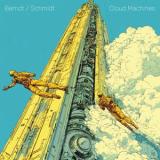
Cloud Machines is the extraordinary debut collaboration between M.C. Schmidt of legendary electronic duo Matmos and John Berndt, the Baltimore avant-garde institution and band leader behind High Zero Festival, the Red Room collective, Geodesic Gnome, and radical sonic concepts like Spectral Relay (a bespoke signal processing architecture) and Relabi (a conceptual genre defined by a Rorschach-blot pulse. These two iconoclasts have delivered something genuinely unexpected: an oddly sweet electronic opus that"s as immediately engaging as it is a series of delicious puzzles. When two of experimental music"s most irascible characters spend twelve years crafting an album, you don"t just get another release - it is an anthology of pocket universes. The record is a love letter to two of their strongest mutual influences of the 1980s - the delirious comic books of French auteur Jean Giraud (AKA Moebius) and the beautiful miniatures of the SKY Records Cluster/Eno/Conny Plank collaborations. Cloud Machines honors the spirit of those ineffably "hermetic" creations by reinventing their legacy through the lens of decades of accumulated experimental practice and the duo"s singular creative personalities. The result feels simultaneously like rediscovering a lost classic from 1978 and receiving a transmission from an alternate, somehow better timeline in 2026. Yet unlike so much "difficult" experimental music, Cloud Machines maintains an uncanny and sneaky accessibility - each track a self-contained world, inviting and alien in equal measure.
Cloud Machines is the extraordinary debut collaboration between M.C. Schmidt of legendary electronic duo Matmos and John Berndt, the Baltimore avant-garde institution and band leader behind High Zero Festival, the Red Room collective, Geodesic Gnome, and radical sonic concepts like Spectral Relay (a bespoke signal processing architecture) and Relabi (a conceptual genre defined by a Rorschach-blot pulse. These two iconoclasts have delivered something genuinely unexpected: an oddly sweet electronic opus that"s as immediately engaging as it is a series of delicious puzzles. When two of experimental music"s most irascible characters spend twelve years crafting an album, you don"t just get another release - it is an anthology of pocket universes. The record is a love letter to two of their strongest mutual influences of the 1980s - the delirious comic books of French auteur Jean Giraud (AKA Moebius) and the beautiful miniatures of the SKY Records Cluster/Eno/Conny Plank collaborations. Cloud Machines honors the spirit of those ineffably "hermetic" creations by reinventing their legacy through the lens of decades of accumulated experimental practice and the duo"s singular creative personalities. The result feels simultaneously like rediscovering a lost classic from 1978 and receiving a transmission from an alternate, somehow better timeline in 2026. Yet unlike so much "difficult" experimental music, Cloud Machines maintains an uncanny and sneaky accessibility - each track a self-contained world, inviting and alien in equal measure.
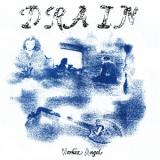
Irgendwann um das Jahr 2024 tauchte Vorhex Angel scheinbar aus dem Nichts auf: keine Social-Media-Präsenz, keine Identitäten, lediglich ihr Name tauchte hier und da auf einem Flyer in Nashville oder New Orleans auf. Wer neugierig genug war, um ihre Live-Show zu besuchen, konnte mit einer Vielzahl unerwarteter Dinge konfrontiert werden, die die Sinne anregten: aufwendige Bühnenbilder, Stroboskoplichter (oder alternativ völlige Dunkelheit), brennende Gegenstände, vor dem Auftritt eingenommene Rauschmittel. Die Musik bei diesen Auftritten passte zu dem Mysterium. Sie war laut, unberechenbar und verdammt viszeral. Wenn die beiden Live-Veröffentlichungen der Gruppe und ihr Debüt ,Heavenly" tatsächlich viszeral sind (Raven Sings the Blues nannte sie ja ,Erben des Strudels von High Rise"), dann ist der Nachfolger ,Drain" sicherlich ihr intellektuelles Werk. Seine sieben Tracks führen den Hörer vom Morgen bis zur Nacht, ein weitläufiges experimentelles Doppelalbum mit überlebensgroßen Gitarrensoli, spacigen Drone-Exkursionen und Momenten von kraftvoller Intensität durch das gesamte Werk. Zum ersten Mal sehen wir, wie Vorhex Angel ihren hämmernden Klangangriff gegen stimmungsvolle und dramatischere Gefilde eintauschen. Die Band - bestehend aus den Brüdern Jake und Jamin Orrall von JEFF the Brotherhood und Kunal Prakash von Silver Synthetic - erweitert die Grenzen des Vorhex-Angel-Konzepts, lädt neue Musiker in ihren Kreis ein, geht mehr Risiken ein und erntet dafür umso mehr. ,Drain ist keine Musik, die man im Hintergrund beim Kochen laufen lässt", warnt Kunal, bevor er zwinkert: ,Vielleicht ist sie etwas für besonders abenteuerlustige Köche." Vorhex Angel verspricht, dass noch mehr kommen wird. Mehr Jams, mehr unerwartete Wendungen - allein in diesem Jahr können wir mindestens eine Tour und mindestens zwei (!) weitere Alben erwarten. Vorerst gibt es ,Drain" zu feiern, sich damit auseinanderzusetzen, damit der Hörer wie die Musik selbst ein- und ausatmen kann, mit reichlich Raum für gedankliche Kontemplation. SPA Sometime around 2024, Vorhex Angel emerged seemingly out of the ether: no social media presence, no identities, simply their name popping up in Nashville or New Orleans on a flyer here and there. Those with enough curiosity to attend their live show could be met with any number of unexpected things to spike the senses: elaborate stage dressing, strobe lights (alternatively, complete darkness), burning things, pre-performance ingestibles. The music at those functions matched the mystery. They were loud, unhinged, and visceral as all hell. If the group's two live releases and debut Heavenly are indeed visceral (Raven Sings the Blues did name them "heirs to the maelstrom of High Rise"), then followup Drain is surely their cerebral offering. Its seven tracks guide the listener from morning to night, a sprawling experimental double album with larger than life guitar solos, spaced-out drone excursions, and moments of potent intensity throughout. For the first time, we see Vorhex Angel trade their pummeling sonic onslaught for moody and more dramatic pastures. The band-revealed to be brothers Jake and Jamin Orrall of JEFF the Brotherhood and Silver Synthetic's Kunal Prakash-push the parameters of the Vorhex Angel concept outward, inviting new players into their circle, adding more risk and generating more reward. "Drain is not in-the-background cooking-type music," warns Kunal, before winking: "Maybe it is for particularly adventurous chefs." Vorhex Angel promises there will be more. More jams, more left turns-just this year, we can expect at least one tour and at least two (!) more albums. For now, there is Drain to celebrate, to sit and chew on, to allow the listener to breathe out and in like the music does, with ample room for cerebral contemplation.
With their fourth full-length album Signal Fire, GENGHIS TRON awaken us from the post-apocalyptic daydreams of their previous work with a violent—and most welcome—shove. This time, the distant-future reveries we first heard on Board Up The House give way to an unsettling awareness of the present we’re actually living, as our circumstances grow too pressing to try and escape. “Signal Fire envisions a Kojima-esque dystopia of endless proxy warfare,” says vocalist and lyricist Tony Wolski (The Armed), “where the deluge of available information has outmoded the human ability to parse it. A world where those amoral, shameless and cunning enough can literally reshape reality at their whim through sheer insistence." Having roared onto the scene in 2004 with a uniquely demented blend of extreme metal, synthesizer textures, and drum-machine madness, GENGHIS TRON are no strangers to making a forceful impression. But Signal Fire marks the first time bandleaders Michael Sochynsky and Hamilton Jordan –joined again by Wolski and Nick Yacyshyn (SUMAC) on drums, plus newcomer Kenny Szymanski (The Armed) on bass–has captured this level of urgency with such visceral precision. “This album is very much rooted in the now,” confirms Jordan. Album opener “I Am All” sets the table with a chest-throbbing synth pulse as Wolski declares “I’m on a tear, I’m on a tear,” over swirling industrial rhythms and creeping synthlines. “Nothing Blooms in the Hollow” grafts desert-rock swagger onto interlocking layers of dizzying riffs and chants before Wolski steers the band into full-on sonic burnout, like a spaceship careening into the sun. “Born Prey” navigates deftly through Genghis Tron’s classic sonic touchpoints: furious blastbeats, electronic breaks, haunting vocal earworms, and a towering synth-pop crescendo. Meditative interludes like “Like Fotocrom” and “Without Form” deliver shimmering, ominous beauty. And “New Gods” invokes Rabies-era Skinny Puppy to bring the album to a bludgeoning, anthemic finale, as Wolski screams on repeat: “New gods to bleed me out / No new peace / Bleed me out / I love it.” Twenty years into their career, having proven their ability to forge common ground between Ministry and Aphex Twin, between Brutal Truth and Boards Of Canada, between Cluster and Converge, ugly-beautiful new genre hybrids from GENGHIS TRON no longer come as a surprise. What’s remarkable, however, is how Sochynsky and Jordan have taken a project that started in 2004 as a dorm-room genre-pastiche experiment —”a chaotic, wild amalgamation of all our favorite stuff, literally slammed together,” says Jordan—and refined their songwriting craft to deliver a sound that is unmistakably their own.
This album, recorded in 1988 at Elkar Studios in Lasarte, is a happy accident, like much of La Polla Records' early output, by Jean Phocas (who also worked with other bands of the genre such as Cicatriz) and César Ibarretxe. It was lovingly designed, with a medieval atmosphere for the cover (by Txefo, Joseba Olalde and Txarly) featuring a huge scroll containing five tarot cards, a back cover in the same style with heraldic figures, and a meticulous presentation of the lyrics with separate spellings for each song, on a double sheet with photos of piglets suckling from their mother on one side and various images on the other. With animals as the common thread for the songs, it represents the confirmation that the concept album had arrived on the national punk scene. Perhaps a work of maturity, the band's traditional objectives disappear from the lyrics, and although there is still room for specific protests and chronicles of nights of alcohol and violence (such as those of La Rata), the emphasis is on revelling in the description of all kinds of personal, psychotic and hallucinatory hells. Evaristo confessed to being influenced by Umberto Eco's book The Name of the Rose (1980) in the making of this work. Far from indicating any departure from the foundations laid in previous works, it shows that the spectrum of the anti-establishment struggle the group was committed to was broad. A very complete album.
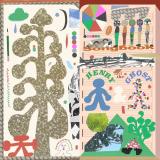
On his new album, Micha Acher rearranged compositions for bands such as Tied & Tickled Trio and Ms. John Soda from previous years.
Why are we interested in ghosts? What fascinates us about the eerie? According to cultural theorist Mark Fisher, the allure that the eerie possesses is not captured by the idea that we „enjoy what scares us“. It has, rather, to do with a fascination for the outside. For that which lies beyond standard perception, cognition or experience, as he writes in his book „The Weird and the Eerie“.
In fact, also none of the 15 pieces from Henry and the Ghost is really scary. On the contrary, they all feel strangely familiar. Like revenants or doppelgängers, which in fact they are. They have all been released before. But in a different form. In different line-ups. With different band projects such as Tied & Tickled Trio, The Notwist or the Alien Ensemble.
With the „Songbook“, Micha Acher's aim was, as he says, to find out how the familiar pieces sound in a chamber music instrumentation. Therefore he met with Theresa Loibl (bass clarinet, piano), Timm Kornelius (bassoon), Markus Rom (guitar, banjo, electronics) and Simon Popp (drums, percussion) in his living room for a musical séance in the summer of 2022. The séance lasted two days. Afterwards, Markus Rom (Oh No Noh), added some haunting electronical ideas.
The mood of most of the pieces is melancholic. There are surprising twists and siren-like melodies. Just as ghost stories should be. However, most of the songs sound very light-footed. With their feet in pop, folk, jazz and classical music. Pieces such as „Johanna“ with its wheezing harmonium and spooky piano, or the dreamy „Modest Farewell“ on the other hand have a cinematic flair. Immediately faces and scenes arise in the mind. But at the beginning, there is „Hamlet“. It starts with ghostly electronics and merges into a calm, almost classical guitar piece. Could it be that the ghost of Hamlet's father is hiding between the strings?
„34E“ begins with a banjo. Then the deep humming of Micha Achers sousaphone and the other brass instruments kick in. In the slow, solemn „Aelita“, the sousaphone starts a dialogue with a children's piano. With the banjo and the other wind instruments acting as mediators. The title of „All Tomorrow's Past“ brings Velvet Undergrounds „All Tomorrow's Parties“ to mind. Another ghost from the past. What connects the two pieces is free-floating percussion, which accompanies the sumptuous melodies.
„Arc“ takes us on an exhilarating voyage at sea, with the sousaphone providing powerful propulsion. Towards the end, things get quite turbulent. With the clarinet stirring up the water, before the sea calms down again. „Henry and the Ghost“ is characterised by a ghostly mood change between major and minor. In „Radio Four“ the banjo with its stoic chords keeps the lively brass section in check. „Solid Ground“ is imbued with melancholy. „Space Minor“ takes us into outer space, with the power of sousaphone and percussion.
„Tomorrows“ is filled with cautious optimism. And the concluding „Nordlead“ turns out to be a revenant of the instrumental „N.L.“ from The Notwist's legendary album „Shrink“ from 1998. In the new version, the piece sounds like a distant echo. One that also brings to mind how Micha Acher's music has evolved. Which new worlds he explored and opened up since the nineties. And yet Acher's signature is recognisable in every single note of this fascinating „Songbook“.
"Consumação" marks a major change in Domingos' life, a break with his old self. A new found spiritual awareness is channeled into music as often as he is able. Broken and missing relationships, broken PC, but the music still flows in his mind and with the tools at hand: tablet and cellphone. The EP is therefore a transitional document, beginning to show that "my current thoughts are not the same as before". The traditional ID punctuating the music now often proclaims "Solta!". Let go.
The music, though, stays consistent with a left-field vibe, even while the appeal is pretty much universal. "Não Acredito" and especially our longtime favourite "Hot Girl" come out as monuments to loneliness and disillusionment but still with enough room to feel good about oneself. To receive all that as part of the natural course of life. None of these considerations break new ground. "Não Acredito" is simply the very human exclamation of disbelief in face of a ton of bad things happening cumulatively.
"Coração de Pedra" is about a common sentimental feature in contemporary love life: hearts of stone. Face them or develop one. "Leave Me Alone" is simply that: get lost, give me space. But one listens to the song and there's hope in there. Not even buried deep. All these contradictory feelings are played out throughout the EP and become a compositional tool, a signature, although the producer confides he's not too bothered with making the titles correspond to the mood. It just happens. The music is its (and his) own self.
Claus Voigtmann has built his reputation away from excess, favouring precision, patience, and a deep understanding of the dancefloor over trend-led movements. Emerging from a punk background, his approach to music carries that same raw intent, translated into rolling, groove-led sets that blend movement with a stripped-back sense of pressure and release. As co-founder of the influential Toi.Toi.Musik party series, he helped shape one of London’s most respected underground movements, while later channelling his focus into his label Subsequent - a platform for more exploratory, long-form expression that has found its way into the crates of DJs including Zip, Ricardo Villalobos, and Sonja Moonear.
Having already landed on Enzo Siragusa’s FUSE imprint in 2023, remixing the label boss’s ‘Laughing Tones’, and after featuring heavily across the brand’s global events for years, his ‘Elevate’ EP distils his ethos into four direct, function-led cuts. Built with clarity and intent, the record reflects his commitment to music that works in the room first and foremost, resulting in a collection of tracks shaped by experience rather than excess, and where every element serves a clear purpose.
‘Bass Tool’ brings low-end pressure and tightly wound percussion, setting the tone from the off , while ‘Loading Complete’ leans into a more cosmic roll, layering shifting textures over a forward-driving framework. On the B-side, ‘Sidequest West’ keeps the focus in the sub-bass realms while still maintaining focus on groove and flow, before the title cut closes the release by opening things out, balancing weight and space in a way that reframes the EP’s direction and journeys into the late hours.
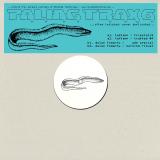
Paling Trax returns with their 6th Split EP coming from labelhead TAFKAMP and the Irish multi-talent Dylan Fogarty. On the A-side we find the long anticipated release of TAFKAMP’s Friestalig, combined with some filterhouse galore on Trakpad #4! On the B-side Dylan delivers the big room banger ADE Special, and the super groover Morning Ritual to finish off the release. Highly essential!
out of Stock
Last delivered 5 days ago available to reorder, subject to availability
German-Turkish singer and composer Alev Lenz follows her self-released album 4 in a Cycle of Thirds (Jan 2026) with a complete, album length ambient rework by Simian Mobile Disco co-founder Jas Shaw. “The two records are very much intertwined," writes London-based German-Turkish singer and composer Alev Lenz. "I made 4 in a Cycle of Thirds with Jas in mind, inspired by a mix he created for my last album.” Lenz and Shaw have previously worked together on 2024 collaboration EP Bring Your Friends, as well as album mixes for Lenz' previous two solo records. Lenz' original album was created from a series of single-note drones, one for each note of the chromatic scale. "When I had this idea, I wanted Jas’ touch involved somehow. I asked him for drones on each note. He sent me 12 and I wrote most of the album listening to these drones. They eventually left the picture and were replaced by new drones I made, new sounds or vocals. But the memory of them lingers in the songs, like an imprint on the retina, an afterimage.
So naturally when the record was finished I sent the totality of it to Jas and said: here you go, make your versions!" 4 in a Cycle of Thirds in its original form touches on traditional folk musics, chamber music, contemporary composition, film score, and even interweaves subtle metal inflections, but now presented on double vinyl alongside Jas Shaw's versions as twin records, it has a newly foregrounded quietude, spectral and delicately nuanced. Through reduction, meticulous replacement, and sensitively applied edits, Shaw gently rebalances the light and shadow of the original pieces, coaxing new subtleties and harmonic resonance. "It occupies a space that is in-between the lines," describes Lenz. Shaw employs a "feedback system" he created for his piano, applied here to devastating effect. "Take the key bed off it and set up a resonators, mics and a mixer. Lots of gaffa tape, lots of precarious propping stuff open. You grub around on the floor and slowly the room fills with harmonics, it’s wonderful." And, on the relationship between the original record and these new versions, he explains "we could really let the songs drift into a different shape without worrying that we were missing elements that were great."
Alev Lenz is a singer, songwriter, composer, and producer born to a Turkish actor, activist, and artist mother and an Oscar-winning German engineer father. Alev’s creative foundation is as diverse as her musical output. Her solo discography includes three albums - Storytelling Piano Playing Fräulein (2009), Two-Headed Girl (2017), and 3 (2019). She has contributed vocals to scores by Oscar-winning composer Volker Bertelmann, including the US drama Conclave. She has collaborated with artists such as Anoushka Shankar, Jas Shaw (Simian Mobile Disco), Roomful of Teeth, and plenty more. Songwriter, composer, and producer Jas Shaw is best known for his work with Simian Mobile Disco, whom he co-founded in 2003. He mixed Alev Lenz' 2016 and 2019 albums Two-Headed Girl and 3, and also performs with Selling alongside Gold Panda, and Shaw & Grossfeldt with visual artist Bas Grossfeldt. Shaw and Lenz released the collaboration EP Bring Your Friends in 2024.
This is a record of noted pedigree. Nottingham is one of thee homes to god-tier hardcore punk. The scene there has evolved, revolved, mutated, and grown over the decades. It's DIY venues and recording studios are now of legend.
The catalogue number of WSR084 is no coincidence. As with Crass and their 'counting down to 1984' aesthetic, this is anarcho hardcore railing hard against the times. If you're not currently furious you're asleep and Blind Eye are spitting anger.
Taking inspiration from The Comes, Jerrys Kids, Aus-Rotten and Chaos UK, this album is a concise call to arms. Perfectly captured over a weekend towards the end of 2025 by Boulty at Stuck On A Name Studios, Mistrust Your Nation sees mid-tempo stompers mix with breakneck ragers, all pressed at 45rpm and sounding as hefty as the band playing in your front room.
Anmarie Spaziano's vocal is at once melodic and raging, giving new definition to “pissed off”. Steve Charlesworth's drums are second to none, they've never been equalled in over 40 years of doing this. Andrew Morgan's guitar on this record is wild: shredding equal parts cosmic noise and brutally-tight riffing whilst Matt Grundy's bass anchors the chaos, pushing every second onwards.
As a label we never tire of bands who have THAT THING. We struggle to describe it and to pin it down, but we know it and we feel it and we only deal with people who have it. When we put gigs on and Blind Eye share a bill with solo banjo player Jacken Elswyth (for example) the sound is clearly different, but the ethics are the same. We can see it and we can hear it and we hope you can too. We are a genre-free label. We are a label that deals only with righteous, inspiring people. Play this record loud. Let it help you through these hideous times - Wrong Speed HQ
In the nocturnal silence of the rooms that surround it, in 2021 Andrea Marazzi (Pietra Tonale, Umut Adan, Golpe), Carlo Barbagallo (Suzanne' Silver, Albanopower), Frank Alloa (Roncea) and Riccardo Salvini (Indianizer, Foxhound) came together to write the epic tale of Sexy Droga: a concept album about addiction, heartbreak, retromania, death, life and the future. Bass, guitar, drums, electric piano, three voices: when they play together, they call themselves NOCRAC. NOCRAC is the epitome of Turin's musical scene. It is a self-produced, self-funded and self-sustaining musical project that has benefited from the collaboration and commitment of another independent label: Overdub Recordings. NOCRAC has no specific musical target audience and no particular objective, other than to exist.
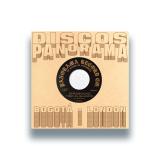
Back on the Discos Panorama series we head once again to Colombia, this time pairing two Afro-cumbia dancefloor weapons from Afrosound and Wganda Kenya — two giants of the late-’70s and early-’80s tropical scene.
Around this time Colombian studios, particularly those connected to Discos Fuentes, were beginning to push things forward. Traditional cumbia rhythms were still at the core, but now they were being driven by electric organs, synths, drum machines and fuzzed-out guitars. The result was something raw, hypnotic and incredibly rhythmic — records that feel almost proto-electronic, long before anyone would’ve used that word.
The two cuts on PAN014, originally released in 1978 and 1981, capture that moment perfectly. Rolling percussion, locked-in basslines and swirling keyboards create grooves that just keep building. They’re party records, no doubt about it, but there’s something else going on too — repetitive, driving, almost techno in spirit, the kind of tracks that can run for minutes and never lose the floor.
The A Side is the anthem, the B Side feels like it was lost on an LP…
Part of PANORAMA’s Discos Panorama series, this one continues the label’s focus on bringing essential Colombian dance music back to DJs and collectors. Carefully remastered and pressed on 7inch, these are the kinds of records that instantly change the temperature in a room.