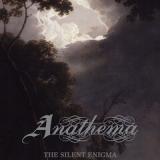
Anathema has spent the vast majority of their career making music that defies
description. As part of the Peaceville 3, along with Paradise Lost & My Dying Bride,
Anathema have carved a strong legacy since their inception at the turn of the 1990s,
to become a widely revered & respected band within both the metal world & beyond,
as their sound & compositions progressed from doom/death metal into more rock &
progressive territory with each subsequent release, becoming one of the UK's most
cherished & critically acclaimed rock bands.
'The Silent Enigma', Anathema's second studio album, was originally released in the
summer of '95 & was the first release on which guitarist Vincent Cavanagh took over
the vocal duties of the departed Darren White. Where Darren's vocals were guttural,
Vincent's style pushed the possibilities for Anathema onwards & upwards, with a
scope & breadth beyond his years, complimenting an ethereal roller- coaster of
thoughtful atmospherics & crushing Celtic Frost style riffs - the Swiss legends being a
notable inspiration. What emerged was a fine example of highly-atmospheric & often
emotional gothic doom, spawning classic Anathema songs such as "Restless
Oblivion", "Sunset Of Age", "The Silent Enigma" & "A Dying Wish". Lauded by the metal
press & fans alike as a doom metal classic, the album's popularity has remained a
favourite within the metal scene.
This special 30th anniversary edition of 'The Silent Enigma' is presented on limited
marble vinyl, with the vinyl mastering work carried out by Abbey Road Studios,
London.
quête:vàli
- Dolores
- If You Believed In Me
- There’s A Real World
- I’m Not Sure
- Like A Leaf
- Whoever Said
- Having A Ball (Feat. Norah Jones)
- Nobody Else Knew, But We Knew (Feat. Jake Sherman)
- Rose Du Ciel (Feat. Marine Quéméré)
Jesse Harris’ Freund und Arrangeur Maycon Ananias hatte zusätzliche Aufnahmezeit mit einem estnischen Orchester und lud Harris ein, ein Stück beizusteuern. Das erste Experiment, Dolores, entfachte eine neue kreative Richtung. Obwohl Harris – Grammy-Preisträger und langjähriger Wegbegleiter von Norah Jones, Willie Nelson und Cat Power – bereits mehr als zwanzig Alben veröffentlicht hatte, war es seine erste Aufnahme mit Orchester. Beflügelt von dieser Erfahrung schrieb Harris innerhalb von nur fünf Wochen acht weitere Songs – detailreiche Kompositionen, die von Beginn an für symphonische Arrangements gedacht waren. Entstanden ist ein Album, das zwischen New York, Rio und Talinn aufgenommen wurde und hochkarätige Gäste wie Norah Jones, den brasilianischen Gitarristen Guilherme Monteiro, Jake Sherman sowie Marine Quéméré von Nouvelle Vague vereint.Mit seinen opulenten, zugleich feinfühligen Arrangements taucht If You Believed In Me in Themen wie Erinnerung, Sehnsucht und imaginierte Möglichkeiten ein – in die „Was-wäre-wenns“, die jeden Träumer begleiten. Herausgekommen ist orchestraler Pop voller Wärme, Melancholie und leiser Überraschungen – ausgelöst durch eine einzige Einladung.
In an intricate lattice of ever-evolving electro exploration, Samuel Van Dijk is back on Delsin with a new EP. Under his VC-118A alias, the Helsinki based producer presents a richly textured, cinematic strain of machine funk that reaches beyond dancefloor functionality to test the expressive potential locked within electro's crisp rhythmic framework. There's a melancholic mood hovering over Avian as Van Dijk allows a subtle edge of distortion to creep into his flickering drum programming. The end result is a pensive sound that touches on the moodiness of orchestral composition, unfurling patiently across extended run times without losing focus. With his characteristic attention to detail and broad dynamic range, Van Dijk continues to offer up a sophisticated, emotionally-charged strain of electro like no other.
A hiatus is nothing but the reconsideration of fundamental values and interests.
Simple Times is back with “A Thin Line Between Dreams & Nightmares” EP, an emotional deep dive into the world of Progressive Trance, House & Electro. Aiming to follow the principles of stereo and raw, uncompressed music, this EP offers a fresh take on vintage music and the early culture of raves, dancing, and dance music.
The word "amateur" originates from the Latin word "amator," meaning "lover" or "admirer". This Latin term is derived from "amare," which means "to love". The French adopted "amateur" from Latin, and the English then borrowed it from French, initially retaining the sense of someone who loves or is devoted to something. Over time, the English usage of "amateur" also developed a meaning related to a lack of professional skill or experience. How did a word derived from love become a slur? Is love really so defenseless? They say love conquers all, but in reality isn’t love quite ridiculous? It has no intention, no motive, no agenda. How could it possibly prevail? It can’t be bought or sold, or so they say.Its mere existence can't be proven or even measured. What an impossible thing. Trying and failing, time and time again, no wonder cynicism always seems to win. I see “amateurism” as a delighted, even foolish, protest. Protest against everything. Of what’s expected of someone, or expected of someone to desire or strive for. To be elite, to be expert, to be professional, to be a master, to excel and succeed. Where’s the joy in that? I just want to have fun. I want to want. I want to love. And keep doing it, forever. I want to have fun, even when it’s tiring and sometimes even heaven is boring as hell. I want to be bad. I want to do my own thing. “I vant to be alone”. I want to be someone so dedicated to their passion that it starts to seem like there’s something wrong with them. All the way. We can take it all the way, and never get it back. ” - Molly Nilsson Amateur is the 12th studio album by Molly Nilsson. Deep in the teeth of a career that threatens to tip into something resembling a “legacy,” Molly Nilsson celebrates with an album recorded instinctively, quickly and bursting with so many moments of emotional brilliance and clarity it may be her greatest yet. Hers has been a career spent reaching out, perennially powerful in her earnestness, a warrior ridiculously defenceless and armed with a glittering sincerity. Shearing herself of the machinations of the music industry, recording at home, writing direct to the heart. Amateur is a jubilee for losers. A treatise in 13 songs, Amateur states clearly that we should live our life with eternal curiosity, offers us an open hand of comradeship out of the rat race. The songs on the album are both some of the most personal of Nilsson’s career and the most anthemic. First single How Much Is The World asks us to re-evaluate value in the face of a Neo-liberal system squeezing the life out of our loves. Pulsing opener Die Cry Lie satirises the commercialisation of emotion in the form of a shout-along diss-track. With a pounding rhythm track held down by gorgeous chord changes, heartbreaker Valhalla carries the torch for the main themes of the album: never growing up, making mistakes with kindness, moving on. When the drums crash in on the line “It’s going to get better now, you’ll see, going to be much better off without me” there is a world of feeling swirling about in the vocal delivery. One reading of the track might be that it’s a break up song but the subtext is classic Molly Nilsson: by living truthfully, making mistakes, we’re active agents against the myriad oppressions of the world. All The Way takes the theme for a run into the eternal sunset. It’s a manifesto for living fully. “Take it all the way, and never get it back” - it’s the process that’s the important point. The journey not the destination. Big Life, follows on like a part 2: An ode not only to Molly Nilsson’s career of endless gigs, endless connections with people, it’s a massive ode for following your dreams, doing it yourself. Closer The Bitter End is a powerful anthem for friendship, another definition of love infused in Nilsson’s work, A beautifully poignant ode to comradeship til the end, it seems to be the songwriter approaching aging, approaching life’s inevitability with the same vigour and earnestness, the same love of life she enjoyed at the onset of her career. There are moments on Amateur shrouded in reverb, slightly out of focus, forcing the listener to step deeper into the Mollyverse.. Nilsson’s open-armed beseeching to the world permeates every beat, every chord. These are songs exploding with life: the chunky, aggressive bassline on the punker Get A Life can’t hide its massive, catchy chorus. The sweeping Swedish Nightmare might be a tongue-in-cheek self-reference, but at its heart it’s a song about the duality of living life large, what is a dream, what is a nightmare? Molly Nilsson says you can’t have one without the other, and why would you want to? Here’s to making mistakes.
funcionário delights in the freedom of creating freeform music for the first time in his career. On “horizonte”, he loosens the reins, his sound follows a wavy, organic structure rather than a rigid, formal one. If it feels freer and more colourful, that’s because it truly is.
Eight years ago, when we first encountered his work, he was composing soundtracks for imaginary video games and crafting sonic landscapes that felt like destinations for sci-fi anime characters. With “Cavalcante” (2022), he broke away from that past. It marked a turning point, he was ready to explore a “fourth world” in both sound and concept. The feedback was overwhelming.
Three years later, “horizonte” marks another evolution. He sends us music regularly, but this album stood out immediately. It felt right: more synth-driven, more open to improvisation. As he put it: “It’s like using oil pastels for the first time and discovering new possibilities. In a way, I’ve found new ways of creating using the same colours.”
Listening to horizonte is like waking up from a dream. Again and again. The opening track, “nascer”, suggests a new dawn, but it’s in “pássaros” that the vision fully takes flight: less processed, more raw, yet still detailed and expansive.
Finding new ways with the same colours has been his quiet mission all along. What’s new here aren't the tools, but the feeling. The movement. The invitation to travel with him. You can hear - and feel - his sense of wonder. Every sound radiates joy. Every moment sparks a new thought. The music moves quickly, but breathes slowly.
Tracks like “renascer” and “o caminho do regresso” echo the spirit of late-70s/early-80s Vangelis, in deep reverence. And just as you approach the end, “fantasma” arrives - a stunning closer, reminiscent of Eno’s “An Ending”. By then, it’s clear: the “fourth world” is behind him. funcionário has moved on. To where? We’re about to discover.
In May, fans were treated to the first new music from Trentemøller since 2022. A new single, "A Different Light," showcased a stunning blend of prismatic space rock and folk. For anyone wondering if it foreshadowed the release of a full-length, Dreamweaver will drop in September, on Friday the 13th.
Featuring 10 tracks that traverse Trentemøller's many musical strengths, Dreamweaver also represents an obvious artistic leap, treading new ground while retaining the overall plot. Tracks featuring vocals come courtesy of of Iceland's Disa, who has been in Trentemøller's fold since the Memoria tour.
Dreamweaver's nylon string-led opening track, and first single from the album, "A Different Light," contains many of Trentemøller's trademarks: exploring dichotomies, musical shadowplay, Nordic frigidity, and warm waves. It opens the door for the steady, hypnotic "Nightfall," with its tetherless vocal, wistful guitars, and early morning desert chill. The third track in the opening trifecta, "Dreamweavers" finds its footing with a percussive soft trot, which starts after what feels like a shortwave radio scan in search of the right chords, eventually dialing in a weightless voice. Ostensibly keeping a ruminative pace with the previous two tracks, the song and, by extension, album soon opens up as the rest of the elements drop into place with a grand, luxurious burst.
Dreamweaver is about to enter its next phase. With the hatch blown off of the portal, the noisy "I Give My Tears," driven by its glissed and fuzzy bass line, pours into the void. It's followed by its sibling, the most chaotic track on Dreamweaver, "Behind My Eyes." Arriving as a piece of noise rock pandemonium, "Behind My Eyes," can't be contained in its plush vault. A whip-crack snare and convulsing guitars smash against each other in the song's verse chamber. The tension builds, as the particles collide, pushing past the point of critical mass, kicking off the chain reaction which is the chorus. At times it harkens back to the proto-gaze tracks that gave birth to dream pop, at others it newly defines what that is. There's no time to contemplate it, though, as the song disintegrates in a microphonic feedback instant.
A respite follows with the somnambulistic pair of "Hollow" and "Empty Beaches." Then, a moment of intensity returns as the soaring textures and tribal drum bursts of "In A Storm" take control, before being taken out with the ambient slo-core of "Winter's Ghost" and "Closure." This diptych wraps up an album which certainly feels on-script for Trentemøller, but is also much more psychedelic than previous offerings.
Dreamweaver will be released on Trentemøller's own In My Room label. It is an exceedingly immersive experience, bound to release any dormant hallucinations you may be harboring.
Anushka Chkheidze + Robert Lippok’s »Uncontrollable Thoughts« on Morr Music is the duo’s debut joint release. The Netherlands-based Georgian composer and the German sound artist from Berlin first met in 2019 in the context of a workshop programme that took place in Tbilisi, and later worked with Eto Gelashvili, Hayk Karoyi, and Lillevan on the massive »Glacier Music II« music and book project, released in 2021. This led them to engage in a less conceptually driven form of musicking and real-time composition that corresponds with their respective environments. They draw on traditions such as minimal music or late 1990s and early 2000s electronica to integrate subtle beats with elegiac organ drones, playful melodies with lush textures. The first document of an ever-shifting intergenerational dialogue, »Uncontrollable Thoughts« is a product of mutual listening outside time.
Though Chkheidze and Lippok had access to professional studios, they chose to rent a simple rehearsal space, equipped with only the bare essentials—bass and guitar amps as well as a small PA—to maintain immediacy in their working process. The music they made together corresponded to and drew on the respective possibilities and shortcomings of this studio, much like their collaboration in general is characterised by the care with which they approach each other's talents and ideas. While both had loosely defined roles—Chkheidze was responsible for the free-flowing beat programming and the evocative distortion came courtesy of Lippok, for example—they individually contributed in different ways to their joint process, which is as free of hierarchies as it is limitless. Hence, the duo’s focus on spontaneity and out-of-the-moment emergence makes them organically move beyond tried and tested conventions, resulting in music that seems to suspend time altogether.
When the first chimes on »Bird Song« announce a piece that sets rattling kickdrums against a backdrop of layered drones and rhizomatically entangled melodic elements, it becomes clear why »Uncontrollable Thoughts« carries this title: The album follows the constant detours of the subconscious of its makers, letting them explore moments of ecstasy such as on »Rainbow,« melancholy with »Field,« and the interplay of suspense and release through the ten-minute-long title track. But the different pieces also tie into one aother in various ways. The dirge-like organ drones on which »Rainbow Road« ends reappear in the beginning of »Uncontrollable Thoughts,« much like Chkheidze’s gentle yet emphatic piano chords on »Field« seem to provide the starting point from which the artist develops the striking motifs of the final piece »Opening«, whose title itself suggests that the record as a whole can and should be enjoyed as a loop. All this creates a unique, idiosyncratic temporal logic.
While there is much that sets Chkheidze and Lippok apart as solo artists, the major shared leitmotif in their respective bodies of work is the sonic engagement with space. »Uncontrollable Thoughts« is hence best understood as an extension of this practice; as an album that maps the geographies of their minds in motion, tracing musical movements as they melt into each other.
Fides Records celebrates ten years of independent sound and vision with the monumental 41-track release “FIDES X – 10 Years of Fides”. The first 12” FIDESX 1, set to release on 24th October sets the tone for the seven-part vinyl journey, opening with a powerful statement of intent.
UFO95 introduces “After Light Comes Shadow”, a bleep-infused 4/4 cut whose broken accents unfold into layers of cinematic tension. Z.I.P.P.O and Claudio PRC follow with “Marte Rosso”, a poetic excursion across Martian landscapes shaped by evolving pads and hypnotic grooves. D-Leria’s “Underwater” plunges deeper still, driven by relentless modular propulsion and immersive aquatic textures.
The B-side expands the spectrum. Stephanie Sykes & Dyad contribute an untitled roller infused with spiritual intensity and organ-like resonance, while BIMOL’s “Fragmento en La” twists cinematic atmospheres and industrial edges into broken rhythms guided by a haunting Spanish vocal. Bringing the record to a close, Decoder delivers “We Keep Lying To Ourselves”—a slow-burning, 808-driven piece of subtle progression and timeless elegance
Dream Dancing have been on the hunt for something special and find it with the return of Blueless.
On the A side, two highly sought after tracks originally released on her own Capture Records in 2007.
'Groove Me' is a stunning emotive deep tech house moment which will raise the hairs on your neck on every listen.
'OK' enters more club territory, still keeping within the soulful spectrum. Restored and remastered from Blueless' own vault.
On the B side, 'Trueness' and 'Outsounding' are both fresh from the studio, offering organic rhythms, effortlessly gliding with classy musical atmospheres and warm rolling grooves.
Almost 20 years between the productions, Blueless remains true to her unique soulful style with these much welcomed heartfelt, timeless and deep sounds.
Something old, something new, all Blue!
The Klinik are Dirk Ivens(vocals) and Marc Verhaeghen (music). Also featured on Fear is Eric Van Wonterghem (sequence and percussion), Guy Drieghe cover design on Fear. Luxury package design and reconstruction by Pieter Willemen, All tracks remastered as " like you have never heard them before" by Pieter Dewagter early 2025.
Recital releases The Holy Restaurant, the new full-length album by Derek Baron, and their first solo LP since Curtain (Recital, 2020).
The album is built from years of miniature transcriptions of improvisations, functioning in many ways as a sister to Curtain. Half-thoughts and mistakes are revisited, gilded, and illuminated. The floorboards of the album are laid with piano, organ, string pads, while serrated accruements (distortions, flourishes, and recording interferences) step and drop overhead. The resulting conflux, as Baron notes in the accompanying booklet “becomes the point and the problem to explore.”
The second track “Oven Girls” opens with us galloping on a horse in some video-game meadow on a bed of MIDI strings. Abruptly, a helicopter soars over us and we transition to a latticed guitar and woodwind exploration. The album rolls on in this fashion, juxtaposing musical half-sentences within a museum of sounds rag-picked from history and daily life. Emotional interviews with Midwestern friars who build and sell caskets are set against gothic piano and guitar duets. On “Music in the Casket,” A disorienting and hilariously epic guitar solo erupts. The penultimate titular piece, “The Holy Restaurant,” sets a text written by Baron’s grandfather. A small chorus voices his words, echoing the humanistic storytelling of “Blue” Gene Tyranny’s A Letter From Home. Under sunlit piano progressions, a fleet of smokey trumpets emerges.
Running throughout the album is a series of “traces”: short melodic phrases painted over again and again with different real and MIDI instrumentation. The “luxurious asceticism of doubling” as Baron puts it. They explain, “Part of the allure for me is that the ‘original’ material is itself kind of thin, sketchy, meaningless, maybe calling attention to itself only by way of a felicitous mistake. Hearing, transcribing, and learning what was basically only ever played first on accident becomes the guiding concern.”
The album’s shifting, variegated forms and voices pass quickly; the record feels both comforting and elusive, suitable for any hour of the day.
The Holy Restaurant features guest players Ed Atkins, Lucy Liyou, Quentin Moore, Emily Martin, Dominic Frigo, Jacob Wick, and several of Baron’s family members. It is released in a limited edition vinyl pressing of 200 copies, accompanied by a booklet of effusive program notes by the composer, alongside an assemblage of photographs, scores, and artwork.
Black vinyl[27,69 €]
Dub techno dons Lempuyang are back with the first double LP from the revered JS Zeiter, an assured artist whose early 12"s merged Chain Reaction's energy with deepchord's immersive depth and made him a modern-day great. Since then, he has spent years refining his craft into a consistently exceptional and sought-after sound across various aliases. Context Collapse marks a significant new chapter with eight expertly designed sounds that offer dub for all occasions, from those zoned out early mornings after a long night at it to more airy and uplifting dreamers like 'Interplay' via cosy, cuddly and introspective gems such as the smooth and seductive 'Open'. JS Zeiter is a true craftsman, as this double pack shows once more.
- A1: Dj Nuts - Tire O Calundu (Remix)
- A2: Criolo; Daniel Ganjaman; Mario C - Abertura (Remix)
- A3: Emicida; Nave; Rael - Saudação Ao Rei Nagô (Remix)
- A4: Pupillo Feat Rogê - Obaluaye (Remix)
- A5: Marcelo D2; Mario C; Lucio Maia; Pupillo - Lembarenganga (Remix)
- A6: Mix Master Mike - Tire O Calundu (Remix)
- A7: Tropkillaz - Damurixá (Remix)
- A8: The Gaslamp Killer; Mophono - Agô (Remix)
- B1: Pedro Dom; Zilladxg - Rei Zumbi (Remix)
- B2: Cut Chemist - Abertura (Remix)
- B3: Taso - Saudação Ao Rei Nagô (Remix)
- B4: Mexican Institute Of Sound - Preto Velho E Yayá (Remix)
- B5: Ricardo Imperatore - Obaluaye (Remix)
- B6: Kassin - Agô (Remix)
- B7: J Rocc; Mario C - Tire O Calundu (Remix)
Firing remix package of cuts from two legendary album's from Brazil's Orquestra Afro-Brasileira. Feat
Two albums - Obaluayê (1957) and Orquestra Afro-Brasileira (1968) - were enough for Orquestra Afro-Brasileira to mark its history in music forever. Born in 1942 in Rio de Janeiro by its founder Abigail Moura, it remained active until 1970 and, in 2021, was revived by the only living member of the original line-up at the time, Carlos Negreiros, when the third and final album in the orchestra's career, entitled 80 years, was released by Amor in Sound/Night Dreamer. Today (31) the album gets its remix version with tracks signed by names of the caliber of Marcelo D2, Criolo, Pupillo, Emicida, Rael, Cut Chemist, Mexican Institute of Sound, among others.
Aiming to keep the legacy of the Orquestra Afro-Brasileira alive, the album 80 Anos (Remixes) reaffirms the group's relevance as a creative source for different generations of musicians and listeners, based on new interpretations produced by artists who are also fans of the orchestra. According to Mario Caldato Jr., the album's musical director, "it was a great joy when I got to know the work of the Afro-Brazilian Orchestra and, soon after, had the honor of meeting and working with Carlos Negreiros. Producing 80 Anos alongside him was a gift and being able to look back on it, having the remix album to celebrate this legacy, is really wonderful."
For Amor in Sound - Mario and Samantha Caldato's record label - this release faithfully represents their values: Respect for memory, diversity, friendship and the possibility of creating new worlds. Made in a totally collaborative way, the album is born as a historical record, interpreted by great names in current music and, above all, great friends. “Being able to do this is indescribable, the value of relationships makes up and continues the legacy of the Orquestra Afro Brasileira,” says Samantha.
The project brings together Brazilians Criolo, Emicida, Rael, Marcelo D2, Lucio Maia, Pupillo, Rogê, Tropkillaz, Kassin, Pedro Dom, Zilladxg, Nuts, Daniel Ganjaman, Imperatore and Nave, as well as international DJs and producers such as Mix Master Mike, Cut Chemist, Gaslamp Killer, J Rocc, TASO, Mexican Institute of Sound and Mophono.
- A1: Eclipse (All Yours)
- A2: Neutron Star Collision (Love Is Forever)
- A3: Ours
- A4: Heavy In Your Arms
- B1: My Love
- B2: Atlas
- B3: Chop And Change
- B4: Rolling In On A Burning Tire
- C1: Let's Get Lost
- C2: Jonathan Low
- C3: With You In My Head (Feat The Black Angels)
- C4: A Million Miles An Hour
- D1: Life On Earth
- D2: What Part Of Forever
- D3: Jacob's Theme
In between the folds of ceremony and commonality lies a perennial spring of musical expression.
A statement along the time continuum, or a testament to the resilient resourcefulness embedded in that truth, forms the philosophical approach of this album – the first outing of Dídac.
Studying an extensive archive of instruments, artifacts, and field recordings at the Musée d’ethnographie de Genève—a space steeped in folkloric gesture – Dídac encountered a cosmos of liturgical music and folk song. Anchored in reverance for tradition and transformation alike, this album navigates the old-world Mediterranean lore through a post-modern ambient lens, threading drone, gentle rhythm, electroacoustic textures and the crude tactility of archival material into one woven tapestry.
Under the guidance of Dr. Madeleine Leclair, Dídac was invited to work within one of the world’s most extensive ethno- musicological archives—L’AIMP. In the saturated basements and tape-lined backrooms of the museum, he submerged himself in the sounds of ritual and rural life: wax cylinders from the Eastern Mediterranean, tapes of liturgical hymn, the worn edges of communal song.
In a makeshift studio on the fourth floor of the museum, he sifted through the hours of material he collected, gradually discovering that the archive was no static source – It did not dictate; rather, it served as a companion—offering not answers, but questions. Not a beaten track, but a cluster of sonic clues and riddles. Samples do appear occasionally, tenderly interwoven into the dialogue of the songs. In Dídac’s self-titled debut, the past is not worn as ornament or kitsch; it is listened to and responded to. The museum, its archives, and the visit to Geneva became a foundational culisse of sorts, igniting a myriad of rough cuts and improvisational outtakes.
Dídac, or Diego Ocejo Muñoz, was born in Madrid in 1994 to a family of both Catalan and Castilian origin.
Brought up in a religious household, the influence of the Catholic Church innately shaped the social fabric, schooling and daily life. This lingering dominance led the adolescent Diego into a path of rejection of everything sacramental, promptly resorting to subversion in the shape of grafitti, skateboarding and underground music. Only later in life, after a rigorous venture as an acid and electro producer, the Church re-emerged before him in new light, invoking a deep fascination for its mysticism, iconography and choral tradition.
Spain in general and Catalonia in particular, has long served as a crossroads of the eastern–western Mediterranean continuum, with many of its cultures sharing aspects of way of life and ceremony. At the MEG, Diego found himself puzzled with this realization, resulting in a sonic amalgamation that reaches farther away from the rugged mountains of Catalonia than you might perceive at first encounter.
The deeply embedded memory of rite and public ceremony, religious hymn and landscape—sieved through the undercurrent of personal re-emergence, forms the emotional topography of this album. The record does not trace this landscape; it inhabits it. Its repetitive mysticism and ambient, wide-eyed gaze could possibly evoke (perhaps redundant) comparisons to artists such as Dimitris Petsetakis, or Popol Vuh’s late 70’s cinema scores.
The delicate lines between the sacred and the secular – between memory and re-invention – serve as a cipher to understanding this album in its entirety. Titles like Malpàs Mines or Pantocrator’s Portal Outro nudge toward a folkloric and devotional bedrock—places where labor and spirituality coexist, where names preserve both dust and veneration.
Nevertheless, this is far from mere nostalgia. It is a reclamation — singing alongside the spirits of the past, nurturing what still hums beneath the soil. It is an intimate reflection on tradition, rebellion, adolescence, ceremony and fantasy – a pastoral contemplation on what once was and what is to be.
Ein unverzichtbares Album von Roy Ayers, das soulige Jazz-Wurzeln mit knackigem 1970er-Jahre-Funk verbindet. Mit Ayers' charakteristischen Vibes, präzisen Arrangements und herausragenden Tracks wie "The Boogie Back" (gesampelt von NWA, 2Pac, De La Soul_) und "Change Up the Groove" ist diese LP ein Muss für jeden Fan von Jazz-Funk und Vintage-Grooves, ein etwas verstecktes Juwel aus Roy Ayers Ubiquitys frühen Polygram-Jahren. Dieses soulige Album, das oft zugunsten von Ayers' größeren Hits übersehen wird, ist eine Meisterklasse in Jazz-Funk-Fusion und fängt die Essenz von Ayers' sich entwickelndem Stil ein, als er die Lücke zwischen seinen Jazz-Wurzeln und dem rhythmischen Snap der Funk-Revolution der 70er Jahre überbrückte. Vom ersten Track an steht Ayers' charakteristischer Vibraphon-Sound im Mittelpunkt, der vor Emotionen und Groove nur so sprüht. Das Album besticht durch seine instrumentale Vielfalt, zu der Jazzgrößen wie der legendäre Bernard Purdie am Schlagzeug einen herausragenden Beitrag leisten. Streicher verweben sich subtil und unterstreichen Ayers' ohnehin schon tiefgründige und strukturierte Arrangements. Zu den Höhepunkten gehören der unverkennbare Funk von "The Boogie Back", ein Breakbeat-Favorit für Crate-Digger und DJs (der oft gesampelt wird, um andere Tracks zu garnieren), und eine üppige, elektrifizierte Interpretation von "Feel Like Makin' Love", die vor sanfter Soul-Musik nur so glüht. Der Titeltrack "Change Up the Groove" liefert den typischen, emotional aufgeladenen Funk, der diese Ära geprägt hat. "Change Up the Groove" ist nicht nur ein Album - es ist eine Momentaufnahme von Roy Ayers' künstlerischer Entwicklung, voller Rhythmus, Herz und zeitlosem Groove. Egal, ob Sie ein langjähriger Fan sind oder nun neun entdecken. Essential listening!
- A1: Millie Jackson - We Got To Hit It Off (Dimitri From Paris Liberated Women Mix) (6 35)
- A2: Street People - I Wanna Get Over (Cosmodelica Remix) (7 50)
- A3: Garland Green - Sending My Best Wishes (The Reflex Version) (6 40)
- B1: The Fatback Band - Night Fever (Kenny Dope Remix) (7 32)
- B2: Joe Simon - Love Vibration (Dj Spinna Remix)) (7 26)
- C1: Macho - Mucho Macho (Kenny Dope Mix) (7 42)
- C2: Fatback Band - Snake (Joaquin Joe Claussell Sacred Rhythm Version) (9 26)
- C3: Millie Jackson - Don’t Send Nobody Else (A Magnus Frykberg & Kenny Dope Joint) (3 01)
- D1: The Joneses - Love Contest (Dave Lee Mini Disco Mix) (3 11)
- D2: The Fatback Band - Groovy Kind Of Day (Opolopo Remix) (7 21)
- D3: Joe Simon - I Wanna Taste Your Love (Smooth Vocal Mix) (6 18)
Spring Revisited pays us a respectful revisit this autumn as a full double LP on Acid Jazz, Ace Records and Cosmos, pinching the celebrated 12" singles into one power-punchy grab bag. Spring, founded in late 60s New York by Bill Spitalsky with Roy and Julie Rifkind, became a 70s soul powerhouse, home to such dance music pioneers Millie Jackson, Joe Simon and The Fatback Band. Their collegiate creations were of course ripe for modern reinterpretation - a fated intention - and as recently as 2025 saw DJs and producers pull them apart and reappraise them for modern floors: Dimitri From Paris turned Jackson's 'We Got To Hit It Off' into a stout summer anthem, Joaquin 'Joe' Claussell reimagined Fatback's 'Snake', and Kenny Dope, Dave Lee, DJ Spinna, Opolopo, Colleen 'Cosmo' Murphy and others added their own ensouled spins.
- Oath
- Run On
- Reflection
- Hear The Wind Sing
- Hourglass
- Moonlight Drawing
- Holy Winter
- We All Shine
- Time Goes By
- Ashes In The Snow
- Everlasting Light
Gold Vinyl[42,23 €]
Als MONO zum ersten Mal die Idee eines Live-Konzerts mit Orchesterbegleitung hatten, schien dies ein einmaliger Traum zu sein, der einzigartige Umstände, ein riesiges Team gleichgesinnter und großzügiger Mitwirkender und eine Menge Glück erfordern würde. Genau zehn Jahre nach Beginn ihrer Karriere war dies ihr mit Abstand ehrgeizigstes Projekt. Sie flogen aus ihrer Heimat Japan - wo sie zu dieser Zeit ironischerweise weniger bekannt und erfolgreich waren als in den Vereinigten Staaten und Europa - nach New York City, wo sie ein Orchester zusammenstellten, einen historischen Veranstaltungsort in der Nähe des Lincoln Centers sicherten und auf sich selbst setzten, um einen wirklich unvergesslichen Abend zu gestalten. Das Konzert war nicht nur ein voller Erfolg, sondern begründete auch einen wesentlichen Teil der Identität von MONO: die orchestrale Live-Performance. Seit dieser magischen Nacht in NYC im Jahr 2009 haben MONO mehr als drei Dutzend Live-Konzerte mit einer Vielzahl von Orchestern in fast ebenso vielen Ländern weltweit gegeben. Ihr letztes solches Konzert in Japan lag jedoch mehr als 15 Jahre zurück. Ein Vierteljahrhundert nach Beginn ihrer legendären Karriere sind MONO endlich nach Hause zurückgekehrt. ,Forever Home: Live in Japan with Orchestra PITREZA" feiert MONOs 25-jähriges Jubiläum mit der ,OATH"-Orchestral-Welttournee, die in den letzten Monaten des Jahres 2024 20 Konzerte in Europa, Asien und den Vereinigten Staaten von Amerika umfasste. ,Forever Home" wurde vor ausverkauftem Haus im Spotify O-EAST in Tokio aufgenommen und präsentiert ein 12-köpfiges Orchester unter der Leitung des Orchesterdirektors und häufigen Kollaborateurs Chad McCullough, das MONO bei der Aufführung ihres aktuellen Albums ,OATH" in voller Länge begleitet. Das 100-minütige Konzert endet mit zwei der bekanntesten Songs der Band - ,Ashes in the Snow" und ,Everlasting Light" -, die eine Hommage an den ersten Orchester-Live-Auftritt vor 15 Jahren in New York City darstellen. ,Forever Home" wurde von Matt Cook, dem langjährigen Tontechniker von MONO, aufgenommen und gemischt und fängt die ehrwürdige Gruppe in ihrer natürlichen Umgebung und in ihrer transzendenten Höchstform ein. Mit der symphonischen Begleitung des japanischen Orchesters PITREZA verwandeln MONO einen Raum in Tokio in ein grenzenloses Meer - launisch, kontemplativ und überwältigend. Die physischen Formate von ,Forever Home" sind angemessen umfangreich und besonders. Das von dem langjährigen Art Director und Mitarbeiter Jeremy deVine entworfene 2xCD-Set ist in einer vierfachen Gatefold-Hülle verpackt und enthält einen Konzertfilm in Spielfilmlänge auf hochauflösender Blu-ray, unter der Regie von Yusaku Mitsuwaka. Es ist ein atemberaubendes Werk der Multi-Kamera-Kinematografie, das das Live-Erlebnis von MONO perfekt einfängt. Die 3xLP im Dreifach-Klappcover ist auf audiophilem schwarzem Vinyl oder als limitierte farbige Vinyl-Variante erhältlich. Sowohl das CD- als auch das LP-Format enthalten jeweils ein umfangreiches 28-seitiges, vollfarbiges Archiv-Fotobuch, das das gesamte Konzert dokumentiert. Das sind MONO. Das ist "Forever Home".