The tenth volume of Numero's elaborately packaged Cabinet of Curiosities series, L80s finds the group exploring the far-flung corners of the global downtempo underground. This 12-song mix tape weaves icy hot coldwave, Sausalito seafood jazz, Glaswegian goth, makeshift Madonna, Sade spoofs, and Brat Pack balearic into a high-waisted, party-ready pair of danceable denim.
Batov Records “Middle Eastern Grooves’ 7” series have become staples in the sets of DJs looking to broaden their sets to incorporate psychedelic and Middle Eastern sounds alongside the familiar funk, jazz, and soul catalogue. In the process, the series has enjoyed support across BBC 6 Radio Music, from Gilles Peterson to Gideon Coe, and made waves around the world, from Radio Nova and FIP in France, across the Atlantic to KEXP and Music Is My Sanctuary,
and laid the seeds for debut albums from series staples, Sababa 5 and Şatellites.
The compilation opens with the desert funk sound of "Badawee" by the iconic producer and multi-instrumentalist, Kutiman, followed by the instrumental edit of "Ya Raiyat" by Tel Aviv digging pioneers Radio Trip. Other highlights include the deranged & spooky synths of “The Egyptian” by Baharat, a prime example of the label's core sound, the
psychedelic Middle Eastern groove bomb "Deli Deli" by Şatellites, and “Nasnusa”, Sababa 5’s acclaimed collaboration with Japanese vocalist Yurika Hanashima.
Batov Records is thrilled to announce the release of ‘Middle Eastern Grooves’, a double gatefold LP compilation of standout tracks from the label’s highly successful series of 7” singles released
under the same name, hand selected by label co-founder DJ Kobayashi. Spanning from 2015 to the present day, the compilation features a mix of classic favourites, new releases, and neverbefore-heard gems from some of the most talented emerging artists.
The compilation also includes some exclusive tracks, released here for the first time. Following their recent collaborative EP, Sababa 5 back the newly discovered vocalist Shiran Tzfira with a simple but
effective combo of synths and percussion on the haunting “Manginat Mahepeha”.
Şatellites band leader Itamar Kluger contributes “Saved From The Jazz” from his new psychedelic funk project Eje Eje - watch out for the drums on this!
And finally, underground belly dancing princess turned Mediterranean psych chanteuse, Cherry Bandora, contributes the hypnotic “Esý”.
This first volume of highlights from the Middle Eastern Grooves 7" series offers a comprehensive look at the evolution of the label's sound and its place in the wider musical context. From surf rock
to Mediterranean psych, this collection showcases the diverse and captivating sounds of the Middle East and its influence on modern music. The compilation will be available on double gatefold vinyl and for digital download and streaming from 19th May, 2023.
When he isn’t managing Batov Records, DJ Kobayashi can be found digging for grooves and melodies that stand out from the norm, and sharing them at the likes of Brilliant Corners, Spiritland, and his biweekly show on Soho Radio. His vast collection spans funk and beats from across the globe, and reflects, of course, a particular
predilection for Middle Eastern grooves. His refined tastes have created a great demand for his selections, leading to him playing alongside the likes of Islandman, Balkan Beat Box, The Apples, and Baba Zula.
The English is Federico Jusid's sweeping, nostalgic and raw score to Hugo Blick's six part contemporary Western. Giving a nod to 1950s western soundtracks, the score is enriched by Dvořák’s String Quartet No. 12. known as the "American", written during Dvořák’s stay in America, and only three years after the events of the series. Also featured on the album are the beautiful folk songs by The Wailin' Jennys, Melanie, Crooked Still, Ora Cogan and Tom McRae. The second track on the album, Tâtačiksta_ - I Cherish You, features a tender reading by Emily Blunt.
Jusid’s music structure is based on leitmotifs, very simple and symmetric, constantly varied and developed to mirror the protagonists’ journeys. Big orchestral sounds underpin epic and romantic themes. Sound design, processed percussion and ethnic instruments effortlessly blend in with the orchestral material. Federico describes his compositional process – “Unlike other projects, I started working with Hugo Blick, at a very early stage, some time before he even started shooting. Inspired by the scripts, his story board and chatting about the classics, I wrote different piano tunes and first mock-ups and sent them over to him… Often, I have received scenes cut to my own music and that made the process deeply organic and profound. The music became a core element of the structure of the show, instead of a later addition. In the end, Hugo and I worked for an entire year to develop this score”.
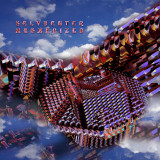
Going past musical genres and instead straight towards something more elemental - Selvhenter’s music creates a strikingly direct, physical experience of sound composed of polyrhythms, acoustic and electric melodies, heavy music and improvised beauty.
Since forming in Copenhagen in 2010, drummers Jaleh Negari and Anja Jacobsen, saxophonist Sonja LaBianca and trombonist Maria Bertel have forged a unique approach to making music that starts with their instrumental setup: two drummers that interlock as frequently as they go their own way, a trombone put through a bass amplifier loud enough to rattle your chest and a saxophone put through a range of effects so that it often sounds unrecognisable. Selvhenter work within their own idiom, drawing from the individual players’ personalities and interests to make a highly collective music, where all four musicians are absorbed into a total sound where an improvised free jazz approach collides with experimental electronic music and avant-garde noise/post-punk sonorities.
Their new LP Mesmerizer - which marks their first physical album release in nearly a decade and their debut on the French label Hands in the Dark - carries forward this process of exploration, deploying original and complex patterns of rhythm through various percussive instruments and finely textured horns and synths. The attention to sonic details is also almost pushed to an extreme on this new offering, making the open auditory adventure suggested by the title of the album all the more captivating. These creative developments have brilliantly kept Selvhenter’s music alive to new uncharted moods and possibilities, while at the same time strengthening their core elements: a propulsive, dense and often ecstatic music.
Marc Richter aka Black To Comm released his debut record 20 years ago. In 2023 he is still busy releasing music under various disguises and is currently signed to the Thrill Jockey label. To celebrate this anniversary his own Cellule 75 label is re-releasing some classic out-of-print vinyl albums that originally came out on the defunct Type and De Stijl labels. The LP will feature a full-colour printed inner sleeve exclusive to this edition.
In 2009 the Type Recordings label run by John Twells had just released seminal records by Grouper, Jóhann Jóhannsson and Yellow Swans when they signed Richter and put out his breakthrough Alphabet 1968 album. The LP sold out within two weeks, receiving a glowing full-page review in The Wire Magazine by the late Mark Fisher (later reprinted in his book Ghosts Of My Life), was selected for Boomkat's Top 10 releases of the year (alongside debut albums by Leyland Kirby, Demdike Stare and Oneohtrix Point Never) and was greeted with universal praise in the underground blog network as well as established magazines such as The New Yorker and Pitchfork.
The music itself played with the notion of nostalgia without being nostalgic itself. It's the sound of half-remembered dreams, a surreal distorted vision of the past, an aural polaroid of long forgotten musics, a ghostly voice from a non-existent era.
From the original Type one-sheet:
"The mission statement for Alphabet 1968 was to write an album of "songs" for want of a better word. Short tracks which represented genre points, the milestones which stuck in Richter's mind when he thought back to his favorite records. What we arrive at is a breathtaking 10-track album which, over the course of 45 minutes, explores world music, techno, noise, avant-garde, ambient music and even exotica. Each track is linked with a loose thread of radio static or environmental sound, dragging you through the album, as if tuning in to a stray broadcast or a particularly adventurous mix. Richter has pieced the album together from hours of recordings made at his studio with home made gamelan, small instruments and loops gathered from a collection of ancient vinyl and 78 records. The scope of the album is admirable, but ignoring this, it is simply a shockingly arresting collection of experimental oddities, with references ranging from Moondog to Basic Channel by way of Bernard Herrmann. It's not hard to fall in love with Alphabet 1968, far harder would be to place exactly where the record should fit into your collection."
Mark Fisher in The Wire:
"But what if we were to take Richter's provocation seriously - what would a song without a singer be like? What would it be like, that is to say, if objects themselves could sing? It’s a question that connects fairy tales with cybernetics, and listening to Alphabet 1968, I’m reminded of a filmic space in which magic and mechanism meet: JF Sebastian’s apartment in Blade Runner. The tracks on the LP are crafted with the same minute attention to detail that the genetic designer and toymaker brought to his miniature automata, with their bizarre mixture of the clockwork and the computerised, the antique and the ultramodern, the playful and the sinister. Richter’s musical pieces have been built from similarly heterogeneous materials - record crackle, shortwave radio, glockenspiels, all manner of samples, mostly of acoustic instruments. ….. JF Sebastian's apartment was itself an update of older spaces in which science and sorcery co-existed: the workshops of ETA Hoffmann's inventor-magicians, or of Pinocchio's creator, Geppetto. I think, too, of Auguste Villiers de l'Isle-Adam's astonishing 1886 tale The Future Eve in which Edison, using the expertise he has recently acquired from inventing the phonograph, sets himself the task of constructing an artificial woman. But if there are songs here, they are sung by the gramophone and other recording and playback machines. Richter so successfully effaces himself as author that it is as if he has snuck into a room and recorded the objects as they played (to) themselves. Rather than simply automating his music, as in the case of Pierre Bastien and his mechanical machines, Richter makes us feel that he has merely recorded the unlife of objects. ….. Indeed, the impression of things winding down is persistent on Alphabet 1968. Entropy has not been excluded from Richter's enchanted soundworld. It feels as if the magic is always about to wear off, that the enchanted objects will slip back into the inanimate again at any moment."
Amy Dabbs and Athlete Whippet deliver a perfectly crafted journey through house music with 'Into You' on Aus Music.
The duo's different yet wholly complementary musical backgrounds - Amy Dabbs bringing her extensive experience as a DJ & electronic music producer, and Athlete Whippet with his background as an instrumentalist & live band musician - have created a winning combination on Into You EP. The product of which is an intricately composed, highly musical suite of tracks produced to perfection for the dancefloor.
Having met for the first time at Cinthie's Elevate store in early 2021 for her DJ Kicks launch party, the compilation featuring one of Dabbs' earlier tracks, Amy Dabbs & Athlete Whippet stayed in touch, which culminated in the decision to start working together in the studio in their shared hometown of Berlin.
Amy Dabbs has released a string of lauded 12"s since her 2020 debut, including her latest highly acclaimed EP on Shall Not Fade, in addition to collaborating with Coco Bryce, launching her own imprint Dabbs Traxx last year, and featuring regularly on BBC Radio1 Dance.
Athlete Whippet, headed up by Robin Braum, have delivered a myriad of esteemed releases across Toy Tonics, Rhythm Section and Tartelet, which have earned heavy support from Pete Tong, Jamz Supernova and Tom Ravenscroft, to name a few.
Teaming up for the first time here, Amy Dabbs & Robin Braum deliver a fiery three-tracker for Will Saul's Aus Music, covering a variety of moods across the versatile EP. Kicking off the A-side is 'Deep In Your Love', with swirling pads and emotive strings tangling around a tear-jerking vocal refrain, which make for a highly moving opener. A2, 'Into You' continues the emotional journey with lively percussion, subby basslines, and sensuous vocal samples overlaid with luscious analogue chords played out on the Juno 106. On the flip, 'Milkshake' closes out proceedings with a glorious blend of anthemic hands-in-the-air piano riffs and deep acid grooves. This track is a surefire summer hit, set to ignite airwaves and the dancefloor in equal measure.
out of Stock
Last delivered 2 years ago available to reorder, subject to availability
From Mar del Plata, Argentina, we proudly present a new promising incoming house oriented label. Carefully crafted tunes in a pink/white splatter vinyl with a striking cover artwork designed by Martín Varbaro.
Producer Endemic Emerald has provided top-notch beats for
many in the rap game over the years - notable names such as
various members of the Boot Camp & Wu Tang camps,
Tragedy Khadafi, Ill Bill, and Planet Asia. On ‘Renegade
Soul’ he digs deep into his sounds to bring us his 1st
instrumental album. The set features an array of soulful
soundscapes, accompanied by a gritty undertone. The album
moves through different moods, utilising a range of jazzy
pianos, intense strings, and heavy basslines. Accompanied by
soulful voices throughout a real edge is provided and makes
‘Renegade soul’ guaranteed head-nod material. The album
will be available on 12” Vinyl, Cassette & CD on June 30th.
Produced by Endemic Emerald who has
worked with members of Wu Tang, Boot Camp
Clik, Roc Marciano, Ill Bill, Planet Asia,
Skyzoo
After the recently released cooperation album "Nathan Johnston & The Angels Of Libra", the Angels are now releasing their first own work. Warm analogue sounds and a lot of groove. Guest musicians include Milo Milone (Rhonda) and also Nathan Johnston on Revelations. The project came about in a Danish holiday home, where producer & guitarist Dennis Rux, keyboardist Chris Hartel, bassist David Nesselhauf and drummer Lucas Kochbeck spent two weeks together writing instrumental songs and recording them on a 1980s TASCAM 388 8-track tape recorder . A large number of songs were created, some of which the band released on an independent album with singer Nathan Johnston. Other songs, some with other guest musicians, are now finding their way onto this album. "Revelations" sounds so varied that it would simply not be enough to classify it as a soul album; soundtrack-like film noir passages can be found here as well as progressive space rock elements.
A wild and funky collection of Afro grooves that was ahead of its time in 1977 and has become a collector’s item in recent years, especially due to the growing international interest in Colombian picó sound system culture. Fruko and his studio bands Wganda Kenya and Kammpala Grupo treat us to a diverse set of African and Caribbean styles, laced with crazy synths, psychedelic guitar and infectious pan-African polyrhythms. By the time Discos Fuentes released the album “Wganda Kenya Kammpala Grupo” in 1977, Wganda Kenya’s discography was expanding with many 45 singles and appearances in various artists collections. The group’s 1975 debut record “África 5.000” was a full length LP in the U.S. and a various artists compilation in Colombia, which was followed by the self-titled long player the following year. However, Kammpala Grupo, which shared the album’s title and was credited to three songs on the record, had never appeared before, yet was basically the same studio group as Wganda Kenya. Most likely the creation of this short-lived studio band was just a ploy by the label to make it seem like there were more groups playing the type of exotic afro tracks favored by the picotero DJs of Colombia’s Caribbean coast (especially in Barranquilla and Cartagena). 1974 Discos Fuentes’ management had sent musician, band leader and producer Julio Ernesto “Fruko” Estrada to the coast on an A&R mission to discover what people were dancing to in the verbenas (communal open air neighborhood parties) run by the owners of picó sound systems (decorated mobile DJ rigs). Always game for an adventure, Fruko was tasked with bringing some popular examples of these esoteric, hard-to-find African, French and Dutch Antillean records back to Medellín to serve as inspiration (or to outright copy) so that the label could enter into the growing regional market and spread its popularity to the interior of Colombia and other Latin American countries via its own studio creation, Wganda Kenya. Fuentes was always returning to exploit the rich African-rooted culture of the coast as it had with the cumbia and other regional genres before, so in a way it was not surprising that they were attuned to this particular niche phenomenon from a marginalized sector of the population. The most popular genres with the champeta dancers in the 70’s and 80’s were styles like Congolese rumba, highlife, afrobeat, juju, mbaqanga and soukous as well as the music of Haiti, Guadeloupe, Martinique, Curaçao and Dominica, all of which were fiercely guarded by the DJs who had managed to acquire them often through extreme means of travel, barter and intense digging. The record kicks off with the joyful ‘El Gallo Africano’ which features exquisite interplay between Sepúlveda’s highlife style guitar and an authentic-sounding African style saxophone, perhaps played by Carlos Piña. In reality it was ‘Go Call Police Chief’ by prolific Nigerian highlife guitarist Chief Oliver Sunday Akanite, aka Oliver De Coque. Next up is Kammpala Grupo’s ‘La Yuca Rayá’ (‘Grated Yuca’), written by Isaac Villanueva in a style he termed son haitiano which sounds much more like Zimbabwe Shona mbira music. Wganda Kenya’s ‘Caimito’ (star apple, a type of tropical fruit), on the other hand, is actually a cover of a relatively well-known Haitian merengue song. Kammpala Grupo then takes us from the French Antilles to the multi-cultural discotheques of Paris, where a cover version of Black Soul’s Afro-boogie anthem ‘Black Soul Music’ is retooled and renamed ‘King Kong’, perhaps in a nod to the 1976 remake of the monster flick of the same name. Side two introduces us to the infectious merengue rebita of Angola via ‘La riphyta’ with “Paparí”, aka Mariano Sepúlveda, doing the vocals and faithfully replicating the Angolan guitar style. ‘La Trompeta Loca’ (‘The Crazy Trumpet’), probably the nuttiest track on the album, is an ingenious cover of ‘Ye Gbawa Oo Baba (Tribute To Nigeria)’ by Joe Mensah of Ghana. As with all their covers of African tunes, this rendition tightens up the original with some pop sheen, more consistent drumming and higher production values, remaking it into a powerful slow-burning dance floor filler. This is followed by one of the most powerfully original songs to come out of the entire Wganda Kenya project, Mike Char’s reggae anthem ‘El Nativo’ with Joe Arroyo on vocals. The record ends on a more authentically Caribbean sounding note with the instrumental ‘El testamento’, a cheerful islands banger with bright brass, syncopated calypso beats and chunky cuatro guitar (or ukulele). The original was in the mento genre and titled ‘Sweet meat’, written and recorded by Jamaican trumpeter Bobby Ellis. First time reissue. 180g vinyl.
De Brassers were one of the most notorious bands in the Belgian new wave/punk history. With their no nonsense attitude they scared the shit out of the local catholic community of Hamont. De Brassers were a local mixture of the Sex Pistols (in the lowest gear) and Joy Division (they always performed a cover version of Joy Division’s Shadowplay), combining a criticism of bureaucracy and politics with experiences of psychological and existential tensions. The doomed sound they produced tells a lot about the dark atmosphere of the late seventies and early eighties: the fear of atomic bombs, cold war pessimism, police violence against squatters, the first cases of AIDS, and the grim years of Reagan & Thatcher.
This compilation takes you back to that time. All tracks from their first 7″ "En Toen Was Er Niets Meer” & their self-titled 12″, plus rare & unreleased tracks taken from various live performances & the cassette “Levend”. If you’re in for a raw slice of Belgian history let de Brassers immerse you in a cold wave of punk.
Selected by Jim O’Rourke for his Tone Glow list of 25 albums that “never got their due”, Org was founded in the early 90’s by Espen Jensen and Kjetil D Brandsdal who would later go on to variously record as Elektrodiesel, Noxagt and Ultralyd in the swirl of the highly active Norwegian underground. “Org" was the only album the pair recorded as a duo, pressed in a meagre edition of just over 100 copies which disappeared almost as soon as they were made, lodged in the memory of the select few who have managed to hear it in the years since.
Made up of three long tracks, the near 20-minute ‘001’ opens the album with an extended organ zone-out matched with scraping factory machinery saturated into a dense cloud of harmonic fuzz. There's something transcendental about the sound that intersects with microtonal Alice Coltrane (particularly the unfairly maligned organ-only edition of "Turiya Sings"), as well as Pauline Oliveros and Ramleh. It’s music that pulls you in subconsciously; before you know it, you're fixating on the uncomfortable grind of metal on metal, buried mechanical rhythms and liturgical organ vamps that wind between industrial cacophony and sacred ritual music. For its last few seconds, we go into a full death metal tearout that fades out before it takes full flight, a glorious wtf.
‘002’ connects between minimalist drone styles and shoegaze, distorting fuzzed organ into pliable, dreamlike warbles that end up sounding like Kevin Shields' ‘Loveless’-era glides, or even Sunn O))) at their most devotional. Never losing the numbing overdriven mettle, its a piece that sounds spiritually entwined with Matthew Bower's Skullflower - a minimalist re-reading of high-contrast guitar music that takes all the psychoacoustic power and none of the annoying posturing.
For ‘003’, subaqueous organ is joined by synth and drum machine, sounding like the inspirational spark for Religious Knives' screwed 'n chopped cosmic psychedelia. The choice of sounds links it to Antena's foundational electro samba recordings too, but the overwhelming drone - a constant on all three compositions - connects the music to minimalist spirituals that have simmered beneath the DIY/avant garde for decades.
‘Org’ sits heavy on the nerves with overproof levels of mulched amp worship and ungodly, palms-down organ chords and wheezing, bezonked lines of melodic thought. 25 years out of sight and marinading in the archives, with the benefit of hindsight we can better understand the role these sounds played in the development of music in the contemporary sphere. It’s an important piece of the puzzle, one that makes valuable connections that, over time, have looked progressively more faint.
Images Of Goo is what Munich sound bricolageurs Leo Hopfinger aka LeRoy (head of Das Hobos, H, Spiritual Emojis and others) and Cico Beck aka Joasihno (active member of The Notwist, Aloa Input, Spirit Fest and others) call their first musical dialogue in album format.
It is equally a dialogue with the elements of their sonic repertoire of echo variations and sonic shadows from the percussive instrument box. In their sum, a Wunderkammer of a panaudic, which can be approached and departed in six tracks per side.
There we pass a fuzzy factory flow music of sound tiles and find ourselves in the next station in a game of pot banging and gong shower with firecrackers and other sound explosions. Tinpan tinkertoy and sparkler warehouse become an offbeat downbeat of sound loops, and already we imagine ourselves amid the hammering and pounding of a magic sound forge at the center of the earth, which may be the center of a distant galaxy.
On side two, we enter a dripstone cave boogaloo ("Let's start tripping") and it drips candle wax from a vocoder space-age melody, emoting and coagulating into a Morse-coding cumbia chant. Wax music this is - music that grows out of itself, even if by the means of tape and collage.
At the end there is a music snake, which, having become snake music itself, disappears in front of our ears with a swing. And maybe this is the beginning ...
In the mid-'60s, Albert Ayler found himself at the center of major transformations within jazz. On his albums for ESP-Disk', his delivery was radically aggressive and his tone blistering – aiming for something beyond the New Thing. His music would be further energized when (at the behest of John Coltrane) Bob Thiele signed him to Impulse! As Ayler told The Plain Dealer at the time, "It's not about notes anymore. It's a sound – a feeling. The approach we're taking will discontinue the use of the word 'jazz.'"
In Greenwich Village, Ayler's first LP on Impulse!, perfectly captures the Cleveland-born saxophonist's radiant intensity. Sourced from a pair of live engagements – February '67 at the Village Theatre on New York's Lower East Side and December '66 at the Village Vanguard – these recordings show an improved clarity in production and performance.
Both sets feature two basses (including Alan Silva and Henry Grimes) which allowed the ensemble to go in different harmonic directions while maintaining an organic unity. Of particular interest are "For John Coltrane," a tribute to Ayler's mentor who would pass later that year, and "Truth Is Marching In" where trumpeter Donald Ayler joins his brother to celebrate and ultimately deconstruct several jazz traditions to stunning effect.
Vibrant in sound and vision, Albert Ayler's In Greenwich Village is a landmark statement in free jazz and a career high-point for this truly original artist. Superior Viaduct is honored to present this classic album on vinyl for the first time domestically in 30 years.
Whenever Bill Evans sat down at the Piano to play, the world sat up, listened and
was carried away by the thoughtful and melodic sounds he achieved at the Keyboard,
with a style that was seductive and instantly recognisable. In 1955 he began playing
gigs at the Village Vanguard Jazz Club in New York where he met Thelonious Monk
and Miles Davis. Davis was among the first to appreciate the special qualities of the
young Pianist when the Trumpeter recruited him to play on Kind Of Blue, the 1959
album hailed as a milestone in Jazz history. This aptly named 'Platinum' collection
showcases the best of his recordings from the late 1950s and early 1960s; Autumn
Leaves, Blue In Green and Someday My Prince Will Come. Bill's unique combination
of Classical and Jazz influences is displayed on such songs as Waltz For Debby and
the sublime Peace Piece.
Before there was Saturday Night Fever there was underground disco. DJs across America went out and found the music to play; dancers went out and found the clubs. At this point, in the early seventies, the disco was the venue and not a genre of music.
By the time Nik Cohn’s short story Tribal Rites of the New Saturday Night was published by New York magazine in June 1976, disco was the biggest genre of music on the charts and was about to get bigger still, becoming an all-enveloping cultural phenomenon. Cohn sold the film rights to Robert Stigwood, and his classic club yarn became Saturday Night Fever.
“Tribal Rites Of The New Saturday Night” is the soundtrack to Cohn’s story, where disco began; a 1975 score for the underground clubs of Brooklyn and Queens that played R&B, soul and Latin beats to people who lived for the weekend.
Bob Stanley has put this collection together, sourcing what was actually played in Brooklyn discos in 1974 and 1975. Only a few specific records were mentioned in Cohn’s feature, but two of them – Ben E King’s ‘Supernatural Thing Part 1’ and Harold Melvin’s ‘Wake Up Everybody’ - were cosmically great and both are included here, alongside underground favourites like Moment Of Truth’s Four Tops-like ‘Helplessly’ and Gloria Scott’s Barry White-produced modern soul classic ‘Just As Long As We’re Together’. Ivano Fossati’s incredible ‘Night Of The Wolf’ has fans in northern soul, disco and prog circles.
Without Cohn’s original story, it’s quite possible that disco would have remained an underground phenomenon – “Tribal Rites Of The New Saturday Night” paints a scene in full flower. Saturday Night Fever would eventually, if unintentionally, wreck the underground nature of this scene, and clubs like Studio 54 would destroy the democracy of the party, but for two or three years the scene was largely undocumented and magical. This album is the sound of disco before it was captured.
With a well-received new album “Darkadelic” in the shops, the Damned continue to build on their legendary status.
This month as well as finally releasing the “David Vanian And The Phantom Chords” album as a 2LP set we are delighted to also offer “The Best Of The Damned”.
This album was originally released back in 1981 and pulled together the classic singles that the band had made for the label like ‘Love Song’, ‘Smash It Up’ (Parts 1 and 2)’, ‘I Just Can’t Be Happy Today’, ‘History Of The World Part 1’, ‘Hit Or Miss’, their Christmas single ‘There Ain’t No Sanity Clause’ and ‘Wait For The Blackout’. Not only are these now seen as gold-standard Damned tracks but also map out a musical development where they moved from their punk roots to crafting melodic pop songs that also took them into the charts. Better still, when originally pressed up in 1981 the album cannily also included those earlier classics punk classics ‘New Rose’ and ‘Neat Neat Neat’. There’s even Captain Sensible and the Softies’ version of ‘Jet Boy, Jet Girl’ that appeared on the flip of ‘Wait For The Blackout’ in 1982.
You don’t mess with a classic so we have reissued the album just as it looked back in 1981, complete with inner sleeve and blackmail label lettering. Saying that, fans of the Damned both old and new will need no encouragement to add this to their collection.
International super group Bokanté, led by Grammy-winning Snarky Puppy founder Michael League, are set to release a brand-new studio album, History, via Real World Records consisting of nine tracks celebrating black history, global unity and the futility of war. The first single “Adjoni” is out today and you can watch the song’s official video below.
Consisting of members from five countries and four continents, different genders, races and generations working in harmony and celebrating individuality, Bokanté are united in the belief that music should be a voice for the voiceless. Recalling rhythms from West Africa as well as those of Guadeloupe’s drum-centric Gwo ka, lead single “Adjoni” is a story of a life on the spectrum and of brilliance in the margins; the lyrics of “Iliminé” speak to the protective properties of love, offer a mantra to keep us joyful regardless.
History finds them exploring further, dressing folkloric instruments including the Arabic oud, West African ngoni and North African guembri, the bass lute favored by Morocco’s Gnawa maalems, in western clothes. Interweaving layers of percussion with all the nuanced skill expected of four percussion maestros: André Ferrari of Swedish folk renegades Väsen. Ex-Berklee music professor Jamey Haddad (Sting, Paul Simon). Nagasaki-raised, New York-based Keita Ogawa (Cecile McLorin Salvant). Ghanaian-New Orleanian drum king Weedie Braimah (Christian Scott), a special guest on What Heat, a vital band member now.
From Alehouse to Playhouse Bjarte Eike and his barnstorming Barokksolistene capture the vital spark of Restoration London’s entertainment scene with a captivating new recording for Rubicon Classics! The Playhouse Sessions will be released on 23 September 2022 to coincide with Barokksolistene’s concert double-bill at London’s Southbank Centre.
‘A smattering of Purcell, dances from Playford’s Dancing Master, shanties, reels and ballads succumb to a nine-piece ensemble drawing on Baroque, jazz and folk styles for a no holds barred hooley of riotous improvisatory give and take,’ (BBC Music Magazine review of The Alehouse Sessions, August 2019)
London’s musicians, pushed in the 1650s, to the margins of society by order of Oliver Cromwell, found room for new forms of entertainment in city-centre taverns and alehouses. They remained there long after the restoration of the monarchy, performing sets of dances, theatre songs and bawdy ballads to audiences glad to be free from Puritan constraints on pleasure.
Norwegian violinist Bjarte Eike and his Barokksolistene have restored the spirit and substance of those long-forgotten performances with their Alehouse Sessions, hailed by The Times as ‘irresistible’ and ‘fabulously unrestrained’ by The Guardian. Five years ago the Norwegian violinist and his band scored a best-selling album with The Alehouse Sessions on Rubicon Classics. They return to the label with another compelling collection of music and words of the kind on offer more than three centuries ago at Henry Purcell’s favourite Westminster watering holes. The Playhouse Sessions, set for release on Rubicon Classics on 23 September 2022, reflects the uplifting energy and engaging emotional contrasts of Barokksolistene’s Alehouse performances.
“The album contains a sort of inner narrative that runs through the recording,” says Bjarte Eike. “It has become like a play in its own right, with each track being a small tale within a larger story.” The recording’s tracklist includes Eike’s beguiling arrangements of music from Purcell’s semi-opera The Fairy Queen and his own original compositions on words from the play on which it is based, Shakespeare’s A Midsummer Night’s Dream; popular songs and ballads such as ‘The Irish Washerwoman’, ‘I often for my Jenny strove’ and ‘The Three Ravens’; tunes from Purcell’s welcome odes and stage shows, Come ye sons of art and Dido and Aeneas among them; the ‘Willow Song’ from Shakespeare’s Othello; Eike’s own voice in Puck’s monologue from Act 5 of A Midsummer Night’s Dream; and John Dowland’s sublime air ‘Can she excuse my wrongs’.
London’s theatres were closed at the start of the English Civil War in 1642 and remained shut until the Restoration. Alehouses offered redundant musicians, actors and dancers a place to scrape a precarious living and soon became their creative refuge. “Although a few surviving theatres reopened in 1660 with the return of Charles II, there was little money around to rebuild those that had been demolished,” observes Bjarte Eike. “And a generation of musicians had already found an audience in places like the Black Horse in Aldersgate Street. So popular were their alehouse sessions that Cromwell tried to abolish them! But they outlived him and became part of Restoration musical life.” The form of a Barokksolistene Alehouse, he adds, is like a creative room. “Within its framework I can frequently refurbish the show with new contents. The Playhouse project is likewise an extension of the ever-evolving Alehouse Sessions. Together they tell the story of music and theatre in London during Cromwell’s time and after the Restoration. Of course there’s an historical context to what we do. But there’s also the practical context – which is even more important to me – of connecting with a contemporary twenty-first century audience. An Alehouse / Playhouse performance is not something for the museum; it's about music made in the present moment, just as it was in the London alehouses of Purcell’s day -- with their playhouses annexed to the rear of the beer-drinking saloons. The encounter of musicians onstage and the audience in the hall is the real magic of it. We have to fuse the audience into the action of our performance!”
The Playhouse Sessions will be launched on Friday 23 September with a late-night concert at the Purcell Room and a post-concert Alehouse Session in the foyer of the Queen Elizabeth Hall. Soprano Mary Bevan is set to join Eike and his Alehouse Boys for the first half of their Southbank Centre double-bill, offering unique interpretations of songs from Purcell shows and other hits from the late seventeenth-century London stage. “The Southbank Centre is a direct descendant of concerts given in the 1650s in the alehouses of London,” notes Eike. “These alehouses after all staged some of the world’s first public concerts. Later, after the Restoration, it became common for promoters to advertise alehouse concerts in the press and offer subscription tickets. Purcell and his fellow musicians were thus just as at home performing there as they were in the chambers of the royal court or in London’s new theatres.”
Bjarte Eike launched his Alehouse Sessions in company with like-minded musicians 15 years ago. The ensemble comprises a core of regular performers, all of whom have committed to memory a huge setlist of up to four hours of music. Typically they meet a day or so before a concert tour to share a meal and make music together; then next day, re-grouping thirty minutes before the show, they discover Eike’s select-menu for the evening. “That ensures that every show is fresh,” he notes. “I make sure we never repeat the same programme twice. It’s therefore essential to work with people who share my outlook and dare to adventure. We’re into a high-risk sport, with lots of traps and places where the unexpected appears - for good or for ill. And so the audience knows we’re vulnerable. But our skill is seen in how we re-act on the hoof to the unpredictable. That’s authenticity and honesty - and above all it’s a performance that’s genuine.”
Armed with a classical training and a background in folk music and improvisation, Bjarte Eike was drawn naturally to Early Music in all its stylistic variety. “I never really felt at home with only one genre,” he recalls. “Early Music allowed me to study profound, complicated compositions, but performing it has also opened up the chance of rebellion and uproar! Early music offers wide, multi-faceted areas of musical exploration for me. You find, for instance, links to different types of music wherever you look in seventeenth-century English repertoire. And I am fascinated by all these connections. They offer a foundation for the Alehouse Sessions and for all Barokksolistene performance more generally. Every member of the group plays, sings, dances and improvises without limitation. We’re all interested in the many different fields of being a stage performer and pushing hard at the ‘normal’ boundaries of what it means to be a classical musician.”
"To celebrate the 35th anniversary of my store I looked for a personal connection between the past and the present... following that typical attitude in the search for alternative music that has developed since the 80s"
Paolo LDSQ
out of Stock
Last delivered 18 months ago available to reorder, subject to availability
Delroy George Wilson (5 October 1948 – 6 March 1995) was a Jamaican ska, rocksteady and reggae singer. Wilson is often regarded as Jamaica's first child star, having first found success as a teenager. His youngest son, Karl "Konan" Wilson, has found success as part of British duo Krept and Konan. His voice matured as he left his teens, around the time of ska's transition to rocksteady and this period in the late 1960s produced many hits including one of the first rocksteady records, "Dancing Mood", "Jerk in Time" (with the Wailers), "Feel Good All Over", "I'm Not a King", "True Believer in Love", "Rain From the Skies", "Conquer Me" and "Riding for a Fall". "Won't You Come Home", a duet with Ken Boothe on a rhythm originally cut by The Conquerors for Sonia Pottinger has become one of the most-versioned Jamaican tracks ever. After leaving Studio One he recorded for other labels, with varying degrees of success, and set up his own short-lived W&C label. He enjoyed success with Bunny Lee in the late 1960s and early 1970s with tracks such as "This Old Heart of Mine", "Footsteps of Another Man", and "Better Must Come". His double A-side "It Hurts"/"Put Yourself in My Place" was a skinhead favourite and narrowly missed UK chart success. He recorded a version of "Run Run", a song he had originally recorded for Dodd, for maverick producer Keith Hudson. Wilson toured the UK and recorded for Trojan Records in 1970.
Two of the Bronx’s most skillful emcees have paired up for one of the most promising collaborative albums of 2023. Appropriately titled, Gunz X Bars, the boogie down’s own Cory Gunz and David Bars have joined forces with Respect the Vision (RTV) under the watch of DITC Studios, the label and recording studio akin to one of hip-hop’s most revered crews, comprised of Lord Finesse, Diamond D, Big L, O.C. Fat Joe, Buckwild, Showbiz and A.G. And as you’d expect, the result is top tier lyricism over a soundscape that epitomizes the essence of New York hip-hop. For the past two plus decades, Cory Gunz has made his bones by proving his lyrical prowess time and time again. Son of rapper Peter Gunz (of the famed duo, Lord Tariq and Peter Gunz), it didn’t take long for his talents to be recognized by Lil Wayne, where he appears on his single, “6 Foot 7 Foot” off Tha Carter IV. Gunz also starred in his own befittingly-titled reality show, Son of a Gun (MTV) which documented his journey to fulfill his career in music. David Bars’ trajectory also started at a young age, where he made his name at high school talent shows and industry showcases throughout the city. Releasing his debut project Barcode in 2019, the quick-witted spitter found himself rapping alongside the legendary Fat Joe who appears on the single, “A Star is Born.” However the co-signs weren’t limited by Joey Crack, as the inimitable DJ Premier lent his boom-bap magic to the album cuts, “Beat the Odds” and “Just Like That.” Throughout the project’s eight tracks, Gunz and Bars prove themselves to be both lyrically and sonically compatible. Gunz’ staccato-type flow melds seamlessly with Bars’ smooth delivery. To boot, the production value throughout plays to the strengths of both emcees, with beats provided by So Special, Track Pros, Kofi Cooks and more. It’s no surprise that two of the BX’s most raw and uncut talents would eventually unite, and what better way to join forces than under the auspice of DITC Studios.
Brian Jonestown Massacre, Velvet Underground, TOY. “Upon the highways of Freedom, where Evil is like a Ferrari… “ Unbeknownst to its members, Index For Working Musik was born on an evening in late 2019 amidst the discovery of a collection of faded b&w photocopies that had been marinating on the floor of a urine-alley in the Gothic Quarter of Barcelona. An assortment of sacred and profane imagery were crumpled amongst an essay on early Christian hermits, entitled Men Possessed by God, the meaning of which was enticingly vague. Received together, they planted the seeds for a new endeavour. Though Max Oscarnold and Nathalia Bruno were already engaged in a creative ping-pong of sorts, the results to this point had only totaled a 30 min long ½ inch tape containing one track and four interludes. They needed a page and they needed ink, and they needed a place and it needed energy. Suddenly by chance or divine intervention, their experimental venture had been given form and direction. Back home in London’s cursed smog, they moved themselves and their 8-track studio into a basement in E8, where the project’s gravitational pull gained strength, quickly developing into an unexpected collective with the incorporation of drummer Bobby Voltaire, double bass player E. Smith and guitarist J. Loftus. As the world shifted around them and the Plague Years followed, it became increasingly clear that they were not going to leave that small basement room. The scarcity of light or outer world presence was less a limitation, instead the main tool at hand, allowing the recording to stretch for boundaryless days in architectural isolation, and forcing them to make straight forward free guitar music, adopting a ‘first thought, best thought’ approach. 35 minutes of repeat phrased guitars, slow-clipped drums and dulcet vocals where the recurring landscape is the desert. Reel-to reel-loops of Afghan music compete with the found sound overlays of voices recorded at the queue of the pharmacy and drum machines borrowed from Spanish heroes, channelling both far-off climes and snippets from a closer reality. It’s a strange psychic brew, built of imagined mysticism and domestic realities, of fever dreams and days that stretched into weeks of months. What was sparked by that discovery in the Gothic Quarter was actually a realisation that what they were looking for was with them all the while, buried as it was in piles of voice memos and recorded guitar feedback. Men Possessed By God they may be not: it was self-possession that was to guide their way in the end. “Life, despite all its destructive changes, remains indestructibly powerful and joyful
Debut Album Nottingham post-punks Do Nothing blend jerky, spidery rhythms with surreal, half-spoken vocals that recall the Fall 's Mark E. Smith . Do Nothing was formed in 2017 by four long-time school friends: frontman Chris Bailey, guitarist Kasper Sandstrøm, drummer Andy Harrison, and bassist Charlie Howarth. All had played in various acts around the city; the band got their start at the popular Maze Club. Bailey, whose father was a singer in an a cappella folk group, grew up listening to the sounds of Simon & Garfunkel , and his own biggest influence was Tom Waits . Initially attempting to copy big names like LCD Soundsystem (as heard on their first 7" single, "Gangs," released in 2019), they eventually became more confident about doing their own thing, and Bailey gave his stream-of-consciousness lyrics and outsider stage persona free rein. Associated with, but wary of, the then-popular post-punk revival, they made clear it was their intention to follow their own path. Their debut EP, Zero Dollar Bill, was released in 2020; another, Glueland, arrived the following year, with an album in the works.
Director's note : "My encounter with Wild Dee, the main actor in DOUBLEPLUSUNGOOD, was a determining factor in the making of this film. Not only are we strongly influenced by the same literary atmospheres - Among them American authors like Harry Crews, Iceberg Slim, N.Tosches and Belgian horror author Jean Ray - we also share the same cinematic tastes - low budget cinema be it French, Japanese or Spanish. Our main aim was to recreate the spirit, and play with and even subvert, the codes of Exploitation cinema. We also share the same taste for Rock & Roll, as our parallel musical backgrounds show. We were both singers in emblematic Belgian rock bands of the 80's and 90's - Wild Dee in The Wild Ones and me with Marine (79/81 - 3 singles with Les Disques du Crepuscule) and La Muerte (84/94 - 6 albums with Pias). The film's soundtrack, inspired by Francois de Roubaix, John Carpenter, Lalo Shiffrin, is like its second layer of dialogue: the original compositions of Renaud Mayeur (winner of the Magritte 2013 Belgian cinema awards for best soundtrack) and of J-M Lederman (Fat Gadget, TheThe, ... ), Moaning Cities, Ashtoreth, The Nick Leonardo Orchestra, The Manarays, Jack'O'Roonie. " A further thing that brings us together is something that has been with us since childhood and that we Belgians call: Belgitude...
‘Shapes,’ the third album from London-based multi-instrumentalist, Robohands, fuses elements of jazz, krautrock, hip hop and ambient music. For fans of Khruangbin, Yusef Dayes, CAN, Coltrane and 70s library music moods.
Shapes is the solo project of London based composer, instrumentalist and producer Andy Baxter. His debut LP Green was released on Village Live Records in 2018 and was received with much love and acclaim in the UK Jazz, hip hop and surrounding scenes.
His follow up full-length, 'Dusk’, dropped in 2019, combining soul, funk, Latin & experimental moods. It featured vocalists & musicians from around the world including legendary New York French horn player, John Clark, who has worked with Isaac Hayes, Gil Evans Orchestra, McCoy Tyner, Jaco Pastorius, Ornette Coleman and many more greats.
'Shapes' is inspired by 1970s library music and their legendary composers including Piero Umiliani, David Axelrod, Brian Bennett and co. The album builds on these influences and incorporates modern motifs, contemporary jazz/hip hop drumming styles with a nod to 1990s Mo Wax artists such as DJ Shadow. The theme for the record is future/nostalgia, mixing vintage & modern instruments and production techniques.
Much of ‘Shapes’ was recorded with JB Pilon at Buffalo Studios in Limehouse, London. Due to the COVID restrictions that changed everything in 2020, the remaining parts were recorded in Andy’s flat using a collection of old mixing desk preamps and instruments.
For the heads – ‘Shapes’ features an array of vintage snares, including a 1960's Ludwig Pioneer and a mono, overhead ribbon mic on the drum kit provided extra old school points! The kick drum was re-amped through a huge vintage bass amplifier on a couple of tracks to give it some real character: “My favourite guitar sound achieved on this LP project is a Sontronics Sigma ribbon microphone in front of a WEM Dominator amp, which you can hear on the track 'Odysea'. The bass sound for all the tracks is a 1973 Fender Precision into an old Altec valve preamp, the one used on most Motown recordings."
out of Stock
Last delivered 3 years ago available to reorder, subject to availability
Hi Scores is beyond excited to present SSR Records: In Retrospect. This 2LP compilation album presented in a beautiful gatefold sleeve and through all digital platforms, wishes to highlight the immense and hard to grasp legacy of the Brussels based label. SSR Records was founded in 1988 by Marc Hollander as a sub label of his Crammed Discs and spanned the nascent years of house, acid, rave, trance, new beat, hip-hop, future jazz and broken beat, collaborating internationally and racking up close to 200 releases until it was put to sleep in 2002. Far ahead of their time, SSR Records released music of both European and North American artists that hadn’t broken through yet, such as those collected on this compilation: Move D, Nu Era, Gemini, Bjørn Torske, Glenn Underground or Matthew Herbert.
SSR Records was run by Crammed Discs chief Marc Hollander and Minimal Compact singer Samy Birnbach aka DJ Morpheus. SSR Records: In Retrospect comes with extended liner notes, exploring the pivotal milestones in the history of the adventurous label and zooming in on the origins of all records featured on the compilation.
All nine tracks on SSR Records: In Retrospect were selected by Hi Scores’s head honcho Kong DJ and have been remastered. Created between 1990 and 1996 and in the at the time pioneering spheres of house, breakbeat, electro and trance music, these treasures from the vast SSR catalog today stand as a stunning testimony to a truly remarkable and timeless musical legacy. Kong DJ: ‘While collaborating with Crammed Discs on the releases of Aksak Maboul in 2016 and Zazou / Bikaye in 2018 on Ensemble, I began to grasp the impressive catalog of the label and its sub labels, including SSR. Surprised by the tiny footprint SSR had left on the world wide web - often the case for labels ceased before the internet revolution - I wrote an article for British website The Vinyl Factory.
This would later prove to be the first step towards this compilation album, collecting favorites from the label as a kid in a giant candy store.’
out of Stock
Last delivered 7 months ago available to reorder, subject to availability
In March 2022, EMPIRE assembled some of Africa's finest singers and songwriters, the musical equivalent of Ocean's Eleven, at a writing camp in San Francisco. The result is Where We Come From, Vol. 1, a 15-track compilation featuring Afrobeats royalty Wande Coal, Tiwa Savage and Olamide as well as Tanzanian duo Navy Kenzo, Cape Verde's June Freedom and a host of other stars across Nigeria and Ghana - KiDi, Fireboy DML, Kizz Daniel, Tolani and more. The sounds traverse East, West and South of the continent, incorporating drill, amapiano, trap and Afrobeats in fashioning an album that at once sandwiches luxury between lust and love while also being a flagpost to hedonism. The cover art, created by Nigerian artist Dricky Stickman, incorporates all 15 songs into the final product, illustrating unity, community and culture. “This project ‘Where We Come From, Vol. 1’ is a perfect example of music having no limitations,” Kareem Mobalaji, Regional Head West Africa said. “Yes we are from Africa, but we are truly determined to reach the entire world with our voice, which is music.”
out of Stock
Last delivered 3 years ago available to reorder, subject to availability
Up next on Space Dust is Miles, exploring 4 variations on an other-worldly electro vibe with his 'Peeking Through Clouds' EP.
The landslide-worthy bassline of 'Hole in the System' kicks off proceedings, with sharp claps and sizzling rides occupying the space left behind, while squelching stepper 'Light Years Away' presents itself as another wieldy dancefloor weapon on a US-garage tip.
On the flip, bass continues as the dish of the day through 'In Transmission', as moody synth work rides a subdued breakbeat. 'Peeking Through Clouds' boxes off the EP in an ethereal fashion... but this shimmering closer remains a floor-focussed weapon.
out of Stock
Last delivered 2 years ago available to reorder, subject to availability
JOHN BARERA (2MR/ALLERGY SEASON/DOLLY/SORRY RECORDS) is a DJ, Producer & Label owner based in NYC. His sound is rooted in techno and house’s most classic iterations: sturdy, barreling grooves, shimmering pads, deep liquid dubs and the occasional acid burn. BRIAN ABELSON is the producer of JENNIFER VANILLA’s “CASTLE IN THE SKY” album. Here they team up for 6 mesmerizing tracks of funky disco-tech on the latest 12" from the YOU TOO CAN WOO crew. Intricate rhythms, hypnotic synth arpeggios, lush ambience & seriously funky basslines make "THE ARC" a fantastic showcase of this duo's talent and versatility.
out of Stock
Last delivered 3 years ago available to reorder, subject to availability
Glitching through pop music, cruising around the borders of the avant garde, passing by the edge of coldwave and tumbling into dance and club vibes: after her debut Bad Woman Céline Gillain is back with her second album: 'Mind is Mud'.
On Mind is Mud' Gillain let herself sink in the swamp of emotional confusion, the perpetual brain fog caused by a post Covid-world asking herself: do we have to get used to paradox as a way of life from now on?*
A musical dissection in nine songs of the mudflow, a flow which reveals its rich complexity the more Gillain dived into it: from the demanding intro 'Together' Céline opens up her highly personal and unique vision, shifting between high definition lost dimensions and emotionsthe mud slowly transfers in a crackling and sparkling stream of consciousness.
The mud is well alive in all its weirdness and unclarity. At times, it even glows in the dark.
The answer to that question is yes. The story of Mind is Mud by Céline Gillain: "Music is a place where intuiting is a work in itself. For me, it's the one place where I'm in charge, free to think and do what I want. Mind is Mud is the fruit of a collaborative practice with a DAW, a research around the palliative power of rhythm and the dancefloor, music as a space where emotions and ideas merge, storytelling, the comic potential and imaginative nature of sound. I don't really write, I copy paste and then I arrange and rearrange. Every sound I use comes from software, field recording, Instagram, movies and midi scores I collect here and there. In the hierarchy of sounds, you might call them cheap sounds. The lyrics are collages as well, made of pieces of texts from various contradictory sources. In addition to using the voice as a vehicle for ideas, I investigate its percussive and polyphonic potentialities, the possibility to have more than one voice/mouth."
out of Stock
Last delivered 3 years ago available to reorder, subject to availability
Japanese folk-rock legend Morio Agata stunned fans with this way-outta-left-field dispatch - a synthesizer-laden, new-wave/post-punk classic. Originally released by Osaka’s Vanity Records in 1980 and back on vinyl for the first time in nearly 40 years, this fully authorized reissue has been remastered from the original analog tapes. In tip-on sleeve, with double-sided insert.
50 years ago, Hokkaido-born singer-songwriter Morio Agata released his debut single, Sekishoku Ereji (Red Elegy), an emotive, shuffling piano ballad that (shockingly) sold half a million copies in Japan. While he would never have another Top-40 hit, Agata would spend the next half century issuing a series of idiosyncratic, experimental pop albums. Today, he’s a beloved cult figure, still actively touring and recording in his seventies.
In his first decade as a recording artist, Agata released a stream of classics right out of the gate — Otome No Roman (1972) melded American-styled folk rock with traditional Japanese melodies, Zipangu Boy (1976) was a sprawling, Haruomi Hosono-produced psychedelic opus, and Kimi No Koto Suki Nan Da (1977) saw Agata tackle slick, lightly funky AOR. While this sort of stylistic schizophrenia might sink your average artist, Agata’s singular voice and magnetic charisma elevates everything he touches, and subsumes it all into Morio Agata World — a joyous, playful and frequently unhinged world.
Arguably the biggest left-turn of Agata’s early career, however, came in 1979, when legendary experimental label Vanity Records’ Yuzuru Agi paired Agata with major players from his label’s roster and the Osaka punk scene for an impromptu recording session. An impressive list of musicians took part (SAB, Yukio Fujimoto (Normal Brain), Masahiro Kitada (INU), Taiqui (Ultra Bide), Jun Shinoda (SS), Chie Mukai (Che-Shizu), and others) and even though they all came from different wings of the underground music scene, together they built an arresting, minimalistic bedrock of synthesized and acoustic sounds for Agata to work his magic over. The recording sesssions were tense and it took a while for the collective to find their footing. But the hard work paid off — Norimono Zukan is a masterpiece of ramshackle new wave and droning dirges, topped off with Agata’s unmistakeable croon, at times delicate, other times twisted. It’s a relatively short album, but a deep one, and Mesh-Key is honored to introduce it to a new generation of music fans.
out of Stock
Last delivered 3 years ago available to reorder, subject to availability
**NEW 2018 ALBUM FROM KIKAGAKU MOYO**The shifting dimensions of Masana Temples, fourth album from psychedelic explorers Kikagaku Moyo,are informed by various experiences the band had with traveling through life together, ranging from the months spent on tour to making a pilgrimage to Lisbon to record the album with jazz musician Bruno Pernadas. The band sought out Pernadas both out of admiration for his music and in an intentional move to work with a producer who came from a wildly different background.
With Masana Temples, the band wanted to challenge their own concepts of what psychedelic music could be. Elements of both the attentive folk and wild-¬-eyed rocking sides of the band are still intact throughout, but they're sharper and more defined.
Kikagaku Moyo started in the summer of 2012 busking on the streets of Tokyo. Though the band started as a free music collective, it quickly evolved into a tight group of multi-¬-instrumentalists. Kikagaku Moyo call their sound psychedelic because it encompasses a broad spectrum of influence. Their music incorporates elements of classical Indian music, Krautrock, Traditional Folk, and 70s Rock. Most importantly their music is about freedom of the mind and body and building a bridge between the supernatural and the present. Improvisation is a key element to their sound.
More than the literal interpretation of being on a journey, the album's always changing sonic panorama reflects the spiritual connection of the band moving through this all together. Life for a traveling band is a series of constant metamorphoses, with languages, cultures, climates and vibes changing with each new town. The only constant for Kikagaku Moyo throughout their travels were the five band members always together moving through it all, but each of them taking everything in from very different perspectives. Inspecting the harmonies and disparities between these perspectives, the group reflects the emotional impact of their nomadic paths. The music is the product of time spent in motion and all of the bending mindsets that come with it.
out of Stock
Last delivered 10 months ago available to reorder, subject to availability
1000 Die-cut leather structure gatefold with eight artist photo cards & insert.
"Welcome to the America Dream Reserve, home to husband & wife duos, pub legends, one-man-bands, preachers’ sons, and country-lounge entertainers..."
About: America Dream Reserve is a home for kindred souls. An hour-long journey into the world of lo-fi drumcomputer folk, disco-pop-lounge, haunting ballads, obscure vanity pressings, and synthesized string ensembles. A collaborative compilation between Charles Bals, creator of the inimitable Club Meduse, and Smiling C.
Sleeve: This is a premium edition of ADR housed in a die-cut leather structure gatefold. It comes with eight loose double-sided swappable photo cards with artist photos on both sides, and an insert with write-up about the project. Limited run.
Compiled by: Charles Bals & Henry Jones.
out of Stock
Last delivered 8 months ago available to reorder, subject to availability
Debut album recorded for launch of new record label by award-winning mastering engineer Kevin Gray!
Recorded all-analogue/all-tube at Gray's new studio, Cohearent Recording, for Cohearent Records!
Shapes and Sound from jazz saxophonist Kirsten Edkins is the debut LP release from Cohearent Records — the new record label companion to famed mastering engineer Kevin Gray's latest enterprise, an all-valve (vacuum tube) recording studio (Cohearent Recording) adjoining his home-based mastering facility in California.
"It's the 'essence of an era' we are trying to recapture with today's musicians, not the sound of specific spaces, engineers or recordings," Gray told music reviewer Michael Fremer.
This album was produced all-analogue/all-tube at Gray's Cohearent Recording on December 10 and 11, 2021. Dave Connor produced, while Gray and Ryan Wirthlin co-engineered. Edkins on sax was joined by Gerald Clayton (courtesy of Blue Note) on piano, Ahmet Turkmenoglu on bass, Lemar Guillary on trombone and Chris Wabich on drums.
Edkins, a composer and saxophonist from Los Angeles, graduated from Eastman School of Music on scholarship. She studied composition and arranging with Bill Dobbins, as well as Walt Weiskopf and the legendary Ray Ricker. Before her time at Eastman she studied with Bob Sheppard, a jazz recording artist and woodwind specialist. Edkins is a sought-after improviser who has performed with Arturo Sandoval (Al "Tootie" Heath), Tim Hagans, Clay Jenkins, John Beasley, and Geoffrey Keezer.
She has performed with the Clare Fischer Big Band, Bill Holman Big Band, Bernie Dresel Big Band (The BBB), Sara Gazarek and others. She's appeard on television shows such as American Idol, Duets, Knight Rider, Glee, and Bones, plus The Tonight Show. She's also a music educator whose associations include Cal State Fullerton, Stanford Jazz Workshop, Saddleback College and Golden West College. She also direct the American Jazz Institute's community outreach program and teaches saxophone at Occidental College in Eagle Rock.
The album is an excellent showcase for Gray's new recording studio. Cohearent Recording was born from Gray's relentless passion to create the best sound recordings. It was that passion that has inspired Gray's long career cutting lacquers for such noted labels as Blue Note, Music Matters and Analogue Productions.
He spent 15 years building gear for the project. "I had a novel idea: In order to get the vintage sound we all love, (I'd) design and build an all-valve (vacuum tube) recording system from microphones through to the disc cutting head, NO transistors or IC's anywhere in the signal path. That took much longer than anticipated but it is finally complete."
Gray was inspired to use his own living room as the studio space when he realized it was similar in size and shape to legendary jazz recording engineer Rudy Van Gelder's Hackensack N.J. parents' home. Many classic jazz albums were recorded there by Gelder.
Some of the same microphones used on those earlier Gelder recordings are in use in Gray's setup. The custom vaccum tube electronics are different and for Shapes and Sound Gray used a tube-based Studer C37 rather than an Ampex.
Gelder's Hackensack recordings for both Blue Note and Prestige, Gray says, are "some of my favourite jazz records, and they are also exceptionally good sonically."
out of Stock
Last delivered 3 years ago available to reorder, subject to availability