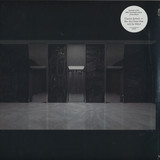
Das neue Album "nichts" der Aachener Post-Hardcore Band FJORT ist ein 50-minütiges Erlebnis. "nichts" gewinnt dem dichten Sound der Band, der fließend zwischen allen Spielarten von Hardcore und Postrock wandelt, zahlreiche neue Facetten ab. Die Täler sind tiefer denn je, in den Höhen ist kaum Luft zu atmen. Die Atmosphäre fühlt sich nahezu greifbar an. Lyrisch gaben sich FJORT seit jeher kryptisch und bleiben dieser Linie treu werden auf "nichts" jedoch auch konkret wie selten zuvor. Vielleicht, weil Zeiten wie diese mehr denn je nach Schonungslosigkeit lechtzen. Vielleicht auch, weil eine Art Galgenhumor seinen Weg auf das Album gefunden hat, der mit dem absoluten Ernst gekonnt bricht. Abwechslungsreicher und schlichtweg größer klang diese Band noch nie.
The Sol Power All-Stars are back once more on the Rocksteady Disco label with some superb new covers of much-loved British funk band Cymande. Each one brings a fresh perspective while paying heed of the Afro-roots of the originals. 'Anthracite' (feat Denise Henderson) opens up and is designed for moaner dance floors with cosmic synth work and big, bouncing drums. There is a deeper and more steamy sense of rhythm to the tropical sounds of 'Getting It Back' while the Parkway dub of 'Anthracite' sounds like early house music. Two versions of 'Genevieve' offer shuffling rhythms and big horn stabs and stomping, ass-wiggling Afro-jazz.
out of Stock
Last delivered 3 years ago available to reorder, subject to availability
Eliades Ochoa has been renowned for over 40 years as a Cuban singer, guitarist and performer, including as a key contributing artist to the multi-million selling 1997 ‘Buena Vista Social Club’ album. World Circuit now releases a Special Edition of Ochoa’s latest album ‘Vamos A Bailar Un Son’. Originally released in 2020, the album features Eliades’ interpretations of songs by important Latin American composers like Ñico Saquito and Agustín Lara, as well as compositions by Eliades himself. The new Special Edition is available on CD, LP and digital formats and features 3 previously unheard bonus tracks. Ochoa continues to explore new collaborations, having recently teamed up with Spanish rapper C. Tangana on his track ‘Muriendo De Envidia’. Eliades comments: “This album has made me feel more alive. I am thrilled that more and more young people are connecting with my music.”
out of Stock
Last delivered 3 years ago available to reorder, subject to availability
The music of Robert Schumann and the artistry of Sviatoslav Richter are a natural match. Schumann was loathe to use flashy, purely virtuosic elements in his compositions, a fact brilliantly illustrated in the vast majority of his works for solo piano. Rather, Schumann was much more likely to tell a story, paint a picture, or read a poem through his music, although his works were not overtly programmatic. Richter possessed a technique virtually unrivaled during his career and was able to definitively toss off even the most technically demanding works. At his heart, however, Richter was a poet and an artist with profound musical insights and introspections. This album, featuring recordings made in the late '50s, is one of Richter's surviving albums in which poor sound quality does not distract listeners from this artistry. His performances of the C major Fantasy, the Op. 82 Waldszenen, and the Op. 12 Fantasiestucke are magnificently refined, unhurried, and unsullied by some pianists' need to make the works flashier then they need to be.
out of Stock
Last delivered 3 years ago available to reorder, subject to availability
Star Trek to soulstress - Lieutenant Uhura aka Nichelle Nichols was a groundbreaking actor, singer and trailblazer and these two standout tracks sound as sweet as they did over 50 years ago.
A valuable collectable must for Soul, Northern fans & well as any true Trekkie...original copies are changing hands for £250+.
Remastered and reissued on 7 inch with large / dinked centre hole in Epic generic paper sleeve.
out of Stock
Last delivered 3 years ago available to reorder, subject to availability
Houseworx continues the "Lost housetracks" series.
VOL. 7 comes from known faces of the Label and one new appereance by Amaury Trevino , Freischwimmer deliver the A Side while on Side B Franksen and one of the Labelheads Matt Star deliver the goods.
out of Stock
Last delivered 12 months ago available to reorder, subject to availability
Many Worlds Interpretation is a collection of cosmic Americana for electronics, guitar, and percussion culled from Jon Iverson’s extensive home-studio archive. 1984, Los Osos, California. In a small cinderblock cottage, hand-painted with bright psychedelic flora, Jon Iverson created vibrant new worlds. He spent long days and nights immersed in sound, perfecting home recording on his 8-track reel-to-reel, combining his love for kosmische and Berlin School electronics with an infatuation with ethnographic sounds and expansive guitar music. In a duo with fellow sonic traveler Thomas Walters, Iverson released missives from the studio on a self-titled LP released on country legend Guthrie Thomas’ Eagle Records. That release featured
three electro-acoustic compositions (“Naningo”, “River Fen”, and “Fox Tales”) as well as a gathering of guitar duo tapestries. Many Worlds Interpretation re-imagines those interplanetary works alongside several unreleased compositions that also feature synthesizer, guitar, and percussion, creating a re-visioned album which leans into Iverson’s electronic studio wizardry.
All songs have been carefully transferred from analog tape to high resolution digital, retaining their vintage studio warmth, but mixed and mastered for modern ears and audio systems. The album is pressed at 45rpm, further enhancing the audiophile experience.
Artist Statement
I worked in a Harley Davidson parts warehouse in the summer of 1976 in the San Francisco Bay Area. The goal was to save enough money to buy transportation for college and a Teac 4 track 1/4" reel to reel tape machine. By September there was a rusting monkey-vomit green car in the driveway and shiny new Teac with a Sony condenser microphone in the bedroom. At this point I had been playing guitar for a dozen years and like most children of the sixties, dreamed of joining
a band.
Went to college instead to study business.
But all was not lost. 1978-1979 was spent as Weird Al Yankovic's roommate and we recorded and created enough songs to play shows around San Luis Obispo, California, where we were attending college. Many of those recordings have yet to be heard by the public, including the first performances of My Bologna and many other parodies of pop songs of the day. We sent tapes to Dr. Demento, we auditioned for The Gong Show and were barred from playing at the local college after one memorable performance. Wild times.
I, however, was more intent on working on "serious" music, with albums from Vangelis, Tangerine Dream and Jean Michel Jarre providing inspiration. DJing at the local college radio station and then public radio outlet provided exposure to an endless stream of obscure albums (Sky Records from Germany was a particular favourite). Most of them would never make it to the air, but my buddies and I would pass them around like exotic treasure.
Fast forward a couple more years and I had picked up a Mini-Moog and eventually a Prophet V synthesizer as well as starting a collection of instruments from around the world. The Teac and synths formed the basis for a growing DIY studio that had taken over a modest-size garage (pictured on the cover) that had been converted into a two room cottage in Los Osos, California.
The Teac was eventually joined by a rented Otari 1/2" 8-track and then finally a vintage MCI JH-100 2" 16-track. The compositions on this album were recorded on these three machines between 1982 and 1989. At some point an Apple II computer with Alpha Syntauri sound card and keyboard were added and then later the first personal computer sampling hardware/software kit, the Decillionix DX-1. The DX-1 forms the rhythm track for “Fox Tales” and the Alpha Syntauri was programmed to create the pulsing synth for “Naningo”. “River Fen” was tracked with both the Alpha Syntauri and the Prophet V.
I knew this music wasn't commercial, but didn't care. It was inspiring working with the first computer-based synths and semi-pro gear. Home studios were still rare in the early 80s until the Tascam Portastudio blew the DIY door wide-open. But I was more interested in sound quality so stuck with reels of tape instead of lower fidelity cassettes.
During the time these songs were recorded, I was also collaborating with my good friend and mandolinist, Tom Walters. “River Fen”, “Naningo” and “Fox Tales”, were solo recordings that also ended up on the first Iverson & Walters album, First Collection. The other four pieces on this new LP were never fully finished or released until now.
— Jon Iverson, September 2022
out of Stock
Last delivered 3 years ago available to reorder, subject to availability
.For this from that will be filled is the debut album by Clarice Jensen, artistic director of the American Contemporary Music Ensemble (ACME). The album explores the variable differences between acoustic and electronic sound as well as depiction of the simulated and the unconscious. It was originally conceived as a collaboration between Jensen and the artist Jonathan Turner as an audio-visual work, but is here presented in it´s pure audible form.Building on a long and romantic tradition of solo cello repertoire, Jensen expands and confuses the familiar sound of the cello through the use of effects pedals, multi-tracking, and tape loops recorded at variable speeds, presented in works she has written for herself as well as a piece she conceived together with Icelandic composer Jóhann Jóhannsson. Also featured is Michael Harrison's Cello Constellations for multi-tracked cello and sine tones, written for Jensen, which meditates on long, sustaining tones.With For this from that will be filled, Jensen has made an incredibly strong first album that feels like a surreal and futuristic journey through an alternate timeline.
Born Bangalter in 1947, Daniel Vangarde is a French songwriter and producer. In 1967, he met Jean Kluger who became his publisher. In the 1970s, their tandem stood out in those fields, for a plethora of popular French artists such as Petula Clark, Claude François, Joe Dassin, Dalida, Régine, Sheila and Ringo. 1975 saw the birth of Vangarde’s label, Zagora, and his first and only solo LP. Later on, Vangarde and Kluger were responsible for a number of hit songs by The Gibson Brothers, Ottawan and La Compagnie Créole. With or without Kluger, Vangarde also wrote and produced songs that remained underground, under several monikers (Starbow, Who’s Who, Soul Iberica Band, Yamasuki, Rocky & Vandella…) and for various artists. Let’s open these incredible cosmic disco funk vaults! Available on Double Vinyl (featuring 2 exclusive tracks) & CD .
Part 5 of the various artists series is at it again with 5 tracks by 5 different producers and a mixture of feel good party time music and contemplative music. You will hear familiar Running Back names like Storken (this time together with JStaaf) refining their comic tropes (or imagine Foreigner doing house music) next to newcomers like Archie Ward. His Pizza Girl puts musical toppings on a pounding underbelly that wouldn't be out of place in any warehouse, while Moritz and Amount dial it back a bit. Their respective tracks are gleaming with a special kind of elegant end-of-night euphoria that is hard to come by - and all the nicer if it happens. Remember: trance is a state of mind! Last but not least, Australia's Jonus Eric delivers an IDM-leaning piece of outsider dance. Hot soup, hot swallow!
out of Stock
Last delivered 21 months ago available to reorder, subject to availability
Earwiggle returns with a new 11-track (2x12") compilation for its 30th release, featuring The Mover, Heidi Sabertooth, Kerrie, Surit, Arjun Vagale, Pyran, Keepsakes, Ingen, Slave To Society, Duran Duran Duran and Dublin Terror Squad. Conceived during the pandemic, "Music For The Wilted Generation" is a tense exploration through dark minimal, industrial and club techno sounds, that culminates with some of the fiercest material to appear on the label yet.
out of Stock
Last delivered 4 months ago available to reorder, subject to availability
Die Vögel are back. Almost two years after their sensational debut release Blaue Moschee, the arena rocking EP that's still a permanent fixture in Sven Väth's record bag, Die Vögel have laid another milestone in the history of club music - the Fratzengulasch EP.
out of Stock
Last delivered 17 months ago available to reorder, subject to availability
This limited edition vinyl includes numerous songs by Italian composer Stelvio Cipriani, the man behind the superb soundtrack of Poliziottesco movie La Polizia Sta A Guardare (1973) whose main theme was reborn in 2007 on Quentin Tarantino’s Death Proof, multiple scores for Spaghetti Western movies starring Tony Anthony, as well as a Nastro d’Argento award for best score for The Anonymous Venetian (1970).
Also found on Pieces are compositions by Carla Maria Cordo who scored Joe D’Amato’s gorefest Absurd (1981) that some might know as Anthropophagus 2, Monster Hunter, Horrible or The Grim Reaper 2 - a movie so shockingly violent it became one of the Video Nasties of the UK and was successfully prosecuted under the Obscene Publications Acts in 1984.
Lucio Fulci’s frequent collaborator Fabio Frizzi (responsible for the music of classic horror movies Zombie aka Zombi 2, L’Aldilà aka The Beyond, City of the Living Dead aka The Gates of Hell and the list goes on) also makes a special appearance with the sexy « Cocktail Molotov ».
out of Stock
Last delivered 8 years ago available to reorder, subject to availability
Michele Manzo - musician and producer who boasts international collaborations with Omar Lye-Fook, Georgia Anne Muldrow and Declaime - is the man behind the second release of Angis Music, italian label curated by DJ Samuele Pagliai. The EP presents 3 different scenarios resulting from a spontaneous live session, which reflects the multiple influences and symphonic approach of an artist with various styles. This work, inspired by the science fiction novels of William Gibson - godfather of the cyberpunk genre - opens with the song "Burning Chrome", conceived as a nighttime escape taking you at lightening speed through the alleys of a city that is galaxies away. Continuing on to the B side we have "Chiba City Park", where the broken beat and abstract harmonies create an ambience similar to that of those in Neuromancer. Finally, "Nebula's Grace" is a cosmic jam where time slowly floats away in dub echoes and disappears into the depth of space.
out of Stock
Last delivered 3 years ago available to reorder, subject to availability
Los Angeles Free Music Society (LAFMS) formed in the mid-1970s as a loose-knit experimental music collective and multimedia publishing vehicle. Founded by teenage Le Forte Four members Chip Chapman, Joe Potts and Rick Potts and soon joined by Tom Recchion of Doo-Dooettes, LAFMS incorporated free improvisation, modular synthesizers, tape music, sampling, musique concrète, homemade instruments, noise, mail art and avant-rock in permissive and anarchic sessions at the Raymond Building and Poo-Bah Record Shop in old Pasadena. Inspired by The Residents, LAFMS self-released records and periodicals, organized performances and connected with fellow outsiders via post in the years before punk. Their uninhibited, egalitarian ideal of music-making and DIY distribution would influence generations of underground musicians.
LAFMS primarily reached outside Los Angeles via word-of-mouth and the United States Postal Service, foreshadowing the self-publishing and cassette trading networks of post-punk and industrial subcultures. In 1976, Joe Potts solicited recordings from LAFMS affiliates and admirers to edit and compile I.D. Art #2, utilizing correspondence art's technique of "assemblings." (The first installment in this series was a magazine, and the third was a coloring book.) Potts received dozens of pieces by members of Le Forte Four, Doo-Dooettes, Smegma and Ace & Duce as well as painters, filmmakers and non-artists with few recording credits to their name, creating a delirious, winking sound-art collage of field recordings, voicemails and improvisations. Participants purchased time on the record and received one copy each of the finished LP, realizing the philosophy contained in LAFMS' motto: "The music is free, but you have to pay for the plastic, paper, ink, glue and stamps."
This first-time vinyl reissue is limited to 500 numbered copies. Comes with insert.
Los Angeles Free Music Society (LAFMS) formed in the mid-1970s as a loose-knit experimental music collective and multimedia publishing vehicle. Founded by teenage Le Forte Four members Chip Chapman, Joe Potts and Rick Potts and soon joined by Tom Recchion of Doo-Dooettes, LAFMS incorporated free improvisation, modular synthesizers, tape music, sampling, musique concrète, homemade instruments, noise, mail art and avant-rock in permissive and anarchic sessions at the Raymond Building and Poo-Bah Record Shop in old Pasadena. Inspired by The Residents, LAFMS self-released records and periodicals, organized performances and connected with fellow outsiders via post in the years before punk. Their uninhibited, egalitarian ideal of music-making and DIY distribution would influence generations of underground musicians.
In 1977, LAFMS released Blorp Esette, one of several compilations tracking the collective's growth and wild-eyed experimentation. Ace Farren Ford, an early LAFMS recruit from the Poo-Bah circle, produced the album and solicited cover artwork by Don Van Vliet (Captain Beefheart). Ford appears in various configurations alongside members of Smegma, Le Forte Four and "unknown artist" (as the credit for more than one piece reads). The Residents, showing their affinity with LAFMS, contributed "Whoopy Snorp" for their first non-Ralph Records release. Blorp Esette shows the artists grasping for new, non-idiomatic voicings and collaborative modes, anticipating LAFMS affiliates and offshoots such as Airway, Human Hands and Monitor. A second volume would come out in 1980, featuring Ford's punk band The Child Molesters. If you're looking for the missing link between mid-'70s art practice and outsider music, then look no further.
This first-time vinyl reissue is limited to 500 numbered copies. Comes with inserts.
Los Angeles Free Music Society (LAFMS) formed in the mid-1970s as a loose-knit experimental music collective and multimedia publishing vehicle. Founded by teenage Le Forte Four members Chip Chapman, Joe Potts and Rick Potts and soon joined by Tom Recchion of Doo-Dooettes, LAFMS incorporated free improvisation, modular synthesizers, tape music, sampling, musique concrète, homemade instruments, noise, mail art and avant-rock in permissive and anarchic sessions at the Raymond Building and Poo-Bah Record Shop in old Pasadena. Inspired by The Residents, LAFMS self-released records and periodicals, organized performances and connected with fellow outsiders via post in the years before punk. Their uninhibited, egalitarian ideal of music-making and DIY distribution would influence generations of underground musicians.
Poo-Bah Records, with its import bins and backroom jam space, attracted the pseudonymous artists forming the initial incarnation of long-running collective Smegma. Early members Ju Suk Reet Meate, Dennis Duck, Cheez-it Ritz, Big Dirty, Amazon Bambiand Dr. Id contributed to various LAFMS compilations and combinations before several core members relocated to Portland, Oregon in 1975, where they recorded their debut album Glamour Girl 1941. Originally released on the LAFMS label in 1979, the LP combines rock instrumentation with tape, synthesizer, horns and voice in a tempestuous cauldron of anti-academy improv and alien noise. Beyond its roots in LAFMS, Smegma would help shape the early Portland punk scene in the late '70s alongside Wipers and Neo Boys. In more recent years, they have collaborated with Merzbow and Wolf Eyes.
This first-time vinyl reissue is limited to 500 numbered copies. Comes with insert.
Sound: An Exhibition of Sound Sculpture, Instrument Building and Acoustically Tuned Spaces opened at the Los Angeles Institute of Contemporary Art in the summer of 1979 (and was also on view later that year at PS1 in New York). Curated by Bob Wilhiteand Robert Smith, the exhibition surveyed the field of sound art. The forty-four participants were painters pivoted toward performance, conceptual artists attracted to time-based mediums, self-styled creators of environments, and musicians (formally trained and otherwise) fashioning new instruments from household items and consumer electronics. They were more or less object-oriented and, at the same time, more or less music-oriented. What brought them all together, as the exhibition catalog gamely asserted, was sculpting in three-dimensional space.
The Sound exhibit included installations, recordings played in the exhibition space and a series of live performances, demonstrating instruments that otherwise rested inert in the gallery. For a broader sense of the show than a single visit provided, the curators also produced a compilation album featuring short pieces, or excerpts from longer works, by many of the participants. (Artists in the exhibition, but not on the LP include Alvin Lucier and Mike Kelley.) Selections from bright lights of the 20th century avant-garde – such as composers Bill Fontana, Yoshi Wada and Paul DeMarinis; conceptual artists and performance artists Terry Fox, Tom Marioni and Jim Pomeroy; experimental vocalist Joan La Barbara; and Los Angeles Free Music Society members Tom Recchion and John Duncan – feature alongside the sounds of Jim Hobart's tuned jars, Ivor Darreg's fretless banjo, Doug Hollis' aeolian harp and Richard Dunlap's rubber bands.
This first-time reissue is limited to 500 numbered copies. Comes with poster.
'Gulliver', the latest Condor Gruppe album, is a nod to yet another spiritual journey in the band's ever-evolving saga. Released 23rd September via the groove-obsessed Sdban Ultra, the Antwerp-based nine-piece ensemble take you on a hypnotic trip, paying tribute to obscure Italian 70s film soundtracks, krautrock and psychedelic grooves. Fuse the melancholy of Pink Floyd, the heroism of Ennio Morricone and the world grooves of GOAT and you get an idea of what Condor Gruppe is.
Always looking to push musical boundaries, Condor Gruppe rely on the adventurous use of their instruments and their intriguing musical patter. Melancholic, exotic, surreal, the band's sound is enriched by instruments including the handpan, Jew's harp, darbouka and tanpura. Diverse sounds, rhythms and melodies build, exciting the listener whilst always remaining familiar. From the thunderous, spacious prog rock sounds of 'What Could Have Been', to the loose, laidback grooves of the mystical 'Farid' and groovy 'Rhymes On Our Mind', 'Gulliver' is a soundtrack for visits to far-flung places and a mesmerizing trip through the band's own record shelves.
Condor Gruppe released their debut album 'Latituds del Cavall' in 2014 with nine exotica fuelled songs that echo the sound of an intoxicated ride through the desert. This was followed up in 2016 with 'FROG BOG - A Tribute to Moondog' - an adaptation of the work of the legendary composer and outsider. Containing six Moondog interpertations, trumpet player Dirk Timmermans, saxophonist Matti Willems and baritone saxophonist Hanne De Backer joined the five original members of Condor Gruppe, with the results a spectacular mix between Moondog's jazzy compositions and Condor Gruppe's dreamy instrumental sound.
Second album proper 'Interplanetary Travels' (2018) - a nostalgic, melancholic soundtrack - saw the introduction of the Anoushka Shankar-trained Nicolas Mortelmans on sitar. The title hinting at Sun Ra is no coincidence. Condor Gruppe recorded 8 songs that give you the creepy feel of a horror scene, the heroism of the best film scores and the hypnotizing grooves of jungle tribes.
At this year's Ghent Film Festival, Condor Gruppe performed a live version of the score for the dark, hypnotic, surreal, erotic vampire film 'Daughters of Darkness' (1971), directed by Belgian cult director Harry Kümel. The score was originally recorded by François de Roubaix, a self-taught musician and jazz enthusiast, and he composed almost a hundred soundtracks, mostly for French films. In 1976, he won a César for best soundtrack with his work on 'Le Vieux Fusil' - awarded posthumously as de Roubaix had passed away just the year before. De Roubaix has always been a great source of inspiration for Condor Gruppe, so they were only too happy to sink their teeth into his scintillating score.
Ein neuer Anstrich gefällig? Das schwedische Melodic Metal Quintett Metalite präsentiert euch ihr Meisterwerk “A Virtual World” als neue und limitierte Clear Orange Vinyl.
“Featuring the mega-hit ‘Place Your Hands’, the album was recorded in Abbey Road, Real World Studios and LA’s legendary Sound City Studios, with producer George Drakoulias at the helm. And it’s fair to say that Glow was the point where everything that made Reef so great – the spirit, the passion, the honesty, the undiluted energy – came together. It’s the sound of a band who were never short of talent or confidence firing on every single cylinder.
“I love every album we’ve made, but Glow is the one that really encapsulates the band,” says Gary Stringer today. “It’s emotional, it’s sexy, it’s passionate, it rocks hard. It’s everything Reef should be.”
Having burst onto the music scene in 1994, and with their debut album Replenish going Top 10 the following year, Reef were on a fast-track trajectory to international fame. But in true Reef style, there were no agonising songwriting sessions for Glow. It was written entirely on the hoof, wherever and whenever they had their instruments to hand – in soundchecks, between shows, in the band’s rehearsal space and the trusty blue VW van which carried them from gig to gig. “
“Featuring the mega-hit ‘Place Your Hands’, the album was recorded in Abbey Road, Real World Studios and LA’s legendary Sound City Studios, with producer George Drakoulias at the helm. And it’s fair to say that Glow was the point where everything that made Reef so great – the spirit, the passion, the honesty, the undiluted energy – came together. It’s the sound of a band who were never short of talent or confidence firing on every single cylinder.
“I love every album we’ve made, but Glow is the one that really encapsulates the band,” says Gary Stringer today. “It’s emotional, it’s sexy, it’s passionate, it rocks hard. It’s everything Reef should be.”
Having burst onto the music scene in 1994, and with their debut album Replenish going Top 10 the following year, Reef were on a fast-track trajectory to international fame. But in true Reef style, there were no agonising songwriting sessions for Glow. It was written entirely on the hoof, wherever and whenever they had their instruments to hand – in soundchecks, between shows, in the band’s rehearsal space and the trusty blue VW van which carried them from gig to gig. “
Amsterdam based Mausovic Dance Band make madcap music intent on expanding musical universes. Powered by elastic rhythms and some potent dub wizardry, the five-piece are synonymous with flipping global music traditions and creating new, sound-system stylised, synth powered, dance-floor experiments. Whilst their 2019 debut album on Soundway Records offered a frenetic mix, imbued by the Colombian champeta, Ghanaian highlife and spaced out disco, their new forthcoming album Buckaroo Bank, set for release on Swiss label Bongo Joe Records, feeds off the industrial sounds of New York City, post punk and early electronic explorers. At the very centre of the project is the dub, the Mauskovic echo chamber, guided by their universal hero Lee Scratch Perry and made possible by their studio friend Kasper Frenkel who provided the tools this new Mauscovic riddim philosophy. A proper family band (4 of them are related), and fronted by Nico Mauscovic who is also part of Zamrock touring band W.I.T.C.H., the group have released various singles since their debut album including on Berlin label Dekmantel and most recently, on experimental Swiss label Bongo Joe, their perfect home for brand new album Buckaroo Bank.
out of Stock
Last delivered 3 years ago available to reorder, subject to availability
Smoked Marbled Vinyl
DJ Trace & HLZ present Mavericks, a synthesized odyssey of precision drums, savage basslines and dark cinematic atmospheres that hark back to the golden era whilst setting a firm course into the future.
out of Stock
Last delivered 4 months ago available to reorder, subject to availability
Deestricted strikes again with its third vinyl EP with a trippy excursion into Georgian landscapes and sounds. Techno beats in favor of oppressed cultures, bring new light and freedom for all
out of Stock
Last delivered 2 years ago available to reorder, subject to availability
The illusive Impérieux ventures into the fantastical world of DJ Koze’s Pampa with three tracks of masterful, genre-bending electronica.
It’s little wonder that the Turkish/Bulgarian native finds himself coming into the orbit of the Hamburg-based label head. DJ Koze has been a long-time supporter of Impérieux’s music, his intrepid DJ sets often finding their most dramatic peaks or existential lows with one of the producer's audacious dancefloor soundscapes.
Now Berlin-based, Impérieux’s music draws deeply on the sounds of his heritage, taking inspirations from Bulgarian folklore, twisted and chopped Turkish dialect as well the gritty underground of his new surroundings.
With Fantasmagorii, Impérieux explores his sonic boundaries with techniques inspired by the label-head himself. As a producer he is becoming known for his ability to build fantasy worlds through aural experimentation, creating productions soaked with fragility and emotion. His music brings a full-body listening experience of it’s own, laden with intensity and mystery, and full of opposites. He has the ability to pluck their listeners out of reality, to bend the rules of time and space and defy genres in a way that is reminiscent of Koze’s various bodies of work, and it’s no surprise that this selection of tracks feels right at home in the Pampa fantasy.
"I am permanently seeking for Music that blows my mind. It’s like digging for gold. Impérieux delivers a psychedelic bullion" (DJ Koze)
out of Stock
Last delivered 70 days ago available to reorder, subject to availability
English short Version
Almost five years after the inaugural compilation "El sol desde oriente", Passat Continu releases "El ser y el tiempo", the first solo recordings of the Tenerife musician Javier Segura, a set of seven
compositions that make up a true exceptionality in the panorama of Spanish experimental music and that have never before been uncovered for listening. This sound document recorded between 1976 and 1978 is presented remastered from its original tapes and with a bonus track, with the invaluable collaboration of Juan Belda.
panish Version
Casi cinco años después del recopilatorio inaugural “El sol desde oriente”, Passat Continu lanza “El ser y el tiempo”, las primeras grabaciones en solitario del músico tinerfeño Javier Segura, un conjunto de siete composiciones que conforman una auténtica excepcionalidad en el panorama de la música experimental española y que nunca antes han sido destapadas para su escucha. Este documento sonoro registrado entre 1976 y 1978 se presenta remasterizado de sus cintas originales y con una canción extra, con la inestimable colaboración de Juan Belda.
Existe cierto consenso en llamar transición española al período que va del fallecimiento de Francisco Franco, el 20 de noviembre de 1975, a la ratificación mediante referéndum de la Constitución, el 6 de
diciembre de 1978. Años de agitación y anhelo democrático que la población vive con gran intensidad. Aquejada por una larga enfermedad, la madre de Javier Segura fallece en 1976. El
tinerfeño tiene entonces 21 años y acaba de salir de su primera experiencia discográfica como compositor en el cuarteto Huellas. Como todo el mundo entonces, Segura se ha educado en un colegio
religioso. Es allí donde empieza a cultivar interés en la música, el cine y la filosofía “dentro de mí existía, y aún persiste, la idea de que somos un espejo donde algo o alguien se mira para reconocerse. Es una idea que surge de la lectura de “El ser y el tiempo” de Martin Heidegger.”
Con el objetivo de seguir dando forma a las ideas, Segura destina la totalidad de sus ingresos a la compra de equipamiento, experimentando en el desván de casa en los ratos libres. Se adentra en sesiones extenuantes utilizando la metodología de las músicas de corte concreto, grabando encima de un casete Sony, reproduciendo encima de otro al tiempo que mete más instrumentación por la entrada del micrófono. Así varias veces hasta sobreponer tres, cuatro y hasta cinco capas. En 1977 se hace con dos Tascam de carrete abierto de cuatro pistas. Las cintas grabadas en los casetes Sony se pasan al magnetofón para luego volver a encima del mismo, y así una y otra vez. En sus más de 40 minutos de duración, en “El ser y el tiempo” suenan flautas, saxos, un vibráfono, un piano, un violín, un arpa, un salterio turco, un Crumar DS-2, sintetizador monofónico de dos osciladores y de más de 50 kilos de peso popularizado por Sun Ra en los años 70 e incluso unas placas de metal.
Authentic original release track listing and artwork, issued for the first time on special transparent lime coloured vinyl.
The sleeve features CROWN T72907 wallpaper version of the original multiple variant release. Of the original 30+ designs, this was Ian’s and original designer Barney Bubbles favourite, who referred to this version as ‘The Clarence’.
»Hallway Waverider« is Mikko Singh’s second album for Morr Music under his Haleiwa moniker. Blending the washed-out aesthetics of dream pop with a lo-fi take on modern psychedelia, it is a fuzzy record in more than one sense. The ten songs see the multi-instrumentalist explore the sonic idiosyncrasies of analogue recording equipment while also expressing a self-assured statement by a musician who has carved out a niche for himself and feels perfectly at home in it. “This record is like me telling my teenage self that I am OK,” says Singh. “Back then, I was recording my song ideas on cassette players but held the belief that music should be recorded in an expensive studio with expensive gear in order to be real.” As it turns out however, Singh had been right from the start, having come full circle as an established artist some twenty years later.
After exploring the affordances of vintage equipment for 2019’s »Cloud Formations« LP, Singh worked with a Tascam 244 4-track cassette recorder and Tascam 388 8-track reel-to-reel recorder to transform the sounds of his vintage synthesizers, bass, the occasional guitar part, and drums supplied by Svante Karlsson for »Hallway Waverider«. By experimenting extensively with the machines’ unique sonic qualities and constantly reworking the pieces in regards to their sound signature over the course of two years, Singh has found the perfect equilibrium of electronic music and lo-fi aesthetics while navigating with ease through styles like driving surf rock, gritty garage punk and ethereal dream pop. On his new record, he seamlessly integrates these influences into anthemic yet soothing songs.
The title of the album refers to Singh’s halcyon days as a teenager spent listening to punk music and—in wintertime—skateboarding in his own bedroom. The lyrics refer to surfing as a nod to both his own experiences with riding the waves and the music genre that has provided him with inspiration throughout his career as a prolific recording artist with three solo albums under his belt. However, surfing primarily serves as a metaphor for something bigger. “It’s about things in life that are important to me; things that make me feel good and soothe the mind,” he explains. It comes as no surprise then that »Hallway Waverider« is also dedicated to a key figure in his life. “The album is an ode to my mother who passed away in 2015,” says the artist. “She made it possible for me to have a good childhood and to be able to do what I love.”
This sense of closure and being at peace with himself is also expressed in lyrics like "A sea stroll. Going slower. Feeling featherlight,” expressing a calm that perfectly mirrors the music’s steady grooves and welcoming overall feeling. Starting with the upbeat »River Park/ Sleeping Pill«; to the almost ambient, synthesizer-heavy »A Bottomless Pit«; or short, punk-inspired and bassline-driven outbursts like »Watered Down« or »Halulu Lake«; to the blissful title track that closes the album, Singh opens up a whole panorama of different moods across a broad variety of musical styles. They are connected by that rare thing: a unique musical vision expressed by an instantly recognisable sonic signature.
Swords and metal go hand in hand. That’s what crossover thrash band High Command say, having turned heads with their debut album Beyond The Wall of Desolation (2019). But it’s not solely metal music which influences the band, who cite the lustful violence of Robert E. Howard, Michel Moorcock, Jack Vance and many other legendary pulp writers of the 20th century as an impetus for their expansive storytelling.
“People would also be surprised to hear we drew quite a bit of inspiration from the music of Ennio Morricone, especially in regards to writing some more of the epic, grandiose passages and chord progressions.” says the band.
Now, with their second album, Eclipse of the Dual Moons, the band take their love of storytelling a step further, deepening and widening the world of Secartha, the realm of High Command’s songs. The band place themselves as omniscient narrators of the world they have created, and say that they are inseparable from Secartha and its people. “It’s one thing to make a good metal record, but it’s another to put on top of it a sort of overarching story that makes sense to listeners. The whole High Command project is enriched by lyrics articulating characters, a world, and trials faced within it. We want our records to be immersive and leave listeners with a feeling they’ve experienced something bigger than the music.”
It’s not just a question of widening the world, which the band first started exploring on The Secartha Demos (2016); Eclipse of the Dual Moons sees High Command honing their process to a fine art “it’s like we started with chiseling a rock… this record is the moment the rock in question begins to look like an actual sculpture.”
Available for the first time on vinyl, the debut album by Deborah Jordan is a classic set of neo-soul and broken beat gems featuring amazing production work from Atjazz, Marc Rapson, Simbad, Jniero Jarel, Rise/Mecca:83 and more.
Originally released on CD in 2009 to critical acclaim, the album was supported by many taste makers and DJs worldwide and is considered a classic UK soul album.
Still sounding incredibly fresh, The Light has a deep and mature sound with brilliantly arranged tracks moving through various soulful genres from nu-soul, broken beat, deep house and hip-hop with Deborah’s own unique vocal delivery and song writing skills on full display. Over the years, Deborah has worked with many fine producers including 4hero, Bugz In The Attic, Soundspecies, Domu, Ty Macklin and continues to produce incredible work with her contemporaries including the recent collaboration album Human with the excellent K15.
out of Stock
Last delivered 3 years ago available to reorder, subject to availability
Welcome to the enchanting Universe of Buddha-Bar This 4-CD box set offers a great selection of hypnotizing sounds, mostly unreleased captivating and exotic tracks. Crafted by the coolest Chill-Out & Organic House artists around the universe, this new selection will take you through the four galaxies of Mr. ID (Morocco), Milo Häfliger (Swiss), The Soul Brothers (Mexico) and Ravin (Buddha-Bar Paris resident DJ). Get ready for an interstellar odyssey, an escape through time and space, where reality fades into dreams, where music is the journey. Welcome to a new dimension, welcome to the Universe of Buddha-Bar
As a true reference cultural media, Trace completes its musical offer with a first collection of 3 vinyls! Find the cream of Afrobeat selected by Trace and journalist Osman Jr. With Manu Dibango-Ebo Taylor-Shina Williams...
As a true reference cultural media, Trace completes its musical offer with a first collection of 3 vinyls! Find the cream of Salsa selected by Trace and journalist Osman Jr. With Tito Rodriguez-Setenta-The Alegre All Star....
As a true reference in the world of cultural media, Trace completes its musical offer with a first collection of 3 vinyls! Find the cream of Zouk selected by Trace and journalist Osman Jr. With: Kassav"-Perle Lama-Admiral T..
For Dizzy everything starts and ends with laughter. In the meantime, all paths are possible. That of melancholy, of dance or of political commitment... Dizzy is everywhere at once, always elusive, he is this explorer who, after having been one of the founders of Bebop in the 40's, will never stop experimenting, surprising and pushing back the borders. Proud of his Afro-American heritage, he knew like no other how to confront it with other cultural horizons such as Latin America or Cuba. On 25 August 1973 Dizzy Gillespie came to the Dutch public in Laren. True to form, he introduced his musicians in a mischievous and generous mood and then launched thunderously into a Caribbean tempo that lasted 19 minutes! Then, in a deep voice, Dizzy evokes his friend Martin Luther King. He dedicates "Brother K" to him, a tender ballad punctuated by flashes of storm and anger. As a conclusion Dizzy invokes his roots: "The Blues", where he abandons his trumpet to unleash the full force and warmth of his voice. The musicians withdraw to a surprisingly light theme. We leave as we arrive, on tiptoe. However, we leave with a certainty: "Yes Dizzy, you made it".
Dizzie Gillespie, Trumpet and Vocals
Mike Longo, Piano
Alexander Gafa, Guitar
Earl May, Bass
Mickey Roker, Drums
Guest Artist : Jon Faddis, Trumpet on tracks 9 and 10