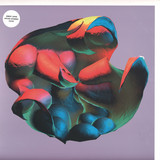
Jon Hassell Hatte Mit Seinem Visionären "fourth World" Konzept Vor 40 Jahren, Das Überlieferte Ur-weisheiten Mit Modernster Technologie Fusionierte, Einen Massgeblichen Einfluss Auf Musiker Wie Brian Eno ("my Life In The Bush Of Ghosts"), Talking Heads (remain In Light"), Peter Gabriel, David Sylvian, Björk Und Neuerdings Oneohtrix Pojnt Never, Huerco S Und Visible Cloaks. Nach Zwei Alben Ende Der Nullerjahre Auf Ecm Und Diversen Retrospektiven Seitdem Erscheint Nun Mit "listening To Pictures (pentimento Volume One)" Sein Erstes Neues Material Seit Fast Einer Dekade, Auf Dem Jon Hassell Seine Lebenslange Erkundung Der Möglichkeiten Der Rekombination Und Recodierung Musikalischer Fragmente Fortführt, Die Gesampled, Gelooped, Overdubbed Und In Betörende Neue Formen Neu Arrangiert Werden. Dabei Überträgt Er Die Maltechnik Des Pentimenti, Bei Der Teile Eines Gemäldes Während Der Produktion Übermalt Werden, Auf Die Musik Und Erzeugt Mit Überlagerten Sounds Völlig Neue Strukturen.
Music and Poetry of the Kesh is the documentation of an invented Pacific Coast peoples from a far distant time, and the soundtrack of famed science fiction author, Ursula K. Le Guin's Always Coming Home In the novel, the story of Stone Telling, a young woman of the Kesh, is woven within a larger anthropological folklore and fantasy. The ways of the Kesh were originally presented in 1985 as a five hundred plus page book accompanied with illustrations of instruments and tools, maps, a glossary of terms, recipes, poems, an alphabet (Le Guin's conlang, so she could write non-English lyrics), and with early editions, a cassette of field recordings' and indigenous song. Le Guin wanted to hear the people she'd imagined, she embarked on an elaborate process with her friend Todd Barton to invoke their spirit and tradition.
For Music and Poetry of the Kesh, the words and lyrics are attributed to Le Guin as composed by Barton, an Oregon-based musician, composer and Buchla synthesist (the two worked together previously on public radio projects). But the cassette notes credit the sounds and voices to the world of the Kesh, making origins ambiguous. For instance, The River Song' description reads, The prominent rhythm instrument is the doubure binga, a set of nine brass bowls struck with cloth-covered wooden mallets, here played by Ready.' According to writer and long-time friend of LeGuin, Moe Bowstern (who pens the liners for the Freedom To Spend edition of Kesh), Barton built and then taught himself to play several instruments of Le Guin's design, among them the seven-foot horn known to the Kesh as the Houmbúta and the Wéosai Medoud Teyahi bone flute.' Barton's crafting of original instruments lends an other-worldly texture to the recordings of the Kesh, not unlike fellow builders Bobby Brown and Lonnie Holley. Bowstern notes, Other musician / makers have crafted their own Kesh instruments after encountering the earlier cassette recordings that accompanied some editions of the book.' Both Barton and Le Guin are sensitive to the sovereignty of indigenous Californians and were careful not to trample the traditions of the Tolowa people who lived in the valley long before the Kesh. You research deeply, and then you bring your own voice to the table,' said Barton. Within the Kesh culture, the numbers four and five shape the lives, society and rituals. Barton composed loosely around these numbers, patiently listening to the land of Napa Valley for signs and audio signals from the natural elements. Todd incorporated ambient sounds of the creek by Le Guin's house and a campfire they built together. The songs of Kesh are joyful, soothing and meditative, while the instrumental works drift far past the imaginary lands. Heron Dance' is an uplifting first track, featuring a Wéosai Medoud Teyahi (made from a deer or lamb thigh bone with a cattail reed) and the great Houmbúta (used for theatre and ceremony). A Music of the Eighth House' sends gossamer waves of the faintest sounds to float on the wind.' Like the languages invented in the vocal work of Anna Homler, Meredith Monk, and Elizabeth Fraser, the Kesh songs and poems play with the shape of voice.
The Music and Poetry of the Kesh cassette was meant to accompany and enhance the experience of reading Always Coming Home. Presented in this edition as a long-playing album, where only traces of the book linger (the jacket offers some of Le Guin's illustration, and a letterpressed bookmark featuring the the narrative modes of western civilization and the Kesh valley is included), the music alone breaking the silence of what might be. It can transport—offering a landscape for imagining a future homecoming. One in which we are balanced, peaceful, and tend to the earth and its creatures. A line from the Sun Dance poem reminds us, We are nothing much without one another.' Freedom To Spend gives new life to the recordings of the Kesh people in the first ever vinyl edition of Music and Poetry of the Kesh, out on LP, and digital formats on March 23, 2018. The LP will include a deluxe spot printed jacket with illustrations from Always Coming Home, a facsimile of the original lyric sheet, liner notes by Moe Bowstern, multi-format digital download code and a limited edition bookmark letter pressed by Stumptown Printers in Portland, OR.
This past Monday, January 22, Ursula passed from this realm to another leaving a life spent building and exploring other worlds while challenging social concepts of the real word she inhabited.
Freedom To Spend had been working under Ursula's enthusiastic endorsement and with Todd Barton, her musical collaborator on Kesh, to give the music that accompanied her 1985 epoch a new life. With the Le Guin family's encouragement to move forward with our planned release, we are humbled to play this small role in sharing Ursula's work.
As Pete Swanson, one third of Freedom To Spend, stated, Ursula's legacy is her work which transformed the world, and this is another piece of the universe that her imagination birthed becoming real.' Listen to A Teaching Poem / Heron Dance' below.
Joe Powers is from Edinburgh, far outside the network of the Grime capital of London. His caffeinated productions as Proc Fiskal are faster than usual, with many clocking in at 160bpm. 'The Highland Mob', his 2017 debut EP, opened up his music to open-eared footwork and drum'n'bass fans as well as the grime crowd. After following that up with a jungle-inflected EP on Cosmic Bridge, 'Insula' switches the feel and intention towards a personal, and melodic music with one foot in Grime, infused with often comic, often wistful recorded moments from his environment. He says 'I wanted to be aware of where the music is coming from, referencing things I'm presently experiencing, like making Grime, my Radar radio show, phone addiction, alcohol, my surroundings, girls, depression, positivity, being unemployed, being employed and hating it, my friends etc. Trying to be true to myself instead of relying on other peoples' nostalgia, and focusing on now.'
The record is a huge leap in vision, with delicate, pointillist melodies and intricate edits reminiscent of Grime producers such as Terror Danjah. It also resonates with Japanese video game music like that recently explored on the 'Diggin' In The Carts' compilation.
'I think I probably make tunes to get out emotions I don't express in day-to-day life. I used clips of my friends talking, drunk folk, and general Scottish life to preserve and represent what my experience is like right now, like a time capsule. Social media notification sounds are designed to release serotonin, which is what I'd like my music to do, to make me, and other people happy, and in using these manipulative noises in a positive way, I like to think I'm taking back the power of the manipulation.'
Proc Fiskal is adventurous and thoughtful as a producer, and at the young age of 21, his debut album is very advanced in its ideas and execution.
Electronic music label Sheik 'N' Beik announces its new release SNBV013, an EP called Daisy Cutter by JEM. This EP is the third release in their series aimed at celebrating the diversity and history of New York and its boroughs. As Sheik 'N' Beik's hometown and source of constant inspiration, the label focuses on spotlighting and paying homage to the five boroughs of New York including Manhattan, Queens, Brooklyn, Staten Island
and The Bronx. Each borough's flag is given a modern and colorful twist via the cover art and design of
each outer jacket. The first release in the series, Manhattan, featured local NYC hero and co-founder of
Voodoo Down Records N'conduit, and the second, Kathisma resident Mr. Dello's Vaadhoo EP. The new EP from JEM, dedicated to The Bronx, opens up with title track Daisy Cutter, which directly sets the tone of the release with a straightforward, dynamic techno, elevated by an eerie, dark atmosphere. It
goes on with Neb, a downtempo second track with a lighter tone that progressively gets back to the initial
mysterious mood and capriciously brightens it with warmer back-and-forth sounds. Next on the 12' is
Semiotic, a third track structured by a clever balance of deconstructed rhythms and sparse acid and synth
melodies in the continuity of the lighter, warmer mood previously built up. The EP ends with Temple, with
a more aggressive accent animated by several lighter melodic layers and a stifled background bass.
From Buffalo, New York, Joanie Was Primarily A 60s Pop Singer And Actress Who Recorded Numerous Singles For Warner Brothers During That Decade. don't Pity Me' Was Recorded And Originally Released In 1965 And Has Become Her Most Sought After Release. An Original Has Been Valued At £400, A Rare Clip Of The Song Viewed Over 200,000 Times On Youtube. It's Popularity Stems From The Northern Soul Scene Where In The 70s It Was 'covered Up' Under The Artist Name Yvonne Daniels.
Crosstown Rebels celebrate their fifteenth year with their monumental 200th release. American DJ and producer Arthur Baker reunites with Rockers Revenge for the first time in thirty years. To complete the package, dance music heavyweights Francois K and Michael Mayer take on remix duties.
On A Mission is exactly that, 'a mission of love, a mission of peace'. The positive vocals hark back to those of early 90s house tracks, which created unity through music and clubbing. The rhythmic beat of the drum is determined, as percussive layers build and the vocals bleed into the synths. Francois K provides two variations of the track. His remix features more prominent drumbeats driven by a growling bassline. On his rockers dub version, Francois goes all out and dubs us into the stratosphere. Up next is the Michael Mayer remix, with a more electronic take on the original with driving synths and a whirring, throbbing bass-line.
Created in 1982, Rockers Revenge was the brainchild of Arthur Baker and Donnie Calvin. Donnie provided lead vocals with Baker's wife, Tina B, Dwight Hawkes and Adrienne Dupree Johnson on backing vocals. Their most prominent track, Walking On Sunshine, was a post-disco hit reaching #1 in the US dance charts and #4 in the UK charts.
Three years ago Baker and Hawkes reconnected through social media with Baker sending through his original Mission idea. Baker is known for his work with hip hop artists like Afrika Bambaataa, Planet Patrol, and New Order whilst also remixing the Pet Shop Boys' 1986 hit In The Night. Fast forward to 2018 and the group performed a monumental live show at Get Lost Miami, and are currently in the studio working on new material. This Summer they will shoot a new documentary and perform live at various events.
t's time for magaritas. Dresden's master of the sampler Alexander Scharf chops up cheesy germanness for greater good and varying experiences: Schlager-upcycling it is. »Nur mit Dir« is a lovely summer day's theme, the anthem of freshly found or long lasting love, the hymn for the night with your loved one. »Ode an die Fröbbe« is the morning after. The morning after the morning of too much togetherness: Honestly weird and weirdly lovable. In the end »Grünalge Christian« keeps it all together. Thank you, Christian. Thank you, Schleander.
Benny Blanco debuts with a five-tracks "Staraya Ep" onto his Valkea Music. Every detail has been taken care, from mixing
to the master from the WHITE 180 GRAMS vinyl press to artwork. Following a short description about "Staraya EP"
STRY 1 by Ricky L Red "Is Not Dead Mix" intense and majestic, the track of rare and profound beauty.
STRY 2 "Original Mix" it's a tribute to Benny Blanco's origins and to the electronic/progressive sound of the mid nineties
that had great influence on him and became his trademark from the very beginning.
STRY 3 by Giammaria Coccoluto & Luca Vera "As Soul Sonic Remix" an ethnic rhythm full of grooves thanks to the addition
of percussive elements and a masterly used organ, which won't keep you still.
STRY 4 "The THC Revenge Remix" an atmosphere that captures and hypnotizes, where it extrapolates and magnificently
enhances the most melodic part.
STRY 5 "Erly Tepshi Dark Vision Mix" an esoteric and astral journey in the furthest and most remote corners of your mind.
This original project to the artwork that will in essence, satisfy your eyes and especially the ears.
Fresh on Francis Harris' Kingdoms imprint comes Rasmus Juncker's 'Ophold' - six tracks of sublime atmospheres and textures. The Danish musician, sound composer and DJ fits perfectly with the label's aesthetic, joining the dots between ambient, leftfield electronica and modern classical.
Juncker has a background in studying jazz drumming and has been playing improvised music within the jazz domain for many years. He also started to DJ at the age of 14 and was introduced to the world of electronic music production at the same time.
When Rasmus started to think about his debut album he spent several months trying to find his own way to combine his favourite musical influences, improvisation, electronics and classical music. 'Almost a year later', Juncker says, "I went to a sensory deprivation floating tank in Copenhagen while researching for another performance and while I was lying there, floating in the water, deprived from most of my senses, I got the idea to do something drastic in my musical process. Philosophers like Immanuel Kant describe this deprived state as a mental 'Cesura', which became some sort of guideline for the album."
So Juncker decided to start working on the album by leaving the process as well as the final result completely open. 'I wanted to create sounds and music that I had no idea what they would sound like, but would feel like a mental 'Cesura', an 'Ophold' (in Danish)' he states.
He invited musicians, one after the other, to his studio. "I had an electronic musician to improvise patterns and new interesting sounds based on my experience in the deprivation tank. I chose some of the takes and some weeks later I invited a jazz guitarist to listen and improvise on top of what he heard. Then a classical string quartet and a double bass player came to my studio months later, and finally I recorded myself on percussion and drums.
Throughout the recording process I've been experimenting with special microphones in various setups, used noises from the recordings and the room became absolutely essential for the pieces." Juncker states.
"The material I used was all first take improvision which I arranged, layered and edited into compositions. The final pieces were mixed by Andreas Pallisgaard with the same improvised and experimental approach of the recording and the production. None of the musician met each other, but their sounds developed into something completely fantastic I think. The presence of the acoustic instruments and the depth and complexity of the synthesized layers gave some kind of an indescribable sounding music from another galaxy.
Track by track:
'Norddrum' starts proceedings - ethereal, grainy sounds merge and disassociate, as a distant rhythm gradually finds its way to the fore.
The second track, 'Sora' , clocking in at under 2 minutes, is an interlude full of strings, pads, and percussive hits, rich in feeling. This strong sense of sound design and seemingly disparate sounds woven together into a whole carries through into 'Eksotisk Tirsdag' - the strings, plucked instruments and electronics harking back to 4th world adventurers like Jon Hassel and Brian Eno.
'Cyklus' dives into drone textures, pulsing and modulating to create an unearthly soundtrack.
'Havekunst' is another 2 minutes interlude, this time bringing a fully charged rhythmic barrage to the front.
'Cesura', the final track is in essence the EP's centerpiece - a sprawling 8 minute journey that traverses tense, fibrous sections and on into pulsing modular passages, before opening up into glorious moments of wonder and brightness. It's a hugely bold yet fragile endeavour, in line with the whole release.
Dark Matters label head Amirali returns with the expertly crafted Odyssey EP, employing his vital understanding of
space and texture to construct a highly emotive release featuring a remix from Fort Romeau. The three track
package is out digitally on May 14th followed by the vinyl release a few weeks later.
Leading on from his critically acclaimed discography and curatorial work with the inimitable Dark Matters imprint,
Amirali enters 2018 with grand plans for the future. He is currently conceptualising a live stage show whilst
continuing to provide a platform for all manner of weird and wonderful music.
'Odyssey' is a striking example of Amirali's penchant for songwriting, as well as a testament to his sonic identity,
merging memorable harmonies with heartfelt vocals and complex soundscapes. 'Hidden Past' veers more towards
the dancefloor, brandishing vast sonic explorations and levitating pads amongst detailed drum patterns. For the
'Hidden Past' remix, Fort Romeau mutates the delicacy of the original into a spaced out dose of peak time house,
gradually building rich harmonies around a fierce rhythmic motif.
On the creation of this forthcoming EP, Amirali states:
"Nothing is more important than my craft which is the main reason I'm here. There's no better satisfaction than to
create an amazing piece of music, that's my happiest point in life. I don't want my work to just be good or ok and that
takes a lot of effort and sacrifice in life. I got to a point where I said to myself I have to go and disappear for a while,
go be normal and do normal things. Instead of being on the road all the time, stay home, create an environment I
like to write music. There have been many experimentations involved in my upcoming material. I wanted to try and
push myself to the limit and I believe I've succeeded. For me, it's all about evolving and exploring areas I haven't
touched. That's why sometimes it takes a bit longer than expected, I don't just want to meet people's expectations,
sometimes I want to blow them away. There is so much music coming out week in and week out, the music is
evidently becoming more disposable and I would like to stay out of that chaos. When you stay true to your heart and
try to do something different you put yourself in an uncomfortable situation, that's when you grow as an artist and
also as a person, but the satisfaction you get when you finish a work cannot be put into words.
'Madrid Fue Una Ciudad Mundial' compiles four of the most important Spanish electronic projects from the 80's. A compilation released in cooperation with a show organised in Madrid last May, 18th where Aviador Dro, Flash Cero, Azul y Negro and Esplendor Geométrico played together for the very first time.Aviador Dro offers two unpublished early recordings from 1981. Flash Cero includes an unreleased song recorded back in 1987. Azul y Negro collaborates with a demo version of their cult classic 'La Torre de Madrid' from 1981. And Esplendor Geométrico give us a couple of live tracks recorded in 1989 for the first time available on vinyl
Only those who read all the credits on record liner notes will know the full details: Areski is of course Brigitte Fontaine's partner in life, but also her creative alter ego, and the composer of the music of most of her songs. Even though it was his wife Brigitte and not him who wrote the lyrics, Areski is a poet in his own right. Furthermore, he is polyvalent: composing, arranging, singing, improvising, playing every possible instrument and even acting! Areski, to sum up, is the perfect mix of the tradition of Munir Bashir with the European sophistication' of someone like Jean-Claude Vannier, one foot permanently in Versailles (where he was born) and the maghreb. Areski, is left bank French songs without the stylistic effects, revised and updated through contact with arab-andalusian music. He is a Living Theatre style happening with a dose of cosmic free jazz, surrealist poetry viewed through the prism of Kabyle culture... All that and a lot more!
Areski honed his talent observing the stars of traditional chaâbi, testing it out in bars and dives before meeting, during military service, the singer Jacques Higelin with whom he would record his first cult album, and who would present him to his wife-to-be, Brigitte Fontaine. Between 1969 and 1980, with her, Areski would contribute an essential chapter to French underground music including classics such as Comme à la radio (with the Art Ensemble of Chicago), Je ne connais pas cet homme, L'Incendie, Le Bonheur and Vous et nous. For all that, Areski has never really tried to have a career under his own name, in spite of the wonderful Un Beau matin first published in 1970, and which it is high time to de (re)discover (better late than never). Those already in the know will not be surprised to see, especially, Jean-Charles Capon, author of the inspired L'Univers-solitude, Brigitte Fontaine of course, or Daniel Vallancien, author of a no-less inspired duo with saxophonist Philippe Maté. All contributing to an acerbic poetic universe, concerned but never militant, and open to worldwide influences long before they became a fashion.
Inspired, poetic, in a word essential: Un Beau Matin is one of the best albums of the French underground produced by Pierre Barouh on his label Saravah, alongside those by Maurice Lemaître, Catharsis, Claude Yvans, Mahjun, Barney Wilen, Cohelmec Ensemble et Michel Roques.
Oblique is proud to present it's second Various Artists EP by friends we have met years ago online.
Before we had our first releases, we would upload our music to Soundcloud and these guys were always on my radar to check instantly. Besides inspiring me, their comments and feedback were invaluable to my growth as a producer.
Fast-forward a few years and everyone has grown in their own way, with multiple releases, labels and parties to emerge. The platforms have changed, but the connection did not, hence the idea to reunite them on wax :)
The EP shows four different takes on hypnotic techno, starting with the driving and slowly morphing
"Radiate" from Kaelan, followed by the intense mindbender "The Nomad" from Antonio Vázquez.
On the flipside we go more atmospheric with Refracted showcasing his expert sound manipulation on "Uku Che". Ending the EP is the subtlely layered and ultra deep "Ditoan" from Alan Backdrop.
out of Stock
Last delivered 2 years ago available to reorder, subject to availability
Katharsis was originally a regular party organized at the infamous Contact, Tokyo, the home of the electronic music scene in Japan.
In 2017 Katharsis Recordings was launched, with the first release being touted by many in the Japanese techno scene and played by the
likes of DJ Nobu at Dekmantel.The second release will be scripted with another compilation of 4 Japanese artists.
The first on the A side, Mikuni Kaido by head honcho Masafumi Take, is a fresh track that combines nostalgic arps and analogue bass.
The other main member Kannabi's track 'Shoka' on the B side is an abstract rhythmical piece that evolves slowly.
The second track on the A side 'Kirisame' is by a new member O-Ma. A modular synth enthusiast, his unique analogue sounds are a trademark
of his tracks.
The last track on the EP is 'Yoake' by veteran Ryogo Yamamori. The rolling beat and spacey synth sound gradually build up to a climax and
makes this track perfect for the dance floor.
All 4 tracks are distinctly different showcasing the identity of each artist. This new movement represents a fresh approach to the Japanese
techno scene.
Blocaus series is proud to present 'Alpha Wave', their second various artists compilation includes 4 tracks of different varieties of great raw pounding techno that stretches from melodic / hypnotic trips to industrial bangers along with great grooves and soundscapes featuring the well respected Kangding Ray as well as some of the most talented producers from the new French generation ABSL, Raar and Rubarb. A strong team that brings the solid vibe together in the 5th record of the label.
After the successful first year with four remarkable techno VA releases, Propaganda Moscow launches the brand new series: Code. Inspired by hi-end and computer technologies, 'Code' will represent top electro and similar styles' sound.
For its seventh offering, Sol Power Sound taps into the pulse of the French Antilles for Tambours de Martinique, a blistering EP of original and remixed versions of rare, drum-centric dance floor workouts. Licensed directly from the legendary Martiniquan label Hibiscus Records, the EP features cuts by Eugène Mona and Max Ransay, two of Martinique's most storied musicians. With reworks by Spanish DJ and producer Kiko Navarro and the Sol Power All-Stars, this one will be in the record bags of discerning DJs all summer long.
The A side features 'Lizo' by Eugène Mona, an essential figure in the folkloric music of Martinique based on the bamboo flute, bèlè drums, and the island's specific variant of Antillean creole. Lizo was originally released in 1990 on Mona's Blanc Mangé Blan Manjé LP and is anchored by frenetic percussion, a driving bassline, and house-evocative key stabs. Kiko Navarro's remix takes an already dynamic cut to deep Afro-space with thumping drums and a bubbling synth-bass groove that will put dancers through their paces.
With its powerful combo of urgent brass and ensemble vocals, Max Ransay's 1988 recording of the traditional Martiniquan folk song 'Ti Kanno' fills the B-side. 'Ti Kanno' was previously recorded by Ti Émile, Ransay and Mona's legendary forebear. Full of surprises, Ransay's version is a sonic melting pot of hand percussion, horns, unexpected synth lines, and bass. The Sol Power All-Stars edit fills out the low-end thump and teases out the groove for maximum impact.
Max Loderbauer, who has so far made consistently engaging contributions to the Arjunamusic family, is back to lend his unique interpretive skills to the master recordings for the Brightbird album by João Paulo Esteves da Silva, Mário Franco and Samuel Rohrer. Loderbauer has set himself up for a chal- lenge, since the original album's completely improvised flow of small-ensemble, conversational jazz feels complete enough without outside intervention. However, Loderbauer's role as electronics operator in the similarly attuned Ambiq trio has already shown that, through his mastery of tone color, he has a talent for teasing out the additional hidden details within an apparently 'complete' sonic environment. It's a task he mana- ges to accomplish without ever overriding or contradicting the cohesive message provided by his collaborators.
Adding to the challenge here, Loderbauer chooses to re- mix using only sounds from the original recordings. By doing so, it might seem he is willfully denying himself the chance to use his own signature tools and turn Brightbird's source materi- al into stunningly new electro-acoustic hybrid blooms. Yet Loderbauer succeeds here by becoming something more like a translator than an augmenter - he finds a way to make mea- ningful syntactical changes to the trio's rich and versatile vo- cabulary, and once again unveils a verdant world of hidden details in the process.
The A-side 'Trusting Heart/Cosmos' has an anxious tone introduced by a set of Doppler-effected piano notes that seem to melt in the sun, and is soon complemented by a va- riegated, chattering rhythm line. Here Loderbauer builds up a tactile tension between rhythmic certainty and sharp-angled, de-tuned, and occasionally scrambled instrumentation, framing a disorienting (yet engaging) virtual space where ob- jects' bright hues rapidly change as they contract and expand along multiple dimensions. For the b-side 'Noontide', Lo- derbauer switches to a more focused and streamlined idiom with an uncanny ease, riding along steady waves of sequencer patterning and silvery, resonant shiverings. Reverberating, ho- lographic piano again provides the tonal center here, and the notes ring with a forward-thinking optimism not far removed from classics of the 'Krautrock' era.
Current supporters of all the artists involved will find this to be an invigorating synopsis of their work to date, while newcomers will be treated to a soundworld where skillful fu- sion (the act itself, rather than the music genre with the same name) is constantly on display.
This ridiculously soulful Summer-House EP is the first installment by Peter on Big Bait since 2015. We baked the essence of 3 years of studio work on 12 vinyl. Amongst two brilliant solo tracks, Peter brought in two coops with some exclitingly interesting producers:
Arpeggio Funk' is the first co-production by the Columbian shooting star Felipe Gordon with Big Bait label boss Peter Clamat. The guys met up on soundcloud and immediately started working out some tunes together.
She hates Getting Photos' and Tanzflächengebet' are solo productions by Mr. Clamat. Outstanding, colorful, perfect work as usual. Last but not least track no. four is the uplifting, 90's flavored remix of an unpublished Clamat-gem by Ugly Drums and Chesney. The two guys are old-stagers of the German House Culture and well known for their releases on Kalakutta Soul, AVA, Quintessentials etc.
Following their work compiling last year's hugely well-received Ten Years of Jaunt EP, Blackhall & Bookless return to their label with four varied, equally confident shades of their distinct, versatile dancefloor vision. 'Forward' is an instantly enveloping slice of big-room techno that's entirely club ready and yet focused on atmosphere and tension, taking no prisoners and yet unfolding on it's own terms. That same ecstatic and almost ethereal club pressure reemerges on 'Voyager', under which gently unleashes a skittering landscape of blissful breakbeats and Vangelisesque synths. Inspired by the unforgiving sea that borders their hometown in the North East of England, 'Ocean' is perhaps the most intense moment on the EP, dragging listeners into wave after wave of undulating dub chords, always underpinned by driving, raw and percussive drums. Ending in forgiving ambience, this moment of respite leads to the conclusion, 'Occupy'. A beatless send-off, it nonetheless remains equally compelling and vast in it's filmic and complex sound design, showcasing Blackhall & Bookless' finely tuned meld of the substantial and the subtle. Tinged with the North Sea air and the pulse of Detroit, Blackhall & Bookless continue to master the sound of agile, accessible yet uncompromising club music.
Recorded in the Autumn of 2017 at their studio in Vancouver's Deep Blue, MVX / U41A' is the first new music from Minimal Violence to be released on Ninja Tune's Technicolor imprint and the first to be recorded outside their usual home production space. The result is a record that intends to reduce pop music to its emotive qualities and apply that abstract nostalgia back into dance tracks. Their penchant for the heavier and more aggressive side of dance music is most evident in its infiltration of the duo's often raw and disorientating live set. Formed in 2015 the duo, consisting of Ashlee Luk and Lida P, have a string of releases to date with labels such as Lobster Theremin, 1080p and Jungle Gym Records. Drawing on Luk's years of experience playing in punk bands, they combine hardware sequencers, drum machines and synths, to weave together acid tinged compositions that derive inspiration from early electronic and minimal synth through to heavier UK rave and hardcore.
Enfant Terrible was one of the first labels to give recognition and attention to the pioneers of minimal electronics / proto-elektro / avant-garde pop / experimental pop music from the late 1970's and early 1980's. Next to that it is one of the few labels in this field of music that truly invests in the development of new talents in this music tradition. In short: Enfant Terrible has been mapping the field of this counter culture and contributing to its development since the very start of its activities.
But in this world of followers and copycats we have an agenda of our own. We go furthur and dare to move into new territories. Both when it comes to content and ways of organizing the business part we are at the forefront of independent music culture. We keep it real, stay ourselves and a hundred percent independent.
While Enfant Terrible for an important part has built the current niche of minimal electronics we also have always looked beyond rigid style definitions and established artists. All our compilation releases have been highly acclaimed for this.
The time is now... we go for the logical next step... supporting and contributing to the local music scene.
'Kamp Holland' is an overview of the current independent electronic music scene from Holland. Some of the artists on this compilation have been inspired by the music tradition we have been building. Others are inspiring Enfant Terrible in its current development. Always furthur we go...
Second EP of the label Lowlife Cartel. An all star, six-track release from sixl key artists in various genres, from cutting edge techno to leftfield house, confirmes the versatility of Lowlife Cartel.
The EP begins with "Butt Dub Pregost", dubby downtempo atmospheric track, by one of most innovative and versatile artist of the last years: Buttechno (Rassvet records, Collapsing Market..)."Out For A Walk" by Fmy (Too Rough 4 Radio) is a leftfield house track, face covered and steps muffled through a deadening blizzard of tape saturation and white noisey envelops that find a balance between deepening the sense of immersion and a retained rhythm. "Unusual Mondai", hypnotic track by Sammy T Thompson, an alias of S.Olbricht (UIQ, Opal Tapes..), fits with an introspective melody and atmosphere.
"Mr Hodge Appreciation Society" is a quintessential Machine Woman (Ninja Tune, Peder Mannerfelt, Where to Now) club track, spanning sexy house and bold techno.
"Celestial Body" by PRESENTE oscillates between jungle and drone like a futuristic comet.
"Y'alll" by the rising producer Voyd, is a abstract house piece. Setting skittish drums and altered vox sample, smothered against a grey-ish canvas of blurry, washed-out pads.
Raw and indisputable quality of production.
with »redsuperstructure«, robert lippok created a new foundation for his musical endeavors. now - 7 years later - this system properly comes to life on »applied autonomy«. the title of the new album is a clear indicator as to what the berlin-based producer has been up to during the last couple of years, both on a conceptual level as well as how he molds his ideas into tracks.
»applied autonomy« orchestrates a certain state of frantic standstill, which occurs once a structure is set. has this state been reached, the artist is free to focus on other equally important aspects, balancing the various shades, pushing ideas even further to really make them shine and blossom in their self-declared autonomy. the more light one lets in, the more layers become visible.
layers are key when it comes to understanding »applied autonomy«. big chunks of the material with which the album has been produced derive from sketches specifically made for a club performance. rather than meticulously devising each and every detail, lippok focussed instead on recording as many fragments as possible in a short period of time, elements which he could later combine and layer on stage. based on this material and his experience experimenting with it in a live environment, the album slowly began to shape. an album culminating in a collaboration with klara lewis, with whom lippok spent 2 days at the EMS studios in stockholm, approaching the idea of autonomy from yet another angle. during the session, both musicians played and performed simultaneously, yet not explicitly together, lost in their own thoughts and ideas, only subconsciously taking in what the other one was coming up with. the result is »samtal«, 14 minutes of a constantly evolving state of poise, magically connecting all the dots Lippok had already defined as »applied autonomy«.
Mgun, Or Manuel Gonzales To His Friends, Has Long Been A Fixture Artist For Dba. Since Making His Uk Debut On The Label In 2012, Having Already Featured On Detroit's Celebrated Wild Oats Imprint, He Has Smoothly Yet Slowly Progressed Through The Presses Of Fellow Dance Music Tastemakers Third Ear Recordings And Kiev's Wicked Bass. Following 2016's Warmly Received 'gentium', 'axiom' Finds Manuel Gonzales Back On Dba With An Index Of Offbeat Jams That Couldn't Have Emerged From The Mind Or Studio Of Any Other Producer.
Once More Envisioned And Engineered In His Native City Of Detroit, The Record Finds Mgun In More Auspicious And Domestic Circumstances. Now Firmly A Father And A Homeowner, 'axiom' Allows Gonzales To Flex His Party Muscle, While Further Pushing The Elastic Boundaries Of His Notoriously Unpredictable And Brilliantly Raw Production Style. Across Twelve Tracks, Listeners Are Offered An Unpredictable Trip Into The Restlessly Experimental Snatches Of Studio Time Gonzales Is Afforded Away From His Day Job At The Legendary People's Records Store. It's Here That Gonzales Absorbs Endless Releases And Rediscoveries Passing Through The Stock, Trading The Occasional Tip With Some Of Detroit's Best Known Producers.
Beginning With The Off-kilter Funk Of 'you Inside Me', 'axiom' Expertly Toes The Line Between Full-bodied, Soulful Club Weapons ('you're Never Home', 'nichrome'), And The Sort Of Lo-fi Tinged Jams That Enable Gonzales's Unusual Weirder Hooks And Rhythms To Extend Into Something Altogether More Hypnotic And Psychedelic ('kartwheel', 'sil').
There Are New Sounds And Approaches Throughout. Centrepiece Track 'see It For Myself' Finds Gonzales On Vocal Duties For The First Time, And The Dystopian Tinted 'vap' Finds His Sound Expanding Into Weightless, Dreamlike Electro. And While Certain Tracks Date Back Years, Having Slowly Matured To Full Funk, Others, Such As The Gloriously Unhinged '359' Were Rapidly Produced To Capture The Inspiring Energy Of A Late-night Glaswegian Rave.
Simply Put, 'axiom' Does The Work Of Representing Mgun At His Musical Best, An Analogue Celebration Of Pure Party Potential.
Lil Jabba is a creator, possessing immense skills and artistry clearly demonstrated in both his visual and audio work. His profession in the latter has been acclaimed since his early releases, where he successfully delved into the realms of juke and footwork, producing tunes that took the genres to a new level. Since then, the producer has gone on to develop a sound distinct to himself, touching on ways in which he can blend his vast sound palette as seen in his recent projects released via Local Action.
For his first release on GETME!, Lil Jabba provides a five track mini LP that keeps us on our toes, unaware of what to expect next. It takes its listeners into positively weird places, combining aspects from dub, jungle and UK garage to produce sounds unrecognisable to any genre, yet well-fitting. Additionally, he presents us with tracks that are mentally stimulating in their dynamic and intense breaks, also offering songs which exhibit ambiguous dimensions.
A great compilation can open the gate to another world. Who knew that some of the most exciting Afro-funk records of all time were actually made in the small West African country of Benin Once Analog Africa released the first African Scream Contest in 2008, the proof was there for all to hear, gut-busting yelps, lethally well- drilled horn sections and irresistibly insistent rhythms added up to a record that took you into its own space with the same electrifying sureness as any favourite blues or soul or funk or punk sampler you might care to mention.
Ten years on, intrepid crate-digger Samy Ben Redjeb unveils a new treasure- trove of Vodoun-inspired Afrobeat heavy funk crossover greatness. Right from the laceratingly raw guitar fanfare which kicks o Les Sympathics' pile-driving opener, it's clear that African Scream Contest II is going to be every bit as joyous a voyage of discovery as its predecessor. And just as you're trying to get o the canvas after this one-punch knock out, an irresistible Afro-ska romp with a more than subliminal echo of the Batman theme puts you right back there. Ignace De Souza and the Melody Aces' Asaw Fofor" would've been a killer instrumental but once you've factored in the improbably-rich-to-the-point-of-being-Nat-King-Cole-influenced lead vocal, it's a total revelation.
The screaming does not stop there, in fact it's only just beginning. But the
strange thing about African Scream Contest II's celebration of unfettered Beninese creativity is that it would not have been possible without the assistance of a musician who had been trained by the Russian secret services to "search and destroy" enemies of the country's (then) Marxist-Leninist president Mathieu Kerekou.
Already familiar to fans of the first African Scream Contest as a mainstay of ruthlessly disciplined military band Les Volcans de la Capitale, Lokonon André vanished in a cloud of dust at Ben Redjeb's behest with a list of names and some petrol money, only to return a few days later having miraculously tracked down every single name he'd been given. The source of this Afrobeat bounty-hunter's impressive people-finding skills - his training with the KGB - highlights the tension between encroaching authoritarian politics and fearless expressions of personal creative freedom which is the back-story of so much great African music of the 60s and 70s. Happily, in this instance, Lokonon was tracking the artists down to oer them licensing deals, rather than to arrest them.
Where some purveyors of vintage African sounds seem to be strip-mining the
continent's musical heritage with no less rapacious intent than the mining companies and colonial authorities who previously extracted its mineral wealth, Samy Ben Redjeb's determination to track this amazing music to its human sources pays huge karmic dividends.
Like every other Analog Africa release, African Scream Contest II is illuminated by meticulously researched text and eortlessly fashion-forward photography supplied by the artists themselves. Looming large - alongside Lokonon André - in the cast of biopic-worthy characters to emerge from this seductive tropical miasma is visionary space-nerd Bernard Dohounso, who laid the foundations for Benin's vinyl predominance by importing and assembling the turntables that would play the products of his Bond villain-acronymed pressing plant SATEL, a factory that would revolutionise the music industry in the whole region.
The scene documented here couldn't have been born anywhere else but in the Benin Republic , and the prime reason for that is Vodoun. It's one of the world's most complex religions, involving the worship of some 250 divinities, where each divinity has its own specific set of rhythms, and the bands introduced on the African Scream Contest series and other compilations from that country were no less diverse than that army of dierent Gods. At once restless pioneers and masters of the art of modernising their own folklore, the mystic sound of Vodoun was their prime source of inspiration.
One especially irascible Vodoun-adept was Antoine Dougbe, who styled himself The devil's prime minister' while turning ancestral rhythms into satanically alluring modern beats. As Orchestre Poly-Rythmo songwriter Pynasco has observed sagely, Evil is not elsewhere, evil extends into the house'. And African Scream Contest II is a gloriously cinematic road-trip through an undiscovered realm of music lore whose familiarity is every bit as thrilling as its otherness.
Multi-instrumentalist, composer and producer Adam Gibbons (aka Lack of Afro) is back in some style with 'Back To The Day', a beautifully produced summer sizzler crammed full of infectious hooks, top musicianship and most importantly, vibe by the bucketload! Taking a nod from classic material by artists such as The Jackson 5, Earth Wind & Fire (and more recently Vulfpeck), 'Back To The Day' is Lack of Afro doing what he does best and then some - blending the old and new with big drums and heavy percussion to come up with a crossover classic that's entirely his own, whilst all the while developing his abilities as a songwriter.
Providing a dynamite vocal once again is regular collaborator Elliott Cole. Not just the voice of the track, he also plays guitars and bass, whilst ably backed up by some stellar musicians including George Cooper (Haggis Horns) on keys, Rory Simmons (Blur, Jamie Cullum) on trumpet, string and horn arrangements and Harry Harding (Yola Carter) holding down the backbeat on drums.
Keeping the dancefloor packed and turning the party vibes right up to 11, 'Take It Up A Notch' (featuring the brilliant Wax & Herbal T and taken from the critically acclaimed 'Back In Business EP') completes what is arguably one of the strongest single packages of the year!
Lack of Afro continues to go from strength to strength. 2016's 'Hello Baby' (released on his own label LOA Records) picked up a BBC 6 Music 'Album Of The Year' nomination & appeared in the Top 10 of the iTunes R&B / Soul chart in 21 countries worldwide. More recently, Adam's music continues to be used across all aspects of film & TV by networks such as ABC, Fox, NBC, Sony Pictures & the BBC whilst he also has released music on Universal & Warner Brothers Records.
Both tracks are taken from the new album 'Jack Of All Trades', released on LOA Records in May 2018 and supported by a live band UK tour in May & throughout various festivals throughout the summer.
Zia Mohiuddin Dagar : rudra veena
Annie Penta : tanpura
Concert recorded at the home of Shantha and Niranjan B. Benegal, Seattle, Washington 9 March 1986.
Recorded by Niranjan Benegal. Files obtained from Jeff Lewis.
Mastered & Cut by Rashad Becker at Dubplates & Mastering 1117 & 0318.
Liner notes by Renaud Brizard, edited by Stephen O'Malley & Ian Christe.
Front and back cover photos by unknown.
Interior photography by Niranjan B. Benegal, Dan Neuman & unknown, Seattle 1978-1980. .
Around ten years ago, deep into a cozy and hazy night following a concert with my sound brothers Daniel O'Sullivan and Kristoffer Rygg in London (as Æthenor), they graciously introduced me to a recording of rudra veena (a kind of noble deeper bass relative to the sitar, in a way) as performed by dhrupad master Zia Mohiuddin Dagar.
Dhrupad, for those who do not know, is a branch of Hindustani classical music said to "show the raga in its clearest and purest form". It's pacing concentrates heavily on the slow, contemplative alap section and works with specific microtonal gestures and deep characteristics of resonance ... in short I was hooked on this new (to me) and ancient form of music from the first listen, and feel that a more or less continual listening & reviewing of Zia Mohiuddin Dagar's recordings in the years that followed have influenced my own approach to music quite heavily (if, albeit, indirectly).
In early 2015 I was able to make contact with Zia Mohiuddin Dagar's son Bahauddin and some of his American students/disciples, primarily Jeff Lewis. Over time we developed a friendly and educational exchange, access a massive archive of recordings and developed these two paired titles for my label. It's been a long path to arrive at actually releasing them but also probably in many ways one of the most significant releases I've worked on. And I'm proud to be able to reveal these to date unreleased archival recordings of one of the masters of dhrupad, Z. M. Dagar, to the public for the first time.
Zia Mohiuddin Dagar was the nineteenth generation in a family tradition known as Dagar gharana, a rich lineage which continued and performed the musical form of dhrupad (Bahauddin Dagar continues the lineage as a master rudra veena dhrupad player of note today). Initially, dhrupad was a rigorous, austere, devotional genre that was sung in Hindu temples. But between the 16th and the 18th centuries, it became the preeminent genre in royal courts in North and Central India, and the Dagar gharana developed and continued publicly following the eventual loss of court patronage for dhrupad in the 19th century. The French ethnomusicologist Renaud Brizard covers the story of Zia Mohiuddin Dagar's life and teaching (a long story also in Seattle, my hometown!), the Dagar family and gharana, the rudra veena and more topics in an extensive set of liner notes in this release.
Ragas Abhogi & Vardhani were recorded in a private house concert in Seattle at the home of the Benegals in March 1986 (the week before the accompanying release SOMA029 Raga Yaman was recorded). The Benegals were friends (& Shantha Benegal was also a student) of Dagarsahib who sometimes hosted Hindustani music concerts in their home. It's a rare glimpse of a more intimate, personal and perhaps different kind of performance considering the form of dhrupad.
-Stephen O'Malley, March 2018, Paris, France
Stephen O'Malley would like to especially thank Bahauddin Dagar, Jeff Lewis & Jody Stecher for their enthusiasm, cooperation, patience, insight & advice toward developing these editions. Thank you also to Laurel Sercombe & John Vallier from the University of Washington Ethnomusicology Archives, Shantha Benegal, Philippe Bruguière, Dan Neuman, Ira Landgarten, Renaud Brizard, Ian Christe, Peter Rehberg, Rashad Becker, Daniel O'Sullivan & Kristoffer Rygg, all for their direct or indirect cooperation, assistance & patience.
Recorded by unknown at the University of Washington, HUB Auditorium, Seattle, Washington 15 March 1986 , concert co-sponsored by the UW Ethnomusicology Division and Ragamala.
Original digitally processed audio recording made with Panasonic PV-9000 VCR, Sony PCM-F1, PZM mics. Mastered & Cut by Rashad Becker at Dubplates & Mastering 1117 & 0318.
Liner notes by Renaud Brizard, Stephen O'Malley & Ian Christe.
Front and back cover photos by Niranjan B. Benegal, Seattle Center Folklife Festival 1979. Elizabeth Reeke & Annie Penta on tanpuras.
Inner gatefold photography by Niranjan B. Benegal & Ira Landgarten.
Around ten years ago, deep into a cozy and hazy night following a concert with my sound brothers Daniel O'Sullivan and Kristoffer Rygg in London (as Æthenor), they graciously introduced me to a recording of rudra veena (a kind of noble deeper bass relative to the sitar, in a way) as performed by dhrupad master Zia Mohiuddin Dagar.
Dhrupad, for those who do not know, is a branch of Hindustani classical music said to "show the raga in its clearest and purest form". It's pacing concentrates heavily on the slow, contemplative alap section and works with specific microtonal gestures and deep characteristics of resonance ... in short I was hooked on this new (to me) and ancient form of music from the first listen, and feel that a more or less continual listening & reviewing of Zia Mohiuddin Dagar's recordings in the years that followed have influenced my own approach to music quite heavily (if, albeit, indirectly).
In early 2015 I was able to make contact with Zia Mohiuddin Dagar's son Bahauddin and some of his American students/disciples, primarily Jeff Lewis. Over time we developed a friendly and educational exchange, access a massive archive of recordings and developed these two paired titles for my label. It's been a long path to arrive at actually releasing them but also probably in many ways one of the most significant releases I've worked on. And I'm proud to be able to reveal these to date unreleased archival recordings of one of the masters of dhrupad, Z. M. Dagar, to the public for the first time.
Zia Mohiuddin Dagar was the nineteenth generation in a family tradition known as Dagar gharana, a rich lineage which continued and performed the musical form of dhrupad (Bahauddin Dagar continues the lineage as a master rudra veena dhrupad player of note today). Initially, dhrupad was a rigorous, austere, devotional genre that was sung in Hindu temples. But between the 16th and the 18th centuries, it became the preeminent genre in royal courts in North and Central India, and the Dagar gharana developed and continued publicly following the eventual loss of court patronage for dhrupad in the 19th century. The French ethnomusicologist Renaud Brizard covers the story of Zia Mohiuddin Dagar's life and teaching (a long story also in Seattle, my hometown!), the Dagar family and gharana, the rudra veena and more topics in an extensive set of liner notes in this release.
Raga Yaman was recorded at a public concert in Seattle at the HUB Ballroom at the University of Washington in March 1986 (the week after the accompanying release SOMA028 Ragas Abhogi & Vardhani was recorded) at the end of his last tour of the United States. Yaman was a special raga for Zia Mohiuddin Dagar, one of his signature raags. For centuries, Yaman has been considered as one of the most fundamental ragas in Hindustani music and is one of the first ragas which is taught to students. A deep knowledge of Yaman gives a key for understanding many other ragas. It's filled with tranquility, contemplation, pathos and spiritual yearning. .
Bell Towers is finally back with a new record for Public Possession. IKEA HACK origi-nally produced for the runway, was too good not to explore further.
Once again perfectly showcasing BT`s abillity to transform emotions into melodies, bridging gaps between various musical influences - the revisited and extendend ver-sions presented here, will leave you with two choices: CHILLOUT & DANCE MIX. In ad-dition the material was handed over to Baba Stiltz, who delivered his very own more minimalistic, extremly hypnotic take on the IKEA HACK.
FINA Records welcome Jad & The for a new EP that shows off the Australian-born, Berlin-based producer's majestically melodic house sound. A special dub from 6th Borough Project makes this another essential release.
Before now Jad & The has served up tracks of the year ('Strings That Never Win' - Mixmag 2017), fronted four piece live act Mitzi—who played alongside the likes of Nile Rodgers—and also produced as Jad & The Ladyboy, all the while picking up fans like Moxie and Bradley Zero. Sonar Kollektiv and Toy Tonics have put out his charming sounds before and this new one is another joyous offering.
The feel good '2 Getha (4 Eva Mix)' kicks things of with old school drum breaks and loved-up vocals. Big smeared pads, a new age melody and classic bassline line finish it off and carry you away to summery house heaven. 'Twist Club' then drops into lush deep house with a long legged bassline tumbling beneath organic drums. It's a dreamy and romantic cut before 'Disco Hold Down' has live sounding jazz drums, choppy vocals and rough edges that take you to the heart of a vibe-fulled basement party. Delusions Of Grandeur's 6th Borough Project serve up a Dub that's more stripped back and built on a big rubber bassline. Jacking drums and a more rapturous vocal make it a truly steamy jam.
Buy the EP digitally and you get a bonus track, '2 Getha (Neva Mix)' which is another blissed out and rave tinged house cut which oozes pure euphoria. It closes out a brilliantly heartfelt EP of varied and vital house sounds.
Following two previous excursions into degraded tape loops, fuzzed-out ambience and bittersweet moments of tenderness, O$VMV$M return to Idle Hands to complete a trilogy of LPs with 12 vignettes from the underbelly of the Bristol scene.
Bound to Young Echo's ever-swelling cult of wayward sonics, individually Amos 'Jabu' Childs and Sam 'Neek' Barrett have plenty of irons in the fire. Childs deals in forlorn, vocal-led introspection alongside Alex Rendall and Jasmine Butt as Jabu, while Barrett can be found laying down punishing modern grime variations alongside Kahn, or delving into more traditional soundsystem sonics in Gorgon Sound. Meanwhile the pair were clearly heard laying down some of the tones that seep out of the uncredited Young Echo collective LP from earlier this year. Their production work behind Rider Shafique's killerLion7" on Lavalava was unmissable, and their blunted beats behind Manonmars' debut LP are awaited with anticipation.
As O$VMV$M, the pair enter a particular sound world that mixes cosy nostalgia with creeping dread. Even at its most mellow, a sense of unease hovers beneath the surface, and that's what makes their approach so compelling. The sound palette is broad, from pitch-shifted RnB vocal licks to foggy trumpets crawling at half speed, but over it all a dense blanket of dust gives the sensation of peering back through time.
Putting paid to the idea that immersive music needs to be long and drawn out, the dose response on these condensed mood capsules is quick and strong. In a little over 20 minutes O$VMV$M take you far and wide. The trip over the past three LPs has been an adventure for both label and artists - Sam and Amos have shaped out a style that now feels like a fully formed entity independent of their other ventures. We look forward to seeing where O$VMV$M heads from here.
our tracks that capture the various emotional moments of the dance floor. Produced by Brian Ring in Berlin. Remixed by Honey Soundssystem member Jason Kendig in New York. The photo on the cover comes from established Amsterdam photographer Sander Meisner.
C B1 | Big Town Boy Small City Dreams (Jason Kendig Remix)
A near-perfect record, White Magic was the lauded CD-only debut album by Sorcerer (Californian native Dan Judd, one half of Windsurf with Hatchback). Just in time for Spring/Summer, we present the first ever vinyl issue, released as a deluxe double LP.
Back in summer 2007, this majestic set gently nestled itself into the Balearic soundtrack-to-summer slot for many, making him a household name for Cosmic Disco heads alongside the likes of Lindstrom, Metro Area, Todd Terje, Mudd, Studio and Quiet Village. In the intervening years, exceptional producers have created vibrant variations on the dreamy, dubby, melodic nu-disco theme. Happily, the emergence of such luminaries as Jex Opolis, Harvey Sutherland, Suzanne Kraft, Tornado Wallace et al has only served to make the master - Sorcerer - sound ever more brilliant and vital.
Utilising his array of guitars, drum machines, synths, and trusty MPC, the loved-up Sorcerer sound inspires halcyon memories of warm days, endless sunsets and pure youthful abandon. Influenced by surf, 80s dance pop, acid-R&B, space jazz, krautrock, disco, dub, and am radio gold, his music maps a tour through a uniquely Californian lifestyle. Yet when music so vividly captures a vibe and a feeling, it can make writing about it appear almost redundant. Instead, to glean the full colour of what your turntable will soon gratefully radiate, we prescribe the generous soundclips presented here.
And, for a unique insight into the process behind the wonderful sounds conjured up, here's Sorcerer himself:
"White Magic is a reflection of personal freedom and discovery. Having been in bands for years, this was a chance to develop music that stood alone and for me to be in full control.
I was living alone and worked on jams whenever I could. I was highly inspired by a new openness to music as a pure inspiration, not being part of any scene. I tapped into the mixes I was hearing coming out the UK where deejays were playing "cosmic" sounds that were so strangely familiar.
I was picking up all kinds of $1 vinyl and throwing bits of it into my sampler almost randomly to see what would come out.
In my mind, I was making music to be played at my friend's Broker/Dealer Pop nights where they fused golden German techno sounds with the new disco emerging at the time. Also, I took vacations and reconnected with the Pacific Ocean where I spent so much time as a kid: it spilled out into the sounds.
Lastly, I forged a partnership with Hatchback (Sam Grawe) who was working on music in the same way. I learned so much about arrangement and the colors of music. We began recording together as Windsurf and released our own stuff. It all seems like a small glorious moment in time, so I am so excited to keep the legacy alive and I continue to work on my music with these spirits inside of me."
Lovingly remastered by the esteemed Simon Francis, cut reassuringly loud on to heavyweight double vinyl and presented in a deluxe gatefold jacket with freshly commissioned artwork throughout from original designer Rich Robinson, this limited edition of 500 copies is sure to fly.
out of Stock
Last delivered 3 years ago available to reorder, subject to availability
A continuation of his kaleidoscopic sun-dappled cosmic-disco, Neon Leon was the much-loved CD-only sophomore album by Sorcerer. Just in time for Spring/Summer, we present the first ever vinyl issue, released as a deluxe double LP.
A perfectly formed suite of ten tracks featuring soft guitars, subtle synths and lightly grooving percussion, Neon Leon magically evokes that elusive summer feeling throughout. The guitar-driven "Algorhythm" serves as the album opener, blasting bold, sun-drenched jazz chords atop bright synths and groove-based drum programming. "Ride The Serpent" and "Distort Yourself" are guided by a more sultry, slo-mo disco impulse whilst the staggering "Chemise" and strident "Face It" merge 80s West Coast production sheen with Sorcerer's trademark laid back, gentle disco. "Raydio"'s undeniable head-nod groove adds a rare vocal to the proceedings, joyously combining with the bubbling cosmic funk.
Since its initial release in 2009, exceptional producers have created vibrant variations on the dreamy, dubby, melodic nu-disco theme. Happily, the emergence of such luminaries as Jex Opolis, Harvey Sutherland, Suzanne Kraft, Tornado Wallace et al has only served to make the master - Sorcerer - sound ever more brilliant and vital.
Utilising his array of guitars, drum machines, synths, and trusty MPC, the loved-up Sorcerer sound inspires halcyon memories of warm days, endless sunsets and pure youthful abandon. Influenced by surf, 80s dance pop, acid-R&B, space jazz, krautrock, disco, dub, and am radio gold, his music maps a tour through a uniquely Californian lifestyle. Yet when music so vividly captures a vibe and a feeling, it can make writing about it appear almost redundant. Instead, to glean the full colour of what your turntable will soon gratefully radiate, we prescribe the generous soundclips presented here.
And, for a unique insight into the process behind the wonderful sounds conjured up, here's Sorcerer himself:
"Neon Leon's is the name of a bar in a Elmore Leonard book I was reading on a vacation to Belize with my future wife. I was soaking up his brand of noir during the making of the songs on this record, along with another favorite Ross Macdonald. We were living in a small apartment in the Mission District of San Francisco where i had my own room to jam. It was painted Orange and Turquoise and was a very inspiring place to create and focus. I could walk out of my house to any number of hole in the wall bars where people were deejaying, hanging-out, and knew about me and my music.
After White Magic I developed more confidence in my style and process so I stuck with it and I believe it shows in the tunes I selected for the record. The sounds are rich and I dug deeper into sampling from obscure dollar records and getting looser musically. I made a handful of collage videos for the tracks at this time as well, which represent where my mind was at visually. In my mind it's Cosmic Funk that rules the day and I am thankful to have the opportunity to share it with the world again."
Lovingly remastered by the esteemed Simon Francis, cut reassuringly loud on to heavyweight double vinyl and presented in a deluxe gatefold jacket with freshly commissioned artwork throughout from original designer Rich Robinson, this limited edition of 500 copies is sure to fly.
WHEN YOU'VE FINISHED LOOKING AROUND THE WEBSITE, YOU CAN FIND US ON THESE SOCIAL CHANNELS
Forgot 002 is the second release from London based record label Forgot. The compilation is comprised of four tracks by four different artists: Forgot residents Hoffy and Joe S both return, while newcomers Lavan and Cass Brooker also contribute.
Since its release campaign launched earlier this year, the Forgot 002 compilation has received a wealth of positive feedback from a number of revered and respected DJs such as Dom Servini, Asian Hawk, Jason Pulaski and Dr. Best.