Klasse Wrecks is happy to welcome new Berlin-based producer Jotel California to the family. The emerging young artist provides a strong and varied EP that introduces his deft production skills and understanding of balanced sonics. 'Borrowed Time' traces the lines of traditional electro but stirs the pot with new flavours and the result is something that is both unique and powerful. Late 90s Techno is referenced on the title track, a dark and haunting driver that emerges into euphoria later on in the journey. While the A1 features the cut up vocals of Babyblade and takes the listener on a pulsing trip that thrashes back and forth before restlessly settling down
Buscar:varied
Is A Feeling follows up its debut 12" with a classy and varied house offering from Triform. It kicks off with some old school and jacked-up sounds on 'Not For Radio' where analogue drums, silvery cowbells and ticking hi-hats get you in a sweat. Then it's a more drum-led and low-slung affair on the swinging 'Dub 3'. 'Mr Chr$ (65)' shows this artist's range as things become more stripped back and tech-inclined, with silky drum loops and watery droplets backed by diffuse chord work. 'Timeless Groove' then heads back to the old school with lush piano chords and sustained pads bringing the good times.
Eddie Logix makes his return to Rocksteady Disco fold with this fresh new 12", 'Flight Risk'. It's a varied affair that pulls from a wide range of genres including leftfield, deep house, disco, Afrobeat, and even Balearic. Some of these tunes have already been picking up high-profile support from the likes of Leo Mas, Chris Coco and Danny Krivit - no wonder given that his last on the label sold out immediately. 'Sky Dive' is a nice loose limbed funky deep disco jam, 'Home Suite' has a superb new age flute lead and 'Missing Pixels' is a tribal Afro dancer. 'Mount Juniper' is the lively and tropical house number that has you dreaming of cocktails by the sea.
- 1: Intro (Looped Rolo)
- 2: Changer Loop
- 3: Sa-Loon Loop
- 4: Heavy Smoke
- 5: Lost In Loop
- 6: Mango Punch Loop
- 7: Loops Are Forever
- 8: Rare Gemz Loop
- 9: Hong Kong Loop
- 10: Bossa Loop
- 11: Boog Vs Synth Loop
- 12: Out Of Stylee Loop
- 13: Mind Alterd Loop
- 14: Birds And Trees Loop
- 15: Loner Loops
- 16: No Label Loop, Hi Voltage Loop
Head of the Lo-Fi movement with the SP-404
-In 2006 he dropped the first SP404 kung fu inspired beat tape under the alias 5 ELEMENT NINJA Beatjitzu vol 1. Since then he has garnered a cult following of SP404 kung fu inspired producers and sparked a genre. He is the forefather of said style and has numerous beat tapes under various aliases such as 5 Element Ninja, Lords of da LO FI, GODZ of WuTang, MAZINGA Z, JIM KELLY and of course Bruce Li. -He has worked with Killarmy featuring Cappadonna of the WU TANG CLAN and others. He has complete production credit on albums with LONE NINJA, Recognize Ali and Verbal Kent(Dueling Experts) and lastly CLEVER 1 of DA BUZE BRUVAZ. -Also he has appeared on albums with credits alongside Hop hop royalty RZA, True Master, 4th Disciple and legendary PETE ROCK. Lord Beatjitzu presents 420, a densely packed album that captures the same sense of euphoria and paranoia one can gain from an extensive and smoky 4/20 celebration. He has crafted a soundtrack with loops upon loops of smoked-out loops. Sort of like the smoke rings that used to emanate from Cheech and Chong having one of their notorious sessions. Adding on to his varied discography, this fits more in line with the varied sample chops of his celebrated Mazinga moniker. Intricately woven to provide the perfect soundtrack for 4/20 and any other day or night that you have a moment to kick back and enter another zone. Lord Beatjitzu is a beatmaker originally from Mexico City D.F. who stays studying and constantly honing his craft. Extremely reclusive and low key, he is known strictly through sparse collaborations and various beat tapes which he has put out starting in 2006. He has put out over 100 beat tapes and collaborations under an innumerable amount of known and unknown aliases.
Farron enters faster territories on this record, telling the story of the hunt after the mysterious jade antique that is hidden in the infamous 'House Of Traps'.
After entering the house, one already feels the oppressive atmosphere. The ubiquitous feeling of not being welcome here is obvious when the golden walls invert and you come to face countless swordsmen ready to attack. The vigorous atmosphere of 'Penny At The Chain' boosts up your confidence for what is about to come.
But what if the intruder is skilled in kung-fu? The mob retreats automatically and bars of iron come down to confine you. 'Wilshire 1015' and its driving bassline, warm pads and whirling breaks will calm you down a bit. But what's next?
In the twinkling of an eye, a field of razor-sharp nails come through the floor that you are standing on, and the escape route up the stairway becomes perilous as the stairs suddenly form into an array of sharp blades. 'Hiatus Phase' keeps you focused and light-footed, so you can manage the jump up to the next floor.
However the next stirring event quickly follows. The moment you feel safe, a giant golden net unexpectedly launches from every direction and traps you in the middle of the room, hung over the floor. As if this wasn't enough, the mob is rushing back again - armed with bows and arrows. But the varied atmosphere of 'All In CST', its floating pads and filtered breaks energize you, and so you are able to make a getaway from the most lethal attack.
After dodging the giant blades suddenly swinging in from each side, you are finally there. The golden cage and its arcane content. The warmth of 'Conback' and its sparkling pads slowly fill the room as you open up the cage. Another trap, or a bright future? Find out...
- A1: & Mental Trance - Intro Track
- A2: & Crystalline Reality - The Growl (Crystalline Mix)
- A3: & Eye Soul8R - Autumn Subs
- A4: & Dj 1999 - The Abyss
- B1: & Brain Liquor - Jaque?
- B2: & Crystalline Reality - The Growl (Night Mix)
- B3: & Mental Trance - Mental Trance
- B4: & The Foundation - Steppers Worldwide, Unite!
- B5: & Dj 1999 - Almost Pleasant
Taking his cue from seminal mix albums of days gone by, Glenn Astro is back with a compilation of original productions from a cast of fictional artists on Nothing Is Real. Across 13 tracks, the Tartelet mainstay celebrates the thrill of discovery which came as standard listening to new entries in series’ like X-Mix and DJ Kicks, moving between head-nodding downtempo, ambient techno, broken beat and all manner of chill-out room delights. You might be left wishing artists such as DJ 1999, Mental Trance and Eye Soul8r had actual discographies to go and explore, but as Astro himself is keen to point out, “nothing is real.”
Astro has never been shy to embrace classic tropes and tones in his past albums for Tartelet, Apollo and Ninja Tune, but he’s drawing on a different set of influences for this album and embracing the flexibility afforded by using imagined aliases for varied production styles.
“I had the idea to do a mixtape, preferably with unknown dance tracks that also reflect that whole 90s/early 00s vibe,” Astro explains. “Instead of digging for some records that haven’t been sourced yet or trying to find those ‘forgotten’ treasures, I made the tracks myself. That way I had full control over BPMs, feel and the whole arrangement of tracks. I thought of a few alter egos and started producing the tracks in the order that I intended to play them in a mix. In the end a whole compilation of tracks emerged.”
While the concept might suggest you’re going to hear a lot of over- familiar sounds, don’t be fooled. Astro is inspired and inquisitive, channeling the experimental spirit of the 90s and early 00s when electronic music was still continually being redefined in all kinds of micro-scenes. In many cases, Astro’s productions slip into the cracks between genres rather than specifically mimicking a style.
Even if the reference points are detectable, the end result is a curious blend as indebted to ambiguity as the overall concept of the compilation. Like the spine-tingling sensation of hitting play and awaiting the waves of unknown sonics on one of those seminal mixes, you never know exactly what you’re going to get as you take the trip through Nothing Is Real.
Sourcing influences from 90s Tech, house, trance and breaks Aiden Francis' pure passion for underground electronic music radiates through his music and DJ sets. Effortlessly drifting between different sounds and aesthetics, Aiden has managed to break himself free from the constraints of genre so that his true creative prowess can be flexed in full.
The lack of constraint overflows into Aiden's DJ sets, providing highly energetic experiences that flows through a unity of sounds, cultures and voices. This varied approach to DJing has found Aiden's name appear on high-quality events across Manchester and the UK, having played along Eris Drew at The Loft, taking the reins for High Hoops Pride Weekender at The White Hotel featuring on the lineup alongside D.Tiffany and Fafi Abdel Nour and regular intimate sets at Eastern Bloc.
- A1: Out Of The Silent Planet
- A2: Over My Head
- A3: Summerland
- B1: Everybody Knows A Little Bit Of Something
- B2: The Difference (In The Garden Of St. Anne’s-On-The-Hill)
- B3: I’ll Never Be The Same
- C1: Mission
- C2: Fall On Me
- C3: Pleiades
- C1: Don’t Believe It (It’s Easier Said Than Done)
- C2: Send A Message
- C3: The Burning Down
Gretchen Goes to Nebraska is the second studio album by American heavy metal/hard rock trio King’s X. It is a concept album based on a short story written by drummer Jerry Gaskill.
The album received virtually universal critical praise for its uniquely progressive musical approach and varied styles and is considered as one of their works, a seminal record within the progressive metal genre. It achieved high slots on various Album Of The Year-lists, including #4 in Kerrang!.
Gretchen Goes To Nebraska is available as a limited edition of
1500 individually numbered copies on gold coloured vinyl.
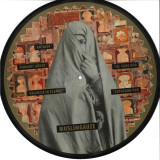
Brilliantly remastered (picture) LP/CD with new stunning artwork!
Lo-Fi India Abuse was recorded in 1998, some tracks are “pure” Muslimgauze and some are re-mixs of tracks from Systemwide’s “Sirius” CD (see also Systemwide meets Muslimgauze “at the City of the Dead” 12″). Nearly all of the tracks have hand percussion in varying tempos and intensities and at least 1/2 make use of electronic noise surges. The sound is very crisp and clean, extremely well produced, recorded and nicely varied throughout the length of the disc. Some track by track comments: “Antalya” is obviously from the same sessions as “Fakir Sind” seeing as it shares the same hand percussion sound, whistles, vocal wailing, cut-ups and delays. “Valencia Flames” sounds like a Systemwide remix. A dub bass line, hi-hat and background vocal of some sort are all obliterated by numerous delays, starts, stops and re-starts with an unpredictable nature in these cut-up tracks. “Al Souk Dub” injects background voices, market sounds and drones into the cut-up mix of slow hand percussion playing. “Catacomb Dub” and the final two tracks make use of twinkling synth waves, presumably a Systemwide sound source. “Dust of Saqqara” has a heavy pulsating electronic sound wave over an old beat box rhythm. “Android Cleaver” is brutal (as is “Nommos’ Afterburn”) hand percussion, jabs of noise and an oft repeated, unintelligible vocal sample. Yes, Lo-Fi India Abuse is yet another great Muslimgauze release, grab it!
All tracks recorded by Muslimgauze 1998
Some tracks are re-mixes from Systemwide’s “Sirius” album
Re-mastered by Višeslav Laboš
Sleeve by Oleg Galay
Originally released in 1999 via BSI Records (BSI 1999-3).
Released in the UK in January 1967 by Decca Records and February by London Records in the US – Between The Buttons was the Stones’ fifth British and seventh US studio album. Released as the follow-up to Aftermath, this album marked a high point in the band’s career, continuing their ventures into psychedelia and baroque pop balladry, it is among the band’s most musically eclectic works. Brian Jones sidelined his guitar on much of the album, instead playing a wide variety of other instruments including organ, marimba, vibraphone, and kazoo. Piano contributions came from two session players: former Rolling Stones member Ian Stewart and frequent contributor and studio legend Jack Nitzsche. It was the last album produced by Andrew Loog Oldham, the band’s manager and producer of all of their albums to this point.
The album has one of the most striking sleeves of the period, featuring a classic Gered Mankowitz image on the cover. The photo shoot took place at 5:30 in the morning following an all-night recording session at Olympic Studios. Using a home-made camera filter constructed of black card, glass and Vaseline, Mankowitz created the effect of the Stones dissolving into their surroundings – according to Mankowitz… ""to capture the ethereal, druggy feel of the time; that feeling at the end of the night when dawn was breaking and they’d been up all night making music, stoned.”
The songs continued Aftermath’s lyrics of acute social observation and savage insight, their earlier raw, rootsy power enhanced by other influences of the period – notably The Beatles, The Kinks, and again Dylan. It is one of their strongest, most varied LPs, with many great songs that remain unknown to all but Stones devotees.
The inventive arrangements and innovative instrumentation on brooding near-classics like All Sold Out, My Obsession and Yesterday’s Papers brought a new dimension to the music. She Smiled Sweetly shows their hidden romantic side at its best, Connection is one of the record’s few pieces of more conventional driving rock and album closer Something Happened To Me Yesterday includes Keith’s first solo vocal.
The US version includes contemporaneous hits – the two songs that gave the group a double-sided number one in early 1967: the shameless and controversial Let’s Spend The Night Together and the beautiful, melancholy Ruby Tuesday.
Released in the UK in January 1967 by Decca Records and February by London Records in the US – Between The Buttons was the Stones’ fifth British and seventh US studio album. Released as the follow-up to Aftermath, this album marked a high point in the band’s career, continuing their ventures into psychedelia and baroque pop balladry, it is among the band’s most musically eclectic works. Brian Jones sidelined his guitar on much of the album, instead playing a wide variety of other instruments including organ, marimba, vibraphone, and kazoo. Piano contributions came from two session players: former Rolling Stones member Ian Stewart and frequent contributor and studio legend Jack Nitzsche. It was the last album produced by Andrew Loog Oldham, the band’s manager and producer of all of their albums to this point.
The album has one of the most striking sleeves of the period, featuring a classic Gered Mankowitz image on the cover. The photo shoot took place at 5:30 in the morning following an all-night recording session at Olympic Studios. Using a home-made camera filter constructed of black card, glass and Vaseline, Mankowitz created the effect of the Stones dissolving into their surroundings – according to Mankowitz… ""to capture the ethereal, druggy feel of the time; that feeling at the end of the night when dawn was breaking and they’d been up all night making music, stoned.”
The songs continued Aftermath’s lyrics of acute social observation and savage insight, their earlier raw, rootsy power enhanced by other influences of the period – notably The Beatles, The Kinks, and again Dylan. It is one of their strongest, most varied LPs, with many great songs that remain unknown to all but Stones devotees.
The inventive arrangements and innovative instrumentation on brooding near-classics like All Sold Out, My Obsession and Yesterday’s Papers brought a new dimension to the music. She Smiled Sweetly shows their hidden romantic side at its best, Connection is one of the record’s few pieces of more conventional driving rock and album closer Something Happened To Me Yesterday includes Keith’s first solo vocal.
The US version includes contemporaneous hits – the two songs that gave the group a double-sided number one in early 1967: the shameless and controversial Let’s Spend The Night Together and the beautiful, melancholy Ruby Tuesday.
Released by Lisbon’s Welt Discos, Rafiki’s debut EP release The Source takes three decades of UK rave heritage — hardcore, breaks, house, garage and bass music — and throws it into the pot with the producer’s own Indian heritage, then gives it a healthy stir. Rafiki is the alter ego of Sohail Arora — a pioneering figure in the Indian music industry, who significantly shapes club culture as the founder of Krunk and Krunk Kulture.
- A1: Time
- A2: No Limit Of Stars
- A3: Undertow
- A4: Bullfighter (Hand Of God) (Hand Of God)
- B1: The World Of Invisible Things
- B2: Epoch
- B3: Diamonds & Coal
- B4: Rings Of Saturn
- C1: Made From Love With Far To Go
- C2: The Pearl (Part Ii)
- C3: Someday My Love Will Come
- C4: The Day I Meet My Murderer
- D1: Between The Ocean & The Storm
- D2: I've Been Waiting
- D3: Cradle Song
It’s been seven strange years since The Veils’ last studio album Total Depravity, and Finn Andrews has a new double LP to show for it. "...And Out Of The Void Came Love" is the result of this tumultuous period of injury, isolation and new life...
Following the release of Total Depravity, Andrews released a solo album and began a worldwide tour. One night, while lashing out at a particularly intense moment on piano, he broke his wrist on stage. “It sounds wild and Jerry Lee Lewis-esque, but it was an absolute fucking nightmare,” Andrews says. He played on and finished the rest of the tour, but it wasn’t until he got it examined much later that he realized what a bad move that was. “The scaphoid bone in my wrist had died, which I didn’t know was possible. My sister said that at least it was a really ‘on brand’ injury for me.”
Finn’s convalescence meant a lengthy hiatus from touring, so he did what he does best and stayed at home and wrote songs. “I was in a cast and couldn’t use my right hand. I sang the melody lines, then recorded the right hand piano part, then the left hand part. It might have been an interesting, avant-garde process if it wasn’t also just profoundly annoying.”
Just when his hand had healed sufficiently for him to play again, The Veils found themselves in need of a new record label but Finn set about starting to make a new record regardless. Producer Tom Healy invited Finn to his small studio underneath the old Crystal Palace ballroom in Mount Eden, and they listened through the legions of songs he had amassed throughout the previous year.
“Tom was incredibly patient, it was a really laborious process - I brought a lot of junk down there and we had to sift through it all to try and find the parts worth saving.”
Following another two years of intermittent recording between lockdowns, Finn’s wife became pregnant, and yet more songs started coming.
By the time the songs had been recorded, it was clear that arranging the album into two halves best suited such varied material - but the meaning of the songs as a whole still eluded Andrews. “Then my daughter was born, and suddenly the whole record made sense to me,” he says. The music was telling a story, and somewhat strangely for The Veils, it seemed to have a happy ending.
The result of all these years of questioning, confinement and precarious uncertainty is the magnificent new double album from The Veils … And Out Of The Void Came Love. It is an album intended to be listened to in two sittings with a short break in the middle, or as Andrews instructs: “Make a coffee or smoke a cigarette – but don’t mow the lawn or go to the movies or something, that takes too long.”
Composer Victoria Kelly’s soaring string arrangements play an integral role in bringing the songs to life, as do musicians Cass Basil (bass), Dan Raishbrook (lap steel, guitar), Liam Gerrard (piano), Joseph McCallum (drums) the NZTrio and special guests the Smoke Fairies on backing vocals.
“Refreshingly passionate… Andrews rages with a Herculean intensity.” The Guardian
“Horse-whipped, lightning-crash clamor… magnetic.” Pitchfork
“One of the finest songwriters of his generation.” Drowned in Sound
Our favourite Norwegian noisemaker returns with a new label called COSMIC OSLO...
This debut voyage sees Rune teaming up with 'The Balearic & Cosmic Disco queen of Norway" Helene Rickhard.
It's a wonderfully varied & esoteric affair, with the ominous opener casting cavernous sonic shapes lit by the midnight sun. The astonishing first cut is followed by 'Fiero', a haunted cosmic pop affair...
On the flip 'Hubris' reminds us of early 90's 'One Dove' era Weatherall productions, while 'Julemix' is a FX drenched optimistic ambient piece.
Le Motel and Bruce Wijn met at school, during a school art trip to Munich. They went separate ways for a long time.
Hailing from Brussels, Le Motel's world is a vortex of sight and sound that takes in the many and varied corners of the planet. As a music producer and film composer his versatility has taken him to festivals and clubs in every direction as naturally as he has ventured out to the less accessible areas of the globe as a field recordist. It's somewhere in between these spaces that Le Motel operates, gathering unique experiences and sounds to channel through his studio.
Bruce Wijn is a Brussels-based guitarist who played in several postrock kind projects such as Sound Film, 52 Commercial Road, or more shoegaze Lazy Sin. These collaborations gave him the opportunity to perform in various locations in Belgium, France, England, and the USA. As a musician, his focus has always been attracted by progressively built rhythmic melodies, which would eventually turn into long reverberated or distorted swells, or the otherway round.
All these experiences brought them both to the idea of scoring movies with different yet similar approaches.
That's how their first collaboration happened as Le Motel was working on the soundtrack of the movie Binti, and invited Bruce Wijn for the track Exode, in 2018. Since then, they've been working on other scoring projects, such as the feature film 'Aller Retour' more recently.
Alongside the movie scoring activities another audiovisual live project was born, in collaboration with Antoine de Schuyter and his mesmerizing images.
This one is more focusing on tape textures, field recordings and glitchy effects in order to build atmospheric tracks that they decided to bring together in a first E.P. 'MAAR'.
'MAAR' is elaborated as a soundtrack for an imaginary journey between cold seas and volcanoes explorations.
From the first echoing sounds of playing kids on the shoreside in the opening track 'La Perche' Le Motel & Bruce Wijn let you slide in a technicolor dreamworld, reverbing slowly innocent childhood memories into a chilled, out of range, future.
'MAAR' dives deep into a kaleidoscopic microcosmos watching Nautilus playing hide and seek with 'Captain Ahab' floating on sonic breaking waves, while seagulls gently spread their wings flying through the breezy and misty clouds of Blankenberge.
Lava vulcanica slowly melts in the sad euphorica of the cold North Sea, crystallizing sounds only Le Motel and Bruce Wijn can deliver.
Gui La Testa[41,13 €]
For a few dollars more[41,13 €]
L'assoluto naturale[41,13 €]
Gamma[41,13 €]
Cosi' come sei[41,13 €]
Green Vinyl[33,57 €]
"Il mio nome è Nessuno" (My name is Nobody) is an a typical western,
difficult to classify as it's placed halfway between the founders of the
genre of the '60s and the comedies of the following decade
Sponsored and partly directed by Sergio Leone, it came out in 1973 and received great success, thanks to the presence of the actors Terence Hill and Henry Fonda, in perfect balance between a light- hearted comedy and the more serious 'spaghetti western' genre.
The music is written by the genius of Ennio Morricone, who writes and
orchestrates a varied soundtrack, which lends itself to the various scenes. There is everything: tense soundscapes, epic symphonic rides - directly referring to the "Dollar Trilogy", frivolous and light- hearted moments, all mixed with esoteric sounds.
Given the popularity of the film, its soundtrack has been released several times, but 35 years have passed since the previous vinyl release. A must buy for fans of the Maestro Morricone but also for all film lovers!
Limited edition on crystal clear vinyl
Jonas Kopp pumps the drums hard on opener 'Shibu'. It is pure peak-time material, fit with siren-like synths, heavy kicks and hi-hats to get the shoulders moving. Kopp's tracks are always masterfully tailored for the dancefloor, and this is no exception; the six-and-a-half-minute ride is richly detailed with ups, downs and subtle changes. Dadub take the record deeper with 'Force Continuum Abuse'. For the first three minutes of stretched soundscape, the percussion warms up with sparse and off-kilter hits. The track's second half sees fierce breakbeats cut through the walls of reverb, and with that can Daniele Antezza and Giovanni Conti really show-off their unique talent at sound design. They blend a gift for rhythm and titanic production to engaging effect. Eomac begins the B-side with 'I Am Starting To Believe'. The track's echoing synths hang free in a spacious mid-range, intermittently making way for long chords and elusive vocal snippets. Eomac draws on the light/dark contrast and unsettling motifs that made his Monad release special, and delivers a techno epic so rich it requires repeated listens. Last but not least, Chevel; his sound is distinctive amongst the SA roster, mostly due to his acute focus on the percussive elements and intriguing take on minimalism. On 'Alicia', he works a groove out of tripping drums and metallic perc, all with a UK-influenced flair that lends itself to a wide range of DJs. Chevel's track ends what may be the most varied collection of 'Chapter V' material yet, leaving a lasting reminder of the depth and quality of artists SA have accrued.
“This music is staggeringly original and innovative, and while it’s possible to locate it in a chain of circumstance that links it to ‘Industrial’ music, P16.D4 indulged in none of the empty cliches associated with the genre, worked incredibly hard, and seem to have been aiming at a form of sound art that was much more profound, varied, subversive, and potentially dangerous. Kuhe In 1/2 Trauer’s accompanying credits indicate their radical approach to making music: lots of improvisation, lots of live electronics, extensive use of tape-loops, some conventional instrumentation, and much that isn’t – like the milk churn on ‘Paris, Morgue’ or the use of baking tray and washing machine elsewhere. Even when guitars, drums or keyboards are used, they’re played very weirdly. It’s not even made clear who was doing what; the main credit is ‘Concept,’ which I assume means that one of the three devised the framework in which the noise would operate itself, and while RLW gets the lion’s share of these credits, a lot of the cuts are evenly divided among the team and I have no doubt that the group operated in a very democratic or libertarian manner. None of this prepares you for the insane and troubling sounds that reach your ears, composed with scant regard for conventional logic and following an exciting, absurdist path, especially in the matter of tape edits and juxtapositions of recordings.” - Ed Pinsent, The Sound Projector.
“Though this German group started out as a the new wave band P.D., by the time of Kuhe in 1/2 Trauer, their first LP under the P16.D4 name from 1984, they had developed far beyond into extremely experimental music similar to other post-industrial artists working with abstract avant-garde soundscapes. There’s a bleak industrial feel to the gritty, lo-fi electronics and tape loops, while the group throws in enough curve balls to keep it interesting. On some pieces, strange, looped choirs bubble out of throbbing pulses and drones of feedback, while others have clanging and clattering, and elements of musique concrète and improvisation blur the boundaries even further. The opening track, “Default Value,” is one of those disorienting pieces with noises flying everywhere, while “Paris Morgue” takes excerpts from one of their old P.D. tracks and messes it up with additional instruments, while the ungainly titled fourth track throws in a heavy texture of percussive noises to create an edgy ambience about to teeter off the edge, and the even darker and more ambient title track takes the tension even further. Arrhythmic and amorphous and capable at moments of becoming quite noisy and abrasive, while at others far more somber and quiet, Kuhe in 1/2 Trauer is quite a fascinating release.” - Rolf Semprebon / AMG
P16.D4 was a German electronic noise music collective, active primarily from 1980 to 1988. P16.D4 embraced tape cut-ups, musique concrète, endless recycling and transformation of previously published material, and many long-distance collaborations with like-minded artists such as DDAA, Vortex Campaign, Nurse With Wound, and Merzbow. Their active participation in the international industrial tape scene yielded collaborative output such as their release Distruct, where bands such as Nurse with Wound, Nocturnal Emissions, Die Tödliche Doris, and The Haters provided the source material. The longest-term collaboration was with the installation and conceptual artist Achim Wollscheid, who used P16.D4 sounds as the basis for LPs he recorded under the name SBOTHI. Ralf Wehowsky, the only constant member of the group, later released solo material under the alias RLW.
Members of P16.D4 were also involved with Selektion, a collective of people involved with sound as well as the visual arts. Selektion published LPs, CDs, books, visual art and design.
The collective worked in a strongly improvised, spontaneous and anti-professional way, using acoustic and electronic instruments, using existing sound fragments, duplicating and alienating them, using repetition, distortion, changes in speed and playing direction. For this they used not only sounds of other artists but also their own material from earlier productions. Late works of the collective are associated with musique concrete.
Dial 303! The new and hopefully also durable sampler series on Running Back is here.
Dedicated to the twang of Roland’s silver baseline box with a varied string of artists: DVS1, Marko East & Jordi Chu (whose collaboration sparked the idea of a whole series), Like A Tim via Prins Thomas, Katerina and I:Cube.
The Parisian put it in a nutshell, too: „Although rinsed to death to the point of becoming a parody of itself, acid will last forever.“ Therefore, his Folie Noire is combining the original recipes with hypnotic European influences, while Marko and Jordi present a rough and direct 303-909 live jam, Prins Thomas puts his wickedest smile on Like A Tim’s Wonderline from 2005 and Katerina sets a lucid dream to sanguine music.
Finally, there is a rare and much desired musical outing by the unique DVS1. A direct ode to Chicago’s acid and beatdown styles and its Midwest companions, it is a heads-down-lights-down late night track made for driving up and down Lower Wacker Drive. Trippy trip artwork by the inimitable Gasius.
Trivia: If the piano is the bread of house music, the acid line is its butter!
Part 1[10,71 €]
Orlando Voorn is back on Heist after his 2022 ‘Heist mastercuts’ EP and comes in with a heavy dose of soulful machine funk. ‘Heist mastercuts part 2’ has the techno & house veteran showing his eclectic style with the vocal cut ‘Soundsystem’, Midwest inspired sample jam ‘High’ and his Boo Williams collaborative drum workout ‘909’.
On the first Heist mastercuts, Orlando dove deep into his archives and presented a collection of old and new tracks, showing us that his music has aged well and reminding us that he’s a producer still on the top of his game. He kept busy in 2022 with releases on our own label Transient Nature, Kompakt, a handful of Bandcamp only tracks, and a self-released album. Somehow, he found the time to work on his follow up ep on Heist and managed to completely blow us away with the music.
The EP kicks off with Soundsystem: a masterclass in simplicity. A steady and minimalistic groove guides you through the track, where silky vocals and woozy chords take you on a trip through Orlando’s sonic universe. Orlando moves into freak mode with a trippy lead and dubbed-out keys to add some playfulness to an already outstanding track.
‘High’ is Orlando’s take on what could easily be an old Andrés track. Here, he samples a female vocal (I get high, I get high, I get high), and cleverly adds his own vocals to add depth and originality to the track. The percussion on high grooves in an effortless way and underlines the feel of this track: It’s fun, cool and incredibly funky. There’s a bit of Dam Swindle sauce on the mix to make sure this track hits the right spot on any dancefloor.
On the flip, there’s ‘Day by day’: A classic Orlando Voorn cut with a live bassline, plenty of chopped samples and a Rhodes loop that could have come straight from a B-roll of a ‘First Choice’ recording session. The b-side ends with a collab with Orlando’s close friend Emil and legendary Chicago producer Boo Williams. The producers take a monologue from Boo Williams about working the 909 and deliver a drum workout -yes with the 909- that keeps on building energy, showing exactly what Boo is talking about.
The digital package also includes an instrumental mix of Soundsytem and an alternative mix to 909, just for good measure. This is the first artist release in our 10 years of Heist anniversary year and this EP perfectly encapsulates the Heist Sound: varied, deep, soulful, and banging.
Yours sincerely,
Maarten & Lars