- A1: Madame - Gdyby Nie Szerszenie
- A2: Siekiera - Jest Bezpiecznie
- A3: Made In Poland - Ja Mysle
- A4: Kineo Ra - Oblakany
- A5: Brygada Kryzys - Fallen Fallen Is Babylon
- A6: Lech Janerka - Jest Jak W Niebie
- A7: 1984 - W Holdzie Fanatykom Marszu (Idziemy)
- A8: Made In Poland - Jedna Kropla Deszczu
- A9: Ziyo - Panie Prezydencie
- A10: One Million Bulgarians - Animal Love
- B1: One Million Bulgarians - Wysadzony Za Wysoko
- B2: Made In Poland - Obraz We Mgle
- B3: Kineo Ra - Szczury
- B4: Lech Janerka - Reformator
- B5: Brygada Kryzys - Przestan Snic
- B6: 1984 - Tu Nie Bedzie Rewolucji
- B7: Madame - Dzien Narodzin
- B8: Ziyo - Poza Tym Miejscem
- B9: Siekiera - Serce
- B10: Made In Poland - Nieskazitelna Twarz
Buscar:vario
- A1: Cheikha Djenia El K'bira - Chabe Rassi
- A2: Cheb Zahouani - Zinek Bekani
- A3: Chaba Zohra - Ki Bghitouni Nabra
- A4: Cheb Abdelhak - Ghir Hbibi Ouana
- B1: Abderrahmane Djalti - Ala Bladi Nebki
- B2: Chaba Amina - Kindi Ebatal
- B3: Cheb Tahar & Chaba Noria - La Hbibi Ouaalah Ela
- B4: Djilali Tiarti & Chaba Zohra - Matczaafiche Omizi
Wewantsounds is delighted to announce the release of "Sweet Rebels - The Golden Era of Algerian Pop-Raï" Selected in Paris by Cheb Gero. The set features the raw energy of the Algerian Raï scene from the 80s and early "90s and its young stars Cheb Zahouani, Chaba Zohra and Abderrahmane Djalti. Newly remastered and including liner notes from Raï authority Rabah Mezouane, the compilation brings together eight cassette tracks from the electrifying period when Raï music was evolving from a more traditional sound to the mesmerising electro funk sound of the 80s.
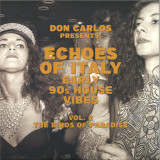
- A1: Montego Bay - Everything (Paradise Mix) 04 59
- A2: Atelier - Got To Live Together (Club Mix) 06 06
- A3: Golem - Music Sensations 04 56
- B1: The True Underground Sound Of Rome Feat. Stefano Di Carlo - Gladiators 05 26
- B2: Eagle Parade - I Believe 04 26
- C1: Dj Le Roi - Bocachica (Detroit Version) 05 28
- C2: Green Baize - Synthetic Rhythm 01 41
- C3: M.c.j. Feat. Sima - Sexitivity (Deep Mix) 05 30
- D1: Kwanzaa Posse Feat. Funk Master Sweat - Wicked Funk (Afro Ambient Mix) 06 31
- D2: Progetto Tribale - The Bird Of Paradise 06 29
- D3: Mbg - The Quite 06 59
Vol 1[28,99 €]
Googling “paradise house”, the first results to pop up are an endless list of European b&b’s with whitewashed lime façades, all of them promising “…an unmatched travel experience a few steps from the sea”. Next, a little further down, are the institutional websites of a few select semi-luxury retirement homes (no photos shown, but lots of stock images of smiling nurses with reassuring looks). To find the “paradise house” we’re after, we have to scroll even further down. Much further down.
It feels like yesterday, and at the same time it seems like a million years ago. The Eighties had just ended, and it was still unclear what to expect from the Nineties. Mobile phones that were not the size of a briefcase and did not cost as much as a car? A frightening economic crisis? The guitar-rock revival?! Certainly, the best place to observe that moment of transition was the dancefloor. Truly epochal transformations were happening there. From America, within a short distance one from the other, two revolutionary new musical styles had arrived: the first one sounded a bit like an “on a budget” version of the best Seventies disco-music – Philly sound made with a set of piano-bar keyboards! – the other was even more sparse, futuristic and extraterrestrial. It was a music with a quite distinct “physical” component, which at the same time, to be fully grasped, seemed to call for the knotty theories of certain French post-modern philosophers: Gilles Deleuze, Félix Guattari, Paul Virilio... Both those genres – we would learn shortly after – were born in the black communities of Chicago and Detroit, although listening to those vinyl 12” (often wrapped in generic white covers, and with little indication in the label) you could not easily guess whether behind them there was a black boy from somewhere in the Usa, or a girl from Berlin, or a pale kid from a Cornish coastal town.
Quickly, similar sounds began to show up from all corners of Europe. A thousand variations of the same intuition: leaner, less lean, happier, slightly less intoxicated, more broken, slower, faster, much faster... Boom! From the dancefloors – the London ones at least, whose chronicles we eagerly read every month in the pages of The Face and i-D – came tales of a new generation of clubbers who had completely stopped “dressing up” to go dancing; of hot tempered hooligans bursting into tears and hugging everyone under the strobe lights as the notes of Strings of Life rose up through the fumes of dry ice (certain “smiling” pills were also involved, sure). At this point, however, we must move on to Switzerland.
In Switzerland, in the quiet and diligent town of Lugano, between the 1980s and 1990s there was a club called “Morandi”. Its hot night was on Wednesdays, when the audience also came from Milan, Como, Varese and Zurich. Legend goes that, one night, none less than Prince and Sheila E were spotted hiding among the sofas, on a day-off of the Italian dates of the Nude Tour… The Wednesday resident and superstar was an Italian dj with an exotic name: Don Carlos. The soundtrack he devised was a mixture of Chicago, Detroit, the most progressive R&B and certain forgotten classics of old disco music: practically, what the Paradise Garage in New York might have sounded like had it not closed in 1987. In between, Don Carlos also managed to squeeze in some tracks he had worked on in his studio on Lago Maggiore. One in particular: a track that was rather slow compared to the BPM in fashion at the time, but which was a perfect bridge between house and R&B. The title was Alone: Don Carlos would explain years later that it had to be intended both in the English meaning of “by itself” and like the Italian word meaning “halo”. That wasn’t the only double entendre about the song, anyway. Its own very deep nature was, indeed, double. On the one hand, Alone was built around an angelic keyboard pattern and a romantic piano riff that took you straight to heaven; on the other, it showcased enough electronic squelches (plus a sax part that sounded like it had been dissolved by acid rain) to pigeonhole the tune into the “junk modernity” section, aka the hallmark of all the most innovative sounds of the time: music that sounded like it was hand-crafted from the scraps of glittering overground pop.
No one knows who was the first to call it “paradise house”, nor when it happened. Alternative definitions on the same topic one happened to hear included “ambient house”, “dream house”, “Mediterranean progressive”… but of course none were as good (and alluring) as “paradise house”. What is certain is that such inclination for sounds that were in equal measure angelic and neurotic, romantic and unaffective, quickly became the trademark of the second generation of Italian house. Music that seemed shyly equidistant from all the rhythmic and electronic revolutions that had happened up to that moment (“Music perfectly adept at going nowhere slowly” as noted by English journalist Craig McLean in a legendary field report for Blah Blah Blah magazine). Music that to a inattentive ear might have sounded as anonymous as a snapshot of a random group of passers-by at 10AM in the centre of any major city, but perfectly described the (slow) awakening in the real world after the universal love binge of the so-called Second Summer of Love.
For a brief but unforgettable season, in Italy “paradise house” was the official soundtrack of interminable weekends spent inside the car, darting from one club to another, cutting the peninsula from North to centre, from East to West coast in pursuit of the latest after-hours disco, trading kilometres per hour with beats per minute: practically, a new New Year’s Eve every Friday and Saturday night. This too was no small transformation, as well as a shock for an adult Italy that was encountering for the first time – thanks to its sons and daughters – the wild side of industrial modernity. The clubbers of the so-called “fuoriorario” scene were the balls gone mad in the pinball machine most feared by newspapers, magazines and TV pundits. What they did each and every weekend, apart from going crazy to the sound of the current white labels, was linking distant geographical points and non-places (thank you Marc Augé!) – old dance halls, farmhouses and business centres – transformed for one night into house music heaven. As Marco D’Eramo wrote in his 1995 essay on Chicago, Il maiale e il grattacielo: “Four-wheeled capitalism distorts our age-old image of the city, it allows the suburbs to be connected to each other, whereas before they were connected only by the centre (…) It makes possible a metropolitan area without a metropolis, without a city centre, without downtown. The periphery is no longer a periphery of any centre, but is self-centred”.
“Paradise house” perfectly understood all of this and turned it into a sort of cyber-blues that didn’t even need words, and unexpectedly brought back a drop of melancholic (post?)-humanity within a world that by then – as we would wholly realise in the decades to come – was fully inhuman and heartless. A world where we were all alone, and surrounded by a sinister yellowish halo, like a neon at the end of its life cycle. But, for one night at least, happy."
Madronas’ debut LP Erogenous Biome is an amorphous, murky, cathartic offering. A duet of modular synthesizer and winds that’s equal parts doom and ecstasy, it’s the sound of a majestic butterfly emerging from it’s slimy chrysalis just in time to catch the sun setting on the end of days, a bewitching, heavy ceremony, a power-wash of both mind and spirit.
Tracked in one continuous take at Brooklyn’s Heavy Meadow studio, individual tracks were gleaned from the purge and eschew predictable structures, making for a dense, fluid suite of improvisation, like dancing smoke ribbons in the dark. The duo's chosen sound sources are seemingly opposite - Ry Fyan’s modular’s coming from electronic oscillators, Isaiah Barr’s saxophone and various flutes originating with the breath - but the visceral, imprecise, alive quality to the sound of both lends the record a thrilling combination of rapturous harmony and gritty, intense friction.
Opening the session in ritualistic, foreboding fashion, Voluntary lurches to life with rattles and wandering, bassy arpeggios before a suona’s cry signals the seance has officially begun. Ostraca Loam spits explosive modular rhythms and eerie shrieks for the flute to float above, while Detritus Harp smudges mechanical whirring, pensive horn and wind chimes for an untethered drift. Petrified Microdot swells with menacing sci-fi sequences and breathtaking sax runs until they both run out of breath, and Negative Lingam starts out in a panic of breathy riffing before exhaling into one of the most sublime passages on the record. Rhythmic pounding and undulating flutes punctuate Lenticular Shroud, before The Preparation Of The Novel sets the winds aside for a synthesized dual fit for electric dreams. The title track dominates the B-side, it's shimmering levity slowly unfurling to reveal itself as a kind of post-apocalyptic devotional music, deep space drifting grounded by earthly flutes, and Vale Of Cashmere offers an ascetic, contemplative closure, sparse flute and chiming rhythms organic or electronic - by this time it’s hard to know, it doesn’t matter either way.
Erogenous Biome is a world of it’s own, and one Impatience is honored to offer a window into.
RIYL - Senyawa, witchcraft, Colin Stetson , Civilistjavel, Mars (the planet), Finis Africae, raga, Stephen O’Malley, modular synthesizer, Anthony Braxton, Shabaka.
Madronas is Ry Fyan and Isaiah Barr. Fyan is a painter and tattoo artist, this is his first release. Barr is a prolific instigator of the downtown New York scene, producing and playing saxophone in jazz circles with his group Onyx Collective, as a player and/or producer on records by Nick Hakim, David Byrne and Wiki, performing live with William Parker and as part of his projects Universal Space Jam and Cafe Dewanee.
Erogenous Biome was recorded and mastered by Griffin Jennings at Heavy Meadow, Brooklyn.
Vinyl was cut by Beau Thomas at Ten Eight Seven Mastering, Berlin.
Artwork is by Ry Fyan, typography and layout by Nicolas Turek.
Toulouse appears to be a proper soundsystem town, a real Dub and Bass music hot spot. We were happy to get in touch with with Stefan Dubs from the former Folklore crew, running a handmade soundsystem with up to 6 full super scoops. He released several records under Folklore and later Maquis Son SistÈm, started a liveact which meanwhile runs under SÚn Du MaquÌs, organises soundsystem gatherings and raves around town with the ComitÈ Des FÍtes collective.
Luckily we were able to invite Jan Loup and him to Leipzig in 2023 to shake Bassmaessage with their soundsystem, including the amazing multi-track tape into vintage FX & mixing desk performance. If you ever have the chance to catch them live, you'll hear a special vividly rooted analogue sound, incorporating modern influences, covering various BPM from 120 to 170, but definitely bass heavy all along!
Irie skanks keep you floating along "Mogale Stepper", which shows SÚn's warm but forward bass abilities and the knowledge to keep it steppy without any militant aggressive kicks. "Puur Dub" has a the same instant reminiscence of digital reggae skanking, but adding a brilliant layer of Think break incarnations on top - killing advanced sub connoisseur meetings with ease. On the first check this plate may appear a bit different from the label's cutalogue, but if you settle in these lush textures and twisted dubs you'll see: this is a definitive 45seven sound!
EBY is an acid house artist who has more than made his mark over the years. 40 years, to be exact, and to mark that rather notable occasion he is back with a special release on Foxbam Inc called ACID Thing and it comes in various different formats. This is a grey vinyl version that celebrates the classic acid sound while infusing it with a modern twist and plenty of big basslines, squelchy synths, and potent rhythms. The standout 'Acidanus' includes MC Soph who made her debut on Acid Indigestion Pt4 at just eight years old and now returns at 25. The EP also features a remix of 'Eggtrip' by renowned Belgian producer Outlander who you will likely remember from his iconic cut 'Vamp.'
- A1: Ashtray Navigations - Mailshot Slot
- A2: Elli & Bev - 31 Men
- A3: The Scrotum Poles - Pick The Cats Eyes Out
- A4: The Bachs - Tables Of Grass Fields
- A5: Fille Qui Mousse - Fraîcheur Et Amalgame
- A6: Idea Fire Company - Romance
- B1: Hollywood Autopsy - Lost Finding Gone
- B2: Esp Kinetic - Metropoline
- B3: Hospitals - This Walls
- B4: Counter Intuits - Anarchy On Yr Face
- B5: Metal Rouge - Grey Area Ii
- C1: Simon Finn - Patrice
- C2: A To Austr - Thumbquake & Earthscrew
- C3: Christina Carter - Seals
- C4: Sachiko - Yama-Keburi
- C5: Jd Emmanuel - Attaining Peace
- D1: Vox Populi! - Gole Mariam
- D2: Circuit Des Yeux - Serenade To Sophia
- D3: Bronze Horse - Number 1
- D4: Orphan Fairytale - Phantom Shapes
"Volcanic Tongue" war ein Plattenladen, der von 2005-2015 in Glasgow von David Keenan und Heather Leigh betrieben wurde und zeitgenössische DIY-Musik aus der ganzen Welt in kleinen selbstgemachten CD-R-Auflagen veröffentliche. Parallel versuchte man, vergessene Künstler aus der Vergangenheit ins Rampenlicht zu rücken, die ihre Musik oft als Privatpressung veröffentlicht hatten. Der Laden war für seine wöchentliche Mailingliste bekannt, in der Keenan enthusiastisch über Neuankömmlinge rappte, insbesondere über die Platte der Woche, die den Spitznamen "tip of the tongue" (Zungenspitze) erhielt. Dieser eklektische Sampler mit 20 "tips of the tongue" - von Outsider-Synth über Psych-Folk bis zu kaputtem Rock'n'Roll, aufgenommen zwischen 1968-2013 - ist eine Hommage an eine lebendige und vielseitige Underground-Avantgarde. Black Vinyl 2LP in PVC-Hülle, von Julian House designt, mit bedruckten Innentaschen samt Linernotes von David Keenan zu jedem Künstler.
PS: Gleichzeitig erscheint beim White Rabbit-Verlag eine Deluxe-Ausgabe des gleichnamigen Buches mit einer CD-Version des Samplers, limitiert auf 1.000 Exemplare, und signiert von Autor David Keenan und Designer Julian House.
Limited Edition 12"
Left Ear are delivering two previous unreleased Australian ‘experimental’ electronic tracks from the 80’s and honoring them with a split 12” release.
Side A: Features an unreleased full-length version of Tim Gruchy’s Jungles, a solo electro-percussive piece recorded in Tim’s Lab D’Avoid studio in Brisbane. The track is emblematic of his style during an era when he worked extensively in music, both as a percussionist and primarily with electronics, including early analog synths.
A shorter version was originally released on the Meanjin (Brisbane) art collective ZIP’s Eye Ear EP book package in 1986 and, more recently, on Left Ear’s Antipodean Anomalies 2 compilation.
This original version of Jungles was initially part of the soundtrack for the ZIP Performing Group’s infamous Ironing Board Dances. Footage of the performance was treated through a Fairlight synthesizer, mixed with hand-painted slides, and transferred to VHS for various film festivals.
Side B: Michael Krillich’s Arnhem Land began its journey in 1982 in a shared house in North Bondi. Inspired by Brian Eno and David Byrne’s My Life in the Bush of Ghosts, he experimented with tape loops, cut-ups, and samples, incorporating synthesizers, effects pedals, a drum machine, and an unknown sample from an Australian Aboriginal record. This creation became part of his cassette release, Thematic Variations.
In 2010, Krillich uploaded an unreleased extended version of Arnhem Land from Thematic Variations to YouTube, which was shared by record dealer Matt Bowden with Left Ear Records, who pursued to release it on vinyl. Their search to uncover the sample’s origins led them to Arnhem Land Vol. 1 (1957), recorded by Peter Elkin in the Daly River region.
After years of research and through the guidance of Professor Allan Marrett and local custodians, the sample was verified as a “Wangga” ceremonial song sung by George Morkai, an Emmiyangarl man. Rights to the song had passed through generations to Tobias Worumbu, who granted us permission for its use, bringing Arnhem Land full circle.
Since its inception in 2020, Italo Moderni’s energy, spirit and inspiration has been the dancefloor. The darkened bunkers of Belgium, the trembling speakers of Valencia, the warming dawn of Rimini, these influences have been the lifeblood. Solidifying this tireless effort, Mellow Bangers Vol 2 is the label’s most ambitious collection to date.
In celebration of the imprint’s fifth anniversary, four artists gather with every single one united under a rallying cry. From across the globe, machinists have been drawn together to deliver a statement of acid and wave, of electro and synth with flourishes of italo. The shadowy fringes of the floor are well represented, audio artisans like Cyrk serving distorted drums and melodies dripping with menace in the twisted shape of “Double Crash.” The static haze remains with Fragedis’ “Disco Nicotina,” a lancing melody piercing the soaked speakers of this sweaty romp. Label boss, Adrian Marth leads the charge on the flip. “Modernism” is a stripped and playful two-stepper, a two-stepper that Marth beefs into bawdy proportions before balancing the track with crystalline chords. Amongst the litany of talent are musicians who have both inspired Italo Moderni as well as those who have appeared on the label. Antoni Maiovvi fits such a description, the sound sorcerer slicing beats through bittersweet bars in the immersive “Stopping Power.”
Mellow Bangers Vol 2 is a breathless expression of the floor. A contemporary imagining of the racing rhythms and addictive hooks of the 1980s and 1990s. Four works that summarise what Italo Moderni is and will continue to be
- A1: God Made Me Funky - The Headhunters
- A2: Spanish Twist - The I. B. Special
- A3: Breakaway - The Valentines
- A4: Top Of The Stairs - Collins & Collins
- A5: Dont Let The Green Grass Fool You - The Spinners
- A6: Black Balloons - Syl Johnson
- B1: Soulshake - Peggy Scott & Jo Jo Benson
- B2: I Can't Make It Anymore - Richie Havens
- B3: You Got To Have Money - The Exits
- B4: Pull My String (Turn Me On) - The Joneses
- B5: Run For Cover - The Dells
- B6: On Easy Street - O.c. Smith
- B7: It Ain't No Big Thing - The Radiants
- C1: Summertime - Billy Stewart
- C2: In The Bottle - Brother To Brother
- C3: Hard Times - Baby Huey
- C4: Maggie - Johnny Williams
- C5: When - Joe Simon
- C6: Pouring Water On A Drowning Man - James Carr
- C7: That's Enough - Roscoe Robinson
- D1: Blackrock “Yeah, Yeah” - Blackrock
- D2: Golden Ring - American Gypsy
- D3: Search For The Inner Self - Jon Lucien
- D4: Life Walked Out - The Mist
- D5: In The Meantime - Betty Davis
- D6: Beautiful Feeling (Single Mix) - Darrell Banks
Soul music has always been in Paul Weller’s blood from early Jam covers of Martha & the Vandellas 1963 classic ‘Heatwave’. Along with other forms of music, soul found its way into Paul’s record collection, nourishing his ears and informing his own songwriting
We don’t need to recap a questing musical career from the Jam to the Style Council and then blossoming into one of the most productive and revered careers of any UK solo artist. Paul has written anthems, standards and a songbook that have always developed from his own feelings.
Whilst Paul has talked about his love of soul music he has, before now, simply been too busy to sit down and curate a collection of his favourite tracks and get it into the record racks.
Ace Records are honoured and delighted to finally release that Paul Weller curated collection which he has aptly titled, “That Sweet Sweet Music”.
This 2-LP set and CD open the curtains on 26 tracks that are some of Paul’s favourite soul records most of which nestle on vinyl in his own collection. He can still recall paying £70 for his copy of Jon Lucien’s 1971 ‘Search For The Inner Self’ 7” at a record shop in Leicester in the 90s. Some of these tracks are soul classics like James Carr’s 1966 ‘Pouring Water On A Drowning Man’ and Brother to Brother’s brilliant take on Gil Scott Heron and Brian Jackson’s ‘In The Bottle’ from 1974. Others are deliciously obscure wonderous gems like the A-side of Blackrock’s sole 1971 single ‘Blackrock “Yeah, Yeah”’, ‘Life Walked Out’ from the same year by the Mist or Syl Johnson’s ‘Black Balloons’ taken from his 1970 album “Is It Because I’m Black?”.
There are plenty of big vocal hitters such as Darrell Banks, Spinners, Joe Simon, O.C. Smith, the Dells and Betty Davis. Whilst the core is vocal soul the music does branch out with Paul selecting a wicked instrumental from the flipside of the Isley Brothers’ ‘Twist & Shout’ from 1962 and the funky jazz of the Headhunters ‘God Made Me Funky’, the A-side of their first 1975 seven-inch.
From Chicago To New York via the Uk. Three well selected cuts out of the House Music Universe. Including Vick Lavender who is a founding Member of the Strictly Jaz Unit. A Donna Summer related House Version of her all time classic "Love To Love You". Last but not least the yet only Release on Disco Magic related JFD Records bringing all the vibes a Dancefloor needs. Soulful, Progy & classy NY school.
'It begins with a shoebox of mysterious provenance, full of recordings from the Vendée department on France’s western seaboard: songs of love and war, life and death, played out on land and sea. Songs passed down and sung by ordinary men and women, gracefully delivered with the poetic economy which unites the folk song of all peoples.
Next it takes a group of contemporary musicians to make selections from this treasure trove and sing these old songs anew; to sing them for their beauty, of course, and to reclaim the people’s tradition from those who would seek to exploit it for nefarious political ends. Who better for this task than Tartine de Clous, a singing trio from Vendée’s neighbouring department of Charente-Maritime, who burst into national and international consciousness with their debut album "Sans Folklore" in 2015? The result of their shoebox rummagings, the new album "Compter les dents", recorded in 2019 and finally seeing the light of day, is bound to delight old fans and win them many new ones.
Time makes many’s the alteration, and "Compter les dents" finds 'les garçons' - Geoffroy Dudouit, Thomas Georget and Guillaume Maupin - in a different state of being from their debut release. The trio, friends since youth, have certainly matured between albums, as one would expect; consequently the newer performances are more considered and poised, unfolding with a patient confidence. A relaxed domesticity prevails, something to do with the fact that the album was entirely recorded chez les amis, in contrast to the first album, which was mostly recorded at live performances in bars and night-spots across France.
Lending gravitas to the grain of their voices we mark a deepened richness, doubtless born of the various vicissitudes of daily existence which these gentlemen - and we too as citizens of this turmoiled globe - have weathered in the intervening years. Not too dissimilar, in fact,
from some of the vicissitudes detailed in those old Vendée songs. Plus 'ça change', right?
There’s a greater complexity and subtlety to their unique three-part harmonising, too. Their voices mesh in even stronger - almost telepathic - 'fraternité' than ever before: now commanding and mighty as a full-rigged counter-vessel, now gentle and lulling as a mother’s
cradle-croon, or as the whisper in a lover’s ear.
Three legendary figures of French traditional music, now sadly departed, preside as tutelary spirits over Compter les dents. They are: the late Claude Flagel, musician and ethnomusicologist; and the late Jean-Loup Baly of the well-known 1970s band Mélusine. Most of the album was recorded by Claude in the Brussels home he shared with his late wife Lou Flagel. The album is dedicated to the memory of Jean-Loup, Claude and Lou.
For the first time there are several guest instrumentalists working their magic to expand the Tartine de Clous sound. Jean-Loup plays a characterful accordéon on the song ‘La Veuve'. The other guests are: Maurice Artus (voice), Robert Thébaut (violin), Quentin Manfroy (piccolo, contrabassoon), Marceau Portron (cigar box guitar). Their contributions add even more conviviality to that which the trio of singers already share, a sensation which will doubtless be shared by those who happen to find a place in their lives for "Compter les dents".'
Liner notes by Alasdair Roberts.
- A1: 4Q Total Resistance & Sound Conspiracy - Don't Let It Get To You
- A2: Naak Tikal Sound Records - Kahos Projekt
- B1: Oby One Olstad - Comex3
- B2: Nkod Oqp Crew & Sound Conspiracy - Antropy
- C1: Alchimia23 Tikal Sound Records - La Tartinade
- C2: Ixindamix Spiral Tribe & Sound Conspiracy - Trite Mill
- D1: Ccil Facom Unit & Sound Conspiracy - Don't Forget
- D2: Kesh Tikal Sound Records - Viktims
Utopia Music introduces "Nebari Volume 1," a new Various Artist EP series joins the dots between familiar and new faces to the label. Featuring four distinct tracks, each a testament to the label's commitment to creativity, Featuring tracks from Quartz, Molecular, Inner terrain and Park Shadow, the release showcases a Claustrophobic and hypnotic journey.
Infonabeat Records proudly unveils ISSR A003, its third Various Artists album—a meticulously crafted collection of peak-time techno designed to shake the dance floor. Showcasing the distinct styles of Ixbalanke, Netika, Forest People, and DJ Drexc, this release channels the raw intensity and energy that drives techno’s heartbeat.
Each track on ISSR A003 is engineered to amplify sound systems and energize the crowd. Ixbalanke’s hypnotic grooves lay down entrancing foundations, while Netika’s powerful layering brings depth to every beat. Forest People’s experimental edge cuts through with relentless force, and DJ Drexc’s mastery of basslines rounds out this dynamic lineup, making the album an essential tool for selectors and an unforgettable experience for dancers.
ISSR A003 is an unfiltered techno experience, ready to take listeners into the pulsating world of Infonabeat Records—where every beat is made for the dance floor.
- A1: School Days-Chuck Berry 1957
- A2: Lucille-Little Richard 1957
- A3: That's Alright (Mama)-Arthur Crudup 1949
- A4: Blue Suede Shoes-Carl Perkins 1955
- A5: Bye Bye Johnny-Chuck Berry 1960
- A6: Jailhouse Rock-Elvis Presley 1957
- B1: Baby,Please Don't Go-Muddy Waters 1953
- B2: Johnny B.goode-Chuck Berry 1958
- B3: Tutti Frutti-Little Richard 1955
- B4: Shake Rattle And Roll-Big Joe Turner 1954
- B5: Carol-Chuck Berry 1958
- B6: Heartbreak Hotel-Elvis Presley 1956
Rock and Rock roots, deep down under You'd better believe it! The roots of Australian rockers AC/DC lie in the whirlwind of original fifties rock and roll.
In the early days the group would cut their teeth on the club circuit with a live set that would include a handful of band originals,a few Rolling Stones numbers plus many crowd pleasing Rock and Roll classics.
The Sydney club and bar scene was rough so you had to get the punters on your side.
With their original singer Dave Evans at the helm the group who play residencies at the likes of the New Hampton Court Hotel in Sydney entertaining with their own brand of loud guitar takes of 'Carol' and 'Bye Bye Johnny'by Chuck Berry,'Tutti Frutti'by Little Richard,as well as rocking standards like 'Shake,rattle and roll' and 'Blue Suede Shoes'.
Cranking out cover versions didn't die even when the group composed more original material,a version of 'School Days' by Chuck Berry would appear on their second album' TNT',whilst 'Baby Please Don't Go' would be pulled from their original 1975 debut album'High Voltage' and issued as a single in America.
These roots are the reason that AC/DC have become one of the best loved bands on the planet who never fail to deliver the goods everytime.......