
also available
4x12"[57,94 €]
4x12"[57,94 €]

4x12"[111,98 €]


Star Trek – „30th Anniversary Vol. 1“: Der Original Soundtrack auf Vinyl für alle Trekkies! Für alle Star Trek-Fans und Vinyl-Liebhaber gibt es jetzt ein ganz besonderes Highlight: Der „30th Anniversary Vol. 1“ Soundtrack entführt die Fans erneut in die unendlichen Weiten des Weltalls. Das besondere Vinyl-Release feiert die große musikalische Erbschaft, die Star Trek über Jahrzehnte hinweg mit seiner kraftvollen und atmosphärischen Musik begleitet hat. Auf „30th Anniversary Vol. 1“ finden sich einige der berühmtesten Tracks aus der ersten Serie, die das Gefühl von Abenteuer und Entdeckung im All perfekt transportieren. Das knisternde, warme Klangbild der Vinyl sorgt zudem für ein authentisches Retro-Erlebnis, das Fans der ersten Stunde genauso begeistern wird wie die neue Generation von Trekkies.

The term Miao is a very ancient Chinese misleading pseudo-ethnic categorisation, what we call the Hmong in western languages, a term recognised by colonial French Indochina. Miao became a generic term which does not reveal the diversity of 38 subgroups or 9 million people, mostly in Southern China Guizhou Province.
China having moved towards the market economy, a large number of minority regions have marketed a commodity available only to them: their ethnicity itself. Ethnic tourism has developed in a big way in China since the 1990s for Chinese and foreign tourists, and is often promoted as the way to create income in those areas for development. I usually stay away from ethnotouristic shows and try to get music which is not a commodity! I was based in Dali, Yunnan, China between 2006 and 2013.

Eine spezielle Trojan Records-Veröffentlichung für 420-Vibes, sorgfältig zusammengestellt von Ras Jammy
von Suns of Dub. Die Verbindung zwischen Dub-Musik und Cannabis/420 hat tiefe kulturelle und historische Wurzeln und ist größtenteils mit der jamaikanischen Musikszene und dem Rastafariismus verbunden – zwei großen Einflüssen auf die Entwicklung von Dub. Dieses Album enthält die Werke einiger der
wichtigsten Pioniere des Genres, darunter King Tubby, Scientist, Dennis Bovell und Roots Radics.

„Ich kenne keinen anderen Komponisten, der es mit Brahms im Hinblick auf die musikalische Qualität
aufnehmen kann. Alles in Brahms’ Kammermusik ist einfach fantastisch, die Sonaten, die Trios, das Klarinettenquintett. Da gibt es nicht ein schlechtes Stück.“
Krystian Zimermans Begeisterung für Kammermusik begann bereits in seiner Kindheit und begleitet ihn
seit jeher. Er sagt: „Jeder große Komponist hat irgendein Quartett mit Klavier geschrieben. Das ist ein
unglaublicher Schatz der Musikgeschichte, der viel zu wenig Beachtung bekommt.“
Obwohl das Klavierquartett Nr. 1 in g-Moll wohl das bekannteste von Johannes Brahms drei Klavierquartetten ist, konzentriert sich Zimerman stattdessen auf die oft weniger beachteten Quartette Nr. 2 und
Nr. 3, um ihnen die Aufmerksamkeit zu schenken, die sie verdienen. „Das Dritte Quartett liebe ich ganz
besonders. Es ist ein verrücktes, kraftvolles Stück, das einen unglaublichen Drive hat“, so Zimerman.
Für diese Einspielung hat sich Krystian Zimerman mit dem Cellisten Yuya Okamoto, der Geigerin Maria
Nowak und der Bratschistin Katarzyna Budnik zusammengetan.


The Vault: 1983[24,16 €]
"1984 was a truly incredible year in pop music, and we have included a fabulous selection of tracks on the 1984 Yearbook and the 80-84 Final Chapter as part of our appreciation of the year.
Those tracks were generally the bigger hits of the year, with their chart achievement a factor in their inclusion. However, that’s not the whole singles story of the year, and our celebration of 1984 wouldn’t be complete without shining a light on some of the years’ singles that have been compiled much less frequently over the past 40 years…Welcome to THE VAULT for 1984… Some of the tracks included were Top 40 hits, some missed the chart completely. Some were representative of massive selling albums, and some were big hits in the U.S. and not in the U.K…. but all are part of the wonderful pop story of 1984. Released on a LTD edition pressing of a stunning 3LP transparent blue vinyl with 45 tracks.
3x12" Color Vinyls[38,61 €]
It’s time to celebrate an amazing decade for pop music – as popular today as it was back then...and with so many fantastic hits to choose from we had to make this a 100 track selection across 5 CDS – including over 50 #1 singles… Time to immerse yourself in the decade that never stops… legwarmers on – it’s : ‘Also available on 5-LP boxset featuring 78 huge hits, including 40 #1s, over 10 sides of vinyl, pressed in 5 different colours, one for each LP – red, yellow, pink, green and blue. Then we have a 3LP set featuring 45 unforgettable hits, including 27 #1s across 3-LPs, pressed in a red, a blue and a green vinyl


Wewantsounds is delighted to announce the release of "Sweet Rebels - The Golden Era of Algerian Pop-Raï" Selected in Paris by Cheb Gero. The set features the raw energy of the Algerian Raï scene from the 80s and early "90s and its young stars Cheb Zahouani, Chaba Zohra and Abderrahmane Djalti. Newly remastered and including liner notes from Raï authority Rabah Mezouane, the compilation brings together eight cassette tracks from the electrifying period when Raï music was evolving from a more traditional sound to the mesmerising electro funk sound of the 80s.
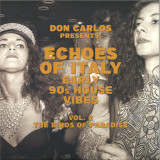
Vol 1[28,99 €]
Googling “paradise house”, the first results to pop up are an endless list of European b&b’s with whitewashed lime façades, all of them promising “…an unmatched travel experience a few steps from the sea”. Next, a little further down, are the institutional websites of a few select semi-luxury retirement homes (no photos shown, but lots of stock images of smiling nurses with reassuring looks). To find the “paradise house” we’re after, we have to scroll even further down. Much further down.
It feels like yesterday, and at the same time it seems like a million years ago. The Eighties had just ended, and it was still unclear what to expect from the Nineties. Mobile phones that were not the size of a briefcase and did not cost as much as a car? A frightening economic crisis? The guitar-rock revival?! Certainly, the best place to observe that moment of transition was the dancefloor. Truly epochal transformations were happening there. From America, within a short distance one from the other, two revolutionary new musical styles had arrived: the first one sounded a bit like an “on a budget” version of the best Seventies disco-music – Philly sound made with a set of piano-bar keyboards! – the other was even more sparse, futuristic and extraterrestrial. It was a music with a quite distinct “physical” component, which at the same time, to be fully grasped, seemed to call for the knotty theories of certain French post-modern philosophers: Gilles Deleuze, Félix Guattari, Paul Virilio... Both those genres – we would learn shortly after – were born in the black communities of Chicago and Detroit, although listening to those vinyl 12” (often wrapped in generic white covers, and with little indication in the label) you could not easily guess whether behind them there was a black boy from somewhere in the Usa, or a girl from Berlin, or a pale kid from a Cornish coastal town.
Quickly, similar sounds began to show up from all corners of Europe. A thousand variations of the same intuition: leaner, less lean, happier, slightly less intoxicated, more broken, slower, faster, much faster... Boom! From the dancefloors – the London ones at least, whose chronicles we eagerly read every month in the pages of The Face and i-D – came tales of a new generation of clubbers who had completely stopped “dressing up” to go dancing; of hot tempered hooligans bursting into tears and hugging everyone under the strobe lights as the notes of Strings of Life rose up through the fumes of dry ice (certain “smiling” pills were also involved, sure). At this point, however, we must move on to Switzerland.
In Switzerland, in the quiet and diligent town of Lugano, between the 1980s and 1990s there was a club called “Morandi”. Its hot night was on Wednesdays, when the audience also came from Milan, Como, Varese and Zurich. Legend goes that, one night, none less than Prince and Sheila E were spotted hiding among the sofas, on a day-off of the Italian dates of the Nude Tour… The Wednesday resident and superstar was an Italian dj with an exotic name: Don Carlos. The soundtrack he devised was a mixture of Chicago, Detroit, the most progressive R&B and certain forgotten classics of old disco music: practically, what the Paradise Garage in New York might have sounded like had it not closed in 1987. In between, Don Carlos also managed to squeeze in some tracks he had worked on in his studio on Lago Maggiore. One in particular: a track that was rather slow compared to the BPM in fashion at the time, but which was a perfect bridge between house and R&B. The title was Alone: Don Carlos would explain years later that it had to be intended both in the English meaning of “by itself” and like the Italian word meaning “halo”. That wasn’t the only double entendre about the song, anyway. Its own very deep nature was, indeed, double. On the one hand, Alone was built around an angelic keyboard pattern and a romantic piano riff that took you straight to heaven; on the other, it showcased enough electronic squelches (plus a sax part that sounded like it had been dissolved by acid rain) to pigeonhole the tune into the “junk modernity” section, aka the hallmark of all the most innovative sounds of the time: music that sounded like it was hand-crafted from the scraps of glittering overground pop.
No one knows who was the first to call it “paradise house”, nor when it happened. Alternative definitions on the same topic one happened to hear included “ambient house”, “dream house”, “Mediterranean progressive”… but of course none were as good (and alluring) as “paradise house”. What is certain is that such inclination for sounds that were in equal measure angelic and neurotic, romantic and unaffective, quickly became the trademark of the second generation of Italian house. Music that seemed shyly equidistant from all the rhythmic and electronic revolutions that had happened up to that moment (“Music perfectly adept at going nowhere slowly” as noted by English journalist Craig McLean in a legendary field report for Blah Blah Blah magazine). Music that to a inattentive ear might have sounded as anonymous as a snapshot of a random group of passers-by at 10AM in the centre of any major city, but perfectly described the (slow) awakening in the real world after the universal love binge of the so-called Second Summer of Love.
For a brief but unforgettable season, in Italy “paradise house” was the official soundtrack of interminable weekends spent inside the car, darting from one club to another, cutting the peninsula from North to centre, from East to West coast in pursuit of the latest after-hours disco, trading kilometres per hour with beats per minute: practically, a new New Year’s Eve every Friday and Saturday night. This too was no small transformation, as well as a shock for an adult Italy that was encountering for the first time – thanks to its sons and daughters – the wild side of industrial modernity. The clubbers of the so-called “fuoriorario” scene were the balls gone mad in the pinball machine most feared by newspapers, magazines and TV pundits. What they did each and every weekend, apart from going crazy to the sound of the current white labels, was linking distant geographical points and non-places (thank you Marc Augé!) – old dance halls, farmhouses and business centres – transformed for one night into house music heaven. As Marco D’Eramo wrote in his 1995 essay on Chicago, Il maiale e il grattacielo: “Four-wheeled capitalism distorts our age-old image of the city, it allows the suburbs to be connected to each other, whereas before they were connected only by the centre (…) It makes possible a metropolitan area without a metropolis, without a city centre, without downtown. The periphery is no longer a periphery of any centre, but is self-centred”.
“Paradise house” perfectly understood all of this and turned it into a sort of cyber-blues that didn’t even need words, and unexpectedly brought back a drop of melancholic (post?)-humanity within a world that by then – as we would wholly realise in the decades to come – was fully inhuman and heartless. A world where we were all alone, and surrounded by a sinister yellowish halo, like a neon at the end of its life cycle. But, for one night at least, happy."


"Volcanic Tongue" war ein Plattenladen, der von 2005-2015 in Glasgow von David Keenan und Heather Leigh betrieben wurde und zeitgenössische DIY-Musik aus der ganzen Welt in kleinen selbstgemachten CD-R-Auflagen veröffentliche. Parallel versuchte man, vergessene Künstler aus der Vergangenheit ins Rampenlicht zu rücken, die ihre Musik oft als Privatpressung veröffentlicht hatten. Der Laden war für seine wöchentliche Mailingliste bekannt, in der Keenan enthusiastisch über Neuankömmlinge rappte, insbesondere über die Platte der Woche, die den Spitznamen "tip of the tongue" (Zungenspitze) erhielt. Dieser eklektische Sampler mit 20 "tips of the tongue" - von Outsider-Synth über Psych-Folk bis zu kaputtem Rock'n'Roll, aufgenommen zwischen 1968-2013 - ist eine Hommage an eine lebendige und vielseitige Underground-Avantgarde. Black Vinyl 2LP in PVC-Hülle, von Julian House designt, mit bedruckten Innentaschen samt Linernotes von David Keenan zu jedem Künstler.
PS: Gleichzeitig erscheint beim White Rabbit-Verlag eine Deluxe-Ausgabe des gleichnamigen Buches mit einer CD-Version des Samplers, limitiert auf 1.000 Exemplare, und signiert von Autor David Keenan und Designer Julian House.

Since its inception in 2020, Italo Moderni’s energy, spirit and inspiration has been the dancefloor. The darkened bunkers of Belgium, the trembling speakers of Valencia, the warming dawn of Rimini, these influences have been the lifeblood. Solidifying this tireless effort, Mellow Bangers Vol 2 is the label’s most ambitious collection to date.
In celebration of the imprint’s fifth anniversary, four artists gather with every single one united under a rallying cry. From across the globe, machinists have been drawn together to deliver a statement of acid and wave, of electro and synth with flourishes of italo. The shadowy fringes of the floor are well represented, audio artisans like Cyrk serving distorted drums and melodies dripping with menace in the twisted shape of “Double Crash.” The static haze remains with Fragedis’ “Disco Nicotina,” a lancing melody piercing the soaked speakers of this sweaty romp. Label boss, Adrian Marth leads the charge on the flip. “Modernism” is a stripped and playful two-stepper, a two-stepper that Marth beefs into bawdy proportions before balancing the track with crystalline chords. Amongst the litany of talent are musicians who have both inspired Italo Moderni as well as those who have appeared on the label. Antoni Maiovvi fits such a description, the sound sorcerer slicing beats through bittersweet bars in the immersive “Stopping Power.”
Mellow Bangers Vol 2 is a breathless expression of the floor. A contemporary imagining of the racing rhythms and addictive hooks of the 1980s and 1990s. Four works that summarise what Italo Moderni is and will continue to be
