First coming to prominence purely as a drum & bass artist, with the likes of Metalheadz, Digital's Function and Klute's Commercial Suicide labels all over his material, veteran Slough producer Amit has, in more recent years, spread his stylistic base via his Amar label to take in deep dubstep and a touch of acid as well as ruffneck junglist behaviour. This 12", his first for more than five years, is heavyweight dub business, with echo chambers set to maximum dubbage and shuddering sub causing potential structural damage to all but the sturdiest buildings in a five mile radius. 'Dem Rude', with its gunshots and sonic soup, takes the A-side, while the flip tune 'Hush Up' marries more aural abstractions with another stepping rhythm, the hi hats fizzing and sizzling like they're encased in a deep fat fryer. Great to have this vastly underrated underground trooper back in the ranks - and well worth the wait.
Cerca:vast
Vintage Pleasure Boutique once again dives deep into the vast catalogue of super-productions by Roberto Zanetti, better known as Robyx and Savage. This time, the journey takes us back to 1984, unearthing a true gem created at the suggestion of Marco Bresciani, Italian DJ and producer, and the same creative force involved with Radiorama. Zanetti delivered flawlessly. He transformed the elegant, high-grade British synth-pop original by OMD into a first-class Italo disco weapon, infused with that unmistakable sweet, melodic touch and fat kick that blended perfectly in clubs alongside genre-defining tracks of the era. “Souvenir” by Saxophone quickly became a classic, a staple of the sound and a cornerstone in countless old-school DJ record bags.
Today, original copies are scarce, highly sought after, and often prohibitively expensive on the secondary market. This reissue is both a tribute to long-time fans of the record and a nod to devotees of Robyx’s unmistakable sound. The vinyl also features a special remix of “Souvenir”, sonically aligned with Savage classics such as “Radio,” “Fugitive,” “Only You,” and “Don’t Cry Tonight.”
A true feast for lovers of this timeless Italo disco aesthetic, equal parts nostalgia, elegance and dancefloor power.
- A1: Alauda - Zbajmowane
- A2: Holiday 80 - Kwiaty Niczyje
- B1: Dyyune - Nie Braknie Z?Udze?
- B2: Schmoltz - Deszcz
- C1: Tamten & Freux - Twarze Za Mg??
- C2: Beard In Dust - Mój Dzie?
- D1: Zambon - Nie Wdycha?
- D2: Etnobotanika - Strze? Si?
- D3: Dj Duch - Jak Tu Pi?Knie
- E1: Ptaki - Unreleased 2012
- E2: Pejza? - Róbmy Swoje
- E3: Skalpel - Wy?Ej
- F1: Pol Rax - Domy Z Betonu
- F2: Julia Rover - Spacer Kobiety
- F3: Saska Boys - Gra
To celebrate a decade and a half of excavating the hidden treasures of the Polish underground, The Very Polish Cut Outs presents a definitive anniversary compilation featuring 15, mostly unreleased, tracks from the years 2008-2025.
Since its inception, the label has been instrumental in bridging the gap between Poland's rich musical heritage and the modern dancefloor, and this release serves as a comprehensive time capsule of that journey. From early, legendary edits that defined the label to brand-new, forward-thinking productions, the collection showcases the evolution of a label that turned crate-digging into a national cultural phenomenon.
The compilation brings together a heavy-hitting roster of the label's most influential contributors, featuring essential tracks and rarities from artists such as Pejza?, Ptaki, Holiday 80, Skalpel, Etnobotanika and the label boss Zambon. The sonic palette is vast, moving seamlessly from sun-drenched Balearic and dusty disco-funk to the grittier realms of house and breakbeat. It is a celebration of the label's unique ability to transform forgotten melodies from the 70s and 80s into timeless club anthems, while simultaneously pushing the boundaries of contemporary Polish electronic music.
In keeping with the label's deep-rooted commitment to physical culture, this milestone release is a strictly limited, vinyl-only pressing. The amazing artwork is as always, the work of Bartosz Szymkiewicz.
Nothing marks a return to wax like gathering members of our worldwide family to showcase vastly forward thinking production.
Featuring Markus Suckut, Iori, Skudge, and Na Nich & Vera Logdanidi, this record brings together four distinct approaches across the format, each contributing to a shared physical and sonic language, looking to shine a light on the way these conjoined vibrations permeate through the listener, carrying an impulse throughout their entire system.
On this VA, our ears are subject to torque, soundwaves expose a pole model, and every single track, contrasting in dynamic and intensity, presents a relationship bound by strong interactions.
- Vent D'aether
- Réville V
- Levast Ill
- Le Vast Iv
- Le Vast Xiii
- Montfarville V
»Vents d’aether« is the first collaborative album by sound artist Jérôme Bouve and composer-performer Delphine Dora. The six pieces are based on live improvisations on organ and harmonium. They were recorded in different churches on the Cotentin peninsula in France’s Normandy region and later enriched with additional field recordings by SA~RA. This adds an extra layer to compositions which were created both in and out of the moment and which quite literally resonate with the histories of the instruments and the buildings that were so integral to their emergence. »Vents d’aether« is to be understood as a dialogue between sound and space that takes place across time and place.
Bouve carried the idea of working with the organs and harmoniums that can be found in the churches and chapels in the Val de Saire in the Northeast of Cotentin around with him for years. When he got to know Dora, he found the perfect musical partner with whom to finally make a record »about the wind, the wood, the stones of the Val de Saire.« In September 2024, the duo embarked on a short but fruitful journey during which they stopped by at several different churches. They recorded hours-long improvised sessions dedicated to »capturing the moment, letting space and time shape gestures and sound, seizing fleeting epiphanies in their greatest simplicity,« as Dora notes in the album’s linernotes.
She took the lead behind the instruments, however Bouve assisted her on drawbars for the last two pieces on »Vents d’aether,« thus adding an even more unusual touch to the recordings. They formed the basis for an album that Dora calls »the testimony of a sensory quest, a collection of memories suspended in time.« Indeed, starting with the epic 20-minute-long titular piece up until the ringing of church bells near the end of the closing piece »Montfarville V,« this overwhelming yet intimate record blurs the boundaries between different times and spaces altogether.
- A1: Les Masques - Il Faut Tenir (1969)
- A2: Isabelle Aubret - Casa Forte (1971)
- A3: Christianne Legrand - Hlm Et Ciné Roman (1972)
- A4: Jean Constantin - Pas Tant D'chichi Ponpon (1972)
- A5: Billy Nencioli & Baden Powell - Si Rien Ne Va (1969)
- B1-: Marpessa Dawn - Le Petit Cuica (1963)
- B2: Jean-Pierre Sabar - Vai Vai (1974)
- B3: Sophia Loren - De Jour En Jour (1963)
- B4: Isabelle - Jusqu’à La Tombée Du Jour (1969)
- B5: Sylvia Fels - Corto Maltesse (1974)
- C1: Frank Gérard - Comme Une Samba (1972)
- C2: Ann Sorel - La Poupée Des Favellas (1971)
- C3: Charles Level - Un Enfant Café Au Lait (1971)
- C4: Andrea Parisy - Les Mains Qui Font Du Bien (1970)
- C5: Audrey Arno - Quand Jean-Paul Rentrera (1969)
- C6: Aldo Frank - T’as Vu Ce Printemps (1970)
- D1: Christianne Legrand - Cent Mille Poissons Dans Ton Filet (1972)
- D2: Clarinha - Lemenja (1970)
- D3: Hit Parade Des Enfants - Aquarela (1976)
- D4: Jean-Pierre Lang - Tendresse (1965)
- D5: Magalie Noël - Une Énorme Samba (1970)
- D6: Françoise Legrand - La Lune
Ever since the late 1950s bossa-nova revolution, Brazil’s influence on French music has been undeniable. Pierre Barouh, Georges Moustaki and a vast array of lesser known artists, all made the Musica Popular Brasileira (MPB) an axis of promotion at the service of a cool and metaphysical, modern and mixed Brazilian lifestyle. Some were seduced by the poetic languors of the bossa, some were looking for fun, and others just loved the American hybridization of jazz-bossa, jazz-samba.
What is bossa nova? One of its creators, Joao Gilberto said: "Its style, cadence, everything is samba. At the very start, we didn't call it bossa nova, we sang a little samba made up of a single note - Samba de uma nota so .... The discussion around the origins of bossa nova is therefore useless”. It is nevertheless useful to remember that these magnificent Brazilian songs, which the guitarist describes as samba, were shifted and balanced around improbable chords. "I like things that lean, the in-betweens that limp with grace," said Pierre Barrouh, quoting Jean Cocteau.
With emotion, arrangements for violin and supple guitar licks, bossa nova rapidly changed. A transformation that can be heard in the Tchic, tchic, French Bossa Nova 1963-1974 compilation, the result of a cultural reappropriation, which traveled through the United States and supplemented itself in France.
A musical revolution that has remained significant, bossa nova was born in Rio. From 1956 to 1961, Brazil lived through its golden years. In five years, the country had invented its modernist style. Elected president in 1956, Juscelino Kubitschek de Oliveira, an elegant man with a broad forehead, brandished a promising slogan: "Fifty years of progress in five years". He quickly got to work. Not worried about increasing debt, he launched the project for a new federal capital, Brasilia, designed by the communist architect Oscar Niemeyer. Volkswagen opened state-of-the-art factories and created the “fusquinha”, the Beetle. In Rio, the Vespa made its first appearance. The Arpoador Surf Club crew run into the “girl” from Ipanema, Helô Pinheiro - the tanned garota ("chick"), between a flower and mermaid, who at 17 walked by the Veloso bar, where the fiery author and composer, Tom Jobim and Vinicius de Moraes, were getting drunk on whiskey. From then on, bossa symbolized cool.
In 1958, Joao Gilberto recorded Chega de Saudade, which the directors of Philips denied, calling it "music for fagots". The marketing director, who believed in it, secretly pressed 3000 78-inch vinyls and distributed them at schools around Rio, creating a tidal wave.
American jazzmen then took over. In particular, trumpeter Dizzy Gillespie and guitarist Charlie Byrd. In November 1962, the Brazilian Ministry of Foreign Affairs funded a "Bossa-Nova" concert at Carnegie Hall in New York, inviting the genre’s pioneers. Unprepared, the show soon turned to disaster. But the troupe was invited to the White House by Jackie Kennedy. The first lady loved "the new beat" and in particular Maria Ninguem, a song by Carlos Lyra, later covered by Brigitte Bardot.
In Brazil, the 1964 military coup quickly ended this euphoria. The destructive atmosphere that ensued pushed many Brazilian musicians to leave, if not to exile. Thus, Tom Jobim, Sergio Mendes and Joao Gilberto arrived to the United States. In New York, Joao Gilberto met saxophonist Stan Getz. At the time, he was married to the Bahianese Astrud Weinert Gilberto, who had a German father. She had never sung before, but she knew how to speak English. Getz therefore asked her to replace her husband on The Girl From Ipanema. The Getz/Gilberto record with Tom Jobim on piano, was released in March 1964. Phil Ramone, the "pope of pop" was in charge of sound.
Bossa nova arrived in Paris through the classic “guitar-voice” channel (Pierre Barouh, Baden Powell, Moustaki…) But France loved jazz and Paris had already welcomed its American contributors. All these good people were to pass through Saint-Germain-des-Prés. The cabaret l'Escale became the Mecca of Latin American sound where one could find Pierre Barrouh and his friends, such as the Camara Trio, samba-jazz aces, whose only record was published by the Saravah label. With a band strangely called Les Masques (a band that included Nicole Croisille and Pierre Vassiliu, among others), the Camara Trio recorded an interesting Brazilian Sound, including the track Il faut tenir which is present on this tasty compilation of rarities.
Other enlightened musicians can also be found on the compilation, such as Jean-Pierre Sabar (songwriter for Hardy, Auffray, Leforestier ...) and the French pop rock organist Balthazar. In 1975, Sabar recorded Aurinkoinen Musiikkimatka on a Finnish label, which featured the crazy Vai, Vai, included on this record. We are now following the footsteps of Brazilian electronic musicians such as Sergio Mendes, Eumir Deodato or Marcos Valle who created funk and disco sounds on their keyboards and synthesizers. A style that influenced Véronique Sanson when she wrote Jusqu’à la Tombée de la nuit in 1969 for Isabelle de Funès, the niece of Louis and a great friend of Michel Berger - Sanson did end up singing this track on her 1992 Sans Regret record.
The pinnacle of exoticism and travel, Sylvia Fels’ Corto Maltese includes bongos, sea mist and ocean sounds. The title was taken from Jacky Chalard’s concept album written in 1974, Je suis vivant, mais j’ai peur (I am alive, but I am scared), based on Gilbert Deflez’s science fiction novel.
However, bossa nova extended the scope of popularity. "In the 1970s, I was a fan of Sergio Mendes, Getz / Gilberto. I fell in love with this music that I knew because I had been an orchestral singer, " explained Isabelle Aubret, who in 1971 delivered a composite record of covers by the very funky Jorge Ben, Orfeu Negro, Tom Jobim, Vinicius de Morais and Jean Ferrat. "I recorded this album for Meys Records in Paris, far from Brazil, with wonderful musicians, François Raubert, Roland Vincent, Alain Goraguer...". The latter wrote the arrangements for Casa Forte, a very percussive title borrowed from Edu Lobo, one of the initiators of the bossa who spent time in California. "Jazz and bossa came together and produced very rhythmic music. I love singing, it allows me to dream, to have fun, to feel a high on stage, and these songs brought me joy, made me swing, my singing felt like a dance.”
The world tours of French singers and their desire for the tropics, often brought them to Rio with its hills, forests, caipirinhas and tanned bodies. There are surprises though, like this Iemenja (Iemenja is the goddess of the sea in the Afro-Brazilian candomblé religion). Not unlike the composer and musician Jean-Pierre Lang, based in Sao Paulo, Claire Chevalier taught Brazil to Brazil. In 1970, the singer and painter published a 45-inch vinyl, Mon mari et mes amants (My husband and my lovers), under the improbable pseudonym of Clarinha (little Claire). She was then living in Rio, with her husband, Joël Leibovitz, who founded a band called Azimuth, and who owned a record label specialized in "sambas enredos" songs for samba school parades.
For its B side, she asked Pierre Perret to come up with lyrics for a song composed by Carlos Imperial: "Oh goddess of the sea, o goddess Iemenja, I bring a white rose to adorn your long hair ..." . "Perret came to see us, and we had fun, remembers Joël Leibovitz. We wrote Lemenja for fun, we recorded it at the Havaí studio, behind the Central do Brasil the central station. Erlon Chaves, the arranger who worked with Elis Regina, joined us" adding his share of Afro-Brazilian percussions and funky brass to the mix.
There is a common misunderstanding in Franco-Brazilian history: that bossa, admittedly hedonistic, is perceived as funny, even though the poets who wrote the texts are often philosophizing on the human condition. Its French interpreters pull it towards a carnival inspired universe, far removed from its fundamental essence. Thus, Jean Constantin covered the famous Samba da minha terra, an ode to the art of samba written by the classic Bahian composer Dorival Caymmi, renaming it with the enticing title of Pas tant de tchi tchi pompon: "On your pier there is no tchi tchi / when you arch your back, you know everything is alright ”(lyrics by Gérard Calvi). This expedited bossa aims for the absurd, but retains a certain elegance.
Indeed, Jean Constantin was not an idiot, the rather large man had a huge mustache and liked fantasy, (Les pantoufles à papa, Le pacha, inspired by cha-cha-cha-cha, salsa and jazz) but he was also the lyricist of Mon manège à moi interpreted by Edith Piaf, the composer of Mon Truc en plume by Zizi Jeanmaire and the soundtrack of François Truffaut’s 400 Blows. Le Poulpe, published in 1970, from which this bossa is extract, was arranged by Jean-Claude Vannier, an accomplice of Serge Gainsbourg’s Melody Nelson. In short: "There is enough of samba / By looking at the parasol / Because my poor cabeza / Is going to die in the sun".
Even the American actress Marpessa Down, who was at the heart of the bossa nova revolution with her role as Euridyce in Marcel Camus’ film Orfeu Negro, winner of the 1959 Cannes Palme d'or, fed the clichée with Je voudrais parler au petit cuica - "Tell me how you manage to always make people want to dance / It's true, I must admit that I cannot resist your magic" - in consequence, once can hear the cuica, a little drum inherited from the Bantu.
But bossa nova had many angles. Societal, of course, pushing actresses who were symbols of women's liberation like Brigitte Bardot, Jeanne Moreau, or Sophia Loren to engage in the exercise of accelerated bossa. In February of 1963, Sophia Loren made a record in French in Rome, Je ne t'aime plus, featuring the song De jour en jour, a bossa written by two Italians, Armando Trovajoli and Tino Fornai, which was released a little later by Barclay. Bossa accompanied the 1960s, a decade of moral liberation. Ann Sorel, who interpreted La Poupée des favellas, caused a sensation with L’amour à plusieurs, a provocative song written by Frédéric Bottom and Jean-Claude Vannier. As for the actress Andrea Parisy, she displayed her bourgeois cheekiness in Marcel Carné's Les Tricheurs before interpreting Les mains qui font du bien. And Magalie Noël, the friend of Boris Vian, who sung Johnny fais-moi mal, was hired to sing Une énorme Samba, composed by Alain Goraguer (arranger to Gainsbourg, Bobby Lapointe and Jean Ferrat) with lyrics by Frédéric Botton.
But in the end, of what wood is bossa nova made of? The answer is given by Christianne Legrand, daughter of Raymond the conductor, and sister to Michel the composer: "With me, with jà" - jà means "immediately" in Portuguese. In 1972, the singer, an expert in vocal jazz and a member of the Double Six, published Le Brésil de Christianne Legrand. Two songs included on the Tchic Tchic compilation that demonstrate how bossa, jazz, funk, rock, etc. work like a swiss army knife: the music is used to denounce broken systems, or miracles, HLM et ciné roman, Cent mille poissons dans ton filet, two songs from the O Cafona soundtrack, a successful telenovela broadcast, at the time in black and white, on TV Globo. The first was adapted in French by the fighter and friend of the Legrand tribe, Agnès Varda. The second is content with a play on words, jostling them into a summer fun.
Véronique Mortaigne
Marking his vinyl debut on Lowpass, Berlin-based producer APRS steps forward after a run of striking releases on labels such as Soma, ARTS and Sungate.
“Drift” explores human emotions through drums, melodies and textures with five pieces that refuse to settle into one shape. Each track bends the EP in a new direction without breaking its thread, holding onto a sense of vastness, detail and intimacy. Andy Martin closes the record with a remix that widens the palette even further, pushing the material into heavier terrain while keeping its spirit intact.
LWP001 is less a declaration than a first gesture. Intuition over uniformity; a label shaped by instinct, variation and space; a place for artists to wander and for sound to evolve freely.
David August's most expansive, ambitious album to date, the Italian – German composer and producer lets his vast sonic universe collapse, rediscovering in its wake an instrument that's been a constant presence in his life. 'Hymns' is a deeply personal set of candid piano – led reflections that tell a simpler but far more distinctive story; rather than concentrate on the life cycle of humanity and civilization, August narrows his field of vision, tracing his own background and re - asserting his relationship with a musical language he'd tried hard to unlearn. An intimate, instinctual album that emerged from isolation and contemplation, 'Hymns' is also a surprisingly hopeful suite of soft hued, evocative improvisations that well up from the depths of the soul. In August's own words, "it should recall light, not darkness."
Saxophonist and producer Ben Vince announces the release of his sixth album, Street Druid, the first in almost six years via AD 93.
Street Druid merges acoustic, manipulated and electronic sound and it has saxophone, synth, voice, guitars and drum machine, and features drum kit from Moses Boyd. It features artwork by Byzantia Harlow. It is at once tender, psychedelic and fierce. It is not interested in genre or category. It lasts just under 45 minutes.
A prelude for the future, hands join to cast a peace spell. Consciousness is vast water seeking divine essence and meaning where colours merge and refract. The street druid walks through the night, a benevolence in the darkness, guiding you home. Immersed in noise, life can feel empty, like hollow vessels, a sentient interlude. At times we are found in Gaia’s rhythm, kinetic and rebuilt, transcending through the impact of sound on the body. Every moment is a new change, a new challenge, a new life, we must ride the wave if we are not to be caught adrift or drown. Trying to keep hope intact, we must not retreat into fear, recognise we all live here in Longville and stop the fire before it engulfs us all.
Joe Fujinoki centered the compositions of his latest album Glass Torso round the idea of the fragility of the human body. Fujinoki described the narrative thread of the album as that of “holding the shape of a human body as if it might shatter like glass”. The precariousness of the body, the essence of the body as defined by Fujinoki as the torso, and the object relations between the boundaries of dialectical exercises pack themselves into his creative process.
Fujinoki recorded Glass Torso exclusively with analog synthesizers, stumbling in and out of structural loops to find space for accidental discoveries. The ten pieces of recorded material feel somewhere on the edge of typified form, feeling like a vascular system pumping in and out its undulating liquidities. Maybe this is the hollowed space held together by Fujinoki’s notion of the torso where you hear a microscopic world, dubby and generative. Fujinoki is adept at organizing this realm of subtle sound sources, giving proper considerations of shared tonal space. Seemingly, this handling of the precarity of sonic material elucidates Fujinoki’s mature attention to detail.
Ambient music genre tropes often affirm the listeners vessel for escape and dissociation. It provides an intoxicating allure by respite from an overwhelming exterior reality far outside the listeners controls. Here this space becomes apolitical, or its protest vocabulary softer and subtle. Fujinoki does not aim to tackle hyperobject topics on how to course correct the world, but he does something increasingly rarer to come across. On Glass Torso an alternative space is created not as shelter, but as a meditation on negotiation and compromise. This twenty eight minutes of audio lays down a foundation for imagination, for imagining how to negotiate the fragility of the self. Zoomed out, the implications of his negotiative sonics can be a playground for broader reflections on distributive care and attention.
Fujinoki says he feels “alert” to his physicality and placement in the world amidst vast digital cultures creating impositions on him and his surroundings. On Glass Torso he creates a concretized space on a vinyl record, where the virtual and the tangible antagonize one another that create the spectacle of the listening experience. This spectacle is a soft one, a considered one, and an utmost enjoyable one. Fujinoki juggles opposing forces brilliantly, and formulates an exquisite palette of soft passing music so he can also help the listener with the exquisite burden of their own Glass Torso.”
- Nick Klein, January 2026
Born and raised in the birthplace of House Music, Paul Johnson was known for his raw, soulful, and infectious sound, that helped shape Chicago's house scene and inspired generations of DJs worldwide in particular he was a massive inspiration to Daft Punk and the 'French Touch' scene.
Releasing a vast amount of music throughout the 1990s for some of the most consistently underground dance labels including legendary Chicago imprints Cajual, Relief and Dance Mania he finally gained global fame with his 1999 hit “Get Get Down,” a dancefloor anthem that topped charts across Europe. Despite facing physical challenges, including losing both legs in accidents, he remained an unstoppable force in music—touring, producing, and uplifting others with his resilient spirit and signature groove.
Re-pressed for our 35th anniversary, Paul Johnson’s classic 1995 debut album on Peacefrog, Bump Talkin is a timeless showcase of Paul’s signature deep, soulful house sound, blending irresistible peak-time, piano-driven anthems with a playful touch of bouncy Ghetto House energy.
They dont make em like this anymore...
RIP Paul Johnson.
2026 Repress
35th Anniversary Edition of Peacefrog - 2LP Smokey Vinyl
Born and raised in the birthplace of House Music, Paul Johnson was known for his raw, soulful, and infectious sound, that helped shape Chicago's house scene and inspired generations of DJs worldwide in particular he was a massive inspiration to Daft Punk and the 'French Touch' scene. Releasing a vast amount of music throughout the 1990s for some of the most consistently underground dance labels including legendary Chicago imprints Cajual, Relief and Dance Mania he finally gained global fame with his 1999 hit “Get Get Down,” a dancefloor anthem that topped charts across Europe. Despite facing physical challenges, including losing both legs in accidents, he remained an unstoppable force in music—touring, producing, and uplifting others with his resilient spirit and signature groove.
Originally released in 1996 Feel The Music was Paul's second album for Peacefrog Records. Containing some of the classiest house music to hail from the Windy City. Classics such A Little Suntin Suntin , Summer Heat and I Wonder Why will have you smiling while you’re jackin’ and the irresistible and infectious Hear The Music was fthe opening track for Daft Punks legendary Radio 1 Essential Mix.
XKatedral Anthology I is the first in a series of archival releases dedicated to presenting music by XKatedral affiliated composers working within the realm of slowly evolving harmonic and timbral music. This double-vinyl set contains an array of pieces dating from 2010 - 2020. Four of the works included here were originally released on cassette tape early on in the label's history, while the two remaining pieces are presented by the label for the first time.
"The works Ir Himinn, Grooenn by Kristoffer Svensson, Disquiet (Heart) by Marta Forsberg and Lamé by Isak Edberg were first released on the compilation XKatedral Volume II in 2016. Svenssons piece from 2014 combines justly tuned gamelan percussion and prepared piano intricately interwoven in a way that obscures the boundaries between the two instrument groups. Forsberg and Edbergs pieces both use a monolithic form to explore the timbral and harmonic spaces provided by the Düben Baroque organ situated in Tyska Kyrkan in the oldest part of Stockholm. While similar in terms of instrumentation the two works differ formally - Edbergs Lamé composed in 2010 uses the registers of the organ to articulate a seamless spectral transformation while Forsbergs Disquiet (Heart) from 2014 deals in blocks of sound with a varying degree of opacity, saturation and intensity.
Glory for two electric guitars by Caterina Barbieri and Kali Malone was composed and recorded in Tempo Reale in Florence, Italy, and was originally released on the cassette compilation XKatedral Volume III in 2016. This music takes the form of an ever-evolving hypnotic pattern shared by the two instruments articulated through an additive and subtractive canon. Dissolving Ceremony, composed in 2012 by Edberg/Erlandsson/Lisinski, was first presented publicly on the self-released record Stratum. The music contained in that release was formed from a collection of gamelan percussion instruments augmented by two sets of live-electronic instruments tuned to the harmonic framework formed by the partials of the metal percussion. Originally positioned in the center of the record running order between two long monolithic process-based pieces, Dissolving Ceremony now stands on its own as a memory of a time and methodology from the not so distant past.
The newest piece in this set is Shipwrecks by Daniel M Karlsson. While this work is a recent one Karlsson should be considered one of the forerunners of the musical expression contained within this record set. Active within new music for two decades his strongly articulated musical ideas and constantly evolving craftsmanship has resulted in an enormous body of work, and has served as an inspiration for many of his fellow composers. This piece is a celebration of transposition and its immense capacity for timbral transformation using a vast array of instruments performed, recorded and electronically treated by the composer to form a liquid uncanny topography where a deeply personal harmonic language constantly shifts, slides and shivers."
- 1: Chlorine Fumes
- 2: Twisted Charm Honey
- 3: Caravelle
- 4: Flor En La Sombra
- 5: Marching Clocks
- 6: Circular Rites
- 7: Oruga Encantada
- 8: Sur La Lune
- 9: Brücke
- 10: Photochromic Gaze
- 11: A Rising Year
For if their first album ALLOMBON could be seen as the opening of a secret passage, this second record, FLOWERS TOO, is something else entirely: no longer the discovery of a world, but its methodical exploration, its feverish mapping, its deepening down to the underground layers. At a time when contemporary psychedelia seems at a standstill, when ecstasy has lost its effect, when the vast territories of the imagination have been parceled out, signposted, monetized they keep digging. And deeper still. Esoteric pop the noblest, the most dangerous kind is no longer practiced on the surface. It has abandoned the grand avenues to retreat into hidden laboratories, mental back rooms, basements more deeply buried than those of garage, punk, or black metal. It is there that the secret society Dorian Pimpernel has been working for years, with a stubbornness that feels less like a career than a calling.
UGHH – Underground Hyper Hero is the moniker of Vítězslav Špalek — composer, multi-instrumentalist, and singular sonic architect hailing from Karviná, a gritty coal-mining town in industrial Silesia, now living out his days under the sundrenched skies of southern Corfu. He improvises across synthesizer, trumpet, and voice, weaving musical collages from poetic texts spanning genres and movements. His collages carry an unsettling depth and pull you somewhere you didn't plan to go. They are distant lands beyond the water — where the trumpet cuts through space and time lurches forward in a sudden rush, only to nearly freeze and turn inward, listening to the echo of a far-off voice calling out from nowhere. A flock of birds drifts over a vast landscape while a powerful, repetitive beat pulses through all matter — living and dead alike. EP 49.923827, 14.221380 takes its name from the coordinates of its creation, and marks the first released material from the artist's yet-to-be-unveiled catalog. Three original tracks are joined by an eclectic postpunk remix from Berlin-based Menqui, an ethereal minimalist take from fellow Berliner Nadia D'Aló aka DALO, and local scene staple Mike.H — a devoted digger of obscure trance.
After their recent LP Mirages (Kraak Records, 2025) with French turntablist Guilhem’All, the group continues to explore collaborations with artists and instruments from diverse musical traditions. Building on decades of uncompromising acoustic exploration, Razen delves deeper into their practice with five improvisational pieces that unfold slowly in time and space. The duo’s radical core - Brecht Ameel and Kim Delcour - finds in Van der Harst a longtime kindred spirit, united by the impact of sound, intonation, and the sheer joy of playing.
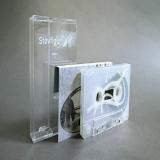
To be released on April 24 via VIERNULVIER Records, the artwork for Stained Glass Starling was created by American visual artist Robert Beatty (Oneohtrix Point Never, Christina Vantzou, The Weeknd, Tame Impala). The physical release comes with a 16-page booklet including artwork and an interview.
A long-standing artistic kinship lies at the heart of this project, with first encounters dating back to the early 2000s in Belgian musical improv theatre. Van der Harst’s lifelong experience in improvised music and music theatre, spanning back to the 1980s, combined with a vast arsenal of rare and historical instruments, opens new tonal territories within the Razen universe.
These explorations are not incidental: his family roots in the former Dutch East Indies — through his great-grandfather — provide a quiet backdrop to his enduring affinity for Asian musical traditions. Instruments such as erhu, Javanese kacapi, and others introduce timbres
that bring the music its most pronounced Asian inflections to date.
Yet despite this shift in colour, the underlying ethos remains unmistakably Razen. Working from sound rather than form, the ensemble approaches music as painters approach a canvas: adding layers, contrasts and shades with care. There is no soloist’s ego here; all voices are equal, echoing principles found in gamelan traditions.
Over the decades, Razen and Dick Van der Harst have crossed paths repeatedly, notably through cult theatre productions by Belgian theatre maker Eric De Volder, including Zwarte vogels in de bomen (2002) and Huis der Verborgen Muziekjes I–II (2000–2006). Recording an albumtogether had long been a shared aspiration — a wish that crystallised after a 2024 concert at Concertzaal Miry in Ghent, part of the Ruiskamer series by VIERNULVIER Art Centre.
Wind of Oirat is the full length debut by Mongolian independent musician and sound artist Ts Bayandalai. Following his acclaimed 2020 EP Kimel, he now presents a further matured, composed and refined version of his signature sound, which combines traditional Mongolian music and instruments with influences from experimental music and post-rock. Deeply rooted in the cultural traditions of his homeland, Ts Bayandalai, who grew up in a nomadic family in the Mongolian steppe, explores nature and its myths, his ancestral roots, and the relationship between humans, animals and nature.
Artist Bio:
Ts Bayandalai is a Mongolian independent musician and sound artist. His childhood on the steppes shaped a deep sensitivity to natural and ethnic sound. To create his individual, deeply rooted yet modern soundscape, he combines traditional Mongolian musical elements with post-rock, experimental and electronic music, as well as from outernational music influences.
Born into a nomadic family on the steppes, Ts Bayandalai grew up wandering the vast grasslands with shepherds, absorbing the resonances of the horse fiddle and guitar — experiences that remain a primordial source of inspiration in his work.
Founder of the avantgarde band Horse Radio (2012) and the experimental project December3AM (2015), his compositions navigate cultural memory and contemporary aesthetics, reconstructing pastoral landscapes, temporal layers, and emotional spaces through sound.
His EP Kimel, released in 2020, manifested a delicate sculpting of sound, space, and cultural motifs, presenting a listening experience that is at once primal and modern.
Ts Bayandalai’s performances span China, Mongolia, and major independent music venues and festivals across Asia. His artistic vitality and creative autonomy have earned him critical acclaim and a devoted following in the international folk music and experimental music communities.
Duality Trax welcomes the newly formed 9 Hours Ahead to the label with their debut release, complete with a remix from progressive royalty Bliss Inc. Landing in early 2026, Smooth Sailing traces a blissed-out sonic journey from the combined minds of San Francisco’s Namastrange and Amsterdam’s Breeze. Their cross-continental connection threads throughout the EP, with subtle nods to the vast ocean that separates them. The title track opens the release with a gentle drift: airy synths, angelic pads, and tribal percussion guiding listeners steadily out to sea. Meridian Space picks up the momentum, driven by a pulsating, everexpanding bassline. Namastrange’s whispered vocals weave between swelling orchestral pads, before the track mutates into a mind-bending acid line - perfect for a heads-down, eyes-closed dancefloor moment.
The B-side turns up theenergy with Transatlantic Dreams, a dancefloor-minded cut that nods to the golden era of San Francisco progressive and the Hardkiss legacy. Lush piano melodies, breakbeat interludes, rave stabs, and glimmering gated vocals collide in a warm, nostalgic swirl. Closing the EP, Bliss Inc. delivers a psy-tinged reinterpretation of Meridian Space - a dark, brooding acid workout that pulls the original into deeper, murkier waters.
Presenting the third thematic volume on the “Aquapelagos" series - a collection of split LPs where selected artists offer their own take into water surrounded cultures and communities. After the initial release of the Anthology compilation Aquapelago in 2022 (Discrepant ,CREP91) and the split LP Atlantico by Lagoss & Banha da Cobra (Keroxen, KRXN027) as well as the direct collaboration LP Índico by Mike Cooper & Pierre Bastien we proudly introduce an the third volume in the series in the shape of no other than two inspiring artists, Vica Pacheco and Pak Yan Lau. Two different sound journeys inspired by the majestic and peaceful Pacific Ocean, the vastest, largest and deepest ocean of our planet.
Vica Pacheco’s composition takes a calm meditation approach where water flutes and synths brush shoulders to create a ever expanding mind journey whereas Pak Yan Lau’s ambitions Neo classical piece, The Ocean in Us, talks about that grand overwhelming feeling, that vast space deep under, on the bottom of the Pacific. Both compositions were recorded and created with the particular wet acoustics of the Tank in Santa Cruz de Tenerife in mind.
From Philip Hayward and Matt Hill’s liner notes: ‘’The Pacific is a complex space, comprising a third of the Earth’s surface. A cascade of islands runs along its eastern flank, down from the Kamchatka peninsula, through Japan, Taiwan, The Philippines, Melanesia and on to Australasia. In its watery heart the islands of Micronesia and Polynesia stretch across huge distances, north-east to the Hawaiian archipelago, south east to Rapa Nui and south west to Aotearoa and Chatham island. Closer to the shores of the Americas lie Tierra del Fuego, the Galapagos Islands, Haida Gwaii and the Aleutians. This is a space that resists easy characterisation. The Pacific laps the shores of Japan and Chile, the beaches of Australia’s East Coast and the cold, damp coasts of British Colombia and Alaska alike. Indeed, the space is so vast that it is a world in itself and one rarely navigated in its entirety. In this manner, strands of genres and the songs that reflect them are components in an intricate mesh of associations.‘’ Philip Hayward and Matt Hill, April 2022
- Sea Ceremony (With Karen Vogt)
- Coral And Bones (With Laryssa Kim)
- Heartsea (With Vargkvint)
- Naiade (With Mt Fog)
- Moon And Mirrors (With Elska)
- Daughter Of The Abyss (With Singer Mali)
- Serpentine (With Nightbird)
- Their Voices Rise Above The Waves (With Yellow Belly)
- For All The Sea-Girls (With Nadine Khouri)
- Ondine (With Astrid Williamson)
- Coda (With Camilla Battaglia)
Oceanine, Jolanda Moletta’s third album and her first for Beacon Sound, is a powerful and ethereal statement of artistic community. Expanding on her previous work, each track represents a collaboration with a different female vocalist, with the foundational elements being generated entirely by her own voice. By turns haunting, enchanting, and inspiring, you won’t want to come up for air once you’ve been pulled under. Representing a
musical practice that is distinctly feminist, this is an album with a longer view in mind, to an age when the altars were to goddesses and women were centered as powerful beings representing the earth’s cycles of regeneration and renewal. Oceanine then, in all its beauty, can be viewed as an album of survival. It is deeply transportive, accessing something that lies within all of us. As the late, great Lithuanian folklorist and archaeologist Marija Gimbutas noted, “We must refocus our collective memory. The necessity for this has never been greater as we discover that the path of 'progress' is extinguishing the very conditions for life on earth.”
Jolanda Moletta is a multimedia artist and one-woman electronic choir. She creates wordless compositions through extended vocal techniques, integrating wearable-controlled live processing, alongside symbolic visuals. Moletta considers her performances to be a collective ritual and creates her Sonic & Visual Spells following the cycles of nature and the moon. Jolanda's 2022 critically acclaimed album Nine Spells was released on the Ambientologist label, followed by Night Caves on Whitelabrecs in 2025. Moletta’s artistic practice is a radical and spiritual journey through sound art, ritual, and the symbolic archaeology of the feminine.
Oceanine is inspired by sirens, water nymphs, and the timeless call of the sea. At its core lies Jolanda’s deep, lifelong connection to the Mediterranean Sea and to the ancient and modern myths and folklore that have emerged from its waters. Growing up by the Mar Ligure, Jolanda was surrounded by stories carried by salt, wind, and waves: legends of sirens, echoes of ancient voices, and the sea as both origin and oracle. This intimate relationship with the Mediterranean is not merely a backdrop, but a living source that shapes Oceanine’s emotional, symbolic, and sonic world.
Each track features a different female vocalist, creating a rich tapestry of voices, styles, and perspectives. This artistic choice not only broadens the album’s sonic palette, but also deepens its narrative core: celebrating the power, beauty, and mystique of feminine energy through myth, history, and sound.
The entire album is built exclusively from the human voice, processed and layered, yet always remaining voice, and nothing else. For each piece, Jolanda invited every vocalist involved to contribute a raw stem: a short, unedited melodic fragment of just a few seconds, inspired by the album’s themes. These intimate vocal seeds became the foundation of each track: the guest artists’ voices appear as brief, melodic stems, while the entire surrounding “orchestral” fabric is created solely from Jolanda’s own layered and processed voice. In this way, Jolanda’s voice becomes the Ocean itself, embracing, absorbing, and carrying the sirens’ calls within a vast, immersive soundscape. Every song is a unique expression of the feminine experience, revealing its depth, complexity, and emotional range, echoing the call of the sea and the many faces of the siren archetype.
The figure of the siren has transformed across centuries. In myths of Ancient Greece and Rome, sirens were hybrid beings, part woman, part bird, whose irresistible songs lured sailors to their doom. During the Middle Ages, the image shifted toward the half-woman, half-fish figure, often associated with temptation and danger. Historically, the voice of women has often been feared. Sirens were considered harbingers of misfortune not simply because they seduced or destroyed, but because they were powerful liminal beings.
In Ancient Greek, sirens functioned as psychopomps: figures who existed between worlds and guided souls, especially between life and death. Their songs were believed to carry forbidden knowledge, including prophetic insight and the ability to reveal truths about fate and the future. The danger of the sirens lay in what they revealed: knowledge that humans were not meant, or ready, to hear.
Oceanine confronts this legacy head-on. The voices heard throughout the album are not merely beautiful: they are dark and luminous, wild and enchanting, magical, soothing, dreamy, and at times fractured or distorted. They whisper, lament, beckon, and enchant. Like sirens, they skim the surface of the water and sink into its depths, hovering on the edge between tenderness and danger, vulnerability and power. They rise toward the sky, dissolve into mist, and return as echoes charged with raw, elemental emotion: voices that seduce, warn, mourn, and remember. They refuse to be reduced to decoration.
Alongside the album’s release in May, Oceanine will also unfold as a visual and performative work through a short art film. The film includes a live session recorded inside a sea cave facing the Mar Ligure, the very coastline where Jolanda spent her childhood, dreaming of sirens and listening to the sea as if it were speaking directly to her. This site-specific performance reconnects the music to its place of origin, allowing the voice to resonate within stone, water, and air, and transforming the cave into both a sanctuary and a threshold between myth and reality.
What if the sirens’ songs were considered dangerous because they carried another truth, an ancient truth long forgotten?
Oceanine embraces the idea that we are still deeply woven into myth. Though we may see ourselves as rational and modern beings, our world is saturated with ancient symbols and archetypes, often distorted, simplified, or stripped of their original meaning. And if those symbols are allowed to shift, if the mirror once held by the siren becomes an invitation to look beyond appearances and into what has been obscured, then we may finally uncover a deeper truth and reclaim the voice that was always ours.
Oceanine is not just an album. It is a reclamation, a spell, and a call from the depths.
Efficient Space continues to bind its mind with Altered States Tapes, offering another service to How So?, Th Blisks' 2022 debut in home-cooked experimentation. A blurring of three vastly different heads into a single disjointed, but fluid organism, How So? finds Yuta Matsumura (The Lewers, Keanu Nelson), Amelia Besseny (Troth, Impatiens) and Cooper Bowman (Troth, CD3) working with vocals, melodica, deeply pulled samples, guitar, drum machine, synths and resourceful percussion. An Elixa-blueprint of sideways ambient rituals, fog-thick melodica dub and paranoid trip hop by way of Sydney's pioneering industrial collagists, the LP recirculates beyond its original 150-copy confines for those who missed its first apparition.
Tomos is no stranger to reinvention. Over the years, his sonic explorations have spanned genres, yet one thread has remained constant—his deep-rooted connection to house music. His earliest co-releases under the alias Vanguard were high-energy French House cuts, built on the foundations of crate-digging and sample collage, channeling the spirit of Daft Punk and the wider French electronic movement.
Now, 15 years later, he returns to those techniques with a fresh perspective, releasing his latest EP Soul Feels Good through the esteemed Noire & Blanche.
Soul Feels Good isn’t just a nod to the past—it’s a showcase of the vast influences that drive his ever-evolving sound. Tomos weaves together an intricate patchwork, merging the meticulous sampling techniques of his early career with a broader, more mature musical palette. The result? A genre-fluid blend of Jazz, House, Dub, Soul, Gospel, Broken Beat, Downtempo and Disco—stitched together with the finesse of an artist who has spent years honing his skills.
For listeners who appreciate the craft of sampling and fans of genre-defying, groove-driven music - Soul Feels Good is a record that demands attention.
- 1: Ordinary Love
- 2: Pink Lemon
- 3: Bang
- 4: White Corridor
- 5: Snapshot
- 6: Faster Faster
- 7: Broken Melody
- 8: Letters
- 9: Bigger Than Us
- 10: The Inner Light
When Elder Island went into the studio to record the followup to their critically acclaimed 2021 album, Swimming Static, they were determined to "turn everything on its head". The trio are celebrated for their brooding indie-electronica that draws on their Bristol roots, creating vastly detailed and immersive soundscapes. But Hello Baby Okay marks a new era for the band, fuelled by a longing for transcendence and euphoria. An effervescent counterpoint to the current times, their new Music is threaded through with a liberated energy, lilting funk-Pop guitars, danceable beats and a renewed sense of play.
With Black Koyo, Mattias De Craene enters a sound world at once intimate and vast. Born from journeys in Morocco and Brussels, the project traces the rhythms, chants, and spirits of the Gnawa tradition, revealing a quiet resonance that echoes De Craene's own search for depth and presence. Guibri, qraqueb, call-and-response chants, saxophone, loops, and electronics come together in a trance-induced dialogue - ritualistic, elemental, and dreamlike - creating a space where listening becomes immersion, tradition meets imagination, and music unfolds as a shared act of reflection and wonder.
About Mattias De Craene
Mattias De Craene's artistic path is marked by rare coherence. As a central voice in Nordmann and MDC III, he developed a physical, rock-inflected jazz language driven by propulsion, volume, and trance-like collective energy. Over time, a period of personal rupture - burnout, tinnitus, depression - shifted his focus inward. The saxophone became a breathing, textural presence, and in his solo work, he weaves saxophone, electronics, loops, and minimal forms into a cinematic, hushed world where repetition, resonance, and silence slow perception. Rooted in ambient and introspection, his music prizes attention over impact, precision over excess - a quiet intensity recognized with a nomination as Musician for the Music Industry Awards (MIA's).
About Black Koyo
Black Koyo is a Brussels-based ensemble and one of the most compelling voices of the Gnawa tradition outside Morocco. Led by maalem Hicham Bilali, the group brings guibri, qrraqueb, and call-and-response chants to life with trance-like intensity and ritual precision. Their music is both rooted and contemporary, weaving earthbound rhythms and vocal invocations into ecstatic, immersive soundscapes, creating a space where ancestral resonance meets present-day imagination.
About Jan Bang
Jan Bang is a pioneering Norwegian producer and musician, celebrated for his mastery of live sampling and his ability to merge electronics with improvisation, rhythm, and texture in real time. He mixed the album and occasionally joins live performances, bringing his signature approach to sound as co-founder of the influential Punkt Festivaland collaborator with artists such as Jon Hassell, David Sylvian, Arve Henriksen, and ECM Records' roster. As a performer and sound architect, Bang creates immersive, trance-like sonic textures where silence and sound carry equal weight. Within Mattias De Craene ftBlack Koyo, his live sampling becomes an organic instrument, weaving saxophone, electronics, and Gnawa rhythms into hypnotic, physically charged soundscapes.
Line-up & credits
Mattias De Craene - sax, electronics | Hicham Bilali - guibri, vocals, qraqueb |Ismael Akhraz - vocals, qraqueb | Marwan Abantor - vocals, qraqueb
All tracks are original gnawa traditionals played by Black Koyo and arranged by Mattias De Craene.
Album produced & recorded by Mattias De Craene in Essaouira, Morocco and hometown Ghent, Belgium 2025.
Text by Hicham Bilali.
Mixed by Jan Bang at Punkt Studio
Mastered by Lieven Van Pee
Artwork by Marina Sviridova
Design by Benoit Van Geel
Manufactured and distributed by N.E.W.S.
Executive production by W.E.R.F. records
Supported by Flemish Government, Jazzlab, nona, HA Concerts, Aubergine artist Management,
KAAP, La Bestia (Wout Van Putten) & mdcmu.sic vzw.
2026 (c) W.E.R.F. records
- A1: They Found One Of My Graves (05:17)
- A2: Pre-Historic Metal (04:19)
- A3: Siberian Thaw (06:45)
- A4: Deeply Rooted (04:58)
- B1: The Dry Wells Of Hell (06:12)
- B2: So I Marched To The Sunken Empire (03:21)
- B3: Eat Eat Eat Your Pride (04:51)
- B4: Eon 4 (05:24)
In a year which marks the 40th anniversary since the initial formation - under the moniker of Black Death - of what would subsequently grow into influential genre legends, 2026 marks the return of the imperishable Norwegian duo of Fenriz & Nocturno Culto for their new opus of high calibre old metal, under the banner of ‘Pre-Historic Metal’. As Fenriz himself proclaims of the title’s symbolic origin, “Prehistoric is a loose term. I just figure it’s our VIBE, our take on things & it’s more a statement that we use old style to create something new”.
‘Pre-Historic Metal’ contains eight tracks of primal epics & gargantuan riffs with organic sound & the ever-present permeating spirit of the 70’s & 80’s, for a new continuation of the mastery witnessed on 2024’s ‘It Beckons Us All’. This next chapter in Darkthrone’s extensive & ongoing catalogue presents a vast odyssey through the sonic landscapes of Thrash, Black, Heavy & Doom Metal &, adorned with a punishing & “in your face” guitar presence, Darkthrone stirs the cauldron of savage creativity with a nod to the writing methods which were indicative of their earlier works of the late 80’s, but with a more refined craft.
'Pre-Historic Metal' was recorded at Chaka Khan Studios, Oslo, with production work conducted by Ole Øvstedal, Silje Høgevold & Mads Luis. Mastering was carried out by Jack Control at Enormous Door, & Maor Appelbaum Mastering.
This edition of 'Pre-Historic Metal' is presented on black vinyl.
2026 Repress
Throughout 2025, Tresor Records will reactivate Detroit house and techno originator Blake Baxter's vast Tresor catalogue digitally in chronological order, starting with 1992’s Dream Sequence, closely followed by his 1995 album, Endless Reflection. To inaugurate and celebrate this retrospective of one the genre’s true founders, an artist whose connections to Tresor go back to the very beginning, the label announces a special 12” release, Dream Sequence X, featuring remastered tracks from the early days and highlighting the harder side of his output.
Initially inspired by post-punk and funk, Baxter started making music as early as 1985. By 1991 he had already released several seminal records on classic labels like Underground Resistance, KMS, and Incognito, as well as providing multiple tracks to the groundbreaking UK compilation Techno! The New Dance Sound of Detroit, which was many European listeners’ introduction to the genre, solidifying the term techno, and launching the international careers of many of the contributors.
1992 saw Baxter make the first trip to play Tresor, on the first UR Europe tour ever, thereby pioneering the now legendary Berlin-Detroit Connection. This visit led to a long and fruitful partnership with the club’s new-fledged label beginning with Mills', Banks' & Hood’s X-101 and Baxter’s Dream Sequence, from which the first four tracks on the new 12” come.
Whilst he would become more renowned for his signature seductive vocals and a smoother music style closer to house music, these early tracks are heavier, classic 90s techno, revealing the influence of industrial, post-punk and pop of the time. Indeed the collection is something of a time capsule: jacking 909 drums, intense, ravey synth stabs, samples from classic soul breakbeat and the Speak & Spell voice synthesizer; classic sounds and styles of the era all make appearances on the record. All tracks have been remastered by Manmade Mastering breathing a new vitality and sharpness for the modern dancefloor.
In a world where longevity is difficult and superlatives are too easily deployed, it is still difficult to overstate the long-lasting influence that Blake Baxter has had on modern music. His visionary output can be heard across modern electronic and pop to this day and with this series of remasters, there has never been a better time for the world to hear it at source.
It's pretty wild to think this is in fact Carli’s debut solo album, considering the Swedish producer’s long and illustrious career, defined by eclectic hits ranging from underground grime scorchers to straight-up Eurovision goodness, not to mention him being a cornerstone of acclaimed outfits like Off The Meds, Savage Skulls, and Marcus Price & Carli.
On Sea Of Love, the Stockholm-born former breakdancer takes listeners on a journey through a vast ocean of musical influences, effortlessly blending rave nostalgia, bass-heavy experimentation, and contemporary club sounds. Carli skilfully navigates from raw UK hardcore bonkerisms to the crisp rhythmic pulses of modern-day dancehall, always upholding a vibe that's at once futuristic and reverent of club music’s storied past.
Filled with intricate production techniques and an irresistible sense of joy, Sea Of Love showcases Carli’s unique ability to merge styles without losing coherence or authenticity. This is club music crafted by someone who’s not only seen it all from the booth, but also been on the dancefloor himself, resulting in tracks that feel deeply personal yet universally appealing.
With Sea Of Love, Carli firmly establishes himself as a visionary solo artist, proving that after decades of shaping the sound of Stockholm’s underground, his best is still ahead.
First release from Euphonic Alliances Ltd. on Femacosmé – Désiré Bonaventure (Rue des Garderies) and Vincent Ferrari (Cosi e Cosi); here they present Peace Is It In You, a 4-track EP born at the crossroads of their respective psychedelias.
Between house, IDM, breaks, and ambient, this piece could be the post-Balearic soundtrack to an unknown shore – a vast liquid expanse, twisted by random tides under a multicolored sky from a day without night.
Peace Is It In You unfolds in four versions – Original, Instrumental, Acapella & Dub; Euphonic Alliances Ltd draw inspiration from the 90s and invite you to a great celebration of swirling dreams.
Sweden has long had a celebrated techno scene and you'd be hard pushed to find anyone who has contributed to it as significantly as Cari Lekebusch. He has a vast back catalogue dating back to the mid-90s under many different aliases, including this one, Phunkey Rhythm Doctor, which yielded his 'Underground Poetry' EP back in 1995. 'Jazz Maze' is an exceptional start - urgent and punchy with freeform melody that brings the fun. 'Mad Poet' is much darker and has a doom-laden vocal over stiff, crisp drums. 'Sugardaddy' is a dubby bumper with a wobbly bassline and wispy synths, cyborg electronics and a cavernous groove. Don't sleep on this one.
Imagine it’s 1987.
The neon is glowing, the lasers are cutting through the smoke, and space synth is ruling the dancefloors. Laserdance just dropped their groundbreaking album “Future Generation.” Tracks like “Power Run” and “Humanoid Invasion” are setting clubs on fire, and every bedroom producer dreams of reaching that cosmic perfection.
And in this athmosphere Spacehawk appears shining like an alien spaceship.
Behind the name Spacehawk stands Swedish producer Anton Eriksson, a modern-day craftsman of analog dreams. In his vast studio, packed with vintage synths and drum machines, Anton creates electronic masterpieces so authentic, so rich in melody and power, that even Michiel van der Kuy himself, the godfather of the genre, decided to collaborate with him.
The result? “Space Patrol” – a landmark single that bridges generations of synth lovers.
On the A-side, you’ll find Anton’s stunning original version, pulsating, melodic, and bursting with energy. Flip it over, and you get a remix by Michiel van der Kuy that feels like a time warp straight back to the golden age of Italo-space glory.
“Space Patrol” has it all: soaring melodies, driving basslines, hypnotic rhythm, and that unmistakable intergalactic energy that makes you feel like you’re racing through the stars.
Fans of Laserdance, Rygar, Koto, Syntech, and all things van der Kuy will instantly recognize the DNA of true space synth excellence here.
To top it all off the single comes on a bright yellow vinyl, housed in a stunning retro-futuristic sleeve that looks like it beamed in straight from 1980s sci-fi.
It’s not just a release. It’s a revival.
And if space synth runs through your veins, this is one you simply can’t ignore.
2LP 2026 Repress
Written and produced in a country house surrounded only by vast, empty landscapes and an endless sky,
‘Suicide Disco’ is the fruit of a 3-year long collaboration and Years of Denial’s debut LP for Veyl.
Urged to escape from crowded cities and information overload, the duo sharpened their sound and working
process through isolation and introspection, crafting 11 songs filled to brim with enormous hooks, New
Wave nostalgia and razor-sharp production details.
Barkosina’s voice echoes and oscillates against Jerome’s snares, profound and wounded at once. Her
expressionist narrative take us to unknown yet familiar places, amplified by dub delays and otherworldly
reverbs. Each track tells a story based on the intensity of relationships, a touching and distorted invitation
into intimacy and complicity
W.R.F. was formed in 2015 by Nina and late studio partner Andrew Weatherall to help wrangle the vast output recorded together beyond his solo releases.
Spotlighting nine tracks from the Apparently Solo series of EPs recorded between 2016- 2019 and released on Bandcamp in 2023, this lustrous time capsule marks the culmination of Walsh and Weatherall’s creative relationship born after they clicked at London’s earliest acid house clubs, becoming partners then managers of their Sabres Of Paradise/Sabrettes labels before taking different paths by the late '90s.
An accomplished musician, Nina had learned the art of studio technology by the time they reunited and started working together in 2012. Created at her Facility 4 Studio situated in the dangerous, gang-ridden no man’s land between Streatham and Mitcham, Anamchara captures the super-prolific creative stretch starting in 2015 that produced Weatherall’s Convenanza and Qualia solo sets, W.R.F.’s The Phoenix Suburb (And Other Stories) plus a whole lot more. According to Nina, Andrew envisioned the spectacular ‘Borderland’ as natural successor to ‘Smokebelch’, his most revered track. When it came to his remix, Nina enlisted renowned viola virtuoso Sarah Sarhandi and composed new harmonies with Pachelbel’s Canon in D Minor in mind.
The set also catches the breakthrough period when, through Nina’s careful coaxing, Andrew started using the computer system she’d set up to better express his musical visions by arranging the elements, grooves and melodies she sent him. Still considered the UK’s greatest DJ-producer, Andrew’s arrangements were inspired by his club-igniting sets. “This allowed me to mix the colours for his palette whilst he was painting the picture,” says Nina. Anamchara straddles the gamut of musical styles explored by W.R.F. at this time, from slower paced psychedelic “drug chug” outings ‘We Two’. ‘Heat To Meat Ratio’, ‘Hidden Watchers Part 1’ to banging acid house and techno sometimes inspired by the violence outside the studio door, including ‘SCHLAP’, ‘Crack-Ed’ and churning acid juggernaut ‘Yacidik’ (“After much dangling of the acid carrot, Andrew took a bite and, after one familiar raised eyebrow, never looked back,” says Nina).
Many tracks fly elements from the enormous sonic library Nina inherited from late partner Erick Legrand that she called The Akashic Library of Sound. Marking Andrew’s 2016 admission into the vault, ‘Rattly Old Puffin’ boasts Erick’s psychedelic guitar and tumbling drum loop Weatherall would run with, including on ‘Borderland’. “Erick was like our third member,” says Nina.
Bringing down the curtain, ‘Alma’’s exquisitely poignant melody that unfolds over thirteen time-stopping minutes was composed by Nina while navigating Erick’s birth and departure date anniversaries to accompany Andrew’s reading from Gordon Burn’s 1991 same-named novel at 2018’s Durham Literary Festival. Burn’s novel imagines early 60s popstrel Alma Cogan, who succumbed to cancer in 1966 surviving to reflect on fame. “Now it just makes me think of Erick. And every time I hear those well-placed cymbal crashes I can only think of the Captain himself.”
A beautiful grand finale for this astonishing selection of pure gold from the vaults.
Kris Needs / 2026
A collection of transfixing, storm-like compositions, "Drifts" draws you into its heightened sense of quiet, reveling in iridescent, tranquilized vapors - one part ambient Classical, one part Club-adjacent ambience.
Pitched, reduced, sampled and re-sampled, the album's glowing, elliptical abstractions - using piano, harp, strings & modular synthesizer - explore the emotional terrain between aftermath and renewal, blending the unstructured immediacy of improvisation with the elegant sculpture of composition.
"Drifts" represents for its maker a newfound interest in shadow and mystery, each track a shifting terrain, a collection of clues, a scene set in a larger story, the effect cumulative.
Featuring collaborations with Patrick Belaga, Marilu Donovan (LEYA), and Takuma Watanabe, the album's cinematic suite of impressionistic, ambient works invites the listener into a vast, mapless space of dreamlike non-linearity where interior and exterior landscapes bristle with intimacy and electricity.
Hanagasumi, or "flowering haze," is a Japanese term that poetically describes the smoky, blurred appearance of numerous cherry blossoms visible from a distance. This image is often compared to a floral mist or fog. Through this word, the Japanese convey the visual effect created by a large number of flowers forming a soft, diffused, and ethereal picture. Such a description beautifully resonates with the musical palette of the new release. Introducing the long-awaited album Agera by the mysterious musician Jon'Smu. The record combines elements of classic deep house and ambient music, creating a unique atmosphere and the author's distinctive signature. The album features 8 stunning tracks, carefully selected and compiled into a cohesive story. A few words from the author: "This album, spanning a vast timeline of creativity, is about how important and interesting it is to be in motion and in constant search of something new. The recordings presented cover a significant interval of my musical journey through the diversity of genres and sound experimentation. At the core of the music lies Nature - it is the primary source of inspiration for me, and Action is a key moment of life for everything in nature. A wide range of instruments was used in the recording process, whether fully digital compositions or those featuring vintage analog instruments. I hope my love for an immense variety of genres is reflected in this album and brings joy to the listeners."
What happens when the mathematical rigor of Johann Sebastian Bach is stripped of its classical facade? With the album SRDNG x LPZG, the duo AMAS, together with double bassist Frithjof-Martin Grabner, delivers a radical answer on May 15th, 2026. The work does not merely translate Bach’s legacy; it consistently reimagines it within the aesthetics of Minimal, Dub-Techno, and Ambient. The creation of this extraordinary abstraction spanned three years and two geographical poles: the raw isolation of Sardinia and the academic precision of Leipzig.
The project found its origin in the seclusion of Pula, at the southernmost tip of Sardinia. There, AMAS extracted and digitally dissected the rhythmic and tonal essence of 14 selected works by Bach. In a temporary local studio, these minimalist sequences fused with field recordings of the surroundings to form a hypnotic framework of electronic structures. Back in Leipzig, this foundation met Frithjof-Martin Grabner. In an intense session held in a hall of the historic HMT Leipzig, spontaneous improvisations emerged that breathe the spirit of Miles Davis’ approach to "Ascenseur pour l’échafaud": free play based on rudimentary sketches, an intuitive reaction to the material—comparable to Davis’ iconic scoring of silent film images. It is a deliberate prioritization of atmosphere over technical perfection. Grabner utilizes the full spectrum of his instrument, creating sounds that, in post-production, often blur the line between analog depth and synthetic texture.
The result is an organic symbiosis: the vastness of Sardinia (SRDNG) meets the intellectual density of Leipzig (LPZG), while the strictness of the Baroque dissolves into the repetitive energy of Minimal Techno. To do justice to this conceptual ambition, the album will be released in an uncompromisingly audiophile edition. Limited to 200 copies worldwide, the double LP is pressed on 180g vinyl and features a front cover with a special 3D effect, continuing the visual tradition of the AMAS series. An album for listeners who understand Bach as a living origin of modern sound art—and for lovers of electronic music seeking a new, organic soul within the repetitive depth of techno.
Repress!
Belgian tastemaker Charlotte de Witte returns to her own KNTXT to serve up the well regarded label's seventh EP. Rave On Time is about reminding us of the joys of being lost on the dance floor and is another hard hitting EP filled with her distinctive techno energy.
Charlotte is at the centre of her own musical movement, with a hard hitting, no frills style. Her powerful grooves, whether solo or in collaboration with the likes of Chris Liebing, come laced with ambient and synth beauty. She has mesmerised crowds all over the world as well as at her own special KNTXT events, and has been as creative as ever during lockdown, as this new EP shows.
Says the artist herself of this latest offering, "Rave On Time. Three words that probably have never been more relevant. In a time where raving feels like a distant memory, it seems increasingly important to bring music back in our lives, in reverse. Let's not forget where we came from and let's not lose hope. We'll be together again soon. Rave On Time."
Opener Rave On Time is built on hammering, distorted kicks that bend you to their whim. Freaky vocals and monstrous hits add extra pressure and ensure you stay locked before shooting laser synths and retro hoover sounds bring the rave. There's No One Left To Trust keeps up the energy with scintillating synths rattling over rock solid drum programming that never lets up. The World Inside is brain frying material, with serrated synths firing out and growing ever more acid as the groove pounds on. Common Era is brilliant hands in the air acid-trance-techno that froths with energy and flashing strobes. Finally, vinyl only track 'Wahr Ist Sie Dann’ is a distorted, brain melting techno workout with brutalist kicks and vast walls of synths that are hugely powerful.
As ever from de Witte, this is pure, unadulterated club music that makes a gargantuan impact.
SPTLP007 - ASC - Vanishing Point LP
Evolving further with each release, ASC delivers his latest monumental album on Spatial, a varied and memorable journey through stunningly realised fusion of modern and classic atmospheric breakbeats.
A1 - Mystic Street
Setting a murky tone with light cymbals and synthwork flecking the intro, Mystic Street calmly purrs and growls towards a drop of analogue kicks and a sparse, menacing drum pattern to kick off this incredible album. Enveloped by a dense cloud of darkly atmospherics, the track coils with tension, each element rippling through the mix like distant memories as the suitably enigmatic bassline rumbles beneath.
A2 - Convergence
Straight into the beats with a DJ-friendly two step intro, ASC utilises sparse, sci-fi hits and persistent danceable breakbeats with a melodic bassline. As the atmosphere builds, percussive tones punctuate the swirling pads, creating a luscious sense of forward motion with echoing samples and effects combining in the mix to create a dreamlike soundscape perfect for the dancefloor and headphones alike.
B1 - Invisible Borders
No ASC album would be complete without an amen workout, and we certainly have that here as Invisible Borders rushes into view with simmering intent, melodic samples tore from battlegrounds of yesteryear providing a truly epic atmosphere, rippling breakbeat trickery teasing the listener before crushing full contact amens arrive with panache and veracity - twisted across yearning bass with an unflinching fighting spirit.
B2 - Celestial Bodies
Up next a moment of calm as we soak up the charms of the dreamlike Celestial Bodies, a soothing journey of beats, breaks and atmosphere from Spatial's label head. Melodic notes ripple across the mix with old school breaks filtering to and fro, conjuring images of a cosmic journey unfolding, where old school breakbeat rhythms pulse like distant constellations, echoes shimmering in the vast expanse of ASC's versatility.
C1 - Losing Track Of Time
Into an absolute stunner next as ASC unleashes a modern classic which has a wonderfully instant familiarity to it - like it was lifted directly from the golden era of atmospheric drum & bass. The old school breaks have a distinctive feel while a variety of pads teaming with life swirl around above. A myriad of spirited melodies develop and maintain your attention with classic 808 basslines to complete this remarkable composition.
C2 - Slipstream
Switching up the vibe in style, ASC delivers an intense, cosmic intro to Slipstream which builds gradually with whooshing effects and long female vocals before a crisp, crunchy slice of Hot Pants breakbeat heaven tears through the mix, chock-full of excitable edits portrayed in a brilliant clarity. Warm sub bass punctuates the track while a reverberating earworm melody slowly etches itself into your mind.
D1 - Paradigm Shift
A good old fashioned roller up next as Paradigm Shift sees ASC blend a superb 2-step rhythm with a sumptuous smooth bassline - guaranteed to move the dancefloor. Atmospherics take no back seat either as elegant synthwork swirls and washes across the soundscape with subtly used vocal samples adding texture and warmth to an impressively layered mix that maintains its pace right through to an echoing conclusion.
D2 - Transmitter
Sending us back to interstellar space for an inspired mission through vast unexplored star systems, Transmitter sees ASC create a stunningly evocative, ethereal collage of atmospherics with sonar-like beeps punctuating and persisting throughout. Driving the track along are the superbly programmed drums, filtered and layered with twisted, distorted vocal samples to complete this exhilarating album in pure Spatial style.
Continuing the VA series with different artists from around the globe the fourth instalment has landed. The 9 track LP features already familiar to the label artists as well as many new faces unified by the idea of the love for the non-standard audio frequencies. With the dystopian artwork by the label’s visual guru Gkoner and the music by the nine talented artists the disc has obtain its shape. With the vast range of sound being present but all tied in the concept of the label’s musical ideology, the “Untitled IV” is born and armed for different settings where electronic music can be blasted loud on huge sound systems or in complete solitude does not matter at all. What matters is the love of music the listener brings making it all come together with a complete and fulfilled sense.
ASMR for Suicidal Thoughts' marks Varg2™ back in collaboration with Chatline, an enigmatic figure long in orbit of Northern Electronics. Recorded live to tape, the record resists comfort. Contained within are two harrowing demonstrations that drag on emptiness, anxiety, and abject pleasure. And though terse and severe, that very void becomes the vessel for its mottled meaning.
Unopen to exploration, 'ASMR for Suicidal Thoughts' locks the listener into its own saturated atmosphere. Stripped back and unchanging, and suffocatingly cold at the best of times, funereal melodies pepper cyclical noise so brittle it can barely repeat itself. Disturbingly intimate glints of memories are passed over out of reach, yet with the alarming immediacy of déjà vu. The sensation amounts to no more than this.
Recorded live to tape in Västra Skogen, Sweden 2023–2024
Mastered by Giuseppe Tillieci at EnissLab, Rome