A collection of transfixing, storm-like compositions, "Drifts" draws you into its heightened sense of quiet, reveling in iridescent, tranquilized vapors - one part ambient Classical, one part Club-adjacent ambience.
Pitched, reduced, sampled and re-sampled, the album's glowing, elliptical abstractions - using piano, harp, strings & modular synthesizer - explore the emotional terrain between aftermath and renewal, blending the unstructured immediacy of improvisation with the elegant sculpture of composition.
"Drifts" represents for its maker a newfound interest in shadow and mystery, each track a shifting terrain, a collection of clues, a scene set in a larger story, the effect cumulative.
Featuring collaborations with Patrick Belaga, Marilu Donovan (LEYA), and Takuma Watanabe, the album's cinematic suite of impressionistic, ambient works invites the listener into a vast, mapless space of dreamlike non-linearity where interior and exterior landscapes bristle with intimacy and electricity.
Hanagasumi, or "flowering haze," is a Japanese term that poetically describes the smoky, blurred appearance of numerous cherry blossoms visible from a distance. This image is often compared to a floral mist or fog. Through this word, the Japanese convey the visual effect created by a large number of flowers forming a soft, diffused, and ethereal picture. Such a description beautifully resonates with the musical palette of the new release. Introducing the long-awaited album Agera by the mysterious musician Jon'Smu. The record combines elements of classic deep house and ambient music, creating a unique atmosphere and the author's distinctive signature. The album features 8 stunning tracks, carefully selected and compiled into a cohesive story. A few words from the author: "This album, spanning a vast timeline of creativity, is about how important and interesting it is to be in motion and in constant search of something new. The recordings presented cover a significant interval of my musical journey through the diversity of genres and sound experimentation. At the core of the music lies Nature - it is the primary source of inspiration for me, and Action is a key moment of life for everything in nature. A wide range of instruments was used in the recording process, whether fully digital compositions or those featuring vintage analog instruments. I hope my love for an immense variety of genres is reflected in this album and brings joy to the listeners."
Belgian tastemaker Charlotte de Witte returns to her own KNTXT to serve up the well regarded label's seventh EP. Rave On Time is about reminding us of the joys of being lost on the dance floor and is another hard hitting EP filled with her distinctive techno energy.
Charlotte is at the centre of her own musical movement, with a hard hitting, no frills style. Her powerful grooves, whether solo or in collaboration with the likes of Chris Liebing, come laced with ambient and synth beauty. She has mesmerised crowds all over the world as well as at her own special KNTXT events, and has been as creative as ever during lockdown, as this new EP shows.
Says the artist herself of this latest offering, "Rave On Time. Three words that probably have never been more relevant. In a time where raving feels like a distant memory, it seems increasingly important to bring music back in our lives, in reverse. Let's not forget where we came from and let's not lose hope. We'll be together again soon. Rave On Time."
Opener Rave On Time is built on hammering, distorted kicks that bend you to their whim. Freaky vocals and monstrous hits add extra pressure and ensure you stay locked before shooting laser synths and retro hoover sounds bring the rave. There's No One Left To Trust keeps up the energy with scintillating synths rattling over rock solid drum programming that never lets up. The World Inside is brain frying material, with serrated synths firing out and growing ever more acid as the groove pounds on. Common Era is brilliant hands in the air acid-trance-techno that froths with energy and flashing strobes. Finally, vinyl only track 'Wahr Ist Sie Dann’ is a distorted, brain melting techno workout with brutalist kicks and vast walls of synths that are hugely powerful.
As ever from de Witte, this is pure, unadulterated club music that makes a gargantuan impact.
Continuing the VA series with different artists from around the globe the fourth instalment has landed. The 9 track LP features already familiar to the label artists as well as many new faces unified by the idea of the love for the non-standard audio frequencies. With the dystopian artwork by the label’s visual guru Gkoner and the music by the nine talented artists the disc has obtain its shape. With the vast range of sound being present but all tied in the concept of the label’s musical ideology, the “Untitled IV” is born and armed for different settings where electronic music can be blasted loud on huge sound systems or in complete solitude does not matter at all. What matters is the love of music the listener brings making it all come together with a complete and fulfilled sense.
A deep journey into the sound abysses of the night, invoking hidden energies, opening a ritual portal to the core of the seal and the ritual itself.
This compilation brings together diverse artists who explore a fusion of dark techno, industrial environments, ritual textures and pulses that evoke vast underground spaces. The idea is to generate a state of technical-ceremonial trance: vinyl becomes a physical talisman, object of worship, beyond a simple club track.
Side A opens with darker rhythms, synthesizers that resonate like funeral bells, mechanical percussions that hit like ancestral machinery. As it progresses, the journey intensifies, layers of bass that rumble like mine hulls, reverberations that expand consciousness.
The B-side takes flight towards the ethereal and the expansive: distant melodies, ritual echoes, processed voices that look like invocations, culminating in a track that sounds like the closing of a rite, the day that meets the night.
DJ Support: Antal, I Cube, Noel Watson, Colleen Cosmo Murphy, Sean Johnston, San Soda, Takaya Nagase, Tina Edwards, Pete Herbert, Kenneth Bager, Severino, Aaron Paar, Felix Joy, Harri Harrigan, Laroye, Telford, Darker Than Wax, Rocky (X Press 2), Shane Johnson, Dan Tyler, Felix Dickinson and many more
Having previously released selected retrospectives focused on the musical output of Ryo Kawasaki and Joan Bibiloni, NuNorthern Soul has now turned its attention to the vast back catalogue of Jasper Van’t Hof’s pioneering electro-acoustic, Afro-fusion collective, Pili Pili.
The band was established in 1984 by Van’t Hof, a Dutch pianist who began his career in Europe’s jazz scene of the late 1960s, as a way of combining his love of jazz-fusion and the music of North-West Africa. Van’t Hof already had a reputation for combining roles in traditional jazz combos with more experimental and abstract projects. These included a spell in violinist Jean-Luc Ponty’s first band, years spent masterminding jazz-rock outfit Jasper Van’t Hof’s Porkpie, the recording of an all- electronic album (1982’s Visitors), and a celebrated collaborative live album with the great Archie Shepp, Mama Rose.
Pili Pili, though, was another step forward for Van’t Hof. Working with percussionists and vocalists from Benin and Mali (including the now legendary Angelique Kidou) and a string of adventurous jazz soloists (saxophonist Tony Lakoto and trumpeter Annie Whitehead included), Van’t Hof’s collective frequently combined live and programmed percussion, electronic and acoustic instrumentation, and the talented improvisor’s own memorable melodies and impactful solos.
NuNorthern Soul’s retrospective focuses on the most productive and celebrated period of Pili Pili’s near three-decade history, showcasing tracks originally recorded and released on studio albums released between 1984 and 2002. The six tracks on show offer an essential glimpse into the musical gold to be found across the Pili Pili catalogue.
In keeping with NuNorthern Soul’s previous retrospectives, the vinyl version of Selected Works 1984-95 comes with extended liner notes telling the remarkable story of this most unusual of cross-cultural collaborations. These feature extensive quotes, reflections and memories from Jasper Van’t Hof and were written by music historian Matt Anniss.
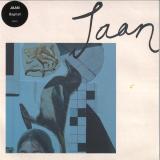
Operating on the fringes of pure improv, organised chaos, minimal composition, lo-fi electronics and Italian spaghetti westerns, wide-eyed and with a healthy dose of DIY aesthetics lies the world of Jaan. It’s a poetic & cosmic universe, exploring “discreet music” whilst wandering on the edges of the Cat People soundtrack & Brian Eno’s more experimental output, in which you might yourself find floating, wandering or in the middle of a market place.
Jaan is a collective of one, a deliberately anonymous activistic unit with strong ties to the international art scene. Purposefully bypassing the know-it-all of the the internet & embracing the bygone mystery of dusty old archives and deep-dive searching, remarkably little is known about this project. Jaan is lead by veteran experimental sonic alchemist Jaan; they operate between Greenland, the Middle East and Europe, with frequent associates Lisqa, Mashid & Schneorr N. acting as local hubs for collaboration and exploration.
The purpose of this wilful obscurity: full focus on the actual music, whether live events or on recordings. Which brings us to Baghali, their first for World of Echo. It’s a deeply personal album, much like slowly browsing old family albums filled with vaguely remembered tales, some still very much present, some faded, leaving but a ghost-like reflection of what once was. Baghali was compiled over the course of a year on the road, trapped in snow storms, waiting for cancelled flights and stuck rides. It’s made up of snippets of diary, quick recordings on road sides, abandoned buildings, garden ruins, vast desert and focussed studio sessions, following a collage-like aesthetic and steeped in an exploration of non-lineair storytelling. There’s broken memories, a sense of displacement and an occasional yearning for what can’t be again, clouded in fever and unrest, but there is also hope, wonderment and bright colours seeping through the cracks in the wall. Jaan weaves home-made instruments, old tape loops, broken synths, beat-up reeds, dusty beat boxes and the occasional doom guitar squall into a tapestry of fractured sound, with tracks following their own inherent logic rather than following formats. Sounds crash in and out, field recordings placing the listener firmly in an environment then throwing several perspectives at once onto them, with individual elements - a wandering clarinet, a lone mandoline, a beat out of place yet perfectly in place - slowly walking in and out & doing their thing.
The whole album is alive, breathes, takes a wrong turn, gets lost, somehow finds its way again - effortless and with a unique sense of space and flow.
Baghali is released digitally and on vinyl in an edition of 300 on 3rd October 2025.
France via Hong Kong, Taiwan and now Lisbon–based producer and DJ Romain FX delivers his Memory Muscle label debut, Floating World EP. As a true kid of the world, Romain FX draws on a life across continents to create a sound that fuses global influences with overground club sensibilities.
A prolific name on the scene over the past few years, he has released on Sound Metaphor’s Bless You, Sound of Vast, Kalahari Oyster Kult, Toy Tonics, and his own label Fauve. The EP opens with the title track Floating World, a percussive roller packed with drums, colourful synth stabs, and hypnotic swirling melodies that build into an ethereal vocal hook. Who Knows takes things further with crunchy acid lines locked to a pummelling breakbeat groove.
On the flip, Track ID? channels classic 90s house vibes with a stomping 909, bubbling basslines, organ stabs, and euphoric vocal samples. Rounding out the release, Memory Muscle’s London duo deliver a direct club remix of Who Knows, featuring filtered pads, driving breaks, 808 thump, and their signature M1 organ bass.
In 2018, Rian Treanor left his home in Rotherham, UK, and headed to Kampala for a residency at Nyege Nyege's villa studio. The mind-expanding experience inspired his critically acclaimed 2020 full-length "File Under UK Metaplasm", but that wasn't the end of the story. Treanor also spent time working alongside Acholi fiddle player Ocen James, developing an improvisation-heavy collaboration that would push both musicians' idiosyncrasies into completely new places. Treanor wanted this collaboration to be as tactile and reactive as a live performance with traditional instruments, so he set about working on a digital process that would synchronize with James' approach. Using physical modeling techniques, Treanor created an instrument that explored the tunings and sounds of the a'dungu, an arched harp, and the nah or nag. With Ocen playing his rigi rigi, a single string violin, they intuitively experimented with the spectral properties of sound, using texture and acoustic contours as their structural framework. They were able to develop a sound together that was unconventionally rooted in traditional Ugandan culture, but shuttled into different dimensions of noise, computer music and radical UK rave. "Saccades" is the buffer between two vastly different sonic universes, united in respect and sprightly curiosity. Treanor's hyperactive computer-controlled rhythms are immediately identifiable on opening track 'Bunga Bule', but the sound palette is distinct: it's more flexible and less digital. James' expressionistic fiddle strokes are a revelation, contorted into hoarse squeals and rough vibrations that rub and flex off Treanor's tin can shuffle.
Yan Tregger, born Edouard Joseph Scotto Di Suoccio, is a prolific French-Italian composer, trumpeter, arranger, and library music specialist.
Tregger built a vast and varied catalogue of over 1,400 works registered with SACEM as a library music composer.
His output spans funk, jazz-funk, psychedelic disco, electronic experiments, film soundtracks, advertising jingles, and even relaxation music.
This LP is a compilation of rare or unreleased tracks made by the Maestro in The 70's.
Remix Ep with a broad spectrum of styles and some big named remixers. Side A kicks off with Colin Dale's remix of Dark Male, which is a typically throbbing techno cut for the dance floor, the Second track on Side A is David Duriez pushing an acid house remix of fellow French act G-Prod. On the flip is MOY's step into big bass and fast based breaks led drums which will make your head explode as they build their intensity, the second track is Derek Carr remixing The Vast Profound, his house rework offers all you might expect from this veteran of the scene - looped hooks and deep pads. Lastly The Vast Profound digs into the deeper end of house music layering up pads, strings and lush melodies. Comes with an insert "Remix track selector" on coloured vinyl limited to 135 sale copies.
The third and final volume of Classic’s 30th Anniversary vinyl series brings the party full circle - blending deep catalogue cuts, future-forward house, and tracks from the label’s tight-knit family of collaborators.
Like the volumes before it, this 2x12” release arrives in a raw reverse board outer sleeve, a nod to the aesthetic of Classic’s earliest releases. Inside, bold yellow and red GMUND card stock inner sleeves with embossed detailing reflect the label’s long-standing commitment to design, artistry, and collectability.
Record One kicks off with a certified Classic family affair. Home & Garden’s ‘Sexuality...He's 2 Young’ features the unmistakable voice of DJ Colette, a staple of Classic’s early era. Included here is JT Donaldson’s Porno Beat Down Remix—a stripped, low-slung rework with an irresistibly funky bass line and pure dance floor chemistry.
Brett Johnson’s ‘Jiffy Pop’, from his legendary Bounce! EP, follows up with a jittery, swaggering groove that epitomises Brett’s playful, funk-laced production style. Infectious, weird, and entirely unforgettable.
On the flip, Tiefschwarz’s ‘Acid Soul’ delivers a moody, muscular roller. Originally released during their prolific run on Classic in the early 2000s, it fuses baritone sax stabs, a Berlin-borne bass line, and a sultry vocal into a deeply spiritual house cut.
Roy Davis Jr. closes Side B with the propulsive ‘About Love’ (Solid Groove Remix)—a tough and driving interpretation by Dave Taylor that’s long been a DJ favourite in the Classic vaults.
Record Two showcases Classic’s more recent sonic evolutions. JT Donaldson’s return to the label in 2019 came with ‘Stay Inside’, a rich and breezy groove featuring the soulful voice of Liv.e. It’s an elegant and understated slice of modern house with timeless appeal.
Then comes Dam Swindle’s funk-charged ‘Hey Mister’. A punchy, bass-driven jam built around a 70s reggae-disco vocal sample. Raw and infectious, it’s been lighting up dance floors worldwide since its release.
Luke Solomon’s catalogue on Classic is vast, but ‘Come on Over’, his collaboration with Amp Fiddler, earns its place here. Seeing vinyl release for the first time, this cut overflows with musicality. Amp’s passionate vocal, free-time breakdowns, and deep funk grooves deliver pure emotional punch.
And to close, a modern masterpiece: Honey Dijon’s ‘Work’ (Extended Mix), taken from her ‘Black Girl Magic’ LP. Featuring Dave Giles II, Cor.Ece, and Mike Dunn, this powerhouse track brings together fierce vocal performances, live instrumentation, and top-tier production. It embodies everything Classic stands for: collaboration and innovation on the dance floor.
The latest wayward soundsystem sonics on the Social come from Wroclaw in Poland courtesy of dadan karambolo. As part of the strictly legit SPLOT crew karambolo is spearheading a vibrant community of bassweight freaks digesting all the best misfit club music from the cracks between — a hint of dubstep, a twist of techno and plenty of advanced sound design, all poured into a thoroughly modern, richly realised brew.
Having previously snuck tunes out on SPLOT’s in-house label and the respected Awkwardly Social crew out of Berlin, karambolo delivers an extended statement with his Sneaker Special Club debut. Subtle pressure is the order of the day as he zeroes in on evocative soundscaping and a subdued mood, all while piling on ample low end intensity and edging some sharp angles out of the meditative roll. Even when minuscule slithers of amen breaks sneak into ‘Awkward Expression’, the ambience remains somewhere between dream and dread while ‘Huskarl’ scatters industrial jackhammers across a vast tundra of drone.
‘Done For’ steps forward a touch more forthright with its grime-coded bass spasms, deploying the kind of bludgeoning physicality and ruthless reduction you might associate with fellow Sneaker alumni, Mars89. ‘Burbot’ also switches the script for a cheeky B3 that toys with 80s electro chopped into a snappy breakbeat and underpinned with a sticky synth line. Sidestepping direct dancefloor routes in search of different ways to achieve movement in the club, karambolo has more than matched the over-arching Sneaker ideal with an assured, original transmission from the outer limits of the soundsystem.
With their musical roots deeply immersed in the fertile soil of Afro-American music, the Buttshakers have found a new direction for their nostalgia-heavy soul music. With Lessons In Love, their third album on Underdog Records, their early heartaches and furies have faded in favor of a more composed harmony – a sound enveloped in love and soaked in the blues. Guided by their singer Ciara Thompson, the Buttshakers have taken a more intimate path, whose compass, in the chaos of emotions and the modern world, points only in one direction: the light.
Seen from the sky, the view appears limitless. Accentuated by the sun, the ochre and sandy hues of the open road only reinforce this feeling of immensity. The sky stretches and the green stands out in striking contrast. In lighter tones, a road is drawn -- without bends or contours. This is the worn and weary road of soul music, which The Buttshakers explore on each album in new and unique ways. Soul music – a rare place to find a French band.
Vast, the musical direction could have taken them to lighter pastures. Yet the Buttshakers chose to evolve in a different way; to take a heavier load. Two paths – one sparked by social unrest, the other purely sentimental, Lessons In Love explores the deep roots of soul music, in the steps of Curtis Mayfield or Al Green. It is here that the heart and mind cross paths, merge, and become one. A weary road -- that brings together the agitation of a world where good intentions never rise above the level of digital outrage, and a faith in love which, however it manifests and expresses itself, remains the only truth that never loses its power.
Less rage and more compassion, it is through the haunting words and now tempered inflection of Ciara Thompson's voice, which opens to distinct emotions and perspectives, that the listener is guided. With its gaze fixed on the horizon, the acoustic guitar of Gotta Believe invites us on an intimate stroll through the open plains, while Dream On carries us away with a clavinet riff and a possessed saxophone; reconnecting the electric heat and neurosis of a city full of dreams. The senses are moved by the conjuring potion of the guitar which distills throughout Troubled Waters; the body is brought back into a visceral dance by the keys and brass section that are put to the test by Sure As Sin and its irrepressible rhythm. Passing through clouds of dust and sand has left a bluesy imprint on their groove: the miles travelled became hundreds, then thousands.
All of this leaves the listener bewitched by the halo of resilience that now surrounds Ciara's performance, as the ten tracks let the light fade. But certainly not hope in a better day. Like the sunflower that always lifts its head towards the sun’s rays, the Buttshakers continue to resource their sounds in the deep roots of soul music. Into the rich layers of African-American music of the 60s and 70s, The Buttshakers capture the spirit as much as the musical aesthetics of the epoch. A sound that reaches into the meanderings of the soul, bringing light to dark places and hope for all. A sound for the most parched of hearts, living in a damaged world, Lessons In Love confirms that even the tiniest beam of light can illuminate one’s path.
Braiden, an artist synonymous with the UK’s underground continuum, makes a powerful return after his hiatus with Raindance, a four-track EP of original productions on his own Off Out imprint. First emerging during the post-dubstep era with standout releases on Joy Orbison’s Doldrums and iconic Dutch imprint Rush Hour, Braiden carved a unique path as both DJ and producer through long-standing residencies on Rinse FM and NTS, where his boundary-pushing selections became essential listening.
The record channels the energy of the club and the scene he emerged from, blending freshly explored influences into a focused yet diverse body of work.
The EP opens with its title track, an unruly and visceral cut that channels early grime’s skeletal power into a hypnotic techno landscape. Clattering claps, cascading strings and a guttural bassline drive it forward, shimmering with movement and wired with an unpredictable edge. Touch The Sky, featuring a vocal contribution from multidisciplinary artist KESH, follows as a meditative centrepiece — a weightless, emotional interlude hovering with restrained melancholy and awe. X5x ramps up the energy again, urgent, euphoric, and devastatingly effective, its acid-licked synth line and thunderous kicks recalling the vastness of late-night warehouse catharsis. Lagrangian Point closes the EP on a different axis altogether; a time-dilating drone that strips away the percussion entirely while retaining the physicality and ethereal tone that runs through the EP.
Also a visual artist and photographer, Braiden’s finely tuned aesthetic runs through the record, with him self-designing and photographing the artwork printed on a full colour sleeve. Raindance arrives as a meticulously crafted statement: fierce and cinematic, a notable evolution from his earlier single-led releases, with additional mix engineering support from friends Joy Orbison and Objekt.
On his sixth studio release Roulette, the prolific producer, songwriter, pianist and MC Alfa Mist has created his own sci-fi universe - a vast dystopia where themes of revenge, forgiveness and redemption loom large.
Alfa Mist’s albums have always tackled big themes. This time, however, he explores an imagined near-future in which reincarnation is discovered to be a potent tool linking dreams and past lives. But with this discovery comes consequences: ethical, moral and philosophical. “If reincarnation is real, how does that shape society?” he explains. “If reincarnation means accumulation of knowledge, would you share it and enable everyone to understand more about the world? Or do you struggle for power? And do some people want to stop others from remembering who they were?”
Over 15 tracks, Alfa explores these ideas with heady potency. Each song is a spin of the wheel – a different song and character. The musician’s signature is still there – lambent keys, intuitive groove, free-flowing jazz improvisation – but Roulette is imbued with a smoky psychedelia. An immersive listen, this album is designed “to feel” on every level, says Alfa. It also contains some of his most impressive arrangements yet - see the eight-minute title track that effortlessly flips through time signatures – “because life’s like that,” says Mist; it’s not always linear.
Roulette underlines Alfa Mist as one of the most forward-thinking composers in UK music, with poignant, plaintive melodies that lodge deep in your psyche. “I’m exploring different parts of myself,” he says. “But obviously, as I grow, all of those parts change. Music is a constant; it’s my state of mind that I constantly chisel and work on and make sure that’s always growing and staying interested in new things. As long as I do that, it’ll come out in the music.”
MCRV017 – Transient States. Feedback is an evocative four-track compilation that captures the deep essence of dub techno—equally suited for the dancefloor and for immersive, focused listening. Label veterans Eric Louis, Genning, Osman Oz, SUBMINIMAL (with a Tvardovsky remix), and Etzu Mahkayah all contribute. From the very first listen, the EP draws in discerning ears with its richness and detail.
Each track unfolds smoothly, evoking deep emotional textures and building a sensuous, introspective atmosphere. The release moves from subtle cues to vast sonic terrains, weaving through warm harmonics and resonant low-end thumps that captivate the body as much as the mind.
These tracks are ideal for transitional moments in a DJ set, yet stand strong on their own. Whether elevating the narrative arc, introducing mid-set tension, or closing a journey with emotional depth, each piece functions as a zealous tool for navigating sensation—crafted not just for movement, but for lasting memory.
Transient States exudes quiet power beneath a deliberate veil of restraint. Emotionally charged, sonically rich, and full of nuance, this release is a standout addition to any selector’s arsenal.
A remarkable release in John Lee Hooker's vast catalogue, Folk Blues, released by the Crown label in 1962, puts together tracks originally recorded for Modern Records between 1951 and 1954.
Among its many highlights are Bad Boy, one of the finest examples of Hooker's wordless humming and singing in unison with his guitar figures, and Rock House Boogie, which offers a sampling of Hooker's use of bottleneck style.
"Essential in any collection of postwar blues." - ***** Downbeat:
After two albums inspired by vast northern landscapes, the forces of nature, and an ever-present sense of duality, Glass Museum shifts gears. The Brussels-based group-originally formed in 2016 by pianist Antoine Flipo and drummer Martin Grégoire-welcomes bassist Issam Labbene as an official third member, opening up a richer, more immersive sound and setting its sights on the rhythms of the modern city.
A true turning point in Glass Museum's career, the new album 4N4LOG CITY twists the codes of electronic music, explores the depths of jazz, and asserts its eclecticism through a fresh and infectious groove.
Signed to the forward-thinking Belgian label Sdban Records, the group shapes its identity within the vaulted ceilings of Volta, a creative hub in Brussels frequented by the vanguard of Belgium's "new scene." Sharing space with acts like ECHT!, Lander & Adriaan, and Tukan, the band continues to push its boundaries through collaboration and reinvention.
Recorded between the French countryside of Drôme, the industrial edges of Brussels, and Volta, 4N4LOG CITY features striking guest appearances. Swiss drummer Arthur Hnatek-known for his work with Tigran Hamasyan and Erik Truffaz, and praised by Gilles Peterson and Laurent Garnier-drives the opener "GATE 1" into hypnotic, krautrock-inspired territory. Meanwhile, rising vocalist JDS lends soulful grace to "Call Me Names", evoking the emotive textures and elegance of vintage soul-jazz reminiscent of the likes of Jordan Rakei or Tom Misch & Yussef Dayes.
Without abandoning their melodic roots and foundational approach, the trio takes daring steps into new terrain. The experimental centerpiece "III" explores the piano as a textural and rhythmic force, drifting between ambient and breakbeat. Elsewhere, the gritty "VAN GLAS"-a hip-hop-tinged track featuring rapper JAZZ BRAK of STIKSTOF-the band ventures far beyond their comfort zone, injecting streetwise lyricism in their mix of electronics and jazz.
Fueled by the heartbeat of the city, 4N4LOG CITY captures the mechanical ebb and flow beneath concrete towers-the anonymous rhythms of daily life moving over the asphalt, and the fleeting, meaningful connections made along the way. Produced by Antoine Flipo and mixed by Elsa Grelot (Avalanche Kaito), the album stands at the intersection of human emotion and urban architecture-a post-modern, deeply cinematic work that asserts Glass Museum's place at the cutting edge of European music.
A psychedelic techno trip from the label’s founder.
In a distant universe, where time and space twist to the beat of unknown frequencies, a lone traveler drifts across the vastness of cosmic dust and pulsating starfields. Their craft, guided by a blend of ancient rhythms and futuristic harmonics, charts an unpredictable course through forgotten wormholes and glittering nebulas. Each track on Danse Avec Moi pulses like the heartbeat of a world that’s alive, vibrant with energy but mysterious, inviting and foreboding all at once. This is a call to venture into the unknown, a dance that is primal and futuristic, familiar yet foreign. The journey is relentless but immersive—a cosmic invitation for listeners to step beyond earthly realms and surrender to the rhythms of the universe.
The writer Max Sebald often pondered over the nature of human memory, specifically, how our thoughts and desires - and their results - overlap and mutate over time. In A Place in the Country, he writes of the significance of what see as “similarities, overlaps and coincidences”. Are they the “delusions” of the self and senses, or manifestations of “an order underlying the chaos of human relationships, ... which lies beyond our comprehension”?
Song of the Night Mists, the new album by post-classical composer Stefan Wesołowski, often feels it draws on Sebald’s premise.
On a simpler plane, the one where the market dictates the neatly ordered information we consume, Song of the Night Mists can be described thus: recorded in the main by Stefan Wesołowski in Gdańsk, both in his studio and in Saint Nicholas' Basilica, the album incorporates acoustic instruments - piano, violin, double bass - and classic synthesizers such as the Roland Jupiter-8, the Soviet Polivoks. A Roland Space Echo RE-150 tape delay was also pressed into service as an instrument. We also hear the basillica’s organ and field recordings from the Tatra Mountains. Other musicians were Maja Miro, who played the flute parts on ‘Glacial Troughs’ and brother Piotr Wesołowski, who played the organ on ‘Wilhelm Tombeau’. Sound engineer was Marcin Nenko, who was also on hand to record the basilica organ parts. The album was mixed in New York by Al Carlson (Oneohtrix Point Never, Jessica Pratt, Zola Jesus, Lady Gaga, and Liturgy) and Rafael Anton Irisarri handled the mastering.
Ostensibly, Song of the Night Mists is the last in a trilogy, following on from albums Liebestod (2013) and Rite of the End (2017). All three deal with existential matters such as love, death, decay and “an ultimate end”; apocalyptic and Promethean in spirit, and betraying very human conceits. The Sebaldian nature of the new record starts to make itself felt when Wesołowski talks of how he used sampling. One element is unexpected, that of sampling himself: “I go back to dozens of my own unused sketches and recordings, treating them as raw material to cut, slow down, reverse, and transform in every possible way.” Memory as sound, to be reemployed by the listener through their own imaginings.
Another set of samples made by Wesołowski plays another role. These are field recordings, originally created for an audio illustration of the formation of the Tatra Mountains, and used in a film by sound designer Michał Fojcik. Wesołowski: “You can hear cracking ice, streams, footsteps in the snow and the wind, and a real avalanche, recorded from the inside.” The “Tatra connection” on the album is also found in samples referencing composer Karol Szymanowski. The album’s title alludes to a poem about the mountains by Polish poet, Kazimierz Przerwa-Tetmajer.
Wesołowski’s Tatra recordings are “about a world without humans - about the fact that the world existed, was beautiful, and had meaning long before people arrived, and for the vast majority of its history, it was a place without us.” Wesołowski, using one iteration of the natural world, plays out in sound Sebald’s idea of another order, underlying the chaos of human relationships lying beyond human comprehension.
These feelings play themselves out on the five album tracks. Sonorous and rich, they illustrate tectonic shifts we have no control over. Wesołowski hints that the overall sound is a “meditation on the metaphysics of the non-human set against the spirituality that human presence has brought into it.” In that light, the opening number, ‘Core’, with its slow build, and crackling and straining sound effects, create an effect of the earth groaning into life in a creation myth. Once the piano part raps out a simple melody and modulated tonguing trumpet samples add to the overall atmosphere, the listener can certainly find a cue in the “spiritual”, or “human” side of the story. Human versus nature: from the strains and harmonic muscle stretches of the second number, ‘Glacial Troughs’, through to the powerful and filmic ‘Stalagmite’ and heart-on-sleeve romance expressed in closer, ‘Wilhelm Tombeau’, we listeners are cast as Friedrich’s wanderer, looking out over a landscape that will appear only if we engage with it.
Formations of melody appear incrementally, almost appearing by chance - like hidden footings in the rock shelves to give us something to grasp onto. Rhythms are used sparsely: the prolonged percussive taps on ‘Glacial Troughs’ are an anomaly and maybe there to give pace to the album to come; essentially to keep the listener strapped in. Elsewhere, percussion is used as an aid to mood, the two thudding, timpani-style passages on ‘Peak’ there to offset the short, beautiful, kosmische passage that splits them.
Elements of the borderline religious spirit that drove German electronic music in the late 1960s and 1970s also find a place on Song of the Night Mists. The swells and recessions of the organ find their emotional climax on ‘Wilhelm Tombeau’, a track which summons up echoes of the “mountain magic” vistas created by Popol Vuh or Tangerine Dream, especially with the slightly atonal wobble of the Mellotron that counters it.
This is a dramatic album, but it does feel a strangely short, or curtailed listen on ending, evoking the feeling one gets when waking from a dream, and, for all its incipient grandeur, a track like ‘Stalagmite’, for instance, ends on a minor note. Wesołowski admits that Song of the Night Mists is born of the all too human process of temptation, doubt and recalibration - Sebaldian overlaps and coincidences forming something that must live another life, away from its creator. In Wesołowski’s words, the album is “a newborn foal must stand up and walk right after birth.” Now it is yours to ponder.
With a steely sound matching fathoms-deep echo chambers with metallic textures and precision drums, Sciama arrives on Samurai Music to press into the inspiring hinterland between techno and drum & bass.
Sciama is the production alias for Michael Watters, a producer who since 2019 has carved out a formidable reputation across a stellar run of releases on ASC's Auxiliary label. While his music references UK bass, transcendental techno and industrial, the end result is a taut, focused journey through fractured, weighty rhythms and vast, ranging atmospherics tilted towards the darkness.
Between Veils is testament to Watters' refined production, steeped in intensely detailed and layered sound design in constant fluid motion, whether locked to the grid or shifting across the surface of the track like grayscale snow drifts. Noise becomes a subtle tool in his hands, capable of delicacy as much as abrasion, and discord evokes a haunting beauty if you listen past the clangorous overtones he elicits from his pads.
For all the writhing, artful sonics, there is still ample weight in the Sciama sound to hold court over a sound system. 'Figures In Mist' rests on a constant half time cycle underpinned by monolithic bass pulses and 'Ghost Trail' finds deadly energy in the faintest flicker of double-time hats above the slow march of a 4/4 kick clocking around 85BPM. Restraint is paramount, even in the fuller rhythm section that drives 'Anima Trace', creating tension through what isn't sequenced as much as what is. 'Veil Of Mirrors' has an especially punchy kick propelling the cavernous echos and ripples that shape out yet another vivid soundscape, but at all times Watters keeps a tight grip on his arrangement to keep the energy simmering just below boiling point.
Moving well beyond the boundaries of any specific genre, Between Veils winds upas a strong, independent statement on the meeting point between broad influences and clear intentions - a formidable addition to Samurai Music's explorations beyond drum & bass and Sciama's steadily evolving, singular style.
For this new full-length output, Gil.Barte delivers on Teenage Menopause an 8 tracks LP full of formal strength and psychedelic grandeur. Unlike the vast near-death explorations or trancey adventures he developped on various labels such as Neubau, Big Science Records, Homemade Soundsystem or his own imprint Meth'O'Tapes, the meaningfully-named « Claviceps Purpurea » is a botanist guide to the valleys of the mind.
From the eponym opening to the ending echo, each entry is a glance at magical universal exotica. With an intense emphasis on rhythm, standing quite apart from his former releases, Gil.Barte draws the bouncing steps of a whirlwind dance rooted in western witchcraft.
Raging pieces of club-destroying material (for those who dare) meet sketches of electronic fever-dreams. A full circle that is meant to run on and on, breaking the veil of daylight consciousness.
Another early standout release from Speedy J's vast catalog. The follow up for the 'Rise EP', also originally released on Plus 8 Records in 1991, with the apt named title track 'Evolution'. Jochem's style of producing music was evolving while still influenced by all the music arriving in the Rotterdam import record stores. The US, UK or Belgium didn't matter, good music was the key... but this was definitely one of the pre-cursors to his first album.
This is in fact a cover of "You'll Lose A Good Thing" a slow 1962 R&B hit written, played and sung by Barbara Lynn. In our humble opinion this cracking 60’s reggae cover is vastly superior to the original with its frantic electric guitar introduction, the cool harmonica solo in the middle and Audrey’s gorgeous vocals set against the up-tempo riddim. "You'll Lose A Good Thing" is a rare early Reggae track that does rock.
An absolute must!
An original Dandy Livingstone composition, “Love Me Tonight” showcases Audrey’s tender, soulful side. Layered horns and bubbling keys back her sensual but restrained vocals. The song sits at the crossroads of lovers rock and early reggae offering a romantic storm of yearning and groove.
Very popular with the Skinhead crowd back then, it is yet another rare great track from Audrey and it complements perfectly You’ ll Lose A Good Thing on the A side!
I turned the page and will never forget what I then saw.
The fountain pen scratched against the paper, whistling like fur on an abandoned tire in the
middle of the night at the centre of the universe in the core of whatever it is I’m trying to believe.
I am a patient human and I live and breathe. I know this for sure.
I read about a whispering stillness of the Stadsnacht as my blood levels gradually even out again. Beneath the ink, the words take shape. This is a secret correspondence with the Book of Change – a dialogue not meant for eyes or ears, but for the soul. Are you still with me?
The Snake Rope tightens, its Coils Dive into the deep well of patience, where waiting is an art, a
dance with the unseen. The Scientists Say we should measure, predict, contain—but here, in
the shadow of the deepest of nights, the only truth is the Celebration of Ignorance. Love is the
force that binds as it untangles the invisible thread that refuses to sever. The next page quotes the mystical figure Daim: “Never Dissever Us.”
There, in the dawning light, the Dageraad reveals the Icequeen in her frigid throne, the Topiary Man standing guard in his sculpted silence. In this quiet landscape, I wait. I continue to wait, for I have good fortune on my very hands.
If You Won’t, I Will.
Can we exhibit the power to possess conformity? Can we redeem the benefits of crossing the water? Yes. The choice, the act of breaking through the barrier of convenience, is both a burden and a liberation.The words swirl, abstract and concrete, like action and inaction. The Book of Change is a paradox to puzzle over.
The evening cool rests its shoulders on my fluffy neck. I inhale as my pen lifts itself from the
paper once more, shedding ink as though it were tears of joy. I know that I have touched the
edge of something vast, something that moves beyond the grasp of reason into the heart of the
I Ching, the ever-turning wheel of change. This is the correct orientation. This is the vivid
imagery of clouds falling from the heavens and into our laps. This was never meant for your
ears. This was meant for you to feast on as the seasons bestow upon us
When you’re running a label, a demo occasionally comes across your desk that makes you reconsider everything you thought your label was all about. For Balmat, such was the case with this stunning album from Stephen Vitiello, Brendan Canty, and Hahn Rowe. It sounds like nothing we’ve released so far—and that very otherness opened up a whole new world of possibilities for us.
Fans of ambient, experimental electronic music, and sound art will be familiar with Vitiello, a New York native, long based in Virginia, who has collaborated with a cross-generational list of greats: Taylor Deupree, Steve Roden, Lawrence English, Tetsu Inoue, Nam June Paik, Ryuichi Sakamoto, Pauline Oliveros, and many more. On labels like 12k, Room40, and Sub Rosa, he has explored a wide range of minimalism, microsound, lowercase, ambient, improv, and other styles. But this album is something different. It may begin in ambient-adjacent territory, but it quickly veers off, and it just keeps zigzagging, taking on elements of krautrock, post-punk, dub, and the groove-heavy interplay of groups like Natural Information Society and 75 Dollar Bill.
This stylistic turn is thanks in large part to Vitiello’s choice of collaborators. “We’re coming from three different schools,” Vitiello says: “sound art, art rock, and punk rock.”
Active since the early 1980s, Rowe—a violinist, guitarist, and producer/engineer—has played with, or manned the boards for, a frankly jaw-dropping list of musicians: Herbie Hancock, Gil Scott-Heron, the Last Poets, Roy Ayers, John Zorn, Glenn Branca, Swans, Live Skull, Brian Eno, David Byrne, Anohni, R.E.M., Yoko Ono, and many more. But he might be most closely associated with Hugo Largo, a one-of-a-kind New York quartet—two basses, vocals, and Rowe’s violin—that in the late 1980s helped lay the groundwork for what would eventually become known as post-rock.
Canty, of course, is the legendary drummer of Fugazi, the visionary DC post-hardcore group, as well as Rites of Spring before them, and, currently, the Messthetics, a Dischord-signed instrumental trio with guitarist Anthony Pirog and Fugazi bassist Joe Lally.
Vitiello’s trio first collaborated on First, a 17-minute piece released on the Longform Editions label in 2023. Second picks up where the freeform drift of First left off, channeling the trio’s exploratory energies into more intentionally structured tracks and—in a real first for Balmat—some almost shockingly muscular grooves. “Sometimes my projects are more conceptually driven,” Vitiello says, “but I think this was more musically geared. I just wanted to open up the references and bring in an incredible drummer, bring in some melodies, and I’m sort of the center.” But his collaborators, he stresses, are “vastly creative in making anything I might suggest better.”
Like its predecessor, Second took shape in phases, shifting between improvisation and collage. Vitiello laid down the skeleton of the music at home, sketching out initial ideas on Rhodes keyboard and acoustic and electric guitar; he then fed the parts through samplers and his modular system, recording 10- or 20-minute jams. Once he had edited them into more structured forms, he hit the studio with Canty, who added not just drums but also bass and piano; finally, Vitiello took the results of those sessions to Rowe, who played violin, viola, electric bass, and 12-string acoustic and bowed electric guitar, and assisted in some of the final structuring and mixdown.
A few more surprises along the way: Reanimator’s Don Godwin, the studio engineer where Vitiello recorded with Canty, contributed what he calls “resonant dustpan”; and none other than Animal Collective’s Geologist, who just happened to be in the studio that day, sits in on hurdy gurdy on “Mrphgtrs1,” the album’s gorgeous, stunningly atmospheric drone closer. “I love these chance encounters,” Vitiello says. “Somebody I admire, a group I admire—that was an unexpected gift.”
An unexpected gift is a great way of describing Second as a whole: three veteran musicians venturing outside their usual zones and finding a new collaborative language together. The results can’t be neatly slotted into any given genre; they belong not to any given category, but to the spirit of conversation itself.
Lo U is back with four fresh tunes, blending UK garage, breakbeats, and deep electronic textures. The journey begins with 'Transitus', a fusion of UK garage rhythms and a heavy neurofunk bassline. Closing the A-side, 'The Green Planet' delivers a classic 2-step groove with a twisted breakdown. On the B-side, we find a newly refined version of the label's classic 'Platus Karma'. The record ends with 'Eresia', a live-recorded, studio-mixed tune exploring vast electronic landscapes and broken beats.
To continue the around the globe VA series “Untitled III” is here. As per usual 8 different artists with different musical backgrounds, inspired by different melodious influences which has resulted in this VA to take shape. All of the tracks featured on this double are in line with the label’s vision and demonstrate a vast range of sounds that can be used in many different settings. The art theme as always done by the legendary bad boy graffiti artist Gkoner, this time takes a theme of garden and its mysteries where he drew an inspiration from. The plants are overtaking giving their roots and even sometimes can absolutely capture and possess the host while trying to look so innocent. We know what you are up to plants and you cannot fool us.
* Light Years: A captivating late-night roller, reflecting the distances traversable through sound. Layered drums breaking like waves across a vast alien ocean, with 808 subs providing the ballast.
* Dust: Textured patterns move through the atmosphere like fine particles, drawing listeners into the haze. Mystery and nostalgia combining to produce jungle which looks back over its shoulder whilst racing forward, into the future.
* Antares: The red super-giant at the heart of the scorpion. Deep, resounding bass below, providing the foundation for the pulsating choppage, and shimmering harmonies above.
* Omega 7: Jungle drum & bass which shamelessly revels in the virtues of everyone’s favorite fatty acid. High-energy beats, nourishing rhythms and therapeutic low-end, emulsified to provide a supplement which promotes balance and wellness.
Daryl Systems: The Wall Street Investor Turned Synth Maestro_
Daryl Systems, a former Wall Street stockbroker, found his true calling in music after a successful career in finance. Born and raised in the heart of New York City, Daryl made his fortune in the high-stakes world of stocks during the booming 90s. By the mid-90s, he had amassed significant wealth, allowing him to retire early and turn his attention to his lifelong passion: music.
Daryl relocated to Sweden, a country known for its rich history of electronic music, and began amassing a vast collection of vintage synthesizers. Inspired by the analog sounds of 70s and 80s synth music, Daryl became deeply immersed in the world of electronic production, creating lush, nostalgic melodies with a modern edge. His music blends the warmth of classic synths with innovative soundscapes, capturing a sense of retro-futurism.
Daryl's work is rooted in the tradition of vintage synth music, drawing influences from early electronic pioneers, while adding his own contemporary twist. He quickly gained a reputation within the underground scene for his impeccable taste in synthesizers and his ability to weave intricate, atmospheric tracks. His unique background and sound have made him a sought-after producer within the global electronic music community.
Mr. Fantasy: The Latin Italo Lover and Synth Collector
Mr. Fantasy is a true embodiment of the Italo disco movement, with a deep love for the genre and a keen passion for synthesizers. Hailing from Latin origins, Mr. Fantasy’s music is a vibrant tribute to the golden era of 80s Italo disco, blending nostalgic melodies with rich, rhythmic layers. With a particular obsession for collecting vintage synthesizers, Mr. Fantasy's music brings the analog warmth of the past into the present, creating a captivating blend of melodic hooks and captivating synths.
He grew up listening to the Italo disco classics, developing a fascination for the genre's distinctive sound, which he now incorporates into his music. Mr. Fantasy’s tracks are filled with pulsating beats, dreamy synths, and smooth basslines, all influenced by the golden age of Italian disco and electronic music.
His passion for synthesizers is matched only by his dedication to creating the perfect track. By blending his Latin roots with the shimmering sounds of Italo disco and the energy of modern electronic dance music, Mr. Fantasy has carved a niche for himself in the underground electronic scene.
The Collaboration: "Sensazione Elettronica" EP
In a highly anticipated collaboration, Daryl Systems and Mr. Fantasy have teamed up to release a new EP for the Italian record label Maledetta Discoteca. This collaboration brings together their shared love for vintage synthesizers, the Italo disco influence, and a passion for deep, atmospheric electronics.
Sensazione Elettronica features four electrifying tracks that blend retro vibes with fresh, forward-thinking production. Drawing from their unique backgrounds—Daryl's transition from the world of finance to full-time music production, and Mr. Fantasy’s deep connection to Italo disco—they have created a sound that is both nostalgic and innovative.
The EP showcases their mastery of classic synthesizers, with catchy melodies, driving basslines, and smooth, atmospheric textures that transport listeners to a world of neon-lit discos and timeless electronic rhythms. It’s an exhilarating project that marks the beginning of an exciting new chapter in both of their musical journeys.
Marie-Pierre Rixain and David Fenech form an unexpected and captivating duo, pushing the boundaries of alternative music. Together, they embark on an unclassifiable sonic journey, blending industrial downtempo, steady kicks, cold percussion, field recordings, and electric guitar feedback. Their music, often dark, carries flashes of warmth inspired by British dub—like an imaginary collaboration between The Bug and This Heat. At times, it echoes the world of La Perversita by Hector Zazou & Co.
Their debut album, Insane Ghosts, due out in spring 2025 on the Parisian label Hublotone, was recorded in 2024 in the intimate privacy of the bedroom. Mixed by David Fenech, it also benefits from the participation of Alexandre Berly (La Mverte) on the track ‘Toi en Moi’, adding a sub and experimental touch. The mastering was handled by the legendary Noel Summerville, whose sonic signature graces iconic albums by The Clash, My Bloody Valentine, Kraftwerk, Aphex Twin, and Nick Cave and the Bad Seeds.
The album cover features a striking work by French photographer and filmmaker Antoine d’Agata (Magnum Photos). His poetic and abstract image adds another layer to Insane Ghosts, a project already shaping up to be a must-have for fans of introspective, dark and cold music. Like if Lost in Highway from David Lynch had a new soundtrack.
Zara is the first album of Parus ethno-ambient project from Belarus that combines pagan songs that are sang by ethnographer and folk singer Hanna Silivonchyk on various dialects of Belarusian language and mixture of synthesizers and field recordings that where reordered in national parks of the country by electroacoustic music composer - Anton Anishchanka. The songs where collected during ethnographic expeditions in remote territories by Belarusian ethnographers in different periods of time
"What I choose to sing from the vast amount of authentic material are songs that
somehow feel like mine for all sorts of reasons, but that I love to be inside." - Hanna Silivonchyk
"Soniejka" is a summer song from the Dnepr river region, which sings about the readiness to meet life in any of its manifestations, about acceptance and love. "Zara" is also from the Dnepr river region, depicting the main Indo-European mythological story of the heavenly love between the Moon and the Dawn and their melting.
"Ruzovyja cviaty" is a lyrical song from Dzvina river region, romantic and touching, which sings about the very beginning of love between two people. And the song "Oj luhom idu" is a spring song from the territory of modern Poland, from Podlasie region, which tells about the life of a married woman, about the fate that may befall her and how it can be experienced. All of them are about one's own feeling of the present time, one's life, about personal life
experience, but at the same time - about universal human contents and meanings that exist outside of time.
The Stockholm duo Ella Guru made waves with their 2023 debut “No Strings Attached”, blending deep house with breezy balearic guitars. Since then, guitarist Tommy Galento and rhythm maker Daniel Strand have been joined by bassist Håkan Engström. His analogue basslines have not only made Ella’s sound more organic, but also pushed the band’s music even further onto the dance floor.
On their new record “Good Vibes Only”, the trio pays tribute to the afro-funk, disco and house of the late 20th century. With two original tracks and a powerhouse remix from Västertorp’s rising force Funky Loffe, the record delivers three electrifying cuts crafted for the club’s peak hours.
Amber Run is a British indie rock band from Nottingham. The band have released three albums and four EPs.
They played Reading and Leeds festivals, enjoyed national radio support and had a strong press reaction: “Their vast sound has Coldplay stadium ambitions” (Independent); “Epic tunes that sound destined for arenas” (Daily Star); and “Incredibly effective” (The Sun).
Amber Run recorded their debut album throughout January and February 2014 with Sam Winfield and Brit Award-winning record producer Mike Crossey, who previously produced albums for Arctic Monkeys, The 1975, Twenty One Pilots, Walk the Moon, Foals, Keane, Jake Bugg and Yungblud.
With Noah’s Mumford & Sons-like vocal melodies and the wisps of Bastille’s fist-pumping pop on single “Just My Soul Responding”, Amber Run maintains a legitimising rockstar edge.
There are comparisons with Coldplay on the single “I Found”, while the title track has London Grammar’s mellow trip-hop vibes.
To celebrate the 10th anniversary of 5 AM, Music On Vinyl in cooperation with Amber Run and Sony Music present a limited, individually numbered 10th anniversary edition on yellow & black marbled vinyl. The package includes an insert with lyrics
The late great Cosmic AC's vast catalogue again yields some posthumous treasure with part two of the For Now album. It's another record that is as sophisticated as it is adventures with plenty of painstakingly crafted but effortless smooth breakbeats on 'Larvy' topped with pensive synths. Elsewhere there are logic-defying rhythm structures on 'Snood', hooky synth shimmers and more raw textures on 'Wisconsin Desert' and jazzy, cosmic motifs on the wonderful 'Setting Sun'. This is a high-class mini-album full of next-level sound designs and turbo-brain drum patterns. It makes for a compelling listen wherever you may be.
The album’s title deftly gestures to the sheer vastness of astronomical dimensions, while simultaneously capturing the musical breadth within, where the eight planets are imagined as the eight notes of an octave. The work draws inspiration not only from earlier compositions —most notably Gustav Holst’s The Planets—but also from the rich astronomical and cultural contexts surrounding these celestial bodies. Here, the focus transcends direct citation of melodic motifs, instead embracing an intriguing conceptual approach on a meta level, unfolding in a series of vividly contrasting soundscapes. These contrasts shape a sweeping sonic journey, one that fully embraces the album format with both arms, inviting the listener to venture into realms both strange and wondrous, feeling the immensity of the interstellar space that lies between them. Contrast, after all, is the brushstroke that enriches our world.
Embarking on an auditory voyage, "Astral Guide" establishes the sonic framework that propels us into the boundless expanses of the cosmos. Its ethereal tones evoke the vastness of space, crafting a mood ripe for exploration within the realms of sci-fi. The subsequent tracks unfold like constellations, weaving a rich tapestry of sound that seamlessly marries cinematic soundscapes with pulsating, club-oriented rhythms. This album invites listeners to traverse its immersive landscapes, whether nestled in the comfort of home or dancing under the starlit sky, each note a guide through the transcendent experience of a nocturnal journey.
"Solar Flares" draws its inspiration from the awe-inspiring expanse of solar phenomena, capturing the majestic power of the sun as it reaches into the cosmos. This track resonates with the idea that energy, while vital, can also be a force of destruction when unleashed with overwhelming intensity. The composition beautifully mirrors the sun’s duality, where brilliance and devastation coexist, inviting listeners to reflect on the delicate balance between creation and annihilation. Through its rich textures and dynamic shifts, "Solar Flares" serves as both a homage to the celestial and a poignant reminder of nature's formidable power.
"Mercury – The Winged Messenger" embodies a meticulously crafted soundscape where artistry meets astronomy. The tempo of 173.6 BPM, derived from precise astronomical data, propels the composition into a vibrant realm that resonates with cosmic energy. Synthwave sound design intertwines seamlessly with the fluid rhythms of Drum’n’Bass, imbuing the piece with an uplifting dynamism that evokes the ethereal grace of Mercury itself. In this sonic exploration, listeners are invited to ascend on wings of sound, navigating the celestial tapestry of the universe with each invigorating beat.
"Venus, The Bringer of Peace" strikes a decidedly cozy note, presenting a poignant contrast to the more tempestuous themes often found in cosmic narratives. This composition evokes a nostalgic vision of an optimistic era, one in which humanity transcended borders and embraced the infinite possibilities of space exploration, where no destination felt too distant. The dense, languid atmosphere envelops the listener, creating a tangible sense of serenity that unfolds gradually, allowing for a meditative journey through sound. Each note serves as an invitation to linger in this tranquil embrace, reflecting on the harmonious potential of our collective aspirations and the beauty of connection in a vast universe.
The central theme of „Gaia, The Bringer of Life“ —originally not part of the planetary cycle— is the profound enabler of life on Earth. The arrangement delicately mirrors the slow, tentative unfolding of this potential, marked by an initially sparse orchestration that gradually builds in momentum. This progression crescendos, embodying the explosive dynamism of the Cambrian burst of life, ultimately culminating in a euphoric fanfare—a triumphant, celebratory flourish echoing life’s victorious emergence.
"Blue Moon" unfolds as a contemplative reverie on the tranquil clarity of a night sky, now seldom glimpsed in its natural purity, unclouded by the relentless haze of urban light. The listener is drawn into the vast embrace of the star-strewn firmament, a journey that sways between euphoric awe at nature’s sublime beauty and a profound melancholy for its fragile and imperiled state. Musically, this duality finds expression in the delicate interplay of modal mixtures, while an ever-shifting triplet groove, poised at the intersection of Outrun and melodic house, lends a pulse that is both nostalgic and forward-looking—echoing the beauty and transience of a world on the brink.
Rather than replicating the original composition of „Mars, The Bringer of War“, this interpretation seeks to evoke its profound, foreboding atmosphere. Cyberpunk emerges here as an ideal genre, channeling the dark, relentless march synonymous with Mars, the ancient god of war. The piece reverberates with intensity, as distorted vocalizations rise, embodying the anguish and visceral torment that shadow war’s violent crescendo. This auditory descent into conflict captures the relentless pulse of warfare, where sound itself becomes an embodiment of suffering and fury.
Majestically, "Jupiter, the Bringer of Jollity" emerges on the celestial stage, sweeping away the somber tones with its radiant vigor. Drawing inspiration from the triumphant strains of the original, and borrowing a melodic motif in the refrain, the piece expresses joy and buoyancy through a shift to a major key and the lilting sway of a danceable 12/8 meter. Spirited and exuberant, it leaps boldly from major to minor and back again, playfully shifting time signatures to capture a mood of unbridled festivity and jollity.
Here, a more conciliatory concept is chosen than in the original inspiration. „Saturn“ aligns with the number six, being the sixth planet from the Sun and bearing the iconic hexagonal pattern at its northern pole. What, then, could be more fitting than to render this piece in a 6/8 time signature? The arrangement unfolds with a multifaceted richness, mirroring the countless stones and ice fragments that form the foundations of Saturn’s majestic rings.
„Uranus“ adopts the theme of a light-footed, dancing instrumentation, giving the impression of perpetual motion, never quite settling. This musical choice harmonizes with the planet’s own orbit, as it spins with breathtaking velocity, teetering and swaying, seemingly unable to attain rest or stability.
The chill and vastness of the cosmos find expression in „Neptune, The Mystic“. At its core, an electronic soundscape envelops a classical arrangement, its unreachability intensified by an ethereal, otherworldly choir. Hovering at the outermost boundaries of the solar system, where warmth is but a distant memory, the composition lingers in a slow, contemplative tempo, evoking a realm where space for speculation stretches wide and silence reigns supreme.
Though Pluto may have lost its planetary status, and its companion Charon never achieved one, this shift in classification subtly aligns with the cosmic scale invoked here—one that mirrors the musical tradition of an eight-note sequence. Fittingly, the album closes with „Kuiper Belt“, a composition emblematic of the turbulence and vitality of countless smaller
celestial bodies that, though diminutive, find their rightful place within the vast architecture of the solar system.
They say nature is the greatest composer, shaping the universe with a symphony of chaos and order, beauty and danger. It is this duality that fuels the artistic vision of Edictum—a producer who, armed with a doctorate in chemistry, delves as deeply into the mysteries of molecules as he does into the depths of sound. In the tension between the vastness of the cosmos and the microscopic processes that dictate life’s rhythm, Edictum creates sonic landscapes that dissolve the boundaries between science and art.
His music is a story of contrasts—a sonic tale where the raw forces of nature clash with the intricate structures of human culture. Opposites intertwine to form a harmonious whole: the primal rhythms of the earth meet the celestial melodies of the cosmos, the rigid laws of physics blend with the boundless freedom of art. Edictum explores these polarities with meticulous devotion, each composition an expedition into uncharted soundscapes—a quest to give voice to the unfathomable.
With over 20 years immersed in the realms of electronic music, Edictum has honed a keen sense for rhythm and movement. His driving beats compel both body and mind into a hypnotic flow. Yet beyond the pulse of dance lies a complex framework of conceptual thought. Today, his creative focus revolves around holistic album projects—self-contained worlds with overarching narratives that embrace contrast and complexity. Each track stands alone as a fragment of the whole, but together, they weave a cohesive tapestry, much like the chapters of a novel that guide the listener on an emotional and sonic journey.
Edictum’s distinctive musical signature has earned him international recognition. With over 150 releases, many on prestigious platforms like the iconic *NewRetroWave* label, and collaborations with artists such as Jan Johnston, Azumi Inoue, Powernerd, and Turbo Knight, he has solidified his place in the global electronic music scene. His latest work, *A Cosmic Scale*, marks his seventh vinyl album and is released under his own label, *Echoes of Expanse*. The label’s name is no coincidence—it captures the essence of his art: echoes of infinity, the vibrations of the universe distilled into a singular sonic experience that carries the listener ever further into the boundless expanse of sound and space.
Traveling through sounds, into the vast spaces of past and future, exploring being and time! Tbilisi based Record label by gio shengelia and trotsky, for the first compilation we have Cobert, reshio gio shengelia and Time travelers (trotsky ,reshio, and gio shengelia, soecial thanks for Design: Giorgi Grdzelishvili,
Ambient explorers SWIMS come up trumps with the debut record by London musician and visual artist Loz Keystone, and Glaswegian electronics tamperer and jazz trumpeter Christos Stylianides.
"Craobh Haven" is the dreamlike product of a week's residency in a little cabin in the Scottish village of the same name. Driving around the surrounding countryside each day to gather field recordings, evenings were spent by the duo assembling their findings into tape loops. These little rotating sculptures - containing stones and the rushing waters of the Craignish peninsula, the voices of locals and the cabin's oven timer - formed the basis for one track per night.
While Keystone's whirling touches of Moog, guitar and space echo suggest the murky, placid vastness of the record's setting, the pitch-shifted, probing trumpet of Stylianides soars and stacks countermelodies like vapour trails braided in the atmosphere.
For a record made out of loch water, Hebridean slate and mud - it is surprisingly tuneful and sometimes almost groovy. Recommended if you like Jon Hassell, Roméo Poirier, Spillage Fete.
30D Records celebrates a decade of modern sonic exploration. Since its inception at the end of 2014, and initially taking inspiration from 40's & 50's science fiction culture, the label has been offering to listeners a vast array of genres, being experimental, creative and forward-thinking dance music its main mission.
For its 10th anniversary, the cutting-edge electronic music label very proudly announces five distinctive releases, each one across their respective sub-labels.
And he did it again! The talented Calum Lee AKA Paleman / Fresnel Lens, one of our favorite producers by far, is back after his acclaimed Exalted EP (2023). Although stylistically speaking 'a bit different' to the previous release (in his own words), our innovative sound designer delivers a sick collection of dark, abstract and experimental broken-beat tracks as only few artists can afford, where impossible percussive rhythms and tons of raw energy go hand in hand, challenging listener's perception and placing him at the forefront of electronic music. Another must have release.