A veiled, mysterious key, received as a gift—who knows from whom, or why.
The Veiled Key is the debut EP on Paradisal Records by Edoardo Marino aka Edo Ecker, and it’s also a promise: the promise of unlocking still-unknown sonic doors.
Another artist Made in Sicily, another child of Mount Etna, with a background in classical piano that soon evolved into a remarkable electronic sensitivity.
The record explores dance, techno, and electro textures on the A-side, while the B-side delivers a vocal that lingers in your mind—before closing with a true musical poem.
“For the last decade, Calum Lee AKA Paleman has steadily built a powerful catalogue of releases showcasing his unique percussive and textural take on electronic music. In 2020 he launched a new alias ‘Fresnel Lens’ that showcases his film scoring work and more experimental, explorative personal works running alongside his continuing work as Paleman. After 2021’s self-released PLMN005, 2 Fresnel Lens albums and a short film OST, Paleman turns to Florence based Sublunar Records in 2022 for his next release and longest work to date – ‘Veiled’. The release encapsulates a considered and focused writing process informed by rhythm, momentum, abstract moods and a desire for tangible visceral sound design orbiting techno, UK experimental electronic music, and early electronics. ‘Veiled’ begins with a statement of precision, opener Bite gallops into action with polyrhythmic vactrol loops and grainy incisive modular sound design. The LP moves through moods, spaces and tempos arriving at the distilled and appropriately named ‘Mandible’ that chews into the previous tracks’ themes with a stumbling urgency and an insectoid textural palette. Veiled feels like the culmination of a decade of Paleman works, a collection of tracks and merged sonics that represents his experiments, his club focused minimal works and his more recent explorations on PLMN and as ‘Fresnel Lens’ with drone, experimental and cinematic work. ‘Veiled’ paves the way for a new decade for Paleman, condensed and focused, whilst simultaneously expressive, experimental and free.
out of Stock
Last delivered 11 months ago available to reorder, subject to availability
Way back in 1967, an animated superhero cartoon was released into the world. It was created by Grantray-Lawrence Animation and was based on a web-spinning, crime fighting blue and red dressed character that had originated in1962, in Marvel Comics by Stan Lee and Steve Ditko. This amazing series (that we're not allowed to mention the name of for legal reasons) ran on ABC TV in the USA, then Canada, then a few years later started to spread its web further, running here in the UK throughout summer holidays, after school and possibly early mornings at weekends in the late 1970s. The series then got released on VHS video (and probably Betamax too) in the mid 1980s and still continues to spin its animated magic around the world through further broadcasts, YouTube and DVDs.
The series was notoriously low budget, with animated errors everywhere and numerous scenes, sequences and backgrounds being re-used all the time, often across the same episode. Even a certain spider logo on a costume would appear with six legs, then eight legs later on, then back to six again in the same show.
Series One opened with a newly written spider theme, a classic, hooky song all about doing whatever spiders can, and had, as Big George (RIP) once pointed out to me, a set of session singers falling slightly out of time with the backing track after the first verse. Series One also featured background music by jobbing composers Bob Harris and Ray Ellis but these cues and master tapes are now believed to be lost.
After Series One the company Grantray-Lawrence went bankrupt, so the amazing spider series (that we're not allowed to mention for legal reasons) was taken on by producer Steve Krantz. He brought in new talent, including animation director Ralph Bakshi who later went on to turn a Robert Crumb strip cartoon into the feature Fritz The Cat. Krantz also slashed the already cripplingly small spider budget, and brought in the idea of using economic library music. Here, thanks possibly to an independent sync agent (it has been suggested that a company called Music Sound Track Services may have been the one) production turned to the KPM catalogue. This was one of the few really established library catalogues around at the time with a modern edge, it was full of fabulous, modern dramatic music tracks - often all on the same LP. But more importantly all the tracks were far longer than the one minute musical cuts that many of the fledgling USA library companies were issuing at the time. Not only would this KPM music be efficient, affordable and very easy to use, it would also mean syndication worldwide would not be held up by any future musical issues. Krantz produced two amazing spider series (that we're not allowed to mention for legal reasons), and both were smothered with KPM music. In fact barely a spider second goes by without music playing in either the background or foreground.
For many years I - and many nostalgic others - have been thinking about putting this vinyl album together. For many enthusiasts this really is formative music - a junior foray into hip swinging crime jazz and esoteric musical grooviness. I've also read on line accounts by DJs from WFMU on the trail of original spider master tapes, and there's even a whole forum dedicated to Spidey-Jazz'. Then recently I was looking at an old spider tracklist and realized that several of my favourite KPM cues were there including Syd Dale's Hell Raisers' and Walk And Talk', both from one of the most elusive and desirable KPM albums of all time (yes, you just try and find yourself a copy of KPM 1002 right now), so I decided to push on and get the album made.
So, what features on this Spider-Jazz Lp Well it's music from the amazing TV series we are not allowed to mention for legal reasons, BUT, not music from Series One. No, but it is all from Series Two and Series Three. From looking at archival cue sheets, over 50 tracks from various early KPM 1000 series albums were used across episodes. I've distilled this down into one exciting and enthralling LP, and if this works a further Spider Jazz album may well swing in to production. If you're interested (and I'm sure you may well be) cues here came from KPM1001, KPM1002, KPM1015, KPM1017, KPM1018 and KPM1043 and were composed by master library composers of the era - Dale, Hawkshaw, Hawksworth, Mansfield etc.
And if you are listening over there in the USA, you may well recognize many of the cues here not just from the amazing TV series (that we're not allowed to mention for legal reasons) but also from classic 1960s and 1970s NFL highlight shows that we are allowed to mention.
The quiet before the storm. The abyss before birth. The moments that came before everything else. This is Episode Zero, Ben Gibson's inaugural album on Chronicle. It takes us soaring through a musical narrative, beaming down into vast acoustic valleys of sound. From the very rst notes the intent is apparent, lucidly slipping into a pool of full moon atmospherics. Departing deeper he carefully calculates each and every step, building momentum and pace until the way back is completely forgotten. Tracks like "Foreclosure" reach peak potential with crushed, mangled percussion, while others such as "Symptom" maintain a more seductive yet equally deadly pull. Building upon pillars of 12"s, Chronicle and Ben Gibson are now venturing into a new territory with Episode Zero marking the rst step. Join us.
Field Records is proud to present a new experimental mini album from Scott Monteith aka Deadbeat that touches on the traditional music of Qawwali. Entitled Qawwali Quatsch, it feature lots of transcendental sounds and hypnotic violins and voices across eight tracks. This absorbing album came about after Monteith--best known for his dub techno--attended the 2015 Wasser Musik festival in Berlin, which featured music from both the coastal and land locked regions of India and Pakistan. One performer was Asif Ali Kahn and his "Qawwali party," as Qawwali bands are appropriately known, and his show really struck a chord. The resulting music (which the artist admits is just a humble experiment galaxies away from the real power of the source material that inspired it) makes up this first album under his own name, and is a sympathetically infused album that ably captures the spirit of the revelatory, life changing music that is Qawwali, and an entry quite unlike any other in his now vast catalog. Collaborator and longtime friend Sophie Trudeau of Godspeed You Black Emperor! was involved for additional violin and voice treatments.
On Oath's latest, the imprint keeps the jazz-fuelled atmospheres going with 'Seven Dogs', an EP that serves up an astonishing excursion through deeply hypnotic melodies and idiosyncratic grooves, courtesy of an iconic link-up between Rteph88 aka Robin Taylor-Firth and Steve Cobby.
Taylor-Firth and Cobby are musicians whose careers are so richly storied, broad-ranging, and impactful that it's difficult to summarise their output and impact in so few words. Both Taylor-Firth and Cobby firmly established themselves in the 90s, being involved in some of the era's most prominent and celebrated groups and for releasing some truly era-defining records. As such, their discographies reach far and wide, from house and techno cuts through to downtempo, drum'n'bass and leftfield, there is little that is left uncovered, and this spirit remains with them both as they continue to explore the outer parameters of their sounds.
Taylor-Firth, a songwriter, arranger, and producer, is perhaps best known for his long association with Warp Records and its sublabel Nucleus, and for his work as a member of Nightmares on Wax, where his signature keyboard playing style became a staple of the group's legendary sound. Alongside this, he has hundreds of songwriting and arranging credits on a dizzying array of records, and was a member of house music group Anon and Pio Bo alongside Richard Barratt - to name but a few selected highlights of his extraordinary career. Cobby's career is distinguished by his multitude of releases under a variety of aliases, along with his helming of a number of imprints, including Pork Recordings and his most recent label Déclassé. Experimenting with a wide variety of genres and sounds, perhaps his best-known work was with the duo Fila Brazillia alongside Dave McSherry, who released a plethora of immersive and innovative records in the 90s and beyond.
'Seven Dogs' represents a shared passion, vision, and musicality, two languages borne of similar spaces but reaching through time, space, and existence in creating a richly veiled musical experience that draws from lifetimes spent within the nucleus of music's soul. The EP speaks of the present as such as the past and indeed future, hinting with motifs that feel right at home within sun-kissed skies and within the walls of the chill out rooms. 'Early Doors', the EP's opener, displays the core fundamentals of the unfolding experience, namely the intrinsic relationship between keys and drums and how they express tone and mood. The piano gently caresses, ethereally floating with space to grow, as the drums lightly swing into life, providing an engrossing and rhythmically diverse groove that nods as much as it dives. The title track lands next and leads with a more driving feel. Sonically, the track leads with an oozing bass sequence that worms through the mid range before retreating under an array of compelling piano chords. The drums once again provide a strong backbone, allowing the melodic elements up top to fully express themselves - in a myriad of ways, murmuring and clamouring all at once.
'Visiting Hobo' brings the groove down a few notches. Slightly sombre in its delivery, the piano and bass interchange above a sparse yet hard-hitting groove, with as much emphasis placed on the emptiness as on the melodically full sections. The piano has a certain tonality here, with the notes containing a large amount of textural reverb that helps the track feel alive, almost growing out of the speakers. Wrapping things up is 'Titled', which begins with the keys and an array of whimsical features. The drums allow themselves time to grow into being, but when they do, they simmer within an enriching melange. It's a fitting end to a record that abounds with sonic consideration, environmental and emotive feeling, where two technicians bring their best and serve up four tracks of such sublimeness and thoughtfulness. One to drift deep within, on those hot summer days….
Klara Lewis’ distinctive talent for disfiguring sound into forms that remain recognisably song-like reaches a new peak here. Her new album Opening is a deceptive recording with veiled melodies and clandestine bangers.
Lewis, creator of worlds, treats music as a mirror that reflects a perspective misaligned with the real image. Her music moves in unusual and often startling ways. Acoustic instruments such as ukulele and piano are subjected to processes of deconstruction and reconstruction, their original forms continually reshaped.
The tracks within Opening offer an array of disorientating tactics; damaged field recordings are suddenly sliced into ominous rhythmical patterns whilst deceptively simple tactics provide foreboding dread. Often alien on entry, the progression of a piece can land in a surprising tenderness, or the other way around. The momentum grows as a physical state but also one which is questioning, desiring, encapsulating a feeling, to explore a further way of expression and ultimately connecting: A new closeness, a new perspective.
Opening is an album in which the protagonist’s manipulation of sonic matter seems to extend beyond the music itself, resulting in a corresponding manipulation of the active listener. Sounds shift, dissolve, and re-emerge in altered forms, creating an experience that feels both intimate and disorienting. Lewis maintains a delicate balance between abstraction and emotional immediacy, drawing the listener into a world where familiar musical gestures are constantly reconfigured in surprising ways.
The works on Opening are refracted through an exploratory and transformative lens, suggesting an artist continuing to redefine the possibilities of musical language as a space where the instantaneous and the eternal come together.
Music by Klara Lewis. Mastered by Stephan Mathieu. Cut by Andreas Kauffelt at Schnittstelle, Berlin. Artwork by Klara Lewis. Design by Klara Lewis & Nik Colk Void. Images from ”En Masse” by Circa, directed by Yaron Lifschitz. Dancer Holly-Rose Boyer.
”Tide” commissioned for compilation album "Dissolving Strawberry" (2020), released by Irrlicht. ”Drip” and ”Feel” originally composed for the film ”Failed Emptiness” (2024) by Mika Taanila.
A quiet intensity permeates Chantal Michelle’s music, like a veiled flame. Even at its most spare and delicate, an undulating tension unsettles the ear through wavering microtonal interference and uncanny spatial juxtaposition. She takes seriously the mandate of the composer to foster new relationships between various types of sounds, bringing together disparate field recordings, instrumental stems, and the sounds of circuitry in unheard configurations. Resolution is elusive, in its place a sense of oblong cyclicality and prickly uncertainty. When the veil is pulled back, we find more depth, more complexity, and more mystery.
Unit of Heart, Michelle’s second album of 2026, presents two interrelated pieces that highlight diverging compositional modes. Here she brings in two key collaborators: Patrick Shiroishi, who contributes flutes and saxophones throughout, and poet Funto Omojola, whose words and voice bookend the title composition. Both compositions unfold gradually, but where the album’s a-side “Sudden Oceans” presents a minimal tonal palette focused entirely on the subtle grain of wind instruments, “Unit of Heart” proceeds linearly, moving through passages of synthesizer, environmental recordings, and full-cheeked wails of saxophone. Both encourage a state of focused listening as the scope of the music deepens and widens.
“Sudden Oceans” allows the listener to hover in rippling currents of air, breath overlapping breath in a shimmering patchwork. All flutes and saxophones on the piece are played by Shiroishi, which are molded by Michelle into a pattern that resembles the flow of tidal waters, surging and receding moment to moment as the tonal density increases. Expansive and recursive, it reflects both the restorative awe and eerie disquiet of encountering the sublime. The first and last sounds we hear are the gentle rush of unmediated breath as Shiroishi connects and disconnects from his flute.
Michelle’s skill at presenting the familiar as preternatural comes to the fore on “Unit of Heart, ” one of her most ambitious works. Omojola’s voice begins with a melody that could be a lullaby, but as it’s bounced around the stereo field it takes on a haunted quality. Their poem, reprinted on the LP’s inner sleeve, hints at a similar type of transformation: “I mean this is where our mouth turns saliva into spears only a throat can recognize. ” Pads of downy synthesizer billow and are subsumed by a discordant ringing. The climactic section features atonal electronics and field recordings, first of water and then the evening call of insects, processed in such a way to transform them into pulsating bursts of noise. What we think we know about the world, what is elemental, can change with even the slightest adjustment of the lens.
Growing up just across the water from Italy, Clint Spiteri and Madeleine Baldacchino absorbed the shimmer of Italo disco long before Deadisko took shape. Their analogue pop celebrates the past while embracing the future. “1987” melts an addictive piano house groove with clean rhythms, a sleek and smooth sound with just a hint of romance. Cat-like, “La Costa” stretches before finding its funk-filled footing. Synth stabs are ruffled, teasing rhythm patterns opening avenues for melodies to bend, curve and race. The flip is introduced with the pop opulence of “This World.” Blue undercurrents are bolstered by Sean Kamati’s emboldening vocals, his smouldering voice accompanied by daring keyboard play. Brassy tones are veiled in smoke for “Ssunrise Drive.” Mechanical reverb is offered a human touch, organic warmth breaking through to an incandescent shine. Echoes of Italy that pulsate with the rhythm of Malta.
Siccar Point is the second album release from Intertoto, and is a study of the geographical extremes on the east coast of his native Scotland. The eight pieces of music on the album serve as vignettes portraying this ancient headland, while also acting as an allegorical reference to the pioneering work of Scottish geologist James Hutton, who proposed that geological features are not static but undergo continuous transformation over indefinitely long periods of time.
With this theory — and the striking landscape — in mind, Jamie Coull, aka Intertoto, imagines tectonic forces through tension, space, density, and texture. Divergent and convergent boundaries are realised in different moods throughout. Siccar Point opens with the irregular drift of Raw Lunar Concrete, a track that undulates asymmetrically, pulling you off balance before settling into the pulse of Condor Launch and Cloud Chamber — the more veiled club moments of the album.
Further into the strata, Siccar Point mines deep into the dense textures of Metallic Veins and Redox Dub, before closing with the cascading outro Foraber, shimmering with tones that imagine a view outward from the rocky promontory — beyond the vanishing point.
CAIV deliver rigorous, syncopated machine rhythms on the Lives EP from U.S bi-coastal collaborators Israel Vines and Camile Altay, following on from their formidable debut EP Dwellers on Tresor last year. Lives is four finely calibrated cuts riding a diverse tempo range, unified by rich harmonics and resonant percussive layering over veiled bass textures, where distortion becomes detail. Observe-Orient-Decide-Act.
DJ support: Tim Sweeney, Make A Dance, Parris, Pleasure Voyage, Camillo Miranda
Back yard - Back yard is the first single from the new Teen Daze album, Elegant rhythms, and features singer-songwriter Andy Shauf on drums, and LA jazz staple, Sam Wilkes, on bass. This is a stark change in sound for Teen Daze, who’s last album Interior was an exploration of neon-lit House music. Back yard is a mellow groover, conjuring up images of Laurel Canyon in the 70s, yet still with its flourishes of contemporary sounds.
We’re out of phase again - We’re out of phase again is another vulnerable glimpse into the inner world of Teen Daze, and marks the release of his most personal album to date, Elegant rhythms. In contrast to the synthesized, digital world of his prior album, Interior, here we’ve been brought into a lush, organic arrangement, brought to you in large part to the stunning bass playing by Sam Wilkes. While the verses pulse forward, the chorus slows things down, and evokes the sophisti-pop sounds of The Blue Nile. This track is a stunning showcase of the world of Elegant rhythms.
Nothing’s gonna change my love - Teen Daze returns with his second single of the year, Nothing’s gonna change my love. The stark change in sound, as heard on previous single Back yard, is on display here again: a smouldering, 2 and a half minutes of slow jazz-pop, indebted to the great Sade, or perhaps the feeling of leaving downtown LA at 2 AM. Lyrically, we hear a story of a love, challenged by the unpredictable nature of our lives. This may be Teen Daze’s smoothest song to date.
Neighbourhood - Neighbourhood is the third single from the recently announced LP from Teen Daze, Elegant Rhythms. Along with Andy Shauf on the drums, and Sam Wilkes on the bass, Teen Daze gives us a languid tour of his quiet neighbourhood. The sun has set on the pleasant, tree-lined streets, and a stranger, more surreal environment presents itself. The song plods forward at an extremely comfortable pace, held down by the paradoxically loose-yet-tight rhythm section. Lyrically, we walk around the Neighbourhood at night, and while the chorus reveals a type of sobriety, the vibe of the song makes it easy to feel a little…effected.
Fade away - Fade away sets the tone for Elegant Rhythm’s side B: a deeply personal, though somewhat veiled, confession of loss. How does it feel to grieve something that was never really here? A smouldering, slowly progressing first half erupts in synthetic noise, and then fades into the ether with it’s repeating refrain, “I can feel you / feel you fade away / when there’s nothing / nothing left to say”.
Fall ahead - A sweet piano tune which serves as a quiet break in the record, intended to help the listener reflect and take a moment of pause before we reach the final two songs on the album.
HST underwater - The penultimate track on the record tells a story where the narrator finds themself in an alien, yet oddly familiar place. Arpeggios soaked in crystal blue water flow through the stereo field, while the narrator, vocoded and drenched in autotune, searches for meaning and purpose in a confusing world. This is one of Teen Daze’s most cinematic, emotional songs yet.
In the rain - It’s never really made explicitly clear on this record, but a lot of these songs find Teen Daze wrestling with life as a new father, and this song, the final on the album, expresses the fears of generational trauma. A touching, tender ode to his children, we hear Teen Daze at his most personal and vulnerable. The falling rain surrounds some absolutely breathtaking bass playing from Sam Wilkes, and Teen Daze’s signature ambient keyboard sounds.
“Omni – meaning all-encompassing – is an apt title for celebrating over a decade of music on Blue Hour Music. Marking the musical diversity and longevity of Blue Hour’s imprint, the Omni V/A series brings together a wide range of artists from the full electronic music spectrum, plunging into a pool of techno, trance, breaks and everything in between.“
*** Sides C-D are vinyl exclusive until Autumn 2024 when Part 2 will be announced ***
Since he started producing music, Berlin-based American sound artist Jake Muir has been obsessed with sampling. His 2018 album "Lady's Mantle" was based on manipulated chunks of vintage Californian surf rock, and its follow-up, 2020's midnight symphony "The Hum Of Your Veiled Voice" was sourced from a wide variety of old records, and inspired by the work of experimental turntablists like Marina Rosenfeld, Janek Schaefer and Philip Jeck.
On "Mana", Muir looks back to a misunderstood musical movement. Around 1995, a group of New York producers and DJs - including DJ Olive, DJ Spooky and Spectre - pioneered a genre-dissolving sound by unifying hip-hop techniques with ideas pulled from dub, jungle, ambient music and industrial noise. Badged "illbient", it was a short-lived genre that felt like a high-minded psychedelic cousin of the UK's trip-hop.
Muir uses illbient as the springboard for "Mana", utilizing a selection of samples to inform his frothy drones and foreboding atmospheres. He ushers the material into 2021 by diverting it through his own contemporary worldview, attempting to recreate the hyperreal fantasy histories of Japanese RPGs (think "Dark Souls" and "Final Fantasy") and nod to sensual, tactile soundscapes of European industrial labels Staalplaat and Soleilmoon. The result is a magickal, sensory journey that's as physical as it is representational.
If the illbient producers were encouraging a burgeoning experimental music landscape to emphasize the tactile feeling of turntablism and sample manipulation, Muir is doing the same with "Mana". Each track heaves and breathes not just with his cultural reference points, but with layered, complicated emotions. We can hear joy, sadness, desire and anguish, obscured by disintegrating noise, hallucinogenic harmonies and sub-aquatic bass. It's electronic music that's rooted not in technology, but in touch.
HøRD is the solo project of Bordeaux-based synthwave producer Sebastien Carl. Started in 2014, Sebastien has proven himself to be able to gather a cult fan-base around his creation in a short time, collaborating with artists as Hante, Winter Severity Index and Black Bug and performing live in most European countries.
Debuted by Antoni Maiovvi and Vercetti Technicolor’s Giallo Disco, an EP on SNTS’ Sacred Court and a second full-length on Avant! have followed. Bodies is his third album and it shows eight new passages that take HøRD’s distinguishing features one step further once more.
Ethereal synths matching deep analogue beats, veiled vocals speaking of visions, memories, meaning and failing. Synthwave sounds like a soundtrack from the 80’s meet electro and techno mechanical rhythms along a stream of tracks that almost have no name so that the listener can just let them flow and flow with them, taking a journey away from the present time and into an abstract, dream-like modern dimension where the misty and the solid are one.
Ambient power duo Anjou's sophomore statement continues in the vein of their 2014 debut, unfurling a full hour of mesmeric synthetic drift and veiled melodic undertow.
Comprised of Mark Nelson (of pioneering post-rock experimentalists Labradford and Pan·American) and Robert Donne (of Labradford, Aix Em Klemm, Cristal) , the group work largely in long-form suites of sound, alternately spacious and dense.
The new LP's six pieces embrace flux and ambiguity: drones swell and shudder, hushed currents of noise glitch and dissolve, atmospheres congeal and liquify. As with the participants' prior projects, Anjou evoke a shadowed, mysterious mood, variously melancholy and transcendent.
The album is an accumulation of craftsmanship and experience, blurred forms traced in light and fog.
Tucked in the heart of Koreatown, Los Angeles, lies The Libra Hotel—the titular architecture of Nick Malkin's new album and site of his musical and psychogeographic exploration. Unlike most musical "site-specific" studies, Malkin remains wholly ambivalent to the documentarian approach, instead sharpening an auteur-like focus on the site as a conceptual and highly expressive backdrop. The Libra is musically explored as a space that houses a noir fragmentation of identity—the exhausted trope of a complicated protagonist walking through rain-soaked street corners and fumy neon lights—where an inner monologue is rendered in both miniature and at a cosmic scale. Casting aside stifling tropes around field recording, ambient, and improvised music, Malkin's work finds its own unique fidelity and emotional core through the assembly and reassembly of memory. Nearly every sound on the album—from frayed saxophones, lambent pianos, and dissected jazz drum kits—are multiplied, shattered, and reconstituted into shapes that adorn The Libra in a motion-blurred fog. The narrative of the Hotel suddenly appears as if out of the mist, with intersecting characters interacting within its walls by happenstance. Adminst the languid set pieces, wraith-like sonic grains gravitate around wide subbass beams that give structural form to The Libra, a narrative tension like when a scene is shot from hundreds of different perspectives: an image both luminous and veiled.
Much like Frank Sinatra's own spatial residency immortalized on "Live at The Sands," "At The Libra Hotel" showcases an exuberant view of entertainment, hospitality, and a form of masculinity, one that can quickly detourn into darkness. Knowing this, Malkin extracts a melancholic core out of The Libra locale. The flickering shadows of American decadence are shown in their ephemeral honesty, lines that trace how even in everyday life virtue is tested, sanity is tested, even reality is tested within the confines of desire, within the night. The album is draped in fleeting textures, carefully arranged with a trance-like microtonality, the faint inflections and articulations of a jazz band cascading into dissipated stillness. Voicemails about changed locations and covert eavesdropping on guests' whispered conversations provide an atmosphere of missed connection and voyeurism—a purloined letter of desire receding into a vanishing point. Like the music itself, The Hotel, a chapel perilous at the intersection of desolation row, the center of it all, yet simultaneously at the edge of town, becomes a structure between libidinous virtuality and actuality—our inevitable half-light.
Ultimately, the pensive atmosphere of "At The Libra Hotel," powerfully asserts a plea for the kinds of intimacy only possible in transient spaces. Here, memory cascades into a force that feels like something supernatural, perhaps even religious, yet always subject to the infidelity of our imagination. Here, the album opens into its primary psychodrama, the transient nature of subjectivity itself and how this becomes fractured in the tumult between our commitments and desires. Within this nocturnal space, to quote Louise Bourgeois, "you pile up associations the way you pile up bricks. Memory itself is a form of architecture."
Pacific Northwester Drew Sullivan is the man behind the Slow Dancing Society and on his latest album, he interrogates nostalgia with clearer eyes while sculpting analogue glow, treated guitar and patient ambience into scenes that breathe. Tracks drift like headlights through snow - hums, howls, bass rumbles, rain-veiled keys all feature, each motion subtle, deliberate and devastating. The record's power lies in restraint: chord changes feel meteorological, melodies arrive as messages, then vanish. It's ambient music with a spine, grief without spectacle. By the time 'Blue Suburban Skies' lifts into Twin Peaks-levels of ache, Sullivan has rebuilt a world you want to hide away in forever.
out of Stock
Last delivered 73 days ago available to reorder, subject to availability
‘Confession' is an album of quiet upheaval. An album about closeness that arrives late and unexpectedly. About stability rubbing up against desire. About the way friendship can suddenly tilt into something charged — and how that charge unsettles everything around it. Where earlier work often observed from a distance, Confession turns inward. The voice is closer, warmer, less shielded. “This wasn’t the album I intended to make,” says Carla dal Forno. “I originally wanted something veiled and abstract, but I realised I couldn’t hide behind abstraction — the songs only worked when I leaned into emotional truth.”
This is dal Forno’s fourth LP, written and recorded over several years in a small country town, in a studio housed inside a partially abandoned hospital. Long corridors, humming lights, emptied rooms — a place built for care and waiting, now quiet enough for thoughts to echo. That stillness shapes the record: intimate, watchful, unadorned. “I live in a small country town that offers a stillness my life didn’t previously have,” she explains. “In that quiet, feelings I might’ve ignored in a busy city grew loud.” Dal Forno sings plainly and conversationally, with an emotional precision that sharpens the everyday into something quietly unsettling.
The album moves through paired states: going out and staying in, wanting and withholding, devotion and distraction. Domestic calm set against private unrest. A long-held relationship offers safety and routine, while a newer connection opens emotional fault lines — longing, jealousy, fantasy, self-exposure. “At the heart of the album is a friendship that became emotionally charged in an unexpected way,” dal Forno says. “That shift brought daydreaming, jealousy, tenderness, confusion, self-awareness — and eventually acceptance.”
The drama here is internal, incremental, lived. Musically, Confession feels lighter on its feet than its subject matter suggests. Melodic basslines anchor the songs while guitars, harmonies, and gently off-kilter rhythms move around them. There’s a looseness, even a playfulness — “like the sensation of tension lifting once you finally admit something to yourself,” as dal Forno puts it. The album traces a subtle arc: attraction blooming where it shouldn’t; obsession quietly taking hold; fantasy overtaking reality; clarity arriving slowly, sometimes painfully. Visually and emotionally, Confession returns to modest spaces: backyards, beds, night streets, overgrown paths. “The record exists in that contrast,” dal Forno reflects. “Peaceful surroundings, unsettled interior.”
Like all of dal Forno’s work, Confession resists clean conclusions. It doesn’t moralise desire or romanticise restraint. Instead, it lingers in the in-between — where love is stable but not total, where yearning teaches as much as it hurts, where solitude becomes a form of care. Plain-spoken but emotionally complex. Rooted and restless. Held together by bass, breath, routine, weather. An album about admitting what you feel —and living with what that admission changes.
out of Stock
Last delivered 47 days ago available to reorder, subject to availability
He knew now that this was the only way with life. He knew now that fear and pleasure go together like the nut and the shell. - Vicki Baum, Grand Hotel (1929)
Five years after his debut Music For Video Stores (2020), Squama co-founder Martin Brugger is back on the label with his new album The Shell.
It's an introspective record on which field recordings, noisy synths and lo-fi folk guitars yield contemplative emotions with a veiled dream-pop sensibility, the sparse instrumentation and an eerie atmosphere mirroring the quarrels of the inner self.
Otherwise created in solitude in his Munich studio, the record features two contributions from label mate Lilian Mikorey (aka PILLBERT).
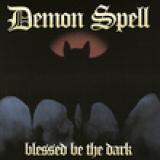
DYING VICTIMS PRODUCTIONS is proud to present DEMON SPELL’s highly anticipated debut album, Blessed Be the Dark, on CD and vinyl LP formats. After the cursed EP Evil Nights in 2024, the coven of DEMON SPELL returns, unleashing a vision of dark, occult heavy metal born from dust, bone, and shadow. Appropriately titled Blessed Be the Dark, the Italians’ debut album is a descent into ritual fire and ancient doom, where the echoes of the grave sing once more. This is music for disciples of the timeless art of darkness.
With Blessed Be the Dark, DEMON SPELL deepen their devotion to a shadowed form of heavy metal rooted in the classic tradition yet veiled in occult and arcane tones, all performance with a provocative theatrical presence. Wholly untouched by modernity, their sound draws from the primordial essence of early heavy metal; one can imagine the cutoff year at 1985, or perhaps earlier. The record presents a more mature and refined vision of the band’s sound as first displayed on the quick-hitting Evil Nights, here exploring darker, more occult atmospheres while also offering raw, energetic passages that bring moments of levity and drive. Listening to DEMON SPELL in full-length form feels like entering an endless Sabbath, where past and present dissolve and the flame never dies. Blessed Be the Dark stands as a testament to heavy metal as ceremony—timeless, solemn, and possessed by the Spirit of the Night.
Austin Wintory's third collaboration with Giant Squid and creative director Matt Nava, Sword of the Sea, sees it's soundtrack surfing onto vinyl.
The music has been specially mastered for vinyl and is pressed to heavyweight discs, all housed in a deluxe gatefold sleeve. Illustrator Elaine Lee has created original artwork that flows from the front cover to the back.
Nominated for Best Score Soundtrack for Video Games and Other Interactive Media at the 68th GRAMMY Awards, Sword of the Sea is an aesthetic successor to thatgamecompany's Journey and Giant Squid's ABZÛ and The Pathless. The album is a mellifluous musical adventure, resonating immaculately with the game's sense of flow and beauty. Piano, synthesisers, strings, wind, and choral elements collaborate with, and cascade over one another, always with a purposeful momentum. Harmonically, pieces carry the listener along a gently undulating path, punctuated by unexpected chord changes - jagged little musical surprises that hint at the game's deeper mysteries.
Soloists Kristin 'Field of Reeds' Naigus, Tina Guo, Malukah, Paul Cartwright and Tom Strahle elevate the score with soaring performances, while ensembles including London Voices and the Phoenix Boys Choir enrich the texture of the enveloping compositions.
Pacific Northwester Drew Sullivan is the man behind the Slow Dancing Society and on his latest album, he interrogates nostalgia with clearer eyes while sculpting analogue glow, treated guitar and patient ambience into scenes that breathe. Tracks drift like headlights through snow - hums, howls, bass rumbles, rain-veiled keys all feature, each motion subtle, deliberate and devastating. The record's power lies in restraint: chord changes feel meteorological, melodies arrive as messages, then vanish. It's ambient music with a spine, grief without spectacle. By the time 'Blue Suburban Skies' lifts into Twin Peaks-levels of ache, Sullivan has rebuilt a world you want to hide away in forever.
out of Stock
Last delivered 8 months ago available to reorder, subject to availability
The follow-up to 2024’s "Perpetual Eden" sees Bloody Head stretch out and capture the cosmic sprawl of their live gigs on record. Available on limited-edition LP with spot-varnished sleeve.
After finding their Perpetual Eden and then seeing it violently retrograde, Bloody Head return with a new transmission devoted to the pendulum’s swing and the big wheel’s turn.
The big wheel turns and the seasons turn and we turn and it all just keeps on spinning away… elliptic, off kilter, centres not holding, the whole merry-go-round whirling and dissolving and coagulating, perpetually.
The CHILDREN OF THE DUSK and the sundry weirdoes and creeps depicted on the cover painting, channelled by Danny Roberts 777, all spinning and singing and sinning as they rattle along… in some sort of strange, discordant VIBRATORY AFFINITY with themselves/each other/it all.
Stay a while and take the time to BEND DOWN AND KISS THE GROUND/smell the roses/find your Eden, in and amongst the nooks and cracks and crannies and in the thin, strange places.
TIME AS VEILED ETERNITY is a microcosm of the whole merry Shambala, pushing and pulling and coming together and falling apar
Recorded, mixed and mastered by James Atkinson at the Stationhouse, Leeds. The session almost kiboshed by Storm Éowyn. A sprawling mass/mess which oozes and lurches from bloody minded heaviness to meditative reflection to unsettling delirium and back again, ending in total sonic breakdown. More focused and restrained, more reckless and chaotic. There is No time, to every season some sort of purpose.
London-based experimentalist Luke Younger (a.k.a HELM) returns to PAN with ‘Olympic Mess’.
Where his previous effort, 2014’s ‘The Hollow Organ,’ dealt in dense, distressed sonics, ‘Olympic Mess’ is Younger responding to a period spent engaged with loop-based industrial music, dub techno, and balearic disco. These musical references, all of which can induce hypnotic states and feelings of euphoria, inform ten evocative aural landscapes which unfurl over the course of an hour and act almost as a counterpoint to the turmoil that spawned them.
Crafted using an array of heavily processed samples, found sound and electroacoustics, personal conflict manifests in “I Exist In A Fog” and “Outerzone 2015,” where visceral noise disintegrates into veiled, ambient strata. The disquieting crescendos of “The Evening In Reverse” and “Fluid Cloak” offer no such relief, while the title track and “Don’t Lick The Jacket” are mineral, multilayered abstractions twisting around a brittle pulse.
With the grace of an ancient oracle speaking through a veil of mist, the album unfurls in movements both haunting and divine, carrying the listener into a realm where sorrow and splendor waltz as one. Orchestrated with exquisite precision and opulent depth, the ensemble breathes life into every measure. Strings sweep like celestial tides, choirs rise like prayers from cloistered ruins, and woodwinds whisper secrets from lost mythologies. The multimember orchestra does not merely accompany the compositions, it becomes the very vessel through which Autumn Tears channels their clairvoyant vision.
Rooted in the neoclassical tradition yet unbound by its walls, the album weaves baroque intricacies with cinematic grandeur, crafting soundscapes that feel both sacred and boundless. Every track is a portal: to forgotten dreams, to veiled futures, to the silent poetry that lingers in the spaces between. Crown of the Clairvoyant will be available as a digital download,a limited Leather CD Box, a limited CD jewel case package with a CD exclusive bonus track as well as a limited vinyl package with a 12 page illustrated lyric book and vinyl exclusive bonus track.
Deep black, with ghostly glimmers of an old car melting into the tarmac: the cover of Never En-ding Rodeo sets the tone. This isn't just a late-night drive, but a controlled skid across the borders of Post-Rock, Noise and Psych. The engine roars, the ground shakes, the white lines blur. Six years after the release of Ain't That Mayhem, the Lyon-based band returns with a dense, smoke-veiled record. Never Ending Rodeo: a deceptively playful, almost cartoonish title for such an intense album. As if, after circling endlessly around dust, bucking, and stampedes, Zëro had carved out its own orbit. Unstable, inevitably. But magnetic. Éric Aldéa (guitar, vocals), Franck Laurino (drums), Ivan Chiossone (Persephone, synths), and now Varou Jan (guitar, bass) - (Le Peuple de l'Herbe, Condense) - have lost none of their bite. Better still: this new album marks a turning point in production quality, thanks in particular to the mixing work of Niko Matagrin. The sound is broader, more inhabited. Every snare crack, every synth layer sits precisely in a meticulously sculpted space. "As if Tom Waits had collided with Nine Inch Nails. Before a frightening modernity hurled this so-nic convoy into a headlong rush." ~ Indiepoprock "You don't simply pass through Never Ending Rodeo: you step inside, you lock yourself in, drawn irresistibly by its magnetism." ~ Solénopole
Hailing from the northern city of Oulu and featuring members of esteemed Finnish outfits such as Haapoja, Dart, and Renate/Cordate, TRYPANON have steadily emerged as one of the most compelling and unorthodox underground acts in recent memory. Their 2021 debut "Amentia" earned widespread acclaim for its suffocating intensity and bleak atmospheres, establishing the band as a vital force in the realms of extreme music. With "Through the Portal of Flesh to Achieve Divinity", TRYPANON push their vision even further into the void. The album is a nightmarish fusion of down-tuned sludge, chaotic death metal, and dissonant black metal, woven together with progressive flourishes and hypnotic melodic fragments. The result is a deeply immersive and punishing listening experience that recalls the extremity of bands like Lord Mantis, Coffinworm and Cobalt, while retaining a sonic and conceptual identity entirely its own. Where "Amentia" was a descent into psychological collapse, "Through the Portal..." drags the listener through a ritualistic transformation - an existential death trip that explores themes of corporeal transcendence, spiritual ruin and ecstatic suffering. The record was conceived not only as an artistic evolution, but as an act of purification through sound: hostile, enveloping and uncompromising. This release marks a significant step forward for TRYPANON, both in scope and execution. Expect a record steeped in raw emotion and relentless aggression, but also rich in nuance and disturbing beauty.
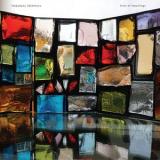
Nobukazu Takemura"s music is singular in its ability to create a musical sense of childlike wonder and curiosity, with gracefully executed yet complex compositions. His pieces embody an innocence and the intricacies of self discovery that every human is faced with as their worlds become more complex. An acclaimed producer and composer, Takemura is known for his idiosyncratic music and video artistry as well as his prolific collaborations including those with Tortoise, Yo La Tengo, DJ Spooky and Steve Reich. knot of meanings, Takemura"s first proper album in a decade, finds the Japanese artist wrestling with the rise of technological influence on art and culture in the modern era, in tandem with his own relationship to religion, and where those struggles meet. Like the colorful, irregularly shaped glasses on the cover, the album is a mosaic of technicolor elements that come together to form a complete picture, a dense portrait of interconnected struggles and triumphs.
WYRD, the third full-length album by Crawling Chaos, is an anthology-based work built around a series of archetypes tied to the concept of destiny, fate, and becoming. In the Northern European culture these ideas are encapsulated in the term wyrd, as opposed to notions of free will and self-determination. The main theme is expanded and explored across the album's ten tracks following a narrative thread which unites some of the most fascinating female figures of classical mythology, European folklore, and history-from the Norse Norns to Macbeth's witches serving Hecate, from the Greco-Roman Furies to the fearsome Thessalian necromancers. As with Crawling Chaos' previous works, WYRD is full of literary quotes and easter eggs, offering subtle nods to the most curious among the listeners. Musically speaking, the album is uncompromising, heavy, and very dark.
Limited marbled vinyl. WYRD, the third full-length album by Crawling Chaos, is an anthology-based work built around a series of archetypes tied to the concept of destiny, fate, and becoming. In the Northern European culture these ideas are encapsulated in the term wyrd, as opposed to notions of free will and self-determination. The main theme is expanded and explored across the album's ten tracks following a narrative thread which unites some of the most fascinating female figures of classical mythology, European folklore, and history-from the Norse Norns to Macbeth's witches serving Hecate, from the Greco-Roman Furies to the fearsome Thessalian necromancers. As with Crawling Chaos' previous works, WYRD is full of literary quotes and easter eggs, offering subtle nods to the most curious among the listeners. Musically speaking, the album is uncompromising, heavy, and very dark.
Emerging from the shadows with a sound both haunting and hypnotic, the mysterious one-man French act Closed Mouth (Yannick Rault) unveils You Don’t Need a God—an unrepeatable EP that stands as the spiritual heir to the legacy of compatriots Trisomie 21, Little Nemo, and Babel 17. With icy synths, ghostlike vocals, and melancholic guitar lines veiled in mist, this record conjures the same cinematic introspection that defined the golden era of European coldwave and post-punk. Each track plays like a transmission from a forgotten dream—enigmatic, emotional, and unmistakably timeless. This is not mere revivalism; this is the continuation of a mood, a vision, and a sound that still resonates with profound intensity. Presented in ONE-OFF truly limited edition of 300 copies lacquered pressed on 180 gr. high quality solid BLACK vinyl. All tracks have been specially remastered and mastered for vinyl by Daniel Hallhuber at Young and Cold Studios (Germany).
out of Stock
Last delivered 4 months ago available to reorder, subject to availability
In a world where physical experiences are becoming rarer, artists are looking to connect their process to something more tangible, and with A/V rinsed, scent is an obvious next sense to plunder. Florian TM Zeisig - who last appeared on Somewhere Press as Angel R, goes the extra mile, teaming up with perfumer Angel Paradise to develop a suite of music that plays like a bouquet of memory-triggering aromas, coupled with a fragrance that captures the oily essence of their bucolic alpine setting. The project came about when both artists were living in Hinang, a small farming village in the rural Bavarian alps. Paradise was studying alpine plant behaviour and using her research to inform her approach to scent creation, developing natural perfumes based on the landscape. Zeisig, meantime, composed his own response to the mountains and forests that surrounded them. He wrote ‘Spool’ as a poignant farewell (or spiritual rebirth) as they prepared to leave, considering teenage nostalgia as well as the idyllic locale, and the pastoral suite of lulled loops, field recordings and dissociated instrumental vamps plays like a contemporary Heimatfilme soundtrack, locking into the genre’s idyllic, fantastical simplicity and romance. Drunken horn loops and mushy piano chords concertina around a wobbly axis on ‘Oneandhalf’, met by dreamy guitars and whispered, lysergic vocals. The sweet-smelling notes form an enigmatic compound, prompting us to think of Codeine or Galaxie 500 without solidifying completely. It’s music that works with outlines and traces, catching us off guard with flickers of samples and veiled base notes: the Cocteau Twins-like phased piano on ‘Threeandhalf’ that’s drowned out by gunked tape fog, or the smudges of ‘Spirit of Eden’ ambience on ‘Alright’ that creep between tweezed piano phrases. There’s depth too; Zeisig doesn’t restrict himself to Romance-cum-Basinski loopmuzak, he intersperses his GASeous orchestral waves with serene, relatively demure reflections that capture the pristine beauty of a dewy alpine morning. ‘Four’ is an ASMR-rich blend of crunching leaves and mossy, decelerated pads, and ‘Plus’ burns its drones down to crackling embers, letting the faint harmonies flicker through the coal dust. Importantly, it’s emotional music, but not overly melodramatic, finding peace in nostalgia and the calm of nature.
out of Stock
Last delivered 13 months ago available to reorder, subject to availability
The compositions of Miłosz Kędra (b. 2001) explore synthetic sound, electroacoustic music, and self-built acoustic instruments, seeking diverse timbres, tunings, and textures. His main field of work is the pipe organ. Through minimalist motifs, he has transported the instrument’s sound beyond the church space by synthetically processing its tones. He is currently pursuing a Master’s degree in New Media Music at the Academy of Music in Poznań and recently completed a Bachelor’s degree in Electroacoustic Composition, during which he built his own pipe organ from scavenged pipes.
~ Liner notes ~
Miłosz Kędra - "their internal diapasons"
The pipes that Miłosz Kędra used to craft his own organ emulator have lived many lives. They come from churches scattered across Greater Poland—some trimmed for a more presentable façade, others left to gather dust in parish houses until, stripped of purpose, they were cast away. Their first voices have faded, their inner resonance unsettled, yet with patience, one can teach them to sound again—to sing in their altered state, to be gently coaxed out of silence.
Audiomancy—the conjuring of lost sounds—is the word that lingers when I try to grasp the lore crystallizing with Kędra’s second album.
The resolve with which the musician and composer has inhabited his self-built instrument recalls Witold Szalonek and his search for “unexploited properties of wind instruments in classical music.” Szalonek sought to map these hidden voices into a system of multiphonics, revealing over 160 on the oboe alone by 1968. Some sound eerily alike, yet emerge through distinct gestures—“a particular breath, a precise choreography of levers and apertures, the seamless fusion of the two.”
The splitting of a single note into its spectral fragments—allowing a melodic instrument to speak in two, three, even four voices at once—enabled Szalonek to bend the rigid structures of Western music. "their internal diapasons" follows a similar path: an aesthetic bypass through which Kędra taps into the sacred gravity of the church organ, only to reveal it as a domesticated echo of something far older—the primal theater of transformation. To listen closely to an instrument is to learn its flaws, to turn its imperfections into a new way of speaking.
Each of the nine compositions on "their Internal diapasons" is an invitation—to approach the material world with the intent of letting it speak beyond expectation. An instrument that is at once a sculpture, a performance, and a manifesto of voicing the discarded suggests that its creator—following the path of Didier Eribon (Returning to Reims)—might take as his motto, a principle of asceticism, Sartre’s words: “What matters is not what is made of us, but what we ourselves make of what is made of us.”
"At the end of the day, a new one begins. Sometimes dust covers the wounded human spirits, nebulizing their ambitious world with melancholy from some far place. Today we met and melded our emotions. Improvisation is the art of becoming sound. Loose lyrics on Hollywood dreams, galaxy economy, and algorithm poetry, banned and warped in drama industrial, synth-journey-music, ghost pop, anger electronics, and analogue deserts. Improvised recording sessions for epochs where head liquefies the concrete. It’s all about fashion, now, that we have recession. Dressed to kill with murder fabrics. The anger of the machines. The happiness in their language. Inkasso & ML asked themselves"
While 1995's Washing Machine LP moniker was a thinly-veiled jab at the corporate aesthetic ("no, you cannot turn Sonic Youth into a household appliance brand", the band even considered changing its name to Washing Machine but settled on the album title instead), their major label relationship was indeed a curious buzzpoint of talk on the street after their intake to DGC in 1990. It wouldn't be fair to say that this state of existence propelled the band to reinforce its independent mindset by releasing a series of opaque-looking, French-language-dipping, highbrow-looking releases on their own that focused on the more abstract improv/compositional side of the band; in all truths they had been heavily steeped in self-releasing spillover material prior to that. But after a pressure pot of the early 90's indoctrination into a new operational mode for the band and its visibility, and the forces around it attempting to shape their direction, it seemed like a good time to create a strong show of radical concept.
The Anagrama EP became the first in a series of the SYR label's Perspective Musicales releases seemingly cementing Sonic Youth's connectivity to an increasing public awareness in experimental composers of the 20th century (French or otherwise). The irony was that many of those original avant composers being rediscovered by the indie audience (Partch, Neuhaus, Reich, Messaien) often found themselves on major labels anyway! So, perhaps this reverse approach was a necessary concept/comment given the music biz climate of the 90's. Regardless of how apples and oranges fell in Xenakian probability/theory, it was clear that both Sonic Youth's stature in progressive music, aided by now unlimited taperoll time thanks to a home base studio downtown established after their Lollapalooza stint, gave the band plenty of trailblazing time for their self examination of untraveled avenues.
"Anagrama" unfolds into nine minutes of delicate textures, starting with thick drone segueing into moments reminiscent of the post-crescendo flutter/comedown of "Marquee Moon's" trail-out; Thurston, Lee and Kim's guitars all circling round each other taking delicate pokes and stabs before drifting into some post-rock rhythmic moves tapered with delicate percussive guidance from Steve Shelley. "Improvisation Ajoutée" reaches further out into dissolve with whirring oscillations, guitars hissing and clanking radiator-style in a short blast format that continues into "Tremens" and a spooked-out landscape of gelatinous notes snaking up slowly. The sparseness of attack is colorful, textures emit and linger, silent spots shine, all flanked by tasteful drumming that provides the thread to all the abstraction. Shelley's approach here is interestingly sideways to any kind of usual rock action, it's tempered, mutant and metronomic simultaneously. The finale track "Mieux: De Corrosion" is a real pedal-palatte showcase. Here, Plutonian guitar wash flanges upwards to buoy a myriad of colorful eruptions of amp-spuzz, chopped up tone blasts and general confusion. Out of the blue, some metallic one-note choogle kicks in and threatens to explode into some Judas Priestly motion, before it all sputters into aural glass showers, clang, and finally a ferocious wave of more flange hiss that crashes down on a dime.
This initial foray into SY's Perspectives Musicales series continued onward with releases featuring other co-conspirators, peaking with the ambitious 2CD Goodbye 20th Century that finally connects the band into full-on interpretations of other composers' pieces (as well as displaying their own new ones). The whole series is not so much an outlet for another "side" of the band, but a run that went hand in hand building new approaches of songcraft onto their own, more overground direction which included Jim O'Rourke (who hopped on during SYR3), adding additional density to A Thousand Leaves and other LPs of his era. Fans of the '86 Spinhead Sessions as well as the recently-exhumed later jams of In/Out/In will take in the sounds of SYR1 with glee.
out of Stock
Last delivered 20 months ago available to reorder, subject to availability
Gavin Vanaelst runs the space Aboli Bibelot in Antwerp where exhibitions and musical performances can happen side to side with dealings in centuries-old furniture and unique pieces of folk art or volkskunst. Gavin makes music under the aliases DJ Charme, Kassett and So Sorry. This is the first album under his birth name. Takeaway Loops cycles back to the days when Gavin was working as a courier for .
is a food delivery company. Their couriers - ehm, brand ambassadors, as the company prefers to call them - dressed in bright orange, they race their bikes around the city. They deliver meals and groceries for all sorts. Thanks to them, the privileged can stay tucked in their private spaces. Interaction between the two groups - the privileged and the brand ambassadors - is mostly kept to the bare minimum. And sparse communications are often driven by annoyances - “my Coke is warm because you kept it too close to the French Fries.” And on the streets the general public dis-approaches the brand ambassadors with pity. We tell our peers: “That’s not a good job,” and “stay away from the Sharing Economy.” Because, you know, in our capitalistic dollhouse we all stand our grounds and play our parts wholeheartedly.
During his shifts for , Gavin recorded location sounds on his phone at fast food restaurants while waiting on the orders he had to pick up and deliver. Later in his home studio Gavin added piano and electronics to this source material. The result: a gloomy soundtrack for a shadow world. Seven songs in evening blue with a bright orange glare.
A few years ago, our favorite Belgian publishing house Het Balanseer released Seizoenarbeid by Heike Geissler (available in English trough Semiotext(e)). Geissler writes about her job at Amazon in Leipzig. Because her writing and freelance work did not pay the bills any longer, she was forced towards this underprivileged shadow-world of unwanted jobs. Seizoenarbeid shed a light on freedom in an unfree world. A monument of ‘we are all in this, but not together’. Takeaway Loops gives us a similar peak in a world that is at the same time so visible, but then also very veiled for many. A world that we prefer to use, yet that most of us prefer not to see - a world that we don’t like to enter.
Last year at Harbourland subway station in Kobe i was mesmerized by its sound design, created by Hiroshi Yoshimura. For each part of the subway station he composed a short phrase. While walking trough the station, a full composition grows in your head. The looping melodies guide you trough a microworld. Trough a blue world of commuters, of the homeless, of the lonely, of the fast paced, of the tourist. Gavin creates a similar effect with Takeaway Loops. The tonality somehow corresponds to Yoshimura’s work. Yet instead of being guided trough a building, we are now taken to the after dark. You feel the concrete evening heat of the city. You hear the rain. Stiff fingers during cold winters’ nights. You are alone on the bike, cruising. Your maps app telling you where to go. You just left the fake leather bench of the well-lit pastiche interior of a fast food restaurant.
Next order, number ECN44! Please wait outside, sir?
THE OMEGA SWARM, eine atmosphärische Death-Metal-Band aus Deutschland, begann im Jahr 2022, sehr bescheiden, sehr zurückgezogen. T., der bereits vier großartige Alben mit Sulphur Aeon veröffentlicht hat, hatte keinen vollwertigen Live-Act im Sinn, als er frühe Demos komponierte und das Skelett seiner - damals noch namenlosen - neuen Kreatur formte. Im Herzen ein wahrer Schöpfer, umarmt T. die akribische Arbeit an Riffs, Tönen, Klängen, den abenteuerlichen Geist des Aufbaus und der Verwirklichung von Ideen, das Experimentieren mit seinen geliebten Gitarren und Synthesizern, um erstaunliche Vibes und Songs zu produzieren, die bedeutungsvoll und doch extrem, melodisch und doch hart sind und sich in THE OMEGA SWARMs Debütalbum vereinen, einer Platte, einem Zeugnis, das der Essenz der Kunst selbst gewidmet ist.
So bodenständig T. auch ist, er ist nicht der Typ Mensch, der sich an eine Klangformel hält, er sucht nach "etwas mehr", "etwas anderem". Nachdem Sulphur Aeon mit dem monumentalen "Seven Crowns and Seven Seals" von 2023 vorerst abgeschlossen haben, was sie ausdrücken wollten, sind THE OMEGA SWARM jetzt sein Hauptaugenmerk, und das Line-up der Band, das von Sänger Christian Schettler (bekannt durch seine Arbeit bei den Labelkollegen Wound) und Schlagzeuger Max Scheefeldt (ex Misanthrope Monarch) komplettiert wird, passt perfekt zusammen. Musikalisch entstanden THE OMEGA SWARM aus T.s Experimenten mit rhythmischen Mustern, übereinanderliegenden Synthesizern, ausgefeilten Leads und etwas technischeren Riffingstrukturen.
Die wohl einzigen offensichtlichen Parallelen zu Sulphur Aeon sind die Betonung einer dichten, fesselnden Atmosphäre, epische Elemente und eine übergreifende Dunkelheit sowie die Erkenntnis nach der Fertigstellung der ersten Aufnahmen, dass auch THE OMEGA SWARM die Qualität besitzen, mehr als nur ein 'Schlafzimmerprojekt' zu sein.
Aufgenommen in den Studios von Feire Records und s/w records, gemischt und produziert von Langzeitpartner Simon Werner, wurde V. Santura (Triptykon, Dark Fortress) für das Mastering angeheuert und sorgte für den letzten Schliff von "Crimson Demise", einem Album, das stolz und mühelos zwischen Death und Black Metal changiert und von einer herausragenden Gesangsleistung abgerundet wird, bei der Chris eine ähnliche Bandbreite an Growls, Screams und cleanen Parts erreicht wie Peter Tägtgren in seinen besten Zeiten.
Vom Konzept her verzichtet die Gruppe auf uralte Lovecraft'sche Schrecken und wendet sich stattdessen geradlinigen apokalyptischen Themen zu. Ob Viren, bösartige Bakterien, verrückte Diktatoren, Klimawandel, religiöse und politische Ideologien, korrupte Technologie, Terrorismus oder Krieg, die Menschheit hat sich selbst für den Untergang gezeichnet - in leuchtenden Neonfarben, damit selbst eine außerirdische Spezies, die Galaxien entfernt ist, erkennen kann, was für Narren wir wirklich sind. "Die Menschheit kann sich nicht auf eine gemeinsame Wahrheit einigen, geschweige denn auf eine Strategie zur Lösung ihrer mannigfaltigen Probleme", erklärt Chris, "und bildet somit überhaupt keine Einheit. Der einzige gemeinsame Nenner, der uns alle eint, ist unsere Zerstörungswut, die irgendwann die gesamte Existenz der Menschheit gefährden könnte. Die Utopie wurde durch dystopische Szenarien ersetzt. Welche Formen des negativen menschlichen Verhaltens uns und die Gesellschaft derzeit beeinflussen und letztlich in eine zukünftige Endzeit führen, ist Teil des lyrischen Konzepts von THE OMEGA SWARM."
Aber keine Angst, bevor die Weltuntergangsuhr zum letzten Mal schlägt, soll euch das Vergnügen vergönnt sein, ein abwechslungsreiches, intensives und fesselndes Stück Metal zu erleben, das das neu formierte Trio aus dem Schlafzimmer auf die Bühne bringen will!
Next Polyamore Recs release comes from Costariva, a really interesting project from Bologna (ITA).
‘Pantera’ intended to transport the listener into the midst of the vibrant paths of a dancing journey to the sound of Italo-disco rhythms, bringing body and soul back to the belle époque of Italian disco music.
“Miscela originale” is a blend of Catchy bass lines and shimmering melodies, amalgamated by the colours of strings and synths, the track is the result of the artistic blend between the music produced and arranged by Federico Franciosi and the words skilfully framed with an ironic and boisterous vein by Giorgio Michele Longo (aka Giargo) and Francesco Zaniboni (aka Dj Rou).
“Rivisitazione adriatica” has a catchy, sexy groove and a horns part that let you go on summer nights.
“Sam Ruffillo Rework” is a dancefloor ready track for your best peak-time in the next summer season festival.
‘Pantera’ is also intended as a veiled homage to one of the greatest and most underrated innovators on the Italian and international music scene, Pino D’Angiò.
With its infectious rhythm and playful spirit, ‘Pantera’ promises to make listeners dance and smile, instilling a little healthy and amused nostalgia in all travellers of the night.
out of Stock
Last delivered 14 months ago available to reorder, subject to availability
THE OMEGA SWARM, eine atmosphärische Death-Metal-Band aus Deutschland, begann im Jahr 2022, sehr bescheiden, sehr zurückgezogen. T., der bereits vier großartige Alben mit Sulphur Aeon veröffentlicht hat, hatte keinen vollwertigen Live-Act im Sinn, als er frühe Demos komponierte und das Skelett seiner - damals noch namenlosen - neuen Kreatur formte. Im Herzen ein wahrer Schöpfer, umarmt T. die akribische Arbeit an Riffs, Tönen, Klängen, den abenteuerlichen Geist des Aufbaus und der Verwirklichung von Ideen, das Experimentieren mit seinen geliebten Gitarren und Synthesizern, um erstaunliche Vibes und Songs zu produzieren, die bedeutungsvoll und doch extrem, melodisch und doch hart sind und sich in THE OMEGA SWARMs Debütalbum vereinen, einer Platte, einem Zeugnis, das der Essenz der Kunst selbst gewidmet ist.
So bodenständig T. auch ist, er ist nicht der Typ Mensch, der sich an eine Klangformel hält, er sucht nach "etwas mehr", "etwas anderem". Nachdem Sulphur Aeon mit dem monumentalen "Seven Crowns and Seven Seals" von 2023 vorerst abgeschlossen haben, was sie ausdrücken wollten, sind THE OMEGA SWARM jetzt sein Hauptaugenmerk, und das Line-up der Band, das von Sänger Christian Schettler (bekannt durch seine Arbeit bei den Labelkollegen Wound) und Schlagzeuger Max Scheefeldt (ex Misanthrope Monarch) komplettiert wird, passt perfekt zusammen. Musikalisch entstanden THE OMEGA SWARM aus T.s Experimenten mit rhythmischen Mustern, übereinanderliegenden Synthesizern, ausgefeilten Leads und etwas technischeren Riffingstrukturen.
Die wohl einzigen offensichtlichen Parallelen zu Sulphur Aeon sind die Betonung einer dichten, fesselnden Atmosphäre, epische Elemente und eine übergreifende Dunkelheit sowie die Erkenntnis nach der Fertigstellung der ersten Aufnahmen, dass auch THE OMEGA SWARM die Qualität besitzen, mehr als nur ein 'Schlafzimmerprojekt' zu sein.
Aufgenommen in den Studios von Feire Records und s/w records, gemischt und produziert von Langzeitpartner Simon Werner, wurde V. Santura (Triptykon, Dark Fortress) für das Mastering angeheuert und sorgte für den letzten Schliff von "Crimson Demise", einem Album, das stolz und mühelos zwischen Death und Black Metal changiert und von einer herausragenden Gesangsleistung abgerundet wird, bei der Chris eine ähnliche Bandbreite an Growls, Screams und cleanen Parts erreicht wie Peter Tägtgren in seinen besten Zeiten.
Vom Konzept her verzichtet die Gruppe auf uralte Lovecraft'sche Schrecken und wendet sich stattdessen geradlinigen apokalyptischen Themen zu. Ob Viren, bösartige Bakterien, verrückte Diktatoren, Klimawandel, religiöse und politische Ideologien, korrupte Technologie, Terrorismus oder Krieg, die Menschheit hat sich selbst für den Untergang gezeichnet - in leuchtenden Neonfarben, damit selbst eine außerirdische Spezies, die Galaxien entfernt ist, erkennen kann, was für Narren wir wirklich sind. "Die Menschheit kann sich nicht auf eine gemeinsame Wahrheit einigen, geschweige denn auf eine Strategie zur Lösung ihrer mannigfaltigen Probleme", erklärt Chris, "und bildet somit überhaupt keine Einheit. Der einzige gemeinsame Nenner, der uns alle eint, ist unsere Zerstörungswut, die irgendwann die gesamte Existenz der Menschheit gefährden könnte. Die Utopie wurde durch dystopische Szenarien ersetzt. Welche Formen des negativen menschlichen Verhaltens uns und die Gesellschaft derzeit beeinflussen und letztlich in eine zukünftige Endzeit führen, ist Teil des lyrischen Konzepts von THE OMEGA SWARM."
Aber keine Angst, bevor die Weltuntergangsuhr zum letzten Mal schlägt, soll euch das Vergnügen vergönnt sein, ein abwechslungsreiches, intensives und fesselndes Stück Metal zu erleben, das das neu formierte Trio aus dem Schlafzimmer auf die Bühne bringen will!
Most Perfect Solitude" ist das sechste Studioalbum von The Third Sound, das am 17. Mai auf Fuzz Club erscheint und ein neues Kapitel für die Berliner Psychedelic-Post-Punk-Band um den isländischen Musiker und Autor Hakon Adalsteinsson markiert.
Geschrieben und aufgenommen wurde das Album in weniger als zwei Wochen, während einer seltenen Lücke in seinem Non-Stop-Tourplan als Gitarrist von Brian Jonestown Massace und seinem neuen Projekt Golden Hours. Auf "Most Perfect Solitude" glänzen schräge 12-Saiter aus den 60ern und luftige Melodien, doch die Platte ist auch nicht ohne ihre dunkleren, schwereren Momente - siehe die schaurige Psych-Rock-Drohne "Veiled" oder "Wasteland", der eine alptraumhafte Vision einer Stadt in Trümmern zur Melodie schwerer Fuzz-Gitarren-Wiederholungen und hypnotischer Drums entwirft.
Most Perfect Solitude" ist das sechste Studioalbum von The Third Sound, das am 17. Mai auf Fuzz Club erscheint und ein neues Kapitel für die Berliner Psychedelic-Post-Punk-Band um den isländischen Musiker und Autor Hakon Adalsteinsson markiert.
Geschrieben und aufgenommen wurde das Album in weniger als zwei Wochen, während einer seltenen Lücke in seinem Non-Stop-Tourplan als Gitarrist von Brian Jonestown Massace und seinem neuen Projekt Golden Hours. Auf "Most Perfect Solitude" glänzen schräge 12-Saiter aus den 60ern und luftige Melodien, doch die Platte ist auch nicht ohne ihre dunkleren, schwereren Momente - siehe die schaurige Psych-Rock-Drohne "Veiled" oder "Wasteland", der eine alptraumhafte Vision einer Stadt in Trümmern zur Melodie schwerer Fuzz-Gitarren-Wiederholungen und hypnotischer Drums entwirft.
Drawing from her compositions for Helena Wittmann's film DRIFT (2017), Nika Son creates a sonic journey across the Atlantic Ocean. Following a weekend at the North Sea, one of Wittmann's two protagonists embarks on a journey across the Atlantic to the Caribbean, during which unpredictable waves and deep sleep foster a transformative experience. Capturing the essence of this cinematic encounter through sound, Nika Son's compositions allow the water itself to become a storyteller, immersing listeners in the resonating body of the boat and plunging them into the profound depth of the ever-shifting ocean. Whether illuminated by daylight or veiled by night, the nature of this material world emerges through an exploration of the ocean as a distinct and tangible space, inviting contemplation of its transformative power. The line between reality and imagination blurs, and the waves echo the emotions of the voyage.
out of Stock
Last delivered 2 years ago available to reorder, subject to availability
All those creatures, standing there, making time. Fury eyes, golden dust on artificial fog. Dancing on glass, repetitive poems, looping long after the last loop looped away. Oriental acid, frenzied samples, low hanging film noir suspense. This is DALO. Or not. She is many. Dry maniac downbeat is her craft. Or dark-ish pop-not-pop. There is dub, trance, techno, too. She is known for releases on labels like ESP Institute, WARNING, or Tresor. She is part of bands like Init. She played them all, those clubs, that matter, and those that matter more. Live. Alone. As an artist. With a band. Here she comes with her first album. On the R.i.O. sphere. Her homebase. A trusted zone for experimentation. She brings “Duster”. Seven tunes twisted in different dreams. Fast, slow, veiled, enchanted, haunting trenchant. She sings. These songs. To dance. For a different, stripped-back trance. DALO. Her record longs for a stage. Exporting grace, face to face. A work like a mirror. Hypnotizing. A psychedelic portrait of a performer. Nuanced industrial veils ceremonial journey music. Claps, Jungle. Desolate vocal snippets. A whirlwind of words. All those chords, hanging there, kick drum time. Fury eyes, golden horns amid acid fog. Dancing on glass, cyclic synth-lines. DALO. Duster. A-round-and-a-around. Circulating the ritual.
out of Stock
Last delivered 16 months ago available to reorder, subject to availability
Ultraorthodox and Bjarki set out to push the boundaries of ectoplasmic research, aiming to secure an augmented paranormal research budget from the Icelandic government and explore the ethereal through a fusion of sound and ectoplasmic exploration.
Can sound unlock the veiled secrets within ectoplasmic mysteries? Is it a portal to realms beyond our comprehension?
Unfortunately, the project met an untimely end. But fear not, for in the face of failure, there's still music to enjoy!
out of Stock
Last delivered 2 years ago available to reorder, subject to availability
First vinyl issue for this 2023 release with bonus track not available on CD.
Nine majestic electro-acoustic threshold devotionals.
**ELECTRONIC SOUND - review (issue 98) “While there are shades and texture in the journey from glowing opener “Cyan” to the glowering conclusion of “Magenta”, they’re so subtle that they make ‘Colours of Air’ the musical equivalent of Rothko’s paintings - monotone at first glance, but with intriguing depths if you’re prepared to search for them.”
MOJO - ★★★★ review in the Underground column (March issue) “Loscil and English’s manipulations drift closer to the ambient techno of Gas.”
UNCUT - 8/10 review (March issue) “Subtle complex, and not always pacifying…’Magenta’s extraplanetary grace is tempered by unresolved tension for distinctly uneasy listening.”
The union of composers Lawrence English and loscil aka Scott Morgan is seamless, sublime, and long overdue.
Born of a conversation centered on the notion of “rich sources” as a forge for electronic music, Colours Of Air is a collection of recordings of a century old pipe organ housed at the historic Old Museum in Brisbane, Australia, which were then processed, transformed, and elevated into eight majestic electro-acoustic threshold devotionals. The timbre of the instrument and spatial fluctuations of room tone infuse the music with a subdued, sacred feel, like vaulted light in a nave of stained glass. They describe the album as “an iterative project, a reduction and eventual expansion,” sifting the swells and drones of the organ for every shivering shade of radiance.
The tracks are named for the hue each piece suggests – from the gauzy levitational miasma of “Yellow” to the pulsing melancholic mirage of “Violet” to the seething twilit sandstorm of “Magenta.” Morgan and English are both adept at conjuring moods of muted grandeur, like landscapes veiled in dusk, still looming and luminous.
out of Stock
Last delivered 7 months ago available to reorder, subject to availability
It’s a family affair. One formed almost thirty years ago, back in the mid-nineties, when the pair joined seminal French jazz combo Olympic Grammofon. For twenty-four years they have worked together as Bumcello, each complementing the other, echoing polar opposites. The Boom in Bumcello is none other than Cyril Atef, incisive drummer, relentlessly pushing beats towards new horizons. The Cello is Vincent Ségal, cellist without blinkers and extraordinary musical alchemist. Since 1999, these two die-hard music fans, coming together for mercurial results, have released one record after the other whilst conquering the hearts of their live audiences, old regulars as well as new recruits. We have all been seduced by the way their music leapfrogs categories - these two experts are much more interested in kindred spirits than pigeonholing, and this very spirit is celebrated on more than one track of this ninth record, whose concept is original to say the least.
Everything began with an idea by Cyril Atef - a soundtrack based upon drawings penned by Marin, Vincent’s son, architect and visual artist. The musicians involved then coached their reaction to these images on a score, and the pair were charged with collating and adjusting the results. These thirteen ink drawings, in a heroic fantasy vein, constituted a matrix which was then to serve as a guide, like a roadmap through a singular and multi-faceted labyrinth. The key to this sonic fresco is in Bumcello’s image – an eclectic aesthetic twinned with a great sense of contrast. Herein lies the trademark of this entity animated by the gift of musical ubiquity, gorged on scales and rhythms, capable of a slap as much as a gentle caress. From classical music to electronics, from improvised music to sophisti-pop, everything is allowed with no preconceived ideas. They can even reclaim the traditions of others, all the better to propel them towards new horizons - this is how the very history of music has always panned out.
If you listen between the lines and look at the details, more than one piece bears witness to the moments and individuals that have impacted the criss-crossing lives of Vincent and Cyril. The track Crash is the perfect excuse to create a Jamaican-style jam with New York inflections, and we can see, in capital letters, the name Hilaire Penda, playing alongside Bumcello at the Apollo Theater in the associated drawing. This bass player from Cameroon, who died on 5th November 2018, was more than just a friend for the two Frenchmen. He was one of the family. Similarly, they give a nod to another Cameroonian, and another departed friend - singer of rock band les Têtes brûlées, Zanzibar, through the vocals of fellow countryman Zanzi. The ghost of Rémi Kolpa Kopul, emblematic voice of Radio Nova, haunts the margins of Spark Av, in a vocal sample with a smattering of effects. As for I Remember Tim, it directly honours the memory of Timothy Jerome Parker, aka The Gift Of Gab, another friend who left us in 2021. Tim is depicted in a drawing with the docks of Oakland in the background, and it’s his alter ego within Blackalicious, Chief Xcel, who remotely added his signature to the track, notably by adding the words of Lateef The Truthspeaker to brass and woodwind sounds.
These are the only additions to Bumcello’s original nucleus, all the better to create a genuine musical concoction where Vincent Taurelle is in charge of production and mixing sessions recorded live and direct. He is also invited for a twinkle on the keys (piano, synths, Wurlitzer, organ), on a handful of tracks. Already at the commands of previous opus Monster Talk, always taking care over the slightest detail, the one that makes all the difference, this pianist is now also part of the family. “Everything he brings is perfect, whether added though slight touches or through very important choices”, say the two members of a combo which today, appears to us under the guise of a trio, adding an extra dimension to a far-reaching mix, in the image of the veiled or more explicit tributes making up the cornerstones of this release.
Booker, a drawing where we see the musicians enter a club, honours James Booker, great pianist from New Orleans who has always fascinated Vincent, in a genre that is off-beat and gender defying. Her Story was created by Cyril in support of the Iranian women’s movement. Aysyen Kampe evokes, even in the original drawing, a tradition that remains impactful for Bumcello – Haitian mysticism, and Ouï Khouïette Ouï conjures up the beats of the Allaoui, a war dance from Western Algeria, one they have taken part in in the past with the help of Cheikha Rabia. They deliver a metal version, original and surprising, especially as Marin Ségal’s drawing features the Nicholas Brothers, those iconic dancers of the 30s jazz scene!
Resolutely hard to pin down, Bumcello’s beats can initially take on the structure of disjointed house, though Sangre begins like a film soundtrack, “in a Mexican style” adds Vincent, who was at the origin of this track. A delicate alap on the cello can open up onto afrobeat rhythms, a well-pitched voice can enchant, like on the amazing The City Has Eyes which has everything of a hummable pop hit. Emblematic of this manner of encompassing all music without being exclusive, Le Grand Sommeil, a direct reference to the Howard Hawks movie inspired by Raymond Chandler, a precursor of David Lynch, begins nice and smooth but ends on a wild tempo, on a drum’n’bass tip, as in the good old days of Cithéa, when this Party story began in the other century.
Double LP on recycled & random-coloured "Re-Vinyl" Return to the unwavering wild in Downpour, where you explore new, harsh lands and survive new predators. As time passed, the slugcat has evolved. With five variants of the species - take advantage of various skills that they possess and explore their own personal tales. Black Screen Records, Videocult and Akupara Games are excited to take you an aural journey into the strange land of "Rain World: Downpour". Two LPs pressed on recycled & random-coloured "Re-Vinyl". The soundtrack is housed in a beautiful gatefold sleeve comes with UV spot varnish. The artwork was created by Kelocitta who has also reimagined the vinyl art for "Rain World". The "Rain World: Downpour" soundtrack is a collaborative work that was made possible by James Primate, Lydia Esrig, Intikus, Ongomato, Connor "12LBS" Skidmore and Progfox. A unique piece of music and very interesting mesh of different styles that truly bring the environment of Rain World to life. It's fully enjoyable without the game itself. The songs of "Rain World: Downpour" are a treat to experience, with some themes referencing the original soundtrack, such as "Threat - Waterfront Complex" or "Reflection of the Moon", and some being whole new, entirely original tracks, such as "Breathing Hyometer", "Fragile" and "Sheer Ice Torrent". Once you've experienced the "Rain World" soundtrack and gotten a feel for the style of the artists who worked on the music, "Rain World: Downpour" is an amazing continuation to experience next.
Kool Keith has long been hailed as hip-hop’s greatest eccentric. Over the course of a career stretching back to the mid-’80s, he’s perfected a singular style of abstract yet deadly precise rhyming that often focuses on subjects such as science fiction, hardcore pornography, and a distrust for the music industry. His sprawling discography includes numerous collaborations and aliases, with some of the most acclaimed including Dr. Octagon and Dr. Dooom, Black Elvis & Tashan Dorrsett. He began his career as the mind and mouth behind the Bronx-based Ultramagnetic MC’s, whose influential debut, Critical Beatdown, was released in 1988. Following the release of the band’s third album in 1993, Keith headed for the outer reaches of the stratosphere with a variety of solo projects. His lyrical thematics remained as free-flowing as they ever were with the N.Y.C. trio, connecting up complex meters with fierce, layers-deep metaphors and veiled criticisms of those who “water down the sound that comes from the ghetto”. Keith’s latest LP “Mr. Controller” entirely produced by Junkaz Lou is yet another work of art. No MC on the planet is so grimy and yet so polished — after years in the rap game, Kool Keith’s as unique as ever. TRACKLIST
Produced alongside Aaron Dessner (The National, Sharon Van Etten, Taylor Swift), Collections From The Whiteout heralds the first time Ben has opened the door to production outside of he and his bands closer confines.
The foreboding darkness that coated Ben’s second record I Forget Where We Were and thinly veiled its follow up Noonday Dream, isn’t so evident on Collections.. These are songs written from headlines scanned, or news stories scrolled past. Ben has taken those snippets and let his curiosity take control, creating an aural scrapbook that reverberates with tape loops and guitar FXs.
There are sounds akin to Brian Eno, Durutti Column and Steve Reich in there, but also Neil Young and Townes Van Zandt. It’s a million miles away from Ben’s multi-platinum selling debut, but a path plotted from Ben’s then to his now isn’t so far removed.
The door was also left open to some new players too. Yussef Dayes, one of the UK’s most innovative young drummer/producer’ especially in the field of jazz features, as does Kate Stables from This Is The Kit, James Krivchenia from Big Thief, Kyle Keegan from Hiss Golden Messenger, and the aforementioned Aaron Dessner lent his hand too where needed. Long-term guitarist to Ben’s band, Mickey Smith, remains a reassuring presence. Rob Moose, a long-standing arranger of strings for Bon Iver and a collaborator to Laura Marling, Blake Mills, and Phoebe Bridgers is also present, peppering the mix.
SSIEGE have struck our non-linear world again with Meteora, the follow-up to the breathtaking 2019 cassette release Fading Summer, on Youth. Its elusiveness might be its biggest strength. Indicating a genre is a lost cause. Any description locating it safely inside well-defined boundaries falls flat. Neither analogue or digital, neither old or contemporary, these 5 tracks evoke an androgynous world that is at once open and veiled. A place where presence and absence and weightlessness and gravity are simultaneous. Bathing in colorful light, this record is like a slightly melancholic dream able to usher in a new day or soundtrack the last rays of sunlight
out of Stock
Last delivered 4 years ago available to reorder, subject to availability
Standout track Disco currently sits at 88 million plays on Spotify. Surf Curse has over 8 million monthly listeners on Spofity. Departing from the overblown visceral sound of previous Surf Curse records, 2019’s Heaven Surrounds You is a bold step towards HIFI for the Los Angeles DIY scene veterans. The polished orchestral production and driving cinematic moments would feel at home in any of the cult films that inspired the album’s coming-of-age stories. Lyrically, the record finds the duo returning to themes of love, loss and mystery veiled beneath more symbolism and mysticism creating their most emotionally poignant record to date. One ingredient the band doesn’t change is the earworm guitar melodies and massive hooks that have always fueled their famously raucous live shows
“This is me at my most imaginative, freakiest, and yet still most grounded and introspective,” says Japanese American rapper/actor Lyrics Born not only about his new album Vision Board, but also his “self” and his existence. “I feel like a new man! I’m healthier physically, spiritually, mentally, and emotionally.” The lead single and video “Diamond Door” is a pop/rap banger that lands you with an infectious barb and keeps you hooked for days, and is a thinly-veiled tribute to a particular style of female appreciation, but it can also be taken as a welcome mat to the new era of Lyrics Born. The accompanying video which shows Lyrics Born in his current physical form - svelte, stylish and with a confident swagger - reinforces this next chapter in his life. 60 pounds lighter, he lost the weight during the pandemic when he knew he needed to make a change. “Touring was becoming harder, and I was having all these weird health problems, but nothing that anybody could put their finger on,” he explains “My anxiety was high. I was not sleeping well. I was on the verge of really bad health.” And this improvement brought more confidence which shows in his new album. Vision Board is a focused affair that found him stretching his creativity farther and challenging himself to write in a way he’s never written before. Recorded primarily in New Orleans and produced by Rob Mercurio of Galactic (who also produced 2015’s Real People and 2018’s Quite a Life), it posited him in a new environment that helped his creative juices flow even more fluidly. “There’s nothing like recording in the Crescent City. It just gets in your blood, and the results are always funky and wild.” “This is about as psychedelic as I’ve ever been,” LB says. “I’m so proud of this album. I’m in a different space. The world is in a different space, and I wanted to celebrate that, loosen up and really create some imagery and share some emotion that I never have. I was listening to a lot of Shuggie Otis; a lot of obscure psychedelic soul and later Temptations,” he explained. “This is like if Alice in Wonderland was Japanese.” Vision Board was also inspired by another Bay Area rap luminary, although one who’s no longer with us - Gift of Gab. The dexterous Blackalicious MC and fellow Quannum Projects alum had a profound effect on Lyrics Born’s life, both creatively and philosophically. “I asked myself on some of these songs: ‘How would Gab approach them?’” he said. “I’d play with certain cadences, certain styles; I tried to stretch stylistically, lyrically and vocally on every single song. None of the patterns are the same.” Lyrics Born’s vulnerability shines through on the nine-track effort, something he’s not ashamed to admit (nor should he be). At one point during the pandemic, he was losing one friend, peer or family member every other week - from Zumbi of Zion I to Gift of Gab to Digital Underground’s Shock G. While many of the songs are deeply introspective, he had to “write some fun shit,” too. Celebratory horns, uptempo rhythms and fiery bars pepper the project from start to finish, and truly encapsulate Lyrics Born’s evolution of not just a groundbreaking Asian-American MC but also a human being. As the only Asian-American MC to release 10 studio albums, the first Asian-American to play major music festivals like Coachella and Lollapalooza and the first Asian-American to release a greatest hits compilation, Lyrics Born has been breaking barriers his entire life - and he’s not going to stop anytime soon. From the bombastic and tribal “I’m the Best Rapper in the World” with its self-winking boastfulness to the playful scat of “Bang Bang Bang” that slinks like an outtake from West Side Story, to the smooth and seductive “Who's The Best? (Dear Young LB)," to the psychedelic and swoony ”Alligator Boots” with it dreamy “Walk on the Wildside”-esque reverby sway, Vision Board sees Lyrics Born tackling different tones, textures and genres without fear and making them completely his own. It's an eclectic body of work that boasts more synths, more psychedelia and is generally more abstract.
When British Airways got privatized and listed on the London Stock Exchange, somewhere in Canada the first Starbucks outside of the US opened, and the Walt Disney Company signed an agreement with the French Prime Minister to construct Disneyland Paris. In the sky above southern Argentina, Equatorial Guinea, Cameroon, Sudan, Ethiopia, Djibouti, northern Somalia, and the Atlantic Ocean a hybrid solar eclipse materialized for 7.57 seconds, whilst Margaret Thatcher performed for 45-minutes on Soviet television. Some days later, The Simpsons cartoon first appears as a series of shorts on The Tracey Ullman Show, Diego Maradona wins his first Italian soccer championship with Napoli, and Eighteen-year-old West German pilot Mathias Rust lands a private plane on Red Square in Moscow. In the mists of the world's first conference on artificial life at the Los Alamos National Laboratory, the first Kentucky Fried Chicken restaurant in Mainland China opens in Beijing, and Prozac gets approved for use as an antidepressant in the United States. Much give way for the future, down there in 1987, the year that marks the title of Benedikt Frey’s freshest mini album, out into the world on R.i.O., the label he runs with some pals in the North of Berlin. It’s a dubby melancholic conqueror, wistfully, repetitive, drilling, absorbing, spooking. It makes you dream. Not particular of the year 1987. But it’s all there: The Red Square, the untouched land of the Val d'Europe, Diego on fuego. Six dark-ish tracks in trance, melancholic dub, downbeat heaven, journey music depths, all full of light and yet so dark. Futuristic dramas linked to a speculative past. In our dreams all might look different. The eclipse may last 27- minutes. You meet Neuromancer cyberpunks and blade running Ghost dogs, all taught to hack by Phrack. Cristal clear melodies, sampled voices, and veiled basslines, analogue scopes, and digital ropes, longing for a past that storm into the future. A time where deep listening widens the acoustics into infinity, while neon glows charm the light smog. Benedikt Frey been down there. Or maybe not. His latest music tells stories from the bygone, vested with the forthcoming. Come in and look out. There is nothing to see, yet so much to hear.
out of Stock
Last delivered 2 years ago available to reorder, subject to availability
Future music duo Second Woman's sophomore full-length for Spectrum Spools further hones their distinctive fusion of shapeshifting software sculpture and tessellated footwork. Shivering digital textures oscillate with and against algorithmically mapped percussion samples, smeared synthetic chords levitate in the distance, stabs of digital noise punctuate the mix in twitchy, time-distorting patterns. Their anamorphosis verges on ascetic: stark, splintered waveforms rendered into unique fiber optic hieroglyphs.
Multi-instrumentalists Josh Eustis and Turk Dietrich share a deep history going back to their days in the New Orleans ambient electronic community, as part of Telefon Tel Aviv and Belong, respectively. Even so, S/W pushes beyond their combined discographies to date, flexing impossibilities, building rhythms from arrhythmia, teasing veiled emotion from bold iterations of cold code.
out of Stock
Last delivered 3 years ago available to reorder, subject to availability
Future music duo Second Woman's sophomore full-length for Spectrum Spools further hones their distinctive fusion of shapeshifting software sculpture and tessellated footwork. Shivering digital textures oscillate with and against algorithmically mapped percussion samples, smeared synthetic chords levitate in the distance, stabs of digital noise punctuate the mix in twitchy, time-distorting patterns. Their anamorphosis verges on ascetic: stark, splintered waveforms rendered into unique fiber optic hieroglyphs.
Multi-instrumentalists Josh Eustis and Turk Dietrich share a deep history going back to their days in the New Orleans ambient electronic community, as part of Telefon Tel Aviv and Belong, respectively. Even so, S/W pushes beyond their combined discographies to date, flexing impossibilities, building rhythms from arrhythmia, teasing veiled emotion from bold iterations of cold code.
** SISTER FUNK, SOUL-JAZZ and BLUE-EYED-SOUL - OBSCURE RARE GROOVES ALL THE WAY THRU! **
- the double vinyl LP comes with a full album download code
- deluxe double-gatefold LP with detailed liner notes & unseen photographs
- ALL songs appear on LP & digital for the very first-time
- sales notes by Joel Ricci (aka Lucky Brown)
When Tramp Records was founded, there really were very few ways in which the music lover could discover new music besides the traditional methods of digging, good luck, and inheritance. First there were torrent sites such as Napster and Limewire where generous collectors might digitize and upload portions of their accessions, and sometimes you could find entire radio show broadcasts of live vinyl curation made by real Disc Jockeys out there, a lot of the Deep Funk I heard for the first time in around 1999 I found this way via Disc Jockeys on radio shows from the UK, tunes were faded and mixed together and of course veiled with that unmistakable Mp3 'whoosh'. And unless you have been living as an off-grid hermit for the past 20 years, you know the rest of the story.
But though our world has changed, and even though everyone from our grandparents to our 5-year old nieces are curating their own internet playlists, I submit that the role of DJ has become even more vital, not less. We as a culture have always relied on our Disc Jockeys to introduce us to sounds that speak to their souls, to control the vibe and most importantly put forth the narrative that speaks to society as a whole. DJs are our tribal storytellers, and the music they bring us are the stories. And when a DJ like Tobias Kirmayer is telling us that story clearly and with conviction, it speaks to our souls as well.
"Countdown to...SOUL" is a compilation series that, much like Tramp Records' other critically-acclaimed comps such as Movements, Feeling Nice, and the Praise Poems Series' examines a unique facet of the Golden Era of Soul, Funk, Jazz and R&B. Perhaps, in this case the dawning of the Soul era, "proto-soul", "primitive soul", or even "pre-soul" if you will. When they were recorded, many of these tunes were still firmly ensconced in the Black Radical Jazz tradition, but there was a change in the air, something happening in the coming years that would revolutionize popular music forever. In fact, Soul had already taken over the world by the time many of these tunes were released on 45, but for various reasons, the artists and their music occupied the fringes of the idiom and therefore remained obscure. Countdown to...SOUL chronicles that beginning, that buildup, those heady moments before the lid blew off and American Black music would explode across the planet, while scouring the outskirts and tide pools for specimens that were emanating in their own respective neighborhoods and communities, so often overlooked by the American pop music machine.
Side A features barrier-breaking pioneer Frankie Staton and her message of "Love One Another" to the world that is as fresh and vital today as it was when it first came out in the late seventies. In that spirit, Tenison Stevens' appeal "Don't Rip Me Off" reminds us to treat each other as brothers and sisters.
Side B meets us at the altar of the formidable Hammond Organ with an Unknown and uncredited Organist found languishing on a one-of-a-kind unreleased acetate and moving on to explore the nexus of Soul, Bebop, and R&B with Don Patterson's "Paddy Wagon".
Side C satisfies our hunger for the blaring horn sections, big beat drums, wailing Hammonds, pleading vocals and gritty guitars of authentic Soul music (both brown and blue-eyed) with Marva Josie, Shirley Wahls and The Echomen, among others, but then takes a hard left turn into undoubtedly uncharted territory with the hybrid folk/country/soul story of Sherrif Black and poor Sally who, though she is tragically met with a terrible fate, thanks to the careful and conscientious mastering of our German engineers, the song itself remains alive and is a genuine addition to the canon.
For the remaining side, I'm gonna just let you discover this music on its own terms, as you won't find these tunes anywhere else, not on Napster, not even on Limewire, or anywhere else. I want to personally thank you for putting your trust in the DJ and for continuing to listen, study, appreciate, and share the work and mission of Tramp Records.
-Joel Ricci (May 2022)
out of Stock
Last delivered 4 years ago available to reorder, subject to availability
Criminal, The Soft Moon's fourth studio album, is a confessional work. Through the stark lens of shame and guilt that has followed Luis Vasquez since a violent childhood growing up within the humming ambient sprawl of '80s Mojave Desert, here he documents the gut-wrenching sound of going to war with himself. Criminal marks a striking and important chapter in his self-exploration, both artistically and emotionally. As a young musician living in Oakland, Vasquez began to try and process the narrative of his difficult upbringing veiled through musical exploration. Working with producer Maurizio Baggio at La Distilleria in Bassano Del Grappa, Italy, Criminal sees Vasquez further explore putting his lyrics at the forefront and letting his raw emotions flow. Sacred Bones is now repressing this favourably received record in a bunch of new colors in celebration of the label's 15th year anniversary.
New York electronic experimentalist Nicky Mao's 4th full-length, Silvercoat the throng, emerged against the backdrop of lockdown, compelled by an intuitive directive: “resist the urge to fill the space.” Compositionally this translated as a simmering, shadowy energy, veiled but variable, traced in a composite of strings, synthetics, rhythm, and voice. The title alludes to a poetic notion of “possibility, rescued from darkness,” which aptly evokes the shape-shifting, devotional feel of these ambitious and elegant sound designs, crafted in defiance of impermanence, driven by the pursuit of becoming “more and more articulated, differentiated.”
Collaborations with travis from ONO, Speaker Music, and Muqata'a further expand the album's lyrical, liminal palette, meshing elements of experimental techno, spoken word, neo-classical, and industrial noise into a fluid, encrypted dialect all its own. Mao speaks of creative strategies of solidification and reification, encounter and transformation, pure being and punctuation – a multitude
of sparks, fuses, and forking paths leading across fresh thresholds and twilit terrain. Taken as a whole, Silvercoat captures Hiro Kone at the peak of their powers, alchemizing disruption and decomposition into regenerative interior worlds: “Within the darkness and absence is an opportunity for discovery.”
out of Stock
Last delivered 4 years ago available to reorder, subject to availability
Josh Hughes (Cub\cub) returns for his second album of a long hot summer, Radiant Crush. Following the glimmering enchantments of his previous outing, Nothing New Under The Sun, this latest chapter brings things to a dizzying climax. While Josh's palette champions the lo-fi, it's his ability to unveil rich melody, seemingly spilling through ever shifting sliding doors, that leads the listener on a merry dance of intangible delights. As Radiant Crush continues to build, we increasingly discern hazy voices coming through the divide: Through a Narrow Window resonates like a lost gem from This Mortal Coil; until Drift finally breaks through with Louisa Osborn's blissful vocal performance, pulling everything into focus to stand as the album's glorious centre piece. While Radiant Crush is very capable of speaking for itself, when pressed Josh describes his work as "music for an incurably ambiguous world", and we can see how nothing is quite what it seems when he goes on to describe this latest album in similarly evasive terms: "Radiant crush is a series of nebulous concepts designed to make the listener think about the way in which we as human beings can idealise a past that never existed. The album focuses on the fragility of the human brain and the power emotions have over recollection through tracks that leave you with a feeling of longing, for something you can’t quite put your finger on. I think more than any other work I’ve made, this album feels the most human. Vocals feature quite prominently throughout the record, most of them are distorted, veiled or fragmented in keeping with the theme of a loss of connection and meaning. Drift is the only track on the album with intelligible vocals, this was intentional as it honestly and tenderly deals with the theme of living in an incurably ambiguous world." Radiant Crush will be released on 2nd September, via digital platforms and limited edition pressed vinyl. Genre: Electronic / Ambient
Belgian composer Otto Lindholm presents his new LP titled FortyTwo, releasing in early June on Totalism with support from Phantom Limb. Consisting of two complementary entities of equal duration (21 minutes), the album really is one. Together, the two longform pieces are like two sides of one coin, like the two motions of a rocking chair; forwards and backwards. The first piece titled “Reg” explores the simplicity of the stroke with veiled, beautiful melodies, while the second called “The Donkey Theory”, built on an octatonic scale, delves into deeper, more atmospheric zones.
FortyTwo is intentional in its duration, as Lindholm tries to question our relationship with time itself. Extending and expanding the natural sounds of the double bass and expertly arranging and layering them, he is able to toy with time, refocusing the experience on the act of listening itself. The results are rich tapestries of voluptuous tones, deeply felt emotions and elongated melodic motifs which are completely enveloping, almost overwhelming. As the Brussels-based composer and double bassist's focus shifts from instrumental performance to composition, he delves deeper into the world of drone music influenced by contemporary classical composition.
Otto Lindholm is a composer and double-bassist based in Brussels. He has released music on Icarus Records, Gizeh Records, Houndstooth, Aurora Borealis Recordings, Bedouin Records, Midira Records, 7k!, Takuroku and other labels. His new LP, FortyTwo, is due to be released in 2022 on Totalism with the support of Phantom Limb. He is a keen collaborator, working alongside many artists such as Ross Tones aka Throwing Snow, Aidan Baker, string quintet BOW, Jean D.L., P.Maze, and others.
- Tyrannosaurus Rex had headlined at the very first Glastonbury in September 1970, as last-minute replacements when The Kinks pulled out.
- Released in April 1972, the triple "Glastonbury Fayre" album featured contributions from a host of contemporary stars, including the Grateful Dead, David Bowie, Hawkwind, Brinsley Schwarz, the Pink Fairies, Pete Townshend and Marc Bolan.
- Bolan's contribution was a stereo home demo recording of a new song, "Sunken Rags", a veiled dig at the music industry of the time. This is now re-issued for the first time since 1972, on 7" orange vinyl.
- The B-side features the T. Rex studio recording of the song, along with "Jitterbug Love", both tracks appearing on the b-side of "Children Of The Revolution".
This sprawling collection by Belgian loner blues savant Bram Devens aka Ignatz encapsulates the mystery, murk, and melancholy of his uncanny craft at its most windswept and wayward. Originally issued via Goaty Tapes in September of 2015, this long-anticipated vinyl edition expands the saga with an additional 17 minutes of archival material. Deven’s palette remains constant throughout: feathery fingerpicking, modal loops, and intuitive six-string navigations interspersed with candlelit passages of mournful voice, alternately whispered, mumbled, moaned. His is an aesthetic of embers and resin, cracked masks and distant lights, of what’s left behind and what lingers on.
I Live In A Utopia was recorded following a relocation from his longtime base of Brussels to Landen, with a second child due soon: “I remember the weather being nice and having just bought a hammock.” The change of scenery seeded a promise of slower days and lighter times – no utopia perhaps, but a sense of faint hope glowing on the horizon. The songs slide between loose acoustic spirituals and smoky basement ragas, late afternoon haze and midnight moons, a seesawing restlessness reflected in the titles (“I Have Found True Love,” “Time Does Not Bring Relief,” “We Used To Smoke Inside”). The fidelity is grainy but vivid, refracted by tape warp and Flemish dust.
As always, Deven’s playing is deceptively elegant, raw but precise, attuned to resonance, radiance, and negative space. Echoes of Fahey and Jandek reverberate in certain moments but ultimately the world Ignatz maps is one incomparably his own. A landscape both doomed and dawning, weary but undefeated, tracing outlines of lengthening shadows. “I walk in the sunshine,” he sings, uneasily. This is music of a rare inner wilderness, poised at cryptic crossroads, devoted to its ghosts. I Live In A Utopia stands as an apex work by one of the underground’s most veiled and visionary talents.
Double album in gatefold sleeve with artwork by Zully Adler. In co-production with House Rules & released in an edition of 500.
Phantasy are proud to present the vinyl re-issue of Mystery Jets’ seminal 2008 album ’Twenty One’. Produced by Erol Alkan, the beloved LP includes hit singles ‘Young Love’ and ’Two Doors Down'.
The LP is available to pre-order now on deluxe coloured vinyl. The deluxe edition features a bonus disc of previously unreleased demos and rare B-sides.
“Of all the messages we’ve received from our fans over the intervening years, the single question that has come up more than any other, is ‘When will Twenty One will be released on vinyl again?’. Much to our frustration, our response has never been anything more than a helpless, resounding shrug. That is, until now.
The year being 2021, and all the band being firm believers in the powers of numerology, we felt there would be no better time of telling you that for the first time since its release, Twenty One will finally be available to own on vinyl again. As well as reissuing the original album, we have also dug through the archives and compiled a special selection of never-heard-before outtakes, demos and rarities from that era to accompany the deluxe version of the album.
We are delighted to be reissuing the record via Phantasy, the label founded by Erol Alkan, who produced Twenty One and mentored us to make an album we’re still immensely proud of. This is the record you have been asking for, and the one we always wanted you to hear.
out of Stock
Last delivered 4 years ago available to reorder, subject to availability
Phantasy are proud to present the vinyl re-issue of Mystery Jets’ seminal 2008 album ’Twenty One’. Produced by Erol Alkan, the beloved LP includes hit singles ‘Young Love’ and ’Two Doors Down'.
The LP reissue is available to pre-order now!
“Of all the messages we’ve received from our fans over the intervening years, the single question that has come up more than any other, is ‘When will Twenty One will be released on vinyl again?’. Much to our frustration, our response has never been anything more than a helpless, resounding shrug. That is, until now.
The year being 2021, and all the band being firm believers in the powers of numerology, we felt there would be no better time of telling you that for the first time since its release, Twenty One will finally be available to own on vinyl again. As well as reissuing the original album, we have also dug through the archives and compiled a special selection of never-heard-before outtakes, demos and rarities from that era to accompany the deluxe version of the album.
We are delighted to be reissuing the record via Phantasy, the label founded by Erol Alkan, who produced Twenty One and mentored us to make an album we’re still immensely proud of. This is the record you have been asking for, and the one we always wanted you to hear.
out of Stock
Last delivered 4 years ago available to reorder, subject to availability
They are here, all over: sudden, random molecular movements. Invisible and yet extremely effective. Perceptible only to those who turn on things from a peculiar outlook. Now Rio unfolds the second edition of “Risks Issues Opportunities”, bringing interstellar musical developments full of little, yet profound molecule advances. Eight mystical fate spinners, with the muscle to shed some light on unanswered questions, that will stay unanswered after all. Monolithic, yet deeply fragile compositions, made by terrestrials like Leipzig based producer Syncboy, Pannotia from Sydney, Italy based dusty drum machines lovers Twoonky, Charlotte Simon, known as one half of the art duo Le Trucs from Frankfurt, Berlin mystic’s like Airaboi or Nadia D'Alò of the duo INIT, Brooklyn based “The Thing” housekeeper Willie Burns and Vienna’s symbolist sound poet Bocksrucker. They all created electric signs for the above. Murky analogue prophesiers without prophecy, bringing headway music against the greedy frontier spirit. Hypnotic tones out of a hazy musical outer space. Like a dream that forgot to dream, they wave around with veiled frequencies full of ray, processed through analogue machine power. Music, that is able to in sight humans to an Atget photography. Able to transmit flashes to the firmament, to stars that wander darkling in eternal space. And yes: to some who listen a sudden physical movement might transpire, despite the fact that all was made without a particular practical value. Art for art's sake. In favor of an alternative to reality. Compellingly haunted by itself. Like stone, that awaits a random molecular movement.
out of Stock
Last delivered 3 years ago available to reorder, subject to availability
Fresh sounding and (mostly) slower paced house tracks with a twist coming out of Detroit. Filled with a sample-soaked miasma of sonic mutations that will appeal to fans of Moodymann, Theo Parrish, Urban Tribe... From the first to last thud, it moves the listener from head-shaking bewilderment to head nods of agreement at a moment's notice. Not much is known about K-6000, but based on this initial offering it is evident that the orbit of this group is broad...
If one always looks at the sky, he will end up with wings, a wise French man once declared. Halifax, Nova Scotia based musician Jeremy Costello had wings, long before he looked up. Wings of imagination. Brandishing in his head, transforming deep-rooted emotions into poetry and sound. Since 2012 the Canadian self-releases music as Special Costello, a moniker under which he records solo or with local friends like Saxophone player Nick Dourado or guitarist Dave Burns. His lyrics are sincerely woven poetic enunciations that balance between introspective emotions and existential philosophical demands. Lyrics from a spirit that is in love without an object, unconditional, mirroring his very own subconscious inner being. The music reflects his tempers in many colours. Glimpses of Synth-Pop, psychedelic rock nuances, traces of new romantic utopia, infantile Casio minimalism, Shoegaze haze, drama wave: Special Costello blends many styles, uniting all in his very own musing grandeur of pop music.
After an array of digital releases, Berlin based label Marmo Music now publishes the Special Costello touch for the first time physically fabricated on vinyl. Seven songs featuring the longing voice of Jeremy Costello, sometimes in correlation with spoken words and dialogues by noted artists, poets, and scientists. All creations have been recorded by himself between Spring 2017 and winter 2020, using the extrasomatic help of instruments and machines like Farfisa Combo Compact transistor organ, Roland JX3P polyphonic analog synthesizer, Roland D50 linear synthesizer, Roland Rhythm Composer TR-08, Arturia Microbrute monophonic analog synthesizer or a Gibson Thunderbird IV bass guitar. In communication with his sensitive inner blues, they created an atmospheric voyage into the heart of Special Costello, that fulfils Arthur Russel’s sapient declaration: being sad is not a crime! Seven musical paintings full of intimate, vibrant feelings and existential thoughts, veiled in an antidepressant neo new romantic glam. An epic tune like “The Next Day”, in which Costello’s singing links with thought-provoking spoken word samples, sounds like Robert Ashley is meeting Hans-Joachim Roedelius in a psychic séance with Brian Ferry. In comparison, a song like “If Not Depression, Then What?” grooves with a pulsating wave bass figure and an overall gently floating electronic majesty, while Costello’s voice takes deep listeners to an unknown higher ground. On the other hand, a composition like “Unsetting” offers a nonchalant graceful funk drift with reverberant hand claps, minimal guitar strains and a chromatic synth pop grace. Above all the music Costello’s voice cries, screams, whispers, and weeps with a compelling introspective elegancy, that invites to associate intensely with the nonpareil Special Costello touch.
Written, composed, and recorded by Jeremy Costello between 2016 to 2020 in Halifax, Scotch Village and Toronto (Canada).
Instruments used by the artist: Farfisa Combo Compact transistor organ, Roland JX3P Programmable Preset Polyphonic Synthesizer, Roland D50 linear synthesizer, Yamaha DX7 Frequency Modulation/Programmable Algorithm Synthesizer and TX7 FM Expander, Roland Computer Controlled Rhythm Composer TR-08, Arturia Microbrute Analog Synthesizer, Gibson Thunderbird IV bass guitar, MicroKorg Synthesizer/Vocoder, Electro Harmonix Small Stone Phaser, Memory Boy Analog Delay, Alesis Quadraverb, and finally, their voice was recorded using Shure Beta57A and AKG D 330 BT dynamic microphones.
Finnish sound scientist Aleksi Perälä presents 'Paradox', a double EP landing 15 th of December on . Using a microtonal tuning method known as Colundi - with which his work is now synonymous - he guides us through a ritualistic journey of ten formidable tracks.
Glistening scales cascade over peculiar tones. Aleksi Perälä explores the powers of an alternative tuning system in dance-floor structures, tapping into the veiled potential of his sound palette with stunning physical consequences.
Saccharine and mysterious, 'Paradox' channels elements of Electro, Techno and Italo, ultimately achieving a transcendental form of its own.
out of Stock
Last delivered 14 months ago available to reorder, subject to availability
New York electronic experimentalist Nicky Mao's 4th full-length, Silvercoat the throng, emerged against the backdrop of lockdown, compelled by an intuitive directive: “resist the urge to fill the space.” Compositionally this translated as a simmering, shadowy energy, veiled but variable, traced in a composite of strings, synthetics, rhythm, and voice. The title alludes to a poetic notion of “possibility, rescued from darkness,” which aptly evokes the shape-shifting, devotional feel of these ambitious and elegant sound designs, crafted in defiance of impermanence, driven by the pursuit of becoming “more and more articulated, differentiated.”
Collaborations with travis from ONO, Speaker Music, and Muqata'a further expand the album's lyrical, liminal palette, meshing elements of experimental techno, spoken word, neo-classical, and industrial noise into a fluid, encrypted dialect all its own. Mao speaks of creative strategies of solidification and reification, encounter and transformation, pure being and punctuation – a multitude
of sparks, fuses, and forking paths leading across fresh thresholds and twilit terrain. Taken as a whole, Silvercoat captures Hiro Kone at the peak of their powers, alchemizing disruption and decomposition into regenerative interior worlds: “Within the darkness and absence is an opportunity for discovery.”
Far Out Recordings presents the peerless and criminally undervalued Quartin catalogue, beginning with the reissue of Jose Mauro’s forgotten masterpiece Obnoxius. Over the course of the 60s, Roberto Quartin released more than 20 albums in Brazil on his label Forma, by artists including the likes of Eumir Deodato and Quateto Em Cy. Selling the rights of Forma to Polygram in 1969, Quartin struck out for pastures new at the dawn of the 1970s with the launch of his self-titled label. Significant works and high-water marks for Brazilian music overall followed in that decade’s first year, with Victor Assis Brasil Plays Antonio Carlos Jobim and the aforementioned Obnoxius. These singular gems in Brazilian music, difficult to categorise yet compellingly haunting, have for too long gone unheard.
Today, very little is known about Jose Mauro and as a result those searching for some kind of insight on the man behind the music must attempt to glean what they can from the music itself. One rumour claims he died in a car accident shortly before the album’s release, a fact that could have lent his brief musical career a touch of mythology were it not for how scant the details concerning any other aspects of his life are. The political turmoil from which the album emerged is significant also; recorded during an era of oppressive state censorship, the album, like all the Quartin catalogue, is the result of steadfast defiance in the face of a crushing military dictatorship. While many musicians of the era fled the country, preferring their prospects in the affluent, liberated USA, rebellious, young musicians like Mauro chose to stay and reflect their anger at the authorities through thinly veiled protest songs such as the stirring ‘Apocalipse’. Herein lies the basis for a more dramatic theory; that Mauro was in fact abducted by the military! Whatever the truth, the mystery remains unsolved, and all that remains is his bewitching music, all of which is composed by Mauro and Ana Maria Bahiana. Production on the record was cancelled after Mauro’s death and it was never sold commercially until its rerelease decades later. What appeal does Mauro’s music hold to today’s listeners, forty-something years removed from its conception? Simply put, there is very little else that sounds much like it all. Take the title track of ‘Obnoxius’. A wholly singular piece of music, blending string-drenched melancholia with orchestral pomp, sunny psychedelic strumming with propulsive percussion, topped off with Mauro’s yearning vocals. The result is indicative of Mauro’s unique blend of sounds from Latin Jazz and samba to psychedelic folk and baroque orchestration.
Today, Obnoxius retains its strange, otherworldly appeal – A firm favourite amongst a small circle of deep diggers including Madlib, Gilles Peterson, Floating Points. Jose Mauro’s mournful and melancholic vocals create a dark, brooding atmosphere that stands in contrast to the usual joyfulness and high-spirited rhythm of the more prominent Brazilian music of the era. Despite this air of foreboding, Mauro’s confident baritones, chord patterns and sumptuous arrangements have the ability to induce in the listener an almost trance-like state of ecstasy. Mauro’s long hidden masterpiece, a complex and uniquely stunning work is being offered the chance to be heard by the wider audience it has always deserved. A second Jose Mauro release, A Viagem Des Horas, compiling more incredible tracks unreleased in Mauro’s lifetime, will follow, alongside other unreleased jewels from the Quartin catalogue, from the likes of Piri and Victor Assis Brasil…
‘K Bay’, out on Domino Recordings, is the first new solo
material from Matthew E. White in six years.
Matthew E. White describes the album as a “love affair
with music.” It’s a record thrillingly engaged with an
eclectic range of contemporary and 20th Century popular
music. The daring production mines and foregrounds longsimmering but previously veiled influences from the realms
of hip-hop, electronic pop and dancehall but all filtered
through White’s self-described outsider perspective.
‘K Bay’ is an homage to Kensington Bay, his home studio
where he records his personal projects and is his
sanctuary of creativity (White’s second studio,
Spacebomb, is where he works on collaborative projects
and has recorded and produced records by Foxygen,
Natalie Prass and Flo Morrissey).
More than love, romance, or self-reliance, this is the
animating ideal of ‘K Bay’ - that we can forever strive for
something better, no matter how flawed or blessed we
have already been. A decade ago, Matthew E. White made
a classic beauty no one expected; on ‘K Bay’, he has
made a masterpiece by harnessing what he’s learned from
that community and life itself in entirely unexpected,
electrifying, and reaffirming ways.
Chra is the artist moniker for Austrian Christina Nemec (Bray, Shampoo Boy). SEAMONS is the latest missive in her ongoing exploration of suffocating abstract audio. At once designed and falling apart SEAMONS is rough and crude, a stumbling and staggering electronic expedition where nothing presents itself explicit in intent. It’s a tense obscure record that teases you into it’s peculiar vortex from it’s suggestive nature of exploring the enigma beyond it’s haunted facade.
VICIOUS WATER REGIMES stutters along as an ‘ugly’ mass of grey electronica. CAST(O)RO shines from light from the depths with it’s occasional foray into glistening tones. COLONIA MARINA SERENELLA is a dank squelching backdrop for a dark age. CAST twists tension with flickering electronics chaotic in their perpetual design of order confronting inevitable collapse. LET SHARKS SLEEP is not only a great title but a mind tickling adventure of descending/rising digital dance that builds in intensity with it's relentless repetition. WIDOW WALKS gallops and creaks along a path veiled in whispers. ENGE lunges through time with an air of deep uncertainty. SEAMONS hovers on the outskirts, crawling out of the speakers with endless surprising turns, few of them comfortable.
SEAMONS is progressive ambient, not the kind that makes you escape, but rather one you can't escape from. SEAMONS crawls into the very guts of sound to uncover and unravel the uneasy and unsettling underbelly within.
out of Stock
Last delivered 8 months ago available to reorder, subject to availability
Melvin Bliss’ iconic ‘Synthetic Substitution’ (1973) has been sampled hundreds of times. Gracing records from Naughty by Nature’s ‘O.P.P’ to Public Enemy’s ‘Don’t Believe the Hype’, it’s one of the foundations of hip-hop. However, there’s a school of thought that says the sample could have been retired forever after Ced Gee used it for ‘Ego Tripping’. It was the first song to use those wonderful Bernard Purdie drums, and arguably the best.
Their first release on Next Plateau Records, this instant 1986 classic slams from the first bar, that hard-as-hell beat underpinned by stabs and the breathy ‘ultra-magnetic-magnetic’ chant beneath. Meanwhile, Ced and future legend Kool Keith go to town with pseudo-science and a thinly veiled diss of Run DMC – ‘Say what, Peter Piper, to hell with childish rhymes’. It’s a song shot through with promise they’d more than fulfil on their debut album, 1988’s landmark ‘Critical Beatdown’.
The flip, ‘Funky Potion’, doesn’t coalesce with quite the same genius but is still more than a curio, with the MC’s doubling down on their futuristic nonsense approach to lyricism. Rufus Thomas’ ‘Do the Funky Penguin’ is the base for yet more stabs, discordant scratches and a kitchen-sink approach that shows just innovative the group were prepared to be.
Never before released before on 7”, this undeniable hip-hop classic comes complete with bespoke hype stickers incorporating one of the great rap logos of all time.
out of Stock
Last delivered 6 years ago available to reorder, subject to availability
First album in 8 years from legendary Dearborn duo . Windy and Carl have been crafting inner space electric guitar and bass vistas for nearly three decades now, but their latest feels as vital and vaporous as any peak opus in their vast catalog. Written and recorded across six years, the songs swirl between shoegaze minimalism and stargaze drift, over which Windy Weber whispers veiled poetic narratives of transformation, isolation, and escape. Allegiance and Conviction is their first album since 2012's We Will Always Be. The six compositions are something of outlier in their catalog, shorter in nature than most on their previous releases. All of the tracks are saturated with Hultgren's signature guitar work, intimate constructions of murmurs, drones and his trademark layered filigree, gently amassed into alternately lighter and heavier than air atmospheres. Despite being their first full-length in more than half a decade,the album fully belongs to the bewitching galaxy of sound Windy and Carl innovated and within which they remain the sole occupants: music of thresholds and peripheries and eternities. Allegiance and Conviction is the multifaceted, contemporary take on their sound.
out of Stock
Last delivered 7 months ago available to reorder, subject to availability
“Ta Da” is the debut full length from J. McFarlane Reality Guest, the collective name for the trio headed by the eponymous McFarlane. As a member of the group Twerps, McFarlane has traversed guitar-centric, melodic pop music for some years while honing a highly unique, personal musical language. Ta Da is the first recorded unveiling of McFarlane’s affecting, oblique songwriting panache. Originally released in her native Australia on Hobbies Galore, Ta Da will be released worldwide by Night School in June 2019.
Wheezing into view with a troubled reed instrument set against a s of whoozy synth lines, Human Tissue Act is a foggy curtain the listener is invited to peel back. The dissonant notes are left to dance entwined, with clarinet heralding a Harry Partch-esque mallet percussion interlude. It’s a mood. With no resolution in sight, an audience dragged closer into uncertainty is suddenly drenched with the light of inter-weaving wah wah synth and saxophone. I Am A Toy introduces us to McFarlane’s vocal, an effortless and matter-of-fact, accented statement that quietly takes the reins. While McFarlane’s previous work in Twerps might reference 80s UK and antipodean guitar pop, Ta Da showcases a different influences immersed in psychedelic music and synths. It’s a brilliant, deft concoction swimming in Young Marble Giants-type minimalism washed with bare pop and harmony similar to Kevin Ayers making sense of a Melbourne suburb full of faces half-recognised in the blanching sun.
What Has He Bought begins with a Casio-keyboard rhythm pattern, palm-muted guitars and immaculately enunciated vocal give way to a burnt melodica part that elevates the spirits. Simple patterns repeated, like a well-tempered pop song that does what it needs to do and no more, build into the sound of summer leaking orange juice. They’re moments of joy, layered on top of each other like a melting cake. Do You Like What I’m Sayin’ recalls Marine Girls covering a classic ‘66 Garage nugget, organ lines fighting funk with guitar chords played just behind the percussion. “In a talking world, meanings are the same. Words want to hold on to the people they contain. Do you like what I’m sayin’?” We’re in a Beckett play perhaps, obtuse absurdities rendered pretty. Alien Ceremony is a heart-melter, given a melancholic timbre by bowed double bass it’s a tragi-comic piece that almost reeks of Robert Wyatt at his mid-whimsical twisting a fugue completely out of shape. Beneath the layers of harmony and twinkling instrumentation you sense there’s a genuine sadness somewhere even if it remains veiled.
Through out Ta Da, McFarlane plays with counterpoint and contrast to sometimes delirious effect. On Your Torturer, a simple, upbeat chord progression is hard panned, underpinning a flute solo which seems out of place, hence making it completely in place on this warmly surreal album. My Enemy is a slowly swinging eulogy to a failed relationship punctuated by analogue synth burbles, with our protagonist simply asking, in the aftermath, “can we be nice?” Here McFarlane’s vocal is straight forward, lyrically conversational but still not completely in focus, a surreal kitchen sink drama filtered through a dream where everything is in the wrong place. It’s a fine precursor to Heartburn, which similarly borrows BBC Radiophonic Workshop-style noise synths and the use of space to carve up the simple “You Will Make My Heart Burn” line. At this point, the listener has been in such close proximity to McFarlane’s show, the reality guest in a performance where they’re the sole audience member, that when Where Are You My Love rises on the horizon as a sleepy, psychedelic send off it’s uplifting. The vocal drifts away into the sunset, simple and direct. It leaves the listener slightly confused, perhaps, but grateful for the gentle surprise.
Anoyo ('the world over there') draws from the same sessions with members of Tokyo Gakuso which led to the 2018 work Konoyo, but rendered starker, solemn, and stripped back, with more of a naturalist tint. Hecker's processing here moves in veiled ways, soft refractions and whispered shrouds woven within improvisational sessions of traditional gagaku interplay, evoking a sense of vaulted space, temples at dawn, shredded silk fluttering in the rafters.
This is boldly barren music, skeletal and sculptural, shaped from wood, wind, strings, and mist. Modern yet ancient, delicate and desolate, Anoyo inverts its predecessor to compellingly conjure a parallel world of illusion, solitude, and eternal return.
out of Stock
Last delivered 7 months ago available to reorder, subject to availability
Initially a duo formed in Berlin, FITH have since multiplied and expanded to become a revolving collective of musicians and poets spread out across a Paris/Manchester/Berlin axis. The project, currently comprised of members Dice Miller, Enir Da, Rachel Margetts, ChrIs Lmx, & Arnaud Mathé gesture towards notions of the literary salon, expanded cinema happenings, and the ancient traditions of Greek oratory and religious sermons. Driven by the spell of the spoken word, minimal percussive refrains, oneiric textures & deep melodic synths, FITH channel cinematic imagery, enigmatic narratives & spiritual frenzy.
Their self-titled debut 12' album was released via their collectively run imprint Wanda Portal in November 2016, a 'quietly alluring debut of post punk tempered avant-pop songs' (Boomkat) that laid out the project's foreboding mystique and intoxicating dream sequences with a lurking, devastating sense of purpose and (mis)direction. Other outings have included myriad solo collections of poetry, a two-track release of lurid dissonance and elegiac elevation (Signs / Cornerstone, December 2016) and an extraordinary reinterpretation of the soundtrack for cult film & iconic document of modern alienation Wanda (1971, dir. By Barbara Loden)
With Swamp, their sequel to this activity and their first appearance on Outer Reaches, FITH become a refined force, on a record where all their compelling pluralities and attributes are honed and augmented; everything dilated to delirium. The atmosphere here is one of veiled dread and psychic disturbance, a haunting and macabre psychedelia strewn with echo and dub FX, fragmentary fever dream poetics, elemental drum patterns and volatile synthetic interference. Although the collective conserve the raw crux of their earlier material their execution is, in this special instance, heightened by an intent to broaden and prolong their unique strain of intensity.
Emphatically sinister openers like Forest and Pound present sidereal sequences before building to barrelling, corrosively processed percussion, paroxysmal free jazz and a baleful, concrète-inflected score of electronics, while Swamp introduces phasing currents and a vocal evocative of a chorale from some forgotten giallo film. Elsewhere l'au delà (the beyond) presents a stunning, sombre passage to another state entirely, like some desolate new inflection on Coil's Going Up, before Bialystok shifts into a finale of transportive and meditative evaporation. Together these tracks make for an incredibly immersive and congruous conception; an utterly complete and mesmerising document.
In Swamp's various dimensions perhaps there's comparisons to be drawn with the ritualistic krautrock of Conny Plank and Holger Czukay's Les Vampyrettes, with the hallucinatory, tribal rhythm cycles of Shackleton & Anika's Behind The Glass collaboration, with the primeval drone of Jeremie Sauvage, Mathieu Tilly and Yann Gourdon's France project, with the echoic, disquieting chamber intimacies of Tuxedomoon's Pink Narcissus material and with Lucrecia Dalt's eerie free verse abstractions. But really, we've not heard anything like this before.
Discussing their own inspirations and touchstones the collective cites Franz Kafka, Dario Argento, Lucrecia Martel's La Ciénaga (The Swamp - the film the record is named after) and Yiddish ghost theatre as figures, works and artforms that were prominently drawn upon during the making of Swamp. Yet whilst their imprints could be traced by some, they resemble more of a covert presence within a nuanced whole rather than obvious aspects which moor this record to any familiar setting.
Instead, the acutely unsettling yet poignant spoken word of Miller and the mercurial nocturnes and visitations produced by Margetts, Lmx, Mathé and Da make for a record of strange, novel and striking energies. In revealing the remarkable location and period in which Swamp was recorded Margetts and Miller give a vivid indication as to how these energies are so potently invoked:
'The record was mostly recorded in a caretaker's wing of a 17th century castle in Normandy. It was early March 2018, and our first encounter with the Spring. We had no idea how everything would unfold. There was a lot of tension. Some of us felt compelled to get out the attic room where we had set up our makeshift recording studio and just walk and walk down the vast flat meadows and explore the relics of the wartime barracks, others wanted to keep recording. The outside was serene and inviting, and even though we had been cooped up indoors recording for long stretches of time, we could see from the corner of our eyes, the branches of the trees quivering; an impersonal energy blew through us and then things just happened.'