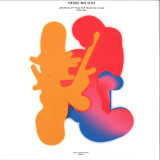
- A1: Brice Coefield Ain't That Right
- A2: Gerri Hall Who Can I Run To
- A3: Larry Hale Once
- A4: John Leach Put That Woman Down
- A5: Don Varner Tear Stained Face
- A6: De-Lites Lover
- A7: The C.o.d.'s She's Fire
- A8: The Combinations What' Cha Gonna Do
- B1: Ohio Players Love Slips Thru My Fingers
- B2: Gwen Owens Just Say You're Wanted (And Needed)
- B3: Charlie Gracie He'll Never Love You Like I Do
- B4: Mikki Farrow Set My Heart At Ease
- B5: The Appreciations I Can't Hide It
- B6: The Del-Tours Sweet And Lovely
- B7: Ronnie & Robyn Sidras Theme Instr
- B8: Billy Hambric I Found True Love
- C1: P.p. Arnold Everything's Gonna Be Alright
- C2: The Fuller Brothers Time's A Wasting
- C3: The Prophets I Got The Fever
- C4: The Furys I'm Satisfied With You
- C5: The Capreez How To Make A Sad Man Glad
- C6: The Showmen Our Love Will Grow
- C7: The Admirations Don't Leave Me
- C8: Sharpees Tired Of Being Lonely
- D1: The Precisions If This Is Love (I'd Rather Be Lonely)
- D2: Nolan Chance Just Like The Weather
- D3: Sandy Wynns The Touch Of Venus
- D4: The Olympics The Same Old Thing
- D5: Mickey Lee Lane Hey Sah-Lo-Ney
- D6: Robert Parker Let's Go Baby (Where The Action Is)
- D7: Little Hank Mister Bang Bang Man
- D8: The Du-Ettes Every Beat Of My Heart
Поиск:very
Все
Charly Records proudly presents Chapter Two in the Wigan Casino Northern Soul series. A very special double-LP gatefold edition celebrating the 50th Anniversary of the legendary Mr Ms club that opened its doors in the early hours of Sunday 22nd September 1974. Every Saturday night, for eight years, the faithful made the pilgrimage to the desolate mill town of Wigan to a pre-war dancehall on Station Road. It was a sanctuary, a place of togetherness, elitism, and the catalyst for the music scenes longest enduring sub-culture… Northern Soul. Our exclusive playlist highlights key records from the thousands played at the famed all-nighters by its original, founding, deejays, Richard Searling. Russ Winstanley, Kev Roberts and Dave “Mr M” Evison. Keep The Faith…
“On ‘The Nashville Sessions’ as throughout Van Zandt’s entire catalogue, the more wretched he sounds, the better - and on the best parts of ‘The Nashville Sessions’ he almost makes melancholy sound a condition to be envied.” Uncut In 1974, Townes Van Zandt recorded what would have been his seventh album, ‘Seven Come Eleven’. Business issues prevented its release until the recordings surfaced two decades later as ‘The Nashville Sessions’ In 2014, Townes Van Zandt’s original manager and producer Kevin Eggers gave Charly Records’ Rob Caiger and engineer Pete Reynolds the only surviving tapes to restore and remaster to present a stunning document of the folk-blues master at his absolute peak, originally released on vinyl for the first time in 2015. “You did a first-class with the record. The packaging looks sensational and the records sound great. That was what matter most to me over the years. I know Townes would be very pleased. The simple truth is the only things that matter to him was his songs and his music. All the rest was bullshit and he could have cared less. We began as dear friends and that’s how it ended just before his death. When it came to the music he gave all he had to give.” Kevin Eggers - 26 March 2015
Live LP from cult French punk / new wave band Dogs - limited white vinyl plus obi.
In the spring of 1984, the Dogs give a concert in Rouen, their hometown, at the Exo 7, the local venue. They play as a quartet, Dominique, Mimi, Hughes and Antoine. They are under contract to EPIC and have just released their 4th LP "Legendary Lovers" the previous year.
The concert, of course, will be rock and, in the band's image, elegant. It will be recorded and will remain unpublished to this day. With this record, you're holding in your hands the very essence of a rock concert as it should be: a small, smoke-filled venue (it's not compulsory) with no giant screen, no need for binoculars to see a tiny singer on stage waving to 25,000 spectators. The magic created by 16 strings, four electric guys, can only work this way. That's what you'll find here. Dry and clean.
"Live at Home" is that concert, finally available.
Lionel Herrmani
- A1: Jun Sato - Lorang
- A2: Fumihiro Murakami - Miko
- A3: Tadahiko Yokogawa - Stop Me
- A4: Love Peace Trance - Yeelen
- B1: Ichiko Hashimoto - Lete
- B2: Yosui Inoue - Pi Po Pa
- B3: Eiki Nonaka - Phlanged Vortex Clip
- C1: X Cara - Night In Aracaju
- C2: Poison Girl Friend - Nobody
- C3: Dream Dolphin - Take No Michi
- D1: Keisuke Sakurai - Harai Cd Version
- D2: Hiroki Ishiguro - Unity
- D3: Dido Shizuru Ohtaka Michiaki Kato - Mermaid
- D4: Keisuke Kikuchi - Retro Electric
2024 repress
Music From Memory is excited to announce a special compilation that they’ve been working on for some time now; MFM053 – VA – Heisei No Oto – Japanese Left-field Pop From The CD Age (1989-1996). Compiled by long-time friends of the label, Eiji Taniguchi and Norio Sato, Heisei No Oto delves into a world of music released almost exclusively on CD and brings together a fascinating selection of discoveries from a little known and overlooked part of Japan’s musical history.
The last ten or so years have seen a global wave of interest in Japanese music encompassing ambient, jazz, new wave and pop records from the 1980s, some of which is increasingly considered the most innovative and visionary music of that time. Although some music from this period, in the form of ‘City Pop’ or ‘rare groove’ records, had been coveted by collectors and DJs for a number of years, most Japanese music from the time was little known outside and often even within Japan.
Sometime around the mid 2000s, two Osaka record store owners, Eiji Taniguchi of Revelation Time and Norio Sato of Rare Groove, along with a handful of deep Japanese diggers such as Chee Shimizu of Organic Music records in Tokyo, began to explore beyond the typical ‘grooves’ or ‘breaks’. Much like their counterparts in Europe and the US, they began delving into home-grown ambient, jazz, new wave and pop records, discovering visionary music, often driven by synthesizers or drum computers, that broke beyond the typical confines of their genres.
Spending tireless hours in local record stores and embarking on digging trips across the country, Eiji Taniguchi and Norio Sato, much like Chee Shimizu, have been at the forefront of unearthing and introducing many of the very Japanese records now loved and sought after around the world. Yet as YouTube algorithms and vinyl reissues would transport such music into the global consciousness and demand and therefore scarcity intensified for such records, so Eiji and Norio have recently begun to turn their attention to CDs.
The title of the compilation Heisei No Oto refers to the sound of the Heisei era, which began in 1989 and corresponds to the reign of Emperor Akihito until his abdication in 2019. Marking the culmination of one of the most rapid economic growths in Japanese history, 1989 also coincided with the music industry’s final shift away from vinyl in favour of CDs. And, although compact discs were first introduced seven years earlier it wasn’t until late into the ‘80s that, beyond dance music labels, CDs became the exclusive format for major and independent labels in Japan and throughout the world.
This however didn’t signal the end of the innovation in Japan. Many of those same musicians who have become known for their work in the ‘80s would continue to produce outstanding music well into the mid ‘90s, as greater innovation and advances in musical equipment allowed Japanese musicians and producers to refine and explore new sounds. While musicians such as the seminal Haruomi Hosono, whose productions feature on a number of tracks, would continue to push the boundaries of these new technologies, these technological advances also meant less established musicians were able to make use of increasingly affordable but state-of-the-art equipment.
Including music by Haruomi Hosono as well as Yasuaki Shimizu, Toshifumi Hinata and Ichiko Hashimoto who have become known and loved around the world in recent years, Hesei No Oto also features Japanese pop star Yosui Inoue, producers Jun Sato and Keisuke Kikuchi in aaddition to less established artists from the contemporary, jazz, new wave, pop and dance music scenes. Bringing together a selection of tracks that seem to define these specific genres and in fact move fluidly between a number of them, the music on the compilation is again underscored by experimentations with synthesizers and drum computers though with something of a gentle Pop sensibility. Reimagined here then under the encompassing term ‘Left-field Pop’, this is an exciting chapter in Japanese musical history that has only just begun to be fully explored.
VA - Heisei No Oto - Japanese Left-field Pop From The CD Age (1989-1996) is a 2xLP/2xCD that includes liner notes by Chee Shimizu and artwork by Hagihara Takuya and is released on February 28th.
2024 Reissue
Although he rose to prominence in the NYC jazz scene, working as Nina Simone's exclusive touring pianist, he never blossomed as a solo artist, so he decided to take the plunge and create "Liberated Brother" on his own. This work, which was completed in just 2 days of rehearsal and 5 hours of recording with trusted musicians, is an important work that instantly boosted his popularity as a composer!
The opening title track, "Liberated Brother," is a Latin-taste instrumental covered by Weldon's mentor, Horace Silver. Freddie Hubbard, J.J.Johnson, Peter Hervorzeimer and others have covered "Mr. Clean", which has a complex melody but a memorable phrase. Stanley Turrentine covered jazz-funk "Sister Sanctified" with comical synth phrases, and the version was re-evaluated with the sampling of Boogie Down Productions' "My Philosophy". The album "A Tribute to Brother Weldon" released in 2004 on Stones Throw after Weldon's death covers Blakestra. And jazz funk with a strong blues taste, "Homey" is a super classic that was heavily played on the dance floor in the 90's. The simple and groovy drums with few sounds and the melancholy melodica played by Weldon are cool and very sophisticated songs, and I agree that it was useful in the rare groove scene.
A work that triggered the recognition of his talent as a composer, with such a large number of masterpieces recorded. Don't miss this opportunity!
After a relative rest for the two Liège heads, it is time to get back to business. And this business requires four hands to play, very rapidly, and two ears, to be listened to very loudly. Trapped in a frantic chase on a Belgian highway, finally on a slope, this time, we are missing the brakes... and avoiding the famous ruts is imperative for survival. So here we are, grazing the slide in a shower of magnificent sparks, while being hit by these ten punchy pieces releasing a crazy energy. Even if the forays towards EBM become more and more pop (if we can use that word here), Punk becomes always more synthetic, Kraut is percussive and martial, but with PRINCE HARRY, it's a long time that the Indus has been moving very fast: at 140bpm on the emergency lane. "A Long Way Down" is the fourth LP from the Belgian duo to find asylum on the Parisian label. After 5 years of discretion - almost absence - this curious pink album propels us to the unthinkable frontiers of electronic punk, lo-fi EBM and garage new-beat.
The self-titled “Orquesta Olivieri” was originally released in 1972, just when the Fania Records revolution and the explosion of salsa music, was reaching its peak. Very few copies were distributed at the time. Produced by boogaloo-don Bobby Marin, the album comprises a variety of Latin rhythms, including the much in-demand vocal harmonies-led ‘There is No Other Girl,’ a lowrider soul gem. Side A opens with the slow-paced Latin soul song ‘There is No Other Girl’, that style-wise connects to their previous LP, released when the boogaloo trend was still around. In fact, this song had been previously released two years earlier on a 45 and was then overdubbed (adding an organ on top) for this LP version. The song is very much in demand these days in the lowrider soul scene due to the breath-taking vocal harmonies and appealing production. The album also comprises spicy guaguancós on ‘Cuando llegué a Borinquen’, the classic ‘Los Muchachos de Belén’ and ‘Tabaritiando’. There is also room for a cha-cha-chá, ‘María Isabel, and a guaracha ‘Perrito sabueso’, and the album closes with the Latin soul ballad ‘Preferí perderte,’ interpreted in Spanish. First time official reissue.
Over the past decade, Kasra V has blossomed as a prominent figure in the music industry, particularly through his renowned residency on NTS Radio which has expanded his profound knowledge and expertise in music. Since landing his radio residency in January 2014 he has successfully broadcast over 200 radio shows, making use of the format to explore a wide array of sonic attitudes, styles and systems. To celebrate his achievement Kasra V launches his own imprint V-Sion which he will not only use for his own release output but also to propel his vision of contemporary dance music. To kick things off he presents a stunning 9-track compilation '10:10 Kasra V presents 10 years on NTS Radio' featuring unreleased tracks from some of his most revered guests who have graced his show throughout the years. Each contribution is wholly in line with Kasra V's genre-spanning approach. Over the years some periods have seen him playing straightforward club music, others featuring an extended notion of listening music. One hears a whole breadth of influences in his releases on acclaimed labels such as Radiant Records and Shaytoon Records: collected strands of rave, acid house, San Francisco breakbeat, new beat, ambient, oddball pop from 90s and 80s, UK bleep and so on. The regularity of a broadcasting residency pushed him to carry out a constant study of the history of dance music, and he envisions V-Sion as an output to curate musical output, contributing to the ongoing dialogue between past, future and the ever-changing fulcrum of the sonic present. The tracks presented on 10:10 are also emblematic of this historically-informed approach to dance music. They are all tuned for the floor, but present a range of possible floors to conjure: Fantastic Man's progressive opener, "Neural Filter", is airy and laced with delicate breakbeats, while "Archangel Waltz" by Sepehr presents a shadowy drama of string samples and throbbing bass swells."Qadak" by 500SEC lays an anthemic Arabic melody over bubbling electro; 2 tracks prior, Angel D'Lite circulates a whisper and moan through the mix of a euphoric, rave-stabbed anthem. The latter encouraged Kasra to put out this very compilation, which is just a testament to the value of the company we keep.
Steve Reich remains one of the most important figures in 20th century music. As part of the so-called "Big Four" of New York minimalists (along with La Monte Young, Terry Riley and Philip Glass), Reich influenced both the classical world and contemporary pop music.
Back in print ! Steve Reich remains one of the most important figures in 20th century music. Though he studied at the prestigious arts institutions Julliard and Mills College, by the mid-1960s Reich set about dismantling the very orthodoxy that he had been trained in. Forming a new musical language based on repetitive processes, Reich became established as part of the so-called "Big Four" of New York minimalists (along with La Monte Young, Terry Riley and Philip Glass). Reich's influence can easily be seen today in both the classical world and contemporary pop music."Four Organs" is the ultimate minimalist composition. Performed by Reich, Glass, Art Murphy and Steve Chambers, four identical Farfisa organs strike a single chord and gradually lengthen each note to produce polyrhythms between the players. Anchored by Jon Gibson's stoically-steady pulse on maracas, the piece deconstructs its opening burst to a sustained mass of sound – stretching the tones to create (in Reich's words) "slow-motion music."
Inspired by Reich's early training on drums, "Phase Patterns" treats the keyboards like tuned percussion instruments: a basic rhythm pattern is played in unison and almost imperceptibly increases tempo to move out-of-sync. Each progressive cycle emphasizes unique figures that are not generated by an individual alone, but rather emerge from the communal expression of the group. Originally released on Shandar in 1971, Four Organs / Phase Patterns is one of the most highly regarded avant-garde recordings of the past 50 years. This first-time vinyl reissue features cover photography by artist Michael Snow and is recommended for fans of Neu!, Glenn Branca and Tim Hecker.
Color Vinyl[24,58 €]
Valley of Rain was Tucson’s Giant Sand’s debut album recorded in 1983, and eventually released by 1985. It included Howe Gelb on vocals, guitar and Winston Watson on drums for most of it, Tommy Larkins on drums for some of it and Scott Garber on fretless bass for all of it. At the time of the recording, Howe was unacquainted with the possibilities of tube (valve) amps and had recorded most of the album with a Roland JC120 at the miraculous 8 track facilities of The Control Center in Korea Town, Los Angeles by Ricky “Mix” Novak. This impromptu recording had occurred because the band refused to cancel their first Los Angeles live gig, at Madame Wong’s, when the band (Giant Sandworms) had broken up days before in Tucson. Instead, Howe headed out anyway with Scott, the newest member who’d only been in the band for about a year, after band mainstays Billy Sed and Dave Seger reasonably decided ‘enough was enough’ following a rough and tenuous year spent in the lower east side of NYC attempting to further the band circa 1981/82. Tucsonan Winston Watson, (who would go on to tour with Bob Dylan in the 90s, as well as Alice Cooper, Warren Zevon etc ) was already living in Los Angeles and was brave/kind enough to jump in for the live date with no rehearsal. The result was so sparked with adrenalin, that the trio set up an impromptu studio session the next day to attempt to capture the sonic thrust on tape. The total cost of the day and a half recording was $400 including one 1” reel of 30 minute tape. When Enigma Records offered to release the album they requested another 15 minutes of music to make it a full LP. Ron Goudie was then called in to oversee the extra recordings at a Venice, CA studio called Mad Dog with Eric Westfall engineering. Tommy Larkins, who had been on the previous country punk album of Howe’s “The Band of ... Blacky Ranchette” came in to drum for those last 3 songs. It was there when Howe borrowed an amp that had been stored at the studio did he discover the bolster of a tube amp and his world changed. The amp was a slightly modified Fender Twin Reverb owned by Robbie Krieger of The Doors. 30 some years later, now that the band had been put to sleep indefinitely, those very first songs had begun creeping into the last Giant Sand tours. It somehow seemed appropriate to give them another shot with the proper amp just to see what they could’ve been. What made the idea more approachable was the availability of both original drummers living back in Tucson. The first attempt came last summer with both Winston & Tommy and Thøger Lund on bass, as well as the 2 newest members, 29 year old Gabriel Sullivan and 23 year old Annie Dolan on double neck guitars. The sound was insane. The funny part was Gabriel, who engineered and mixed the session, gave it an intentional 80s production sound. Howe later explained to Gabe he had been at war with that production trend since those first original recordings. So they all tried it again at Christmas time, this time with a newly discovered Fender 30 amp that had only been in production from 1980 – 1983. This new re-recording of that first album now sounds like it should’ve sounded. It was re-done for $400 and the same day and a half session time as the original. Scott Garber even drove up from Austin TX with his fretless to play so that the album is literally the originally line up for at least half of the songs. And yes, no pedal boards were used too. The band intends to tour this summer playing only those Valley of Rain songs. Giant Sand Returns To Valley Of Rain.
Huge TIPP!! :)
Timeless cuts to suit all intimate dance floors.
After some time we are very excited to announce our new EP by French pals Atomic Moog. With amazing releases on Lowless, Monument & Delsin we are huge fans of their music and their approach to production and feel they are a strong fit for what Appian is all about :).
On show here are warm, heavily textured cerebral journeys densely packed with analogue atmosphere and feeling - with Dub at its core. We think they have created something very special.
Hope you ENJOY : )
The General Store recorded four songs in 1967 of which two of them remained unreleased. More than 55 years later they see the light of the day for the very first time. Tower of Power meets Funkadelic.
Limited to 300 copies and released with the blessing of the band. Can you ask for more?
RAWAX presents Orlando Voorn aka FIX. We are very happy to re-issue "Flash" which came out on iconic KMS Records in 1992!
Our version also contains the track "Dope Computer" from the original release plus "Dace" and "Players Anthem" as bonus tracks.
Don't leep on this vinyl only release!
Highy recommended!
This latest installment of Mr. K Edits focuses on two midtempo cuts for the roller skaters and lowdown groovers, with a couple of deep album tracks that are appearing on 7-inch for the first time — both with unique Mr. K edits.
First up is “Felix Leo” from Californian keyboardist Rodney Franklin. A subtle instrumental that was overshadowed at the time by the monster hit “The Groove” (also known to UK’s jazz dancers as The Freeze), “Felix Leo” is that creeper that makes its way into your consciousness and won’t let go. As he so often does, Mr. K trims the track to its leanest, meanest measures, starting directly from the menacing, hypnotic chord progression that forms the root of the composition. Proceeding at a stately leonine pace befitting the title, the song spirals beautifully, as a lush string section encourages the listener to get lost in the unfolding sonic textures.
“In Love” is a very early Prince track, in fact it’s the very first cut in which we hear Prince play instruments on his debut album, released in 1978. And play instruments he does, every single one of them — drums, bass, guitar, and above all, those creamy ARP and Moog synth lines that power this tune. Bouncing along on a rhythm that blends a solid four-on-the-floor stepper’s groove with a hint of the staccato upbeats of reggae, this one’s an easy warmup for dancers and a perfect tempo for skaters. Mr. K’s edit gives us the extended mix the album never did, adding nearly two minutes to the LP timing without ever feeling strained or repetitive.
“I learned both of these songs for roller skaters in my early Roxy days,” Krivit says, referring to the legendary downtown NYC roller rink, “both had those grooves that stood the test of time.” We think this exclusive 7-inch will do the same!
As always, these are mastered and cut to vinyl with both home hi-fis and club systems in mind, and the sound is unmatched.
*** ULTRA RARE PSYCH-FUNK / GARAGE ROCK ***
The General Store recorded four songs in 1967 of which these two were released on a nowadays very very very very very hard to find 7inch single. This re-issue is limited to 300 copies and one with the blessing of the band. Tower of Power meets Funkadelic.
A second 7inch will be released soon with two UNRELEASED tracks!
As comped on "DOWN & WIRED Vol.7" (PT068LP).
Una Magnum Special Per Tony Saitta (aka. Blazing Magnum: Strange Shadows In An Empty Room)> is a cop movie directed in year 1976 by Alberto De Martino and starring Stuart Whitman, Martin Landau, Tisa Farrow, and Gayle Hunnicutt. It was co-produced by Italy and Canada. An Ottawa police captain searches for the person who poisoned his sister, who was attending the university in Montreal. Later on, he desperately starts to use his own brutal methods to find the killer, but the truth turns out to be something different than what he had expected.
Trovajoli has composed and conducted a score that elegantly occupies a place of all respect in the Cops/Giallo movies’ scoring. The score alternates between action-driven funky music to nostalgic/romantic music in a reflection of the two dimensions of the protagonist: his cop job full of tasks and his private life full of sadness, but he becomes the superhero of the story by taking vengeance against those who hurt him by killing his beloved sister, and ultimately discovering the unexpected truth. For this vinyl album the original record master in stereo sound was used, restored and remastered to the highest quality. More or less the music in the movie is featured on this album, prepared for release by the composer himself for a very fine listening experience. Enjoy a half-hour with Armando Trovajoli and his cool sound!
2024 Repress
More great new music from Soul:r's home city of Manchester. Chimpo is a local legend. He's been on the underground scene for years, dj'ing and producing his homemade blend of multi genre bass infused electronic music. Known also for his unique microphone skills, Chimpo's delivery style and wit is something to behold. This Ep showcases all of what chimpo has to offer. A release that will stand out for being different and yet totally devastating on the dane floor. The vinyl release contains a huge remix of the title track, "Frontline", by Calibre that utilises Fox's vocal and flips the sound back to the days of jungle techno. Add also the deadly production unit of Dub Phizix and Skeptical on lead track "Buzzin" and you have a package that we at Soul:r are very proud of indeed.
Pop Music by Iggy Pop is the 1996 compilation featuring the 20 best tracks released through BMG between 1979 and 1981, including ""Bang Bang"", ""I Need More"", ""I'm Bored"", ""New Values"" and ""Five Foot One"". Iggy Pop was associated with Virgin Records for much of his post-Stooges solo career, but for a brief spell during the late '70s and early '80s he called Arista Records (BMG) his home. This era saw punk's godfather stray away from the primal style he is known for, as he experimented largely with new wave sounds. For the very first time, Pop Music is available on vinyl as a limited edition of 1500 individually numbered copies on ash grey coloured vinyl and includes an insert.