Swiss artist Lukas Traxel releases his powerful debut album One-Eyed Daruma on We Jazz Records, March 10. The trio features Traxel on double bass, Otis Sandsjö on sax and Moritz Baumgärtner on drums. Compact, deep, and organic to the bone, Traxel & co's sound echoes the innovations of rhythmically driven avantgarde jazz while keeping things moving at all times. There's both drive and freedom to this sound.
ONe-Eyed Daruma features eight new compositions by Traxel, who crafted the outline for the album while dealing with the loss of his father. The group came together after an open invitation from the Zurich jazz club Moods to present a new group. The trio of Traxel, Sandsjö and Baumgärtner creates a full, symphonic, and powerful body of sound despite the instrumentation without a harmony instrument. The trio functions as a collective where the boundaries between composition, melody, and accompaniment are in flux, while keeping the common goal of creating new music together in sight at all times. Traxel reports that after playing bass in various groups with guitar and/or piano, he wanted to create a counterpoint of sorts with his new group and specifically go about it with a more sparse setup. As One-Eyed Drama proves, the idea behind the trio dynamic is a strong one and the unit makes use of their extra space in creating evocative, moody, swinging creative jazz with a distinguishable fingerprint of its own.
Lukas Traxel says:
"The process of composing this music while dealing with the loss of a loved one resulted in a writer's block at first. The notes would just not flow out of my pen until I noticed a mysterious-looking figure in the right upper corner of my piano. It was a daruma, an eyeless figure that in the Japanese tradition brings luck and prosperity. According to the myth, the first eye must be drawn onto the figure while expressing a wish. The second eye can be added only if the wish comes true. My daruma is meant to stay one-eyed as my wish, strongly connected and intertwined with my now gone father, is not meant to be fulfilled. The feeling of unfulfillment and imperfection of life serves as a common thread throughout this album, right down to its title. In a similar fashion, a composition remains incomplete until it is interpreted by musicians, and given form as music. That being said, for me playing together with this trio symbolises the upside: the sense of fulfillment in music and life.
Our musical influences include the American composer and singer Caroline Shaw, Swiss pianist Colin Vallon's trio, and composer/singer-songwriter Gabriel Kahane. In addition, I have listened a lot to the trio albums of Jimmy Guiffre and Sonny Rollins. Besides that, my musical heroes like Charlie Haden, John Coltrane, and Keith Jarrett always flow into the music. Another very important influence in the music is the work of American visual artist Agnes Martin, in whose works the imperfection of a multiplicity of repetitions results in a lively big whole in the end. (See "Wild Flower")
Live, the trio takes a lot of freedom in interpreting this music, yet we have a deeper, almost pop-like attitude towards the live performance as an experience. For me it's always important to build a strong narrative with the band while on stage."
One-Eyed Daruma by Lukas Traxel is released on 10 March 2023 by We Jazz Records on LP/CD/digitally. The LP edition is shelved in an inside-out sleeve and pressed on white vinyl. The CD is housed in a cardboard digisleeve with UV lacquer finish.
Cerca:very
2026 REPRESS!
Limited edition, ultra clear vinyl version of RÜFÜS DU SOL's standout Innerbloom Remix EP. Calling on a who's who of modern electronic’s greats, they harness the unquestionable expertise of this all-star cast to adapt their dark, emotive and gargantuan single 'Innerbloom'.
The result is an array of dancefloor-destined destruction from the legendary UK superstar Sasha, melodic deep house wizard Lane 8, and Germany's very own H.O.S.H.
Introducing Human Behaviour Records, a vibrant new realm where music meets the soul, a home for fresh, innovative sounds and frequencies that resonate with the very essence of what makes us uniquely human. A journey into the deep, timeless grooves of dance music, blending rhythms and harmonious beats that transcend space and time. Our mission is to create a profound, unforgettable connection with all those who hear it, inviting listeners to lose themselves in the universal pulse that binds us together. We hope to spark a sense of unity, bringing together individuals from all walks of life and fostering a community built on shared experience and creative expression.
First up one up on the label is Nic David with his highly anticipated EP “Magnetic”. It pushes and pulls the boundaries of house and electro, connecting frequencies that attract positive feelings and inspire irresistible movement on the dance floor. Followed by A2 we have “The Feelin” a track that takes you on a journey with no destination, an ever-evolving ride through funky basslines and enlightened melodies. B1 taking a turn into the harder sounds with “Work it (Listen up)” capturing the mind with heavy drums and mind altering sounds through peak moments. And for the final track we are proud to have none other than Nate S.U for the remix of “Work It”. A forward thinking human known for his hypnotic sounds, creating timeless music that sits on its own throne. His take on “Work It” fuses electronic textures and a rock inspired rhythm, pushing the boundaries from the ordinary.
Following his acclaimed releases on Violent Cases 006 VC006 and “Arriving In Nebula” VC10.2, as well as the magnificent launch of the sublabel Mysteries with his track “Ether” on Mysteries #1 [MSTR1], Austrian producer Van Der Wiese returns to Violent Cases with a new chapter in his sonic explorations. “Vestiges” unfolds as a deeply atmospheric EP with four tracks that balance melancholic introspection with subtle euphoria.
Each track feels like a fragment of a memory - traces of rhythm and emotion woven together in a delicate balance. Layered sound textures, immersive basslines, and shimmering harmonies create a mood that is both physical and reflective, inviting the listener to float between pulse and perception.
The release is designed - once again very impressively - by Darkam, who was inspired by the track “Haniwa.”
Her illustration captures the mysterious and organic spirit of the EP and offers a visual counterpart to its haunting emotional depth.
With “Vestiges,” Van Der Wiese defines his unique position within the contemporary Tekno scene - precise yet emotional, restrained yet resonant.
A release that lingers long after the last note has faded away.
And above all, this is because Pozek, as mastering engineer, has succeeded in delivering a very balanced EP.
A must-have for all good collections.
Each EP comes with 2 posters, a digital download code, and 2 artwork stickers.
We have sourced a whole bunch of original stock from Charles Webster's very tidy Miso label. This is one of them from 20 years ago, but the sounds still have a future edge. It's deep, dubby, minimal, but with meaningful and intricately crafted melodies that bring astral energies. Lo Rise's 'Life Goes On' is the source material for a quartet of tasty remixes. Charles Webster & Martin Iveson mix it into a fleshy, techy dub with a jazzy vocal, Dean DeCosta brings more bump to the drum and glitch to the texture, and Markus Enochson strides into classic 00s tech house. Jimpster shuts down with a sparkling and jazz-inflected dub.
- A1: Bad Luck (Eric Kupper Remix)
- A2: Bad Luck (Eric Kupper Remix Instrumental)
- A3: Love Train (Eric Kupper Remix)
- B1: Love Train (Eric Kupper Remix Instrumental)
- B2: The Love I Lost (Eric Kupper Remix)
- B3: The Love I Lost (Eric Kupper Remix Instrumental)
- C1: Back Stabbers (Eric Kupper Remix)
- C2: Back Stabbers (Eric Kupper Remix Instrumental)
- D1: I Don't Love You Anymore (Eric Kupper Remix)
- D2: I Don't Love You Anymore (Eric Kupper Remix Instrumental)
- E1: Love Is The Message (Eric Kupper Remix)
- E2: Love Is The Message (Eric Kupper Vocal Remix)
- F1: Do It Any Way You Wanna (Eric Kupper Remix)
- F2: Do It Any Way You Wanna (Eric Kupper Remix Instrumental)
Remixer extraordinaire Eric Kupper takes a set of epic, lost recordings from 1982, that feature the cream of the crop session musicians behind the soulful sound of Philadelphia - Earl Young (Drums), Ronnie Baker (Bass), Norman Harris (Guitar), Lenny Pakula (Organ), Larry Washington (Percussion), Vince Montana, Jr (Vibes, Keyboards), John Bonnie (Saxophone) - along with powerhouse vocalists Joe Freeman, David Simmons, Bobby Love and Ron Tyson, and lovingly applies his own modern sheen, spinning them into ear candy for today’s listener as well as those who were there from the very beginning. These incredible remixes, which have individually been topping the charts on Traxsource, can now be had in one place - this exclusive 3-LP vinyl collection that is not just a tribute to the past, but a vibrant continuation of the legacy these legendary musicians helped create.
When percussionist, pianist and vibe player Ricardo Marrero recorded the ultra-rare Latin jazz meets funk LP “A Taste” in 1976, little did he know that decades later that sealed copies of the original album would exchange hands among collectors for thousands of dollars. A veteran of the New York salsa and Latin jazz scene since the mid-1970s, Marrero has worked with luminaries such as The Fania All-Stars, Pete “El Conde” Rodriguez, The 5 Stairsteps, Dave Valentin, Angela Bofill and most recently - Ruben Blades. Full of up-tempo funky gems and sizzling slow burners, “A Taste” also includes Marrero’s crossover hit “Babalonia” that received quite a bit of airplay in the mid-1970s. Originally pressed in a very limited quantity on Don King and Lloyd Price’s TSG Records, and with little or no promotion, “A Taste” nevertheless pushed the boundaries of New York City salsa forward and has subsequently become one of the rarest, sought after and expensive records the vinyl world has ever seen. Suffice it to say that the music on this obscure jewel is priceless, featuring some of the greatest players of the era, directed by the great maestro Marrero on keyboards, percussion, vibraphone and vocals with the legendary Dave Valentin (flute, percussion, coro), Ralphy De Jesus (bongos, percussion, quinto), Erasto Bernard (congas), Tito Marrero (drums, timbales, percussion), George Oldziey (flugelhorn, trumpet), Nancy O’Neil (lead vocals, coro), John “Figgy” Figueroa (tenor saxophone, soprano saxophone, baritone saxophone), Sean Mahony (trombone) and John Dearth (trumpet). A taste of Ricardo Marrero & The Group is one that’s sure to satisfy.
- Debut album by percussionist, Pianist, Vibraphonist and two time Grammy Award winner
- Rare 1970 melange of Latin Jayy, Soul, Funk and Salsa from New York City
- Features legendary flutist Dave Valentin
- A1: Felonious Monk
- A2: Gullah Jack Style
- A3: The Very First Flower
- A4: Dimensions Of Underwater Light
- B1: Luigi Takes A Walk
- B2: O G. Dreams Of Lost Love
Black Vinyl[26,01 €]
The strongest Japanese cover of Jackson Sisters and Dan Hartman's signature song is now available on 7" for the first time!
Side A, "Milk Suki" is a soul number that boldly covers the Jackson Sisters' very famous song, "I Believe In Miracles," and explains the importance of milk. The B-side is a cover of Dan Hartman's "Relight My Fire," a dance classic. The gap between the humorous lyrics and the tasteful arrangement is sure to get you hooked!
In 2017, at Documenta Kassel (but in Athens), I invited José Jiménez Bobote, a remarkable gitano artist from the Tres Mil Viviendas neighbourhood in Seville, to record a series of actions in specific locations in the Greek capital. Ancient Greece and modern Greece. I wanted him to draw sound from the city, to strike it as only a flamenco artist can, with his feet. To hit the ground and make it moan, ring out with noises evoking significant moments in history: from Diogenes the Cynic and the Apostle Paul’s sermon at the Areopagus to Rosa Eskenazi’s resistance to the Nazi-German occupation, and the ups and downs of police Inspector Costas Haritos’s survival at the European Bank during the PIGS crisis. Bobote struck the ground and Athens responded, sending back echoes of the past, in an exceptional anachronistic exercise. In flamenco it is possible for several times to sound simultaneously.
We took seventeen hours of footage, and water from many wells.
I then shut away producer, musician, and friend Raül Refree with this material so that he could take the long titles and use them as scores, turning them into mere songs. It was very important to think in terms of songs. The tracks had to have the capacity to be songs, the kind of thing one whistles while absent-mindedly walking down the street. Generally speaking, the scores—that is, the texts—defended the use and abuse of the loose coins that people carry around in their pockets. Loose change as a kind of everyday fetishism against big financial capital. Pistis! Refree managed to coax that distinctive unity of songs, their bright catchiness, from the amalgamation of sounds that would, in other hands, end up being labelled concrete music. Peter Szendy would be pleased and grateful. Being able to sing under one’s breath something that others consider simply noise.
Seven songs, yes. And if you get the chance, take a stroll through Athens with them: the locations are clearly defined. If not, then let Athens fill your home with all its ancient wisdom, boring into your ears like worms, making holes in history.
Listen, and, as people used to say, turn up the volume!
Pedro G. Romero, Santa Marta, Colombia, November 2025
Comes with booklet with song lyrics written by Pedro G. Romero. Limited edition of 250 vinyl records.
- A1: Rai Rai
- B1: Kanashiyana
Since 2018, BBE Music’s J Jazz Series of compilations and album reissues has been at the forefront in focussing attention on the hitherto cloistered and rarified world of Japanese jazz. True to the ethos of the series, curators Tony Higgins and Mike Peden have once again dug up a truly rare gem in the form of a 45 from the mysterious Christal Zone, originally released in 1971 only as a promo and reissued here for the very first time. Several years before pianist Tohru Aizawa and brothers Tetsuya and Kyoichiro Morimura formed the now-celebrated Tohru Aizawa Quartet — whose 1975 private- press spiritual jazz LP Tachibana Vol 1 has become a cornerstone of the J Jazz canon and previously reissued by BBE — they were already venturing into bold, experimental territory. Their 1971 single Rai Rai, released as a promotional 7-inch on Liberty Records under the short-lived moniker Christal Zone was written and arranged by koto player and composer Hideakira Sakurai. An almost unclassifiable hybrid of jazz, Japanese folk, Algerian raï, and free improvisation. Sakurai’s visionary approach dominates the track, blending traditional Japanese instrumentation with a dense polyrhythmic groove that evokes not only avant-garde jazz but also the raw street energy of Algerian raï — celebratory, unfiltered, and joyfully unrestrained. The story behind the recording of Rai Rai is as spontaneous as the music itself. While casually rehearsing at Sakurai’s villa, the group was overheard by producer Kunihiko Murai, who was so stunned by what he heard that he arranged a studio session for them the very next day. The resulting 7-inch — Rai Rai / Kanashiyana, released under the one-off Christal Zone name — is now one of the rarest artefacts in Japanese jazz, with original copies fetching astronomical prices among collectors. BBE Music has faithfully reproduced the original artwork and packaging to celebrate this extraordinary and super rare piece of J Jazz history. A piece that bridges the ancient and the future, Japan and North Africa, in under four minutes of controlled chaos. A truly one-of-a-kind artefact, Rai Rai is a manifesto from a generation unafraid to rip up the rulebook and follow their own path.
'In 2023, sound artist and composer Weston Olencki toured across the American South. Beginning in their hometown in South Carolina, they snaked a circuitous path from the mountains of West Virginia to the banks of the Mississippi River. As the miles accumulated, so did the initial seeds of new work.
'Instruments and artifacts they acquired hitched a ride in the backseat, while songs and sounds filled their portable recorder: water in its various states, the familiar insectoid buzz of those summer nights, trains cutting through the landscape, the traditional music that lived alongside the communities that kept it. Olencki took it all in, and over time, found ways that these experiences coalesced into a bramble-like perspective of time, where past, present, and future intersect in ways both barbed and beautiful.
'Broadsides, Olencki’s newest solo full-length is the multilayered result of this journey. The album follows their landmark release Old Time Music from 2022, which presented radical interpretations of traditional tunes from Appalachia and throughout the South alongside original compositions that drew significantly on archival recordings. On Broadsides, Olencki rejects delineations between the unmoored avant-garde and the rootedness of one’s cultural heritage, revealing their porous and intertwined nature. “My mother was a quilter. Her mother before that,” they write in the album’s liner notes. “Quilting, like music, is a practice of embedding knowledge and remembrance into the very core of the thing you are making. It’s not just about the materials, but how they’re reassembled, recontextualized, stitched, woven to form new patterns - the minutiae of craft holding significance to those looking to find it. Stories woven from stories, never told the same way twice.”
'Like all great road trips, Broadsides unfolds slowly and continuously, with moments of dramatic reverie punctuating the endless melt of highway in the rearview. We’re immediately confronted by the uncanniness of revisiting old haunts, as Southern storms break through the initial churn of the freight locomotives of Alabama. Olencki’s interpretation of the bluegrass standard “Foggy Mountain Breakdown” captures the euphoria of melancholy in motion. The permutational plucks of banjo are bounced around the frame by a computer, its pitches determined within algorithmic sequences and transcriptions of classic three-finger licks. The tonalities of old-time are smeared and stretched until all that’s audible is the insistence that Heaven might be real.
'In the album’s second half, “Omie Wise,” a murder ballad made famous by Doc Watson, follows an interlude recorded on the river in North Carolina in which the titular character’s body was laid. Ghostly echoes of a dozen other renditions float through the substrata as Tongue Depressor’s Henry Birdsey accompanies them on the pedal steel guitar. The album’s central composition, “all my father’s clocks,” is a profound meditation on entropy and impermanence. The sound of their father’s extensive clock collection ticks away as Olencki pulls a bow across the length of an autoharp sourced from a rural strip mall. The instrument was left as detuned as it was found, the resonance of its deep bass drone and clanging high-end the result of years of neglect and the warping effects of Southern humidity.
'Historically, broadsides were an early form of broadcasting, an often- musicalized telling of current news pasted in the public square. The name was later taken up by Sis Cunningham and Gordon Friesen in the 1960s, whose Broadside magazine published songs and social commentary when American folk music resurfaced as an urgent way of communicating the multifaceted politics of its time.
'Olencki borrows the phrase to recall both this old form of songmaking and that later prominent reexamination of traditional music’s role in modern life, but also to draw attention to the fragmented and machine- mediated way heritage is diffused in this very different, but no less pivotal, moment.
'As a sanitized past is used as justification for current violence and domination, we can turn to these artifacts to better understand the history of ourselves, but only if they are consciously pushed to evolve. Broadsides represents one personal, striking vision of what far-flung futurisms could be respun from = these high, lonesome sounds: a reflection of the unbridled joy and deep sorrow inherent to living together through time, and a desire to push further into the untold and unknown.'
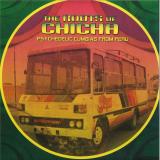
- A1: Los Mirlos - Sonido Amazonico
- A2: Juaneco Y Su Combo - Linda Nena
- A3: Los Hijos Del Sol - Carinito
- A4: Los Destellos - Patricia
- A5: Los Diablos Rojos - Sacalo Sacalo
- A6: Los Riberenos - Silbando
- B1: Compay Quinto - Diablo
- B2: Los Destellos - Elsa
- B3: Ranil Y Su Conjunto Tropical - Mala Mujer
- B4: Manzanita Y Su Conjunto - Agua
- B5: Los Destellos - Para Elisa
- B6: Juaneco Y Su Combo - Ya Se Ha Muerto Mi Abuelo
- C1: Los Ilusionistas - Colegiala
- C2: Los Diablos Rojos - El Guapo
- C3: Manzanita Y Su Conjunto - El Hueleguiso
- C4: Juaneco Y Su Combo - Vacilando Con Ayahuasca
- C5: Los Hijos Del Sol - Linda Munequita
- D1: Grupo Celeste - Como Un Ave
- D2: Los Destellos - Constelacion
- D3: Los Wembler's De Iquitos - La Danza Del Petrolero
- D4: Chacalon Y La Nueva Crema - A Trabajar
- D5: Los Shapis - El Aguajal
- D6: Los Mirlos - La Danza De Los Mirlos
The Roots of Chicha, compiled by Barbès Records, was originally released in 2007 and became the first recording to popularize psychedelic cumbia around the world.
From the late 60's through the 80's, Peruvians invented a new popular musical hybrid inspired by music from the Americas. In 1968, Enrique Delgado released his first record on Odeon with his new group, Los Destellos, single-handedly creating Peruvian cumbia. He codified the genre early on by using the electric guitar as the primary melodic instrument, and mixing cumbia rhythms with folkloric huaynos, criollo voicings, Cuban guarachas and guajiras, rock, boogaloo, surf, psychedelia, oriental music, classical music, and bits and pieces from Brazil, France, Chile... All Peruvian cumbia bands for the next thirty years would end up drawing from the exact same sources (Grupo Celeste, Los Mirlos, Juaneco Y Su Combo, Manzanita Y Su Conjunto...).
This new wave of Peruvian cumbia came to be known as chicha. Chicha is originally the name of an alcoholic drink, made of fermented maize, which the Incas were especially fond of. In the past thirty years, however, the word has taken on a pejorative connotation. Peruvian cumbia started being called chicha in the late 70s, around the same time that the music came to be viewed as the expression of the slums – the pueblos jovenes. Little by little, the word became an adjective, and people now talk of chicha culture, chicha press, chicha architecture, even of a chicha president, and none if it – you guessed right – is meant as a compliment. Chicha suggests corruption, shady deals, and cholos – a derogatory term for a person of Andean heritage that, of late, is being reclaimed and worn as a badge of honor by the very cholos it was supposed to demean in the first place.
- A1: See Saw
- A2: Raise Your Hand
- A3: Uptight
- A4: Barefootin
- A5: Soul Man
- A6: I Heard It Through The Grapevine
- A7: Sitting On The Dock Of The Bay
- A8: It's A Man's Man's Man's World
- A9: In The Midnight Hour
- B1: Vehicle
- B2: Don't Fight It
- B3: Land Of 1000 Dances
- B4: Treat Her Right
- B5: Show Me
- B6: The Beat Goes On
- B7: Baby Baby
- B8: Ain’t No Mountain High Enough
Following our first LP of Tom Jones’s finest soulful performances on the radio, “Soul Man”, we present a second album of soul songs that we think he should have released but never did. This time we concentrate on his TV performances, the bulk of which come from 1969 and reflect his personal preference for covering Stax, Atlantic and Motown material. So put aside your preconceptions if you have any and listen to his collaborations with Aretha, Smokey, Janis, Cher, Dusty and don’t forget that Wicked Wicked Pickett. With a tight, funky band led by Herbie Flowers, this is Big Band Soul at its very best.
- A1: Condition Red - The Goodees
- A2: Go Away - The Murmaids (Of ’66)
- A3: Where Is The Boy Tonight - The Charmaines
- A4: One Way Street - Beverly Williams
- A5: What Did You Do Last Night - The Drake Sisters
- A6: Forget Where I Live - The Half-Sisters
- A7: He Told Me He Loved Me - Miss Cathy Brasher
- B1: Don’t Let Him Hurt You - Les Chansonettes
- B2: He’s A Lover - Tutti Hill
- B3: Anything Worth Having (Is Well Worth Waitin’ For) - Joan Moody
- B4: I’ll Come Running Over - 2 Of Clubs
- B5: Hey Boy - The D.c. Blossoms
- B6: Wild Side - Denita James
- B7: Eddie My Love - The Sweethearts
From Ace Records’ early days, there’s always been a place in our hearts for music’s feminine side. A year having flown by since the release of our last compilation spotlighting the US girl group sound of the 60s – think castanets, anguished teen sirens, Svengali-esque producers and mini-sonatas about dreaming, dancing and moody boyfriends (sometimes deceased) – means the time has come for a new vinyl-only volume.
As 1968 drew to a close, the golden age of girl groups had seemingly been and gone: the Shangri-Las, Ronettes and Chiffons, for example, hadn’t had a hit record of note since 1966. Then along came ‘Condition Red’, a cleverly produced psychodrama performed by the Goodees, who grace the front cover and open the top side of this new comp in dramatic style. Over on the generally more soulful second side, Les Chansonettes are first up with ‘Don’t Let Him Hurt You’, a big production stomper written with Martha & the Vandellas in mind.
Elsewhere, Beverly Williams performs the very Lesley Gore-like ‘One Way Street’; ‘Go Away’ by the Murmaids (of ’66) is a lavishly produced number with a chamber pop vibe; ‘What Did You Do Last Night’ by the Drake Sisters was recorded in Phase-O-Phonic Sound; the lyrics of Denita James’ ‘Wild Side’ call to mind genre classics such as ‘He’s A Rebel’, ‘Out In The Streets’ and ‘Chico’s Girl’; and the Sweathearts close the show with a gorgeous harmony-filled update of the mid-50s oldie ‘Eddie My Love’. As usual in this series, the inner sleeve features a picture-packed 4,000-word track commentary by long-serving compiler Mick Patrick.
Grupo um celebrate 50 years with release of lost dictatorship-era album nineteen seventy seven!
First time release - vinyl comes with printed innersleeves
Brazilian avant-jazz vanguardists Grupo Um celebrate their 50th anniversary, sharing a second previously lost 1970s album from the vaults. Nineteen Seventy Seven (titled after the year it was recorded) is another rip-roaring instrumental fusion treasure from the band which spawned from within Hermeto Pascoal’s famed mid-1970s São Paulo collective.
Like their debut album Starting Point, Grupo Um’s Nineteen Seventy Seven was recorded when Brazil's military dictatorship was at its most repressive. “There were no open doors to those who dreamt to be protagonists in creative instrumental music”, remembers drummer Zé Eduardo Nazario, “even popular composers and singers had to submit their songs to censors and many records were banned and confiscated from the stores.”
Just like Hermeto Pascoal's Viajando Com O Som (1977) and Grupo Um's previous album Starting Point (1975), both of which remained unreleased until the 21st century, Zé Eduardo asserts that the 1977 album was flatly 'without any chance to be released at that time."
Recorded at Rogério Duprat’s Vice-Versa Studios in São Paulo, the group were under both time and space restraints, “we chose the small Studio B,” Lelo Nazario recalls, “which had a Tascam (TE AC) 12x8 console and a 4-channel AMPEX AG 440 machine. Therefore, we had to record without overdubs, everything straight to tape.”
Expanding from a trio to a quintet, original Grupo Um members Lelo Nazario (keys), Zé Eduardo Nazario (drums), and Zeca Assumpção (bass) were joined by saxophonist Roberto Sion and percussionist Carlinhos Gonçalves. Carlinhos, Zé and Zeca had already played together in the group Mandala, while brothers Lelo and Zé had just finished a stint backing Hermeto Pascoal during his years in São Paulo.
Lelo was deeply immersed in modular synthesizer experimentation during this period, working extensively with the ARP2600 and EMS Synthi AKS. These electroacoustic explorations formed the sonic foundation for "Mobile/Stabile," one of his first compositions to merge modular synthesis with Brazilian music, a fusion that would ripple throughout the Brazilian jazz scene. The piece premiered at the first São Paulo International Jazz Festival in 1978, performed by Grupo Um with guest trumpeter Márcio Montarroyos. In a shocking moment, festival organizers interrupted the show mid-performance, sparking fierce backlash from both audience members and journalists who denounced the incident as artistic censorship during Brazil's era of political and cultural repression. The version on Nineteen Seventy Seven is the first recording of the composition.
Nineteen Seventy Seven combines Afro-Brazilian rhythm, modular synthesis and a plethora of whistles, percussion and effects pedals. Album opener “Absurdo Mudo” - so titled for the absurd difficulty it poses to the musicians performing it - starts out in a cloud of mysterious dissonance, before the haze breaks for a glorious keyboard and saxophone interplay atop an uptempo samba groove. “Cortejo dos Reis Negros (Version 2)” (Procession of the Black Kings), based on the maracatu rhythm, inverts the traditional jazz song structure by beginning with improvisations, which are followed by the theme and a final coda. “The studio also had two Parasound electronic reverb units,” Lelo notes, “and the timbre is very audible on the soprano sax and percussion.”
Grupo Um’s daring music represents a manifesto of resistance during the dictatorship years, but it’s one which remains just as relevant today. As Lelo puts it: “For me, the aesthetic issue has always been about combining contemporary avant-garde languages with Brazilian music, independent of categories and commercial interests. The result of this fusion takes music to a new level.”
Recording credits (1977)
Recorded at Vice-Versa B Studio, São Paulo, November 9, 1977
Produced by Lelo Nazario and Zé Eduardo Nazario
Engineered by Ricardo “Franja” Carvalheira
Lelo Nazario – Wurlitzer electric piano, acoustic piano, signal generator, percussion
Zé Eduardo Nazario – drums, percussion
Zeca Assumpção – electric bass
Carlinhos Gonçalves – percussion
Roberto Sion – soprano sax, clarinet
Release credits (2025)
Produced by UTOPIA Studio, São Paulo
Project Coordination in Brazil by Irati Antonio (Utopia Studio)
Tape Restoration and Digital Mastering by Lelo Nazario at Utopia Studio, July 2025
Liner Notes by Lelo Nazario and Zé Eduardo Nazario
Photography by Jorge Las Heras, Lelo Nazario, and artists' personal archives
Photo Restoration by Lelo Nazario
Artwork and Design by Alessandro Renaldin
First-ever vinyl edition of Magic Castles' 2014 cult album The Lore Of Mysticore. A hypnotic blend of shimmering psych pop, hazy drones, and kaleidoscopic guitar textures, this record captures the Minneapolis band at the height of their creative powers. Originally released in 2014, The Lore Of Mysticore stands as one of the most compelling documents of the contemporary psychedelic underground. Minneapolis-based Magic Castles craft a hypnotic and immersive sound that blends shimmering psych-pop, hazy drones, and kaleidoscopic guitar textures into expansive, sun-drenched songs. This first-ever vinyl edition brings the band's beloved debut album to wax for the very first time, offering fans a chance to experience its swirling, cinematic beauty in a format that truly does it justice. Essential listening for fans of The Brian Jonestown Massacre, The Asteroid #4 and Spacemen 3
- A1: Alcaline
- A2: Soleil Levant
- B1: Turn It Up - Ft Charlie P
- B2: Rights & Truth - Ft Brother Culture
Digital Dub from East France, very Jahtari influenced, with a Low-Fi texture and some bloody good featurings with Brother Culture and Charlie P ! Indie Prod ! Support !
- A1: Poison Vine*
- A2: Don’t Look Away
- A3: Calling Out Your Name
- A4: Free Love
- A5: Say Something New
- B1: The Way It’s Gotta Be (Oh Yeah)
- B2: Devil And The Deep
- B3: Weight Of The World
- B4: Teardrops
- B5: Birds Heading South
Black Vinyl[22,90 €]
Clear Vinyl[24,79 €]
Cornetto Vinyl[26,01 €]
Picture Disc[28,99 €]
“Yeah Yeah Yeah just arrived out of the blue. I just took a chance. I had some ideas for a new album I’d been working on, but we weren’t planning on recording until the year after. It all happened very fast. There was a window of opportunity- youth was free, the studio was free, and the band were free- and I thought, let providence prevail. No one had heard the songs apart from myself and Alan McGee, but we both thought that we had something. You could feel it, even though none of the songs were really finished, and so we decided to roll with it and go and record them. I think with Yeah Yeah Yeah it was more than just trying to capture a vibe- it was about trying to record something majestic, which is how youth describes the record. There are gospels and strings on tracks like Free Love and don’t look away, which have kind of turned into these massive anthems. It has P.P. Arnold as a featured vocalist on a couple of tracks- the first, the single poison vine, which has a groove and a blistering chorus. She’s also on another song that’s a psychedelic funk track: the way it’s gotta be (oh yeah). Songs like Teardrops or Birds Heading South- we’ve tried to capture that classic, slightly
Wistful theme- whereas the weight of the world just rocks out. There’s also a little acoustic track to break it all up called the devil and the deep, which is a favourite of mine. We recorded the album over in Spain at space mountain, Youth’s studio, way up in the mountains, just as the almond trees were in blossom- which I took as a good omen for the session”.
- A1: Poison Vine*
- A2: Don’t Look Away
- A3: Calling Out Your Name
- A4: Free Love
- A5: Say Something New
- B1: The Way It’s Gotta Be (Oh Yeah)
- B2: Devil And The Deep
- B3: Weight Of The World
- B4: Teardrops
- B5: Birds Heading South
“Yeah Yeah Yeah just arrived out of the blue. I just took a chance. I had some ideas for a new album I’d been working on, but we weren’t planning on recording until the year after. It all happened very fast. There was a window of opportunity- youth was free, the studio was free, and the band were free- and I thought, let providence prevail. No one had heard the songs apart from myself and Alan McGee, but we both thought that we had something. You could feel it, even though none of the songs were really finished, and so we decided to roll with it and go and record them. I think with Yeah Yeah Yeah it was more than just trying to capture a vibe- it was about trying to record something majestic, which is how youth describes the record. There are gospels and strings on tracks like Free Love and don’t look away, which have kind of turned into these massive anthems. It has P.P. Arnold as a featured vocalist on a couple of tracks- the first, the single poison vine, which has a groove and a blistering chorus. She’s also on another song that’s a psychedelic funk track: the way it’s gotta be (oh yeah). Songs like Teardrops or Birds Heading South- we’ve tried to capture that classic, slightly
Wistful theme- whereas the weight of the world just rocks out. There’s also a little acoustic track to break it all up called the devil and the deep, which is a favourite of mine. We recorded the album over in Spain at space mountain, Youth’s studio, way up in the mountains, just as the almond trees were in blossom- which I took as a good omen for the session”.