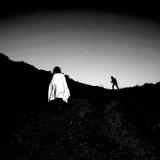
Barcelona-based Rob Clouth returns to Leisure System with the Deep Field 12', a stomping showcase of his focused sound design and knack for memorable melodies with additional remixes from Kowton and Vessels.
Deep Field is Clouth's Leisure System follow-up to the Clockwork Atom EP, which was named one of the top EPs of 2014 by Bleep and introduced his electronic wizard by to a wider audience following prior releases as Vaetxh and under his own name. Debuted on Max Cooper's Boiler Room and appearing again on his Essential Mix, 'Deep Field' is tactile and threatening, with disorienting glitches weaved into the 4/4 structure. The belching low-end brings to mind a talkative machine that's been muzzled, eager to burst from its restraints.Livity Sound boss Kowton inverts the original into a gelatinous mass, adding jackhammering drums to the cloudy atmosphere and creating a spacious and stuttering lesson in tension and release. Fresh off the release of their LP Dilate, Leeds band Vessels put their own euphoric electronic magic to work with a housier take, drawing out Clouth's propulsive percussion with an added dose of lush melodicism that
should make it a new favorite for house DJs looking for a spirited twist on the typical. Deep Field is the third in Leisure System's new GRIDLOCK series, melding the freaky and functional
for modern dance floors.
Buscar:vessel
Death Is Not The End collaborate with Uzbek label Maqom Soul to deliver an LP counterpart to last year's mixtape of the same title, compiling specially picked & fully licensed individual belters from the ex-soviet studios of Central Asian republics between 1978 and 1989 - incl. Uzbek, Tajik, Kurdish & Uyghur artists pulling traditional folk motifs together with pop & rock and psych elements.
"These recordings do not form a smooth or coherent history. They feel more like a sequence of discoveries made at different moments and in different circumstances. Songs and instrumental pieces that once lived inside specific contexts radio broadcasts, philharmonic programs, touring routes now sit side by side, revealing hidden connections as well as clear fractures between them.
Nasiba Abdullaeva appears here as a voice from the end of an era. Trained within a conservatory system, she worked inside the format of the Soviet pop song while filling it with melodic logic that did not come from Moscow or Leningrad. Her voice is soft and sustained, shaped by Eastern melisma, and it never functions as decoration. Even in tightly structured songs there is a sense of resistance, an effort to preserve a musical language rooted in Uzbek tradition rather than fully adapted to an all Union standard.
The ensemble Sintez, later renamed Navo, represents a different path. Beginning as a student rock group, the band was gradually absorbed into the official VIA system with all its limitations and compromises. Yet it was precisely within those boundaries that Sintez and Navo developed a recognizable sound. Electric guitars and jazz rock harmonies do not overpower the folk material but remain in tension with it. Their recordings feel like negotiations between what the musicians wanted to play and what they were allowed to perform.
The Tajik ensemble Gulshan reflects an institutional approach carried to a high professional level. Formed under television and radio structures, the group treated folk material almost as a written score. Carefully constructed arrangements, close attention to orchestration, and restrained use of pop techniques define their sound. There is less spontaneity here, but a strong sense of discipline and structure, where national melody becomes part of a carefully controlled sonic framework.
Koma Wetan occupies a very different space. Formed in the 1970s, this Kurdish rock group approached poetry and folklore as tools of cultural assertion. Their psychedelic rock never feels like a stylistic borrowing. Instead it functions as a contemporary vessel for language and themes that might otherwise have remained unheard. Even today these recordings sound fragile and stubborn at the same time.
The Uyghur ensemble Yashlik, closely connected to a musical drama theatre, operated somewhere between stage performance and popular music. Their songs are built on folk melodies but shaped for wide audiences. What emerges is a constant attempt to preserve the recognizability of Uyghur musical identity without freezing it in a folkloric frame. Yashlik's music exists in a state of balance between representation and development.
Digging Central Asia does not attempt to establish hierarchies or offer a single wayof listening. Names and dates matter less than the sound itself. Tape noise, abrupt transitions, and unexpected timbres remain part of the material rather than flaws to be corrected. This music existed at the crossroads of multiple routes geographic, cultural, and ideological. Heard today in a new context, it no longer feels peripheral. Instead it stands as a reminder that the history of popular music is far more fragmented, layered, and polyphonic than it is usually allowed to be."
- A1: Hìeratico
- A2: Litho Non-Danse
- A3: Blue Hymne (Feat Limpe Fuchs)
- A4: Cuerda De Piedra
- A5: Aranha
- A6: Tombal (Feat Pierre Bastien, Massimo Silverio &Amp; Marco Baldini)
- B1: Boku Ga (Feat Adele Altro)
- B2: Meridiana (Feat Giuseppe Ielasi)
- B3: Lode (Feat Natalia Rogantini &Amp; Jonas Torstensen)
- B4: Sospire (Feat Roberto Musci)
- B5: Muracetra (Feat Vipera &Amp; Dròlo Ensemble)
- B6: Vessel (Digital Bonus Track)
Like its cover, Nicolas Remondino's Hìeratico plays in the rich shades of crepuscular spaces. A night-tuned, percussion led album where prepared drums are accompanied by flickers of spoken word, acoustic instruments and muted electronics,
The title translates to 'hieratic', for Remondino a "black and gold" term laden with dualities and complex connotations. A sense of teetering between sparkling light and richly coloured darkness imbues the music, the compositions simulating a sense of heightened acuity as they convey us through a spooky elemental soundworld. The opening title track begins with a metallic shimmer, a drum skin activated in a way that sounds like it's being smelted. A cushioned rhythm enters, a smothered timbre akin to hearing something lurking around the garden. On "litho non-danse", percussion cracks like branches and dried foliage under foot.
Remondino recorded initial outlines for the pieces at Giuseppe Ielasi's studio in Milan, before fleshing out these ideas with his own additional instrumentation and contributions from a globe-spanning network of collaborators. On "blue hymne", chiming percussion equal parts jubilant and sinister heralds spoken word from Limpe Fuchs. "Tombal" opens with Massimo Silverio whispering in the Carnic dialect, a minority language from the Carnic Alps. Around, Marco Baldini, Pierre Bastien and Remondino construct a somber soundscape that cranks and sighs in the crevices.
Hìeratico is an album of hybrids. Diverse voices, accents and dialects deliver its lyrics, the instrumentation underpinning it crosses idioms. The drumkit at its core is modified to amplify its resonant tones and harmonics. Inspired by natural substances and phenomena: stone, wood, wind, earth, metal, grass, rain, clouds and bark, Remondino explores how percussion could evoke their materiality, treating drums as lucid textural instruments as much as rhythmic timekeepers. It gives the album a finely shaded depth and clarity as it conjures the vibrancies that reside in darkened corners. Hìeratico dwells in a sensation that crosses borders, the speckles of light in the oblique night sky. Listening is an aural equivalent to stepping into a pitch black forest and waiting for your eyes to adjust, a lightless void turning into a spectacular tableau of shadows and glows. Daryl Worthington
Brooklyn-based techno experimentalist and filmmaker Michelle Roginsky (aka mother) joins Delusional Records with her first-ever musical offering, a cinematic concept EP that weaves medical anxieties into a thematic tapestry of arresting club sonics.
In A Simple Procedure, Roginsky evokes the bleak and euphoric duality of femme embodiment; the soundtrack to an unreleased body horror film narrated by ethereal ambience and driving dancefloor grooves. The title track begins with sweeping, densely-textured synths disintegrating into a foreboding bassline, humming steadily alongside tidal waves of ominous arpeggios and plodding drums reminiscent of 90s trip-hop. In Sublingual, body-shaking club drums become a vessel for distorted vocals and granulated textures as they pass through thick membranes of saliva-drenched bass. Metamorpher follows with a hypnotic 4x4 trip that metabolizes deep anxious grooves into a rave-ready wiggler, while Angel Gossip keeps the blood flowing with a pounding peak-time techno roller guaranteed to keep the floor locked. Finally, There Are Two Rooms sends us off with a pensive meditation of wailing synths and dark, Lynchian atmosphere... the final scene of a dream half-remembered upon waking from anaesthesia.
NYC's Laenz delivers the epilogue with a shaking, subterranean remix of A Simple Procedure, injecting the opening track's textures into the fissures of deep and trembling grooves.
With its darkly seductive moods and high-concept execution, A Simple Procedure is a perfect addition to Delusional's genre-ambiguous catalog of queer and femme-forward sonic offerings.
- Osmos
- Peace Of The Unsaid
- Cloudmachine
- Skin Dress
- Unleash
- Jeanne De Rien
- Kiss The Lion's Tongue
- Throw Ashes!
- Samadhi
- Hora Et Devoura
Devotional music most often gets distilled into earthy chants and ancient folklore, it doesn't always ascend to the sky like Julinko’s ‘Naebula’ an album that from the first organ note clearly trades in terrestrial dreams for ethereal visions. A feverish quality permeates the whole record, as if a ritualistic performance was being captured from start to finish, a collection of hallucinatory doom, synthetic neo-folk hymns and ghostly art-rock.
Julinko, stage name for Giulia Parin Zecchin, has long been one of the best kept secrets of the experimental community in North-East Italy, with three records that helped define her unique blend of heavy psychedelia, slowcore and dark ambient. On ‘Naebula’ what really stands out is how powerful and soaring her voice is, a weapon of undeniable force that can transform into a vessel of raw fervour or glide effortlessly as a delicate lament. Her unconventional approach shines through on tracks like ‘Jeanne De Rien’, where a marching pulse acts as a pillar for an extended mantra, almost verging into powwow territory. ‘Peace Of The Unsaid’ uses its arrhythmical structure to create space, a crepuscular night ode that reaches the heights of Sinead O’Connor’s most intimate force-fulness while retaining a sweet composure. Whether it’s glacial murderous shrieks or gospel-esque vitality, songs like ‘Cloudmachine’ or ‘Kiss The Lion’s Tongue’ seem to draw as much from a tradition of European minimalism, the use of drones and repetition, to the tradition of folksongs as hymns, where modal harmonies make way for an apparent stasis. Another key element in Julinko’s songwriting is the seamless blend of her minimalistic approach with these dense textures borrowed from a distant outsider metal heritage, Lynchean noir on steroids or wordless exorcisms with deep undercurrents.
Thawra Records and Tiny House Music are proud to announce Nafas, the debut original album by Palestinian vocalist, researcher, and composer Salwa Jaradat, set for release in March 2026.
Rooted in a traditional Arabic singing practice yet shaped by a layered and deeply personal artistic journey, Nafas marks a powerful first statement from an artist whose work moves between heritage, research, and lived experience. The album emerges from years of musical and feminist inquiry, giving renewed breath to voices, emotions, and histories that have long existed on the margins.
Salwa Jaradat’s artistic formation is grounded in classical Arabic music and oral tradition, with studies at the Edward Said National Conservatory of Music in Palestine and later in musicology in Lebanon. Alongside her work as a performer, researcher, and archivist, she has developed a practice that treats music as a space of memory, resistance, and continuity. These threads converge in Nafas—an album that does not seek to modernize tradition, but rather to inhabit it differently, allowing it to speak in the present tense.
Developed through an intensive artistic residency in Lebanon, Nafas brings together a core ensemble of regional musicians, with Jaradat’s voice at its center—measured, expansive, and deeply intentional. Across six compositions, the album unfolds patiently, moving between stillness and momentum, intimacy and collectivity, breath and release.
Nafas will be released digitally and on vinyl, reinforcing Thawra Records and Tiny House Music’s ongoing commitment to long-form artistic statements and physical formats as vessels for care, depth, and listening.
Opaque Pink Version
Bubble Bath for Giants is an ode, a Tribute, a reverence for Oceans, for the Mighty Magnificent Power of Fairies, to the energy that we are all everything, whole, well, but in different sized and shaped vessels at times . . . It is a Celebration of Gentleness and of incredible Force, and Charge . . . These, I sea as the same. The Yang Springs from the Yin and together they ever reflect, dance, and express themselves . . .
Many Bells, Bowls, Ceramics, Chimes, Cymbals, Drums (Bass, Sakara, Surdo, Tom, and many more,) Gongs (Chao, Cup, Indonesian, Sun, and Symphonic,) Keyboards (Metal, Synthesizer, and Wooden,) Percussion, Plant Leaf Bundles and Fronds (Bamboo, Eucalyptus, and Palm,) Ratlles, Shakers, Voice, Whistles, and Sound Design by Carlos Niño.
Featuring:
Luis Pérez Ixoneztli, Bernard Xolotl, Aaron Shaw, Surya Botofasina, Nate Mercereau, Laraaji, Darius Jones, Sheila Govindarajan, Idris Ackamoor, Deantoni Parks, André 3000, Marshall Allen, Sam Gendel, Sibusile Xaba, Mia Doi Todd, Anisia Uzeyman, Saul Williams, Jojo Abot, Jowee Omicil, Aztlan Unearthed
///
Cover Photo by Carlos, from in the Maui Waters
Art Direction, Design and Original Art by Nep Sidhu
Layout Production by Jonny O'Hara
Recorded by Carlos Niño in Topanga, California, and by some of the Artists named above, from their Homes . . .
Mastered by David Allen
///
A brash, unapologetic blend of electronic, dance, punk, industrial, and pop music, No Lube So Rude exists at the intersection of the personal and the political, where the body serves not only as a sexual and spiritual vessel, but also as the front line in a battle for basic human rights. Peaches’ lyrics are bawdy and explicit here, laced with biting sarcasm and clever wordplay, but they’re also surprisingly vulnerable, offering up a candid look in the mirror from a post-menopausal queer icon reckoning with a society that’s come to expect silence, if not outright erasure. The result is a deliberately provocative exploration of identity, sexuality, and bodily autonomy from a trailblazer, a singular work of emotional and sonic alchemy that balances the poetic and the profane in equal measure as it transforms all the friction and frustration of modern life into joy and transcendence.
- A1: Lack Of Character Polido 03 09
- A2: He Is Quiet And So Am I Dania 04 09
- A3: Conatus Alexandra Gruebler 03 32
- A4: Wait, Child Laurén Maria 02 17
- A5: Vessel Slowfoam 05 16
- B1: Milton Hotel Zeynep Ağcabay 03 37
- B2: Wide Eyed Saskia 05 13
- B3: Brad's Alarm Kaya 04 50
- B4: Clari Ii Severin Black 03 17
- B5: Gtr M-2 Pavel Milyakov 06 24
The fourth edition in the label’s compilation series brings together an almost entirely new cohort of ten artists from across the globe. Personal means of expression are archived side by side, coming to light in the form of sparse amorphous percussion, layered voices, restless arpeggios and undulating, heavily filtered soundscapes.
All digital and physical proceeds from this edition go towards Medical Aid For Palestine and the Lebanese Red Cross.
Mastered by Kinn. Design by Severin Black.
- Beauty Of The Brain
- In The Woods
- Heavy Cloud
- Encore
- Manything Goes
Somewhere between jazz, progressive rock and cinematic soundscapes, Kabasse unfolds a world of intricate arrangements, bold sonic textures and heartfelt improvisation. The brainchild of Munich-based musician Sigmund Perner (also member of Carpet), this sextet blends composed structure with free exploration, layering lush harmonies, unexpected rhythms and a rich palette of wind, mallet and keyboard instruments. What began as decades of musical ideas-gathered quietly, never written down-found its shape through a group of close-knit musicians from Munich and Augsburg, including Perner's own son on drums. Together, they recorded in a live studio session, embracing risk and spontaneity. The result: a deeply personal debut album that feels both mature and raw, contemplative and gripping. Rather than demanding attention, the pieces invite it: About Sitting on Fences captures the art of waiting-for ideas to grow, evolve and resonate. Just like the name Kabasse, inspired by the calabash: a vessel, a resonator, a home for sound.
Jaime Fennelly, as Mind Over Mirrors, makes music that pushes the known to the lip of the unknown, where it rocks precariously and in exhilaration. He scrambles the familiar and tweaks the comfortable, not through aggression, but a throbbing estrangement. When placed at a distance, these require longer reaches to grasp. The reward for this effort is an enlarged field of perspective, experience, and also of feeling. This is deeply feeling music to feel deeply.
In all of Jaime’s records—and, arguably, especially in Particles, Peds, & Pores—there’s a seed of the pastoral, some ancient shepherd’s song ringing through nearby hills and groves, but one also yearning to plumb the uncanny and the creative possibilities of disintegration. “Farewell to woods,” the grieving Damon sings in Virgil’s eighth Eclogue. “Let all be ocean now.” Fennelly sounds vast, enveloping wildernesses and the thrilling disquiet of their echoless grandeur. (Maybe Burroughs speaks to the borders of these zones: “Pulsing mineral silence as word dust falls from demagnetized patterns.”) There’s something of the heroic at work here, too, although the hero’s instinct has been suitably tempered—or awed—to know not to fly too close to the sun.
- A1: The Whip Hand
- A2: Aegis
- A3: Dyslexicon
- B1: Empty Vessels Make The Loudest Sound
- B2: The Malkin Jewel
- B3: Lapochka
- C1: In Absentia
- C2: Imago
- C3: Molochwalker
- C4: Trinkets Pale Of Moon
- D1: Vedamalady
- D2: Noctourniquet
- D3: Zed And Two Naughts
Noctourniquet And then everything went black, at least for a while, at least for The Mars Volta. In the months and years following their fifth full-length, Octahedron, Omar kept on at his usual fearsome creative pace. In fact, he ramped up his output considerably, starting up his own Rodriguez Lopez Productions label and releasing a slew of solo albums. It was a practice he’d begun shortly after De-Loused’s release, with his solo debut A Manual Dexterity: Soundtrack Volume One, but as the decade reached its close, Omar grew to rely upon his solo recordings as an outlet for his prolific creativity, these albums often exploring musical pastures far beyond even The Mars Volta’s wide-ranging parameters. Before choosing to release music under his own name, Omar would always play it to Cedric first, to see if the frontman thought it had potential to become Mars Volta music. Shortly after Octahedron’s completion, Cedric flagged one batch of tracks Omar had cut with Deantoni Parks, a brilliant drummer and composer who’d briefly occupied the Mars Volta drumstool in-between Jon Theodore and Thomas Pridgen’s tenures, and whose volcanic creativity and unique, unpredictable approach to rhythm and composition had quickly made him one of Omar’s favourite artistic foils.
As with the music that made up Octahedron, the new tracks Cedric had optioned for The Mars Volta often veered far from the riotous, Grand Guignol visions of their earlier releases. It possessed the punchy, song-based focus of Octahedron, though this was a considerably darker, more menacing strain of pop, with synthesisers figuring heavily in the productions. Cedric took the tracks in 2009 and set about writing songs to the music. But no more new Mars Volta music would be heard until 2012. The years that passed in-between were nonetheless momentous, and busy, witnessing an unexpected reunion of the members of At The Drive-In, and Cedric joining his own side-project, Anywhere. But there wasn’t any sign of life within the Mars Volta until Omar, Cedric and their bandmates took to the road for a series of live shows in the spring of 2011, billed as The Omar Rodriguez-Lopez Group, debuting the songs that would become Noctourniquet. The album followed the next year, and it remains one of The Mars Volta’s finest, its electronic textures staking out unfamiliar but fertile new ground.
An unsettling, subtly turbulent listen, Noctourniquet found Cedric sketching out a story about “some sort of device that stops the darkness from bleeding”, drawing influence variously from the nursery rhyme Solomon Grundy, the Greek myth of Hyacinthus and the song Birth, School, Work, Death by British underground rockers The Godfathers. It was an album of dystopian futurism, signalled by the paranoid cyber-rock of opener The Whip Hand and its unnerving chorus, “That’s when I disconnect from you”. But it was also an album of inspired, unexpected moves and uncanny invention, like how Dyslexicon seemed to eerily evoke Blondie’s Rapture, before rushing headlong into its bruising chorus, tempos shifting restlessly throughout like quaking earth beneath the listener’s feet, or how Aegis put a brave new spin on The Mars Volta’s trademark rewiring of salsa’s overdriven passions, or how Cedric had never sounded as scary as he did on The Malkin Jewel’s mutant burlesque shuffle. Tracks like Molochwalker were sleek and concise in a way The Mars Volta had never really attempted before – which was all part of Omar’s plan.
“It had all been guitar, guitar, guitar, overdubs, everything fighting for space in the same frequency,” he explains. “So for Noctourniquet, it was all about subtracting elements, of sticking to how I made demos.” Deantoni’s presence helped revivify the group, playing against cliché and expectation, and taking each song in unexpected directions. “I’d beatbox a rhythm for him to play, to go with my guitar part, and he’d come back with three or four alternate options. It was so great.” Similarly, Cedric had never sung better than on Noctourniquet, staking out a fearsome spectrum from the chilling Tom Waitsian growl of The Malkin Jewel to the keening, beautiful vocalisation on Vedamalady, rising to match some of Omar’s most deft, most immediately effective and melodic songs yet. Indeed, Noctourniquet is the sound of a band discovering new ways to do familiar things, renewing their commitment to their mission, finding fresh inspiration a decade in, and shaking off any complacency that might have come with ten years of acclaim and success.
Limited to 250 copies !
The Deadheads had never had much luck with spaceships. Their first mission had ended in a catastrophic engine failure, leaving them adrift in deep space for weeks. This time, their craft was hardly more reassuring. A hodgepodge of outdated technology and shoddy repairs made it more of a floating death trap than a reliable cruiser. As they began their descent toward the strange planet, the hull creaked and rattled, sending a wave of dread through the crew.
"Hold on," Matt's voice crackled over the intercom, without much conviction, as if he himself doubted they would make it out alive. Outside, a thick, grayish atmosphere swirled ominously, while the planet's gravity became far stronger than anticipated.
“Fuck, we’re gonna burn at the entrance!” M yelled, his hands flailing on the console as sparks flew from the control panel. The ship’s sensors were completely jammed, and the navigation system flickered intermittently, like a dying light. Below, the planet’s surface was a tangle of lava rivers and jagged rock formations, the kind of place no sane person would ever land. But the Deadheads had never pretended to be. They lived in a state of constant emergency.
As the descent intensified, the alarms blared. On the bridge, the screens lit up with red warnings and flashing messages: "SYSTEM ERROR," "UNSTABLE TRAJECTORY," "SUIVITY SYSTEM COMPROMISED." The lines of code scrolled by too quickly to be read, while a mechanical voice repeated relentlessly: "Imminent impact. Structural integrity at twenty percent."
The once pristine shell of the vessel began to disintegrate, with shards of metal breaking away and disappearing into the atmosphere.
With a final, piercing screech, the ship crashed onto the planet's surface, sending up a cloud of dust and debris. The crew was violently thrown from their seats, stunned but barely alive. They struggled to their feet amidst the wreckage, the ship reduced to a charred shell around them.
"Well," M said, wiping the dirt off his suit with a grimace, "at least the air is breathable." Matt scanned the hostile expanse stretching before them and smiled slightly. "Perfect. Let's hope we have better luck with the planet than with our ships."
With that, the Deadheads gathered their equipment and headed into the unknown, while the remains of their ship slowly sank into the unstable soil of the planet.
- 1: Any God Of Yours (Instrumental)
- 2: Swell (Instrumental)
- 3: Arise Dear Brother (Instrumental)
- 4: Ammi Ammi (Instrumental)
- 5: Buffed Sky (Instrumental)
- 6: Sex With Nobody (Instrumental)
- 7: Eye’s Drift (Instrumental)
- 8: The Sea Liner Mk 1 (Instrumental)
- 9: Empty Vessels (Instrumental)
- 10: New Builds (Instrumental)
- 11: Dull Boys (Instrumental)
- 12: Thames Water (Instrumental)
XL Recordings is proud to mark the 10th anniversary of Archy Marshall’s (aka King Krule) A New Place 2 Drown with the release of a newly remastered instrumental edition.
Originally released on 10 December 2015, A New Place 2 Drown remains a singular entry in the Archy Marshall catalogue. Known to many for his work as King Krule, Marshall released A New Place 2 Drown under his own name, highlighting a different facet of his creative identity. An atmospheric blend of submerged beats, woozy textures, and diaristic storytelling, the project earned widespread acclaim upon release, including Pitchfork’s Best New Music.
Developed in parallel with a visual world shaped with his brother and longtime collaborator Jack Marshall, the quietly influential project stands as a multidisciplinary love letter to their home of South London, originally released alongside a Will Robson-Scott–directed short film and a book of artworks, photography, and poetry by the Marshall brothers.
The 2025 instrumental edition offers a newly illuminated perspective on the record’s sonic core, drawing fresh attention to the production craft that underpins the project. By stripping the songs back to their foundations, the release highlights the intricate textures, rhythmic detail, and atmospheric depth that have helped A New Place 2 Drown grow into a cult favourite over the past decade.
“A New Place 2 Drown evokes a septic world filled with flickering halogen bulbs, sticky synth keys, and corroded outputs. Marshall has made tremendous strides as a producer, gorgeously reproducing the gloom and loneliness of early '90s hip-hop and finding a way to integrate it into his own style.” - PITCHFORK
ASMR for Suicidal Thoughts' marks Varg2™ back in collaboration with Chatline, an enigmatic figure long in orbit of Northern Electronics. Recorded live to tape, the record resists comfort. Contained within are two harrowing demonstrations that drag on emptiness, anxiety, and abject pleasure. And though terse and severe, that very void becomes the vessel for its mottled meaning.
Unopen to exploration, 'ASMR for Suicidal Thoughts' locks the listener into its own saturated atmosphere. Stripped back and unchanging, and suffocatingly cold at the best of times, funereal melodies pepper cyclical noise so brittle it can barely repeat itself. Disturbingly intimate glints of memories are passed over out of reach, yet with the alarming immediacy of déjà vu. The sensation amounts to no more than this.
Recorded live to tape in Västra Skogen, Sweden 2023–2024
Mastered by Giuseppe Tillieci at EnissLab, Rome
- Les Grands Espaces
- Coline Et Ses Frères (Variation 1)
- Le Retour De Coline
- L'appel À Sacha
- Le Village
- Christophe
- Le Passé
- Sophie
- Une Nuit En Cellule
- Quitter Coline
- Coline Et Ses Frères (Variation 3)
- La Disparition
- Le Ravin
- Coline Et Ses Frères (Variation 2)
- Ole Et Martika
- Retour À La Vie
- It's A Good Day To Die
- La Fin De La Fête
- Le Voyage De Basile Et Lolo
- Revoir Coline
- La Nuit Commençait À Tomber
- Jusqu'à Disparaître
- La Chanson De Ole Et Martika
- Avant La Pointe Du Vide
- L'incroyable Femme Des Neiges
ensemble 0 (pronounced zero) is a band /contemporary music ensemble, whose line-up and instruments can change according to the repertoire performed. Directed by Stéphane Garin and Sylvain Chauveau, performing pieces by, mostly, contemporary composers including its own members, and working with numerous collaborators.
The year 0 of ensemble 0 was 2004, when four friends decided to assemble a vessel, essentially dedicated to acoustic music for the present time. A light and adaptable vessel, of varying geometry and geography (its members are based in different cities and countries, including France, Catalonia and Belgium.)
Zero, in cartography, is the reference level from which altitudes are erected. In other words, where the field of possibilities stands. Depending on the chosen direction, the disentangled or deciphered compositions, the musicians and instruments brought in, ensemble 0 performs upon a unique range of reliefs. First, its own compositions are specifically performed by the pulsating heart of the collective, i.e. a trio made of Sylvain Chauveau (acoustic guitar, glockenspiel), Stéphane Garin (metallic percussions) and Joël Mérah (acoustic guitar). Then, with a contemporary repertoire the ensemble expands according to the needs of each work. ensemble 0 occasionally performs pieces by Moondog, Julius Eastman or Ligeti but is particularly keen on living composers such as Tristan Perich, Michael Pisaro or Rachel Grimes.
Here, ensemble 0 plays in according to the movie: L’Incroyable Femme Des Neiges (directed by Sébastien Betbeder with Blanche Gardin and Philippe Katerine) a soundtrack with their own strong and beautiful imprint.
- 1: Silhouettes At Sunset
- 2: Lunar Coronation
- 3: Ancestral Premonition
- 4: Ghosts And Empaths
- 5: The Knell Of My Birth- Hymn (Feat. Francesca Nicoli)
- 6: Bloodline Offering
- 7: Martyrdom - Catharsis (Where Gods Go To Die)
- 8: The Light That Shapes Us
- 9: Crown Of The Clairvoyant
- 10: Orphan Monarchy
With the grace of an ancient oracle speaking through a veil of mist, the album unfurls in movements both haunting and divine, carrying the listener into a realm where sorrow and splendor waltz as one. Orchestrated with exquisite precision and opulent depth, the ensemble breathes life into every measure. Strings sweep like celestial tides, choirs rise like prayers from cloistered ruins, and woodwinds whisper secrets from lost mythologies. The multimember orchestra does not merely accompany the compositions, it becomes the very vessel through which Autumn Tears channels their clairvoyant vision.
Rooted in the neoclassical tradition yet unbound by its walls, the album weaves baroque intricacies with cinematic grandeur, crafting soundscapes that feel both sacred and boundless. Every track is a portal: to forgotten dreams, to veiled futures, to the silent poetry that lingers in the spaces between. Crown of the Clairvoyant will be available as a digital download,a limited Leather CD Box, a limited CD jewel case package with a CD exclusive bonus track as well as a limited vinyl package with a 12 page illustrated lyric book and vinyl exclusive bonus track.
Monolith 45 series I
A new chapter emerges within Organic Signs.Conceived as a vessel dedicated to a single frequency, Monolith 45 is born to trace the lineage of progressive trance — that tribal, hypnotic, and ceremonial sound that carved its path during the early 2000s, and which today we reclaim with reverence.
Each release stands as a stone marker along this continuum: timeless signals that resonate equally with memory and vision. As with the broader work of Organic Signs, this new line will follow a dual path: rescuing forgotten gems from the past while also curating new music that embodies the same spirit.
Monolith 45 becomes the place where past and present intertwine, shaping a narrative that honors tradition while opening new doors for exploration.
The first monolith in the series carries with it two totems of the genre:
On the A-side, Magnetrixx – Intraferences, originally released in the year 2000 on the legendary Tatsu Records. Behind this moniker stands Stefan Lewin, not only a key architect of the progressive trance sound but also the mind behind ACL (Audiophile Circuits League), one of the most special modular synthesizer brands..
His work bridges eras: from shaping the trancefloor at the turn of the millennium to designing instruments that define modern electronic creation.On the B-side, Ticon – Lo Mi Hi, a track that saw the light in 2001 on Digital Structures, one of the most influential labels of that era.
Ticon are nothing short of mythical within this universe — pioneers whose sound blurred borders between deep grooves, psychedelic textures, and progressive structures, leaving an indelible mark that still resonates with dancers and producers worldwide.
With Monolith 45, we seek not only to preserve these transmissions but to project them into the present: to reawaken a sound that was always more than music, a tribal pulse, a ritual language that invited bodies and minds into collective trance.
This is our homage, our offering, and our way of extending the path forward.
2025 Repress
Tresor Records is proud to announce forthcoming special editions of its entire catalogue of Drexciya and related projects. 2022 marks the 20th anniversary of the passing of James Stinson and the releases of the Transllusion and Shifted Phases albums.
In recognition, the rightsholders, their families, and the label have commissioned Detroit-based contemporary artist Matthew Angelo Harrison to re-conceptualize the covers of Tresor's Drexciya-related catalogue. These editions will be released sequentially, bimonthly, starting early-September 2022.
Just a month after the album release of 'Neptune's Lair' in September, its companion 12" 'Hydro Doorways' will be second in the series, out on October 7th. In November, 'Harnessed The Storm' and 'Digital Tsunami' are coming, followed by the release of Transllusion in February 2023. The series is completed by the long-awaited re-release of 'Shifted Phases – The Cosmic Memoirs Of The Late Great Rupert J. Rosinthrope' - at the end of March.
These records, individually and as a catalogue, represent some of the most crucial moments in the Tresor label history, with the sound and mythic world of Drexciya undoubtedly inspiring generations.
- Kittyri
- Purepurepure
- Vitamin Beauty
- 12: R
- Skinny/Baby
- Vesselera
- Kittyri (Tagabow Remix)
- Purepurepure (Angel Emoji Remix)
- Vitamin Beauty (Grimace Remix)
- 12: R (Red Rakes Remix)
- Skinny/Baby (Certain Remix)
- Vesselera (Silicone Valley Remix)
Her New Knife ist eine Shoegaze-/Alternative-Band aus Philadelphia, Pennsylvania. Zu den Mitgliedern der Gruppe gehören Edgar Atencio (Gitarre und Gesang), Ben Kachler (Gitarre), Carolina Schooley (Bass) und Elijah Ford (Schlagzeug). Die Band veröffentlichte letztes Jahr ,chrome is lullaby" über das einflussreiche Label Julia's War Recordings. Die EP besticht durch ihren rohen, verletzlichen Charme und bietet Fans von Shoegaze und Post-Punk eine tiefe Verbindung zu ihrem einzigartigen Sound. Nach einer einmaligen Björk-Coverversion (,Pagan Poetry") kehrt die Band nun mit einer 6-Song-Remix-EP zurück, die Remixe von TAGABOW, Sword II, Frost Children und anderen. Die physische Version der Veröffentlichung ,Chrome is Lullaby Deluxe" enthält auf Seite A die EP ,Chrome is Lullaby" und auf Seite B die entsprechenden Remixe.