West coast composer, artist, and producer Kaitlyn Aurelia Smith has chartered a pioneering career with multiple critically-acclaimed albums since 2015. Following the release of The Kid in 2017, Smith focused her energy in several directions. She founded Touchtheplants, a multidisciplinary creative environment for projects including the first volumes in her instrumental Electronic Series and pocket-sized poetry books on the practice of listening within. She's continued to explore the endless possibilities of electronic instruments as well as the shapes, movements, and expressions found in the physical body's relationship to sound and color. It is this life-guiding interest that forms the foundational frequencies of her most recent full-length, The Mosaic of Transformation, a bright, sensorial glide through unbound wave phenomena and the radiant power discovered within oneself. "I guess in one sentence, this album is my expression of love and appreciation for electricity," says Smith. While writing and recording, she embraced a daily practice of physical movement, passing electricity through her body and into motion, in ways reflecting her audio practice, which sends currents through modular synthesizers and into the air through speakers. Not a dancer by any traditional definition, she taught herself improvisatory movement realizing flexibility, strength, and unexpectedly, a "visual language" stemming from the human body and comprised of vibrational shapes. Understood as cymatics, as Smith says, "as a reference for how frequencies can be visualized," much like a mosaic. Smith describes her first encounters with this mosaic; "the inspiration came to me in a sudden bubble of joy. It was accompanied by a multitude of shapes that were moving seamlessly from one into the other...My movement practice has been a constant transformation piece by piece. I made this album in the same way. Every day I would transform what I did yesterday...into something else. This album has gone through about 12 different versions of itself." As it has arrived, in a completed state, The Mosaic of Transformation is a holistic manifestation of embodied motions. Smith's signature textural curiosity that fans have grown to adore pivots naturally into a proprioceptive study of melody and timbre. Airy organ and voice interweave with burbling Buchla-spawned harmonic bubbles. "The Steady Heart" quivers to life, peppering blasts of wooden organ between winding vocal affirmations. As with a body, moving one portion requires a balance and counterbalance; here, subtle tonal twitchy signals fire in conjunction with coiling arias to create a mesmeric core. When the beat arrives at the midway mark, a swooping and jittery waltz, a sense of stasis in motion, a flow state, is sonically achieved. As soon as it syncs, it disappears back into the swirling ebbs of electric force. Other tracks stray into more ruminative physical realms. "Carrying Gravity" is built around string-like pads that expand and contract like a solar plexus, becoming taught and then loose. If the record could be summarized in a single movement, it is the 10-minute closing suite, a rapturous collage called "Expanding Electricity." Symphonic phrases establish the piece before washes of glittering electric peals and synthesized vibraphone helix into focus. Soon, Smith's voice grounds it all with an intuitive vocal hook, harmonized and augmented by concentric spirals of harp-and-horn-like sounds. Smith's music doesn't capture a specific emotion as much as it captures the joys of possessing a body, and the ability to, with devotion and a steady open heart, maneuver that vessel in space by way of electricity to euphoric degrees.
Search:vibr
- A1: After Hours (02:57)
- A2: Heaven On Earth (05:09)
- A3: Just Me ’N’ You (05:40)
- A4: She Called Me (04:42)
- A5: Cute As A Button (03:31)
- B1: Love, Love, Love (03:07)
- B2: I’ll Always Be Your Lover (04:11)
- B3: All Strung Out Over You (03:35)
- B4: Not Too Long Ago (04:08)
- B5: Everything I Want I See In You (03:05)
A dramatic, string-drenched epic, James Ralph Bailey’s Just Me ’N’ You has been a sought-after soul masterpiece for decades. A lush suite of beautiful songs, it was conceived as a concept album; a sophisticated paean to love.
Originally released by MAM Records in 1974, Just Me ’N’ You is a breathtaking jazzy soul album. It’s similar in style to Marvin Gaye’s What’s Going On - particularly the performances, orchestrations and chord progressions - but dealing with a different universal subject matter. If What’s Going On was about romance instead of politics, it would sound like this.
Fans of Marvin, Leon Ware, Donny Hathaway, Leroy Hutson and Willie Hutch will love this record. Not as well known - this is definitely an underrated gem - the work of James Ralph Bailey is no less mind-blowing. It’s got to be one of the best soul albums of all time.
The original productions were made on a basic home tape machine and enhanced with strings, rhythmic overdubs and a variety of other instrumentation. These are beautiful arrangements of strings and jazzy horns. Rhythm guitars and bouncy bass serve as the groove foundation, congas provide a Latin feel whilst the vibraphone and harmonica add colour. And then of course there’s JR’s voice.
His style recalls Hathaway, with a delivery akin to Marvin at the time. As he scats and sings, accompanying himself in sweet harmonies, there is still a rawness of pain and longing in his voice, the rawness familiar to all deep soul.
As an album, Just Me ’N’ You is no mere collection of songs. The tender, smooth tunes flow perfectly together into a fluid, single artistic statement. This is one where it’s hard to pick out any standouts. You may have heard the soaring title track before, maybe on Gilles Peterson’s Digs America compilation. The opening track “After Hours” sounds as fresh now as it ever was and segues beautifully into the majestic “Heaven On Earth”. Recorded by Hathaway the previous year, Bailey’s original of “Love Love Love” is incredible and arguably the definitive version. The powerful, dreamy, sax-and-harmony-laced “All Strung Out Over You” has echoes of the Chi-Lites, it’s that good. Goosebumps. And we could go on.
Mastered by Simon Francis, cut by Pete Norman and pressed at Record Industry, this Be With edition of Just Me ’N’ You sounds every bit as brilliant as it should. A joyous celebration of love, this album is perfect in every way. If you don’t already own a copy then now is the time.
Tectonic is very proud to welcome Lamont to the team!
Bristol’s bendy-beats whizz kid is mainly known for dropping jaws with his releases on Swamp 81 and it’s various offshoots. This time, he’s been chipping away at 4 fine-cut gem, especially for Tectonic - bringing some darkside vibrations in addition to his usual bounce.
‘Hold Dat’ runs at 135bpm, sitting in-between grime, dubstep and housey/techno/whatever that thing Lamont usually does! Charged with a disgusting, totally greasy bassline, this one drops hard and keeps going - quality moves for (now, mostly imaginary) dancefloors.
‘Push’ takes it down a notch, to 130 for a more heads-y work out, laden with crackling, fizzing sonics - and heavily punctuated by sub bass hits. The energy levels step back a touch, while building intensity.
‘Brain’ sees Lamont working more familiar territories - sending a pounding 4/4 kick drum out to hold together a series of collapsing percussive hits and warping melodies - as a ‘brain’ sample, simply haunts your brain.
The EP closes off with ‘Open Letter’, taking things into a dread-space; dub wise, deep and dangerous. The lurching bass hits take charge and push you through layers of echo’ed hits and micro-melodramas, to round off this great EP in fine style.
- A1: John Coltrane - A Love Supreme - Pt 1 Acknowledgement
- A2: Elvin Jones - Fantazm
- A3: Max Roach - Lonesome Lover
- A4: Yusef Lateef - Sister Mamie
- B1: Freddie Hubbard - The 7Th Day
- B2: Mccoy Tyner - Three Flowers
- C1: Elvin Jones - Half & Half
- C2: Mccoy Tyner - Groove Waltz
- C3: Archie Shepp - Le Matin Des Noire
- D1: Michael White - The Blessing Song
- D2: Alice Coltrane - Turiya & Ramakrishna
- D3: Phil Woods - A Taste Of Honey
- E1: Pharoah Sanders - Hum-Allah-Hum-Allah-Hum-Allah
- E2: John Klemmer - Constant Throb (Part 1)
- F1: Pharoah Sanders - Thembi
- F2: Marion Brown - Maimoun
- F3: Alice Coltrane - Journey In Satchidananda
In our latest chapter of Spiritual Jazz, we return to the source – the Impulse! label, and the monumental influence of its most prominent artist, John Coltrane.
Since the first release in the series back in 2008, we have mapped out the growth of the spiritual sound in jazz. Spiritually energised and politically conscious, the spiritual sound in jazz music is one of the most important currents in the music. Our series has charted the growth of the style from early experiments at Blue Note and Prestige to European excursions, exiled experimentalists, and sounds from across the globe. But whenever you think of spiritual jazz, it's a fair bet that the double exclamation mark and orange and black spine of Impulse quickly comes to mind. Home to John and Alice Coltrane, Pharaoh Sanders, Yusef Lateef, McCoy Tyner and countless other musical pioneers, Impulse! was the most important and forward-thinking jazz label of the 1960s. With the music-first attitude of an independent but the clout of a major, producers Creed Taylor and Bob Thiele made Impulse the defining imprint of a crucial decade. They hand picked the top players of the moment and gave them freedom to record the music they wanted, setting out their stall with a bold slogan – 'The New Wave Of Jazz Is On Impulse!'
Here we dive deep into the Impulse! catalogue, bringing celebrated masterpieces from Alice Coltrane and Pharaoh Sanders into the arena, together with lesser known cuts from Phil Woods and John Klemmer as well as straight-up classics such from Yusef Lateef and Elvin Jones. Fifty years on and the new wave of jazz still sounds fresh, vibrant and as relevant as ever.
F.S.Blumm is a man most might not know. He ́s no pop artist, and not overtly experimental either. But somehow with In Sight he has done the impossible: put his own sound in that perfect middle point, leaving his voice behind to deep-dive into some truly memorable, fully composed pieces.
In Sight is the kind of record you can put on at first crack of dawn, to enjoy its beautiful instrumental varieties during morning routine, while equally fitting as a listening experience towards the darker time of day, in the background or as highly rewarding deep listening experience. It ́s the kind of album that would be great to encounter played in a tiny Japanese jazz bar on a vintage, top notch speaker system together with a handful of local oddities. It sounds incredibly well produced and is full of beautiful, heart-warming, melancholic moments performed on everything from guitars to percussion, vibraphone, strings, piano and who knows what else. Frank shines on this record. He has created quietly composed pieces for moments one could only wish were real.
As often with F.S.Blumm ́s music, it ́s hard to pin down where to categorize it. He might be best known as frequent collaborator of Nils Frahm. Together they made three great duo albums for Sonic Pieces previously. Although this is far from his first solo album, it is his first for the label, and after listening to it on repeat for some time, we can only say that this is Frank on his finest, creating some of the most thought provoking instrumental music you can find in these parts of the world.
THE KILIMANJARO DARKJAZZ ENSEMBLE are a project which has always been tied to films. Films are luxurious because they dispose of all these boring, unimportant, and trivial parts of our lives. This allows them to fully control our sensations, to put us in a very specific mood. Joy and sadness are occasionally OK, endless joy or endless sadness are clinical. But there is one sensation which can be persistent and unconditionally bearable at the same time. In the absence of a better alternative, let's call it "the mood". The mood is what TKDE are aiming at. The mood.
The mood is infinite and illimitable, but not uniform and unique. On "From The Stairwell", TKDE deliver eight new incarnations of the mood. Stairwells have always been intriguing. They appear to unavoidably lead you to your destination, but they only disclose the path bit by bit. What lies far ahead of you and far beyond you is hidden in the shadows. The stairwell could just as well be infinite. You climb up this murky stairwell, passing by many doors. Every door contains a variation of the mood, a short film, a song. You open the first one, "All Is One". The evaporating mist discloses a large and empty room with a barstool in the middle. On the barstool, a chanteuse from the roaring twenties. Her voice starts to trigger vibrations of the ground, the walls start spiralling around her, but she remains untouched in the eye of the storm. Second room, "Giallo". Sly guy, telling smile, nice suit. Walking down the streets in the dusk. The ambience starts to get out of phase, the guy stumbles in horror while blending with the surrounding to a brown soup. Fourth room. "Cocaine". Naked people with pig heads crawl on the floor, on the walls, on the ceiling. They try to hopelessly suck up the white dust which covers every single piece of this room and is constantly spit out by tubes coming out of the walls. Dissonant sounds accompany the work of this desperate hive. As the people manage to counteract the tubes, fragile melodies start to overpower the dissonances. Sixth room, "Cotard Delusion". Baby morphing into a black fluid morphing into an old man which turns his eyes inwards and finds his inside to be completely empty. The journey up the stairwell, down the stairwell, continues. The pictures fill your head and make you forget where you wanted to go in the first place.
"From The Stairwell" is a surprise and a logical step at the same time. It is a surprise because the songs are far less beat-driven in comparison to TKDE's earlier works, and even contain a few hopeful tints here and there. It is a logical step because in the end each song turns to have a very diverse dramaturgic flow. This could raise the conjecture that TKDE, initially started out to make music for existing and non-existing films, wanted to incorporate the audiovisual impression completely into songs, making the films superfluous. At times, "From The Stairwell" makes you think of 60's soundtracks, but the organic feeling of those is always interwoven with mechanical elements. Altogether, every single of the numerous details present in TKDE's new songs feels to be at the right place and you can either just dive into the mood or pick one of the many aspects and enjoy it on its own - be it Gideon Kiers' beats & fx, Jason Köhnen's bass & piano, Hilary Jeffery's trombone, Charlotte Cegarra's voice & piano, Eelco Bosman's guitar, Nina Hitz' cello, Sarah Anderson's violin, or - appearing as guest musicians - Eiríkur Óli Ólafsson's trumpet and Coen Kaldeway's saxophone & bass clarinet.
Pascal Terstappen a.k.a. Applescal has released his new artist album, ‘Diamond Skies’ on Atomnation. The nine-tracker is a collection of expertly-produced, instrumental melodic house with lush, ambient soundscapes and a nod to the analog sounds of the 90’s. The album has received heavy support from key names in underground electronic music community and is Applescal’s sixth studio album to date.
Terstappen has been running Atomnation full-time since his early twenties and has shaped it into one of The Netherlands’ leading independent labels and a home for an eclectic mix of electronic music including signed artists such as Gidge, Polynation, Tunnelvisions and Sam Goku. ‘Diamond Skies’ exemplifies the vibrant sound of Atomnation, a lush, colourful album which journeys through melody, ambience and emotion while offering an occasional surprise to the senses. The album was written and produced through 2019 and completed in the early days of March 2020 when dark skies were looming.
‘Diamond Skies’ represents a creative optimism and brings a sense of something to look forward to. Applescal has created a musical dreamworld for a listener to step into as an antidote to troubled times. ‘Diamond Skies’ is an album which feels uplifting and effortless, a confluence of melodic house, occasional breakbeat and ambient energy; the sound of a producer at the height of his powers.
TWR72 opens the EP with 'Ultraviolet', an energetic, club-like cut based in a closed and looped rhythm, with a vibrant, minimalist and industrial vision. The sequencing of his bass - giving him futuristic feelings - and the subtle sound of bells adds attraction to a cut intended to blow up the toughest dance floors.
What Alderaan proposes with 'Lino' is an insider techno journey, introspective by nature, textured and exciting. From a dystopian environment and in loop, all of it has one main idea: moving and touching the listener's mind.
Tuber through 'Second Choice' bets on a predominantly techno cut, as floor-friendly as abstract. Here is a sign of his love for the anabolic and the fierce and for that mentaloid touch that sometimes becomes schizoid.
Albert Van Abbe closes the EP with 'Inguma One', a cut that is an extract from the 'Broken Cymbals' set he recorded for Semantica. It's a dub passage in which he uses granular synthesis to create deep and icy atmospheres, giving rise to complex and escapist textures.
The debut release from Detroit native DJ Holographic and Detroit transplant Alex Wilcox, Parallel Shiftingstrives to changeour thoughts so that we can breakfree fromnegative psychological programming. This feel-good EP aimsto reprogram the mind to be fresh and new. You may experience dimensionalshifts in your mind and reality as you defy space and time. Side effects of this may includereduced mental chatter and a better future selfand society.
A powerful and lofty goal such as this deserves a strong beat, and A-side “Parallel Shifting” delivers this in spades. Featured in DJ Holographic’s 2020 Mixmag Lab set, Holographic and Alex found themselves inspired by Thomos and Derrick Carter when crafting the track. “Parallel Shifting” is about shifting the gears in our minds and hearts, and allowing ourselves to be open to changes in how we perceive reality.
With “My Feels,” Holographic expresses her current attitude towards the connections between all of us. “Our feelings control our surroundings and reality more than we give them credit for. When we feel abundant, abundant things happen to us. However, if you feel empty, then you bring about empty situations. As a DJ, I do my best to be mindful of the feelings I project into a room, while also being mindful of everyone in the room with me. Everyone is coming in with different experiences, but when I play I want people to feel high vibrations.”
“Because Of Detroit” taps into the rich history of Detroit, which has informed Holographic and Alex’s own musical DNA. The seeds that we are all given in life are a product of our heritage. In order to bloom properly, it's important to know your full story and what kind of seed you are in this world’s vast garden. If you know how to properly nurture your seed, then you can take care of yourself and others. Knowing their roots helps both producers to grow stronger than their ancestors.
Hitchhiker is an independent record label out of Detroit that delivers a diverse range of sounds, and strings them together into a story that reflects where the artist has been, is presently, and where the future is taking them.
Lukas Poellauer comes back on fortunea with an ambitious 5 track ep. Mixing up house music with the use of traditional instruments and vocals by Spitting Ibex singer Aunty on some of the tracks.
It starts off with ‚Going Down’. An impressive introduction with reminiscences to early garage house records. ‚Falling Back’ folllows up on A2. A tight bass is companied with piano-cues, glittery strings and a mysterious saxy breakdown, that gives the listener a sort of a cosmic film-noire vibe.
The melancholy continues with the next piece. ‚Departure’, the title-track of this record is placed on the B-side. A trumpet and a vibraphone are the main elements in this laid back, jazzy deep house tune. It certainly has the blues in it.
While Aunty was only present on the first track for a couple of lines, her voice is placed now more on the foreground with her party song ‚It’s All Good’ on B2.
The record closes with a danceable rework of ‚Departure’. Tieffrequent label head Siggatunez is responsible for this version.
This release will lighten up your day. Stay safe and healthy!
Ryan Lee West aka Rival Consoles announces details of his highly anticipated new album Articulation, released on Erased Tapes on 31 July 2020.
‘Articulation’, the lead track and album centrepiece, links the record back to the analogue fluidity and colour of 2016’s Night Melody. The division of varying time signatures, intertwined with a complex structure of notes, creates an expression of a moving structure and conjures a dreamy motorik energy. Ryan Lee West explains, "The title track is about articulation and playfulness with shape and time. Its structure is very machine-like, but I was really interested in how melody and sense of story could develop out of this, and it became an exploration of mathematical structures - patterns and shapes having a conversation. I love that something on paper can appear rigid and calculated, but then take on new meaning based on the context that surrounds it, or how it changes over time."
Articulation (which follows 2018’s Persona) was conceived with a very visual way of thinking, unusual for the London musician and producer. During the writing process Ryan drew structures, shapes and patterns by hand to try and find new ways of thinking about music, giving himself a way to problem-solve away from the computer. The album title references a piece by the avant-garde contemporary composer Györgi Ligeti, though not for its music, but for the non-traditional graphic score that accompanied it.
“I find electronic music is often battling to say something with integrity because technology and production can easily get in the way. I think the goal of a lot of electronic composers is to find a balance between the vision of the idea and the power of possibilities on the computer. With a pen and paper sketch you can compose and rethink ideas without technology getting in the way, so for me it acts as a very helpful tool to refresh the process.” - Ryan Lee West
The idea of using analogue drawings and tools to bolster digital creations can be heard in the structure of the pieces that make up Articulation from the broody techno opener ‘Vibrations on a String’ all the way to the album’s boundless closer ‘Sudden Awareness of Now’. While the anthemic rise and fall of ‘Still Here’ and the beatless ambient meditation ‘Melodica’ evoke a certain nostalgia, ‘Forwardism’ achieves the very opposite by burying its melody within the fast-paced rhythm of its pulsating synths.
Rising out of birdsong heard from his studio window, ‘Sudden Awareness of Now’ has a particular urgency about it and seems to perfectly capture a longing for escape. Built around a simple and repetitive melodic theme, expanding and retracting over the course of its seven-minute odyssey, Lee West explains; “I like the fact that if you say something over and over again in music, then over time it can become something else, something reflective.”
Since the release of Persona, Ryan Lee West has taken his captivating live A/V set to all corners of the world. Last seen live on stage with 17 players of the London Contemporary Orchestra for a sold-out orchestral performance at Southbank Centre’s Queen Elizabeth Hall in January 2020.
Meanwhile Lee West has kept busy. After contributing an exclusive track titled ‘Them Is Us’ to Adult Swim’s coveted Singles series, he recently shared the beautifully textured solo piano piece Winter’s Lament on this year’s Piano Day. He has also been in high demand as a composer, scoring Charlie Brooker’s much talked about Black Mirror episode Striking Vipers, composing original music for Secret Cinema presents Stranger Things as well as renowned choreographer Alexander’s Whitley’s groundbreaking new work Overflow which was set to premiere at London’s Sadler’s Wells Theatre this spring.
Articulation will be available worldwide on 31 July, with live activities to be announced as soon as the situation allows safe event planning
DJ/producer Don Pascal has long been an advocate of fusing London’s sound system aesthetic with more traditional music from around the globe.
Following on from his 2014 release The Cali Experiment, (fusing Latin influences with the sounds of London’s underground club scene) we are happy to announce his forthcoming album The Dakar Experiment.
Featuring musicians from Senegal’s legendary evolving band Xalam, The Dakar Experiment is a sonic exploration fusing Senegalese musicianship and London’s Broken Beat scene.
As the homogenised sound of western pop permeates traditional music the world over, The Dakar Experiment offers an alternate pallet of influence, retaining tradition yet suggesting other possible paths.
The foundations of the album were laid at Henri Guillabert’s studio in Dakar over most of 2016 with Moustapha - Taffa – Cisse, Yahael Camara Onono and of course Henri and Don, then completed in London with an array of musicians, pulling on the city’s vibrant and re-emergent Broken Beat scene.
Featuring vocals by Lyric L, Rich BLK and Niara Scarlett, and remixes by EVM128, Trev and Xtra Brux, The Dakar Experiment is an exercise in finding what connects us in an increasingly divisive world.
Queried on his favourite word in the German language, Masayoshi Fujita will pick ‘getragen’ – without a sliver of hesitation. Further questioning will reveal that he loves the term’s semantic signifiers, its inherent sense of “expansive, deep, quiet and sombre.” And yet, ‘getragen’ leaves plenty of room for interpretation: depending on context, it might also indicate wearing apparel or the state of being carried – two more mundane interpretations that I would rather keep from him. Does Masayoshi’s own definition, however, apply to ‘Bird, Lake, Objects’? Only to a limited extent. Compared to previous Faitiche releases, ‘Bird, Lake, Objects’ is certainly the most ‘getragen’ of them all. Nevertheless, this is by far not the first association that comes to mind. From a distance, these tracks seem rather introspective, cautious even – and reflect the recording situation: deliberately pared down, reduced to a single microphone in space and a separate track for all other instruments, each movement and action is chronicled by the treacherous mike. This confronted me with some unexpected and unfamiliar problems. For example, we had to swap out the seating in the studio as my favoured chair had a characteristic creak. Other, external influences were proved our control: fire engine klaxons, street noise and footfall became part of the recordings and their improvisatory nature. Each movement required careful orchestration, fully aware of its irrevocable nature. Space itself was always present and an audible entity, except on ‘Stripped to RM’ (recorded without a microphone or vibraphone track). After extensive deliberations, we decided to forgo the vibes on this piece – a very similar version had already been released in 2008 (on the compilation ‘Enjoy The Silence’, Mule Electronic, 2008). Jan Jelinek, February 2010
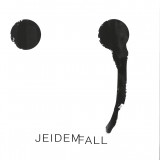
The man in the crowd is a wonderer with relaxed habits. In him the course of things and movement of the city is reproduced. The Düsseldorfer Detlef Weinrich is such a man in the crows. Some one who is constantly listening to future winds through rushes of the past. He loves the night for its free will. And his music tells stories about it. You might know him as a member of the band Kreidler. As a solo artist he goes under the name Tolouse Low Trax. And he's already got three Eps and two albums under his belt. His first solo album „Mask Talk“ thrives on a feathery beat frequency and cool new-wave-strength. His recently released piece „Corridor Plateau“, which appeared as a limited edition to accompany the exhibition „Corridor Plateau“ contains percussive electronics and Industrial sounding like its from the second industrial revolution. His third album „Jeidem Fall“, is also not from here. It sounds like music brought down to earth from the heavens. But its a dark cosmos in which there are only fleeting glimpses of light. All eight tracks were composed in a short space of time over the period of just a few months and fit together perfectly atmospherically. With a musical expressiveness that undoubtedly twists your emotions, „Jeidem Fall“ attacks the subconscious and clouds the mind. The drums have more movement that on „Mask Talk“. Along with the constant tapping of drumsticks goes melodical arpeggios dancing dark and dirty. At times longing vocals drift abstractly through the room, as on „Sa Seline“ or „Geo Scan“, without telling any obvious story.
To sound like stylistic cross references from the present and past is all just speculation for nothing on „Jeidem Fall“ really sounds like anything that has gone before. You could compare the dark minimal timbre of the drum computer aesthetic with Craig Leon's first reductive album „Nommos“. There is also a hint of the minimallist industrial of the Spanish band Esplendor Geometrico in the bubbly textures. But Tolouse Low Trax is still looking from the present into the future and filter and filters all his personal preferences through his MPC and his small synth setup to make them come alive here and now in a new way. Again Tolouse Low Trax has created a truly mysteriously vibrating drum computer music which offers hypnotic magic for the shadowy dance floor. Only a little light should illuminate the whole thing and the bodies that move above them should have no fear from threatening percussion which are displaced into a misty trance. A dark swaying shadowy mass, ideal for a journey at the end of the night and all those non-places where longing sleeps and the last romantics dance while getting drunk.
One of Drumcode’s finest, Bart Skils returns for his first solo EP since 2018.
Bart Skils remains one of the label’s most consistent achievers going back to his debut in 2012. Eight original EPs, a stellar remix of Moby ‘Go’ and his now-classic collaboration with Adam Beyer ‘Your Mind’ have entrenched him as a DC treasure. All the while the Dutchman plays a nurturing role with the label’s nu-skool brigade, regularly playing B2B with Layton Giordani and teaming up with Weska for last summer’s ‘Polarize’ two-tracker.
His ninth Drumcode EP ‘Settle In The Sun’ delivers the first productions from his new studio after six months of preparation. The title track was inspired by an extended stay in LA over New Years, channelling the energy of Venice Beach’s vibrant skate culture to create an uplifting, big riff weapon. ‘Tropical Heat’ took influence from Bart’s experiences touring South America, as an evocative vocal sample and rave-kissed melody line run alongside a wicked rolling groove. ‘Shiva Says’ is a peak-time, brain-mangler in the best of ways, driven by a monster synth line that grows and contorts as the track progresses.
The Kenyan music scene is one of the most diverse and vibrant in Africa. However, ask any Kenyan which pop music style truly represents Kenya as a nation and there is only one possible answer: benga.
Benga is a pop style with its roots in traditional rhythms, instruments, and melodies. Luo musicians from western Kenya brought the style to prominence in the late 60s but other cultural/linguistic groups in other parts of Kenya quickly developed their own localized variants. With its pulsing beat, interlocking guitars, extended solos, and rapid-fire bass, benga music has dominated the Kenyan music scene over most of the post-colonial period.
Kakai Kilonzo is one of only a handful of benga artists to attract a broad following across Kenya. He opened up his music to others outside his Kamba language and background by singing in Swahili, which is widely understood throughout Kenya. At the same time, with catchy melodies and engaging lyrics, Kakai sang about subjects that all Kenyans can relate to: songs on all aspects of love and marriage, on social responsibility, societal ills (like drinking and witchcraft), moral guidelines, national unity, economic development, and more.
The songs on this compilation are taken from across Kakai's recording career, spanning from the mid-1970s to the mid-1980s, shortly before his illness and untimely death in early 1987, aged only 33. No Wahala Sounds are proud to present this selection of hard-to-find 45s from Les Kilimambogo Brothers, which are being released on vinyl here, for the first time outside Kenya.
The vinyl version includes a free CD copy of the album.
Due for release on 31 July 2020. Interest for airplay from Tom Ravenscroft and Gideon Coe from BBC 6 Music, DJ Ritu from Resonance FM/SOAS Radio, Roger Hill from BBC Merseyside and Steve Barker from BBC Lancashire.
Queried on his favourite word in the German language, Masayoshi Fujita will pick 'getragen' - without a sliver of hesitation. Further questioning will reveal that he loves the term's semantic signifiers, its inherent sense of "expansive, deep, quiet and sombre." And yet, 'getragen' leaves plenty of room for interpretation: depending on context, it might also indicate wearing apparel or the state of being carried - two more mundane interpretations that I would rather keep from him. Does Masayoshi's own definition, however, apply to 'Bird, Lake, Objects'? Only to a limited extent. Compared to previous Faitiche releases, 'Bird, Lake, Objects' is certainly the most 'getragen' of them all. Nevertheless, this is by far not the first association that comes to mind. From a distance, these tracks seem rather introspective, cautious even - and reflect the recording situation: deliberately pared down, reduced to a single microphone in space and a separate track for all other instruments, each movement and action is chronicled by the treacherous mike. This confronted me with some unexpected and unfamiliar problems. For example, we had to swap out the seating in the studio as my favoured chair had a characteristic creak. Other, external influences were proved our control: fire engine klaxons, street noise and footfall became part of the recordings and their improvisatory nature. Each movement required careful orchestration, fully aware of its irrevocable nature. Space itself was always present and an audible entity, except on 'Stripped to RM' (recorded without a microphone or vibraphone track). After extensive deliberations, we decided to forgo the vibes on this piece - a very similar version had already been released in 2008 (on the compilation 'Enjoy The Silence', Mule Electronic, 2008). Jan Jelinek, February 2010
- A1: Interlude (5:25)
- A2: Seventh Avenue (6:21)
- A3: I’m The One That Loves You (7:07)
- B1: Sho You Right (9:47)
- B2: Sir John (6:59)
- B3: Aquarian Mood (4:06)
Justo Almario comes from Colombia, plays sax and flute. The first of his dozen jazz albums was recorded for Uno Melodic, largely composed and all produced by Roy Ayers. Before this solo album he recorded with Mongo Santamaria, Jon Lucian, Dom Salvador and then on sax for the first time with Roy Ayers on the 1976 album “Vibrations” which included “Searchin’”. He also played with James Mason on the album “Rhythm of Life” which included “Sweet Power Your Embrace”, then again with Roy on the “Lifeline” album which included “Running Away”. Demand for this album has grown in recent years through the aforementioned associations and for the stunning title track
"There's a fresh new undercurrent to his fourth LP, Everything Will Grow Again, the first single of which (Carrie) was released on 17 April. The album sees Fakear fusing styles with more muscle than before, ushering in hints of Mount Kimbie, Floating Points and Jon Hopkins and embracing accidental synth sound effects.
It’s been six years since the worldwide success of “La Lune Rousse”, his first oriental-inspired EPs released by Nowadays Records, and the halting, vibrant vocals that catapulted Fakear onto the scene, with the musician now finding himself keeping on-stage company with heavyweights such as M.I.A. and Bonobo.
Everything Will Grow Again is a more candid, sincere exploration of harmonisation this time, with a sturdier technical weave underpinning the whole. The background murmurs of Jupiter-8 synths and a Matrix Brute recur over the album’s eleven tracks. Fakear’s long-standing communion with nature, a source of inspiration to him from the very start, are combined with his trademark acoustic chords on tracks such as “Together” and “Sekoia”. An entire section of the album has a decidedly club-inspired feel (“Structurized”), opening out into a series of analogue waves of sound reminiscent of Mount Kimbie and Moderat (“Linked”)."
d 4. Rituals feat. Luiza Fernandes
[e] 5. Carrie [feat. Alex Metric]
Maestro Egisto Macchi (Gruppo di Improvvisazione Nuova Consonanza - The Group) recorded this mystical ethnographic trip to the South of Italy imbued with its rites, superstitions, magical symbols and popular mythologies in 1977 for the TV Documentary 'Sud e Magia'. Astoundingly evoking the intensity, magic and psychedelia of its subject with the use of inventive and unconventional techniques (aerophones, crystal glasses, prepared piano), Macchi harmonizes kindred spirits from transcendental, religious and metaphysical sound forms. Produced in the Feeling Records Studios, Turin, which had the highest level of equipment and technicians, this pinnacle of experimenal library music is released for the first time with audio restored from the original masters tapes.