
4
LED004 = LED001+LED003, mathematically and poetically it made sense to make a glow-in-the-dark boxset with these two contemporary belpop EP’s. 001 with Victor De Roo and 003 with Azertyklavierwerke
LED004 = LED001+LED003, mathematically and poetically it made sense to make a glow-in-the-dark boxset with these two contemporary belpop EP’s. 001 with Victor De Roo and 003 with Azertyklavierwerke

The second volume in a survey of the modern jazz & hard-bop scenes that emerged in the new cultural melting pot of post war London, with recordings from the end of the 1940s through to the early 1960s.
Featuring representations from players whose roots lay in the East-End's jewish community alongside a wealth of talent of Caribbean and African descent playing and recording in post war London during this period.
Made in partnership with the Barbican to coincide with the exhibition Postwar Modern: New Art in Britain 1945-1965.

Motor city royalty Floorplan, aka Detroit techno pioneer and creator of minimal techno Robert Hood and his DJ/producer daughter Lyric Hood, announce their forthcoming inclusion in the deeply respected ‘fabric presents’ mix series with the release of their new single ‘You’re A Shining Star’, out now. The full mix drops on digital/vinyl/CD via fabric records on 28th November.
Robert has been a long-standing fabric favourite since the institution's earliest years, clocking up over 20 sets in Room 2, including a live session on New Year's Eve, 2012. In 2008, he'd turn in Fabric 39 which is among the most revered contributions to the fabric mix canon. Now, with the forthcoming ‘fabric presents Floorplan’ mix, the story comes full circle - marking both the duo’s debut on the iconic mix series and a monumental moment for the family project.
About Floorplan: Emerging from a musically rich Detroit upbringing steeped in Motown and vinyl culture, Robert Hood became an early member of the seminal ’90s collective Underground Resistance, helping to spearhead the rise of techno. Going solo, Hood created minimal techno with his Minimal Nation LP. Groundbreaking productions, acclaimed performances, and his own M-plant label followed, until in ’96 he formed Floorplan - an alter ego to expand beyond minimal techno into gospel, soul and house-infused techno. Immersed in music from an early age, Lyric eventually caught the same electronic spark that’s driven her father for decades. In 2014, after the release of Hood’s debut Floorplan album Paradise, the project evolved as the then-16-year-old Lyric joined him to perform as Floorplan, including a supreme closing set at Dekmantel’s Boiler Room stage. Two years later, Lyric officially became a full member of Floorplan, cementing their father–daughter collaboration, and they’d release their co-produced album Victorious on M-Plant that same year.
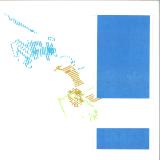
Ambroos De Schepper and Pepijn Gyssels became roommates when PiP moved to Brussels in 2021. Both paid close attention to each other’s musical approach and interests. One year later, Ambroos moved out. When he swung by to pick up some boxes, they decided to record something for the fun of it. Between May '23 and November '24 they continued experimenting with textures and improvisations. This collaboration has become the deepening of a friendship and a way to maintain it at the same time.
PiP: “We would have coffee or the occasional beer and everything we recorded came very organically. Ambroos would just bring his saxophone, a clarinet, some FX pedals or a weird flute. Whatever he felt like on that particular day. A few hours later he would usually be on his way again, leaving me with the recordings. I could treat them as I pleased.”
Ambroos: “I liked the idea of working with someone focussing on the physical side of music. Not so much on chords and tonality, but on texture and atmosphere. This gave me a framework with less concrete references, using words like “dark” or “busy”. I could improvise freely and we would try and catch a particular moment."
“l’Esprit de l’Escalier” is meant to be a musical meditation, opening up a continuous and detailed sound palette, aimed for the right mental state to listen with. Ambroos came up with the melody in COVID times and later in PiP’s studio, they recorded it on clarinet.
“Sans Loup” is the first jam the duo did together, after Ambroos and Lou moved out of the apartment they shared. Lou Wéry eventually found her way back to the album, as she can be heard playing the wing piano in this track.
PiP: “We recorded in the apartment we used to rent together. Since the title track and the entire album are named after Lou being absent in this dynamic, it seemed only natural to invite her in a later stage.”
“Spring Whistle” was an attempt to embed Ambroos’ musicality in dreamy textures and “Bring Back Bones” was built around an endlessly evolving krakeb recording that PiP took home from on a trip to Morocco. Both tracks are not aimed to end or evolve drastically, they just make the clock tick slower.
To conclude this release, “Velours de Tendre” is built out of a deconstructed groove and a field recording of the “Ronde van Vlaanderen”, a small reference to the countryside where PiP grew up. The reverberating chords you hear are the echoes Tijn Driessen squeezed out of an old harmonium, in a staircase of De Grote Post in Ostend.
PiP: “During a residency in De Grote Post we recorded in a staircase with a spaced pair of omni microphones. And you can take ‘spaced’ quite serious; one was positioned 5 stories higher and the other 3 stories lower.”
Sans Loup is the first vinyl to release on PiP’s label. They look alike, but none will be identical. The cover is screen printed in various combinations + a risograph insert. A highly personalized object.
credits
Released on Zitstill Records
Recorded in Brussels, Horebeke, Morocco and elsewhere, between September 2021 - November 2024
Music, mixing and production by Pepijn Gyssels
Saxophone, flute and clarinet by Ambroos De Schepper
Grand piano on “Sans Loup” by Lou Wéry
Harmonium on “Velours de Tendre” by Tijn Driessen
Mastering and lacquer cut by Anne Taegert at Dubplates & Mastering
Pressing by Objects Manufacturing
Layout and graphic design by Liselotte Van Daele & Otis Verhoeve
Photography by Willem Mevis
Special thanks to: Stijn Cools, Victor De Greef, De Grote Post
Since his earliest days, Ben Frost has been fascinated by the cinematic qualities of the guitar. His output to this point has hinted at this, but with »Steel Wound« he makes a bold statement of intent.
Finding his way to a deserted stretch of Johanna Beach along the Great Ocean Road (Victoria, Australia) in early 2003 Frost set up a remote studio at a derelict cabin overlooking the icy waters of Bass Strait. With a constant wind flowing off the sea his only companion, Frost started work on a series of improvisations that would eventually become »Steel Wound«. A few months go by and Frost has made his way back to civilization. He begins editing the masses of treated guitar from the Johanna Beach improvisations and before long a theme takes hold - one that very much reflects the isolation of the environment where the tracks were created.
Each of the pieces on »Steel Wound« is a epic journey, coloured with a deep sense of filmic narrative and suggested dialogues. The textural quality of the works, laced with field recordings and lost vocal fragments, sketches out the emotional soundscapes Frost had unwittingly gathered during his time at Johanna Beach. Each piece is a splintered fragment in time – a forgotten memory beautifully rediscovered in a moment of introspection.

This transcontinental techno VA gathers five forward-thinking artists from across the globe.
Icelandic techno forward Exos opens the release with "Tunis" - a no-compromise, fast-paced track that pulses with distant echoes of African tunes. This piece that moves you forward, propels through time and textures.
Hailing from Paraguay, Victoria Mussi brings "Imaginary Rush", a track that shifts the grid: behind the steady four-to-the-floor pulse hides a maze of unexpected sound accents. This is techno that demands both dancing and deep listening.
Latvian producer Ksenia Kamikaza follows with "34 hours of C" - a cinematic narrative shaped by futuristic sound design. Taking you to the sci-fi movie scene with echoing synths - it's a sonic adventure drifting across an obscure dancefloor.
Chilean artist Andrea Riffo offers "Fissure State", a fragile yet deeply intentional track that blends minimal structure with immersive depth. Thoughtful and hypnotic, it carries a subtle intensity that fits perfectly into both opening and prime time sets.
Catalan non-binary artist Basso Mata closes the record with "Open Close" - a departure from strict techno into mid-90s-influenced electro. Combining distorted guitar-like basslines with synthetic groove, it's both unexpected and irresistibly danceable.
Together, these five pieces form a cohesive yet diverse vision of modern techno - experimental, emotional, and deeply rooted in each artist's local context. This record is built for DJs who play with narrative, contrast, and surprise. A secret weapon for those who mix stories, not just beats.

In an ever-expanding musical universe, Azymuth have long existed as a celestial giant, drawing countless artists, musicians and followers into their orbit. Marking fifty years since their 1975 debut album Azimuth, their new album Marca Passo proves that the band’s alchemic brew of Brazilian jazz-funk and cosmic samba soul remains as vital as ever, as the group honours the profound legacy of their departed founders.
Recorded in Rio de Janeiro, Marca Passo is the first full-length release since the passing of founding drummer Ivan "Mamão" Conti in 2023, following the earlier loss of keyboardist José Roberto Bertrami in 2012. Alex Malheiros, the sole remaining original member, sees his stewardship of the band’s musical legacy as his spiritual duty. He is joined by the equally devoted Kiko Continentino (Milton Nascimento, Djavan) on keyboards, who has been with the group since 2016, and new recruit Renato Massa (Marcos Valle, Ed Motta) on drums.
Yet since their earliest recorded music, Azymuth have always been far greater than the sum of their parts. The "three-man orchestra’s" unmistakable sound is rooted in Brazil's MPB studio scene of the 1970s and early 1980s—a time when artists blended traditional Brazilian rhythms with global jazz, rock, and emerging psychedelic and progressive elements. Marca Passo continues this legacy, seamlessly fusing Brazilian musical traditions with global influences while showcasing the exceptional musicianship that powers Azymuth's distinctive, multi-dimensional sound.
The album is produced by studio mastermind Daniel Maunick, responsible for Azymuth’s two previous studio albums, Fênix in 2016 and Aurora in 2011. Daniel’s credits also include albums by Marcos Valle, Sabrina Malheiros and Terry Callier. Azymuth also invited Daniel’s father, British jazz-funk royalty Jean Paul “Bluey” Maunick, of Incognito, to play guitar on a new version of Azymuth’s eighties classic “Last Summer In Rio”, in tribute to the song’s composer, José Roberto Bertrami. Equally, “Samba Pro Mamao” is a new composition dedicated to Azymuth’s beloved original drummer, Ivan “Mamão” Conti.
Credits:
Alex Malheiros - Bass, Acoustic Guitar & Vocals: 1,2, 3, 4, 5, 6, 7, 8, 9, 10
Kiko Continentino - Keyboards, Organ, Vocoder & Vocals: 2, 3, 4, 5, 6, 7, 8, 9, 10
Renato Massa - Drums & Vocals: : 2, 3, 4, 5, 6, 8, 9, 10
Ian Moreira - Percussion: 1, 2, 3, 4, 5, 6, 8, 9, 10
Sidinho Moreira - Percussion: 1, 2, 3, 4, 5, 7, 8, 9, 10
Dudu Viana - Keyboards & Vocals: 1
Victor Bertrami - Drums: 1
Mangueirinha - Repinique: 3
Jean Paul ‘Bluey’ Maunick - Electric Guitar: 5
Jose Carlos Bigorna - Soprano Sax: 9
Daniel Maunick: Additional Percussion, Synths & EFX: 1, 2, 3, 4, 5, 6, 7, 8, 9
Produced, Engineered, Mixed & Arranged by Daniel Maunick
Co-Produced & Arranged by Alex Malheiros
Executive Producer: Joe Davis
Recorded by:
Daniel Maunick & Leonardo Vieira @ Estúdio Nos Trilhos, Santa Teresa, Rio, Brazil
Daniel Maunick & Amadeu Signorelli @ Sigstudio, Niterói, Rio, Brazil
Daniel Maunick & Alex Malheiros @ Estúdio Basslab, Piratininga, Rio, Brazil
Mixed by Daniel Maunick @ The Sugar Shack, Carluke, Scotland
Artwork & Design: Tyler Askew

A pioneering force in African music, Jo Tongo has always been on top of the game. Since the late 60s he has been recording music under his early Jojo L'Explosif moniker. His debut album "Jo Tongo" was released 1976 on Fiesta/Decca and features classic tracks like Jangolo and Piani. Now, after decades of underground influence and global recognition, his second album Sa Discossa (1980) is re-released for the first time. Being an electrifying fusion of African rhythms, disco, makossa, reggae and funk it is reflecting his lifelong journey of musical exploration and cultural storytelling and claims its place as an essential recording in the Afro-disco movement.
Jo Tongo's music is inseparable from his life's story-a journey that spans continents, struggles, and victories. From his early years as a leading African musician before the global rise of Afrobeat, to his deep roots in classical training, and his time performing in France and Germany, his sound is shaped by a rich blend of influences. Having played in bands across Europe, from American military bases in Germany to the jazz and soul circuits of Paris, he absorbed the pulse of multiple musical worlds, creating a sound uniquely his own.
"My music is my life. I never saw it as a way to become a star-I am a simple man," Tongo explains. "I came into music to say something, to tell about life, to share my experiences with the world." His perspective on fame and artistry is deeply rooted in his Cameroonian background. "I wasn't interested in business. I wanted to build something with music, to create a sound that was mine."
But Jo Tongo's music has always carried a deeper message. His work reflects his strong political stance against colonialism, social injustice, and oppression. "I cannot stay silent while my people suffer," he says. "Music is a way to resist, to stand strong, and to remind people of their dignity and their power." Throughout his career, Tongo has used his platform to advocate for African identity and independence. His songs, layered with messages of social consciousness, have continued to resonate with younger generations who recognize the relevance of his words even today.
Sa Discossa is more than just a disco record. It embodies Jo Tongo's philosophy of resistance, identity, and celebration. The title itself is a blend of "disco" and "makossa," reflecting the seamless fusion of African groove and the dancefloor energy that defined the era. Tracks like Bunya, sung in his native language, carry messages of love, gratitude, and resilience-sentiments that remain as relevant today as they were nearly 50 years ago. As Tongo describes it, "Every day, give thanks and praise to your Lord. Every day, show me your love. Every day, let me show you my tender love."
Tongo's musical journey also took him through the world of reggae, inspired by his exposure to American and Caribbean artists. "At first, I didn't like reggae-it was too slow for me," he admits. "But then I heard Bob Marley, and I realized the power in its simplicity. The rhythm, the
message-it was all connected to something bigger." He later found himself embracing reggae as an essential part of his musical DNA. "I realized that my music and reggae shared the same roots. We are all connected, all telling the same story in different ways."
Having spent much of his career performing across Europe, Jo Tongo reflects on his connection with international audiences. "I've played everywhere-from Africa to Germany, from Paris to other cities in France and what I've learned is that music speaks a universal language. You don't need to know the words to feel the message."
Despite taking a step back from the stage in recent years, he remains open to new possibilities. "Music is like a fire-it never truly dies. I have a lot to say, and music is the best way to say it."
For Jo Tongo, music is more than entertainment-it's a language of truth, a testament to history, and a bridge between cultures. The rhythm of Sa Discossa lives on, stronger than ever. With Sa Discossa returning under the African Edge series on The Outer Edge label, Jo Tongo's legacy continues to resonate, proving that real music never fades.

In an ever-expanding musical universe, Azymuth have long existed as a celestial giant, drawing countless artists, musicians and followers into their orbit. Marking fifty years since their 1975 debut album Azimuth, their new album Marca Passo proves that the band’s alchemic brew of Brazilian jazz-funk and cosmic samba soul remains as vital as ever, as the group honours the profound legacy of their departed founders.
Recorded in Rio de Janeiro, Marca Passo is the first full-length release since the passing of founding drummer Ivan "Mamão" Conti in 2023, following the earlier loss of keyboardist José Roberto Bertrami in 2012. Alex Malheiros, the sole remaining original member, sees his stewardship of the band’s musical legacy as his spiritual duty. He is joined by the equally devoted Kiko Continentino (Milton Nascimento, Djavan) on keyboards, who has been with the group since 2016, and new recruit Renato Massa (Marcos Valle, Ed Motta) on drums.
Yet since their earliest recorded music, Azymuth have always been far greater than the sum of their parts. The "three-man orchestra’s" unmistakable sound is rooted in Brazil's MPB studio scene of the 1970s and early 1980s—a time when artists blended traditional Brazilian rhythms with global jazz, rock, and emerging psychedelic and progressive elements. Marca Passo continues this legacy, seamlessly fusing Brazilian musical traditions with global influences while showcasing the exceptional musicianship that powers Azymuth's distinctive, multi-dimensional sound.
The album is produced by studio mastermind Daniel Maunick, responsible for Azymuth’s two previous studio albums, Fênix in 2016 and Aurora in 2011. Daniel’s credits also include albums by Marcos Valle, Sabrina Malheiros and Terry Callier. Azymuth also invited Daniel’s father, British jazz-funk royalty Jean Paul “Bluey” Maunick, of Incognito, to play guitar on a new version of Azymuth’s eighties classic “Last Summer In Rio”, in tribute to the song’s composer, José Roberto Bertrami. Equally, “Samba Pro Mamao” is a new composition dedicated to Azymuth’s beloved original drummer, Ivan “Mamão” Conti.
Credits:
Alex Malheiros - Bass, Acoustic Guitar & Vocals: 1,2, 3, 4, 5, 6, 7, 8, 9, 10
Kiko Continentino - Keyboards, Organ, Vocoder & Vocals: 2, 3, 4, 5, 6, 7, 8, 9, 10
Renato Massa - Drums & Vocals: : 2, 3, 4, 5, 6, 8, 9, 10
Ian Moreira - Percussion: 1, 2, 3, 4, 5, 6, 8, 9, 10
Sidinho Moreira - Percussion: 1, 2, 3, 4, 5, 7, 8, 9, 10
Dudu Viana - Keyboards & Vocals: 1
Victor Bertrami - Drums: 1
Mangueirinha - Repinique: 3
Jean Paul ‘Bluey’ Maunick - Electric Guitar: 5
Jose Carlos Bigorna - Soprano Sax: 9
Daniel Maunick: Additional Percussion, Synths & EFX: 1, 2, 3, 4, 5, 6, 7, 8, 9
Produced, Engineered, Mixed & Arranged by Daniel Maunick
Co-Produced & Arranged by Alex Malheiros
Executive Producer: Joe Davis
Recorded by:
Daniel Maunick & Leonardo Vieira @ Estúdio Nos Trilhos, Santa Teresa, Rio, Brazil
Daniel Maunick & Amadeu Signorelli @ Sigstudio, Niterói, Rio, Brazil
Daniel Maunick & Alex Malheiros @ Estúdio Basslab, Piratininga, Rio, Brazil
Mixed by Daniel Maunick @ The Sugar Shack, Carluke, Scotland
Artwork & Design: Tyler Askew

CASABLANCA first started as a party exploring the depths of Arabic grooves from Northern Africa and the Middle East, brought to life by two musical legends...Parisian digger Victor Kiswell, known for his journey through the world’s rarest records and influential NTS radio sets, and Dez Andrés, a Detroit native whose roots in the city's hip-hop and house scene are matched by his love for soul, fun, and jazz. The two artists have stepped into the studio to bring the same energy and ethos from their party to this album.
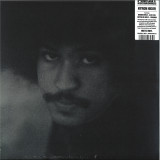
Limited Edition White Vinyl
At the forefront of a rising wave of Brazilian artists captivating international audiences, Nyron Higor brings a quiet yet potent sense of wonder to his new self-titled album. Born in Maceió, Higor’s latest work is rooted in the traditions of Northeastern Brazilian music and golden-era MPB. Within the peaceful surroundings of his home, Higor weaves these roots together with global influences and contemporary production techniques, for a uniquely dreamlike vision of hope.
Following the success of his self-released debut Fio de Lâmina—an instrumental record of delicately balanced rhythmic and harmonic patterns, which earned support from tastemakers like Mr. Scruff, Gilles Peterson, and John Gomez—Higor’s new album is a move towards a more expansive, lyrical exploration of transcendence and triumph. As Higor explains, “This album is a test of resistance and a big event in my life as a young Black man from the Northeast and coming from a humble background, financially speaking, its context is political.”
Taking his demos and unfinished tracks to São Paulo, Higor worked alongside friends and collaborators from Brazil’s vibrant contemporary music scene—including fellow Maceioense artists Bruno Berle, Batata Boy, and New York-based Brazilian vocalist Alici Sol—assembling a rich musical landscape and a cutting edge development on the musical world from which he emerges.
For Higor, the process of recording and producing in close collaboration with Berle and Batata Boy allowed him to fully cultivate the emotive power of his compositions. Album opener "Ciranda" sets the tone with a slow frevo rhythm, as wistful trombone melodies and melancholic acoustic guitar harmonies create an atmosphere both intimate and grand. Lead single "São Só Palavras," featuring Alici Sol and Bruno Berle, captures both the lightness and depth of young love in an all too fleeting minute-and-a-half moment of soaring brilliance.
Building upon the instrumental sound of his debut, “Louro Cantador” with its playful organ, birdlike whistles and elegant acoustic guitar, emanates a kind of rare natural beauty, as each sound dances amidst the gentle pulse of Higor's bass—his main instrument.
Through ten carefully crafted tracks, Higor’s acuity for sound and silence draws listeners into a place that feels both deeply personal and universally resonant. “Above all, I value making music that brings me genuine satisfaction. I’m always looking for depth in the things I create.”
This album is a testament to the timeless themes that define Higor’s artistry, as well as his creative drive to overcome the obstacles he faces. Conveying his feelings of jubilance for his work, Higor notes, “This work is liberating, contemplative and victorious!” Each track invites the listener to experience the raw intimacy, the joy and longing, and the otherworldly ingenuity of Brazilian music, which seems to endlessly keep us coming back for more.
CREDITS
Ciranda (Nyron Higor)
Tico Lima: Trombone, Nyron Higor: Drums, Bass, Synthesizers, Electric Piano, Guitar, Molho de Jatobá, Ganzá, Caxixi, and Indigenous Whistle
Louro Cantador (Nyron Higor)
Nyron Higor: Drums, Bass, Keyboards, Guitar, Percussion, and Direct Sound
Demo Love (Nyron Higor)
Nyron Higor: Drums, Bass Synth, Keyboards, and Synthesizers
São Só Palavras feat. Alici, Bruno Berle (Nyron Higor, Batata Boy, Alici Sol, and Bruno Berle)
Alici Sol: Vocals, Bruno Berle: Vocals and Bass, Nyron Higor: Drums, Guitar, Keyboards, Synthesizers, and Whistles
Estou Pensando Em Você feat. Johanna (João Menezes, Rubens Adati)
Nyron Higor: Vocals, Johanna: Vocals. Bruno Berle: Vocals, Rubens Adati: Piano, Guitar, Programming, Stefan Costilhes: Bass, Batata Boy: Programming
Maravilhamento feat. Nathalia Grilo (Nyron Higor, Nathalia Grilo)
Nathalia Grilo: Vocals, Nyron Higor: Drums, Bass, Guitar, Keyboards, and Synthesizers
Som 24 (Nyron Higor)
Nyron Higor: Sampler, Keyboard, Bass Synth, Vocoder, and Steel Guitar
Pizzicato (Nyron Higor)
Nyron Higor: Double Bass and Keyboards
Eu Te Amo (João Menezes)
Nyron Higor: Vocals and Bass, João Menezes: Guitar, Batata Boy: Rhodes Piano, Bruno Berle: Xylophone
Me Vestir De Você feat. Johanna (Paulo Novaes and João Menezes)
Nyron Higor: Vocals, Johanna: Vocals, Bianca Godoi: Drums, Bruno Berle: Bass, Guitar, Percussion, and Rhodes Piano, Batata Boy: Rhodes Piano and Guitar
===================
Tracks 1, 2, 3, 4, 6, 7, and 8 were recorded by Nyron Higor in Maceió
Track 4: Bass and Synthesizers recorded by Ico dos Anjos. Vocals recorded by Batata Boy at Estúdio Rural
Track 5: Guitars, Bass, Programming, and Pianos recorded at Inhame Estúdio. Coproduced by Rubens Adati
Tracks 9 and 10 Recorded and Co produced by Ico dos Anjos
Mixed by Batata Boy, Ico dos Anjos, Bruno Berle, and Nyron Higor
Mastered by Batata Boy
Produced by Batata Boy, Bruno Berle, and Nyron Higor
Lacquer Cut by Caspar Sutton Jones @ Gearbox Records
Cover photo by Claudio Virginio
Vinyl centre label artwork by Tadáskía
Sleeve design by Alessandro Renaldin

Walker & Royce have released their highly-anticipated sophomore album No Big Deal out now via Dirtybird Records.
Embarking on a four-part mission to bring the party back to dance music, Walker & Royce have embraced the boisterous, unruly nature of their over-the-top signature to deliver 10 non-stop anthems. A highly collaborative body of work, No Big Deal features a colorful collection of characters including comedian/ musician Reggie Watts, Grammy-nominated and multi-platinum selling artist James Patterson (and 1/2 of the electronic duo The Knocks), peak-time queen VNSSA, Grammy-nominated vocalist Barney Bones, and more.
From the tongue-in-cheek lyricism of ‘I Don’t Remember’ and ‘Might Just’ to the overzealous charisma imparted on tracks like ‘Motivashun’ and ‘Fatalistic Groove’, No Big Deal boasts the sense of humor and lightheartedness that Walker & Royce have brought to countless dance floors throughout their career. The album is hallmarked by the kaleidoscopic elements of their dance music roots: catchy vocals, playful melodies, thumping basslines, and relentless four-on-the-floor percussion.
No Big Deal is a wondrous homage to the weird and wacky tropes that have distinguished Walker & Royce’s no-holds-barred style for more than a decade. An auditory yearbook cataloging Walker & Royce’s sonic inspirations from their early days in New York City’s 90s underground raves to the Dirtybird BBQs and Campouts where they found their home, No Big Deal is a victory lap for Walker & Royce as they cement their status as headliners and hitmakers.
No Big Deal is a reminder to enjoy the ‘Cheap Thrills’ that life presents, to ‘Get Down Down’ and adopt a motto like ‘Let’s Live It Up’.
2xLP, Gatefold Jacket, Picture Disc, cut at 45rpm. First pressing limited to 500 copies.

Over the past few years, we have strengthened our ties with photographers to showcase music we stand for.
Art Curation is deeply rooted in Délicieuse’s DNA. It all started with our Youtube channel where we have been showcasing the music we love for 10 years now. Parallel to music curation, our curiosity and appeal for aesthetic imagery brought us to enhance the music with photographs, illustrations or cinematic scenes. As a result, our Youtube channel has been the laboratory of our collaborations with photographers from all horizons such as Yosigo, Victor Costa or George Natsioulis.
Following that path, the Chambre Noire Compilation tends to expand the synergy between music & imagery. The idea is to highlight a photographer’s work & make the compilation a gallery in itself. For this first episode we are collaborating with Yosigo, a well established photographer from Barcelona. The art direction and graphic design side is imagined in collaboration with Brazilian art director Hermes Miranda.
The compilation contains 12 exclusive tracks released digitally and physically across a double vinyl edition. The physical edition includes an A6 photo booklet aiming to highlight Yosigo’s work while exploring the compilation concept.
Musically speaking the compilation follows Délicieuse’s travels and features a blend of established & emerging artists from all over the globe featuring the likes of Tell, Domenique Dumont, Fertita, Logh, BowAsWell, Pool Boy, Scissorwork, Jesper Ryom, Marvin Horsch, Jah One, Brothers of Eternal Love, and Golf Trip oscillating between Balearic, Deep House, Electronica, Electro & Indie Pop.
Get ready for an immersive and captivating musical experience with Chambre Noire.

"Speaker-bangin' before all else" (XLR8R) with "some of the smartest ears in the game" (Chicago Reader), "few can make a room explode like Maga Bo" (Flavorpill). A purveyor of "international sonic weaponry and rhythm knowledge" (Rough Trade), the Rio de Janeiro-based DJ/producer is a veteran pioneer of global bass music, with 20+ years of dedicated experience searching out unheralded music bumping from speaker-boxes in the world's grittiest corners, from Addis Ababa to Zanzibar.
Simultaneously, Amor (É Revolução), the new album from Maga Bo, is statement of hope through change, a call to arms, a lament, a proclamation of resistance, a shout of resilience, an exuberant yell and a deep therapeutic groove all at once. The result of a multi-decade search for rhythmic common denominators with an Afro-Brazilian-centric focus. It joins raw, natural, acoustic timbres and textures with the grit, weight and power of modern electronic production. It is where heavy dub bass pulsations sync with rhythms coaxed from drums heated over an open flame and ancestral voices rise and fall in call and response.
Recorded in Rio de Janeiro, Salvador, Recife, Arcoverde and Porto Alegre, the album counts amongst many illustrious talents from the Brazlian music scene, long time collaborators, Russo Passapusso and Roberto Barreto of Baianasystem, the legendary singer, BNegão and São Paulo based, Rosângela Macedo. Grupo Bongar and Samba de Coco Raízes de Arcoverde provide backing percussion and vocals. It also brings newer collaborators, from Recife, the amazing voice of Isaar, the fabulous guitarist, Felipe Cordeiro, as well as long-time friends, ex-Digitaldubs, Jeru Banto and Jota 3, the Mestre of Tambors de Olokun, Alexandre Garnizé, on percussion, fellow nomadic electronic roots explorer, Teleseen and the rock solid percussionist from Salvador, Icaro Sá.
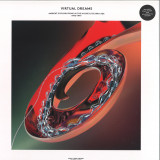
Music From Memory is delighted to be turning 50 with a special release: MFM050 - V/A - Virtual Dreams: Ambient Explorations In The House & Techno Age, 1993-1997 (3xLP/2xCD). The first in a series of compilations, alongside more in depth artist-focused releases, Virtual Dreams will delve into music produced during the 1990’s that redefined the boundaries of ‘Ambient’. This was music that explored the possibilities of Ambient music within a new setting, created often by House & Techno music producers for a world beyond dance floors but made very much with the pre and post-clubbing listener in mind.
When House and Techno exploded out of America in the mid 1980s a whole generation was redefined not only musically but also culturally and chemically speaking. Peaking, quite literally, with a second ‘Summer of Love’ in 1988, millions of young people across the world would experience the life-changing ups of a brave new world but with it of course came the downs; enter the concept of a ‘Chill-out’ room. Whilst early Chill-out rooms lacked a specific sound and were often soundtracked by music such as reggae and soul, slowly young Techno and House producers themselves would become increasingly interested in developing a futuristic ‘Ambient’ soundtrack to a world beyond the thud of the main room.
‘Ambient’ in this new age now though had sharper teeth than in Brian Eno's key text for ‘Music for Airports’, instead here the sounds were the mode of transport rather than the backdrop. While the melodies were pretty, the soundscape steered away from the pastoral, dreaming of outer-space and technology as opening up exciting new dimensions. Much like in the first Summer Of Love; the musicians were again exploring psychedelic, mind-altering and transcendental possibilities of music. And also much as in the first Summer Of Love, a psychedelic visual language would accompany the music. Though now the tracks could be accompanied by music videos, utilising early CGI techniques, they would look almost entirely to the future: envisioning technology, nature and humanity intertwined in a new Utopian future. Virtual Dreams of a better world.
From Ambient and early Chill-out classics, to lesser known one-off projects, as well as Ambient deviations by some of House and Techno’s leading producers, Volume One of Virtual Dreams features tracks by Bedouin Ascent, LA Synthesis, LFO, Marc Hollander, Mark Pritchard & Kirsty Hawkshaw, Richard H. Kirk and more.
To celebrate our 50th release the first 1000 copies include a holographic 'Virtual Dreams' sticker plus a special insert poster with artwork by Victoria Pacheco and design by Steele Bonus.

Killer Groove Records proudly presents "Keep Your Step", the explosive comeback by Italian rock steady & early reggae ambassadors The Appetizers, a soulful celebration of reggae's timeless spirit.
"Keep Your Step" marks the band's much-awaited return, landing April 10th on limited edition LP, CD digipack and digital format featuring two exclusive bonus tracks.
The Appetizers deliver a masterclass in roots reggae music with their highly anticipated second studio album, bridging Jamaica's golden age with contemporary relevance. "Keep Your Step" is a heartfelt sonic journey where the band blends rocksteady and early reggae with funk and soul influences to create a sound that's both genuine and refreshingly modern.
The fourteen tracks move fluidly between infectious dancefloor fillers and socially conscious lyrics. From the laid-back swing of "Feel Like Dancing" to the hypnotic rhythm of "Thicker Than Water", the band demonstrates their versatility while remaining true to the roots of Jamaican sound. "A Message from The Meters" pays tribute to the legendary funk pioneers, while the instrumental "Catch This" and "Make It Reggay" highlight the band's musical prowess and the deep connections between reggae and funk.
Meanwhile, tracks like "Fussy Girl" and "Behind My Shoulders" explore love's complexities with humor and soul. The album's heart lies in its social consciousness. "Cool and Deadly", "The Life", "Stormy Weather" and the album title track "Keep Your Step" tell stories of perseverance through life's struggles.
With the hopeful anthem "We Shall Overcome," The Appetizers deliver a timely message about genuine human connection in a social media-dominated era. The digital edition closes with "Get Some Rollin'" and "Swing and Sway," rounding out the journey with two additional gems.
"Keep Your Step" pays homage to Jamaican music legends, from Jackie Mittoo and Tommy McCook to Toots & the Maytals, while carving out The Appetizers' own distinctive sound. This is a groove made for both the dance floor and the soul, proving that reggae's power to inspire, unite, and uplift remains as vital as ever.
The production stays true to The Appetizers' signature sound: organic tones, deep groove, and that live-room vibe you only get when real musicians are locked in together. Luca Monza and Claudio Mambrini, the band's core members, handled the artistic production. Mastering came courtesy of the great JJ Golden (Black Pumas, Sharon Jones & The Dap-Kings, Jr. Thomas & The Volcanos, The Frightnrs) at Golden Mastering in Ventura, California. JJ is one of the most trusted engineers working in this sound, ensuring every ounce of warmth and authenticity came through.
The Appetizers are a rocksteady and early reggae band formed in Milan in 2020 by musicians deeply embedded in the Italian and international reggae scene. Musicians from different paths united by a shared vision: recreating that vintage Caribbean and American sound with authenticity, respect and a forward-thinking edge.
Drawing inspiration from Jamaica's golden era and channeling the soul of Delroy Wilson, Alton Ellis, the early Wailers, and The Upsetters, The Appetizers carry forward the essence of bass culture with a pure, fully organic approach.
Their debut album Listen Up! (2022), released via Belgian imprint Badasonic Records (home to The Slackers, The Aggrolites, David Hillyard & Victor Rice), featured ten original tracks and a dub cut by Victor Rice. Distributed across Europe, the UK, the US, and Japan, it quickly earned international recognition among reggae connoisseurs and selectors worldwide.
Following extensive touring, including shows with The Slackers, Black Uhuru, Skip Marley, and more, the band returned to the studio to record "Keep Your Step", their second album produced by Killer Groove Records. Here the band expands its musical language, weaving together the spirit of historic Jamaican labels like Studio One and Treasure Isle with '60s funk, arriving at a warm, organic, and timeless sound: soul, Jamaican roots, and modern sensibility in perfect balance. Their lyrics explore heartbreak, social issues, and reflections on life and music, performed with dedication and respect for tradition while always pushing forward.
If you're into The Skatalites, The Ethiopians, and those classic Caribbean rhythms, this one's for you.

Heavyweight psychedelic improvisers EarthBall are back with their third and most monstrous record to date: ‘Outside Over There’, released on Upset The Rhythm (Nov 7th). Born from the haunted basements of Nanaimo, Canada, the quintet thrives on spontaneity, shaping improvisation into jagged hallucinations and ecstatic eruptions.
Recorded live-off-the-floor in 2024 in Jeremy, Izzy, and Kellen’s basement, and mixed by drummer John Brennan, ‘Outside Over There’ is an album that feels both summoned and inevitable. Each track lands with uncanny purpose, as if uncovered rather than written.
The opener, 100%, features a cameo from comedian and English icon Stewart Lee, who lent his blessing for the band to use a fragment of his stand-up. The album was mastered by John Dieterich (Deerhoof), with liner text contributed by longtime comrade John Olson (Wolf Eyes). Olson describes the album in his unmistakable style:
“This eight-track odyssey unfolds like a dreamscape, where whispered incantations brush against the shadowy fringes of the cosmos, and wild, Cézanne-inspired rock anthems erupt like geysers of color in the midst of a western warm and wet rain storm… culminating in the sprawling eleven minute masterpiece, ‘And The Music Shall Untune The Sky,’ aptly dubbed the Earth Crusher. A creation so utterly deconstructed and intertwined with the pulse of nature itself that if AI was called upon to conceive ‘Outside Over There’ anew, it would just spit back, “F.U. in Tree Font”. An enchanting invitation for even the flat-earthers to join the circle, if only just a little.”
EarthBall’s trajectory has been relentless. Their 2024 album ‘It’s Yours’ was praised by The Quietus as “fully aggressive and fully life-affirming,” and by The Wire as "a boisterous mind-melting album”. The band’s live double set LP ‘Actual Earth Music Vol. 1 & 2’ (2025) captured blistering performances: a performance opening for Wolf Eyes at the Fox Cabaret, and a Café OTO improvised throw-down featuring Chris Corsano and Steve Beresford. These releases on their own confirm them as one of Canada’s most vital experimental exports, not to mention the impressive self-released discography on their Bandcamp. The band’s reach has stretched far beyond their west coast roots with a UK tour May 2024, plus this past June, EarthBall closed Montreal’s Suoni Per Il Popolo Festival alongside Pulitzer Prize-winning composer Raven Chacon. This November they will perform at Le Guess Who? Festival in Utrecht, with a European tour to follow (tour dates below). Outside of EarthBall, each member carries their own torch. Jeremy Van Wyck, founding member of the legendary Shearing Pinx, has toured extensively, released over 100 records, and has been a vital force in the Vancouver and West Coast underground for the past 25 years. He and Isabel Ford (Izzy) play together not only in EarthBall, but also in Psychedelic Dirt, Shearing Pinx, Behaviours, and Crotch.
John Brennan collaborates widely, including recently with Endlings (Raven Chacon and John Dieterich), Evichen (Victoria Shen), Francesco Fonassi, Plan Your Future (with Greg Saunier of Deerhoof), Brennan/Corsano duo and Physics with John Dieterich. Kellen Maclaughlin performs with KVMP and Ora Corgan, while saxophonist Liam Murphy is a west coast staple, playing with the best across Vancouver Island and the mainland. On three of the tracks of ‘Outside Over There’, the band is joined by their comrade Justin Patterson, who also plays with Brennan in the duo Modale. This cross-pollination fuels EarthBall’s sound - a collective improvisation, psychically overdriven, and grinding into bloom.
Outside Over There’ is more than an album though, it is a ritual, a gathering of sound at the forest’s edge; where feedback, saxophone screams, and ecstatic vocals dissolve the boundary between chaos and clarity. EarthBall invite you into their circle, to share in the joyful terror of spontaneous creation. ‘Outside Over There’ will be released on November 7th through Upset The Rhythm digitally and as a limited blue-in-black vinyl LP.

Heavyweight psychedelic improvisers EarthBall are back with their third and most monstrous record to date: ‘Outside Over There’, released on Upset The Rhythm (Nov 7th). Born from the haunted basements of Nanaimo, Canada, the quintet thrives on spontaneity, shaping improvisation into jagged hallucinations and ecstatic eruptions.
Recorded live-off-the-floor in 2024 in Jeremy, Izzy, and Kellen’s basement, and mixed by drummer John Brennan, ‘Outside Over There’ is an album that feels both summoned and inevitable. Each track lands with uncanny purpose, as if uncovered rather than written.
The opener, 100%, features a cameo from comedian and English icon Stewart Lee, who lent his blessing for the band to use a fragment of his stand-up. The album was mastered by John Dieterich (Deerhoof), with liner text contributed by longtime comrade John Olson (Wolf Eyes). Olson describes the album in his unmistakable style:
“This eight-track odyssey unfolds like a dreamscape, where whispered incantations brush against the shadowy fringes of the cosmos, and wild, Cézanne-inspired rock anthems erupt like geysers of color in the midst of a western warm and wet rain storm… culminating in the sprawling eleven minute masterpiece, ‘And The Music Shall Untune The Sky,’ aptly dubbed the Earth Crusher. A creation so utterly deconstructed and intertwined with the pulse of nature itself that if AI was called upon to conceive ‘Outside Over There’ anew, it would just spit back, “F.U. in Tree Font”. An enchanting invitation for even the flat-earthers to join the circle, if only just a little.”
EarthBall’s trajectory has been relentless. Their 2024 album ‘It’s Yours’ was praised by The Quietus as “fully aggressive and fully life-affirming,” and by The Wire as "a boisterous mind-melting album”. The band’s live double set LP ‘Actual Earth Music Vol. 1 & 2’ (2025) captured blistering performances: a performance opening for Wolf Eyes at the Fox Cabaret, and a Café OTO improvised throw-down featuring Chris Corsano and Steve Beresford. These releases on their own confirm them as one of Canada’s most vital experimental exports, not to mention the impressive self-released discography on their Bandcamp. The band’s reach has stretched far beyond their west coast roots with a UK tour May 2024, plus this past June, EarthBall closed Montreal’s Suoni Per Il Popolo Festival alongside Pulitzer Prize-winning composer Raven Chacon. This November they will perform at Le Guess Who? Festival in Utrecht, with a European tour to follow (tour dates below). Outside of EarthBall, each member carries their own torch. Jeremy Van Wyck, founding member of the legendary Shearing Pinx, has toured extensively, released over 100 records, and has been a vital force in the Vancouver and West Coast underground for the past 25 years. He and Isabel Ford (Izzy) play together not only in EarthBall, but also in Psychedelic Dirt, Shearing Pinx, Behaviours, and Crotch.
John Brennan collaborates widely, including recently with Endlings (Raven Chacon and John Dieterich), Evichen (Victoria Shen), Francesco Fonassi, Plan Your Future (with Greg Saunier of Deerhoof), Brennan/Corsano duo and Physics with John Dieterich. Kellen Maclaughlin performs with KVMP and Ora Corgan, while saxophonist Liam Murphy is a west coast staple, playing with the best across Vancouver Island and the mainland. On three of the tracks of ‘Outside Over There’, the band is joined by their comrade Justin Patterson, who also plays with Brennan in the duo Modale. This cross-pollination fuels EarthBall’s sound - a collective improvisation, psychically overdriven, and grinding into bloom.
Outside Over There’ is more than an album though, it is a ritual, a gathering of sound at the forest’s edge; where feedback, saxophone screams, and ecstatic vocals dissolve the boundary between chaos and clarity. EarthBall invite you into their circle, to share in the joyful terror of spontaneous creation. ‘Outside Over There’ will be released on November 7th through Upset The Rhythm digitally and as a limited blue-in-black vinyl LP.

The first VARIOUS release from Méchante Recording brings together a carefully selected lineup of artists with strong and distinctive identities.
It features Explorative, the duo Criminal System, Victor Benjamin alongside the soft and contrasting vocals of Enfant Sauvage, as well as Kiss The Future & Camu.
This debut release is rooted in minimal tech house, staying true to the label’s artistic direction: driving, hypnotic and powerful tracks designed for the dancefloor. A various that sets the foundation of Méchante Recording’s sonic identity and signals what’s to come.

On one hand, it could be bumming out the people who enjoyed hearing what the band evolved into. On the other hand, nostalgia sells...and daddy needs to eat! So...Nevermind 2! Broken Bones and Bloody Kisses has seen a few vinyl pressings in the past, but landing a physical copy of You Are My Canvas (which was only released on burned CDs, crafted in the Lovat- Frasers' basement) is almost impossible. And ooooooh boy...the pre- demo demo (or PDD) versions of "Sketch Artist Composite" and "The Anatomy of the Journey"? Those puppies - with me (Connor...hi!) on vocals/drums and Jeff playing everything else - were only available on the Y2K version and basically only used to recruit other band members. Smash all these old chestnuts together in one release and see what happens! Why not? It perfectly captures the whole spirit of early BOYS NIGHT OUT. But what title does one bestow upon such a sonic siphonophore? There are 3 versions of "Sketch Artist Composite".
Do you call it Sketch Artist Composite Plus Other Songs? Do you go all in on a lyric- based title like Fuck Us Where We Breathe? Decisions, decisions! Probably best to follow Costa's sage advice and go with Nevermind 2. So, almost exactly two decades after our first show - July 19, 2001 @ The Oakville Pine Room with Sky Came Falling, Unearth, and Rise Over Run - may we present unto you, Nevermind 2! What's old is new again, probably?

Belgian producer and DJ Ethan Fawkes returns with Funky Raver, a vibrant six-track vinyl release that channels the spirit of 70s funk and disco through a modern electronic lens. It features three originals alongside remixes from Victor Muerte, A.Fruit and Nite Fleit.
Fawkes, known for pairing raw rhythm with emotional punch, dives headfirst into the golden age of groove and rebuilds it for today's dance floor. The result feels warm and energetic, fresh take that nods to disco's roots while pushing forward.
Each remixer takes the core idea in a new direction without losing its heartbeat.
Victor Muerte takes "Funky Raver" track into a remix out a driving techno rework marked by hypnotic whiper repetition. It taps into the darker side of the groove, building steady pressure and giving the release a powerful late-night edge.
A.Fruit flips her version of "Get the Groove" into a fast, broken beat-driven workout full of tight percussion and futuristic low-end, giving the original a kinetic bass-forward storm that keeps the momentum surging.
Nite Fleit, the producer with a reputation for bold, genre-blending club tracks, injects her remix with electro pressure. She delivers a high-voltage version of "I Misplaced You" to take that turns the funk foundations into pure rave.
Taken together, the originals and remixes trace a full arc, from glittering disco lights to the throb of the warehouse. Funky Raver is a celebration of groove, motion and emotion. A reminder of how timeless dance-floor energy can be.

The third volume in a survey of the modern jazz & hard-bop scenes that emerged in the new cultural melting pot of post war London, with recordings from the end of the 1940s through to the early 1960s.
Featuring representations from players whose roots lay in the East-End's jewish community alongside a wealth of talent of Caribbean and African descent playing and recording in post war London during this period.
Made in partnership with the Barbican to coincide with the exhibition Postwar Modern: New Art in Britain 1945-1965.credits

Heavyweight psychedelic improvisers EarthBall are back with their third and most monstrous record to date: ‘Outside Over There’, released on Upset The Rhythm (Nov 7th). Born from the haunted basements of Nanaimo, Canada, the quintet thrives on spontaneity, shaping improvisation into jagged hallucinations and ecstatic eruptions.
Recorded live-off-the-floor in 2024 in Jeremy, Izzy, and Kellen’s basement, and mixed by drummer John Brennan, ‘Outside Over There’ is an album that feels both summoned and inevitable. Each track lands with uncanny purpose, as if uncovered rather than written.
The opener, 100%, features a cameo from comedian and English icon Stewart Lee, who lent his blessing for the band to use a fragment of his stand-up. The album was mastered by John Dieterich (Deerhoof), with liner text contributed by longtime comrade John Olson (Wolf Eyes). Olson describes the album in his unmistakable style:
“This eight-track odyssey unfolds like a dreamscape, where whispered incantations brush against the shadowy fringes of the cosmos, and wild, Cézanne-inspired rock anthems erupt like geysers of color in the midst of a western warm and wet rain storm… culminating in the sprawling eleven minute masterpiece, ‘And The Music Shall Untune The Sky,’ aptly dubbed the Earth Crusher. A creation so utterly deconstructed and intertwined with the pulse of nature itself that if AI was called upon to conceive ‘Outside Over There’ anew, it would just spit back, “F.U. in Tree Font”. An enchanting invitation for even the flat-earthers to join the circle, if only just a little.”
EarthBall’s trajectory has been relentless. Their 2024 album ‘It’s Yours’ was praised by The Quietus as “fully aggressive and fully life-affirming,” and by The Wire as "a boisterous mind-melting album”. The band’s live double set LP ‘Actual Earth Music Vol. 1 & 2’ (2025) captured blistering performances: a performance opening for Wolf Eyes at the Fox Cabaret, and a Café OTO improvised throw-down featuring Chris Corsano and Steve Beresford. These releases on their own confirm them as one of Canada’s most vital experimental exports, not to mention the impressive self-released discography on their Bandcamp. The band’s reach has stretched far beyond their west coast roots with a UK tour May 2024, plus this past June, EarthBall closed Montreal’s Suoni Per Il Popolo Festival alongside Pulitzer Prize-winning composer Raven Chacon. This November they will perform at Le Guess Who? Festival in Utrecht, with a European tour to follow (tour dates below). Outside of EarthBall, each member carries their own torch. Jeremy Van Wyck, founding member of the legendary Shearing Pinx, has toured extensively, released over 100 records, and has been a vital force in the Vancouver and West Coast underground for the past 25 years. He and Isabel Ford (Izzy) play together not only in EarthBall, but also in Psychedelic Dirt, Shearing Pinx, Behaviours, and Crotch.
John Brennan collaborates widely, including recently with Endlings (Raven Chacon and John Dieterich), Evichen (Victoria Shen), Francesco Fonassi, Plan Your Future (with Greg Saunier of Deerhoof), Brennan/Corsano duo and Physics with John Dieterich. Kellen Maclaughlin performs with KVMP and Ora Corgan, while saxophonist Liam Murphy is a west coast staple, playing with the best across Vancouver Island and the mainland. On three of the tracks of ‘Outside Over There’, the band is joined by their comrade Justin Patterson, who also plays with Brennan in the duo Modale. This cross-pollination fuels EarthBall’s sound - a collective improvisation, psychically overdriven, and grinding into bloom.
Outside Over There’ is more than an album though, it is a ritual, a gathering of sound at the forest’s edge; where feedback, saxophone screams, and ecstatic vocals dissolve the boundary between chaos and clarity. EarthBall invite you into their circle, to share in the joyful terror of spontaneous creation. ‘Outside Over There’ will be released on November 7th through Upset The Rhythm digitally and as a limited blue-in-black vinyl LP.

"Kiso", "Asama", "Hakuba" and "Hida". He recalls the landscapes of his past and carefully weaves his feelings and emotions into the music. This work is one of the pinnacles that Akira Miyazawa has reached.
This work was released in 1970 as one of Victor's "Japanese Jazz" series. "We are Japanese, so I think we have to create something that only Japanese people can do." These are the words of Akira Miyazawa from this period. When Miyazawa tried to create a work that only Japanese people could do, it was inevitable that he would choose his own origins, the hometown where he was born and raised, as a motif. For Miyazawa, who was born in Matsumoto City, Nagano Prefecture and loved fishing, "Kiso", "Asama", "Hakuba" and "Hida" are truly landscapes of his past. Takeo Moriyama's raging drums, Yasuo Arakawa's rich bass, Masahiko Sato's overflowing piano, and Miyazawa's saxophone, which is like a mass of emotion. Nostalgia and admiration for the land where he was born and raised, as well as admiration and reverence for Mother Nature. Miyazawa looks to his roots and weaves his thoughts and images into his music with sincerity and care. This album, "Kiso" is the pinnacle that Miyazawa has reached.
Text by Yusuke Ogawa (UNIVERSOUNDS / DEEP JAZZ REALITY)

François and Sylvain Rabbath have turned six years of touring into a joint album that patiently and intensely distills a variety of musical flavors gathered from around the world.
Since the early 1960s, François Rabbath's double bass has resonated through enough landmark recordings to fill several shelves in a record collection. As an arranger, composer, and musician, his imprint on music goes far beyond his collaborations with Barbara, Paco Ibáñez, Charles Aznavour, or Édith Piaf. Aspiring double bassists owe him a groundbreaking method for learning the instrument. Born into a lush musical universe that quickly became his own, his son Sylvain first accompanied him on his travels before settling at the piano and sharing stages around the world at his side.
Those years of accumulating visas in their passports were put to good use by father and son. The continents, countries, and cities they passed through became a rich source of inspiration for composing Amall, the album by the Rabbath Electric Orchestra.
Long hours spent in the air or on the road, watching passing landscapes that never stayed the same, were transformed into compositions imbued with the atmospheres of the places they crossed or visited. Inspiration sometimes struck with force, like a green oasis appearing in a desert of stone—unexpectedly, as glowing red rocks suddenly dominated an otherwise open landscape with an endless horizon, while the mind wandered into a state between meditation and introspection.
Born from these travels, the pieces took on their final colors once brought into the studio, refined, and finally arranged to welcome the guitars of Keziah Jones and Matthieu Chedid, the piano of Laurent de Wilde, the bass of Victor Wooten, the saxophone of Raphaël Imbert, and the percussion of Minino Garay. Enhanced by the scale of the jazz-soul orchestrations, by the richness of arrangements bursting from strings, brass, rhythms, or keyboards, the epic breath of vast plains became ingrained. The urban tension of funk, echoing their movements, found its place—alongside more electric expressions or the ambience of a darkened room.
Melancholic and melodious, expressive and edgy, the bowed double bass—played in the high register where few dare to go—emerged as the musical guide. One that draws a path between Seville and Minneapolis, connects François Rabbath's native Syria to France, and bridges South America to Europe. It sets the tone to follow—the emotion that will carry the piece, and if not filled with light, will carry it there nonetheless.
Musical visions packed in luggage, transported in cargo holds, or imprinted in their minds just long enough to cover the distances to the next stop—father and son deepened their bond, beyond family and art. And their hands have never held each other more tightly.
François et Sylvain Rabbath ont fait fructifier six ans de tournées pour un album commun distillant patiemment et intensément la variété de parfums musicaux récoltés autour du monde.
Depuis le début des 60’s, la contrebasse de François Rabbath résonne dans assez de références pour combler plusieurs étagères d’une collection de disques. Arrangeur, compositeur, musicien, l'empreinte laissée dans la musique va bien au-delà de ses collaborations avec Barbara, Paco Ibanez, Charles Aznavour, ou Edith Piaf. C’est à lui que les
apprentis contrebassistes doivent une méthode novatrice pour apprendre l’instrument.
Né dans un univers musical luxuriant qui est vite devenu aussi le sien, c’est d’abord dans ses voyages que son fils Sylvain l’a accompagné, avant de s’installer au piano, et parcourir les scènes du monde à ses côtés. Ces années où les visas se sont entassés sur leurs passeports, père et fils les ont mises à profit. Continents, pays, et villes qui se sont succédés sont devenues un gisement pour composer Amall, l’album du Rabbath Electric Orchestra.
Les longs moments passés dans les airs ou sur la route à contempler un paysage qui défile sans pour autant rester le même, se sont convertis en compositions habitées par les ambiances de ces endroits traversés ou visités. Là où l’inspiration s’est imposée parfois brutalement, sous
la forme d’un oasis de verdure surgissant au milieu d’un désert de pierres. Au hasard d’imposantes roches rougeoyantes s’invitant dans un paysage jusqu’alors dégagé sur un horizon sans fin, quand l’esprit se laisse aller à un mélange de méditation et d'introspection.
Nés de ces pérégrinations, les titres ont pris leurs couleurs définitives une fois ramenés en studio, peaufinés puis, enfin, pensés pour y inviter les guitares de Keziah Jones et de Matthieu Chedid, le piano de Laurent de Wilde, la basse de Victor Wooten, le saxophone de Raphaël Imbert, les percussions de Minino Garay. Sublimé par la dimension des orchestrations jazz-soul, par la richesse des arrangements jaillissant des cordes, des cuivres, des rythmiques ou des claviers, le souffle épique des plaines immenses s’est imprimé.
La nervosité citadine du funk rythmant les déplacements a trouvé sa place, non loin d’une expression plus électrique ou d’une atmosphère de salle obscure.
Mélancolique et mélodieuse, expressive et nerveuse, la contrebasse jouée à l’archet, dans les notes hautes du manche où peu s’aventurent, s’est érigée en guide musical. Celui qui trace le chemin entre Séville et Minneapolis, relie la Syrie natale de François Rabbath à la France,
réduit la distance entre l’Amérique du Sud et l’Europe. Donne la note à suivre, l’émotion qui traversera le morceau qui, s’il n’est pas habité par la lumière, le portera néanmoins jusque là.
Visions musicales mises dans le coffre, transportées en soute ou imprimées dans l’esprit le temps de couvrir les distances qui les mèneront aux prochaines, c’est côte à côte que père et fils ont prolongé leur lien par delà des seules limites familiales et artistiques. Et leurs mains ne se sont jamais serrées aussi fort.
credits

Translucent Red Vinyl[22,65 €]
Cassette[10,71 €]
TRANSLUCENT ORANGE VINYL[22,27 €]
Leon Michels ist still und leise zu einem der gefragtesten Produzenten der Musikszene geworden.Sein unverwechselbarer Sound hat die Aufmerksamkeit des Mainstreams auf sich gezogen und inspiriert gleichzeitig weiterhin die Underground-Szene. Seit dem 2023 erschienenen Album Glorious Game von El Michels Affair & Black Thought war Michels als Produzent für andere Künstler aktiv - darunter Norah Jones' Grammy-prämiertes Visions, Clairos Grammy-nominiertes Charm, Kali Uchis' ,Moonlight" sowie Alben für seine Labelkollegen Brainstory, Derya Yildirim & Grup Simsek, Thee Heart Tones und Liam Bailey. Sein neues Album 24 Hr Sports markiert die langersehnte Rückkehr unter seinem eigenen Namen: El Michels Affair.24 Hr Sports wurde inspiriert von Mode und Grafikdesign der Sports-Illustrated-Magazine der 80er- und 90er-Jahre, MF DOOMs Special Herbs-Alben, den dort verwendeten Sample-Quellen und Gospelmusik à la Pastor T.L. Barrett. Die Summe dieser Einflüsse, gepaart mit Michels' unfehlbarem kreativen Gespür, ergibt ein Rezept für einen Instant-Klassiker - ein Werk, das zweifellos zu den meistgefeierten Veröffentlichungen des Jahres 2025 zählen wird.Der Album-Opener ,Drum Line" ist ein hymnischer, mitreißender Track mit Marschband-Schlagzeug und donnernden Bläserarrangements, die sofort alle Aufmerksamkeit auf sich ziehen und den Ton für das folgende Album setzen. 24 Hr Sports bedeutet eine deutliche Abkehr von der bisher überwiegend instrumentalen Musik im Katalog von El Michels Affair. Mit einer Vielzahl von Gesangsfeatures spiegelt das Album das schwer einzuordnende Genre seiner Musik wider.Das erste dieser Features ist ,Mágica" mit dem brasilianischen Künstler Rogê, der die ohnehin energiegeladene Nummer mit seinen fußballinspirierten Lyrics auf ein neues Level hebt. Weiter geht es von Brasilien nach Ghana: In ,Say Goodbye" feiert Florence Adooni ihre Individualität mit lässigem Selbstbewusstsein und wechselt mühelos zwischen Frafra und Englisch, besonders eingängig im Refrain: ,never gonna find a girl like me_".Labelkollege und weltbekannter Trompeter von The Roots, Dave Guy, veredelt den 70er-Jahre-Groove von ,Oakley's Car Wash" mit seinen charakteristischen Bläserlinien, bevor der Track in ein Dub-artiges Outro übergeht. Vom wilden zum sanften Klang: ,Anticipate" mit Clairo knüpft an die musikalische Chemie an, die das 2024er-Album Charm hervorgebracht hat. Clairo gleitet über die typischen EMA-Arrangements, während sie sich nach unerreichbarer Liebe sehnt - getragen von einer perfekt eingespielten Band.,Eastside" ist ein Stück, das einen Sonnenaufgang am Meer vertonen könnte - Leon Michels' Sinn für Raum und Arrangement wird hier besonders deutlich. Aus Japan ist der Suginami Children's Choir auf dem üppigen Track ,Clean The Line" zu hören - sie singen ein Lied über den Mond, die Sonne und Vögel. Danach reißt ,Cortex" mit verzerrten Gitarren und donnernden Drums die Tür auf - ein Moment purer, filmreifer Intensität in der Mitte des Albums.Leon Michels übernimmt selbst den Lead-Gesang auf ,Shining", einem Song über die Suche nach einem Freund, mit dem man die Freude eines sonnigen Tages teilen kann. Der international gefeierte Shintaro Sakamoto ist auf ,Indifference" zu hören - ein lässiger Song mit federnden Basslinien und gefühlvollen Flöten, in dem Sakamoto zwischen Gesang und gesprochener Poesie über eine vergängliche Liebe reflektiert.Das Grammy-prämierte Duo Norah Jones und Michels kommt auf ,Carry Me Away" erneut zusammen: Jones' honigsüße Stimme schwebt über einem schwer einzuordnenden, aber sofort liebenswerten Track. Michels lehnt sich hier wieder mehr in Richtung El Michels Affair-Stil, der sich klar von seinen bisherigen Produktionen für Norah Jones abhebt. ,Take My Hand" stellt den Gospel-Einfluss in den Vordergrund - mit dem Fabulous Rainbow Singers Choir im Refrain und einem Saxophon-Solo der verstorbenen Jazzlegende Rahsaan Roland Kirk.,Open Season", ein Piano-getriebener Midtempo-Track mit Gruppenrufen wie ,we want the gold, we want the gold_", könnte den perfekten Soundtrack für eine Slow-Motion-Highlight-Reel liefern. Der treffend betitelte Albumabschluss ,Victory Lap" schließlich ist ein traumhafter, euphorischer Ausklang, der dem gesamten Werk würdig ist.Am Ende spricht die Trophäe auf dem Albumcover Bände: El Michels Affair ist Champion Sound - und 24 Hr Sports macht das unmissverständlich klar.

Leon Michels ist still und leise zu einem der gefragtesten Produzenten der Musikszene geworden.Sein unverwechselbarer Sound hat die Aufmerksamkeit des Mainstreams auf sich gezogen und inspiriert gleichzeitig weiterhin die Underground-Szene. Seit dem 2023 erschienenen Album Glorious Game von El Michels Affair & Black Thought war Michels als Produzent für andere Künstler aktiv - darunter Norah Jones' Grammy-prämiertes Visions, Clairos Grammy-nominiertes Charm, Kali Uchis' ,Moonlight" sowie Alben für seine Labelkollegen Brainstory, Derya Yildirim & Grup Simsek, Thee Heart Tones und Liam Bailey. Sein neues Album 24 Hr Sports markiert die langersehnte Rückkehr unter seinem eigenen Namen: El Michels Affair.24 Hr Sports wurde inspiriert von Mode und Grafikdesign der Sports-Illustrated-Magazine der 80er- und 90er-Jahre, MF DOOMs Special Herbs-Alben, den dort verwendeten Sample-Quellen und Gospelmusik à la Pastor T.L. Barrett. Die Summe dieser Einflüsse, gepaart mit Michels' unfehlbarem kreativen Gespür, ergibt ein Rezept für einen Instant-Klassiker - ein Werk, das zweifellos zu den meistgefeierten Veröffentlichungen des Jahres 2025 zählen wird.Der Album-Opener ,Drum Line" ist ein hymnischer, mitreißender Track mit Marschband-Schlagzeug und donnernden Bläserarrangements, die sofort alle Aufmerksamkeit auf sich ziehen und den Ton für das folgende Album setzen. 24 Hr Sports bedeutet eine deutliche Abkehr von der bisher überwiegend instrumentalen Musik im Katalog von El Michels Affair. Mit einer Vielzahl von Gesangsfeatures spiegelt das Album das schwer einzuordnende Genre seiner Musik wider.Das erste dieser Features ist ,Mágica" mit dem brasilianischen Künstler Rogê, der die ohnehin energiegeladene Nummer mit seinen fußballinspirierten Lyrics auf ein neues Level hebt. Weiter geht es von Brasilien nach Ghana: In ,Say Goodbye" feiert Florence Adooni ihre Individualität mit lässigem Selbstbewusstsein und wechselt mühelos zwischen Frafra und Englisch, besonders eingängig im Refrain: ,never gonna find a girl like me_".Labelkollege und weltbekannter Trompeter von The Roots, Dave Guy, veredelt den 70er-Jahre-Groove von ,Oakley's Car Wash" mit seinen charakteristischen Bläserlinien, bevor der Track in ein Dub-artiges Outro übergeht. Vom wilden zum sanften Klang: ,Anticipate" mit Clairo knüpft an die musikalische Chemie an, die das 2024er-Album Charm hervorgebracht hat. Clairo gleitet über die typischen EMA-Arrangements, während sie sich nach unerreichbarer Liebe sehnt - getragen von einer perfekt eingespielten Band.,Eastside" ist ein Stück, das einen Sonnenaufgang am Meer vertonen könnte - Leon Michels' Sinn für Raum und Arrangement wird hier besonders deutlich. Aus Japan ist der Suginami Children's Choir auf dem üppigen Track ,Clean The Line" zu hören - sie singen ein Lied über den Mond, die Sonne und Vögel. Danach reißt ,Cortex" mit verzerrten Gitarren und donnernden Drums die Tür auf - ein Moment purer, filmreifer Intensität in der Mitte des Albums.Leon Michels übernimmt selbst den Lead-Gesang auf ,Shining", einem Song über die Suche nach einem Freund, mit dem man die Freude eines sonnigen Tages teilen kann. Der international gefeierte Shintaro Sakamoto ist auf ,Indifference" zu hören - ein lässiger Song mit federnden Basslinien und gefühlvollen Flöten, in dem Sakamoto zwischen Gesang und gesprochener Poesie über eine vergängliche Liebe reflektiert.Das Grammy-prämierte Duo Norah Jones und Michels kommt auf ,Carry Me Away" erneut zusammen: Jones' honigsüße Stimme schwebt über einem schwer einzuordnenden, aber sofort liebenswerten Track. Michels lehnt sich hier wieder mehr in Richtung El Michels Affair-Stil, der sich klar von seinen bisherigen Produktionen für Norah Jones abhebt. ,Take My Hand" stellt den Gospel-Einfluss in den Vordergrund - mit dem Fabulous Rainbow Singers Choir im Refrain und einem Saxophon-Solo der verstorbenen Jazzlegende Rahsaan Roland Kirk.,Open Season", ein Piano-getriebener Midtempo-Track mit Gruppenrufen wie ,we want the gold, we want the gold_", könnte den perfekten Soundtrack für eine Slow-Motion-Highlight-Reel liefern. Der treffend betitelte Albumabschluss ,Victory Lap" schließlich ist ein traumhafter, euphorischer Ausklang, der dem gesamten Werk würdig ist.Am Ende spricht die Trophäe auf dem Albumcover Bände: El Michels Affair ist Champion Sound - und 24 Hr Sports macht das unmissverständlich klar.

Black Vinyl[22,65 €]
Translucent Red Vinyl[22,65 €]
TRANSLUCENT ORANGE VINYL[22,27 €]
Leon Michels ist still und leise zu einem der gefragtesten Produzenten der Musikszene geworden.Sein unverwechselbarer Sound hat die Aufmerksamkeit des Mainstreams auf sich gezogen und inspiriert gleichzeitig weiterhin die Underground-Szene. Seit dem 2023 erschienenen Album Glorious Game von El Michels Affair & Black Thought war Michels als Produzent für andere Künstler aktiv - darunter Norah Jones' Grammy-prämiertes Visions, Clairos Grammy-nominiertes Charm, Kali Uchis' ,Moonlight" sowie Alben für seine Labelkollegen Brainstory, Derya Yildirim & Grup Simsek, Thee Heart Tones und Liam Bailey. Sein neues Album 24 Hr Sports markiert die langersehnte Rückkehr unter seinem eigenen Namen: El Michels Affair.24 Hr Sports wurde inspiriert von Mode und Grafikdesign der Sports-Illustrated-Magazine der 80er- und 90er-Jahre, MF DOOMs Special Herbs-Alben, den dort verwendeten Sample-Quellen und Gospelmusik à la Pastor T.L. Barrett. Die Summe dieser Einflüsse, gepaart mit Michels' unfehlbarem kreativen Gespür, ergibt ein Rezept für einen Instant-Klassiker - ein Werk, das zweifellos zu den meistgefeierten Veröffentlichungen des Jahres 2025 zählen wird.Der Album-Opener ,Drum Line" ist ein hymnischer, mitreißender Track mit Marschband-Schlagzeug und donnernden Bläserarrangements, die sofort alle Aufmerksamkeit auf sich ziehen und den Ton für das folgende Album setzen. 24 Hr Sports bedeutet eine deutliche Abkehr von der bisher überwiegend instrumentalen Musik im Katalog von El Michels Affair. Mit einer Vielzahl von Gesangsfeatures spiegelt das Album das schwer einzuordnende Genre seiner Musik wider.Das erste dieser Features ist ,Mágica" mit dem brasilianischen Künstler Rogê, der die ohnehin energiegeladene Nummer mit seinen fußballinspirierten Lyrics auf ein neues Level hebt. Weiter geht es von Brasilien nach Ghana: In ,Say Goodbye" feiert Florence Adooni ihre Individualität mit lässigem Selbstbewusstsein und wechselt mühelos zwischen Frafra und Englisch, besonders eingängig im Refrain: ,never gonna find a girl like me_".Labelkollege und weltbekannter Trompeter von The Roots, Dave Guy, veredelt den 70er-Jahre-Groove von ,Oakley's Car Wash" mit seinen charakteristischen Bläserlinien, bevor der Track in ein Dub-artiges Outro übergeht. Vom wilden zum sanften Klang: ,Anticipate" mit Clairo knüpft an die musikalische Chemie an, die das 2024er-Album Charm hervorgebracht hat. Clairo gleitet über die typischen EMA-Arrangements, während sie sich nach unerreichbarer Liebe sehnt - getragen von einer perfekt eingespielten Band.,Eastside" ist ein Stück, das einen Sonnenaufgang am Meer vertonen könnte - Leon Michels' Sinn für Raum und Arrangement wird hier besonders deutlich. Aus Japan ist der Suginami Children's Choir auf dem üppigen Track ,Clean The Line" zu hören - sie singen ein Lied über den Mond, die Sonne und Vögel. Danach reißt ,Cortex" mit verzerrten Gitarren und donnernden Drums die Tür auf - ein Moment purer, filmreifer Intensität in der Mitte des Albums.Leon Michels übernimmt selbst den Lead-Gesang auf ,Shining", einem Song über die Suche nach einem Freund, mit dem man die Freude eines sonnigen Tages teilen kann. Der international gefeierte Shintaro Sakamoto ist auf ,Indifference" zu hören - ein lässiger Song mit federnden Basslinien und gefühlvollen Flöten, in dem Sakamoto zwischen Gesang und gesprochener Poesie über eine vergängliche Liebe reflektiert.Das Grammy-prämierte Duo Norah Jones und Michels kommt auf ,Carry Me Away" erneut zusammen: Jones' honigsüße Stimme schwebt über einem schwer einzuordnenden, aber sofort liebenswerten Track. Michels lehnt sich hier wieder mehr in Richtung El Michels Affair-Stil, der sich klar von seinen bisherigen Produktionen für Norah Jones abhebt. ,Take My Hand" stellt den Gospel-Einfluss in den Vordergrund - mit dem Fabulous Rainbow Singers Choir im Refrain und einem Saxophon-Solo der verstorbenen Jazzlegende Rahsaan Roland Kirk.,Open Season", ein Piano-getriebener Midtempo-Track mit Gruppenrufen wie ,we want the gold, we want the gold_", könnte den perfekten Soundtrack für eine Slow-Motion-Highlight-Reel liefern. Der treffend betitelte Albumabschluss ,Victory Lap" schließlich ist ein traumhafter, euphorischer Ausklang, der dem gesamten Werk würdig ist.Am Ende spricht die Trophäe auf dem Albumcover Bände: El Michels Affair ist Champion Sound - und 24 Hr Sports macht das unmissverständlich klar.

Leon Michels ist still und leise zu einem der gefragtesten Produzenten der Musikszene geworden. Sein unverwechselbarer Sound hat die Aufmerksamkeit des Mainstreams auf sich gezogen und inspiriert gleichzeitig weiterhin die Underground-Szene. Seit dem 2023 erschienenen Album Glorious Game von El Michels Affair & Black Thought war Michels als Produzent für andere Künstler aktiv - darunter Norah Jones' Grammy-prämiertes Visions, Clairos Grammy-nominiertes Charm, Kali Uchis' ,Moonlight" sowie Alben für seine Labelkollegen Brainstory, Derya Yildirim & Grup Simsek, Thee Heart Tones und Liam Bailey. Sein neues Album 24 Hr Sports markiert die langersehnte Rückkehr unter seinem eigenen Namen: El Michels Affair.24 Hr Sports wurde inspiriert von Mode und Grafikdesign der Sports-Illustrated-Magazine der 80er- und 90er-Jahre, MF DOOMs Special Herbs-Alben, den dort verwendeten Sample-Quellen und Gospelmusik à la Pastor T.L. Barrett. Die Summe dieser Einflüsse, gepaart mit Michels' unfehlbarem kreativen Gespür, ergibt ein Rezept für einen Instant-Klassiker - ein Werk, das zweifellos zu den meistgefeierten Veröffentlichungen des Jahres 2025 zählen wird.Der Album-Opener ,Drum Line" ist ein hymnischer, mitreißender Track mit Marschband-Schlagzeug und donnernden Bläserarrangements, die sofort alle Aufmerksamkeit auf sich ziehen und den Ton für das folgende Album setzen. 24 Hr Sports bedeutet eine deutliche Abkehr von der bisher überwiegend instrumentalen Musik im Katalog von El Michels Affair. Mit einer Vielzahl von Gesangsfeatures spiegelt das Album das schwer einzuordnende Genre seiner Musik wider.Das erste dieser Features ist ,Mágica" mit dem brasilianischen Künstler Rogê, der die ohnehin energiegeladene Nummer mit seinen fußballinspirierten Lyrics auf ein neues Level hebt. Weiter geht es von Brasilien nach Ghana: In ,Say Goodbye" feiert Florence Adooni ihre Individualität mit lässigem Selbstbewusstsein und wechselt mühelos zwischen Frafra und Englisch, besonders eingängig im Refrain: ,never gonna find a girl like me_".Labelkollege und weltbekannter Trompeter von The Roots, Dave Guy, veredelt den 70er-Jahre-Groove von ,Oakley's Car Wash" mit seinen charakteristischen Bläserlinien, bevor der Track in ein Dub-artiges Outro übergeht. Vom wilden zum sanften Klang: ,Anticipate" mit Clairo knüpft an die musikalische Chemie an, die das 2024er-Album Charm hervorgebracht hat. Clairo gleitet über die typischen EMA-Arrangements, während sie sich nach unerreichbarer Liebe sehnt - getragen von einer perfekt eingespielten Band.,Eastside" ist ein Stück, das einen Sonnenaufgang am Meer vertonen könnte - Leon Michels' Sinn für Raum und Arrangement wird hier besonders deutlich. Aus Japan ist der Suginami Children's Choir auf dem üppigen Track ,Clean The Line" zu hören - sie singen ein Lied über den Mond, die Sonne und Vögel. Danach reißt ,Cortex" mit verzerrten Gitarren und donnernden Drums die Tür auf - ein Moment purer, filmreifer Intensität in der Mitte des Albums.Leon Michels übernimmt selbst den Lead-Gesang auf ,Shining", einem Song über die Suche nach einem Freund, mit dem man die Freude eines sonnigen Tages teilen kann. Der international gefeierte Shintaro Sakamoto ist auf ,Indifference" zu hören - ein lässiger Song mit federnden Basslinien und gefühlvollen Flöten, in dem Sakamoto zwischen Gesang und gesprochener Poesie über eine vergängliche Liebe reflektiert.Das Grammy-prämierte Duo Norah Jones und Michels kommt auf ,Carry Me Away" erneut zusammen: Jones' honigsüße Stimme schwebt über einem schwer einzuordnenden, aber sofort liebenswerten Track. Michels lehnt sich hier wieder mehr in Richtung El Michels Affair-Stil, der sich klar von seinen bisherigen Produktionen für Norah Jones abhebt. ,Take My Hand" stellt den Gospel-Einfluss in den Vordergrund - mit dem Fabulous Rainbow Singers Choir im Refrain und einem Saxophon-Solo der verstorbenen Jazzlegende Rahsaan Roland Kirk.,Open Season", ein Piano-getriebener Midtempo-Track mit Gruppenrufen wie ,we want the gold, we want the gold_", könnte den perfekten Soundtrack für eine Slow-Motion-Highlight-Reel liefern. Der treffend betitelte Albumabschluss ,Victory Lap" schließlich ist ein traumhafter, euphorischer Ausklang, der dem gesamten Werk würdig ist.Am Ende spricht die Trophäe auf dem Albumcover Bände: El Michels Affair ist Champion Sound - und 24 Hr Sports macht das unmissverständlich klar.

Los Angeles trio Faetooth sophomore album Labyrinthine is a deeply felt exploration of emotional weight: grief, memory, uncertainty, and the quiet work of growing around your own wounds. Following the band's 2022 debut Remnants of the Vessel, which introduced the band’s signature blend of heaviness and mysticism, Labyrinthine pushes further inward. True to its name, the album winds through a maze of feeling and form, where meaning is never handed over easily. It’s rooted in self-discovery through disorientation, the idea that understanding comes not from escape, but from getting lost. Ari May (guitars and vocals), Jenna Garcia (bass and vocals), and Rah Kanan (drums) manage to stay grounded in the immediate in parallel with fantasy themes of the band's namesake. Labyrinthine holds space for this contradiction; tenderness and intensity, restraint and release. The band's self-branded “fairy doom” sound fits between shoegaze, doom, and grunge. It isn’t just texture; it’s a framework for navigating the unsaid. Like the myth that inspired its title, Labyrinthine doesn’t end in victory, but in confrontation—not with escape, but with the Minotaur. Only here, the Minotaur isn’t a monster. It’s something quiet and more familiar: unresolved feelings, old memories, and sadness that refuse to stay buried. The album winds like a maze, sometimes heavy, sometimes hushed, always intentional. Faetooth isn’t chasing catharsis. They’re creating space to reflect, to feel, and maybe to get a little lost along the way.
Artist quote: "White Noise" emerged from a diary entry, and is a relentless and intense reflection on inner turmoil. We’re often drawn to the familiar, even when we don’t realize we’re reaching out for it. It is an emotional upheaval, carrying harsh truths that weigh heavily on the heart. Guitarist, Ari May mentions, “Performing the song always takes me back to a specific place, even if just for a moment.”
“Riffs and melodies brimming with loneliness and longing… this band’s incantations affect my mood the whole day after listening.” — The Sleeping Shaman
“Bringing otherworldly hazy doom goodness… dreamy clean vocals, echoing harsh vocals, entrancing riffs, meditative shoegaze melodies.” — Nine Circles
“Slow, lumbering behemoths of great weight… couched in a melancholy atmosphere and explosions of crushing heaviness.” - Where Strides The Behemoth

Los Angeles trio Faetooth sophomore album Labyrinthine is a deeply felt exploration of emotional weight: grief, memory, uncertainty, and the quiet work of growing around your own wounds. Following the band's 2022 debut Remnants of the Vessel, which introduced the band’s signature blend of heaviness and mysticism, Labyrinthine pushes further inward. True to its name, the album winds through a maze of feeling and form, where meaning is never handed over easily. It’s rooted in self-discovery through disorientation, the idea that understanding comes not from escape, but from getting lost. Ari May (guitars and vocals), Jenna Garcia (bass and vocals), and Rah Kanan (drums) manage to stay grounded in the immediate in parallel with fantasy themes of the band's namesake. Labyrinthine holds space for this contradiction; tenderness and intensity, restraint and release. The band's self-branded “fairy doom” sound fits between shoegaze, doom, and grunge. It isn’t just texture; it’s a framework for navigating the unsaid. Like the myth that inspired its title, Labyrinthine doesn’t end in victory, but in confrontation—not with escape, but with the Minotaur. Only here, the Minotaur isn’t a monster. It’s something quiet and more familiar: unresolved feelings, old memories, and sadness that refuse to stay buried. The album winds like a maze, sometimes heavy, sometimes hushed, always intentional. Faetooth isn’t chasing catharsis. They’re creating space to reflect, to feel, and maybe to get a little lost along the way.
Artist quote: "White Noise" emerged from a diary entry, and is a relentless and intense reflection on inner turmoil. We’re often drawn to the familiar, even when we don’t realize we’re reaching out for it. It is an emotional upheaval, carrying harsh truths that weigh heavily on the heart. Guitarist, Ari May mentions, “Performing the song always takes me back to a specific place, even if just for a moment.”
“Riffs and melodies brimming with loneliness and longing… this band’s incantations affect my mood the whole day after listening.” — The Sleeping Shaman
“Bringing otherworldly hazy doom goodness… dreamy clean vocals, echoing harsh vocals, entrancing riffs, meditative shoegaze melodies.” — Nine Circles
“Slow, lumbering behemoths of great weight… couched in a melancholy atmosphere and explosions of crushing heaviness.” - Where Strides The Behemoth

Los Angeles trio Faetooth sophomore album Labyrinthine is a deeply felt exploration of emotional weight: grief, memory, uncertainty, and the quiet work of growing around your own wounds. Following the band's 2022 debut Remnants of the Vessel, which introduced the band’s signature blend of heaviness and mysticism, Labyrinthine pushes further inward. True to its name, the album winds through a maze of feeling and form, where meaning is never handed over easily. It’s rooted in self-discovery through disorientation, the idea that understanding comes not from escape, but from getting lost. Ari May (guitars and vocals), Jenna Garcia (bass and vocals), and Rah Kanan (drums) manage to stay grounded in the immediate in parallel with fantasy themes of the band's namesake. Labyrinthine holds space for this contradiction; tenderness and intensity, restraint and release. The band's self-branded “fairy doom” sound fits between shoegaze, doom, and grunge. It isn’t just texture; it’s a framework for navigating the unsaid. Like the myth that inspired its title, Labyrinthine doesn’t end in victory, but in confrontation—not with escape, but with the Minotaur. Only here, the Minotaur isn’t a monster. It’s something quiet and more familiar: unresolved feelings, old memories, and sadness that refuse to stay buried. The album winds like a maze, sometimes heavy, sometimes hushed, always intentional. Faetooth isn’t chasing catharsis. They’re creating space to reflect, to feel, and maybe to get a little lost along the way.
Artist quote: "White Noise" emerged from a diary entry, and is a relentless and intense reflection on inner turmoil. We’re often drawn to the familiar, even when we don’t realize we’re reaching out for it. It is an emotional upheaval, carrying harsh truths that weigh heavily on the heart. Guitarist, Ari May mentions, “Performing the song always takes me back to a specific place, even if just for a moment.”
“Riffs and melodies brimming with loneliness and longing… this band’s incantations affect my mood the whole day after listening.” — The Sleeping Shaman
“Bringing otherworldly hazy doom goodness… dreamy clean vocals, echoing harsh vocals, entrancing riffs, meditative shoegaze melodies.” — Nine Circles
“Slow, lumbering behemoths of great weight… couched in a melancholy atmosphere and explosions of crushing heaviness.” - Where Strides The Behemoth

Mobile Fidelity's UltraDisc One-Step 180g 45RPM 2LP Set Plays with Authoritative Tonality, Airiness, and Clarity:
Pressed on MoFi SuperVinyl and Strictly Limited to
3,000 Numbered Copies
1/4” / 15 IPS Dolby A analogue master to DSD 256 to analogue console to lathe
Joni Mitchell is the only artist who could’ve made Hejira. The legendary singer-songwriter said as much when discussing the album decades after its release. Yet that fact seemed obvious from the moment the gold-certified effort streeted in fall 1976. An adventurous travelogue, probing narrative, and offbeat homage to freedom, Hejira remains an inimitable entry in the catalog of recorded music — a spare, gorgeous, meditative series of sonic vignettes comprised of floating harmonic pop, cool jazz, soft rock, and sensitive vocal elements that beckon feelings of motion, discovery, and self-examination.
Sourced from the original analog master tapes, pressed at Fidelity Record Pressing on MoFi SuperVinyl, and strictly limited to 3,000 numbered copies, Mobile Fidelity's UltraDisc One-Step 180g 45RPM 2LP set presents the record ranked the 133rd Greatest of All Time by Rolling Stone with definitive detail, richness, accuracy, and directness. Marking the first time the revered LP has received audiophile treatment, it's one of six iconic 1970s Mitchell records Mobile Fidelity is reissuing on vinyl and SACD.
Playing with a virtually nonexistent noise floor, dead-quiet surfaces, and superior groove definition, this collectible reissue reproduces in enveloping fashion the tones, textures, and craftsmanship that help Hejira function as the equivalent of a liberating trip down an open road with nothing but blue sky, natural landscape, and fresh air in the immediate vicinity. Passages bloom, carry, decay as they do amid an acoustically optimized environment. Soundstages extend far, wide, and deep, with black backgrounds and pinpoint images adding to the realism.
The reference-grade immediacy, airiness, and presence put in transparent perspective Mitchell’s dense strings of words, stream-of-conscious-like phrasing, and unhurried albeit forward momentum. Likewise, the instrumental contributions of her A-list support musicians — a cast that includes L.A. Express members John Guerin, Max Bennett and Tom Scott, plus Neil Young, Victor Feldman, and Abe Most — emerges with breathtaking clarity and dimensionality.
While Mitchell, whose intimate vocals and abstract guitar parts center everything, Mobile Fidelity's restoration of Hejira further reveals the visionary breadth of guitarist Larry Carlton and bassist Jaco Pastorius. Though heard on only four tracks, Pastorius' fretless bass epitomizes the fluid, subtle, flexible, roomy, and shape-shifting characteristics of songs that often appear to transpire out of nowhere akin to the formation of a puffy cumulus cloud overhead. In sync with Mitchell’s voice, Pastorius’ fusion hovers and floats, suspended in a fog you want to deeply inhale. The "grace notes" Mitchell desired on Hejira can now be heard in full. Ditto the luxurious tapestries of alinear lines, fills, and supplements unreeled on Carlton’s six-string.
Visually, the packaging of this UD1S set complements its identity as the copy to own. Housed in a deluxe slipcase, the LPs come in foil-stamped jackets with faithful-to-the-original graphics. This version is for listeners who desire to become immersed in everything about Hejira, including the unforgettable album cover — a pastiche of 14 different photos Mitchell used a Camera Lucida to assemble into one image that’s anchored by a portrait of her in a stoic pose — and the interior shots of Mitchell skating on a frozen Wisconsin lake wearing a pair of black skates, black shirt, and fur cape.
The notion of skating, feeling an awakening wind whipping against your face, and losing yourself to the surroundings are extremely apt for Hejira, which Mitchell wrote after a sequence of trips and relationships prompted her to reflect on the complicated conflicts between independence and marriage, success and satisfaction, duty and desire — and, more specifically, “the cost of being a woman.” The Canadian native delved into such themes before. But never as she does on Hejira, whose liberating, running-away aura doubles as another of Mitchell’s rejections of tradition as well as a suggestion of a better alternative.
At once observational and personal, expansive and insular, cheerful and poignant, Hejira spans a sea of human conditions, emotions, and circumstances. It addresses drifting, isolation, pleasure, place, time, and surroundings with strikingly poetic discourse matched with music that, save for the crooned ballad “Blue Motel Room,” forgoes conventional structures and choruses.
The jazz-based arrangements, marked by scaled-down percussion and all manner of bent, rounded, and unsettled notes, hint that Mitchell has no exact destination in mind. Excursions such as the moody “Furry Sings the Blues,” funky “Coyote” and edgy “Black Crow” throw open previously locked doors to possibility and journey. They signal it’s time for a welcome departure from norms and the past, one that leads to a heightened sense of clarity and perspective. Or, as Mitchell said upon choosing the album title, it’s time for “leaving the dream, no blame.”
Los Angeles trio sunking marry hip hop, and electronic influences on their 2nd album I DON"T LIKE MY TELEPHONE. Childhood friends Bobby Granfelt, a jazz drummer and self-proclaimed hip-hop head, Antoine Martel, a synthesist and composer, branched off their mainstay High Pulp to explore their polar opposite tastes and make music as sunking in addition to multi-instrumentalist Victory Nguyen. Their 2022 debut Smug, was more jazz-influenced, while I DON"T LIKE MY TELEPHONE is akin to the early work of beat-driven artists Thundercat, Madlib, and Flying Lotus. They hand selected artists Salami Rose Joe Louis, Niki Randa, Deradoorian, and Takoda to lend vocals and help capture that spirit. I DON"T LIKE MY TELEPHONE as a series of self-contained "micro-compositions," built around Granfelt"s drum loops and Martel"s new gear. In addition to, they were fueled by an increasing love for electronic music artists like Galcher Lustwerk, The Field, and Susumu Yokota, whose 1994 cult classic Acid Mt. Fuji they cite as a particular inspiration. The result is a record as vibrant as a kaleidoscope, and compact as one too, shuffling through more styles and ideas in neat, three-minute chunks of virtuosity.

Remastered and repressed due to popular demand!! Dam Swindle return and not a minute too soon as far as we’re concerned!
The hardest working duo in house music have had a mental couple of years playing every club and festival known to man, having babies, seemingly buying up the entire stock of vintage studio gear off ebay and thankfully knocking out some banging tunes on top of all that. Well all club bangers gratefully received here at Freerange, so with open arms and ears we’re happy to be bringing you the Figure Of Speech EP.
Just as the non-believers think they know what to expect from these two they’ve thrown a rather large curveball and headed down a different road. Figure Of Speech wears some African influences on its sleeve with a bumping party groove punctuated by some nifty afro beat keys stabs and just a hint of acid. Victoria’s Secret treads more familiar Dam Swindle territory with the boys trademark shuffling beats and larger-than-life side-chained pads bringing the drama.
Finally, we have the suitably titled Live At The Cosmic Carnival where we’re treated to some peaktime tribal business with rolling bass, dubbed out dancehall science and some nifty conga work. All in all, some fiyah for the dancefloor from a pair of lads who know a thing or two about how to get a room jumping.

In an ever-expanding musical universe, Azymuth have long existed as a celestial giant, drawing countless artists, musicians and followers into their orbit. Marking fifty years since their 1975 debut album Azimuth, their new album Marca Passo proves that the band’s alchemic brew of Brazilian jazz-funk and cosmic samba soul remains as vital as ever, as the group honours the profound legacy of their departed founders.
Recorded in Rio de Janeiro, Marca Passo is the first full-length release since the passing of founding drummer Ivan "Mamão" Conti in 2023, following the earlier loss of keyboardist José Roberto Bertrami in 2012. Alex Malheiros, the sole remaining original member, sees his stewardship of the band’s musical legacy as his spiritual duty. He is joined by the equally devoted Kiko Continentino (Milton Nascimento, Djavan) on keyboards, who has been with the group since 2016, and new recruit Renato Massa (Marcos Valle, Ed Motta) on drums.
Yet since their earliest recorded music, Azymuth have always been far greater than the sum of their parts. The "three-man orchestra’s" unmistakable sound is rooted in Brazil's MPB studio scene of the 1970s and early 1980s—a time when artists blended traditional Brazilian rhythms with global jazz, rock, and emerging psychedelic and progressive elements. Marca Passo continues this legacy, seamlessly fusing Brazilian musical traditions with global influences while showcasing the exceptional musicianship that powers Azymuth's distinctive, multi-dimensional sound.
The album is produced by studio mastermind Daniel Maunick, responsible for Azymuth’s two previous studio albums, Fênix in 2016 and Aurora in 2011. Daniel’s credits also include albums by Marcos Valle, Sabrina Malheiros and Terry Callier. Azymuth also invited Daniel’s father, British jazz-funk royalty Jean Paul “Bluey” Maunick, of Incognito, to play guitar on a new version of Azymuth’s eighties classic “Last Summer In Rio”, in tribute to the song’s composer, José Roberto Bertrami. Equally, “Samba Pro Mamao” is a new composition dedicated to Azymuth’s beloved original drummer, Ivan “Mamão” Conti.
Credits:
Alex Malheiros - Bass, Acoustic Guitar & Vocals: 1,2, 3, 4, 5, 6, 7, 8, 9, 10
Kiko Continentino - Keyboards, Organ, Vocoder & Vocals: 2, 3, 4, 5, 6, 7, 8, 9, 10
Renato Massa - Drums & Vocals: : 2, 3, 4, 5, 6, 8, 9, 10
Ian Moreira - Percussion: 1, 2, 3, 4, 5, 6, 8, 9, 10
Sidinho Moreira - Percussion: 1, 2, 3, 4, 5, 7, 8, 9, 10
Dudu Viana - Keyboards & Vocals: 1
Victor Bertrami - Drums: 1
Mangueirinha - Repinique: 3
Jean Paul ‘Bluey’ Maunick - Electric Guitar: 5
Jose Carlos Bigorna - Soprano Sax: 9
Daniel Maunick: Additional Percussion, Synths & EFX: 1, 2, 3, 4, 5, 6, 7, 8, 9
Produced, Engineered, Mixed & Arranged by Daniel Maunick
Co-Produced & Arranged by Alex Malheiros
Executive Producer: Joe Davis
Recorded by:
Daniel Maunick & Leonardo Vieira @ Estúdio Nos Trilhos, Santa Teresa, Rio, Brazil
Daniel Maunick & Amadeu Signorelli @ Sigstudio, Niterói, Rio, Brazil
Daniel Maunick & Alex Malheiros @ Estúdio Basslab, Piratininga, Rio, Brazil
Mixed by Daniel Maunick @ The Sugar Shack, Carluke, Scotland
Artwork & Design: Tyler Askew

Mediocampo (1984), Jaime Roos's fifth album concludes an unintentional trilogy that began with Aquello (1981) and continued with Siempre son las cuatro (1982). It is the bright side of the series, a groundbreaking album that has become a classic, perhaps the most prestigious and well-known work of his discography. The album's sound, aligned with international trends of the 1980s, made Mediocampo the gateway to Jaime Roos's universe for a younger audience approaching music through rock. Its proposal was unique and deeply Uruguayan, yet it incorporated elements that resonated with a public accustomed to Anglo-Saxon pop. The albums Aquello and Siempre son las cuatro, despite being very different works, share a focus on the Beatles-inspired pop song structure, stylistic diversity, and a search for popular roots. Mediocampo, the conclusion of this song-driven trilogy, is as daring and experimental as its predecessors but with much more direct and accessible communication, achieving an almost perfect distillation of his artistic vision. Today, many of its songs are an essential part of Montevideo's cultural soundtrack.
Discover the groundbreaking sound of Los Texao, a legendary Peruvian rock band that helped shape the music scene in the 1970s. Born in the culturally rich city of Arequipa, Los Texao's journey to stardom was paved with innovation, passion, and an undeniable connection to their roots. Their music fused the energy of psychedelic rock with Latin American influences, captivating audiences across their native Peru, Los Texao's psychedelic phase was marked by experimentation with new sounds and instruments. This release comprises their complete recordings, including all their singles and also covers of some of the most influential rock bands of the era, most of them previously unavailable on vinyl. Formed in 1969, the band took their name from Arequipa's emblematic flower, the nasturtium, and made an immediate impact with their debut at a local band contest. Soon after, they recorded their first 45 RPM single, which included covers of tracks by Chilean group Los Beat 4. But it was in the early 70s when Los Texao truly found their voice. With a dynamic lineup, including the talented Fernando "Feño" Humbser and Juan Núñez on guitar, Víctor Dibán on vocals and bass, and Edgar "Chito" Manrique on drums, their musical evolution began to take shape. The addition of Julio Torres, a keyboardist and guitarist from the iconic bands Los Beatniks and Los Dig It, further elevated their sound. Los Texao's psychedelic phase was marked by experimentation with new sounds and instruments. They embraced the emerging trend of playing rock in English, despite the language barrier, and incorporated cutting-edge gear. With the help of the legendary Peruvian jazz musician Jaime Delgado Aparicio, they created hypnotic tracks like 'Algún día' and 'Nunca cambias,' capturing the essence of 70s rock with swirling textures and atmospheric vibes. But it wasn't just the melodies that set them apart - their electrifying rhythms and powerful arrangements, like those heard in 'Stone' and 'La pelea del gobernador,' showcased their refined musicianship and intense dedication. Los Texao quickly became a sensation in Peru, performing in cities like Puno, Moquegua, and Arica (Chile), and sharing stages with iconic bands like Los Shain's, Traffic Sound, and Telegraph Avenue. Their infamous hit 'La pelea del gobernador' tells a tale of generational conflict and rebellious youth, captured in a live performance that still resonates with audiences today. The band's wild live shows became the stuff of legend, with fans packing into intimate venues to experience the raw energy of their loud, unapologetic rock. In addition to their 45s, Los Texao also recorded covers of some of the most influential rock bands of the era, including Cream, Steppenwolf, and The Guess Who, showcasing their versatility and love for classic rock. Unfortunately, this session remained lost for years and some of these covers have never been available on vinyl before. Despite their growing success, Los Texao eventually disbanded in 1975 due to personal and professional challenges. But their legacy never faded.

Limited PURPLE 180g Vinyl[28,15 €]
Marathon is an Amsterdam-based band rooted in the intensity of the underground scene and the post-punk revival. With a blend of punk, shoegaze, and indie, they create a sound where emotion and raw energy converge. Founded ten years ago, the band found its unique identity after finding its way through the vibrant Amsterdam music scene. Marathon’s music captures the anxieties of the 21st century with powerful drum lines by Lennart, gritty vocals by Kay, and deep basslines from Nina, enhanced by guitar and keyboard from Sofie and Victor. The result is an explosive “wall of sound” filled with post-punk, grunge, and noise, where the beauty and chaos of modern existence resonate. Despite a dark tone, they transform postmodern frustrations into moments of hope and reflection. Known for their intense live shows, Marathon has performed at festivals such as Best Kept Secret and Reeperbahn Festival. They have caught the attention of both national and international media, including 3voor12 and de Volkskrant. Their debut album, Fading Image, will be released in spring 2025, exploring themes of transience and resilience and unveiling a world where hope and despair meet. Recognized as an “artist to watch” by 3voor12, KINK, and de Volkskrant, Marathon is ready to continue their exploration of sound—a mysterious adventure calling to those willing to listen closely.

SUNSET 180g Vinyl[28,15 €]
Marathon is an Amsterdam-based band rooted in the intensity of the underground scene and the post-punk revival. With a blend of punk, shoegaze, and indie, they create a sound where emotion and raw energy converge. Founded ten years ago, the band found its unique identity after finding its way through the vibrant Amsterdam music scene. Marathon’s music captures the anxieties of the 21st century with powerful drum lines by Lennart, gritty vocals by Kay, and deep basslines from Nina, enhanced by guitar and keyboard from Sofie and Victor. The result is an explosive “wall of sound” filled with post-punk, grunge, and noise, where the beauty and chaos of modern existence resonate. Despite a dark tone, they transform postmodern frustrations into moments of hope and reflection. Known for their intense live shows, Marathon has performed at festivals such as Best Kept Secret and Reeperbahn Festival. They have caught the attention of both national and international media, including 3voor12 and de Volkskrant. Their debut album, Fading Image, will be released in spring 2025, exploring themes of transience and resilience and unveiling a world where hope and despair meet. Recognized as an “artist to watch” by 3voor12, KINK, and de Volkskrant, Marathon is ready to continue their exploration of sound—a mysterious adventure calling to those willing to listen closely.
Francesco Sotgiu has forged a unique and very swinging project of songs. With a quintet consisting of Luigi Bonafede on piano, Emanuele Cisi and Riccardo Luppi on woodwinds, Salvatore Maiore on bass, Francesco on drums, and with special guest Paolo Fresu on trumpet to cap off this heartfelt collection. There is also a nice diversity of groups within this larger collection. A nice trio piece called “Calm” featuring Paolo Birro sitting in with Marco Micheli and Francesco. And one called “Lotus Blossom” where Francesco shows his considerable skills and soul on violin. But the bulk of the material is straight-ahead jazz and is totally swinging and soulful, proving that jazz has no borders and is a worldwide language to which Francesco has added to that tradition with this project and all the great voices he has included here. Bravo maestro.
This is the comment of Gil Goldstein, American accordion player who won 5 Grammys and collaborated with giants such as Gil Evans, Wayne Shorter, and Michel Petrucciani.
This record was recorded in the middle of the pandemic times, and most of the work for preparing this record took place via the telephone: the selection of the songs on paper, the exchange of ideas on arrangements, staff and instruments, a sort of “phone rehearsal” of the structure of the songs, with the choice of a solo; everything else, everything that will happen in the recording sessions, is the result of a controlled improvisation, a jam session masterfully captured in the studio through the use of well-positioned ribbon microphones.
This is why “Passing,” literally “passing” or “crossing”: because the musicians have gone through listening to these songs as teenagers, and find themselves today, as a mature meeting of old friends who create an informal game made of nostalgic fun, great personality, confrontation, and deep spirituality. In the classic “Caravan” by Ellington and Tizol or “Afro Blue” by Mongo Santamaria, Coltrane toning, the Latin accent of the rhythm section supports the interpretation of the theme and the interplay in the solos between the soprano and tenor saxophones by Cisi & Luppi, and the piano by Bonafede.
A certain elegance in the execution distinguishes pieces such as Duke Ellington’s “Sound of Love,” yet another tribute by Mingus to the Duke, with a calibrated solo on the double bass of Maiore and the flute by Luppi, the immortal “Take Five” by Paul Desmond, with the highlighted soprano by Cisi, “Wishes,” “7th Street,” and the eponymous “Passing,” all pieces composed by Sotgiu, characterized by the precise medium/fast drive of the drums and a certain “cinematic” taste of the main themes.
In songs such as “Black Bats and Poles,” composed by trumpeter Jack Walrath for the Mingus Orchestra, and in “Stranatole,” an original piece in which Sotgiu writes a theme of Monk’s influence and enjoys overturning the traditional “Anatole Jazz” structure, the quintet opts for an effective hard bop language, with exciting moments of dazzling virtuosity in Bonafede’s solo. While in Coltrane’s “Wise One” and McCoy Tyner’s “Ballad for Aisha,” we enter a modal, mystical, and ceremonial jazz, of a cosmic depth, which seems to hover in the sweet volume of the great hall of the recording studio. These are truly magnificent interpretations.
A special separate mention for two classics such as “My Foolish Heart” by Victor Young, performed in trio by Sotgiu, Maiore, and the unmistakable trumpet by Paolo Fresu, and the (unfortunately very short) “Lotus Blossom” by Billy Strayhorn and Duke Ellington, which in the piano-violin duo of Birro and Sotgiu, in a minute gives a suspended momentary magic, sums up the roots of African-American jazz music, and also referencing an old-fashioned Italian musical sensitivity, typical of Nino Rota’s music for Federico Fellini’s films.

Balancing mystic pop, psychedelic ambiance, and pulsating electronica, her debut LP weaves a divine, harmonic universe
Ghent-based singer-songwriter and composer Nele De Gussem (Uma Chine) has today announced her debut solo album The Loom Of Longing, out February 7 2025 on Viernulvier Records.
De Gussem has delivered a sensational album of mystic pop, psychedelic ambiance and pulsating electronica. To shape her divine harmonic universe, she has a preoccupation with soundscaping that involves using her sensual voice and electronic/analog instruments as a sort of palette of rich textures where she’s the auteur, as opposed to the cog in a bigger machine as she’s been with her band, Uma Chine.
“This album celebrates having found desire as a compass in my life and as a medicine to quell fear, holding back and keeping silent.”
— NELE DE GUSSEM
The cracking first single from the album - ‘Wonder’ comes with an eye-popping music video by Belgian visual artist Victor Verhelst (STROOM). Verhelst crafts a unique collage of 90s computer game-inspired motion graphics, which has an otherworldly appeal and highly symbiotic relationship with the music. Rarely do the marriage of visual and musical arts come together so invitingly.
Of the single’s feel, Nele De Gussem says: “‘Wonder’ is about the paradoxical situation of being at a party and finding stillness within. Introspection amid exuberance; tranquillity amid joy. It’s like being swept away by a rush of light - feeling our head in the clouds - but feeling equal magic in the corporeal self.”

Victor Axelrod aka Ticklah's landmark fusion of reggae and salsa, "10th Anniversary" double 7-inch special edition. Originally released on NYCT in 2014, this previously sought-after press featured his long-anticipated reinterpretation of Willie Colón & Hector Lavoe's Nuyorican classic El Dia De Suerte. With countless musical endeavors under his belt, plus founding duties in the Dap-Kings, Antibalas and the Easy Star All-Stars, Ticklah remains a serious force in the studio as exhibited in his methodical deconstruction of these seminal New York City Latin anthems. Reworked entirely from the ground up with a precise and soulful approach to foundation reggae roots and dub, Ticklah's extended take on El Dia De Suerte stretches out into new territory, yet remains faithful to the original's timeless message via Mayra Vega's stunning vocals. Rounding out the package are Ticklah's renditions of Eddie Palmieri's Mi Sonsito and Si Hecho Palante from his 2007 album on Easy Star, already deemed dancefloor essentials by soulful DJs worldwide, remastered and now presented on 7-inch vinyl for the first time. It's arrived, again!
a 01: El Dia De Suerte (Vocal) feat. Mayra Vega
c 03: El Dia De Suerte (Dub) feat. Mayra Vega

Triumph And Power« will turn out to be another victory in GRAND MAGUS’ history! GRAND MAGUS was founded by JB Christofferson (vocals/guitars) and Mats “Fox” Skinner (bass) in 1996. Two years later, Fredrik “Trisse” Liefvendahl joined in on the drums and the first two demos were released. In November of 2001 the self-titled debut album – obviously inspired by the late creative period of bands such as BLACK SABBATH or DEEP PURPLE - was published on the European and US market. »Monument« (2003) and »Wolf’s Return« (2005) followed, receiving but praiseful press reactions. On their fourth studio outcome, »Iron Will« (2008) GRAND MAGUS present a redefined style and grand expertise, still acknowledging their own roots, gaining perfect scores with the music press again and being entitled the soundcheck winner with German Metal Hammer. Album number seven got the meaningful name »Triumph And Power« and was released in 2014. 2024 the 10th Anniversary edition will be available on vinyl.

While far from a household name in reggae, Judah Eskender Tafari cultivated a loyal fanbase and respectable catalogue during his recording career. The Studio One single, "Rastafari Tell You" sits at the top of a small set of deep cuts he recorded for Coxson Dodd's famed studio starting in 1978. These have continued to find a place at roots reggae sound systems and DJ rub-a-dub parties after nearly five decades. The earnest lyrics and spiritual mission of these early recordings would define Judah's entire career, extending through the decades to "Great Escape", a new Daptone 45 produced by label stalwart Victor Axelrod. The song alludes to the Old Testament in a vision of mankind gone astray, trying to escape the confines of Earth for salvation. Axelrod provides a lush roots backdrop against which Eskender shines in a way we haven't heard in years.

Camelot, the legendary seat of King Arthur's court in Early Middle Ages Britain, was probably not a real place. A corruption of the name of a real Romano-Briton city, the word "Camelot" accumulated symbolic, mythic resonances over centuries, until achieving its present usage as a near-synonym of "utopia." In the mid-20th century alone, Camelot inspired an explosion of representations and appropriations, among them the violent, affectless Arthurian court of Robert Bresson's 1974 film Lancelot du Lac and the absurdist iteration of Monty Python's 1975 Holy Grail, both of which feature armored knights erupting into fountains of blood; the mystical Welsh world of novelist John Cowper Powys's profoundly weird 1951 novel Porius, with its Roman cults, wizards and witches, and wanton giants; and the nationalist nostalgia of President John F. Kennedy's White House. Unsurprisingly there are fewer Camelots in more recent memory. Camelot, Canadian songwriter Jennifer Castle's extraordinary, moving 2024 chronicle of the artist in early middle age, charts a realer, more rooted, and more metaphorical place than the fabled Camelot of the Early Middle Ages (or its myriad depictions), but it too is a space more psychic than physical. In Castle's Camelot, the fantastic interpenetrates the mundane, and the Grail, if there is one, distills everyday experience into art and art into faith, subliming terrestrial concerns into sublime celestial prayers to Mother Nature, and to the unfolding process of perfecting imperfection in one's own nature. Co-produced by Jennifer and longtime collaborator Jeff McMurrich, her seventh record is at once her most monumental and unguarded to date, demonstrating a mastery of rendering her verse and melodies alike with crisply poignant economy. For all their pointedly plainspoken lyrical detail and exhilarating full-band musical flourishes, these songs sound inevitable, eternal as morning devotions. "Back in Camelot," she sings on the lilting, vulnerable title track, "I really learned a lot / circles in the crops and / sky-high geometry." The album opens with a candid admission of sleeping "in the unfinished basement," an embarrassing joke that comes true. But the dreamer is redeemed by dreaming, setting sail in her airborne bed above "sirens and desert deities." If she questions her own agency_whether she is "wishing stones were standing" or just "pissing in the wind"_it does not diminish the ineffable existential jolt of such signs and wonders. This abiding tension between belief and doubt, magic and pragmatism, self and other, sacred and profane, and even, arguably, paganism and monotheism, suffuses these ten songs, which limn an interior landscape shot through with sunstriped shadows of "multi-felt dimensions" both mystical and quotidian. The epic scale and transport of "Camelot," with its swooning strings, gives way dramatically to "Some Friends," an acoustic-guitar-and-vocals meditation in miniature on Janus-faced friends and the lunar and solar temperatures of their promises_"bright and beaming verses" versus hot curses_which recalls her minimalist last album, 2020's achingly intimate Monarch Season. (In a symmetrical sequencing gesture, the penultimate track, the incantatory "Earthsong," bookends the central six with a similarly spare solo performance and coiled chord progression, this time an ambiguous appeal to _ a wounded lover? a wounded saint? our wounded planet?) Those whom "Trust" accuses of treacherous oaths spit through "gilded and golden tooth"_cynics, critics, hypocrites, gurus, scientists, doctors, lovers, government, the so-called entertainment industry_sow uncertainty that can infect the artist, as in "Louis": "What's that dance / and can it be done? What's that song / and can it be sung?" Answering affirmatively are "Lucky #8," an irrepressible ode to dancing as a bulwark against the "tidal pools of pain" and the "theory of collapse," and "Full Moon in Leo," which finds the narrator dancing around the house with a broom, wearing nothing but her underwear and "big hair." But the central question remains: who can we trust, and at what cost faith, in art or angels or otherwise? Castle's confidence in her collaborators is the cornerstone of Camelot. Carl Didur (piano and keys), Evan Cartwright (drums and percussion), and steadfast sideman Mike Smith (bass) comprise a rhythm section of exquisite delicacy and depth. This fundamental trio anchors the airiness of regular backing vocalists Victoria Cheong and Isla Craig and frames the guitars of Castle, McMurrich, and Paul Mortimer (and on "Lucky #8," special guest Cass McCombs). Reprising his decennial role on Castle's beloved 2014 Pink City, Owen Pallett arranged the strings for Estonia's FAMES Skopje Studio Orchestra. On the ravishing country-soul ballad "Blowing Kisses"_Pallett's crowning achievement here, which can be heard in its entirety in the penultimate episode of the third season of FX's The Bear_Jennifer contemplates time and presence, love and prayer_and how songwriting and poetry both manifest and limit all four dimensions: "No words to fumble with / I'm not a beggar to language any longer." Such rare moments of speechlessness_"I'm so fucking honoured," she bluntly proclaims_suggest a state "only a god could come up with." (If Camelot affirms Castle as one of the great song-poets of her generation, she is not immune to the despairing linguistic beggary that plagues all writers.) Camelot evinces a thoroughgoing faith not only in the natural world_including human bodies, which can, miraculously, dance and swim and bleed and embrace and birth_but also in our interpretations of and interventions in it: the "charts and diagrams" of "Lucky #8," a daydreamt billboard on Fairfax Ave. in LA in "Full Moon in Leo," the bloody invocations of the organ-stained "Mary Miracle," and all manner of water worship, rivers in particular. (Notably, Jennifer has worked as a farmer and a doula.) The album ends with "Fractal Canyon"'s repeated, exalted insistence that she's "not alone here." But where is here? The word "utopia" itself constitutes a pun, indicating in its ambiguous first syllable both the Greek "eutopia," or "good-place"_the facet most remembered today_and "outopia," or "no-place," a negative, impossible geography of the mind. Utopia, like its metonym Camelot, is imaginary. Or as fellow Canadian songwriter Neil Young once sang, "Everyone knows this is nowhere." "Can you see how I'd be tempted," Castle asks out of nowhere, held in the mystery, "to pretend I'm not alone and let the memory bend?"

. For Fans Of: The Weather Station, Weyes Blood, Adrianne Lenker, Phoebe Bridgers, Joan Shelley, Lana Del Rey, Cass McCombs, Angel Olsen & Neil Young. Camelot, the legendary seat of King Arthur’s court in Early Middle Ages Britain, was probably not a real place. A corruption of the name of a real Romano-Briton city, the word “Camelot” accumulated symbolic, mythic resonances over centuries, until achieving its present usage as a near-synonym of “utopia.” In the mid-20th century alone, Camelot inspired an explosion of representations and appropriations, among them the violent, affectless Arthurian court of Robert Bresson’s 1974 film Lancelot du Lac and the absurdist iteration of Monty Python’s 1975 Holy Grail, both of which feature armoured knights erupting into fountains of blood; the mystical Welsh world of novelist John Cowper Powys’s profoundly weird 1951 novel Porius, with its Roman cults, wizards and witches, and wanton giants; and the nationalist nostalgia of President John F. Kennedy’s White House. Unsurprisingly there are fewer Camelots in more recent memory. Camelot, Canadian songwriter Jennifer Castle’s extraordinary, moving 2024 chronicle of the artist in early middle age, charts a realer, more rooted, and more metaphorical place than the fabled Camelot of the Early Middle Ages (or its myriad depictions), but it too is a space more psychic than physical. In Castle’s Camelot, the fantastic interpenetrates the mundane, and the Grail, if there is one, distills everyday experience into art and art into faith, subliming terrestrial concerns into sublime celestial prayers to Mother Nature, and to the unfolding process of perfecting imperfection in one’s own nature. Co-produced by Jennifer and longtime collaborator Jeff McMurrich, her seventh record is at once her most monumental and unguarded to date, demonstrating a mastery of rendering her verse and melodies alike with crisply poignant economy. For all their pointedly plainspoken lyrical detail and exhilarating full-band musical flourishes, these songs sound inevitable, eternal as morning devotions. “Back in Camelot,” she sings on the lilting, vulnerable title track, “I really learned a lot / circles in the crops and / sky-high geometry.” The album opens with a candid admission of sleeping “in the unfinished basement,” an embarrassing joke that comes true. But the dreamer is redeemed by dreaming, setting sail in her airborne bed above “sirens and desert deities.” If she questions her own agency whether she is “wishing stones were standing” or just “pissing in the wind” it does not diminish the ineffable existential jolt of such signs and wonders. This abiding tension between belief and doubt, magic and pragmatism, self and other, sacred and profane, and even, arguably, paganism and monotheism, suffuses these ten songs, which limn an interior landscape shot through with sunstriped shadows of “multi-felt dimensions” both mystical and quotidian. The epic scale and transport of “Camelot,” with its swooning strings, gives way dramatically to “Some Friends,” an acoustic-guitar-and-vocals meditation in miniature on Janus-faced friends and the lunar and solar temperatures of their promises—“bright and beaming verses” versus hot curses which recalls her minimalist last album, 2020’s achingly intimate Monarch Season. (In a symmetrical sequencing gesture, the penultimate track, the incantatory “Earthsong,” bookends the central six with a similarly spare solo performance and coiled chord progression, this time an ambiguous appeal to … a wounded lover? a wounded saint? our wounded planet?). Those whom “Trust” accuses of treacherous oaths spit through “gilded and golden tooth” cynics, critics, hypocrites, gurus, scientists, doctors, lovers, government, the so-called entertainment industry sow uncertainty that can infect the artist, as in “Louis”: “What’s that dance / and can it be done? What’s that song / and can it be sung?” Answering affirmatively are “Lucky #8,” an irrepressible ode to dancing as a bulwark against the “tidal pools of pain” and the “theory of collapse,” and “Full Moon in Leo,” which finds the narrator dancing around the house with a broom, wearing nothing but her underwear and “big hair.” But the central question remains: who can we trust, and at what cost faith, in art or angels or otherwise? Castle’s confidence in her collaborators is the cornerstone of Camelot. Carl Didur (piano and keys), Evan Cartwright (drums and percussion), and steadfast sideman Mike Smith (bass) comprise a rhythm section of exquisite delicacy and depth. This fundamental trio anchors the airiness of regular backing vocalists Victoria Cheong and Isla Craig and frames the guitars of Castle, McMurrich, and Paul Mortimer (and on “Lucky #8,” special guest Cass McCombs). Reprising his decennial role on Castle’s beloved 2014 Pink City, Owen Pallett arranged the strings for Estonia’s FAMES Skopje Studio Orchestra. On the ravishing country-soul ballad “Blowing Kisses” Pallett’s crowning achievement here, which can be heard in its entirety in the penultimate episode of the third season of FX’s The Bear Jennifer contemplates time and presence, love and prayer and how songwriting and poetry both manifest and limit all four dimensions: “No words to fumble with / I’m not a beggar to language any longer.” Such rare moments of speechlessness “I’m so fucking honoured,” she bluntly proclaims suggest a state “only a god could come up with.” (If Camelot affirms Castle as one of the great song-poets of her generation, she is not immune to the despairing linguistic beggary that plagues all writers.) Camelot evinces a thoroughgoing faith not only in the natural world including human bodies, which can, miraculously, dance and swim and bleed and embrace and birth but also in our interpretations of and interventions in it: the “charts and diagrams” of “Lucky #8,” a daydreamt billboard on Fairfax Ave. in LA in “Full Moon in Leo,” the bloody invocations of the organ-stained “Mary Miracle,” and all manner of water worship, rivers in particular. (Notably, Jennifer has worked as a farmer and a doula.) The album ends with “Fractal Canyon”s repeated, exalted insistence that she’s “not alone here.” But where is here? The word “utopia” itself constitutes a pun, indicating in its ambiguous first syllable both the Greek “eutopia,” or “good-place” the facet most remembered today and “outopia,” or “no-place,” a negative, impossible geography of the mind. Utopia, like its metonym Camelot, is imaginary

Burgundy[33,57 €]
The 180g vinyl is available in two colors: Classic Black and a Limited Burgundy Edition, with the outer cover hand-colored and numbered (100 copies) by Moo Latte himself.
Mellomaniac, the seventh full-length album by Moo Latte, is different. These 28 compositions, written and recorded in 2021/22, were initially created for Moo's personal use, serving as a life soundtrack during many weeks and months spent away from home while touring with the band. Most of the tracks were recorded in hotel rooms and even backstage areas, fully embracing the lo-fi mindset and philsophy. Comparing to his previous works, this one holds a special significance and it's the most personal of them all.
What's Mellomaniac? The wordplay combines "melomania"—defined as an excessive and abnormal attraction to music—with the "mello" vibe that reflects both Moo Latte's personality and the nature of the music itself. The album leans toward a mellow sound, designed more for an intimate, individual listening experience where each spin of the record leads to new discoveries.
Why is this album different? Each of these pieces was created without any predetermined goal, which is why the tracklist is so eclectic—much like Moo Latte's palette of inspirations. These influences stretch back to when he was just four years old, singing in front of others for the first time or listening to his sister practice the violin. These early memories and instincts are blended with more deliberate musical choices, refined over two decades of music education. Each song is dedicated to a person, place, or situation that shaped him both as a musician and as an individual, reflecting the journey he has been on so far.
After six previous albums rooted in beat-making culture, this is the first one that is 95% drumless and free from sampling of any kind. Although the stories in these songs are told without words, Moo Latte incorporates his voice alongside a wide array of instruments, using it more expressively than ever before. The album's sonic quality is both raw and lush. The grit comes from the way it was recorded, using gear and microphones that, while not top-tier, were simply what was available. Everything was mixed in Moo Latte's bedroom and mastered on analog tape, resulting in a personal, intimate, and dynamic listening experience.

Black[27,31 €]
The 180g vinyl is available in two colors: Classic Black and a Limited Burgundy Edition, with the outer cover hand-colored and numbered (100 copies) by Moo Latte himself.
Mellomaniac, the seventh full-length album by Moo Latte, is different. These 28 compositions, written and recorded in 2021/22, were initially created for Moo's personal use, serving as a life soundtrack during many weeks and months spent away from home while touring with the band. Most of the tracks were recorded in hotel rooms and even backstage areas, fully embracing the lo-fi mindset and philsophy. Comparing to his previous works, this one holds a special significance and it's the most personal of them all.
What's Mellomaniac? The wordplay combines "melomania"—defined as an excessive and abnormal attraction to music—with the "mello" vibe that reflects both Moo Latte's personality and the nature of the music itself. The album leans toward a mellow sound, designed more for an intimate, individual listening experience where each spin of the record leads to new discoveries.
Why is this album different? Each of these pieces was created without any predetermined goal, which is why the tracklist is so eclectic—much like Moo Latte's palette of inspirations. These influences stretch back to when he was just four years old, singing in front of others for the first time or listening to his sister practice the violin. These early memories and instincts are blended with more deliberate musical choices, refined over two decades of music education. Each song is dedicated to a person, place, or situation that shaped him both as a musician and as an individual, reflecting the journey he has been on so far.
After six previous albums rooted in beat-making culture, this is the first one that is 95% drumless and free from sampling of any kind. Although the stories in these songs are told without words, Moo Latte incorporates his voice alongside a wide array of instruments, using it more expressively than ever before. The album's sonic quality is both raw and lush. The grit comes from the way it was recorded, using gear and microphones that, while not top-tier, were simply what was available. Everything was mixed in Moo Latte's bedroom and mastered on analog tape, resulting in a personal, intimate, and dynamic listening experience.

Das neue Album der französischen Reggae-Legende Big Red, eine Hälfte des Duos Raggasonic, ist ein Trip in die Welt der Soundsysteme und des modernen Dub, ein gekonntes Navigieren zwischen Roots-Reggae und heutiger Bassmusik. Begleitet wird er von der jungen Generation französischer Dub/Reggae-Produzenten wie OnDubGround (ODG), Little Lion Sound, Radikal Vibration, Bisou Dub, Irie Ites und DJ Absurd, die den Tracks ihre eigene Note verleihen. Mit seinem unnachahmlichen Flow befasst sich Big Red mit sozial engagierten Themen wie institutionellen Rassismus, Polizeigewalt und die Exzesse unserer Gesellschaft.

Odie Leigh would never have called herself a musician before the depths of the 2020 pandemic when her rapper roomies made a bet: Whoever records a song that goes viral first, wins. Slightly ticked off that they hadn’t included her in the wager, she decided to hit them with her best shot, and Leigh was crowned the victor when a track she wrote blew up on TikTok. “I was like, ‘I’m gonna show y’all. I’m gonna win.’“ Four years after posting what she calls “that silly joke song” on TikTok, Odie Leigh has continued to transform and evolve as an artist — from what she calls “acoustic, ethereal folk sad girl music” to harder-edged tunes that flirt with early Aughts pop-punktivism.
Born and raised in Louisiana, Odie Leigh sang in the church choir, sure — her grandfather built the building, after all, and her family attended three times per week. But after moving to New Orleans to study English, she fully intended on making her bones in the film industry. That 2020 wager changed things, though, when Odie realized that she could win hearts in addition to bets. After her releases began gaining steam on social media, Odie Leigh started hitting stages hard. She toured Europe, North America, and played Newport Folk in 2023, followed this year by gigs at Boise, ID’s Treefort Music Fest with more to come.
Theatrical rocker Arthur Brown gained notoriety and fame in equal measure through ‘Fire,’ an anthem to their pyrotechnic excess. When his backing musicians quit to form Atomic Rooster, Brown formed Kingdom Come to further explore the nexus of music and theatre and of the series of albums they cut for Polydor, Journey is the strangest and greatest. Stretching to the deepest reaches of space rock, Journey used the Bentley Rhythm Ace drum machine, and Victor Peraino’s synths, theremin and mellotron, to chart the astral records of history. This is Brown’s true masterpiece, an astounding record that was aeons ahead of its time.

The Teskey Brothers share The Circle Session – a live 5-track EP, which features the band’s stunning rendition of the Ray Charles classic, ‘Drown In My Own Tears’, alongside live recordings of four other songs from their #1 ARIA-charting album, The Winding Way – winner of Best Blues and Roots album at the 2023 ARIA Awards. The limited-edition vinyl marks the band’s third live recording pressed on 12inch following their first #1 ARIA-charting album, 2020’s Live At The Forum and their equally stunning Live At Hamer with Orchestra Victoria (2021). Recorded while the band were in Germany in 2023, The Circle Session series has also featured performances over the years from the likes of Hozier, Lewis Capaldi, Freya Ridings and more.

Recorded and produced by Pink Floyd engineer Andy Jackson, the audio is via analogue transfer to 96khz/24 bit by John Dent at Loud, with vinyl mastering by Geoff Pesche at Abbey Road. Formed in 1984, Fields of the Nephilim is the creation of vocalist and front man Carl McCoy. Highly influential, especially in the world of goth, but also within the metal and electronic genres, their legacy endures to this day. You can hear their influence on bands like Swans, Godspeed! You Black Emperor, Explosions In The Sky, Wolves in The Throne Room, Behemoth and more. The band"s unique sound, an apocalyptic fusion of Victorian underworld meets Sergio Leone Spaghetti Western, had an appearance to match (wide-brimmed hats, long duster coats and cowboy boots, usually black and smothered in white flour as a substitute for dust), and set them apart from their contemporaries. Elizium is one of their most beautiful albums and considered by many to be their best. As The Quietus wrote, "it was both their most accessible and their most experimental work, concluding and consolidating the Nephilim"s five-year shamanic journey. Lead-off single and opening track "For Her Light" featured a lengthy mid-section that anticipated the apocalyptic post-rock of Godspeed! You Black Emperor (unsurprisingly, it failed to chart), and the album featured some of the band"s hardest rock in the wah-overload of "Submission," as well as further incorporating dance elements - more successfully and organically than many of their peers, it must be said - on second single "Sumerland"." Louder Sound also called "Sumerland" their "greatest ever track".

Merengue Típico: Nueva Generación! delves into the heart of Dominican merengue, a genre whose significance often eludes the spotlight. Bongo Joe's venture into unexplored terrain takes us to the Caribbean, specifically the Dominican Republic, shedding light on its musical tapestry. Curated by Xavier Daive, aka Funky Bompa, the compilation unveils rare '60s and '70s gems, providing a glimpse into a transformative period following the fall of the Trujillo regime.
With over 20 years in the Dominican Republic, Xavier Daive meticulously sources original 45s, offering a snapshot of merengue's evolution during a creatively charged era post-Trujillo. The genre's roots, dating back to the 19th-century Dominican Republic, predate salsa, establishing its unique identity with the introduction of accordions via German trade ships. The genre's classic típico configuration emerged in the mid-'60s, leaving a lasting impact on its evolution.
Focused on the explosive '60s and '70s merengue típico scene, influenced by genre pioneers like “Tatico” Henríquez and Trio Reynoso, the compilation showcases technical finesse and high-speed rhythms. Tracks like Rafaelito Román’s "Que Mala Suerte" embody the genre's infectious energy. Aristides Ramírez’s "Los Lanbones" adds a touch of humor, cautioning against pub freeloaders. Merengue Típico: Nueva Generación transcends the realms of a typical reissue; it's an immersive journey into mthe roots of Dominican merengue, expanding its narrative beyond borders to enrich the global musical landscape.
This compilation goes beyond individual tracks, providing a historical and cultural context, enriching our understanding of the genre's evolution in the Dominican Republic during a crucial period. Designed for both connoisseurs and wild dancefloors, this compilation is not only a historical and cultural exploration but also a treasure trove for DJs seeking to infuse their sets with the vibrant rhythms of merengue típico.

Dire Straits never made a big to-do about its final run. In classic understated British fashion, the band simply let its music speak for itself. And how. Originally released in September 1991, On Every Street became the group's swan song – a lasting testament to the influence, musicianship, and integrity of an ensemble whose merit has never been tainted by cash-grab reunions or farewell treks. It remains an essential part of the Dire Straits catalog and a blueprint of the distinctive U.K. roots rock the collective played for its 15-year career.
Sourced from the original master tapes, housed in gatefold packaging, and pressed at RTI, Mobile Fidelity's 180g 45RPM 2LP set of On Every Street presents the album like it has always been meant to be experienced: in reference-grade audiophile sound. Recorded at AIR Studios in London and produced by Dire Straits leader Mark Knopfler, it features all of the band's sonic hallmarks – wide instrumental separation, visceral textures, seemingly limitless air, broad soundstages, atmospherics that you can almost reach out and feel. Each element is made more vibrant, physical, and lifelike on this collectible reissue, which marks the first time this 60-minute work has been available at 45RPM speed.
Afforded generous groove space and black backgrounds, the songs from On Every Street burst with nuanced details and vibrant colors. Dire Straits' playing appears to float, their intricate performances organized amid hypnotic, fluid, three-dimensional arrangements. Mobile Fidelity's definitive-sounding set also brings into transparent view Knopfler's finely sculpted guitar lines, expressive tones, and laid-back vocals – as well as the balanced accompaniment from his band mates. Here's a record on which you can hear the full blossom and decay of individual notes, and imagine the size and shape of the studio. It is in every regard a demonstration disc. And it happens to be filled with timeless fare.
Remarkably, On Every Street almost never came to light. Dire Straits initially dissolved in September 1988 after touring behind its blockbuster Brothers in Arms and suffering the departure of two members. At the time, Knopfler professed his desire to work on solo material; bassist John Illsley also explored side projects. But Knopfler's decision in 1989 to form the country-leaning Notting Hillbillies reignited a spark to reconvene his primary band and craft a fresh batch of songs. Six years removed from Brothers in Arms, Knopfler, Illsley, keyboardist Alan Clark, and keyboardist Guy Fletcher teamed with A-list session pros – steel guitarist Paul Franklin, percussionist Danny Cummings, saxophonist Chris White, guitarist Phil Palmer included – to create what still stands as an unforgettable farewell.
The platinum record brings the band full circle in that it returns Dire Straits to a quartet formation; finds the group refreshingly out of step with the era's prevailing trends; and sees Knopfler and Co. knocking out song after song with the deceptive ease of a punter tossing back a pint at a pub. That subtle cool, clever poise, and innate control – signature traits that no other band ever matched – dominate On Every Street. Knopfler's clean, virtuosic six-string escapades unfurl with dizzying melodicism and economical efficiency. Led by his winding fills and focused solos, Dire Straits traverse a hybrid landscape of rock, jazz, country, boogie, blues, and pop strains with near-faultless prowess.
More than any other entry in the group's oeuvre, On Every Street welcomes quick detours down back alleys and into the depths of human souls. What makes it more brilliant is its staunch refusal to cater to commercial expectations or take advantage of prior successes; every passage feels true, every measure echoed in the service of song. It's evident in the humorous satire of "Heavy Fuel," closeted desperation of the witty "Calling Elvis," and shake-and-bake bounce of "The Bug." It pours from the album's darker corners, as on the high-and-lonesome melancholy of the title track and bruised emotionalism of "When It Comes to You."
Hinting at the open-minded approaches and boundless curiosity he'd embrace as a solo artist, Knopfler doesn't limit himself when it comes to style or subject matter. Look no further than "You and Your Friend," a shuffle whose all-inclusive lyrics encourage an array of interpretative meanings. Another of the album's deep cuts, "Iron Hand," comes on as one of the band's most memorable moments – the narrative addressing the abuses of power at the 1984 Battle of Orgreave during the U.K. miners' strike. Given cinematic heft by the expert production, the true-fiction account puts into perspective the richness, poetry, and depth of On Every Street.
"Every victory has a taste that's bittersweet," sings Knopfler on the title track. At least that bittersweetness seldom sounded so damn good on record.

Desert Dictionary navigates sonic territories oscillating between language and landscape, between notation and noise. Voices responding and contributing to a complementary narrative, connecting personal memories, political considerations and psychological effects of a landscape seemingly empty and quiet. Adjacent, beneath and intertwined a modular synthesizer score based on field notes – a synthesized soundscape appearing as imaginary field recordings, at the same time resembling and unalike the place in question.
The twelve contributions presented on the LP were recorded in South Africa over a period of three months in 2020 and 2021. These recordings occurred in various locations in Kimberley, Bloemfontein, Richmond / Northern Cape, Cape Town, Grassy Park, Krugersdorp and Johannesburg.
The Desert Dictionary appears in four iterations – a situation as part of Modern Art Projects South Africa’s collection, a radio play (commissioned by Deutschlandfunk Kultur), a book edition (published by MAPSA), and the present LP.
The LP version is based on the radio play and features the voices of Richard John Forbes, Maja Marx, Phala Ookeditse Phala, Victoria Wigzell, Tubatsi Mpochmoloi, Liza Grobler, Nkosinathi Gumede, Karlien van Rooyen, Mongezi Ncombo, Ivan Messelaar, Gerhard Marx and Lindiwe Matshikiza.
The synthesized field recordings – translations of fieldnotes taken in the desert – were recorded in Johannesburg and Berlin.
Written and produced by Boris Baltschun, 2021-2022. Mastered and cut by Kassian Troyer at D&M, Berlin. Photo & map by Boris Baltschun. Graphic design by Joe Gilmore.

Reggae and Jamaican music have long embraced a symbiotic relationship with the movies. Rooting back to the island's golden era, countless arrangements have either been direct covers, or inspired by, the musicality and mood found in both cinema and television. These reinterpretations would become part of the backbone of the instrumental sound that accompanied the Jamaican record industry's acceleration from the mid-60s and beyond. Talented young musicians, rising from Alpha Boys School and the early studios of Coxsone, Duke Reid and others, found a showcase for their unique playing style on hundreds of different recordings, while appealing to the country's own love affair with Westerns, James Bond canon, and other rebellious themes and motifs that were projected from Hollywood during this time.
In this same tradition, in a new interval, arrives the debut release of Anant Pradhan and Larry McDonald, the latter a master percussionist with direct participation in some of Jamaica's earliest recordings. McDonald, although often uncredited, was a legitimate influence in helping to bridge the Afro-Caribbean sound from calypso into ska and later reggae with his iconic style on hand drums and percussion. A kindred spirit of McDonald, despite 50 years separating them, Anant Pradhan is a bonafide member of the next generation. Although this is his first "solo" record, the talented saxophonist has already played on dozens of incredible sessions for the likes of Victor Axelrod, The Inversions, Andy Bassford, Channel Tubes, Ralph Weeks and Combo Lulo. As an official member of the current touring group of the legendary Skatalites, Pradhan has honed his musicianship under some of the greats of reggae music. His particular soulful, instrumental arrangements are an homage to that influential era of Jamaican music. Pradhan and his band's performance retain the skill and innovation of the old vanguard, and like the generations before, capture a magic that may only be possible when cinema goes reggae.
A cult favorite from A Nightmare Before Christmas, Danny Elfman's "Sally's Song" was immortalized in Tim Burton's 1993 classic stop-motion film. It's immediately recognizable in all its haunting charm, and now, Pradhan and McDonald have managed to transform it into an irrefutable reggae classic, reinvented with its melancholic lead sax and bombastic percussion. The prolific Henry Mancini is already entrenched in the Jamaican canon, yet nobody has knowingly attempted to recreate one of his most magical numbers, "Meglio Stasera" aka "It Had Better Be Tonight," that of the riveting one-take scene in 1963's The Pink Panther. The galloping percussion of the original is transposed through a cloud of smoke, slow and low in a roots style at the hands of McDonald. Pradhan's sax leads the way over the locked-in rhythm section, both deep and cheeky all at once. These first two productions of Anant Pradhan and Larry McDonald are a deserving entry into the canon of reggae covers, and are equally adept to be heard on the screen and or at the dance alike.

If the genesis of The Big Idea was written both in the corridors of their high school and the surroundings of La Rochelle, the first chapter truly takes place in a big house in outskirts of Paris, where the six boys settled once they got their baccalaureate in 2015. Throughout these five years, The Big Idea hosted every European band playing in Paris with no landing place. The house of Champigny-sur-Marne, almost invisible in the monstrous metropolis, became a central location of the capital’s underground scene.
That creative cyclone within which the band is placed quickly shows results and the band hit it hard with their debut LP “La Passion du crime 3” (2017). This quadruple album, written as the movie score of a police investigation story, affirms something fundamental: The Big Idea is determined not to do things like everybody else. The influences of the great psychedelic rock’n’roll tribes naturally appear, the band release several record, start touring all around Europe allowing them to develop a furious alchemy on stage. But then covid brought everything to a halt. However, the band returned to La Rochelle and plotted a new, mad project.
The Big Idea becomes the first band to record an album on a sailing boat while crossing the Atlantic. Once again, the idea is fabulous, and “The Fabulous Expedition of Le Grand Vésigue” represents both the thirst of adventure of the sextet from La Rochelle, and their yearning for calm, psychedelic horizons. After the release of the documentary film and the big tour that followed this extraordinary adventure, the band decides to reaffirm the most essential part of its identity and announces for February 2024 the releasing of a new record more electric and radical, in the image of their live performance with more and more intensity. “Tales of Crematie” is a story built on a fantasy medieval backdrop, but could have however taken place in our modern era. If the elegant, psychedelics parts have not disappeared, the record’s tone is clearly more rock than what the band has ever created before, and as The Big Idea always likes to go overboard, the album will be released as a double LP in which you’ll hear trumpets as well as pianos, violins, tropical influences, post-punk, and above all, loads, loads of fuzz. Just like a toy chest whose key would’ve been thrown away on purpose, hidden arrangement treasures abound inside of “Tales of Crematie” , along with a violent revolt against the modern archetypes of “too normal music.”

Third album from Brooklyn, NY singer/songwriter/guitarist/harpist Lizzie No; first album with a label partner Let’s start with this: genre is a construct. To categorize artists might make it easier to organize record stores and playlists but there’s no one term that could define any artist, least of all one like Lizzie No (she/her/they/them). You could say that Lizzie No makes “Americana” music, in that her work pulls from the rhythms and traditions of Blues, Folk, and Country — not unlike the artists to whom she’s most often compared: Allison Russell, Rhiannon Giddens and Adia Victoria — but her collaborations with Brian Dunne, Pom Pom Squad and Domino Kirkie display an undeniable Indie influence that allows No to move frequently and seamlessly between overlapping musical circles. You could say that Lizzie No writes “protest” songs, in that as a Queer, Black woman, her entire existence is a living, breathing, singing protest against a genre and a country that, on their best days, are reluctant to reckon with the very foundations upon which they were built.

SOURCED FROM THE ORIGINAL MASTER TAPES: 2LP SET PRESENTS 1991 ALBUM IN 45RPM SPEED FOR FIRST TIME.
PCM Digital Master to Analog Console to Lathe.
Dire Straits never made a big to-do about its final run. In classic understated British fashion, the band simply let its music speak for itself. And how. Originally released in September 1991, On Every Street became the group’s swan song – a lasting testament to the influence, musicianship, and integrity of an ensemble whose merit has never been tainted by cash-grab reunions or farewell treks. It remains an essential part of the Dire Straits catalog and a blueprint of the distinctive U.K. roots rock the collective played for its 15-year career.
Sourced from the original master tapes, housed in gatefold packaging, and pressed at RTI, Mobile Fidelity’s 180g 45RPM 2LP set of On Every Street presents the album like it has always been meant to be experienced: in reference-grade audiophile sound. Recorded at AIR Studios in London and produced by Dire Straits leader Mark Knopfler, it features all of the band’s sonic hallmarks – wide instrumental separation, visceral textures, seemingly limitless air, broad soundstages, atmospherics that you can almost reach out and feel. Each element is made more vibrant, physical, and lifelike on this collectible reissue, which marks the first time this 60-minute work has been available at 45RPM speed.
Afforded generous groove space and black backgrounds, the songs from On Every Street burst with nuanced details and vibrant colors. Dire Straits’ playing appears to float, their intricate performances organized amid hypnotic, fluid, three-dimensional arrangements. Mobile Fidelity’s definitive-sounding set also brings into transparent view Knopfler’s finely sculpted guitar lines, expressive tones, and laid-back vocals – as well as the balanced accompaniment from his band mates. Here’s a record on which you can hear the full blossom and decay of individual notes, and imagine the size and shape of the studio. It is in every regard a demonstration disc. And it happens to be filled with timeless fare.
Remarkably, On Every Street almost never came to light. Dire Straits initially dissolved in September 1988 after touring behind its blockbuster Brothers in Arms and suffering the departure of two members. At the time, Knopfler professed his desire to work on solo material; bassist John Illsley also explored side projects. But Knopfler’s decision in 1989 to form the country-leaning Notting Hillbillies reignited a spark to reconvene his primary band and craft a fresh batch of songs. Six years removed from Brothers in Arms, Knopfler, Illsley, keyboardist Alan Clark, and keyboardist Guy Fletcher teamed with A-list session pros – steel guitarist Paul Franklin, percussionist Danny Cummings, saxophonist Chris White, guitarist Phil Palmer included – to create what still stands as an unforgettable farewell.
The platinum record brings the band full circle in that it returns Dire Straits to a quartet formation; finds the group refreshingly out of step with the era’s prevailing trends; and sees Knopfler and Co. knocking out song after song with the deceptive ease of a punter tossing back a pint at a pub. That subtle cool, clever poise, and innate control – signature traits that no other band ever matched – dominate On Every Street. Knopfler’s clean, virtuosic six-string escapades unfurl with dizzying melodicism and economical efficiency. Led by his winding fills and focused solos, Dire Straits traverse a hybrid landscape of rock, jazz, country, boogie, blues, and pop strains with near-faultless prowess.
More than any other entry in the group’s oeuvre, On Every Street welcomes quick detours down back alleys and into the depths of human souls. What makes it more brilliant is its staunch refusal to cater to commercial expectations or take advantage of prior successes; every passage feels true, every measure echoed in the service of song. It’s evident in the humorous satire of “Heavy Fuel,” closeted desperation of the witty “Calling Elvis,” and shake-and-bake bounce of “The Bug.” It pours from the album’s darker corners, as on the high-and-lonesome melancholy of the title track and bruised emotionalism of “When It Comes to You.”
Hinting at the open-minded approaches and boundless curiosity he’d embrace as a solo artist, Knopfler doesn’t limit himself when it comes to style or subject matter. Look no further than “You and Your Friend,” a shuffle whose all-inclusive lyrics encourage an array of interpretative meanings. Another of the album’s deep cuts, “Iron Hand,” comes on as one of the band’s most memorable moments – the narrative addressing the abuses of power at the 1984 Battle of Orgreave during the U.K. miners’ strike. Given cinematic heft by the expert production, the true-fiction account puts into perspective the richness, poetry, and depth of On Every Street.
“Every victory has a taste that’s bittersweet,” sings Knopfler on the title track. At least that bittersweetness seldom sounded so damn good on record.

Following the success of their first release, Amanita Gems is back with another four track sizzler featuring the ever-growing, Ukrainian talent - Victor.B!
Roll your sleeves and grab your kicks ‘cause this one is directly inspired by urban grooves and back alley bass-lines with a guarantee to pack a punch and deliver high caliber hip movements on the dance floor.
Victor.B is an emerging name from the Ukrainian electronic music scene. His prominence grew locally by dispensing a range of styles that were seamlessly stitched into a gnarly live set - showcasing his vivid taste and ability to possess the room during performances.
Don’t hold back on grabbing your copy!

Released here on vinyl for the first time ever, this collection of rare recordings by Australian rock legends FRATERNITY was unearthed and curated by author and co-manager Victor Marshall from the archives of original band manager Hamish Henry whilst performing research for his book on the band, entitled 'Fraternity: Pub Rock Pioneers' (Brolga Publishing 2021). - Original cover artwork by renown Australian artist Vytas Serelis who also designed the cover artwork for Flaming Galah. - Deluxe package includes gatefold jacket packed with original press clippings and previously unpublished period band photos plus extensive liner notes by original band co-manager Victor Marshall. - Album features legendary AC/DC front man BON SCOTT on lead vocals! His work with FRATERNITY put Scott on the radar of George Young, AC/DC co-producer and older brother of Angus and Malcolm, eventually leading to Scott replacing then-front man Dave Evans in 1974.

Second chances are rare in rock 'n' roll. Most bands only get one shot at the brass ring, and once the opportunity passes by, it's gone forever. Maybe that's why Uncle Lucius sounds like a band reborn on Like It's The Last One Left, a cathartic comeback album that reunites the platinum-selling group — and pumps new blood into its roster — after a five-year hiatus. Written and recorded in the band's hometown of Austin, Texas, Like It's The Last One Left isn't just a return to form; it's an expansion, bolstering Uncle Lucius' mix of amped-up Americana and greasy roots-rock with string arrangements, adventurous production, and the sharpest songwriting of the group's career. "There are no limitations this time around," says frontman Kevin Galloway. "We're exploring different areas of American roots music, and we're doing it our own way. There's a new perspective that comes with stepping away from something for a while, then coming back to it. You can see it with new eyes." Rooted in lyrics about resolve and resilience, Like It's The Last One Left blurs the boundaries between genre and generation. It's a battle cry from a band that's rededicated itself to fighting the good fight, trading the breakneck pace of the group's past for something a little more swaggering, stabilizing, and singular. "Remember to breathe," Galloway sings during the album's final moments, delivering those lines like a veteran road warrior who's seen his share of exhaustion. That's good advice. After spending a decade in the trenches, Uncle Lucius has caught its breath, seized the moment, and enjoyed a much-deserved victory lap. Like It's The Last One Left is the soundtrack to the next leg of the journey.
2023 Repress
One of Larry Heard's most under-rated albums finally remastered and available as full vinyl release for the first time! Known for his classic early house releases Larry Heard's productions always hinted at deepest outer space, but his 1996 Alien album was his first actual science-fiction record. It's almost as polished as the most mainstream dance production, but just as sublime as any Detroit producer. Heard's house roots often show themselves, while the chords and shimmering production make this an album almost on par with Heard's mid-'80s peak. The project was a recording & sound-development experiment that was mostly constructed around a Korg O1/W workstation keyboard that was left at Larry's studio to check out by Victor 'melodious myles' Houston along with some of the staples of his studio, including the Roland d550 and Oberheim Matrix 1000. Mr Fingers magic touch can be heard all over the album, and this showcases the incredible musical talents of the man, who's name by now cant be left out from any hall of fame when you're talking music innovators from the last century! Recommended!

If youʼre a fan of Daptone Records, chances are youʼve read or heard the name Victor Axelrod, and even if you havenʼt, youʼve heard music from his hand. As a producer, arranger, recording and mixing engineer, and keyboardist, his creativity has extended across more than two decades of the labelʼs releases, even dating to its prehistory with Desco Records.
If You Ask Me To..., the first LP under his name for the label, is a collection of singles released between 2007-2023 as well as unreleased tracks from Sugar Minott and Binky Griptite. The genesis of which came via an 11th hour request from Daptone for a Sharon Jones remix (2007) that resulted in the reggae version of “How Long Do I Have To Wait For You?” found here.
This opened the door to additional explorations of reggae/soul synergies within the catalog, affirming the musical and cultural link between Daptoneʼs core soul sound and Axelrodʼs passion for Jamaican music. While previous projects like Ticklah Vs. Axelrod and Roots Combination (produced under the alias Ticklah) were inspired by the Jamaica of the 1970s and 80s, this set specifically channels an earlier period in the 1960s when Jamaica was both strikingly original in its continuum of genres but also closely and empathetically attuned to Black American music.
Through Axelrodʼs exceptional taste and the notable contributions of guitarist To
Remastered Reissue des Samplers 'Ariwa Sounds: The Early Sessions' (1984) mit den frühen Produktionen der Reggae/Dub-Legende Mad Professor, aufgenommen zwischen 1979-1981 in seinem Wohnzimmer, kurz bevor die Idee Form annahm, ein Studio und das Ariwa-Label zu gründen. Er lud lokale Musiker zur Zusammenarbeit ein, darunter Errol Sly, Ranking Ann, Sergeant Pepper, Deborah Glasgow, Victor Cross, Sister Audrey und seine Begleitband The Sane Inmates, von denen einige später zu festen Größen ihres jeweiligen Genres wurden. Die LP fängt die rohe Essenz des frühen Sounds von Mad Professor und Ariwa ein.

In the Red Records will proudly present the U.S. edition of Rantings from the Book of Swamp, the freewheeling eighth studio release by Australia’s magnificent and unpredictable Kim Salmon and the Surrealists, as a two-LP. The Surrealists were formed by the Scientists’ singer-songwriter-guitarist Kim Salmon in 1987, betwixt the last two tours by the original incarnation of that pathfinding Perth-bred band. The Surrealists had been dormant in recent years, as the bandleader focused his energy on recording and touring with a reunited lineup of the Scientists featuring guitarist Tony Thewlis, bassist Boris Sujdovic, and drummer Leanne Cowie, who had recorded the career-summarizing 1986 LP Weird Love. (In 2021, In the Red issued Negativity, a new album by that unit, to wide acclaim.) In 2020, as the COVID-19 pandemic lockdown settled around the globeSalmon reconvened with bassist/baritone guitarist Stu Thomas and drummer Phil Collings, who had appeared on the Surrealists’ 2010 release Grand Unifying Theory, the group’s most recent record. As with that work, the new material was created live on the studio floor, and emphasized improvisation in both its structure and content. “The premise for this recording,” Salmon explains, “was that at its commencement the band members would come prepared with no other material than whatever ideas they might be able to individually bring. The lyrical content was all derived from my notebooks (Book of Swamp) from sketches I’d been jotting down over the last couple of years. There was to be no consultation about musical forms until the event began. Once the event began, the band had carte blanche to do whatever necessary to salvage compelling performances over the two live events @ 7PM AEST 6/13/20 + 6/14/20 respectively…….i.e., we had to make it up from scratch!” Captured at Rolling Stock Recording Rooms in Collingwood, Victoria, Australia, by Myles Mumford, the music heard on Rantings from the Book of Swamp was originally presented as a pair of live streams directed by Andrew Watson at Semiconductor Media. The resultant album comprises 13 brain-bending tracks characterized by Salmon’s percolating lyrical imagination and the raw, unfettered interplay of the three seasoned musical collaborators. After the world began to emerge from the pandemic lockdown in 2022, the Surrealists hit Australian stages on the double-barreled “You Gotta Let Me Swamp My Rantings” tour, which featured two different lineups performing two albums in toto: the Rantings from the Book of Swamp trio, and the threesome of Salmon, Thomas, and drummer Greg Bainbridge, who played the material from You Gotta Let Me Do My Thing, the 1997 Surrealists album they cut together. Offbeat, off the street, off the map, and off the wall, Rantings from the Books of Swamp serves as a potent reminder that Kim Salmon and the Surrealists remain a puissant force in boundary-pushing rock music.

Nabihah Iqbal veröffentlicht ihr lang erwartetes neues Album „DREAMER“ auf Ninja Tune. Fünf Jahre nach der Veröffentlichung des Debüts „Weighing Of The Heart“ der in London geborenen Künstlerin, Kuratorin, Radiomoderatorin und Dozentin und nach zwei Jahren Arbeit ist „DREAMER“ Iqbals bisher rohestes und reflektiertestes Werk. Das Album ist eine intime Reise durch Schnappschüsse und Erinnerungen aus ihrem Leben und erforscht die persönliche Identität und die Trauer durch die Weichzeichner-Linse der Melancholie und ist nicht auf einen bestimmten Sound festgelegt. Ihre unkonventionelle Lo-Fi-Ästhetik zieht sich wie ein roter Faden durch das Album, und sie schafft es, zwischen den Tracks zu wechseln, ohne jemals zusammenhanglos zu klingen. Zurück in Großbritannien, begab sie sich für die Fertigstellung des Albums auf einen Aufenthalt in Schottland und Suffolk, wo sie sich vom Internet abschaltete. Iqbal moderiert seit 2013 Radiosendungen auf NTS und BBC (u.a. bei Radio 1, 1Xtra, Asian Network, World Service und 6Music). Seit der Veröffentlichung ihres Debütalbums bei Ninja Tune im Jahr 2017 ist Iqbal sowohl als Live-Act als auch als DJ ausgiebig durch die Welt getourt. U.a. hat sie bereits im V&A Museum, MoMA PS1 und SXSW sowie beim Glastonbury Festival, Warehouse Project, Printworks, Boiler Room, Worldwide Festival und Sónar gespielt.
Formate:
- Standard CD im Digisleeve
- Schwarzes Standardvinyl im Gatefold Sleeve

Rupture are proud to present the debut album from Double O entitled 'Firm Meditation'.
Co-founder of Rupture alongside Mantra, Double O has long been an understated pillar of the crew. After a prolific run of singles, EPs, remixes and Lost Tape releases, the time has come for his first LP.
The album has formed organically; built with honesty and passion - not for money, validation or from any time pressure, but as an illustration of who he is and what he does. Double O approaches creativity straight from the heart and the studio is more than just a daily retreat for him; its been a routine, a necessity and a firm meditation since the early 90s.
Deeply rooted in his history and culture, influences in dub, techno and hardcore are felt throughout. Double O is revered highly amongst the Rupture crew, but he remains humble, true and has returned this respect straight back into his music, to create a body of work that’s spiritual and straight from the soul

This compilation takes us on a journey to the Colombian coast where the passion for African music burns bright.It's impossible to understand this love affair without first looking to San Basilio de Palenque - the first free town in colonial Latin America, established in 1691 as a place of refuge and autonomy for black slaves. It's a place where pride in African heritage and culture could be kept alive, just 50 km away from Cartagena de Indias.
The Afro Caribbeans' connection to their roots gave rise to the "picós" - artisanal, high-powered sound systems akin to those found in Jamaica. These music aficionados have a keen ear for African melodies, leading to a vibrant collector's scene that brought Afro sounds to the streets of Barranquilla, Cartagena, and Santa Marta. This compilation showcases the best of Kenyan Benga music - a unique style with a distinct guitar-picking method that draws from traditional instruments like the nyatiti and orutu. Learn everything about the history and stories behind these African tracks, from the carefully guarded "exclusives" to the piconema - the practice of renaming songs in Spanish based on their lyrics or the reaction of the dancefloor.
The project has been led by Spanish vinyl collector Joan Pujol aka Golfo De Guinea surrounded by a team of passionate music lovers including Don Alirio, a musicologist from Barranquilla who offered a coastal perspective, and George Ouma, a Kenyan DJ, collector, and Benga advocate who helped with track selection and securing rights. The result is a compilation that captures the joy and energy of sub-Saharan polyrhythm, bringing together a vibrant mix of genres that are sure to move your feet. So sit back, turn up the volume, and let yourself be transported to the vibrant streets of the Colombian coast and the shores of Lake Victoria.

Ahemaa Nwomkro, which means queens of Nwomkro, are Victoria Osei and Theresa Owusuaa. Nwomkro is an old Ashanti musical style, which played an influential role in the origin of the typical more roots-like Highlife style of Kumasi, the cultural capital of Ghana in the middle of the jungle.
On this release the two singers have teamed up with the young generation of Highlife muicians of Kumasi. On guitar is Akule Pepe, who served for years in the group of Highlife legend Alex Konadu, the most on demand band in its time. The two songs are a rare example of how good pure Nwomkro gets together with typical Highlife.

When Transform-I was released in 2009, Bristol’s Dubkasm were unmistakably prominent on the reggae scene but it is this LP - their tenth release - that put them on the map and cemented their status as outernational roots innovators and one of the most creative outfits in reggae. By 2006, Jah Shaka had been rinsing their percussive vocoder smash ‘Zulu Dawn’ (track 15) at the end of every dance for close to three years. Dubplates from the LP became firm favourites on some of the greatest soundsystems in the world, including Aba Shanti-I, Iration Steppas, and Channel One.
DJ Stryda and producer Digistep’s reputation grew still further when the pair managed to get an extremely rare vocal from the legendary Dub Judah, who at the time had not voiced a tune for many years. The resulting 7”, ‘From the Foundation’ (track 2) was the first tune to be released from Transform-I, an album which took the music world by storm with its singular blend of a deep, conscious roots reggae sound with instrumentation that drew on Digistep’s Brazilian heritage.
As the great DJ and journalist Steve Barker said in his rave Wire magazine review of the initial release, ‘Like many innovations heard for the first time, you wonder why this has not been done before’. Indeed, the LP’s blend of percussion instruments like zabumba, cavaquinho, and cuica with an absolutely stellar cast of vocalists including Tenastelin, Christine Miller, and Ras B, with a pre-Reggae Reggae Sauce fame Levi Roots recording from his living room, became timeless the moment it was released. Barker praised the album for being ‘more orthodox than expected’, by which I think he meant that the album is a completely authentic roots record, rather than an attempt to mix musical flavours to conceal a lack of ideas. Instead, ideas flew back and forth across the Atlantic, as basic tracks were laid in the Dubkasm Studio (then in Brazil, now in England) and overdubs and vocals were recorded in London, Nottingham, Bristol and Norway, with the final mixes being done at the Daddy Roots studio in Bristol. The combination is seamless both because Digistep grew up with Brazilian music, courtesy of his father, and because Dubkasm have lived and breathed reggae since their formation in 1994 – just go and listen to early releases like ‘Chemical Reaction Dub’ (1996) or ‘Hornsman Trod’ (2003) and you’ll hear heavyweight productions with a Rasta ethos immersed in U.K. soundsystem culture.
Since the album’s release, Dubkasm have gone from strength to strength and collaborated with a dazzling array of artists. Transform-I was remixed by some of Bristol’s best electronica producers in 2010, and 2013’s 12” ‘Victory’ became a huge soundsystem hit around the world, before being voiced by two of the greatest singers of all time, Luciano and Turbulence, and being remixed the following year by one of the world’s finest dubstep producers, Mala (who in 2016 released his own project fusing Latin music with electronic bass – the excellent Mala in Cuba).
The first project of its kind, beautifully reissued in its original format by Dubquake (the outfit behind France’s incredible OBF Soundsystem), Transform-I is the LP that launched Dubkasm on their current trajectory and has truly lived up to its name.

Death Is Not The End's 333 sub-label drops a much needed reissue of Rupie Dan's My Black Race 12" from 1982. A huge Shaka selection featuring one of the heaviest dubs available from this era of UK roots production. Originally written and produced by Rupie for his Flag Records label, with engineering from Tony Addis (later of Addis Posse and the Warriors Dance label).
"The lyrical idea for My Black Race came about during the 1980/81 social/racial revolution that took place in several cities all over England, including London, Liverpool, Birmingham, Leeds etc. I was living in Bradford, West Yorkshire at the time and was a DJ/Sound System operator on Jah Scorcher International Sound. I also co-hosted a Reggae show on an independent radio station Called Pennine Radio 235. In my regular job I was a youth and community leader with the Bradford education council. I was fully connected and in touch the community.
Seeing how the media used the events of the social uprising as a weapon to further discriminate against the African & Caribbean community committed me to say and do something to elevate the minds of especially young people who were already demoralised by the rhetoric that brought about the so called "riots" of the time. It was during this time that the lyrical foundation of "My Black Race" was laid. The rhythm came later after hearing Barry Brown's "No Wicked Shall Enter the Kingdom of Zion". In the summer of 1982 I entered into the Addis Ababa recording studio on Harrow Road, Paddington and recorded the song having moved to London the previous year. Musicians featured included Victor Cross on bass and Mark Wright on drums (both from the Ariwa band), Rizzo on guitar, Tan Tan and Bami on Horns (all 3 from Aswad band), Bubblers on Piano/Organ (Undivided Roots/Ruff Cutt Band). Lead vocals were provided by myself, with backing vocals Jenifah Gad and Niomi who was working with David Bowie at the time. The engineers were Bubblers and Tony Addis (later of Addis Posse & the Warriors Dance label).
Jah Shaka was in the studio during the entire recording session. I was aquatinted with him as I was previously involved in a 3 way soundclash with Shaka, Quaker City and my sound at the time Jah Scorcher. Some years later I was in Terry's Dub studio in North Acton cutting some dubs when King Jammys and Bunny Lee walked in and heard the song. Bunny was responsible for the production of Barry Brown's "No Wicked Shall Enter the Kingdom of Zion". Thankfully they were both impressed by the track which delighted me as a young up-and-coming artist/producer. The rest is history as we know it. Jah Shaka was mystically constant hence his attachment and love for the song. Jah bless and guide him."
Vol.1[31,05 €]
In the words of Bill Brewster - DJ History
‘At the turn of the 1990s, there were few more successful New York house producers than Victor Simonelli. Under a dizzying array of aliases – Solution, NY’s Finest, Groove Committee, Critical Rhythm and Cloud 9 being amongst the better-known – the Brooklyn-born DJ/producer delivered a string of underground club hits during the city’s early ’90s house boom.’
BTG presents “Victor Simonelli: The Early Years Vol 1” a collectors edition double Vinyl release - 2 X 12’s in each Vol
Launching the first Behind The Groove collectors edition vinyl series is New York’s finest Victor Simonelli with ‘The Early Years Vol 1 & 2’ double Vinyl releases. Featuring seminal house tracks such as Cloud 9’s ‘Do You Want Me’, Solution’s ‘Feel So Right’, Instant Exposure’s ‘Wanna Be With You’ and rare mixes of Raiana Page and EZ-AL, this collection brings together classic and rare Victor Simonelli cuts that reflect the early raw energy and buzz of the New York House scene. With ‘Vol 2” scheduled to follow shortly after, this is the most comprehensive collection of rare Simonelli cuts that firmly establishes his esteemed role in 90s House Music as well as introducing new fans to his inimitable sound.
Victor Simonelli is one of the early kings of NYC sampling In house music. The real deal - Victor danced at the legendary David Mancuso’s Loft sessions and developed a serious appreciation for good music. He interned for Arthur Baker at his renown Shakedown Studios (where Arthur worked with the iconic Afrika Bambatta on the seminal dance floor ’Planet Rock’ track) and went on to release hugely influential releases on seminal NYC labels 4th Floor and Nu Groove. Victor’s music was championed by the hugely celebrated iconic House Music DJ pioneers, Larry Levan and Tony Humphries at Paradise Garage & Zanzibar/WBLS/Kiss FM respectively.
Revered as a New York house heavyweight and prolific producer since the turn of the 1990s, Victor Simonelli grew up in Brooklyn, NYC, nurtured by a music loving family, with an avid record collecting father who also worked as a local party DJ. He took music lessons in piano, drums, guitar and bass, before discovering his first love, tuning into NY’s Radio Mix Shows on WBLS, WKTU and WRKS,98.7 Kiss FM) where he discovered the art of mixing and in his own words, ’I just simply got lost in the music’.
Graduating from NYC’s Centre For Media Arts, Victor got an internship in the legendary producer, Arthur Baker’s Shakedown Studios. Soon graduating to editing, mixing and then producing he worked for artists David Bowie, Quincy Jones, Debbie Harry, Sinead O’Connor and Talking Heads. Teaming up with fellow NYC producer Lenny Dee to become the Brooklyn Funk Essentials, they released records ‘Critical Rhythm’ and ‘Subliminal Aurra’ on 4th Floor before Victor went solo as Groove Committee releasing the classic ‘I Want You To Know’ on the legendary Nu Groove Records. Paradise Garage legend, Larry Levan broke ‘I Want You To Know’ rocking 2 copies on his last tour of Japan whilst King of NY House Music,Tony Humphries broke Victor’s new ‘Feels So Right’ across New York on his WBLS/Kiss FM Mastermix show and at his legendary Zanzibar club sessions. It was only a matter of time before Victor’s name became synonymous with quality House music ensuring a worldwide platform for his productions.
In the early 90s alongside his own productions, Victor Simonelli worked on high profile projects, including James Brown’s album, “Love Overdue” BeBe and CeCe Winans single featuring Mavis Staples “I’ll Take You There” and Quincy Jones’ “I’ll Be Good To You” featuring Chaka Khan and the legendary Ray Charles. Never straying too far from his clubland roots, Victor worked with Danny Tenaglia on his classic “The Harmonica Track”.
DJ gigs across the world started flooding in and Victor found himself recording for a dizzying array of labels including Tribal America, Sub-Urban, Bassline, King Street Sounds and Vibe, under a wide range of aliases. He also produced, wrote and remixed for artists such Nile Rodgers (Chic), Afrika Baambata, Hall & Oates, Frankie Knuckles, Kerri Chandler, Madonna and Michael Jackson. Famed for his own productions “It’s So Good” by Creative Force, “I Know A Place” as Sound Of One - the first release on Roger Sanchez One Records -, “Dirty Games” as well as the “Street Players Vol 1 EP”, Victor went on to set up Suburban Records with Tommy Musto and Bassline Records with two other partners. Notable releases on this label include “Do You Feel Me”, Connie Harvey’s gospel inspired, “Thank You Lord”, Urban Blues Project’s “Deliver Me”, Colonel Abrams “Not Gonna Let”, and Mone’s “Better Way”. Never ceasing to produce, DJ, run his own label and host radio shows like Groove Lift, Victor has worked with virtually every NYC producer and has nurtured a next generation talents including Angel Moraes, Jazz ‘N’ Groove, Urban Blues Project, Harlem Hustlers, Jay Jay and Julius Papp. Victor’s releases have also been used on M&S’s “Salsoul Nuggett” hit and Eddie Amador’s underground smash ‘House Music’.
In the late 90’s Victor launched his new Westside Productions, notable for the “Latin Impressions 1 & 2” releases, opened up a studio in Italy as he found himself increasingly working in Europe and now divides his time between New York and Italy. Suffice to say his unique sound of uplifting and spiritual music has kept him at the forefront of House Music and he is credited as one of its leading exponents with his string of classic releases and remixes.
Behind the Groove, branches out from its digital platform to embark on a programme of releases from the iconic pioneer producers of House Music. Esteemed for their high quality features and mixes that continue to explore, celebrate and venerate the contributions of highly respected, scene-shaping Labels, Artists, DJs and Special Events, BTG seeks to bring these talents and tales to the attention of the wider community. Unlocking the stories surrounding the pivotal roles they played and continue to play today in shaping the underground music scene we have come to know and love.
BTG presents “Victor Simonelli: The Early Years Vol 1” a collectors edition double Vinyl release, released on May 12th 2023. ‘Vol 2” follows on May 26th 2023 . These releases are the most comprehensive collection of rare Victor Simonelli cuts that firmly establish his esteemed role in 90s House Music and introduces new fans to his carefree sound.

In the words of Bill Brewster - DJ History
‘At the turn of the 1990s, there were few more successful New York house producers than Victor Simonelli. Under a dizzying array of aliases – Solution, NY’s Finest, Groove Committee, Critical Rhythm and Cloud 9 being amongst the better-known – the Brooklyn-born DJ/producer delivered a string of underground club hits during the city’s early ’90s house boom.’
BTG presents “Victor Simonelli: The Early Years Vol 1” a collectors edition double Vinyl release - 2 X 12’s in each Vol
Launching the first Behind The Groove collectors edition vinyl series is New York’s finest Victor Simonelli with ‘The Early Years Vol 1 & 2’ double Vinyl releases. Featuring seminal house tracks such as Cloud 9’s ‘Do You Want Me’, Solution’s ‘Feel So Right’, Instant Exposure’s ‘Wanna Be With You’ and rare mixes of Raiana Page and EZ-AL, this collection brings together classic and rare Victor Simonelli cuts that reflect the early raw energy and buzz of the New York House scene. With ‘Vol 2” scheduled to follow shortly after, this is the most comprehensive collection of rare Simonelli cuts that firmly establishes his esteemed role in 90s House Music as well as introducing new fans to his inimitable sound.
Victor Simonelli is one of the early kings of NYC sampling In house music. The real deal - Victor danced at the legendary David Mancuso’s Loft sessions and developed a serious appreciation for good music. He interned for Arthur Baker at his renown Shakedown Studios (where Arthur worked with the iconic Afrika Bambatta on the seminal dance floor ’Planet Rock’ track) and went on to release hugely influential releases on seminal NYC labels 4th Floor and Nu Groove. Victor’s music was championed by the hugely celebrated iconic House Music DJ pioneers, Larry Levan and Tony Humphries at Paradise Garage & Zanzibar/WBLS/Kiss FM respectively.
Revered as a New York house heavyweight and prolific producer since the turn of the 1990s, Victor Simonelli grew up in Brooklyn, NYC, nurtured by a music loving family, with an avid record collecting father who also worked as a local party DJ. He took music lessons in piano, drums, guitar and bass, before discovering his first love, tuning into NY’s Radio Mix Shows on WBLS, WKTU and WRKS,98.7 Kiss FM) where he discovered the art of mixing and in his own words, ’I just simply got lost in the music’.
Graduating from NYC’s Centre For Media Arts, Victor got an internship in the legendary producer, Arthur Baker’s Shakedown Studios. Soon graduating to editing, mixing and then producing he worked for artists David Bowie, Quincy Jones, Debbie Harry, Sinead O’Connor and Talking Heads. Teaming up with fellow NYC producer Lenny Dee to become the Brooklyn Funk Essentials, they released records ‘Critical Rhythm’ and ‘Subliminal Aurra’ on 4th Floor before Victor went solo as Groove Committee releasing the classic ‘I Want You To Know’ on the legendary Nu Groove Records. Paradise Garage legend, Larry Levan broke ‘I Want You To Know’ rocking 2 copies on his last tour of Japan whilst King of NY House Music,Tony Humphries broke Victor’s new ‘Feels So Right’ across New York on his WBLS/Kiss FM Mastermix show and at his legendary Zanzibar club sessions. It was only a matter of time before Victor’s name became synonymous with quality House music ensuring a worldwide platform for his productions.
In the early 90s alongside his own productions, Victor Simonelli worked on high profile projects, including James Brown’s album, “Love Overdue” BeBe and CeCe Winans single featuring Mavis Staples “I’ll Take You There” and Quincy Jones’ “I’ll Be Good To You” featuring Chaka Khan and the legendary Ray Charles. Never straying too far from his clubland roots, Victor worked with Danny Tenaglia on his classic “The Harmonica Track”.
DJ gigs across the world started flooding in and Victor found himself recording for a dizzying array of labels including Tribal America, Sub-Urban, Bassline, King Street Sounds and Vibe, under a wide range of aliases. He also produced, wrote and remixed for artists such Nile Rodgers (Chic), Afrika Baambata, Hall & Oates, Frankie Knuckles, Kerri Chandler, Madonna and Michael Jackson. Famed for his own productions “It’s So Good” by Creative Force, “I Know A Place” as Sound Of One - the first release on Roger Sanchez One Records -, “Dirty Games” as well as the “Street Players Vol 1 EP”, Victor went on to set up Suburban Records with Tommy Musto and Bassline Records with two other partners. Notable releases on this label include “Do You Feel Me”, Connie Harvey’s gospel inspired, “Thank You Lord”, Urban Blues Project’s “Deliver Me”, Colonel Abrams “Not Gonna Let”, and Mone’s “Better Way”. Never ceasing to produce, DJ, run his own label and host radio shows like Groove Lift, Victor has worked with virtually every NYC producer and has nurtured a next generation talents including Angel Moraes, Jazz ‘N’ Groove, Urban Blues Project, Harlem Hustlers, Jay Jay and Julius Papp. Victor’s releases have also been used on M&S’s “Salsoul Nuggett” hit and Eddie Amador’s underground smash ‘House Music’.
In the late 90’s Victor launched his new Westside Productions, notable for the “Latin Impressions 1 & 2” releases, opened up a studio in Italy as he found himself increasingly working in Europe and now divides his time between New York and Italy. Suffice to say his unique sound of uplifting and spiritual music has kept him at the forefront of House Music and he is credited as one of its leading exponents with his string of classic releases and remixes.
Behind the Groove, branches out from its digital platform to embark on a programme of releases from the iconic pioneer producers of House Music. Esteemed for their high quality features and mixes that continue to explore, celebrate and venerate the contributions of highly respected, scene-shaping Labels, Artists, DJs and Special Events, BTG seeks to bring these talents and tales to the attention of the wider community. Unlocking the stories surrounding the pivotal roles they played and continue to play today in shaping the underground music scene we have come to know and love.
BTG presents “Victor Simonelli: The Early Years Vol 1” a collectors edition double Vinyl release, released on May 12th 2023. ‘Vol 2” follows on May 26th 2023 . These releases are the most comprehensive collection of rare Victor Simonelli cuts that firmly establish his esteemed role in 90s House Music and introduces new fans to his carefree sound.

Blue Room: The 1979 VARA Studio Sessions in Holland features two recordings of trumpet/vocal icon Chet Baker captured in glorious stereo at the legendary VARA studio 2 in Hilversum, the Netherlands for the KRO radio program Nine O’Clock Jazz. The April 10, 1979 session features pianist Phil Markowitz, bassist Jean-Louis Rassinfosse, and drummer Charles Rice; and the November 9th session features pianist Frans Elsen, bassist Victor Kaihatu, and drummer Eric Ineke. Both sessions were originally produced by Edwin Rutten, and are produced for release officially for the first time by “jazz detective” Zev Feldman and Frank Jochemsen. The limited-edition 2-LP set (and deluxe 2-CD edition) includes an elaborate booklet with photos by Veryl Oakland, Jean-Pierre Leloir, Christian Rose and others; liner notes by Dutch journalist Jeroen de Valk, plus essays by Feldman, Jochemsen, and Rutten; and interviews with Baker bandmates Phil Markowtiz, Jean-Louis Rassinfosse and Eric Ineke, as well as trumpeters Randy Brecker and Enrico Rava, and pianist Enrico Pieranunzi. Transferred from the original KRO radio tape reels and mastered for vinyl by legendary mastering engineer Bernie Grundman

Since 2013 Jail Job Eve has become an indispensable part of the German
rockstages - Whether festival stage, live club or rustic rockmusic venue -
for more than eight years now the five musicians from Osnabrueck,
Germany, have been playing their way across the country
After their first release "Bird of Passage" in 2015, the band signed a contract with
MiG - music in 2018, the label that, among other things, distributes the legendary
"Rockpalast" recordings of the German TV- and radio-station WDR and with bands
such as Siena Root, Br selmaschine and Wucan, the label has signed in the field
of retro rock under contract.Jail Job Eve's album "The Misson" received
recommended reviews in the music press throughout Europe, and the band thus
earned the reputation: "the hope of the national blues rock scene" (eclipsed
Magazine, Germany).With their upcoming release "Wildfire", Jail Job Eve is once
again setting new standards. The album, recorded entirely live, confirms the band
as a finely balanced rock machinery. The music is much harder, more
experimental and coarser, while the lyrics deal offensively and aggressively with
the most important ideological issues of our time, such as climate change,
sexism, LGBTQ + rights or the responsibility of art and culture as a mirror of
society and an instrument of peaceful protest. For example, the first single "Lost"
is a song about female empowerment and therefore an energetic, feminist
statement to sing along to.The band's audible role models include Rival Sons,
Blues Pills, Greta Van Fleet, but also the classic rockers of Deep Purple or the
omnipresent ubiquitous instance Led Zeppelin. The clearest fist in the face of the
listeners still is Victoria Semel, who virtuously puts her heart and soul into her
singing. Benedikt Schlereth, who plays his way through the album with his
distinctive guitar sound coined by the grand repertoire of rock history, Jens
Niemann, who lets his Hammond wobble sonorously and suffer shriekingly, as
well as Tim Beckers on bass and Josef R hner on drums, who create fulminant,
cast-iron floors under their bandmates

If, among the Afro-Peruvian music groups that have emerged in recent years, there is one that has dared to take the sound to new dimensions, it is Perkutao. Heirs to the best Afro-Peruvian tradition, they have been able to integrate Afro-Cuban elements and various contemporary popular styles, which they play with amazing with speed and precision. "Mis ancestros", is their debut album for Buh Records. Perkutao is an Afro-Peruvian percussion ensemble founded in 2005, directed by Percy Chinchilla, musician, percussionist, zapateador and teacher of young generations of percussionists. "Mis Ancestros" (My ancestors) is their first record under the production of Manongo Mujica and is the fourth title of the collection "Perspectivas de la Música Afroperuana" (Perspectives on Afro-Peruvian Music). Chinchilla shares the artistic direction of Perkutao with William Nicasio 'Makarito', another outstanding percussionist. Both grew up in the famous Callejón del Buque, in the district of La Victoria, a spot preferred by bohemians and known by local music partying -jaranas criollas. Both were also formed in Perú Negro, an emblematic Afro-Peruvian ensemble, and both carry in their blood the cult of percussion and Afro tradition. Chinchilla comes from a family of Afro-Peruvian musicians including Caitro Soto and Ronaldo Campos. And Makarito is the son of Macario Nicasio and grandson of El Niño, legendary Cuban percussionist in charge of introducing congas and bongo to Afro-Peruvian rhythms. Perkutao arose precisely from the merging of these traditions, Afro-Peruvian, Afro-Cuban and Caribbean music, and have become one of the most sought-after percussion ensembles due to the intensity of their sound and their powerful performances that include stage movements and surprising acrobatic skills. In addition to Chinchilla and Makarito, the ensemble is completed by Edu Campos, Andree Liendo and Víctor Sánchez Pitín. "I follow in the footsteps of my ancestors, to the beat of the cajita, the quijada and the cajón, to the rhythm of a zamacueca, a festejo and a good landó". This is an excerpt of the lyrics of "Poema", the opening track of the album, the rhythmic base accompanies Chinchilla's voice and then increases in a crescendo that announces the paths to be explored by Perkutao. "Azañero Colorao", "Trucutum Kiti Pa" and "Cancha con Sabor", composed based on minor percussion (cajita, quijada), zapateo and cajón, respectively, are compositions that serve as an introduction, a tribute to the essential instruments of the Afro-Peruvian tradition. The last one in particular already defines Perkutao's style: a trepidant and orgiastic rhythm, hypnotic and hard hitting, Dionysian and cathartic. With "Madre Africa" and "Al Tayta Bukense", for djembes and congas, respectively, we find Perkutao retaking the Afro-Cuban heritage embedded to the Afro-Peruvian sounds, abakuá and festejo. "Lloraré", a version of a famous Cuban song, mirror the ensemble's fascination with Caribbean music (salsa is another genre cultivated by its members). "Mis ancestros" is an album about a tradition, but it is also a renewal. Perkutao opens a new direction for Afro-Peruvian music, its sound is an evocation and the here and now, it is deep-rooted but freely flowing percussion. Perkutao are Percy Chinchilla, William Nicasio "Makarito", Edu Campos, Andree Liendo y Víctor Sánchez Pitín. Produced by Manongo Mujica y Daniel Mujica. Recorded and mixed by Juan José Salazar at La Encía del Leopardo Estudio, Chorrillos, Lima, Perú. Mastered by Mario Breuer en Sensei Mastering, Córdoba, Argentina. Cover and Design by Yerko Zlatar.
Repress!
European version of the long overdue LOS CRUDOS Discography collection. LOS CRUDOS, formed in Chicago's Pilsen neighbourhood in the early 90's, are a Latino punk band with a strong socio-political message and an extremely militant DIY attitude. During their first incarnation, spanning the years 1991 to 1998 the band self-released their own records, printed their own merch, booked their own shows and toured relentlessly around the world. From South America to Japan including a 3 month European tour in the winter of 1996. They spoke to the freaks the outsiders and the minorities and were not afraid of confronting the white middle class punk who reigned supreme during the terrible 90's. A time which will not be remembered for their hardcore output except for a few exceptions, in which CRUDOS are surely included. Their sound, far from being a copycat of whatever flavour of the month was reigning at the time was heavy rooted in the golden years of European and Latino American ferocious hardcore punk. With bands as IMPACT, WRETCHED, OLHO SECO, TERVEET KADET or MASACRE 68 as obvious influences in a time when the simple mention of any of those bands (or any non English speaking bands really) was usually met with a laugh or a joke. They sang in Spanish, with aggression and conviction and that made their message spread out widely, reaching thousands of Spanish speaking punks both in Latino America and Spain as well as inside USA where third generation Latino kids surely were missing a voice within the punk scene. The band split up in 1998 after a really intense year of touring and reformed in 2008. The band will be undertaking their first ever Scandinavian tour in July/ Agust 2016. This collection, originally released as a benefit for MRR magazine last year, includes all the LOS CRUDOS output plus compilation tracks as well as a couple demo tracks and an unreleased song. The European version comes in a gatefold sleeve and brings a 40 page booklet with flyers and the lyrics of all songs.
Track list: 1. Tiempos De La Miseria 2. Me Robaron 3. Crudo Soy 4. La Madres Lloran 5. Eliminación 6. Desde Afuera 7. Asesinos 8. Se Ve En Tu Cara 9. Cipayos, Traidores y Vendidos 10. Sin Caras 11. No Estoy Convencido 12. Curiosidad 13. ¿Por Qué? 14. Tú Lo Enseñaste 15. Lucha Para Que Te Escuchen 16. Corrido Jodido 17. Escaleras 18. Llegan Empujando 19. Nada Cambia 20. Achicados 21. En Mi Opinión 22. No Te Debo Nada 23. Levántate 24. La Caída De Latinoamérica 25. Nos Quieren Como Siempre 26. No Me Vengan A Salvar 27. Déjanos En Paz 28. Tierra De Libertad 29. Victorias y Ganancias 30. Unidad Prohibida 31. That's Right We're That Spic Band 32. Poco a Poco 33. Suéltalo 34. Migra Violencia 35. Viejos Patéticos 36. Del Pasado Al Presente 37. Esto No Trae Precio 38. A Los Inseguros 39. Tomando Los Golpes 40. No Existen Palomas Blancas En Mi Barrio 41. No Va A Haber Revolución 42. ¿Quién Es El Pendejo Más Grande? 43. ¿Qué Pasó Con La Paz? 44. Metiendo Sal En La Llaga 45. ¿Vas A Regresar? 46. Hardcoregoismo 47. Naciste Con Voz 48. Ilegal, ¿Y Qué? 50. Identidad Perdida 51. Vendedores De Dolor 52. 500 Anos 53. ¿Ahora Quién Se Queja? 54. Lengua Armada 55. ¿Qué Paso Con La Paz? (Alt. Version) 56. Peleamos 57. Escupiendo En Tu Propia Cara 58. Que Te Conviene 59. Me Lo Paso Por El Culo 60. Cobardes 61. Desde El Barrio 62. Sin Título 63. Somos Peligrosos 64. No Se Acabó 65. Lo Que Queremos 66. ¿Qué Me Importa? 67. Mediocre

Energy and inspiration come from the Gwoka. From these hands which, when they are not a raised fist, pound the drums, proud of their roots and of their Guadeloupean identity.
This is where Celia Wa comes from, from all that she inherited by spending her childhood between the West Indies and France.
The first years of her life were spent discovering the musical soul of the island, letting the seven gwoka rhythms seep into her until they became an integral part of her. The following years were spent discovering reggae, salsa, jazz and the omnipresent hip hop. Music whose original source was close to her, but to which she only opened up after having travelled thousands of kilometres.
After two self-produced EPs, Wastral is the sum of these inspirations and influences. Born in the acoustic, it is under the modern and futuristic production of Victor Vagh (producer of Flavia Coelo) that the seven tracks were revealed and then sublimated. Dissipated in the vaporous arrangements, softened under the effect of the synthetic layers, the organic was meticulously covered with an electro varnish disturbed by the echoes and reverbs of the dub. Celia Wa's soaring, twirling flute grazes or stirring the groove, her lyrics reviving the memory of her island. In Creole or in English, they tell the story in the present tense without forgetting the past. A past full of the sounds of struggles, of clashing chains and cracking whips, marks that have disappeared from bodies but remain deeply rooted in families and history. New feminine signature at Heavenly Sweetness, Celia Wa draws with Wastral the map of an avant-garde stellar journey in which the musical star of Guadeloupe shines the brightest.
Dark-folk songwriter Chantal Acda and beyond drums-percussion musician extraordinaire Eric Thielemans propose a new score for Koyaanisqatsi, re-actualising the incredibly beautiful, raw, rhythmic and touching images of this 80-ties cinematographic masterpiece. Slow deep electric waves, lonely synths in sonic desert landscapes, rhythmic pulses, transporting drums and bells, and deeply longing sounds and voices make up the audible fundamentals of this imagined, neo shamanic, ritualistic music to accompany the Earth as it keeps on supporting our post human frenetics even today. This release contains a selection of the musical material scored for a live performance together with the screening of the movie. The live performance premiered on Film Festival Gent and Vooruit in the fall of 2022.
Currently based in Belgium, Dutch-born Chantal Acda (b. 1978) has worked under the Sleepingdog moniker since 2006, making three acclaimed albums that closed on the 'With Our Heads in the Clouds and Our Hearts in the Fields' (2010) album for which she collaborated with Adam Wiltzie (Stars of the Lid, A Winged Victory For The Sullen). They toured the UK and Benelux with Low in 2011. After all this, it was time for her first real solo record. Playing in various formations (Isbells, True Bypass, Marble Sounds) had made her conscious of the patterns that we all, as humans, share in. So, she sought out kindred spirits with whom she might record an album filled with freedom and intensity, and who were conscious of the patterns we so often fall back on. Nils Frahm was the first of these to cross her path. The inventive German pianist and producer is an intense and adventurous performer and was a perfect match for it. Acda also experienced a direct bond with Peter Broderick, a multi-instrumentalist known from his solo work (on labels such as Bella Union and Erased Tapes) and from his work with, among others, Efterklang. Cellist extraordinaire Gyda Valtysdottir from Icelandic group Múm had previously worked with Chantal as a member of the Sleepingdog live band. And lastly, Shahzad Ismaily stumbled into this picture by chance, but when Acda and he found themselves in the same room they formed an instant rapport. After this first record, 3 other solorecords followed. Chantal kept on searching for a deeper connection with the outside world and recorded "The Sparkle In Our Flaws" (2015) and "Bounce Back" (2017). She also released some live recordings with her band and also Bill Frisell, a highly respected jazz guitarist.(2018). These records were released on the German label Glitterhouse. Chantal and her band toured with these records in Europe. In 2019 Chantal created her first music/theatre performance P_wawau for Oerol Festival, The Netherlands. She worked with Valgeir Sigurdson (Björk, Bonnie Prince Billy,...) and singers from Het Nederlands Kamerkoor. As a result of this, she released the recorded music: Puwawau (2019). In 2021 Chantal released her most recent album Saturday Moon. (2021) For this album she worked with her band (Eric Thielemans, Alan Gevaert, Gaetan Vandewoude and Niels Van Heertum) but also with Bill Frisell, Shahzad Ismaily and Mimi and Alan Sparhawk (Low). Saturday Moon was very well received, internationally, by the press.
Eric Thielemans is a drummer and percussionist. Travelling across music scenes and disciplines, Thielemans navigates by means of his own compass. Most known for his resonant solo works like a Snare is a Bell, Sprang, Aural Mist and Bata Baba Loka and many collaborations with musicians in the experimental music scene, as well as the Jazz scene, and indie folk/pop/rock scenes Thielemans keeps on pushing the borders and expanding conscious aural spaces and territories. Recently, Thielemans has collaborated with PVT - a trio together with Mika Vainio & Charlemagne Palestine (album released April 2020) , PAT - a new trio together with Oren Ambarchi and Charlemagne Palestine, A new duo together with Oren Ambarchi, Billy Hart ("Talking about the Weather"), Chantal Acda ("The Sparkle in our Flaws", "Bounce Back", "Puwawau", "Saturday Moon"), Marshall Allen (Sun Ra), Tape Cuts Tape, Distance Light & Sky, Jozef Dumoulin, Trevor Dunn, Shahzad Ismaily, Vaast Colson, Nico Dockx, and many more. Currently Thielemans is working on r-e-s-o-n-a-n-c-e , a culminative work that encompasses and brings to the surface the underlying currents within his life in and with music. Withing r-e-s-o-n-a-n-c-e he investigates the everyday magic through conversations, writing and score writing to invite as many souls as possible to experience and co create the magic in the everyday.

As a collective thought, Spice's Self-Titled debut album offers a deliberate isolation of pain as interpreted through different vehicles. Less than 30-minutes in length, the record diverts from a singular mood, tempo, or delivery, instead focusing on orchestrating emotional drain as single impulses_fast, slow, driving, simple, and layered_that coalesce in their machinations. At its core, Spice's SelfTitled album is wired together by brawny and brittle guitars, lock-groove rhythms, and vocals announce each moment and mood. Formed in 2018 and based across California, each members' roots are in the North Bay of San Francisco. Comprised of Ross Farrar (vocals) and Jake Casarotti (drums), both of Ceremony, along with Cody Sullivan (bass), Ian Simpson (guitar), and Victoria Skudlarek (violin), Spice's sound pulls from the sense of melody and drive inherent to Bay Area pedigree, peppered with modernity and awash with an anthemic haze. The hook is in the connection as much as melody, with each song building its inner narrative and exploration of affliction. Traversing guitar-driven indie-pop and call-to-action impulse, Spice balances their urgency by interspersing violin melodies and layers, creating depth without oversaturating the heart of each song. Building complexity with laser focus, Spice shares the authoritative drive of Jawbreaker, J Church, The Horrors, and Fugazi, set in their own world of unrest. The treatment of each song is a statement that informs the whole - anecdotes that can bleed slowly or swirl quickly. In a sense, the Self-Titled album itself is an entire song, with each track becoming the verses, choruses, and interludes that narrate its intent. Ending with the final track they workshopped for the album titled "I Don't Wanna Die in New York," the album ends with a punch before winding back into meditation. Honed over late nights at Panda Studios in Fremont, California with producer Sam Pura (Basement, The Story So Far, Self Defense Family), Spice spent hours tweaking it until it became a little world formed by what they refer to as "the power of groupthink." Sprinkled with field recordings_audio snapshots from the member's every-day-lives_the record offers an intimate twist that builds on its theme of a single thread that connects everything with continuity, making it a single organism with as many depths as questions.

As a collective thought, Spice's Self-Titled debut album offers a deliberate isolation of pain as interpreted through different vehicles. Less than 30-minutes in length, the record diverts from a singular mood, tempo, or delivery, instead focusing on orchestrating emotional drain as single impulses_fast, slow, driving, simple, and layered_that coalesce in their machinations. At its core, Spice's SelfTitled album is wired together by brawny and brittle guitars, lock-groove rhythms, and vocals announce each moment and mood. Formed in 2018 and based across California, each members' roots are in the North Bay of San Francisco. Comprised of Ross Farrar (vocals) and Jake Casarotti (drums), both of Ceremony, along with Cody Sullivan (bass), Ian Simpson (guitar), and Victoria Skudlarek (violin), Spice's sound pulls from the sense of melody and drive inherent to Bay Area pedigree, peppered with modernity and awash with an anthemic haze. The hook is in the connection as much as melody, with each song building its inner narrative and exploration of affliction. Traversing guitar-driven indie-pop and call-to-action impulse, Spice balances their urgency by interspersing violin melodies and layers, creating depth without oversaturating the heart of each song. Building complexity with laser focus, Spice shares the authoritative drive of Jawbreaker, J Church, The Horrors, and Fugazi, set in their own world of unrest. The treatment of each song is a statement that informs the whole - anecdotes that can bleed slowly or swirl quickly. In a sense, the Self-Titled album itself is an entire song, with each track becoming the verses, choruses, and interludes that narrate its intent. Ending with the final track they workshopped for the album titled "I Don't Wanna Die in New York," the album ends with a punch before winding back into meditation. Honed over late nights at Panda Studios in Fremont, California with producer Sam Pura (Basement, The Story So Far, Self Defense Family), Spice spent hours tweaking it until it became a little world formed by what they refer to as "the power of groupthink." Sprinkled with field recordings_audio snapshots from the member's every-day-lives_the record offers an intimate twist that builds on its theme of a single thread that connects everything with continuity, making it a single organism with as many depths as questions.

BLACK VINYL REPRESS
ITS 25 YEARS Since the first Heads album was released.. .so.. for 2021..Rooster has decided to get the album back in print on vinyl.. but changing the artwork. With some silver foiling and bordering, the single sleeve has been boosted to a sweet gatefold, Rooster also got the Radio 1 sessions from the time remastered, and re-cut along with the huge b-side to their Television 7” “Jellystoned Park”.
So there you have it, a double vinyl silver jubilee reissue of a fantastic debut album!
From the original reissue sales notes:
“The Heads had self-released a couple of 7"', and then Cargo Uk's inhouse label Headhunter UK got to release a further 7", and then the Debut album in 1996. Amidst a world suffocating in Britpop smarm, the Heads cut a timely swathe with their unkempt rock psychedelique. The album contained 10 tracks of guitar driven, amp destroying rock, with cues taken straight from the US underground, Stooges, MC5, Mudhoney, Pussy Galore, early Monster Magnet too but with a disitinctly British stamp, some of the drone and fuzz from Loop / Spacemen 3, some of the attitude of the Fall, Pink Fairies and Walking Seeds and overlaid with the spaced rock of early Hawkwind. It was obvious that the four members of the Heads were music obsessives. The debut album was recorded at Foel studios (owned by Dave Anderson from Hawkwind) and engineered by Corin Dingley, it was mastered by John Dent at LOUD.”
We’ve asked for some new appraisal of the Heads for the Silver Jubilee edition from good friends....
Stewart Lee February 2021
“The Halley's Comet victory orbits of historic heavy artefacts from Detroit, like The Stooges or The MC5, leave grateful onlookers aghast. But, hidden away in Bristol, The Heads are still with us now, our homegrown acid-garage godfathers, an ongoing thirty-two year old concern with a back catalogue arguably more consistent than the super-dense psyche-rock groups that inspired them. The Heads arrived fully formed and have spent three decades becoming more like themselves, a musical black hole that sucks in all surrounding matter. I love The Heads “
Phil Alexander February 2021
“The Heads make music for freaks in the know. If you were there in 1996, you’ll know just what that means…
Back then, they were gloriously out of step with the pop-cheese of the time and geezerly lumpiness of Britpop. Theirs was an altogether different take on music – a take inspired by the glorious burn-out of the ‘60s, the sonic overdrive of the ‘70s and the axis of joy created by the combination of excess volume and repetition.
We could name-check some inspirations and kindred spirits: The Stooges, Hawkwind, Floyd, Loop, Sabbath, Amon Düül II, Spacemen 3, Walking Seeds, Mudhoney, Monster Magnet among them... But in all honesty, The Heads have always existed in a world of their own, surfacing as and when the mood takes them, before returning to their subterranean rehearsal room to jam their way through yet more mind-altering riffs and mood-altering rhythms.
Relaxing With The Heads is their first defining statement. It is also possibly their most straight-forward release, the sound of a band attempting to find structure in their playing rather than abandoning themselves to their wildest impulses. That would come later…
And yet, 25 years on, this album blasts forth like few records from that time, its slacker charm welded to super-fuzzed riffs that propel its 10 tracks ever onwards. Righteous is probably the only word for it…”
The debut CD release from Public Service Broadcasting - The War Room EP has Sold 14,000 + copies digital, CD & vinyl to date. PSB are progressive without the florid ornamentation of Prog, dense and complex with not a semiquaver wasted. It's an industrious, diligent sound, and, in the flesh, surprisingly danceable: slamming chemical beats accompanied by old cine footage, providing a peculiar opportunity to party to Pathe news”

The second LP by California rock n roll unit SPICE expands their palette of damaged anthems and addiction poetics with a more bristling, visceral sound, distilled from years in the trenches of bands, break-ups, and breakdowns. Singer Ross Farrar explains their chemistry succinctly: "We all got in a room and this is what came out." Viv is named for a precursor project of bassist Cody Sullivan and violinist Victoria Skudlarek, but also alludes to broader notions of vividness, sonic, visual, and otherwise. Engineered by Jack Shirley and mixed/mastered by Sam Pura in Oakland, the mix achieves that rare balance of every element being elevated but distinct, with voices, strings, and drums each given space to blaze parallel paths. Opener "Recovery" captures SPICE at their stormy, weathered best, booming drums and East Bay riffs skidding out in a rockslide of rapture, regret, and bruised melody ("You sacrifice perfect days to laugh through the night / you have to get out of bed / and it's hard / and it's hard / it's so hard to admit"), peaking in Ian Simpson's poignant single-note vibrato guitar solo; Farrar agrees: "The guitar says what we cannot." Other tracks embrace the group's shredded pop potential ("Any Day Now," "Dining Out," "Live Scene") and their speedway ripper mode ("Threnody"), with detours into oblique instrumentals ("Melody Drive") and orchestral balladeering ("Ashes In The Birdbath"). But what unites and ignites these songs across different energies and arrangements is their specific sense of emotion. Rawness refined into reckonings, approaching truth, born of cold mornings, bad luck, and too many wrong turns. Waking up where you're not supposed to be, living a life you don't recognize. The album ends with no end to its narrative, still fighting, still slipping. Farrar calls "Climbing Down The Ladder" a "relapse song - telling people you're okay but you're still fucking up." Heartbeat drums march under heartbroken guitars in an elegant downward spiral of defeat, delusion, and desperate hope, dreamed more than believed: "I said it was the last time / but I was up so high / 100 miles / 1000 miles / no me in sight / I saw into the next life / I wasn't dead / I felt so vivid in the next life."

The second LP by California rock n roll unit SPICE expands their palette of damaged anthems and addiction poetics with a more bristling, visceral sound, distilled from years in the trenches of bands, break-ups, and breakdowns. Singer Ross Farrar explains their chemistry succinctly: "We all got in a room and this is what came out." Viv is named for a precursor project of bassist Cody Sullivan and violinist Victoria Skudlarek, but also alludes to broader notions of vividness, sonic, visual, and otherwise. Engineered by Jack Shirley and mixed/mastered by Sam Pura in Oakland, the mix achieves that rare balance of every element being elevated but distinct, with voices, strings, and drums each given space to blaze parallel paths. Opener "Recovery" captures SPICE at their stormy, weathered best, booming drums and East Bay riffs skidding out in a rockslide of rapture, regret, and bruised melody ("You sacrifice perfect days to laugh through the night / you have to get out of bed / and it's hard / and it's hard / it's so hard to admit"), peaking in Ian Simpson's poignant single-note vibrato guitar solo; Farrar agrees: "The guitar says what we cannot." Other tracks embrace the group's shredded pop potential ("Any Day Now," "Dining Out," "Live Scene") and their speedway ripper mode ("Threnody"), with detours into oblique instrumentals ("Melody Drive") and orchestral balladeering ("Ashes In The Birdbath"). But what unites and ignites these songs across different energies and arrangements is their specific sense of emotion. Rawness refined into reckonings, approaching truth, born of cold mornings, bad luck, and too many wrong turns. Waking up where you're not supposed to be, living a life you don't recognize. The album ends with no end to its narrative, still fighting, still slipping. Farrar calls "Climbing Down The Ladder" a "relapse song - telling people you're okay but you're still fucking up." Heartbeat drums march under heartbroken guitars in an elegant downward spiral of defeat, delusion, and desperate hope, dreamed more than believed: "I said it was the last time / but I was up so high / 100 miles / 1000 miles / no me in sight / I saw into the next life / I wasn't dead / I felt so vivid in the next life."

Thomas Headon was born in London and raised in Melbourne but dreamt of moving back to the city to pursue music. Thomas’ mum told him he had a year to get a “proper job” otherwise he would have to return home. Arriving in London just before the pandemic hit, Thomas started to build a community online - blowing up on TikTok with 14.7M likes and over 400K followers to date - with his off-kilter live sessions, tongue-in-cheek charm and remarkable song writing ability. Learning to write and produce on his own in his late teens, Thomas has already released a self-written and self-produced debut EP, ‘The Greatest Hits,’ and dropped The Goodbye EP last year, amassing 50M streams world-wide. All before his 21st birthday.
On November 5th, Thomas will announce his brand-new EP, Victoria, due 11th March 2022 and available to pre-order from the announcement. Alongside the announcement, he drops new single ‘Strawberry Kisses’ a few days prior, kicking off the road to the EP officially.
Building an incredibly loyal fanbase over lockdown and amassing 100K followers on Instagram, Thomas’ blend of playful alternative pop that speaks to the Gen-Z experience, has been compared to the likes of the 1975’s Matty Healy, and critically praised by Triple J, naming him a “seriously impressive force in pop music”. Already performing a charmingly energetic live session on Jack Saunders’ BBC Radio 1 show, Thomas has just sold out two nights at London’s Heaven on a 17-date tour in November, following the “Living Room Shows” tour, where he played an intimate acoustic series to thousands of fans across the UK. One of the first artists to curate Spotify’s Our Generation playlist, the 21-year-old has also collaborated with American singer-songwriter Lizzy McAlpine on his single 'Bored’ and gained over 50M global streams.
Thomas will also be supporting Sigrid next year on her European Arena Tour.

In 2006, Jimmy Hunt (then a proverbial punk-troubadour usually found in bars) and Ysael Pepin (bassist for Demon's Claws) started to jam here and there in one of the rooms of an apartment located above the late Zoobizarre in Montreal. Brian, Martin, and Dale eventually joined and the quintet recorded their first garage EP in two winter afternoons. Going against the ebb and flow of indie-pop, receiving praise in both languages all over Canada (La Presse, Exclaim!, Voir), Chocolat participated in the Francofolies de Montréal in 2007 and, in 2008, they were one of the first bands signed on a new label named Grosse Boîte, the French section of Dare To Care Records. They went on to release their first album, Piano élégant, which was met with great acclaim. It featured Beatle- esque melodies, a clearer sound and an addictive chanson side. During the two years that followed, between disheveled yet jolly efficient performances, Chocolat strung together shows and insolence, and even performed at the Vancouver Winter Olympic Games. Then, wanting to try something new, the band decided to take a break in the middle of 2010 and Jimmy Hunt eventually released his first solo album. Jimmy and Ysael kept contact and kept playing together, laying the foundations of an abstract project named Fantôme. Then, at the end of 2013, during the Holidays, while on a break from the tour promoting his second solo album, Maladie d'amour, Jimmy Hunt pitched some ideas on his tablet. The few demos he recorded consisted of linear sequences with drawling riffs interspersed with rhythmic breaks and rudimentary electronic effects. Realizing that Chocolat represented the ideal band to play these, Jimmy got the members together and invited his close friend Emmanuel Ethier (Jimmy Hunt, Cour de pirate) to replace Dale who had left for Europe. After only 3 practices, Jimmy booked the Victor studio in January 2014. For a few days, the guys recorded live and full band. In general, they stuck to the second or third take for each of the tracks. This allowed them to take advantage of the spontaneity of Ysael and Brian's garage games played on the mechanical tracks composed by Jimmy. As spring blossomed and schedules filled up, the guys managed to remotely mix what would become Tss tss, an album recorded between friends, a pop dump of white heat, a discharge of hypnotic rock, and, still under the Grosse Boîte label, an essential tool to hit the roads and travel across Quebec again.
![[ K S R ] - Peace + Harmony LP](https://www.deejay.de/images/l/1/2/992312.jpg)
First Word Records is very proud to present you with 'Peace + Harmony'. The first EP from our most recent signing, K S R .
Hailing from Moss Side, Manchester, this young talent has been steadily building a rep for himself over the past few years as one of the UK's most exciting soul vocalists, with his releases encompassing an eclectic assortment of alternative R&B, future soul, hip hop and D&B. Influenced by an array of neo-soul artists, such as D'Angelo and Anderson .Paak, his own soulful style has already seen him tour and collaborate with a number of UK peers; working on projects with label-mates Children of Zeus & Australia's REMi, and supporting the likes of Etta Bond & The Mouse Outfit, as well as performing sell-out headline solo shows in Manchester and London, and playing various festivals across Europe, including the We Out Here festival very recently.
Since he began developing his music in 2017, K S R has had support from the likes of 1Xtra, BBC Radio 1, BBC Introducing, Mixmag, NTS, Reprezent, Unity & Soho Radio, in addition to featuring on a slew of D&B tracks with artists like Lenzman, BCee, Emba & Redeyes. The collab with Emba was recently named a 'Kiss FM Future Selection' courtesy of Hybrid Minds and features have been supported on Spotify's 'New Music Friday' and 'Mandem - Kings' amongst others. His debut release 'Unfiltered' appeared on Polarface Records in 2019, which was followed by single 'Flex With Me' (also produced by Tyler Daley from Children of Zeus) then an independent second EP, 'Take Control', followed in late 2020 (during the pandemic) which amassed over 500k streams. Additionally to the releases, he was recently recruited by Manchester United as part of their 21/22 season kit announcements, as well as working with Nike and Size? on a special MCR-themed Air Force 1 release.
It's now time for a new extended project from Roosevelt Kazaula Sigsbert - better known as K S R . 'Peace + Harmony' is a solid set of alternative R&B, produced by Dom Porter and mixed by Eric Lau. Six tracks in all, including the single, 'Harmless' (which received support from the likes of Mr. Scruff (Worldwide FM), BBC Manchester and Victoria Jane (BBC Radio 1), was 'Track Of The Week' on 1Xtra/BBC Introducing, and saw the video racking up several thousand plays in its first weekend) and follow-up 'CGWY' featuring Children of Zeus on a brand new interpretation of their classic track 'Get What's Yours'. From the intro track 'I Wonder', to the downlow future soul of 'Lily Apart', to the autobiographical vibes of 'Born In '98', to the closing track 'Given Summer', also featuring the vocals of Ayeisha Raquel, each track on the EP is of course laced with Roosevelt's unmistakable silky smooth vocals, and is set to join his already impressive catalogue of underground soul classics such as 'Alien Boo', 'Stylin' and 'New Love'.
K S R says "my third EP, P E A C E + H A R M O N Y is a collection of my thoughts and experiences from my journey throughout the last two years of my life. Lots of aspects of my life changed over 24 months, along with everyone around the globe. When we were thrown into the unknown at the start of 2020, I stepped away from music for a while as I couldn't find any peace in my creativity and needed to evolve. I finally started to feel cohesive with my songwriting and music, and I could feel harmony between myself and my art once again."
'Peace + Harmony' by K S R is released on vinyl & digital on First Word Records, late 2021.

Prong’s distinctive industrial Metal sound influenced subsequent bands such as Korn and Nine Inch Nails.
Former New York club CBGB’s soundman Tommy Victor founded Prong in 1987 as his outlet for sonic fury. Having their roots in the Thrash Metal and Hardcore scenes, Prong carved a niche for themselves - groovy, angry, massive; just perfect mosh music.
The trio wrecked stages and impressed audiences all over the world. They built on their signature sound with their 4th full length album Cleansing. Aptly titled, the album indeed cleansed their sound, resulting in 12 stripped down, highly effective musical precision bombs. The single “Snap Your Fingers, Snap Your Neck” became one of their significant highlights.
Cleansing is produced by Terry Date and feat. ex-Killing Joke members Paul Raven and John Bechdel. Prong will be performing the album live around the globe in 2019.
This is a limited 25th anniversary edition of 666 individually numbered copies on silver & black marbled vinyl.

Former New York club CBGB’s soundman Tommy Victor founded Prong in 1987 as his outlet for sonic fury. Having their roots in the thrash metal and hardcore scenes, Prong carved a niche for themselves - groovy, angry, massive; just perfect mosh music. The trio wrecked stages and impressed audiences all over the world. Their first album on a major label, Beg To Differ, promised a bright future for industrial New York hardcore metal band Prong. Beg To Differ contains 10 hard-hitting tracks, of which the video for “Beg To Differ” got heavy rotation on MTV. The single “Lost And Found” was even used for commercial breaks of MTV’s Headbangers Ball in the early Nineties.

Take the freaked-out punked up soul of The Stooges and MC5 mix that with 60s garage trash, blend in Sabbath, AC/DC and heavy rock n roll and then hot wire that sound to a handful of freaks located in Fredericton, New Brunswick. Here it is that The Angered Wrecks were located - in an old Victorian style house in downtown Fredericton. It was here they set up a permanent rehearsal space on the main floor taking up the dining room and living room area with a full P.A. system and the long parties would begin as the Angered Wrecks cranked out an unholy primal serving of mind-numbing, eyeball-popping guttural pure rock and roll.
Lucky for us the Angered Wrecks had a primitive DIY recording set up as they recorded live off the floor with one cardioid mic taped to the ceiling to capture the entire room sound and straight into a cheap Alpine cassette deck. The results of these previously unheard recordings capture the essence of trashy rock’n roll at it’s finest, delivered with pure dereliction, and always a side of extra sleaze.
Keeping warm in the winter at another old salt box style house they would later rehearse and play gigs in, a large circle was cut in the floor so that the rising heat from the pottery kiln downstairs would (along with the right mixture of beer and ‘Purple Jesus’, weed and often speed and hot dogs) keep these boys fuelled long enough in sub zero temperatures to keep pumping out the rock’n roll savagery.
The last show they played was in the fall of ’81 at the Bug Shack after the household was served an eviction noticed with the house to be entirely demolished (just like Stooge Manor aka The Fun House).
They got a gig together the weekend before demolition, packed the bottom floor and played a blazing set. At the very end, walls were kicked apart, old cans of paint strewn about, general wanton destruction to furniture, doors, windows etc…insane. The bug shack had come to an end and shortly thereafter, The Angered Wrecks.
That these tapes have survived to this day is all thanks to John Westhaver’s archival hoarding (even though the loss of a 90 minute session of the Angered Wrecks still haunts John to this day).
So CRANK these tracks as loud as you can – these audio tapes are not for the faint of heart

Gonzalo Benitez and Luis Alberto Valencia were kingpins of the musica nacional movement in Ecuador. Check them out on the cover, on a rooftop in Quito’s Old Town, surveying their dominion. In 1970, when Valencia collapsed onstage during a performance of the yaravi Desesperacion — ‘My heart is already in ashes’ — and died four days later, aged 52, his coffin was carried through those city streets on the shoulders of his fans.
They began singing as a duo in their mid-teens. During twenty-eight years together they recorded more than six hundred songs, for Discos Ecuador, Nacional, Granja, Ortiz, Rondador, Onix, Fuente, Real, Tropical, Fadisa, RCA Victor — and of course CAIFE.
Their exquisitely romantic harmonising is a sublime blend of collected forbearance and abject self-annihilation, underpinned and elaborated by the heart-piercing, improvisatory guitar-playing of Bolivar Ortiz. Effectively the third member of the group. ‘El Pollo’ sets the tone and intensity for everything that follows: listen to his soloing at the start of our opener, Lamparilla.
Musically a pasillo — a cross between a Viennese waltz and the indigenous yaravi rhythm — Lamparilla draws its verses from a poem by Luz Martinez from Riobamba, written in 1918 when she was 15, under the influence of Baudelaire and Mallarme. Another pasillo here, Sombras is one of the best-loved songs in the musica nacional canon, setting lines about undercover sex and loss by the Mexican poet Maria Pren, which were considered pornographic on publication in 1911.
And Benitez & Valencia looked back still further, to the indigenous roots of Ecuadorian music, as the key to its future. Carnaval de Guaranda is their take on a song dating back to the era of the Mitimaes, a broad group of Bolivian tribes conquered by the Incas and displaced to Ecuador. ‘Impossible love of mine / I love you for being impossible / Who loves what is impossible / Is the truest lover.’
Lovingly presented in a gatefold sleeve with spot-gloss, and printed inners, with stunning photos and expert notes. Excellent sound, drawn from original tapes, by way of Abbey Road, D&M and Pallas.

Over the last twenty years Comeback Kid have been hailed as one of the major counterparts when it has come to shaping and pioneering both the Canadian and international modern punk and hardcore sound and scene alike.
After having released their first demo in 2002, before quickly drawing the attention of Facedown Records for the release of their debut, Turn It Around, the last twenty-one years have seen the band produce some of the most acclaimed records within the genre. Signing to Victory Records (Thursday, Refused) for 2005’s career defining records, Wake The Dead and Broadcasting, the five piece have undoubtedly over the years been able to balance a DIY ethos and dependability, with that of a humanitarian ethos, and genre defining musicianship which has broken down the boundaries of hardcore, and transcended the genre onto a global stage. With a back catalogue that would produce some of the most seismic and influential anthems to transverse across both punk and hardcore, 2017’s signing to Nuclear Blast Records (Hatebreed, Madball, Slayer) saw the release of powerhouse heavy hitter, Outsider.
Arguably noted as a record and turning point in both sound and the band’s career, this release would be a definitive moment in pioneering a new path of which an entire generation of new artists within the genre would follow, thus solidifying Comeback Kid next to the likes of NOFX, Terror, and Converge as both major headliners, and forefathers to set the course for what it means to be one of the most adverse punk bands of the 21st century. “We’re a hardcore band, but we don’t feel like we belong to any particular sect of that,” states Neufeld alongside band members, Jeremy Hiebert (guitar), Stu Ross (guitar), Chase Brenneman (bass), and Loren Legare (drums). “We don’t want to be limited in any sense and prefer to work on our own terms.”
Now one of the most volatile leaders within the global heavy music community and continuing to break down boundaries and champion new territories, Comeback Kid’s seventh studio album, Heavy Steps is solidifying the band’s revolutionary status.
Returning to their roots, literally, by recording in Winnipeg and co-producing with John Paul Peters (Cancer Bats, Propagandhi) as well as collaboration with prominent mixer Will Putney (Knocked Loose, Every Time I Die, Four Year Strong), Heavy Steps is no longer a prerequisite to realizing Comeback Kid’s influence on modern punk, but a delivery of pure anthemic chaos, sheer speed and force. It is a statement of intent. “It’s about hitting the ground running, not knowing when or where the ground could break from underneath you.” summarizes Neufeld. “It's heavy steps on thin ice. Heavy steps on hollow ground.”

Grace Cummings is an actor and musician from Melbourne, Australia. Grace
learned piano as a child and took up the guitar as a young adult, but only
began to write and perform music in 2018. She went from a debut gig at
Melbourne’s Old Bar to a breakthrough performance at Boogie Festival in the
space of six months, picking up support slots with J Mascis and Evan Dando
along the way.
With buzz building around her powerhouse live show, Grace grabbed the
attention of Flightless Records (King Gizzard and The Lizard Wizard), who
released her debut album, ‘Refuge Cove’, in late 2019. Refuge Cove won
praise from publications around the world, including Pitchfork and All Music,
and Grace was tapped for support slots with Weyes Blood, Cash Savage,
Teskey Brothers and Allah-Lahs.
In 2020, Grace recorded the single ‘Sweet Matilda’ for Mexican Summer’s
‘Through the Looking Glass’ series before landing a worldwide deal with
indie powerhouse ATO Records (Alabama Shakes, My Morning Jacket, King
Gizzard and the Lizard Wizard). Her sophomore album, ‘Storm Queen’, is
now set for release.
Available on CD and opaque white vinyl. (Once the coloured vinyl format has
sold out, a standard vinyl format - ATO0589LP - will be made available.)
A graduate of the drama program at the Victorian College of the Arts, Grace
appeared in Elbow Room’s award-winning production ‘Prehistoric’, which
played to packed houses and widespread critical acclaim at the 2018
Edinburgh Fringe. In 2021, she made her debut with the Melbourne Theatre
Company in 2021, in Joanna Murray-Smith’s ‘Berlin’.
“Cummings isn’t content to merely sing along to her melodies. She tears her
low, surging voice to shreds, braying like she’s beckoning you from the
opposite end of a crowded room. It adds an eerie, intense quality to her
music - a desperation behind the calm of her arrangements.” - Pitchfork
“One of Melbourne’s hottest new talents... filled with raw power.” - Beat
Magazine
“Cummings has a voice that demands to be heard, while her lyrics cut
through to the heart, leaving listeners gasping for air.” - Folk Radio UK
“Like a combination of Sandy Denny, Odetta, Tom Waits, Leonard Cohen
and Marianne Faithfull... as the last piano chord ends, you are left wanting
more.” - Your Music Radar
“There’s a striking androgyny in her tone, it brings the power needed for
these songs to make you stop and listen...Her wit is very sharp and it bites
back with cunning rhetoric.” - Stomp and Stammer
“Take notice of Cummings as a fresh new Australian talent.” - X-Press Mag
Los Romeros transport the listener to the Andalusian region of Spain for an album of Flamenco improvisations and songs. Noted Mexican singer/actress Maria Victoria provides vocals. Recorded at United Recording Studio, Hollywood, December 27–30, 1966. Prior releases have included heavy-handed dynamics processing and added echo. For this issue, the first-generation master tapes are presented as they were recorded, transporting the listener into the room and into a true Flamenco performance by the Royal Family of Spanish Guitar, and Ms. Victoria.

Los Romeros transport the listener to the Andalusian region of Spain for an album of Flamenco improvisations and songs. Noted Mexican singer/actress Maria Victoria provides vocals. Recorded at United Recording Studio, Hollywood, December 27–30, 1966. Prior releases have included heavy-handed dynamics processing and added echo. For this issue, the first-generation master tapes are presented as they were recorded, transporting the listener into the room and into a true Flamenco performance by the Royal Family of Spanish Guitar, and Ms. Victoria.

"Pianist Nate Morgan (1964-2013) was a central figure on the Los Angeles jazz undergound. A core member of the circle around the legendary bandleader, pianist and community organiser Horace Tapscott, Morgan had been part of Tapscott’s U.G.M.A.A. (Union Of God’s Musicians and Artists Ascension) since he was just a teenager, and was a key member of the Pan Afrikan People’s Arkestra, known as ‘The Ark’. Through the 1980s and 1990s he kept the PAPA flame alive, organising the Ark’s sprawling songbook, running legendary jam sessions, and keeping LA’s deep jazz roots well watered. By the early 2000s he was bringing hard won knowledge to a new generation as part of the Build The Ark collective. He was a musician’s musician, at the beating heart of the radical, community-minded Los Angeles jazz network that Tapscott and his associates had first put together in the early 1960s.
Retribution, Reparation was the second of the two LPs Morgan recorded for Tom Albach’s storied Nimbus West imprint. His first, Journey Into Nigritia had been a declaration of arrival laced with energies drawn from Cecil Taylor and Coltrane. One year later, with nods to Herbie Hancock (‘One Finger Snap’) and Ellington (‘Come Sunday’), Retribution, Reparation was a confident statement of purpose. Politically charged with pan-Africanist and Black nationalist sentiments inspired by Marcus Garvey, and titled with uncompromising directness, the album focusses the sound world of the Ark into a surging, restless masterpiece of spiritualised modal jazz. With Danny Cortez on trumpet and Ark stalwart Jesse Sharps on saxophones the frontline is explosive (this set is also one of the few places the extraordinary Sharps can be heard in a small group setting), while Fritz Wise and Ark regular Joel Ector hold down the rhythm section. Morgan’s forceful, Tyner-like chords and virtuosic solos and bind the music together. From the poised drama of the opening dedication to Tapscott’s U.G.M.A.A. (‘U.G.M.A.A.GER’) to the propulsive militancy of the title track, Retribution, Reparation spreads the word: ‘Advance to Victory, Let Nigritia Be Free!’"
Analog Africa Presents Edo Funk Explosion Vol. 1, available on
2xLP/Gatefold LP with 20-page booklet / CD with 36-page booklet. It was
in Benin City, in the heart of Nigeria, that a new hybrid of intoxicating
highlife music known as Edo Funk was born.
It first emerged in the late 1970s when a group of musicians began to experiment with different ways of integrating elements from their native Edo culture
and fusing them with new sound effects coming from West Africa s night-clubs.
Unlike the rather polished 1980 s Nigerian disco productions coming out of the
international metropolis of Lagos Edo Funk was raw and reduced to its bare
minimum.
Someone was needed to channel this energy into a distinctive sound and Sir
Victor Uwaifo appeared like a mad professor with his Joromi studio. Uwaifo
took the skeletal structure of Edo music and relentless began fusing them with
synthesizers, electric guitars and 80 s effect racks which resulted in some of the
most outstanding Edo recordings ever made. An explosive spiced up brew with
an odd psychedelic note known as Edo Funk.
That’s the sound you’ll be discovering in the first volume of the Edo Funk Explosion series which focusses on the genre’s greatest originators; Osayomore
Joseph, Akaba Man, and Sir Victor Uwaifo: Osayomore Joseph was one of the
first musicians to bring the sound of the flute into the horn-dominated world
of highlife, and his skills as a performer made him a fixture on the Lagos scene.
When he returned to settle in Benin City in the mid 1970s - at the invitation of
the royal family - he devoted himself to the modernisation and electrification
of Edo music, using funk and Afro-beat as the building blocks for songs that
weren’t afraid to call out government corruption or confront the dark legacy of
Nigeria’s colonial past.
Akaba Man was the philosopher king of Edo funk. Less overtly political than Osayomore Joseph and less psychedelic than Victor Uwaifo, he found the perfect
medium for his message in the trance-like grooves of Edo funk. With pulsating
rhythms awash in cosmic synth-fields and lyrics that express a deep personal
vision, he found great success at the dawn of the 1980s as one of Benin City’s
most persuasive ambassadors of funky highlife.
Victor Uwaifo was already a star in Nigeria when he built the legendary Joromi
studios in his hometown of Benin City in 1978. Using his unique guitar style as
the mediating force between West-African highlife and the traditional rhythms
and melodies of Edo music, he had scored several hits in the early seventies,
but once he had his own sixteen-track facility he was able to pursue his obsession with the synesthetic possibilities of pure sound, adding squelchy synths,
swirling organs and studio effects to hypnotic basslines and raw grooves. Between his own records and his production for other musicians, he quickly established himself as the godfather of Edo funk.
What unites these diverse musicians is their ability to strip funk down to its
primal essence and use it as the foundation for their own excursions inward to
the heart of Edo culture and outward to the furthest limits of sonic alchemy.
The twelve tracks on Edo Funk Explosion Volume 1 pulse with raw inspiration,
mixing highlife horns, driving rhythms, day-glo keyboards and tripped-out guitars into a funk experience unlike any other.

Ahemaa Nwomkro, which means queens of Nwomkro, are Victoria Osei and Theresa Owusuaa. Nwomkro is an old Ashanti musical style, which played an influential role in the origin of the typical more roots-like Highlife style of Kumasi, the cultural capital of Ghana in the middle of the jungle.
On this release the two singers have teamed up with the young generation of Highlife muicians of Kumasi. On guitar is Akule Pepe, who served for years in the group of Highlife legend Alex Konadu, the most on demand band in its time. The two songs are a rare example of how good pure Nwomkro gets together with typical Highlife.

As one of the early pioneers of NYC’s unground dance movement Victor Simonelli channelled that New York house sound via range of labels he oversaw in the ‘90s. One such outlet was Big Big Trax and to provide a little light in these testing times, Victor has provided the keys to some of the label’s most treasured cuts, remastered for a new generation of listeners.
Classic’s from Afrimerican Coalition, Fibre Foundation and Insatiable featuring Mone with mixes from the man himself, all under one, conveniently 12 inch sized roof.
South London-based band Soothsayers are set to release their ninth studio album 'We Are Many'. Held together by heavy basslines, solid grooves, and socially and politically charged lyrics; the album takes the listener into different sonic spaces with elements of dub, Afrobeat, improvisational jazz and electronica.
The initial steps in recording 'We Are Many' came in January 2019 when the band's founders - saxophonist Idris Rahman and trumpeter Robin Hopcraft - set out on a journey to Brazil. With executive production in the Sao Paulo studio by renowned music journalist and author David Katz, they hooked up with bass player and producer Victor Rice who they'd met sharing the bill at Freedom Sounds festival in Cologne, Germany a year earlier. Victor organised a session in Studio Traquitana, home of acclaimed Brazilian band Bixiga 70, and invited a selection of local musicians. Percussionist and singer Ligia Kamara contributed lyrics and melodies written in the studio, and drummer Bruno Buarque, guitarist Joao Erbetta and bassist Victor provided some solid, personality-driven input. Fresh and vital, what came out was a fascinating blend of Soothsayers' dub and Afrobeat mixed with distinctly Brazilian inflections.
After arriving back in the UK, Idris and Robin set about creating the remainder of the album in a different, yet complimentary way, and called on the services of Wu-Lu and Kwake at their The Room studio in South London. Things started to take shape very quickly, Wu-Lu and Kwake combining Soothsayers' music with electronic elements, while also referencing elements of the current UK jazz scene.
When lockdown hit in March 2020, there was still a lot of work to do in order to complete a full album and Robin and Idris set about working on tracks with their musicians remotely. Having time to consider the album as a whole, they found strong connections between the music recorded in Brazil and the tracks recorded in London and they set about fusing and combining these elements further into a satisfying whole.
UK based Sengalese singer Modou Toure was enlisted to guest on one track while percussionists Satin Singh and Maurizio Ravalico were engaged to help affirm a sound-world where Brazilian flavours, such as the low-end Surdo drum, were combined with sounds more readily associated with reggae and Afrobeat.
Soothsayers' three part vocal harmony is a defining factor in this album. With strong references to the vocal styles of reggae legends such as The Gladiators, Mighty Diamonds, Heptones, and Abyssinnians; it has benefited from the long-standing friendship between Robin, Idris and Julia Biel. Lyrics, melodies and harmonies were presented, discussed, explored and recorded at Idris' and Julia's home studio in Streatham in a relaxed and positive way, with concepts from social and political commentary turned into powerful songs.
Themes cover political observations of Trump and beyond alongside Brazil's president Bolsanaro (Rat Race), speaking out against increasing levels of violence from the Brazilian government towards its native and indigenous people (Love And Unity) and keeping hopeful despite the impending horrors of a no-deal Brexit (We Won't Lose Hope).
Elsewhere they discuss striving to create space for meditation and reflection against the background noise of 24/7 news and social media (Move In Silence), the daily grind (No Sacrifice) and workers' rights (Slave), while highlighting those that fall through the cracks in society and end up without a permanent address, what led to this and how close we all are from this happening (One Step Away).
'We Are Many' represents a positive and uplifting statement in the face of challenging times - the overriding force, power and positivity of the music to continue forward, pushing the boundaries of musical concepts into the future.
"Whilst heavy questions of life and death and the future of our species surround us all, music is a guide that can help us perceive the challenges in a different way - a guide that can help us towards a deep inner peace. If we listen, music can help light the way. We hope you will listen, and we hope you will experience the joy, meditative power and beauty in the connection of different musical cultures that was experienced in the creation of this album."

South London-based band Soothsayers are set to release their ninth studio album 'We Are Many'. Held together by heavy basslines, solid grooves, and socially and politically charged lyrics; the album takes the listener into different sonic spaces with elements of dub, Afrobeat, improvisational jazz and electronica.
The initial steps in recording 'We Are Many' came in January 2019 when the band's founders - saxophonist Idris Rahman and trumpeter Robin Hopcraft - set out on a journey to Brazil. With executive production in the Sao Paulo studio by renowned music journalist and author David Katz, they hooked up with bass player and producer Victor Rice who they'd met sharing the bill at Freedom Sounds festival in Cologne, Germany a year earlier. Victor organised a session in Studio Traquitana, home of acclaimed Brazilian band Bixiga 70, and invited a selection of local musicians. Percussionist and singer Ligia Kamara contributed lyrics and melodies written in the studio, and drummer Bruno Buarque, guitarist Joao Erbetta and bassist Victor provided some solid, personality-driven input. Fresh and vital, what came out was a fascinating blend of Soothsayers' dub and Afrobeat mixed with distinctly Brazilian inflections.
After arriving back in the UK, Idris and Robin set about creating the remainder of the album in a different, yet complimentary way, and called on the services of Wu-Lu and Kwake at their The Room studio in South London. Things started to take shape very quickly, Wu-Lu and Kwake combining Soothsayers' music with electronic elements, while also referencing elements of the current UK jazz scene.
When lockdown hit in March 2020, there was still a lot of work to do in order to complete a full album and Robin and Idris set about working on tracks with their musicians remotely. Having time to consider the album as a whole, they found strong connections between the music recorded in Brazil and the tracks recorded in London and they set about fusing and combining these elements further into a satisfying whole.
UK based Sengalese singer Modou Toure was enlisted to guest on one track while percussionists Satin Singh and Maurizio Ravalico were engaged to help affirm a sound-world where Brazilian flavours, such as the low-end Surdo drum, were combined with sounds more readily associated with reggae and Afrobeat.
Soothsayers' three part vocal harmony is a defining factor in this album. With strong references to the vocal styles of reggae legends such as The Gladiators, Mighty Diamonds, Heptones, and Abyssinnians; it has benefited from the long-standing friendship between Robin, Idris and Julia Biel. Lyrics, melodies and harmonies were presented, discussed, explored and recorded at Idris' and Julia's home studio in Streatham in a relaxed and positive way, with concepts from social and political commentary turned into powerful songs.
Themes cover political observations of Trump and beyond alongside Brazil's president Bolsanaro (Rat Race), speaking out against increasing levels of violence from the Brazilian government towards its native and indigenous people (Love And Unity) and keeping hopeful despite the impending horrors of a no-deal Brexit (We Won't Lose Hope).
Elsewhere they discuss striving to create space for meditation and reflection against the background noise of 24/7 news and social media (Move In Silence), the daily grind (No Sacrifice) and workers' rights (Slave), while highlighting those that fall through the cracks in society and end up without a permanent address, what led to this and how close we all are from this happening (One Step Away).
'We Are Many' represents a positive and uplifting statement in the face of challenging times - the overriding force, power and positivity of the music to continue forward, pushing the boundaries of musical concepts into the future.
"Whilst heavy questions of life and death and the future of our species surround us all, music is a guide that can help us perceive the challenges in a different way - a guide that can help us towards a deep inner peace. If we listen, music can help light the way. We hope you will listen, and we hope you will experience the joy, meditative power and beauty in the connection of different musical cultures that was experienced in the creation of this album."
- Idris Rahman and Robin Hopcraft

The first commercial vinyl edition of this classic of modern African music, from Burkinab musician and singer-songwriter Victor Deme. The album is a unique mosaic of folk blues melodies, intimate Mandingo ballads, and Latin
influences, salsa and flamenco. This reissue celebrates the album's 10th anniversary, which was a huge success in France (Gold disc, with 100,000 copies sold) and voted Album of the Year in 2008 by France Inter listeners (the No. 1 French public radio station).
After a 30-year career in Burkina Faso, Deme finally released his first album aged 46. In 2007, with the help of journalist David Commeillas and of Soundicate's activists, they founded the label Chapa Blues Records to promote Victor's
music. The singer started to work on his album in the small studio at the back of his artist residence in Ouagadougou, the capital of Burkina Faso. The studio is no more than two rooms separated by a truck windshield and equipped with
a 16- track console, but it has become the rallying point of numerous talented artists. 'His voice is warm and slightly husky and his songs are splendidly lyrical and supported by excellent guitar playing.' - Songlines (The Best Albums of 2008)

We present to you our twelfth release on 7” format, a collaboration between Ojah, Chazbo & Yuuri Bamboo.
The A side contains the track “Resilience”, a melodica version over a 90’s inspired steppers riddim. The first verse is played by UK Dub legend Chazbo, while the second verse is played by Japanese melodica player Yuuri Bamboo, bringing to the table two unique and different yet complementary melodica styles.
On the B side we find a hypnotic and adventurous stripped-down dub version, reminiscent of those early morning dubs at a Shaka session, mixed live in analog by Ojah at his studio.
Limited edition of 350 copies, hand-stamped and hand-numbered, served in a thick custom reversed kraftliner sleeve.
Produced by Ojah, recorded at Alchemy Dubs Studio, London.
Melodica by Chazbo & Yuuri Bamboo, recorded at Roots Temple Studio, Japan.
Mixed & mastered by Oscar Pablos “Ojah" at Alchemy Dubs Studio, London, 2020.
Graphic design by Victor Castro.
all rights reserved

Available on vinyl for the first time since its original release in 1984, Outernational Sounds proudly presents Build An Ark pianist Nate Morgan’s second outing for the celebrated Nimbus West label – the conscious and spiritualised sounds of Retribution, Reparation.
Pianist Nate Morgan (1964-2013) was a central figure on the Los Angeles jazz undergound. A core member of the circle around the legendary bandleader, pianist and community organiser Horace Tapscott, Morgan had been part of Tapscott’s U.G.M.A.A. (Union Of God’s Musicians and Artists Ascension) since he was just a teenager, and was a key member of the Pan Afrikan People’s Arkestra, known as ‘The Ark’. Through the 1980s and 1990s he kept the PAPA flame alive, organising the Ark’s sprawling songbook, running legendary jam sessions, and keeping LA’s deep jazz roots well watered. By the early 2000s he was bringing hard won knowledge to a new generation as part of the Build The Ark collective. He was a musician’s musician, at the beating heart of the radical, community-minded Los Angeles jazz network that Tapscott and his associates had first put together in the early 1960s.
Retribution, Reparation was the second of the two LPs Morgan recorded for Tom Albach’s storied Nimbus West imprint. His first, Journey Into Nigritia (Outernational Sounds OTR- 008), had been a declaration of arrival laced with energies drawn from Cecil Taylor and Coltrane. One year later, with nods to Herbie Hancock (‘One Finger Snap’) and Ellington (‘Come Sunday’), Retribution, Reparation was a confident statement of purpose. Politically charged with pan-Africanist and Black nationalist sentiments inspired by Marcus Garvey, and titled with uncompromising directness, the album focusses the soundworld of the Ark into a surging, restless masterpiece of spiritualised modal jazz. With Danny Cortez on trumpet and Ark stalwart Jesse Sharps on saxophones the frontline is explosive (this set is also one of the few places the extraordinary Sharps can be heard in a small group setting), while Fritz Wise and Ark regular Joel Ector hold down the rhythm section. Morgan’s forceful, Tyner-like chords and virtuosic solos and bind the music together. From the poised drama of the opening dedication to Tapscott’s U.G.M.A.A. (‘U.G.M.A.A.GER’) to the propulsive militancy of the title track, Retribution, Reparation spreads the word: ‘Advance to Victory, Let Nigritia Be Free!’

2024 Backstock
After having released several solo works of both artists, Dauw announce the first collaborative full album by The Humble Bee & Benoît Pioulard; 'I suppose I'm your future'.
Both artists hold a very special place in the history of the label. The Humble Bee was already present from the very beginning and, in hindsight, definitely has put an important mark on the musical aesthetics we've been developing throughout the years. On the other hand, we crossed paths with Benoît Pioulard several years ago through our ongoing Living Room Concert Series in which he offered one of the most magical evenings to date. Given their mutual love for the tape medium and melancholic compositions, we only had to connect the dots as we were pretty sure that some magic was up in the air.
It goes without saying that we were uttermost happy when they both accepted our invitation to work on a collab album. Even though we didn't know where their efforts would end, it already felt like a victory that we, as a label, were able to link these artists. Above all, the art of curating can be considered as an essential feature of running a label but for us it is also the most wonderful part about it. Linking artists to each other, like we also did in our Dialog Tapes or Illuminine Reworks series, even goes a step further as it makes new connections, pushes boundaries and ultimately can result in an unexpected enrichment of the musical field.
"I always look forward to the Dauw collaboration releases. Most of the creativity for these lays within their curation: it brings together artists that, although arc in the same orbit but somehow never cross paths. The beauty of collaborating is that we learn from having to give space to another creative force, working alone we fall back on what we know and what we have already done. Although I wasn't paired with Tom for earlier projects, the guys at Dauw thought (and rightly so) that it was about time we crossed our musical paths for an lp." (The Humble Bee)

We present to you our ninth release on 7” format, a collaboration between Ojah and Jamaican singer Ras Tavaris.
The A side contains the track “Long Run”, a great modern roots vocal performance by Ras Tavaris over a steppers riddim paired with the delivery of important lyrics for these times of fast changes and short-term views.
On the B side we find a dub version as usual, in this case an instrumental dub,
mixed live in analog by Ojah at his studio in London.
Limited edition of 500 copies, hand-stamped and hand-numbered, served in a thick custom reversed kraftliner sleeve.
Produced by Ojah, recorded at Alchemy Dubs Studio, London.
Vocals by Ras Tavaris
Backing vocals by Jah Kirk
Mixed & mastered by Oscar Pablos “Ojah" at Alchemy Dubs Studio, London, 2019.
Graphic design by Victor Castro.

Totally bonkers German synth punk!
"JPGRR (JOHN, PAUL, GEORGE, RINGO & RICHARD) is nobody but East-Germany’s neo-punk squeaker RICALETTO of PISSE with his second solo-record EASY LISTENING carved into this vinyl’s side A. On the flip-side you'll find central-Israel’s VICTOR, a guy named GUY and his second little big musical statement after releasing an infamous cassette w/ Lumpy Records."

30th anniversary pressing limited to 1000 copies. With the 2016 Roots
mini-series such a success, there is new interest in Quincy Jones’ original
soundtrack to the ground-breaking 1977 mini-series.
Highlights include the “Roots Mural Theme,” composed by Gerald Fried, and
the 28 minute, ‘Roots Suite,’ with Letta Mbulu as the featured vocalist. Plus
the stunning “Main Title: Mama Aifambeni” as sampled by Moodymann and Andrés.
Also included are snippets of dialogue from Roots actor Lou Gossett. Featured
players include: Shelly Manne, Victor Feldman, Ernie Watts and Lee Ritenour.

TV Victor was one of the first artists of Tresor Records where he became legendary with several of his ambient and trance productions including Trance Garden 1-3 and Trancecology Chapter 1. In 1989, he launched his first solo project: Moondance - The Magic Sound of the Moon, where he lay foundations for later explorations with experimental sounds fused with pop elements and anticipated an ambient excursion to be had in the future.
In the following decades TV Victor created impressive solo works that traversed between ambient and trance, he collaborated with artists like Moritz v. Oswald, Max Loderbauer, Ari Benjamin Meyers, Paul Browse and Tobias Freud. Contrary to common mainstream tendencies he created a very unique interpretation of both genres. In recent years Victor has concentrated on creating experimental and abstract sonic spaces for escaping reality, spaces that live through the imagination of the listener. Each piece, a segment of a larger musical movement; stands alone to create new sonic continuums. Otherworldy music that is in its own sphere.
30 years after the release of Moondance and 50 years after the first landing, Lullabies For Insomniacs revisit TV Victor's musical roots with 'Back To The Moon'. The previously unreleased works were carefully selected from his vaults and restored by Berlin based engineer Brett Olke (B Ashra), the album offers a glimpse into the future by creating a soundtrack for mankind's settlement of beyond in a conceivable hereafter.

+ download coupon
2LPX version is an indies only format.
An Album About Crossing Physical And Metaphorical Borders That Has Never Been Timelier: Calexico's Classic Album 'the Black Light' Turns 20 This Year. This Limited Celebratory Anniversary Edition Includes All New Artwork By Victor Gastelum, Extensive Linernotes, And 11 Bonus Tracks.
What Was Surprising About The Black Light (and What Set Its Architects Apart From Their Indie Rock Peers) Was The Album's Unusual Willingness To Wade Into The Rapids Of American And Mexican Culture, Fully Immersing Itself Midstream. From The Outset, With 'gypsy's Curse', The Record Combines Guitar Twang And Flamenco Flourishes; And By Its End, Almost An Hour Later, It's Contrived A Skillful And Instinctive Union Of Smoky Bar Room Jazz, Arthouse Indie Rock, And Compelling Mariachi Brass In 'frontera'. If Calexico Falls Short As A Name, It's Only In The Fact That - Alongside Their Mining Of Mexico's Fertile Musical Past - Joey Burns And John Convertino Weren't Just Digging Into California's Songbook...they Were Unearthing America's Too.
- Anniversary-edition On 180g Heavy Double Vinyl Including 11 Bonus Tracks
- Limited Clear Double Lp On 180g Heavy Vinyl
- New Alternative Artwork By Victor Gastelum
- Gatefold Cover With Embossed Logo And Silver Print And 8 Page Booklet
- Limited To One Pressing Only

When Dunham Records/Daptone producer and musician Thomas Brenneck first heard the close family harmonies of the Sha La Das he had a revelation; he knew he had to get it on tape.
Direct from Staten Island, the four Schaldas, father Bill and sons Will aka Swivs, who also toured the world playing keyboard for Charles Bradley and his Extraordinaires, Paul of Paul and the Tall Trees and Charles Bradley and his Extraordinaires, and Carmine had come into the studio in Brooklyn to record background vocals on Charles Bradley's Victim of Love. It was a passion that drove Brenneck from the very beginning.
'Hearing them sing together in the studio was incredible', says Brenneck. He collaborated with Bill Schalda writing songs and applying harmonic sensibilities rooted in doo wop, blues and soul. It wasn't a stretch for Bill, after all he'd been second tenor when still a teen in Brooklyn vocal group, The Montereys in the 1960s (their 45, Face In The Crowd/Step Right Up on Blast records sells for $500 these days) who would play venues from neighborhood bars to the 1964 World's Fair in Queens.
'Bill is the genuine article, just like Charles Bradley and Sharon Jones, he came directly from the source,' says Brenneck. Indeed, Bill Schalda was right there amongst doo wop and r&b groups of the era, singing Moonglows and Flamingos tunes.
'You'd go out on the street and constantly hear a bunch of guys singing on the corner, they'd finish playing handball in the schoolyard during the day and then they'd start singing at night,' says Bill. 'We were all just guys in the neighborhood in Brooklyn, who gradually found each other.'
After their children were born, Bill and wife Linda moved the family across the Verrazano-Narrows bridge to Staten Island. Growing up, sons Will, Paul and Carmine remember summer nights singing group harmonies on the stoop of their home with their father Bill guiding them. 'He would bring us out on the stoop on Staten Island and he would teach us each parts of say, the sesame street song - we were his backing group very early on - that was fun,' says eldest son, Will.
On this, their debut, the talent is harnessed in 11 songs, each tender-voiced delight delivered with absolute conviction combined with musicians that have help define the Daptone/Dunham Records sound including Brenneck, Homer Steinweiss, Dave Guy, Leon Michels, Nick Movshon and Victor Axelrod. 'I wanted to take the Sha La Das outside of the doo wop genre,' says Brenneck. 'To take the whole vocabulary of doo wop harmony and reapply it to soul - so you get super soulful harmonies along the lines of The Manhattans & The Moments.'
From the opening atmospheric guitar strum of Open My Eyes via a walk along the Coney Island boardwalk catching the last glimpse of sunlight at dusk of Carnival to the sublime crescendo of harmonies of the winsome Love in the Wind, each song evokes a deeply personal yet universal yearning that none of us can escape. Quite simply every song yields magic.
There's something special when a family can meld voices in close harmony. The Everly Brothers had it, The Beach Boys had it, the Schalda's have it.

The New York Downtown Producer/Composer Returns With His First New Album In 3 Years
EIGHTEEN: the year of release, 2018. EIGHTEEN: the age at which I first used a synthesizer.
In creating EIGHTEEN I worked independently in the studio, initially building up tracks with synthesizers and found sounds recorded in my daily comings and goings. After working with the tracks over a period of months,I shared them with a few musicians, who added their own instrumental layers. Though working independently, we all shared a similar working process: working in our personal recording spaces, as opposed to larger recording studios.
The musicians are: Gabe Gurnsey (drums) of Factory Floor, with whom I collaborated on the Beachcombing EP and performed live at London's ICA. I appear on Gabe's newly released album Physical;
Larry Saltzman (guitar) has played in my Love Of Life Orchestra since the 1970's. Well-known for his work with Arthur Russell ('Kiss Me Again', Flying Hearts), he is in high demand in NYC by acts such as Simon and Garfunkel;
Paul Nowinski, (bass) has played with LOLO since the 1980's. Paul has an impressive list of credits, including Les Paul, Keith Richards, Bernard Purdie and the Boston Pops; Matt Mottel, (electric piano), is the newest addition to the Love Of Life Orchestra. He is half the duo Talibam!, a leading act in the noise jazz scene; Lewin Barringer, (guitar), is a talented guitarist and producer in Philadelphia.
After mixing the final tracks, I brought the mixes to Berlin. There I worked with the brilliant mastering engineer Mike Grinser who helped to give the album a unified sound.
I think of this album as electronic music. It was created in my home studio, using analog and digital synthesizers, found sounds recorded on my phone, and instrumental parts contributed by friends. Finely crafted melodies and harmonies are set against subway noises, street construction, and distant foghorns. Sometimes there are sustained clusters, generated by my leaning against the keyboard. Deliberateness paired with randomness: this is what guided the artistic process.
This album is atypical for me as I am not playing saxophone. (I do play one reed instrument - a harmonica.) I grew up with the sax as my primary instrument. Yet my father was a radio journalist so the reel-to-reel tape recorder was a ubiquitous presence in the family home. From an early age,
I experimented with the tape machine: recording, overdubbing and splicing tape. I learned about Varese from Frank Zappa liner notes; I read John Cage's 'Silence.' Electronic music was on my radar.
My first exposure to an actual synthesizer came when I recorded my first single at the fabled Sound City Studio in Van Nuys, CA. The studio had a custom Neve board, but it also had a firstgeneration Moog modular synthesizer sitting unused in the maintenance room. I asked and they kindly let me experiment with it. Soon, I enrolled at the University of California - San Diego after I discovered they had separate studios for their Moog and Buchla systems. These large modular synthesizers were affordable then only by institutions and rock stars. But these would be soon eclipsed by smaller, cheaper synths in the 70's and early 80's. In the same way, recording studio technology became accessible in the 90's. . And thus the personal computer and digital audio allowed studio quality production in the home studio. Electronic music had become democratized.
Handmade music by way of digital technology: this is the music of EIGHTEEN

In 1975, the prolific and multi-talented Brazilian comedians Chico Anysio and Arnaud Rodrigues recorded an album based on the protagonist of one of their most celebrated TV series. Sporting a dodgy moustache and an equally troubling haircut, Carioca conman Paulo Maurício Azambuja (played by Anysio) would flog his own mother's leg if he could, and his ever-ridiculous scams are inevitably always destined to fail. This soundtrack/musical re-imagining of the series combines jazz-funk with samba soul and MPB, with the help of cult Brazilian trio Azymuth. Keyboard maestro Jose Roberto Bertrami, who arranged the album alongside renowned conductor and composer Jose Menezes, elevates the groovy odd-ball sound to another dimension, with his set up including Fender Rhodes, Arp Strings, Arp Omni, Clavinet and Hammond organ. Remaining Azymuth members Ivan Conti (drums) and Alex Malheiros (bass) provide the signature Azymuth foundation, and saxophone prodigy Victor Assis Brasil and legendary multi-instrumentalist producer Durval Ferreira also feature.As well as its distinctly comedic character, what makes the music so special is the coming together of traditional samba roots, and Azymuth's ahead-of-its-time psychedelic funk influence. Each side ends with a comedy monologue, complete with live audience laughter, but before that you get seven tracks of weird and wonderfully emotive Brazilian groove music.

Psychoskunk are back a new vinyl series of Error Etica This first Section Roots serie included are 3 original tracks of the label's owner Victor Martinez (Error Etica) and special rmx by R2pi.
R2pi is a eight-hands project born from the organic fusion of three Italian techno projects Retina.it (Nicola Buono and Lino Monaco), Prg/M (Pier Giuseppe Mariconda) and Ruhig (Luigi Cicchella).
This new project is a triangulation of three Parthenopean energetic elements that through several different paths have decided to build a perfect "quadrature of the circle", a holistic ensemble where their souls are still distinguishable though.

For its tenth year as a label, 4Weed Records proudly presents Zion Kingdom, a special EP we've been working on since long time. A feature between historical sound system Dread Lion Hi Fi, also active as producer and promoter, and Mr Biska, this release is enhanced by legendary Henry Tenyue's trombone melody, aka Matic Horns, and it is mixed, dubbed and mastered by Steve Vibronics.
Over the years Matic Horns has been collaborating in studios and live performances with the best Jamaican and English talents such as Gregory Isaacs, Freddie McGregor, John Holt, Luciano, Aswad, UB40, Horace Andy, just to name a few. Dread Lion Hi Fi crew is a historical Italian sound system, that has been a reference point for the reggae vibez in Italy, promoter of historical events such as the Milano Dub Club and the Dubwise Festival, where the best producers, singers and selectas of the international scene have been hosted. The combination with master Steve Vibronics was born far away in time, from a consolidated relationship over the years that brought about this collaboration.
The track opens with a magical trombone melody by Matic Horns that perforates the pad carpet laying down the whole tune while indicating the path, a victorious march to Zion. The guitar riff, which perfectly fits to the trombone melody, introduces the drop of a deep overwhelming rhythm that transmits the desire of moving and dancing, and at the same time a spiritual mantra for high meditation. The production is enriched by three different dubs, mixed and made unique by Steve Vibronics' technique, reverbs, filters and delay, a very guaranty for the lovers of Uk Dub in roots and culture style.

Dark Entries and Serendip Lab have teamed up to release 'Prototech', the first vinyl retrospective by German electronic trio Hypnobeat, recorded 1984-86. James Dean Brown and Pietro Insipido formed Hypnobeat in 1983, but it was the addition of Victor Sol only a few months later that found the project reaching, as Brown puts it, "the desired level of technical sophistication." In time, Tobias Freund also lent his talents (and equipment) to this loose-fit sonic scheme, where the protagonists sought a new, electronic manifestation of mankind's tribal music roots. Two cassette releases surfaced - 1985's "Huggables", and "Specials/Spatials" the following year. By this point the Frankfurt-based group had already explored fiercely mechanical creative expression through various configurations of hardware and personnel, revolving around core ingredients such as the TR-808, TB-303 and MC-202. The project lived on in spirit as Brown activated Narcotic Syntax in the 90s. While a more modern, digital concern, rooted in the Perlon label family, NS still channeled the Hypnobeat concept of a "new tribalism", not least on their "Provocative Percussion" double 12" released in 2006. For all the punky veneer, there are instances where these tracks reach staggering levels of sophistication, not least on "Slash! Buffalo Eats Brass" with its intricately programmed 303 lines and nimble beats that sound a far cry from most machine music made in 1986. Prescient "Can God Rewind" is also dazzling in the complexity of its percussion and the richness of its synth lines in C as they throb out a bastardised version of acidic Disco straight out of the rhythm collider. Elsewhere, some tracks are more primal in their execution. Visceral opening track "The Arumbaya Fetish" was a cathartic venting of Brown's least favourite sound on the 808, the iconic cowbell, while the astounding proto-Acid miniature "Moon Jump" places limber 303 lead lines in a hail of thunderstruck patterns. "Kilian" has a stripped down quality that speaks more to the industrial era that Hypnobeat was conceived in, and "Mission In Congo" is a raw, reverb-soaked drum workout that captures the percussive-obsessive nature of Hypnobeat perfectly. Six of the seven tracks selected on this collection were primarily powered by two 808s. "I am amazed that the release sounds like we really had a plan back then..." states Brown, but this accidental magic is in fact the raison d'etre of Hypnobeat. They weren't the only ones prefiguring the next big revolutions in electronic music in the mid 80s, but there certainly weren't many artists stumbling across modes of expression that sound so relevant today.
All songs are remastered for vinyl by George Horn at Fantasy Studios in Berkeley. Housed in a jacket featuring cave engravings by Pietro Insipido of an archer and animal printed in a wallpaper pattern style designed by Eloise Leigh. Each copy includes an transparent insert of an x-ray photograph from 1984 of Romulus Cœurque holding the circuit board of a BOSS DR-55 rhythm machine.

In 1997, a quiet, unassuming man of 59 years old named Victor Tavares - better know as Bitori - walks into a studio for the very first time to record a masterpiece which many Cabo Verdean consider to be the best Funaná album ever made. Bitori´s musical adventure had begun long before this point. It was 1954 when he embarked on a journey across the seas to the island of Sao Tomé & Principe. The young man´s hope was to return to Cabo Verde with an accordion.
Following two years of hard labour Bitori had succeeded in saving enough money to acquire what was to become his most valued possession, his cherished instrument. The two month journey back to Santiago, his island of birth, proved time enough to master it. Self taught, Bitori developed his own style, an infectious blaze, that quickly caught the attention of the older generation. Before long Bitori was being asked to share his musical talents, igniting the local festivities around Praia with his music.
But not everybody welcomed the rural accordion-based sound. Perceived as a symbol of the struggle for Cape Verdean independence and frowned upon as music of uneducated peasants, Funaná was prohibited by the Portuguese colonial rulers. Performing it in public or in urban centres had serious consequences - often jail time and torture awaited musicians that were caught in the act'. In light of such persecution the genre of Funaná began to slowly disappear.
In 1975 Cabo Verde achieved independence from Portuguese colonial rule. Along with Cabo Verde's independence came a lifting of the ban placed on Funaná. The musical repercussions in Cabo Verde were plenty - many upcoming artists embraced Funaná, translating and adapting its musical form in new ways. It was not to be until the mid-1990's, however, that Funaná in its traditional form was actually recorded. It was a young singer from Tarafal, Chando Graciosa, who was to play a key role in this event. Upon hearing Bitori, Graciosa immediately felt drawn to Bitori's unique playing style - a raw and passionate sound accompanied by honest lyrics that reflected the harsh reality of the Cabo Verdean working class. He eagerly approached Bitori suggesting they join forces and travel overseas with the objective of taking Funaná beyond its rural roots. The two of them, with others in tow, achieved their goal and travelled to Europe, introducing a receptive European audience to the vibrant energy of Funaná.
Eventually Bitori returned to his beloved Cabo Verde. Graciosa opted to settle in Rotterdam in order to pursue his career - he vowed, however, to bring Bitori across to Holland at a later date to record an album.
In 1997 the time was ripe to immortalise the sound Bitori had shaped over a time span of four decades. Built around a formidable rhythm section, formed of drummer Grace Evora and bass player Danilo Tavares, "Bitori Nha Bibinha" was recorded. The recording catapulted Chando Graciosa to stardom, making him Cabo Verde´s No.1 interpreter of Funaná.
The success in Cabo Verde was phenomenal and Funaná rapidly gained the recognition it deserved, especially in urban dance clubs. Bitori´s songs quickly became standards - classics known and loved throughout the country. The musical success, however, was solely limited to the Cabo Verdean islands - until now!
Analog Africa is proud to contribute to the worldwide promotion of Funaná - the once forbidden sound of the Cabo Verde archipelago - by releasing a worldwide re-issue of Bitori and Chando Graciosa´s legendary recording.
The release will herald Bitori´s first European tour taking place during the summer of 2016. Watch this space! And listen!

Requiem for a dreamstate. It's possibly somewhere between heaven, hell and high water, down the Thames Delta towards Eden. It may involve techno and a distorted state or simply mates sat listening to music together, drifting on the open sea of their minds. This is Jon Hopkins' world, not so much joining the dots as colouring the whole damn picture in.
After releasing his debut album 'Opalescent' at the rookie age of 21 in 1999, he's gone on to work with Brian Eno and David Holmes, produced King Creosote and via Eno, worked on three Coldplay albums. He released the breakthrough album 'Immunity' in 2013, which was nominated for the Mercury Prize.
The story arc with which Hopkins succeeded on 'Immunity' makes its appearance on Late Night Tales too with a perfectly sculpted excursion on this widescreen mix. . Opening with the unreleased 'Sleepers Beat Theme' by composer Ben Lukas Boysen, ghostly pianos skip elegantly hither and thither, among rising strings, as on Darkstar's 'Hold Me Down'. Nils Frahm is here, his sonic palette perfect for the job, while labelmate A Winged Victory For The Sullen contribute 'Requiem For The Static King Part I'. Sigur Ros offshoot Jónsi & Alex's heroic 'Daniell In The Sea' sends us forth towards the Baltic with tears streaming.
Beats occasionally appear, as on the Grace Jones-sampling 'Yr Love' by Holy Other or the pair of Black Country acts Bibio and Letherette, whose 'After Dawn' is almost spry in comparison to the minor key symphonies on display here. The perfect contrast to this comes from Alela Diane's wistful 'Lady Divine' or even Four Tet's mesmerising 'Gillie Amma I Love You', with its enchanting kids' choir. Exclusive to this release, Jon Hopkins provides a startlingly vulnerable new piano version of Yeasayer's 'I Remember'.
Poet and fellow Brian Eno collaborator (their joint album 'Drums Between The Bells' was released by Warp in 2011) Rick Holland narrates the exclusive spoken word closer 'I Remember', underpinned with additional sound design by Hopkins.
"Putting this album together was a unique opportunity for me to present music that I have been listening to for years, free from the constraints of a club setting or from trying to stick to one genre. I chose tracks not just because they have been important to me but because of how they sit together, putting as much thought into the transitions and overall narrative as I did into the track choices. I mixed by key and by texture more than anything else, using original sound design, pivot notes, and often recording new synth or piano parts to link things together in a way that flows as naturally as possible." - Jon Hopkins, December 2014

Future Brown greifen auf Themen wie digitale Interkonnektivität, globale Reisen und eine vitale weltweite Künstlergemeinschaft als Inspiration zurück. Von regionalen US Rap-Varianten zum UK Grime, von Dancehall bis Reggaeton - Future Brown spinnen eine zutiefst durchdachte Ästhetik, die intuitive Verbindungen zwischen diesen eigentümlichen Sounds aufbaut, um dann den individuellen Kollaborateuren eine Stimme zu geben. Kollaborationen wie mit Shawnna, Kelela, Johnny May Cash oder Sicko Mob schlagen Brücken über musikalische Grenzen und Klüfte hinweg, während Future Brown zur selben Zeit den eigentlich geographischen Abstand zwischen den einzelnen Künstlern bewusst machen wollen.

Môme is quickly becoming something like France's new house god. His earthy vinyls for Housewax and FTWR got him a great following with record collectors and house DJs alike. Appearing on Appolonia's Fabric mix, several Boiler Room sets, and his 'For One Day EP' at #1 on Decks Buzz Charts, Môme quickly wins the hearts of dancers and players. 'Triple House' is probably the most amazing outing of his fresh style to date, with all 3 tracks being sweaty bouncing groove monsters. As if this wasn't enough, label honcho Stefan Goldmann cracks his funkiest cutting remix in ages to round the package off. It's unreal. 4 out of 4 are total winners to fall in love with and spawn children. Where else do you ever get this
