Buscar:violin

Estilos
Todo
Hánkel Bellido - A Change of Mourning

Taking place in the Paras district, Cangallo province, in the Ayacucho region of the Central-South Sierra of Peru - this is a recording of a ritual held on February 5th 2020 for the one year anniversary of the death of Mrs. Sofía Miranda de Bellido, recorded by her grandson Hánkel Bellido.

At noon the coffin of "Mamay Sofía" was presented, so that her relatives could say goodbye for the last time. Following tributes from family members, these songs dedicated to her life and her passing were sung.

The townspeople were notified of the events by the sound of bells that produce a peculiar and powerful sound, and that can be heard in the other nearby towns of Paras. It is said that these bells were greased with human fat, and brought from the Cerro de Pasco region during colonial times. The bells must be played all morning until the change of mourning takes place.

At midnight the songs of the Almakunapaq (also known as San Gregorios) mass began. These are unique to the Andean peoples - a fusion of Andean and Christian syncretic traditions - and are said to help the dead to enter the eternal Kingdom.

It was 4am when the change of mourning took place, and in accordance with traditions, the friends & family announce the presence of harp and violin players, to liven up the proceedings with songs of joy and merriment until the next day.

"Mamay Sofia, manan wañukunkichu, kawsakuchkankim sunquykupi; sichus qunqarusqaykiku, chaymi ichaqa wañukunki!"

"I have not died, I will die on the day that you forget me!"

Reservar18.05.2026

debe ser publicado en 18.05.2026

10,04
Stanisłaŭ Malenčyk / Giovanni Lami - Malenčyk / Lami LP 2x12"
 
29

"There is a suspicion that no one really knows how to deal with the legacy of the past." — Siarhiej Kraŭčanka

Malenčyk / Lami is a double vinyl release pairing previously unpublished archival recordings of Belarusian fiddler Stanisłaŭ Malenčyk with a response to that archive by Italian sound artist Giovanni Lami.

Stanisłaŭ Malenčyk (1928–2007) was a self-taught fiddler from a small village in Western Biełaruś, born on land that was then Polish territory. He never studied music formally and never worked on a collective farm — he supported his family solely through playing, crafting his own violins and harmonicas by hand. The music he played was made for a community: weddings, christenings, a room full of people, a shared life. As life shifted toward the cities and the village dissolved, that music lost the only place it could exist. By the end of his life, Malenčyk — nearly blind — was playing for whoever happened to be there: at the local bazaar, on district buses, moving through the aisles. He simply couldn’t stay home. He had to play.

These recordings were made by ethnographer Mykoła Kozienka in Ščučyn in 1999 and have not been released until now.

Giovanni Lami approaches this archive from a distance that could hardly be greater — geographical, cultural, temporal.

Credits:

Record 1 (Side A/B) — performed by Stanisłaŭ Malenčyk,
recorded by Mykola Kozenka in Shuchyn, Grodno Region, Belarus in 1999.

Record 2 (Side C/D) — produced by Giovanni Lami.

Mastering by Siarhej Cviki and Anton Aniščanka

Archival research by Alaksej Krukoŭski and Alaksandr Baroŭski

Cover Artworks by Volha Savič
Cover design by Ihar Jukhnievič

Project curation by Anton Aniščanka
Project assistance by Alaksiej Šumakovič

Texts by Siarhei Kraŭčanka (essay, editing, translation),
Alaksej Krukoŭski and Alaksandr Baroŭski (Malenčyk biography),
Giovanni Lami (artist statement)

Disponible

En el almacen y preparando para el envío

33,57
VISIBLE CLOAKS - PARADESSENCE
  • 1: Apsis
  • 2: Skylight
  • 3: Disque (Ft. Motion Graphics)
  • 4: Balloon
  • 5: Slippage
  • 6: Zinna
  • 7: Telescoping (Lockgroove Version)
  • 8: Shapes (Ft. Yoshio Ojima And Satsuki Shibano)
  • 9: Thinking (Ft. Félicia Atkinson, Yoshio Ojima And Satsuki Shibano)
  • 10: Swirl
  • 11: Steel
  • 12: Intarsia (Ft. Ioana Elaru)
  • 13: System (Ft. Componium Ensemble)
También disponible

SILVER VINYL[23,49 €]


,Paradessence", das dritte Album von Visible Cloaks, ist ein Werk der Entstehung und Illusion. Die vierzehn Songs des Albums verschieben, heben und schimmern vor einem schwach leuchtenden Hintergrund der Nacht, einem höhlenartigen Raum, der durch spärliche hyperreale Darstellungen der natürlichen Welt geformt wird. Die Arrangements sind gleichzeitig grandios und zerbrechlich, sowohl eine Umkehrung als auch eine Kulmination dessen, was zuvor kam, und so abenteuerlich wie alles, was sie bisher produziert haben. Seit ihrer Umwandlung von Cloaks zu Visible Cloaks im Jahr 2014 haben Spencer Doran und Ryan Carlile eine komplexe Matrix gegensätzlicher Konzepte entworfen: organisch und künstlich, zufällig und bewusst, authentisch und repliziert. Der Albumtitel, der aus dem satirischen Portmanteau des Autors Alex Shakar aus ,paradox" und ,essence" stammt, spiegelt diese Spannungen direkt wider: Die Paradessence von Konsumgütern ist der ,schismatische Kern", der ihre Attraktivität ausmacht (in Shakars Beispiel ist Kaffee begehrt, weil er gleichzeitig entspannend und anregend wirkt). Der Balanceakt von Paradessence verleiht diesen Spannungen eine größere Dringlichkeit, da das Leben im 21. Jahrhundert durch eben diese Spannungen neu geordnet wird. Stille ist ein wichtiger Charakter in Paradessence, der nicht nur in der Gestaltung des Klangs zu spüren ist, sondern auch in dem Druck, den er auf alles und alles, was entsteht, ausübt. Die Gruppe ließ sich vom Konzept des ,positiven Raums" des Architekturtheoretikers Christopher Alexander beeinflussen, einer Idee, dass der Form der Leere um ein Objekt herum die gleiche Aufmerksamkeit geschenkt werden kann wie der Konstruktion des Objekts selbst. Wir hören, wie Klänge ihre eigene Stille in sich tragen, zwischen Existenz und Nicht-Existenz oszillieren und wie Mikroorganismen Lebenszyklen durchlaufen. Die Instrumente, die Paradessence untermauern, haben etwas Kollektives an sich. Sie bewegen sich wie eine Herde, so wie wenn der Wind über ein Feld voller Blätter weht und die Luft in der Abwesenheit von Bewegung sichtbar wird; mehrere Arten leben in derselben Melodie zusammen, treten hervor, ziehen sich zurück und verwandeln sich im Laufe von mehreren Minuten. ,Anstatt Stücke zu schaffen, die horizontal als Umgebungen funktionieren", sagt Doran, ,wollten wir sie als lebendes Material konzipieren, das sich im Raum verändert und ständig im Fluss ist." Die Songformen entfernen sich von der Atmosphäre und tendieren zur reinen Abstraktion. Utopismus schwebt am Rande; eine Beziehung zu imaginären Zukünften, die weder naiv, zynisch noch nostalgisch ist. Die Welt, die Visible Cloaks im Laufe der Zeit aufgebaut haben, wird oft von Mitwirkenden physisch umgesetzt, von denen eine vertraute Besetzung für Paradessence zurückkehrt. Motion Graphics (Joe Williams) ist auf ,synthetic woodwinds" zu hören und hat das Album mitgemischt, wobei er ihm mit seinem charakteristischen Glanz Kontur verliehen hat. Die miteinander verbundenen Stücke ,Shapes" und ,Thinking" wurden zusammen mit den Innovatoren der Umweltmusik Yoshio Ojima und Satsuki Shibano entwickelt, die auch mit dem Duo an der generationsübergreifenden FRKWYS-Kollaboration serenitatem gearbeitet haben. Das letztere Stück enthält einen von Ojima verfassten gesprochenen Text, der von Shibano auf Japanisch und von der Komponistin und langjährigen Freundin Félicia Atkinson auf Französisch gelesen wird. Das Componium Ensemble, Dorans Projekt für ,unbestimmte Kammermusik" mit selbstspielenden Software-Instrumenten, bildet die Grundlage für ,System" in einem Moment von Pessoa-scher Heteronymie. Auf dem Album ist auch Ioana Selaru zu hören, eine rumänische Komponistin und Violinistin, die ,Intarsia" mit ihrer Stimme und ihrem Streicherspiel bereichert. Doran beschreibt ihre Zusammenarbeit als ,eine Übung in illusorischer Präsenz", die sie gemeinsam aus ,der Idee entwickelt haben, ihr reales Instrumentenspiel virtuellen Instrumenten gegenüberzustellen, um die Grenzen zwischen synthetischen Streichinstrumenten und denen, die in der Realität existieren, zu verwischen". Selarus energiegeladene Darbietung in ,Intarsia" ist ein deutlicher Beweis für den dramatischen Kern von Paradessence: ein dringliches skulpturales Unterfangen, ein Instrument und eine menschliche Stimme, moduliert von einem Meer synthetischen Wachstums. Doran beschreibt, wie für ihn ,dieses Verschieben zwischen dem Realen und dem Virtuellen etwas ganz anderes einfängt, etwas Seltsames und Unbeschreibliches, das ein fester Bestandteil des Lebens in der digitalen Moderne ist, sowohl online als auch im realen Leben". Es ist elektronische Musik, die nicht nur durch ihre wechselnden Formen eine abstrakte Darstellung unserer aktuellen Traumrealität heraufbeschwört, sondern auch imaginäre Räume schafft, die emotional nuanciert sind und zu Momenten der Anmut führen.

Reservar22.05.2026

debe ser publicado en 22.05.2026

22,27
VISIBLE CLOAKS - PARADESSENCE

,Paradessence", das dritte Album von Visible Cloaks, ist ein Werk der Entstehung und Illusion. Die vierzehn Songs des Albums verschieben, heben und schimmern vor einem schwach leuchtenden Hintergrund der Nacht, einem höhlenartigen Raum, der durch spärliche hyperreale Darstellungen der natürlichen Welt geformt wird. Die Arrangements sind gleichzeitig grandios und zerbrechlich, sowohl eine Umkehrung als auch eine Kulmination dessen, was zuvor kam, und so abenteuerlich wie alles, was sie bisher produziert haben. Seit ihrer Umwandlung von Cloaks zu Visible Cloaks im Jahr 2014 haben Spencer Doran und Ryan Carlile eine komplexe Matrix gegensätzlicher Konzepte entworfen: organisch und künstlich, zufällig und bewusst, authentisch und repliziert. Der Albumtitel, der aus dem satirischen Portmanteau des Autors Alex Shakar aus ,paradox" und ,essence" stammt, spiegelt diese Spannungen direkt wider: Die Paradessence von Konsumgütern ist der ,schismatische Kern", der ihre Attraktivität ausmacht (in Shakars Beispiel ist Kaffee begehrt, weil er gleichzeitig entspannend und anregend wirkt). Der Balanceakt von Paradessence verleiht diesen Spannungen eine größere Dringlichkeit, da das Leben im 21. Jahrhundert durch eben diese Spannungen neu geordnet wird. Stille ist ein wichtiger Charakter in Paradessence, der nicht nur in der Gestaltung des Klangs zu spüren ist, sondern auch in dem Druck, den er auf alles und alles, was entsteht, ausübt. Die Gruppe ließ sich vom Konzept des ,positiven Raums" des Architekturtheoretikers Christopher Alexander beeinflussen, einer Idee, dass der Form der Leere um ein Objekt herum die gleiche Aufmerksamkeit geschenkt werden kann wie der Konstruktion des Objekts selbst. Wir hören, wie Klänge ihre eigene Stille in sich tragen, zwischen Existenz und Nicht-Existenz oszillieren und wie Mikroorganismen Lebenszyklen durchlaufen. Die Instrumente, die Paradessence untermauern, haben etwas Kollektives an sich. Sie bewegen sich wie eine Herde, so wie wenn der Wind über ein Feld voller Blätter weht und die Luft in der Abwesenheit von Bewegung sichtbar wird; mehrere Arten leben in derselben Melodie zusammen, treten hervor, ziehen sich zurück und verwandeln sich im Laufe von mehreren Minuten. ,Anstatt Stücke zu schaffen, die horizontal als Umgebungen funktionieren", sagt Doran, ,wollten wir sie als lebendes Material konzipieren, das sich im Raum verändert und ständig im Fluss ist." Die Songformen entfernen sich von der Atmosphäre und tendieren zur reinen Abstraktion. Utopismus schwebt am Rande; eine Beziehung zu imaginären Zukünften, die weder naiv, zynisch noch nostalgisch ist. Die Welt, die Visible Cloaks im Laufe der Zeit aufgebaut haben, wird oft von Mitwirkenden physisch umgesetzt, von denen eine vertraute Besetzung für Paradessence zurückkehrt. Motion Graphics (Joe Williams) ist auf ,synthetic woodwinds" zu hören und hat das Album mitgemischt, wobei er ihm mit seinem charakteristischen Glanz Kontur verliehen hat. Die miteinander verbundenen Stücke ,Shapes" und ,Thinking" wurden zusammen mit den Innovatoren der Umweltmusik Yoshio Ojima und Satsuki Shibano entwickelt, die auch mit dem Duo an der generationsübergreifenden FRKWYS-Kollaboration serenitatem gearbeitet haben. Das letztere Stück enthält einen von Ojima verfassten gesprochenen Text, der von Shibano auf Japanisch und von der Komponistin und langjährigen Freundin Félicia Atkinson auf Französisch gelesen wird. Das Componium Ensemble, Dorans Projekt für ,unbestimmte Kammermusik" mit selbstspielenden Software-Instrumenten, bildet die Grundlage für ,System" in einem Moment von Pessoa-scher Heteronymie. Auf dem Album ist auch Ioana Selaru zu hören, eine rumänische Komponistin und Violinistin, die ,Intarsia" mit ihrer Stimme und ihrem Streicherspiel bereichert. Doran beschreibt ihre Zusammenarbeit als ,eine Übung in illusorischer Präsenz", die sie gemeinsam aus ,der Idee entwickelt haben, ihr reales Instrumentenspiel virtuellen Instrumenten gegenüberzustellen, um die Grenzen zwischen synthetischen Streichinstrumenten und denen, die in der Realität existieren, zu verwischen". Selarus energiegeladene Darbietung in ,Intarsia" ist ein deutlicher Beweis für den dramatischen Kern von Paradessence: ein dringliches skulpturales Unterfangen, ein Instrument und eine menschliche Stimme, moduliert von einem Meer synthetischen Wachstums. Doran beschreibt, wie für ihn ,dieses Verschieben zwischen dem Realen und dem Virtuellen etwas ganz anderes einfängt, etwas Seltsames und Unbeschreibliches, das ein fester Bestandteil des Lebens in der digitalen Moderne ist, sowohl online als auch im realen Leben". Es ist elektronische Musik, die nicht nur durch ihre wechselnden Formen eine abstrakte Darstellung unserer aktuellen Traumrealität heraufbeschwört, sondern auch imaginäre Räume schafft, die emotional nuanciert sind und zu Momenten der Anmut führen.

Reservar22.05.2026

debe ser publicado en 22.05.2026

23,49
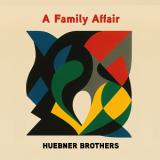
Huebner Brothers - A Family Affair LP
  • 1: A Family Affair
  • 2: Angry Times
  • 3: Bass Guajira
  • 4: Noisy World
  • 5: Brooklyn Impression
  • 6: Spherical Intermezzo
  • 7: Nana
  • 8: Red Hook - New York
  • 9: Delay
  • 10: Sunday Song

With Gregor Huebner (violin, electronics) and Veit Huebner (bass, electronics), a vibrant musical dialogue unfolds between two brothers. Using loop stations and live effects, the acclaimed jazz musicians create layered, almost orchestral soundscapes—both transparent and powerful, energetic yet deeply poetic. Their music thrives in the moment: lines are looped, transformed, and reshaped into virtuosic improvisations. Jazz blends with classical influences, grooves meet sonic experimentation, and delicate chamber-like passages erupt into dynamic outbursts. Original compositions, jazz standards, and newly interpreted classical works sound intimate yet powerful in the duo format. Known as two-thirds of the trio Berta Epple, the Huebner brothers now present themselves for the first time as a pure duo. The result is a distilled artistic essence of more than four decades of shared and individual stage experience, with electronics serving not as an effect but as a third musical voice.

Reservar22.05.2026

debe ser publicado en 22.05.2026

25,84
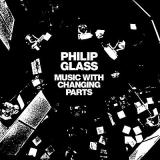
Philip Glass - Music With Changing Parts LP 2x12"

Philip Glass, the great American composer, was already in his mid-30s before his first album appeared, and then only because he produced the double LP himself. Music With Changing Parts was the inaugural release on his own Chatham Square imprint in 1971.

At this point, Einstein on the Beach, Glass' first opera, was still five years away. Yet in Changing Parts, one can already hear much of his vocabulary in full bloom: the buoyant arpeggios, the melding of electronic and acoustic instruments, the elongated drones of human voice, the primary emphasis on pulse (an interest he shared with fellow composer Steve Reich) and the ecstatic potential inherent in repetition.

The album features the original Philip Glass Ensemble – the composer himself, along with Jon Gibson, Dickie Landry, Art Murphy, Steve Chambers and Robert Prado – playing Farfisa organs and woodwinds as well as Barbara Benary on electric violin.

As Glass describes in his memoir Words Without Music, he secured a $500 interest-free loan for the recordings' initial release from the Hebrew Free Loan Society – an organization intended to help immigrants from the Old World upon arrival in the US. Though Glass was merely the grandson of immigrants, the venture wasn't far off the society's charter as Changing Parts helped usher in a new world of sound that would become known as Minimalism.

Chatham Square went on to release albums by other composers in Glass' circle, including Gibson and Landry. The label was named after the Manhattan intersection where Landry had a studio and the ensemble rehearsed.

Born in Baltimore in 1937, Glass first moved to New York to attend Juilliard at just nineteen, having already graduated from the University of Chicago. A staple of the Downtown scene, he can perhaps be appreciated as akin to the likes of sculptor Richard Serra or filmmaker Jim Jarmusch: mavericks who became major cultural figures entirely on their own terms.

This first-time vinyl reissue reproduces the original side-breaks and gatefold sleeve.

Reservar29.05.2026

debe ser publicado en 29.05.2026

35,92
Christopher Tignor - BLEEDING PAST THE EDGES
  • 1: Weight Of Words
  • 2: Shadow Purposes I. Patterns Of Goodbye
  • 3: Shadow Purposes Ii. Path To An Unlit Horizon
  • 4: Shadow Purposes Iii. New Tectonics
  • 5: Shadow Purposes Iv. The Blue Cascades
  • 6: Shadow Purposes V. A Sea Lit By Stars To Swallow Us
  • 7: Blood And Black Ink
  • 8: Decision Tree

Christopher Tignors ,Bleeding Past the Edges" ist ein bewusster Kontrapunkt zur heutigen, von KI geprägten Musiklandschaft und stellt die menschliche Hand fest in den Mittelpunkt des Schaffensprozesses. In einem kleinen Studio voller Geigen, Stimmgabeln, Pedalen und maßgeschneiderter Software hat Tignor ein Performance-System entwickelt, das sich weniger wie eine Maschine, sondern eher wie ein lebendiges Instrument verhält. Anstatt sich auf Loops oder Backing-Tracks zu verlassen, generiert er jedes Stück in Echtzeit und fängt Klänge ein und formt sie um, während er spielt. Geigenstreichmelodien erweitern sich zu vielschichtigen Mustern, perkussive Schläge lösen sich entwickelnde Strukturen aus, und selbst eine einzelne Stimmgabel kann sich zu einem ganzen harmonischen Feld entfalten. Das Ergebnis ist ein immersiver, orchestraler Klang, der live von einem einzigen Interpreten erzeugt wird, der sich durch ein eng verwobenes System aus Gestik, Timing und Code bewegt. Jedes Element beginnt als physische Handlung und bleibt damit verbunden, was der Musik ein Gefühl von Unmittelbarkeit, Risiko und Präsenz verleiht, das sich durch das gesamte Album zieht. Auf dem Album bewegt sich Tignor fließend zwischen rhythmisch geprägten Kompositionen, die das Instrument als perkussiven Motor behandeln, und melodischeren Werken, die im expressiven Kern der Violine verwurzelt sind. Die Lead-Single ,Weight of Words" unterstreicht diese Balance und entfaltet sich mit einer narrativen Klarheit, die Tignors Kompositionsansatz widerspiegelt. Er beschreibt diese Stücke oft als ,Kurzgeschichten", in denen Melodien als roter Faden dienen und jedes Werk durch wechselnde Strukturen und emotionale Bögen führen. Der Titel ,Bleeding Past the Edges" verweist auf Momente, in denen die Musik über ihr ursprüngliches Konzept hinausgeht, in denen sich die Struktur lockert und der Klang nach außen fließt. Tignor vergleicht den Prozess mit ,einem Seiltänzer", bei dem sorgfältige Vorbereitung auf die Möglichkeit einer Transformation in Echtzeit trifft. Obwohl die Systeme streng ausgearbeitet sind, behält jede Aufführung ein Element der Unvorhersehbarkeit, wodurch sich die Musik ständig weiterentwickeln kann. Im Laufe von zehn LPs, die über Western Vinyl und New Albion erschienen sind, hat sich Tignor in klassischen und experimentellen Kreisen breite Anerkennung erworben. The Guardian bezeichnete ihn als ,absurd talentiert", während Bandcamp seine ,schiere technische Meisterschaft" hervorhob und The New York Times seine seltene Fähigkeit lobte, Computer bei Live-Auftritten nahtlos mit akustischen Instrumenten zu verbinden. The Wire lobte seine Kompositionen zudem für ihre fließenden, sich entwickelnden Strukturen. Über seine Soloarbeit hinaus hat Tignor mit Künstlern wie Rachel Grimes, Helios, Jefre Cantu-Ledesma, John Congleton und This Will Destroy You zusammengearbeitet. Sein Hintergrund verbindet verschiedene Disziplinen: Er hat einen Doktortitel in Komposition von der Princeton University, einen Master in Informatik vom NYU Courant Institute und einen Bachelor vom Bard College, wo er bei dem Dichter John Ashbery studierte. Mit ,Bleeding Past the Edges" führt Tignor diese Stränge zu einem Werk zusammen, das sich sowohl streng konstruiert als auch lebendig anfühlt - ein Album, das Performance, Körperlichkeit und die anhaltende Ausdruckskraft menschengemachter Klänge in den Vordergrund stellt.

Reservar29.05.2026

debe ser publicado en 29.05.2026

22,27
COLE BERLINER - THE BLACK DOOR
  • 1: The Black Door
  • 2: A Western Sun
  • 3: Poppies
  • 4: Bongo Syndicate
  • 5: Bugle Call
  • 6: Country Tea
  • 7: Window Leans Left
  • 8: The Light
  • 9: Cathedral
  • 10: Death Of Stars

Guitarist/composer Cole Berliner"s writing, arranging and playing highlights an album of rich-grained, acoustic, west coast parlor music and modern electro-acoustic instrumentals in the challenger tradition of Bert Jansch"s Avocet, Marc Ribot"s Saints and Jim O"Rourke"s Bad Timing. Initially conceived as solo acoustic guitar tunes, Cole"s songs demanded the dynamics of an acoustic ensemble - a departure from his work with Kamikaze Palm Tree and Sharpie Smile. His arrangements form intricate passages for acoustic, electric and lap steel guitars, acoustic/electric bass, piano, drums, percussion, violin, viola, horns, woodwinds and synthesizers; Cole himself is on guitar and lap steel (plus synths and percussion on a few songs), mixing and co-producing alongside Cesar Maria.

Reservar29.05.2026

debe ser publicado en 29.05.2026

26,68
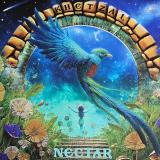
Khetzal - Nectar

Khetzal

Nectar

12inchSUNEP06
Suntrip Records
17.04.2026

Five years after his previous album, Khetzal returns with Nectar, a brand-new digital double album accompanied by a limited physical vinyl EP. Matthieu Chamoux, a name that needs little introduction, is the creator of Corolle, still considered a milestone of 21st-century Goa-trance. With Nectar, he once again delivers his unmistakable signature: spiritual, Eastern-influenced, blissful Goa-trance. With Nectar, he dives back into his signature world of spiritual, Eastern-tinged, blissful Goa-trance. The first CD weaves a brand-new fairytale-like journey, with four standout tracks also pressed onto vinyl. Alongside these, you'll find a second bonus cd, set of unique live remixes, complete with violin, breathing fresh energy into classics like Ganesha Pramana and Listening Winds. Enjoy the journey

Disponible

En el almacen y preparando para el envío

17,44
RVDS - SWEET ACID LULLABIES (LP 2x12")

During a job in Cologne, I stayed in a room with a loft bed that had no electrical outlets at the top. Every night, I would listen to my TB303, which runs on batteries, through headphones to help me fall asleep. I loved the sequences, it was like meditation. The TB-303 bassline is iconic in acid music, so I created the Acid Lullabies to bring these two elements together. In 2017, the label Doom Chakra Tapes released ten of the Acid Lullabies on tape. Last year, I felt the urge to rework the tracks, so I mixed them again and created some new ones. I also
asked friends to contribute their own versions.

I’m very glad that the following artists contributed the Acid Lullabies: 47IN4 (Pudel Produkte, Doom Chakra Tapes), Museum of No Art (Séance Center, Cosima Pitz), N:in and Philipp Otterbach (Music from Memory, Offen Music). Two violinists from Ensemble Resonanz performed my piece 'Afternoon Lights' for Acid Lullaby 6. Alex Solman designed the cover, which captures the essence of the project perfectly. Have fun with the Acid Lullabies!

Disponible

En el almacen y preparando para el envío

27,31
Sarah/Shaun - It’s True What They Say?

It’s True What They Say is the debut EP from Edinburgh-based, husband-and-wife duo Sarah/Shaun (pronounced simply Sarah Shaun), aka Sarah and Shaun McLachlan (pronounced “McLochlin”).

“Sarah and I both have a love for nostalgia,” explains Shaun. “We watched that amazing old 80’s Sci-Fi, (John) Carpenter movie, Starman, a few months back. Myself and my brother David used to watch it all the time. We must have been, roughly, 5-7 at the time. I remember loving the movie but the end, you know, with the beautiful, atmospheric, synth ending, I love that particular moment the most - best part of the movie, you know, when he goes home… It’s heartbreaking but stunning, all the same. It’s the music that moves you most… It did when I was 5 and it still does to this day. It must have had some form of a (much deeper) impact on me.”

The duo narrates stories across themes of love, hope, family, friends, dreams and sadness - the good that comes with the bad in everyday life, not just on a personal scale but within a community as well.

“Starbed is the first song I have ever written and just came out of the blue really, with Shaun playing a melody and me singing along,” says Sarah. “It’s simple and just about two people in love. Love songs are always the best songs, after all… Music has been a big part of my life from a young age. I was unwillingly dragged to piano and violin lessons, which I’m thankful for now! I’d say the first band I really became obsessed with growing up were the Beatles, and on the back of that a lot of 60s music and fashion. From then on, I had a love for music.”

“Shaun definitely opened my ears to a lot of sounds and got me thinking about soundtracks and all the noises that can be made,” she goes on. “We love just spending time experimenting in the house with instruments, pedals etc and Ali is a real magician to work with, too…”

The recordings took place over the summers of 2022 and 2023, with fellow Delta Mainline member Ali Chisholm (aka Jaguar Eyes) plus long-term friend and collaborator Gavin King. Further collaboration then came via the ‘net from the (international) likes of Chris Dixie Darley (Father John Misty), Darren Coghill (Neon Waltz) and Daniel Land (The Modern Painters), among others (see a full list of credits below).

Both Sarah and Shaun have a love for uber-soundtrack producers such as Hanz Zimmer, Max Richter, Cliff Martinez plus live acts such as Beach House, Spiritualized, M83, Suicide, Moby and OMD (to name a few). Shaun also credits the work of Kyle Dixon & Michael Stein (from Survive) on the Stranger Things score… “Even a moment in a movie, whether it be just 30 seconds during a particular scene, it grips you,” he says. But there’s something much deeper at play as well. “Music is a healer,” he goes on, “and I write from my own perspective but more so for others. Once I've done my bit, it doesn't belong to me any longer. It belongs to whoever wants it or needs it.”

The result is a cinematic, synth-wavey, dream poppy and downright beguilingly beautiful body of work. And they’re just getting started…

REVIEWS/RADIO/FEEDBACK:

“Starbed is folky, flavoured by pedal steel, cello, and brass. Dust Tears, in stark contrast, is a mini synth-pop rave epic. Part Bicep. Part Human League. Keep Your Eyes Closed summons a mood that’s romantic, but also dark and potentially doomed – like David Lynch’s Twin Peaks meets Cliff Martinez’s Drive score. My pick though is It’s True What They Say, whose interwoven jangle and picking recalls New Order’s more introspective moments (Love Vigilantes, Love Less… ). Drums crashing, cathartic. Guitar raising dramatic arcs. Its chorus a rush, like a reprise of Pains Of Being Pure Of Heart’s ‘Higher Than The Stars’.” BAN BAN TON TON
"Dust Tears sees them sharing vocal duties over a synth foundation reminiscent of Moby’s Go - Artist Of The Week” THE SCOTSMAN
"Woozy pop" NEMONE (Mary Anne Hobbs Morning Show, BBC 6Music)
"Nice one, very David Lynch meets Euro dream pop" YOUTH (Killing Joke, Paul McCartney, U2, The Orb, Spiritualized etc)
"Music sounds killer! Real emotion” DAVID HOLMES
"I’m enjoying it” TIM BRINKHURST aka LONDON (IKLAN, Young Fathers, Callum Easter)
“Oh, this is lovely!” SEAN JOHNSTON (A Love From Outer Space)
"It’s totally my cup of tea with milk and biscuit" BRENT RADEMAKER (Beachwood Sparks/GospelBeach)
"Beautiful, ecstatic electronica! Short and to the point" KEVIN BALES (Spiritualized, Julian Cope, Soulsavers, BE)
"Makes me wanna sit in the sun and sip an Arnold Palmer" CHRIS DIXIE DARLEY (Father John Misty)
“Really beautiful - Cocteau Twins / Spiritualized vibes but has its own thing going on, too - worth checking out!” JULIAN CORRIE (Franz Ferdinand, Miaoux Miaoux)
‘Sounded nice on a sunny day, makes me think of Twin Peaks, nice moods’ EAMON HAMILTON (Sea Power)
"Dealing in nostalgia, no bad thing at all, great to play that (Dust Tears) for you” RODDY HART (BBC Radio Scotland)
“I'll give the vocal tracks a spin before the release." VIC GALLOWAY (BBC Radio Scotland)
"Rather good!" IAIN ANDERSON (BBC Radio Scotland)

CREDITS:

Lyrics, Guitars, Keys, Synths, Drums, Drum Programming, Percussion, Mandolin, Glockenspiel: Shaun McLachlan
Lyrics, Vocals, Keys by Sarah McLachlan
Guitars, Synths, String Arrangements, Drum Programming, Engineering: Jaguar Eyes Percussion/Drums/Effects, Fire Extinguisher: Darren Coghill (Neon Waltz)
Guitars by Daniel Land
Slide Guitar by Chris Dixie Darley (Father John Misty)
Brass by Bruce Michie
Keys, pre-production & engineering on “It’s true what they say”: Gavin King
All produced by Jaguar Eyes and Shaun McLachlan and then mixed at Glasgow’s Chem19 Studios by David McCaulay (From Scotland With Love, Rick Redbeard, BBC TV’s Attenborough and The Mammoth Graveyard score).
Artwork: Jamie Walman (Fourteen Admirals)

MORE INFO:

Although Shaun released a pair of solo singles (When We Dance and Give Your Love To Me) during Lockdown, he will be better known to many via his work as the multi-instrumentalist in Edinburgh band Delta Mainline. With two albums released to date, Oh! Enlightened and Bel Avenir, both rapturously received by fans and critics alike, Delta Mainline have developed an international, cult following. Oh Enlightened (2013) achieved widespread critical acclaim on release, earning the band comparisons to Arcade Fire and Echo & The Bunnymen, while 2019’s Bel Avenir pulled in references to The Flaming Lips, Pink Floyd, David Bowie and krautrock. A third DM album is currently being mixed and due for release later this year…

Disponible

En el almacen y preparando para el envío

18,70
Isabel Pine - Fables LP

Isabel Pine

Fables LP

12inchKRANK249LP
Kranky Records
26.03.2026

She studied classical music on viola from the age of 3 through into college where she was on a path to be a performer in a large ensemble, but eventually left after feeling frustrated and limited in a world that did not provide much of an outlet for individual creativity. But the doors of perception really opened when she moved to British Columbia and was exposed to the raw beauty of the wilderness there.

She began recording at home using a basic audio setup along with a cello, viola, violin and double bass, and spent time making field recordings of natural sounds in BC. Her next idea was to actually move into nature to record, curious as to “how it would sound if I recorded outside entirely, with the natural reverb and sounds of the environment in the recording from the very beginning. The rustling of the leaves or a raven’s beating wings were as integral to the music as whatever I played.”

Fables is a mix of pieces that were recorded in the fall of 2024, in a small, remote cabin and outside, primarily using stringed instruments. The result is a series of stunning vignettes, meditations patiently unfurling like gentle waves, slowly advancing and retreating.4, in a small, remote cabin and outside, primarily using stringed instruments. The result is a series of stunning vignettes, meditations patiently unfurling like gentle waves, slowly advancing and retreating.

Disponible

En el almacen y preparando para el envío

25,17
Abul Mogard & Rafael Anton Irisarri - Where Light Pauses in the Silence of the Sun

In spring 2025, Abul Mogard and Rafael Anton Irisarri created the source material for their second album, Where Light Pauses in the Silence of the Sun, during a three-day residency at Morphine Raum in Berlin. Functioning as both recording studio and performance venue, the space has no stage, with the audience gathered around the performers. Working within an open framework, the duo reshaped the music each evening while recording the performances live to multitrack. Rotary speakers, modular synthesizers and bowed guitar formed the core of their sonic language, captured through a 1970s mixing console and microphones placed around the room.

Back in Mogard’s studio in Rome, the material was further crafted as motifs were stretched, fragments isolated, and tempos dissolved. Irisarri recorded additional guitar textures and treatments in New York, while passages recorded by Martina Bertoni and Andrea Burelli in Berlin reinforced the harmonic centres and brought breath, refinement and a new sensibility to their compositions. The process continued as Mogard’s layering and subtraction reassembled everyone’s parts into the final arrangement.

The album opens with “In the Eastern Wild,” building from a sparse outline into a monumental formation of low-frequency weight, its internal motion shaped by the rotating Leslie speaker. “Over the Domes” widens into a broader acoustic field, where sustained modular tones meet waves of softly plucked guitar. The music then turns inward with “A Blue Descent,” centred on Bertoni’s cello, whose growling timbre introduces a melancholic depth.

At the album’s centre, “In a Quiet Radiance” unfolds around a slow guitar ostinato, its luminous stillness opening into a more expansive and reflective state. Across its ten-minute span, Burelli’s violin lines and Bertoni’s lower cello phrases gradually surface, weaving through the harmonic field. Mogard brings Burelli’s processed voice to the fore, its emotive, operatic presence becoming one of the record’s pivotal moments. “Of Blessed Ages” suspends the sonic flow, shifting between parallel major and minor chords as lingering, slowly decaying melodies shape the music’s internal drift. The closing “Among Shadows” settles into a darker resonance as layered textures recede.

Mogard and Irisarri’s shared language balances restraint and maximalism. UK magazine Crack describes the music as “a tidal wave held in suspension,” while Dutch newspaper de Volkskrant writes, “What a colossal sound, and how this music strikes at the emotions.” Reflecting on the residency sessions, Irisarri recalls: “At moments I genuinely couldn’t tell if a sound was coming from me or from Abul. It stopped feeling like two people making decisions and began to feel like we were inside a system moving on its own."

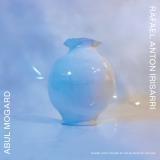
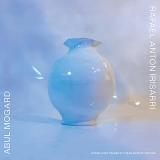
Marja de Sanctis’ cover artwork revisits the vessel sculpture from the duo’s first album, Impossibly Distant, Impossibly Close. There it appeared as raw, unfired clay. Here it has been fired in the kiln and finished with a glaze. Light gathers on its polished surface and spills into the surrounding space. As she explains, “I wanted to convey the idea of continuity within the duo, and the vessel became a kind of container for that idea. However, their music felt different this time, and with the collaboration of Martina and Andrea, I felt it should have a sleeker, softer, more glamorous look, very distant from the first raw appearance.” The transformation of the vessel from raw clay to fired form suggests a passage from immediacy toward permanence, mirroring the music’s gradual expansion.

Reservar26.06.2026

debe ser publicado en 26.06.2026

27,52
Abul Mogard & Rafael Anton Irisarri - Where Light Pauses in the Silence of the Sun

In spring 2025, Abul Mogard and Rafael Anton Irisarri created the source material for their second album, Where Light Pauses in the Silence of the Sun, during a three-day residency at Morphine Raum in Berlin. Functioning as both recording studio and performance venue, the space has no stage, with the audience gathered around the performers. Working within an open framework, the duo reshaped the music each evening while recording the performances live to multitrack. Rotary speakers, modular synthesizers and bowed guitar formed the core of their sonic language, captured through a 1970s mixing console and microphones placed around the room.

Back in Mogard’s studio in Rome, the material was further crafted as motifs were stretched, fragments isolated, and tempos dissolved. Irisarri recorded additional guitar textures and treatments in New York, while passages recorded by Martina Bertoni and Andrea Burelli in Berlin reinforced the harmonic centres and brought breath, refinement and a new sensibility to their compositions. The process continued as Mogard’s layering and subtraction reassembled everyone’s parts into the final arrangement.

The album opens with “In the Eastern Wild,” building from a sparse outline into a monumental formation of low-frequency weight, its internal motion shaped by the rotating Leslie speaker. “Over the Domes” widens into a broader acoustic field, where sustained modular tones meet waves of softly plucked guitar. The music then turns inward with “A Blue Descent,” centred on Bertoni’s cello, whose growling timbre introduces a melancholic depth.

At the album’s centre, “In a Quiet Radiance” unfolds around a slow guitar ostinato, its luminous stillness opening into a more expansive and reflective state. Across its ten-minute span, Burelli’s violin lines and Bertoni’s lower cello phrases gradually surface, weaving through the harmonic field. Mogard brings Burelli’s processed voice to the fore, its emotive, operatic presence becoming one of the record’s pivotal moments. “Of Blessed Ages” suspends the sonic flow, shifting between parallel major and minor chords as lingering, slowly decaying melodies shape the music’s internal drift. The closing “Among Shadows” settles into a darker resonance as layered textures recede.

Mogard and Irisarri’s shared language balances restraint and maximalism. UK magazine Crack describes the music as “a tidal wave held in suspension,” while Dutch newspaper de Volkskrant writes, “What a colossal sound, and how this music strikes at the emotions.” Reflecting on the residency sessions, Irisarri recalls: “At moments I genuinely couldn’t tell if a sound was coming from me or from Abul. It stopped feeling like two people making decisions and began to feel like we were inside a system moving on its own."

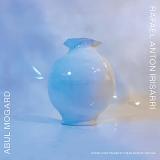
Marja de Sanctis’ cover artwork revisits the vessel sculpture from the duo’s first album, Impossibly Distant, Impossibly Close. There it appeared as raw, unfired clay. Here it has been fired in the kiln and finished with a glaze. Light gathers on its polished surface and spills into the surrounding space. As she explains, “I wanted to convey the idea of continuity within the duo, and the vessel became a kind of container for that idea. However, their music felt different this time, and with the collaboration of Martina and Andrea, I felt it should have a sleeker, softer, more glamorous look, very distant from the first raw appearance.” The transformation of the vessel from raw clay to fired form suggests a passage from immediacy toward permanence, mirroring the music’s gradual expansion.

Reservar26.06.2026

debe ser publicado en 26.06.2026

27,52
Abul Mogard & Rafael Anton Irisarri - Where Light Pauses in the Silence of the Sun

In spring 2025, Abul Mogard and Rafael Anton Irisarri created the source material for their second album, Where Light Pauses in the Silence of the Sun, during a three-day residency at Morphine Raum in Berlin. Functioning as both recording studio and performance venue, the space has no stage, with the audience gathered around the performers. Working within an open framework, the duo reshaped the music each evening while recording the performances live to multitrack. Rotary speakers, modular synthesizers and bowed guitar formed the core of their sonic language, captured through a 1970s mixing console and microphones placed around the room.

Back in Mogard’s studio in Rome, the material was further crafted as motifs were stretched, fragments isolated, and tempos dissolved. Irisarri recorded additional guitar textures and treatments in New York, while passages recorded by Martina Bertoni and Andrea Burelli in Berlin reinforced the harmonic centres and brought breath, refinement and a new sensibility to their compositions. The process continued as Mogard’s layering and subtraction reassembled everyone’s parts into the final arrangement.

The album opens with “In the Eastern Wild,” building from a sparse outline into a monumental formation of low-frequency weight, its internal motion shaped by the rotating Leslie speaker. “Over the Domes” widens into a broader acoustic field, where sustained modular tones meet waves of softly plucked guitar. The music then turns inward with “A Blue Descent,” centred on Bertoni’s cello, whose growling timbre introduces a melancholic depth.

At the album’s centre, “In a Quiet Radiance” unfolds around a slow guitar ostinato, its luminous stillness opening into a more expansive and reflective state. Across its ten-minute span, Burelli’s violin lines and Bertoni’s lower cello phrases gradually surface, weaving through the harmonic field. Mogard brings Burelli’s processed voice to the fore, its emotive, operatic presence becoming one of the record’s pivotal moments. “Of Blessed Ages” suspends the sonic flow, shifting between parallel major and minor chords as lingering, slowly decaying melodies shape the music’s internal drift. The closing “Among Shadows” settles into a darker resonance as layered textures recede.

Mogard and Irisarri’s shared language balances restraint and maximalism. UK magazine Crack describes the music as “a tidal wave held in suspension,” while Dutch newspaper de Volkskrant writes, “What a colossal sound, and how this music strikes at the emotions.” Reflecting on the residency sessions, Irisarri recalls: “At moments I genuinely couldn’t tell if a sound was coming from me or from Abul. It stopped feeling like two people making decisions and began to feel like we were inside a system moving on its own."

Marja de Sanctis’ cover artwork revisits the vessel sculpture from the duo’s first album, Impossibly Distant, Impossibly Close. There it appeared as raw, unfired clay. Here it has been fired in the kiln and finished with a glaze. Light gathers on its polished surface and spills into the surrounding space. As she explains, “I wanted to convey the idea of continuity within the duo, and the vessel became a kind of container for that idea. However, their music felt different this time, and with the collaboration of Martina and Andrea, I felt it should have a sleeker, softer, more glamorous look, very distant from the first raw appearance.” The transformation of the vessel from raw clay to fired form suggests a passage from immediacy toward permanence, mirroring the music’s gradual expansion.

Reservar26.06.2026

debe ser publicado en 26.06.2026

26,01
Hans Reichel - Dalbergia retusa LP 2x12" + DL

Black Truffle is thrilled to announce Dalbergia Retusa, an extensive double LP selection of the solo guitar music of Hans Reichel, compiled by Oren Ambarchi. Last heard on Black Truffle as one quarter of the joyously anarchic Bergisch-Brandenburgisches Quartett, Hans Reichel (1949-2011) is one of the great figures of experimental guitar music. Though perhaps lesser known than peers like Derek Bailey, Fred Frith and Keith Rowe, Reichel’s rethinking of the instrument was in some ways the most radical of all. Early on, he dispensed with existing guitars to build a series of his own that explored the use of additional strings and fretboards, moveable pickups, extra bridges, special capos, and other innovations documented in the extensive booklet accompanying this release.

Reichel was a long-term resident of Wuppertal, the small Western Germany city that became an unlikely centre of European free jazz in the late 1960s, also home to Peter Brötzmann and Peter Kowald. His solo debut Wichlinghauser Blues was an early entry into the FMP discography and began a relationship with the label that stretched into the 1990s; all the solo performances heard here were first released on FMP. As Reichel says in the charming archival interview with Markus Müller included here, he was ‘always a cuckoo’s egg at FMP’, a label that began as an outlet for roaring European free jazz. What strikes the listener right from the opening selection on Dalbergia Retusa—‘Return of the Knödler show’, from 1987’s The Dawn of Dachsman—is the extraordinary beauty of Reichel’s music, at once alien in the shimmering sonorities and unconventional pitch relationships made possible by his invented instruments, and deeply lyrical, even romantic in its harmonic content. Growing up in West Germany in the 1960s, Reichel’s formative influences were mainly British and American rock bands, a background that shines through in many of the pieces included here: ‘An old friend passes by’ is haunted by the ghost of Hendrix’s rhythm guitar, and the wild closer ‘Heimkehr der Holzböcke’, taken from a rare 1975 7” and the only piece to use overdubbing, layers errant hammer-on and slide tones over a Canned Heat boogie chug.

Reichel was an important source for the development of Oren Ambarchi’s own extended approach to the electric guitar. Appropriately enough, his selection opens with the very first piece by Reichel he ever heard, on a flexidisc included with a 1989 issue of Guitar Player magazine. Though Reichel collaborated with others extensively in many settings and also performed on violin and his other major contribution to instrument invention, the daxophone, his music for solo guitar remains at the core of his oeuvre. Focusing exclusively on solo pieces recorded between 1973 and 1988, the 23 pieces on Dalbergia Retusa showcase the range and consistency of Reichel’s work, allowing the listener to see how his performances developed hand-in-hand with his instrumental inventions. On a piece from his very first LP, played on an 11-string instrument (partly strung with piano strings and using a schnapps glass a slide), we hear his intensive exploration of fret-hammering to create zither-like, chiming tone, which Reichel would hone further in later years with a double fretboard guitar specifically designed to be hammered rather than fretted and picked. On a piece from 1979’s Death of the Rare Bird Ymir, Reichel uses two steel-string acoustic guitars at once, with beautiful results: ‘some even say too beautiful’, he jokes in the interview included here. Many of the pieces from the 1980s make use of varieties of the ‘pick behind the bridge guitar’, instruments of uncanny harmonic richness primarily designed to be played on the ‘wrong’ side of the bridge. At times the unexpected behaviour of attacks, resonance, and decay can almost seem electronic, conjuring up the technology-assisted work of Henry Kaiser or even Fennesz, but realised solely through Reichel’s unorthodox techniques on his invented instruments. Extensively illustrated with photos and Reichel’s own plans and drawings of his instruments, Dalbergia Retusa is an essential introduction to the unique world of Hans Reichel. Rarely has music been at once so strange and so beautiful.

Disponible

En el almacen y preparando para el envío

35,50
BRUNO BERLE - SEM FRONTEIRAS

Bruno Berle is a singer, songwriter, producer, multi-instrumentalist and figurehead of a contemporary Brazilian music movement. With a quiet mastery of songwriting and an astonishing voice, his music has won hearts around the world. Since the release of his debut album No Reino Dos Afetos (2022), Berle has performed across the UK, Europe, Japan, South Korea, and China, only leaving his home country for the first time in 2023. Shaped by these journeys, Berle’s third studio album, Sem Fronteiras (Without Borders), reflects a utopian vision of a unified world.

Recorded across London, São Paulo, Minas Gerais, Germany, and Maceió, the album–co-produced alongside his longstanding musical partner Batata Boy–is the most expansive canvas Berle has worked on to date. Shot through with the imagery that has always animated his songwriting: open skies, morning light, vivid colours and the magic of human connection, Berle’s carefully crafted poetics and warm, delicate instrumentation drive this vivid body of work.

“I came from nothing”–Berle doesn’t take his rise to global prominence for granted.

Born to a working class family from Brazil’s northeastern Alagoas state, one of Brazil’s most economically deprived, Bruno moved frequently in his youth to follow any job opportunities his parents could find, before eventually settling in the coastal capital of Maceió. “I used to travel to Caruaru, Santa Cruz, Recife, Garanhuns, Arapiraca, which I loved and feel it made me ready to be in this rhythm i’, but at the same time I think not having friends from childhood and being in constant change made me a little numb to the constant upheaval”. On Sem Fronteiras, there is a similar duality at play. The album celebrates the collective joy and human connection that live touring brings, but it also sits with the darker realities of crossing borders. While music moves more freely around the world than ever before, our bodies are not granted the same privilege.

Though he’s never lacked self-belief, Berle recognises that talent alone doesn’t guarantee opportunity. “Before my second album No Reino Dos Afetos 2 everything I had ever recorded was made with the help and kindness of people who believed in my ability”. Determined to pay that kindness forward and help others from the sharp end of Brazil’s desperately unequal society, Berle produced and featured on the recent self-titled albums by his northeast Brazilian compatriots, Nyron Higor and Phylipe Nunes Araújo (both 2025), helping propel both onto the international stage. In turn, following the successes of Nyron & Phylipe’s albums alongside his own, Bruno finds himself at the forefront of a thriving community of artists now based in São Paulo, but primarily originating from northeastern states like Alagoas and Pernambuco.

Much like the famed Clube Da Esquina movement that spawned in 1970’s Minas Gerais, they operate with a free-exchange of ideas, writing songs with and for each other, performing on each other’s albums and on the live circuit together. Lead single ‘Manha’ flows from this ethos. It was written by Berle’s friend and fellow Alagoan João Menezes (writer of ‘Ate Meu Violao’ and ‘Te Amar Eterno’ from Bruno’s previous albums) and Marvin Viera, and originally recorded on their 2018 album Areia e Mar.

Sem Fronteiras opens with ‘Você Já Sabe Que Eu Te Amo’, just six beats of one nylon guitar chord ring out before changing key, paving the way for the gentle strike of fender rhodes and the arresting call & response duet between Berle and Higor. On ‘Amor Inteiro’, the album reaches a celebratory burst of catharsis, with the punch-packing drums of Pedro Lacerda and Nina Maia’s joyous backing vocals encapsulating the live energy that Berle and his band bring to the stage.

With the abundant talents of this musical community at its heart, Sem Fronteiras releases 10th July 2026 via Far Out Recordings, supported by a summer tour across Europe. Bruno Berle will perform in a four-piece band alongside Nyron Higor, Phylipe Nunes, and Batata Boy, culminating in an appearance at Roskilde festival, Berle’s biggest live show to date. He’ll continue to carry a hopeful vision of a world where artists and musicians can move as freely as their music flows.

Tracklist:

A1 “Você Já Sabe Que Eu Te Amo”
(Nyron Higor / Bruno Berle)
Nyron Higor – drums, bass, acoustic guitar, electric piano, synthesizers, vocals
Bruno Berle – piano, vocals
Batata Boy – piano
Jorik Bergman – score preparation and conducting
Klara Gronet – violin
Ségolène de Beaufond – violin
Cristina Ardelean Montelongo – viola
Ilektra Stevi – cello

A2 “Não Posso Viver Sem Você”
(Batata Boy / Bruno Berle)
Batata Boy – electric piano, organ, synthesizer
Bruno Berle – drums, bass, synthesizer, vocals
Jorik Bergman – score preparation and conducting
Klara Gronet – violin
Ségolène de Beaufond – violin
Cristina Ardelean Montelongo – viola
Ilektra Stevi – cello

A3 “A Noite de Estrelas”
(Nyron Higor / Bruno Berle)
Nyron Higor – synthesizers
Bruno Berle – bass, drums, vocals

A4 “Outra Noite”
(Bruno Berle)
Nyron Higor – drums
Bruno Berle – acoustic guitar, bass
Felipe Berle – congas
Lucca Francisco – guitar, vocals

B1 “Amor Inteiro”
(Bruno Berle)
Pedro Lacerda – drums, choir
Nyron Higor – bass, choir
Batata Boy – guitars, organ, electric piano, choir
Nina Maia – choir
Bruno Berle – guitars, acoustic guitar, congas, vocals

B2 “Ideias Mágicas”
(Batata Boy / Bruno Berle)
Heloisa Alvino – trombone
Batata Boy – synthesizers, beats, electric piano, organ, bass
Bruno Berle – synthesizer, vocals

B3 “Vim Dizer”
(Batata Boy / Bruno Berle)
Batata Boy – electric piano, organ, synthesizer
Thomas Stankiewicz – synthesizer
Nyron Higor – synthesizer
Bruno Berle – acoustic guitar, bass, vocals

B4 “Tô Assim”
(Bruno Berle)
Bruno Berle – acoustic guitars
Batata Boy – synthesizer
Nyron Higor – bass, synthesizer

B5 “Manhã”
(João Menezes / Marvin Silva)
Bruno Berle – acoustic guitar, vocals, congas, shaker
Batata Boy – piano, shaker, electric piano, vibraphone, synthesizers
Nyron Higor – drums, bass

B6 “Sem Fronteiras”
(Bruno Berle)
Filipe Mariz – guitar
Bruno Berle – acoustic guitar, vocals, bass
Jennifer Souza – vocals, acoustic guitar
Rudson França – drums

Credits:

Produced by Bruno Berle and Batata Boy
Mixed and mastered by Bruno Berle, Batata Boy and Felipe Berle

Audio engineering:
Nyron Higor (track 1 – production; track 4 with Felipe Berle)
Joe Osborne (tracks 7 and 9)
Victor Gelling (strings on tracks 1 and 2)
Filipe Mariz (track 10)

Photography: Claudio Virgínio
Design: Minchai

Recorded in:
Maceió, Alagoas, Brazil
Tamandaré, Pernambuco, Brazil
Belo Horizonte, Minas Gerais, Brazil
São Paulo, São Paulo, Brazil
London, England
Cologne, Germany

Reservar09.07.2026

debe ser publicado en 09.07.2026

23,11
Mono Junk - Mars 31 Heaven Collected Works '93 - '95

Kim Rapatti (Mono Junk) is a long-running Finnish electronic music producer and the operator behind DUM Records. In the early 1990s, releasing across multiple aliases was a practical way to keep output organized and to present a broader label roster. Mars 31 Heaven was one of Rapatti's period-specific side names, used to separate a more inward strand of work from the main Mono Junk line.

Mono Junk presents Mars 31 Heaven: Collected Works '93–'95 is the first time these recordings have been compiled onto a single release. The tracks were previously scattered across various compilations, with "Little Elephant" later reappearing on a Mono Junk release. Audio was sourced from the original DAT tapes and remastered by Michael Diekmann. "Osaka House Remix" and "World of Isolation" originally appeared on the B-side of DUM Records' Blue File Compilation (1993). "Violins" and "Abyss" appear on vinyl for the first time after CD-only appearances ("Violins" on Dum Trax, 1995, and "Abyss" on Unitunes and Came From Outer Space I), and the original mix of "Osaka House" is previously unreleased. Housed in full-colour sleeves designed by Ed Cheverton.

Disponible

En el almacen y preparando para el envío

16,39
Oden & Fatzo - Lauren EP

Oden & Fatzo

Lauren EP

12inchLAU1201
B1 Recordings
09.03.2026

2026 Repress

After the promo version flew off the sleeves, now comes the full picture sleeve, yellow vinyl version of French live trio, Oden & Fatzo’s chart topping, house smash hit, ‘Lauren’ limited to 1000 copies. A bootleg experiment that got out of hand, Oden & Fatzo’s Radio 1 A-listed single is the accidental hit that everyone is talking about.

So how do you go about making an ‘accidental hit’, by accident of course... The track came about when French DJ Fatzo tried to demonstrate the difference between an edit and a remix to his dad, “... I took a song from the band Men I Trust, sped it up and added a drum beat and violin. After playing it to Oden, they loved it, and in turn, added their secret ingredients.”

Unlike the name might suggest, Oden & Fatzo consists of three people: The Parisian underground collective are a powerful fusion of the electronic live duo Oden, and house DJ Fatzo. Back in 2020 a bootleg version of ‘Lauren’ was uploaded to the YouTube channel of the electronic label Novaj, kicking off an unforeseeable wave of enthusiasm. That video is now approaching 3 million views. Enthralled listeners begged for a commercial release, a year later Ministry of Sound/B1 cleared the sample and the track started its march across the airwaves and up the charts.

With its captivating beat and nostalgic catchiness, ‘Lauren’ makes up for the party nights lost to the pandemic lockdowns, and sees people dancing in their homes and on the streets, as concerts, parties, and live sets are finally making a return. As the trio put it: “This song was all about hope, freedom and a party atmosphere at a time when you couldn't go anywhere. We think it gave everyone who heard it a little bit of an escape, including us.”

Meanwhile in the UK, the track has seen early support, not only by names like Franky Wah, Danny Howard, Pete Tong, Annie Mac, Jax Jones, Jodie Harsh, HUGEL, Bakermat, Cut Snake, Salomé Le Chat, Piem, David Gausa and many more, but also by the incredibly ecstatic party crowds.


Press:

6th week A List at Radio 1
Plays from Radio 2 and added to Hits Radio Pride playlist
Airplay up +3% week on week
#1 Cool Cuts Chart
#1 Upfront Club Chart
#1 Pop Club Chart
#5 UK Shazam Chart
Holding at #12 on Shazam – over 200k tags for the track in the UK to date
Over 8.6m+ streams WW now across all platforms
Over 200k+ views for the music video
Averaging 50k daily streams in the UK
47k+ sales across UK OCC to date
#1 on Beatports Deep House for 16 consecutive weeks

Disponible

En el almacen y preparando para el envío

13,87
Artículos por página
N/ABPM
Vinyl