BIG|BRAVE"s preternatural instincts and depth of skill as musicians are on full display on their most naked and austere record to date, OST. The trio entered the studio with broader concepts and themes in mind, but no preconceived music. The overarching concept was to make a film score for a film that had yet to be created, to use minimal instrumentation, or more specifically not their standard band instruments, and to improvise within these parameters. OST was fully written and recorded in the studio. The band was free to enter the live room and record a take with whatever instrument was at hand. Once they had a good foundation for a song, Ball, Wattie, drummer Tasy Hudson and even engineer/producer Seth Manchester would each build on it, layering takes, from instrumental improvisations to abstract vocals, until they felt it was a completed piece. Wattie"s voice seamlessly blends with the instrumental flourishes made from "The Instrument", a Wurlitzer, prepared piano, synths and a very limited amount of electric guitar. Additionally, there is a sprinkling of flute by Melissa Guion (MJ Guider). The performances of each player are tactile and ardent, even at their most subtle and effected. Following OST"s completion, BIG|BRAVE contacted director/ visual artist Stacy Lee to visually score the record. Director Lee and BIG|BRAVE, having previously collaborated, had established an artistic understanding which allowed BIG|BRAVE to give Lee no instruction, no limitations: the creative process synthesized across film and music. Select screenings with live performances are in the works.
BIG|BRAVE"s preternatural instincts and depth of skill as musicians are on full display on their most naked and austere record to date, OST. The trio entered the studio with broader concepts and themes in mind, but no preconceived music. The overarching concept was to make a film score for a film that had yet to be created, to use minimal instrumentation, or more specifically not their standard band instruments, and to improvise within these parameters. OST was fully written and recorded in the studio. The band was free to enter the live room and record a take with whatever instrument was at hand. Once they had a good foundation for a song, Ball, Wattie, drummer Tasy Hudson and even engineer/producer Seth Manchester would each build on it, layering takes, from instrumental improvisations to abstract vocals, until they felt it was a completed piece. Wattie"s voice seamlessly blends with the instrumental flourishes made from "The Instrument", a Wurlitzer, prepared piano, synths and a very limited amount of electric guitar. Additionally, there is a sprinkling of flute by Melissa Guion (MJ Guider). The performances of each player are tactile and ardent, even at their most subtle and effected. Following OST"s completion, BIG|BRAVE contacted director/ visual artist Stacy Lee to visually score the record. Director Lee and BIG|BRAVE, having previously collaborated, had established an artistic understanding which allowed BIG|BRAVE to give Lee no instruction, no limitations: the creative process synthesized across film and music. Select screenings with live performances are in the works.
This project by Manu Dibango, the legendary saxophonist and pioneer of Afro-fusion jazz, delves into a musical universe where the saxophone becomes the voice of a spiritual and introspective quest. Sax & Spirituals Lamastabastani merges jazz, gospel, and African influences to weave a dialogue between sacred traditions and modern expressions.
With this work, Dibango pays tribute to the spiritual roots of music while reaffirming his commitment to sonic innovation. The project's minimalist and meditative approach speaks to both the soul and the senses, offering a musical experience imbued with depth and humanity.
"The album was created in this back and forth of snapshots - we made most of the decisions impulsively without much questioning. That takes a lot of trust." — Violeta García & Hora Lunga
"I'll Wait For You In The Car Park", the first full length collaboration between Argentinian cellist, improviser and composer Violeta García and Swiss musician and composer Hora Lunga, is a work of extremes. Drawing from the realities of life on two continents, and embodying moods ranging from stoic desire to violent bursts, the album enciphers so-called ordinary moments from everyday life into an alluring collection of musical scenes. Seemingly inconspicuous moments are condensed into a tale of synchronicity: colliding time zones and seasons, metropolitan rhythms raining down onto a glacier's ice field, exploring places through street view, the serendipity of loitering at a kiosk. As such, "I'll Wait For You In The Car Park" brings documentary film essays to mind that carefully observe the private and everyday occurrences.
Violeta García and Hora Lunga crossed paths by chance in 2023 and began discussing and sharing music shortly afterwards. What started as a loose exchange of ideas, sending back and forth sketches and demos between South America and Europe, grew into several studio sessions in 2024. Being sucked into a "quite extraordinary flow", the two musicians recorded, arranged and intervened on a level playing field, using the studio as a playground to record musical layers and interweave them with field recordings and audio notes gathered over the course of a year. Speaking a kindred musical language, they quickly realized how their ideas clung to each other like two familiar souls, complementing, intertwining and merging. From gauzy and eerie textures, musical miniatures floating through time, howling and screaming strings, to tumbling and thundering basses – the sound of the ordinary shapes a body that vibrates, writhes and breathes.
Violeta García is a cellist, improviser and composer from Buenos Aires, Argentina. Based in Spain, she tours a lot with her band Blanco Teta. She is a performer in many art forms, including free improvisation, contemporary and trans-media experimental repertoire in violoncello and electronics and collaborations with dancers, film makers and visual artists. After years of studying classical and popular music on violoncello and, later, contemporary composition and improvisation, Violeta has developed her own musical voice needed to emerge beyond outside specific genres.
Throughout Swiss composer and musician Hora Lunga's work, the focus lies is on exploring boundaries, both musically and in terms of performance and content. Above all, genre designations lose all meaning, as the music always takes place within a dramaturgically conceived overall framework. In recent years, his projects have ranged from pop music productions to experimental works and sound performances, as well astheatre and film productions. His ensemble WIRREN consists of up to fifteen performers.
Taba voices a subtle yet surprising shift for the Japanese musician and producer Satomimagae. Observing and absorbing the fleeting scenes and sounds of life flowing outside of her home studio, Taba unfolds as a series of vignettes that document the personal and the universal. Satomi sings beyond herself in an orbit of souls and systems known and unknown, seen and unseen, in the present and in the strange flux of memory, leaving linear songwriting to rest for circuitous stories expanded and expansive in tone and texture. Following the logic of taba, a Japanese term for a bunch, bundle or grouping together of different things, the album is assembled as a loose collection of short stories. Shapeshifting into something like a poet-narrator, Satomi casts her writer's eye to the often perplexing shapes that form from quotidian events and exchanges defining our increasingly alienated age. Where Satomi's last full-length, 2021's Hanazono, bloomed from the lush soil of a private inner sphere, the bird's eye of Taba searches to place the artist_somewhere, somehow_within a wider, wilder world. Collaborations with other artists and musicians close to Satomi's universe further elevate the album's sweeping sonics. Synthesizer lines from Norio, who also helps define the album's visual identity through photo and video, enliven the tender ballad "Kodama." The bell-like Rhodes piano ringing in and around Satomi's guitar on "Dottsu" is played by Akhira Sano, who created the cover art for her 2021 Colloid EP. Yuya Shito's clarinet was the missing puzzle piece that completed "Spells," and it was also Yuya who mixed Taba with an ear for its organic textures and elegantly frayed edges, giving utterance to a distinctly different energy than Satomi's earlier expressions. The tonal and rhythmic play that lay the foundation of these songs also animates a colorful palette of melodic gestures, noisy resonances and pointed moments captured by Satomi's close-at-hand recorder. While Taba is still carried by the innate intimacy that has defined Satomi's music to date, these songs channel her newly spacious and inquisitive songwriting approach, unlocking unusual layers in the process. Some are subsumed in the speculative poetics of sound design, while others peer through the window of bedroom pop. Gathering imagistic reflections, tracing vast ideations and quietly lingering in humble moments, Taba connects vivid lines between the individual and the collective, the constructed and the cosmic, the articulated and the felt. Satomi's sonic tales gain an eloquent coherence by the simple fact of existing in conversation, humming a harmony of parts that buzzes with the tangled circuitry of a life in motion. Taba is the fifth album from Japanese musician, songwriter and dream traveler Satomimagae, following her 2021 album Hanazono and the 2023 reissue of her debut album Awa, both for RVNG Intl. On Taba, Satomimagae leaves linear songwriting to rest for circuitous stories expanded and expansive in tone and texture, unfolding as a series of vignettes that document both the personal and the universal. Some of the songs on Taba feature intimate moments captured on Satomi's hand recorder, poetic moments of sound design animated by tonal and rhythmic bedroom pop foundations. As with Hanazono, Taba's album artwork features a wooden block print by Satomi's sister, the artist Natsumi Magae.
A stellar collaboration between composer Michael Cashmore (Current 93) and vocalist Marc Almond of Soft Cell fame. Two complementary creative sensibilities in intimate interlock; supreme compositional and vocal talents fusing to make uniquely dramatic musical and vocal interpretations of searing beauty and insight. Specifically, this suite of songs feature the heightened lyricism of a stunning array of cult poets, both contemporary and of yesteryear. 'Feasting With Panthers' is a stellar collaboration between composer Michael Cashmore (Current 93) and vocalist Marc Almond of Soft Cell fame, in the nearest thematic echo and nod, in the latter's vast back catalogue, to the darker gothic influences of his celebrated Marc And The Mambas period and his acclaimed 'L'Absinthe' and 'Jacques' twisted chanson solo albums. This album's defining aesthetic is the setting of outsider poems to music. Poems by Count Eric Stenbock plus unique lyrical translations - by celebrated poet Jeremy Reed - of works by Jean Genet, Jean Cocteau, Arthur Rimbaud, Paul Verlaine, as well as Reed's own poetry. The emphasis throughout is on 'decadent' poems of thwarted love, ill-fated romance, self-destruction and death: many poems are woven with homo-eroticism, laced with opium dreamstates and all are accompanied by Michael Cashmore's haunting and melancholic music that lends the verses a deft yearning for beauty and a bittersweet, melancholic longing for lost innocence and youth. Originally released in 2011 and long since deleted, 'Feasting With Panthers' is now restored to back catalogue availability as a double vinyl album - it's first ever vinyl edition - with a variant of the original album artwork and two printed, full colour inner sleeves complete with lyrics and pictures and featuring four bonus tracks. The album was recorded over several years by the artists sending music files back and forth by e-mail and post; the artists never once recording together in the studio. Berlin based Michael Cashmore worked at home composing the music, playing all of the instruments and adding Marc's vocals from files recorded in London. The resulting album is a glorious union of sensual talents, both in voice and music, complementing the intriguing and evocative poetic texts. The project began after Current 93's David Tibet gave Marc a book of poems by the Baltic German poet Count Stanislaus Eric Stenbock. Marc was instantly attracted to the dark eroticism and the melancholic yearning of the verse and, so, contacted Michael Cashmore, whom he had previously worked with on Current 93's reading of 'Idumea'. He felt Michael would have the right understanding of the verse with his intricate, beautiful musical compositions. From this, the project developed to include many of Marc's favourite poems by some of his favourite 'outsider' poets with common thematic ground.
Legendary New Zealand-born experimental composer and sound art pioneer Annea Lockwood returns to Black Truffle with On Fractured Ground / Skin Resonance, her third release for the label. Having recently celebrated her 85th birthday, Lockwood shows no sign of slowing down in her exploration of new sound sources and collaborations with an ever-growing intergenerational pool of performers – here with Vanessa Tomlinson. Her creative vibrancy is alive as ever on the two recent works presented here, which demonstrate both her engagement with the social dimensions of sound and the deeply reflective, meditative aspect of her art.
On Fractured Ground derives from material recorded with Pedro Rebelo and Georgios Varoutsos for the soundtrack of Maria Fusco and Margaret Salmon’s opera-film, History of the Present (2023). Working together in Belfast, Lockwood, Rebelo and Varoutsos made extensive recordings of the city’s ‘peace lines’, the dozens of walls erected since the beginning of the Troubles in the late 1960s to separate Catholic and Protestant areas of the city. Struck by the immensity of these barriers, ‘the brutal way they sever neighbourhoods’, Lockwood and her collaborators focused not on the sound environment of the city, but on the walls themselves, playing them as gigantic resonant instruments, using their hands and objects such as stones and leaves. Continuing to work in her studio with the material collected for the soundtrack after its completion, Lockwood composed the work presented here, occupying a space somewhere between her own extended-technique percussion music and the Cagean tradition of hyper-amplified small sounds. From deep, gong-like metallic tolling to dry scrapes and uneasy groans, the piece’s sustained attention to single sounds derived from unorthodox sources draws a line all the way back to Lockwood’s classic Glass World (1967-1970). Its spaciousness and delicacy are at odds with the dark historical background of the Troubles, creating a moving listening experience somehow haunted by the shadow of violence and conflict.
Skin Resonance is a collaboration with Australian composer and percussionist Vanessa Tomlinson. Developed through conversations in which the two discussed the idea of ‘sonic attraction’, the piece focuses on Tomlinson’s relationship to the bass drum, reflecting on the complex web of connections embodied in this seemingly simply instrument, which is at once ‘animal, wood, and metal’. Approaching the instrument in a suitably elemental fashion, Tomlinson’s performance strips away conventional technique to explore the resonance and timbral properties of skin, drum, and metal hardware, producing overlapping waves of texture that at times seem closer to wind swishing through leaves or the ocean than anything usually associated with a drum. Emphasising the symbiotic relationship between performer and instrument, Tomlinson’s voice is heard at times, exploring the field of associations and connections the bass drum suggests to her: ‘Maybe the bass drum skin is an ear as well?’
Accompanied by insightful liner notes on both pieces and photographs documenting the recording of On Fractured Ground and a performance of Skin Resonance, this LP is a moving testament to the engagement, generosity, and openness that sustain Annea Lockwood’s work, still finding new directions after more than fifty years of activity.
out of Stock
Last delivered 18 months ago available to reorder, subject to availability
"No sign of Rotten Leaves" is Selma French's second album and draws inspiration from life's paradoxes.
Selma French is a songwriter and musician renowned and revered within the Norwegian folk scene. She grew up with traditional music and has played and created music all her life. Her musical inspirations include Linda Perhacs, Nick Drake, Judee Sill, Frøkedal, Sundfør and Sandy Denny.
Her debut album Changes Like the Weather in the Mountain was released in 2022 to critical acclaim and was ranked among the top Norwegian albums of 2022 by notable Norwegian newspapers such as Dagsavisen and Aftenposten. In the fall of 2024, she did a lot of touring in the UK together with Euros Childs (Gorky’s Zygotic Mynci / Teenage Fanclub).
Selma has also toured extensively throughout Scandinavia and is a member of the bands such as Masåva, Frøkedal & Familien - (with whom she toured in the UK as special guests of Teenage Fanclub), Sondre Lerche and Norwegian Grammy award winners Morgonrode. Her music is widely recognized in her native country and has recently featured as the theme song in the hit Viaplay T.V series Furia.
Her music reflects an admiration for Norwegian and English folk music and is infused with an airy, enigmatic energy. Her rich landscape of guitars, wurlitzer, fiddles and high pitched choir voices manages to convey a roar of frustration, obscure portraits of the present and a gathering force of hope.
"Los Pepes is a dynamic band known for their energetic blend of punk rock and power pop. They have been active since the early 2010s, delivering high-octane performances and catchy tunes. Their music is characterized by infectious melodies, driving rhythms, and a raw, unpolished sound that appeals to fans of classic punk and garage rock. In January 2022, Los Pepes released ""The Happiness Program,"" their fifth studio album. This album received positive reviews for its mix of high-energy punk rock bangers and quintessential punk/pop tracks. The album features tracks like ""Small Time,"" ""I Want You Back,"" and the title track ""The Happiness Program."" Los Pepes are known for their energetic live performances. They have toured extensively, there upcoming a tour in Japan in March 2025, with dates in cities such as Kobe, Tokyo, and Kyoto."
Johnny Mathis (born September 30, 1935) is an American singer. He is one of the best-selling recording artists of the 20th century. Starting his career with singles of standard music,
Mathis became highly popular as an album artist, with several of his albums achieving gold or platinum status and 73 making the Billboard charts. Mathis has received the Grammy Lifetime Achievement Award and has been inducted into the Grammy Hall of Fame for the single “It’s Not For Me To Say”. Although frequently described as a romantic singer, his discography includes traditional pop, Latin American, soul, rhythm and blues, soft rock, blues and country music.
On this compilation some of his greatest hits like “Wonderful, Wonderful”, “Chances Are”. Johnny’s voice & music has been used in countless Hollywood movies, TV shows, and even video games for theme songs & background music to enhance a particular setting or segment. Just to name a few: Family Ties, Gremlins, Criminal Minds, Soul Train, Goodfellas, The Simpsons, Desperate Housewives, EastEnders, Mad Men, and Close Encounters of the Third Kind.
All Bad, the latest album from Nick Shoulders, ultimately encapsulates everything that makes Shoulders’ inimitable form of country music so vital: a heady balance of dazzling musicianship and punk defiance, coupled with gritty eccentricity and a generational connection to the roots of the genre. With a singing style inherited from his family’s vocal lineage, Nick’s songs achieve the rare feat of imparting difficult truths while inciting a certain joyful abandon, balancing a sound forged by years of hard travel with a heartfelt reverence for the origins of country music. In the spirit of Hazel Dickens and Jimmy Driftwood, the incisive yet wildly jubilant All Bad vocally objects to the reckless destruction of the natural landscape and development run rampant, while still offering plenty of joy and dance-ready rhythms. Spanning a variety of early country styles, the album’s infectious harmonies shine alongside everything from jangling cajun waltzes to surf-rock infused bluesy ballads–all tied together by a voice seemingly out of place in this century, yet ever ready to speak up about its problems.
Released via Gar Hole Records (a label founded and co-owned by Shoulders), All Bad marks the first LP made with his longtime band, the Okay Crawdad, since 2019’s premier full-length Okay, Crawdad and their subsequent pandemic-imposed hiatus. After writing most of the album from the front seat of a tour van, the Fayetteville, AR-based musician and bandmates Grant D’Aubin (harmonies/bass), Cheech Moosekian (drums) and Jack Studer (lead guitar) recorded the album in a home studio on the banks of the mississippi river with New Orleans collaborators Ross Farbe and Sam Doores.
Wielding an ethereal croon and masterful whistle crafted from a lifetime chasing lizards through the Ozark hills, Nick Shoulders is a living link to roots of country music with a penchant for the absurd. Combining his family's deep ties to regional traditional singing with his years of playing to crowded street corners, Nick has sought to forge a hybridized form of raucously clever country music; born of forgotten rocky hollers and bred to confront the tensions of the 21st century South. As evidenced by his surreal album art and anachronistic songwriting, Nick’s creative output is steeped in the complicated history of his beloved home of rural Arkansas, but crafted as a conscious rebuke of country music’s blind allegiance to historical seats of power and repression. With a kind word and a mean yodel, Nick hopes to put the ‘Try’ in country.
A cry out against the withering void of listless Americana, Okay, Crawdad, is the fledgling full-length album from Nick Shoulders and company. A two-step laden dose of indignation, loss and profound elation, the album is inspired as much by the chaos and decadence of south Louisiana as it is the rural sounds of yesteryear from which it sprang. Despite a pandemic-inspired relocation to his home in the Natural State, New Orleans and its community helped meld the forces at play on the album; pitting an adherence to tradition and refusal to conform against each other with grand results. Embracing the mania of the podunk zeitgeist while seeking to enfranchise the meek, Nick Shoulders is here to stay.
'Sexy Tears' is a bold departure from Tristanne's (fka Tristan) critically acclaimed pop-jazz debut Wellif and lets you veer into uncharted territory, from the first tone, the bittersweet and haunting violin tones fade in on opener 'Steady Mouth'. In a split second, Tristanne lets you vanish in a dazzling matrix deep down a rabbit hole, a place where Piero Umiliani's 70s sleazy giallo era sensually resonates with Oneothrix Point Never goldwave frequencies. With a whisper of panting tension, her soothing voice and sonic subliminal temptation she unravels her own lush love secret domain, unlocking deeply hidden lost emotions and mutated feelings.
While mellifluous harp chords in 'If Only' set a scene for a tantalizing new world utopia the percussive clutter of 'Whordus' syncopes and mutate this future dream with a chiastic slide into a videodrome for a jilted generation.
With the help from her musician friends Elisabeth Klinck (violin), Indr? Jurgelevi?i?t? (kanklès), Kaat Vanstralen (flute) and Gert Malfliet (drums), Tristanne's 'Sexy Tears' will hit you straight in the heart, like a modern-day Cupido with a well aimed dazzling sonic arrow. Ready to stay there forever.
Under her stage name Tristanne (formerly known as Tristan), Isolde Van den Bulcke makes music she defines as sitting in a 'grey zone'. By valorizing self-reliance and learning as much as possible from the get-go, the musician and producer hasn't let hardship nor pursuing a niche genre hold her back. She studied jazz vocals for 8 years, released 2 ep's before her debut album 'Wellif' in 2022.
Recommended if you like Piero Umiliani on a Sunday morning, Broadcast on the beach, Oneohtrix Point Never in a romantic mood, Autechre on Ice, Ennio Morricone on LSD, and Pierro Piccioni popping perks.
Lean back on the beat. Inhale, exhale. A new voice from an old soul. Kick drum rolls deep with Fender Rhodes. Charlotte Day Wilson sparking up a blunt, skateboarding at midnight with Brittany from Alabama Shakes. Jazzy intonation on a funky tip. Utterly confident in its own sense of time. Just in time.
You may not have heard of GC O'Connor before, but ask any working musician in Sydney and they know her name. A stalwart of the scene, multi-instrumentalist and composer O'Connor has been putting in the work for years, quietly dropping gems as she readies her debut EP, a self-described 'bedroom soundtrack'. Soul Lament is the kind of assured, accomplished record we delight in putting out into the world. It's representative of a fertile scene in Australian music that deserves celebrating.
Includes an individually-numbered, specially-designed obi strip.
The 20th installment of Saddle Creek’s Document series features Dean Johnson, the Seattle-based singer/songwriter whose heartfelt storytelling and undeniable charm have been quietly building a devoted fanbase across the globe.
For years regulars at Al’s Tavern might murmur to each other about Dean Johnson behind the bar. There were nudges and whispers that he might just be the best songwriter in town. They spoke of his talent like a family secret –Seattle folklore. How many times, and for how many years, did Dean elusively reply to some variation of the question, “When will there be a record?”
In May of 2023, there finally was. Nothing For Me, Please, Dean Johnson’s debut album, was released on his 50th birthday.
Calling him a “hidden gem” doesn’t quite fit, because there’s nothing hidden about him—he shines in plain sight. It was only a matter of time before people stopped to take notice.
Dean’s music feels like a conversation with an old friend—warm, honest, and deeply human. His songs bridge the past and present, weaving modern sensibilities with a timeless appeal. With razor-sharp wit and an uncanny ability to make you laugh and cry in the same breath, Dean’s songwriting reminds us why music matters, offering proof that a song can be more than the sum of it’s parts. Hear just a phrase of his melody, catch even a moment of the sobering depth in his voice, and you’ll feel it—like a letter written, signed, sealed, and delivered just for you.
Go see him live, and you’ll understand. That’s how he won us over—one song, one story, one unforgettable moment at a time.
“The future of Rock music is in safe hands” (10/10 Powerplay Magazine)… It’s time to embrace the next chapter of one of rock’s hardest-working bands. H.E.A.T storms back into the spotlight with the explosive new album “Welcome To The Future” – and it hits with full force!
In recent years, the Swedes have been impossible to ignore. At the front is Kenny Leckremo, undoubtedly one of the best rock and metal voices of his generation, with a stage energy that has been sorely missed in the scene.
Those lucky enough to meet the band know their passion for the ‘80s runs deep. H.E.A.T masterfully channels the spirit of rock’s most fun era, a time where exuberance reigned the stage, crafting a distinctive sound that melds power metal with melodic hard rock.
With “Welcome To The Future”, H.E.A.T brings you a heavy and melodic album packed with anthems that beg to be belted out. It’s an invitation to all who crave the rush of true arena rock.
“The future of Rock music is in safe hands” (10/10 Powerplay Magazine)… It’s time to embrace the next chapter of one of rock’s hardest-working bands. H.E.A.T storms back into the spotlight with the explosive new album “Welcome To The Future” – and it hits with full force!
In recent years, the Swedes have been impossible to ignore. At the front is Kenny Leckremo, undoubtedly one of the best rock and metal voices of his generation, with a stage energy that has been sorely missed in the scene.
Those lucky enough to meet the band know their passion for the ‘80s runs deep. H.E.A.T masterfully channels the spirit of rock’s most fun era, a time where exuberance reigned the stage, crafting a distinctive sound that melds power metal with melodic hard rock.
With “Welcome To The Future”, H.E.A.T brings you a heavy and melodic album packed with anthems that beg to be belted out. It’s an invitation to all who crave the rush of true arena rock.
We are excited to announce the release of the highly anticipated 7-inch single from the rising singer-songwriter Mei Watanabe, created in collaboration with Shinichi Osawa (MONDO GROSSO). This special release marks the debut of the track on vinyl, and it includes the previously unreleased Shinichi Osawa DJ edit on the B-side, making it a must-have for collectors and music lovers alike.
This new single, which reflects Mei Watanabe's exploration of questions about the uncertain world we live in today, was created through over six months of sessions between Watanabe and Osawa. Inspired by Osawa's artistry and music, the track features lyrics penned by Watanabe herself, showcasing her unique vision and voice.
Since its digital release last October, the song has been featured as a Power Play on FM NORTH WAVE and CROSS FM, among many others, and has been receiving significant airplay, generating excitement and buzz across the airwaves.
Coco Jones is redefining herself through her music and Why Not More? stands for everything Coco believes in; being more authentically herself, and encouraging others to do the same. Both the it- girl you want to be, and the best friend you hope to have. With vocals that inspire nostalgia while the themes and creativity speak to the modern woman, this album is a celebration of owning everything you are. In the words of Coco “you get me, and I get you.” Why Not More? Do more, be more, say more The R&B songstress’s album debut Candid, personable, and more real than ever A genre reset . Coco Jones has captivated the world with her timeless artistry, sensual voice and emotive songs to become R&B’s breakout artist
Japanese free jazz legend Akira Sakata and Greek avant-garde guitarist Giotis Damianidis present Adyton, their first-ever duo recording. Having collaborated since 2018, the two musicians have developed an intuitive and electrifying musical dialogue, culminating in this live performance at Haekem, Brussels—the final concert of a two-week tour with Entasis in September 2023.
Sakata, who turned 80 on February 21st, 2024, delivers his signature fiery alto saxophone, evocative clarinet, expressive voice, and resonant bells, while Damianidis expands the sonic spectrum with textural guitar and effects, weaving a dynamic interplay between structure and chaos.
Titled after the "Adyton"—the innermost, most sacred part of an ancient temple—this album invites listeners into a raw, unfiltered space of musical exploration, where spontaneous energy and deep-rooted tradition converge. A testament to Sakata’s lifelong commitment to improvisation and Damianidis’ boundary-pushing approach to guitar, Adyton is a powerful, transcendental journey into the unknown.
Belgian musician and filmmaker Jef Mertens has been an active force in the experimental music and film scene for nearly two decades. Known for his documentaries on artists like Sonic Youth and Borbetomagus, as well as his work with the now-defunct Dadaist Tapes label, Mertens continues to push the boundaries of sound exploration. His previous solo works include NO MATHEMATICS, released on KRAAK/Feeding Tube Records.
With Orchid Alto, Mertens dedicates himself to the taishogoto, a Japanese stringed instrument that became a new focal point in his sonic explorations. Initially drawn to its unique tonal qualities, he approached the instrument with an open-ended curiosity, using it as a means to reshape his musical language. The transition to taishogoto marked a shift away from guitar-based compositions, offering a fresh perspective on texture and resonance. Through these explorations, Orchid Alto serves as a blueprint for new sonic possibilities.
A bold and immersive sonic journey, Orchid Alto merges traditional resonance with modern experimentalism, further shaping Mertens' artistic voice—one influenced by artists like Michael Flowers, Turner Williams Jr., and Bill Nace.
Frizzy P & Mr Cole are a trip-hop duo blending old-school hip-hop, jazz, and analog sounds. Their intimate, melancholic music has earned them growing recognition on the independent scene. Frizzy P, a singer with a captivating voice, and Mr Cole, a beatmaker passionate about vintage sounds, have been collaborating since 2015. Their debut EP, Ladi Dadi (2017), became an underground success, racking up millions of streams and airplay on BBC Music 6 and FIP. In 2023, they followed up with Ladi Dadi II, further refining their musical identity. In 2024, they released The Backroom Tape, a mixtape featuring unreleased tracks, ahead of their final chapter, Ladi Dadi III, set for April 2025. This last installment will feature six new tracks, rich in melancholy and raw emotions. Their live performances have taken them across France and beyond. In 2025, they plan to expand their stage presence with additional musicians. Their unique approach to modern yet timeless trip-hop continues to solidify their place in the music scene.
out of Stock
Last delivered 16 months ago available to reorder, subject to availability
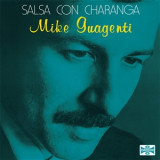
"Salsa con charanga" is really a feast for all salsa music lovers, a true jewel, which deserved much better when it originally came out in 1978. In addition to being a great salsa album, has the distinction that was released on Orfeon, a Mexican record label, due to the diligent work of the extraordinary producer Bobby Marin, and which miraculously received air play when powerhouse Fania label and few others ruled radio in the salsa music world. It comprises eight great, solid tracks; some, new interpretations from other albums in which Mike Guagenti participated with his handsome and captivating voice - a crooner with a salsero soul -, that, at times, could remind us of the late Tito Rodríguez, and even Ray Ramos. "The Mike Guagenti album," as indicated by Marin, "is a compilation of recordings by other artists. Originally a salsa album, I brought in Cuban Pupi Legarreta (violin and flute) and [Panamanian] Mauricio Smith (flute) to give it a charanga sound." With the exception of the cut 'Salsa con charanga,' which is an instrumental, the rest feature vocals by Guagenti. "Salsa con charanga" has developed a cult following, and finding a copy of the original could be quite expensive. Luckily, this officially licensed and restored edition will fill that void.
Co-directed with Maxime Daoud (Ojard), this 7th opus was written and composed with passion and recorded with an outstanding team of musicians. The message of Barbara Carlotti's new album is direct and essential: "Cherish your future!" It is an invitation to welcome the unknown, to view our destinies with tenderness, to strive toward the future while taking care of our style, to counter life's setbacks, to chase the green ray, and to reinvent love. The goal is to liberate expression, heal the wounds of the past, articulate desire with elegance and humor, and let ourselves be moved by fleeting yet eternal joys, the sight of the ocean, or the infinite beauty of a singing voice that fills us with hope and strength in an outpouring of freedom.
Samurai Music returns to the evocative sound world of Ancestral Voices for an album that splits the difference between cinematic sound design and deadly restraint at 170 BPM. Nemeton continues Liam Blackburn's exploration of ancient Celtic mysticism through snaking rhythms and snarling sound design, conjuring a high-definition sonic image of sacred groves and the druids practicing amongst them.
Blackburn's Ancestral Voices project tracks back to 2015, when he debuted on Samurai Horo with the Night Of Visions album. In stark contrast to his celebrated 140 work as Indigo, this project leaned on the inspiration of pagan spirituality to charge his vivid, advanced production style with a rich and mysterious atmosphere. While he's channelled this approach into a variety of tempos and styles, on his 2016 EP Old Earth Voodoo on Samurai Music he applied the concept to a drum & bass framework, which he returns to on Nemeton with rigorous focus.
Far from a straightforward collection of breakbeat tracks, Blackburn uses negative space and pointillist production to carve out an immersive, tense sound world around the 170 grid. He takes a widescreen approach to percussion, running from pin-prick synthesised one-shots to tumbling, organic drums you'd more readily associate with a Hans Zimmer score. Scene-building is the foremost mission across Nemeton, casting otherworldly forces in sweeps of low-end friction and dramatic melodic blooms amidst tangible real-world field recordings of flora and fauna.
Casting the mind back some 2000 years is an exercise in imagination as much as research, and Blackburn ably summons dark fantasy as he delves ever deeper into Welsh mythology with a studious zeal and avid fascination. It's that drive that makes Nemeton burst forth and take shape so powerfully, bristling with kinetic energy and a barely-concealed, strangely seductive menace that leaves a lasting impression long after the last snatch of bass has bared its teeth.
out of Stock
Last delivered 9 months ago available to reorder, subject to availability
We wanted to celebrate the music of integral Samurai family member Last Life by revisiting his Samurai contributions with remixes from artists Mauro saw as best candidates for adding a new perception.
The second and final collection of remixes of tracks from Last Life's Samurai Music catalogue has now taken it's final form.
Label regulars Sam KDC, Ancestral Voices, Torn and Presha take their scalpels to Mauro's constructions and turn up the intensity, rebuilding them into 4 sinewy exercises in sinister force.
out of Stock
Last delivered 17 months ago available to reorder, subject to availability
The egyptian producer Saharty debuts with his first release on Impakto Records. Robotic vocoder vocals, 80's drums patterns, Italo/Valencia mix synths and basslines to create a complete EP that takes the best of the new and old school sound
out of Stock
Last delivered 3 months ago available to reorder, subject to availability
The Ibex Band, with Giovanni Rico and Selam Woldemariam at the creative helm, provided the musical backbone for legends like Aster Aweke, Girma Beyene, Tilahun Gessesse, Mulatu Astatke, and Mahmoud Ahmed, including the iconic album Ere Mela Mela, shaping modern Ethiopian music as we know it today. This 1976 album (Ge’ez Year 1968) played a pivotal role in that legacy and has now resurfaced to set the record straight.
There’s a tendency to talk about the seventies as a golden age of Ethiopian music. There are good reasons for that, and just as good reasons against it. However, the notion of a golden past privileges the role of Western explorers and suggests that the pinnacle of Ethiopia’s musical culture is something only a foreigner can appreciate and unearth. It downplays the complexities of Ethiopia’s culture and history, creating an artificial divide between then and now. And it underestimates the constantly evolving sound that has followed.
The legendary musical outfit The Ibex Band, later metamorphosed into The Roha Band, has played a central role in defining the sound of many of the greatest stars on the music scene of Ethiopia from the mid-seventies onwards–but their golden output has never really waned. The story of the origins of the band that provided the musical backbone for greats such as Aster Aweke, Girma Beyene, Tilahun Gessesse, backing the solo career of group member Mahmoud Ahmed as well as backing Mulatu Astatke and many others has yet to be properly told.
Two misconceptions plague the image of Ethiopian music, one is that the music is pure because it is, by some notion, unexploited, the other is that it is all traditional. To begin with, a combination of political changes between the late sixties and the mid-nineties created an environment where only the most dedicated and skilled musicians struggled on and pursued a musical career against fierce odds. The whole Ibex Band, with Giovanni Rico and Selam “Selamino” Seyoum Woldermarian at the creative helm, are arguably the origo of the vibrant scene in the mid-seventies, and the said pair are foremost responsible for not only navigating the band through troubled times, but also modernizing the 6/8 chickchicka rhythm to a contemporary form. Giovanni laid the rhythmic foundation with heavy looped basslines that reinvented traditional melodies as dance music, and with Selamino’s innovative guitar work they influenced scores of musicians from Abegaz Kibrework Shiota to Henock Temesgen. Even Giovanni’s Fender bass and Selamino’s Gibson guitar inspired younger musicians in their choice of instruments. Not only in choice of instruments but also in sound–even as the digital revolution hit Ethiopian music, a lot of popular music still took its cue from the masters from Ibex and Roha.
Ibex emerged out of the ashes of the sixties group the Soul Echos band, adding Giovanni and Selamino to their ranks and taking their cues from a slew of influences, such as Motown and The Beatles, fused with traditional music. A tighter-knit unit than most bands at the time – Ibex has remained six to seven members throughout their whole career, compared to many bands that were as large as fifteen or sixteen men strong when Ibex set out. Their playing has been viciously focused, economical yet heavy. Just a year before the recording sessions of the album in your hands, Giovanni and Selamino made a contribution to the popular musical lexicon of Ethiopia that was simply defining the popular sound: their arrangement and recording of bandmate Mahmoud Ahmed’s solo effort and real commercial breakthrough tune and eponymous album, Ere Mela Mela, from 1975.
Selamino has never limited himself to being an adroit lead guitarist, but has always been a scholar of history, and as such he has probably contributed as much to modern Ethiopian music with his guitar playing and compositions as with a deepened understanding of modern or contemporary – Zemenawi – Ethiopian music. Selamino’s contributions serve as a metaphor for those of the whole band, at one and the same time creating and defining a new, danceable and updated sound anchored in Giovanni’s bass, whilst also elevating the broader scene through their support for others on the scene and on top of that, increasing the understanding of the music.
There is an understandable desire to romanticize the musical heyday Ibex and Roha were at the forefront of, because so much of the output is sorrowfully hard to come by. Ibex creativity was nothing short of ridiculously fierce compared to many of their Western contemporaries. Based on their sheer recorded output alone they could have usurped the title “hardest working in show business” from James Brown, recording more than 250 albums or 2500 songs in the seventies and eighties. Some only surface as cassettes today, others were never given full LP release, and some are simply impossible to find today. In the light of that, it’s nothing short of a miracle that the recording Stereo Instrumental Music from 1976 (Ge’ez Year 1968) has resurfaced. Unearthed in perfect condition on a chrome cassette, this is musical history comes alive–to set the future straight. Stereo Instrumental Music was recorded in collaboration with Karl-Gustav Lundgren, a Swedish national working for the Radio Voice of the Gospel. It took two sessions at the Ras Hotel ballroom in Addis Ababa. The Ibex Band was the first band in Ethiopia to employ a four-track recorder for their recording (the first available in the country, lent by Karl-Gustav). Later the same week, Giovanni and Selamino realized that, lengthwise, the recorded material fell short of what they wished for, so they recorded four more tracks in one more session on a single-track recorder. The Ras Hotel and Ghion Hotel, where the Ibex Band held musical residencies were to Ethiopia in general and Addis Ababa in particular what Motown was to the USA and Detroit a few years earlier – a hotbed of musical creativity and showmanship.
The most astonishing thing about Ethiopian music of the last half century is how tradition and modernity are intertwined. Because of this feature, it’s kind of hard to tell when there ever was or when we are in a “golden age”. So much of music from the past has been criminally neglected, but because of the hardships in the past, it would be an oversimplification to say that said past was a golden age. Probably, the golden age is what we are approaching, because for the first time both the past and future are accessible, and the monumental contributions from before can lay a firm foundation for a thriving music scene today. The Ibex Band stands firmly in the past, present and the future. That, if anything, is golden.
The detailed history of Stereo Instrumental Music is in many ways unique. To begin with, it couldn’t have been recorded earlier (there were no four-track recorders available) and it really couldn’t have been recorded afterwards either, at least not in the years directly following, because of the toll the musical scene took from the unfavorable political climate that followed when the nascent Derg regime and rival groups tried to assert themselves, the musical equipment lent from The Voice of Gospel Radio simply disappeared from Ethiopia when the radio station folded in 1977. Karl-Gustav Lundgren,
the Swedish foreign national who assisted during the recording, worked with the Ethiopian Evangelical Church Mekane Yesus at the time, recalls how they only had about fifteen minutes to get the microphones in place for the recording as to not alert neither the management at Ras Hotel nor the authorities and most importantly, to complete the recording before the curfew came into effect at midnight. In leaping to the opportunity to use previously unavailable equipment to push their sound forward and improvising to meet the logistical challenges, the Ibex Band displayed the very avant-gardism and adaptability that explains their longevity as a band through the years. The recording of Stereo Instrumental Music is from a given time in history, but it sounds as beyond time.
Much of the energy that burst out of the scene that Stereo Instrumental Music came out of dissipated or got sidetracked during the societal changes Ethiopia went through in the 1970s and 80s. Whilst leaders might have professed to be revolutionary, the work ethic of the Ibex Band can truly be described as that. They never called it quits, but adapted, toured extensively abroad in Africa, Europe, and the Middle East, and found ways to work even in the face of the curfew that curtailed a lot of musical life. They even played major arenas in the nineteen eighties, despite said curfew and restrictions. The whole extent of their legacy has never been told, but their music speaks louder than words, so therefore… tune in to the Ibex Band’s Stereo Instrumental Music.
out of Stock
Last delivered 15 months ago available to reorder, subject to availability
'Coups Et Blessures' is the debut 7" EP from Paris Oi! band RIXE. The four track EP harks back to the glory years of Bologna's finest NABAT mixed with the classic 80's French Oi! sound via RAS or L'INFANTERIE SAUVAGE and a heavy BLITZ vibe. The sound is rough, direct and angry and driven by a distorted bass and a vocalist that chews on glass for fun. Like the now defunct CRIMINAL DAMAGE and newbies Pittsburgh's NO TIME and Brest's SYNDROME 81, RIXE are the new voice of a Generation.
Art Longo, multi-instrumentalist and composer, has just released your next favourite album. Dwelling in the self-selected confines of a humble home recording studio for years, cooking up psychotropical pop hits heavily influenced by the late eighties music culture and dub.
The album, Echowah Island, in its entirety manifests a soundscape drenched in orange sunsets and cool breezes. The production, smothered in spring reverbs, space echo delays and wah wah (Echo + Wah), always grounded by the satisfying chugging rhythms of various old drum machines.
It is a creative endeavour and prosperous collaboration alongside Claudia Jonas, whose airy mysterious voice brings to mind the classic french femme fatale singers of the sixties. Her lyrics, almost kaleidoscopic in nature paints a nostalgic, rose-tinted dreamworld but never fails to challenge the listeners imagination and sense of reality.
out of Stock
Last delivered 15 months ago available to reorder, subject to availability
“Trustworthy”. is the meaning of “danama”, this Bambara word from Mali. Believing in oneself, in others, in the word given, in desirable futures. Advocating optimism, momentum towards the future, collective strength and the wise magic of cultural blending… especially during these troubled times of endless wars, of nationalist withdrawals or the abundance of naturals disasters, all encouraged by a carnivorous capitalism?
So confidence, we need tons of it. Maintained by the flame, the phlegm and the stratagem of these afro-groove scientists, without ignoring their sorrows nor the scandals of History. This is the athletic art of Arat Kilo, who remain without question the best ethio-jazz orchestra in France, on the trail of this fifth album recorded in the Spring of 2024. Confidence was also needed to change the way things worked. For all the previous albums, the band came together in the studio to play each track together, all in the same room, in the romantic idea of a warm, lively, organic gesture, in the manner of the great Ethiopian masters of the 60s and 70s.
For Danama, the music was initially collected in tandem: guitar/bass, drums/percussion, saxophone/trumpet, and the two voices. A few new instruments were added along the way : dark synthesizers, a bass clarinet, a tiny guitalélé (similar to the ukulele) and a Malian n'goni (sometimes described as ‘the griot's lute’). Then, and above all, there was the question of experimenting with real sound production, using sound design, multi-track exploration and effects applied to the textures collected over eight days at the Gong studios in Montreuil and OneTwoPassIt in Bagnolet just outside Paris.
In this way the band, all growing up influenced by the hip French Radio Nova's ‘Grand Mix’, were completely free to express their natural taste for fusion between genres. Borrowing from the frantic rhythms of Newark's jersey club, English 2-step or New Orleans brass bands, grafted onto Arat Kilo's musical base: tezeta, the famous minor pentatonic scale typical of Ethiopian jazz, melancholic to perfection. The result is layers of sound, collages of emotions, like the album cover, created by artist Clément Laurentin from multicoloured fragments of posters torn up in the street.
So Arat Kilo are back: The same band, the same collective strength, the same fight for values, their new album “Danama” carries the demand for a better world even further, with words of hope from singer Mamani Keita and the social critique of American MC and poet Mike Ladd ! The result is this luminous voyage down the Danama canal. In all, eleven songs and an instrumental, mixed by Mathieu ‘Gib’ Gibert - one of French band La Fine Équipe's beatmakers - set to drive the crowds wild and remind us how to stick together again.
The first ever reissue of 1994 sound poetry masterpiece »BLANKSMANSHIP«, a high point in the work of legendary avant-garde poet and artist John M. Bennett. Editions Basilic and Luna Bisonte Prods previously collaborated on »A Flattened Face Fogs Through: Selected Sound Poetry (1986-1994)«, an anthology of Bennett’s sound poetry released in 2022 to widespread acclaim.
John M. Bennett’s »BLANKSMANSHIP« is a totemic representation of something impossible: a linguistic object containing a totality. Written and recorded in the early 1990s and released as a sound poetry cassette and chapbook, »BLANKSMANSHIP« begins and ends with a ten word mantra, distilling the poem’s ten cantos that act as phases of an extended meditation. Performed by the author accompanied only by minimalist shakuhachi flute and bell, a narrative emerges from a mythic place, spoken by a single voice that eventually multiplies into a horde of selves. The author states that »BLANKSMANSHIP« refers to a state of mind, the "empty yet swarming void from which the poem’s voice arises, as if it were the voice of completeness itself".
RIYL: Robert Ashley, Akio Suzuki, William S. Burroughs, Steve Dalachinsky, Max Headroom, Japanese Shakuhachi Flute Music
Rindert Lammers' debut album is a heartfelt exploration of gratitude, blending personal narratives with cinematic imagery in a serene and soulful ambient jazz style. Inspired by Japanese cinema and the raw authenticity of YouTube confessions, the album captures a mood of introspection and appreciation. Central to the album is the track "Thank You, Kirin Kiki," which draws from a powerful scene in the film Shopliers. Lammers explains "It's one of my favorites. The Japanese actress Kirin Kiki plays the grandmother of a ‘chosen family’, all of whom have fled or lost their own families in some way. In this scene, one of her last scenes before her (real) death, Kirin Kiki (the grandmother) looks at her family and says, 'Thank You!' twice towards the children and the sea. Kirin Kiki improvised these words on the spot, and it's such a poignant moment in the film, but also indicative of her impending death. I found the gratitude so moving it fit perfectly with the gratitude I found in the voice clip from "Thank You Hiroshi Yoshimura. "The fourth song, "Thank You Hiroshi Yoshimura," opens with a voice clip that acts almost as the protagonist of a film, reflecting on a turbulent time of sleeping in parks and on the streets. This voiceover was inspired by a comment on a Hiroshi Yoshimura video on YouTube that began, “This album reminds me of...” Lammers noticed the deeply personal responses le on these videos, so he recorded various similar YouTube comments from people around the world, initially intending to set them to music. Though much of this idea evolved, this particular voice clip remained a central influence, ultimately inspiring a cinematic journey within the album. "Summer in Shibuya" sets the scene as a trailer, "Opening Credits" introduces the narrative, and "Closing Credits" gently brings it to a close. While there’s a Japanese and Tokyo theme running through the tracks, Lammers doesn’t view the album as a tribute to Japan or Tokyo specifically—he’s never visited and admits to knowing only fragments of the culture. Yet he's drawn to Japanese environmental music and is an avid Murakami reader, seeing Japan as a powerful, visual inspiration in his mind’s eye. In a way, the album is also his “thank you” to the beautiful art that Japan has shared with the world.
Carrying on their longstanding dedication to the seminal output of Merzbow, Urashima returns with what is unquestionably their most ambitious release to date: “Collection 001-010”, a deluxe, 10 LP vinyl box set limited to 299 copies, gathering together the entirety of the project’s first ten releases, originally released in 1981. Encountering the band in its early incarnation of the duo of Masami Akita and Kiyoshi Mizutani, raw, exposed and bristling with energy, foreshadowing numerous trajectories they would follow over the coming years, these astounding full lengths - the majority of which have never been released on vinyl - come housed in a beautifully produced, deluxe wooden box, with each LP in its own individual sleeve reproducing the original artwork, and a LP-sized 32-page book containing reproductions of artworls and collages by Masami Akita, an interview conducted by Jim O'Rourke, and liner notes penned by Lasse Marhaug, Thurston Moore, and Akita himself, amounting to what is unquestionably one of the most historically significant releases we’re likely to encounter in 2025.
Deluxe Edition of 299 copies, remastered from the original analog tapes by Masami Akita, each LP comes in its individual sleeve reproducing the original artwork, also includes a LP-sized 32-page book. ** Since its founding during the late 2000s, the Italian imprint, Urashima, has become a definitive voice in the landscape of noise. Bringing forth beautiful limited edition releases, they’ve sculpted a singular vision of one of the most vibrant and revolutionary bodies of experimental sound to have graced the globe. Among the many projects that they have supported over the decades, there has been an undeniable dedication to the output of the seminal Japanese noise outfit, Merzbow, making a significant amount of the project’s out of print back catalog available across a range of formats. Now they return with what is arguably their most stunning and ambitious release dedicated to the project to date: “Collection 001-010”, gathering the entirety of Merzbow’s first ten releases, largely privately released by the band on cassette across 1981, in a deluxe, 10 LP vinyl box set. Representing what is effectively ground zero in Japanese noise and collectively amounting to some of the most sought after releases ever produced within that movement, Urashima’s truly beautiful collection comes fully remastered by Masami Akita himself from the original tapes, presenting all but a small number in their first ever vinyl pressings, with each LP housed in its own individual sleeve reproducing the original artwork, alongside a LP-sized 32-page book containing reproductions of artworks and collages by Masami Akita, an interview conducted by Jim O'Rourke, and liner notes penned by Lasse Marhaug, Thurston Moore and Akita himself. Towering with energy and groundbreaking creative vision, within the realms of noise and experimental music, releases don’t get more monumental or historically important than this!
Merzbow came roaring onto the Tokyo scene in 1979, and remains, to this day, one of the most prolific and aggressively forward-thinking projects in experimental music. Eventually becoming the solo vehicle for the efforts of Masami Akita, in its earliest incarnation the project was the duo of Akita and Kiyoshi Mizutani, taking their name from German artist Kurt Schwitters' pre-war architectural assemblage, The Cathedral of Erotic Misery or Merzbau, and quickly set out to challenge entrenched notions of what music could be. Embracing technology and the machine, even in its earliest iterations, Merzbow pushed toward new territories of the extreme, arriving at a space of pure, unadulterated sonic onslaught that has continued, for over 40 years, to set the pace for the entire genre of noise, and has remained one of the movement’s most important, definitive voices, continuously laying the groundwork for countless artists who have followed in its wake.
When dealing with historical gestures, there’s an invertible aura surrounding original line-ups and early statements, and rightfully so. It is often within a band’s debut that we catch the purest glimpse of the raw energy and creative ferment that made them what they are. This is certainly the case when regarding the coveted early releases of Merzbow, capturing the emergence of the project in its form as the duo of Masami Akita and Kiyoshi Mizutani as they helped set the blue print from the then emerging movement of Japanese noise. Over the course of its nearly five decades of activity, Merzbow has always been noted for how prolific and ambitious the project is. This was no less the case in the very beginning. While they were active for roughly two years prior, in 1981 alone they issued ten self-released cassettes numerically titled “Collection 001-010”, albums which have both individually and collectively become holy grails in the realms of noise, with only two - “Collection 007” and “Collection 009” - ever receiving vinyl reissues prior to now.
As Lasse Marhaug deftly articulates in the newly commissioned liner notes for “Collection 001-010”, despite having been recorded in different location across a span of time, the sum total of Merzbow’s first ten releases might be best regarded as a single release to be listened to in the same, durational sitting, with the material standing well apart from what most came to expect from Merzbow, while foreshadowing numerous trajectories the project would take over the coming years. Not only do these recordings feature a vast array of instrumentation - tapes, acoustic and electric guitar, violin, drums, voice, recorder, organ, found sounds, clarinet, homemade and prepared instruments, a vast arsenal of effects and electronics, and piano, to only begin to scratch the surface - the majority of which would disappear from the project’s active sources of sound generation over the subsequent years, but there is a slow pacing and raw sense of openness and exposure that reveals strong connections to the avant-garde improvisations of groups like AMM, Musica Elettronica Viva, and Gruppo di Improvvisazione Nuova Consonanza, the psychedelia of groups like Taj Mahal Travellers and Flower Traveling band (both of whom Akita mentions having seen in youth within his interview with Jim O’Rourke), and rock in general - albeit in fully abstracted forms - unspooling as brittle, pointillistic, textural, raw and abrasive forms, that occasionally flirts with unexpected tonal sensibilities. As Marhaug describes it in his excellent liner notes: «Sonically, “Collection” sounds more sparse and stripped. It’s dry sounding, up-front, no reverb, and there’s less heavy low-end grime and thin on the signature frequency sweeps. Viewed in a 1981 context, musically, it’s more akin to what the LAFMS (Los Angeles Free Music Society) pool of artists were doing at that time than what was happening in industrial music... There’s a strong playfulness throughout, like the sound objects are being explored for the first time, without neither restraint nor hurry. Events are allowed to be fully examined before the music moves on, or simply cuts off. To a large degree, the music on “Collection” feels acoustic in nature, although a Electro-Harmonix ring-modulator features prominently throughout.»
Easily described as a rarely encountered revelation into the original and earlier documented studio sound of Merzbow, “Collection 001-010” collectively amounts to an engrossing sonic journey in its own right, while also allowing for important, often overlooked connections drawn from numerous other creative wellsprings, notably free jazz, underground rock, the output of European and Japanese avant-garde music, as well as Dada, Fluxus, and Mail Art, much of which, beyond the illumination made possible by the sounds, Jim O’Rourke’s fantastic interview with Akita, published in the booklet, further explores, offering great insights into the origins of Merzbow and the thinking behind the project, as well as aspects of the earliest days of Japanese noise.
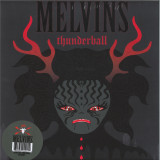
Melvins 1983, die rohe und ungefilterte Inkarnation der legendären Band um Buzz Osborne und Original-Melvins-Schlagzeuger Mike Dillard, kehren mit 'Thunderball' zurück - ihrem ersten Album seit vier Jahren, das am 18. April bei Ipecac Recordings erscheint.
"'Thunderball' ist das dritte Melvins 1983 Album, das wir zusammen gemacht haben, und ich wollte, dass es bombastisch wird - und ich glaube, das haben wir erreicht“, sagt Osborne. „Außerdem wollte ich schon lange etwas mit den Elektronik-Künstlern Void Manes und Ni Maîtres machen. Beide sind außergewöhnliche Talente. Ihr unkonventioneller Einsatz von Elektronik hat 'Thunderball' über meine Erwartungen hinaus getrieben.“
Aufgenommen wurde das Album von Toshi Kasai in den Sound of Sirens Studios.
Die 1983 in Montesano, Washington, gegründeten Melvins gehören zu den einflussreichsten Bands der modernen Musik. Gegründet von Buzz Osborne (Gesang/Gitarre) und dem ein Jahr später hinzugekommenen Schlagzeuger Dale Crover, leisteten die Melvins Pionierarbeit bei der Verschmelzung von Punkrock und Heavy Music. Im Laufe ihrer vier Jahrzehnte währenden Karriere veröffentlichten sie mehr als 30 Originalalben, unzählige Live-Mitschnitte sowie zahlreiche Singles und Raritäten.
Melvins 1983, die rohe und ungefilterte Inkarnation der legendären Band um Buzz Osborne und Original-Melvins-Schlagzeuger Mike Dillard, kehren mit 'Thunderball' zurück - ihrem ersten Album seit vier Jahren, das am 18. April bei Ipecac Recordings erscheint.
"'Thunderball' ist das dritte Melvins 1983 Album, das wir zusammen gemacht haben, und ich wollte, dass es bombastisch wird - und ich glaube, das haben wir erreicht“, sagt Osborne. „Außerdem wollte ich schon lange etwas mit den Elektronik-Künstlern Void Manes und Ni Maîtres machen. Beide sind außergewöhnliche Talente. Ihr unkonventioneller Einsatz von Elektronik hat 'Thunderball' über meine Erwartungen hinaus getrieben.“
Aufgenommen wurde das Album von Toshi Kasai in den Sound of Sirens Studios.
Die 1983 in Montesano, Washington, gegründeten Melvins gehören zu den einflussreichsten Bands der modernen Musik. Gegründet von Buzz Osborne (Gesang/Gitarre) und dem ein Jahr später hinzugekommenen Schlagzeuger Dale Crover, leisteten die Melvins Pionierarbeit bei der Verschmelzung von Punkrock und Heavy Music. Im Laufe ihrer vier Jahrzehnte währenden Karriere veröffentlichten sie mehr als 30 Originalalben, unzählige Live-Mitschnitte sowie zahlreiche Singles und Raritäten.
- Ltd. Col. LP: (Smoke Is A Color Vinyl)
out of Stock
Last delivered 18 months ago available to reorder, subject to availability
On ‘Cordial’, Ursula Sereghy traces the sensation of home; not as a place, but as something fleeting and deeply felt. Comfort appears in glimpses, nestled between moments of dissonance and unraveling structure. There is joy, but it carries the weight of absence, the quiet grief of realizing what was missing all along. A laughter that is both liberating and bittersweet.
Sereghy’s music moves with no fixed center, shedding hierarchies and opening itself to the unknown. Sounds unravel and reform: fragments of voices, reshaped textures, the shimmer of manipulated recordings all bending into semi-familiar contours. In this space, harmony is not a destination but an unfolding process, a web of shifting connections rather than rigid form.
Deeply drawn to natural processes, Sereghy’s music resonates with an elemental force: chemical reactions, unseen currents, the quiet logic of interconnection. Sound becomes a space where trust takes shape, where loss is acknowledged but never final, and where the act of feeling remains, above all, an act of survival. It is music in constant negotiation with itself - dismantling, reshaping, and reaching towards something vast, untethered and luminous.
A collaboration between US label Astral Spirits and Sweden’s Thanatosis Produktion, It could / If I marks the debut album from Stockholm-based duo Johan Jutterström (saxophone) and Alex Zethson (piano). Together, they reinterpret jazz standards and explore an eclectic mix of compositions by Leonard Cohen, Pet Shop Boys, John Lurie, and 19th-century composer Alexander Fesca.
Jutterström and Zethson’s musical partnership dates back to their teenage years, when they bonded over a love for jazz and the struggle to find their own voice within it. Their duo work has always been about navigating that tension—trying to capture jazz, failing, and finding another way forward. This album continues that pursuit, emphasizing not just what is played, but how it is played.
The record’s title reflects their approach: a process of reaching for something just out of grasp. Songs are deconstructed, rearranged, and treated like palimpsests—scrubbed clean and rewritten while allowing traces of the original to shine through. The result is a dynamic and deeply personal exploration of sound, filled with both reverence and reinvention.
Both musicians have extensive backgrounds in jazz, improvisation, and experimental music. Zethson, a prolific pianist and composer, has worked with ensembles like Fire! Orchestra and Trondheim Jazz Orchestra, and plays keyboards in ensembles such as Vilhelm Bromander Unfolding Orchestra, Goran Kajfes Tropiques, Vathres, and Angles (current with the jazzopera The Death of Kalypso). Jutterström, a saxophonist with an artistic PhD, has performed internationally and runs the ensemble STHLM svaga, a band who have performed commissioned pieces by jazz legends such as Ron Carter, Archie Shepp and Roscoe Mitchell.
With It could / If I, the duo crafts an intricate, ever-shifting dialogue—an ongoing attempt to "stick jazz music," as they put it, constantly approaching, never quite arriving, and finding beauty in the pursuit.