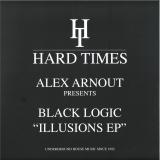
Hard Times welcomes back Alex Arnout and his BLACK LOGIC project, following their recent ‘Pull Up’ EP with a second installment of new music from collective - The Illusions EP.
Hailing from West Yorkshire, Arnout spent his formative years on the Hard Times dancefloors, absorbing the beats and vibes that would later shape his own productions. His journey with the label reignited when he was invited to remix Michael Watford’s classic 'Love Change Over' and Steve Silk Hurley’s fresh hit 'All I Need'. Now, he returns with something truly special.
“Black Logic was born out of the pandemic,” says Arnout. “I wanted to move away from drum machines and synths, getting back to sampling jazz and the deep house sounds of the ‘90s - taking inspiration from artists like Bugs in the Attic, Jazzanova, and Ernest Saint Laurent.”
What began as a solo project soon evolved into a collective effort. Bassist and guitarist Alan Riggs, a former member of Delta 5, joined the sessions, bringing warmth and groove to the productions. Vocalists Tempo O’Neil, Anthony Beckford, Mariana Orsho, and Sophie Barker added their distinct voices, completing the vision
Across four tracks, The Illusions EP pulls us deeper into Black Logic’s rich, live-wired universe. The title track pairs Tempo O’Neil’s vocal with a grooving, low-slung bassline, whilst “Dusty” drifts in on brushed snares and ghostly Rhodes, its saxophone lines curling through the mix like smoke. “Chasing Daze,” analog synth shimmer and Tempo’s velvet tones, is a track suspended between head-nod groove and astral lift.
The curtain falls with “Disco Down,” a jubilant ensemble of Hammond organ, flute, guitar, bongos, and horns locking into joyous conversation.
Buscar:voices of black
- A1: Flava D X Mphx Paige Eliza - Blush
- A2: Flava D - Blackwall Tunnel
- A3: Flava D X Anaïs X Dread Mc - Entertainer
- A4: Flava D & Emz - Fluent
- B1: Flava D & Solah - Can't Get It Back
- B2: Flava D, Nu Tone, Slay & Eva Lazarus - Frequency
- B3: Flava D, Paige Eliza & Drs - All We Ever Do
- C1: Flava D & Logan Olm - The Function
- C2: Flava D & Unglued - This Is A Roller M8
- C3: Flava D - Reesey Thing
- C4: Flava D & Charlotte X - Antidote
- D1: Flava D, Slay & Driia - Circles
- D2: Flava D & Lauren Archer - The Cycle
- D3: Flava D - Do U Want Me
- D4: Flava D & Mandidextrous - Keeping Me Up
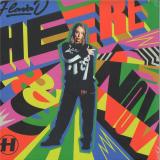
Having established a reputation as one of the most versatile and respected producers in the game - with over a decade at the forefront of UK bass music, spanning UKG, grime, bassline and drum & bass, Flava D needs no introduction. Now, with her debut drum & bass album Here & Now, she levels up once again, channelling years of dancefloor know-how into a project that's as weighty as it is emotionally dialled-in.
A self-proclaimed fan of Hospital Records from the age of 14 - the first drum & bass CD she ever bought being 'Hospital Mix Vol. 1' - Here & Now marks a particularly paramount milestone for the Bournemouth-born beatmaker. Across 15 tracks, Here & Now captures the breadth of Flava D's musicality, offering a bass-charged, genre-spanning statement that's rooted in experience but tuned into the present moment. With a star-studded bank of collaborators, including MPH, Anais, Unglued, SOLAH and more, the album highlights Flava D's curatorial ear and the strength of her network across the scene.
At its core, Here & Now is a meditation on presence - a fresh, fearless chapter from one of the UK's most consistently innovative producers. The album is equal parts masterful and functional, giving fans what they came for while revealing new layers of Flava D's ever-evolving sound. Through its stacked line-up of collaborators, Here & Now also connects voices who are helping shape the future of dance music, from the underground up.
The experiment aboard orbital station Sequoia-4 began as a routine test of the acoustic array. The team attempted to synchronize an analogue resonator with a quantum audio synthesizer. The two incompatible frequencies were expected to cancel each other out. Instead, the instruments registered a stable wave. It didn’t fade, on the contrary, it did respond to every sound, every movement around it.
At first, they assumed a coding error, but the wave began adapting to the researchers’ voices, shifting its amplitude and rhythm. Within hours, its spectrum started to resemble a heartbeat. The recording was forwarded to the Analysis Division, where it was named Hybrid Dub — a hybrid resonance formed between the machine and the human senses. The phenomenon proved unpredictable: each listener described different effects, from gentle euphoria to vivid recollections of memories that had never occurred.
Even after the system was powered down, a faint signal persisted in the ether — as if the mechanism had learned to breathe on its own. Some claimed that, when replayed, traces of the ocean, rustling leaves, and distant voices could be heard — as though the signal had passed through layers of living matter and remembered them.
The project was shut down, and the archive sealed. Only one line remained in the final report: “The signal wasn’t created — it discovered us.”
“Dance Music That Hurts” — the motto of Work of Intent.
Hurts, because it goes straight to your heart.
There’s no better way to put it.
His productions are rooted in the UK underground,
dripping with both techno and pop sensibilities.
This is “big room” like you’ve never experienced it before—
music you can’t ignore, driven by storytelling and raw emotion.
He’s found a home on labels such as Monkeytown, Turbo, and REKIDS, and continues his relationship with Laurent Garnier’s COD3 QR .
Founder of the clandestine edit factory *Emotional Weaponry*,
he continues to receive support from industry heavyweights.
Former manager of *DAYTIMERS*, the UK-based collective championing
South Asian sounds, stories, and voices,
and a highly sought-after mix engineer for some of the UK’s most exciting prospects.
We’re beyond happy to welcome Roshan Chauhan aka Works Of Intent to the family.
Feels like the beginning of a long, dramatic love story.
Credits:
Written and produced by *Works of Intent*
Distributed by *One Eye Witness*
180 G. BLACK VINYL WITH LINER NOTES IN CREOLE, FRENCH, ENGLISH
Originally released in 1979, "Spiritual Sound" lives up to its name, a soaring, triumphant album, six tracks of spirit magic from Guadeloupe.
Telluric, intense, terribly alive, the gwoka drums of Guadeloupe carry the identity of a painful and fervent island. Marked forever by the crime of slavery, Guadeloupe's créolité cherishes the ka drums and their natural environment: the low-pitched boula drum with male goatskin, the high-pitched soloist makè drum with female goatskin, the chacha, ti bwa, triangle, calabash and other percussion instruments that surround them, and the voices - the fiery, proud, timbred, urgent voices of the gwoka.
This album is also a legend for its voices: in his then dazzling youth, singer Lukuber Séjor was one of the first gwoka artists to largely feminize the chorus of répondè, who converse with his text delivered in a straight and powerful voice.
And everything here sets new standards. In 1979, Mizik Filamonik - Spiritual Sound proclaimed a spiritual patriotism of ferocious intensity. The album by Lukuber Séjor - whose spelling alone is a battle - sets out to give Guadeloupe the intangible weapons of self-respect and self-knowledge, through a singular practice of traditional music.
The genesis of gwoka music is less straightforward than one might imagine... The drums performed the servile task of accompanying the work of slaves in the fields and during the “corvées” imposed by the administration, before being freely practiced by the common people after the abolition of 1848. At the heart of the conviviality of the Guadeloupeans furthest from the cities - geographically and socially - the gwoka drums come out for carnival, funeral wakes and neighborhood celebrations, but also during strikes, fits of anger and armed vigils of the riots and revolts that have punctuated the island's history. For generations, governors of the colony and then the prefects of the overseas department of Guadeloupe have been viewing the gwoka as a potential for turbulence and a threat to public order.
But as the Beatlesmania, “chanson engagée” and rock revolutions unfolded in Europe, young people turned to the drums of mizik a vié nèg (“bad negro music”, in Creole), which Guadeloupeans had learned to despise by following the “assimilation” process advocated by the school system and most of the political class. At the end of the sixties, in a Guadeloupe mourning the deadly repression of the May 1967 social movement, they played traditional music, refusing to wrap it up in tourist prettiness and madras folk costumes. Instinctively, they played a rough and contemporary gwoka, led by the incendiary Guy Konkèt. This was the era of decisive 45 rpm records such as Robert Loyson's Kann a la richès, which brought to light the fieriest words of union rallies.
At his home in Sainte-Anne, Lukuber Séjor played with flautist Olivier Vamur and his brother Claude Vamur, who cobbled together a drum kit from tin crockery and became, a few years later, the most influential drummer in Kassav'.
These were the years of the Bumidom program, when young Guadeloupeans were encouraged to emigrate to mainland France. At the age of twenty, Lukuber Séjor embarked on the liner Irpinia, disembarking at Le Havre and taking the train to the Gare Saint-Lazare - the route taken by thousands of young West Indians who went on to study or looked for work, all the while trying to maintain a link with their homeland. In this case, it's at the Antony university residence, where Lukuber played the drum and participated in a thousand gwoka updates and aggiornamentos, while exile reinforced the need for a spiritual link with the native land.
In 1978, Guy Konkèt played at the Salle Wagram, a historic event for West Indian music. After serving as répondè - i.e. backing vocalist - on one of his home-recorded albums, Lukuber joined his live band. Little by little, he became one of the key artists on a circuit parallel to French show business. At a student party in Caen, he met a young woman from Martinique who, at the time, was more motivated by her ambitions as a visual artist than by her vocation as a musician. Her name was Jocelyne Béroard and, a few years before she plunged into the Kassav' adventure and became the greatest West Indian singer of her generation, she designed the cover of Lukuber Séjor's LP.
This ambition was obvious and imposed its will. A more or less regular band was formed, with Roger Raspail, Rudy Mompière and Éric Danquin on ka drums, Claude Vamur on ti bwa, Olivier Vamur and Françoise Lancréot on flutes and Annick Noël on keyboards. Lukuber Séjor is set on wanting to extend the gwoka palette to other instruments, as the jazz-rock revolution opens a thousand new doors. Annick Noël will play a wide range of timbres and textures on electric piano and synthesizer. Another novelty: the répondè are two men and two women, Roger Raspail, Olivier Vamur, Françoise Lancréot and Maryann Mathéus ...
Mizik Filamonik - Spiritual Sound is a self-production in which the singer and leader sank all his savings, allowing him no more than a single day in the studio. The first side is more of a musical manifesto, with the first two tracks, Éritage and Penn é plézi, being instrumentals. The third, Son, forcefully celebrates the need for Guadeloupeans to connect with the gwoka. In fact, Jocelyne Béroard's cover shows a tambouyé in the shadow of a cloudy sky, against which a radiant sun is rising and whose light will soon flood the entire landscape. The silhouette and face of this man strongly evoke the immense Vélo, master of the ka, rejected at the time on the fringes of society.
The second side of the LP is surprising. Formally, three tracks are explicitly linked like the three parts of a triptych. Primyé voyaj evokes the appalling tribulation of Africans deported as slaves to Guadeloupe; dézyèm voyaj speaks of the Bumidom program and the economic, political and social forces driving young Guadeloupeans towards the mirage of prosperity in France; twazyèm voyaj closes the cycle with the emigrants' return from Europe after years away from their island...
This gwoka, obsessed with the need to save Guadeloupe spiritually, appeals far beyond the politicized audience. Mizik Filamonik - Spiritual Sound instantly became a classic, although Lukuber Séjor never really made a career for himself as a musician.
After all, the album was released in 1980, with no promotional resources in France or Guadeloupe - and therefore no concerts. The thirty-two-year-old author, composer and performer made his own third trip back to Guadeloupe. He set up a small woodworking business, which he lost in Hurricane Hugo in 1989. His other activity, teaching in a medical-educational institute, became the core of his professional life. He continued to be an active campaigner - a campaigner for the Creole language, a campaigner for the reawakening of identity, a campaigner for special education, a campaigner for a thousand causes that he ignited with his generous and perceptive enthusiasm, such as the defense of breadfruit fries...
The echoes of his 1979 album have not died down. Of course, the use of Penn é plézi as the theme tune for Radio Guadeloupe's funeral notices from 1980 to 1992 kept him in the collective memory, but he continues to sing and compose sporadically, as with his all-female
vocal group Vwapoulouéka... Still convinced that music is a means of liberating the spirit, he continues the journey of a young man eager to deploy the power of Creole music and language.
Bertrand Dicale
Hard Times proudly welcomes a new release from an artist deeply connected to the label’s storied past. Alex Arnout presents BLACK LOGIC with their debut EP, ‘Pull Up’, a project born from passion, collaboration, and a return to House music's soulful roots
Hailing from West Yorkshire, Arnout spent his formative years on the Hard Times dancefloors, absorbing the beats and vibes that would later shape his own productions. His journey with the label reignited when he was invited to remix Michael Watford’s classic 'Love Change Over' and Steve Silk Hurley’s fresh hit 'All I Need'. Now, he returns with something truly special
“Black Logic was born out of the pandemic,” says Arnout. “I wanted to move away from drum machines and synths, getting back to sampling jazz and the deep house sounds of the ‘90s - taking inspiration from artists like Bugs in the Attic, Jazzanova, and Ernest Saint Laurent.
What began as a solo project soon evolved into a collective effort. Bassist and guitarist Alan Riggs, a former member of Delta 5, joined the sessions, bringing warmth and groove to the productions. Vocalists Tempo O’Neil, Anthony Beckford, Mariana Orsho, and Sophie Barker added their distinct voices, completing the vision.
The ‘Pull Up’ EP is the first of a debut double-header from Black Logic, delivering five stunning tracks that blend jazzy keys, deep grooves, and rich, soulful vocals. From the warm basslines to the celestial closing moments, this EP is a statement of intent - a wonderfully fresh, yet nostalgic take on deep house from a collective of masterful musicians.
“… it was dance music, it had lyrics, it had songs, it wasn’t all instrumental, it was basically uptempo soul music, to be exact.”*
This quote from Timmy Regisford already sums up everything you need to know about his remix of Basic Black’s “Don’t Make Me Fall In Love.” Signed to Motown during Regisford’s reign as vice president and A&R, their self-titled debut album from 1990 is a testament to the massive popularity of new jack swing at the time. In his remix, the co-founder, resident DJ, and key figure of Club Shelter reconfigures the song’s structure with the signature sounds of New York’s prime dance floor scene, while preserving the heartfelt storytelling of the lyrics and the group’s voices on top of an irresistible groove and a bassline to die for.
At the time, it was only available in the record crates of the Big Apple’s DJ elite and later on as a white label in specialist shops. This soulful, yet driving piece, however, never saw an official single release—until now. Lifted from a DAT tape in Tony Humphries’ archive and carefully and faithfully restored, it now even features a condensed, never-before-released instrumental version of the remix, as well as a bass-and-beats-only edit for mixing purposes by yours truly. New jack swing transformed into New York club music by a king. This remix is a testament to Timmy Regisford’s prowess in the studio, but also honors the roots of the music he loves and grew up on—serving as a perpetual piece of the city’s vast history in underground dance music.
Gerd Janson
Before Zero Records present the Akae Beka Vocal and Version Series. This represents a turning point in the presence of Vaughn Benjamin, the voice of Akae Beka and Midnite’s presence in the sound system world, merging the vocal and version sound system culture with the deeply spiritual music and word sound of Akae Beka and Tippy I Grade.
Two of the deepest thinkers in reggae music, Vaughn Benjamin and Chronixx, trade reflections on their collaboration, ‘Black Carbon.’ Originally released on the 2021 album ‘Polarities,’ the song is available for the first time as a vinyl single, backed by its dub version. Adorned with the swirling flute of Sheldon Bernard (Beres Hammond, Harmony House) and David Pransky’s brittle, Kora-like mandolin, the twin reggae intellects, with their uniquely delicate voices, introspect on how ‘all ah we forward from the same carbon.’ The song’s message juxtaposes the unity that binds us with a critique of the prevailing narratives and structures that weaken this bond. It underscores the universal truth that we all originate from the same elemental blackness—a truth mirrored throughout humanity and the entire spectrum of creation. Yet, it pointedly highlights how this shared essence is often unrecognised or undervalued in the social and political realms, especially for nations and diasporas connected by the original human hue. The A-side vocal mix is followed by Tippy I’s lavish, questing dub, bringing the instrumentation to the fore. Produced by Vaughn and Zion I Kings.
Each 7” vinyl sleeve has the lyrics transcribed and printed on the back. This series represents more than a collection of music; it is a multifaceted, intellectual and spiritual revelation encapsulated in melody, tone and beat. The never before released dub versions complement each vocal mix with grace and innovation, creating the perfect settings for reflection and integration of the lyrics.
10, 9, 8, 7, 6… the countdown to blastoff has started! Paris-based band Setenta is preparing for their upcoming 20th anniversary by releasing their sixth album, Apollo Solar Drive. The record is poised to be their best yet and is the culmination of an odyssey of artistic discovery. Setenta has been constantly striving for illumination through the years, yet also exploring the dark side of the human condition along the way. As the band describes it, this record is an Afro-Latin retro-futurist tribute to the sun. If their previous album, Materia Negra, launched the Setenta space shuttle crew into the void of “dark” matter and black holes, they now change course and valiantly approach the sun at full warp speed, taking us from darkness into the light. Miraculously, Setenta manage to bring some of the rhythmic and harmonic material they’ve explored on Earth with them, yet boldly dare to go where no one has gone before, challenging themselves to take their music, and their audience, to uncharted dimensions and new realms of existence.
In keeping with the themes of Materia Negra, FIP (Radio France) selection in 2020, Setenta’s sixth mission to explore “the great beyond” of “inner space” is aptly titled Apollo Solar Drive, emphasizing the band’s turning to the life-giving light of the sun for inspiration while playfully echoing the title of Eddie Palmieri’s Latin funk and social commentary masterpiece, Harlem River Drive. The overall vibe is warm and positive, propelled by the dual energy thrusters of funky, fierce beats and deceptively complex arrangements, yet going down smooth in the best sense of the word, like your favorite tropical cocktail or classic jazz dance fusion record of the 1970s. Of course this delicious treat is served with a special Setenta flavor all its own.
This time around, Apollo Solar Drive celebrates the trajectory of the band’s unique interstellar journey by deploying a resolutely jazzy, “funkadelic” angle to their beloved Afro-Latin music. Setenta’s band members tell their truths as a collective, with an emphasis on instrumental sections, focusing on the interweaving of multiple keyboards and guitars, while condensing the vocals to group choruses, as opposed to the solo voices of the past. The overall approach is more futuristic in its conception and realization, from the arrangements to the sonic engineering, although the rhythmic base still remains rooted in Afro-Cuban traditions as well as those of other Caribbean nations.
Pablo E. Yglesias (DJ Bongohead) of Peace & Rhythm (USA)
LP + insert with extended liner notes and download code including extra bonus track 'Movements of The Mind'.For his second album on the Belgian leftfield imprint Cortizona, Devin Brahja Waldman gathered a group of insanely gifted and talented musicians to start a new and highly moving musical chapter titled 'Nebulizer'.
From the first moment the pulsating tone of Devin's synth blends with the whispering voices of Earth, Wind and Choir and the menacing bells Naima Karlsson set in motion this record you just know and feel immediately 'Nebulizer' will be a soul-searching journey, soaking you deep into an unknown and very personal musical world.
Devin Brahja Waldman is a New York saxophonist, drummer, synthesizer player and composer who leads the group BRAHJA. He has performed with Patti Smith, William Parker, Nadah El Shazly, Malcolm Mooney, Thurston Moore, Godspeed! You Black Emperor, Charles Hayward, Luke Stewart and Yoshiko Chuma. Waldman is also a member of NYC's Heroes Are Gang Leaders (led by poet Thomas Sayers Ellis and saxophonist James Brandon Lewis), of Sam Shalabi's Land of Kush, and of the Norwegian hardcore group MoE.
In 2022 BRAHJA released the critically acclaimed album 'Watermelancholia' on the Belgian leftfield imprint Cortizona. For his second album on the same Cortizona label, Devin Brahja Waldman gathered a group of insanely gifted and talented musicians to start a new and highly moving musical chapter titled 'Nebulizer'.
Together with Adam Kinner, Georgia Wartel Collins, Earth, Wind and Choir, Luke Stewart, Kenichi Iwasa, Naima Karlsson, Alexis Mercelo, Janice Lowe, Watson and Damon Hankoff, Devin forms a slow-burning fireball unity.
A devotional séance channelling unknown powers proving music is a healing force of the universe.
Rejoicing the Holy Jazz Spirit.
Ready to nebulize the world and bring light out from the darkness. Head cleaning the world in 4 musical parts: Geological Drum, Nebulizer, Bushido and Movements of The Mind. Nebulizer is an elevating meditation on our estrangement of nature.
Interstellar sonic stardust from a mindblowing collective that will leave you flabbergasted.
Be prepared and hear it to believe it.
For fans of: Art Ensemble of Chicago, Archie Shepp, Pharoah Sanders, John & Alice Coltrane, Kamasi Washington, Shabaka Hutchings, SAULT, Ill Considered, Jamie Branche, Angel Bat Dawid, Mackaya Craven, Matana Roberts, Sun Ra and other good music.
On An-Ting’s extensive travels around the UK, Mongolia, Sichuan, Hong Kong and Taiwan, she took field recordings of birdsong and mixed them with dark experimental electronic music with droning soundscapes and hard beats, creating an album that sonically encapsulates the very essence of nature itself, drifting from peaceful ambience to haunting melancholy through to dark and foreboding.
“There is a light and darkness in nature that civilisation has made us numb to and that we want to explore” Using a binaural recorder to capture the surrounding sounds of birds, An-Ting has created a completely different expression that opens the seemingly simple, yet complex, languages of the birds, furthering the other-worldly, unique feel of Lost Communications ०妏ԏ宙. From An-Ting: “We live with other creatures on earth and are surrounded by all different sounds. Through Lost Communications, I blend the birdsongs with my artistic expression to introduce people to these complex languages and nonhuman voices. I hope this will make us more aware of different life forms on this planet and inspire greater kindness to the earth.” Composed, performed, and mastered by An-Ting Co-produced by AnTing and Ian Gallagher
The eight track journey begins with Timothy Smith of 90s American darkwave band Lestat along with Pat Berdysz and Mekena Berdysz under their View So Cruel guise, “Corpses” is the blackened offering. A blend of styles and voices coalesce in this bright and burnt work. Colombia’s Ravetop follows, rich textured rhythms support scaling synthlines and distant vocals. Acid squawk and looming menace are the ingredients of Ruksby’s romp before Dragée presents an insurmountable wall of string and reverb in “Chapter VI.” The flip brings old friends back into the fold as well as welcoming new names. Canada’s Red Mass conspires with Lieutenant Freebase with unsettling results while Croatia’s Honored Matres returns with the bent and buckled bars and beats of “Sisterhood.” Diana Berti delivers a powerful psychological soundtrack, “Neptune”, before 80s band Simbolo from Brazil closes proceedings with the absorbing analogue abstraction of “For A Better File.” Eight pieces from far and wide, eight tracks that transcend borders and genre tags.
- A1: The Guiding Stars - Been Dipped In The Water
- A2: The Religious Five Quartet - Let Me Lean On You
- A3: The Butlerairs - He's So Good To Me
- A4: Eastern Star Chorale - Until You Try Jesus
- A5: The Sensational Bells Of Joy - Lord Take My Hand
- A6: Green Street Baptist Church Youth Choir - He's All Right
- A7: The Singing Son Of Zion - Steal Away
- B1: The Gospel Voices Of Soul - Woke Up This Morning
- B2: The Gospel Motivators - Trust Him
- B3: Joe Thomas - I Feel Like Pressing My Way
- B4: The Indiana Wonders - Thank You Jesus
- B5: The Webster Singers - Stay By Our Side
- B6: Rev Eddie James And Family - Jesus Will Fix It
- C1: The Solomonaires - Come Out Of The Wilderness
- C2: The Antioch Majestic Voices - Peace Until My Soul
- C3: Rev Thomas N. Pride - He Knows It All
- C4: The Ecclesiastics - He Made A Way For Me
- C5: The Gospel Descendents - Jesus Is All I Need To Get By
- C6: The Gospel Chanteurs - Lord Don't Leave Me
- C7: Newburg Radio Chorus - Calvary
- D1: Cleo K Joiner Iii And The Metropolitan Comm. Choir - Spirit Of The Living God
- D2: Jimmy Ellis And The Riverview Spiritual Singers - I've Come A Long, Long Way
- D3: Rev Charles E. Kirby - Lord You Been Good To Me
- D4: The Golden Crowns - We Are Trying
- D5: Indiana Community Choir - Lord Don't Move That Mountain
- D6: God's Girls - My Time Ain't Long
Hardcover Book which includes a 208-page book documenting Louisville's rich Black Gospel music legacy and access to a comprehensive digital archive.
In the mid-20th century, Louisville gospel music was occasionally recorded when members of the local gospel community pressed 45rpm records and LPs, and released them through grassroots record labels such as Sensational Sounds, Grace, Blessed, and D.J.S. Over the years, a substantial body of work was produced in our city, but those recordings are in danger of being lost forever.
The Louisville Story Program has been working with dozens of people in the local gospel music community to locate, digitize, and preserve hundreds of these recordings and to develop a book that documents and honors the legacies of the people and communities that produced them.
For decades, the passion, hard work, and support of countless people across dozens of Black church communities in Louisville have nurtured and sustained a rich gospel music ecosystem. This music has served as a central part of people's religious practice and as an expression of Black pride, joy, affirmation, love, dignity, determination, and hope. This legacy continues to this day.
With support from The Owsley Brown II Family Foundation and Owsley Brown III Philanthropic Foundation, LSP has partnered with members of the gospel community and a local advisory group of local gospel historians and luminaries:
To locate, clean, and digitize gospel records of local artists released by small local labels
To accompany the local Black gospel music community in developing a 4 CD box set that includes a 200+ page hardcover book with first-person documentation of their rich history
To create an accompanying double LP featuring 26 of those songs
To create and maintain a public-facing digital archive of 1,000 songs and 1,000 photographs
To celebrate the final release with a large concert at the Brown Theatre (September 28, 2024)
1981. A new South African band is making waves. Produced by the team “Van Blerk/Roos & Greg Cutler", it includes succulent voices and melodies, psychedelic Moog, Fender Rhodes surrounded by some Afro-folky guitars. This album is definitely a winner.
Between 1972 and 1973 Poy-Poy Makhubela appeared on 4 singles with The Young Movers produced by David Thekwane.
In 1975, as a lead guitarist, he decided to bring together four musicians to form the band Unity. Jeff Radine (Fender Rhodes, Moog), George Legobye (bass), Edward Modiselle (percussion) and Robert Moema (drum). The members were all from the group The Sound Jaws, except Jeff Radine who was with Rugare and played with Harari, Chicco, The Black Five or Prince Nico.
In 1978, after hearing Unity playing in a club, Mike Tswai joined the band as a manager.
Poy-Poy has gone on to have a long career, touring the world and playing with some of the South African’s greats including Brenda Fassie, Don Laka, Blondie & Pappa, Dorothy Masuka as well as Kwaito bands like Alaska, Boom Shaka or Trompies.
- A1: Oriana Ikomo - Never Forget
- A2: Moodprint - Eartha
- A3: Kin Gajo - Exit, Gajo!
- A4: Adja - Told You So
- A5: Bodies - Brioche
- B1: Orson Claeys - Conversations
- B2: Bodem - Kleine Mars
- B3: Honey - Bossa Dolce
- C1: Azmari - Sheep Party
- C2: Le Ministère - De L'amour
- C3: Ciao Kennedy - Parcifal Pt. I
- D1: Echofarmer - Beginning Would Have Been Outside
- D2: Kassius - Escapism
- D3: Bruno X Soet X Moene - Ott
Vol. 1[22,27 €]
Vol.2 Black Vinyl[24,79 €]
Vol.2 Limted Red Vinyl[26,01 €]
Vol. 3 Transparent Violet Vinyl[27,52 €]
Standard version on 2LP black vinyl in gatefold sleeve. ‘Lefto presents Jazz Cats' is back with volume 3 and still doing what it does best: putting you in the front row of what the thriving Belgian jazz scene currently has to offer and revealing a melting pot of the musical talent.
'Lefto presents Jazz Cats' is back with volume 3 and still doing what it does best: putting you in the front row of what the thriving Belgian jazz scene currently has to offer and revealing a melting pot of the musical talent coming out one of the smallest countries in Europe. Never change a winning team they say, so we're happy to have Belgian DJ and eclectic connoisseur Lefto on board again.
Although you expect thecompilation to be talking jazz, volume 3 explores a broader array of styles, genres, and sounds than ever before, arriving at a point where the 'young cats' of today don't bother no more. It may focus on the Belgian scene, but let's face it, seeing the influences, this one could be compiled from all over the world. From the empowering and bittersweet voices of Oriana Ikomo and Adja, over the more acoustic-electronic productions of Moodprint, Ciao Kennedy, Kassius and echofarmer. It's even expanding the Jazz Cats universe to dub and bass-heavy tracks with Kin Gajo and Le Ministère, Ethio-jazz from Azmari, while sending you back to earth with bodies' swirling sax and drums. That saxophone still rings in your ears when you end up in the orbit of the march-like drums of Bodem, Orson Claeys' piano testing your ability to follow him, slamming the breaks to go smooth cruisin' with HONEY (Morricone meets Khruangbin, anyone?), to crashing in a raging tempo on that last track of Bruno x Soet x Moene. And there you are, back with us.
2018's 'Lefto presents Jazz Cats' included tracks from some of Belgium's biggest hitters, including Black Flower, STUFF. De Beren Gieren and Glass Museum who have all gone on to receive global acclaim. The album was given the accolade of 'Album of the Week' on Worldwide FM and also received further radio support from Jazz FM in addition to numerous glowing reviews. The 2022 follow-up 'Jazz Cats volume 2' paved the way for a new generation inspired by its peers, entering another era of very talented individuals and collectives. Maybe even more so than 4 years before. It uncovered a beautiful balance of more established but also obscure musicians and artists. Opening up to electronics and dance, enter bands like ECHT!, Stellar Legions and TUKAN. Thrilling innovative soundscape grooves and jazz fusion with Bandler Ching and L?p?GangGang, not to forget about the weaving musical odyssey that is M.CHUZI. In addition, there's the balanced unease of One Frame Movement, the laidback 'acoustic electronica' of Boombox Experiments, the classic funky jazz stylings of Cargo Mas and cinematic The Brums, all of these have set volume 2 on the map as an essential release for any jazzhead with a passion for new sounds.
Tastemaker, selector, curator, DJ and producer, these words often get mentioned when Lefto's name pops up in discussions. And rightly so. If you've ever had the pleasure to listen to one of his incredible Boiler Room sets or one of his many radio shows, you'll know why. Famed for his gloriously eclectic taste on the decks, he switches effortlessly between hip hop, funk, breaks, neck-snapping beats, future bass, South-American influences, bruk riddims, some wild African rhythms and of course, jazz.
Growing up as a child, his father would have the sounds of jazz flowing through the speakers. Which led him to bars around town to hear the latest jazz ensembles. Falling in love with the genre, he would later refine his knack for record digging and fine ear for music working at Belgium's legendary Music Mania record store in his hometown Brussels. Which makes that Lefto is consistently a couple steps ahead. He doesn't wait for the next thing to land in his lap, but actively seeking it out.
Lefto on Jazz Cats volume 3:
"Another release in less than two years! I am very impressed by the amount of creative "jazz" talent we've managed to compile over the last couple of years. Thanks to the internet, young musicians find inspiration from around the globe and incorporate diverse influences into their work. Given the history and heritage of jazz in this country, it has managed to create a healthy jazz scene supported by festivals, venues, press, and labels. Therefore, I am very proud to present to you the thirdinstallment of Jazz Cats. This compilation is dedicated to the young and hardworking musicians who are the present and the future of Belgium's jazz scene."
The package, posted from Inglewood in California, dropped through my letter box…
I was looking forward to seeing this, the VHS of the then relatively ‘unknown’ but now legendary live show at the Saenger Theatre in New Orleans by Maze featuring Frankie Beverly. But when I fed it into my VHS player, I was disappointed. I could not quite figure out why. The band were tight, each musician sounded great, the product of being on the road, year after year, club after club in the States, sometimes playing five shows a night, all propped up by one of the best soulful voices we had ever heard, the maestro Frankie Beverly.
It took a second play of the VHS to realise what was missing. It was ‘too comfortable’ an atmosphere. A few wealthy customers sat around coffee tables quaffing champagne. It seemed to me that this audience, somehow, did not fit the band.
Paul Fenn at Asgard promotions received the contract from the band to appear live in London and Manchester. I became more and more convinced that his UK fans were going to be a lot more responsive than those from New Orleans.
We put the word out with just a couple of exclusive ‘shout outs’ by Robbie Vincent on his Radio London Soul programme. Those two plugs were enough to sell out all four shows at London’s premier music venue, the Hammersmith Odeon. The ticket office was rammed and the queue six deep, stretched halfway down Queen Caroline Street.
“I have never seen anything like it” expressed the manager of the theatre as he rolled down the shutters and turned on the “Sorry, SOLD OUT” notice above the theatre box office.
I was curious, so I went up and stood in the wings of the Hammersmith stage on that first show. Frankie, introduced to the stage by his sound engineer, Greg Blockman, sauntered past me, strumming his rhythm guitar, dressed in a casual dark green towelling suit, a brown leather visor and flip flops…and then five seconds later, he suddenly stopped. He seemed suddenly to be aware of the thunderous ’Welcome to London Maze’ roar, circling around the theatre about to engulf him. He slapped every black and white hand offered up to him that night, with a huge smile as he circled the edge of that stage. We wanted to get next to him, even if it meant climbing over rows of seats in front of us to do so.
That was the beginning of our love affair with Maze and Frankie Beverly. It certainly wasn’t New Orleans comfort; it was more like a crazy, but friendly, London riot.
Five albums on from the “Live in New Orleans” LP, Frankie sauntered into the California recording studio, probably with the same swagger as in London, to cut the delightful A-side here, “Somebody Else’s Arms”, from his aptly named ‘Silky Soul’ album. Along with the B-side, ‘Love is’ (from the “Back To Basics” CD, 1993) both are so delicious you might want to relax and pour yourself that London glass of champagne, 1983 vintage. Tell your mates your Maze/Hammersmith story too. You deserve it.
Jlin’s detailed and meticulous exploration of rhythm’s inner and outer reaches has made her one of the most distinctive and recognisable voices within both the electronic and classical music worlds. Her compositions are consistently appealing and have an accessibility to them, yet often defy expectations. She exists within her own locus solus - no matter the collaborator, no matter where sounds ultimately lead her. Whatever the situation – from composing the Pulitzer Prize shortlisted ‘Perspective’ for Third Coast Percussion, to ‘Godmother’ her AI-powered collaboration with Holly Herndon, Jlin always expresses her outlook to the fullest. Her new album ‘Akoma’ sets a new benchmark in her personal road map, not only since the album features guest appearances from Björk, Philip Glass and Kronos Quartet but for her continued sonic persistence and resistance. Jlin does what Jlin does and it’s beloved across genres, across scenes and across generations. ‘Akoma’ is a new entry point into her sound and a new approach for both those who have been following diligently and those who are just now entering her world.So how did she get here? Here’s a rundown for those looking for the facts. She was both a math nerd and a steel factory worker. She got inspired by Footwork and started making tracks with mentorship assistance from RP Boo and DJ Rashad, but her music was far from typical for footwork from the get-go. In 2011, she released her first track ‘Erotic Heat’ on the Planet Mu anthology ‘Bangs & Works Vol.2.’ Fashion designer Rick Owens heard it and invited her to soundtrack his Paris Fashion Week show. Already before an EP or an album Jlin was in new cutting-edge territory. And it hasn’t stopped since. Everyday Jlin wakes up early and clocks into her home studio working hard on new music. Her discipline and craft-like approach means that those who would try to copy her sound simply can’t get to the level she is at. Since ‘Erotic Heat’ she has released two bold albums, 2015’s ‘Dark Energy’ and 2017’s ‘Black Origami.’ She has also released her soundtrack to Company Wayne McGregor’s dance piece ‘Autobiography’ (2018) and most recently (2023) the mini-album ‘Perspective.’ She’s remixed µ-Ziq, Factory Floor, Ben Frost, Max Richter, Björk, Martin Gore and others. She’s collaborated with Holly Herndon and the late SOPHIE. She’s worked with visual artists Kevin Beasley and Nick Cave. She composed a string quartet for Kronos Quartet and performed with them live in a tribute to Philip Glass. She also recently completed a tribute to Sun Ra with Kronos. ‘Perspective’, her very well received percussion work for Third Coast Percussion has further opened doors for her in classical music. She’s even thinking of one day writing an opera. She had a residency at MassMoca Museum earlier this year (2023). She’s performed live at Pitchfork Festival, Unsound Festival and too many others to mention. She’s also worked with Indian dancers, Company Wayne McGregor and renowned choreographer/MacArthur Fellow Kyle Abraham. There’s more but you get the picture - she’s working in contexts and in ways that few of her peers are able to. ‘Akoma’ is the next step - all these paths have led to this. We encourage you to tune in.
In apartheid-era South Africa, gospel music provided solace and served as a tool for covert communication to circumvent the censorship of the settler regime. By the 2010s, South African gospel, deeply ingrained in the soul of Soweto, assumed a new role—as a heartfelt cry against persistent failures and shortcomings, a cry mourning a South Africa that never materialized.
A new South Africa needed a new gospel sound.
In 2016, nine young men from different parts of Diepkloof, a celebrated neighbourhood brimming with talent within Soweto's sprawling township, came together to form the sound of a new South Africa under the name Diepkloof United Voice.
Diepkloof United Voice's music has gone viral multiple times on TikTok, YouTube, and Facebook, garnering between 60,000 to 2 million views. The comments section displays flag emojis from Brazil to India, showcasing the global reach of their music.
This album was recorded on site in Soweto, in an abandoned classroom of Lebowa Elementary School in Diepkloof Zone 3, where the choir rehearsed for years. Amid rolling blackouts, Diepkloof United Voice poured their heart, soul, and vocal chords into their debut record, combining classic South Africa gospel, Soweto's own kasi soul, American blues, and Zulu flavor, to present the contemporary gospel sound of a changing South Africa.
The promise of a new South Africa might finally be realized, as Diepkloof United Voice guarantees the country's future is guided by the truth, uttered with each gasp of breath from their inimitable voices.
- A1: Villa - Silhouetten Der Nacht
- A2: Chontane - Ceoid
- A3: Levzon - Planga
- B1: Benkhlifa - Basikstruktur
- B2: Umwelt - Echoes Of The Storm
- B3: Kashpitzky - Timeline Off
- C1: Dax J - Passing Clouds
- C2: Lpv - Arrival
- C3: Hadone - Euphoria
- D1: Stef Mendesidis - Magma
- D2: Chlär - Raw Audio Models
- D3: Nnamael - One Step Closer To The Truth
- E1: Benkhlifa - Predator In The Zoo
- E2: Selective Response - Mars
- E3: Jehra - Take It Or Leave It
- F1: Mattia Trani - Dreampunk
- F2: Vil & Cravo - Plane To Lisboa
- F3: Jadzia - Surface
- F4: Pablo Bozzi - To The Edge
The World of Monnom Black makes it triumphant return, unveiling the highly anticipated third iteration of its iconic release and ushering in a wealth of new artistic voices into its ever-expanding universe. Celebrated for curating the finest handpicked music, the series remains a beacon for championing the true essence of techno. Presented on triple vinyl and graced by 19 esteemed artists, marking this as the label's most innovative and important release to date. Welcome to The World Of Monnom Black 3!