For a prolific artist as Gerardo Frisina, almost two years without a new release from him seems like an eternity: this brand new 12" EP entitled 'Soul Drum' breaks the silence, giving us three new works composed by Gerardo, made up of four recordings if we consider the two versions of the title track.
This EP anticipates the full album already in the works, scheduled for release at the end of 2022.
Without losing his Latin trademark, Gerardo continues his research into hypnotic and pulsating rhythmic patterns in both acoustic and electronic form, which are now a fundamental stylistic element of his. As on his previous album 'Moving Ahead', the rhythmic style blends naturally with echoes of tribal voices, piano keys and wind instruments (trumpet, saxophone, flute), creating the 'Joyful Sound' (title of the forthcoming album) that reverberates on the surface. With an artist as meticulous as Gerardo Frisina, it is to be expected that even the simplest beat has been deeply thought out and chosen from a potentially infinite sound palette, and this can be heard perfectly in the depth of sound of the four tracks of this release.
"Soul Drum" is dedicated to the loving memory of bassist Enzo Frassi, who contributed to this EP - along with 'usual guests' Fabrizio Bernasconi, Gendrickson Mena, Alfonso Deidda and Ernesto Lopez.
Cerca:voices with soul
Born Don McCarlos,he processes one of reggae's most distinctive voices.
His vocal mannerisms being instantly recognisable over a tune ,yet he remains one of Jamaica's best kept secrets.
We look back to some of his finest moments that set the tone for his popularity that was to follow in the Dancehall period of Reggae.
He began his musical career in 1973,when alongside Garth Dennis and Derrick Ducky Simpson he formed one of Reggaes foremost groups Black Uhuru.
He then joined Wailing Souls before going solo under his shorter name Don Carlos
We find this set hard to beat as most of his classis are represented here and hope you find some magic as we have unearthing and compiling these lost treasures...Respect
- A1: Maria Maria
- A2: Cozinha
- A3: Pilar (Do Pila) (Do Pila)
- A4: Trabalhos (Essa Voz) (Essa Voz)
- B1: Lilia
- B2: A Chamada
- B3: Era Rei E Sou Escravo
- B4: Os Escravos De Jo
- B5: Tema Dos Deuses
- C1: Santos Catholicos X Candomble
- C2: Pai Grande
- C3: Seducao
- D1: Francisco
- D2: Maria Solidaria
- D3: De Repente Maria Sumiu
- D4: Eu Sou Uma Preta Velha Aqui Sentada No Sol
- D5: Boca A Boca
- D6: Maria Maria
Repress incoming...
Far Out Recordings proudly presents Milton Nascimento's Maria Maria. Recorded in 1974 and unreleased until almost thirty years later, the album was written as the soundtrack to a ballet which dealt with the legacy of slavery in Brazil. Raw, atmospheric and emotionally charged, Maria Maria reveals one of Brazil's greatest ever songwriters at his creative peak. Featuring an all-star cast of fellow Brazilian legends including Nana Vasconcelos, Joao Donato, Paulinho Jobim, and members of Som Imaginario, Maria Maria holds what Milton considers to be the definitive versions of some of his classic songs, including 'Os Escravos De Jó' and 'Maria Maria'.
Originally released in 2003 as a double CD package, with Milton Nascimento's 1984 follow up ballet soundtrack Ultimo Trem, Maria Maria will be available on vinyl for the very first time from December 2019, with Ultimo Trem set for vinyl release early 2020.
Milton Nascimento possesses one of the most immediately recognizable voices in Brazilian music: high and sweet and as breathtakingly sublime as that of any soul singer. It was this voice that the legendary Brazilian singer Elis Regina fell in love with back in 1964, having heard Milton perform his song 'Canção do Sal (Sultry Song)' at a private party in Sao Paulo. Ellis went on to record the song in 1967 -giving Milton his first hit in Brazil and beginning a career that has spanned over 50 years.
Born in Rio on the 26th October 1942, Milton moved with his adoptive parents at the age of 18 months to Tres Pontas, a rural town in the state of Minas Gerais, 500 miles north of Rio. He began his musical career as a young teenager, singing in a crooner style he learnt from listening to Brazilian singers and US groups such as The Platters on the radio. Hungry for more opportunities to perform, Milton moved to Belo Horizonte, the capital of Minas Gerais, at the age of twenty. By the beginning of the 60s Milton had made a name for himself both as an accomplished singer and guitarist.
Milton became part of a local network of musicians, film makers, dancers, theatre directors and writers that included the journalist and song writer Fernando Brant as well as lyricist Marcio Borges and his younger brother Lo Borges. Together these four wrote and produced what would become Milton's milestone album, 'Clube da Esquina (Club on the Corner)'. The originality of 'Club da Esquina' shaped the local scene, and it reflects the essence of 'the Nascimento Sound'. Milton's religious upbringing as an Afro-Brazilian Catholic saw him exposed to church choral music from an early age. His love of this genre of music is apparent in both his celestial falsetto and vocal choral arrangements. This collection also displays his early fascination with evocative, non-verbal, scat-style singing, spare, harmonic guitar work and local folk music, jazz and rock.
In 1976, Milton and Fernando Brant teamed up with a new contemporary dance company called Grupo Corpo, whose Argentinian choreographer Oscar Araiz, would become a collaborator with the two musicians. Together, they conceived a show based on the composite life story of the daughter of a black slave called Maria. Nascimento wrote music to Brant's lyrics and "Maria Maria" was premiered in the main theatre of the Belo Horizonte Palacio das Artes that year. "Fernando wrote the lyrics for the ballet, but there were originally no lyrics for the theme song, "Maria Maria'". Milton and Fernando worked on the lyrics together, basing them on folk stories about black women of the countryside. Adds Milton "These memories are mostly things that we witnessed – Fernando and I – rather than what we experienced ourselves.
Milton's music is impressionistic, emotional and romantic. Relying on songs without lyrics as well as evocative vocalizing and choruses, Milton experimented heavily with Afro-Brazilian percussion and taped jungle sounds. His composing method for these recordings was highly unconventional: "I wrote the music for 'Maria Maria' in a tiny Rio apartment with friends and their kids running around and having fun! I love to be in noisy places, surrounded by people", he says.
The music on 'Maria Maria' was performed by an impressive group of young musicians who are today household names in Brazilian music, including Naná Vasconcelos (percussion and effects), Toninho Horta (guitars) and Paulo Moura (sax). Several vocalist including Naná Caymmi, Fafá de Belém, Beto Guedes, and Milton himself, had hits in years to come with reworkings of these songs.
Milton says his compositions follow his visions "like a movie", and he believes that reflects his long love affair with cinema. "I only began composing because of enjoying the movies so much," he says. "I wrote my first song "Peace for the Coming Love" after seeing 'Jules et Jim' (the cult 60s French film directed by François Truffaut), with my friend Marcio Borges. We went early in the morning and watched it four or five times in a row, then went to Márcio's home and wrote the song."
The songs also include solo spoken passages set to music, clearly influenced by this style of French art cinema. On the title track, Maria's story is narrated and translated to music through the use of African Percussion, drums and metal signifying the field slave tools of the day. 'Trabalhos (Works)' runs to work rhythms and whipcracks: no words, just pain. 'Lília' documents the beating of the slave woman. After 'A Chamada (The call)' and the triumphant 'Era Rei e Sou Escravo (I was a king now I am a slave' things begin to turn and Milton employs tropical jungle cries to symbolize freedom. 'Santos Catholicos x Candomble (Catholic Saints vs Candomble)' represents the battle between African and European religions through the music of both sides. Milton's heavenly falsetto pours into 'Francisco' and 'Pai Grande (Great Father)' and the outstanding 'Eu Sou Uma Preta Velha Aqui Sentada no Sol (I'm an old black lady, sitting under the sun)' conjures images of an old woman sitting deep in the forest, her memories painted in drums, piano and voices.
- A1: Ben L'oncle Soul – River
- A2: Tété – Can't Get You Out Of My Head
- A3: Ginne Marker – Blinding Lights
- B1: Anwar – ..Baby One More Time
- B2: Imany – Bust Your Windows
- B3: Paper Plane – Shape Of My Heart
- B4: Yaya Minté – Tennessee Whiskey
- C1: Hugh Coltman – Mad About You
- C2: Axelle Rousseau – You Do Something To Me
- C3: Saandia – Don't Speak
- C4: E B – Do You Really Want To Hurt Me
- D1: Faada Freddy – Sayin' About You
- D2: Rover – Wicked Game
- D3: China Moses – Are You Gonna Be My Girl
In these times when music is so formatted, the freshness of this organic album, is a pleasure to hear by finding the salt of great voices such as Ben Uncle Soul, Imany, Rover, Faada Freddy, Tété, China Moses, or Hugh Coltman. Are also highlighted new voices, such as Saandia, Anwar, Ginne Marker or Yaya Minté
The album was produced by Johan Dalgaard, pianist / keyboardist known for playing with Benjamin Biolay, Jean-Louis Aubert, Gaëtan Roussel, ... He also produced the album of Alain Chamfort awarded at the Victoires de la Musique in 2019, several albums of Christophe Maé and the latest album of Bénabar
Rome’s own disco wizard L.U.C.A. aka Francesco De Bellis is back for his second LP Terra, hot on the heels of his Venus 12” EP earlier this year. In this far-reaching album, the Edizioni Mondo founder explores the deteriorating relationship between Man and Nature, and the dire consequences. The album is split into two themes - part one is Consacrazione (Consecration) and side two is Coscienza (Conscience) - as L.U.C.A. charts a trip through mankind’s psychic universe, and imagines worlds beyond our physical dimension.
The opening composition Cities is an uptempo number that slowly comes into focus, as dreamy drum machines emerge from the urban bustle, before settling into a soulful groove as keyboard, upright bass and guitar figures dance across bright percussion. As it builds up a head of steam, the piece gives way to an ambient, tribal breakdown, which is also echoed in the following song, Drum Talk. This second tune sets up in a fourth world dreamscape of drums, synths, and abstracted echo effects, and is peppered with word fragments from the bush of ghosts. By the time we’ve reached the third track, Congiunzione sounds like travelling at singularity speed, beaming in from a future where human consciousness and gaia can finally dance on a cosmic plain.
Part two of Terra details how revelation of the spirit can guide the mind, as Time Spirals rises out of a drum motif with a nod to classic ragas, as a disembodied voice asks questions on the nature of corporeality. The sound design is just as front and centre as the sitar and fretless bass, and the song gives way to a richly-layered soup that sounds like the vast space between atoms. It’s this shift from composition to ambience that is the dynamic core of Terra, giving L.U.C.A. plenty of space to showcase his next-level audio and arranging skills. Midway through part two, Giallo Assoluto begins with reverb tails and choral voices before expanding in brightness and texture until the audio field is practically levitating your hi-fi speakers, vibrating them with drones, twinkling keys and shards of digital noise. The closing composition Ritorno al Domani is a perfect balance of optimism and mystery. Tension and release collapse in on themselves as waves of ambient pads crescendo and then break over stretched-out sonic turbulence, before reversed synths bring the listener to a closing door, and the end of the journey.
It’s a mind-expanding musical exploration of other worlds and parallel universes which are surely all around us, and in many ways serve to remind us of the marvel that is our own planet.
BBC 6 MusicAlbum of the Yearas chosen by
DJ Craig Charles
★★★★Mojo
★★★★★Blues & Soul
★★★★★UK Vibe
9/10 DJ Mag (Single I Miss You)
"One of the very best soul voices I've heard for a very long time"
Craig Charles (BBC 6Music)
"Delivered with a vocal dripping with yearning and desperation"
4/5 Mojo
"A high octane soul masterpiece"
Blues & Soul,5/5Album of the Month
"Undoubtedly the album of the year"
5/5 UK Vibe
Burundian soul singer JP Bimeni is set to release his first music since his BBC 6 Music award winning album Free, from 2018. Give Me Hope is a slice of horn heavy, Afro tinged, Stax inspired soul and is the first taster of a new album set for release in early 2022
Give me Hope is the title track from his new album, featuring his band The Black Belts, set to drop on February 4thon Lovemonk Records.
A supremely funky number it boasts bassline and powerful horn arrangements, and gives a taster to a new work that dots between classic '60s Motown, psychedelia and Afro-funk.
Swedish duo Thunder Tillman come together again in healing harmony to produce a much needed LP for troubled times. Thunder and his life coach Pony bring their spirits in sync for 40 minutes of improvised soundtracks for mental and physical wellbeing.
Recorded on Stockholm’s Wind Island, the pair have carefully selected specimens from their collection of vintage musical paraphernalia to channel these specific vibrations for maximum healing power.
Side one is a gentle wake up call for the soul, with pipes and chimes that gently give way to mind-expanding synths and feedback echoes that sound like sun glistening off a mountain river. Those sounds lead into an electric piano and life affirming synth figure, before disintegrating into santoor strings and chants with a slight Indian flavor. It’s a cosmic combination that invites relaxation and meditation, and the kind of deep breathing exercises that could turn back the clock on a host of bodily ailments. An electric piano comes back to the foreground with a bass and synth combination that drives forward with healing hands, before parting the frequencies for ear-tickling pads and voices. Rounding out the side is a chiming synth and santoor figure that brings the wandering spirit home and to rest.
Side two starts up with Cosmic Osmosis - a motorik drum machine beat and bass line that briefly brings to mind some of their more krautrock inspired modes across their three previous Eps, but soon collapses back into visceral synth twinkles and relaxing washes of analogue tones. It’s a dynamic that drives the whole record, sounds that excite the soul perhaps even the body on an atomic level, before bringing that energy down to a calming, relaxing home. There’s a craftsmanship to their synthesized tones that goes beyond mere artistry, and the interplay between sounds and frequencies is especially inspired, to the point where the music practically sparkles out of the speakers. Side two closes out with harmonic chimes that could put you on a Himalayan mountain side, and succeeds in raising the spirit, mind and body to higher plains of cosmic consciousness.
The Aural Healing Program is accompanied by a 40 minutes Visual Healing Program that will be unveiled in conjunction with the vinyl release. The first visual healing session featuring side B opener Cosmic Osmosis, is already available for all to partake. So just relax, let go and let the frequencies guide you.
Soul / Electro / jazz / trip hop. It was in 2019 that Matteo (one of the 3 members of the band Chinese Man and co-founder of the label CMR) met the first musicians who would be part of the project "Matteo & Bro". Starting with guitarist Karim Addadi and bassist Christophe Lincontang (with whom he collaborates on a film score), Matteo then surrounded himself with drummer Hugo Pollon and saxophonist, flutist and Duduk (Armenian flute) player Lamine Diagne. A real desire to launch a project where the musicians are at the heart of the creative process progressively grew as the meetings went on. The artists gather in Bron (near Lyon) for the composition of the eponymous opening track. On this album we also find the voices of two female artists, Isadora (Belgium) on "Sweet Shadows" and Tania Saleh (Lebanon) on "Sakakeen", as well as General Elektriks with its keyboards and its sublime groove on several tracks ("Bina" & "Prumirim"). Between programming & electronic production, arrangements and composition, the demos take shape, the groove and the universe between soul, funk, trip hop and world music extend the desire and the production of an album. Due to the health crisis, the album is finally recorded in late 2021 with the help of Sodi, sound engineer and producer of many albums (Fela & Femi Kuti, Saul Williams, Deluxe, IAM ...). For the orchestration of the tracks "Path" and "Sakakeen", Matteo also called on Franck Lebon (film music composer) to add a cinematic dimension to these two tracks. Tracklist : 01 – Bron / 02 - Prumirim ft. General Elektriks / 03 - Sweet Shadows ft. Isadora / 04 - With S / 05 - Path ft. Franck Lebon / 06 - Sakakeen ft. Tania Saleh / 07 - Bina ft. General Elektriks / 08 – Playa
Cindy & The Playmates, led by Cindy Redd (later of The Voices) and
backed by Wanda Cunningham and Manesbia Pierce, deliver an upbeat funky floor filler. Copies go for between three to four hundred pounds for this storming and evocative fist-clenching gem which builds dramatically with strings and an emotive lead vocal. Cut with Paul Kelly’s ‘The Upset’,
which was the B side of his second single for Lloyd Records, the vehicle for Willie Clark’s Florida-based productions. A monster sound with a grinding funky backdrop providing the perfect foil for Kelly’s aching vocal; the chorus break is a guaranteed spine-tingling moment. Copies currently go for around £250, if you can find one.
- A1: Seventh Mirror
- A2: Ionization
- A3: Cloud Chamber
- A4: Harmonic Oscillator
- A5: Transfiguration
- A6: Urzeit
- A7: Cybernetic Dreams
- B1: Interference
- B2: Computer Garden
- B3: Pyramid
- B4: Halide Crystals
- B5: Integratron
- B6: Imaginary Forces
- B7: Phantom Lfo
- B8: Opticks
- C1: Mannequin
- C2: Mind In Light
- C3: Palantir
- C4: Vertigo Of Flaws
- C5: Exit Syndrome
- C6: Stasi
- D1: Atomic Voyage
- D2: Ultraviolet
- D3: Violence Cascades
- D4: Traumsprache
- D5: Zeitgeber
- D6: Prism
- D7: Threnody
- D8: Mind Oscillation
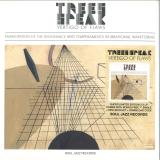
Trees Speak are back!
Speak’s new album, “Vertigo of Flaws: Emancipation of the Dissonance and Temperaments in
Irrational Waveforms” comes as a double-vinyl edition, single CD and digital release. The limitededition first pressing only of the vinyl includes a bonus 45 enclosed in an 8-page 7”x7” booklet
insert housed within the gatefold sleeve with cover artwork created by Soviet Union propaganda
artist Lazar Markovich Lissitzky in 1911.
Trees Speak are back!
This new release is a vast leap into an ocean of space and sound, a quantum leap into cybernetics, biology, anti-gravity,
time travel, dream speech and transfiguration. A seriously next step release!
Showing no signs of slowing down their rapid creative pace – incredibly this is their fourth album in the space of just over
one year – ‘Vertigo of Flaws’ is a mighty 29 tracks, one and a half hours of music across one double album that is surely
going to be a defining point in their musical career, a giant leap into the sonic unknown, an epic exploration of intensity
and sound.
Alongside their now trademark German krautrock motoric-beat rhythms, angular New York post-punk attitude, tripped-out
60s spy soundtrack, psyche-rock, and 70s synthesizers and vocoders, here you will also hear a new cosmic spacial
awareness (both personal inner space and galactic outer space) and a truly wilful pushing of sonic boundaries - as police
sirens, static noise, alarms, radio signals, avant-garde voices, and orchestral string quartets, all collide to add beautiful
dissonance to uber-powerful, intense, addictive and propulsive rhythms - in the process creating a truly unique
soundscape that Trees Speak have made wholly their own.
If you ever wanted to hear Can, Hawkwind, Destroy All Monsters, Pere Ubu, electric eels, John Cage, Liquid Liquid,
Tangerine Dream, Suicide, Neu!, Laurie Spiegel, Art Ensemble of Chicago, John Barry, Mother Mallard’s Portable
Masterpiece Company, Sun Ra, Stockhausen, John Carpenter, Electro-Acoustic and Musique Concrete and Mars in one
band - then this is it!
Trees Speak are Daniel Martin Diaz and Damian Diaz from Tucson, Arizona and their music often draws on the cosmic nighttime magic of Arizona’s natural desert landscapes. ‘Trees Speak’ relates to the idea of future technologies storing
information and data in trees and plants - using them as hard drives - and the idea that Trees communicate collectively.
Special guests from the hyper-creative hub of the Tucson music scene on this release are Gabriel Sullivan, Ben Nisbet, Saul
Millan, Stephani Guilmette, and Davis Jones.
The album Vertigo of Flaws was recorded in Brooklyn, New York, and Tucson, Arizona during the plague of 2021.
Extract from Vertigo of Flaws sleevenotes:
‘As we travel through space and time, avoiding the discarded remains of the industrial period, the
deconstruction of social norms through the expression of art, music, and philosophy guide the human
experience towards the unknown.
All that remains are musical echoes scattered throughout the universe, like ancient vibrations that now
populate the cosmos. These waves now show signs of decay. Melody, beauty, tonality have all but fallen
away as dissonance blossoms. As John Cage wrote in 1937,
“Whereas, in the past, the point of disagreement has been between dissonance and consonance, it will be,
in the immediate future, between noise and so-called musical sounds. New methods will be discovered,
bearing a definite relation to Schoenberg’s twelve-tone system and present methods of writing percussion
music and any other methods which are
free from the concept of a fundamental tone”.
Similarly, George Van Tassel claimed the Integratron as capable of
rejuvenation, anti-gravity, and time travel. So, what remains of the
“people”? We have adopted from them our own Zeitgeber: their pulses
now guide our sun, our planets, our earths, and are the new circadian,
diurnal, and ultradian rhythms of the galaxy. Traumsprache, dream
speech, is now the internal language of trees.
Decaying metal and machines liberated the note unto nature’s table,
and we sip the delicious nectar of music once more irrational, elaborate,
violent, vast. The past is the future, musical disintegration its own rebirth.
We are nature, once more the computer of the Universe.’
Iconic singer Mavis Staples is an alchemist of American music, and during her 70+ year career one of her most beloved musical mo?ments was her riveting performance in Martin Scorsese's film' The Last Waltz,' performing "The Weight" with The Band, a moment that forged a life-long friendship between her and Levon Helm. Staples came to Woodstock, NY to perform as part of Helm's re?nowned Midnight Ramble series, and the ensuing concert-available now for the first time on the rousing new ANTI- Records release Carry Me Home-would mark a personal high watermark for both artists. Captured live in the summer of 2011, Carry Me Home showcases two of the past century's most iconic voices coming together in love and joy, tracing their shared roots and celebrating the enduring power of faith and music. The setlist was righteous that night, mixing vintage gospel and soul with timeless folk and blues, and the performances were loose and playful, fueled by an ecstatic atmosphere that was equal parts family reunion and tent revival. Read between the lines, though, and there's an even more poignant story at play here. Nei?ther Staples nor Helm knew that this would be their last performance together-the collection marks one of Helm's final recordings before his death-and listening back now, a little more than a decade later, tunes like "This May Be The Last Time" and "Farther Along" take on new, bittersweet meaning. The result is an album that's at once a time capsule and a memorial, a blissful homecoming and a fond farewell, a once-in-a-lifetime concert-and friendship-preserved for the ages. Staples and the night's soulful crew of backup singers handle the vast majority of the vocal work here, but it's perhaps album closer "The Weight," which features Helm chiming in with lead vocals for the first time, that stands as the concert's most emotional moment. "It never crossed my mind that it might be the last time we'd see each other," says Staples. "He was so full of life and so happy that week. He was the same old Levon I'd always known, just a beautiful spirit inside and out." "My dad built The Midnight Rambles to restore his spirit, his voice, and his livelihood," says Helm's daughter, Amy, who sang backup vocals with her father and Staples at their performance. "He'd risen back up from all that had laid him down, and to have Mavis come sing and sanctify that stage was the ultimate triumph for him."
Without the West German-born Väth, techno would look, sound and feel very different. Since falling in love with electronic music and DJing in 1981, his dedication to the art has never faltered. He plays every party as if it were his last. His broad smile has connected with millions of people around the world. His colourful and curious character has imbued techno with a personality it was often lacking. His selections remain hugely unpredictable, despite the fact that he has been playing around the world for more than 40 years. To remain not only relevant but innovative after so long is a testament to Sven's ability to connect through music on a deeper level.
Technically, of course, he is a DJ who can play for thirty hours and not miss a beat. His track selections seem almost divine, and his aura is certainly otherworldly. But more than that, he is a ringleader who is able to mix the artful side of techno with the playful side of partying. Most famously he has done this for more than 20 years at his iconic Cocoon parties in Ibiza. They single-handedly introduced techno to the White Isle and have been its beating heart ever since. Under his charge, strict style guidelines and exaggerated pigeonholing no longer apply. Instead, he has perfected the art of playing far and wide while always remaining true to his own musical identity.
In the studio, Sven has always been just as unique. He has worked under several aliases but always brought a fresh perspective. Whether securing chart hits as part of OFF in the eighties, serving up brutalist techno and trance-tinged sounds in the nineties or crafting major label albums in the 2000s, his music has remained utterly forward-looking. That legacy continues with Catharsis as Sven teams up with highly respected producer Gregor Tresher for his latest long-form offering. Tresher has long been part of the Cocoon family and is a revered artist in his own right, when the two got together in the studio it was clear they had an instant connection and there would only be one person fit to co-author this LP.
It is a record inspired by Sven's interest in the physical and spiritual processes that take place when we dance. "They are realms into which we immerse ourselves to experience our own mysticism and ecstasy," he muses. "Dancing is a conversation between body and soul and it spiritually connects us with each other." Because of the pandemic, that is of course a feeling that we all missed out on for so long. "No dancing, no paradise!" says Sven. "My imagination for this record was fueled by the many cultural experiences and encounters I have had in my life. They gave me the strength to find a way, the way to myself." And that way to himself is through music, through purifying dancing rituals and the exchange of spiritual energies that are generated in the club.
The thirteen-track album explores all facets of Sven's sound. It opens with the stomping drums but sleek synths of 'What I Used To Play' and unfolds through deep and dirty rhythms like 'The Worm', subtly euphoric highs on 'The Inner Voice' and the bubbly tribalism of the title track. There is the impassioned call-to-arms that is 'Feiern', peak-time melodic workout 'Mystic Voices' and soothing electronic lullabies like 'Being In Love'. The second half of the album takes in many more twists and turns such as the exotic strings and driving drums of 'Butoh', the paranoid techno minimalism of 'NYX' and expansive synthscapes of ambient gem 'The Cranes Of Gangtey Valley' before things play out though rugged beats and emotive chords on 'We Are', which is named after the idea that we are what we think. "With our thoughts, we make the world.? says Sven.
Then comes the moody reflection of 'Silvi's Dream', which was written in French for Sven's girlfriend. Last but not least we have the immersive dream that is 'Panta Rhei', which completes a trio of electronica tunes on the album. Ambient music has been an integral part on almost every album Sven has written because it can bring a certain emotional deepness, a quality that Sven always has been looking for.
'Catharsis' is an adventurous album that captures the good times, the sad times and, most importantly, the times of hope.
- A1: Soul Bossa Nova
- A2: Boogie Bossa Nova (Aka Boogie Stop Shuffle) (Aka Boogie Stop Shuffle)
- A3: Desafinado
- A4: Manha De Carnaval (Morning Of The Carnival) (Morning Of The Carnival)
- A5: Se E Tarde, Me Perdoa (Forgive Me If I'm Late) (Forgive Me If I'm Late)
- A6: A Taste Of Honey
- B1: On The Street Where You Live
- B2: Samba De Uma Nota So (One Note Samba) (One Note Samba)
- B3: Lalo Bossa Nova
- B4: Serenata
- B5: Chega De Saudade (No More Blues) (No More Blues)
- B6: Shag Nasty
180g Coloured Vinyl Series Contains New Specially Prepared Liner Notes By Penguin Guide To Jazz Writer Brian Morton And By Paris’
Prestigious Jazz Magazine. Quincy Jones Big Band Bossa Nova + 2 Bonus Tracks (Yellow Vinyl) “Almost every track here is a small classic that you’re bound to have heard somewhere, without realising what it was. “Manha de Carnaval”, Luiz Bonf‘s peerless melody, is another that surfaces constantly in movies and behind commercials. Likewise, Jobim’s “One Note Samba”, which varies the metre and changes the pace most effectively. Jones recognised that he had something that could change the metre and flavour of almost any piece. “On the Street Where You Live” loses its slightly plonking sentimentality and turns into a celebration of community. “A Taste of Honey” acquires a new and exotic quality.” Penguin Guide to Jazz “There are few albums more enchanting than this one, which finds the perfect balance, among other things, to make everything swing, and to make us dance better. And you’ll be amazed to hear the voices of Roland Kirk, Paul Gonsalves, Jim Hall and Clark Terry. Yes, all of them are here.” Jazz Magazine Personnel: featuring Clark Terry (trumpet) Phil Woods (alto sax), Paul Gonsalves (tenor sax), Rahsaan Roland Kirk (Stritch, alto sax), Lalo Schifrin (piano), Jim Hall (guitar), Chris White (bass), Rudy Collins (drums), Jos Paula, Carlos “Bala” G
mez, Jack Del R o (percussion), Quincy Jones (conductor). Recorded in New York, August 13 & September 4-12, 1962. *BONUS TRACKS: Quincy Jones and His Orchestra. Similar personnel as Big Band Bossa Nova, also including Rahsaan Roland Kirk (flute, tenor sax, Stritch). New York, June 15, 1962. Original session produced by Quincy Jones. Originally issued in 1962 on the Mercury single 72012
b a2 | Boogie Bossa Nova Aka Boogie Stop Shuffle
‘This Here Feels Good’ is the sound of an artist using music as
their second language. With all music self-produced / written,
Kay Young is defining an original generation of Black British
Music.
Moving between tightly rapped verses and glorious vocal
performances, often within the space of one track as well as
across the whole EP.
The release is a stunning collection of songs which expands
upon the sonic blueprint Kay has already laid out, that caught
the attention of Jay Electronica and Jay-Z, who later signed her
to Roc Nation.
She delves deeper into dance and soul while continuing to
explore themes of familial legacy and cultural relation, keeping a
perfect balance between lyrical vulnerability and musical uplift.
Live TV performance for Other Voices (Dec 2021), TV
performance for BT Sport (May 2021), Clash New Gen Artist
(autumn 2021), plus performances last year at Boiler Room
Festival, South Facing Festival, BBC Intro Live Summer By The
River, Live at Leeds Festival and more.
Supporting Jay Electronica for UK tour.
“uplifting groove” - The Fader
“pertinent, powerful lyrics” - Cool Hunting
“Young will undoubtedly keep shining” - Line of Best Fit
“Pure and bright promise.” - Beats Per Minute
“Kay Young finds a balance between smooth vocals and hardhitting lyrics” - Gigwise
“one of the UK’s most promising up and coming talents.” - Alfitude
“...an extremely exciting future ahead.” - CLASH Radio - 6 Music, BBC Radio 1, BBC Radio London, BBC 1Xtra, Amazing Radio A-List.
2LP with a 4-page colour insert
As Guadeloupean vocalist and composer Marie-Line Dahomay writes in her liner notes to the compilation, gwoka is more than a style of music, it is “a way of living and thinking.” Rooted in the social, musical and ritual practices of enslaved African people and their descendants on Guadeloupe, gwoka has always sought to express the spirit of independence and resistance authentic to the island.Building on its traditional call-and-response form and the ideas of pivotal figures like Gérard Lockel and Christian Laviso, modern gwoka evolved throughout the second half of the twentieth century to include funk, jazz and electronic influences.
Defined by its propensity for innovation and experimentation, this compilation charts the most radical changes to modern gwoka, capturing a sensory riot of traditional répertoires, rhythms and makè techniques fused with genre-defying experimentation.Whether heard in the deeply cosmic, spiritual music of Dao, Freydy Doressamy and Gaoulé Mizik, or the jazz funk inflections of Gui Konket and Horizon, the music here is united by the feeling of santiman ka, crucial not only to gwoka music but the identity of Guadeloupe at large.
As co-curator Cédric Lassonde (Bueaty & The Beats) writes: “What unifies these selections is the depth of the compositions, the experimentation around the santiman ka, and the spirit of resistance and liberation against slavery, be it modern or ancestral. With a thirst for innovation typical of the island’s creole culture, the ka spirit is deeply rooted in collective history and in a quest for identity.”
Co-curator Brandon Hocura (Séance Centre) continues: “The creative energy of these musicians is powerful and demonstrates a universal pursuit of resistance, freedom and identity. Their voices are distinct, but the chorus rises high and carries their message far across the sea.”
Lèsprit Ka: New Directions in Gwoka Music from Guadeloupe 1981-2010 is the first compilation of its kind to bring the sound of modern gwoka to a wider audience, with many of the featured musicians still active today. Presented as a double LP, the release features a specially commissioned essay by Guadeloupean musician Marie-Line Dahomey, and extensive liner notes from Cédric Lassonde and Séance Centre’s Brandon Hocura.
True to the hybrid nature of the music, the compilation seeks not to provide a definitive sound, but express the variety of contemporary forms that have evolved from gwoka. Just as Guadeloupean trailblazers Kassav fused gwoka with funk and cadence to create zouk, so did the musicians on this collection push gwoka in new directions rarely heard beyond its shores.
In the words of Gérard Lockel, “gwoka is the soul of Guadeloupe”
“One of the standout releases of the year” - The Times
“Lady Blackbird finds her calling with an extraordinary collection of songs and performances that burn deep into you” - The Guardian, 5*
The debut album Black Acid Soul from Lady Blackbird is one of the standouts for 2021. It's instant and within a minute you are hooked. Think Nina Simone, Hot Buttered Soul-era Isaac Hayes, Billie Holiday and Chaka Khan with critics drawing comparisons to Adele, Amy and Celeste, Lady Blackbird’s distinct and beguiling talent is not one to be missed. Gilles Peterson called her "the Grace Jones of Jazz".
With a voice that has stopped critics in their tracks, Lady Blackbird is a revelatory new talent with music that transcends the jazz scene through which the LA-based artist is rooted. Minimal yet rich, classic yet timely, the album connects backwards to Miles Davis (his pianist, Deron Johnson, plays Steinway Baby Grand, Mellotron and Casio Synth throughout) and forwards to Pete Tong (he made the Bruise mix of ‘Collage’ his Number Two Essential Selection tune of 2020).
It's 11 tracks have a sound, feeling and attitude that speak of Lady Blackbird's deep experiences in music, stretching all the way back to infancy. Standout tracks include the sad, elegantly simple tune, ‘Nobody’s Sweetheart’, plus two killer cuts written by Lady Blackbird and Seefried, ‘Fix It’ and ‘Five Feet Tall’. The former is an elegant piano ballad that sounds like a Great American Songbook standard sung by a woman on the side of the angels. Her ability to nail the song in the studio in minimal takes was clearly something to behold. The album also includes Wanted Dead or Alive, a rare groove classic recorded by funk/gospel collective Voices of East Harlem in 1973 and co-produced by Curtis Mayfield, an inspired reinvention on the aching 'It’ll Never Happen Again', written by Tim Hardin and a stunning take on Nina Simone's Blackbird.
Summer at Land’s End is not an interlude or tangent for The Reds, Pinks & Purples but rather a perfect fourth movement following the albums Anxiety Art, You Might Be Happy Someday, and Uncommon Weather. As with these self-recorded records (the primary work of songwriter Glenn Donaldson), the songs on Summer at Land’s End were crafted slowly and then drawn together to make a unified statement. But here, and more than before, Summer at Land’s End combines Donaldson’s rueful pop sensibility with a parallel musical universe, one composed of pictures, dreams, and feelings without words. Even if the underlying theme of this collection is one of conflict or unhappiness, the vision of the music presents an escape to a new world, always fading in and out of sight.
For listeners who may not be familiar with Donaldson’s corner of San Francisco––the Richmond district––or the current wave of hazy, melodic DIY pop groups performing in the city, Summer at Land’s End pulls in images and scenes that feel like a collision of the mundane and the sublime of this present landscape. But settings such as these are the backdrop for personal narratives, expressed as a struggle with love, with companionship and the conflicts of home. With this record, The Reds, Pinks & Purples give less focus to the vanities of a subculture and more to the challenge of connecting with someone, to the ordinary goals of being human and finding harmony with others.
This deliberate saturation in drama and ambiance, along with some of Donaldson’s best songwriting to date, is what gives Summer at Land’s End its special class in the project’s discography. Of the album’s cinematic mood, Donaldson refers to films like Summer of ‘42 and the influence of the classic 4AD catalogue of the 1990s. This style informs much of Donaldson’s prior and current ventures of course (The Ivytree, Vacant Gardens, and a dozen projects in between) but now The Reds, Pinks & Purples have taken the mantle, embracing this instinct for instrumental or dreamier modes of pop songwriting. It’s a pleasure to experience Summer at Land’s End, as this record finds a thrilling balance between songs and sounds, instruments and voices, and the ironic twin poles of art and life.
- A1: Elle Cato - I Feel Love
- A2: Ultra Nate - I Can Dream
- A3: Michelle Perera - Never Give Up
- B1: Mr V - Dj Rae - Scott Paynter - The Feels
- B2: Blondewearingblack - What Can I Do
- B3: Blakkat - Second Chance
- C1: Joe Roberts – Easy
- C2: Dj Rae - Come Undone
- C3: Blakkat - Can’t Get Enough
- D1: Michelle Perera - Life Is A Song (Philly Mix)
- D2: Lea Lorien - Never Looking Back
- D3: Michelle Perera – Addicted
There is nothing quite like an evening under the rhythmic spell of the legendary David Morales. Stepping on the dancefloor while he's behind the decks requires full trust and surrender. You agree to hand the reins of your mind, body, and spirit to his intuition and ability to guide you to where you need to be at all times. It will occasionally be cathartic and intense. It will often make the hairs on your body stand on end, and make you sweat more than you ever have before. The endorphin release will be powerful. You will feel like you can touch joy and euphoria it in the air around you. As he gently brings you back down to reality, you will feel renewed and ready for anything life brings your way. This is more than a night of dancing. This is an experience at the hands of a magical maestro of music. How is this possible from a night on the dancefloor? Well, it begins with the brilliant mind of an artist at the peak of his creative power, imbued with the empathy necessary to connect with what has become a global legion of fans. "If there is any secret, it's really simple: I love what I do with all of my heart," Morales says. "I'm a DJ first. I thrive on human interaction. I am always adjusting my sets based on what the people in the room need. Each night, we form an emotional connection that inspires the music as it comes."
For Morales, "working in the studio is important, but it exists as a way of supporting the DJing experience. It's all to inform how it will work on the dancefloor."
To that end, you're reading these words as you dive into a new collection of Morales classics. Ever the collaborator, he has enlisted the input of a wide range of voices and talent. There is the diva power of fellow legend Ultra Nate, who brings her signature sass to "I Can Dream," while Michele Perera's explosive chemistry with David is all over the inspiring "Life is a Song" and "Never Give Up", as well as the impassioned "Addicted."
Morales reminds the listener of his ever-evolving musical scope in collaborations with blondewearingblack ("What Can I Do"), Lea Lorien ("Never Looking Back"), and Blakkat ("Can't Get Enough"). There's the clubland supergroup of David with Mr. V, Scotty P. and DJ Rae on "The Feels." Rounding out the set is a reunion with longtime muses Elle Cato ("I Feel Love") and British soul icon Joe Roberts ("Easy"). Just be sure to listen closely, because there's bound to be a surprise tucked between these grooves to tickle your ears and move your body.
The beauty of this sparkling new foray into electronic music is the heightened intimacy between Morales and the music. What you are hearing here is almost exclusively from the man's own fingertips. "The technology has evolved in the most extraordinary and liberating ways," he says, adding that he is now able to be far more directly hands-on during the building of each track. "Back in the '90s, I had to have more people involved, With the changes and growth in technology, I can now do it, myself. I don't even have to be in the studio anymore. It's smart, financially, but it's also way more fun and creative."
David adds, "I don't have to wait to manifest an idea anymore. I can just build my ideas as they come to me." In fact, he reveals that many of these new tracks were born in unique places, like planes, cars, his bedroom, and a host of other settings. "Music is always spinning around my mind. I no longer worry about losing an idea."
Surviving the highs and lows of an ever-changing world has also brought Morales back to the basic essentials of life and music. "The pandemic has brought things full circle for me," he says. "I love what I do and I still have the passion of a kid who is just getting started"
Yet, we know that Morales has been in the game for longer than a minute. He's a Grammy award-winning producer, remixer, and songwriter. He has lent his skill to countless of records by icons that include Mariah Carey, Madonna, Whitney Houston, Michael Jackson, Aretha Franklin, Donna Summer, Seal, and Jamiroquai. As a turntable artist originally from New York City, he earned his bones of credibility back in the '80s and '90s in clubs like the Paradise Garage, Red Zone, Tunnel, and Club USA. He initiated the concept of DJs touring beyond their hometowns with countless, wildly successful treks that have taken him the farthest-reaching corners of the world. As electronic music thrives on pop radium, David tops the list of every young artist and DJ as a primary influence.
Even with such a staggering legacy, Morales never looks over his shoulder.
"That is how you stumble and fall," he says. "If you get all caught up in the past, you're going to lose sight of what is right in front of you. You lose the excitement of discovery. That is what gets me off; taking what I know and combining it with what I don't know as I learn it. There is nothing better than experiencing how it all comes together. It's different every time."
And that is the ultimate secret to that extraordinary spell that David Morales casts over us all every single time.
Al Doum and the Faryds continue their journey toward a New Direction. Now, they live in a futuristic Garden of Delights, inhabited by strange bright bubbles, golden wheels, water secrets and mysterious plants. From their home of Love & Nature, they set out to travel the Universe to forge a new Being together. Their typical blend of Spiritual-Jazz, Psychedelia and Afro-Latin Rock remains on the same wave, accentuating the collective rite of liberation and expansion of the spirit. There's certainly a greater lightness and airiness, expecially in the most immediate and direct arrangements to convey the message of brotherhood; because the absolute weapon lies in female voices and choirs. These chants are incisive gospel and soul sermons and their narration magically permeates throughout the album. Everything is always supported by the balance between robust and biting guitar riffs, raga-rock incursions, tribal rhythm sections and impregnable and captivating sax drifts; and echoes of the soft lysergic sound of the 60s cannot be missing. This is music of multiple forces, a sacred harmony to overcome barriers, which sees no enemies and breaks down egos. It's the playfulness and the power in making music together, the true magic recipe of these Freaky People: we are what the Universe wants!