MARCO FRATTY - MARCO FLASH - ALEX TIME EP VOL. 4
is the continuation of the Audio Music World project,
which brings together the best productions available on the
digital market, produced
by its founder Marco Fratty, an active member of the historic
HouseDance group FPI Project.
Specifically, the Electro-Funk influence that characterizes
these productions is the
cornerstone that has made this new sound a trend among
adult audiences who have always followed a certain style of
music.
To honour the enduring appeal of a great musical rework, Hell Yeah is launching The Art of Remix. This essential new series collects the best remixes from a range of label favourites. First up is Japanese downtempo master Calm with exclusive, never-before-on-vinyl versions of originals by Cantoma, Aura Safari, DJ Sofa’s Dream Baby Dream, Seahawks, Gallo, Yuichiro Kato and more. The release comes with rich liner notes by the authoritative Dr Rob from Ban Ban Ton Ton, and a second volume from Is It Balearic's Coyote will follow soon.
Remixes have always been at the heart of Hell Yeah's output as a way of reworking classic sounds into different contexts, allowing artists to explore outside their usual remit and also to introduce new talents. Clam has long perfected the art with his famously laidback takes on all sorts of Balearic, house, dub and acid under the Mellow Mellow Acid subtitle. He's remixed many a Japanese legend but also a wealth of artists from across the world, and eight of those reimagined gems balance euphoria with solitude on this first volume.
First, his take on Cantoma's 'Way To The Sun' infuses drones and chimes with bubbly acid. 'Sur Mon Balconett' shimmers with Spanish guitar and sultry sax, ghosts of yesterday still shuffling. 'Banana Trance' jolts with breakbeats while taking a Balearic leap into hedonism. Mininn’s 'Vertigo' drifts dubwise, from monastic chants to operatic bursts. Maho’s 'Bakuhatsu' growls dark and sleazy as acid and riffs collide, 'Abysso' floats with strings and sirens in symphony, 'Blue Surround' lulls before exploding with jazz fire and Kato’s 'Kiss of Life' closes with a cosmic, romantic serenade. Calm's The Art of Remix sets a high standard for a series which will soon turn to Coyote and Scandi-house great Bjorn Torske.
Twenty five years after its debut, the legendary Post Office compilation returns with its sixth volume – this time as a tribute to House music. Staying true to its pioneering spirit, the series once again brings together iconic figures and fresh talents from today’s international electronic scene. More than just a compilation, Post Office vol.6 is a true celebration of House music – honoring its roots while opening new sonic perspectives.
After bringing the heat on Volume 17, Croatian super-producer Umbo returns to Soul Flip with another hot one. Clyde Stubblefield gets in on the action for Otis Redding's “Hard to Handle” - making it funky from start to finish. 104 BPM
And it's label owner Del Gazeebo bringing up the rear again with a lush lift of the Judy Clay & William Bell classic, “Private Number” - adding new drums, fresh orchestration, and a few BPM into the bargain. 110 BPM
Volcov, the Veronese founder of the Neroli record label, returns to the BBE fold with the third compilation in his majestic series 'From the Archives' and once again this new installment is another collection of overlooked gems and unreleased beauties that are set to entice the discerning listener. As with volumes 1 and 2, 'From the Archives volume 3' features cherry picked songs that focus on melodies and weave a thread between eras and genres. From the Archives volume 3 is a genre free journey into authentic grooves which features music from the enchanted tones of Carlo Nino & Friends, an exclusive from Collettivo Immaginario, uptempo moments from remix kings Kaidi Tatham and DJ Spinna as well as two unreleased songs from Fred P and J2 Fusion feat. Javonttee and DJ Genius. From The Archive 3 represents another accomplished work of love from Volcov aka Enrico Crivellaro, who has a long list of albums and compilations under his belt as well as being involved in productions, edits, releases and projects with artists such as Dego, Theo Parrish, Phil Asher, Gerald Mitchell, Domu, Kaidi Tatham, Kirk Degiorgio, Patrick Gibin, Lars Bartkuhn, Ian O’Brien and many more. From the Archive volume 3 is released as a vinyl double LP and a digital download and is a compilation in which the music lover will be guided hand in hand through a collection of unreleased and hard to find songs that shift effortlessly between jazz and house, broken beat, ambient and soul.
With this new remix EP, The Lovers explore different shades of disco and house through a carefully balanced and personal approach.
The opening track sets the tone with a playful and hypnotic groove, built around arpeggiated patterns and a steady modern rhythm. A female spoken vocal, instantly recognizable from Italian television culture of the 1980s, takes center stage, while a smooth saxophone line adds a sensual, cinematic layer.
The second cut moves into deeper emotional territory. Beginning with a restrained atmosphere, the track slowly builds tension through a rebuilt bassline and a solid house pulse, eventually opening into a more expansive and powerful moment on the floor.
A warmer disco-driven piece follows, focused on groove and feeling. The original spirit is preserved, while a heavier low end gives the track new confidence and presence within a contemporary club setting.
The EP closes with an elegant house reinterpretation inspired by French pop sensibility. A melancholic melodic theme and subtle references to tango shape the final moments, blending emotion and rhythm with a refined sense of flow.
A concise collection of remixes for selectors drawn to groove, memory and understated elegance.
With over 20 years of intense production work and prestigious collaborations, Irie Ites Records has established itself as one of the most respected reggae labels on the international scene. In 2025, the label continues it's strong momentum with a brand-new volume of it's flagship series: Cream of the Crop 2025. Following the success of the previous editions (2022, 2023, and 2024), which each reached several million streams and gained strong visibility in reggae media and playlists worldwide, this new release stands as a must-have for all roots & culture reggae lovers. True to it's reputation for excellence, Irie Ites Records has once again teamed up with some of the finest musicians and producers in reggae: Mafia & Fluxy, Bongo Herman, Earl "Chinna" Smith, Lone Ark, Naram, The Ligerians, King Jammy, Willy William, among others. All tracks were mixed at the Irie Ites Studio (France), ensuring a warm, powerful, and authentic sound. To conclude the album, four exclusive dub versions add the final touch to this outstanding compilation.
TSTD NEO returns with smooth slow disco remixes for three tracks, originally featured on THE SUNSET MANIFESTO Volume 2:
One of the standout tracks of THE SUNSET MANIFESTO 2, the super smooth Westcoast inspired "Hands of Love" gets an even smoother remix treatment by Liverpools BEN JAMIN, perfectly suited for your next late night bar dj sets.
Stockholm meets Mexico City! TSTD resident producer Monsieur Van Pratt returns from remixing Poolside on The Sunset Manifesto 2, and comes back with a romantic slow disco version of Kimchi's "Do You Ever"
Last but not least UK producer Matt Hughes already did a funky electro disco remix for Goodvibes Sounds' "Stay For One More Night" on The Sunset Manifesto 2. Looks like the original tune didnt leave his head, so he returned to his studio for new remixes. Here you can find the "Echo" version of his new 80s cinema sounding "Late Night Radio Remix", which would sit well in the soundtrack oft he Stranger Things TV series. The long version of this remix will be relased later digtially.
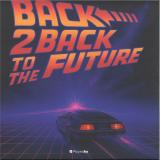
Playedby021-1 is the starting point of Andrei Ciubuc’s Back 2 Back to the Future, unfolding over three vinyl chapters. Released as a double 12”, this first part lays the foundation of the journey: hypnotic rhythms, sharp grooves, and intricate sound design that highlight Andrei’s ability to balance dancefloor functionality with deeper narrative elements. Each track stands strong on its own, while also acting as a fragment of the larger story that continues in the next two volumes.
Transparent grünes Vinyl! Wieder lieferbar! Zum ersten Mal überhaupt seit der digital-only Veröffentlichung 2011 erscheint nun der erste "Minecraft"-Soundtrack in physischer Form. Die Vinylversion enthält zwölf Tracks! "Minecraft - Volume Alpha" ist das Werk des deutschen Komponisten und Musikers Daniel Rosenfeld. Unter seinem Künstlernamen C418 erschuf Rosenfeld den weitreichenden Soundtrack und das lebendige Sounddesign, das das auf Voxel aufgebaute Universum von "Minecraft" zum Leben erweckte. Fans und Kritiker waren durch die Bank weg begeistert von seinen beatlosen, ausgewogenen Electro-Stücken. Die bekannte Gaming Seite "Kotaku" führte den Soundtrack unter der "Best Game Music" 2011 und nannte die Musik "beeindruckend beruhigend", während The Guardian die zerbrechlichen Stücke Rosenfelds aus Klavier und minimalistischem Ambient mit den legendären Künstlern ERIK SATIE und BRIAN ENO. In einem Interview destillierte Polygon "Volume Alpha" auf seine Essenz hinuntern: "Der Soundtrack ist nicht gebunden an die Retro-Ästhetik der Minecraft Graphik. Der Soundtrack setzt sich über sie hinweg. Das Album ist ein Versuch, die kombinierte Game/Music Erfahrung in etwas Himmlisches zu übersetzen."
Proud to present the second edition of Urban Garden On WAX. Starting with deep house to listen to in your living room and ending with three classic bombs for the dance floor.
On October 2 1958, after over 60 years of colonial rule, Guineans voted overwhelmingly for their independence, and Guinea was declared a Republic with Sékou Touré as President. Guinea was the first of West Africa’s Francophone colonies to gain independence. To free Guinea from its colonial legacy, president Touré sought to restore dignity to his nation and give cause for Guineans to take pride in their culture, history and newfound freedom. To achieve this, he instructed his government to implement new cultural policies that were intended to revitalise and celebrate indigenous culture. The focus of these new policies was on music.
In 1961, President Touré launched authenticité, the name of his new cultural policy for Guinea. One of its first acts was to assemble the best Guinean musicians into a new state-sponsored orchestras that were tasked with presenting traditional Guinean music in a new and modern style. All musicians in Guinea’s orchestras were officially designated as members of the public service. During the years of Sékou Touré’s presidency (1958 – 1984), the government’s cultural policy of authenticité was applied strictly to the creative arts. Guinea’s sole political party, the Parti Démocratique de Guinée exercised complete authority over artistic production. The scale of the Guinean government’s commitment and efforts to invigorate its indigenous musical cultures was unmatched in Africa, and it presented a clear contrast to the minimal endeavours undertaken by Guinea’s former colonial rulers.
From 1967 to 1983, Guinea’s government presented selections of songs from the Voix de la Révolution catalogue on its own recording label, Syliphone. These recordings were described as ‘the fruit of the revolution’. Syliphone was revolutionary in many aspects: it was the first recording label to feature traditional African musical instruments such as the kora and balafon within an orchestre setting; it was the first to present the traditional songs of the griots within an orchestre setting; and it was the first government-sponsored recording label of post-colonial Africa. Syliphone represented authenticité in action, and over 750 songs were released by the recording label on 12-inch and 7-inch vinyl discs. All are highly sought after by collectors worldwide.
This is the second of a two-volume release which presents a selection of the best songs from Guinea's Syliphone recording label. This volume focuses on recordings from the 1970s, when Guinea’s authenticité policy had transformed the nation's music through a network of over 30 orchestras, each representing their local region, and each presenting Guinean musical traditions alongside the influences of Cuban music, jazz and funk.
After the excellent response to the first volume, Acid Jazz Classics returns with the second volume.
The Acid Jazz sound born in the 1990s, which harked back to the Soul Funk of the 1970s, found in IRMA one of the labels most dedicated to
this world, and still releases music that can be categorized under this name.
From songs from the 1990s with artists like Jestofunk, Bossa Nostra, Black & Brown, Gazzara, Italian Secret Service, LTJ Xperience, Sarah
Jane Morris, to the present day with artists like The Smoke Orchestra, Yuts and Culture, Fusion Funk Foundation, Micky More & Andy Tee,
Belladonna, and many others.
19 tracks on a double vinyl, some of them never before released on vinyl, all rigorously perfect for both the club and listening.
In fact, some tracks are little club gems:
"Say It Again" by Jestofunk in its very first version from 1993;
Belladonna - Black Jazz, one of her most requested songs ever released on vinyl;
Key Tronics Ensemble - You For Me, the Montuno Salsa version performed for years by Little Louie Vega at many of his gigs;
the Micky More & Andy Tee remix of Sarah Jane Morris's Hold On To Love!
Were FEX the Wildest & Weirdest German New Wave Band in 1984?
Few cult mysteries in modern music have captured the internet's imagination quite like "The Most Mysterious Song on the Internet." Eventually identified as "Subways of Your Mind" by the elusive German band FEX, the track became a viral sensation decades after its creation-and even made its way into a recent Hollywood blockbuster (Black Phone 2).
Now, two more lost FEX recordings have emerged from an old demo cassette: "Dead End" and "Sarah." And they're every bit as electrifying as the legend suggests.
On both songs, guitarist and main songwriter Ture Rückwardt joins forces on lead vocals with his former wife and musical partner Ilona Rückwardt, forming a vocal pairing that channels raw energy and eerie chemistry. What they deliver are two of the most urgent, adrenaline-fueled post-punk artifacts you're likely to hear this year-even if they were recorded more than forty years ago.
Opening with a sharp, melodic guitar solo, "Dead End" bursts forward with uptempo drive-catchy, fierce, and full of momentum. Apparently inspired by Orwell's 1984, its lyrics depict urban desolation-loneliness, homelessness, hopelessness-yet still shimmer with defiance in lines like, "Truth is amazing - hoping is like waiting."
The second track, "Sarah," dives even deeper into darkness. Mixing post-punk intensity with psychedelic textures, Rückwardt tells an imaginary story of a couple lost in drugs and spiraling through a bad trip, only to wake and realize that sobriety offers little comfort-the real world itself can be just as brutal and offers no easy escape.
Neither song makes the slightest concession to commercial trends. Instead, they feel utterly uncompromising-wild, strange, and defiantly timeless. In a world obsessed with polish and playlists, "Dead End" and "Sarah" sound like transmissions from a different planet.
Both tracks were originally recorded as demos in 1984 in the band's rehearsal room, with Hase engineering. The newly restored versions preserve the raw spirit of the original tapes while adding subtle layers to enhance their atmosphere without losing the authentic 1980s sound. FEX hint that the untouched demo versions might surface later, possibly on a second volume of their archival
Some big names feature on the second volume of ENSOULED's 'Freedom, Innovation, Resonance' series, and they serve up suitably profound sounds. Dutch mainstay Orlando Voorn gets the hairs standing on end with his 'Deeper', a sumptuous blend of soft synths, undulating rhythms and spiritual keys. The Cee ElAssaad remix has still soft edges but a little more upright groove, and then Chicago legend Boo Williams cranks it up further with his loopy, melodically intense 'Loose Cannon'. Lastly, Nawfel's 'Fight Or Flight' is a textural deep house affair with mechanical, rigid rhythms softened by the lush pads. It echoes greats like Omar S and Theo Parrish and closes in style.
Damian Lazarus reveals the eighth chapter of Crosstown Rebels acclaimed annual ‘SPIRITS’ VA compilation series.
The latest instalment sees the label founder once again curating a carefully balanced lineup of emerging voices and established names, with the eight-track collection set for release on 30th January 2026.
Since its inception in 2017, Damian Lazarus’ SPIRITS series has become a trusted barometer for the year ahead, spotlighting forward-thinking artists and cutting-edge club music from across the global electronic landscape. With ‘SPIRITS VIII’, Crosstown Rebels continues this tradition, delivering a refi ned yet adventurous selection that moves seamlessly between hypnotic house, melodic depth, and late-night energy - building on the momentum of previous volumes and capturing the label’s unmistakable essence.
Opening the release, Raz Alon sets the tone with ‘Hey It’s Me’, a warm and immersive opener that draws listeners in with emotive touches and fluid groove work. Lost Desert follows with ‘Ultima’, leaning into trippy, melodic-tinged sensibilities as tumbling rhythms meet expansive atmospheres and subtly evolving motifs. On the flip, TIMANTI ventures into a captivating voyage with ‘Warrior Spirit’, pairing swirling synths with hazy melodies, before STEB delivers ‘House Of STEB’, a groove-led cut packed with personality, swing, and club-ready flair.
The journey continues with Yuvèe’s ‘Set The Fire’, featuring FADO, a hypnotic and vocal-led track that balances emotional weight with understated rhythmic pressure. Ekoboy then ups the intensity on ‘Lose Control’, combining crisp percussion with infectious momentum designed for peak-time moments. On the final stretch, MADI brings a reflective buy playful touch with ‘Around Me’, weaving lush textures and subtle dynamics into a deeply absorbing listen, before JUAAN closes the compilation with ‘Bass Cliente’, a punchy and bass-forward finale that rounds things out with raw club energy.
With its continued ability to champion new talent while welcoming respected artists into its orbit, Crosstown Rebels remains a vital force within electronic music. SPIRITS VIII stands as another clear statement of the label’s vision, reaffirming its role in shaping the sound of contemporary house and techno.
There are techno classics, and there are techno classics! It’s without doubt that Joey Beltram has played a pivotal role in the growth of the techno sound that gestated in Detroit and was lapped up in Europe during those early years. Beltram spearheaded a darker sound that became a staple in the UK and European rave scene in the early 90s, and a sound that continues to come back around for revival and a new twist on the genre from the producers and DJs of the day.
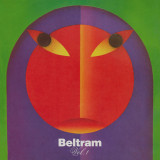
‘Beltram Volume 2’ was first released on R&S Records in 1991, and despite the huge success of the ‘Energy Flash’ single, released a year prior, ‘Volume 2’, some say, is ‘Beltram’s definitive release on R&S’. Deep, dark and deliciously hypnotic, all four cuts on this EP still sound as raw and devastating 30 years later. Big tunes at seminal clubs like Rage (Fabio & Grooverider) and the network of UK raves soundtracked by the likes of Carl Cox, Colin Faver, Eddie Richards et al, Beltram’s unique sound help spawn the bass heavy drum & bass genre that was also burgeoning at the time.
‘Beltram Volume 2’ has been remastered by Beau Thomas at Ten Eight Seven Mastering, and the release comes in an updated sleeve, faithfully recreating the 1991 packaging featuring Christel Brodahl’s now legendary oil painting.
‘Beltram Volume 2’ by Joey Beltram is available on R&S Records from 9th December 2022.
What can be said about Joey Beltram’s ‘Energy Flash’ that hasn’t be said already! The track still gets rinsed, week in, week out, across radio stations, clubs and festivals, testimony to the sheer importance of this techno classic.
Released originally in 1990 on the R&S Records label, ‘Beltram Vol. 1’ included the aforementioned ‘Energy Flash’, alongside three equally ground-breaking dance tracks that possibly get overshadowed by the big lead track. But tracks like ‘Subsonic Bass’ broke the mould and went on to influence a raft of rave and drum ‘n’ bass tunes, thanks in part to its use of the now legendary ‘hoover’ bass sound. The sinister acid of ‘Jazz 3033’ still sounds as fresh today as it did 33 years ago, and the menacingly titled ‘Psycho Bass’ reveals the EP’s most passive moment, as its solid breakbeat cuts through ethereal tones and chugging synths.
‘Beltram Volume 1’ has been remastered by Beau Thomas at Ten Eight Seven Mastering, and the release comes in an updated sleeve, faithfully recreating the 1990 packaging.
‘Beltram Volume 1’ by Joey Beltram is available on R&S Records from 10th February 2023.
TO COMMEMORATE THE 10th ANNIVERSARY OF HIS PASSING
DEFECTED HONOURS FRANKIE KNUCKLES WITH SPECIAL EDITION ‘HOUSE MASTERS’ VINYL
Defected celebrates the life and legacy of house music pioneer Frankie Knuckles with a limited-edition vinyl offering of his notable ‘House Masters’ release.
Marking ten years since his passing, join Defected in honouring the enduring legacy of house music pioneer. All proceeds of ‘House Masters: Frankie Knuckles’ will be donated to Frankie Knuckles Foundation as it was when the compilation was originally released back in April 2015.
“Frankie Knuckles, whom many consider to be one of the architects of house music is still highly influential to a new generation. Since his untimely passing ten years ago it has been incredible to see the continued outpouring of love and respect that he has received. His legacy is why the Frankie Knuckles Foundation exists. Through our work we honour him by supporting initiatives that he was passionate about: music education, AIDS and diabetes research, prevention and LGBTQIA+ youth homelessness. This commemorative vinyl release of ‘House Masters’ in association with Defected will allow us to do just that!”
Frederick Dunson, Founder, President & Executive Director, Frankie Knuckles Foundation
The forthcoming vinyl releases will feature a selection of his finest productions and remixes including the seminal ‘Your Love’, ‘The Whistle Song’ and remixes for Chaka Khan and Sounds Of Blackness.
Find out more about Frankie Knuckles Foundation and its commitment to educating and supporting initiatives across LGBTQIA+ communities and AIDs prevention
Kicking off 2026 in style! Here we have volume 5 of the annual Razor-N-Tape Family Affair series. As always a wide-ranging collection of vibes and grooves from the extended international Razor-N-Tape network, this year’s vinyl sampler includes label newcomers and veterans across 6 tracks. Recloose, Medlar & Daisybelle, Misiu, Saucy Lady, Anoraak and Marina Trench deliver in their respective signature styles, taking us on a genre-bending tour of genres and sounds. From House to Disco, Dub to Breaks, and Chuggers to Pumpers, there’s bit of something for everyone here…fun for the whole Family!
Kin Gajo is a Brussels based electro-acoustic jazz trio drawing inspiration on the one hand from J Dilla and Flying Lotus, and on the other from the sound of British jazz artists such as The Comet Is Coming, Yusef Dayes, and Alfa Mist. With their atypical instrumentation-accordion, saxophone, and drums-the trio has developed a sound entirely of their own, with the accordion often resembling a heavy analog synthesizer.
DJ and producer Lefto featured Kin Gajo on his compilation Lefto Presents Jazz Cats Volume 3, positioning the trio at the forefront of the young Brussels jazz scene. The music clearly demonstrates how original and vibrant the results can be when elements of contemporary jazz merge with diverse influences from a metropolitan melting pot.
With Tsuki ?, Kin Gajo releases their first full-length album.
Volume 12, the final chapter in the landmark anniversary vinyl series celebrating three decades of one of the UK’s most influential electronic music labels. This closing edition delivers four iconic works that capture the essence of the Platipus legacy: the hypnotic depth of Art of Trance – "Octopus (Original Mix)", the underground classic Praha presents Xian – "Pachinko (Part 1)", the driving force of Simon Berry – "Black Rainbow (Original Mix)", and the timeless journey of Terra Ferma – "The Adventures of… (Original Mix)".
Perros' third installment is a sequel release from various artists that develops the theme Canerêve. Holding the usual multi-functional-tracker mission, this Volume 2 features four dancefloor house-lines facets.
DJ Cream struts with solid drum kicks that mellows into a structure that humps atmosphere dreams through a cheeky R'n'B sample, opening the record with warm charisma. A deep house blowgun truly on point. Following the info side of the record, we found a rising french producer based in Barcelona by the name of Groenogen, setting an elektrisch-soaked trip to tech house, throughout chunky basslines and infectious grooves that move inside a stridulous synth in combo with a sexy vocal chorus.
Artwork side, by the italian painter and tattoo guru FASE, starts with a showcase of layered high-quality projects throughout instruments knowledge and improvisation that just a live-act maestro like Emi Ömar can guarantee. Tribal, Deep, Acid, Electro,Funky. An immersive mixture of textures and emotions that enhances a full storytelling, a whole venture narrated by a hypnotic vocoder. The fourth and final track, comes up with a glimpse criteria, climbing the heights gradually. Then, when DJ Rou finally decides to start, that moment is just a boom! The break comes with energetic grooves, intricate percussions, sci-fi samples bounce all around with both acid and melodic flows of a potential hard-house hit.
Swiss sound artist Zimoun continues and transforms the material from his solo project 'One & Two' with Taylor Deupree on 'Wind Dynamic Organ, Deviations.' Both albums were created entirely from recordings of the Wind Dynamic Organ (Prototype III), an extraordinary instrument housed in Bern Minster and developed by Daniel Glaus and his team at the Bern Academy of the Arts. Unlike a traditional organ, this prototype allows the wind pressure and air volume of each pipe to be shaped in real time and produces tones that breathe and blur at their edges. On Deviations, the pair push these organic tones into new territory by layering, bending and re-contextualising them into evolving ambient structures. A quietly radical exploration.
Following on from the first KMS Sampler, PDD in conjunction with Armada Music & BEAT Music Fund return for Volume 2 in the series. Once again mining the delights in the expansive catalogue, Volume 2 showcases four more essential cuts. Up first is the classic MK Mix of R-Tyme’s – Use Me. Next up on the A side we have the legendary pairing of Chez Damier and Ron Trent with their remix of Inner City – Share My Life. On the flip, the D’Pac Dub of Dionne opens the B side and then rounding off the EP is the second Inner City track, this time remixed by another Detroit hero, Carl Craig.
Just like Volume 1, the audio has been lovingly remastered by AIR Studios and their team of celebrated engineers, fully utilising their mastering knowledge. Another brilliant volume from KMS!
The Éthiopiques series returns! Essential archive recordings from an extremely fruitful period in Ethiopian music.
Before “Swinging Addis” took over the world, there was Moussié Nerses Nalbandian — the Armenian-born composer who shaped modern Ethiopian music. Mentor, arranger, and pioneer, he laid the foundations of Ethio-jazz.
This Éthiopiques volume revives his forgotten legacy, recorded live by Either/ Orchestra First issue ever with new exclusive photos and in depth liner 8-page insert.
“Ethiopian jazzmen are the best musicians that we have seen so far in Africa.
They really are promising handlers of jazz instruments.”
Wilbur De Paris
(1959, after a concert in Addis Ababa)
አዲስ፡ዘመን። *Addis zèmèn* **A new era.**
The time is the mid-1950s and early 1960s, just before "Swinging Addis" bloomed – or rather boomed – onto the scene. Brass instruments are still dominant, but the advent of the electric guitar, and the very first electronic organs, are just around the corner. Rock’n'Roll, R’n’B, Soul and the Twist have not yet barged their way in. Addis Ababa is steeped in the big band atmosphere of the post-war era, with Glenn Miller's *In the* *Mood* as its world-wide theme song, neck and neck with the Latin craze that was in vogue at the same period. Life has become enjoyable once again, with the return of peace after the terrible Italian Fascist invasion of Ethiopia (1935-1941). The redeployment of modern music is part and parcel of the postwar reconstruction. *Addis zèmèn* – a new era – is the watchword of the postwar period, just as it was all across war-torn Europe.
The generation who were the young parents of baby boomers** were the first to enjoy this musical renaissance, before the baby boomers themselves took over and forever super-charged the soundtrack of the final days of imperial reign. Music is Ethiopia's most popular art form, and very often serves as the best barometer for the upsurge of energy that is critical for reconstruction. Whether it be jazz in Saint-Germain-des-Prés or the *zazous* who revolutionised both jazz and French *chanson* after the *Libération*, be it Madrid's post-Franco Movida, or Dada, the Surrealists and *les années folles* that followed World War I, the periods just after mourning and hardship always give rise to brighter and more tuneful tomorrows. Addis Ababa, as the country's capital, and the epicentre of change, was no exception to this vital rule.
**Two generations of Nalbandian musicians**
Nersès Nalbandian belonged to a family of Armenian exiles, who had moved to Ethiopia in the mid-1920s. The uncle Kevork arrived along with the fabled "*Arba Lidjotch*", the** "*40 Kids*", young Armenian orphans and musicians that the Ras Tafari had recruited when he visited Jerusalem in 1924, intending to turn their brass band into the official imperial band. If Kevork Nalbandian was the one who first opened the way of modernism, pushing innovation so far as to invent musical theatre, it was his nephew Nersès who would go on to become, from the 1940s and until his death in 1977, a pivotal figure of modern Ethiopian music and of the heights it. Going all the way back to the 1950s. Nothing less. And it is Nersès who is largely to thank for the brassy colours that so greatly contributed to the international renown of Ethiopian groove. While the younger generations today venture timidly into the genealogy of their country's modern music, often losing their way amidst a distinctly xenophobic historiographical complacency, many survivors of the imperial period are still around to bear witness and pay tribute to the essential role that "Moussié Nersès" played in the rise of Abyssinia's musical modernity.
Given the year of his birth (15 March 1915), no one knows for sure if Nersès Nalbandian was born in Aintab, today Gaziantep (Turkiye/former Ottoman Empire) or on the other side of the border in Alep, Syria... What is certain is that his family, like the entire Armenian community, was amongst the victims of the genocide perpetrated by the Turks. Alep, the place of safety – today in ruins.
Before Nersès then, there was uncle Kevork (1887-1963). For a quarter of a century, he was a whirlwind of activity in music teaching and theatrical innovation. *Guèbrè Mariam le Gondaré* (የጎንደሬ ገብረ ማርያም አጥቶ ማግኘት, 1926 EC=1934) is his most famous creation. This play included "ten Ethiopian songs" — a totally innovative approach. According to his autobiographical notes, preserved by the Nalbandian family, Kevork indicates that he composed some 50 such pieces over the course of his career. This shows just how much he understood, very early on, the critical importance of song as Ethiopia's crowning artistic form. Indeed, for Ethiopian listeners, the most important thing is the lyrics, with all their multifarious mischief, far more than a strong melody, sophisticated arrangements or even an exceptional voice. (This is also why Ethiopians by and large, and beginning with the artists and producers themselves, believed for a long time — and wrongly — that their music could not possibly be exported, and could never win over audiences abroad, who did not speak the country's languages).
Last but not least, one of Kevork's major contributions remains composing Ethiopia's first national anthem – with lyrics by Yoftahé Negussié.
Nersès Nalbandian moved to Ethiopia at the end of the 1930s, at the behest of his ground-breaking uncle. Proficient in many instruments (pretty much everything but the drums), conductor, choir director, composer, arranger, adapter, creator, piano tuner, purveyor of rented pianos,... he was above all an energetic and influential teacher. From 1946 onwards, thanks to Kevork's connexion, Nersès was appointed musical director of the Addis Ababa Municipality Band. In just a few years, Nersès transformed it into the first truly modern ensemble, thanks to the quality of his teaching, his choice of repertoire, and the sophistication of his arrangements. It was this group that would go on to become the orchestra of the Haile Selassie Theatre shortly after its inauguration in 1955, which was a major celebration of the Emperor's jubilee, marking the 25th anniversary of his on-again-off-again reign.
At some point or other in his long career, Nersès Nalbandian had a hand in the creation of just about every institutional band (Municipality Band, Police Orchestra, Imperial Bodyguard Band, Army Band, Yared Music School…), but it was with the Haile Selassie Theatre – today the National Theatre – that his abilities were most on display, up until his death in 1977. To this must be added the development of choral singing in Ethiopia, hitherto unknown, and a sort of secret garden dedicated to the memory of Armenian sacred music, and brought together in two thick, unpublished volumes. Shortly before his death (November 13, 1977), he was appointed to lead the impressive Ethiopian delegation at Festac in Lagos, Nigeria (January-February 1977).
His status as a stateless foreigner regularly excluded him from the most senior positions, in spite of the respect he commanded (and commands to this day) from the musicians of his era. Naturally gifted and largely self-taught, Nerses was tirelessly curious about new musical developments, drawing inspiration from the very first imported records, and especially from listening intensely to the musical programmes broadcast over short-wave radio – BBC *First*. A prolific composer and arranger, he was constantly mindful of formalising and integrating Ethiopian parameters (specific “musical modes”, pentatonic scale, and the dominance of ternary rhythms) into his “modernisation” of the musical culture, rather than trying to over-westernise it. It even seems very probable that *Moussié* Nerses made a decisive contribution to the development of tighter music-teaching methods, in order to revitalise musical education during this period of prodigious cultural ferment. Flying in the face of all the historiographical and musicological evidence, it is taken as sacrosanct dogma that the four musical modes or chords officially recognised today, the *qǝñǝt* or *qiñit* (ቅኝት), are every bit as millennial as Ethiopia itself. It would appear however that some streamlining of these chords actually took place in around 1960. It was only from this time onward that music teaching was structured around these four fundamental musical modes and chords: *Ambassel*, *Bati*, *Tezeta* and *Antchi Hoyé*. A historical and musical “details” that is, apparently, difficult to swallow, especially if that should honour a *foreigner*. Modern Ethiopian music has Nersès to thank for many of its standards and, to this day, it is not unusual for the National Radio to broadcast thunderous oldies that bear unmistakable traces of his outrageously groovy touch.
‘Açid Blüüs Räägs Vol.2’ is the latest evolution of the sound of last year’s Volume 1. The debut album was described by Joe Banks for Shindig! Magazine as; “Shivering slabs of drone blues transcendentalism…a burning junkyard of sheet metal blues… Hot stuff.” Volume 2 builds on the skronk blues guitar, sax and electronic drones of it’s predecessor, to explore cosmic free jazz, concrete exotica and dub, channelling influences of Moondog, Terry Riley, 75 Dollar Bill and Wolf Eyes. Playing like the imagined film soundtracks to a dystopian, re-wilded, post eco crash world in the style of Tarkovsky's ‘Stalker’ and ’Solaris’, Jodorowsky's surreal desert western ‘El Topo’, or the early novels of JG Ballard. This new collection sees the addition of minimal analogue drum machine loops as well as live instrumental contributions from the new players of the ever evolving Invocation band, plus some superstar guest contributors.
Featuring five brand new tracks, including the forthcoming single; ‘Cosmic Fanfare’, has already picked up BBC 6 Music support from Gideon Coe. The new album was mixed by Alex McGowan (aka Captain Future) of Space Eko Studios and features Invocation band regulars Rick Jensen of Apocalypse Jazz Unit, Skronk and Oneirologist on sax and bass clarinet, Will Emms aka Tiki Eerie on melodica, horns and claviola, plus special guest appearances from Duke Garwood on clarinet and Mikey 'Moondog' Chestnut of Snapped Ankles on bass synth. “….Acid fried kosmiche blues meets drone raag transcendentalism”. Jonny Halifax is a primitivist free blues outsider, sonic shaman of the acid fuzzed lap steel guitar, demented blower of the howling harmonica of doom. His new band project now combines avant swamp blues heaviosity with kosmic free jazz experimentalism in a fluid collective of godless raag brut improvisations - sonic visions of an hallucinatory apocalyptic near future. Inspired by Henry Flynt’s avant bluegrass experiments fusing country blues with eastern acoustic musical stylings, Spacemen 3’s contemporary sitar music, and the monolithic drone doom immersion of Sunn 0))), THE JONNY HALIFAX INVOCATION build hypnotic instrumental soundscapes using lap steel and homemade slide guitars, harmonica and alto sax. Underpinned by layers of acoustic and electronic drone instruments and fed through an arsenal of pedalboard electronics that would make Kevin Shields weep, the blues are transmogrified, unhinged, reduced and re-imagined as intoxicating, trance-inducing, feedback-drenched noise paintings. THE JONNY HALIFAX INVOCATION follows Jonny’s junkshop skronk blues one man band Honkeyfinger, and the Julian Cope endorsed gospel fuzz psychedelia of Jonny Halifax & The Howling Truth, whilst not forgetting his ambient drone metal side project; Deathenteredinerror. His musical CV also includes studio contributions to tracks by Andrew Weatherall’s Two Lone Swordsmen, UK metal behemoths Orange Goblin, Heck and Melting Hand.
The legacy of wipE′out′′ has transcended time and cemented itself as a true transgenerational phenomenon. Launched in 1995, it didn’t just revolutionise the gaming industry, it created a bridge between the gaming ecosystem and the raver community. Its futuristic aesthetics and forward-thinking sound left a mark not only on mainstream audiences but also on the most demanding corners of the underground.
Decades later, the game’s impact is still alive. The release in 2023 of The Zero Gravity Soundtrack on Lapsus Records proved once again that wipE′out′′’s accompanying audio will go down in history as much more than just an anti-gravity racing game soundtrack.
This is why we decided to go deeper into the slipstream and build the second volume you’re now holding in your hands. Drawn from the original archives of Tim Wright, aka CoLD SToRAGE, this new collection surfaces unreleased cuts, pieces that couldn’t fit on the first edition, and a suite of self-authored ambient reworks that translate pure velocity into wide-screen atmospherics engineered for the long straights, the drone of airbrakes, the blue hour between checkpoints. It also reconnects the circuit, gathering selections and variants tied to later chapters of the saga — wipE′out′′ HD and wipE′out′′ Pure — plus alternative mixes that, until now, only existed in the Sega Saturn dimension of the franchise.
Finally, the material takes a leap into the future in the hands of four remixers especially chosen for this release: Tim Reaper, SHERELLE, Mantra, and NikNak, who collectively forge links between CoLD SToRAGE’s pioneering musical vision, the sound world of the game, and the contemporary breakbeats and drum & bass vanguard.
Expect the DNA you remember — accelerated breaks, trance-vector synths, jungle influences, sub-bass rumbling neatly beneath the craft’s hull, and at times even echoes of classic hardstyle — now revealed with new angles and air. The previously unheard material carries the same aerodynamic design sense that made these tracks feel faster than the track map itself, while the ambient versions open the field of view with melodies hovering at the lip of overdrive. Without a doubt, here you’ll find a strong sense of nostalgia. But this isn’t just nostalgia; it’s also proof that this sound world continues to evolve when you ease off the throttle.
For the faithful — crate-digging ravers, speed-run obsessives, and design nerds — this is an essential expansion pack: compiling rarities, restoring context, and reframing the emotional core of wipE′out′′ for late nights and early mornings alike. Bridging memory and momentum, club and console, rush and afterglow. Strap in.
Detailed tracklist, with annotations by Tim Wright aka CoLD SToRAGE
· Scratch Pad 1: “This track was composed using incomplete tracks that were developed around the time of the first wipE′out′′. It’s so long because it was used for a marathon-length Psygnosis promotional video.”
· Messij Received: “Messij was a firm favourite with wipE′out′′ fans, so it made sense that there’d be more where that came from — this was one of those re-workings.”
· God’s Gift: “I was always very fond of Erasure’s track Love to Hate You with the canned crowd FX sounds. God’s Gift was a tongue-in-cheek reference to how some musicians think they are just that. This was way before I even played live as CoLD SToRAGE.”
· Tentative: “I wasn’t sure about introducing some wacky beats and distorted sounds into one of the tracks, because it was kinda heading away from the other tracks, hence Tentative — but it turned out OK.”
· Canada 2048: “When wipE′out′′ 2048 was launched I decided to re-make Canada as a kind of tribute, but in a slightly new-tech, laid-back way, using Propellerhead Reason and all software synths.”
· Wiped Out: “Based on a few riffs from a MIDI file unused at the time of the original wipE′out′′ game compositions, this featured on my debut album MELT.”
· Body in Motion (Body Plus Mix): “A more trippy interpretation of Body in Motion that featured on non PlayStation versions of the game e.g. Sega Saturn.”
· Onyx (“Dark Side of the Moon”): “Onyx was my sole contribution to wipE′out′′ Pure on the Sony PSP handheld gaming console. This version was something I developed in a darker style, that eventually erupts into a crescendo.”
· Messij Received (WSTWGBE Mix): “Like I say, Messij was a hit with most wipE′out′′ fans, so when I was asked to compose more music for non-PlayStation versions, I adapted this tune into a parallel-universe version for PC and Sega Saturn. By the way, WSTWGBE refers to Who Said This Was Going To Be Easy?”
· Canada (Drunken Ausländer Mix): “In early 2018 I released a fresh album called Ch'illout′′, a re-working of many of my wipE′out′′ tracks in an ambient, Sunday-morning vibe style — it was a few years’ work, here and there.”
· Tentative (Woffenfum Mix): “Another chilled re-working of one of my wipE′out′′ tracks, the mix named with a nod to a good friend of mine, Carl Woffenden — someone who I've worked with for many years in the games industry.”
· Messij (Bobbing Boat Mix): “A nice cheesy computer blip-blop start belies its deep and upbeat chilled-out melodic finale.”
· Body in Motion (Timeless Techno Mix): “Another classic track given the chilled-out vibe mix, as featured originally on my Ch'illout′′ album. This one’s a really trippy, deep-space take on the original.”
· DOH-T (AM / FM Mix): “The idea with this chilled-out mix was to imagine all the melodic parts of this varied track being broadcast on terrestrial radio, so each theme drifts in and out through the radio static.”
· ’95 Future Echoes: “Originally developed as a companion album for wipE′out′′ HD, this track actually has its roots in a tiny loop of a song that never progressed to anything special back in the mid-’90s when I was composing for the original game.”
· Turbine: “Also from my wipE′out′′ HD album, it leans heavily into the upbeat, uplifting tunes from the original game, but also steals a bit of vibe and energy from The Prodigy, with those distorted flute sounds.”
· Pencil Neck: “This excerpt from my wipE′out′′ HD album features lots of sounds centre-stage and forward from Propellerhead Reason’s Subtractor virtual synth. I learned to love this more than my JD-800!”
· Messij 2005 (New Science Mix): “Yet another take on the track that still raises a smile, this time through a mix of samples from the original and Propellerhead Reason — the ‘new science’ when compared to an Amiga 1200 running Bars and Pipes.”
The Xuntanza series returns with its sixth volume, reaffirming the collaborative spirit that has made it a reference within contemporary electronic music.
In this new chapter, five artists from singular sonic universes come together on one record to shape a collective journey: Legowelt, Synth Alien, Vema Diodes, Irrational Language, and Sound Synthesis.
The result is a mosaic of sounds in tune with the open and daring identity of Fanzine Records. Join this new Xuntanza and be part of the history of Fanzine Records.
Chicago based Toddsonic33 shows his skills for edits and reworks for the sixth volume of Edits Collection imprint. House and Disco tunes unmissable for your sets!
El dúo NX1 colabora con Sunil Sharpe, Oxygeno, Rommek y Unhuman en cuatro tracks para la octava referencia de su propio sello.
Nexe Records marks its return by reconnecting with the core idea that first defined its identity — being a true nexus between artists, techno lovers, and the label’s vision. NX1 leads this new chapter with Core VA I, a project built around four collaborations with producers who share the same commitment to authenticity and forward motion in techno. This first volume sets the tone for what’s to come, creating a dialogue between distinct voices while preserving a unified aesthetic.
Opening the record, NX1 and Oxygeno pay tribute to loopy, hypnotic, and driving techno — groovy yet serious, perfectly crafted for deep and focused dance floors. Following up, the collaboration with Rommek delivers an intense, bleepy, and atmospheric track, infused with subtle sci-fi undertones and tension-filled layers that evolve naturally.
On the flip, NX1 and Unhuman explore a more classic but forward-looking take on techno. Clean percussion, dynamic progression, and precise energy shifts give the track a refined sense of movement, balancing power and clarity. Finally, Sunil Sharpe joins to close the release with a bold and energetic piece that captures the raw essence of the club — rhythmic, metallic, and charged with movement.
Overall, Core VA I stands as a statement of Nexe Records’ renewed identity: connecting artists through a shared vision of pure, functional, and evolving techno. Each collaboration offers a different voice, yet all converge in the same pulse that defines NX1’s sound and philosophy.
Second volume of the "Rebirth of jazz" series, VISIONS explores an even wider sound territory, which connects the 90s to today, between hip-hop, soul, electro and hybrid jazz. More than just a compilation, the album brings together generations of artists able to transform their influences into sensitive, generous and singular works. From Léna C. to Dj Mat and The Excitements, through Moar, Lou Blic & Prof Jah Pinpin or Joël Brown, each piece draws a soundscape where spirituality, groove and organic poetry intersect. A musical manifesto open to emotion and beauty, like the vision of the Rebirth On Wax label.
Psychedelic art-punk with garage roots.
The sound is characterized by gritty tones, guitars saturated with fuzz, warped delay effects, and tight rhythms.
The music is both raw and dreamy, consistently played at high volume and delivered with love and passion.
Continuing the epic journey through three decades of trance excellence, Platipus 30 Years – Volume 11 lands as the penultimate installment in the acclaimed anniversary vinyl series. This edition brings together a stunning selection of classics and remixes that embody the unmistakable Platipus sound: the power of Union Jack – Cactus (Original Mix), the modern reimagining of Art of Trance – Before The Storm (Gai Barone Remix), the euphoric depth of Moogwai – Viola (Original Mix), and the psychedelic force of Quietman – The Sleeper (Man With No Name Remix). With its mix of legendary originals and visionary reinterpretations, Volume 11 stands as a testament to Platipus’ enduring influence and offers collectors another essential piece of electronic music history.
Five years after the release of 'The First Circle' Neroli celebrates its 25th anniversary with a new volume.
'The Second Circle' picks up from where its predecessor left and expands its aestethic into more musical territories.
The album moves from still ambience and majestic uplifting strings to quirky electronics, it explores expansive fusion landscapes till landing into Detroit beatless territories accompanying the listener to multiple musical places and to embrace this unique spiritual journey. Featuring original unreleased compositions by: Nu Era, Lar Bartkuhn, Molinaro, Claude Young jr, Joe Claussell, EDB, Jordan GCZ, Other Lands, Stephen Lopkin, Meftah, Zopelar and Volcov.
‘The second volume of Elementa Obscura moves with even greater force toward the dancefloor : six tracks straddling the lines between industrial, electro, and wave. From FIUME’s cold, pounding opener to Memorex’s spacious analog explorations, Nyxloid’s metallic EBM visions, and Ole Mic Odd’s razor-edged electro workout, the compilation spans the full spectrum of the underground. Spanish newcomer Thai Lady Boy brings chaos with a fractured industrial techno cut, while RNXRX closes with a ritualistic music excursion.
Strictly limited to 250 copies, vinyl-only. No repress.