
13
1LP (+poster + download card)
1LP (+poster + download card)

Electronic music label Sheik 'N' Beik announces its new release SNBV013, an EP called Daisy Cutter by JEM. This EP is the third release in their series aimed at celebrating the diversity and history of New York and its boroughs. As Sheik 'N' Beik's hometown and source of constant inspiration, the label focuses on spotlighting and paying homage to the five boroughs of New York including Manhattan, Queens, Brooklyn, Staten Island
and The Bronx. Each borough's flag is given a modern and colorful twist via the cover art and design of
each outer jacket. The first release in the series, Manhattan, featured local NYC hero and co-founder of
Voodoo Down Records N'conduit, and the second, Kathisma resident Mr. Dello's Vaadhoo EP. The new EP from JEM, dedicated to The Bronx, opens up with title track Daisy Cutter, which directly sets the tone of the release with a straightforward, dynamic techno, elevated by an eerie, dark atmosphere. It
goes on with Neb, a downtempo second track with a lighter tone that progressively gets back to the initial
mysterious mood and capriciously brightens it with warmer back-and-forth sounds. Next on the 12' is
Semiotic, a third track structured by a clever balance of deconstructed rhythms and sparse acid and synth
melodies in the continuity of the lighter, warmer mood previously built up. The EP ends with Temple, with
a more aggressive accent animated by several lighter melodic layers and a stifled background bass.

Over the years, Phil Mison has become the go-to selector for those looking for Ibiza-themed compilations. None of his previous collections, though, have been quite as personal as Out Of The Blue, a compilation inspired by his first spell behind the decks at the Café Del Mar in 1993 - and the remarkable chain of events leading up to it.
Mison made his first trip to Ibiza in the summer of 1991 and quickly fell in love with the magical music being played by Café Del Mar resident DJ, Jose Padilla. On his return to the UK, Mison began to cultivate his own take on the laidback, open-minded style, recording mix-tapes of Ibiza style chill out' tunes to give to friends.
In November 1992, Mison was hanging out in Tag Records, Soho, when Padilla walked in. He plucked up the courage to speak to the Spaniard because earlier that summer Mison had given one of his friends some tapes to take out to Jose in Ibiza so he wanted to see if he had got them. During the conversation Mison invited him down to his next DJ set at Nicky Holloway's club, the Milk Bar and less than three months later, and clearly impressed by what he'd heard on the tapes, Padilla invited Mison to fill in for him at the Café Del Mar, beginning in April '93.
It's that first trip to DJ in Ibiza - a crazy six-weeks spent dividing his time between spinning records at Café Del Mar, hanging out in Jose Padilla's house in the hills, and meeting some particularly eccentric White Isle residents - that proved the inspiration for Out Of The Blue.
The compilation contains a mixture of records that Mison played in his earliest Ibiza sets, those that remind him of that period, and recent discoveries that boast a similarly warm, loved-up vibe. Mison is at pains to point out that it's not a track-for-track representation of his first sets, but rather a collection inspired by this most momentous of experiences.
As you'd expect from a selector of Phil Mison's standing, Out Of The Blue is an outstanding collection. Some will no doubt hear the influence of his mentor - the man he credits with effectively turning his DJing career around - in the undulating rhythms and new age melodies of Kamasutra's Sugar Step', the meandering synthesizer solos and Spanish language vocals of Congarilla's sublime Sacred Tree', and the lilting flamenco guitars of Gambarra', an unreleased mix from Mison's popular Cantoma project.
Elsewhere, listeners can marvel at the starry ambient bliss of Belgian legend Frank De Wulf's The End', recline to the saucer-eyed fusion jazz of the Christoph Spendel Group, shuffle along to tactile, hard-to-find period deep house from Language, Moodswings and Don Carlos, and marvel at The Cactus Rose Project's ridiculously rare Jelly', a sparkling, disco-era jazz-rock outing partly inspired by the Doobie Brothers' Long Train Running'.
Out Of The Blue may well be a very personal selection of tracks celebrating a moment in time, but it's happily one that we can all enjoy.

COMPILED BY PETE PASQUAL, ERICA OLSON & DJ KINETIC
Following on from acclaimed compilations like 'Down Under Nuggets' and 'Heavy Soul' (and two other new titles 'Running The Voodoo Down' and 'Dodgy Bossa (& Silly Sambas)' - details below), Festival Records presents another deep dig into the archives, this time shining a light on rare Australian soul-jazz, jazz-funk, and freaked-out groove rock from the late '60s and '70s.
BACK ON THE STREET AGAIN - AUSTRALIAN FUNK, SOUL & PSYCH (MOSTLY) FROM THE FESTIVAL VAULTS is a stunning 20 track CD and 2LP release that highlights a point when the previously disparate styles of rock, jazz and soul all started influencing each other, and exciting new genres were created. To quote the liner notes (by DJ Kinetic):
Australia produced some amazing music during the 60s and 70s that sat outside of the normal rock mould. Avant guard artists like John Sangster pushed boundaries and experimented with the fusion of local and overseas influences, artists like Dalvanius recorded soaring disco music that was lost amongst the popular music of the time, only to be rediscovered by DJs overseas who were searching for unknown sounds, composers like Brute Force and His Drum took risks and recorded left-field funky sounds hidden within their more mainstream compositions, and popular artists like Billy Thorpe occasionally strayed from their A&R directions and took leaves from the books of American artists who were largely unknown in Australia at the time. Beneath the veneer of bland rock and roll lay an unknown multitude of funky sounds hidden from mainstream view.
In addition to the artists that Kinetic mentions (and the compilation features two John Sangster tracks - stunning versions of 'Hair' and the Beatles' 'A Day In The Life'), the collection includes iconic names of the era like the Daly-Wilson Big Band (featuring Kerrie Biddell), Renee Geyer and the Johnny Rocco Band. '60s sides from Ross D Wyllie and The ID (featuring Jeff St John) reveal the various styles' roots in American rhythm & blues, and the unexpected inclusion of some legendary Australian rock outfits like Tamam Shud and Blackfeather reveals the psychedelic and progressive rock influences at play. The full range of the music is highlighted by the inclusion of both cabaret/daytime TV performer Al Styne and outrageous Kings Cross club act Count Copernicus & The Cosmic Fire as well as the in-house studio 'pops' orchestra, Festival Studio 24 Orchestra.
Co-compilers Pete Pasqual, Erica Olson and DJ Kentic to undertake interviews with specialist media around release. Facebook ad's around release.

Stirred up from deep within, from an abstract spiral of sound and movement, from a sensation of time and space absolving and converging at once, the Black Flower musicians have molded a tangible matter: the album Artifacts. Their second full album sounds international and ageless. Eastern influences, Ethiodub and jazz effortlessly merge. Fantasy and reality seem to fuse. In a word: nourishment for body and soul.
"Psyche-delicious and accessible 20th century Ethiodubjazz. As if John Zorn put on Fela Kuti's shoes and imbibed Mulatu Astatke's whirls."
Piloted by saxophonist /flutist /composer Nathan Daems (Ragini Trio, Dijf Sanders, Antwerp Gipsy-Ska Orkestra), this instrumental band aims for originality. Fellow musicians and 'brothers down the road' are Jon Birdsong (dEUS, Beck, Calexico) on cornet, Simon Segers (Absynthe Minded, De Beren Gieren, Stadt) at the drums, Filip Vandebril (Lady Linn, The Valerie Solanas, Antwerp Gipsy-Ska Orkestra) at the bass and Wouter Haest (Los Callejeros, Voodoo Boogie) playing keys.
For many of us, the Ethiopian aspect once made known to the world by Mulatu Astatke will stand out. Still, Black Flower further adds oriental scales, Afrobeat à la Fela Kuti, jazz in a John Zorn way and varied western music traditions such as rock and dub. The resulting melting pot is undoubtedly inspired by Nathan's distant travels and the multifariously colorful city of Brussels.
...Pretty legit if you ask me - LeFto, Studio Brussel
After their well-received debut album Abyssinia Afterlife (2014, W.E.R.F. / Zephyrus Records) that created an atmosphere of mythical figures and psychedelia, Black Flower now reflects on ancient and modern cultures. The album title Artifacts refers to centuries-old fragile objects or tools that empowered the development of human culture. The world today would look entirely different without those artifacts. The seemingly brittle suddenly becomes a powerful welding cornerstone. Add the musicians' personal musical backgrounds and the result is an album with an ageless mystique. Artifacts is the synthesis of different cultures, of the past and present, and personal and collective memories. It is the soundtrack to modern reality, based on the elements that connect us.
Brilliant - Gilles Peterson, BBC Radio 6
One of Belgium's Best Bands of these past years (...) Black Flower does not simply play a tune, they always groove! - Kurt Overbergh, Ancienne Belgique
Uncomplicated originality, plenty of space for fantasy and an organic tone: those are the ingredients for Black Flower to lay claim to an age-old human ritual: dancing! Still, Black Flower also stands out in various other settings. Their audience at a jazz club will have felt exalted, their audience at a late-night show will not have resisted dancing. The band wields influence over their surroundings in a way only heart-and-soul musicians can. This mastery has repeatedly taken them to United Kingdom, France, the Netherlands and Germany.

It's been five years since his acclaimed debut 'Severant' and time has proved it prescient, its futuristic trap influence is now ubiquitous. 'Slow Knife' seems to return to where 'Severant' left off, but with the intricate sound design of last year's haunting EP 'Assertion Of A Surrounding Presence' subsumed into the compositions, making them more exacting and beautifully crafted. Between albums Kuedo has been working as a sound designer and composer for hire and the application of intent and widescreen rigour that commercial work requires has definitely found its way into the new album. 'Slow Knife' has the subtlety, ambition and pacing of a brilliant soundtrack - a sense of an album of scenes, that easily lends itself to an impressionistic narrative. But, as with 'Severant', the title suggests relationship unease, with the slow knife being a metaphor for the building resentment in any close relationship. 'Slow Knife' is almost two albums, the first half, according to Kuedo, invokes the seduction of the city, taking the music of Michael Mann's 'Manhunter' as a cue, with the latter half being inspired by the bloody starscapes and voodoo wilderness of films such as 'Angel Heart', 'Night Of The Hunter' and more recently the 'True Detective' series. Both halves of the album are also in thrall to Mica Levi's inspiring 'Under The Skin' soundtrack, especially in the turbulence of the mid-section. The songs of the albums first half are synthetic and seductive, a gelatinous veil with shades of the pseudo-sophisticated trance of Enigma, of all things, underpinned with dusky unsettling shadows and atmosphere. 'In Your Sleep', perhaps surprisingly, features the vocals of Hayden Thorpe from Wild Beasts, who settles his dark, whispered vocals into the moonlit shadowy atmosphere. 'Floating Forest' is the first track to allow back some of Kuedo's experimentation with the Southern rap template, which he explored before it became commonplace, with echoed drum splashes and a sinister repetitive motif, ending with a haunting growl. The second half of the album enters wilderness territory with 'Approaching's slow descending notes, before 'Broken Fox - Black Hole' throws the record into the cathartic darkness, as undulating chords play hide and seek with riotous reeds and scratchy strings grown from challenging collaborations with cello player Koenraad Ecker (from Lumisokea). 'Breaking The Surface' shivers and coils, before metal and strings dominate while 'In Your Skin' feels like being lost in a vast hinterland before 'Warmer Light' introduces some memories of sunshine, with its plucked bassline and spiralling dub. 'Halogen Light' opens with the sound of crickets and a clear piano, cleansing the soul before 'Lathe' brings things down to earth with a short, yet powerful coda.
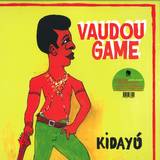
When faced with the decision to take a different direction at the risk of getting lost in a synthetic sound or to further explore the same musical path, Vaudou Game didn't need to consult the oracle for very long when putting together their new album. Since their first acclaimed album, Apiafo and its irresistible single "Pas Contente", these Lyon natives never turned down the heat on over 130 stages across Europe, Africa, America and Asia. Peter Solo has displayed his amulets, charisma and yellow pants around the globe.When time came for them to harness their Afro-Funk sound for the second time, they turned their attention once again to their analog strengths. Vintage material, instruments produced in the 70's and cassette tapes were the "grigris" (or lucky charms) which proved most effective to ward off digital corruption of their music and return them to a tight-knit group with a solid groove.This unbeatable trance rhythm, inherited from James Brown and Fela, icons of Funk and Afrobeat, becomes trident when joined by Mawu, the creative voodoo divinity hidden in each of the group's notes. This inspiration transcends their spirit of communion, plunges them deeply into Mother Earth and results in the telepathic trance which is directly connected to Togo Peter's native Togo.Each song then becomes a celebration where the listener becomes the group's voodoo doll, embraced by the rhythm, submitting itself to the mercilessly metronomic cutting of guitars, struck by the copper-colored flashes of lightning forged by the African voodoo deity Hevioso, pierced by the psychedelic visions generated by the organs and a six-string guitar, cheerful songs, and hypnotic incantations.KIDAYU means "sharing" in Kabye, the language spoken in northern Togo. Sharing, is the philosophy of Vaudou Game - both in their recorded music and on stage.Vintage African funk tinged with voodoo chanting: Togolese Peter Solo and his fellow musicians from Lyon electrify us in a frenzied ceremony" - Télérama

back with another album project, this time from American producer Christopher Ernst, aka L'estasi Dell'oro, who also records as Penalune and is co-founder of the Voodoo Down label. Before now, Ernst has proved himself to be adept at crafting deep and atmospheric, excellently ambient techno on a range of labels. Varying his tempos and textures, he does acid, raw stuff, tough beats and more industrial grooves. Across this new 8-track album, all this and more is explored in captivating fashion. This is an expressive and expansive modern techno album from L'estasi Dell'oro that is perfectly at home on the always interesting Field label.

Boogie-down cosmic funk from late-seventies Nigeria — like full-throttle Roy Ayers, at his most brilliant.
Jimi Lee Adams packs his inner Hendrix off to Funky Town; the horns are the horniest; Mona runs it all down with an irresistible West African tilt.
Afro-jazz scorchers, both sides.
Breaking through with The Sunflowers in Nigeria's late-sixties soul explosion, Mona moved to the US after the group's equipment was destroyed in a car accident. There she was active in the new jazz scene, before returning home towards the end of the seventies, and forming The Sensationals with guitarist Jimi Lee Adams. An unsung pioneer, Mona was Nigeria's first female pop bandleader.
Fifth in the series: all remastered at Abbey Road, cut at D&M, pressed at Pallas; and presented with a 24" by 12" full-colour poster.

The Martin Brothers are pioneers of the Nigerian Funk and Afrobeat scene. Besides many releases under their own name, as the Tabansi Studio Band they lit up innumerable recoding sessions — it's them on Pax Nicholas' Na Teef album, for example; and the same team is behind the legendary Saxon Lee & The Shadows International LP.
Money is the Martins at their deepest and heaviest — tearing, wailing, mid-seventies funk, heady with spirituality. Superbad from start to finish with no let-up.
Original copies are amongst the most sought-after of all African and funk records on the international collectors' scene. It seems there is just a tiny handful of copies at large.
The tracks were originally laid down at Ginger Baker's ARC recording studio in Lagos and later mixed down at London's Tin Pan Alley Studios. The audio restoration and remastering for this re-issue was done at Abbey Road.
