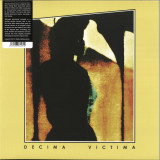
Décima Víctima were a Spanish band that, during their short-lived career between 1981 and 1984, developed a very personal sound reminiscent of Joy Division, The Cure and other British post-punk bands. Rarely has any Spanish band achieved such a high degree of quality and coherence in their music and personality. Despite only being active for under three years, Décima Víctima left a long-lasting legacy, and their influence would later be heard in Spanish bands such as Family, Los Planetas and Sr Chinarro. For this edition, the sound of the original tape recordings has been cleaned and improved and the artwork has been slightly modified following the band's original idea. The original ssions were no short of joy and experimentation. Paco Trinidad, the producer, understood what the band wanted and managed to achieve it technically. Despite commercial success evaded them, their first LP was acclaimed by the press, especially by El Pais, one of the biggest-selling newspapers in Spain. Unavailable for years and always in high demand, this is the first time their debut album gets an official reissue in its original single LP format. For this edition, the sound of the original tape recordings has been cleaned and improved and the artwork has been slightly modified following the band's original idea.
Поиск:voz
Все
Amidst the celestial backdrop of a solar eclipse on April 8th, Allah-Las present a cosmic offering with the 10 Year Anniversary Edition of their Worship The Sun LP, now in a dazzling orange sunburst vinyl. This special pre-sale, commencin on Friday, not only commemorates a decade of musical exploration but also includes "No Werewolf,” the previously unreleased on LP cover song honoring The Frantics' garage rock legacy. Secure your slice of astral history, where cosmic events and sonic tributes align. Limited number of copies.
Lucila Justina Sarcines Reyes was born on July 19, 1936, in the Rímac district. Lima, which had just mourned the death of the emblematic composer Felipe Pinglo two months earlier, was a city on the verge of modernization that clung to its colonial and racist ways. Having been born black marked a difficult path in her life: after the father's premature death and a fire that left her and her 15 siblings homeless, she takes the streets to financially support her mother, and at 5 years old learns to sing in bars while begging for money in the port of Callao. After being admitted to a Franciscan convent and studying only until the third grade of primary school, now a teenager, she returns home, but suffers an attempt of rape by her new stepfather; she is forced to move to the central neighborhood of Barrios Altos, to live with her uncle, a guitarist from the legendary Guardia Vieja, also known as the founders of the Peruvian criollo waltz. This group of non-professional musicians, made up of bricklayers, merchants, artisans, marble workers and other employees, prolonged the oral traditions of their African slave ancestors in working-class neighborhoods of the capital. While the wealthy reject the music of their peons, which they associate with alcohol and disorder, it is the workers who listen carefully to the European waltzes and Aragonese jotas at the aristocratic halls, and later, back in their famous one-pipe alleys, transform their music under the spell of the night. It is in these sociability spaces that house numerous low-income families, where these criollos cheer up birthdays, weddings, anniversaries and other parties until dawn with the trill of their guitars and cajones. It is there that Reyes, at 16 years old, picks up the legacy of the Guardia Vieja and her life changes forever: she is often asked to sing in jaranas (criollo parties), and since her voice stands out immediately, she is encouraged to make her debut on a radio show called "El Sentir de los Barrios", whereshe performs the waltz "Abandonada" by Sixto Carrera.
Nueva referecia del sello kunda, elegancia, contundencia y diversidad sonora.
Para esta ocasion contamos en Cara A con una colavoracion de dos artistas de alto calibre Sexual Relates y Vikks.Nos traen "Tormento", un track potente y oscuro con la voz original del grupo guatemalteco Obsolescencia programada de su tema Repulsion.
A continuacion tenemos una nueva formacion BLACKOUTband , con un tema electro e.b.m ,rompe pistas bajo el titulo postapocliptico " No Hay Salida" .
En la cara B contamos con R1D productor Madrileño que nos trae un viaje astral que nos trasporta a edades antiguas de la tierra atraves de puro tekno tribe.
Por ultimo Hiry un viejo conocido en la esecena free party manchega. Nos trae un track epico lleno de sonido Hardcore a 140 bpms para pistas duras y nostalgicos de los viejos tiempos.
- A1: Fé De Sábio - Crepúsculo
- A2: Nuno Rebelo - Vê-Se Das Nuvens
- A3: Vítor Rúa - T
- A4: Tó Neto - Daly
- B1: Luis Cilia - Saxofonía
- B2: Spqr - Flow
- B3: Telectu - Untitled
- B4: Pilar - Voz Do Mar
- C1: Carlos María Trindade - Em Campo Aberto
- C2: Balladium - Andrómeda
- C3: Ban - Irreal Social
- D1: Pop Dell'arte - Querelle
- D2: Santa Maria Gasolina Em Teu Ventre - Optical Sunday Without William Burroughs
- D3: Croix Sainte - We Build Cities
- D4: Linha Geral - Hino À Nossa Luta
Unveiling an unheard scene: Glossy Mistakes presents "Atlantic Mavericks: a Decade of Experimental Music in Portugal 1982-1993"
Glossy Mistakes is proud to announce the upcoming release of "Atlantic Mavericks: a Decade of Experimental Music in Portugal 1982-1993," a groundbreaking double LP compilation that offers a unique glimpse into the vibrant landscape of Portuguese experimental music. Set to launch on June 10th, this monumental release showcases the evolution and innovation of the Portuguese music scene during a transformative decade marked by political upheaval and artistic experimentation.
Compiled by Glossy Mario and featuring liner notes by Rui Miguel Abreu, "Atlantic Mavericks" captures the essence of a generation of artists who dared to challenge conventions and push the boundaries of what was possible in music.
The compilation stands as a testament to the eclecticism of the Portuguese music scene during this period, featuring a diverse range of genres and styles. From ambient and new age to electro, rock, and synth-pop, "Atlantic Mavericks" offers something for every listener, inviting them to explore the rich tapestry of sounds that defined the era.
The 1980s in Portugal were a time of profound transformation, marked by the aftermath of a peaceful revolution and a burgeoning desire for artistic expression. As the country emerged from political turbulence, a new generation of musicians began to explore uncharted territories, paving the way for a wave of experimentation and innovation.
From the emergence of artists like Rui Veloso and bands like UHF, who ushered in a new era of Portuguese rock, to the founding of independent record labels like Fundação Atlântica and Ama Romanta, the 1980s saw a surge in creativity and a desire for independence within the music industry.
"Atlantic Mavericks: a Decade of Experimental Music in Portugal 1982-1993" offers a comprehensive overview of this dynamic period, featuring tracks that span the spectrum of experimental music. Each song tells a story of artistic evolution and creative risk-taking, reflecting the diverse influences and eclectic tastes of the Portuguese music scene during this transformative decade.
Spanning from 1982 to 1993, the compilation includes contributions from a wide range of artists, including SPQR, Croix Sainte, Linha Geral, Balladium, Ban, Santa Maria, Gasolina Em Teu Ventre!, Fé de Sábio, and Telectu, among others. With each track carefully curated to showcase the breadth and depth of Portuguese experimental music, "Atlantic Mavericks" promises to be a must-have for music enthusiasts and adventurous listeners alike.
"Atlantic Mavericks: a Decade of Experimental Music in Portugal 1982-1993" will be available on June 10th as a double LP release, offering listeners a chance to immerse themselves in the sonic landscapes of 1980s Portugal. Whether experienced on vinyl or through digital channels, this monumental compilation is sure to leave a lasting impression on all who encounter it.
Following the singles "Zanzare" and "Barocco", Chiaré is the self-titled debut album from songwriter and multi-instrumentalist Chiaré, aka Chiara Ianniciello, the latest recipient of the Bianca D'Aponte Award for emerging Italian singer-songwriters.
The album, which will be out on April 19th, contains eight atmospheric and intimate tracks where Chiara's warm and gentle voice weaves snapshots from her feelings and her personal story over retro-flavoured, jazz-infused arrangements that are reminiscent of some of Italy's finest singer-songwriters (Lucio Battisti and Pino Daniele in particular).
"It all started about three years ago," says Chiara. "Ernesto Massimino Voza and I started from a sound that somehow wasn't really me, and after a long process of trial and error, we finally found what seemed to be right for me. Peppe Maiellano, who arranged all the music, brought it full circle. The album has a common thread: love. Almost all of the songs are about strategic love, the fear of freely loving someone and the frustration at not being able to get out of an on-and-off relationship that made me suffer, but that I've tried to narrate with some irony. If my writing were an artistic movement, it would be naturalism. I drew a lot of inspiration from Pino Daniele, Eduardo De Crescenzo, and Lucio Battisti, while trying to develop my own personal, authentic style."
Chiara holds a diploma in jazz singing and is now completing her studies in classical double bass. In her debut album she uses both standard Italian and the Neapolitan dialect, mixing jazz, soul and R'n'B. Modernity and tradition come together, creating a delicate yet irresistible sound.
Fado music’s fastest-rising stars, Portuguese singer Sara Correia’s acclaimed third album Liberdade is a triumph. Sara arrives in 2023 with the status of a phenomenon: she has travelled the world to great acclaim, nominated for a Latin Grammy along with her appearances as a judge on the hugely popular Portuguese version of reality singing competition The Voice. Sara Correia’s smoky and passionate voice captures love and power, sadness and joy, the city of Lisbon and the Portuguese soul. Inhabiting the space between traditional, dark Fado and its modern, lighter incarnation, her mellifluous toplines are influenced by French chanson.
Das neue Studioalbum TIMBRE des portugiesischen Singer-Songwriters Salvador Sobral enthält elf neue Originalsongs.
Sobrals Musik führt uns auf einzigartige und vielfältige Reise von Jazz inspirierten Eigenkompositionen über Pop und Rock zum melodischen Sound des Brasilianischen Bossa Novas.
Salvador Sobral: "Der Name TIMBRE entstand aus zwei Hauptgründen. Der erste - und vielleicht offensichtlichste - ist, dass ich in diesem Leben in erster Linie Sänger bin, ein Performer, und was mich am meisten definiert und auszeichnet, ist meine Stimme, mein Timbre. Der zweite Grund ist, dass ich mich für das Konzept der Klangfarbe als Farbe interessiere, die Farbe der Stimme, die Farbe
der Instrumente. Das Album wird wie eine bunte Palette von Klangfarben sein, die Klarheit erzeugen.
Ah! Und es gibt noch einen dritten Grund für den Titel des Albums: Das Wort ?timbre? wird in vielen lateinischen und germanischen Sprachen verwendet. Es wird gleich buchstabiert und bedeutet dasselbe. Das Konzept von TIMBRE scheint also universell zu sein, und wir können uns alle darauf verständigen."
One of Rio de Janeiro's most exciting singer-songwriters of the last fifteen years is now living in Los Angeles, where he stands on the verge of an overdue American breakthrough. Before the move, Latin Grammy nominee Rogê (pronounced haw-zheh) was the prince of Lapa, the bustling downtown center of Rio's nightlife. Charismatic and scruffy, with a distinctively raspy yet boyish voice, Rogê_born Roger José Cury_gained an avid following for his swinging samba-funk, tinged with Brazilian Soul. His acclaim rose when he cowrote the theme song for the 2016 Olympic Games in Brazil. Lavishly produced by the Budos Band's Thomas Brenneck, a top session guitarist and collaborator with the stars (Lady Gaga, Beyoncé & Jay-Z, Amy Winehouse), Curyman will launch Brenneck's new label, Diamond West.
- 1: Mario Montalbetti-Música Para Quince Grullas Atadas De Las Patas (2008)
- 2: Jorge Eduardo Eielson - Colores (197)
- 3: Francisco Mariotti - Manifiesto Dadá 1918 Reordenado 1985 (1985)
- 4: Carlos Germán Belli - Expansión Sonora Biliar (1960/1990)
- 5: Ol-Ki-Ol (El Lamento Del Guerba) (1981/2010)
- 6: Omar Aramayo - Homenaje A Marcela Castro (2009)
- 7: E. Verástegui-Lectura Sensual Arquitectura Música Persistente (195-2021)
- 8: Virginia Benavides - Resonancia Magnética Nuclear (2021)
- 9: Florentino Díaz Ahumada - Poema Viento (2011)
- 10: Luisa Fernanda Lindo - Estado De Emergencia (Lugar Común) (2011)
- 11: Carlos Estela - Uncu Erpo (2008)
- 12: Frido Martin - Socos (2021)
- 13: Macri Cáceres - Pers.pec.ti.va (2021)
- 14: Paola Torres Núñez Del Prado - Cae El Cuadro De (2021)
- 15: Peru Saizprez - Huayno Europeo (2021)
- 16: Tilsa Otta - (Auto) Configuración De Voz De Una Máquina Inteligente (2011)
- 17: Rodrigo Vera Cubas - La Otra Mitad (2012)
- 18: Giancarlo Huapaya/Omar Córdova - Pop Es Cía (2011)
- 19: Sandra Suazo - Carteles (2021)
- 20: Michael Prado - Es To No (17)
- 21: Lisa Carrasco - Na Na Na Na Na Na Na (20)
- 22: Luis Alvarado - Hipercomunicación (2021)
This compilation brings together 22 sound poems, including both pioneering and current pieces, and constitutes itself as the first great overview of sound poetry from Peru. It continues a cycle that began in 2009 with the appearance of a CD called Inventar la voz: Nuevas tradiciones orales To Invent the Voice: New Oral Traditions and was followed up in 2011 with another one called Irse de lengua [To Let It Slip], both of which contributed to articulate diverse manifestations of poetry that used technological means, also in the context of intense activity in the local scenes of experimental music and sound art that opened spaces for interdisciplinary dialogues. What we know as sound poetry is the product of a technological revolution associated with the appearance of various means of recording, transmission and amplification of the voice. A long process that took shape in the 20th century, until it became a discipline, articulated as an international movement which, based on phonetic research, expanded into a universe of oral/vocal artistic practices as part of a new technological context. The recordings gathered here comprise a time frame that goes from 1972 to 2021. We find poems that work with montage techniques, either because they explore simultaneity or juxtaposition, such as those by Mario Montalbetti, Frido Martín, Florentino Díaz, Carlos Estela, Luisa Fernanda Lindo, Macri Cáceres, Rodrigo Vera Cubas, Tilsa Otta, Giancarlo Huapaya/Omar Córdova, Virginia Benavides, Lisa Carrasco and Luis Alvarado. Others emphasize vocal/oral performance: we find the phonetic poems of Carlos Germán Belli and Eduardo Chirinos, as well as the concrete conceptual poems of Michael Prado, Sandra Suazo, Peru Saizprez, and the oral/guttural poem of Omar Aramayo. Finally, we find another group of pieces where the poem starts with the creation of a computational parameter or algorithm, as is the case with the pieces by Jorge Eduardo Eielson and Enrique Verástegui, eventually reaching the use of Artificial Intelligence as in the poems by Francisco Mariotti and Paola Torres Núñez del Prado. The Verbal Matter: An Anthology of Peruvian Sound Poetry is part of a series produced by Buh Records for Centro del Sonido, a website set up as a digital archive of Peruvian experimental music and sound art. The compilation has been made by Luis Alvarado and is published in a limited edition of 300 copies in vinyl format. It includes extensive notes and visual documentation. Mastered by Alberto Cendra. Art by René Sánchez.
- 1: Tiempos De La Miseria
- 2: Me Robaron
- 3: Crudo Soy
- 4: La Madres Lloran
- 5: Eliminación
- 6: Desde Afuera
- 7: Asesinos
- 8: Se Ve En Tu Cara
- 9: Cipayos, Traidores Y Vendidos
- 10: Sin Caras
- 11: No Estoy Convencido
- 12: Curiosidad
- 13: ?Por Qué?
- 14: Tú Lo Enseñaste
- 15: Lucha Para Que Te Escuchen
- 16: Corrido Jodido
- 17: Escaleras
- 18: Llegan Empujando
- 19: Nada Cambia
- 20: Achicados
- 21: En Mi Opinión
- 22: No Te Debo Nada
- 23: Levántate
- 24: La Caída De Latinoamérica
- 25: Nos Quieren Como Siempre
- 26: No Me Vengan A Salvar
- 27: Déjanos En Paz
- 28: Tierra De Libertad
- 29: Victorias Y Ganancias
- 30: Unidad Prohibida
- 31: That's Right We're That Spic Band
- 32: Poco A Poco
- 33: Suéltalo
- 34: Migra Violencia
- 35: Viejos Patéticos
- 36: Del Pasado Al Presente
- 37: Esto No Trae Precio
- 38: A Los Inseguros
- 39: Tomando Los Golpes
- 40: No Existen Palomas Blancas En Mi Barrio
- 41: No Va A Haber Revolución
- 42: ?Quién Es El Pendejo Más Grande?
- 43: ?Qué Pasó Con La Paz?
- 44: Metiendo Sal En La Llaga
- 45: ?Vas A Regresar?
- 46: Hardcoregoismo
- 47: Naciste Con Voz
- 48: Ilegal, ¿Y Qué?
- 50: Identidad Perdida
- 51: Vendedores De Dolor
- 52: 500 Anos
- 53: ?Ahora Quién Se Queja?
- 54: Lengua Armada
- 55: ?Qué Paso Con La Paz? (Alt. Version)
- 56: Peleamos
- 57: Escupiendo En Tu Propia Cara
- 58: Que Te Conviene
- 59: Me Lo Paso Por El Culo
- 60: Cobardes
- 61: Desde El Barrio
- 62: Sin Título
- 63: Somos Peligrosos
- 64: No Se Acabó
- 65: Lo Que Queremos
- 66: ?Qué Me Importa?
- 67: Mediocre
Repress!
European version of the long overdue LOS CRUDOS Discography collection. LOS CRUDOS, formed in Chicago's Pilsen neighbourhood in the early 90's, are a Latino punk band with a strong socio-political message and an extremely militant DIY attitude. During their first incarnation, spanning the years 1991 to 1998 the band self-released their own records, printed their own merch, booked their own shows and toured relentlessly around the world. From South America to Japan including a 3 month European tour in the winter of 1996. They spoke to the freaks the outsiders and the minorities and were not afraid of confronting the white middle class punk who reigned supreme during the terrible 90's. A time which will not be remembered for their hardcore output except for a few exceptions, in which CRUDOS are surely included. Their sound, far from being a copycat of whatever flavour of the month was reigning at the time was heavy rooted in the golden years of European and Latino American ferocious hardcore punk. With bands as IMPACT, WRETCHED, OLHO SECO, TERVEET KADET or MASACRE 68 as obvious influences in a time when the simple mention of any of those bands (or any non English speaking bands really) was usually met with a laugh or a joke. They sang in Spanish, with aggression and conviction and that made their message spread out widely, reaching thousands of Spanish speaking punks both in Latino America and Spain as well as inside USA where third generation Latino kids surely were missing a voice within the punk scene. The band split up in 1998 after a really intense year of touring and reformed in 2008. The band will be undertaking their first ever Scandinavian tour in July/ Agust 2016. This collection, originally released as a benefit for MRR magazine last year, includes all the LOS CRUDOS output plus compilation tracks as well as a couple demo tracks and an unreleased song. The European version comes in a gatefold sleeve and brings a 40 page booklet with flyers and the lyrics of all songs.
Track list: 1. Tiempos De La Miseria 2. Me Robaron 3. Crudo Soy 4. La Madres Lloran 5. Eliminación 6. Desde Afuera 7. Asesinos 8. Se Ve En Tu Cara 9. Cipayos, Traidores y Vendidos 10. Sin Caras 11. No Estoy Convencido 12. Curiosidad 13. ¿Por Qué? 14. Tú Lo Enseñaste 15. Lucha Para Que Te Escuchen 16. Corrido Jodido 17. Escaleras 18. Llegan Empujando 19. Nada Cambia 20. Achicados 21. En Mi Opinión 22. No Te Debo Nada 23. Levántate 24. La Caída De Latinoamérica 25. Nos Quieren Como Siempre 26. No Me Vengan A Salvar 27. Déjanos En Paz 28. Tierra De Libertad 29. Victorias y Ganancias 30. Unidad Prohibida 31. That's Right We're That Spic Band 32. Poco a Poco 33. Suéltalo 34. Migra Violencia 35. Viejos Patéticos 36. Del Pasado Al Presente 37. Esto No Trae Precio 38. A Los Inseguros 39. Tomando Los Golpes 40. No Existen Palomas Blancas En Mi Barrio 41. No Va A Haber Revolución 42. ¿Quién Es El Pendejo Más Grande? 43. ¿Qué Pasó Con La Paz? 44. Metiendo Sal En La Llaga 45. ¿Vas A Regresar? 46. Hardcoregoismo 47. Naciste Con Voz 48. Ilegal, ¿Y Qué? 50. Identidad Perdida 51. Vendedores De Dolor 52. 500 Anos 53. ¿Ahora Quién Se Queja? 54. Lengua Armada 55. ¿Qué Paso Con La Paz? (Alt. Version) 56. Peleamos 57. Escupiendo En Tu Propia Cara 58. Que Te Conviene 59. Me Lo Paso Por El Culo 60. Cobardes 61. Desde El Barrio 62. Sin Título 63. Somos Peligrosos 64. No Se Acabó 65. Lo Que Queremos 66. ¿Qué Me Importa? 67. Mediocre
After his latest ‘Youth EP’ that experimented with spacious vocal chops and whimsical soundscapes, Nocow returns with a relentless flurry of blows on the heavily computerized ‘Magnit EP’ released on npm. Featuring gloriously broken melodies and hard-hitting rhythm, Nocow explores the darker, more formulaic side to his sound. Brooding acid-infused synths shimmer across the four tracks, morphing between moods as the EP progresses. ‘Magnit S’ kicks off the EP with scattered bass hits, driving dark techno arpeggios, and a hint of footwork-esque percussion. The intense atmosphere is a relatively new direction for Nocow, straying from his more meticulous, introverted beats prior. ‘Kali’ incorporates warbled synth with a more subdued rhythm, playing with a modular sound and distant echoes of robotic vocals. This fragmented track is more akin to his 2018 sound of the Voda/Vozduh/Zemlya trilogy as the kinetics of sound play a strongly defined role in the overall sonics. ‘Sputnik’ commences with a blistering arpeggio of bit-crushed synth and chimes. The rocket-propelled pacing creates a frantic, yet ultimately controlled piece, worthy of a place in a club 300 years from now. Yet, after the frenzy comes the calm. The closing track ‘Extasy’ grinds the EP to a kaleidoscopic halt. Vocoder passages drift across the dense soundscape as Nocow transports you to an other-world, filled with spacey percussion. This closer is a well-deserved return to solid ground, following the perpetual trio of dark, yet utterly compelling techno pieces. Once again, Nocow exhibits his multi-faceted approach to electronic music that truly sets him apart.
Rare & unreleased 80's bangers from Sao Tome e Principe's most iconic singer !
Bongo Joe pursues their work with friend DJ Tom B and are sharing the fourth effort in their São Tomé & Principe series : “Recordar é viver”, the first volume of an anthology dedicated to the one and only Pedro Lima, , "A voz do povo de São Tomé" (the people's voice of Sao Tomé).
“Recordar é viver: Antologia Vol. 1” features some previously unreleased tracks and gives a comprehensive look into the discography of one of the islands’ biggest stars, known for his political outspokenness as much as for his soft voice, delicate rumbas, and high-energy puxas.
With his band Os Leonenses he built a brand new genre around the strong rhythms and infectious energy of Sao-Toméan Samba Socopé ("only with the feet” in Portuguese), but with the influence of Congolese soukous, Cape Verdean Coladeira, elements from French West-Indies Cadence/Compas, and Brazilian Afoxé, it soon developed into the infectiously danceable style known as “puxa”. The band kept playing together up until Pedro’s death in 2019, performing at large events around the islands and on the continent.
But Pedro shined also on his own. Alone, he demonstrated his compositional skills and ability to balance the band’s powerful rhythm section with São Tomé & Principe’s harmonic backing vocal traditions, creating strong, dance floor ready puxas or melodic, delicate rumbas.
Pedro Lima died in 2019, leaving behind the 23 children he fathered, with thousands of mourners accompanying him to his final resting place. The public funeral, paid for by ex-president Pinto da Costa, was one of the biggest the islands have ever seen. Lima, "O cantor do povo” (“The people’s singer”), was buried with his wireless microphone, so his powerful voice would always be heard.
- A1: Maria Maria
- A2: Cozinha
- A3: Pilar (Do Pila) (Do Pila)
- A4: Trabalhos (Essa Voz) (Essa Voz)
- B1: Lilia
- B2: A Chamada
- B3: Era Rei E Sou Escravo
- B4: Os Escravos De Jo
- B5: Tema Dos Deuses
- C1: Santos Catholicos X Candomble
- C2: Pai Grande
- C3: Seducao
- D1: Francisco
- D2: Maria Solidaria
- D3: De Repente Maria Sumiu
- D4: Eu Sou Uma Preta Velha Aqui Sentada No Sol
- D5: Boca A Boca
- D6: Maria Maria
Repress incoming...
Far Out Recordings proudly presents Milton Nascimento's Maria Maria. Recorded in 1974 and unreleased until almost thirty years later, the album was written as the soundtrack to a ballet which dealt with the legacy of slavery in Brazil. Raw, atmospheric and emotionally charged, Maria Maria reveals one of Brazil's greatest ever songwriters at his creative peak. Featuring an all-star cast of fellow Brazilian legends including Nana Vasconcelos, Joao Donato, Paulinho Jobim, and members of Som Imaginario, Maria Maria holds what Milton considers to be the definitive versions of some of his classic songs, including 'Os Escravos De Jó' and 'Maria Maria'.
Originally released in 2003 as a double CD package, with Milton Nascimento's 1984 follow up ballet soundtrack Ultimo Trem, Maria Maria will be available on vinyl for the very first time from December 2019, with Ultimo Trem set for vinyl release early 2020.
Milton Nascimento possesses one of the most immediately recognizable voices in Brazilian music: high and sweet and as breathtakingly sublime as that of any soul singer. It was this voice that the legendary Brazilian singer Elis Regina fell in love with back in 1964, having heard Milton perform his song 'Canção do Sal (Sultry Song)' at a private party in Sao Paulo. Ellis went on to record the song in 1967 -giving Milton his first hit in Brazil and beginning a career that has spanned over 50 years.
Born in Rio on the 26th October 1942, Milton moved with his adoptive parents at the age of 18 months to Tres Pontas, a rural town in the state of Minas Gerais, 500 miles north of Rio. He began his musical career as a young teenager, singing in a crooner style he learnt from listening to Brazilian singers and US groups such as The Platters on the radio. Hungry for more opportunities to perform, Milton moved to Belo Horizonte, the capital of Minas Gerais, at the age of twenty. By the beginning of the 60s Milton had made a name for himself both as an accomplished singer and guitarist.
Milton became part of a local network of musicians, film makers, dancers, theatre directors and writers that included the journalist and song writer Fernando Brant as well as lyricist Marcio Borges and his younger brother Lo Borges. Together these four wrote and produced what would become Milton's milestone album, 'Clube da Esquina (Club on the Corner)'. The originality of 'Club da Esquina' shaped the local scene, and it reflects the essence of 'the Nascimento Sound'. Milton's religious upbringing as an Afro-Brazilian Catholic saw him exposed to church choral music from an early age. His love of this genre of music is apparent in both his celestial falsetto and vocal choral arrangements. This collection also displays his early fascination with evocative, non-verbal, scat-style singing, spare, harmonic guitar work and local folk music, jazz and rock.
In 1976, Milton and Fernando Brant teamed up with a new contemporary dance company called Grupo Corpo, whose Argentinian choreographer Oscar Araiz, would become a collaborator with the two musicians. Together, they conceived a show based on the composite life story of the daughter of a black slave called Maria. Nascimento wrote music to Brant's lyrics and "Maria Maria" was premiered in the main theatre of the Belo Horizonte Palacio das Artes that year. "Fernando wrote the lyrics for the ballet, but there were originally no lyrics for the theme song, "Maria Maria'". Milton and Fernando worked on the lyrics together, basing them on folk stories about black women of the countryside. Adds Milton "These memories are mostly things that we witnessed – Fernando and I – rather than what we experienced ourselves.
Milton's music is impressionistic, emotional and romantic. Relying on songs without lyrics as well as evocative vocalizing and choruses, Milton experimented heavily with Afro-Brazilian percussion and taped jungle sounds. His composing method for these recordings was highly unconventional: "I wrote the music for 'Maria Maria' in a tiny Rio apartment with friends and their kids running around and having fun! I love to be in noisy places, surrounded by people", he says.
The music on 'Maria Maria' was performed by an impressive group of young musicians who are today household names in Brazilian music, including Naná Vasconcelos (percussion and effects), Toninho Horta (guitars) and Paulo Moura (sax). Several vocalist including Naná Caymmi, Fafá de Belém, Beto Guedes, and Milton himself, had hits in years to come with reworkings of these songs.
Milton says his compositions follow his visions "like a movie", and he believes that reflects his long love affair with cinema. "I only began composing because of enjoying the movies so much," he says. "I wrote my first song "Peace for the Coming Love" after seeing 'Jules et Jim' (the cult 60s French film directed by François Truffaut), with my friend Marcio Borges. We went early in the morning and watched it four or five times in a row, then went to Márcio's home and wrote the song."
The songs also include solo spoken passages set to music, clearly influenced by this style of French art cinema. On the title track, Maria's story is narrated and translated to music through the use of African Percussion, drums and metal signifying the field slave tools of the day. 'Trabalhos (Works)' runs to work rhythms and whipcracks: no words, just pain. 'Lília' documents the beating of the slave woman. After 'A Chamada (The call)' and the triumphant 'Era Rei e Sou Escravo (I was a king now I am a slave' things begin to turn and Milton employs tropical jungle cries to symbolize freedom. 'Santos Catholicos x Candomble (Catholic Saints vs Candomble)' represents the battle between African and European religions through the music of both sides. Milton's heavenly falsetto pours into 'Francisco' and 'Pai Grande (Great Father)' and the outstanding 'Eu Sou Uma Preta Velha Aqui Sentada no Sol (I'm an old black lady, sitting under the sun)' conjures images of an old woman sitting deep in the forest, her memories painted in drums, piano and voices.
Edizioni Ishtar and Schema Records proudly celebrate the 15th anniversary of one of their most successful releases and artists (more than 30 million streams and 300 thousand monthly listeners on Spotify) with the first ever vinyl edition of Toco’s Outro Lugar. Produced by S-Tone Inc., this record includes fan-favourite tracks “Outro Lugar”, “Samba Noir
” and most of all “Guarapiranga”, which was chosen for the soundtrack of “Silver Linings Playbook”, a film that awarded Jennifer Lawrence an Academy Award prize as best actress in a leading role in 2013. The strings at the beginning of the title-track have also been sampled by PinkPantheress for her song “Nineteen”, out of her latest album “To Hell With It”.
Outro Lugar hasn’t aged a bit during all these years, for various reasons; first of all it benefits from the outstanding contribution of bossa nova pioneer and inspiration source Roberto Menescal, who played guitar in every track. Most of the album was recorded in Rio De Janeiro at Menescal’s studio, with the participation of some of the best ‘carioca’ musicians, especially double-bass player Adriano Giffoni and pianist Adriano Souza. All these elements gave the album exactly the taste requested by the artist and the producer: inspired from the past yet, through thorough attention, aimed at a sound at the same time fresh and modern, slightly electronic, filled with grooves perfectly blending into acoustic instruments. The second part of the recording was carried out in Milan, with some of the best musicians in the Milanese jazz scene.
The album also sees the contribution of Rosalia De Souza, singing in several tracks and standing out in “Bom Motivo” especially. French chanteuse Coralie Clément appears in “Contradição”, her own piece here re-interpreted by Toco.
Outro Lugar is an album for any kinds of Brazilian music lovers that showed the world what Toco was capable of: a refined and cultured musician, a gifted performer of a warm and smooth voice able to awaken the emotions of the most sensitive listeners.
After 20 years working intensively as a drummer, singer, producer and composer in the city of São Paulo, the Brazilian based in Duisburg Mariá Portugal (Quartabê, Arrigo Barnabé, Elza Soares) releases her new album EROSÃO in November 2021. The album will be released digitally and on vinyl by Selo Risco (Brazil) and Fun in The Church (Germany).
EROSÃO has three layers: song material, acoustic improvisation and electronic manipulation. In each layer exists both the reminiscence and the oblivion of the precedent, like a stone that is built up of overlapping layers that also modify each other through mechanical and chemical processes.
Mariá Portugal’s songs are the first layer and the basis of the project. As any Brazilian singer/songwriter, she has strong roots in the Brazilian song tradition, going from Dorival Caymmi to Itamar Assumpção and Arrigo Barnabé to Caetano Veloso, besides being strongly influenced by same-generation composers, such as Negro Leo, Iara Rennó, Kiko Dinucci and Maria Beraldo.