The 7” SlingBag 60 is a small size bag that holds approximately 60 pieces of 7-inch records. It has a small pocket in the front and mesh pocket in the inside for small accessories. Next to this the bag features the special soft fleeced interior provides protection from bumps and knocks. It comes with a handgrip, detachable and adjustable shoulder strap. The 7” SlingBag 60 the one bag a DJ need to carry around 7-inch records. A perfect size bag for a minimalist DJ set!
Color Black
Weight 0,35 kg / 0.77 lbs
Outer Dimensions (W x H x D) cm: 21 x 21 x 16.5 | inch: 8.3 x 8.3 x 6.5
Inner Dimensions (W x H x D) cm: 20.5 x 19 x 15 | inch: 8.1 x 7.5 x 5.9
Material Water resistant Ballistic Nylon 1680D
Protection:
Soft fleeced interior provides protection from bumps and knocks
Extra's:
Inside mesh pocket for USB drives, SD cards and small accessories
Small front pocket for smaller gears
Adjustable shoulder strap
Convenient carry handles
Fits:
Holds up to 60 x 7” records,
USB drives
SD cards
Small accessories
Search:wa
- A1: E Nun Ce Voio Sta
- A2: Squadra Antifurto (Suspense)
- A3: Squadra Antifurto (Azione E Mistero)
- A4: Squadra Antifurto (Azione)
- A5: Squadra Antifurto (Nico A New York)
- A6: E Nun Ce Voio Sta (Versione Fisarmonica E Chitarra)
- B1: Squadra Antifurto (Nico A New York #2)
- B2: Squadra Antifurto (Azione #2)
- B3: Squadra Antifurto (Suspense #2)
- B4: Squadra Antifurto (Azione #3)
- B5: E Nun Ce Voio Sta (Versione Chitarra)
- B6: Squadra Antifurto (Azione E Mistero #2)
- B7: Squadra Antifurto (Azione E Mistero #3)
- B8: E Nun Ce Voio Sta (Titoli Di Coda)
Transparent Amber[31,51 €]
Here at Four Flies, we kind of feel we need a bigger word than 'proud', this time, to present, in collaboration with Beat Records, the first-ever release of the original soundtrack written in 1976 by Guido & Maurizio De Angelis for the legendary Squadra Antifurto, the second chapter of the comedy-infused crime saga directed by Bruno Corbucci and starring Tomas Milian as the iconic Italian Police Marshal Nico Giraldi.
The excitement in this case is nothing short of gigantic, difficult to rein in for those who, like ourselves, grew up adoring the character played by Milian as one of our cult heroes, and dreaming that the soundtracks of the first three films in the saga – the only ones composed by the De Angelis brothers – would one day be released.
Since the launch of our label, Squadra Antifurto has been at the top of the list of film scores we most wanted to release. Until a few months ago, this dream of ours seemed destined to remain just that, so strong was the conviction in all of us that the master tapes were definitively lost, that they had forever vanished into thin air. That's why their recovery, made possible by Maurizio De Angelis himself and the persistence of our friends at Beat Records, is an extraordinary feat.
Nearly 50 years after it was first heard in cinemas, the soundtrack penned by the De Angelis brothers is resurrected in its entirety and can finally shine its incredible power all over us.
Beautifully seeping through this score – like many others composed by the golden duo in the 1970s – are elements from the Italian, and especially Roman, folk tradition, for instance in the warm, heartfelt ballad sung by Alberto Griso, "E nun ce voio sta," which first plays in the opening credit sequence and is then reprised in various forms throughout the film, culminating with the soul-stirring orchestral version that closes the album's tracklist.
But as in any Italian crime film worthy of that name, a different soundscapetakes centre stage: it's the music that accompanies the countless scenes of tension, action, and pursuit that punctuate the film, and which has made us fall madly in love with this score.
The main theme is a prog-funk joyride, drawing inspiration from the traditional tarantella but elevated to irresistible energy thanks to a rock orchestration featuring psychedelic flutes, wild percussion, distorted electric guitars, piano chords, and various feedback and delay effects.
The resulting groove is just mind-blowing, and we almost can't believe it's finally available on a record, completely remastered for vinyl.
We really couldn't be prouder, and dedicate this release to all passionate fans of Italian crime films, the De Angelis brothers, and Tomas Milian aka Nico Giraldi.
Available starting April 12th on standard black vinyl and limited coloured vinyl (transparent amber, limited to 300 copies).
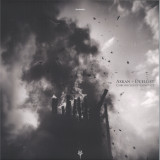
Limited edition vinyl 12” of 100 copies
Omen Recordings delivers another uncompromising slab of contemporary techno warfare with a split EP from Duellist and Axkan, two sonic insurgents armed with raw industrial aggression and unrelenting rhythmic brutality. A fusion of contemporary hardness and forward-thinking sound design, ‘Chronicles of Conflict’ is a war cry for the underground. No safe zones. No surrender. Just pure unrelenting techno at its most merciless.
Duellist takes command of side A by launching a full-scale assault of distorted kicks, razor-sharp percussion and eerie atmospherics that coil through the mix like barbed wire. His relentless 4x4 barrage grinds through the low end with mechanical force, setting the stage for absolute dance floor devastation.
The B side has Axkan counter-attacking with his signature modular chaos that pulses, shifts and writhes through layers of grinding sonic warfare. Gnarled textures and punishing basslines carve a hypnotic path through the abyss, delivering a masterclass in raw industrial techno.
Emerging from the depths of the Minneapolis underground scene, The Worm is one of the best underground techno duos in the US, composed of midwest stalwarts Naughty Wood and Heckadecimal. Naughty Wood brings decades of experience, including collaborations on Traxx’s esteemed Chicago imprint Nation. The machine wizard known as Hecka- decimal boasts a deep catalog with releases spanning Always Human Tapes and Great Circles. In early 2016, the mysteri- ous tape-duplicator Ryan Wurst received some demos, which soon became The Worm, a very rare and limited cassette on Always Human Tapes. In April of that year, The Worm flew to Denver to perform live at a basement rave co-hosted by Deep Club and Always Human Tapes, at which Traxx also delivered a DJ set. The Worm’s sound was minted in Ryan Scannura’s brain.
Fast forward 8 years, and Ryan S. saw it time for two absolutely mental tracks from the AHT cassette to finally be pressed to wax, together with two other cuts. The A-side kicks off with “12 Days Of Squirm,” a deep, pulsating acid earworm that builds in intensity. “LISA” could almost be an outtake from a lost Nation session. The tune melds haunting melodies with a demented beat, sure to scare off most casual diggers. Deep Club presents two new-old tracks on side B. “808 Verb Talk” is a slimy, wiggly mix in the vein of 12 Days. Finally, “Pytch1” brings the energy down in an extended, slow-burning closer. Eight years and two Ryans later, this collection is finally ready for turntables in living rooms and foggy basements around the world. Only for the most devoted midwest techno warriors!
The late KAGAMI was the producer who sparked the "TOKYO DISCO" phenomenon and reigned over the Japanese techno scene in the early two thousands. From his first album "Broken Sequencer", released by Frogman Records in 1998 and which made a huge impact on a bunch of Techno Heads in Japan, the robust techno banger "Hyper Wheels" is refocused by Abend Kollektiv, and revives as "Hyper Wheels Redux". This long awaited 2024 version has been remastered and also remixed by DJ SHUFFLEMASTER, known as one of the first generation of the Japanese techno scene, and even includes a remix by KAGAMIs buddy TOKTOK from Berlin.
Here comes a true South American LATIN JAZZFUNK treasure from Argentina!!!
Sound Essence is more than proud to present these lost recordings from 1974 to music lovers again in all their glory.
CARLOS FRANZETTI, who has once again been in the spotlight in recent years thanks to the re-release of his strong late 70s JazzFusion record "Graffiti", was also in charge of this record called DEDOS. The story behind:
In 1974, after CARLOS FRANZETTI was living in Mexico and worked as the musical director of FERMATA International, he returned to Argentina. In Buenos Aires his friend MOCHIN MARAFIOTTI was recently appointed A&R at the local recording label MUSIC HALL . Marafiotti asked Carlos if he wanted to record some of his music and he answered that he had in mind a group playing LATIN JAZZ . After a couple of meetings they came out with the idea of covering the RUBEN RADA tune DEDOS recently recorded in the US by AIRTO MOREIRA along with the OPA TRIO. Carlos contributed his own composition "Doce y Diez" . He selected the group consisting of his friend and member of the uruguayan Band TOTEM, Ruben Rada on percussion, Ricardo Lew on guitar , Emilio Valle on bass and Osvaldo Lopez on drums covering keyboards and vocals himself . This formation recorded tracks and vocals in a three hour session and the next day the track was mixed. Music Hall released "Dedos" and "Doce y Diez" on a single record and after months of discrete airplay and not so good sales the project for an album was draped.
"It is a rewarding experience to see a re-release of this two songs a half century after the original release.
It was hot and it looks and sounds even hotter now. I love it!" (Carlos Franzetti, New Jersey, December 2024).
The record captures an expansive performance in Poitiers, France in November 2023. First working together in an unpredictable trio with minimalist legend and eccentric extraordinaire Charlemagne Palestine, Ambarchi and Thielemans quickly established a remarkable musical chemistry that led to an ongoing series of duo concerts, including the performance documented on their LP Double Consciousness (Matière Mémorie, 2023).
Kind Regards finds the duo refining their shared language while continuing to take risks, allowing the music’s gravitational pull to lead them from meditative calm to unexpectedly expressive passages of melodic invention and rhythmic drive.
Recorded in sparkling fidelity and carefully mixed by Ambarchi’s longtime collaborator Joe Talia, the LP contains a single unbroken performance, stretching out for over 45 minutes. Guitar and drums weave together into a symbiotic whole that nevertheless affords us ample opportunity to marvel at the highly personal approaches these two musicians have developed to their chosen instruments through decades of diverse collaboration and prolific performance. The set begins with Thielemans’ hypnotic tom patterns, around which Ambarchi’s wavering, shimmering guitar tones—achieved with the help of the rotating speaker of a Leslie cabinet—flurry and swirl. Thielemans’ drums play subtle tricks with time and perception, adding and dropping beats within repeated patterns to create an effect at once rhythmically insistent and liquified. Growing at first into a rapidly pulsing texture of brushed drums and flickering harmonics, the music builds momentum into an irregular groove over which Ambarchi’s guitar is transformed into haunting, monumental electric organ chords, strikingly recalling the Wurlitzer work of Alice Coltrane, before settling into a section of gentle portamento melody embedded into the tactile clicks and clangs of Thielemans’ percussion.
When Thielemans adopts a more traditional jazz approach to the kit in some of the set’s second half, the results are stunning, demonstrating a feel for shifting accents and sensibility to the touch of the stick on the drum or cymbal that recalls greats like Jack DeJohnette or Billy Hart (one of Thielemans’ mentors). And when Ambarchi turns up the heat, he does so in an unexpected and delightful way, letting loose a swarm of jittering delayed tones straight out of Henry Kaiser’s classic It’s a Wonderful Life, with a more active use of the guitar’s fretboard than his usual approach to the instrument allows. As the performance draws to a close after a climactic episode of distorted harmonic groans and crashing cymbals that manages to be at once thunderous and carefully attuned to detail, it is clearer than ever that, for these two serial collaborators, this is a very special pairing.
Kind Regards shows us the kind of magic that can happen when two masters who have dedicated decades to reimagining their instruments simply begin to play, following the music wherever it goes.
Powerful duo & Elevate label heads Pig&Dan, known for their anti-genre experimentalist production approach and releases on Drumcode, Truesoul, Soma, Terminal M, Bedrock, now join the DCLTD roster with two tracker 'I Need You/Activate.' 'I Need You' has a throbbing drum with a breaksy hop in it and industrial pulsing notes are attacked by dark, fuzzy reverb-loaded phrases, more threat than tune, until the breakdown brings a sudden flowering of euphoric melodic synth, a high, soulful, celebratory vocal and a magnificent drop. Resonant, compulsive and complex.
'Activate' is a bit faster, harder drum woven techno with high speed/pitch arps start off upbeat, but random industrial stabs, chopped vocal notes and doppler swoops add a sinister note, while hesitant, almost stifled piano chords force their way through. Bounding, power packed and disturbing.
Zackey Force Funk & XL Middleton return with cover versions of two tracks by Jonny Chingas, a legendary artist w/ a cult following in Chicano music scene on the west coast of the US. 'Hey MF' is a vocoder & synth drenched electro funk cruiser that's perfect for the dance floor or a boulevard cruise. 'Phone Home' was one of Chingas' breakout tracks that actually got heavy club play in the UK, and is given the modern boogie funk treatment by ZFF on vocals & producer XL Middleton.
From an artist in their seventies, you probably wouldn’t expect to hear an album like this. But Brazilian drumming legend Ivan ‘Mamão’ Conti has been experimenting and innovating for the last half a century. As one third of cult Rio jazz-funk trio Azymuth, Mamão was at the root of the group’s ‘samba doido’ (crazy samba) philosophy, which warped the traditional samba compass with jazz influences and space age electronics. Even with his lesser known jovem guardua group The Youngsters, Mamão was experimenting with tapes and delays to create unique, ahead-of-its-time sounds, way back in the sixties. More recently Mamão recorded an album with hip-hop royalty Madlib under the shared moniker ‘Jackson Conti’.
With his first album in over twenty years, and the first to be released on vinyl since his 1984 classic The Human Factor, Mamão shares his zany carioca character across eleven tracks of rootsy electronic samba and tripped out jazz, beats and dance music. Featuring Alex Malheiros and Kiko Continentino on a number of tracks, the Azymuth lifeblood runs deep, but venturing into the modern discotheque (as Mamão would call it), Poison Fruit also experiments with sounds more commonly associated with house and techno, with the help of London based producer Daniel Maunick (aka Dokta Venom).
Take a bite of Mamão’s psychoactive Papaya and join the maestro on a weird and wonderful stroll through the Brazilian jungle.
United by a love for the music of Mamão and Azymuth, the CD and digital edition also feature the previously released remixes and dubs from some of today’s most forward-thinking producers with a penchant for percussion, including IG Culture, the 22a crew, Max Graef and Glenn Astro.
Dirty Hands dug deep into the crypt and unearthed a hidden gem: Polant, a previously unreleased track from the early 2010s, a golden era of the Amsterdam house scene.
Known only from Polder’s live sets, this lost treasure was crafted by iconic artists of the time: Polder (Lauhaus & David Labeij) and Anton Pieete. To complete the release, Sweden’s finest Dorisburg and Parallax Deep deliver impressive remixes, sealing the deal in style
NEW LP PRESSING on Opaque Yellow Wax
Released in September 1978, a mere two months before YMO’s debut, Cochin Moon is a clear precursor to the groundbreaking synth and sequencer-dominated sounds that would come to define the iconic trio. Huge tip!
Credited to Hosono and Pop Art legend Tadanori Yokoo (who created the cover art), Cochin Moon is a fictional soundtrack to a journey into unknown worlds, inspired by Hosono and Yokoo’s trip to India.
The unbelievably prolific Haruomi Hosono is one of the major architects of modern Japanese pop music. With his encyclopedic knowledge of music and boundless curiosity for new sounds, Hosono is the auteur of his own idiosyncratic musical world, putting his unmistakable stamp on hundreds of recordings as an artist, session player, songwriter and producer. Born and raised in central Tokyo, his adolescent obsession with American pop culture informed his early forays into country music, which he would revisit later in his career. Hosono made his professional debut in 1969 as a member of Apryl Fool, whose heavy psychedelia was somewhat at odds with his influences, which leaned towards the rootsy sounds of Moby Grape and Buffalo Springfield. The latter was one of the main inspirations for his next group, Happy End, whose unique blend of West Coast sounds with Japanese lyrics proved to be highly influential over the course of three albums. After the band’s amicable break up in 1973, Hosono began his solo career with Hosono House, an intimate slice of Japanese Americana recorded inside a rented house with recording gear squeezed into its tiny bedroom. Hosono’s solo career would take many twists and turns from this point forward, with forays into exotica, electronic, ambient, and techno, culminating in the massive success of techno pop group Yellow Magic Orchestra (YMO).
Released in September 1978, a mere two months before YMO’s debut, Cochin Moon is a clear precursor to the groundbreaking synth and sequencer-dominated sounds that would come to define the iconic trio. Credited to Hosono and Pop Art legend Tadanori Yokoo (who created the cover art), Cochin Moon is a fictional soundtrack to a journey into unknown worlds, inspired by Hosono and Yokoo’s trip to India. Initially the album was to be a kind of ethnographic musical document, using found sounds and field recordings made by Hosono himself. Instead, after Yokoo introduced Hosono to the sounds of Kraftwerk and krautrock during the trip, Cochin Moon became something much stranger. Created almost entirely on synthesizers and sequencers with the help of future YMO collaborators Ryuichi Sakamoto and Hideki Matsutake, the music on the album is the perfect encapsulation of Hosono’s concept of “sightseeing music,” transporting the listener to an exotic place that may or may not exist. This highly sought-after album sees its first-ever official release outside of Japan.
- A1: Bluenow1, Out-Of-Tune Piano, St Mary's Hospital Basement, Electriksnippets
- A2: Bluenow2, Virus, Hurricane Bomber
- A3: Derek Jarman Reads White Lies
- B1: Brother James Plays J.s. Bach's 'Erbarm Dich Mein, O Herre Gott' On The Great Rissington Organ, Bertrand Russell Gives Sound Advice
- B2: Brother James Plays J.s. Bach's 'Erbarm Dich Mein, O Herre Gott' On The Great Rissington Organ
- B3: Electriksnippets
- B4: Terre Thaemlitz's Remix Of Shishapangma, Remixed By Simon Fisher Turner
Where to begin with a figure like Simon Fisher Turner? From teenage stage and screen star to illustrious recording artist for Creation and Mute and score composer of Caravaggio, Blue and The Epic of Everest - via a stint with The The and collaborations with Derek Jarman, David Lynch and Tilda Swinton - Turner embodies a distinctly British sensibility and boundless curiosity for sound. For A Colourful Storm, discovering Deux Filles, his mysterious project with Colin Lloyd-Tucker that has since been reissued by Dark Entries, was a significant moment in shaping their identity.
In August 2023, A Colourful Storm presented Simon Fisher Turner and Time is Away at Spanners, London. Performed at the tail end of Blue Now, a series of events celebrating Derek Jarman's last feature film, Blue, the recording reveals a lifetime of significant events and influences. Terre Thaemlitz's remix of Turner's Shishapangma (Comatonse Recordings, 2015) is reworked and appears on vinyl only, Jarman is privately recorded reading White Lies, Bertrand Russell is sampled, and Turner records his brother practising the Great Rissington organ for their father's funeral.
"My wife and I lived in Brixton, near the venue, on Coldharbour Lane, 20 years ago. We were above a takeaway shop. The air extractor was a nightmare and the flat smelled of grease. The market was a great place to buy fish. We adopted a giant snail, who we called Ayrton. I used to take him all over town and he loved lettuce and tomatoes. There was a wonderful small pizza shop too, which was so delicious. But back to the music. Brixton is music and I'm a lucky man."
After a Classic/Defected release and a string of edit projects/remix work Snips returns to his own Barbershop Records for his latest release "Blasphemy", a project drawing solely on Gospel samples from Snips' personal collection. Barbershop sticks with the theme of re-imagining the past to create something new while continually offering an alternative to todays mainstream. With Gospel music being the least commodified of its contemporaries yet the most essential element of them all, it would seem the perfect sample source for a Barbershop release and a sonically perfect fit for Snips' brand of Hip Hop, Soul & House inspired beats. From future club friendly anthems like "Feed The People" and "Feel The Spirit" to the true school Boom Bap sensibilities of "Pattersons Pilgrims" and "Never Waltz Alone" this release has all bases covered.
2025 Repress
Running Back’s Double Copy subsidiary for house music history returns with four musical masterpieces from Chicago, London and an international cast from Italy on its first various artist sampler.
Originally released on Roy Davis Jr.’s Undaground Therapy outlet, Destination Heaven by the enigmatic Earth Boys project delivers a piece of cloud-nine-deep-house that was a staple at Frankfurt’s Wild Pitch Club and during the early days of its successor Robert Johnson. Produced by Cloudy Eyes and Cole Brooks, we unfortunately have never heard from the duo again. Luckily, Family of Few have been a little bit more productive. Also known as Mind Readers, Kevin Elliot and Billy ‚Jack“ Williams produced some of the more tender moments on Detroits 430 West label. Intervoles is amongst the most peculiar and catchy tracks that slow-burning dance floors can hope for.
The flip side turns the attention to the conclusions that Europe drew from its US-role-models. Released in 1992 on Rena Records with the involvement of New York’s JoVonn (a distinct genius of deep grooves himself), the keyboard skills of Pierre Audetat and the production work of I. Betti, M. Clemente and W. Brown, Dummy Head is one of a kind. Swirly echoes, dubby textures and a heavy bass line mate on the Edit Mix of I Have Been Wanting You to create one of the very first examples of fully formed dub-house.
Similar pioneering properties can be ascribed to the work of Rob Mello. We don’t have enough room here to list all his merits, but rest assured that the UK’s house scene wouldn’t be the same without him (Luxury Service Records, Classic et al). Under the Karim guise, Mello delivered a unique stroke of genius. Distilling the essence of deep house, while looking far into the future, In My Mind is many things at once: broken beat, electro, house with embracing chords, and – if you will – a warm-up banger. and does, what all the tracks in here do: turning heads then, turning heads now. Hardcore Deep House!
SEVENs first VA introduces seven new names to the label.
Kicking off this VA is vinyl enthusiast Sol Ortega with her fast paced track Dabz. With 4 r Luv, Posture created a melodic house tune that is sure to put you in a good mood.
Mastermind producers, Bailey Ibbs and Fergus Sweetland, join forces under the name DD Boys on their track Cannot Stop. Retromigation delivers old school tech house vibes with a touch of hip hop and funk in his track Cariati Feels
.
The G in Baka G stands for groove, and The Blue Spirit is real proof. CucaRafa delights with his debut track as Oliver Benji in Voice Mail.
Finally Ackermann rounds out the VA with another, more fast paced tune called Make You Wanna Do Right, sitting in the sweet spot between house and techno.
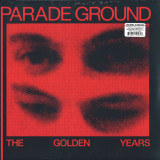
Parade Ground has always been the duo of brothers Jean-Marc and Pierre Pauly from Brussels, Belgium formed in 1981. Taking cues from Post-Punk, Coldwave, Dada and Surrealism, Parade Ground channeled suffering, tension and rage through pulsing synthesizers, skeletal guitar, severe bass and Jean-Marc’s expressive vocals as the most melodic and emotional instrument. The Golden Years is an 11-song, career-spanning collection of Parade Ground’s long out-of-print 7” and 12” singles as well as rare compilation tracks from the pioneers of electronic body music created during 1982-1988.
Parade Ground first appeared on the Nationale Rockmeeting LP in 1982, striking straight to the heart with the passionate plea “I Shut My Eyes.” Later that year the brothers met Daniel B. and Patrick Codenys of Front 242 beginning a collaborative partnership that continues to present day. In 1983 they released their debut 3-song 7” EP Moan On The Sly on the New Dance label, musically a hybrid of Joy Division and Fad Gadget. 1984 brought further explorations into the world of electronic body music with the 3-song Man In A Trance EP and 2 tracks on the live concert compilation Mask Promotion both records released on Front 242's Mask Music label. The following year the single Took Advantage/Moral Support 12” was released incorporating then, state-of-the-art modular synthesizers programmed by Daniel B. and back-up vocals from Flo Sullivan (A Formal Sigh, Shiny Two Shiny). Then in 1987 the brothers collaborated with Colin Newman of British post-punk band Wire, who produced and lent his vocals, guitars and keyboards to two songs ("Moans"/"Action Replay") while Daniel B. produced flipside "Gold Rush" on the Dual Perspective EP that stands alongside 80s anthems from Tears for Fears, Modern English, Echo & The Bunnymen. Finally in 1988 their debut album Cut Up was released on Play It Again Sam Records and featured the singles Strange World and Hollywood. In 1993 the brothers wrote and composed the vocals on two Front 242 albums Up Evil and Off. After 15 years of silence the boys released their second album Rosary in 2007 and continue to write new material and tour with their extensive catalog of dark dance classics. Each LP includes a 6-page press kit with lyrics, discography, photos and liner notes by Daniel B. of Front 242. The history of Belgian electronic music would not be complete without a trip through “The Golden Years” of Parade Ground.
The story of So-Do is both familiar and completely unique. A classically trained multi-instrumentalist with a poet’s sensibility and a passion for folk music meets a worldly bar owner with a love for psychedelia, post-punk and dub in the small town neither could bring themselves to leave. Over two years, they play dozens of shows in independent live houses across Japan, cut and self-release three singles – two 7”s and a 12” – and leave behind just eight tracks, all of which are set to be reissued for the first time forty years on.
So-Do’s Studio Works ’83-’85 collects the full output of this iconoclastic post-punk phenomenon, whose sparse, syncopated arrangements were infused with a dubbed-out flair that owed more to Dennis Bovell’s productions of Orange Juice, the Jah Wobble basslines of Public Image Limited or Adrian Sherwood’s live dubs of Mark Stewart than even they knew at the time.
Because for lead songwriter Hideshi Akuta, music offered an escape from the existential malaise of small-town life, folding a melancholy nihilism into tracks like ‘Kakashi’ and ‘Hashiru’ (which translates as ‘run’), or taking aim at the inequalities and creeping apathies of the middle classes, as he does on ‘Get Away’ and ‘Nothing’.
And if Talking Heads had CBGBs, Sex Pistols had the Roxy, then So-Do had Buddha. Influenced by Buddha venue owner and amateur producer Atsuo Takeuchi, Akuta turned So-Do’s sound towards dub, crafting playful, ironic and funky compositions that crackle with live energy at the vanguard of Japan’s nascent independent music scene.“So-Do is hard to explain,” Takeuchi says. “It’s been a struggle for years to try to find the words for our music.” The answer perhaps, is just to listen.
Both familiar and completely unique, So-Do extend Time Capsule’s genre-defining exposition of Japan’s reggae-inspired music of the ‘70s and ‘80s, as collected on the label’s two critically acclaimed Tokyo Riddim compilations, and London-based live outfit Tokyo Riddim Band.
Embracing the rip-it-up-and-start-again ethos of the early ‘80s, So-Do burned bright for a short time and then burned out. Their legacy is about to be reignited. Expect it to catch alight once more.
All songs are written & composed by Hideshi Akuta
Produced by Atsuo Takeuchi
Artwork by Ben Arfur
Liner Notes by Anton Spice, Ayana Honma, Kay Suzuki
Curated by Kay Suzuki
Licensed from Atsuo Takeuchi (Oregano Cafe)
Tape Restoration and Mastered by Mike Hillier at Metropolis Studios, London, UK
Time Capsule | TIME023 | 1983-1985 → 2025
Forgotten in the mists of Dutch electronics, when Anacalypto Records began their quest for Fairytails, they uncovered more than they bargained for. Dusting off a 1994 DAT, lettering began to reveal itself—four tracks from the original release and two unheard, unreleased works! A decision was made: two tracks from the original 12” for Side A, and the two new discoveries for Side B.
The spellbinding Fairytail Track 3 opens the record. Rich basslines and ruffled beats dance as strings soar and swoop in this fantastical floor-filler. That touch of fantasy twinkles throughout the entire EP, with dreamy mellowness weaving through key shifts and stepping grooves. This dreamy atmosphere carries into Fairytail Track 4, where snares rasp and snap above delicate notes and mischievous pads.
The flip is dedicated to the DAT discoveries. Fairytail Track 5 is a joyous romp through twilight woodlands and sweaty basements, with cascading chords and lively piano lines reveling over earthy patterns of percussion. The journey concludes with Fairytail Track 6, a bright and magical finale. Overtones of rave energy glow in this ageless, tongue-in-cheek melody, infusing the EP with a timeless vibrancy.
Four trance-dipped house treasures returned to the faithful on this remastered gem that will sprinkle happiness on any floor.
This blissful example of Lover’s Rock from 1985 showcases the very specific sonic template of a portion of Reggae music that was coming from the United Kingdom during the period - steeped in a soulful, Pop sensibility. We are also treated to a version by Lindel Lewis aka The Gentle Giant of Reggae music under the guise of One Man Band that submerges the original into a rich, sun-kissed honey, securing it firmly into the territory of Balearica. Whilst not achieving commercial success at the time, You, Me & He has grown to become a much coveted artefact and we are pleased to have lovingly reissued this gem for your listening pleasure.