Luigi Madonna returns for his first Drumcode EP in five years, teaming up with fellow Neapolitan and label favourite Robert Capuano.
We got our last taste of the creative synergy that marks Luigi Madonna and Robert Capuano’s friendship when the pair dropped ‘Limitless’ in 2017, a brilliant addition to A-Sides Vol.6. Prior to that Luigi hadn’t dropped a cut on DC since 2015’s hook-driven ‘Magic Land’, while Capuano stands as one of the label’s most infallible contributors, last year’s ‘The Walker’ EP was typically impressive.
Crafted between two studios in a pre-COVID-19 world, the three-track conceptual EP opens with ‘Mad World’, as masterfully layered industrial hits and rides depict it’s narrative, while a pulsating melodic lead ensures heavy impact. ‘System Alert’ is inspired by the destructive effects of climate change and the track’s composition mirrors this malaise, as a pitch-bending synth elicits rhythmic chaos alongside Luigi and Robert’s deft drum work. ‘Headquarter’ is steeped in drama and cinematic charm, backed by a distorted vocal sample, stormy oscillating synths and a sharp percussive backdrop.
Search:walk
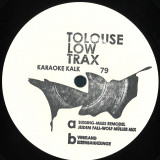
„Well recommended for the freaks“ the Manchester based independent music specialist Boomkat once finished a review about a release of Düsseldorf based DJ and producer Tolouse Low Trax aka Detlef Weinrich (also known as one fourth of the German avant-band Kreidler). What a freak distinguished we do not really know - we just assume he walks this world on a different path. Tolouse Low Trax surely does!
The latest evidence of this fact are four tracks of whom two are remixes by befriended artists, and two are coming right out of the middle of Tolouse Low Trax’s very own sense for odd and catchy grooves. His friend Miles, also known as one-half of the experimental industrial techno and dark ambient duo Demdike Stare, puts hand on the track “Sussing”, originally released on Tolouse Low Trax’s latest album “Jeidem Fall” in 2012. He covers it with an enigmatic, shadowy veil in terms of sounds, space, and obscure driving arpeggios in order to give the track a “brighter haze” feeling. A subliminal hypnotic transformation that swings with a unique dark and demanding drive. The second remix was done by Wolf Müller, a Düsseldorf based musician that released two highly acclaimed EPs on the German DIY label Themes for Great Cities. His profession as a percussionist calls the tune as he mutates the original track “Jeidem Fall” into a tribal celestial dance tune that jacks with an Afro-Baroque elegance.
Also the two EP contributions of Tolouse Low Trax himself move on very different terrains but seem to come out of the same experimental laboratory. With “Vindeland” he delivers a track full of dark synthlines and drunken shuffled patterns that morphs into a nervous soigné sensation. In contrast his arrangement “Eisenbahnzunge” starts with a celestial arpeggio until a strange alienated voice appears and everything melts layer by layer into an elliptical ambient experiment beyond the usual definition. Both tracks are deeply rooted in Tolouse Low Trax’s very own spontaneous minimal hardware approach of producing bold, hypnotic dance-not-dance music that shall not only illuminate the so called freaks!
- Limited edition first pressing on Coke Bottle Clear vinyl. - Features from Ms. John Soda and BADBADNOTGOOD's Leland Whitty - Part of Jagjaguwar's Friends Of serie "For this EP I was trying to live less in nostalgia and function less off obvious references. I worked on Pout while becoming a dad, sitting a lot in my garden, and trying to kill my ego. Tracks like 'Mountain Access' make me think about driving around Hamilton, Ontario, my home as of a year ago. I hope people can still get a chance to walk around with this on headphones or daydream while listening to this project." - Ryan Hemsworth
It is the simple thing that is so hard to do. This is the paradox that musician Lael
Neale has lived within throughout her development as an artist. It is the reason she
became enthralled with poetry. Poems are a distillation. Lael says, “this challenge to
winnow away what is unessential is the most maddening and, ultimately, rewarding
part of writing a song.”
Lael’s new album ‘Acquainted With Night’ is a testament to this poetic devotion.
Stripped of any extraneous word or sound, the songs are lit by Lael’s crystalline
voice which lays on a lush bed of Omnichord. The collection touches on themes that
have been thread into her work for years: isolation, mortality, yearning and reaching
ever toward the transcendent experience.
Lael grew up on a farm in rural Virginia but for nearly 10 years called Los Angeles
home. Those years were spent developing her songwriting and performing in venues
across the city but the right way to record the songs proved more elusive. She says,
“Every time I reached the end of recording, I felt the songs had been stripped of
their vitality in the process of layering drums, bass, guitar, violin, and organ over
them. They felt weighed down.”
In a moment of illumination, the solution presented itself: do the simple thing. In
early 2019, in the midst of major transition, she acquired a new instrument - the
Omnichord - and began recording a deluge of songs. Guy Blakeslee, who had been
an advocate for years, set up a cassette recorder in her bedroom and provided
empathic guidance, subtle yet affecting accompaniment and engineering prowess.
Limited to only 4-tracks and first takes, Lael had to surrender some of her
perfectionism to deliver the songs in their essence.
The first song she recorded was ‘For No One For Now’, which calls to mind the
agitated beat of driving fast on the freeway against the backdrop of the San
Fernando Valley’s bent palms. The song contrasts romantic idealizations with the
banality of folding sheets and toasting bread. It highlights her oft-thwarted attempts
to enjoy the day to day while her mind wanders off toward the dream, the ideal.
While Lael returned to her family farm in April 2020, Los Angeles is a player on this
album and ‘Every Star Shivers in the Dark’ is an ode to the sprawling city, the
outskirts of Eden. One can envision her walking from Dodgers Stadium to downtown,
observing strangers and her own strangeness but determined to find communion
with others. ‘Blue Vein’ is her personal anthem, a Paul Revere piece that gallops
through the town as a strident declamation. It is an amalgam of thoughts, concerns
and lessons as she nearly speaks the words, unmasked by flourishes, ensuring the
meaning cuts through.
Normally a morning person, Lael recorded most of these songs in the darkening of
the early evening, and so became ‘Acquainted With Night’.
CD in gatefold altpack.
LP first pressing on white vinyl.
Cassette with three-panel J-card in clear case.
It is the simple thing that is so hard to do. This is the paradox that musician Lael
Neale has lived within throughout her development as an artist. It is the reason she
became enthralled with poetry. Poems are a distillation. Lael says, “this challenge to
winnow away what is unessential is the most maddening and, ultimately, rewarding
part of writing a song.”
Lael’s new album ‘Acquainted With Night’ is a testament to this poetic devotion.
Stripped of any extraneous word or sound, the songs are lit by Lael’s crystalline
voice which lays on a lush bed of Omnichord. The collection touches on themes that
have been thread into her work for years: isolation, mortality, yearning and reaching
ever toward the transcendent experience.
Lael grew up on a farm in rural Virginia but for nearly 10 years called Los Angeles
home. Those years were spent developing her songwriting and performing in venues
across the city but the right way to record the songs proved more elusive. She says,
“Every time I reached the end of recording, I felt the songs had been stripped of
their vitality in the process of layering drums, bass, guitar, violin, and organ over
them. They felt weighed down.”
In a moment of illumination, the solution presented itself: do the simple thing. In
early 2019, in the midst of major transition, she acquired a new instrument - the
Omnichord - and began recording a deluge of songs. Guy Blakeslee, who had been
an advocate for years, set up a cassette recorder in her bedroom and provided
empathic guidance, subtle yet affecting accompaniment and engineering prowess.
Limited to only 4-tracks and first takes, Lael had to surrender some of her
perfectionism to deliver the songs in their essence.
The first song she recorded was ‘For No One For Now’, which calls to mind the
agitated beat of driving fast on the freeway against the backdrop of the San
Fernando Valley’s bent palms. The song contrasts romantic idealizations with the
banality of folding sheets and toasting bread. It highlights her oft-thwarted attempts
to enjoy the day to day while her mind wanders off toward the dream, the ideal.
While Lael returned to her family farm in April 2020, Los Angeles is a player on this
album and ‘Every Star Shivers in the Dark’ is an ode to the sprawling city, the
outskirts of Eden. One can envision her walking from Dodgers Stadium to downtown,
observing strangers and her own strangeness but determined to find communion
with others. ‘Blue Vein’ is her personal anthem, a Paul Revere piece that gallops
through the town as a strident declamation. It is an amalgam of thoughts, concerns
and lessons as she nearly speaks the words, unmasked by flourishes, ensuring the
meaning cuts through.
Normally a morning person, Lael recorded most of these songs in the darkening of
the early evening, and so became ‘Acquainted With Night’.
CD in gatefold altpack.
LP first pressing on white vinyl.
Cassette with three-panel J-card in clear case.
Running Circle presents China-born DJ and producer Guohan, with his debut LP Lost Sound Book.
The 16 track publication charters an otherworldly inward journey, with influences ranging from ancestral rock carvings to bustling city streets, mythical tales to sunrise and sunset. Guohan draws from many places and cultures, hiphop and jazz, traditional music and everyday life, documenting the moods and colours left out from today’s society.
The fractured rhythms and harmonies on Lost Sound Book feel like a reconstruction of memories and missing links.
Hoshina Anniversary returns from forever for a majestic dance. This is his second offering for the ESP Institute. Side A’s Karakuri contains all the elements of Hoshina’s signature sound; bouncy staccato bassline, minor chords and organ stabs, a Chick Corea-inspired Rhodes that walks all over the place, all tracked along sparse bits of Japanese percussion and cymbal that juxtapose organic texture with precision-machined timing. The lead keys feel at first as if they’re freeform, however, Hoshina’s obsession with order becomes apparent as the bars develop and his systematic control and repetition is revealed. On side B’s Michinoku, we’re treated to a deep and slow burner. A roller of a beat based on 808 toms and a pishy snare sets the somewhat bumpy base for this groove, and again the meat of the rhythm is built with dirty chords, this time on the upstroke, in an almost Reggae style. What the flipside taught us about Hoshina’s controlled chaos, is here again the lesson and perhaps even moreso. The voice of the track remains the Fender Rhodes, played in brief but wild phrases and arranged into patterns upon which Hoshina builds layers over some 8+ minutes. There is a deep and dark mood throughout both sides of the record, but perhaps more sultry than devilish, and one that listeners educated in the stoned arts will appreciate. These two songs have built the end into the beginning.
Hunt & Gather’s debut vinyl release comes by way of Pezzner’s cryptic moniker “The Native Language”. Written as a quasi-homeless man living off the rich in the San Juan Islands who writes music once per year to suffice his own delusions.
Walking the streets in these damp, anxious days that all run together lately, I was approached by a man who would blend right into the neighborhood, layered in flannel and sweatshirts for sleeping.
Rough, but for his shoes. (Never cheap out on anything that separates you from the ground.) “Pezzner,” he called out, from a safe distance. “What did the mangrove say to the marauding hordes.” My soul left my body for a moment and my voice responded on its own. “Petrichor.”
He caught my eye, nodded, left a padded envelope on the ground and vanished. The envelope had passed through many hands, slipped into the bed of a ferry-bound truck, passed from one fellow traveler to another, stashed under the counters of anarchist bookstores, left tucked between books at Little Free Libraries. The greenish stains suggested that at one point it had been swum across a lake. Another DAT, contents encoded here unabridged, and a letter from someone who called himself The Sentinel.
The Vessel lived out his days on Shaw Island, under a canopy of trees that gets smaller and smaller every season. His condition the same, any electricity lit his brain on fire, could only bring himself to compose one day a year, only at night, out of sight. Until he met The Angel, an eccentric with means, who built for him a device.
A Faraday Cage to block all electromagnetic emissions. Burlap walls, for atmosphere. A system of pulleys and levers, wood and rope, all running into a box that sat outside. An entirely mechanical control surface. No electrons in here. The Vessel lit fires, watched the shadows dance, closed his eyes and disappeared into the motion for hours at a time. The Sentinel came every morning to change the tapes. The Angel watched and pondered, his plans unknown.
The box sat sealed, bare except for another set of ideograms, scratched in day by day over time. Inside, the usual bedroom-producer shit. Outside, the ideograms told a story, passed from the Vessel to the Sentinel and drawn by the Angel, of a man who became another creature. Alert to the lowest frequencies, feeling music deep in the soil below their feet. Music that brings messages, from distant friends, warning of new creatures and the danger they brought. Skin alive to the world, so sensitive it can detect the landing of a single fly. A mind capable of keeping a map of the world inside. A mind that can look in a mirror and see a soul it knows well. A mind that can grieve.
After processing its contents, I filled the envelope with granola bars and walked it down to the market. The clerk gave me a knowing look as I placed it on the counter behind a stack of pork rinds from the previous century. As I walked out, a young man carrying a plastic bag and wearing impeccable shoes walked in.
Just when you thought every loner folk genius had been outed/discovered, hyped, and pontificated about, a new/old challenger lurks in the murky depths of time...and Maine. Sure, you have your Skip Spences, Dave Bixbys, Stone Harbours, and Perry Leopolds already, but have you heard the lonesome sound of Bill Stone? Well, don't feel bad or "unkool", hardly anyone has--unless you lived in rural Maine in the early 70s and grabbed his barely-ever seen LP in the day. Titled simply Stone, Bill's mysterious album was pressed in the micro-est of quantities, covering wistful, airy psychedelia on par with the UK's Mark Fry's classic Dreaming of Alice, while still evoking the earthy, evening-hour melancholy of Leonard Cohen or Tom Rapp. Stone was also especially influenced by one Donny P. Leitch, one Robby Zimmerman, and much trad folk, while growing up in his hometown of Old Town, Maine. Stone started out playing in a few small folk ensembles while also moonlighting with occasional solo gigs, finally recording this lone platter in 1969 in a pottery studio (!?) on a 2-track Panasonic tape recorder in Boothbay, Maine (where he says, they competed with a cat in heat). The LP features Tom Blackwell/Bill Stone-guitars, Arthur Webster-bass, Bob Blackwell/Skip Smith-drums, Bill/Beth Waterhouse on vocals. It also seems cover artist Doug Bane went on to become an acclaimed cosmic painter--committing loads of animals, psychedelic scenes, and Native American portraits to canvas, who knew? But we digress--anyhow, seems Stone's solo career slowed down after marriage hit, and he transitioned to playing covers in bars for cash, but after acquiring a masters and doctorate in education, he moved into the teaching walk of life. Bill published books and articles on subjects as diverse as school counseling and chaos theory--but now retired, he's returned to music, even recording a new album of originals and traditional numbers, based on his experiences as a cab driver (another wrinkle in the Stone Saga we must hear more of someday - but for now check out). So with Bill back in action and the world slowly crawling out of a disillusioning haze, now seems like the perfect time for a first-time-ever reissue of this incredibly rare, happy-sad, gently delicate, Stone(d) classic of a downer song-cycle.
Me And Ennui Are Friends, Baby is the latest full-length from New Zealand-born, Melbourne-based singer-songwriter, Sarah Mary Chadwick, whose brutally honest songwriting has cast her contrary to the gentleness of most current music. Comprised entirely of minimal solo piano arrangements, the album is despondently clear-eyed and smirkingly self-deprecating, completing a trilogy of records that started with The Queen Who Stole The Sky recorded on Melbourne Town Hall’s grand organ, and her only outing to date featuring a full band, Please Daddy. Each record has followed Chadwick’s internal processing after a traumatic event, with Chadwick’s zeal for psychoanalysis front and center. On Ennui, Chadwick presents an exacting intensity with her choice to pare back to piano and vocals. It’s in this stark setting that she focuses on the attempt she made on her life in 2019. The methods Chadwick employed here contrast those of her previous full-band record, which thrust her into a very different world of rehearsal, planning, restraint and control as a functional tool. The result, 2020’s critically acclaimed Please Daddy, was her most aching and engaging achievement to date: “a raw, often unnerving experience,” which “delivers compelling and uplifting catharsis” (Mojo). Recording Ennui shortly after those sessions, Chadwick concludes her trilogy by returning to the most immediate compositional process she can muster, doing it alone, with less between her and the microphone than ever before. Joined by long time production collaborators, Me And Ennui was mastered by David Walker at Stepford Audio and mixed and recorded by Geoff O’Connor at Vanity Lair—both expertly bringing scale, subtlety and intangible ascendence to this recording.
Plump is fat positive, sex positive, queer positive, feminist and anti racist with a focus on centering underrepresented and marginalized voices. Think feminist Ghetto Tech, uplifting while militant, raw and empowering. A place of refuge for everyone who has ever felt unseen or excluded no matter gender, colour or creed.
Plump is about an attitude and ethos, more than it is attached to a genre specific sound. Plump is about radical acceptance. Plump is a return to the origins of dance music as a space for people from all walks of life to be able to come together, embrace joy, pleasure and be free to truly be themselves.
Plump is a creative partnership and collaboration between Kevin Knapp and Jessica “Hutch” Hutcheson, AKA Hutchtastic. Hutch is a visual artist, vocalist, Detroit native, burgeoning producer and overall performer and art personality. Kevin Knapp is music producer, DJ and vocalist, with a slew of releases on formidable labels in the dance music industry.
Kevin also has a new streaming show on Dirtybird Live called Plump’d. The Plump’d livestream show originates from Berlin and is created by Kevin & Hutch.
Kevin says
"Plump'd is an opportunity I've been gifted in the wake of the world shutting down due to the pandemic. Life is funny that way when life closes some doors it opens others. I've been given the opportunity to host a show every Saturday night during the prime time slot, on Dirtybird's Twitch channel for Dirtybird Live. Each week my hope is to have artists I respect, revere, and consider a friend to come on and play some music with me, just for the love of the music. The show is named after our new record label and carries with it the label's ethos of going back to the roots of dance music as a place of radical acceptance."
We’ll get to the vocal content in a second, but first it’s time to acknowledge what a patchwork tapestry of genius ‘Peace is not the word to play’ is in terms of production. Large Professor being a prodigy on the SP-1200 is well established, but the way he flips parts of MFSB’s ‘TLC’ and Milly and Silly’s obscure ‘Gettin’ Down for Xmas’ with a sprinkling of Lyn Collins here establishes his credentials in the top tier.
Lyrically, it’s a tour de force, with Main Source taking exception with the misuse of the word ‘peace’ by the hip-hop fraternity. With even the most homicidal of gangster rappers dropping it at the end of tracks at the time, time was overdue for some regulation.
The album version makes its point pithily in a single verse, while the remix, included on the flip of this first ever 7” release, expands on the topic with new verses and some new samples too. It’s a welcome reminder of the time when remixes were remixes – not just the identical track with the latest hot rappers joining in.
Most of all, Main Source once again walk the fine line between lyrical lecture and head-nodding banger – the rare example of a track with a point to make that can still fill a dancefloor and get necks snapping.
• Samples MFSB’s ‘TLC’; Milly and Silly’s obscure ‘Gettin’ Down for Xmas’ and Lyn Collins
• First ever 7” release of the Remix
We’ll get to the vocal content in a second, but first it’s time to acknowledge what a patchwork tapestry of genius ‘Peace is not the word to play’ is in terms of production. Large Professor being a prodigy on the SP-1200 is well established, but the way he flips parts of MFSB’s ‘TLC’ and Milly and Silly’s obscure ‘Gettin’ Down for Xmas’ with a sprinkling of Lyn Collins here establishes his credentials in the top tier.
Lyrically, it’s a tour de force, with Main Source taking exception with the misuse of the word ‘peace’ by the hip-hop fraternity. With even the most homicidal of gangster rappers dropping it at the end of tracks at the time, time was overdue for some regulation.
The album version makes its point pithily in a single verse, while the remix, included on the flip of this first ever 7” release, expands on the topic with new verses and some new samples too. It’s a welcome reminder of the time when remixes were remixes – not just the identical track with the latest hot rappers joining in.
Most of all, Main Source once again walk the fine line between lyrical lecture and head-nodding banger – the rare example of a track with a point to make that can still fill a dancefloor and get necks snapping.
• Samples MFSB’s ‘TLC’; Milly and Silly’s obscure ‘Gettin’ Down for Xmas’ and Lyn Collins
• First ever 7” release of the Remix
- A1: Yes We Can Can – Allen Toussaint
- A2: World I Never Made – Dr. John
- A3: Back Water Blues – Irma Thomas
- A4: Gather By The River – Davell Crawford
- A5: Cryin' In The Streets – Buckwheat Zydeco
- B1: Canal Street Blues – Dr. Michael White
- B2: Brother John Is Gone / Herc-Jolly-John – Wild Magnolias
- B3: When The Saints Go Marching In – Eddie Bo
- B4: My Feet Can't Fail Me Now – Dirty Dozen Brass Band
- B5: Tou' Les Jours C'est Pas La Meme (Every Day Is Not The Same) – Carol Fran
- C1: L'ouragon (The Hurricane) – Beausoleil
- C2: Do You Know What It Means To Miss New Orleans –Preservation Hall Jazz Band
- C3: Prayer For New Orleans – Charlie Miller
- C4: What A Wonderful World (Feat. Donald Harrison) – The Wardell Quezergue Orchestra
- C5: Tipitina And Me – Allen Toussaint
- C6: Louisiana 1927 (With Members Of The New York Philharmonic) – Randy Newman And The Louisiana Philharmonic Orchestra
- D1: Do You Know What It Means – Davell Crawford *
- D2: Let's Work Together – Buckwheat Zydeco & Ry Cooder *
- D3: Crescent City Serenade – Dr. Michael White *
- D4: Walking By The River – Dr. John *
- D5: Do You Know What It Means (Feat. Donald Harrison) – The Wardell Quezergue Orchestra *
Nonesuch releases a remastered, special edition of the 2005 record Our New Orleans for the first time on vinyl. The two-LP set, also available digitally, includes five previously unreleased tracks: ‘Do You Know What It Means’, by Davell Crawford; ‘Let's Work Together’, by Buckwheat Zydeco and Ry Cooder; ‘Crescent City Serenade’, by Dr. Michael White; ‘Walking By the River’, by Dr. John; and ‘Do You Know What It Means’, by The Wardell Quezergue Orchestra featuring Donald Harrison.
The $1.5 million raised from the 2005 release went toward providing housing in partnership with low-income musicians and others through the New Orleans Habitat Musicians’ Village, a concept that was developed by New Orleans Area Habitat for Humanity, working with Branford Marsalis and Harry Connick, Jr. Habitat–built homes in the village now provide musicians and others of modest means the opportunity to buy decent, affordable housing. The centerpiece of the village is the Ellis Marsalis Center for Music, dedicated to celebrating the music and musicians of New Orleans and to the education and development of homeowners and others who live nearby.
For Our New Orleans, many of the Crescent City’s best-known musicians recorded songs that are integral to their lives and that express their feelings about the city and the trauma of Katrina. The album was made swiftly and simply, over the course of a month, in one-day sessions across the country. Nick Spitzer, host of public radio’s New Orleans–based American Routes, contributed liner notes to the record, as did Pulitzer Prize–winning author Richard Ford, also a Crescent City resident. Other producers who made enormous contributions include Mark Bingham, Ry Cooder, Joel and Adam Dorn, Steve Epstein, Joe Henry, Doug Petty, Matt Sakakeeny, and Hal Willner.
Nonesuch’s parent company – Warner Records, part of the Warner Music Group – donated all production costs for Our New Orleans as part of the Group’s larger efforts on behalf of hurricane victims on the Gulf Coast. Many others involved in creating the album also generously donated their time and services.
Nonesuch President David Bither recalls, “What was most remarkable to me was the immediate response of the musicians. Many were in New Orleans when Katrina struck. Many lost everything they owned including even the musical instruments that are their livelihood. Yet they responded within days to the question of whether they might participate in this project. The emotion and the power of Our New Orleans come both from their anguish and from their incredible generosity.”
And the label’s Chairman Emeritus Bob Hurwitz said, “When we pick up a CD booklet, we usually skip over the page that says, ‘Special thanks to…’, but in the case of Our New Orleans, it is, after the listing of the musician’s names, the most important part of this package. Everyone wanted to help – studios that insisted on contributing free time, caterers, photographers and videographers, instrument rentals, producers, engineers – every step down the line, people gave, not only their profits, but absorbed all of their costs. It was an incredible outpouring of generosity.”
“Our New Orleans is a testament to the power of music to heal and provide a sense of community,” said Marguerite Oestreicher, Executive Director of New Orleans Area Habitat for Humanity. “Musicians helped the city heal after Hurricane Katrina, and Musicians’ Village helped them come home. We’re grateful to Nonesuch and everyone who worked on this album. This year has brought new challenges to everyone, but especially to our culture-bearers. This re-release could not be more timely.”
- A1: How Sad
- A2 4: 3 2 1
- A3: Chinese Takeaway
- A4: Johnny Was A Soldier
- A5: Disco
- A6: Eyes In The Back Of Your Head
- A7: You'll Never Walk Alone
- A8: Too Young
- B1: Joker In The Pack
- B2: Lullaby
- B3: My Baby Got Run Over By A Steamroller
- B4: A Man's Gotta Do
- B5: Let's Go
- B6: Easy Way Out
- B7: Shake Rattle, Bang Your Head
- A8: I Wanna Be Sedated
- A9: Bad Boy (Single Version)
- A10: Tokyo (Single Version)
Originally released in November 1982, ‘Sound of Music’ was the second album from ‘Clockwork punks’ the ADICTS. Preceded by the release of the three track “Chinese Takeaway” EP, which also featured “Too Young” and “You’ll Never Walk Alone” - both included here as bonus tracks along with their subsequent hits ‘Bad Boy’ and ‘Tokyo’ and an unreleased version of Ramones’ classic ‘I wanna be sedated’ - the album was widely praised in the music press of the day with ‘Sounds’ saying “thank Christ for The Adicts. In this often grey and depressing world they entertain us, uplift us and unify us”.
Thirteen slices of punk/Oi! fun that made history, in a luxurious one-time GATEFOLD edition with poster, including liner notes by Mark Brennan and a total of 5 bonus tracks!
Much has changed in the musical life of renowned composer and director John Carpenter since 2016's Lost Themes II. Following the release of that album, he went on his first-ever concert tour, performing material from the Lost Themes albums, as well as music from his classic film scores. He re-recorded many of those classic movie themes for 2017's Anthology album, working alongside son Cody Carpenter and godson Daniel Davies. The following year, he was asked to executive produce and compose the music for the new Halloween movie directed by David Gordon Green, which promptly became the highest-grossing installment in the series. Now, he returns with his first album of non-soundtrack music in nearly five years, Lost Themes III: Alive After Death. Underpinning Carpenter's renaissance as a musician has been his collaboration with Cody Carpenter and Daniel Davies. They've composed and performed as a trio throughout this entire run, on studio albums, on soundtracks, and onstage. Here, the trio reaches a new level of creative mind meld. Richly rendered worlds are built in the interplay between Davies's guitar and the dueling synthesizers played by the Carpenters. "We begin with a theme, a bass line, a pad, something that sounds good and will lead us to the next layer," John says of the trio's process. "We then just keep adding on from there. We understand each other's strengths and weaknesses, how to communicate without words, and the process is easier now than it was in the beginning. We've matured." Whereas the original Lost Themes album came as a pleasant surprise after years of relative silence from Carpenter, the third installment sees him in the midst of a resurgent moment as a cultural force. The 2018 Halloween score gave his music its biggest audience in decades, and the world he releases his new album into is one that has, at long last, given him the credit he deserves as a founding father of modern electronic music.
In 2019, the power-acoustic musician Francisco Meirino presented A New Instability a commission for the venerable Ina-GRM in paris. Of course, this institution is the pre-eminent center for the research and study of electro-acoustic music dating back to founding of Groupe de Recherches Musicales in 1958 by Pierre Schaeffer. To this day, Ina-GRM continues to be at the vangarde of the electro-acoustic composition, and it is quite an accomplishment and very appropriate for Meirino to receive such a commission.
This recording for A New Instability condenses the 32-channel original piece down to a still very active stereo version. here, Meirino continues to amplify and refine his compositions that walk a fine tightrope between raw expressivity of brutalist noise and conceptual rigor of more academic pursuits. Such a work ranks him in with the likes of Zbigniew Karkowski, Dave Phillips, Puce Mary, and Illusion Of Safety.
Field recordings from a kendo dojo in his hometown of Lausanne, Switzerland cast a pugilistic, combative arch to these recordings which snap, burst, explode, and erupt with utterances of men and women engaged in hand-to-hand combat. Searing frequencies build, swarm, and amass out of these episodes rise to psychologically tense crescendo that rupture at their heights, quickly turning attention towards a violence that originates from within. It is as if the objective observations of those martial arts recordings are sublimated within a subjective experience of psychic unease, disquiet, and imbalance.
A New Instability is another magnificent chapter in the ongoing body of work for this accomplished composer of electro-acoustic noise.
- A1: Does He Have A Name?
- A2: Fill Her Up
- A3: The British Disease
- A4: Where Are They Now?
- A5: London, Can You Wait?
- B1: Mayday
- B2: As Good As It Gets
- B3: Your Love, It Lies
- B4: Rising For Sunset
- C1: For The Dead
- C2: Be My Light, Be My Guide
- C3: Speak To Me Someone
- D1: Olympian
- D2: You'll Never Walk Again
- D3: Somwhere In The World
• GENE formed in 1993, released four studio album and went on to score 10 top 40 hits
• This is their live album recorded live in the Troubadour in Hollywood Los Angels on the 1st and 2nd June 2000, originally released CD only and as a Record Store Day colour vinyl release in 2020
• This release is presented on double LP, black 180g heavyweight vinyl with printed inner sleeve
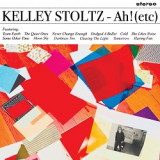
**400 ONLY REPRESS PHOTOLUMINESCENT COLOUR VINYL///!! 200 FOR EUROPE** “I was guzzling wine at my favorite bar in San Francisco, the Rite Spot, and the entertainment that night was some local opera singers singing along with a big video screen showing a collage of various operatic moments with subtitles. One particular subtitle, ‘Ah!-(etc)’ made me laugh, I thought it was a perfect description of life - the joy of existence against the etcetera of it all, the struggle. With a heavy head of rose’ it seemed like ecstatic poetry! I scribbled it on a napkin and thought it might make a good title for something” And so the mystery behind the title of Kelley Stoltz new record is solved. Less of a mystery is the quality contained therein… after 12 self-titled releases and a several more under pseudonyms, Stoltz is the word for “one-man-band-home-recording-pop-songs of idiosyncratic character.” A quick follow up to his more power pop and pub rock LP only “Hard Feelings” offering in the summer, “Ah-(etc)” finds Stoltz returning to his sweet spot, writing songs that never were, but should have been in the 60’s and 80’s.
As with other LPs Stoltz makes virtually every noise on the album which was written and recorded in 2019 at his Electric Duck Studio in. San Francisco. A few friends popped in to play along… Stoltz former bandmate, Echo & the Bunnymen’s Will Sergeant adds electric guitar to “The Quiet Ones” a sort of Scott Walker lyrical take on strangers and neighbors. Karina Denike formerly of Dance Hall Crashers adds gorgeous vocals on the bossanova groover “Moon Shy”, where Sergeant pops up again in a spoken word role on the outro. Allyson Baker of SF’s Dirty Ghosts sings on “She Like Noise”, a song Stoltz wrote for her in celebration of her love of seeing live bands.
The album was mastered by Mikey Young in Australia.