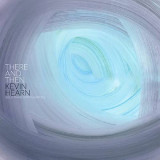
Three locations. Three pianos. Three hours on each. I was told where and when the piano would be ready. I would go, play, and leave. Very little was said. All pieces were improvised. There were no demos, run throughs, re-dos, or edits. At times I was responding to the natural reverb of the spaces, as well as the effects and sound treatments that Mark was adding in tandem with the performances.
What you hear is what happened there and then, at the end of the challenging year that was 2020. Kevin Hearn is best known as a multi-instrumentalist from Barenaked Ladies, the multi-platinum selling band he's played with for almost two decades. One of the most respected Toronto musicians of the past 25 years, Hearn's solo albums take the listener on a journey of boundless creativity often
driven by adventure and experimentation. 'There and Then' is played at 45RPM, and is intended to be enjoyed on the warmth of vinyl, but will also be released digitally.
"It's fun for me to make music that doesn't have to fit a certain criteria, whether it be regarding the style or sound, or who is playing it. When I make my own records, I can follow my heart and curiosity." - Kevin Hearn
The followup to 2019's 'Calm and Cents', which was Juno-nominated for Best instrumental Album of the Year.
Поиск:war church
Все
With 'Why Don't You Go Home' Fingier produces a monster Rhythm & Blues tune that will take you straight to the King and Federal R&B sound, and for the B side, 'Cocktail De Medianoche' is the perfect mix of Boogaloo and Northern Soul. Percussion, flute and horns will make this a Fingier favourite for lovers of Latin grooves and Uptempo Soul.
Diane Ward is singer from USA, who grew up singing Gospel in her local church. Music was always a big part of her life, and she has always had a deep interest in Rhythm & Blues and Jazz. She lived in Argentina for a couple of years, and one night Kevin saw her perform and instantly her voice blew his mind. In his words:
“She’s a proper R&B singer, she reminded me to Ruth Brown, MaryAnn Fisher or Lula Reed. She has that potent and obscure soundthat took me to those lately 50s early 60s Popcorn tracks”
With two monster tracks, calling this a ‘Double Sider’ wouldn’t be enough, both with that '60s sound we've come to expect from Fingier Records.
Gordon Koang is a fountain of warmth and joy, immediately accepting any stranger who strays into his presence. With a beaming smile that is unfettered by blindness, a condition he has lived with since birth, Gordon welcomes any and all around him, encouraging them to sit for a while and chat, maybe even to share a song.
Originating from the Nile Valley in what is now South Sudan, Koang was born blind and began playing music from an early age, busking on the streets of Juba and producing his own self-released CD-R’s and cassettes, before becoming a crowd favourite and recording a series of singles and music videos celebrating South Sudan’s cultural wealth. His music went viral, spreading throughout the country, and Koang was invited to perform at everything from weddings and political rallies to church meetings and parties alike. His reputation quickly grew as the poet and homegrown hero of the Nuer people, sometimes called the ‘Michael Jackson of South Sudan’.
In 2013, while Koang was performing to expatriate Nuer communities in Australia, renewed conflict broke out at home. He made a difficult and heartbreaking decision to not return to Sudan, applying to the Australian government for humanitarian protection. After six long years of waiting, living in a foreign country far away from his family, he now proudly calls himself an ‘Australian’, and eagerly awaits the day he will rejoin his wife and children in safety.
Unity is, remarkably, Gordon’s eleventh full-length album, and his first since coming to Australia. It is his only recorded output in a painstakingly long six years of living as an asylum seeker, mostly recorded in the last winter months of 2019, when Gordon began performing with local musicians through the Music in Exile label. The album was completed just weeks before Gordon was awarded his permanent residency. He could have had no way of knowing, and yet there is no frustration in the songs, not a shred of impatience or anger - only Gordon’s unending positivity, his love of all people and of the world he has never seen.
As funny as it may sound, Anaïs Mitchell has spent the past 15 years in some kind of hell. OK, not actual hell, but the multi-faceted world of Hadestown, a musical project she began in Vermont in 2006 that has grown into a Tony®- and Grammy®-award-winning Broadway phenomenon with touring editions now delighting audiences as far away as South Korea.
“I experienced so much joy working on Hadestown, but it just kept ramping up and up and requiring more and more attention,” Mitchell admits. “I had to become so single-minded and really put blinders on to my other creative life.” As it did for many artists, the COVID-19 pandemic unexpectedly offered Mitchell a blank slate to reconnect with her own music. The result is a new self-titled album made with close collaborators from Bon Iver, The National and her own band Bonny Light Horseman, Mitchell’s first collection of all-new material under her own name since 2012’s Young Man in America.
“I was nine months pregnant when the pandemic reached New York, so we made an 11th hour decision to leave and have the baby in Vermont,” Mitchell recalls. “We left the city and had the baby a week later, and then like everyone, we were in the midst of this unprecedented stillness. It felt like I could see behind me: oh, there’s New York City. There’s Hadestown. There’s my life with just one kid. A certain kind of stress and expectations. In Vermont, we moved onto my family farm and lived in my grandparents’ old house, with a new baby. I’d look at pictures on my phone from a few months earlier and wonder, whose life was that? This record, and the songs that are on it, came out of that time. I got into a flow again that I hadn’t felt in a really long time.”
Dubbed by NPR as “one of the greatest songwriters of her generation,” Mitchell is a master of the worlds of narrative folksong, poetry and balladry. Those talents are evident from the first moments of the new album, as Mitchell narrates what she calls “an unbearably romantic” trip over the Brooklyn Bridge colored by Bon Iver member Michael Lewis’ heartstring-tugging saxophone accompaniment. “Having left New York, I was able to write a love letter to it in a way I never could when I was living there,” she says. “It was like, fuck it. This is how I feel. There is nothing more beautiful than riding over one of the New York bridges at night next to someone who inspires you.”
Produced by Mitchell’s Bonny Light Horseman bandmate Josh Kaufman, the album proceeds to chronicle Mitchell’s reconnection with the Vermont roots that have been so formative in her life and music. “Bright Star” finds her making peace with the idea of being at peace in the familiar setting of her grandparents’ house, while “Revenant” was inspired by paging through a box of journals and letters belonging to herself and her grandmother — “a very pandemic activity,” she says. “That house is literally my happy place. I can picture myself as a kid, in this house, laying on the carpet with a sunbeam coming through the sliding glass door. There’s something about it that is really connected in my mind to my childhood and a very free, imaginative, creative time. “Revenant” has a lot to do with that house and reconnecting with my childhood self.”
Mitchell concedes that she tends “to be someone who thinks it has to be hard in order for it to be good or beautiful,” but that feeling has changed, partly thanks to her deep connection with musicians she’s met through the 37d03d collective established by The National’s Aaron and Bryce Dessner and Bon Iver’s Justin Vernon. During the pandemic, some of those artists participated in a “song a day” writing group — an idea Mitchell says is usually “totally opposite of how I roll. But it really helped me to gain access to some kind of trust and intuition and flow. I began a bunch of these songs while doing that.”
“It unlocked something that allowed me to finish a bunch of songs I’d been sitting on, and feeling a bit paralyzed about how to finish them,” she continues. “Because no one was touring, it’s not like I was playing them for anyone before we were in the studio. In other times, I’ve trotted things out in advance. Here, it was like, here’s all these brand new songs. Let’s discover what they can be. That was really exciting.”
That discovery process took flight at Dreamland Recording Studios outside Woodstock, N.Y., which Mitchell describes as “this weird, janky, beautiful church - it’s my favorite studio in the world.” Kaufman, Lewis and Big Red Machine drummer JT Bates formed a core band around Mitchell, while Aaron Dessner and Thomas Bartlett joined the sessions mid-week on guitar and piano, respectively.
After the appropriate COVID tests came back negative, “it was a pretty extraordinary feeling to hug, kiss and share the same space playing together,” Mitchell says. “We went into that world for a week and didn’t leave the studio for any reason. I felt very safe with all those guys. It was warm and joyful.”
Mitchell says this environment brought out unexpected details in the material, which was recorded almost entirely live together in the room. “Sometimes we tried separating things out, like vocals, but we always ended up back in the room together,” she says. Indeed, after spending the better part of a day recording overdubbed versions of “Little Big Girl” that nobody loved, the musicians gave up and tracked it again live. “We got so frustrated that we went in and I was like, I’m just going to sing this as hard as I fucking can. It felt like that’s what the song wanted to be,” Mitchell says. “It felt like all those songs wanted to be recorded as live as possible.” The exception to the rule was Nico Muhly's arrangements for strings and flute, which were added from New York City afterward.
Mitchell will debut the new material during various headline tours in the U.S. and Europe in 2022, at which she’ll be accompanied by players from the album. On stage, she can’t wait to further hone the sights, sounds and scenes that bring the songs to such vivid life. “I’ve spent a lot of time trying to write in the voice of other characters, especially with Hadestown. It’s fun for me, but these songs are not that,” she says. “Weirdly, they’re all me. The narrator is me. That’s why it felt right to self-title the album. It felt like after so many years of working on telling other stories, now here are some of mine.”
As funny as it may sound, Anaïs Mitchell has spent the past 15 years in some kind of hell. OK, not actual hell, but the multi-faceted world of Hadestown, a musical project she began in Vermont in 2006 that has grown into a Tony®- and Grammy®-award-winning Broadway phenomenon with touring editions now delighting audiences as far away as South Korea.
“I experienced so much joy working on Hadestown, but it just kept ramping up and up and requiring more and more attention,” Mitchell admits. “I had to become so single-minded and really put blinders on to my other creative life.” As it did for many artists, the COVID-19 pandemic unexpectedly offered Mitchell a blank slate to reconnect with her own music. The result is a new self-titled album made with close collaborators from Bon Iver, The National and her own band Bonny Light Horseman, Mitchell’s first collection of all-new material under her own name since 2012’s Young Man in America.
“I was nine months pregnant when the pandemic reached New York, so we made an 11th hour decision to leave and have the baby in Vermont,” Mitchell recalls. “We left the city and had the baby a week later, and then like everyone, we were in the midst of this unprecedented stillness. It felt like I could see behind me: oh, there’s New York City. There’s Hadestown. There’s my life with just one kid. A certain kind of stress and expectations. In Vermont, we moved onto my family farm and lived in my grandparents’ old house, with a new baby. I’d look at pictures on my phone from a few months earlier and wonder, whose life was that? This record, and the songs that are on it, came out of that time. I got into a flow again that I hadn’t felt in a really long time.”
Dubbed by NPR as “one of the greatest songwriters of her generation,” Mitchell is a master of the worlds of narrative folksong, poetry and balladry. Those talents are evident from the first moments of the new album, as Mitchell narrates what she calls “an unbearably romantic” trip over the Brooklyn Bridge colored by Bon Iver member Michael Lewis’ heartstring-tugging saxophone accompaniment. “Having left New York, I was able to write a love letter to it in a way I never could when I was living there,” she says. “It was like, fuck it. This is how I feel. There is nothing more beautiful than riding over one of the New York bridges at night next to someone who inspires you.”
Produced by Mitchell’s Bonny Light Horseman bandmate Josh Kaufman, the album proceeds to chronicle Mitchell’s reconnection with the Vermont roots that have been so formative in her life and music. “Bright Star” finds her making peace with the idea of being at peace in the familiar setting of her grandparents’ house, while “Revenant” was inspired by paging through a box of journals and letters belonging to herself and her grandmother — “a very pandemic activity,” she says. “That house is literally my happy place. I can picture myself as a kid, in this house, laying on the carpet with a sunbeam coming through the sliding glass door. There’s something about it that is really connected in my mind to my childhood and a very free, imaginative, creative time. “Revenant” has a lot to do with that house and reconnecting with my childhood self.”
Mitchell concedes that she tends “to be someone who thinks it has to be hard in order for it to be good or beautiful,” but that feeling has changed, partly thanks to her deep connection with musicians she’s met through the 37d03d collective established by The National’s Aaron and Bryce Dessner and Bon Iver’s Justin Vernon. During the pandemic, some of those artists participated in a “song a day” writing group — an idea Mitchell says is usually “totally opposite of how I roll. But it really helped me to gain access to some kind of trust and intuition and flow. I began a bunch of these songs while doing that.”
“It unlocked something that allowed me to finish a bunch of songs I’d been sitting on, and feeling a bit paralyzed about how to finish them,” she continues. “Because no one was touring, it’s not like I was playing them for anyone before we were in the studio. In other times, I’ve trotted things out in advance. Here, it was like, here’s all these brand new songs. Let’s discover what they can be. That was really exciting.”
That discovery process took flight at Dreamland Recording Studios outside Woodstock, N.Y., which Mitchell describes as “this weird, janky, beautiful church - it’s my favorite studio in the world.” Kaufman, Lewis and Big Red Machine drummer JT Bates formed a core band around Mitchell, while Aaron Dessner and Thomas Bartlett joined the sessions mid-week on guitar and piano, respectively.
After the appropriate COVID tests came back negative, “it was a pretty extraordinary feeling to hug, kiss and share the same space playing together,” Mitchell says. “We went into that world for a week and didn’t leave the studio for any reason. I felt very safe with all those guys. It was warm and joyful.”
Mitchell says this environment brought out unexpected details in the material, which was recorded almost entirely live together in the room. “Sometimes we tried separating things out, like vocals, but we always ended up back in the room together,” she says. Indeed, after spending the better part of a day recording overdubbed versions of “Little Big Girl” that nobody loved, the musicians gave up and tracked it again live. “We got so frustrated that we went in and I was like, I’m just going to sing this as hard as I fucking can. It felt like that’s what the song wanted to be,” Mitchell says. “It felt like all those songs wanted to be recorded as live as possible.” The exception to the rule was Nico Muhly's arrangements for strings and flute, which were added from New York City afterward.
Mitchell will debut the new material during various headline tours in the U.S. and Europe in 2022, at which she’ll be accompanied by players from the album. On stage, she can’t wait to further hone the sights, sounds and scenes that bring the songs to such vivid life. “I’ve spent a lot of time trying to write in the voice of other characters, especially with Hadestown. It’s fun for me, but these songs are not that,” she says. “Weirdly, they’re all me. The narrator is me. That’s why it felt right to self-title the album. It felt like after so many years of working on telling other stories, now here are some of mine.”
Emerging like and ornate relic, Austin-based power trio Grivo combine
slow, methodical hooks and warm tube amplifers to artfully re-establish
the line between heavy guitars and downtempo pop
Grivo's tones and effects are utilised as active compositional elements, crafting
and pacing their infectious riffs to allow the saturated guitars and bruising lowend to fully bloom. Within the tidal sound waves and bleak timbre, Grivo forges a
distinctive personal connection that challenges the modern defnitions of doom
metal and shoegaze.Shipping on or around 28th January 2022.
A LOST RECORDING OF UNTAMED APPALACHIAN MUSIC.
160 gram black vinyl LP in gold & black color reverse-board jacket. Co-release with Jalopy Records.
In 1972, the renowned and singular folk musician Roscoe Holcomb left his home in rural Daisy, Kentucky and embarked on a west coast tour with Mike Seeger in 1972, which included a performance at The Old Church in Portland, Oregon - a beautiful Carpenter Gothic church built in 1882. Decades later, two particular reels were discovered deep within a pile of 1/4” tape in a shadowy corner of the KBOO Community Radio archives in Portland. Incredibly, those tapes contained the sole surviving evidence of a strikingly intimate and raw performance by Roscoe Holcomb, whose cascading and haunting banjo, guitar and voice echoed and saturated the room and hushed audience.
In contrast to Roscoe’s rarely documented (and at times restrained) live performances at folk festivals and television programs, Roscoe seems to have felt more familiar and spiritually moved in the old church that night. Heard here are standout versions of Appalachian folk-blues classics such as Single Girl, John Henry, East Virginia Blues, Swanno Mountain and more. Once cited as Bob Dylan’s favorite singer, Roscoe Holcomb appears at the peak of his powers here, showcasing his immense vocal talents on an extended acapella version of “The Village Churchyard”. The recording itself is warm and mysterious, sounding like the room itself is alive with the spirit, while the rumbles of trucks and hints of city sounds peek through the walls from the outside streets.
- A1: She (Bbc Live Session)
- A2: When I Come Around (Bbc Live Session)
- A3: Basket Case (Bbc Live Session)
- A4 20: 00 Light Years Away (Bbc Live Session)
- B1: Geek Stink Breath (Bbc Live Session)
- B2: Brain Stew/Jaded (Bbc Live Session)
- B3: Walking Contradiction (Bbc Live Session)
- B4: Stuck With Me (Bbc Live Session)
- C1: Hitchin' A Ride (Bbc Live Session)
- C2: Nice Guys Finish Last (Bbc Live Session)
- C3: Prosthetic Head (Bbc Live Session)
- C4: Redundant (Bbc Live Session)
- D1: Castaway (Bbc Live Session)
- D2: Church On Sunday (Bbc Live Session)
- D3: Minority (Bbc Live Session)
- D4: Waiting (Bbc Live Session)
Between 1994 to 2001, Green Day would visit the BBC’s Maida Vale Studios in London four times and record live sessions for Radio 1’s “Evening Show” and its DJ Steve Lamacq.
On December 10th, Warner Records will release Green Day ‘BBC Sessions’, a 16-track collection of these recordings which documents those sessions, all of which are being released for the first time.
This compilation includes many of the band’s hits including “When I Come Around”, “Basket Case”, “Brain Stew/Jaded” and “Minority”.
- A1: Joyride
- A2: Hotblooded
- A3: Fading Like A Flower (Every Time You Leave)
- A4: Knockin’ On Every Door
- A5: Spending My Time
- A6: Watercolours In The Rain
- B1: The Big L
- B2: (Do You Get) Excited?
- B3: Small Talk
- B4: Physical Fascination
- B5: Things Will Never Be The Same
- B6: Perfect Day
- C1: Soul Deep
- C2: I Remember You
- C3: Church Of Your Heart
- C4: The Sweet Hello, The Sad Goodbye
- C5: Fading Like A Flower (Us Single Version, Humberto Gatica Mix)*
- D1: Joyride (Us Single Version, Brain Malouf Mix)
- D2: Soul Deep (Tom Lord-Alge Mix)
- D3: Church Of Your Heart (Us Adult Contemporary Mix)*
- D4: Hotblooded (Live Sydney Dec 1991)
- D5: Fading Like A Flower (Every Time You Leave) (Live Sydney Dec 1991)
- E1: Joyride (T&A Demo – May 23, 1990)
- E2: Hotblooded (T&A Demo – Jan 23, 1990)*
- E5: Spending My Time (T&A Demo – May 24, 1990)
- E6: I Remember You (T&A Demo – Apr 1, 1990)
- E7: Watercolours In The Rain (T&A Demo – Jan 24, 1990)
- F1: The Big L. (T&A Demo – Apr 1, 1990)
- F2: (Do You Get) Excited? (T&A Demo – Aug 19, 1989)
- F3: Small Talk (T&A Demo – Aug 30, 1990)*
- F4: Church Of Your Heart (T&A Demo – Jan 8, 1990) *
- F5: Physical Fascination (T&A Demo – Jan 3, 1990)*
- F6: Things Will Never Be The Same (T&A Demo – Jun 17, 1989)
- F7: Perfect Day (T&A Demo – Aug 23, 1990)
- G1: Sweet Thing (T&A Demo – Oct 28, 1990)*
- G2: Seduce Me (T&A Demo – Aug 22, 1990)
- G3: Run Run Run (T&A Demo – Jan 10, 1990)*
- G4: Things Will Never Be The Same (T&A Demo – Sep 17, 1989)*
- G5: Love Spins (T&A Demo – Jan 3, 1990)
- G6: Come Back (Before You Leave) (T&A Demo – Apr 8, 1990)
- G7: The Sweet Hello, The Sad Goodbye (T&A Demo – Mar 16, 1990)*
- H1: Hotblooded (T&A Demo – Dec 13, 1990)
- H2: Things Will Never Be The Same (T&A Demo – Dec 13, 1990)
- H3: Another Place, Another Time (T&A Demo – Jan 11, 1990)*
- H4: I Remember You (T&A Demo – Mar 15, 1990)*
- H5: Queen Of Rain (T&A Demo – Jan 2, 1990
- H6: The Big L. (T&A Demo – Mar 29, 1990)
- H7: Joyrider (T&A Demo – May 22, 1990)
- E3: Fading Like A Flower (T&A Demo – Aug 31, 1990)
- E4: Knockin’ On Every Door (T&A Demo – Aug 15, 1989)
Swedish group Roxette celebrates the 30th Anniversary of their third album “Joyride”, following the band’s spectacular global breakthrough with “Look Sharp!” in 1989. The 30th Anniversary of ”Joyride” will be celebrated with the release of a 4-album vinyl and a 3-CD box, containing the original release as well as previously unreleased or hard-to-get material, that paints a fuller picture of a unique time in pop history. A richly illustrated 32 page booklet tells the story.
Joyride” was the album that was supposed to cement Roxette’s new-found status as a global hit-makers. Which indeed it did. On May 1, the title track zoomed all the way up to #1 position on the Billboard Hot 100 chart – setting a record no Scandinavian group or artist has yet been able to break, helping to make “Joyride” a 11+ million seller.
Twelve of the songs are previously unreleased, among them the first recording of ”Hotblooded”, which originally was meant to be the album’s opening track until ”Joyride” knocked it down a notch, giving the album and the upcoming “Join the Joyride” World Tour its name. The “Joyride” box set also offers a chance to hear two previously unreleased demos of songs originally released by Per’s former group Gyllene Tider, who in 1984 tried to break the international market with the album “Heartland Café”.
Red Vinyl
nown for her delicate compositions, soaked in dream-like surrealism, Icelandic musician Sóley has attracted a huge following since launching her solo career back in 2010. Her 2012 single ‘Pretty Face’ went on to generate an enormous amount of buzz, and quickly became a viral sensation. Now, with three solo LPs under her belt, Sóley is preparing to debut a completely new sound via the release of her new concept album, Mother Melancholia, on October 22nd.
Described by the artist as "Nosferatu meets Thelma and Louise in a vampire church under the watchful eye of David Lynch", Mother Melancholia is the soundtrack to the end of the world as we know it. As a self-confessed news addict, Sóley became obsessed with the idea that the world is ending. Having surrounded herself with real-life stories of global warming and patriarchal politics she couldn’t shake the feeling that she was going to die. This feeling was so all encompassing that it sparked the idea for a new project. Could there be a soundtrack for the last days of humans on earth? How would that sound?
“I read books about possible dystopian worlds and started writing poems about irrational and in love characters who live in gray and cold imaginary loneliness. In each other’s burning arms. Walking in circles with no way out” she explains. “After all, the album reflects our life here and now. Our life and reality is a kind of dystopian world.”
Whilst writing the album, which serves as a tongue-in-cheek eulogy to our planet, Sóley began reading about ecofeminism, a branch of feminism which uses the concept of gender to analyse the relationship between humans and the natural world. Ecofeminism emphasizes that both women and nature must be respected but also separated. Since the beginning of time, the natural world has been synonymous with female identity, phrases like Mother Nature are commonplace. “The patriarchy views women as volatile and hysterical. Earth and women are either our saviours or our destroyers,” explains Sóley. “It’s so easy to abuse the earth, like the patriarchy has abused women since the dawn of time, then ask for forgiveness afterwards and promise they´ll never do it again”.
The new album sees Sóley move away from the indie-pop of her previous releases. She began by experimenting with writing songs on the accordion, allowing her a new sense of freedom in her writing. The process allowed her to broaden her horizons even further and experiment with a whole range of new and exciting sounds. “I bought myself a theremin as I was really excited about the unpitched sound and there is no perfect pitch during the end of days,” she laughs. “I also bought a mellotron, my first moog and a cello and taught myself how to play each of them. All of these new instruments are particularly suitable for the kinds of aesthetic inconveniences which I have learned to embrace.”
Album opener ‘Sunrise Skulls’, one of the most cinematic moments on the album, was inspired by the Me Too and SlutWalk movements and tells the story of a group of women who rise up and fight the patriarchy. ‘Blows Up’, a track that would be at home on any horror soundtrack, is a sarcastic love letter from the Earth to humans. Standout track ‘Desert’ is an incredibly moving song dedicated to the next generation. “It’s about the guilt you feel, as a mother, for having children and leaving them on the frontline. My daughter, for example, will take over this inevitable war” explains Sóley.
In true soundtrack style, the album flows through the end of the world in chronological order, closing with the Earth’s final moments. ‘Sundown’ is a dark piano ballad detailing human kind’s final day on Earth. “And everyday, I dig my own grave, and as I dive in you´ll hold my hand” she sings, over twinkling piano and swirling synths. We then hear the world end on ‘XXX’, a dark and swirling soundscape that swells before fading to silence. On ‘Elegía’ the silence then turns to the sound of the ocean, as we hear the Earth, like a woman finally free from a violent relationship, healing on her own.
Mother Melancholia is the mark of an artist confidently striding into more experimental territory. With a lengthy and successful career behind her, Sóley felt compelled to try something new and express the real her. The music might be shrouded in darkness but it’s a move that fills her with joy and freedom. “I hope that people not only enjoy the new sound, but also that Mother Melancholia might raise some questions in people, particularly women,” she says. “I’m under no illusions that this album will change the world but I hope that people can connect with the idea”.
Emerging from the ashes of the band Church Of
Void, there is a new force rising up to pursue a
path in the name of doom. Fimir are set to release
their blistering debut album, ‘Tomb Of God’.
Fimir were founded in 2019 by former Church Of
Void members G. Funeral, Magus Corvus, H.
Warlock, A.D. and Septic Apes’ drummer H.
Wizzard. From a mere spark in the dark and a
distant echo of forgotten riffs haunting in emptiness
from a collapsed doomstar of their former band,
Fimir got rid of their ghosts and started to work on
their first album right away, until the world went into
lockdown.
The five-piece collective, hailing from the frozen
wastelands of Finland, used their time and
creativity wisely, and managed to put the final
touches on their upcoming debut, featuring six
heavy cosmic tracks unleashing an enthralling
blend of razor sharp riffage, haunting occult vibes,
ambient atmospheres and classic doom metal.
For fans of Black Sabbath, Tiamat, Type O
Negative, Pentagram, Church Of Void, Reverend
Bizarre, Candlemass.
LP on cyan coloured vinyl.
Night Divine is a series of hymns covered by Brian Fallon. This is a project he's been wanting to create for a long time, inspired by his time singing in the church choir as a child: “These are some of the very first sounds I remember hearing as a child. My mother used to sing these hymns everywhere she went. I felt it was time for me to join in.” He finally got the opportunity to make the intimate record during lockdown, with background vocals by his mother. The lead singer of beloved heartland-punk band The Gaslight Anthem, Brian Fallon stepped away from that sound and into a more soulful singer/songwriter territory on his third solo album, Local Honey. Produced by Grammy-award winning producer Peter Katis (The National, Frightened Rabbit, Death Cab for Cutie), the album debuted at #1 Americana/Folk Album Sales, #2 Current Rock Albums, #3 Americana/Folk Albums, and #9 LP Vinyl Sales. It was largely praised as one of his best works, with Rolling Stone saying “Local Honey is as warm and comforting as its title, full of hooks and narratives that draw you in” (Best Country & Americana Albums of 2020) and Kerrang saying “No matter what side of the genre he sets his mind to, Brian always delivers the goods” (Best Albums of 2020).
Horace Tapscott's Pan-Afrikan Peoples Arkestra (P.A.P.A.) was one of the most transformative, forward-thinking and straight-up heavy big bands to have played jazz in the 1960s and 1970s. If P.A.P.A. doesn't have the interstellar rep of that other famous Arkestra, and if the name Tapscott doesn't ring bells like Monk or Tyner, there's a reason why: in an industry dominated by record labels, a band that doesn't record doesn't count. And the Pan-Afrikan Peoples Arkestra didn't record for nearly twenty years. But recording success was never their concern -- they weren't about that. First formed as the Underground Musicians Association in the early 1960s, Tapscott always wanted his group to be a community project.
From their base in Watts, UGMA got down at the grassroots. The group was renamed the Pan-Afrikan Peoples Arkestra in 1971, and soon after they established a monthly residency at the Immanuel United Church of Christ which ran for over a decade, while still playing all over LA and beyond. But they never released a note of music. It was the intervention of fan Tom Albach that finally got them on wax. Determined that their work should be documented, Albach founded Nimbus Records specifically to release the music of Tapscott, the Arkestra, and the individuals that comprised it. The first recording sessions in early 1978 yielded enough material for two albums, and the first release was Flight 17. The album commences with the magnificent title track. It is effectively in three parts. It begins with unaccompanied pianos. Then the ensemble embark on a dense, circular and mechanical movement, a platform for horns and pianos to swoop and dive. We return to Earth with a beautiful solitary flute. The second track, the piano-centric, ‘Breeze’ is different to ‘Flight 17’ in intensity and also brevity but it is quietly as daring as the title track. It concludes with a moving lush wash from the full Arkestra, which sound almost like strings only more substantial. These first two tracks take full advantage of the texture of the unusual mix of the various instruments. Next though, it’s a significant change with ‘Horacio’, which is an exuberant Latin infused jingle. It’s unlike anything else on the album. I like to think it was named after the conductor’s Cuban alter-ego! ‘Clarisse’ gracefully switches between slow blues and bop and is bookended with a grand vaguely East Asian theme. The busy bass line introduces ‘Maui’. As with the previous track, it moves between a number of contrasting melody lines and rhythms but there’s still space for a tuneful sax solo.
This is a must-have album. I think the first two tracks on their own make this release essential. Kevin Ward/UK Vibe/Boomkat
FULL OF HELL return with their highly anticipated new album, Garden Of Burning Apparitions. The new album, a genre-bending blitzkrieg of hardcore, grind and death metal, sees the band expand upon the very elements that have propelled them to the forefront of extreme music over the last decade. Produced by Seth Manchester, Garden of Burning Apparitions also sees FULL OF HELL adding new dimensions to their warp-speed hellscape. Guitarist Spencer Hazard and bassist Sam DiGristine's monstrous riffs now have an added noise-rock influence, while drummer Dave Bland commands the rhythm section at blazing speeds.
Lyrically, Garden of Burning Apparitions sees vocalist Dylan Walker exploring (anti)religion, life's impermanence and the fear that comes with knowing death is inescapable. "Industrial Messiah Complex” grinds organized religion to a pulp in under 90 seconds, while Walker contemplates the commodification of spirituality seen in America’s vast network of garish mega-churches and how these practices are at odds with true spirituality. Meanwhile, “Reeking Tunnels” rides a strident noise rock riff down into the sewer. It’s a metaphor for the physical and mental space we become trapped in when we live in a perpetual state of fear and hate. Elsewhere, justifiable ochlophobia propels the guttural death metal blast of “Eroding Shell.” Lyrically, the song seeks to capture our fear of the violent, ignorant mob—a scene glimpsed far too often in this volatile era.
In the end, FULL OF HELL’s boundary smashing has paid off again. “I think it’s good that we tried not to pigeonhole ourselves early on,” Walker reflects. “Because now, 10 years in, we have the opportunity to make whatever record we want, within reason, and people will follow along.”
UK multi-instrumentalist and story-teller Mara Simpson's new album In This Place will be released on September 24th, 2021. A heady blend of alt-folk, analogue synth and classical composition, In This Place is a tale of quiet rebellion, and taking back control. Fittingly, the new album marks the start of another new journey for Mara. In This Place will be the first record to be released on Downfield Records, a non-profit imprint set up by Simpson, placing artists at it’s centre. “I want to try and promote transparency and equality, assist other artists to get public funding and to ‘pay’ forward the time and resources I’ve benefited from,” she says. The label’s mission is to see musicians paid fairly and release records through a creative and joyous process.
Whilst the struggles of 2020 will go down in history, for Mara it was 2019 that was the tough one. A year spent consumed by worry, whilst in and out of hospital with her one year old daughter, had left Mara feeling like she was playing a constant game of catch up with a world that wouldn’t slow down. With songs ready to be recorded for her new album, she headed into the studio. “I stepped into the studio not needing my hand held, just my voice heard” explains Mara, who quickly came to the realisation that she was working in a toxic environment. Enough was enough
It was whilst waiting for a train that she had the sudden realisation that the album she was recording would never see the light of day. Struck by an overwhelming feeling of failure, Mara began to ruminate on the time and money she had wasted but then something clicked. “Perhaps it’s something about train stations, the coming and the goings, that allows a stagnating frame of mind the grace and space to clear” she says. “The funny thing is, upon realising failure, the despair I’d been feeling was now replaced with something else...Relief”.
Feeling re-energised, Mara called her dream producer Ellie Mason, of Voka Gentle, and together the pair began working on a new record. “I’ve been more hands-on with this album than I’ve ever been, taking a much more active role in production. Throughout the whole process Ellie has heard my voice, and been open to any possibility” explains Mara. “We’ve stumbled across golden moments, recording four part harmonies in Brighton’s oldest church, using every drum there is in Brighton Electric, layering New Zealand bird song with tape delayed piano, all thanks to her nurture, playfulness and kindness” she continues.
Album opener ‘Serena’, named after the apartment building in Brighton where Mara’s daughter was born, is based on the experience of becoming a mother and the responsibility of making important healthcare decisions. “How will I know how to love you” she sings over undulating synths and sparse piano chords. Title-track ‘In This Place’ is about the confrontation between mother and new-born child. The ‘sizing-up’ of one another as they embark on a new journey together. “When I left home to travel around the world and was so worried about breaking my Mum’s heart,” says Mara. “I just remember her saying that your children are never yours to keep. This is a song about the rawest of loves, and the fact that however much we love someone, they are never ours, and the beauty in that.”
In addition to the experience of motherhood, the songs on In This Place take inspiration from a wide range of places, including Mara’s ‘second home’ New Zealand. ‘Christchurch’, written in response to the Christchurch Mosque shootings in 2019, layers New Zealand birdsong on top of swirling piano and moving choral vocals. ‘Fault Lines’ was inspired by The Waitangi treaty. Signed in 1840 in New Zealand by the British Crown and Maori chiefs. The British understood that the Maori were signing over land that the British could now govern and effectively ‘own’, however to the Maori people it is impossible to own land, in the same way that you can’t ‘own’ air. “We live and die, the land remains and we are just it’s keepers for the very short time we are here. This song is about us not owning this earth - how can we? We are only the guardians of it while we are here” says Mara.
Backed by a band of accomplished musicians (Jools Owen (Bears Den) on drums, James Smith (Anaïs Mitchell) on banjo, Alexandra Hamilton-Ayres on clarinet and strings by Poppy Ackroyd) on In This Place, Mara sounds the most confident she’s ever sounded. With her new material, Mara Simpson hopes to promote a gentle, yet radical shift toward kindness and it’s this warmth that can be both heard and felt across her new record.
Motoko & Myers is the collaborative project of Bay Area-based duo Wonja Fairbrother and Daniel Letson. “Colocate” follows their 2018 debut release on the Open Hands Real Flames imprint, further developing their distinctive style which combines melodic, pop song structures with live improvisation and odd or no-meter approaches to rhythm and timing. It is a collection of bright, addictive listening, full of tracks that manage to feel at once hooky and aleatory, naive and rigorously arranged.
Recorded and assembled sporadically over a period of several years, the album’s idiosyncratic palette was achieved through much technical and methodological eccentricity: “4-handed” collaborative keyboard playing; 12-bit sampling and archaic presets; field recordings of cicadas in Louisville, Kentucky and church bells in Freiburg im Breisgau. The album’s nine tracks exude a homespun quality that is rare to find in contemporary electronic music – hazy, warm, and disarmingly organic.
Boy Golden has a purpose: enjoy each day and make good music. Founder and minister of The Church of Better Daze, he wants to help people seeking to improve on yesterday’s themes. His songs, like hymns, are hopeful, fresh and upbeat. KD & Lunch Meat is fluorescent and fun, like its namesake, and easily ingested. Something to Work Towards searches for the meaning in life, while Smoke on the Breeze and Any Way It Works are warm, tender and linger like perfume. Church of Better Daze is the inspirational, musical manifesto. The harmonies are the collective idea of working together, the mellow melodies keep our hopes alive and the lyrics are golden rules to live by: Follow your heart / Make good art / Call your momma / Work real hard. Redefining jam band and stoner cultures by turning dead heads into lively brains, Boy Golden wants to unite us all in a hazy dream under one roof. “We’re all the same at the Church of Better Daze,” he sings. Find unity in the congregation of these 11 tracks, which redefine the precedent for collaboration, common goals and cannabis. If you’re open to learn, and can speak your truth, you can blaze and still get paid in Boy Golden’s Church of Better Daze.
For RE:WARM 006 we present a collection of music from one of San Francisco’s best kept secrets, Dr Robert Blackman. “The Unimaginable DreamWorks” is a collection of five tracks from three musical masterpieces he put out between 1983-1985 on his own ‘Riverwinds’ imprint. A practising chiropractor by day with his own holistic health centre in San Francisco, these songs became his love, passion and focus. Together with Michael Pluznick, a very accomplished percussionist they painstakingly put together an ensemble of musicians to bring the tracks to life. The melting pot for this body of work was Hyde Street Studios which still today is based in deepest San Francisco and has seen names such as Neil Young, Earth Wind & Fire and John Waters to name a few grace its studio space. Singers and musicians alike came together from all over the world to bring Robert’s vision to reality. This included an Australian didgeridoo player, an electric violin and piano player from Paraguay as well as singers and a choir from the surrounding local churches. Together through Dr Robert Blackman’s eyes they created a fabulous sound of twisted disco punk funk like no other that still sounds relevant today as it did back in the eighties. The energy and the stories are clear to hear throughout the five tracks which make up “The Unimaginable DreamWorks” of Dr. Robert Blackman 1983-1985. Artwork was key to the releases and the “Peace Is Alive” painting incorporated on the label of the release appeared in TIME magazine in 1984 when Dr Robert Blackman was treating combat vets, suffering from PTSD and this was the name of the job fair for veterans he set up. To promote the album at the time Dr Robert Blackman flew up over San Francisco in a single engine prop airplane loaded with 50,000 leaflets
Im Jahr 2008 war Portugal. The Man seit etwas mehr als zwei Jahren eine Band und ritt auf einer kreativen Welle, wie man sie nur selten sieht. In den ersten zwei Jahren ihres Bestehens hat die Band drei Alben, eine EP und ein paar Singles veröffentlicht und dabei knapp 500 Shows gespielt. Die junge Band aus Alaska fuhr von Stadt zu Stadt, kaufte säckeweise Reis und gönnte sich nur selten etwas von ihrem Taco Bell-Feed The Beat-Geld. PTM waren engagiert. Sie beendeten die Tour im Dezember 2008 und anstatt eine dringend benötigte Pause einzulegen, trafen sie die Entscheidung, den Höhepunkt dessen aufzunehmen, was ihre Live-Performance geworden war. Sie fanden ein seltenes Juwel von einem Studio in den Vororten von Portland, und versammelten sich dort mit ihrem Live-Equipment und einer Handvoll Freunde mit Handkameras. Der langjährige Mitarbeiter und Filmemacher Graham (Baclagon) Agcaolli und der Tontechniker/Mixer Jacob Portrait (der später zu Unknown Mortal Orchestra stoßen sollte) halfen bei der Dokumentation. Sie spielten ihr komplettes Set einmal durch - ohne Nachvertonungen oder Overdubs - nur die Band in ihrer natürlichen Form. Ein paar Wochen später gingen sie ins Studio, um ihr nächstes Album, "The Satanic Satanist", aufzunehmen, und "Oregon City Sessions" wurde in ein Regal gestellt. Dort lag es über ein Jahrzehnt lang. Nur wenige sahen den ganzen Film. Die Band, ihr Manager oder Tour-Manager boten gelegentlich an, zu den Leuten nach Hause zu gehen und ihn für sie zu zeigen. Manchmal zeigte die Band auf dem Parkplatz eine Handvoll Songs für die lokalen Fans. Sie knüpften Freundschaften, aber wann immer sie gefragt wurden, war die Antwort: "Ja, wir werden das irgendwann veröffentlichen." Jetzt ist die Band seit über einem Jahr nicht mehr unterwegs, die mit Abstand längste Pause seit ihrer Gründung, und die Zeit scheint einfach reif. Hier ist "Oregon City Sessions", ausgegraben aus den Archiven. Unberührt, unverändert von dem Tag, an dem es fertiggestellt wurde. Es ist eine Zeitkapsel einer Band, die ihren Weg findet. Ein Schnappschuss von jungen, rohen Talenten, bevor sie Preise gewannen, bevor sie Millionen von Platten verkauften, bevor sie Headliner von Festivals waren. Nur ein paar Kids aus Alaska, die die Welt bereisen und Musik machen wollten.
- 1: Prelude
- 2: Main Title
- 3: Alice In The Basement
- 4: Psychologist's Office
- 5: Dom And Alice In The Basement
- 6: Rent Check Opera
- 7: Alice In The Warehouse
- 8: Alice And Angela
- 9: Karen Locked Up
- 10: The Casket Heats Up
- 11: Dom At The Warehouse
- 12: Karen On Her Bike
- 13: Romance / Mrs. Tredoni I
- 14: Mrs. Tredoni 2
- 15: At The Warehouse / Chase
- 16: Processinal
- 17: The Pathologist
- 18: At The Church
- 19: Not Again
- 20: Mrs. Tredoni Fixes A Fish
- 21: Rolling Dom
- 22: Driving In The Rain
- 23: Alice And Roaches
- 24: Roaches
- 25: Main Theme 2
- 26: Rolling Dom A
- 27: Prelude 2
- Available for the First Time on Vinyl - Deluxe Old Style Tip-On Gatefold Packaging with 180 Gram - "Yellow Raincoat with Blood Red Splatter" Colored Vinyl - Insert with Liner Notes and Original 1976 Recording Session photography // Waxwork Records is thrilled to present the debut release of ALICE, SWEET ALICE Original Motion Picture Soundtrack by Stephen Lawrence. Alice, Sweet Alice is a 1976 American Slasher-Horror film directed by Alfred Sole and starring Brooke Shields in her film debut. Set in 1961 New Jersey, the film focuses on a troubled adolescent girl who becomes the suspect in the brutal murder of her younger sister at her first communion, as well as in a series of unsolved stabbings that follow. In the years since its release, Alice, Sweet Alice has gained a cult following and is considered a contemporary classic of the slasher sub-genre in critical circles. It has also been the focus of scholarship in the areas of horror film studies, particularly regarding its depictions of Roman Catholicism, child emotional neglect, and the disintegration of the American nuclear family. The film's chilling score was composed by Stephen Lawrence. Lawrence is an American composer that has scored more than 300 songs and musical cues for Sesame Street, resulting in three Emmy Awards for Outstanding Achievement in Music Direction and Composition. The music of Alice, Sweet Alice features heavy usage of dissonant strings, repetitive keys, church organ, and motifs that segue from eerily mischievous and playful to dread-inducing and utterly haunting. Available for the very first time in any format, the complete soundtrack to Alice, Sweet Alice comes available on 180 gram "Yellow Rain Coat with Blood Red Splatter", deluxe packaging with new artwork by Steven Reeves, old-style tip-on gatefold jackets, a heavyweight insert, exclusive composer liner notes, and original recording session photography.
Squid announce their debut album, ‘Bright Green Field’, already one of 2021’s most highly anticipated releases.
Produced by Dan Carey, ‘Bright Green Field’ is an album of towering scope and ambition, it is deeply considered, paced and intricately constructed. With all band members playing such a vital and equal role, this album is very much the product of five heads operating as one.
Some bands might be tempted to include previous singles on their debut - and the band already released two more in 2020 via ‘Sludge’ and ‘Broadcaster’ - but instead ‘Bright Green Field’ is completely new. This sense of limitlessness and perpetual forward motion is one of the key ingredients that makes Squid so loved by fans and critics alike, from 6 Music, who have A-Listed previous singles ‘Houseplants’, ‘The Cleaner’ and ‘Match Bet’, to publications such as The Guardian, NME, The Face, The Quietus and countless others. The band was also on the longlist for the BBC Music Sound Of 2020 poll.
‘Bright Green Field’ features field recordings of ringing church bells, tooting bees, microphones swinging from the ceiling orbiting a room of guitar amps and a distorted choir of 30 voices, as well as a horn and string ensemble featuring the likes of Emma-Jean Thackray and Lewis Evans from Black Country, New Road.
Squid’s music - be it agitated and discordant or groove-locked and flowing - has often been a reflection of the tumultuous world we live in and this continues that to some extent. “This album has created an imaginary cityscape,” says Ollie Judge, who writes the majority of the lyrics and plays drums. “The tracks illustrate the places, events and architecture that exist within it. Previous projects were playful and concerned with characters, whereas this project is darker and more concerned with place - the emotional depth of the music has deepened.”
For all the innovative recording techniques, evolutionary leaps, lyrical
themes, ideas and narratives that underpin the album, it’s also a joyous and emphatic record. One that marries the uncertainties of the world with a curious sense of exploration as it endlessly twists and turns down unpredictable avenues.
Divided into two worlds Life? A long narrow path. Anything else? Yes: people and music. That's it, but still. It couldn't get any more narrow than for Ozan Ata Canani.
I've been asking myself all these years: what has he done to deserve that his art is so ignored? The young Ata was a prodigy on the bağlama, the Anatolian long- necked lute. So good that the great Aşik Mahzuni Şerif took him on tour. At that time Ata was just thirteen. Ata's father was suspicious and forbade him to play music.
In the late seventies, the young adult Ata wrote the first song cycle of Anatolian music in German. He wanted to arrive, live in Germany and communicate with the majority society. He wanted to make audible what was going wrong. The lament was only eclipsed by Ata's infectious optimism. His music is a journey that takes its listeners along. He was obviously ahead of his time, because no one wanted to publish these songs. They found no lobby. Not even the utopias of the German counterculture of the sixties did include the so-called guest workers and their art and culture - which is why Ata's parents' generation did not find a connection in the country. Most of them wanted to return home after their work was done. So what was the point of building bridges to the land of the oral cavity surveyors and the screaming foremen? The Anatolian people of Germany had created their own great structure of music dissemination. They were not dependent on the radio and the department stores. They had their own shops, everywhere. Unnoticed by the German music industry and the local media, companies like Türküola in Cologne or Uzelli in Frankfurt turned over millions of records every year. Türküola is the most successful independent label in post-war history. The records and cassettes, later CDs, went over the counters in their own shops, in greengrocers' markets and at electronics hawkers near railway stations.
Hell Yeah welcomes the Italian musical collective Aura Safari for a debut EP on the label.
The band, who are at the forefront of a new Italian fusion sound that blends jazz-funk, electronic and world sounds, is made up of acclaimed house devotee Nicholas Iammatteo, plus Alessandro Deledda, Lorenzo Lavoratori, Daniele Melloni and Andrea Moretti. They contributed a standout track to the Buena Onda - Balearic Beats compilation last year as well as releasing a full length LP on UK label Church to critical acclaim.
Opener 'Dreams of Music' is a lush, new age groove with rich musicality, wind instruments and live drums all glowing warmly as you roll into sundown. 'Oasis' then sinks into a reflective mood, with lazy drums and sensuous late night chords sounding like Roy Ayers all loved up and super stoned. The noodling keys really melt your heart before the excellent 'Slow Divers' pairs more majestic bass riffs with wet claps and splashing cymbals as a wandering lead drifts up to the heavens. It has a dubby swagger to it that is superbly subtle.
Closing out the EP 'Libra', is a heartwarming, slow motion, jazz-funk fusion packed with detail and life affirming synth playing.
These are gloriously heartfelt tracks that showcase this collective's supreme musical ability as well as their unquestionable understanding of jazz, funk and soul, past, present and future.
serpentwithfeet is not only imagining, but exploring a world wherein Black love is paramount. His new album, DEACON, is "a study rather than a story," delving into Black, gay love and the tenderness present in the best companionships, romantic or otherwise. Fully self-actualized and more devoted than ever to personal fulfilment, DEACON highlights his growth as a songwriter, which he credits to taking a more straightforward approach to expression. Spending time with pop songwriters and observing how they traverse language encouraged serpent to take more risks lyrically, resulting in more purity. Raised by religious parents in Baltimore, serpent's flair for theatrical themes and gospel sensibilities can be traced to the Black church, a place where the artist had his earliest experiences with glamour and the ornate. Well-executed vocal flourishes and the implementation of a quickening vibrato are just a few of the skills he picked up during his time in a Pentecostal choir. He proudly follows in the tradition of R&B artists whose gifts were helmed in the church, and he approached DEACON with an undeniable passion and reverence for the genre. In his love for love, serpentwithfeet is offering a look into the soul of a man who articulates his passion in a warmer, gentler way. He's become wholly confident in his gift and messaging on DEACON, which is to be expected when one gives vent to maturity. Through his music, he allows compassion to be the backbone of his art, as he communes with his most loving self.
LTD. OPAQUE BROWN VINYL
serpentwithfeet is not only imagining, but exploring a world wherein Black love is paramount. His new album, DEACON, is "a study rather than a story," delving into Black, gay love and the tenderness present in the best companionships, romantic or otherwise. Fully self-actualized and more devoted than ever to personal fulfilment, DEACON highlights his growth as a songwriter, which he credits to taking a more straightforward approach to expression. Spending time with pop songwriters and observing how they traverse language encouraged serpent to take more risks lyrically, resulting in more purity. Raised by religious parents in Baltimore, serpent's flair for theatrical themes and gospel sensibilities can be traced to the Black church, a place where the artist had his earliest experiences with glamour and the ornate. Well-executed vocal flourishes and the implementation of a quickening vibrato are just a few of the skills he picked up during his time in a Pentecostal choir. He proudly follows in the tradition of R&B artists whose gifts were helmed in the church, and he approached DEACON with an undeniable passion and reverence for the genre. In his love for love, serpentwithfeet is offering a look into the soul of a man who articulates his passion in a warmer, gentler way. He's become wholly confident in his gift and messaging on DEACON, which is to be expected when one gives vent to maturity. Through his music, he allows compassion to be the backbone of his art, as he communes with his most loving self.
"Essential techno, essentially militant. A collection of pioneering electronic club hits and classic tech funk cuts with highly eco-political lyrics, produced by Michelle Grinser, DJ Naughty and featuring by Chicks On Speed. Chris Korda, is a transgender artist and tireless environmental activist who denounced 21 years ago the excess of capitalism and consumerism ("Buy", "Buy More"), exposed social inequalities and warned of the dangers of climate change".
PHILLIP BALLOU Pittsburgh-born Phillip Ballou’s earliest years were spent in the gospel field; after he moved to New York City in the ‘70s, he teamed up with Bennie Diggs and Arthur Freeman, founding members of The New York Community Choir and singer Arnold McCuller to form the group Revelation. The quartet recorded for RSO Records, scoring some R&B success in the US with tracks like “Get Ready For This” and “You To Me Are Everything,” touring the Bee Gees among others. Phillip also sang on albums by NYCC recorded for RCA Records and continued with Revelation until 1982. Frequently hired for sessions in and around New York, Phillip teamed up with UK soul music journalist David Nathan (who he’d met in 1974 during Nathan’s first US visit) and John Simmons, formerly a member of The Reflections, another New York vocal group to write a series of songs for his own proposed solo record deal. Although a contract did not materialize, one of the songs – “Ain’t Nothing Like The Love” – got some interest from famed Philadelphia producer Thom Bell who presented it to The O’Jays. Ultimately, the tune was turned down by Kenny Gamble and John Simmons, by then musical director for Stephanie Mills, recorded his own version for a small independent label in 1981. Phillip continued his own musical journey, touring and recording with James Taylor and Todd Rundgren. In addition, Phillip’s name graced recordings by George Benson, Billy Ocean, Kashif, Nona Hendryx, Jonathan Butler, Teddy Pendergrass and Melba Moore; in 1981, he began recording with Luther Vandross and became a part of Luther’s touring band for many years, as well as singing on productions by Luther on Aretha Franklin, Dionne Warwick and others, continuing his association with him until Luther’s 2003 stroke. Phillip returned to his gospel roots in 2004 as Minister of Music at a Brooklyn church and passed away in March 2005, aged 55 .We are proud to bring you Phillips second single on Super Disco Edits, and perhaps his best! "We'll be together" is an uplifting song with an almost gospel tinged melody. But the songs lyrics portray a love thats just about to blossom.
Reggae artist Ijahman aka Trevor Sutherland released his “Are We A Warrior” album in 1979. Growing up in Trenchtown, Jamaica before emigrating to England aged
17 where he joined The Vibrations and later forming Youth And Rudie And The Shell Shock. “Are We A Warrior” and “Moulding (Whip That Tarantula)” are classic roots reggae songs and the album was produced by the legendary Jamaican musician Geoffrey Chung. “Are We A Warrior” is part of Music On Vinyl SELECTED REGGAE CLASSICS series, and it includes this sticker on the seal.
Melbourne’s Cool Sounds return with their fourth full-length album Bystander, out February 12. Warm and deftly balanced, Bystander moves through indie rock and alt-country with an alert effortlessness.
Cool Sounds’ signature lead guitar lines are in dialogue with lead singer and songwriter Dainis Lacey’s lyrics, which are at turns introspective, self-aware, irreverent and unflinchingly observant. Bystander was written during a European summer and recorded in three weeks over the following Australian one, produced by Lacey alongside Dylan Young (Way Dynamic). While it can sound serene, Bystander isn’t always as laid back as the warm weather might suggest: this album sees Cool Sounds more attuned to their surroundings than ever. While Lacey has always been interested in storytelling, these songs bring lyrics into sharp focus – for the first time the words were all written before the music, and he took notes in the band’s cramped tour van on the autobahn and while wandering through small towns in France and Italy, reflecting on his home while away from it.
Bystander sees Cool Sounds explore the contemporary moment and the everyday with nuance and dexterity, never losing sight of the intimacy and charm that characterises their work. An exercise in observation and reflection, Bystander takes snapshots and zooms in, underlines phrases, and asks its listener to continue paying close attention.
Cool Sounds are Dainis Lacey, Nick Kearton, Ambrin Hasnain, Steve Foulkes, Jack Nichols, Pierce Morton
Produced by Dainis Lacey and Dylan Young
Engineered by Dylan Young
With his new album, Year Of The Living Dead, Vienna-born and LA-based producer John Tejada finds a blissful extended moment of balance between the new and the familiar. Anyone who’s followed his career to date, which has included four previous albums for Kompakt, outings for storied labels like Plug Research, Playhouse and Cocoon, and numerous remixes and collaborations – most recently, his Wajatta duo with actor and musician Reggie Watts – will immediately sense the warmth and eloquence that Tejada brings to his gilded, pliant techno and electro hybrids. But there’s more here, too; an explorer’s glimmer in the producer’s eye, as he gets to grips with new ways of working and being, while offering a reflective opening for the listener, something echoed in artwork by graphic designer and ‘contemplative artist’ David Grey.
“The album was started using tools I was unfamiliar with, which became an interesting exploratory process,” Tejada says. “Staying away from the obvious and having to re-learn simple things was a fun challenge.” You can hear these new creative pulsions pushing the eight tracks on Year Of The Living Dead ever-forward; the album has an unique cast, and though there are trace elements of the genres Tejada has indulged previously, he’s never quite put them together this way before. There’s the dubwise glitter sprinkled across the moody opener “The Haunting Of Earth”, the kind caresses found amongst the deftly woven textures of “Sheltered”, and the churchy melancholy, all hymnal and golden, of “Echoes Of Life”.
Year Of The Living Dead also speaks obliquely to its moment, though Tejada works this implicitly, allowing the strange circumstances of 2020 to cast their inevitable shadow without being obvious or didactic. “The production process began right before lockdown and continued through what felt like a very serious time for all of us,” he recalls. “Not being able to see or touch our loved ones made me feel we are all like ghosts. We can observe from a distance but cannot really be there. We are isolated and alone.” And yet, Year Of The Living Dead’s tenderness offers an out for that anxiety and loneliness, its intimate immensities gifting the album a redemptive and compassionate core. Compact and glistening, Year Of The Living Dead sculpts unassuming beauty.
Mit seinem neuen Album “Year Of The Living Dead“ findet der in Wien geborene und in Los Angeles lebende Produzent John Tejada die richtige Balance zwischen Neuem und Vertrautem. Wer seine bisherige Karriere verfolgt hat, seine vier Alben für Kompakt, Beiträge für Labels wie Plug Research, Playhouse und Cocoon, zahlreiche Remixe und Kollaborationen wie zuletzt das Projekt Wajatta zusammen mit dem Schauspieler und Musiker Reggie Watts, spürt sofort wieder die Wärme und Eloquenz, die Tejada in seine geschmeidigen Techno-Elektro-Hybride einbringt. Doch es geht auch noch einen Schritt weiter. Da ist dieses Aufblitzen des Entdeckers im Auge eines Produzenten, der sich mit neuen Arbeits- und Seinsweisen auseinandersetzt und dem Zuhörer gleichzeitig etwas sehr Offenes und Nachdenkliches anbietet, etwas, das im Artwork des Grafikdesigners und "kontemplativen Künstlers" David Grey nachklingt.
"Ich hatte angefangen, das Album mit mir noch unbekannten Tools zu produzieren, was sich zu einem interessanten Forschungsprozess für mich entwickelte", sagt Tejada. "Sich vom allzu Offensichtlichen zu trennen und einfache mal Dinge neu lernen zu müssen, war eine recht spaßige Herausforderung.“ Man kann diese neuen kreativen Impulse hören, die “Year Of The Living Dead“ auf einer Länge von 8 Tracks nach vorne treiben; das Album hat einen einzigartigen Ansatz, denn obwohl es Elemente der Genres gibt, denen Tejada zuvor gefrönt hat, hatte er sie doch noch nie zuvor so zusammengefügt wie hier. Da ist dieses dubbige Glitzern im atmosphärischen Opener "The Haunting Of Earth", die freundlichen Zärtlichkeiten, die man in den Texturen von "Sheltered" findet, und schließlich die heilige Melancholie im hymnischen "Echoes Of Life".
Auch “Year Of The Living Dead“ enthält Andeutungen auf die momentane Situation und erlaubt es, den seltsamen Umständen des Jahres 2020, ihren unvermeidlichen Schatten zu werfen, ohne dabei zu offensichtlich oder gar belehrend zu sein. "Der Produktionsprozess begann kurz vor dem (ersten) Lockdown und setzte sich in einer Zeit fort, die sich für uns alle als eine sehr ernste Zeit anfühlte", erinnert er sich. "Da wir nicht in der Lage waren, unsere Lieben zu sehen oder zu berühren, hatte ich das Gefühl, dass wir alle wie Geister sind. Wir können nur distanzierte Beobachter sein, aber wir können nicht wirklich anwesend sein. Wir sind isoliert und allein." Und doch scheint die Zärtlichkeit von "Year Of The Living Dead" einen Ausweg aus dieser Angst und Einsamkeit anzubieten, die grenzenlose Intimität des Albums enthält einen erlösenden und mitfühlenden Kern. Derart konsistent und schillernd formt "Year Of The Living Dead" eine unprätentiöse Schönheit.
Katy Kirby is a Texas-based songwriter and indie rock practitioner with an affinity for unspoken rules, misunderstanding and boredom. She was born, raised and homeschooled by two ex-cheerleaders in small-town Texas and started singing in church, amidst the pasteurised-pop choruses of evangelical worship. Like many bible belt late-millennials, Katy grew up on a strict diet of this dependably uncool genre and accordingly, Cool Dry Place finds her dismantling it. "I can hear myself fighting that deeply internalized impulse to make things that are super pleasant or approachable," she says. Though Katy hasn't fully overcome the itch to please, it's to a listener's benefit. Instead of eradicating the pop sensibilities of her past, she warps them, lacing sugary hooks with sneaky rage, twisting affectionate tones into matter-of-fact reproach, and planting seemingly serene melodies with sonic jabs. The fun is in the clash. The nine tracks that make up Cool Dry Place are miscellaneous in subject (motherhood, late capitalism, disintegrating relationships) but unified by the angle from which they're told: from a person re-learning to process life with intense attention. Each song is a catalogue of fragments, the number of segments in an orange or the cut of an obsessively-worn shirt, distilled into meditations on the bizarre and microscopic exchanges that make up modern life - a relationship splintering, an uncomfortable pause, an understanding finally found. These emotional dioramas are moderated by the angular storytelling that unites Gillian Welch and Phoebe Bridgers, a favour for the conventions of short fiction over confession.
NEP was a loose multimedia collective formed in 1982 Zagreb, ex-Yugoslavia. The founder Dejan Krsic collaborated with various artists in a quest of re-thinking the stale concepts of art history, position of the author and the barriers between pop and elitist high culture. Heavily influenced by Walter Benjamin and Andy Warhol in theory and Brian Eno and Kraftwerk in music, Krsic created NEP as an umbrella term (meaning Nova Evropa or New Europe) of diverse rule-breaking activities, covering graphic design, music, photography, video, news-media and theoretical work. Musically NEP focused on experiments in ambient and tape-music, self-released and hard to find compilation tapes like "The Cassette Played Poptones" (1988). Deeply immersed in pop-culture, politics and art theory Krsic's search for perfect pop music with cutting critical edge peaked in 1989, the year 'Decadance' track was conceived in studio. Fox & His Friends published the single in 2017 with Snuffo Remix on B-side. It received rave reviews in music press like MixMag and DJ Mag and it is still played on dance-floors around the world. But the story around the NEP is musically (as well as artistically) much wider: for the first time Fox & His Friends team compiles best cuts from unreleased and rare NEP tapes, covering the period from 1985 to 1989 on POP NOT POP abum. Dejan Krsic is now famous graphic designer and art historian in Croatia. Other collaborators include Laibach and Borghesia photographer Jane Stravs, artist and TV director Gordana Brzovic, Jovan Culibrk, now Bishop at The Serbian Orthodox Church and Anja Rupel, singer of cult Yugoslavian synth-pop group Videosex as well as the other members of Videosex, Iztok Turk and Janez Krizaj who produced some of the tracks. Other collaborators were talented producers Robert Logozar and Davor Daga Devcic, singers Linda Cooper, Natalija, Alexx Kovacs... The list of collaborations is long. Some of the memorable moments on POP NOT POP album are early demo version of Decadance 'How Do I Dance To This Music?' with blue movies samples and drum machine experiments like early Cabaret Voltaire, then Krsic's reinterpretation of legendary Kraftwerk's Trans Europe Express anthem as 'Transcendance', or 'Radical Chic', where Dejan himself and Anja Rupel from Videosex make lovely couple of dandy-esque fashionistas, singing chart-friendly radio synthpop tune that contrasts the A-side (The 'NOT POP' side) - full of experiments, dark wave and industrial nods to Test Department and Cabs. B-side is 'THE POP' side that will surprise most of the NEP followers from their early experimental cassette days. Sunny, danceable, joyfull pop that reveals the many faces of NEP. As Kraftwerk today is more of a concept than a band, NEP does the same by re-writing its products (musical, graphical, theoretical, activist) and constantly puts them in permanent state of change or re-mix. In the future, only NEP logo will be enough to consider something an art piece, and NEP will be everybody who wants to, as their Art Manifest claims. Until that day comes, 'POP NOT POP' is a document of how the vivid and creative were art-scenes in socialist Yugoslavia. Some of the graphic work, cut-ups from theory and Manifesto are also included on this LP, designed by Dejan Krsic aka NEP himself. This release is made from the original master tapes and published for the first time on vinyl.
- A1: Rawhead Rex Main Theme
- A2: Welcome To Ireland
- A3: Rawhead Appears
- A4: Nicholson's Farm
- A5: “Just You Wait”
- B1: Boy Runs For His Life Through The Wood
- B2: Minty - “Gotta Pee”
- B3: The Vicarage
- C1: The Family Is Leaving
- C2: Gussing Opens Book
- C3: Howard Discovers A Strange Glass Window In The Church
- D1: Declan Goes Wild In The Church
- D2: Howard Discovers The Power Of The Stone
- D3: Rawhead Rex End Credits
- D4: There Is A Green Hill Far Away
Based on a short-story by the master of horror and fantasy, author Clive Barker (Hellraiser), Rawhead Rex is set in 1980’s rural Ireland. The Demon, alive for millennia and trapped in the depths of hell, is unleashed on the sleepy local farming community. Remembered faintly through pre-Christian myth, the only one that can stop Rawhead's bloody rampage is the historian, desperately racing against the time.
This is the first ever release for the soundtrack by Colin Towns, one of Europe’s most prolific film, television and theatre composers, but also a pianist, songwriter, arranger, producer and collaborator, known for The Puppet Masters, Space Trackers, Maybe Baby, Foyle’s War, Doc Martin, Pie In The Sky.
"The first film I scored was Full Circle which starred Mia Farrow and is still in the BFI top ten for best score for horrorfilms. I felt that film was more of a dark scary mystery. Rawhead Rex on the other hand was clearly a horror film 100%. I visited the film set in Ireland during the filming to take in the atmosphere and meet the actors after which I decided to record the music at CTS in London with a sixty piece orchestra plus electronics. I have always orchestrated my own work and had a wild time with Rawhead which is what I really love doing". Colin Towns
Trouble, the aptly named new album on Goner Records, is a confident and joy-filled statement delivering the good-news gospel message unapologetically through music influenced by Ray Charles, Junior Kimbrough, Bill Withers and of course, his father.
Recorded at legendary Royal Studios in Memphis by Lawrence “Boo” Mitchell (Al Green, Solomon Burke, John Mayer, Buddy Guy, Mark Ronson & Bruno Mars, North Mississippi Allstars), Trouble is the culmination of everything in Rev. Wilkins’s remarkable life, his regional history, his family music history. And in a world once again riven with discord and division, like the Memphis of Wilkins’ youth in the 1960’s, Trouble delivers passionate and confident musical performances with a message of hope that meets our present moment equal to the best music from that earlier era.
To call the Reverend John Wilkins a national treasure would not be an overstatement. He is the son of pre-war blues/folk-revival legend Reverend Robert Wilkins and he leads one of the most exciting and uplifting musical acts on the blues and gospel circuit today. His multiracial, multi-generational band blends soul, southern gospel and hill country rhythm, into a sound that has the infectious drive of hill country blues with the emotional heights of a summer tent revival.
Following in the footsteps of his famous father Rev. Robert Wilkins, a blues-singer turned preacher who went from the juke joint to the pulpit, the life of Rev. John Wilkins took a similar path, echoing the story of the elder Wilkins’ most famous song, “Prodigal Son.”
But in 2020 John Wilkins’ life has been closer to a different iconic bible character, Lazarus, as he has miraculously risen after surviving a month-long stay in intensive care battling Covid19 in a Memphis hospital. As Rev. Wilkins sings on the closing track of his forthcoming album, “I’ve come through the storm and rain, I’ve come through the storm and rain, and I made it!”
Retro future past explorer. Ultraromance, hazy desire, a whiff of nostalgia. Excitement, confusion, and disenchantment. Internalization leads to alienation. And the cognition that everything can turn into a straight up joke after a while. So »relax and implode«…
The second full-length album of Berlin musician and futurologist André Uhl invites the listener to a sonic adventure with high emotional impact. Eleven songs are carefully crafted like sculptures in a swampy landscape. Warm, gritty, and viscid, the unique sound aesthetic leads the path through the dusty twilight, breathing down your neck, providing comfort and disturbance at the same time.
The sound material was recorded in a church during André’s two months long artist residency in a monastery in Alsace, France, where a specific set of microphones was used to capture the unique reverb of the nave. Additional material was recorded in Philadelphia, New York and in André’s Berlin studio.
Field recordings play a central role in the album, defining the mood and building the rhythmic foundation for all the compositions. Other elements were produced with a wide range of different analog and digital instruments. A powerful lead of a Roland Jupiter 6, the warm organ of a Moog Opus 3, the quirkiness of a circuit-bent Casio PT10 – or the clicking of an electricity meter in an apartment. »Relax and Implode« by André Uhl will be released on 16 October 2020 on Martin Hossbach.
ATA's newest release comes from The Yorkshire Film & Television Orchestra and features the vocal talents of Bugalu Foundation & Mind On Fire vocalist Martin Connor. This cover of the Georgie Fame classic "Somebody Stole My Thunder" features a powerhouse vocal performance from Martin Connor alongside the heavyweight big band brass sound of the Yorkshire Film & Television Orchestra's 10 piece horn section. This 7" single is backed with Rachel Modest's debut recording for the label, her intense vocal rendition of the Ben E King classic "I Who Have Nothing". Both tracks feature the trademark elements of the ATA sound: Big brass arrangements sit alongside the propulsive rhythm section, perfectly supporting both singers incredible performances.
Originally appearing as part of ATA Records free download series "Hard Work, No Pay" these 2 tracks have been sought after on vinyl for some time after garnering radio play and positive responses from BBC6 Music's Craig Charles Funk & Soul Show and the Huey Morgan show.
The Yorkshire Film And Television Orchestra is the brainchild of ATA founders Neil Innes & Pete Williams and multi-instrumentalist/arranger Steve Parry, who was approached by Neil & Pete in 2014 to provide the horn arrangements and brass performances for a then untitled British library style track intended for release as a 45. That track went on to become the track "Hawkshaw Philly" and features on the compilation "Early Works: Funk, Soul & Afro Rarities From The Archives" released earlier this year. Their shared love of huge big band arrangements and British library music ensured future collaborations, notably on this year's "ATA Records: The Library Archive Vol. 1".
Martin Connor is a well known face to anyone familiar with the Mancherster music scene and has spent 10 years as part of the Manchester collective "Mind On Fire" before providing vocals for the Latin-Funk band Bugalu Foundation (Legere Recordings).
Sheffield born,Rachel Modest developed her unique vocal ability within the churches and gospel choirs of her local community. Now based in Leeds she has developed a powerful and soulful vocal style that takes inspiration from artists such as Madeleine Bell, Dee Dee Warwick, and Dusty Springfield. Her debut for the label was this cover of the Ben E King classic "I, Who Have Nothing", which was later followed by an appearance on the debut 45 by The Magnificent Tape Band "Patterns in My Mind"and her own solo 45 "I Try/Forbidden Love", as well as collaborating with The Magnificent Tape Band on their debut LP "The Subtle Art Of Distraction" all of which received radio support from the likes of Gilles Peterson (BBC6 Music), Huey Morgan (BBC6 Music/Radio 2) and Lauren Laverne (BBC6 Music).
Trouble, the aptly named new album on Goner Records, is a confident and joy-filled statement delivering the good-news gospel message unapologetically through music influenced by Ray Charles, Junior Kimbrough, Bill Withers and of course, his father.
Recorded at legendary Royal Studios in Memphis by Lawrence “Boo” Mitchell (Al Green, Solomon Burke, John Mayer, Buddy Guy, Mark Ronson & Bruno Mars, North Mississippi Allstars), Trouble is the culmination of everything in Rev. Wilkins’s remarkable life, his regional history, his family music history. And in a world once again riven with discord and division, like the Memphis of Wilkins’ youth in the 1960’s, Trouble delivers passionate and confident musical performances with a message of hope that meets our present moment equal to the best music from that earlier era.
To call the Reverend John Wilkins a national treasure would not be an overstatement. He is the son of pre-war blues/folk-revival legend Reverend Robert Wilkins and he leads one of the most exciting and uplifting musical acts on the blues and gospel circuit today. His multiracial, multi-generational band blends soul, southern gospel and hill country rhythm, into a sound that has the infectious drive of hill country blues with the emotional heights of a summer tent revival.
Following in the footsteps of his famous father Rev. Robert Wilkins, a blues-singer turned preacher who went from the juke joint to the pulpit, the life of Rev. John Wilkins took a similar path, echoing the story of the elder Wilkins’ most famous song, “Prodigal Son.”
But in 2020 John Wilkins’ life has been closer to a different iconic bible character, Lazarus, as he has miraculously risen after surviving a month-long stay in intensive care battling Covid19 in a Memphis hospital. As Rev. Wilkins sings on the closing track of his forthcoming album, “I’ve come through the storm and rain, I’ve come through the storm and rain, and I made it!”
And there is much to celebrate with this resurrection.
Chris Korda's new album "Polymeter" is unique as entirely composed in complex polymeter sequences, a unique way to compose music with a new generation of algorithm, inside which Chris injects DNA of neo classical, ambient and jazz music.
This refreshing album will please both those who are into complex musical composition, conceptual music and who are just seeking for a beautiful, emotional and accessible, unique, musical moment.
This is a "In your hearts not the charts" album, as Irdial Discs once said.
Chris Korda is a transgender, vegan and relentless critic of consumerism, leader of The Church of Euthanasia (willing to halt the overpopulation through suicide, sodomy, abortion and cannibalism) and composer/performer of electronic dance music. She has previously released albums on Kevorkian, International Deejay Gigolo Records and Perlon.
Please read below Chris Korda's introduction to his new album "Polymeter":
Polymeter is an album of virtual solo instrumental performances. They're mostly piano pieces, along with a couple of guitar pieces. They sound uncannily similar to human performances, but they aren't. On the contrary, they are algorithmic music, pure applied mathematics.
The compositions are generated by elaborate networks of polymeter modulation. This sounds complicated and will need some explaining. But the most important point is that these are compositions I didn't write in any usual sense of the word. I created systems of rules, and the compositions emerged from those rules. The rules that generated these pieces can be conceptualized as kinetic sculptures that produce intricate non-random patterns of musical interference. The resulting patterns repeat themselves over long periods, measured in hours, days, or in some cases years.
In order to create this album, I had to write my own MIDI sequencer from scratch, because commercial MIDI sequencers lack the necessary degrees of freedom. My sequencer is also called Polymeter, and I started writing it in 1994. I used a relatively primitive version of it to create my earlier techno and electro releases, but the rapid evolution of computer technology made my original so ware hopelessly obsolete by the 21st century. Like its immediate predecessor "Akoko Ajeji" (Perlon) this album was created using a much more sophisticated version of my sequencer. It took me many years to learn the programming skills I needed to modernize my sequencer, which is one reason why such a long hiatus occurred between my older and newer releases.
Chris Korda
It was 50 years ago that a talented local musician named Lamont Butler started to create an album that would combine love, happiness and joy. Lamont’s only official album release It’s Time For A Change has been very popular for record collectors around the world but never saw the wider success it truly deserved.
Born 1949 in Louisville, Kentucky; Lamont Butler was drawn to music and dance from the very beginning. He was the son of a well-known gospel, blues and R&B singer and pianist Clifford Butler Sr, receiving an early education in what’s required to be a touring musician.
It quickly became apparent that Lamont had a wonderful voice and was pushed to the front despite no being fully confident yet of his singing ability. Lamont performed on the gospel circuit for a number of years cutting his teeth with groups such as The Enterprise, The Dynamics and The New Beginnings eventually going solo with Lamont Butler and The Spirit of Truth.
It was whilst he was singing and performing during this period that he started to write his own songs and think about putting together an album bringing together all of his influences from R&B, jazz, soul and of course gospel. The result is very raw, almost low-fi sound of It’s Time For A Change, released nearly 10 years after Lamont started to pen the first tracks and it gained relative success. He toured the album around churches in Louisville with tracks such as Love One Another, Time For A Change and Ungodly War quickly becoming firm favourites within the churches of Louisville.
Miles Away Records are pleased to working with Lamont and to be issuing a long overdue album reissue of It’s Time For A Change on LP and CD. Remastered with care by Nick Robbins at Sound Mastering and complete with in-depth sleeve notes.
“Soul is My Salvation is a collection of dance friendly gospel songs. The mission is to simply uplift your spirit through music and word. Dance floor’s around the world mirror the reactions of Churches from the 70’s and 80’s when experiencing these recordings.” - Tone B. Nimble.
Released as a series of eight limited vinyl-only 45, when assembled together the covers reveal a beautiful design courtesy of designer Charlotte McCrae. A true collectors item.
Chapter 2 features a DJ friendly Al-Tone extended mix of the gospel boogie cut ‘Look Up’ by Moments Of Faith Singers, along with Lamont Butlers’ Ungodly War.
Emergency Ward! (1972) is Nina Simone’s statement on the Vietnam War, and by dealing with matters more spiritual than political, this album aptly reflect the events of the day. The entire first side consists of a 18-minute medley of George Harrison’s “My Sweet Lord” and a poem by David Nelson called “Today Is a Killer,” set to music by Simone. This is a very strong, gospel-like performance, sometimes resembling the Capitols’ “Cool Jerk” with a call-and-response vocal arrangement - one of Simone’s finest moments. It was performed together with the Bethany Baptist Church Junior Choir of South Jamaica, New York. Side two consists of the Lennie Bleecherâ’s Jeremy Wind song “Poppies” and George Harrison’s “Isn’t It A Pity”. Tracks 1 and 3 were recorded november 18, 1971 at Fort Dix, and track 2 is recorded at the RCA Studio in New York City.
• 180 GRAM AUDIOPHILE VINYL
• INSERT
• 1972 ALBUM FEATURING “MY SWEET LORD / TODAY IS A KILLER” MEDLEY
• LIMITED EDITION OF 1000 INDIVIDUALLY NUMBERED COPIES ON TRANSPARENT RED VINYL
Ism opens audaciously with the spiritual mic-check “You Are Free To Choose,” a track that features bassist Junius Paul alongside Vincent Davis (drums), Justin Dillard (piano), and Corey Wilkes (horns). This is by no accident. In many ways, “You Are Free To Choose” captures the spirit of Junius Paul’s artistic roots. Corey, Justin, and Vincent were among the multigenerational cadre of Chicago musicians present when Junius chose to follow his own path of creative discovery at the storied Velvet Lounge on the South Side of the city in 2002.
Though he began learning his craft playing in church, Junius’s creative voice really developed during jam sessions at clubs like The Velvet alongside members of the AACM. It was iron sharpening iron, the most natural form of knowledge transfer. He explained The Velvet’s vibe in 2018: “It’s like in Africa.... If you had this society of diviners or medicine people, or you know, sages… The Velvet stuff is not secret; but there are certain aspects of it… if you weren’t there, you weren’t there.” The Velvet Lounge closed in 2010. But, of course, the spirit of the Velvet Lounge is not dead. “Tune No. 6,” recorded live at the Co-Prosperity Sphere in Chicago, is a sweet interlude here to remind us that jazz is alive, bristling with what’s yet to come.
As Junius pushes forward as a creative musician, he is careful to carry with him the spirit and the knowledge he’s gathered from those who have come before him. He is very literally a bridge between generations of the Chicago vanguard, currently playing in a handful of combos with Makaya McCraven (who produced several of the tracks on Ism) as well as a few of Roscoe Mitchell’s working groups – most notably the Art Ensemble of Chicago – in addition to fronting his own band.
Casino Times? aka Nicholas Church and Joseph Spencer
from London have been betting against the house for
close to 10 years already, winning big with releases on
Wolf Music, Needwant, Omena and their own Casino
Edits label. The pair also hosts the radio Show “What’s
My Derivative?” on Bloop Radio.
Since Mireia Record’s big cheeses RSS Disco have been keen to gamble with the Time’s
music, routinely lighting up dancefloors with it, a loose connection and mutual admiration
formed over the years and eventually lead to this fine record here.
RUSH & KAWAI
Casino Times demonstrate their cunning yet natural and flowing sound with two originals:
“Rush” and “Kawai”. Both tracks are a proper trip of its own, psychedelic pinball machines
that’ll catapult you to the further edges of the known sphere.
An arpeggiated melody line leads the “Rush”, while a rock solid foundation of hard hitting
drums keep you steady. The melody filters into acidic fringes and a strange voice guides the
traveler to the core of this outer-body experience.
By intertwining a pulsating E-Bass with sharp percussions and a brazen guitar chords,
“Kawai” steers the travels even further out of world’s reach. A whole ensemble of sirens and
vocal fragments warn of imminent rapture. After this, it’ll be hard to return to the mundane.New Release Information
KAWAI (Conga Fever’s Belgian Fries Remix)
Leading the string of three remixes is Mireia’s Conga Fever. Known by now for impeccable
and inspired productions he might just have outdone himself again with this interpretation
of “Kawai”.
Taking cues from Belgian New Beat while sounding unconditionally modern at the same
time, Conga Fever has crafted a bona fide festival anthem. After confidently building up
tension and taking his time in the breakdown, the remix manages to release an incredible
amount of energy. We’ve seen people out of their minds and literally stage dive to this one.
KAWAI (Rigopolar Remix)
A new face and dream cast to the label: Rigopolar aka Menio Brown. The Brooklyn-based
producer and DJ has been on our radar for some years with a string of captivating releases
for Tom Tom Disco, Nazca Records and an upcoming EP on Duro. Especially “Sun Of
Lemuria’s” hypnotic brittleness turned our heads.
Adding a new high point to his repertoire, Rigopolar’s take on “Kawai” is an expansive, dark
journey into the void. Powerful lasers and strobe lights appear to lead the way, emergency
broadcast voices beckon the dancers to the floor. The clobbering bassline and twitching
melody help to reach previously unseen heights.
RUSH (Filburt Remix)
Working his signature slow-burn magic on his remix of “Rush” is Filburt. More than happy to
welcome him back to the label. The O*RS label head, DJ and producer is responsible for
some of our favorite material in the past and does not disappoint with this remix either.
Lush pad sounds oppose salient drumming, slowly tightening the atmosphere while a robotic
voice evokes a melancholic mood. The whole night’s rooted on this fervid bassline and it’ll
carry you into next Monday
Trentemøller returns with his fifth studio album 'Obverse' in September 2019! Anders Trentemøller is a well-known multi-instrumentalist, but perhaps the one he’s most adept at is the studio itself. 'Obverse' is the result of him expanding that skill even further. 'Obverse' often feels like an instrumental album because it started life as one, the driving philosophy being “what if the pressure of having to perform these songs live is removed entirely?” Granting yourself the freedom to chase down every idea a studio offers comes with privileges. What happens when you reverse a synth part mid-verse? Why not send an entire track through a faulty distortion pedal? Inspiration reveals itself in a variety of forms and, before long, a simple chord progression contorts into something entirely new. It’s a work method that yielded great results for the legendary German Kosmiche/Motorik experimentalists of the 1970’s. Intentional or not, 'Obverse' embodies more than a little of that spirit without even a hint of pastiche.
So it only makes sense that 'Obverse' would stray from its original roadmap. In due time, half of the nascent compositions featured singers, including Lina Tullgren, Lisbet Fritze, and jennylee, of Warpaint, another band deeply influenced by dream pop. While 'Obverse' was born from a different work ethic than previous efforts, it also continues an arc that started in 2006. Each successive effort has represented a logical next step beyond the album before, and 'Obverse' absolutely picks up where Fixion left off.
For the past decade Trentemøller has been perfecting this form of sonic chiaroscuro to conjure up images of severe landscapes, and to mirror the Scandinavian climate, where half the year the sun barely sets, and the other it barely tops the horizon. While there has been a film noir element in his previous work, 'Obverse' is the first time each song has felt like a collection of pocket soundtracks.
By fusing together a love of dream pop, dark synth-based music, film scores, and a deep connection with the stark Nordic panoramas, Anders has created an inimitable language. Ultimately 'Obverse' resides in a genre all its own.
Charles Trees. Myth, tall tale, legend of a human being, one of those people who one minute you'll be scouring reddit for obscure content and the next, stepping on stage to casually DJ to thousands of people like “no big whoop” at a French music festival. Charles is unassuming, the kind of person who effortlessly mixes ghettotech into soul for lulz, who samples a speech (/rant) by Funkmaster Flex in an acid track, or rides BMG & Derek Plaslaiko’s “True Story of a Detroit Groove” with Velvet Underground’s “Sister Ray” for 8 minutes straight.
Charles' relationship with electronic music started early. In high school, Dave Shayman (Disco D) introduced Charles to DJing and he was a regular at Dubplate Pressure*– Todd Osborn's now-legendary record store in Ann Arbor. By 1998, he was already playing on raves in Detroit. A year later, he was the first person to show Zach Saginaw (Shigeto) to Ghostly International, arguably altering the course of our lives forever. In the late 2000s, they became label mates on Moodgadget, the record label of Jakub Alexander (Heathered Pearls).
Through out the years, Charles has been a musical mentor (whether DJing, producing or throwing shows) to many, danced at every weekly at every venue in Ann Arbor & Detroit, produced Hip Hop, and fronted a psych rock band. He has released music on Moodgadget (US), Musique Large (FR), Lovemonk (ES), Vanity Press (US) and JFX Lab (FR). Today, between DJing, hosting radio shows and producing new music, Charles regularly throws shows/parties/raves, and hosts a monthly at Deluxx Fluxx.
We love Charles Trees and we're proud to present "2019," the eighth record on Portage Garage Sounds.
*Additional reading: Dubplate Pressure: was the precursor to Technical Equipment Supply; how Todd Osborn was discovered by Richard D. James and signed to Rephlex Records; where Sam Valenti IV, the founder of Ghostly International, met Tadd Mullinix (Dabrye, JTC, Charles Manier, X-Altera); one of the reasons why we're all here
"Got No"
Hit the ground running.
Chopped up vocal stabs and a playful syncopated melody accompany this percussion heavy two-step shuffle as it speeds down the Lodge on a Friday night in Detroit.
"Think First"
Undeniable rhythm section pocket.
Acoustic bass and dirty ride symbols swing alongside lush keyboards and sprinkles of light melodicism in this psych house banger.
Think St. Germain with CAN playing a warped version of "Rose Rouge."
"In Arms"
Crave the rave. Whips crack and sizzle in this dubbed out techno slapper. A modern take on a classic sound. Trees conjures an era close to his heart: when the warehouse was church and service didn't stop until the sun came up.
"Acja feat. Marcus Elliot ("12 club mix)
Beautifully understated and triumphant.
This closer marks the return of Detroit Saxophonist Marcus Elliot (Detroit pt II - PGS 001). His notes dance and soar over a creeping acid line, while driving drums and warm pads effortlessly take you home in this powerful house anthem.
The second one dithers between Kraut Rock and Techno. Spiked with quotes from Psychogeographer Will Self to War photographer Robert Capa the tracks draw a wide array of cultural themes to the listener and onto the dancefloor. Floating highhats meets eerie Sounds . Electric boogie, organic twist. Vital Sales Points: - Symbiosis between Krautrock and techno “Live from Hermit Cave” is the second release of Frankfurt/Main based label KLINIKA provided by THE CHURCH OF I.R.L. It dithers between Kraut Rock and Techno. Spiked with quotes from Psychogeographer Will Self to War photographer Robert Capa the tracks draw a wide array of cultural themes to the listener and onto the dancefloor. Floating highhats meets eerie Sounds . Electric boogie, organic twist.
For Against Fascism Trax 006, Auntie Flo takes us to Brazil, a country that is dealing with having a bona fide fascist president, with an EP recorded in Rio De Janeiro. I’m going to shut up and let Afonso Marcondes from Sao Paolo take it from here -
In a world in which culture policies (incl. music) win nationalist tones, Brazil has lessons to give with the catastrophic failed experience of the last government and the teletubbies talk on Culture from the current one.
As one sometimes feel as if one is on a time-warp from time to time, most often taken there by music, songs like March of The Berimbau here, could easy make for the perfect soundtrack for the political history of Brazil, country in which Auntie Flo got his inspiration and recorded this tracks.
From the military regime that gave Brazil bossa nova in the 60’s, the tropicália sounds of the 70’s to the pop rock era of the 80’s all the way from the rave scene of the 90’s to todays Bahia Bass, music in Brazil has always been instrumental in helping shape the political scene.
One thing about the Brazilian music ’scene’ is that rarely it lends itself to extreme political views, via lyrics or otherwise, after all, carnaval must be kept a happy time! The number of different cultures living in peace, side by side in Brazil has strenghten the country disapproval of hate talk in music since I can remember growing up in the interior of São Paulo state.
As per wiki: Fascism is a form of radical ultranationalism, characterized by dictatorial power, forcible suppression of opposition… Children bedtime reading if you follow the past 15 years in Brazilian politics and the rise and fall of Brazil’s Labour Party, together with its disastrous polices on culture and synergy with de definition above; including the views of a important cultural Party branch that continuously 'preached' that Authors should need no rights over their works. That couldn’t bit music in Brazil.
Fast forward to the first 5 months of government of an unfortunate retired army officer, whose every word sounds like Trump, and whose views on culture is to extinguish the Culture Ministry and cut low the state incentives to the sector, that, so far, is not bitting music in Brasil.
Hope that Auntie Flo’s music inspired everyone as the place where it was made and recorded inspired music in Brazil, as a beacon of light against any hate talk darkness.
Mancunian Hidden Spheres has showcased himself as one of the most innovative producers out there, releasing across the likes of Lobster Theremin, Rhythm Section International and his own imprint Fruit Merchant, all of which have been the perfect outlets for his inspiring blend of house and jazz. Church now features as the latest addition, who continue their stellar discography with 'Words Can't Explain', a collaborative EP which sees Hidden Spheres alongside singer-songwriter and guitarist, Oscar Jerome.
The collection begins with the original mix, lowering you into slick jazz guitar licks and echoing vocals, before Hidden Spheres provides a tight groove to lock around the melodies in fine form. The hybrid creation of jazz meets house binds perfectly as warm keys hang effortlessly in the air and popping guitar lines carry you onwards, supporting the sublime vocal from Oscar.
The dub version opens up room for the guitar licks and synth top lines to take centre stage, a real opportunity to marvel at the arrangement here.
On the flip is Yu Su's rework who ups the tempo and dims the lights for a punchier rework.. The half way point welcomes a percussive led break before the hats return and pick up the groove once again, closing the 'Words Can't Explain' EP in style.
Shirley Wahls is known as one of the young pioneers of Gospel music. Singing in the church since the age of three, she began her singing career in the junior choir of the Mt Pleasant Baptist Church under the direction of Ruth Jones. Her professional career began with such legendary groups as "The Argo Singers", "The Ward Gospel Singers" and "The Dorothy Norwood Singers" before trying her hand on secular music around the mid 1960s. Between 1967 and 1976 she had released eight 45RPM singles on different labels such as King, Calla, Smash, Blue Rock, and Giant. The two songs featured on this 45 are probably her funkiest recordings and were long overdue for an official reissue. We'd like to say "Thank You" to Ms. Wahls for giving us the permission to re-release these wonderful songs. This is an essential double-sider which certainly fills any dance floor.
Our Favourite Bothy Botherers Mac-talla Nan Creag (comprised Of Hoch Ma Toch, Other Lands And Lord Of The Isles) Return To Firecracker Recordings, Channeling Ancient Rites, The Mysteries Of The Scottish Landscape And Its Elements Through Technologies Both Old And New For Your Listening Pleasure.
This Time Round The Archaeological Work Of Forestry Commission Scotland At Dun Deardail In Glen Nevis, And The Links Between That Site And The Ancient Celtic Myth 'the Sorrow Of Derdriu' Provided Fertile Ground For New Exploration And Response. Accompanying The Music Once Again Will Be A Lush Booklet Containing Some Of The Stunning Imagery That Results From The Work Fcs Have Done There, All Packaged And Silk-screened With The Usual Finesse We've Come To Expect From Firecracker Recordings And Their Chief Visionary House Of Traps, In Conjunction With 12th Isle's Al White.
Captured In Part In A High Vaulted Medieval Church, Then In Home Studios, Bouncing Ideas Back And Forth Over The Internet, Mtnc Have Once Again Drawn On Field Recordings, Traditional Instrumentation, Analogue Electronics And The Simple Power Of The Human Voice To Create A Shimmering And Expansive Song Cycle.
Whereas The First Album Was Borne Out Of An Intense Period Of Field Trips And Whisky Fuelled Jam Sessions In Brochs And Had A Loose Approach Overall, The Second Is Perhaps More Focussed In Its Themes Relating To The Ancient Tale - Love, War, Beauty And Tragedy All Intertwined - And They Arguably Go Deeper This Time, Conjuring Up Something Of The Fourth World Feel, By Way Of The Firth Of Forth.
With Additional Contributions From Professor John Kenny - Whose Primal Zummoesque Playing On A Range Of Horns Including A Giant Conch Shell And A Replica Of The Ancient Deskford Carynx Underpins Several Tracks On The Album - And Eva Sutherland (daughter Of Other Lands) Who Provides A Reading From The Myth At The Very Beginning, This Is An Album That Not Only Carries The Heaviness Of History But Also Looks To The Light Of The Future.'
Russian born and very gifted musician Aleceo is a new addition to the ongoing rooster of Copenhagen's prolific Music For Dreams label - Aleceo came to attention of label boss Kenneth Bager with the brilliant first Ep 'Clouds' - (all tracks included here.).
Aleceo has his own musical voice, he produces and composes music that is rich in harmonies and melodies - he sits somewhere between Balearic and Deep House - combining the past and moving forward and this double vinyl 'Teletrip' is an excellent taster of his many talents and a real body of work.
'Liebe Tanzen' is a sunny mood full of vintage Roland vocoders, imagine yourself in a Zeppelin watching the earth from the skies and hearing handclaps, acidic noodling and beautiful rhodes combined with a high-pitched soulful voice repeating 'Take My Love' and you have the mood of a modern soul track supported by the balearic brigade. 'Dipping Into You' is a deep house mood featuring the beautiful voice of Jelila- sounding like a late 80 ties Boy's Own track played in a barn just when the Sunrise appears.
One of the outstanding killer tunes and a real grower on the debut album by Aleceo is the single 'Whisper To the Wind' a track recorded with Canadian singer Wulf SoulFire - ten minutes of powerful Roland 909 drums, talking verses and a sublime chorus.
'Nevesomost' - a cinematic, melancholic acidic journey that was inspired by the old USSR Sci Fi movie 'Moscow - Cassiopeya' where a group of children was sent to Mars. 'Monotone' recorded in Bali and sung by guest singer Masha Verymaryland - a french song about a girl who loves to dance and sing with arpeggios, Xylophones that sets the mood for a dreamy French Riviera. 'Clouds' is first class ambience feat the Siberian multi-instrumentalist Sergi
Kampanella playing the Mandolla. The title track 'Teletrip' is tv samples mixed with 80 ties new wave drum machines. 'Priceless' is a downtempo documentary live recording Aleceo did with his American native friend Kita. 'Dome' full of accordions, balalaika, handclaps and melancholic keys tells the story of Dome of God - the place of peace and happiness and makes you wanna sit by the seaside.
'Know Him' is inspired by gospel from the Mississippi church. 'Mzi' wouldn't sound out of place in a Leo Mas warm up tape from Amnesia in Ibiza - middle 80ties with its obscure breakdown full of 30/40ties voices.
Bonus is the inclusion of Kenneth Bager's reprise of 'Dome'.
The album 'Teletrip' by Aleceo feels like a forgotten balearic album with a modern twist suddenly washed upon the shores on the White Isle.
SHIRLEY WAHLS had a remarkably short lived solo recording career for someone with such a strong, emotive, deep soul voice. However, her debut single for King Records has to be regarded as one of the greatest double-header Northern Soul 45s of all time. When Shirley's voice kicks in at around 15 seconds you know, in that spine-tingling instant, that you're listening to something very special. At the hands of producer Bill 'Bunky' Sheppard Shirley delivers an incredibly emotional performance straight out of the church where she was somewhat of a star working with the likes of the Argo and Ward Singers. And the B-side is equally stunning!
Inzwischen unter den Top-100-DJs der Welt, auf dem Cover vom DJ Mag angekommen und als - Australian queen of EDM' (ABC) gefeiert, steht Alison Wonderland mit ihrem zweiten Longplayer in den Startlöchern: - Awake' heißt ihr neuestes Werk. International gefeiert als EDM-Künstlerin, die verschiedenste Dance-Styles in ihren Sound einbezieht, den Faktor Pop nie aus den Augen verliert, dazu Instrumente beherrscht und singt, bewegt sich Alison Wonderland mit - Awake' durchaus auch auf Neuland: - Allein gesanglich bin ich viel weiter gegangen, weil ich mich heute einfach viel wohler fühle mit meiner Stimme', sagt die gebürtige Australierin, die mit dem Titel auf den reinigenden Effekt von Musik und überhaupt auf positiven Wandel im Privatleben anspielt. Gerade als Live-Performerin hat die auch gerne mal als - female Skrillex' gehandelte Alison Wonderland in den letzten Jahren alles auf den Kopf gestellt: Hunderte von Headline-Shows rund um den Globus, eigene Warehouse-Party-Serien, Riesenfestivals wie Coachella und Lollapalooza - dazu war sie die erste weibliche Solokünstlerin überhaupt, die auf der Main-Stage beim Electric Daisy Carnival in Vegas auftreten durfte.
Here We Are Releasing The Second Album Of Cologne Born Producer Thyladomid Who Is Familiar To Many Through His Work On Hamburg Label Diynamic Which Has Lead Him To Perform Around The World, Together With Artists Such As: Adriatique, Solomun, Kollektiv Turmstraße, Hosh, David August, Stimming, And Many More. More Then 30 Minutes Playing Time, 6 Tracks And Artwork By Florian Kramer Offer A Lot To Discover. Thyladomid Is Famous For His Forward Thinking Deep Melodic Dance Music Which Earned Him Respect And Support From Many People Of The Scene And Evolved Also In Cooperations With Adriatique And The Singer Mahfoud. You Can Find Two Tracks Featuring Mahfoud On The Album. With His First Album "interstellar Destiny" In 2015 Thyladomid Has Already Changed Towards More Introspective Music And You Will Hear He Has Taken That A Step Further Here. In Comparison To His First Album, "places" Refers To Different Places Which Inspired Him To Write The Album And Offers A Higher Level Of Complexity In The Making Of Music Which Has Helped Thyladomid To Enhance The Moody Quality In A Dazzling Way Sometimes Even Spine Tingling When You Let Yourself Go To Explore The Abundance Of The Trax. As He Said In His Own Words: - the Albums Intention Was That Of An Organic Produced Album With Different Moods. Instruments Such As Piano And And Violin As Well As Field Recording Bring Alive A Special Quality. The Bouncing Of Stones On A Frozen Pond Recorded With Multiple Microphones Suggest For Example An Authentic Spacious Quality. The Self Recorded Percussion, Sometimes Quite Exotic Were Included In All Of The Tracks. The Combination Of Synthetic Sounds With Traditionally Instruments Was One Of The Big Challenges For Me. The Piano And Prophet 6 Und The Moog Sub37 Were The Main Instruments Used For The Album'. Thyladomid Started Working On The Album 2 1/2 Years Ago. His Classical Training On The Piano Helped To Quickly Come Up With A Musical Theme Which Is Based On Different Tonalities Which Were Then Linked To Each Other And Which Actually Helped To Structure The Whole Release. The Good Weather In Summer Was A Good Inspiration And Finally Led To The Idea To Dedicate Tracks To A Certain Place, A Place Which Means A Lot For Him. From That Idea The Title Of The Whole Album Derived: "places ". "a Little Church In Amsterdam" As He Says "is Such A Track Encouraged By The City Of Amsterdam I Love And Respects So Much And Actually Have Spend So Much Time In. It Is A Track I Played Outside In My Garden To Friends And Which Works Perfectly For Me.' "a Little Church In Amsterdam" Is A Track Where Melodies Bloom And Flourish. It Feels Like Zooming In On Nature Grasping A Time Lapse Symphony. "blossoming Limburg Ft Mahfoud" Was Born In The Capital Of Limburg Which Is Located In The South Of The Netherlands And Reflects The Summer Of 2017 And Was Recorded In A Warehouse. It Reflects The Intimacy And Synergetic Level Between Mahfoud And Thyladomid. The Fantastic Deep Vocal Track Is Spiced Up With Lots Of Acoustic Details Which All Happen In The Background But Effectively Surface To Pull The Listener Into His World. "night Owl" Is A Lyrical Dreamy Piano Piece With A Melancholic Note And An Ear For Details. Acoustic Finesse Presented On An Episodic Scale. We Guess The Track Was Influenced By The Works Of Four Tet Or Pantha Du Prince. "kollwitzplatz" Is A Small Park In Berlin's Prenzlauer Berg Which Was Thyladomid's Home For 2 Years . - the Cafes And Restaurants Laced By The Alleys Of The Kollwitz District Resemble A Piece Of Home For Me And Represents The Time Of My Stay In Berlin'. Musically "kollwitzplatz" Is Full Of Life. You Can Hear Children Talking While The Piano Attracts Sounds Like Moths Are Attracted To Light. The Track Offers This Richness Of Percussive Elements And Sound Sources Creating A Stunning Complexity Which Does Not Limiting Itself But Rather Creates This Free Flow Of Acoustic Signals. You Instantly Will Feel: There Is A Lot To Discover At "kollwitzplatz". "underwater Rhapsody", The Title Says It All: It Has That Episodic, Free-flowing Structure, Featuring A Range Of Highly Contrasted Moods, Color And Tonality. What It Actually Means To The Listener Is That Grande Chords Meet Dissonances Of Sound That Fly In Like Drones Cross The Big Time Melodies That Gain A Centrifugal Force At Times... And All This Leaves You Dizzy And Creates Another Big Listening Experience As The Whole Album Is Directed To Entertain You In A Smart And Distinguished Way.
[E b2 | Places Ft. Mahfoud
Pittsburgh-born Phillip Ballou's earliest years were spent in the gospel field, after he moved to New York City in the '70s, he teamed up with Bennie Diggs and Arthur Freeman, founding members of The New York Community Choir and singer Arnold McCuller to form the group Revelation. The quartet recorded for RSO Records, scoring some R&B success in the US with tracks like Get Ready For This' and You To Me Are Everything,' touring the Bee Gees among others. Phillip also sang on albums by NYCC recorded for RCA Records and continued with Revelation until 1982.Frequently hired for sessions in and around New York, Phillip teamed up with UK soul music journalist David Nathan (who he'd met in 1974 during Nathan's first US visit) and John Simmons, formerly a member of The Reflections, another New York vocal group to write a series of songs for his own proposed solo record deal. Although a contract did not materialize, one of the songs - Ain't Nothing Like The Love' - got some interest from famed Philadelphia producer Thom Bell who presented it to The O'Jays. Ultimately, the tune was turned down by Kenny Gamble and John Simmons, by then musical director for Stephanie Mills, recorded his own version for a small independent label in 1981.Phillip continued his own musical journey, touring and recording with James Taylor and Todd Rundgren. In addition, Phillip's name graced recordings by George Benson, Billy Ocean, Kashif, Nona Hendryx, Jonathan Butler, Teddy Pendergrass and Melba Moore, in 1981, he began recording with Luther Vandross and became a part of Luther's touring band for many years, as well as singing on productions by Luther on Aretha Franklin, Dionne Warwick and others, continuing his association with him until Luther's 2003 stroke. Phillip returned to his gospel roots in 2004 as Minister of Music at a Brooklyn church and passed away in March 2005, aged 55. Thanks to renewed interest in the John Simmons' 1981 recording on YouTube, David Nathan has uncovered several tracks from the 1978 and 1979 he did with Phillip and John including Phillip Ballou's original version of Ain't Nothing Like The Love,' gaining its first ever worldwide release as a 7' single on Nefer Records in association with Super Disco Edits
You could be forgiven for thinking Basso's been hitting the plant food of late. Last time out we took a trip with Trance, and now our esoteric expert nods his head, rolls his shoulders and drops a h-h-h-house record on our unexpecting asses. That's right folks, roll up the rug, push the sofa back and enjoy some ‚Personal Growth' from James Booth.
.
Operating a million miles away from the kick and hiss of the trendy lo-fi folks, the Berlin based producer favours subtle rhythms, delicate textures and tender melodies - turning out a string of sophisticated dance floor winners for 100% Silk, Church and No Bad Days. Now he brings his organic house stylings to the Growing Bin with a fresh five-tracker packed with all the warmth of a Tempelhof picnic on a balmy July afternoon.
Emerging from the watery depths of the Drexciyan ocean, opener ‚Mood' strides calmly through the morning dew, stretching those loose limbs and seeking out Hardcastle's rainforest. Drifting freely
through immersive, aquatic pads and soft focus melodies, the track takes in a little R&R before snapping electro percussion, cascading synthlines and a rolling rhythm up the intensity. The deepness continues on the A2 as ‚Dream Precipitation' offers a medicated vision of Debussy doing P-Bar while Lynch rolls the cameras. Syncopated hi-hats, jazzy keys and star-gazing sine waves wrap themselves around your cerebellum, expanding your mind as a steady kick moves your body into the pleasure zone. Booth takes a Derren Brown tip on the flip, imbuing ‚You' with the kind of mesmeric rhythm that can make the staunchest wallflower pull a Pink Panther on a packed dance floor. The exotic tumble of woody percussion and hissing castanets keep up a fascinating rhythm, driving the titular mantra and snaking synth melody through bursts of slapped bass and subtle 4/4. ‚Dhoop Stick' stays on board with the boogie hypnotism, weaving its way through celestial melodies, squelching bass and toasty Rhodes before ‚The Chorus' brings down the curtain with wailing FM vox, military snares and the dreamy synth pop charm of a lost Sheffield classic. Warm, woody and entirely organic, this is the birth of Green House...you heard it here first!
(words by Patrick Ryder)
On Arise , Zara McFarlane returns to a buoyant UK jazz scene with a head-turning third album. Exploring the musical possibilities of British-Jamaican identity, it's a cultural exchange that's born of London's current musical climate. Released on Gilles Peterson's Brownswood Recordings, it sees her working with much-feted drummer and producer Moses Boyd. Both rose through London's Tomorrow's Warriors programme, a finishing school for many young vanguards of the live, ascendant jazz scene springing up across the UK capital. Sharing Caribbean family heritages, it's a product of their joint exploration of the meeting points between jazz and the rhythms of Jamaica, reggae, Kumina, calypso and nyabinghi, shaded with hints of the psychedelic.
Zara's breakthrough 2012 track, a jazz cover of Junior Murvin's 'Police and Thieves', provided a jumping off point to further explore the blurred, colourful territory in between jazz and roots-reggae. Covering Nora Dean's 'Peace Begins Within', she breathes a syncopated groove into a soulful, reggae classic. A beautifully poised version of the Congos' Fisherman teases out the poignant lyrical content of the 1977 classic. Meanwhile new, original compositions from Zara, like 'Fussin' and Fightin'' and 'Freedom Chain', combine a deep, reverberating bass with a steady-stepping roots rhythm. Album opener 'Ode To Kumina' touches on the kumina tradition brought to Jamaica by indentured labourers from The Congo in the later part of the 19th Century. Part of Zara's deeper research into her Caribbean heritage, it alludes to a deep-rooted culture encompassing music, dance and religion.
Similarly, 'Silhouette' arose from that same research, in this case, however, it was about how records and documents often get lost in Jamaica. It kind of came out of the idea of black history and blackness and feeling like you're trying to find yourself,' she explains. Trying to be proud of your history and who you are. And never forgetting the things that brought you to where you are.' Alongside drummer Moses Boyd on production, the album features a stellar line up of some of the key players on the London scene Binker Golding on tenor sax, Peter Edwards on piano, Shirley Tetteh on guitar, Nathaniel Cross on Trombone and an unusually restrained turn on Clarinet from Shabaka Hutchings.
Shared between all of them is a tendency to find the common points between different musical ilks: from US hard bop jazz, to dub and London-rooted hybrids and permutations, the band on Arise reflect the musical diversity of their home. Boosted by new platforms, like East London showcase Church of Sound and a newly-refreshed Jazz Café, the record surfs the momentum currently propelling jazz-influenced music in the UK.
For Zara, Jamaica's musical legacy is deeply intertwined with her sense of the place itself. Spending whole summers in the hills of Jamaica, it's the sounds and smells which she most vividly associates with her stays there. In particular the local sound systems which were an everyday feature of the local area, be it in shops or bars, each of the small local shacks would have a sound system where they'd play music through the day and evening.
From where my nan used to live, in Cauldwell there's a sound system almost opposite her house,' she says. So you feel this boom of the bass, and then all the smells of the hills and the greenery of Hanover. When you land in Jamaica and you go to walk off of the plane, the heat and the smells hit you and it feels like home away from home for me. When I hear Jamaican music, these are the senses that come.'
Born out of a love for Disco records and odd electronics, Casino Times is the project of producers Joseph Spencer and Nicholas Church - a musical partnership that is rooted in House and Techno but often treads into the weird and wonderful.
Since first starting the project in 2010 Spencer and Church have steadily been crafting a back catalog that reflects their varied tastes and unique approach to electronic music. This has seen them release on a wealth of respected labels such as Wolf Music, Futureboogie Recordings & Permanent Vacation, just to name a few.The debut on Omena, 'Decoded EP', consists of four tracks highlighting a distinct development of their musical style.
No need to dissect each and every track here to explain how it sounds, just play it and enjoy. Everyone from your grandparents to your neighbour and best friend will ask for track IDs.
Warehouse Find!
Having unleashed the beast that is his debut LP Columbusing, thatmanmonkz grants a couple more heavyweight producers permission to get busy with the sonic manglers for remixes of Turn It Out and Boogie Down. First up, one of the vocalist contributors to the LP Dave Aju (known for his releases on Circus Company) takes on his own track Turn It Out, transforming the original from a backyard BBQ summer jam into some kind of mutant electro P-funk meets broken- beat fusion. A filtered bass line and bare bones 808 kicks are what this track is all about forming the perfect rhythmic union with the vocal.
Flip over for a remix of Boogie Down from talented new UK producer Laurence Guy. Laurence has been making waves the last year since dropping his Kojak EP on Church and subsequently getting played at seemingly every single Move D gig for the following six months! A slew of brilliant releases came hot on the heels on labels such as Cin Cin, Rose and Outplay. For his Boogie Down remix Laurence has opted for a sweet and laid-back affair which compliments Erik Rico's paired down vocals perfectly, conjuring up feelings of warm, balmy nights, dancing under the stars.In addition to the remixes we've included two more originals from the LP - Turn It Out and the dance-floor pleasing For Bae.
- A1: The Revenant Main Theme
- A2: Hawk Punished
- A3: Carrying Glass
- A4: First Dream
- A5: Killing Hawk
- A6: Discovering River
- A7: Goodbye To Hawk
- B1: Discovering Buffalo
- B2: Hell Ensemble
- B3: Glass And Buffalo Warrior Travel
- B4: Arriving At Fort Kiowa
- B5: Church Dream
- B6: Powaqa Rescue
- C1: Imagining Buffalo
- C2: The Revenant Theme 2
- C3: Second Dream
- C4: Out Of Horse
- C5: Looking For Glass
- C6: Cat & Mouse
- D1: The Revenant Main Theme Atmospheric
- D2: Final Fight
- D3: The End
- D4: The Revenant Theme (Alva Noto Remodel)
"THE REVENANT" is the new Alejandro G. Iñárritu one year after the brilliant and Oscar winning "Birdman", "Babel", "21 Grams" and "Amores Perros". Produced and distributed worldwide by 20TH CENTURY FOX, "The Revenant" stars Leonardo DiCaprio and Tom Hardy.
Following the success of 2014's Birdman (Winner of four Academy Awards including Best Picture and Best Director), director Alejandro G. Iñárritu pushes the limits of film making with the survival epic The Revenant. Starring Leonardo DiCaprio (Titanic, Wolf of Wall Street), Tom Hardy (Mad Max: Fury Road, The Dark Knight Rises) and shot in the frozen Canadian wilderness with only natural lighting, The Revenant is a story of loss, revenge and resilience in the face of impossible odds against the furies of man and nature itself. The film is heavily favoured to be a critical darling as awards season gets under way.
Director Iñárritu has chosen to forgo almost all dialogue in favour of a gorgeous soundscape and a sweeping score. A film of this magnitude deserves a composer who understands creative artistry and unbridled passion. Japanese master and Oscar winner Ryuichi Sakamoto (Merry Christmas Mr. Lawrence, The Last Emperor) fits the bill perfectly. Along with fellow Yellow Magic Orchestra member and frequent collaborator Alva Noto, Sakamoto has created a gripping soundtrack that is sure to be a treat for the winter crowds. Bryce Dessner (writer for Kronos Quartet and the LA Phil) also supplies additional music.
Coming out of Amsterdam via London, Breach's Naked Naked imprint has been a platform from the globally lauded producer can launch club-ready material both from himself and his peers. Having previously released records from Maison Sky, J.Tijn and Viers - the next in an ever-reliable series welcomes back Church and 2020 Midnight Visions affiliate Lorca for his third outing on the label. Hailing from Brighton, Lorca has garnered a following behind several extolled 12s showcasing his intricate and spectral brand of UK Electronic music. His latest offering expands on this with three moody cuts that meld eyesdown melodies with sharp, lively drum structures. 'Creta Kano' kicks things off with ticking percussion scurrying over a rubbery, tape driven thud. Deft dynamics build depth in the mix as detuned and delayed synth lines interweave to stunning effect. 'Malta Kano' then sets more textures bubbling behind bright drums and powerful, melodic synth leads. The Alt version of 'Creta Kano' then brings things to a dark and purposeful close. Field recordings gently bleed in and out of focus while more glowing synthesis occupies the foreground. A warped sequence circles in towards the close bringing another insight into the chops of one of the UK's most dynamic and exciting young producers to a close".
Vor eineinhalb Jahren war er noch Tellerwäscher in einem Restaurant in Fort Worth, vor drei Monaten jagten vierzig Plattenfirmen nach seiner Unterschrift. Nun, im Frühling 2015, steht Leon Bridges vor der Veröffentlichung eines DER Alben, die mit Spannung erwartet werden. So musste zuletzt beim diesjährigen SXSW Festival in Austin beim seinem Konzert hunderten Besuchern wegen Überfüllung der St. David's Episcopal Church der Eintritt verwehrt werden. Doch wie war dem extrem schüchternen, 25-jährigen Texaner, der mit seinem Look und Sound den Soul der Prä-Beatles-Ära aufleben lässt, in der kurzen Zeit dieses Kunststück nur geglückt Leons große Liebe war eigentlich das Tanzen und so absolvierte er zunächst eine Ausbildung als Choreograph. Auf die Idee, irgendwann einmal selbst Musik zu machen, wäre er damals nie gekommen. Seine eigene Musikerkarriere begann Leon Bridges mit dem Schreiben einfacher Songs und trat bei "Open Mic"-Abenden im Großraum seiner Heimatstadt auf. Im Laufe der Zeit entwickelte der junge Texaner dann ein Faible für perfekt nuancierten Retro-Soul und -Gospel, der ihm Vergleiche mit seinen Helden Sam Cooke, Percy Sledge und Otis Redding bescherte.
Motoko & Myers is the collaborative project of Bay Area-based duo Wonja Fairbrother and Daniel Letson. “Colocate” follows their 2018 debut release on the Open Hands Real Flames imprint (Bass Clef), further developing their distinctive style which combines melodic, pop song structures with live improvisation and odd or no-meter approaches to rhythm and timing. It is a collection of bright, addictive listening, full of tracks that manage to feel at once hooky and aleatory, naive and rigorously arranged.
Recorded and assembled sporadically over a period of several years, the album’s idiosyncratic palette was achieved through much technical and methodological eccentricity: “4-handed” collaborative keyboard playing; 12-bit sampling and archaic presets; field recordings of cicadas in Louisville, Kentucky and church bells in Freiburg im Breisgau. The album’s nine tracks exude a homespun quality that is rare to find in contemporary electronic music – hazy, warm, and disarmingly organic.


