What is the connection between talented Theremin player and founder member of the Buggles Bruce Woolley and psychedelic pop band The Honey Pot? Well, in he autumn of 2008 Bruce kindly listened to Icarus Peel's newly-completed album Tea At My Gaffe" and suggested that he should stay on the psychedelic journey. Soon after, Icarus met DJ Marrs Bonfire of Bay FM, who featured the album on one of his "Smart Set" shows. The challenge from Marrs was for Icarus to write a Revolver" style album with shorter songs, and thus "To The Edge" was composed and produced with Wayne Fraquet on drums and Jacqueline Bourne and Iain Crawford on vocals.
Although both Ella Fitzgerald and Louis Armstrong had met and performed together previously, they wouldn't be heard on record together until January 18, 1946, when they waxed a single 78-rpm disc ("You Won't Be Satisfied) for Decca. They went on to record a few more singles together until in 1956 when producer Norman Granz paired the two together between 1956 and 1957 on three albums that were both critically acclaimed and commercial successes - appealing to audiences in and beyond the confines of jazz per se: Ella & Louis, its sequel Ella & Louis Again, and the selection of songs from George Gershwin's opera Porgy & Bess. While Porgy & Bess was recorded with a big band, the first two albums (featured in this release) were made in small group formats with the great Oscar Peterson Trio plus drummers Buddy Rich or Louie Bellson, resulting in some of the most fascinating jazz and popular music ever produced
The last, and previously unreleased, recordings from the legendary and world renowned Swedish psychedelic organist Bo Hansson before he passed away. (Jimi Hendrix was a fan and recorded his song "Tax Free"). Here you can listen to Bosse in fine form together with his lively organ student and keyboardist extraordinary; Eric Malmberg, joined by drummer Niklas Korsell, creating mesmerizing and ethereal space jazz. The music seems to contain information about a deep perspective that questions both time and space and recognize the universe unfolding its abstract process of creation.
BLOODORN, eine neue Power-Metal-Band des Lead-Gitarristen von SIRENIA, Nils Courbaron. Die Band wurde im Jahr 2020 während der Pandemie gegründet. SILENT WINTER-Sänger Mike Livas, FREEDOM CALL-Bassist Francesco Saverio Ferraro und SIRENIA-Schlagzeuger Michael Brush traten der Band bei, nachdem sie die ersten Demos des Albums gehört hatten. Beeinflusst von Bands wie GAMMA RAY, ANGRA und BEAST IN BLACK, greift die Band auch auf einige Elemente aus der extremen Metalszene zurück. Die Musik von BLOODORN ist sehr schnell und technisch, manchmal sogar brutal, aber auch sehr melodisch und eingängig: Extreme Power Metal! Der Name BLOODORN ist ein Wortspiel aus der Wikinger-Foltermethode "Blôdörn" (besser bekannt als "Blutadler") und "Blut". Im Universum der Band ist der BLOODORN wie ein REAPER - ein Monster, das bereit ist, alles zu töten und zu zerstören, was sich ihm in den Weg stellt. BLOODORN handelt vom Kampf gegen Unterdrückung, Autorität und Tyrannei, aber auch von düsterer Gothic-Fantasy, Schattenkulten, Krieg, innerer Stärke, Ehre, nordischer Mythologie und sogar einigen Videospiel-Referenzen. All diese Konzepte werden durch das Erscheinungsbild und die Kleidung von BLOODORN noch verstärkt.
DIIV - Andrew Bailey, Colin Caulfield, Ben Newman und Zachary Cole Smith - kündigen ihr viertes Album "Frog in Boiling Water" an. "Frog In Boiling Water", das von Chris Coady produziert wurde und über Fantasy Records erscheinen wird, war ein vierjähriger Prozess, der die Band fast zum Scheitern gebracht hätte, bevor das Album fertiggestellt war.
Mit dem Ziel, ihren Sound voranzutreiben & eine Platte zu machen, die sie herausfordert, und die Band zum ersten Mal demokratisch behandelt, begaben sich DIIV auf eine neue Reise, sowohl individuell als auch kollektiv. Das Ergebnis sind 10 Songs, die eine neue lyrische und musikalische Tiefe ausschöpfen, wobei sich diese beiden Hälften in einem reflektierenden und eindringlichen Ganzen spiegeln. Es ist ein hypnotisches Zeugnis des Durchhaltens und der Vorstellung, dass es auf der anderen Seite etwas anderes gibt, während man hier, in dem sich langsam erhitzenden Wasser des Hier und Jetzt bleibt.
DIIV - Andrew Bailey, Colin Caulfield, Ben Newman und Zachary Cole Smith - kündigen ihr viertes Album "Frog in Boiling Water" an. "Frog In Boiling Water", das von Chris Coady produziert wurde und über Fantasy Records erscheinen wird, war ein vierjähriger Prozess, der die Band fast zum Scheitern gebracht hätte, bevor das Album fertiggestellt war.
Mit dem Ziel, ihren Sound voranzutreiben & eine Platte zu machen, die sie herausfordert, und die Band zum ersten Mal demokratisch behandelt, begaben sich DIIV auf eine neue Reise, sowohl individuell als auch kollektiv. Das Ergebnis sind 10 Songs, die eine neue lyrische und musikalische Tiefe ausschöpfen, wobei sich diese beiden Hälften in einem reflektierenden und eindringlichen Ganzen spiegeln. Es ist ein hypnotisches Zeugnis des Durchhaltens und der Vorstellung, dass es auf der anderen Seite etwas anderes gibt, während man hier, in dem sich langsam erhitzenden Wasser des Hier und Jetzt bleibt.
DIIV - Andrew Bailey, Colin Caulfield, Ben Newman und Zachary Cole Smith - kündigen ihr viertes Album "Frog in Boiling Water" an. "Frog In Boiling Water", das von Chris Coady produziert wurde und über Fantasy Records erscheinen wird, war ein vierjähriger Prozess, der die Band fast zum Scheitern gebracht hätte, bevor das Album fertiggestellt war.
Mit dem Ziel, ihren Sound voranzutreiben & eine Platte zu machen, die sie herausfordert, und die Band zum ersten Mal demokratisch behandelt, begaben sich DIIV auf eine neue Reise, sowohl individuell als auch kollektiv. Das Ergebnis sind 10 Songs, die eine neue lyrische und musikalische Tiefe ausschöpfen, wobei sich diese beiden Hälften in einem reflektierenden und eindringlichen Ganzen spiegeln. Es ist ein hypnotisches Zeugnis des Durchhaltens und der Vorstellung, dass es auf der anderen Seite etwas anderes gibt, während man hier, in dem sich langsam erhitzenden Wasser des Hier und Jetzt bleibt.
"Keady & Vallins" is an all-too-familiar story of potential left unfulfilled -- glorious pop music shunted by the impetuous thrums of a music industry stricken by decadence and a preference for high turnover and rigorous proprietorship.
A tour with the Bee Gees by Vallins and help from Robert Stigwood resulted in a deal with Polydor .
After a pair of singles produced by a young, upstart (now hugely important head of Universal Music Group) Lucian Grange achieved moderate success in France, an album was next: taped by Keady and Vallins during downtime from other sessions. They pulled world class talent from the studio, from the pub down the street from the studio, while also (temporarily) pilfering instruments from the shop below the studio (price tags still affixed) -- to create a striking blend of sepia-toned soft pop / yacht rock and pop disco-lite.
With the buzz around her building, Priddy made her biggest splash with the 2021 release of her debut album, The Eternal Rocks Beneath. The 10 self- penned tracks are delivered with a maturity and depth that belie the fact that this is her first full length release. At times tender, at times carrying a darker edge, the stories she weaves are transporting. Not surprising then that Nick Drake, John Martyn, Tunng and Scott Matthews are amongst her many influences.
The album was recorded over a 2-year period at Rebellious Jukebox studios, a little basement studio hidden beneath inner-city Birmingham and presided over by masterful producer Simon Weaver. The ensemble cast of musicians, including a sweeping string section, occasionally cut through by raw electric guitar and drums, as well as Richard March (Pop Will Eat Itself) on double bass and Mikey Kenny on fiddle, enhance Priddy's command of melody and lyricism and provide the perfect backdrop for the feelings of nostalgia and timelessness that underpin the record. Many of the songs were written during Priddy's teenage years and early twenties and reference themes of childhood and distant memories.
The title, 'Eternal Rocks Beneath' reflects this is Priddy's first album; the culmination of her earlier life experiences and the bedrock for whatever follows next.
For accomplices, Kinsey chose his ace rhythm section from WSL - bassist Hadrien Feraud and drummer Gergo Borlai - and a bold newcomer named Patrick Bartley Jr. on alto saxophone. Kinsey speaks of his group: "Gergo and Hadrien are one of the finest, most indemand rhythm sections playing today. They also have a deep understanding of this music since they both grew up with it - Gergo since he was just five! Patrick is a brilliant improviser who has a deep knowledge and love of straight-ahead jazz but is just as into Japanese video game music. He's what it means to be a musician in 2023 - taking everything you like and allowing it all to unabashedly flow out."
Born in Rio de Janeiro, Elizete Cardoso (1920-1990) was one of the best-known voices of Bossa Nova, enjoying considerable success and popularity in both Brazil and the entire Americas. In 1958, Vinicius de Moraes invited Cardoso to sing on an album featuring compositions he co- wrote with Antonio Carlos Jobim. The result, Cancao do Amor Demais, in its entirety - , one of her biggest selling albums and the earliest authentic Bossa Nova LP.
"Rave-up & turn on! Fueled by a classy high-stepping image and hot instrumental licks born of old R&B and Northwest stalwarts the Kingsmen, Wailers and Sonics, this collection shows their always excellent material ranging from '60s punk to sunshine pop. Includes their debut single!
In many ways they were one of the quintessential Northwest bands. Their credentials were impeccable - leader Don Gallucci was a classically trained pianist who, as a younger teenager, played keyboards for the Kingsmen on "Louie, Louie." Early guitarist Pete Oulette had been in the Raiders and his replacement, Jim Valley, had founded the white hot Seattle band the Viceroys. When Valley got the call to become "Harpo," his slot was filled by Charlie Coe, who had played with the Raiders and Jack Ely and the Courtmen. And the last Goodtime guitarist was Joey Newman, who had made his mark with the Enchanters and Merrilee Rush and the Turnabouts.
Their only hit single, "I Could Be So Good to You," a Jack Nitzsche song, was their only national hit (#56) in spring 1967. Their Nitzsche-produced Epic album So Good was a curious amalgam of Overman originals and British Invasion covers.
Their earlier sound is much more raw – "You Were Just a Child" could have been a national hit. The dynamics and bridge in this are killer, as is the pulverizing fuzz bass. "I'm Real" may be the punkiest Don and the Goodtimes got; Note the cool reference to LA disc jockey "The Real" Don Steele. Other cuts like like "Make It" are as Northwest as they come. Rough and raunchy, this hot instrumental was the B side of their first single."
Suffering can be a borderline experience, opening doors to the divine. Canadian black-metal-outfit GIVRE has dedicated its fourth album to this concept, well known throughout Christian history: On "Le Cloitre" (engl. "The Cloister") the band continues its exploration of the atoning side of pain and the austere aspects of faith through music that goes all the way from elegiac elegance to disturbing outbursts. Even the band deals with Christianity, through a historic lense, they should not be understood as religious band in any way!
The group was founded back in 2010 in Rouyn-Noranda by David Caron-Proulx (Composition, guitars, keys), Jean-Lou David (research, vocals), and Mathieu Garon (bass) when they were just 16 years old. They self-produced a demo album, then moved away from their hometowns. David is now a composer for film and mixed media and Jean-Lou is a writer and historian. In October 2020, ten years after their first collaborative endeavors, they reunited and recorded two more albums: "Le Pressoir mystique" and "Destin Messianique".
The creation of "Le Cloitre" was a lengthy process. While most recordings were made right after "Destin Messianique" in 2021, extensive work was done over an extended period of time to add layers and perfect the album's concept. Each of the six songs corresponds to a holy woman from Christian history. The lyrics are taken directly from their writings or hagiography (an idealized biography), delving into their connection to the divine through suffering. The words are sometimes rearranged, but they are all direct citations without anything new added to them, from the symbolic poetry of Hildegard Von Bingen (1098-1179) to the disturbing and factual depictions of Marthe Robin (1902-1981).
The compositions vary to reflect these different perspectives: sometimes dark and eerie, other times blissful or sorrowful. Therefore, a crucial addition to the album's atmosphere was the inclusion of female vocal performances. Additionally, samples from the French film "Le dialogue des Carmelites" from 1959 are incorporated. Excerpts of a piece by Hildegard von Bingen are used in the song dedicated to her. The album was recorded in the band members'home studios. Mixing and mastering were done by long-time-collaborator Gael Poisson-Lemay (Gris, Sombre Forets, Miserere Luminis), who also contributed guitars to the song about Marthe Robin. Vinyl mastering was done by Greg Chandler (Esoteric) at Priory Recording Studios.
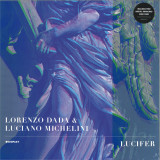
With Lucifer, Kompakt presents an album of rare beauty from two masters of modern music. A family affair, it’s a collaboration between the Italian father-and-son duo of Luciano Michelini and Lorenzo Dada, whose combined histories bring to Lucifer a depth of experience alongside clarity of vision and a finely tuned, neatly developed combined compositional voice. A lovely, beguiling suite of music that combines the electronic and the acoustic, the urban and the pastoral, its gorgeous night-eye vision and tender melancholy sits neatly within the Kompakt universe, while offering the curious listener some rich new perspectives.
There is already plenty to know both artists by. Lorenzo Dada creates across multiple fields – a techno producer and DJ who has already worked with the likes of Jay Haze, Fete, Leo Benassi, and Der, he’s released a small clutch of stylish, smartly designed EPs, and a solo album, Second Life (2018). His complementary background in classical music and composition informs his ensemble project, Tears Of Blue (who appear on Lucifer), where Dada paints with neo-classical tones for a quartet of violin, viola, cello and grand piano, supplemented by electronics for live performance.
Luciano Michelini’s history is yet richer. He may be best known, to many, for his piece “Frolic”, the theme to Larry David’s Curb Your Enthusiasm series; it was also sampled by Snoop Dogg for 2022’s “Crip Ya Enthusiasm”. But there’s much more to Michelini’s story. A successful soundtrack composer, Michelini both studied and taught at the Conservatoro di Santa Cecilia, and worked for RCA from the sixties to the eighties; his soundtracks from this period are gorgeous examples of the form, particularly his work for Il Decamerone Nero (1972), L’Isola Degli Uomini Pesce (1979), and the devastatingly gorgeous Dimensione Donna (1977).
In the eighties, Michelini and his wife Anna Gutling founded the Electronic Music Division studio and academy in Rome, which is where the majority of Lucifer was recorded. Dada reflects on the experience: “We never worked together before, so it was all new for both of us,” with Michelini adding, “I truly love this experience with my son. He’s a talented pianist and composer. I am not very familiar with electronic music nowadays, but we did it fluently.” There’s certainly a familial energy at play through Lucifer, and you can hear how Dada and Michelini, through exploration and experiment, find a shared language, balancing Dada’s tendency toward minimalism, and Michelini’s composerly voice.
Lucifer flows as a suite that interweaves electronic music with acoustic instruments: the lonely sigh of saxophone; Michelini’s lush, verdant piano; the weeping strings of Tears Of Blue (recorded at the studio of Michelini’s friend, the late Maestro, Ennio Morricone). These multiple voices are located within the electronic sighs and swarms from Dada’s kit; there are moments of propulsion, and passages of lambent drift, where the album revels in its tonal sweetness. If it flows so effortlessly, that’s because Lucifer was designed that way, as a suite or a sonata of sorts.
And the title? Dada reflects, “Lucifer was an angel who decided not to be one anymore. The miracle of life is that we can decide what we want to be, even if we are born as angels or vice versa.” This feels somehow apposite: there’s certainly something of the transformative, and the transportive, in Lucifer, a unique family collaboration of rare poetry and sensitivity, where two generations meet in the modern crucible that is the electronic music studio.
out of Stock
Last delivered 21 months ago available to reorder, subject to availability
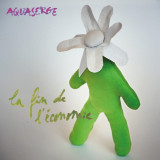
It’s burning, everything is catching fire, and Aquaserge are singing and dancing on the embers of a world contemplated in a rear-view mirror. A world which is hyper-connected, yet forgets its primary emotions.
This seventh album by the band is an ecological poem, where present and past collide. A resolutely rock-sounding album, laced with electronics, experimental pop songs and audio archives. Along the way, the listeners will encounter traces of Oulipo (the famous experimental French literary movement founded in the ’60st), Dada and free jazz. They will cross paths with the ghosts of Ennio Morricone, Walter Benjamin and Marguerite Duras, with the shadows of Kim Gordon and Brigitte Fontaine. And other audacious and exciting melanges, in the pure tradition of Aquaserge.
The album was arranged and produced by Benjamin Glibert, the band’s guitarist and main composer.
The recording took place in a house located in the french countryside (where Aquaserge’s mobile studio was installed). The mix was done at Studio St Guidon in Brussels, the album was mastered by the legendary Dominique Blanc-Francard at the Labomatic studio in Paris.
The members of the band’s current line-up all took part in the recording: Audrey Ginestet (vocals, bass, guitar, etc.), Benjamin Glibert (vocals, guitar, keyboards, etc.), Olivier Kelchtermans (saxophones, keyboards, vocals, etc.), Manon Glibert (clarinets, vocals, etc.) and Julien Chamla (drums, vocals, etc.).
Deluxe 180g vinyl. Art Edition LP includes set of six 12”x12” art cards.
The follow-up to Kee Avil's acclaimed 2022 debut Crease: "A stunning debut" (The Quietus); "A whiplash style of uninhibited exploration" (The Wire); "Kee Avil's debut is a force" (Foxy Digitalis); "A work of Frankensteinian wonder" (Electronic Sound); "A tightly coiled, finely wrought vision of avant-pop" (Exclaim); "A debut of fiendish creativity" (Bandcamp Album Of The Day / Albums Of The Year) Kee Avil's music is both adventurous and intimate, intellectually challenging and emotionally resonant. The Montréal guitarist and producer's 2022 debut LP Crease garnered plaudits from outlets like The Wire, The Quietus, Mojo and Foxy Digitalis, picking up a Canadian Juno Award nomination and Bandcamp Album Of The Day and Albums Of The Year along the way. Its intricate construction, unnerving atmospheres, and knife-edge take on avant-pop prompted comparisons to early PJ Harvey, This Heat, and Gazelle Twin. A remix EP with work by claire rousay, Ami Dang, Cecile Believe, and Pelada brought collaborative perspectives to four Crease tracks, offering new pathways within those songs. With Spine, Kee Avil strips back her heavily textured compositions, opening up a much rawer sound. She calls it folk… and while traditionalists might scoff, this is urgent music that reflects the precarity of modern life, as well as the jarring mixture of electronic and real-world interactions that have become the fabric of our day-to-day experiences. There's a hypnotic post-punk somnambulance to it all, using the repetition and fracturing of melodic phrases interwoven with delicate electronics to create curious and persistent hooks. While not a concept album, themes of time's passage, remembrance, and decay crop up across multiple tracks. Each track intentionally only has four elements - guitar, electronics, and two other instruments, with Kee's voice and guitar pushed to the front. Within this minimalist framework, the juxtaposition of beauty and discomfort that is key to the Kee Avil sound stands out in skin-prickling relief. "We're shaped by many versions of ourselves," says Avil. "I was looking back at these versions of myself and what could have been, what didn't end up being and what did end up being, and going back like that through time. Seeing the future, the past." Spine was written in Kee Avil's home studio after a lapse in writing while touring Crease and working on other projects. She is a well-known and respected member of the Montréal experimental scene, and formerly ran Concrete Sound Studio with Zach Scholes, who continues to work with her as a producer on Spine. Compared to the three years that went into making her debut, Spine emerged in a matter of months - a process that may also be a factor in its intensity and sharpness: "This record was much harder, like it was really discovering everything from scratch." In her desire to not simply replicate or extend the sound of Crease, she felt she had to rip up the rule book, write in a different way, and pare back songs against her usual instincts. Sometimes, when we work against our ingrained habits, we get to the core of who we really are. Spine is an exercise in that process. Without over-intellectualizing or being didactic, it hits immediately and emotionally, especially if you are a person who has spent much time in the process of self-examination. Kee's voice hisses, whispers, and chants; her guitar bends and rings; electronics skitter and crackle; violin creaks like a door in the wind. There is something so evocative about the atmospheres she creates that it's easy to overlay one's own feelings onto her work, but to do that wholly would be to overlook one of the most important things about Spine: Kee Avil's clear and thoughtful vision. This isn't just the next step forward in her artistic trajectory; it's a stunner of a record that stands on its own, a bracing and thrilling listen that has much to reveal about the contradictions inherent in being human. - jj skolnik
The Road Is No Place For A Lady was Cass Elliot’s final studio
album. The album was signified with touches of swing music and gospel and was promoted with the single “(If You’re Gonna) Break Another Heart” written by Albert Hammond.
The Road Is No Place For A Lady is available as a limited edition of 1000 individually numbered copies on pink coloured vinyl. After its initial release, this is the first time in 50 years that the album has been reissued on LP. After its initial release, this is the first time in 50 years that the album has been reissued on LP.
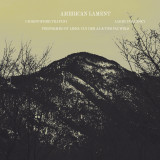
With Folksong Distortions, Pauwels and Van der Aa create a journey of lament through the soul of times gone by. Their radical renditions of works by Larry Polansky and Christopher Trapanido not distort the more upbeat rhythm and tradition of folk songs, but rather reveal and highlight the essence of hard lives, imposed choices - choices that were illusions in the first place - and the difficult times and conditions they have always depicted.
Christopher Trapani arranged two classics from the U.S. South, effects. The work, developed in collaboration with Tom Pauwels and Liesa Van der Aa, was originally made and featured on ICTUS' American Lament programme. The duo was given considerable room for improvisation and interpretation in the process. The first song, 'Wayfaring Stranger', is a well-known folk/gospel melody in A minor. The lyrics contrast an aimless journey through a harsh, hostile world, with the Christian promise of heaven as a 'home' and reunion with lost loved ones. The second song, 'Freight Train', was written by Elizabeth Cotten, a left-handed guitarist who held her guitar upside down, resulting in a very recognisable strumming style.
Sweet Betsy from Pike and Eskimo Lullaby are taken from Larry Polansky's 2005 'Songs and Toads', a five-section piece that computer-composed pieces. The work was originally written for guitar, more specifically for the national steel guitar, refretted in a specific intonation designed by Lou Harrison. Each piece explores a different guitar tuning. A significant intervention to the original work is made to accommodate Liesa Van der Aa's violin with effect pedals, opening to an epic re-reading of the work as conceived by the American composer Larry Polansky. What this set-up enables is a melancholy, slow-paced approach that quite radically opposes the more upbeat and joyful nature of the folk songs.
"Sugar Minott was a Jamaican reggae star who was a pioneer of the dancehall style. Minott was a producer, label head, and sound system operator. He collaborated with one of Jamaica’s most accomplished producers, Lloyd James aka King Jammy, and among their collaborations was the popular 1979 LP Bitter Sweet, which included the seminal dancehall anthems “Give The People” and “I’m Not For Sale”. For the first time in over 40 years, Bitter Sweet is being reissued on vinyl. The album is available as a limited edition of 750 individually numbered copies on orange coloured vinyl."
Bitter Sweet by Sugar Minott, released 24 May 2024, includes the following tracks: "Never Too Young", "Right Track ", "Save The Children " and more.
This version of Bitter Sweet comes as a 1xLP.
When Eastward was first announced back in 2018, it was heralded for its pixelated prowess and quirky sense of style. In the three years leading up to its release, the hype train continued to gather steam as more and more was unveiled. Upon launch, it became clear that Eastward was about so much more than just style. It had substance, too. A modern celebration of early '90s video games, Pixpil's Eastward delivers a poignant yet hopeful post-apocalyptic story set in a delightfully dark world. It's a story of tribulation and triumph for a small indie studio and offers a thought-provoking exploration of societal constructs whilst also providing some warm-hearted and good-humoured fun. Eastward's iconic art style is complemented perfectly by its incredible original soundtrack composed by Joel Corelitz. In celebration of Eastward's recently launched and highly anticipated Octopia DLC, Black Screen Records and Lost In Cult Records have teamed up to bring you an exclusive opportunity to secure a series of beautiful Eastward OST items.
When Eastward was first announced back in 2018, it was heralded for its pixelated prowess and quirky sense of style. In the three years leading up to its release, the hype train continued to gather steam as more and more was unveiled. Upon launch, it became clear that Eastward was about so much more than just style. It had substance, too. A modern celebration of early '90s video games, Pixpil's Eastward delivers a poignant yet hopeful post-apocalyptic story set in a delightfully dark world. It's a story of tribulation and triumph for a small indie studio and offers a thought-provoking exploration of societal constructs whilst also providing some warm-hearted and good-humoured fun. Eastward's iconic art style is complemented perfectly by its incredible original soundtrack composed by Joel Corelitz. In celebration of Eastward's recently launched and highly anticipated Octopia DLC, Black Screen Records and Lost In Cult Records have teamed up to bring you an exclusive opportunity to secure a series of beautiful Eastward OST items.
After her success with The Mamas & The Papas and two albums under the Mama Cass alias, the 1972 album Cass Elliot was her first record under her real name. After her success with The Mamas & The Papas and two albums under the Mama Cass alias, the 1972 album Cass Elliot was her first record under her real name. The album created the atmosphere of 1930’s Hollywood with a beautiful cover shot by George Hurrell. The music consisted of great songs written by Judee Sill, Bobby Darin, and Bruce Johnston of the Beach Boys. These perfectly showcase the amazing vocalist that Cass was.
Cass Elliot is available as a limited edition of 1000 individually numbered copies on silver coloured vinyl, housed in a gatefold sleeve.
The Shawshank Redemption tells the story of Andy Dufresne (Tim Robbins), a banker who is sentenced to life in Shawshank State Penitentiary for the murder of his wife and her lover, despite his claims of innocence. During his time at the prison, he befriends a fellow inmate, Ellis Boyd Red' Redding (Morgan Freeman), and finds himself protected by the guards after the warden begins using him in his money-laundering operation.
The film received multiple award nominations (including seven Oscar nominations) and highly positive reviews from critics for its acting, story, and realism. It is considered to be one of the greatest films of the 90s. In March 2011, the film was voted by BBC Radio 1 listeners as their favorite film of all time. The Shawshank Redemption is the highest-rated movie on IMDB with an average star count of 9.3, closely followed by The Godfather.
The Shawshank Redemption score was composed by multiple (Grammy) award winner Thomas Newman. The score was nominated for an Academy Award for Best Original Score in 1994, which was Newman's first Oscar nomination.
A central scene in the film features the soprano Letter Duet' ( Canzonetta sull'aria') from Mozart's The Marriage of Figaro, which is included on the soundtrack. Original songs by Hank Williams and The Inkspots are included as well.
It was two and a half years ago when a conversation took place between Sal Carmona and Dj Producer Jovonn Armstrong; talks of which planted a seed in Sal Carmona's ear, which years later would manifest what was once a dream into a reality. No stranger, nor a newcomer in the world of dance music, Sal's experience in the club scene goes way back to the days when his sisters, to whom he credits for helping shape the person he is today, took him to Dave Mancuso's The Loft. An experience that he recalls being nothing short of magical. It was a spiritual encounter that immediately took over thus steering him towards the direction of clubs such as The Paradise Garage, Bentley's, Underground, Red Parrot, Latin Quarters, Roseland, Studio 54, just to name a few. Years later, Sal decided to take on the role, of which he became quite successful at, of promoting his own events in New York City; throwing regular parties at venues such as Park Circle & USA roller skating rinks, Red Parrot, The Palladium, The Copacabana and many others, soon becoming one of the premier go to promoters in NYC. Taking a long and well-deserved hiatus from the club scene, in 2012 Sal decided to make his return back to what he loves. It was around this time that he began thinking what it would be like to venture into creating his very own record label. Envisioning his first release being a bona fide House Music Album, one that would include some of his favorite producers. Not one to let dreams drift into the ether, while recollecting on that conversation with Jovan way back, Sal set out to make that vision manifest into a reality and thus emerged this dope compilation titled Banger "Make My Body Shake" "Make the Speakers Shake"
A great idea which brings together an interesting mix that includes highly sought out and respected veteran producers in the scene, such as Timmy Regisford, Ron Trent, Dj Jovonn, and Joe Claussell. Alongside with up and coming DJ producers who are garnering their own adulation of fans, in the likes of Vick Lavender, Mark Francis, Conway Kasey, and DJ Punch. With valuable directional contributions from friend Joe Claussell, this, to say the least, has become far more than just a seriously dope compilation that consists of a unique coming together of serious dance music. More than the aforementioned, Sal Carmona has manifested a dream into a game changing music scripture that is one of a kind, especially in this day and age where it seems where things are thrown together hoping for something to stick. On the contrary, this is well planned and thought out dopeness at A higher level consisting of all new house music that hasn't been brought together like this in a very long time and probably not for a while afterwards.
out of Stock
Last delivered 67 days ago available to reorder, subject to availability
Nathaniel Russell is a multi-disciplinary artist from Indiana who creates drawings, paintings, prints, murals, objects, videos, and music, often with friends and fellow artists. And in 2023, he packed up his car and drove from his home in Indiana all the way to North Carolina to record new music with his long-time friend Amelia Meath (Sylvan Esso, The A's) at Betty's, the wooded studio haven of Sylvan Esso, where recent releases from The Tallest Man on Earth, Caroline Rose, Wednesday, The A's, The Mountain Goats, Flock of Dimes, Indigo de Souza, and many more have been born. This record began with a funny and sad idea Russell had about a funeral. "I imagined a picture of a funeral with a merch table. It was an idea full of darkness and sweetness to me. Immediately I thought about what my merchandise would look like, what it would be. I began to think about what the record for sale at my funeral would sound like. I started to think about the songs I have made up and sung to and with my friends, family, and myself over the years. I noticed how the songs I had sung the longest seemed connected to others from a different time. I had changed some words and how I played them but they were all of me and my time on earth. I heard how these things fit together. Of course I now needed to see this project become a reality." Songs Of was produced by Meath, engineered by Alli Rogers, and features additional performances from Joe Westerlund (Megafaun, Califone) and Nick Sanborn (Sylvan Esso, Made of Oak).
In one sense, it’s easy for artists—songwriters, specifically—to express their feelings in their work. After all, that’s what the lyrics are for! But it’s much harder to convey emotional energy in how you play, slash at the guitar, and the structure of the music itself. That’s precisely why Girl and Girl’s Sub Pop debut, Call A Doctor, feels like such a vital, electrifying shock to the senses. Not since the early work of Car Seat Headrest or Conor Oberst’s widescreen emotional brutality as Bright Eyes has indie rock managed to come across as this intimate and grandiose, as the Australian quartet led by Kai James lay a lifetime’s worth of woes—mental health, the human race’s planned obsolescence if you’ve been living on this cursed rock you know what we’re getting at—across a canvas of indie rock that feels both timeless and in-the-moment.
An audacious and aggressively tuneful blast of a record, Call A Doctor is an unforgettable first bow from Girl and Girl, whose origins lie in James and guitarist Jayden Williams jamming in his mother’s garage in the afternoon after school. One afternoon, James’ Aunty Liss headed down to their practice space after walking her dog and asked if she could sit in on drums. “It sounded really great,” James recalls. “We begged her to stay, and she said, ‘I’ll stay until you find another drummer.’ We wore her down, and she eventually became a permanent member.”
After bassist Fraser Bell joined to round things out, Girl and Girl hit the road and began to make a name for themselves beyond the Australian bush, eventually signing to Sub Pop off the strength of word of mouth. Call A Doctor came together quickly soon after, largely recorded in marathon sessions in a two-story industrial complex over the course of two weeks. “That added to the intensity of the album,” James says about the frenzied creative process overseen by producer Burke Reid. “I can hear the stress in the record, which is good because that’s what it’s about—being tense, tied up, and in your own head.”
Call A Doctor’s eleven songs—spanning sweeping guitar epics and wry acoustic shuffles to spiky punk maneuvers and the type of raw, adoringly unvarnished indie-pop associated with legendary PacNW label K Records—are literally plucked from James’ personal history, as he reworked older recordings with newer lyrics reflecting his past struggles as well as new anxieties that emerged prior to the album’s recording. “I’ve struggled with mental health for a lot of my life,” he explains, “and I went through a particularly difficult patch when we were making the album; the band had started to get some attention, and I felt an enormous amount of pressure to live up to it.”
Far from the sound of collapsing under pressure, Call A Doctor finds James and Co. stepping up with their entire collective chest. This is a record that’s so out-and-out alive that you nearly feel like you’re in the same room with Girl and Girl as you listen to it; lead single “Hello” practically bursts through the speakers, amplified by Aunty Liss’ unbelievable stickhandling duties. “‘Hello’ is all about romanticizing your own misery. Letting those deep, dark, dirty thoughts take over. Understanding that even if you could pull yourself out, you wouldn’t because the constant stress and worry is far too familiar and comfortable.”
“Mother” pogos on a spiky groove that’s reminiscent of the geographically close New Zealanders who make up the legendary Flying Nun label, while “Oh Boy” draws from the Shins’ own jangly sound, injected with James’ wonderfully nervy vocals. Then there’s Call A Doctor’s sorta-centerpiece “Maple Jean and the Anthropocene,” a five-minute epic offering a new perspective on climate change and the notion of what it means, in a personal sense, to suffer: “I live in the bushland, and I was driving home one night and hit and killed a wallaby with my car,” James recalls while discussing the song’s lyrical inspiration. “My first thought was, ‘What is the universe trying to tell me?’ No remorse, no guilt, just total self-centeredness. Which was like, Woah, you fucking psychopath! This wallaby wasn’t put on this earth to send you a message. That’s what the song is about, our egocentric species - thinking you’re the main character and that everything that happens is somehow about you.”
“This record is about an individual who’s too far in their head, trying to get out,” James continues while discussing Call A Doctor’s overall outlook—specifically the snapshot it offers of its creator. But even though this record deals with uneasy topics we all know well from within ourselves, it’s important to emphasize how teeming with life Girl and Girl’s music is. There’s a brazen, bold sense of humor to this stuff, an undeniable brightness to the darkness that makes it impossible not to be drawn in as a listener. Feeling down never sounded so goddamn good.
Following his debut EP ‘En clair-obscur’ and a series of singles earlier this year cementing his place as a rising name in the world of cinematic soul & funk, Hamburg’s finest cinematic soul artist ‘The Offline’ announces his debut album 'La couleur de la mer'.
Reminiscent of film scores from the 60s and 70s, The Offline worked with co-producer Tim Liztenberger to channel the influence of film composers such as Francois de Roubaix and Brian Bennet, creating his own soundtrack on ‘La couleur de la mer’. Inducing images of manorial, fog-swept villas at the sea's edge, silhouetted sailing boats and cigar-chomping villains attempting to thwart the mission of an imaginary hero, the record is a masterfully composed sonic journey. Experimenting with themes and atypical song structures, the music moves from dramatic cues to fragile romanticism. It incorporates psychedelic spaciness, retro soul and hip-hop sensibilities informed by The Offline’s extensive record collection and crate-digger status.
“Ever since I was a child, I was fascinated by the soundtracks from the 60s and 70s, and I always wanted to make an album in the film score direction. I wrote about 30 demos, kicked half of it and stuck to the ones that felt right in the dramaturgical structure of the ‘movie'. Interestingly the main theme was set early on while writing the album, which made the writing process much easier.”
Aptly named, ‘Thème de la couleur de la mer’ opens proceedings, establishing the core motifs of the record. Haunting flutes and xylophones lead the way into Khruangbin-esque guitar lines, which sit against a hip-hop canvas that returns on boom-bap head boppers like ‘Quelque chose reste’. Retro soul revival takes precedence on deep cuts like ‘Un bout de chemin’, with wah-gated guitars interacting with emotive cello lines and symphonic string & horn sections.
The Offline came to life when composer and photographer Felix Müller travelled the Atlantic coastline in the south of France with his analogue camera, capturing beach life on film. After coming back to Hamburg, he started writing songs as the sonic counterpart to the analogue visuals. His Debut EP ‘En Clair-Obscur’ includes five tracks that capture the essence of his journey and the feeling of a cool summer soundtrack.
out of Stock
Last delivered 11 months ago available to reorder, subject to availability
Bill MacKay and Drag City are delirious with pride to announce the discovery of a new territory: Locust Land, a record which seeks to reflect the nerve-shredding consciousness run amok in our world today - and somehow allay it with sound. Bill"s music is a visceral crackling where it meets the air, and Locust Land can"t help but reflect its era more than any other in his discography. It"s been five years since the release of Fountain Fire - but in the interim, Bill has barely stopped moving, collaborating with artists across the spectrum, including cellist Katinka Kleijn, banjo player Nathan Bowles and keyboardist Cooper Crain. He"s also contributed to recordings by Steve Gunn, Ryley Walker, Bill Callahan & Bonnie Prince Billy (Blind Date Party), and Black Duck (on their self-titled record featuring Douglas McCombs and Charles Rumback). Forget five years - how"d he even get Locust Land squeezed out of his temporal lobes? Bill"s sense of music as art is constantly modulating - lifting off from where it is found and naturally migrating to some other place. Sometimes, that"s elsewhere - others, it"s simply to be found deeper inside the starting point. And so, the action of moving on informs the landscape of Locust Land. This manifests in several different ways. A restless energy and urgency is repeatedly felt - in the driving momentum of "Keeping in Time," "Glow Drift," and "When I Was Here" - while a dogged persistence radiates from the tone colors and percussion of "Oh, Pearl." Mating a dirge-like desolation with sparkling guitars, "Radiator" adds darkness and depth. The sense of searching, displacement and longing in vocal tracks "Keeping in Time," "Half of You," and "When I Was Here" speak literally to the tumult of current vibrations. Within the arrangements, there"s also departure from previous norms - in addition to the brilliant guitar work for which he is known, Bill plays a variety of keyboards, from piano to organ to synth, extending his music with the available voicings, while enriching the sound field without abandoning his signature brevity. For fans of his singing, and following in the recent tradition of Fountain Fire as well as his collaboration with Nathan Bowles, Keys, Locust Land expresses with an increased vocal presence - and heightened engagement, with Bill"s words and melodies drawing us closer. Also different: on his previous solo recordings, Bill played every sound. Here, he has invited other illustrious Chicagoans to join him: Sam Wagster (The Father Costume, Mute Duo) plays bass on three songs, two of which feature the percussion playing of Mikel Patrick Avery (Natural Information Society, Jeff Parker, etc.). Additionally, Janet Beveridge Bean (Eleventh Dream Day, Freakwater) adds otherworldly vocal textures to the elegiac "Neil"s Field." Whether played alone or with companions, this music projects the strength of a universal collective. Even with a piece that might earlier have passed for blissful pastorale, Bill displays some declamatory motives. The reverie which opens the album, "Phantasmic Fairy," embodies both transcendent and desperate moods, with Bill"s ineffable slide guitar playing afloat, with organs and synths, in a dream state suffused with a sense of foreboding - a requiem, perhaps for the days of unencumbered bandwidth? On the other side of the album, the strength to continue to hope appears in the lifting melodicism/exoticism of the album-closing title track, leaving the listener with the sense of having achieved a hard-won space - a place of personal contemplation and dissent, one that everyone on the planet deserves to visit every single day on earth. With cover art also by Bill MacKay (the third of his albums on Drag City to feature his work), Locust Land stands as a thoroughly personal statement from Bill to everyone everywhere.
Bill MacKay and Drag City are delirious with pride to announce the discovery of a new territory: Locust Land, a record which seeks to reflect the nerve-shredding consciousness run amok in our world today - and somehow allay it with sound. Bill"s music is a visceral crackling where it meets the air, and Locust Land can"t help but reflect its era more than any other in his discography. It"s been five years since the release of Fountain Fire - but in the interim, Bill has barely stopped moving, collaborating with artists across the spectrum, including cellist Katinka Kleijn, banjo player Nathan Bowles and keyboardist Cooper Crain. He"s also contributed to recordings by Steve Gunn, Ryley Walker, Bill Callahan & Bonnie Prince Billy (Blind Date Party), and Black Duck (on their self-titled record featuring Douglas McCombs and Charles Rumback). Forget five years - how"d he even get Locust Land squeezed out of his temporal lobes? Bill"s sense of music as art is constantly modulating - lifting off from where it is found and naturally migrating to some other place. Sometimes, that"s elsewhere - others, it"s simply to be found deeper inside the starting point. And so, the action of moving on informs the landscape of Locust Land. This manifests in several different ways. A restless energy and urgency is repeatedly felt - in the driving momentum of "Keeping in Time," "Glow Drift," and "When I Was Here" - while a dogged persistence radiates from the tone colors and percussion of "Oh, Pearl." Mating a dirge-like desolation with sparkling guitars, "Radiator" adds darkness and depth. The sense of searching, displacement and longing in vocal tracks "Keeping in Time," "Half of You," and "When I Was Here" speak literally to the tumult of current vibrations. Within the arrangements, there"s also departure from previous norms - in addition to the brilliant guitar work for which he is known, Bill plays a variety of keyboards, from piano to organ to synth, extending his music with the available voicings, while enriching the sound field without abandoning his signature brevity. For fans of his singing, and following in the recent tradition of Fountain Fire as well as his collaboration with Nathan Bowles, Keys, Locust Land expresses with an increased vocal presence - and heightened engagement, with Bill"s words and melodies drawing us closer. Also different: on his previous solo recordings, Bill played every sound. Here, he has invited other illustrious Chicagoans to join him: Sam Wagster (The Father Costume, Mute Duo) plays bass on three songs, two of which feature the percussion playing of Mikel Patrick Avery (Natural Information Society, Jeff Parker, etc.). Additionally, Janet Beveridge Bean (Eleventh Dream Day, Freakwater) adds otherworldly vocal textures to the elegiac "Neil"s Field." Whether played alone or with companions, this music projects the strength of a universal collective. Even with a piece that might earlier have passed for blissful pastorale, Bill displays some declamatory motives. The reverie which opens the album, "Phantasmic Fairy," embodies both transcendent and desperate moods, with Bill"s ineffable slide guitar playing afloat, with organs and synths, in a dream state suffused with a sense of foreboding - a requiem, perhaps for the days of unencumbered bandwidth? On the other side of the album, the strength to continue to hope appears in the lifting melodicism/exoticism of the album-closing title track, leaving the listener with the sense of having achieved a hard-won space - a place of personal contemplation and dissent, one that everyone on the planet deserves to visit every single day on earth. With cover art also by Bill MacKay (the third of his albums on Drag City to feature his work), Locust Land stands as a thoroughly personal statement from Bill to everyone everywhere.
Born in Beirut, Lebanon, Rami Gabriel has been a motive force in rock n' roll, jazz, Arabic, and experimental music communities across North America for over twenty years. In that time, he has released numerous projects across genres and under many names. On his debut LP for Sooper Records, Rami trips all the breakers. In his own name and voice for the first time, That's what I been sayin' is not so much a debut as a conflagration in Rami Gabriel's worldly underground. Drawing on Punk, Krautrock, Dub, No Wave, and lo- fi, the territory occupied by That's what I been sayin' is astringent, minimal, and buzzing with the sound of machines dancing in the wind. "I'm used to putting out records based on genre," says Rami of his multiple endeavors. "I was listening to one of the `70s Brian Eno records where he took his experimental work and his songs and put it all together, and I was thinking, `Why don't I try to put all the different ways I've been working for the last couple years onto one record?'" That's what I been sayin' ignites this vision with an album that ranges from the motorik-driven krautrock of "Like a monk" to the unexpected trance-like pairing of "Buzuq synth." That's what I been sayin' is a furnace of Rami's insuppressible impulses, where he undertakes to ask and answer: what is left of punk but making do with what is at hand? At times direct and scorching, at others meditative and wandering, That's what I been sayin' compresses Rami's understanding as a composer, musician, and singer into a restless, 11-track love letter to the underground. For Fans of The Fall, Haruomi Hosono, Brian Eno, and Scientist.
Look through any self respecting quality music publication or web site and peruse through a list of the most important and influential psychedelic albums of all time and you can be pretty sure to see KALEIDOSCOPE'S 'Tangerine Dream' ranked high up there, along with your 'Sgt Peppers', your 'Forever Changes' 'Satanic Majesties Request' 'Axis Bold As Love' 'Odyssey & Oracle' and 'The Psychedelic Sounds of the 13th Floor Elevators'........
This seminal album of quintessential English psychedelia is one of the most highly prized artifacts that define the psychedelic genre and like some of the most highly collected and prized albums from that time, mint copies can now go for way in excess of £1000.
Thus given the record`s rarity & collectability, matched to the recent explosive interest in all things psyche, garage & underground, you would be excused for thinking that this slice of perfect late 60's progressive underground pop would have been given the full reissue and remastering treatment already. Surprisingly though, you would very much be mistaken. But to those of you who know the checkered history of Kaleidoscope this will perhaps come as no surprise!!!
Thankfully after 3 years of painstaking detective work, chance encounters with Universal archivists, heavy negotiations with major label legal executives and some good fortune, we are delighted to announce that this record will finally not only get its first proper official reissue in over 5 decades, but thanks to a lot of pure persistence it can now be presented to its listeners in the manner in which it was supposed to have been heard, following the discovery of a batch of the original master tapes that were languishing in the vaults of Universal that have laid largely unheard for 50 years!
Furthermore following a couple of shared festival billings at Austin and Copenhagen Psyche Festival, with another legend of the scene, Mr Pete Kember aka SONIC BOOM of SPACEMEN 3 fame, Sonic has been holed up in his Lisbon studio, painstakingly remastering the album from the original ¼' tapes.
The remastering of these ¼' tapes though is only part of the story, as along with the discovery of these a significant number of ½' tapes and other material was also discovered which is penned for a future release when the band`s entire works will be presented in a definitive boxset of all four of their studio albums (including all their Fairfield Parlour recordings) plus BBC Sessions, live recordings, alternative takes, new mixes, unreleased tracks and material from the band`s own archive including pre-Kaleidoscope demos when they were known as both The Sidekicks and The Key.
For now though, this 50th Anniversary release comes with a flavor of what is to come, with the inclusion of two unreleased out-takes tracks from 1967 on a bonus 7' housed in a replica original paper thin Fontana sleeve which, includes an early version of the track that gave the band their name, the suitably titled: 'Kaleidoscope'. Whilst the flip presents an alternative earliest known recorded version of the album's follow-up single: Dream For Julie'.
The album itself, has been cut onto 180g heavyweight vinyl, housed in a deluxe high-end gatefold tip-on sleeve with the lyrics printed and new artwork. The first 1000 copies of the album will be hand numbered by the band & pressed on 'Tangerine' orange vinyl housed in an inner sleeve with attractive new artwork + download code.
In 2024, Vredehammer, the mighty force from the deepest North returns. Vredehammer explore the depths of darkness and despair, painting a chilling sonic landscape that captures the essence of true black metal. Vredehammers upcoming album "God Slayer" is poised to deliver nothing short of blackening excellence, Vredehammer continues to push the boundaries of extreme metal, seamlessly blending elements of blackened death metal, thrash, and melodic death metal to create a sound that is both relentless and captivating. With one of Scandinavia's finest BM drummers, Nils 'Dominator' Fjellström, on drums, combined with the unparalleled musical songwriting and guitar skills of Per Valla, this album is not to be missed. Vredehammer about the album: "With the Godslayer album I wanted to take a step back regarding tempo, not focusing so much on fast songs. There is definitely some fast stuff in there, but my main objective was to create memorable songs and guitar riffs with a lot of punch and power to them. This time Vredehammer had the pleasure of having Nils "Dominator" Fjellström doing drums for the album. Having played with Nils on other occasions, I was excited to see how he would perform when the music didn't just consist of fast black metal stuff, which is known to be his specialty. He definitely rose to the occasion and contributed with some great ideas for the drums."
Furthermore, Billy Mahonie now have their own label, Whistling Sam Projects, an almost sold-out London launch show at The Lexington on May 4th, and they are confirmed to play Portals Festival Saturday May 25th in East London. After nearly quarter of a century, Billy Mahonie are very much back.
Formed in the first wave of British post-rock alongside the likes of Mogwai in the late 90s, John Peel favourites Billy Mahonie are set to return with the first new music from their original line-up in some twenty-four years. Whilst their debut album ‘The Big Dig’, released in 1999 on Too Pure Records, is considered a classic of the post rock genre, Billy Mahonie always crafted their intricate music with memorable hooks and melodies and performed it with energy and gusto. Theirs was not an aimless, meandering sound, instead the songs and attitude were rooted in punk rock, and still are. Billy Mahonie put the rock into post-rock.
Set for release this coming May 24th via Whistling Sam Projects, ‘Field Of Heads’ sees the band returning with their classic original line-up of Gavin Baker (guitar), Howard Monk (drums), Hywell Dinsdale (bass and guitar) and Kevin Penney (bass and guitar). Whilst this line-up has been semi active for a few years, no new material came to fruition. After their last gig in 2017, however, the band decided it was time to get back into the studio, but with two members living abroad new challenges were faced, but ideas were shared, old ones were resurrected and finally in October of 2019, Billy Mahonie were back in the studio.
Recorded over two long weekends on either side of the Covid 19 lockdowns, the band tracked at The Church studios, owned by their former collaborator and front of house engineer Paul Epworth, with senior engineer Luke Pickering at the controls, allowing ‘Field Of Heads’ to quickly take shape.
New single ‘Kaiju’ gives the music world the first taste of ‘Field Of Heads’ and right from the off, it’s classic Billy Mahonie. Immediately bursting into life with the energy and melody that is so unique to their sound, Howard’s driving drums thrust the music ahead as the guitars and synths weave their way around them. Intricate and shifting, but never at the expense of a tune that sticks in your head.
“This one came from a chord progression myself and Gav first tried out jamming in 2010,” explains drummer Howard. “Needless to say, when Hywell and Kev got their hands on it, it became something no-one ever envisaged. Kev's great title is, of course, the Japanese name for the subgenre of monster-based science fiction. A frenetic riff opens the song and for a counter guitar part only two options remain, play in the minimal gaps or find an overarching theme. We chose both. Kaiju films influence the additional Synths, echoes of those early Japanese movie themes. Some people we have played this to in advance have suggested this track is one we should lead with, as it is kind of where we left off. We agree. It rocks pretty hard. And is a bit funky too. What’s not to like?!”
Furthermore, Billy Mahonie now have their own label, Whistling Sam Projects, set up for global distribution through SRD, an almost sold-out London launch show at The Lexington on May 4th, and they are confirmed to play Portals Festival Saturday May 25th in East London. After nearly quarter of a century, Billy Mahonie are very much back.
Perpetually out of print, much sought after and universally worshipped amongst those in the know, Winter's "Into Darkness" was a game-changing classic. "Into Darkness" was a gateway drug to the dark depths of sludge metal, and now awaits a whole new throng of
acolytes who bow down before the throne of heavy doom. Svart Records is proud to rerelease it once more, putting the album back in print for a new generation of listeners. Eternal Winter awaits!
Perpetually out of print, much sought after and universally worshipped amongst those in the know, Winter's "Into Darkness" was a game-changing classic. "Into Darkness" was a gateway drug to the dark depths of sludge metal, and now awaits a whole new throng of
acolytes who bow down before the throne of heavy doom. Svart Records is proud to rerelease it once more, putting the album back in print for a new generation of listeners. Eternal Winter awaits!
We are delighted to bring you the follow up to the successful 'The Bristol Punk Explosion (1977-1979) album released in November 2023 - a twelve-track compilation entitled 'The Bristol Punk Explosion Vol 2 (1977-1981).'The sleeve notes are written by Tim Williams author of the 1977 Loaded Fanzine. Tim talks about the transition from Soul to Punk, the demise of Prog Rock and the fashion culture that sat seamlessly alongside the music. There are three previously unreleased tracks never before available on vinyl. The Cortinas were the first. They played the Roxy Club, released two singles on Mark Perry and Miles Copeland's Step Forward label, graced the front cover of Sniffin' Glue and recorded a Peel Session. Taking their cue, bands like Social Security (the first band on Heartbeat Records), The Pigs (whose 'Youthanasia' single was released by Miles Copeland's New Bristol Records), The Media, 48 Hours and Private Dicks gave Bristol one of the strongest provincial early punk scenes. The area of Barton Hill gave us The X-Certs, who by 1978 could already pull audiences of five hundred into Trinity Hall. Though we did not realise it at the time, they effectively bridged the gap between the late 70s Bristol scene and what our American cousins like to term the UK82 bands. In time bands from the suburbs of Bristol started to appear on the scene, Misdemeanor (who were managed by the late Dennis Sheehan U2's tour manager for thirty plus years), Apartment from Downend (whose photo adorns the front cover) and Noiz Boiz from Weston Super Mare, the seaside town just down the road. This compilation is designed to give all fans of Punk a snapshot of what Bristol Punk was all about during that period. We close side Two of the album with The X-Certs Clash infused /reggae single 'Together' and follow it with one of Bristol finest Roots reggae bands Talisman and their single 'Wicked Dem'. The punky/reggae party had truly started as we move into the 80's Bristol Stylee! Bristol Boys Make More Noise!
Municipal Waste haben sich einen Namen gemacht als DIE Band des Thrash-Metal-Revivals der 2000er Jahre. Die 2001 gegründete Band ist für ihre Energie bekannt und humorvolle Herangehensweise an Crossover-Thrash. Ihre EP "Tango & Thrash" wird jetzt vollständig neu veröffentlicht Remastered mit Bonustracks! "Minds Are Controlled" stammt ursprünglich von Corrosion Of Conformity, die MW-Jungs geben ihm jetzt ihren Anstrick, voll im Punk/Thrash-Stil.
SIHR: sonic manifesto by a post-anything quartet feat. multi-instrumentalists from the Mediterranean inland Sea. New folklore for a devastated planet, including Frédéric D. Oberland (Oiseaux-Tempête), Grégory Dargent (H), Tony Elieh (Karkhana) & Wassim Halal (Polyphème).
After a few concerts/screenings improvised as a duo in Cairo and Beirut, as well as for the Rencontres d’Arles, the Lille photography center and the Belgian magazine Halogénure, Dargent and Oberland have teamed up with mavericks Elieh and Halal for a puzzling cross-border manifesto. The first sonic moves of this eclectic quartet, made in a bunker studio somewhere between Paris and Berlin, urgently took the form of a quest, that of a neo-folklore for troubled times, a music seeping with many kinds of atavism and experimenting in all directions. A fertile no-man’s-land where trance and contem- plation, jazz and electronica, acoustics and electricity would merge in a stimulating mystical magma.
From the possible emergence of a Babelian language to the shared desire to rediscover music as a ceremonial act, this encounter took place over three days of improvised sound bacchanalia, the phases of which were all recorded by Benoit Bel (Zombie Zombie, Thurston Moore Group, Oi- seaux-Tempête). A hallucinated and generous testimony, SIHR is a synergy of many different worlds and many different possibilities, the sonic vision of a present conjugated in a hybrid tense and exalted by too many tangos danced on the glowing ashes of our days.
Multi-instrumentalist & photographer, Frédéric D. Oberland has been leading the Oiseaux-Tempête collective for over ten years, lying somewhere between avant-rock and free jazz, repetitive music and electronics. Founding member of the bands FOUDRE! and Le Réveil des Tropiques, he’s also perfor- ming solo and composing soundtracks for cinema and installation art. Since 2018, Oberland co-cu- rates the NAHAL Recordings imprint alongside producer Mondkopf.
Electric guitarist, oud player, composer and photographer, Grégory Dargent cultivates his musical schizophrenia and identity through improvised music, trance music, jazz, hijacked maqam, repeti- tive music, pop, electro-acoustic installations and French chanson. From L’Hijâz’Car to Babx, from Berber singer Houria Aïchi to Rachid Taha, from Trio H to Sirventés enragés, from music for images to contemporary choreography, from the most acoustic of ouds to the most nuclear of guitars, he conducts, accompanies, composes, deciphers, questions, delves, makes mistakes, bounces back, ar- ranges, orchestrates and tirelessly shares his creative passions.
Tony Elieh is one of the pioneers of experimental music in Lebanon. A founding member of the first post-rock group of post-war Lebanon, The Scrambled Eggs, he has since developed his unique elec- tric bass skills in various groups and styles of music including collaborating with in groups such as Karkhana, Calamita and Wormholes Electric. Relocated in Berlin in recent years, he has performed a solo set of heavily processed bass generated sounds.
Is Wassim Halal only a darbuka player? Maybe !? But what about his music, compositions, ideas. You can find him with Polyphème playing and co-composing popular-contemporary music with Gamelan Puspawarna, or next to the french bagpiper Erwan Keravec, with the Bey.Ler.Bey trio (w/ Laurent Clouet & Florian Demonsant) working on an improvised-balkan-already-improvised-music, with per- formers and drawers Benjamin Efrati and Diego Verastegui, with Gregory Dargent and Anil Eraslan in H, creating a new pedal generating »Random taksim«, composing his own »Poème Symphonique pour 100 youyou« or composing pieces for ensembles.
"Everything's been fucked since David Bowie died or they started up the Hadron Collider" say The Janitors. This feeling is epitomised in the title of their riveting new album: An Error Has Occurred. Marking over two decades of activity for the Swedish psych-rockers, the recording is informed by heartbreak and loss as well as the dismal state of the entire planet. For The Janitors, these two polarities intertwine constantly: "What's personal is political and vice versa." To channel their frustration and anger, the band revived certain songs they'd shelved during the pandemic when working on the acclaimed Noisolation Sessions. They added others, written since, that suited the mood of sticking a middle finger up to the oppressive world around us. Whereas previous recordings were often layered up gradually, this time the full band (Henric Herlenius, Jonas Eriksson, Anders Thorell and Wilhelm Tengdahl) rehearsed intensely together before laying down everything live, over two days and nights, in a converted missionary church. The songs on Side A have the menace of Melvins, the swagger of The Stooges and the cosmic heft of The Heads. These are the more simply constructed and poppier pieces... or so the band believe. (One friend of theirs did consider this "delusional".) 'In A Bliss' acts as the album's radiant centrepiece. A palette-cleansing love song which recalls The Jesus And Mary Chain at their most starry eyed, it finds The Janitors searching for solace and strength in straightforward companionship. After this come the dronier numbers, drawn out with soundscapes and textures influenced by The Velvet Underground's sonic experiments and the equally immersive atmospheres of electronic acts like Massive Attack. Hence, 'Operator' swings threateningly like a space-rock Swans, while the approach on 'Farewell Spacegirl' is jazzier and more meditative. "It can be hard to muster up some, or even any, positive energy at this point in time," says Henric. "We are eternally grateful to have the creative output that this constellation gives us. Neither me or Jonas would probably be here, or be the same people we are, if it wasn't for The Janitors. We'll leave you with a quote from an old anarchist: 'Every society gets the criminals it deserves.'"
Benny Sings, the Amsterdam-based singer, songwriter and producer, blends together influences from AOR, soul, jazz and pop. Known for his distinctive vocal and piano chops, he put his own spin on Drake's "Passionfruit" to mark his signing with Stones Throw.
Since 2003, Benny Sings has been releasing his own music and collaborating with artists including Anderson .Paak, Mndsgn, GoldLink, and Mayer Hawthorne. He was featured on Rex Orange County's 2017 hit "Loving Is Easy" and had a breakout performance on NPR's Tiny Desk series. He says of the “Passionfruit” cover: “Pop music has always been a goal of mine and I liked the idea of presenting this song in a more old-fashioned or conventional way."