Sun Ra and the various groups he led were as prolific as they were innovative. By conservative estimates they produced around 200 recordings over a fifty year period, and the early 70s was as fertile a time as any. In a typical burst of creative energy Ra and an ensemble he dubbed The Solar Myth Arkestra produced enough material to be spread over two albums or two volumes, that amount to a kind of sonic odyssey which has no end of twists and turns, as befits a group of such singular character.
Reuniting after 35 years, multi-platinum selling artist Belinda Carlisle and iconic songwriter Diane Warren come together to release Kismet – a 5-song EP that comes out on Diane’s imprint RAF through BMG.
Discussing working with Diane Warren, Belinda Carlisle commented, “Twenty-seven years on from making my last English language pop record I really wasn’t thinking I would ever make one again...... and I was quite happy with that idea. Then a chance encounter in a coffee shop led me back to the wonderful Diane Warren and she gave me the incredible gift of this song and the other songs on my upcoming EP.”
Carlisle goes on to add, “Diane’s songwriting is both a joy and mystery to me. She makes it look so easy, where I imagine it must be unbelievably hard, to do what she does so amazingly well over so many years
'Easy' is the debut album by the Australian rock band The Easybeats, recorded in just a few days at the EMI Studios in Sydney. The album was originally an Australian-only release but became internationally available during the '90s.
"Matasuna Records" journey goes to "South Africa" for the first time to reissue two superb Afro-/Jazzfunk songs by the band "Freeway". Released in 1975 on the South African label "Flame", the album "Abahambi – Balomhlaba" was rediscovered and re-released by the good folks of "Black Pearl Records" from Berlin in 2013. The LP immediately landed on Matasuna Records' album best list and was at the top of the reissue wish list. Now that goal has come true to officially release two songs on 45, making them available as 7inch vinyl singles for the first time. Transferred from the original master tapes and remastered to sound as good as never before. An essential release!
The title track of the album "Abahambi" composed by "Sipho Gumede" and also the album opener is also the A-side of the Matasuna release. The song immediately builds up an incredible groove with the first bar and offers an atmospherically dense, 5-minute funk firework. The musicians master their instruments to perfection: be it in the collective playing as well as in the polished solo passages, where they can fully demonstrate their skills. One of the tunes that could run endlessly without ever getting boring.
On the flip side, the song "Umlazi" composed by "Enoch Mthalane" is another testament to the sophistication of their arrangements & musicality. Although this song is much slower in tempo, it is in no way inferior to the A-side in intensity. Especially the piano generates a hypnotic groove, which is skillfully continued by the guitar. Another musical treat!
The fact that the composers of the songs and musicians of the band are (or were) well-known greats of South African jazz music, but the album respectively the band name "Freeway" does not appear in any bio/discography is more than curious. Apparently it is considered proven that the band was founded by bass player "Sipho Gumede".
Born in "Durban" (South Africa), "Sipho Gumede" learned to play the guitar autodidactically until he received his first introduction to jazz from jazz guitarist "Cyril Magubane" at the age of 16. He switched to bass and then got his first professional music job as a member of the "Jazz Revellers" band. In 1970 he went to "Johannesburg" where he met, worked with and toured with some great musicians of that time. He formed several bands with some of them such as "Roots", "Spirits Rejoice" or "Sakhile". Gumede also recorded collaborative pieces with other jazz legends before recording his first solo album in 1985. In the following years he was involved in tours of North America, Europe, as well as many African countries. In 2000, Sipho moved back to "KwaZulu-Natal", where he taught music and performed for township youth. His artistic productivity did not stop there, however, and he produced a number of other albums. In total, he produced, recorded and contributed to more than 20 albums. He died in July 2004 after a short illness.
out of Stock
Last delivered 3 years ago available to reorder, subject to availability
Head hydro-tripper Black Eyes has risen from the depths of the deep to release his debut solo record Hydro-Trip vol 1. Fresh off the sea creature's back from co-producing the 'Planet People - Terra Firma EP' with synth botherer Reedale Rise which came out earlier this year. His solo endeavour takes us on a jazzier vibe yet still keeping true to the deep ways of the water. Lead track 'Understood Sea Being' plunges us on a rugged ride with deep Detroit chords and Black Eyes's own punk-like vocals throughout. 'Let's Get Deeper' slows the pace up with chopped up samples and introduces us to the classic hydro-trip sound we've grown to love down here in the underwater cities; it's deep and trippy. 'Scuba Lyfe' picks up the pace a bit but evolves into a low down dubby groove mixed with some hi-tek jazz. Asking Rolando (who we all know was part of the infamous Underground Resistance and Los Hermanos, as well being a Berghain resident DJ more recently) to come on board the subterranean vessel was an obvious choice for remix. He switches the gears and adds some fluid Detroit techno to finish off the EP. Berlin based Deskai masters the EP who also mastered the Planet People EP so you know what to sonically expect.
out of Stock
Last delivered 8 months ago available to reorder, subject to availability
Earlier this year, Subwax Bcn made an important contribution to the electronic music community by having the timeless dub techno compilation Vibrant Forms II by Fluxion remastered and reissued. First released in the year 2000 on Chain Reaction, Earlier this year, Subwax Bcn made an important contribution to the electronic music community by having the timeless dub techno compilation Vibrant Forms II by Fluxion remastered and reissued. First released in the year 2000 on Chain Reaction, Vibrant Forms II is widely considered to be one of the greatest achievements in the genre. As it turned out, Vibrant Forms II became one of the last records to be released on Mark Ernestus and Moritz von Oswald's classic label - a suitable swan song if there ever was one. And that's it, right
Well not quite.
If one would search for Fluxion - Vibrant Forms III, Discogs would come up empty and Google would treat it as a misspelling. Until now.
Konstantinos Soublis, aka Fluxion, and Subwax Bcn have decided to pick up the banner and release Vibrant Forms III as a CD as well as four individual 12" records under 2016. It contains everything you could hope for and more: The massive, booming basses, the clicks and hisses, the atmospheric thunderstorms, the opium smoke-scented streaks of reverb and dub echoes. The warmth. Yes, above all else the warmth: Sometimes moist and dripping as in Safe Harbour, sometimes blisteringly dry as in Variant. It's no easy task, giving cold, dead machines warm breaths. And no-one quite does it like Fluxion.
The Reissue of Vibrant Forms II was an act of cultural preservation. It reminded us about the legacy of the Basic Channel label family, in which Chain Reaction played an important part. Without this legacy, the contemporary body of electronic music would look different and make very different sounds. With the Release of Vibrant Forms III, Subwax Bcn takes it one step further. Fluxion's Vibrant Forms III album remind us of the timelessness of truly great music, never mind the genre.
With "Times Are Tight" we have the missing link of the "soul chain" where Neddy Smith, Steve Kahn & Co.,Touche', Maxine Singleton, Jagg ... have found a pinch of glory. The history began 40 years ago when S.P.Q.R. (sub-label of Best Record) released "Danceteria", a wonderful compilation with 10 disco-soul-funk songs produced in the States among which the fantastic tune written, arranged and performed by Jimmy Young, still relevant today, that during the summer 1983 was rocking half world's dancefloors. The vocal side of "Times Are Tight" is so good for vibe and sentiment, while the instrumental version is early 80's disco-funk perfection. Great groove with really interesting instrumentation and variation. Yes indeed! This is the classic funk anthem from the early 80's - the lyrics are so apt for the current economic situation "Don't give up, your day is coming!"
out of Stock
Last delivered 3 years ago available to reorder, subject to availability
Das bislang poppigste Album des Grammy-Abstaubers 2022 (u.a. für ”Best Album”)! Was macht man nach dem Gewinn eines Oscars, eines Golden Globes und von fünf Grammys in einem Jahr? Jon Batiste hat kurz durchgeatmet und ein energiegeladenes neues Album aufgenommen, das sich in keine Genre-Schublade einsortieren lässt. „World Music Radio“ heißt sein neues Albumprojekt. Für den einst als Jazzpianist und -Sänger bekannt gewordenen Musiker ist es das bisher Pop-orientierteste Album geworden. Als Gäste lud er u.a. Jon Bellion, Lil Wayne, Lana Del Rey, Kenny G, Fireboy Dml, J.I.D, Camilo und Newjeans dazu ein. Der Ohrwurm „Be Who You Are“, aufgenommen für Coke Studio, hat bereits seinen Siegeszug um die Welt angetreten. „World Music Radio“ ist eine quirlige, überbordende Mischung aus groovigen Sounds aller musikalischer Richtungen und aus allen Winkeln der Welt. Batiste: „Viel zu viel Musik versucht sich heutzutage in eine Schublade einzufügen. Auf meiner Reise lade ich die Zuhörer ein, all das loszulassen.“
Und das macht Riesenspaß!
out of Stock
Last delivered 3 years ago available to reorder, subject to availability
The Tallest Man On Earth - the project of Swedish musician Kristian Matsson - presents Too Late For Edelweiss, an album of new covers out ANTI. With Too Late For Edelweiss, Matsson weaves together a sparse collection of home recordings made in Sweden and North Carolina, captured fresh off a 39-date run with the adrenaline of tour rattling through his veins. The songs on Too Late For Edelweiss have been with Matsson since he started playing music as The Tallest Man on Earth in 2006. In those early years, Matsson used to perform "Lost Highway" by Hank Williams before he had enough songs to flesh out a full set. In July 2022, Matsson released a cover of Swedish super star Håkan Hellström"s "För sent för Edelweiss," a precious song that has been The Tallest Man"s walk-on music before every performance for over a decade and what inspired the title of this covers album. Since then, in the lead-up to this announcement, he has quietly released other selections, including Lucinda Williams" "Metal Firecracker," Yo La Tengo"s "Tears Are In Your Eyes" and now "Lost Highway." Mattson explains, "When I was a teenager I borrowed a Hank Williams album at the local library, and "Lost Highway" has been haunting me ever since. Many vocal sound checks throughout my career have heard Hank"s advice." As much as Too Late For Edelweiss feels like a scrapbook, an intimate memento with the ghosts of The Tallest Man"s earlier, sparser sound hovering at the edges, it"s also just the artifact of a moment - a flash of joy, of feeling recharged, of feeling good. These are the songs that happened to be in Matsson"s head at the time he sat down to record It came together so simply and easily - and in that way, it"s the purest distillation of making music - and being a fan of it, charting the connective tissue of a songwriter"s life.
out of Stock
Last delivered 3 years ago available to reorder, subject to availability
If you've seen David Lynch's classic film Mulholland Dr, you might
recognize the title of Paerish's third full-length, You're In Both Dreams
(And You're Scared) - It's a line spoken by one of the two men having a
conversation in that movie's incongruous diner scene - Paerish vocalist/
guitarist Mathias Court was watching the film for maybe the tenth time
last year, and, given the insecurity of being a musician during the COVID
pandemic, that line stood out to him like never before
Given that Paerish was formed when Court was at film school with bassist Martin
Dupraz, it's little surprise that the band--now completed by guitarist Frederic Wah
and drummer Loic Fouquet--would use a cinematic reference for its title. The first
two records were peppered with them, and many of their songs started with Court
fiddling with his guitar while watching something in the hopes that he'd capture
the emotion of whatever was onscreen. This time around, the title is the only
thing directly inspired by the moving image. Whereas on 2016's Semi Finalists
and 2021's Fixed It All, Court would utilize other people's art to draw parallels to
how he was feeling, this time it was his own internal wranglings that influenced
his songwriting.
By December 2021, Court had demoed the album. A year later, Paerish flew to
Philadelphia to record with Will Yip. The band's familiarity with Yip lends a natural
confidence to this album that disproves the very insecurities that inspired it. It
turned into the album Paerish have always wanted to make.
"When I listen to these songs," says Court, "I almost don't realize this is our album.
I feel like we got even closer to our final form. This is the one we've been wanting
since we were kids. I'm so proud of it.
PowerSolo had a few decades of confrontational badassery behind them already when they descended on a barn in the Isle of Mön to record this, their 85th studio (OK, barn) album. The concept was clear: let's boil up a crazy stew with all the ingredients that the fanbase knows and loves. Kind of a return to the roots and the early albums in the mid 2000s It's Raceday... and Egg. Let a bunch of very diverse songs simmer together and create a beautiful dish that is both xtra spicy, surprising, complex yet super yummy. Like a Jambalaya: distinctly American fare, but not mainstream at all. We're talking Creole and Cajun food influenced by African as well as French cuisines and made by the ingredients at hand - some high end and some cheap and maybe even gone a bit stale. Seafood, chicken and smoked pork sausage combined in a vibrant, tasty and utterly unique mouthful. Yes, the metaphor promises a lot, but the album provides. Like the aforementioned LPs, as well as the breakthrough hit album The Real Sound from 2014, Jambalaya - Xtra Spicy was recorded, mixed and produced by Ulrik Petersen and Jesper Reginal (aka The Great Nalna and Yebo of The Tremolo Beer Gut infamy) at Dark Side of The Möön / Kondi Frost Studios. The musical crew consisted of main man Kim Kix as well as his right-hand man Anders "Peasoup" Pedersen. The drums were alternately manned by none other than former PowerSolo member JC Benz and live drummer Mike "ZACK" Sullivan. A pinch of South American spice was added by Flavia Couri of The Courettes on the duet "If I Could Fly" and every dish deserved a bit of French sugar. It was applied on "She's A Trucker" by none other than Phoebe Killdeer from Nouvelle Vague and Phoebe Killdeer & The Short Straws. Kix has previously produced and guest starred on these ladies' recordings, and they were both happy to take a seat at the table of this feast that is Jambalaya - Xtra Spicy
Limited new repress on blue vinyl. RIYL: Sharon Van Etten, Big Thief, Phoebe Bridgers, Angel Olsen, Neko Case, Bonnie “Prince” Billy, Bill Callahan, Steve Gunn, Kurt Vile, Cass McCombs, Jessica Pratt, Kevin Morby, Molly Burch Phosphorescent, Waxahatchee, boygenius. Recorded and mixed by Joshua Wells (Destroyer, Lightning Dust, ex-Black Mountain). Guest vocals from Bonnie “Prince” Billy on the “Don’t Slow Me Down” single. Guest pedal steel guitar from Paul Rigby (known mostly for his studio work with Neko Case) on 3 of the 10 tracks. Support thus far from FLOOD Mag, Stereogum, KEXP, KCRW, Popular TV (ex-Nylon writers), Pitchfork, Exclaim! & more. “Tonight” single synced for a Netflix series 13 Reasons Why in March 2017. Ashley Shadow winks at darkness, but she won’t lead you towards it. It’s easy to fall under the spell of Ashley’s haunting voice. The Vancouver, B.C. based songwriter forged her own identity as a songwriter with 2016’s eponymous self-titled debut. Her sophomore effort, Only the End, maintains the moody introspection that is ingrained in Pacific Northwest life, but now comes armed with a palpable hope complementing her signature melancholy. Ashley explains, “I wanted to make a more upbeat album, something you could play with some friends over. Some of the songs I wrote were initially bummers, but when we went to record them, we lightened them up.” Balancing a couple of jobs and navigating life and love in increasingly unstable times, the album was written over two years by Ashley at her apartment. Her confident vibrato above lightly, distorted guitars mirrors the album’s theme of resilience, if not triumph, over adversity. There is comfort in these warm songs that endorse the realism of contented acceptance, rather than the naïve search for non-existent utopias. While the songs were conceived in contemplative solitude, Ashley invited some very capable collaborators for their journey into the studio. Ashley’s first album saw her take center stage after more than a decade of gracing friends’ projects in a supporting role. The move to the front was a cautious one. “First record was, can I do a solo album? This time, I know what I’m doing. It’s way more clear.” "Don’t Slow Me Down" reunites Ashley with Bonnie “Prince” Billy for the first time on record when she sang vocals on Bonnie's Lie Down In Light album in 2018. The album also includes contributions from Paul Rigby (Neko Case), Colin Cowan (Elastic Stars), Joshua Wells (Black Mountain, Lightning Dust) and Ryan Beattie (Himalayan Bear). It’s clear to anyone listening. It’s Only the End. If only all endings were so glorious
Arrangement- wise, the impulse to keep things simple was a pendulum swing
away from his Grammy-nominated 2018 album, 'Evening Machines'. "I set out to
make a record that was really bare bones," Isakov says. "I wanted to go backward
a little bit, because 'Evening Machines' was such a deep dive into arrangements. I
wanted to have more of a raw experience with this one."Isakov played many of
the instruments on 'Appaloosa Bones' himself. He recorded in a studio tucked
away in a barn on his property outside of Boulder, Colorado, where he helps grow
produce for CSA members, local restaurants, and an area food bank. The
resulting album is intimate and hushed, but maybe not as spare as what Isakov
initially had in mind. The eleven songs on the album are full of lush vocal
harmonies and layers of instrumental textures that blend guitar, banjo, piano, and
various other keyboards.
Katie Munshaw really needed to finish the fucking quilt, and find a way to
sew herself into it
The lead singer of Ontario four-piece Dizzy has been thinking a lot about the way
things look and the way you can find comfort in disappearing into it all. She
describes the album, a bright indie-pop beast continuing the legacy built from two
previous shimmering records, as a "patchwork quilt" with each song a square, or a
sliver, of her life. "None of them have all that much to do with each other and yet
they wouldn't exist without one another," she says.
It makes for a colourful record that's intrinsically Dizzy - one that swerves
comparison, instead reflecting the shapeshifting and imperfect nature of its
musicians. Avoiding the spotlight yet more confidently themselves than ever.
Munshaw is satisfied with where this record finds Dizzy. The band's first record,
she says, was "formative" to what kind of musician she became, even though "I
was young and had no business making a record. The Sun and Her Scorch was
our rebellious teenage phase where we thought we could do it all ourselves, this
new chapter is about throwing our hands up saying 'we don't have all the
answers. I'm open to having somebody help me. Help us.'"
Listeners will find that Dizzy have made what sounds like their most confident
work to date; embracing the best parts of what has made fans fall in love with
them in the past while confidently stepping into the future and trying new things;
ready to show the world exactly who they are as artists - mask or no mask.
Heavily supported across DSPs, with prime playlist placements across Spotify,
Apple Music, Amazon, YouTube, Deezer and Tidal.
Plays on BBC Radio 1, Radio 2, Radio X.
Coverage on The Independent, Clash, Line of Best Fit, DIY, Dork, Brooklyn Vegan,
Gigwise, She Makes Music, Scientists of Sound, Cool Music & Things, Mystic
Sons and many more.
In the past, Mapache recording sessions have been pretty laid-back
affairs, with friends coming and going, the sessions starting and stopping
at the band's discretion--as relaxed a process as the immaculately sunny
vibes that their four albums would suggest - But on their dynamic and
ambitious fifth album of cosmic-folk, Swinging Stars, Sam Blasucci and
Clay Finch decided to take a trip and hunker down somewhere
particularly special
"It's a pretty impactful place," Finch says of the Panoramic House, the artist
retreat where Swinging Stars was recorded. "It's kind of dramatic. It's a castle-y
building on a hill, way up overlooking the Bay."
Located in Stinson Beach in Marin County, California, the Panoramic House has
recently hosted acts like My Morning Jacket, the War on Drugs, and Cate Le Bon,
and was the ideal combination of scenic beauty and self-imposed confinement to
allow Mapache to settle in for their most cohesive album yet.
"That environment yields itself to a higher level of focus because everybody's
together for a week," says Finch, explaining that the band stayed there during the
process, sharing every bit of their time and energy on a shared vision. "We were
all captive. No one could escape," he laughs.
Swinging Stars, an album of calm, second-nature swagger, is the natural result of
a band that's existed in one form or another for its founders' entire adult lives.
Finch and Blasucci first met as students at La Canada High School, just north of
Los Angeles, where they both had a guitar class: "There wasn't much supervision
or anything," remembers Blasucci. "It was really nice. And we got to just play
guitars together."
It was during lockdown that TRIBES realised they didn't just want to look
back, that there could be a future in this as well as a celebration of the
past
Dan White relocated from London to a cottage round the corner from Lloyd in
Dorset and the two got to work on what would become TRIBES' third album,
Rabbit Head. On Rabbit Head TRIBES sound more assured than they ever have, a
band totally in tune with themselves.It opens with the crunching rocker Hard Pill,
placed up top because it was the song that kickstarted everything. "It was the
first song I'd written since the band split up," recounts White. "It feels like the end
and the start of the band at the same time," says Lloyd. "It's about the rebuilding
of relationships." It's a record that captures both how TRIBES got here and where
they're heading next.
They might have taken the long way round but Rabbit Head feels like the album
TRIBES were always destined to make. They are a band revitalised. Johnny Lloyd,
Dan White, Jim Cratchley and Miguel Demelo have learned that you can give
yourself a second chance. TRIBES are back in business.
It was during lockdown that TRIBES realised they didn't just want to look
back, that there could be a future in this as well as a celebration of the
past
Dan White relocated from London to a cottage round the corner from Lloyd in
Dorset and the two got to work on what would become TRIBES' third album,
Rabbit Head. On Rabbit Head TRIBES sound more assured than they ever have, a
band totally in tune with themselves.It opens with the crunching rocker Hard Pill,
placed up top because it was the song that kickstarted everything. "It was the
first song I'd written since the band split up," recounts White. "It feels like the end
and the start of the band at the same time," says Lloyd. "It's about the rebuilding
of relationships." It's a record that captures both how TRIBES got here and where
they're heading next.
They might have taken the long way round but Rabbit Head feels like the album
TRIBES were always destined to make. They are a band revitalised. Johnny Lloyd,
Dan White, Jim Cratchley and Miguel Demelo have learned that you can give
yourself a second chance. TRIBES are back in business.
British epic doom metallers Godthrymm (featuring members once
involved in such luminaries as My Dying Bride, Anathema, Vallenfyre, and
Solstice) return with their new album, Distortions
The follow- up to 2020's widely- lauded 'Reflections' shows the Halifax- based
quartet of Hamish Glencross (guitars/ vocals), Catherine Glencross (keyboards/
vocals), "Sasquatch" Bob Crolla (bass), and Shaun "Winter" Taylor-Steels (drums)
elegantly expanding upon their sound and vision. With tracks like "Follow Me,"
featuring former My Dying Bride compatriot Aaron Stainthorpe, "Echoes," and
"Devils," Distortions advances Godthrymm into the hallowed halls of the genre
they adore to death.
"I absolutely wanted to create a much more layered and complex arrangement in
the sound," says Godthrymm's Hamish Glencross. "Totally amping up the
contrasts to the extreme--the light shines brighter, and the darker depths are vast
trenches. There is a lot more harmony and melancholy for much of it, but also
some slab-heavy riffing, too. We wanted a total progression in the production and
more class and clarity in the sound, as opposed to Reflections, which could get
quite dense in tone."
Distortions is the second part of Glencross' Visions trilogy-- the third part,
Projections, is already in the works. Throughout its seven- track, hour- long
expanse, Godthrymm's sophomore effort delves deeper into the despondent
march of post-pandemic singles "Chasm" and "In Perpetuum," the latter released
exclusively on Decibel Magazine's Decibel Flexi Series in 2022. Glencross'
emotionally-charged vocals pair perfectly with his towering riffs and thoughtful,
crestfallen harmonies. The rhythmic foundation of Crolla and Taylor- Steels is
absolutely critical to Glencross' woebegone eclat. With Catherine Glencross'
angelic vocals and atmospheric keyboards stitched into the monumental "As
Titans," the granite-hard "Obsess and Regress," and the stirring "Pictures Remain,"
Distortions has it all.
The songwriting for Distortions began during the first lockdown. For an album
centered lyrically on grief, loss, regret, resolve, love, and determination, it's hard to
imagine something inexplicably heavy yet remarkably beautiful. Producer Andy
Hawkins (Hark, Grave Lines) was the perfect man for the job. Spread across The
Nave Studio in Leeds and Sasquatch Music Studio in Huddersfield, he captured
Godthrymm at their most menacing ("Unseen Unheard") and vulnerable ("Follow
Me"). The tones he extracted from Glencross, Crolla, and Taylor-Steels absolutely
crush, while the brighter moments (like Catherine Glencross' spell-binding vocals
on "Obsess and Regress") splinter Godthrymm's disheartened darkness in two.
Distortions was mastered by Mark Midgley (Doom, Hellkrusher) for Northern
Mastering Co.
Sophisticated, suave, and masterfully composed, this 45 is a sonic love letter to late 60s and early 70s soul, nodding to the giants of the genre and bowing to its unsung heroes. With inspiration from artists like The Moments, Baby Huey, The Delfonics, and especially the late Curtis Mayfield, this 7" is drenched in the era-defining tone that can only come from its origins on analog tape. From the first notes of the first track "Beck & Call", the songs shimmer and glow from one moment to the next like a summer's drive with the windows down, with a steady cruise anthem like "Daydreaming" floating by like a cool breeze. Friends since childhood, The Sextones are Mark Sexton (guitar, vocals), Alexander Korostinsky (bass), Daniel Weiss (drums), and Christopher Sexton (piano). Having known each other for so long, their musical chemistry is effortless and forms the foundation of the band's longevity and creative workflow. Despite their bond, each member has been able to channel their creativity into other acclaimed groups_Alexander and Mark with their cinematic-soul project Whatitdo Archive Group, whose acclaimed debut LP The Black Stone Affair was released on Record Kicks in 2021, and Daniel with the soul/jazz group Delvon Lamarr Organ Trio (Colemine Records). Flexing their creative muscle individually has only strengthened The Sextones' collective songwriting ability and heralds their formidable return to the spotlight. With their recent signing to Record Kicks, the self-made heroes of soul begin a new chapter in their sonic journey, ready to scale new heights and plumb deep emotional depths in service of the genre they love.
Limited edition 180g vinyl audiophile pressing + 2 bonus tracks, highdefinition premium vinyl for super fidelity
This edition contains Buddy Holly's magnificent but lesser known third album,
That'll Be the Day, which was originally released by the Decca label in 1958 and
has been long unavailable on vinyl. The LP contains 11 songs, recorded in 1956
(including the original and slower version of the title track), before Holly signed
with the Brunswick imprint.
In addition to the original masterpiece, this WaxTime collector's item includes 2
bonus tracks recorded by Holly with The Crickets in early 1958: "Take Your Time"
and "Think It Over." Perhaps the most extraordinary aspect of Buddy Holly's work
is that although he died fifty-seven years ago, his records still sound so fresh.
"A magic, magic record. We couldn't figure out how they could ever make a record
like it."- Paul McCartney (regarding the single "That'll Be the Day")
. It started in a cafe in Chico, California, with a flier, covered in glitter, wires, feathers, and assorted melted items, with a three-word advertisement: “Noise person wanted.” It wasn’t a sign. It was a sample. A tiny piece lifted from the visionary environment that the band XDS would continue building over the next couple of decades, hoarding an eclectic stockpile of collage materials/influences/approaches for assembling psychedelic dance-punk jams played with homemade instruments, blown-out samples, off-kilter drumming and dub baselines. Shoko Horikawa had come from Japan to (the small, music-crazy college town) Chico for school, and responded to Jesse Hall’s mysterious flier and a pitch to collaborate on making interesting sounds. The partnership would end up featuring her syncopated polyrhythmic drums alongside his vocals (through a duct tape-and-PVC-pipe mic) and custom-built Guitar-o-bass, plus synths/samplers and various noise-making devices. The two-piece Experimental Dental School eventually morphed into XDS as the duo moved the operation from Chico to Oakland to Portland and back to Chico, touring the world (playing alongside the likes of Deerhoof and other innovators) and releasing 11 recordings (on Cochon Records, German label TCWGA, etc.) as they went. On the new XDS album, Bicycle Ripper, the band’s genre-bending roots are as deep as ever, but the goal now is to be less “noise” people and more “fun” people. The songs are weird yet cohesive, with jittery grooves and inventive hooks. Throw a dart at the album and hit “Hot Panther, Cold Moon” for one random sample: an unrelenting fuzzed-out bass dances with a insistent drums; a sharp turn into sparse tin-can-guitar break; then a return to the dance floor with a bonus overdriven bass riff and full-throttle drums. The Panther stays hot whether she’s under the “hot hot sun” or the “cold cold moon.” It’s all very irresistible and, yes, really really fun
Twice Removed From Yesterday: 50th Anniversary
Deluxe Edition
Twice Removed From Yesterday is Robin Trower's first solo album after
leaving Procol Harum in 1971 and hooking up with Frankie Miller in the
band Jude
Featuring ex-Stone The Crows bassist/ vocalist James Dewar and Reg Isidore on
drums, it was originally released in March 1973 and heralded the beginning of this
legendary power trio, paving the way for Robin to be the deserved guitar hero that
he is. A mix of hard bluesy rock, the album contains nuggets of genius
throughout, none more so than on the title track, I Can't Wait Much Longer, and
Daydream amongst others.This new deluxe version is housed in a gatefold sleeve
and is remastered for 2023. It features 3 unreleased versions of album tracks, the
B side of the "Man Of The World" single (Take A Fast Train) and 4 BBC John Peel
sessions.
Limited to 300 copies. The Groove Connection formed in Medway, Kent during the early '90's, amongst the Acid Jazz heyday, playing clubs, pubs and festivals up and down the land with their urban jazz-funk grooves. The band comprised of usually six to eight members over the years, including Mark 'Bertie' Gilbert, the former (initial) bass player from The Milkshakes, and was originally an instrumental project, with vocals added later giving the band further appeal. Recording/releasing their first CD EP in 1996 (In Full Pursuit), described by Blues & Soul as 'an impressive debut set', The Groove Connection also released a 7" vinyl single in 1998 (What It Is), which was produced by respected DJ and percussionist Snowboy. A year later, their first album 'Infiltration' was released. All releases were via their own NeuJaz label. As well as working with Snowboy, the band also supported Jamiroquai twice in 1997 (at Finsbury's Jam in the Park and the Phoenix Festival), as well as playing to a full house at the Jazz Cafe, Camden on many occasions, and the band toured the UK as part of the Messin' Around Jazz Cotech collaboration. In 1999, the band found themselves on the Verve Records' released compilation 'Messin' Around Presents Root Down', alongside Lalo Schifrin, Jimmy Smith, The JBs, and Roy Ayers to name just a few. In 2001 the band recorded, and released their second album 'Back To Brooklyn', introducing vocalist Laura Knight and guest hammond virtuoso Gary Baldwin, a ten-track full-length, CD-only release. Other tracks were recorded in the same session… Two tracks that didn't make the last album were 'Can You Hear Me' and 'When I'm With You', both vocal filled, and we've decided to capture them onto two continuous 'grooves'.
Hand-Numbered, Limited to 500. Big Boss Man have produced a hip-Hammond hybrid of 60'S R'N'B, Latin, Soul, Bongo-Fuzz and Funk since 1998. As well as playing hundreds of concerts and festivals across the UK, Europe and even Russia, Big Boss Man's music may sound familiar to you, being regularly played on film and television, including Come Dine With Me, Strictly Come Dancing and I Used To Be Famous, and broadcast on BBC Radio, by presenters including Gideon Coe, Cerys Matthews and Craig Charles. Their track 'Party 7' was featured in the international Nike World Football '06 Campaign advert featuring Thierry Henry and Eric Cantana. The entire soundtrack to The Mighty Boosh's BAFTA nominated short film "Sweet" was provided from tracks taken from the Big Boss Man's "Humanize" album. The band have performed live on national Spanish television and had tracks included on XFM London Radio and "Later" magazine compilation albums (100,000 plus copies). Big Boss Man's official remix of Modfather Paul Weller's single "The Bottle" went straight in to the UK Top 20, and fast became a collector's item. Know enough yet? Well you'll need to see them live too! Big Boss Man's explosive live shows are legendary. They've been blasting stages since their earlier days in The Loafers, Skooby and Espadrille, amongst a few others. Big Boss Man have released four studio albums, and six 7" singles, and have appeared on countless compilations. This twin-spin 7" single has two new dance floor fillers from Big Boss Man's most recent recordings, and are sure to pack out dance floors across the globe, and further.
Dusty Donuts strikes back with the second part of their Weapons of Choice series. Put together by DJ Robert Smith, Marc Hype, Naughty NMX and DJ Goce it features classic 90s golden age intox-icated beats, a long intro selection and five skipless scratch effect tracks made for phrase cutting, all produced to fit together perfectly. This battle tool was created to cater for the portablist and 45 club DJ alike. It’s one of those records, that just stays in the crate of every dedicated Hip Hop 45 DJ!
out of Stock
Last delivered 3 years ago available to reorder, subject to availability
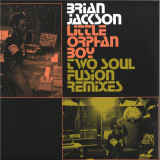
‘Little Orphan Boy’ is the second single taken from album ‘This Is Brian Jackson’, presented with remixes by Two Soul Fusion, a.k.a. Louie Vega and Josh Milan.
The veteran artist’s first true solo LP in over 20 years, ‘This Is Brian Jackson’ is produced by Phenomenal Handclap Band founder Daniel Collás. Collás lovingly re-frames and updates ideas and demos that Jackson first laid down back in 1976, right around the time he recorded ‘Bridges’ with Gil Scott-Heron, for a solo project that never saw the light of day… until now.
Alongside his ‘Two Soul Fusion’ partner Josh Milan, Louie Vega gives the album’s closing track ‘Little Orphan Boy’ two truly vintage remix treatments, taking the song on an eclectic, soul-stirring, timeless journey. The extended ‘Two Soul Fusion’ mix calls to mind the golden era of Masters at Work productions, featuring a Latin-infused percussion groove, shimmering organs and in-the-cut funky guitar lines. The ‘Downtempo’ remix lets Brian Jackson’s vocals ride over a head-nodding, stripped back, yet equally soulful arrangement.
“A dream to work with Brian Jackson” says Louie Vega. “I mean, he’s a big part of our musical landscape and has been a huge inspiration in our lives. From way back to my early years in the Bronx, through to my DJing and producing career, into productions like Nuyorican Soul, Elements of Life, Kenlou, Brian and Gil have always been with us! Now to work on such an amazing song with Brian’s keyboard work and lead vocal, it made it so much easier for Two Soul Fusion (Josh and I) to find that pocket and groove. We had to create an epic piece and take you on a trip through several styles, it was calling for it. That’s due to the original work of Brian Jackson, a true Master at Work & Two Soul Fusion hero!!! I’m looking forward to seeing what’s next on the horizon with us and the one & only Brian Jackson.
Brian Jackson: “I have always loved the musicality and the rhythmic power that surges through the artistry of Louie Vega since I first heard him in Masters at Work. I made a silent wish that one day I would hear one of my songs given that special treatment. Imagine my elation to know that it would finally happen – with a song I wrote and recorded 45 years ago for a solo project that might have never happened if not for producer Daniel Collás and BBE chief Peter Adarkwah! Louie, along with Two Soul Fusion partner Josh Milan and I are alike in so many ways, I knew that if we ever got together, magic would happen and well… here’s to magic! My love and gratitude to Louie, Josh, Daniel, Peter and the beautiful BBE family.”
out of Stock
Last delivered 2 years ago available to reorder, subject to availability
Octave One return with Never On Sunday Vol.2, an EP with new remixes from Orbital and Giorgia Angiuli next to three standout recent tracks.
The Detroit duo’s Never On Sunday alias was born in the nineties with a view to making a mix of downtempo, deeper and more thoughtful electronic sounds. After just two EPs, it lay dormant until last year when the new EP The Bearer on their own 430 West label brought it back to life to a great reception. Then came the Octave One Presents Never On Sunday album this year that collected together a wealth of originals and remixes which are now coming on 12".
First up is legendary brotherly duo Orbital - a UK antecedent to the Burden brothers who have been crafting pioneering electronic sounds for decades. Their remix of ‘Price We Pay’ feat. Karina Mia is deep house excellence. It has a bouncy groove, elastic bassline and simmering vocals that send shivers down the spine and the sci-fi synths twinkle up top. Italian multi-instrumentalist Giorgia Angiuli has long been innovating in the techno world, drawing on her classical background to craft standout sounds for the likes of Kevin Saunderson’s KMS label. Her remix is six uplifting minutes of synth arpeggios, soulful techno drums and epic breakdowns that will captivate any dance floor.
The b-side features three cuts from the Never On Sunday (Deluxe) album and opens up with 'Lifelike', a slow, pulsing dub with mysterious melodies and sinewy synths reflecting light like stars in a night sky. A textured bassline arrives to bring a real sense of tension to the melodic beauty. 'Soon After' is another cosmic cut that rides on hammering bass beneath lush synths capes and rays of hope that pierce the darkness. The blissful 'Mona' closes down with heavenly and expansive pads that shimmer and shine as rich bell sounds and choral pads bring a warm sense of atmosphere.
Never On Sunday Vol.2 is another package of deeply emotional electronic sounds.
out of Stock
Last delivered 46 days ago available to reorder, subject to availability
Remastered with extra tracks - extra disc also includes Sound Sun Pleasure LP. Features the original space nymph cover art, which only appeared in cropped and washedout reproductions on an early 60s version. Cosmic Myth Records is dedicated to issuing remastered and fully authorized out of print titles from Sun Ra's independent Saturn Records catalog. Sun Ra's Jazz in Silhouette was enshrined in the Penguin Jazz Guide's "Core Collection" as an album that "will someday be recognized as one of the most important post-war jazz records." Jazz in Silhouette is the quintessential record of Sun Ra's late 1950s Chicago period. Recorded and issued in 1959, it marks a coda for the bandleader's bebop/hard-bop stage, as his interstellar traveller persona began to transform the band (and the music). It also charts the future, showcasing the brilliant tenor sax stylings of John Gilmore, and introduces the iconic playing of Arkestra mainstays Marshall Allen, Pat Patrick, and Ronnie Boykins. Many of the early works on these recordings would remain staples in Arkestra set lists for the rest of Sun Ra's life. This expanded edition includes the complete, contemporaneous Sound Sun Pleasure, rare stereo mixes, and bonus tracks.
Attarazat Addahabia & Faradjallah's album came to us as quite a mystery. Our friends from Radio Martiko got access to the studio archive of the Boussiphone label and a reel labeled “Faradjallah” was among the items they had found there. After listening to the selection of reels they borrowed, Radio Martiko felt it was not a fit for their label and helped us licensing it from Mr. Boussiphone instead. We knew nothing about the band. We just had the reel with the music but very little information. What we knew was that the music was incredible and very unique. Gnawa sounds were combined with funky electronic guitars, very dense layers of percussions and female backing vocals more reminiscent of musical styles further south than Morocco. We started asking around whether anyone knew the band with no immediate success until we asked Tony Day, a musician from Morocco who helped us during our search for Fadoul’s family. His sharp memory came through once again, remembering all the names of the Attarazat Addahabia band members and even how to contact the bands singer and leader Abdelakabir Faradjallah. After visiting him at his home in Casablanca with our Moroccan colleague Sabrina multiple times, he shared his personal story. His father arrived in Casablanca from Aqqa at the age of six and his mother came from Essaouira. Abdelakabir was born in the neighbourhood of Benjdia in 1942. Abdelakabir Faradjallah studied fine arts in Casablanca, graduating in 1962. He also played soccer in the second team of "Jeunesse Societe One". His brother-in-law Ibrahim Sadr worked for one of the biggest football teams of the time in Morocco called "Moroco Sportive Union", which allowed him to travel to France occasionally. While Ibrahim was never part of the band he brought along a few instruments from trips.
Yet the majority of the instruments they could not afford to buy were build by Faradjallah and Abderrazak, Faradjallah's brother who passed away early. For instance they had built a Spanish guitar and a drum made of wood barrel and sheepskin by themselves.During the 1950s Faradjallah was booked as a singer for surprise parties with friends. He started to write his first songs including "L’gnawi" in 1967 and wanted to make people discover Gnawa culture, or maybe rather his take on the culture to be more exact. Faradjallah recalls his first interaction with the genre in the streets of the Dern neighbourhood, where he used to go to elementary school. Gnawa is one of the essential musical genres of Morocco. It combines ritual poetry with traditional dances and music linked with a spiritual foundation. Musically a lot of influences originated from West Africa as well as Sudan. Gnawa is usually played by a selection of specific instruments such as the qaraqab (large iron castanets centrally associated with the music), the hajhouj (a three string lute), guembri loudaâ (a three stringed bass instrument) and the tbel (large drums). People would put shells on their clothes and instruments and use incense at their parties. "Sidi darbo lalla - lala derbo khadem..." came from Gnawa verses Faradjallah used to sing when he was 14. The lyrics tackle a global (im)balance of power and the question of social status in this course. The band Attarazat Addahabia was formed in 1968. The original line-up included 14 members, all from the same family. They played their first small concerts here and there starting in 1969. Later in 1973 they performed bigger shows for instance at the Municipal Theatre followed by the "Al Massira Show" at Velodrome Stadium in downtown Casablanca. Their first album "Al Hadaoui" (the one you are listening to) was recorded at Boussiphone studios in 1972 and was never released before. Nobody seems to remember the exact reason why Boussiphone ended up deciding not to put the album out. The album's title track also served as the basis for Fadoul's "Maktoub Lah", who frequented the same circles as the band for some time.
Their shows sometimes could go as long as 12 hours, starting at 5pm in the afternoon, with an occasional break here and there. In the 1980s the band took a brief break. Faradjallah recalled the reason for that break like this: "Zaki, the bands drummer, had fallen in love with a young girl from Mohammedia. Soon after, he fell very ill. The group members were convinced that the girl had given him ‘s'hor’ (a kind of local Moroccan version of "black magic"). For four years, the whole group stopped playing. It was unthinkable to find another drummer to replace Zaki, even temporarily." So they waited four years for Zaki to "get back on his feet" before going back on stage. Apart from very few gigs here and there Faradjallah stopped playing music in the mid 1990s. Some members from the younger generations formed a new band and still play frequently to this day. Faradjallah runs a television repair shop coupled offerings beverages and snacks in the Belevedere /Ains Sbaa district of Casablanca. While Faradjallah was primarily a musician, he would work for the local cinema and paint their posters for new movies by hand and he designed all artworks and cover posters of the band.
And this eventually led to him participating actively in our first exhibition dealing with Habibi Funk’s work in Dubai 2018. He helped us by creating calligraphic complementations on large photo prints for that show.
Set in Hawaii, Presley's eleventh film Girls! Girls! Girls! featured the usual
combination of exotic locations, plenty of songs and Elvis in fightin' mood.
Released in 1962, it features the notable Return To Sender, Earth Boy,
Because of Love and the title track Girls! Girls! Girls! which was originally
penned by Leiber & Stoller for The Coasters in 1961. Side One includes
Where Do You Come From, which was not in the film but is included on
the soundtrack album. In 1993, the U.S. Mail issued its Elvis Stamp and
noticed that there was an increase in the number of letters it was obliged
to return... zealous fans of the 'King' had marked the correspondence
'Return to sender - address unknown
Amanaz were serious, and they made a serious stab at an album. They titled their album Africa, according to original band member Keith Kabwe, “because of how it was shared and how its inhabitants were butchered and enslaved, its resources stolen… all the atrocities slave drivers committed. “ Thus, their “Kale,” a blues sung in Nyanja, that traced the continent’s arc from slavery to Zambia’s independence closes the album. Kabwe and rhythm guitarist John Kanyepa have a winsome softness to their vocals, which sit politely aside the feral growl of drummer Watson Baldwin Lungu, bassist Jerry Mausala and bandleader/lead guitarist Isaac Mpofu. Africa’s vibe ranges from anxious (“Amanaz”) to escapist (“Easy Street”) to straight-up pissed-off. On the “History of Man,” his voice whiskeyburned, his distorted guitar buzzing like swarming hornets, Mpofu indicts his species.
There’s a darkness to Africa not found on any other Zamrock records, and a melancholy drifts throughout, specifically on Mpofu’s more restrained “Khala My Friend,” which stands as an effective, bleak situation for the Zambian everyman, the average citizen of a struggling, new nation, who might have had relatives in conflict-torn countries on the horizon, who might have been struggling to find his next meal, who might have seen a bleaker future than his president promised. Then there’s the clear Velvet Underground-influence on the nostalgic “Sunday Morning,” which, as Kabwe
recalls, was the first song written for the album, back in 1968, when Velvet Undergound and Nico was a new release - and the underground funk of “Making The Scene.” The album also tackles traditional Zambian music and early-‘60s rock – punctuated, of course by Kanyepa’s wah-wah and Mpofu’s fuzz guitars. But every time Amanaz get too deep, too violent, they come back with an accessible song and woo their listener back to the groove. “Green Apple” is a civil song, featuring Kanyepa’s sighing guitar. It is a perfectly arranged album, from the dichotomy of Mpofu’s and Kanyepa’s lead and rhythm guitars, to the vocal harmonies, to the rhythm section’s sense of space and time, which allows Africa’s funk to build. Inexplicably, Africa was given two separate mixes and two separate presses: one version is dry, with the vocals and drums mixed loud, the other slathered in reverb, with the vocals and drums disappearing into the mix, and with the guitar solos mixed much louder. We’ve presented them both here as they each have their appeal: it’s up to the listener to pick the one he or she prefers. This is a highpoint of the Zamrock scene and we hope that this can be seen as its definitive reissue.
First appearing on TV screens in September 1968, Joe 90 was a unique nine year old boy with the ability to absorb the brain patterns of top experts
enabling him to become the most special agent of W.I.N. (World Intelligence Network).
Whilst there are arguably better-known scores amongst Barry Gray's sublime catalogue of work with the Andersons, the composer's work for Joe 90 is in many ways
the most consistent and inventive selection he ever wrote. Developing a theme for the new series was always the musician's starting point, and for Joe 90, the pop charts breezed into Gray's studio,
with an opening tune featuring a genuine groove. Mixing Gray's inventive electronics with 60s "surf rock" guitars was an inspired decision.
It is no wonder that this piece has gone on to enjoy a second life as a Northern Soul disco floor-filler.
For episodic incidentals, Gray was freed from the detached unearthly premise of Captain Scarlet and able to bring back a playful sensibility
and a more mature musical palette which are amply illustrated in this 24 track collection.
DeYarmond Edison war der Vorläufer von Bon Iver und Megafaun. Im Sommer 2005 verließen vier Freunde Wisconsin in Richtung North Carolina mit einem einzigen Ziel: der Folk-Rock-Flaute zu entkommen. Während eines Jahres intensiver Konzentration, des Studiums und der Verletzlichkeit taten sie genau das, indem sie an den ekstatischen Rand des New Weird America vordrangen und von allem ein bisschen ausprobierten - Grindcore und Gospel, Free Jazz und Phasenstücke, Bluegrass und Blues - und es in DeYarmond Edison packten. Der Rest ist Geschichte_ Ein Mitglied ging nach Hause, um das zu gründen, was später Bon Iver werden sollte, während drei vor Ort blieben, um Megafaun zu gründen. Epoch ist die Geschichte von DeYarmond Edison: Brad Cook, Phil Cook, Justin Vernon und Joe Westerlund, erzählt wie nie zuvor. Die Sammlung umfasst fünf LPs, vier CDs, Dutzende von ungehörten Aufnahmen und ungesehene Fotos. Begleitet wird sie von einer ausführlichen Biografie des Schriftstellers Grayson Haver Currin, der auch als ausführender Produzent der Sammlung fungiert. Alles in allem fängt Epoch die Zeit ein, bevor aus diesen vier Freunden zwei andere, aufsehenerregende Bands wurden. Es ist eine Geschichte über Gemeinschaft, Visionen, Familie und ein Quartett, das zu gut sein wollte, um zu bestehen. Es gibt Momente des Experimentierens, subtile Wendungen im Fuzz von "Epoch" und eine stampfende Herangehensweise beim Covern von "All Tomorrow's Parties", die den Grundstein dafür legten, wie Bon Iver und Megafaun die akustische Musik ein wenig umkrempeln würden. Aber ein Großteil von Epoch unterstreicht die einzigartige Sichtweise der Gruppe auf amerikanisches Songwriting, auf das Nehmen von Patchworks, das Finden der Akkorde und das Singen aus vollem Herzen. "Trials, Troubles and Tribulations" ist ein Beispiel dafür. Am bekanntesten ist es als Duett von Justin Vernon und Sharon Van Etten, das hier in ausufernder Last-Waltz-Manier wieder zum Leben erweckt wird, mit Vocals von Megafaun, Justin Vernon, Frazy Ford und Fight the Big Bull. Jede Platte ist gleichermaßen ein Crash-Kurs in allem, was dieses spezielle Stück Musikgeschichte ausmacht: Fotos aus Hinterhöfen und Kellern; Essays, die bestimmte Aufnahmen beschreiben; Farbpaletten, die Zeit und Ort widerspiegeln. Mit über sieben Stunden und 55.000 Wörtern ist Epoch eine maximalistische Sammlung. Aber man muss kein Komplettist sein, um zu verstehen, was es bedeutet, sich mit seinen besten Freunden zusammenzukauern und Dinge zu erschaffen, für diese Dinge zu träumen, zu lernen, zu kämpfen und zu wachsen.
DeYarmond Edison war der Vorläufer von Bon Iver und Megafaun. Im Sommer 2005 verließen vier Freunde Wisconsin in Richtung North Carolina mit einem einzigen Ziel: der Folk-Rock-Flaute zu entkommen. Während eines Jahres intensiver Konzentration, des Studiums und der Verletzlichkeit taten sie genau das, indem sie an den ekstatischen Rand des New Weird America vordrangen und von allem ein bisschen ausprobierten - Grindcore und Gospel, Free Jazz und Phasenstücke, Bluegrass und Blues - und es in DeYarmond Edison packten. Der Rest ist Geschichte_ Ein Mitglied ging nach Hause, um das zu gründen, was später Bon Iver werden sollte, während drei vor Ort blieben, um Megafaun zu gründen. Epoch ist die Geschichte von DeYarmond Edison: Brad Cook, Phil Cook, Justin Vernon und Joe Westerlund, erzählt wie nie zuvor. Die Sammlung umfasst fünf LPs, vier CDs, Dutzende von ungehörten Aufnahmen und ungesehene Fotos. Begleitet wird sie von einer ausführlichen Biografie des Schriftstellers Grayson Haver Currin, der auch als ausführender Produzent der Sammlung fungiert. Alles in allem fängt Epoch die Zeit ein, bevor aus diesen vier Freunden zwei andere, aufsehenerregende Bands wurden. Es ist eine Geschichte über Gemeinschaft, Visionen, Familie und ein Quartett, das zu gut sein wollte, um zu bestehen. Es gibt Momente des Experimentierens, subtile Wendungen im Fuzz von "Epoch" und eine stampfende Herangehensweise beim Covern von "All Tomorrow's Parties", die den Grundstein dafür legten, wie Bon Iver und Megafaun die akustische Musik ein wenig umkrempeln würden. Aber ein Großteil von Epoch unterstreicht die einzigartige Sichtweise der Gruppe auf amerikanisches Songwriting, auf das Nehmen von Patchworks, das Finden der Akkorde und das Singen aus vollem Herzen. "Trials, Troubles and Tribulations" ist ein Beispiel dafür. Am bekanntesten ist es als Duett von Justin Vernon und Sharon Van Etten, das hier in ausufernder Last-Waltz-Manier wieder zum Leben erweckt wird, mit Vocals von Megafaun, Justin Vernon, Frazy Ford und Fight the Big Bull. Jede Platte ist gleichermaßen ein Crash-Kurs in allem, was dieses spezielle Stück Musikgeschichte ausmacht: Fotos aus Hinterhöfen und Kellern; Essays, die bestimmte Aufnahmen beschreiben; Farbpaletten, die Zeit und Ort widerspiegeln. Mit über sieben Stunden und 55.000 Wörtern ist Epoch eine maximalistische Sammlung. Aber man muss kein Komplettist sein, um zu verstehen, was es bedeutet, sich mit seinen besten Freunden zusammenzukauern und Dinge zu erschaffen, für diese Dinge zu träumen, zu lernen, zu kämpfen und zu wachsen.
In August of 2007, the Port Arthur duo of Bun B and Pimp C known as UGK released their epic fifth studio album, Underground Kingz. Sadly, this was the last release recorded by Pimp C before his untimely death in December of the same year. Production was overseen
by legendary Rap-A-Lot producer N.O. Joe and Pimp C himself with contributions from Three 6 Mafia, Jazze Pha, Lil Jon, Scarface, Swizz Beatz, and Marly Marl among others. The second single "Int'l Players Anthem (I Choose You) was nominated for a Grammy and won video of the year at BET's 2008 Music Awards.
Stephen Steinbrink discovered a short YouTube video of a street magician who approaches a highschooler walking home in Barstow, California. “Here, let me show you my idea,” he says, as he places a quarter on the kid’s hand. The magician performs some relaxed flourishes, and the coin vanishes. In silence, the kid stares at his hand at the nothing where there once, indisputably, was something, until his wonder finds a single word: “Cool.” The title of Disappearing Coin, the new album from Oakland songwriter Stephen Steinbrink, comes from this short clip. “When I look at it now,” he says, “I relate to the kid, who’s obviously uneasy in his body, and going through the experience of being a teenager in the early 2000s growing up in a bleak desert town like I did. I also relate to the coin, an inanimate disc of possibility. And I relate to the magician, an absurd facilitator of sending what is tactile and concrete into the wispy conceptual realm.” “I’ve watched it probably a hundred times,” he says. “It cracked me up but also blew my mind open the feeling of wonder I experienced watching this video became a guide as I navigated new ways of staying in the realm of what’s both real and magical.” Following the 2018 release of Utopia Teased, Steinbrink completed an apprenticeship in the nearly-lost art of Stained Glass, becoming a glazier at a studio that over three years, fully restored the enormous 90-year-old windows in San Francisco’s Grace Cathedral. He committed to his Buddhist study, beginning lay monastic training before the process was thwarted by the pandemic. He dove deeper into music production for other artists, engineering two albums by Boy Scouts released on Anti- Records in 2018 and 2021. Steinbrink delighted in the way these pursuits pulled at the thread of ego’s tapestry and decentralized him from his craft, allowing him to embody a new role as a creative caretaker engaging in practices that felt communal and restorative. “As I slowly began writing for myself again, I tried to imbue my new songs with this sense of playfulness and wonder I felt while exploring these other interests.” He says. Feeling unlocked from the pressures of perfection that he often felt in his earlier work, creating Disappearing Coin felt buoyant and healing. “The album feels like an integration of all of my past musical selves zeroing in on the present,” Steinbrink explains, “I felt free to explore new ways of writing, through different perspectives, experimenting with fictional songwriting, visual archetypal language, and total collaboration.” This “total collaboration” was a joyous new venture after years of solo performing and recording. The album can be seen as a 42 minute session of show and tell, the manifestation of Steinbrink repeating the mantra of “Here, let me show you my idea” to himself over and over. Disappearing Coin is at once a welcome return for the veteran Steinbrink and the debut of a totally new artist, one who has found a new path to himself with new goals of openness, curiosity, and self-acceptance. “Recalls the magic pop purity of Arthur Russell...its minimalism manages to feel enlightened and transformative.” PITCHFORK // “Melodic and self-assured. Steinbrink delivers his knotted lyricism with a smooth lilt.
'We're All Improvisers Now' is the debut solo album by New York/
Montreal-based performer Tommy Crane, a tranquil, introspective journey through boundary-traversing ambient jazz, buoyed by the creative elan of an artist in full experimentation mode.
Using sensory percussion and a battery of synthesisers, Crane creates a sequence of lucid sonic environments, where the real and synthetic meet, overlap and reappear disguised and opaque.The title's double meaning is immediately apparent; the album is an uncommon take on improvising from a performer incorporating ambient sensibilities and the title also accurately describes the situation many artists found themselves in amidst the pandemic. For Crane, the
pandemic provided a rare gift of time that allowed him to explore his love for electronic and analogue production.
"I don't think I will ever make a record like this again - this was one big
experiment," he says of a project with DIY trappings. After eventually returning from Italy where he was teaching drums and improv classes as Siena Jazz Institute, Crane settled in Montreal with his Canadian partner. At the beginning of the lockdown, he created a spaceship- like rig in his spare room comprised of assorted synths and 'sensory' percussion (which assigns new sounds to drums).
The album features welcome contributions from colleagues phoned in from afar, including saxophonists Logan Richardson and Charlotte Greve, guitarist Simon Angell and bassist Jordan Brooks.
Mit 13 Tracks ist "War Eternal" das Arch Enemy-Album schlechthin. Es ist sowohl eine nostalgische Verbeugung vor der Vergangenheit der Band ("Never Forgive, Never Forget", "No More Regrets") als auch ein beeindruckendes Beispiel dafür, was in der Zukunft möglich ist ("Down to Nothing", "Time is Black"). Aber wenn es einen herausragenden Track gibt - eine Speerspitze - dann ist es der Titeltrack. "War Eternal", das der Welt auf Youtube vorgestellt wurde, marschiert trotzig gegen das Alltägliche an, zwei erhobene Fäuste gegen die Zwänge der Gesellschaft und den Käfig, den sie uns allen verzweifelt überzustülpen versucht. Hier beweist White-Gluz, dass sie die nächste Generation der Großen ist, während Amott und der Rest von Arch Enemy spielen, als wäre "War Eternal" ihr letzter Song. "Es gibt eine Menge Details auf diesem Album, die mich als Songwriter und Gitarrist begeistern", grinst Amott. Ich persönlich habe mich auf "War Eternal" als Spieler noch mehr angestrengt und habe das Gefühl, dass ich dieses Mal eine andere Ebene erreicht habe, was sehr lohnend ist. Das Album ist endlich wieder in den folgenden Formaten erhältlich: - Schweres 180g Vinyl in Schwarz und Transparent-Magenta, inklusive 2-seitigem Einleger - Special Edition CD, die in einem "PocketPac" (umweltfreundliche Verpackung) und einem 24-seitigen Booklet kommt
Mit 13 Tracks ist "War Eternal" das Arch Enemy-Album schlechthin. Es ist sowohl eine nostalgische Verbeugung vor der Vergangenheit der Band ("Never Forgive, Never Forget", "No More Regrets") als auch ein beeindruckendes Beispiel dafür, was in der Zukunft möglich ist ("Down to Nothing", "Time is Black"). Aber wenn es einen herausragenden Track gibt - eine Speerspitze - dann ist es der Titeltrack. "War Eternal", das der Welt auf Youtube vorgestellt wurde, marschiert trotzig gegen das Alltägliche an, zwei erhobene Fäuste gegen die Zwänge der Gesellschaft und den Käfig, den sie uns allen verzweifelt überzustülpen versucht. Hier beweist White-Gluz, dass sie die nächste Generation der Großen ist, während Amott und der Rest von Arch Enemy spielen, als wäre "War Eternal" ihr letzter Song. "Es gibt eine Menge Details auf diesem Album, die mich als Songwriter und Gitarrist begeistern", grinst Amott. Ich persönlich habe mich auf "War Eternal" als Spieler noch mehr angestrengt und habe das Gefühl, dass ich dieses Mal eine andere Ebene erreicht habe, was sehr lohnend ist. Das Album ist endlich wieder in den folgenden Formaten erhältlich: - Schweres 180g Vinyl in Schwarz und Transparent-Magenta, inklusive 2-seitigem Einleger - Special Edition CD, die in einem "PocketPac" (umweltfreundliche Verpackung) und einem 24-seitigen Booklet kommt